Chinese Business

Asian stocks slump, tracking US losses after inflation report

Asian markets dropped on Wednesday, tracking losses in the United States and Europe as traders responded negatively to higher-than-expected US inflation data that raised fears of a prolonged period of interest rate hikes.

Tokyo, Hong Kong, Shanghai, Seoul, Taipei and Sydney were all lower, reversing gains made in recent days due to positive market expectations from the US labour department’s consumer price index (CPI) report.

On Tuesday, US government data showed the annual increase in CPI had slowed slightly in August to 8.3 percent, but that prices continued to rise month-on-month, increasing by 0.1 percent.

The news shook equity markets, where there had been widespread expectations of US year-on-year inflation being around eight percent, with a decrease in prices compared with July.

Tokyo led the day’s losses in Asia, with the Nikkei 225 plunging 2.8 percent.

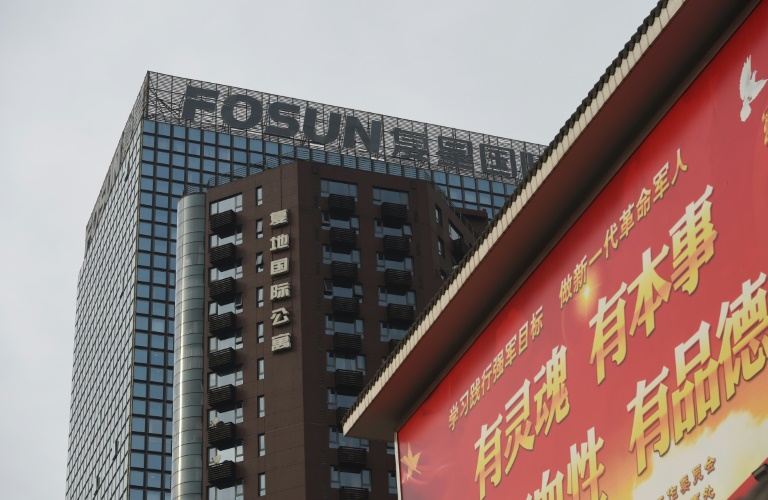
In Hong Kong, stocks closed down more than two percent, with Chinese conglomerate Fosun seeing billions wiped off its value as jittery investors reacted to media reports that the group was under regulator scrutiny.

Major European bourses followed the trend, with London, Frankfurt and Paris opening lower. 

– ‘Scorching hot’ inflation –

The United States and other economies have been battling sky-high price increases for months, with US yearly inflation hitting a 40-year high of 9.1 percent in June.

Wall Street shares plunged following the CPI news, with the Dow losing nearly 1,300 points and the S&P 500 falling 4.3 percent on Tuesday.

The data will have dashed hopes of a slowdown in the US Federal Reserve’s campaign of increasing interest rates to cool the overheating economy.

The Fed has already instituted two consecutive 75-basis-point hikes, and there are widespread expectations it will make a similarly sized increase at its meeting next week.

After Tuesday’s data, however, some investors are now predicting the next Fed hike could be by a full percentage point.

Of concern to the Fed will be the fact that “core” US CPI, which excludes volatile food and energy prices, accelerated sharply, rising 6.3 percent on a year ago, higher than the 5.9 percent seen in July and June.

Despite welcome relief from falling gasoline prices, food, housing and medical care costs continued to rise.

“Core inflation was scorching hot, coming in double expectations,” said senior market analyst Edward Moya at OANDA.

“The Fed will likely have to be even more aggressive with raising rates and that is bad news for risky assets.”

Investor Louis Navellier warned that persistently high interest rates to control inflation could lead to a US recession.

“Stocks are taking it very hard as forecasts are rising for Fed Funds to get higher and stay there longer resulting in a discount of future earnings multiples and increasing recession fears,” he said in a note.

In Britain, new data Wednesday showed inflation eased in August, but it remains close to the previous month’s 40-year peak as the country battles a cost-of-living crisis.

– Yen stabilises –

The dollar, which had earlier this week fallen against its major rivals in anticipation of slowing inflation, surged in Asian trade.

The yen plunged to 144.94 against the US currency, before recovering sharply following reports that the Japanese central bank had conducted a “rate check”, an exercise often seen as a precursor to currency intervention. 

The yen returned to 143.53 to the dollar within an hour of those reports. 

The euro also lost ground on Wednesday, dropping back below parity with the US currency once again.

The dollar’s rise is partly because the Fed has moved more aggressively with interest rate hikes than central banks in other major economies.

The European Central Bank raised its key rate by 75 basis points this month, with officials indicating a similarly sized increase could come at the next meeting in October.

Inflation has soared around the globe this year owing to extremely high energy and food bills.

This has been caused to a large extent by supply constraints after economies reopened from coronavirus pandemic lockdowns, and in the wake of Russia’s invasion of Ukraine.

– Key figures at around 0730 GMT –

Tokyo – Nikkei 225: DOWN 2.8 percent at 28,818.62 (close) 

Hong Kong – Hang Seng Index: DOWN 2.5 percent at 18,847.10 (close)

Shanghai – Composite: DOWN 0.8 percent at 3,237.54 (close)

New York – Dow: DOWN 3.9 percent at 31,104.97 (close)

London – FTSE 100: DOWN 0.9 percent at 7,321.47 

Frankfurt – DAX: DOWN 0.3 percent at 13,148.25 

Paris – CAC 40: DOWN 0.3 percent at 6,229.08 

EURO STOXX 50: DOWN 0.25 percent at 3,577.35

Euro/dollar: UP at $1.000 from $0.9974 

Pound/dollar: UP at $1.1547 from $1.1500  

Euro/pound: DOWN at 86.61 pence from 86.74 pence  

Dollar/yen: DOWN at 143.07 yen from 144.43 yen 

Brent North Sea crude: DOWN 0.02 percent at $93.15 per barrel

West Texas Intermediate: UP 0.1 percent at $87.42 per barrel

burs-aha/axn

Foxconn strikes $19.4 bn deal to make chips in India

Taiwanese electronics giant Foxconn will invest $19.4 billion to make semiconductors in India with local conglomerate Vedanta, backed by New Delhi’s push to boost tech self-reliance after a global chip shortage.

Semiconductors are an essential component of nearly all modern electronics, from smartphones to kitchen appliances and cars, but the coronavirus pandemic kneecapped global production and leading manufacturers are still struggling to meet demand.

India approved a $10 billion incentive plan last December to kickstart its own domestic industry by covering up to half of all project costs.

The deal announced Tuesday is the scheme’s most ambitious investment to date and will see a manufacturing facility built in Prime Minister Narendra Modi’s home state of Gujarat.

“India’s own Silicon Valley is a step closer now,” Vedanta group chairman Anil Agarwal tweeted on Tuesday, thanking the government for helping “tie things up so quickly”.

Vedanta, one of India’s biggest mining companies, will take a 60 percent share in the joint venture for its first step into chip-making.

Foxconn, the world’s top iPhone assembler, will take the minority stake.

“The improving infrastructure and the government’s active and strong support increases confidence in setting up a semiconductor factory,” Foxconn vice president Brian Ho said in a statement.

The facilities will be operational by 2024 and will also manufacture display screens for phones and tablets, the companies said.

Shares in Vedanta rose six percent in Mumbai a day after the announcement.

India has sought to boost its domestic production capacity in a range of strategic sectors, including military hardware and advanced technology. 

“In the current geopolitical scenario, trusted sources of semiconductors… are key to the security of critical information infrastructure,” India’s technology ministry said earlier.

The government’s semiconductor incentive scheme has already successfully wooed several investors, with Singapore’s IGSS Ventures announcing $3.2 billion in July to make chips in Tamil Nadu state.

Another partnership between NextOrbit of the UAE and Israel’s Tower Semiconductor signed on in May for a $2.9 billion plant in Karnataka state.

The vast majority of the world’s top chips are made by just two companies — TSMC of Taiwan and South Korea’s Samsung — both of which are running at full capacity to alleviate the ongoing global shortage.

Shares in Chinese conglomerate Fosun dive on report of watchdog scrutiny

Club Med owner Fosun, one of China’s largest private-sector conglomerates, saw billions wiped off its value on Wednesday as jittery investors reacted to a media report that the group was under regulatory scrutiny.

There has been growing concern about the debts of Chinese companies, particularly after a run of high-profile defaults in the property sector last year that rippled through the wider economy.

Bloomberg News on Tuesday cited unnamed sources as saying that regulators, including China’s banking watchdog and the local commission overseeing state investments, have told large lenders and state-owned enterprises to closely examine their exposure to Fosun.

Shares in Fosun International Limited, the conglomerate’s flagship company, slid as much as 9.6 percent in Hong Kong to HK$4.41 on Wednesday, the lowest level since November 2012.

Fosun’s Chief Financial Officer Alex Gong rejected the Bloomberg report as “completely false”.

“Neither the China Banking and Insurance Regulatory Commission (CBIRC) nor the Shanghai Banking and Insurance Regulatory Commission have asked commercial banks to find out about Fosun’s financial exposure, and those institutions have not received any notice of this,” Gong told the South China Morning Post.

The public had a “one-sided interpretation” of Fosun’s recent reductions in shareholdings and divestments and failed to see that they were part of a long-term financial strategy, the Shanghai-based company added in a statement.

– Circus and football –

Co-founded by tycoon Guo Guangchang in 1992 during the heady days of China’s initial “reform and opening” period, Fosun started off in pharmaceuticals and real estate but has since built a sprawling business empire that includes tourism and finance. 

A prolific buyer of global assets, Fosun owns French brand Club Med and has a controlling stake in the fashion house Lanvin.

It owns English Premier League football club Wolverhampton Wanderers and has a major stake in Canadian circus producer Cirque du Soleil.

In 2020, Fosun struck a deal with Germany’s BioNTech to manufacture its coronavirus vaccine in China and later became its exclusive distributor to the Greater China region.

Chinese companies have faced growing scrutiny over their debt exposure, especially those in the property sector. 

Multiple construction giants, including Evergrande, have defaulted on debts and been forced into major restructuring.

Beijing has also launched regulatory investigations in multiple sectors, including education and technology businesses, clipping their growth.

In recent months China’s economy has been reeling from a debt crisis in its massive property sector, mortgage boycotts, as well as disruptions from coronavirus lockdowns in finance and manufacturing hubs.

Fosun faces as much as $8 billion in bond repayments through 2023, according to Bloomberg News.

The CBIRC’s request to banks to check their exposure to Fosun debt does not mean it wants lenders to change their financing, and the regulator’s move may not result in any action, Bloomberg reported.

The Beijing branch of the State-owned Assets Supervision and Administration Commission was also among the regulators who asked institutions it oversees for closer scrutiny regarding Fosun, the report added.

Fosun’s debt stood at 261 billion yuan ($37.7 billion) as of June 30, up from 237 billion yuan at the end of last year, according to an earnings report last month.

Moody’s last month downgraded Fosun, citing weak liquidity and a weakening portfolio amid asset sales.

Google, Meta face record fines in South Korea over privacy violations

South Korea has fined Google and Meta more than $71 million collectively for gathering users’ personal information without consent for tailored ads, regulators said Wednesday, the country’s highest-ever data protection fines.

Investigations into the two US tech giants found they had been “collecting and analysing” data on their users, and monitoring their use of websites and applications, the Personal Information Protection Commission said.

The data was used to “infer the users’ interests or used for customised online advertisements”, it said, adding that neither Google nor Meta had clearly informed South Korean users of this practice or obtained their consent in advance.

As a result, Google was fined 69.2 billion won ($49.7 million) and Meta 30.8 billion won ($22.1 million).

“It is the largest fine for the violation of the Personal Information Protection Act,” the commission said in a statement.

Regulators said the majority of the users in South Korea — 82 percent for Google and 98 percent for Meta — had unknowingly allowed them to collect data on their online use.

“It can be said that the possibility and the risk of infringement of the rights of the users are high,” the statement said.

Last year, South Korea fined Google nearly $180 million for abusing its dominance in the mobile operating systems and app markets, saying it was hampering market competition.

Giant US tech companies are regularly criticised for dominating markets by elbowing out rivals, with multiple governments globally seeking to rein them in.

The European Union has slammed Google with record antitrust penalties, and also gone after Apple and Microsoft.

How the tide turned on data centres in Europe

Every time we make a call on Zoom, upload a document to the cloud or stream a video, our computers connect to vast warehouses filled with servers to store or access data.

Not so long ago, European countries were falling over each other to welcome the firms that run these warehouses, known as data centres or bit barns.

Wide-eyed politicians trumpeted investments and dreamt of creating global tech hubs.

But then the dream went sour.

The sheer amount of energy and water needed to power and cool these server farms shocked the public.

The industry sucked up 14 percent of Ireland’s power last year, London warned home builders that power shortages caused by bit barns could affect new projects, and Amsterdam said it simply had no more room for the warehouses.

Then things got worse.

The war in Ukraine helped spark an energy crisis across the continent, leaving consumers facing rocketing bills and countries contemplating energy shortages.

“Data centres will be a target,” critical blogger Dwayne Monroe told AFP, saying the focus would only grow if Europe cannot fix its energy crisis.

Grassroots campaigns and local opposition have already helped to halt projects this year by Amazon in France, Google in Luxembourg and Meta in the Netherlands. 

The Irish government, while reaffirming support for the industry, put strict limits on new developments until 2028.

The data industry says it feels unfairly targeted, stressing its efforts to source green energy and arguing that outsourcing storage to bit barns has helped slash consumption.

– ‘Veil of shadow’ –

These arguments are playing out most spectacularly in Ireland.

Activists are campaigning on a broad range of topics and using local forums to push their case.

“They take up a huge amount of space but provide basically no employment,” says Madeleine Johansson, a Dublin councillor for the People Before Profit party, which is campaigning on the issue.

Johansson recently had a motion passed in her council area banning the centres, sparking an almighty row with the national government that is yet to be resolved.

Dylan Murphy of Not Here, Not Anywhere, one of several climate groups pushing the issue in Ireland, has filed a motion in his local council in Fingal calling for companies to reveal the kind of information they are holding.

“There’s a complete lack of transparency… about what data is actually being stored in these data centres,” he said, calling it a “veil of shadow”. 

The data industry says revealing that information would be impossible.

Michael McCarthy of Cloud Infrastructure Ireland, a lobby group, said activists had lost the argument on sustainability and were now throwing everything at the wall. 

“Data centres definitely are large energy users but they’re part of a cohort of larger energy users,” he said.

McCarthy and industry figures in other countries say the real problem is years of underinvestment in national energy infrastructure. 

He also pointed out that the industry in Europe had pledged to become carbon neutral by 2030.

And there are still countries hankering to get data firms to locate there — particularly Iceland and Norway.

– Questions over metaverse –

Against this backdrop, the tech industry continues to innovate new products that invariably require vast amounts of processing power and data storage.

Machine-learning tools, for example, are hugely energy hungry — Google said earlier this year they accounted for between 10 and 15 percent of its total energy usage.

The metaverse, an emerging concept for a 3D internet championed by Facebook owner Meta, would also be hugely energy intensive. 

Critical blogger Monroe reckons the metaverse will buckle under its own weight, partly because of its data requirements.  

“The construction of the metaverse would require Facebook to build out a distribution of data centres that would rival what Amazon, Microsoft and Google have done for their clouds,” he said.

AFP contacted Meta for a response.

As far as the carbon footprint of such innovation goes, energy experts interviewed by AFP said it would be difficult to assess.

The metaverse, for example, could help to reduce emissions in other areas by reducing the need for travel.

An energy official who did not want to be named questioned whether data centres were the best target for criticism when cryptocurrencies were so wasteful.

While data centres used about one percent of global energy output in 2020, cryptocurrency mining used about half that amount, according to the International Energy Agency.

McCarthy said those who opposed data centres needed to reckon with just how embedded they had become in everyday life, particularly since the pandemic.

“They facilitate how we can work and live online, that’s the reality of it,” he said.

Asian stocks slump at open, tracking US losses after inflation report

Asian markets opened lower on Wednesday, tracking losses in the United States and Europe after traders responded negatively to higher-than-expected US inflation data, raising fears of a prolonged period of interest rate hikes.

Tokyo, Hong Kong, Shanghai, Seoul, Taipei and Sydney all opened lower at the start of trading, reversing gains made in recent days due to positive market expectations from the US labour department’s consumer price index (CPI) report.

On Tuesday, US government data showed that the annual increase in CPI had slowed slightly in August to 8.3 percent, but that prices continued to rise month on month, increasing by 0.1 percent.

The news shook equity markets, where there had been widespread expectations of US year-on-year inflation being around eight percent, with a decrease in prices compared with July.

The US and other economies have been battling sky-high price increases for months, with US yearly inflation hitting a 40-year high of 9.1 percent in June.

Wall Street shares plunged following the news, with the Dow losing nearly 1,300 points and the S&P 500 falling 4.3 percent.

The news will have dashed hopes of a slowdown in the US Federal Reserve’s campaign of increasing interest rates to cool the overheating economy.

The Fed has already instituted two consecutive 75-basis-point hikes, and there are widespread expectations it will make a similarly sized increase at its meeting next week.

After Tuesday’s data, however, some investors are now predicting the next Fed hike could be by a full percentage point.

– ‘Scorching hot’ inflation –

Of concern to the Fed will be the fact that “core” US CPI, which excludes volatile food and energy prices, accelerated sharply, rising 6.3 percent on a year ago, higher than the 5.9 percent seen in July and June.

Despite the welcome relief from falling gasoline prices, food, housing and medical care costs continued to rise.

“Core inflation was scorching hot, coming in double expectations,” said senior market analyst Edward Moya at OANDA.

“The Fed will likely have to be even more aggressive with raising rates and that is bad news for risky assets.”

Noted investor Louis Navellier warned that persistently high interest rates to control inflation could lead to a US recession.

“Stocks are taking it very hard as forecasts are rising for Fed Funds to get higher and stay there longer resulting in a discount of future earnings multiples and increasing recession fears,” he said in a note.

The dollar, which had earlier this week fallen against its major rivals in anticipation of slowing inflation, surged in early Asian trade.

The euro dropped below parity with the US currency once again on Wednesday, hitting $0.9970.

The dollar’s rise is partly because the Fed has moved more aggressively with interest rate hikes than central banks in other major economies.

The European Central Bank raised its key rate by 75 basis points in September, with officials indicating a similarly sized increase could come at the next meeting in October.

Inflation has soared around the globe this year owing to extremely high energy and food bills.

This has been caused to a large extent by supply constraints after economies reopened from coronavirus pandemic lockdowns, and in the wake of Russia’s invasion of Ukraine.

– Key figures at around 0230 GMT –

Tokyo – Nikkei 225: DOWN 2.2 percent at 27,991.82 

Hong Kong – Hang Seng Index: DOWN 2.4 percent at 18,866.30

Shanghai – Composite: DOWN 0.7 percent at 3,239.90

New York – Dow: DOWN 3.9 percent at 31,104.97  (close)

London – FTSE 100: DOWN 1.2 percent at 7,385.86 (close)

Euro/dollar: UP at $0.9984 from $0.9974 

Pound/dollar: UP at $1.1506 from $1.1500  

Euro/pound: UP at 86.79 pence from 86.74 pence  

Dollar/yen: DOWN at 144.35 yen from 144.43 yen 

Brent North Sea crude: UP 0.1 percent at $93.30 a barrel

West Texas Intermediate: UP 0.2 percent at $87.48 per barrel

burs-aha/leg

Stocks slump, dollar jumps as US inflation runs hot

Stock markets hit reverse while the dollar shot higher Tuesday after data showing US inflation remains high and widespread.

Wall Street shares plunged, with the Dow losing nearly 1,300 points and the S&P 500 falling 4.3 percent, after the hotter-than-expected report, closely watched by the Federal Reserve as it prepares for its next interest rate decision next week.

Stocks had rebounded in recent days as investors clung to the hope that slowing price increases would allow the Federal Reserve to eventually pull back on its tough anti-inflation fight, but the data extinguished those hopes for now.

While the annual increase in the consumer price index (CPI) slowed slightly in August to 8.3 percent, monthly inflation actually rose 0.1 percent compared to July, the Labor Department said, a disappointing result amid widespread expectations that CPI would fall in the month.

More concerning, the report showed that excluding volatile food and energy prices, “core” CPI accelerated sharply in August, and rose 6.3 percent over the past 12 months, after the 5.9 percent pace seen in July and June.

Despite the welcome relief from falling gasoline prices, food, housing and medical care costs continue to rise.

The dollar, which had fallen against its major rivals in anticipation of slowing inflation, shot higher.

“Today was a crazy day,” said Greg Bassuk of AXS Investments, who added that the equities decline was “more than just a one-off overreaction.”

“I think part of the strong reaction today is based on the greater concern that investors in the market have about … the extent to which high prices have infiltrated in areas that were less anticipated,” he told AFP.

Gains in Europe swiftly turned to losses following the US inflation data.

Fed Chair Jerome Powell has made it clear the increases in the benchmark lending rate would continue until inflation is tamed.

Economists say the data confirm the Fed will announce a third consecutive three-quarter point increase next week, ending the slight possibility central bankers would opt for a more modest 0.5 point hike.

Market analyst Michael Hewson said the core inflation figures mean more aggressive rate hikes will be needed to tame rising prices.

“While the narrative of peak inflation may well be still valid, getting it down from these levels is likely to be a much tougher battle,” he said.

Inflation has soared around the globe this year owing to sky-high energy and food bills.

This has been caused to a large extent by supply constraints after economies reopened from pandemic lockdowns and in the wake of Russia’s invasion of Ukraine.

The dollar has soared as the Federal Reserve moved earlier and more aggressively than other central banks to raise interest rates and contain inflation.

– Key figures at around 2100 GMT –

New York – Dow: DOWN 3.9  percent to 31,104.97  (close)

New York – S&P 500: DOWN 4.3 percent at 3,932.69 (close)

New York – Nasdaq: DOWN 5.2 percent at 11,633.57 (close)

EURO STOXX 50: DOWN 1.7 percent at 3,586.18

London – FTSE 100: DOWN 1.2 percent at 7,385.86 (close)

Frankfurt – DAX: DOWN 1.6 percent at 13,188.95 (close)

Paris – CAC 40: DOWN 1.4 percent at 6,245.69 (close)

Tokyo – Nikkei 225: UP 0.3 percent at 28,614.63 (close)

Hong Kong – Hang Seng Index: DOWN 0.2 percent at 19,326.86 (close)

Shanghai – Composite: UP 0.1 percent at 3,263.80 (close)

Euro/dollar: DOWN at $0.9974 from $1.0120

Pound/dollar: DOWN at $1.1500 from $1.1680 

Euro/pound: UP at 86.74 pence from 86.64 pence 

Dollar/yen: UP at 144.43 yen from 142.82 yen  

Brent North Sea crude: DOWN 0.9 percent at $93,17 a barrel

West Texas Intermediate: DOWN 0.5 percent at $87.31 per barrel

burs-rl/imm/hs/st

US must be 'at the table' in semiconductor field: Blinken

The United States should take on a greater role in the global semiconductor industry for the sake of its economy and security, US Secretary of State Antony Blinken said Tuesday.

Addressing students and researchers at Purdue University, home to one of America’s top engineering schools, Blinken stressed the importance of “getting into that tech diplomacy, making sure that the United States is at the table when decisions are being made.”

He added: “We need to be there, and not only do we need to be there, we need to be able to carry the debate.”

The United States is leading an unprecedented effort to supercharge domestic semiconductor research and production, both to alleviate Covid-19 supply chain issues and shift away from reliance on Chinese technology.

The electronic components are essential for multiple global sectors, including the auto industry and smartphones.

The Chips and Science Act, which US President Joe Biden signed into law last month, includes around $52 billion to promote domestic production of the microchips.

“What we do here resonates around the world,” Blinken said at Purdue, noting that the technology affects all sectors, including foreign policy and defense.

Despite being far from Silicon Valley, the stereotypical hub of US technological innovation, Purdue boasts a prestigious engineering school and has several laboratories specializing in semiconductor research.

US Secretary of Commerce Gina Raimondo accompanied Blinken on a tour of several research facilities at the Midwestern institution.

“The Chips Act is an investment in America,” she said, adding that the United States needs to go from “lab to fab,” meaning fabrication.

The two senior officials had just returned from a visit on Monday to Mexico, where they invited the country to join the United States in its multibillion-dollar push to boost semiconductor manufacturing to compete with China.

Supply chain snarls due to Covid-19 have disrupted production in all sectors, including advanced technology, and also revealed the dependence of the United States and other countries on China for technological components.

Biden recently called semiconductor production a matter of national security.

Stocks slump, dollar jumps as US inflation runs hot

Stock markets hit reverse while the dollar shot higher Tuesday after data showed that US inflation slowed less than expected.

Annual consumer price inflation (CPI) slowed slightly in August to 8.3 percent from 8.5 percent in July, the Labor Department said in a highly anticipated report that the Federal Reserve is watching closely.

However, CPI rose 0.1 percent on a monthly comparison in August, after holding flat in July, according to government data Tuesday, a disappointing result amid widespread expectations that inflation would fall in the month.

The dollar, which had fallen against its major rivals in anticipation of a significant slowdown in US inflation lessening pressure on the Fed to continue aggressively raising interest rates, shot higher.

“Both headline and core US CPI were substantially hotter than expected in August,” said market analyst Jay Zhao-Murray at Monex.

He said this was “leading currency and fixed income markets to embark on a swift and dramatic reversal from recent price action, where traders and investors had largely positioned themselves for a softer inflation print”.

He pointed to core inflation that excludes volatile energy and food prices, which is what Fed policymakers pay particular attention to. This rose by 0.6 percentage points month-on-month, compared to a 0.3-point gain in July.

While markets were already largely pricing in another 75-basis-point interest rate hike by the Fed at its next gathering, there had been hopes that passing the inflation peak would allow the Fed to relent.

However, the inflation figures were “hotter than expected in August and put a chill on some of the peak inflation/peak hawkishness/soft landing chatter”, said analyst Patrick O’Hare at Briefing.com.

Stocks, which had rebounded in recent days on hopes that a peak in inflation would allow a rapid end to hawkish rate hikes and thus avoid a recession and attain a “soft” landing of the economy, abruptly turned lower.

Gains in Europe swiftly turned to losses and Wall Street plunged.

In late-morning trading, the Dow was down 2.7 percent while the S&P 500 slumped 3.1 percent and the tech-heavy Nasdaq Composite tumbled 4.1 percent.

Fed boss Jerome Powell has indicated the rate increases would continue until inflation is tamed.

Zhao-Murray said market expectations regarding the Fed’s next rate hike had hardened following the inflation data.

While some were forecasting the possibility the Fed would drop to a half-percentage-point hike, now a 0.75-point increase is seen as the floor and some are forecasting a one-point hike. 

Market analyst Michael Hewson said Tuesday’s core inflation figures mean more aggressive rate hikes will be needed to tame rising prices.

“While the narrative of peak inflation may well be still valid, getting it down from these levels is likely to be a much tougher battle,” he said.

Inflation has soared around the globe this year owing to sky-high energy and food bills.

This has been caused to a large extent by supply constraints after economies reopened from pandemic lockdowns and in the wake of Russia’s invasion of Ukraine.

The dollar has soared as the Federal Reserve moved earlier and more aggressively than other central banks to raise interest rates and contain inflation.

– Key figures at around 1530 GMT –

New York – Dow: DOWN 2.7 percent at 31,506.03 points

EURO STOXX 50: DOWN 1.7 percent at 3,586.18

London – FTSE 100: DOWN 1.2 percent at 7,385.86 (close)

Frankfurt – DAX: DOWN 1.6 percent at 13,188.95 (close)

Paris – CAC 40: DOWN 1.4 percent at 6,245.69 (close)

Tokyo – Nikkei 225: UP 0.3 percent at 28,614.63 (close)

Hong Kong – Hang Seng Index: DOWN 0.2 percent at 19,326.86 (close)

Shanghai – Composite: UP 0.1 percent at 3,263.80 (close)

Euro/dollar: DOWN at $1.0006 from $1.0120

Pound/dollar: DOWN at $1.1524 from $1.1680 

Euro/pound: UP at 86.81 pence from 86.64 pence 

Dollar/yen: UP at 144.23 yen from 142.82 yen  

Brent North Sea crude: DOWN 1.1 percent at $92.97 per barrel

West Texas Intermediate: DOWN 0.7 percent at $87.13 per barrel

burs-rl/imm

Stocks slump, dollar jumps as US inflation runs hot

Stock markets hit reverse while the dollar shot higher Tuesday after data showed that US inflation slowed less than expected.

Annual consumer price inflation slowed slightly in August to 8.3 percent from 8.5 percent in July, the Labor Department said in an anxiously-anticipated report that the Federal Reserve is watching closely

However, CPI rose 0.1 percent on a monthly comparison in August, after holding flat in July, according to government data Tuesday, a disappointing result amid widespread expectations that inflation would fall in the month.

The dollar, which had fallen against its major rivals in anticipation of a significant slowdown in US inflation would lessen pressure on the Fed to continue aggressively raising interest rates, shot higher.

“Both headline and core US CPI were substantially hotter than expected in August, leading currency and fixed income markets to embark on a swift and dramatic reversal from recent price action, where traders and investors had largely positioned themselves for a softer inflation print,” said market analyst Jay Zhao-Murray at Monex.

He pointed to core inflation that excludes volatile energy and food prices, which is what Fed policymakers pay particular attention to. This rose by 0.6 percentage points month-on-month, compared to a 0.3-point gain in July.

While markets were already largely pricing in another 75-basis-point interest rate hike by the Fed at its next gathering, there had been hopes that having past the peak of inflation would allow the Fed to let up thereafter.

However, the inflation figures were “hotter than expected in August and put a chill on some of the peak inflation/peak hawkishness/soft landing chatter,” said analyst Patrick O’Hare at Briefing.com.

Stocks, which had rebounded in recent days on hopes that a peak in inflation would allow a rapid end to hawkish rate hikes and thus avoid a recession and attain a “soft” landing of the economy, abruptly turned lower.

Midday gains in Europe swiftly turned to losses and US futures shifted from green to red.

Wall Street opened sharply lower, with the Dow slumping 1.6 percent at the open. The S&P 500 fell more than two percent while the tech-heavy Nasdaq Composite shed more than three percent.

Fed boss Jerome Powell has indicated the rate increases would continue until inflation is tamed.

Zhao-Murray said that following the inflation data that market expectations regarding the Fed’s next rate hike had hardened. While previously there were some who where forecasting the possibility the Fed would drop to a half-percentage-point hike, now a 0.75-point hike is seen as the floor and some are forecasting a one-point increase. 

Inflation has soared around the globe this year owing to sky-high energy and food bills.

This has been caused to a large extent by supply constraints after economies reopened from pandemic lockdowns and in the wake of Russia’s invasion of Ukraine.

The dollar has soared as the Federal Reserve moved earlier and more aggressively to raise interest rates than central banks to contain inflation.

– Key figures at around 1330 GMT –

London – FTSE 100: DOWN 0.8 percent at 7,412.49 points

Frankfurt – DAX: DOWN 1.1 percent at 13,255.53

Paris – CAC 40: DOWN 0.9 percent at 6,277.24   

EURO STOXX 50: DOWN 1.2 percent at 3,602.39

New York – Dow: DOWN 1.6 percent at 31,850.30

Tokyo – Nikkei 225: UP 0.3 percent at 28,614.63 (close)

Hong Kong – Hang Seng Index: DOWN 0.2 percent at 19,326.86 (close)

Shanghai – Composite: UP 0.1 percent at 3,263.80 (close)

Euro/dollar: DOWN at $1.0029 from $1.0120

Pound/dollar: DOWN at $1.1550 from $1.1680 

Euro/pound: UP at 86.76 pence from 86.64 pence 

Dollar/yen: UP at 144.24 yen from 142.82 yen  

Brent North Sea crude: DOWN 0.5 percent at $93.49 per barrel

West Texas Intermediate: DOWN 0.4 percent at $87.44 per barrel

burs-rl/lth

Close Bitnami banner
Bitnami