Chinese Business

Gas prices approach record peak on Russian supply fears

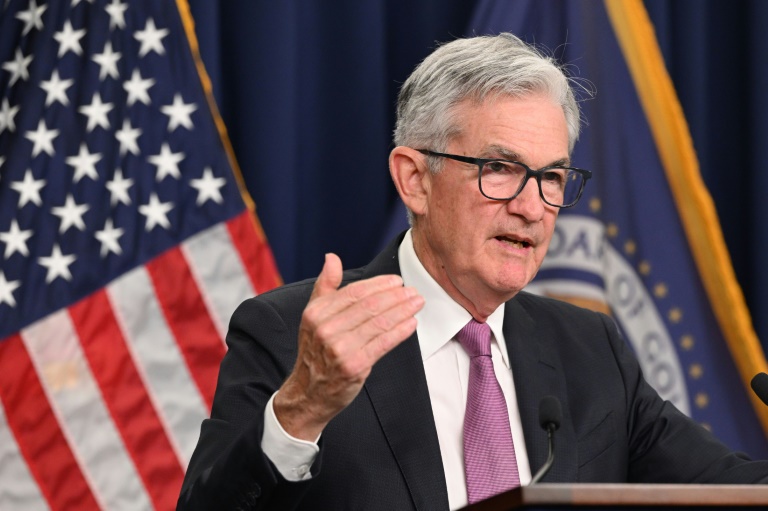
European natural gas prices climbed Thursday towards a record peak on heightened fears over Russian supplies, while equities rose on the eve of a key speech from Federal Reserve chair Jerome Powell.

Europe’s benchmark Dutch TTF gas contract advanced to 322 euros per megawatt hour, not far from the record high 345 euros struck in March shortly after key gas producer Russia invaded Ukraine.

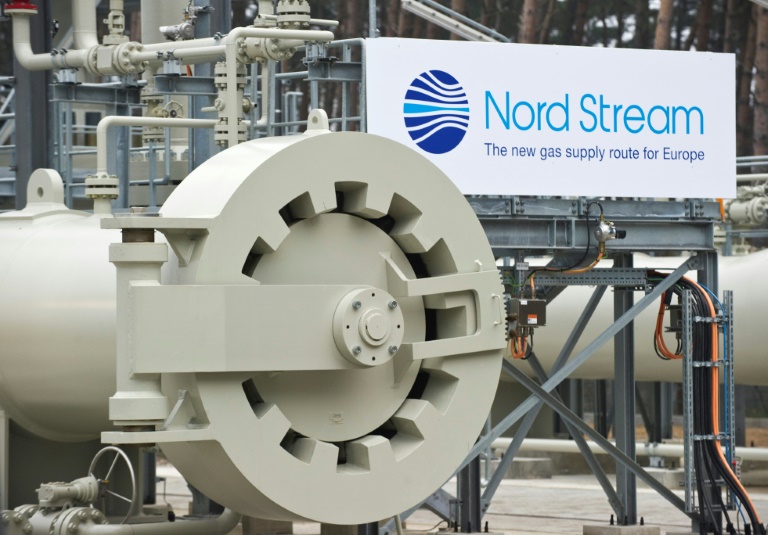
Prices have spiked in recent days as a three-day halt in Russian deliveries to Germany via the Nord Stream 1 pipeline approaches amid fears that Moscow will not turn the taps back on afterwards.

At the same time, one-year forward contracts for electricity prices in both France and Germany surged on Thursday to record pinnacles on worries over a winter energy crunch.

– ‘Unstoppable march upwards’ –

“Gas is on a seemingly unstoppable march upwards again, a dramatic move which will intensify the energy crisis,” said Hargreaves Lansdown analyst Susannah Streeter.

“Already plans are being brought in to save energy which will darken streets across Germany and make public buildings colder, but much tougher measures may have to be enforced given dwindling gas reserves.”

In stock market trade, European equities mostly advanced, with Frankfurt drawing some strength from news that the German economy expanded by an anaemic 0.1 percent in the second quarter.

That was upgraded from the prior projection of zero growth, but analysts remain downbeat.

“I’m trying to find a reason to be optimistic on the back of that, but in reality it just means the economy may take a little longer to fall into recession,” warned OANDA analyst Craig Erlam.

“With the energy crisis unlikely to improve, this likely means another quarter of flat growth at best before the economy falls into recession later this year.”

Wall Street also pushed higher as traders looked to central bankers meeting in Jackson Hole in the US state of Wyoming this week.

All eyes are on Powell’s Friday speech for clues about the Federal Reserve’s plans to tame runaway inflation with higher borrowing costs.

Central banks around the world are trying to find a delicate balance between curbing inflation and avoiding recessions.

The challenge has been compounded this year by Russia’s invasion of Ukraine, which has sent energy and food prices skyrocketing.

There are concerns that the Fed’s fight against soaring inflation could lead to a recession in the United States, which could, in turn, hit a global economy that is still recovering from the Covid pandemic.

But the latest data out Thursday showed a continuing drop in first time claims to 243,000 last week, suggesting the US economy remains strong.

“A reading below 250,000 certainly indicates that labor market conditions remain tight, which means the potential for sticky wage-based inflation pressures also remains tight, and that is unlikely to be a comforting indication for Fed officials,” said Briefing.com analyst Patrick O’Hare.

US second-quarter GDP figures were also revised higher, to a 0.6-percent contraction from the initial estimate of a 0.9-percent contraction.

– China stimulus –

Asian indices rose after China unveiled fresh measures to boost its economy.

The moves to shore up the economy were announced by China’s State Council on Wednesday, including steps to encourage lending, consumption and investment, according to the official Xinhua news agency.

They also included support for electricity producers and agriculture, two sectors hit especially hard by the heatwave, though Xinhua’s readout of the State Council meeting did not mention the extreme weather.

– Key figures at around 1530 GMT –

New York – Dow: UP 0.1 percent at 33,001.63 points

EURO STOXX 50: UP 0.2 percent at 3,674.05

London – FTSE 100: UP 0.1 percent at 7,479.74 (close)

Frankfurt – DAX: UP 0.4 percent at 13,271.96 (close) 

Paris – CAC 40: DOWN less than 0.1 percent at 6,381.56 (close)

Tokyo – Nikkei 225: UP 0.6 percent at 28,479.01 (close)

Hong Kong – Hang Seng Index: UP 3.6 percent at 19,968.38 (close)

Shanghai – Composite: UP 1.0 percent at 3,246.25 (close)

Euro/dollar: UNCHANGED from Wednesday at $0.9970

Pound/dollar: UP at $1.1814 from $1.1799

Euro/pound: DOWN at 84.36 pence from 84.47 pence

Dollar/yen: UP at 136.71 yen from 136.36 yen

West Texas Intermediate: DOWN 0.6 percent at $94.30 per barrel

Brent North Sea crude: DOWN 0.4 percent at $100.83

burs-rl/kjm

Gas prices approach record peak on Russian supply fears

European natural gas prices climbed Thursday towards a record peak on heightened fears over Russian supplies, while equities marked time on the eve of a key speech from Federal Reserve chair Jerome Powell.

Europe’s benchmark Dutch TTF gas contract advanced to 318 euros per megawatt hour before paring gains.

That was not far from the record high 345 euros struck in March shortly after key gas producer Russia invaded Ukraine.

Prices have spiked in recent days as a three-day halt in Russian deliveries to Germany via the Nord Stream 1 pipeline approaches amid fears that Moscow will not turn the taps back on afterwards.

At the same time, one-year forward contracts for electricity prices in both France and Germany surged on Thursday to record pinnacles on worries over a winter energy crunch.

– ‘Unstoppable march upwards’ –

“Gas is on a seemingly unstoppable march upwards again, a dramatic move which will intensify the energy crisis,” said Hargreaves Lansdown analyst Susannah Streeter.

“Already plans are being brought in to save energy which will darken streets across Germany and make public buildings colder, but much tougher measures may have to be enforced given dwindling gas reserves.”

In stock market trade, European equities were broadly steady, with Frankfurt drawing some strength from news that the German economy expanded by an anaemic 0.1 percent in the second quarter.

That was upgraded from the prior projection of zero growth, but analysts remain downbeat.

“I’m trying to find a reason to be optimistic on the back of that, but in reality it just means the economy may take a little longer to fall into recession,” warned OANDA analyst Craig Erlam.

“With the energy crisis unlikely to improve, this likely means another quarter of flat growth at best before the economy falls into recession later this year.”

Wall Street opened mixed, with the Dow dipping, as traders looked to central bankers meeting in Jackson Hole in the US state of Wyoming this week.

All eyes are on Powell’s Friday speech for clues about the Federal Reserve’s plans to tame runaway inflation with higher borrowing costs.

Central banks around the world are trying to find a delicate balance between curbing inflation and avoiding recessions.

The challenge has been compounded this year by Russia’s invasion of Ukraine, which has sent energy and food prices skyrocketing.

There are concerns that the Fed’s fight against soaring inflation could lead to a recession in the United States, which could, in turn, hit a global economy that is still recovering from the Covid pandemic.

But the latest data out Thursday showed a continuing drop in first time claims to 243,000 last week, suggesting the US economy remains strong.

“A reading below 250,000 certainly indicates that labor market conditions remain tight, which means the potential for sticky wage-based inflation pressures also remains tight, and that is unlikely to be a comforting indication for Fed officials,” said Briefing.com analyst Patrick O’Hare.

US second quarter GDP figures were also revised higher, to a 0.6 percent contraction from the initial estimate of a 0.9 percent contraction.

– China stimulus –

Asian indices rose after China unveiled fresh measures to boost its economy.

Fresh measures to shore up the economy were announced by China’s State Council on Wednesday, including steps to encourage lending, consumption and investment, according to the official Xinhua news agency.

They also included support for electricity producers and agriculture, two sectors hit especially hard by the heatwave, though Xinhua’s readout of the State Council meeting did not mention the extreme weather.

– Key figures at around 1330 GMT –

London – FTSE 100: UP less than 0.1 percent at 7,478.02 points

Frankfurt – DAX: UP less than 0.1 percent at 13,230.34 

Paris – CAC 40: DOWN 0.2 percent at 6,373.08

EURO STOXX 50: DOWN 0.1 percent at 3,663.21

New York – Dow: DOWN less than 0.1 percent at 32,956.25

Tokyo – Nikkei 225: UP 0.6 percent at 28,479.01 (close)

Hong Kong – Hang Seng Index: UP 3.6 percent at 19,968.38 (close)

Shanghai – Composite: UP 1.0 percent at 3,246.25 (close)

Euro/dollar: DOWN at $0.9966 from $0.9970 on Wednesday

Pound/dollar: UP at $1.1807 from $1.1799

Euro/pound: DOWN at 84.42 pence from 84.47 pence

Dollar/yen: UP at 136.78 yen from 136.36 yen

West Texas Intermediate: UP 0.4 percent at $95.29 per barrel

Brent North Sea crude: UP 0.6 percent at $101.86

burs-rl/lth

Grain prices ease back but fertiliser costs a growing risk

Grain prices have dropped sharply from the record highs they reached following Russia’s invasion of Ukraine, but another menace to global food security remains: a shortage of fertiliser.

The conflict sparked fears of famine in poorer countries reliant on agricultural goods from Ukraine and Russia, two nations that were responsible for nearly a third of global wheat exports last year.

Wheat prices reached a peak of nearly 440 euros ($440) a tonne on the European market in mid-May, double the level of one year ago, as crucial Ukrainian shipments were stuck at port due to a Russian naval blockade in the Black Sea.

But prices have fallen to around 300 euros in August.

“The situation began to calm down at the end of May, beginning of June with the first reassuring harvest forecasts for Europe and the resumption of Ukrainian exports, first by road and rail, then by sea,” said Gautier Le Molgat, analyst at consultancy Agritel.

Kyiv and Moscow reached an agreement in July, brokered by the United Nations and Turkey, that allowed Ukraine to resume grain shipments in the Black Sea.

The agreement opened a shipping corridor for 20 million tonnes of maize, wheat and sunflower seed oil stocked in Ukraine. According to the Joint Coordination Centre which manages the sea corridor, more than 720,000 tonnes have already left Ukraine.

“Thanks to intensive international cooperation, Ukraine is on track to export as much as four million metric tonnes of agricultural products in August,” a senior US State Department official told AFP on Tuesday.

– Strong ruble –

In addition to more supplies reaching markets and helping lower prices, the deal has led to a drop in insurance premiums, reducing transport costs.

But the reduction in tensions is, for the moment, benefitting Ukraine more than Russia, which is expecting a bumper harvest of 88 million tonnes of wheat.

Russian wheat exports in July and August are running 27 percent lower than last year, according to estimates by the Russian market research firm SovEcon.

That is due to fierce competition on the international grain market, as well as the strong value of the ruble and a high Russian export tax. 

“As a result, farmers remain reluctant sellers,” said Andrei Sizov, SovEcon’s managing director. 

The low volume of Russian exports is one of the main reasons why wheat prices have remained so high, said Sizov.

– Fertiliser costs a growing problem –

One of the reasons prices have not come down further is the surge in energy prices, due to the post-pandemic recovery and the war.

Higher oil prices impact transportation costs, while natural gas is a feedstock for manufacturing the chemical fertilisers that most farmers now use.

“Fertiliser prices have tripled in the last 18 months and the hard part of my job is forecasting what they will do in the next 18 months,” Joel Jackson, a fertiliser analyst at BMO Capital Markets, said at an analyst conference in July in the United States.

With European gas prices soaring above 300 euros per megawatt hour, compared to an average of 20 euros over the past decades, “we’ve got a big problem as it’s untenable for ammonia manufacturers,” said Nicolas Broutin, head of the French subsidiary of Yara, the Norwegian firm which is Europe’s largest fertiliser producer. 

Yara announced Thursday it was reducing once again its production in Europe of ammonia, which is made using hydrogen obtained from natural gas and which provides the nitrogen in synthetic fertilisers.

The firm will only be using 35 percent of its production capacity in Europe. A number of other European manufacturers have either reduced or halted output.

Although fertilisers do not fall under international sanctions, farmers are also at risk of shortages of another major element of fertiliser — potassium or potash — as both Russia and Belarus are major producers. 

BMO Capital Markets’ Joel Jackson said fertiliser manufacturers worry that the high prices will prompt farmers to reduce or eliminate their use.

“We’re already seeing that throughout Europe,” said Yara’s Nicolas Broutin.

CyclOpe, a French-based commodities research firm, said “it’s in 2023-2024 that the rise in fertiliser prices and eventually their reduced use will be felt.”

Farmers will try to pass on higher fertiliser costs to consumers, driving up food costs.

Meanwhile, reduced fertiliser use will result in lower crop yields and harvests, which will also drive up food prices.

CyclOpe expects in particular “considerably reduced” output in Africa, where farmers and consumers are both more sensitive to prices.

Gas prices approach record peak on Russian supply fears

European natural gas prices climbed Thursday towards a record peak on heightened fears over Russian supplies, while global equities rose on the eve of a key speech from Federal Reserve chair Jerome Powell.

Europe’s benchmark Dutch TTF gas contract advanced to 318 euros per megawatt hour before paring gains.

That was not far from the record high 345 euros struck in March shortly after key gas producer Russia invaded Ukraine.

Prices have spiked in recent days as a three-day halt in Russian deliveries to Germany via the Nord Stream 1 pipeline approaches.

At the same time, one-year forward contracts for electricity prices in both France and Germany surged on Thursday to record pinnacles on worries over a winter energy crunch.

– ‘Unstoppable march upwards’ –

“Gas is on a seemingly unstoppable march upwards again, a dramatic move which will intensify the energy crisis,” said Hargreaves Lansdown analyst Susannah Streeter.

“Already plans are being brought in to save energy which will darken streets across Germany and make public buildings colder, but much tougher measures may have to be enforced given dwindling gas reserves.”

In stock market trade, European equities pushed higher mirroring Asian gains.

Frankfurt also drew some strength from news that the German economy expanded by an anaemic 0.1 percent in the second quarter.

That was upgraded from the prior projection of zero growth, but analysts remain downbeat.

“I’m trying to find a reason to be optimistic on the back of that, but in reality it just means the economy may take a little longer to fall into recession,” warned OANDA analyst Craig Erlam.

“With the energy crisis unlikely to improve, this likely means another quarter of flat growth at best before the economy falls into recession later this year.”

Asian indices rose after China unveiled fresh measures to boost its economy.

Traders followed a positive lead from Wall Street, where the Dow, Nasdaq and S&P 500 all closed higher.

Meanwhile, central bankers are meeting in Jackson Hole in the US state of Wyoming this week.

All eyes are on Powell’s Friday speech for clues about the Federal Reserve’s plans to tame runaway inflation with higher borrowing costs.

There are concerns that the Fed’s fight against soaring inflation could lead to a recession in the United States, which could, in turn, hit a global economy that is still recovering from the Covid pandemic.

– China stimulus –

Central banks around the world are trying to find a delicate balance between curbing inflation and avoiding recessions.

The challenge has been compounded this year by Russia’s invasion of Ukraine, which has sent energy and food prices skyrocketing.

Traders are also keeping an eye on how China will repair the economic damage from its strict Covid controls, a crisis in its property sector and power shortages caused by a record-breaking heatwave.

Fresh measures to shore up the economy were announced by China’s State Council on Wednesday, including steps to encourage lending, consumption and investment, according to the official Xinhua news agency.

They also included support for electricity producers and agriculture, two sectors hit especially hard by the heatwave, though Xinhua’s readout of the State Council meeting did not mention the extreme weather.

– Key figures at around 1010 GMT –

London – FTSE 100: UP 0.4 percent at 7,501.04 points

Frankfurt – DAX: UP 0.2 percent at 13,251.85 

Paris – CAC 40: UP 0.1 percent at 6,395.84

EURO STOXX 50: UP 0.2 percent at 3,674.31

Tokyo – Nikkei 225: UP 0.6 percent at 28,479.01 (close)

Hong Kong – Hang Seng Index: UP 3.6 percent at 19,968.38 (close)

Shanghai – Composite: UP 1.0 percent at 3,246.25 (close)

New York – Dow: UP 0.2 percent at 32,969.23 points (close)

Euro/dollar: UP at $0.9999 from $0.9970 on Wednesday

Pound/dollar: UP at $1.1842 from $1.1799

Euro/pound: DOWN at 84.44 pence from 84.47 pence

Dollar/yen: UP at 136.42 yen from 136.36 yen

West Texas Intermediate: UP 0.1 percent at $94.94 per barrel

Brent North Sea crude: UP 0.1 percent at $101.32

burs-rfj/lth

Sony hikes PS5 prices in some markets, US consumers spared

Sony’s PlayStation 5 is already notoriously difficult to find, and on Thursday the popular console’s manufacturer said that it will also become more expensive for gamers in many parts of the world.

Sony Interactive Entertainment (SIE) has recommended raising the console’s retail price in Europe, the United Kingdom, Japan, China, Australia, Mexico and Canada, the company’s top official Jim Ryan said.

US consumers will be spared from the hikes, Ryan said, without providing further explanation.

The price rises will see a PS5 Digital Edition retail in Europe for 449.99 euros ($450), up from 399.99 euros.

The same console will be sold in the UK for 389.99 pounds ($462), up from 359.99 pounds, and in Japan for 49,478 yen ($363), up from 43,978 yen.

Sony blamed “high global inflation rates as well as adverse currency trends” for the price increases.

“Based on these challenging economic conditions, SIE has made the difficult decision to increase the recommended retail price of PlayStation 5 in select markets,” Ryan said in a statement.

Sony’s current top priority is to address a supply crunch that has made PS5s difficult to buy, he said.

Earlier, console competitor Nintendo said it was not considering raising prices for the moment. 

“In order to offer unique entertainment to a wide range of customers, we want to avoid pricing people out,” President Shuntaro Furukawa told the Nikkei business daily in an article published earlier this month.

“Our competition is the variety of entertainment in the world, and we always think about pricing in terms of the value of the fun we offer,” he said.

Sony hikes PS5 prices in some markets, US consumers spared

Sony’s PlayStation 5 is already notoriously difficult to find, and on Thursday’s the popular console’s manufacturer said that it will also become more expensive for gamers in many parts of the world.

Sony Interactive Entertainment (SIE) has recommended raising the console’s retail price in Europe, the United Kingdom, Japan, China, Australia, Mexico and Canada, the company’s top official Jim Ryan said.

US consumers will be spared from the hikes, Ryan said, without providing further explanation.

The price rises will see a PS5 Digital Edition retail in Europe for 449.99 euros ($450), up from 399.99 euros.

The same console will be sold in the UK for 389.99 pounds ($462), up from 359.99 pounds, and in Japan for 49,478 yen ($363), up from 43,978 yen.

SIE blamed “high global inflation rates as well as adverse currency trends” for the price increases.

“Based on these challenging economic conditions, SIE has made the difficult decision to increase the recommended retail price of PlayStation 5 in select markets,” Ryan said in a statement.

Sony’s current top priority is to address a supply crunch that has made PS5s difficult to buy, he said.

Asian, European markets rise with eyes on China, Fed speech

Hong Kong led gains in Asian markets Thursday after China unveiled fresh measures to boost its economy, while investors awaited a speech by the Fed chair that may hold clues about future rate hikes.

Central bankers are meeting in Jackson Hole in the US state of Wyoming, and all eyes are on Federal Reserve boss Jerome Powell’s Friday speech for clues about plans to tame inflation.

Market sentiment was also boosted by the Chinese government’s Wednesday announcement of new policies to help sustain the recovery of the world’s second-largest economy.

Asian traders on Thursday followed a positive lead from Wall Street, where the Dow, Nasdaq and S&P 500 all closed higher.

After Typhoon Ma-On delayed the start of trading until 1:00pm local time (0500 GMT), Hong Kong surged to close more than 3.6 percent higher.

Tokyo, Shanghai and Sydney rose. There were also gains in Singapore, Taipei and Seoul.

In early European trade, London, Frankfurt and Paris opened higher.

There are concerns that the Fed’s fight against soaring inflation could lead to a recession in the United States, which could, in turn, hit a global economy still recovering from the Covid-19 pandemic.

“A slower global growth environment is not going away anytime soon and now we are clearly seeing broader signs of weakness for the US economy,” OANDA’s Edward Moya said in a note.

“Powell’s fight against inflation might send the US economy into a recession late next year, but for now he needs to stick to the hawkish script and leave all options of tightening on the table.”

– China stimulus –

Central banks around the world are trying to find a delicate balance between curbing inflation and avoiding recessions.

The challenge has been compounded this year by Russia’s invasion of Ukraine, which has sent energy and food prices skyrocketing.

Traders are also keeping an eye on how China will repair the economic damage from its strict Covid controls, a crisis in its property sector and power shortages caused by a record-breaking heatwave.

Fresh measures to shore up the economy were announced by China’s State Council on Wednesday, including steps to encourage lending, consumption and investment, according to the official Xinhua news agency.

They also included support for electricity producers and agriculture, two sectors hit especially hard by the heatwave, though Xinhua’s readout of the State Council meeting did not mention the extreme weather.

Crude oil traded higher Thursday with concerns building about global supplies, affected by key exporter Saudi Arabia teasing the possibility of production cuts and ongoing talks about the resurrection of the Iran nuclear deal.

– Key figures at around 0815 GMT –

Tokyo – Nikkei 225: UP 0.6 percent at 28,479.01 (close)

Hong Kong – Hang Seng Index: UP 3.6 percent at 19,968.38 (close)

Shanghai – Composite: UP 1.0 percent at 3,246.25 (close)

London – FTSE 100: UP 0.8 percent at 7,527.96

Euro/dollar: UP at 0.9996 from 0.9967 on Wednesday

Pound/dollar: UP at 1.1837 from 1.1797

Euro/pound: DOWN at 84.46 pence from 84.49 pence

Dollar/yen: DOWN at 136.57 yen from 137.06 yen

West Texas Intermediate: UP 0.3 percent at $95.15 per barrel

Brent North Sea crude: UP 0.5 percent at $101.70

New York – Dow: UP 0.2 percent at 32,969.23 points (close)

Asian markets rise with eyes on China, Fed speech

Asian markets rose Thursday after China unveiled fresh measures to boost its economy, while investors awaited a speech by the Fed chair that may hold clues about future rate hikes.

Central bankers are meeting in Jackson Hole in the US state of Wyoming, and all eyes are on Federal Reserve boss Jerome Powell’s Friday speech for clues about plans to tame inflation.

Market sentiment was also boosted by the Chinese government’s Wednesday announcement of new policies to help sustain the recovery of the world’s second-largest economy.

Asian traders on Thursday followed a positive lead from Wall Street, where the Dow, Nasdaq and S&P 500 all closed higher.

Tokyo, Hong Kong and Sydney rose. There were also gains in Shanghai, Singapore, Taipei and Seoul.

There are concerns that the Fed’s fight against soaring inflation could lead to a recession in the United States, which could, in turn, hit a global economy still recovering from the Covid-19 pandemic.

“A slower global growth environment is not going away anytime soon and now we are clearly seeing broader signs of weakness for the US economy,” OANDA’s Edward Moya said in a note.

“Powell’s fight against inflation might send the US economy into a recession late next year, but for now he needs to stick to the hawkish script and leave all options of tightening on the table.”

– China stimulus –

Central banks around the world are trying to find a delicate balance between curbing inflation and avoiding recessions.

The challenge has been compounded this year by Russia’s invasion of Ukraine, which has sent energy and food prices skyrocketing.

Traders are also keeping an eye on how China will repair the economic damage from its strict Covid controls, a crisis in its property sector and power shortages caused by a record-breaking heatwave.

Fresh measures to shore up the economy were announced by China’s State Council on Wednesday, including steps to encourage lending, consumption and investment, according to the official Xinhua news agency.

They also included support for electricity producers and agriculture, two sectors hit especially hard by the heatwave, though Xinhua’s readout of the State Council meeting did not mention the extreme weather.

Crude oil traded higher Thursday with concerns building about global supplies, affected by key exporter Saudi Arabia teasing the possibility of production cuts and ongoing talks about the resurrection of the Iran nuclear deal.

– Key figures at around 0630 GMT –

Tokyo – Nikkei 225: UP 0.6 percent at 28,479.01 (close)

Hong Kong – Hang Seng Index: UP 2.4 percent 19,734.60

Shanghai – Composite: UP 0.1 percent at 3,219.58

Euro/dollar: UP at 1.0025 from 0.9967 on Wednesday

Pound/dollar: UP at 1.1852 from 1.1797

Euro/pound: UP at 84.59 pence from 84.49 pence

Dollar/yen: DOWN at 136.55 yen from 137.06 yen

West Texas Intermediate: UP 0.4 percent at $95.31 per barrel

Brent North Sea crude: UP 0.5 percent at $101.77

New York – Dow: UP 0.2 percent at 32,969.23 points (close)

London – FTSE 100: DOWN 0.2 percent at 7,471.51 (close) 

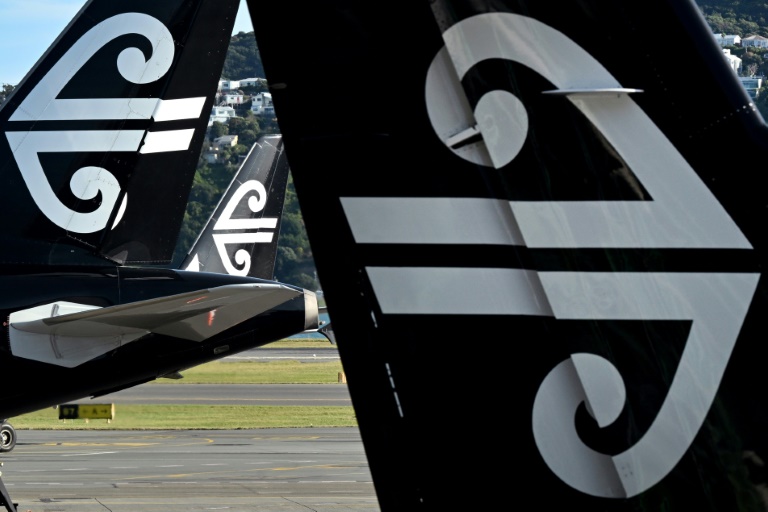
Air New Zealand losses soar due to sky-high fuel, labour costs

Sky-high fuel and labour costs combined with Covid travel restrictions saw Air New Zealand more than double its losses in the last financial year, the airline said Thursday.

The flag carrier saw losses increase to NZ$591 million (US$366 million), up from NZ$292 million in the 2021 financial year.

Its loss before tax was NZ$810 million, up from NZ$415 million, while revenue rose from NZ$2.5 billion to NZ$2.7 billion.

The reopening of New Zealand’s borders in March has helped ease the pressure, but the previous pandemic-related travel restrictions impacted its operating revenue.

Air New Zealand CEO Greg Foran said the focus now is on “restoring services, maintaining a choice of fares and launching innovations” for their customers.

Foran said the airline was firmly in the “revive” phase of its “survive, revive, thrive” journey, with bookings currently picking up despite ongoing challenges in the air travel sector.

Japan seeks 'sustainable world' in Africa aid forum

With its stated purpose to “create a sustainable world together”, Japan on Saturday kicks off its aid conference for Africa, where rival China has invested heavily in recent years.

The eighth Tokyo International Conference on African Development (TICAD8) comes against the backdrop of China’s rising influence, cemented on the continent by its “Belt and Road” infrastructure initiative.

A “complex” international environment caused by issues including “the situation in Ukraine” surrounds the meeting in Tunisia’s capital, the Japanese foreign ministry said.

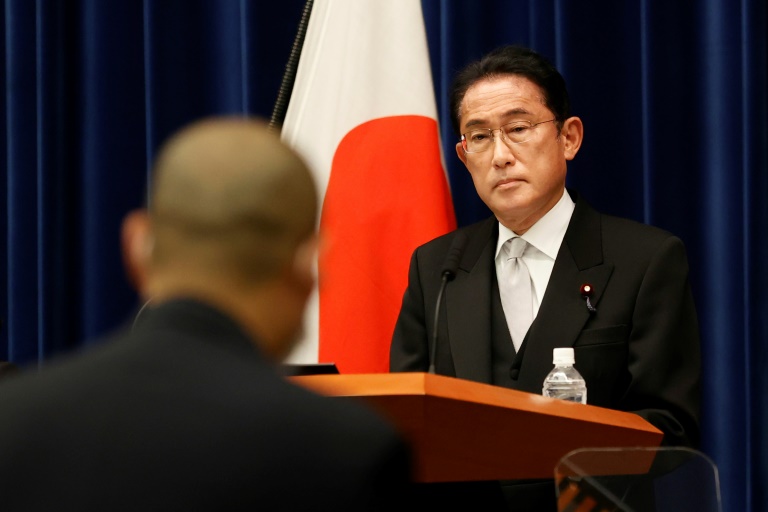
It is the first TICAD — held every three years either in Japan or an African country — since the pandemic began and Prime Minister Fumio Kishida will be attending remotely after testing positive for Covid-19.

Replacing him at the head of the Japanese delegation will be his Foreign Minister Yoshimasa Hayashi, and about 5,000 participants are expected to attend.

Among them will be 30 heads of state and government, converging on the Tunisian capital from across the continent.

Alongside the summit, businesspeople will attend an economic conference while various parallel events and workshops will address civil society and women’s inclusion.

Since their inception in 1993, the TICAD conferences, co-sponsored by the United Nations, World Bank and African Union, have generated 26 development projects in 20 African countries, largely funded by the Japan International Cooperation Agency (JICA).

– An alternative to China –

With a view to “accelerating Japanese investment in Africa”, the conference will focus on three pillars: economy; society; and peace and stability, according to the official presentation.

With more than $130 million already set to be delivered in food aid, Japan will also provide assistance for “rice production and food security” in view of the food crisis worsened by the Ukraine war.

Japanese economic paper Nikkei reported that aid to Africa could increase by 40 percent over the next three years, compared to 2020-2022.

Such assistance comes “in response” to other powers that have bolstered their presence in Africa, namely the United States, Europe and in particular China, Nikkei said.

In response to competition from China, a Japanese foreign ministry official said Tokyo’s “African diplomacy… can be boiled down to two words: ownership and partnership”.

“Japan has a 30-year history of involvement” in the continent through TICAD, he said.

“The core message we would like to get across this time is that Japan wants to remain Africa’s partner.”

At the closing of the last TICAD in 2019, former premier Shinzo Abe — who was assassinated at a campaign event last month — warned investors in Africa that they must beware of burdening countries with “excessive” debt, in an apparent swipe at China.

– Production hub –

On the Tunisian side, authorities hope to profit from holding the summit, particularly as Tunis is a two-hour flight from many major European capitals.

Tunisia hopes to attract Japanese investment domestically, particularly for its health, automotive and renewable energy sectors.

More than 80 projects are on the table with a value of $2.7 billion, according to Hedi Abbes, head of the Tunisian-Japanese chamber of commerce.

These projects, on offer to Tunisian and other African private investors, are expected to create about 35,700 jobs, he said.

With its industrial capacities, Tunisia hopes to become a hub for the production of medicines and vaccines, as some African countries have lagged far behind in vaccination efforts.

During a global Covid-19 summit in May, the Japanese premier stressed the importance of promoting “local production capacity for pharmaceuticals and medical products, including vaccines”.

“To that end, we have decided to provide assistance of up to $200 million through JICA to enhance the capacity in Africa,” Kishida said.

Close Bitnami banner
Bitnami