Chinese Business

Stocks slump after Fed chair vows tough inflation fight

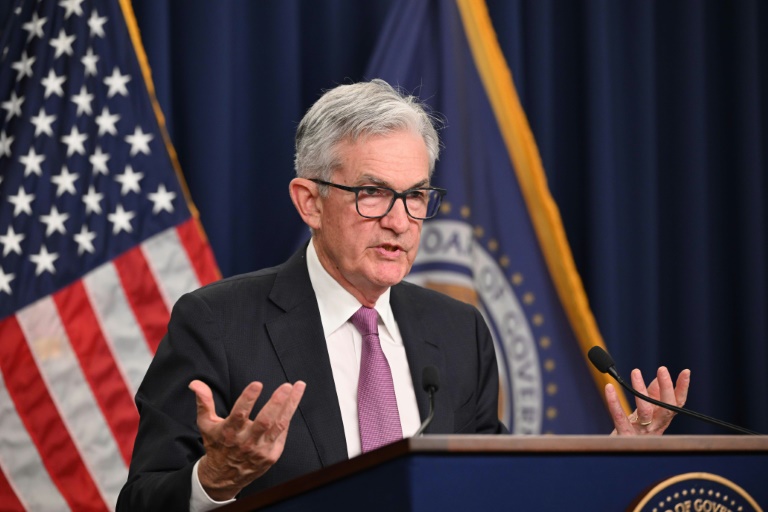
Stocks slumped on Friday after Federal Reserve boss Jerome Powell pledged to act “forcefully” against soaring inflation in a battle that will be painful for American families and businesses.

The Fed has been on an aggressive campaign to raise interest rates — and Powell made it clear at the Jackson Hole gathering of global monetary policymakers that the fight against inflation is not over.

“Restoring price stability will take some time and requires using our tools forcefully to bring demand and supply into better balance,” he told the gathering, held against the backdrop of the majestic Grand Teton mountains.

Modest signs of slowing in the world’s largest economy and easing price pressures had spurred hope in financial markets that the central bank might ease up on its aggressive interest rate hikes, and perhaps even start to reverse course next year.

But Powell doused those hopes, making it clear that Fed policy and the benchmark borrowing rate would have to remain “sufficiently restrictive” to return inflation to its two percent target.

“While higher interest rates, slower growth, and softer labor market conditions will bring down inflation, they will also bring some pain to households and businesses,” Powell said.

“But a failure to restore price stability would mean far greater pain.”

Wall Street stocks tumbled, with all three main indices ending with losses of three percent or more.

Keith Buchanan at Globalt Investments said, “This wasn’t a shocking speech by any stretch of imagination.”

He said the negative reaction was due to “the last possibility of a pivot being kind of shoved off the table.”

The dollar lost ground against the euro, but rose against the yen and pound.

Sentiment had been boosted ahead of Powell’s speech by the latest readings of the US personal consumption expenditures price index, the Fed’s preferred yardstick for inflation, which dipped 0.1 percent from in July from June, and slowed to 6.3 percent from 6.8 percent on an annual basis.

But Powell warned that one month of improvement is not enough to declare victory.

– Electricity prices shock European stocks –

European equities also saw losses deepen after Powell’s speech, but stocks there had already been struggling after signs that energy prices are likely to keep fuelling inflation.

Sentiment in London had been dented by news that UK domestic energy bills will rocket even higher this year on surging wholesale gas prices as Britain’s cost-of-living crisis worsens.

Frankfurt and Paris stocks retreated amid fears of a eurozone energy crunch in the coming peak-demand winter as Russia curbs supplies.

Europe’s benchmark Dutch TTF gas contract rose Friday 341 euros per megawatt hour, not far from the record high struck in March after key gas producer Russia invaded Ukraine.

Meanwhile, German and French electricity futures prices soared to new records that are at least 10 times above last year.

Elsewhere, Asia was buoyed by signs of progress in talks between US and Chinese regulators that could see tech titans including Alibaba and JD.com avoid a delisting in New York.

More than 200 Chinese firms have for months had the threat of a New York delisting hanging over them as they are caught in a wide-ranging row between the world’s two biggest economies.

– Key figures at around 2100 GMT –

New York – Dow: DOWN 3.0 percent at 32,283.4 points (close)

New York – S&P 500: DOWN 3.4 percent at 4,057.66 (close)

New York – Nasdaq: DOWN 3.9 percent at 12,141.71 (close)

EURO STOXX 50: DOWN 2.0 percent at 3,603.68 (close)

London – FTSE 100: DOWN 0.7 percent at 7,427.31 (close) 

Frankfurt – DAX: DOWN 2.3 percent at 12,971.47 (close)

Paris – CAC 40: DOWN 1.7 percent at 6,274.26 (close)

Tokyo – Nikkei 225: UP 0.6 percent at 28,479.01 (close)

Hong Kong – Hang Seng Index: UP 3.6 percent at 19,968.38 (close)

Shanghai – Composite: UP 1.0 percent at 3,246.25 (close)

Euro/dollar: UP at $0.9964 from $0.9974 on Thursday

Pound/dollar: DOWN at $1.1743 from $1.1832

Euro/pound: UP at 84.85 pence from 84.31 pence

Dollar/yen: UP at 137.38 yen from 136.49 yen

West Texas Intermediate: UP 0.5 percent at $93.00 per barrel

Brent North Sea crude: DOWN 0.1 percent at $98.88

burs-rl/ach/hs/dw
Taming inflation will inflict 'pain' on Americans: Fed's Powell

Taming US inflation will inflict “pain” on American families and businesses, but failure to wrestle prices down from their current 40-year high would be even more harmful, Federal Reserve Chair Jerome Powell said Friday in a hotly-anticipated speech to global policymakers.

Addressing the annual gathering of central bankers in Jackson Hole, Wyoming, Powell did not hold back or leave room for doubt about the Fed’s plans, pledging to act “forcefully.”

He warned that the world’s largest economy is likely to slow for a sustained period, and the strong US job market will suffer in order to get prices down — consequences he called the “unfortunate costs of reducing inflation.”

The Fed this year launched an aggressive campaign to raise interest rates — and in his unusually short, notably direct remarks, Powell made it clear that the fight against inflation is not over.

“Restoring price stability will take some time and requires using our tools forcefully to bring demand and supply into better balance,” he told the gathering, held against the backdrop of the majestic Grand Teton mountains.

“While higher interest rates, slower growth and softer labor market conditions will bring down inflation, they will also bring some pain to households and businesses,” Powell said.

“But a failure to restore price stability would mean far greater pain.”

Modest signs of slowing in the US economy and easing price pressures spurred hope in financial markets that the central bank might ease up on its aggressive rate hikes, and perhaps even start to reverse course next year.

But Powell doused hopes of a policy pivot, making it clear that Fed policy and the benchmark borrowing rate would have to remain “sufficiently restrictive” to bring inflation back down to the two percent target.

US markets turned negative on the news, with all three major stock indices losing three percent or more, including a 1,000 point loss for the Dow.

– Improving data –

The supply chain issues that have beleaguered the global economy have continued, worsened by a series of Covid lockdowns in China, which have combined with Russia’s war in Ukraine to send prices soaring worldwide.

In the battle to contain red-hot US inflation, which topped nine percent in June, the Fed has increased rates four times, including three-quarter-point increases in June and July — steep moves unheard of since the early 1980s — to the current level of a range of 2.25 to 2.5 percent.

Powell repeated Friday that another “unusually large” 75 basis point hike could be appropriate at the September policy meeting.

But recent data has shown signs of a slowing in price increases. Annual consumer price inflation dipped to a still-high 8.5 percent in July.

And data released Friday showed the Fed’s preferred inflation measure, the personal consumption expenditures price index, actually fell 0.1 percent in July — a dramatic slowdown from the 1.0 percent surge in June, largely reflecting the recent sharp retreat in global oil prices.

Over the last 12 months, the PCE price index slowed to 6.3 percent, the Commerce Department reported.

But Powell did not take much comfort in the figures.

“While the lower inflation readings for July are welcome, a single month’s improvement falls far short of what (policymakers) will need to see before we are confident that inflation is moving down,” he said.

But President Joe Biden cheered the figures, saying, “The American people are starting to get some relief from high prices.”

Still, he added, “We have more work to do. We have to help families who have been squeezed by decades living paycheck to paycheck.”

Powell pointed to the experience of one of his predecessors, famed inflation dragon slayer Paul Volcker — who used aggressive measures to quell runaway prices — and said officials cannot retreat from their responsibility.

“That means the Fed must hammer demand to come in line with what is becoming a global economy of scarcities or constrained supply,” KPMG economist Diane Swonk said on Twitter.

“That is no small challenge. Powell sees a window to avoid a Volcker outcome of deep recessions w/some pain today. Rock/hard place.”

Taming inflation will inflict 'pain' on Americans: Fed's Powell

Taming US inflation will inflict “pain” on American families and businesses, but failure to wrestle prices down from their current 40-year high would be even more harmful, Federal Reserve Chair Jerome Powell said Friday in a hotly-anticipated speech to global policymakers.

Addressing the annual gathering of central bankers in Jackson Hole, Wyoming, Powell did not hold back or leave room for doubt about the Fed’s plans, pledging to act “forcefully.”

He warned that the world’s largest economy is likely to slow for a sustained period, and the strong US job market will suffer in order to get prices down — consequences he called the “unfortunate costs of reducing inflation.”

The Fed this year launched an aggressive campaign to raise interest rates — and in his unusually short, notably direct remarks, Powell made it clear that the fight against inflation is not over.

“Restoring price stability will take some time and requires using our tools forcefully to bring demand and supply into better balance,” he told the gathering, held against the backdrop of the majestic Grand Teton mountains.

“While higher interest rates, slower growth and softer labor market conditions will bring down inflation, they will also bring some pain to households and businesses,” Powell said.

“But a failure to restore price stability would mean far greater pain.”

Modest signs of slowing in the US economy and easing price pressures spurred hope in financial markets that the central bank might ease up on its aggressive rate hikes, and perhaps even start to reverse course next year.

But Powell doused those hopes, making it clear that Fed policy and the benchmark borrowing rate would have to remain “sufficiently restrictive” to bring inflation back down to the two percent target.

Markets turned negative on the news, with all three major stock indices down two percent or more around midday.

– Improving data –

The supply chain issues that have beleaguered the global economy have continued, worsened by a series of Covid lockdowns in China, which have combined with Russia’s war in Ukraine to send prices soaring worldwide.

In the battle to contain red-hot US inflation, which topped nine percent in June, the Fed has increased rates four times, including three-quarter-point increases in June and July — steep moves unheard of since the early 1980s — to the current level of a range of 2.25 to 2.5 percent.

Powell repeated Friday that another giant 75 basis point hike could be appropriate at the September policy meeting.

But recent data has shown signs of a slowing in price increases. Annual consumer price inflation dipped to a still-high 8.5 percent in July.

And data released Friday showed the Fed’s preferred inflation measure, the personal consumption expenditures price index, actually fell 0.1 percent in July — a dramatic slowdown from the 1.0 percent surge in June, largely reflecting the recent sharp retreat in global oil prices.

Over the last 12 months, the PCE price index slowed to 6.3 percent, the Commerce Department reported.

But Powell did not take much comfort in the figures.

“While the lower inflation readings for July are welcome, a single month’s improvement falls far short of what (policymakers) will need to see before we are confident that inflation is moving down,” he said.

But President Joe Biden cheered the figures, saying, “The American people are starting to get some relief from high prices.”

Still, he added, “We have more work to do. We have to help families who have been squeezed by decades living paycheck to paycheck.”

Powell pointed to the experience of one of his predecessors, famed inflation dragonslayer Paul Volcker — who used aggressive measures to quell runaway prices — and said officials cannot retreat from their responsibility.

“That means the Fed must hammer demand to come in line with what is becoming a global economy of scarcities or constrained supply,” KPMG economist Diane Swonk said on Twitter.

“That is no small challenge. Powell sees a window to avoid a Volcker outcome of deep recessions w/some pain today. Rock/hard place.”

Stocks slump after Fed chair vows tough inflation fight

Stocks slumped on Friday after Federal Reserve boss Jerome Powell pledged to act “forcefully” against soaring inflation in a battle that will be painful for American families and businesses.

The Fed has been on an aggressive campaign to raise interest rates — and Powell made it clear at the Jackson Hole gathering of global monetary policymakers that the fight against inflation is not over.

“Restoring price stability will take some time and requires using our tools forcefully to bring demand and supply into better balance,” he told the gathering, held against the backdrop of the majestic Grand Teton mountains.

Modest signs of slowing in the world’s largest economy and easing price pressures spurred hope in financial markets that the central bank might ease up on its aggressive interest rate hikes, and perhaps even start to reverse course next year.

But Powell doused those hopes, making it clear that Fed policy and the benchmark borrowing rate would have to remain “sufficiently restrictive” to return inflation to its two percent target.

“While higher interest rates, slower growth, and softer labor market conditions will bring down inflation, they will also bring some pain to households and businesses,” Powell said.

“But a failure to restore price stability would mean far greater pain.”

Wall Street stocks moved higher as Powell wrapped up his speech, perhaps because he indicated the jury was out on making a third straight 0.75 percentage point hike in interest rates in September.

But then they promptly slumped lower, with the Dow down 1.6 percent in late morning trading, while the S&P 500 fell 1.9 percent and Nasdaq Composite tumbled 2.5 percent. 

“On balance, markets are viewing Powell’s comments as more hawkish than anticipated,” said Matt Weller, Global Head of Research at FOREX.com and City Index.

In addition to the reaction in equities trading, he pointed to the yield on two-year Treasury bonds rising to a near 15-year high.

“Mr. Powell clearly hit a hawkish note, emphasizing the importance of leaving policy tight until inflation was thoroughly licked,” he added.  

The dollar slid against the euro, but rose against the yen and pound.

Sentiment had been boosted ahead of Powell’s speech by the latest readings of the US personal consumption expenditures price index, the Fed’s preferred yardstick for inflation, which dipped 0.1 percent from in July from June, and slowed to 6.3 percent from 6.8 percent on an annual basis.

– Electricity prices shock European stocks –

European equities also saw losses deepen after Powell’s speech, but stocks there had already been struggling after signs that energy prices are likely to keep fuelling inflation.

Sentiment in London had been dented by news that UK domestic energy bills will rocket even higher this year on surging wholesale gas prices as Britain’s cost-of-living crisis worsens.

Frankfurt and Paris stocks retreated amid fears of a eurozone energy crunch in the coming peak-demand winter as Russia curbs supplies.

Europe’s benchmark Dutch TTF gas contract rose Friday 341 euros per megawatt hour, not far from the record high struck in March after key gas producer Russia invaded Ukraine.

Meanwhile, German and French electricity futures prices soared to new records that are at least 10 times above last year.

Elsewhere, Asia was buoyed by signs of progress in talks between US and Chinese regulators that could see tech titans including Alibaba and JD.com avoid a delisting in New York.

More than 200 Chinese firms have for months had the threat of a New York delisting hanging over them as they are caught in a wide-ranging row between the world’s two biggest economies.

– Key figures at around 1530 GMT –

New York – Dow: DOWN 1.6 percent at 32,760.77 points

EURO STOXX 50: DOWN 2.0 percent at 3,601.90

London – FTSE 100: DOWN 0.7 percent at 7,427.31 (close) 

Frankfurt – DAX: DOWN 2.3 percent at 12,971.47 (close)

Paris – CAC 40: DOWN 1.7 percent at 6,274.26 (close)

Tokyo – Nikkei 225: UP 0.6 percent at 28,479.01 (close)

Hong Kong – Hang Seng Index: UP 3.6 percent at 19,968.38 (close)

Shanghai – Composite: UP 1.0 percent at 3,246.25 (close)

Euro/dollar: UP at $0.9999 from $0.9974 on Thursday

Pound/dollar: DOWN at $1.1774 from $1.1832

Euro/pound: UP at 84.93 pence from 84.31 pence

Dollar/yen: UP at 137.31 yen from 136.49 yen

West Texas Intermediate: DOWN 0.2 percent at $92.35 per barrel

Brent North Sea crude: UP 0.2 percent at $99.54

burs-rl/ach 

Stocks slump after Fed chair vows tough inflation fight

Stock slumped on Friday after Federal Reserve boss Jerome Powell pledged to act “forcefully” against soaring inflation in a battle that will be painful for American families and businesses.

The Fed has been on an aggressive campaign to raise interest rates — and Powell made it clear at the Jackson Hole gathering of global monetary policymakers that the fight against inflation is not over.

“Restoring price stability will take some time and requires using our tools forcefully to bring demand and supply into better balance,” he told the gathering, held against the backdrop of the majestic Grand Teton mountains.

Modest signs of slowing in the world’s largest economy and easing price pressures spurred hope in financial markets that the central bank might ease up on its aggressive interest rate hikes, and perhaps even start to reverse course next year.

But Powell doused those hopes, making it clear that Fed policy and the benchmark borrowing rate would have to remain “sufficiently restrictive” to return inflation to its two percent target.

“While higher interest rates, slower growth, and softer labor market conditions will bring down inflation, they will also bring some pain to households and businesses,” Powell said.

“But a failure to restore price stability would mean far greater pain.”

Wall Street stocks moved higher as Powell wrapped up his speech, perhaps because he indicated the jury was out on making a third straight 0.75 percentage point hike in interest rates in September.

But then they promptly slid lower, with the Dow, S&P 500 and Nasdaq Composite all dropping more than one percent.

The dollar was mixed, slumping against the euro, but rising against the yen and pound.

Sentiment had been boosted ahead of Powell’s speech by the latest readings of the US personal consumption expenditures price index, the Fed’s preferred yardstick for inflation, which dipped 0.1 percent from in July from June, and slowed to 6.3 percent from 6.8 percent on an annual basis.

– Electricity prices shock European stocks –

European equities also saw losses deepen after Powell’s speech, but stocks had been struggling after signs that energy prices are likely to keep fuelling inflation.

Sentiment in London had been dented by news that UK domestic energy bills will rocket even higher this year on surging wholesale gas prices as Britain’s cost-of-living crisis worsens.

Frankfurt and Paris stocks retreated amid fears of a eurozone energy crunch in the coming peak-demand winter as Russia curbs supplies.

Europe’s benchmark Dutch TTF gas contract dipped Friday one day after soaring to 324 euros per megawatt hour, not far from the record high struck in March after key gas producer Russia invaded Ukraine.

But German and French electricity futures prices soared to new records that are at least 10 times above last year.

Elsewhere, Asia was buoyed by signs of progress in talks between US and Chinese regulators that could see tech titans including Alibaba and JD.com avoid a delisting in New York.

More than 200 Chinese firms have for months had the threat of a New York delisting hanging over them as they are caught in a wide-ranging row between the world’s two biggest economies.

– Key figures at around 1435 GMT –

New York – Dow: DOWN 1.2 percent at 32,901.09 points

EURO STOXX 50: DOWN 1.8 percent at 3,609.48

London – FTSE 100: DOWN 0.7 percent at 7,429.72 

Frankfurt – DAX: DOWN 1.9 percent at 13,023.47

Paris – CAC 40: DOWN 1.7 percent at 6,270.92

Tokyo – Nikkei 225: UP 0.6 percent at 28,479.01 (close)

Hong Kong – Hang Seng Index: UP 3.6 percent at 19,968.38 (close)

Shanghai – Composite: UP 1.0 percent at 3,246.25 (close)

Euro/dollar: UP at $1.0049 from $0.9974 on Thursday

Pound/dollar: DOWN at $1.1823 from $1.1832

Euro/pound: UP at 84.97 pence from 84.31 pence

Dollar/yen: UP at 137.10 yen from 136.49 yen

West Texas Intermediate: DOWN 0.8 percent at $91.75 per barrel

Brent North Sea crude: DOWN 0.7 percent at $98.69

burs-rl/lth

Europe stocks subdued before Fed chair speech

European stock markets wobbled Friday ahead of a speech by Federal Reserve boss Jerome Powell that is expected to reiterate his plan to ramp up US interest rates to fight soaring inflation.

London equities edged up despite news that UK domestic energy bills will rocket even higher this year on surging wholesale gas prices as Britain’s cost-of-living crisis worsens.

Yet Frankfurt and Paris stocks slid on fears of a eurozone energy crunch in the coming peak-demand winter as Russia curbs supplies.

Europe’s benchmark Dutch TTF gas contract dipped Friday one day after soaring to 324 euros per megawatt hour, not far from the record high struck in March after key gas producer Russia invaded Ukraine.

All eyes are now on Powell’s remarks later Friday at the annual symposium of top bankers and finance chiefs at Jackson Hole, Wyoming.

Most expect him to confirm that more hikes are on the way as officials try to bring inflation down from painful highs not seen in four decades.

– Choosing words carefully –

“I have no doubt Powell will have chosen his words very carefully today, all too aware of the consequences of even the smallest deviation in his intended message,” said OANDA trading platform analyst Craig Erlam.

“It’s a little ridiculous that markets put so much weight on such things but that is the situation we are in and I expect the Fed chair will be very clear in the message he wants to send.”

The key issue now is how much the bank will tighten over the coming months, with expectations for a half-point lift next month, after two three-quarter moves in June and July.

Elsewhere, Asia was buoyed by signs of progress in talks between US and Chinese regulators that could see tech titans including Alibaba and JD.com avoid a delisting in New York.

Hong Kong enjoyed a surge in tech shares thanks to news that China-US regulatory talks were progressing.

More than 200 Chinese firms have for months had the threat of a New York delisting hanging over them as they are caught in a wide-ranging row between the world’s two biggest economies.

But reports said Thursday that Beijing had called on top accounting firms to prepare to bring US-listed companies’ audit papers to Hong Kong, to be reviewed by US officials.

US lawmakers set a 2024 deadline for the removal of businesses that do not comply with listing rules and the latest move could provide a big step in avoiding that.

– Key figures at around 1045 GMT –

London – FTSE 100: UP 0.1 percent at 7,483.55 points

Frankfurt – DAX: DOWN 0.3 percent at 13,227.02

Paris – CAC 40: DOWN 0.3 percent at 6,364.56

EURO STOXX 50: DOWN 0.2 percent at 3,666.09

Tokyo – Nikkei 225: UP 0.6 percent at 28,479.01 (close)

Hong Kong – Hang Seng Index: UP 3.6 percent at 19,968.38 (close)

Shanghai – Composite: UP 1.0 percent at 3,246.25 (close)

New York – Dow: UP 0.2 percent at 32,969.23 points (close)

Euro/dollar: UP at $0.9982 from $0.9974 on Thursday

Pound/dollar: DOWN at $1.1792 from $1.1832

Euro/pound: UP at 84.65 pence from 84.31 pence

Dollar/yen: UP at 136.94 yen from 136.49 yen

West Texas Intermediate: UP 1.5 percent at $93.49 per barrel

Brent North Sea crude: UP 1.1 percent at $100.44

burs/rfj/lth

Asia, Europe stocks up ahead of Fed chair speech

Asian and European markets rose Friday after a Wall Street rally ahead of a speech by Federal Reserve boss Jerome Powell that is expected to reiterate his plan to ramp up interest rates to fight inflation.

Adding to the strong buying sentiment were signs of progress in talks between US and Chinese regulators that could see tech titans including Alibaba and JD.com avoid a delisting in New York.

Global equities have staggered in recent weeks after a near two-month rally from their June lows as a string of Fed officials lined up to reaffirm their commitment to tighten monetary policy, despite some promising economic data.

All eyes are now on Powell’s remarks later Friday at the annual symposium of top bankers and finance chiefs at Jackson Hole, Wyoming.

Most expect him to confirm that more hikes are on the way as officials try to bring inflation down from painful highs not seen in four decades.

Analysts said that while a number of board members have lined up this week, the hawkish tilt has largely been baked into market prices.

The key issue now is how much the bank will tighten over the coming months, with expectations for a half-point lift next month, after two three-quarter moves in June and July.

Wall Street’s three main indexes ended well up Thursday, with the Nasdaq and S&P 500 up more than one percent.

And Asia followed the lead, with Tokyo, Hong Kong and Sydney closing higher. There were also gains in Seoul, Singapore and Taipei.

Shanghai, however, ended lower.

In early European trade, London, Frankfurt and Paris all rose.

– US-China tech boost –

Hong Kong enjoyed a surge in tech shares thanks to news that China-US regulatory talks were progressing.

More than 200 Chinese firms have for months had the threat of a New York delisting hanging over them as they are caught in a wide-ranging row between the world’s two biggest economies.

But reports said Thursday that Beijing had called on top accounting firms to prepare to bring US-listed companies’ audit papers to Hong Kong, to be reviewed by US officials.

US lawmakers set a 2024 deadline for the removal of businesses that do not comply with listing rules and the latest move could provide a big step in avoiding that.

“To see that both sides are communicating, it is a good thing,” said Daisy Li, at EFG Asset Management. 

“Still, we will need to see if the US side is actually willing to accept the disclosure. If this can be resolved, it could help lower some (of the) China market’s geopolitical risk premium.”

The reports came as China announced plans to boost its flagging economy by pumping in tens of billions of dollars to kickstart lending, consumption and investment.

However, analysts have warned that while the cash injection will be welcomed, investors were more keen to see China ease Covid-19 policies that have led to the lockdown of major cities and battered industries.

– Key figures at around 0815 GMT –

Tokyo – Nikkei 225: UP 0.6 percent at 28,641.38 (close)

Hong Kong – Hang Seng Index: UP 1.0 percent at 20,170.04 (close)

Shanghai – Composite: DOWN 0.3 percent at 3,236.22 (close)

London – FTSE 100: UP 0.5 percent at 7,513.96

Euro/dollar: UP at 0.9977 from 0.9968 Thursday

Pound/dollar: DOWN at $1.1780 from $1.1826

Euro/pound: UP at 84.71 pence from 84.28 pence

Dollar/yen: UP at 136.96 yen from 136.36 yen

West Texas Intermediate: UP 1.1 percent at $93.52 per barrel

Brent North Sea crude: UP 1.0 percent at $100.33

New York – Dow: UP nearly 1.0 percent at 33,291.78 (close)

Long Covid costs Australia millions of working days

Long Covid has already cost the Australian economy three million working days this year, according to a government analysis seen by AFP Friday, significantly worsening the country’s acute labour shortages.

The treasury report found that lingering effects of the coronavirus have been keeping some 31,000 Australians away from work every day.

Treasurer Jim Chalmers said Friday that Australia’s “labour market has been absolutely smashed by Covid, and Long Covid increasingly”.

“The thousands of workdays the economy is losing to Long Covid is just one part of a complex picture, and gives a sense of what we are all up against,” he said.

The treasury analysis defined Long Covid as someone experiencing symptoms four weeks or more after becoming infected.

This mirrors how Long Covid is characterised by the US Centers for Disease Control (CDC), which lists a wide variety of respiratory, heart, digestive and even neurological symptoms.

These include fatigue, heart palpitations, lightheadedness, stomach pain and difficulty concentrating — known as “brain fog”.

A comprehensive study published in the Lancet this month found that one in eight people who get Covid develop at least one Long Covid symptom.

The findings of the Australian treasury analysis were in line with this study — with 12 percent of Covid-related absenteeism attributed to Long Covid.

Australia is facing serious labour market constraints after its borders were closed to international arrivals for nearly two years during the pandemic.

The nation is experiencing the second-worst labour market shortage of any developed country, trailing only Canada, according to the OECD.

This and other issues — including years of stagnant wage growth — will be the subject of a “jobs summit” the new Labor government plans to hold next week.

Chalmers said challenges with skills shortages, wages and flatlining productivity would all be “front and centre at the summit”.

Asia stocks up before Powell speech, China tech adds support

Asian markets rose Friday after a Wall Street rally ahead of a speech by Federal Reserve boss Jerome Powell that is expected to reiterate his plan to ramp up interest rates to fight inflation.

Adding to the strong buying sentiment were signs of progress in talks between US and Chinese regulators that could see tech titans including Alibaba and JD.com avoid a delisting from New York.

Global equities have staggered in recent weeks after a near two-month rally from their June lows as a string of Fed officials lined up to reaffirm their commitment to tighten monetary policy, despite some promising economic data.

All eyes are now on Powell’s remarks later Friday at the annual symposium of top bankers and finance chiefs at Jackson Hole, Wyoming.

Most expect him to confirm that more hikes are on the way as officials try to bring inflation down from painful highs not seen in four decades.

Analysts said that while a number of board members have lined up this week, the hawkish tilt has largely been baked into market prices.

The key issue now is by how much the bank will tighten over the coming months, with expectations for a half-point lift in next month, after two three-quarter moves in June and July.

Wall Street’s three main indexes ended well up Thursday, with the Nasdaq and S&P 500 more than one percent to the good.

And Asia followed the lead, with Tokyo, Sydney, Seoul, Singapore, Taipei and Wellington all well up.

– US-China tech boost –

Hong Kong and Shanghai were among the best performers with a surge in tech companies thanks to news that China-US regulatory talks were progressing.

More than 200 Chinese firms have for months had the threat of New York delisting hanging over them as they are caught in a wide-ranging row between the superpowers.

But reports said Thursday that Beijing had called on top accounting firms to prepare to bring US-listed companies’ audit papers to Hong Kong, to be reviewed by US officials.

US lawmakers set a 2024 deadline for the removal of businesses that do not comply with listing rules and the latest move could provide a big step in avoiding that.

“To see that both sides are communicating, it is a good thing,” said Daisy Li, at EFG Asset Management. 

“Still, we will need to see if the US side is actually willing to accept the disclosure. If this can be resolved, it could help lower some (of the) China market’s geopolitical risk premium.”

The reports came as China announced plans to boost its flagging economy by pumping in tens of billions of dollars to kickstart lending, consumption and investment.

However, analysts have warned that while the cash injection will be welcomed, investors were more keen to see an easing of the zero-Covid policies that have led to the lockdown of major cities and battered industries.

– Key figures at around 0230 GMT –

Tokyo – Nikkei 225: UP 0.9 percent at 28,745.42 (break)

Hong Kong – Hang Seng Index: UP 0.7 percent at 20,100.06

Shanghai – Composite: UP 0.5 percent at 3,260.75

Euro/dollar: UP at 0.9970 from 0.9968 Thursday

Pound/dollar: DOWN at $1.1823 from $1.1826

Euro/pound: UP at 84.33 pence from 84.28 pence

Dollar/yen: UP at 136.76 yen from 136.36 yen

West Texas Intermediate: UP 1.0 percent at $93.41 per barrel

Brent North Sea crude: UP 1.0 percent at $100.34

New York – Dow: UP nearly 1.0 percent at 33,291.78 (close)

London – FTSE 100: UP 0.1 percent at 7,479.74 (close)

Taiwan fruit, fish farmers feel squeeze of China's sanctions

As a Taiwanese fighter jet screamed over the lush green fields of eastern Hualien county last week, pomelo farmer Mulin Ou sat in his orchard counting the cost of China’s latest push to squeeze the island.

Cross-strait tensions have risen to their highest level in decades as China rages over a visit by United States House Speaker Nancy Pelosi earlier this month.

Beijing, which claims democratic Taiwan as its own, launched drills in response, sending missiles into waters around the island — and it torpedoed exports of certain fruit and fish products to China with fresh import bans.

The overall impact of China’s latest economic sanctions is limited. But producers like Ou are paying a painful price.

“Our mainland orders have all been cancelled. Our pomelos have no way of getting there,” he said.

His farm in Hualien’s Ruisui township has dispatched about 180,000 kilogrammes (397,000 pounds) of the citrus fruit to the mainland every year for several decades.

“The clients are waiting for the pomelos, but there’s nothing we can do, it’s a political problem,” he shrugged.

– Grouper gap –

Taiwanese farmers and producers have increasingly had to get used to import bans from China — with Beijing authorities typically citing sudden regulatory discrepancies rather than a direct link to politics.

After Pelosi’s visit, China announced bans on Taiwanese citrus fruit and some mackerel, while halting its own exports to the island of natural sand used in construction.

The month before her visit, it targeted grouper fish, the vast majority of which had previously gone to Chinese consumers.

Taipei said the move was politically motivated, while China claimed it found some fish to be contaminated by banned chemicals.

A year earlier, pineapple imports were halted after Chinese authorities claimed to have discovered pests in shipments, just as the annual harvest was under way.

At a grouper facility in Pingtung, Taiwan’s southernmost county, third-generation farmer Hans Chen of the Lijia Green Energy and Biotechnology Company said he would be “severely impacted” if the sanctions were not lifted by the end of the year.

Chen, 35, manages a farm of some 500,000 groupers, and 90 percent of its exports go to China. 

He said the ban was imposed without any warning and came at the worst time for producers already bruised by the coronavirus pandemic.

The fish farmer says his business and others are relying too much on the lucrative China market and need to diversify away from their aggressive neighbour after the surprise ban.

“Everyone felt the Covid-19 situation was slowly improving and the China market is slowly stabilising and prices will rise again, so there will be… some profit to make up for the previous losses,” he said.

“That’s why everyone’s anxiety and (the sanctions’) impact are very big.”

– Symbolic and limited –

China remains Taiwan’s largest trading partner, with the mainland accounting for 28 percent of total exports.

But Taiwan’s government and businesses have also pushed economic diversification in response to Beijing’s increased aggression under President Xi Jinping, China’s most authoritarian leader in a generation.

Since 2016, Taiwanese President Tsai Ing-wen has pursued a “New Southbound Policy” to grow trade with the rest of Southeast and East Asia.

Taiwan is also seeing a surge of sympathy from like-minded democracies in the region. 

Much of last year’s pineapple harvest was saved when Japanese consumers rushed to purchase “freedom pineapples” in an act of solidarity.

And China has so far been careful with what it targets.

Taiwan is one of the world’s largest producers of semiconductor chips, and Beijing has steered clear of hitting a market it leans on to satisfy demand at home.

“China is highly selective in choosing the instruments of economic sanctions against Taiwan,” Christina Lai, a research fellow at Taiwan’s government-run Academia Sinica told AFP.

“It has always refrained from damaging its domestic economy and technology industries. Beijing cannot afford to ban the most crucial imports from Taiwan — semiconductors, high-end instruments, or machinery,” she added.

The overall impact on Taiwan’s economy is therefore “very limited”, said National Taiwan Normal University professor Fan Shih-ping.

“It is a political manipulation, as China wants to show it is calling the shots and has control over Taiwan,” he added.

But for farmers who have become the victims of the latest uptick in tensions, the scale of the sanctions feels seismic.

“We are looking for help from the government, if there’s any way they can help us,” said Ou. 

“We have to start to find some sales within the country. This is a big headache.”

Close Bitnami banner
Bitnami