Chinese Business

Global stocks fall as Euro hits new 20-year low

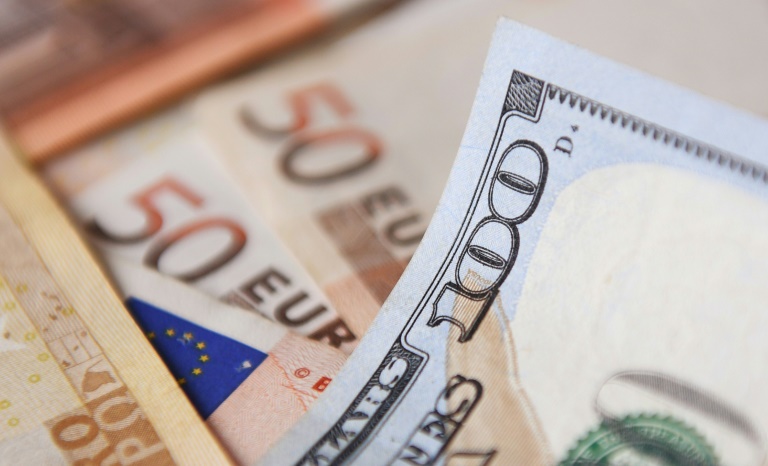
Global stocks were down Tuesday as the euro dove to a new two-decade low against the dollar and traders waited nervously for news on the next US interest rate hikes.

The single currency tumbled to $0.9901, but later clawed back losses as the greenback was hit by poor US economic data.

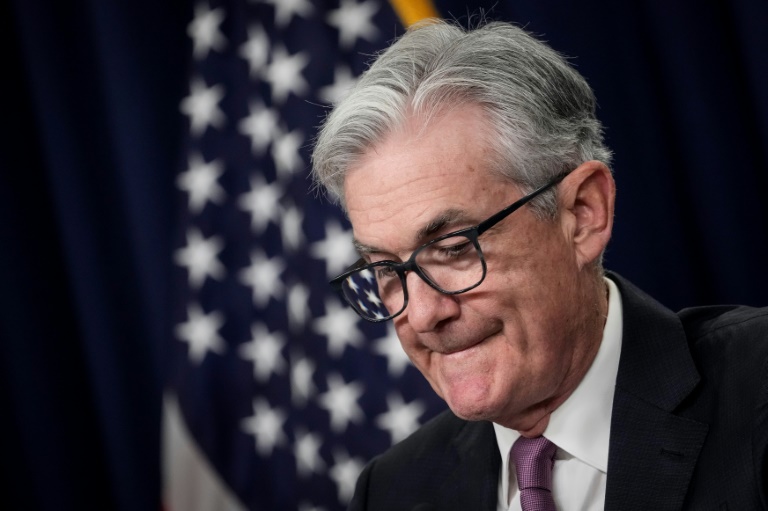
The dollar had strengthened this week against other currencies ahead of a speech Friday by US Federal Reserve chief Jerome Powell, as markets speculate that the central bank will continue tighten its monetary policy.

Higher interest rates boost the American currency as they make dollar-denominated debt more attractive to investors.

But the euro also has been weighed down by a gloomy outlook for the eurozone economy as Russia’s war in Ukraine has sent energy prices soaring.

The unit plunged below parity with the dollar Monday on recession fears to plumb the lowest levels since 2002, when it first came into physical circulation.

In the latest blow, S&P Global’s closely watched monthly composite purchasing managers’ index (PMI) showed that eurozone economic activity fell for the second month in a row in August.

– ‘Investors are bracing’ –

Wall Street indices ended mostly lower, with the Dow Jones falling 0.5 percent.

With the Jackson Hole central banking symposium this week, the focus is on what Fed chief Powell says about plans to tackle high prices, with many fearing officials could send the economy into recession.

“I think that investors are bracing for some hawkish commentary from Fed chair Powell this coming week,” said Jack Ablin of Cresset Capital.

European equities and Asian markets also slid amid stubborn worries about the Fed’s movements.

US natural gas prices meanwhile hit a fresh 14-year high on Tuesday at $10.028.

But across the Atlantic, European natural gas prices fell, although they remain elevated on fears of a halt to Russia’s gas deliveries. The Dutch TTF Gas Futures contract stood at 268.45 euros down from Monday.

Gas had spiked to record peaks in March after key producer Russia launched its invasion of neighboring Ukraine.

That has sparked surging domestic energy bills, fueling decades-high inflation that has prompted tighter monetary policy around the world.

Moscow’s maneuvers have hit the single currency hard because the bloc relies heavily on imported Russian gas, said Societe Generale analyst Kit Juckes. 

Fears increased after Russia’s Gazprom said Friday the Nord Stream pipeline would be closed for maintenance at the end of the month, cutting Europe’s crucial gas deliveries.

“The euro’s problem is… the threat from continued squeezing of gas supplies and the cost of replacing Russian gas,” Juckes said.

Oil prices — which have fallen for weeks as recession worries hit demand expectations — rebounded after Saudi Arabia suggested OPEC and other major producers could cut output citing “volatility” in crude markets.

– Key figures at around 2030 GMT –

New York – Dow: DOWN 0.5 percent at 32,909.59 points (close)

New York – S&P 500: DOWN 0.2 percent at 4,128.73 (close)

New York – Nasdaq: UNCH at 12,381.30 (close)

EURO STOXX 50: DOWN 0.2 percent at 3,652.52 (close)

London – FTSE 100: DOWN 0.6 percent at 7,488.11 (close)

Frankfurt – DAX: DOWN 0.3 percent at 13,194.23 (close)

Paris – CAC 40: DOWN 0.3 percent at 6,362.02 (close)

Tokyo – Nikkei 225: DOWN 1.2 percent at 28,452.75 (close)

Hong Kong – Hang Seng Index: DOWN 0.8 percent at 19,503.25 (close)

Shanghai – Composite: DOWN 0.1 percent at 3,276.22 (close)

Euro/dollar: UP at $0.9973 from $0.9943 Monday

Pound/dollar: UP at $1.1835 from $1.1767

Euro/pound: DOWN at 84.25 pence from 84.98 pence

Dollar/yen: DOWN at 136.7710 yen from 137.48 yen

West Texas Intermediate: UP 3.7 percent at $93.74 per barrel

Brent North Sea crude: UP 3.9 percent at $100.22

burs-rl-bfm/hs
Euro strikes fresh 20-year low as eurozone economy shrinks again

The euro dived Tuesday to a new two-decade dollar low and equities wavered, as data highlighted the shrinking eurozone economy and the worsening energy crunch.

The single currency, hit also by the US Federal Reserve’s rate-hiking plans before this week’s hotly-awaited comments from Chair Jerome Powell, tumbled to $0.9901.

The shared unit had already plunged below parity Monday on recession fears to plumb the lowest levels since 2002, when it came into physical circulation.

In the latest blow, S&P Global’s closely-watched monthly composite purchasing managers’ index (PMI), which measures corporate confidence, languished in August below the key 50-point level.

That stoked long-running worries of a protracted economic downturn.

– ‘Overarching threat’ –

“Eurozone PMIs … confirm concerns of an impending recession in Europe on the back of high inflation and energy crunch, as they signal declining activity for two months in a row,” warned Citi analyst Luis Costa.

He added: “The energy crunch remains an overarching threat to economic stability in Europe.”

Equities in the region wavered amid stubborn worries that the US Federal Reserve will carry on ramping up interest rates to fight inflation.

Rising US interest rates also push the dollar higher against other currencies.

On Tuesday, natural gas prices remain elevated on fears over a temporary halt to Russia’s gas deliveries to Europe.

The Dutch TTF Gas Futures contract stood at 274.50 euros per megawatt hour, although this was down slightly from Monday.

Gas had spiked to record peaks in March after key producer Russia launched its invasion of neighbouring Ukraine.

That has sparked surging domestic energy bills, fuelling decades-high inflation that has prompted tighter monetary policy around the world.

– ‘More effective than Kalashnikovs’ –

“As it has become painfully obvious, natural gas is a much more effective weapon in the hands of Russian politicians than the Kalashnikov in the hands of their soldiers,” noted PVM analyst Tamas Varga.

This has hit the single currency hard because the bloc relies heavily on imported Russian gas, indicated Societe Generale analyst Kit Juckes. 

Fears increased after Russia’s Gazprom said Friday that the Nord Stream pipeline would be closed for maintenance at the end of the month, cutting Europe’s crucial gas deliveries.

“The euro’s problem is … the threat from continued squeezing of gas supplies and the cost of replacing Russian gas,” Juckes said.

Asian markets fell again Tuesday as traders grew increasingly jittery over rising US rates.

Wall Street fell deep into the red on Monday with the S&P 500 and Nasdaq both off more than two percent.

With the Jackson Hole symposium of central bankers and finance chiefs taking place this week, the focus is on what Fed chief Jerome Powell says about its plans to tackle prices, with many fearing officials could send the economy into recession.

Oil prices — which have fallen for weeks as recession worries hit demand expectations — rebounded after Saudi Arabia suggested OPEC and other major producers could cut output citing “volatility” in crude markets.

– Key figures at around 1100 GMT –

London – FTSE 100: DOWN 0.3 percent at 7,510.01 points

Frankfurt – DAX: UP 0.1 percent at 13,243.90 

Paris – CAC 40: FLAT at 6,376.74

EURO STOXX 50: UP 0.1 percent at 3,660.73

Tokyo – Nikkei 225: DOWN 1.2 percent at 28,452.75 (close)

Hong Kong – Hang Seng Index: DOWN 0.8 percent at 19,503.25 (close)

Shanghai – Composite: DOWN 0.1 percent at 3,276.22 (close)

New York – Dow: DOWN 1.9 percent at 33,063.61 (close)

Euro/dollar: DOWN at $0.9930 from $0.9943 Monday

Pound/dollar: DOWN at $1.1764 from $1.1767

Euro/pound: DOWN at 84.39 pence from 84.98 pence

Dollar/yen: DOWN at 137.42 yen from 137.48 yen

West Texas Intermediate: UP 1.8 percent at $91.98 per barrel

Brent North Sea crude: UP 1.5 percent at $97.88

burs-rfj/lth

Indonesia raises rates for first time since 2018

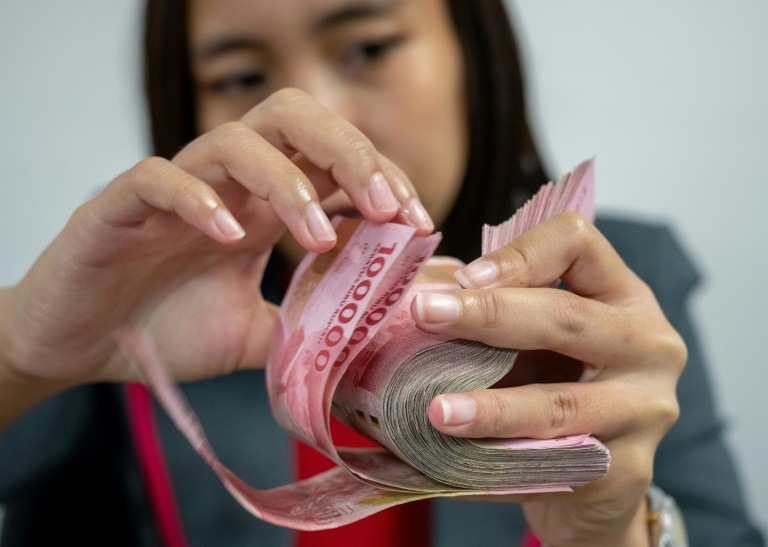
Indonesia’s central bank hiked its key interest rate Tuesday for the first time in nearly four years to combat rising inflation stoked by the Covid-19 pandemic and war in Ukraine. 

Bank Indonesia raised the policy rate to 3.75 from 3.5 percent, a move that went against the majority of analysts’ predictions.

Its two other main rates were also raised by 25 basis points.

Rates were hiked for the first time since 2018 to defend against accelerating inflation, Bank Indonesia governor Perry Warjiyo said, with Russia’s invasion driving up global energy and food prices and pushing millions into poverty around the world.

“The decision to raise the rates was taken as a pre-emptive and forward-looking step to mitigate risks from the hikes in core inflation and expectations of inflation because of the increase in non-subsidised fuel prices and volatile food inflation,” Warjiyo told reporters in an online press briefing.

The move came as Jakarta considers raising subsidised fuel prices, a policy that was expected to further stoke inflation already at a seven-year high of 4.94 percent in July and sitting above the central bank’s target range of between 2 and 4 percent.

With rising energy and food commodity prices, Warjiyo said the central bank expected inflation would go above its target range in 2022 and 2023.

President Joko Widodo came to power in 2014 on a pledge to boost annual growth to seven percent, but the commodities-driven economy has remained stuck in the 5.0 percent range and has fallen below that after the onset of the coronavirus pandemic in early 2020.

Looking ahead, the outlook for monetary policy is likely more tightening due to the continuing uncertainty in world markets, economists said.

“The hawkish commentary from the (Bank Indonesia) press conference increases the risk that the bank will tighten policy further this year,” said Gareth Leather, Asia economist from Capital Economics.

Elon Musk subpoenas former Twitter chief Jack Dorsey

Elon Musk has served former Twitter boss Jack Dorsey with a subpoena in a hunt for material to help him get out of buying the giant social media platform for $44 billion as agreed.

Records made public on Monday show Dorsey was served with a legal order to give Musk any communications or documents related to the takeover deal inked in April, as well as information touching on false or spam accounts or how Twitter calculates the number of its active users.

The subpoena asks for anything Dorsey has on the topics dating back to January of 2019.

Tesla boss Musk, the world’s wealthiest man, has accused Twitter of fraud, alleging the company misled him about key aspects of its business, particularly the number of accounts that are actually spam or automated “bots” instead of people.

Twitter has stuck by its estimates that bots make up fewer than five percent of users.

Twitter also disputed Musk’s assertion he has the right to walk away if its bot count is found to be wrong, since he didn’t seek information on that topic when he made the buyout offer.

The company accuses Musk of contriving a story to escape a merger agreement that he no longer found attractive.

“Musk’s counterclaims, based as they are on distortion, misrepresentation, and outright deception, change nothing,” Twitter said in a court filing.

Rival lawyers have been serving subpoenas for weeks seeking documents or depositions from a wide range of people connected with the buyout, running Twitter’s business, and even with a holding company formed by Musk.

Twitter co-founder Dorsey in November of last year ended his second stint as chief of the company and had voiced support for Musk taking it over.

The Twitter deal included a provision that if the deal fell apart, the party breaking the agreement would pay a termination fee of $1 billion under certain circumstances.

Billions of dollars are at stake, but so is the future of Twitter, which Musk has said should allow any legal speech — an absolutist position that has sparked fears the network could be used to incite violence.

The legal fight is gathering speed as preparations have begun for an October trial in Delaware’s Chancery Court, which specializes in complex, high-stakes business battles.

Twitter has urged shareholders to endorse the deal, setting a vote on the merger for September 13.

While fielding questions at a recent Tesla shareholders meeting, Musk was asked whether his potential ownership of Twitter might distract from his running of the electric car company.

“I think Tesla, you know, would continue to do very well even if I was kidnapped by aliens, or went back to my home planet,” he joked, drawing laughter and applause. 

“To be frank, I don’t have an easy answer,” Musk added.

He assured shareholders that, for now, he has no plans to leave his Tesla chief role.

Stocks slide as traders mull Fed outlook, gas price spike

World stocks sank Monday and the dollar rallied on concern the Federal Reserve will stick to its interest rate-hiking plans to combat runaway inflation.

Eurozone equities also tanked as spiking natural gas prices sparked fears that winter energy shortages could cause recession, which helped push the euro down to a 20-year low under parity against the greenback.

Oil slumped on speculation over an Iran nuclear deal that could ease a supply crunch caused by producer Russia’s invasion of Ukraine, as well as recession fears.

All eyes are on this week’s symposium in Jackson Hole, Wyoming, where Fed boss Jerome Powell will deliver a speech that traders will follow for an idea about the US central bank’s next moves.

– ‘Critical moment’ –

Stocks “began Monday in downbeat mood ahead of what could prove to be a critical moment for markets at the end of this week”, said AJ Bell investment director Russ Mould.

“The Jackson Hole summit of central bankers and finance ministers is widely expected to see Powell take to the floor — and puncture optimism which has built up over hopes the Fed may be nearing the point at which it pivots away from rate hikes.”

A dip in price rises and signs of economic slowdown had raised hopes policymakers would ease up — and possibly cut rates next year — after two successive, 75-basis-point hikes, helping equities rally globally.

But that optimism has slowly been eroded in recent weeks as Fed officials, including Powell, have warned that the battle against inflation was far from won, particularly as the jobs market remained resilient.

The euro is under additional pressure after Russia’s Gazprom said late Friday that the Nord Stream pipeline would be closed for maintenance at the end of the month, cutting Europe’s daily gas deliveries.

As a result, Europe’s Dutch TTF Gas Futures contract soared on Monday close to 300 euros per megawatt hour, not far from record struck after Russia launched its assault on Ukraine, amid worries that Russia will not resume supplies afterwards.

“It matters little whether Russia will decide to cut off flows completely,” said CMC Markets analyst Michael Hewson. “The market is behaving as if they will.”

– ‘Recessionary risk’ –

Rabobank analyst Jane Foley told AFP the rise in gas prices “focussed attention on recessionary risk for the eurozone. A clear break of parity risks a moves towards $0.95,” she added.

In early morning London deals, the euro dipped as low as $0.9990 before clawing its way back above the psychological barrier.

Surging energy prices have this year driven inflation to 40-year peaks in nations including Britain and the United States, in turn prompting tighter monetary policy.

US banking group Citi has forecast that UK inflation would peak at 18.6 percent next January on the back of rocketing domestic energy prices.

Asian equity markets mostly fell on Monday, although Shanghai stocks rose after China’s central bank cut prime loan rates as it tries to bolster the world’s second-biggest economy, which has been ravaged by lockdowns as part of a zero-Covid strategy.

In Europe, London shed 0.2 percent, but both Paris sank 1.8 percent and Frankfurt 2.3 percent on spiking as prices.

In late morning trading on Wall Street, both the Dow and S&P 500 were down more than one percent, while the tech-heavy Nasdaq fell more than two percent.

The prospect of more US hikes also sent the dollar rallying versus the yen, and it is nearing the 140 yen mark for the first time in 24 years.

– Key figures at around 1530 GMT –

New York – Dow: DOWN 1.4 percent at 33,236.26 points

EURO STOXX 50: DOWN 1.8 percent at 3,653.40

London – FTSE 100: DOWN 0.2 percent at 7,533.79 

Frankfurt – DAX: DOWN 2.3 percent at 13,230.57 

Paris – CAC 40: DOWN 1.8 percent at 6,378.74

Tokyo – Nikkei 225: DOWN 0.5 percent at 28,794.50 (close)

Hong Kong – Hang Seng Index: DOWN 0.6 percent at 19,656.98 (close)

Shanghai – Composite: UP 0.6 percent at 3,277.79 (close)

Euro/dollar: DOWN at $0.9941 from $1.0037 Friday

Pound/dollar: DOWN at $1.1758 from $1.1829

Euro/pound: DOWN at 84.49 pence from 84.86 pence

Dollar/yen: UP at 137.63 yen from 136.97 yen

West Texas Intermediate: DOWN 2.3 percent at $88.70 per barrel

Brent North Sea crude: DOWN 2.0 percent at $94.80

burs-rl/jj

Markets mostly drop as traders mull Fed outlook, gas price spike

World stocks mostly sank Monday and the dollar rallied on concern the Federal Reserve will stick to its interest rate-hiking plans to combat runaway inflation.

Eurozone equities also tanked as spiking natural gas prices sparked fears that winter energy shortages could spark recession, helping push the euro back under parity against the greenback.

Oil dipped on speculation over an Iran nuclear deal that could ease a supply crunch caused by producer Russia’s invasion of Ukraine.

All eyes are on this week’s symposium in Jackson Hole, Wyoming, where Fed boss Jerome Powell will deliver a speech that traders will follow for an idea about the US central bank’s next moves.

– ‘Critical moment’ –

Stocks “began Monday in downbeat mood ahead of what could prove to be a critical moment for markets at the end of this week”, said AJ Bell investment director Russ Mould.

“The Jackson Hole summit of central bankers and finance ministers is widely expected to see Powell take to the floor — and puncture optimism which has built up over hopes the Fed may be nearing the point at which it pivots away from rate hikes.”

A dip in price rises and signs of economic slowdown had raised hopes policymakers would ease up — and possibly cut rates next year — after two successive, 75-basis-point hikes, helping equities rally globally.

But that optimism has slowly been eroded in recent weeks as Fed officials, including Powell, have warned that the battle against inflation was far from won, particularly as the jobs market remained resilient.

The euro is under additional pressure after Russia’s Gazprom said late Friday that the Nord Stream pipeline would be closed for maintenance at the end of the month, cutting Europe’s daily gas deliveries.

As a result, Europe’s Dutch TTF Gas Futures contract soared on Monday to almost 293 euros per megawatt hour, not far from record highs hit after Russia launched its assault on Ukraine.

– ‘Recessionary risk’ –

“European gas prices pushed higher again … on renewed concerns about flows through Nord Stream 1,” Rabobank analyst Jane Foley told AFP.

“This focussed attention on recessionary risk for the eurozone. A clear break of parity risks a moves towards $0.95,” she added.

In early morning London deals, the euro dipped as low as $0.9990 before clawing its way back above the psychological barrier.

Surging energy prices have this year driven inflation to 40-year peaks in nations including Britain and the United States, in turn prompting tighter monetary policy.

US banking group Citi has forecast that UK inflation would peak at 18.6 percent next January on the back of rocketing domestic energy prices.

Before the weekend, all three main Wall Street indices had fallen and Asia mostly followed suit on Monday.

However, Shanghai stocks rose after China’s central bank cut prime loan rates as it tries to bolster the world’s second-biggest economy, which has been ravaged by lockdowns as part of a zero-Covid strategy.

The prospect of more US hikes also sent the dollar rallying versus the yen, and it is nearing the 140 yen mark for the first time in 24 years.

– Key figures at around 1100 GMT –

London – FTSE 100: DOWN 0.3 percent at 7,530.80 points

Frankfurt – DAX: DOWN 1.6 percent at 13,327.85 

Paris – CAC 40: DOWN 1.2 percent at 6,418.13

EURO STOXX 50: DOWN 1.3 percent at 3,680.84

Tokyo – Nikkei 225: DOWN 0.5 percent at 28,794.50 (close)

Hong Kong – Hang Seng Index: DOWN 0.6 percent at 19,656.98 (close)

Shanghai – Composite: UP 0.6 percent at 3,277.79 (close)

New York – Dow: DOWN 0.9 percent at 33,706.74 points (close)

Euro/dollar: DOWN at $1.0009 from $1.0037 Friday

Pound/dollar: DOWN at $1.1808 from $1.1829

Euro/pound: DOWN at 84.76 pence from 84.86 pence

Dollar/yen: DOWN at 136.91 yen from 136.97 yen

West Texas Intermediate: DOWN 0.1 percent at $90.68 per barrel

Brent North Sea crude: DOWN 0.2 percent at $96.53

Shanghai's Bund to go dark as China heatwave prompts power cuts

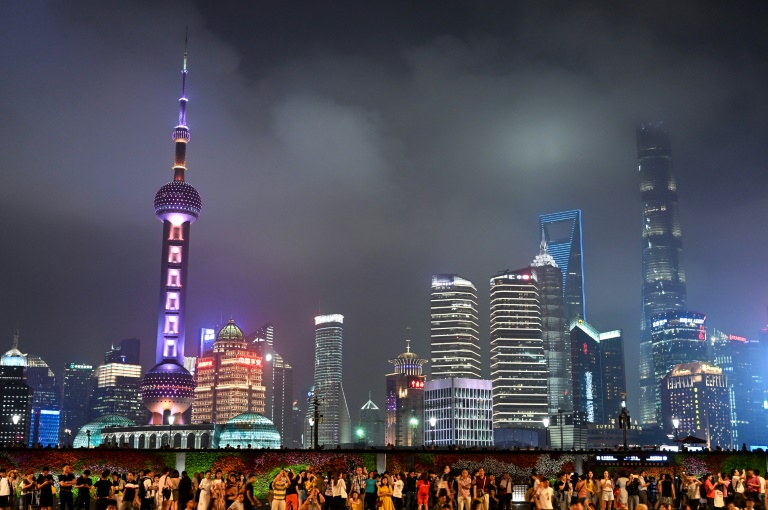
Shanghai will switch off decorative lights along its famed Bund riverfront for two days from Monday, city authorities said, in response to a nationwide heatwave that has sent power demands soaring.

Multiple provinces have announced power cuts to cope with a surge in demand, driven partly by people cranking up the air conditioning to cope with temperatures as high as 45 degrees Celsius (113 degrees Fahrenheit).

China has been hit by extreme weather this summer, including record temperatures, flash floods and droughts — phenomena that scientists have warned are becoming more frequent and intense due to climate change.

To save power, Shanghai authorities said in a notice Sunday that they would switch off “landscape lighting” at the Bund, the city’s most famous landmark.

Ornamental lights, billboards and video screens on both sides of the Huangpu River would be turned off on Monday and Tuesday, according to the notice.

The heatwave has reduced stretches of the Yangtze River, China’s most vital inland waterway, to unprecedented drought levels, according to official data.

That has resulted in high pressure on hydroelectric plants that supply power to some of the country’s key economic zones.

In the southwestern megacity of Chongqing, home to 31 million, authorities on Monday declared that all shopping malls must only operate between 4:00pm and 9:00pm daily to cut power costs until the “temperature and supply-demand situation” changes.

The city last week announced industrial power cuts lasting until Wednesday and reduced scenic lighting at tourist attractions.

In neighbouring Sichuan, authorities on Sunday extended industrial power cuts and activated their highest level of emergency response to deal with the heatwave.

“Since July this year, the province has faced the most extreme high temperatures, the lowest rainfall in the corresponding period in history… (and) the highest power load in history,” local authorities said.

Some of the world’s biggest automakers — including Japanese giant Toyota and Elon Musk’s Tesla — operate factories in Sichuan.

The province is also home to parts manufacturers that are crucial to global auto supply chains.

Many major factories were forced to halt work because of the Sichuan power cuts, which were supposed to end on Saturday but were extended to Thursday, Chinese news outlet Caixin reported.

Analysts have warned that Sichuan’s power woes could have ripple effects on the wider Chinese economy and international supply chains.

Hydropower generated in the province supplies domestic consumers and factories, but also industrial powerhouse provinces Jiangsu and Zhejiang.

Most markets down as traders eye key Powell speech

Stocks sank Monday and the dollar rallied on renewed concerns about Federal Reserve plans to ramp up interest rates to combat runaway inflation.

All eyes are on a symposium in Jackson Hole, Wyoming where Fed boss Jerome Powell will deliver a speech that traders will follow for an idea about the bank’s next moves.

A dip in price rises and signs of economic slowdown had raised hopes policymakers would ease up — and possibly cut rates next year — after two successive, 75-basis-point hikes, helping equities rally globally.

But that optimism has slowly been eroded in recent weeks as Fed officials, including Powell, have warned that the battle against inflation was far from won, particularly as the jobs market remained resilient.

One of the latest was Richmond Fed boss Thomas Barkin, who reasserted his commitment to bringing inflation back to two percent from the four-decade high of around nine percent.

He said on Friday the policy board would “do what it takes to get there”, but warned: “There’s a path to getting inflation under control but a recession could happen in the process.”

Jonathan Millar of Barclays said it was unlikely Powell would signal a slowdown in rate hikes this week.

“It does seem like what we’ve heard from Powell so far suggests there’s quite a high bar for them to transition from aggressive hikes” to 25 basis points.

“One thing they definitely want to communicate is that they remain very much focused on issues with price stability and that they will react very cautiously to any signs of improvements in the inflation data.”

And National Australia Bank’s Rodrigo Catril added that the Fed chief will likely say that “while we may be close to the end of the beginning of the current tightening cycle, we are still a long way from the end”.

All three main indexes on Wall Street fell Friday and Asia followed suit.

Hong Kong, Tokyo, Sydney, Seoul, Mumbai, Taipei, Manila and Jakarta dropped.

But Shanghai rose after China’s central bank cut prime loan rates as it tries to bolster the world’s second-biggest economy, which has been ravaged by lockdowns as part of a zero-Covid strategy.

Singapore, Bangkok and Wellington also edged up.

London, Paris and Frankfurt all fell in early trade.

The prospect of more US hikes to come has given another boost to the dollar, which rallied against the yen and is approaching the 140 yen mark for the first time in 24 years. 

It also broke parity with the euro again — after having done so last month for the first time in nearly 20 years.

The stronger greenback was helping to keep oil prices down, while downward pressure was being enhanced by speculation rising about a possible Iran nuclear deal that could ease a supply crisis caused by Russia’s invasion of Ukraine.

Both main contracts tumbled Monday and wiped out all the gains seen in reaction to the start of conflict in eastern Europe.

“The global balance for the remainder of the year is not as tight as many were expecting, with Russian supply holding up well,” said Warren Patterson, of ING Groep NV.

“While it may take several months for Iran to get production back to pre-sanction levels in the event of a deal, in the short term, they should still be able to boost exports by relying on storage.”

– Key figures at around 0810 GMT –

Tokyo – Nikkei 225: DOWN 0.5 percent at 28,794.50 (close)

Hong Kong – Hang Seng Index: DOWN 0.6 percent at 19,656.98 (close)

Shanghai – Composite: UP 0.6 percent at 3,277.79 (close)

London – FTSE 100: DOWN 0.6 percent at 7,508.61

Euro/dollar: DOWN at $0.9994 from $1.0034 Friday

Pound/dollar: DOWN at $1.1790 from $1.1827

Euro/pound: DOWN at 84.80 pence from 84.81 pence

Dollar/yen: UP at 136.77 yen from 136.93 yen

West Texas Intermediate: DOWN 2.0 percent at $89.00 per barrel

Brent North Sea crude: DOWN 1.8 percent at $95.01 per barrel

New York – Dow: DOWN 0.9 percent at 33,706.74 points (close)

China central bank cuts lending rates to boost economy

China’s central bank on Monday cut benchmark loan rates in an attempt to boost an economy battered by the government’s strict zero-Covid policy and a slump in the property market.

The world’s second-biggest economy saw an improvement after some coronavirus restrictions eased in June, but consumer and business sentiment remains weaker than usual.

The one-year Loan Prime Rate, which serves as a benchmark for corporate loans, was reduced from 3.7 percent to 3.65 percent, the People’s Bank of China (PBOC) said in a statement.

The five-year LPR, which is used to price mortgages, was cut from 4.45 percent to 4.3 percent, it added.

The PBOC slashed key interest rates last week, bringing its seven-day reverse repurchase rate — a key rate at which it provides short-term liquidity to banks — to a new low.

Analysts had expected cuts to the LPR rates, but said they may not be enough to rescue the property sector — which is estimated to account for as much as a quarter of China’s GDP.

“The much larger cut to the five-year rate suggests the PBOC is particularly concerned about problems in the housing market,” Capital Economics said in a note on Monday.

“However, homebuyers with existing mortgages will have to wait until the start of next year for the change to affect them.”

China’s housing market was shaken by frustrated homebuyers in dozens of cities who boycotted mortgage payments as cash-strapped developers struggled to complete the units they had sold in advance.

With property firms struggling to manage mountains of debt, fears have swirled since last year that the sector’s troubles could spread to the rest of the economy.

“Most home mortgages are linked to the (five-year) loan prime rate. So this rate cut is obviously to reduce the burden on borrowers,” Iris Pang, chief economist for Greater China at ING, in a note.

“When the market sees progress in the construction of uncompleted projects, we may see an improvement in home buying sentiment and home prices should stabilise.”

China’s economic growth came in at just 0.4 percent on-year in the second quarter — its slowest rate since the Covid crisis began in 2020.

Most Asian markets down as traders eye key Powell speech

Asian markets were broadly lower Monday as the rally from June’s lows runs out of steam owing to renewed concerns about Federal Reserve plans to ramp up interest rates to combat runaway inflation.

All eyes are on a symposium in Jackson Hole, Wyoming where Fed boss Jerome Powell will deliver a speech that will be followed for an idea about the bank’s next moves.

A dip in price rises and signs of economic slowdown had raised hopes policymakers would ease up — and possibly cut next year — after two successive, 75-basis-point hikes, helping equities rally globally.

But that optimism has slowly been eroded in recent weeks as Fed officials, including Powell, have warned that the battle against inflation was far from won, particularly as the jobs market remained resilient.

One of the latest was Richmond Fed boss Thomas Barkin, who reasserted his commitment to bringing inflation back to two percent from the four-decade high of around nine percent.

He said on Friday the policy board would “do what it takes to get there”, but warned: “There’s a path to getting inflation under control but a recession could happen in the process.”

Jonathan Millar of Barclays said it was unlikely Powell would signal a slowdown in rate hikes this week.

“It does seem like what we’ve heard from Powell so far suggests there’s quite a high bar for them to transition from aggressive hikes” to 25 basis points.

“One thing they definitely want to communicate is that they remain very much focused on issues with price stability and that they will react very cautiously to any signs of improvements in the inflation data.”

And National Australia Bank’s Rodrigo Catril added that the Fed chief will likely say that “while we may be close to the end of the beginning of the current tightening cycle, we are still a long way from the end”.

All three main indexes on Wall Street fell Friday and Asia followed suit in early trade.

Hong Kong, Tokyo, Sydney, Seoul, Taipei, Manila and Jakarta dropped.

However, Shanghai rose after China’s central bank cut prime loan rates as it tries to bolster the world’s second-biggest economy, which has been ravaged by lockdowns across the country as part of leaders’ zero-Covid strategy.

Singapore and Wellington also edged up.

The prospect of more US hikes to come has given another boost to the dollar, which rallied against the yen and is approaching the 140 yen mark for the first time in 24 years.

The stronger greenback was helping to keep oil prices down, while downward pressure was being enhanced by speculation rising about a possible Iran nuclear deal that could ease a supply crisis caused by Russia’s invasion of Ukraine.

“The global balance for the remainder of the year is not as tight as many were expecting, with Russian supply holding up well,” said Warren Patterson, of ING Groep NV.

“While it may take several months for Iran to get production back to pre-sanction levels in the event of a deal, in the short term, they should still be able to boost exports by relying on storage.”

– Key figures at around 0230 GMT –

Tokyo – Nikkei 225: DOWN 0.4 percent at 28,805.52 (break)

Hong Kong – Hang Seng Index: DOWN 0.1 percent at 19,755.48

Shanghai – Composite: UP 0.4 percent at 3,270.83

Euro/dollar: DOWN at $1.0032 from $1.0034 Friday

Pound/dollar: DOWN at $1.1822 from $1.1827

Euro/pound: UP at 84.86 pence from 84.81 pence

Dollar/yen: UP at 137.30 yen from 136.93 yen

West Texas Intermediate: DOWN 1.2 percent at $89.69 per barrel

Brent North Sea crude: DOWN 1.1 percent at $95.68 per barrel

New York – Dow: DOWN 0.9 percent at 33,706.74 points (close)

London – FTSE 100: UP 0.1 percent at 7,550.37 (close)

Close Bitnami banner
Bitnami