Chinese Business

China cuts rates as economic recovery weaker than expected

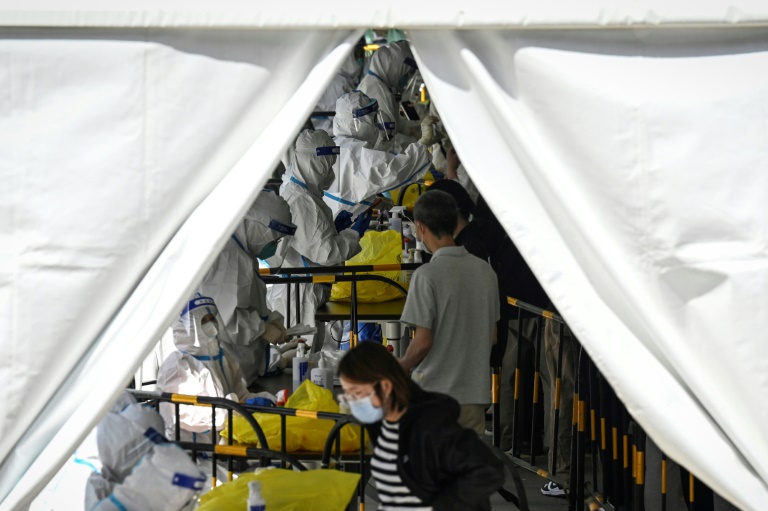
China’s central bank slashed key interest rates Monday in a bid to kick-start the country’s stuttering economic recovery as data showed factory output and retail sales for July came in weaker than analysts’ expectations.

The world’s second-biggest economy saw a bounce in business activity as some coronavirus restrictions eased in June, but the boost is fading and Beijing remains welded to a zero-Covid policy of snap lockdowns and long quarantines, which has battered sentiment.

For July, China’s industrial production rose 3.8 percent on-year, down from a 3.9 percent jump in June, the National Bureau of Statistics (NBS) said Monday.

Retail sales grew at a slower-than-expected 2.7 percent from a year ago, down from 3.1 percent in June, while the urban unemployment rate fell to 5.4 percent, the NBS said. 

“The risk of stagflation in the world economy is rising, and the foundation for domestic economic recovery is not yet solid,” the NBS warned in a statement.

“We think the weakness in retail sales was due to renewed virus disruptions and the blow to consumer sentiment from the problems in the property market,” said Julian Evans-Pritchard, senior China economist at Capital Economics said in a note on Monday.

The virus remains a risk, with zero-Covid meaning that “targeted lockdowns will remain commonplace, depressing consumer activity and spending,” he said, while slow progress in expanding vaccination among the elderly means this policy will not be abandoned soon.

“July’s economic data is very alarming,” Raymond Yeung, Greater China economist at Australia & New Zealand Banking Group Ltd, told Bloomberg TV.

China’s property sector has been teetering, with frustrated homebuyers across dozens of cities taking part in mortgage boycotts as cash-strapped developers struggle to complete projects.

The country’s economic growth was just 0.4 percent on-year in the second quarter — its slowest rate since the initial Covid outbreak.

And the People’s Bank of China Monday cut its policy rates, bringing its seven-day reverse repurchase rate — a key rate at which the central bank provides short-term liquidity to banks — to a new low.

It also cut its one-year medium-term lending facility, surprising forecasters, although some analysts believe this may not be enough to revive credit growth.

Credit growth in China edged down in July, with analysts at Nomura saying in a report that it did not bode well for the second half of the year.

“The combination of zero-Covid strategy and the deteriorating property sector continues to drag down the economy, even as export growth remains elevated and the automobile sector gets a boost from the purchase tax cut,” they said.

Japan's GDP expands in Q2 after Covid curbs lifted

Japan’s economy expanded in the three months to June, official data showed Monday, after the government lifted Covid-19 curbs on businesses.

The world’s third-largest economy grew 0.5 percent quarter-on-quarter due to stronger consumption and capital investment, but the rise was below market expectations of 0.7 percent.

While the country never imposed strict stay-at-home orders during the pandemic, the government in March removed virus restrictions primarily targeting business opening hours.

Inbound tourism remains limited to group tours, however, and the economy is facing headwinds — from the energy price crisis to fears of a global recession fuelled by biting inflation.

From April to June, private consumption grew 1.1 percent compared with the 0.3 percent registered in the January-March quarter, according to the data released by the Cabinet Office.

Capital spending expanded 1.4 percent, compared with a 0.3 percent contraction in the previous quarter.

“After the government lifted a quasi-state of emergency in late March, consumption of services showed a relatively strong rebound, while capital investment returned to growth,” BNP Paribas said in a note issued before the GDP data.

Mitsubishi UFJ Research and Consulting also noted that “as the spread of the Omicron variant subsided, private consumption steadily increased, especially in-person services, and lifted the overall economy.”

The data is preliminary, and GDP figures are often revised in later months.

In May, the Cabinet Office reported that the economy shrank slightly in the first quarter of 2022, but on Monday, this was revised to zero percent. That means no change was observed following a modest rebound in the final quarter of 2021.

Consumer prices are rising in Japan, although not at the blistering rate seen in the United States and many other major economies.

The Bank of Japan sees the price rises as temporary and is sticking to its long-held monetary easing policies in a bid to achieve stable growth, a decision that has caused the yen to plummet to 24-year lows against the dollar.

Supply chain disruption caused by Covid-19 lockdowns in China and sky-high energy costs due to the war in Ukraine have also created a challenging environment for growth.

“We now think the economy’s recovery is less impressive than we had expected at the end of last year, with an unexpected resurgence of Covid-19 infections at the beginning of this year and now,” Masamichi Adachi and Go Kurihara of UBS said in a statement ahead of the data release.

Japan is currently experiencing a record-breaking wave of Covid-19 infections. It has logged around 35,000 deaths from the disease overall, far lower than many other countries.

Huawei revenue down 5.9 percent in first half of 2022

Huawei’s revenue dipped by just under six percent in the first half of 2022, company figures showed Friday, as the Covid-19 pandemic and US-China trade rivalry hit sales.

The Chinese telecom giant brought in 301.6 billion yuan ($44.8 billion), according to the data, a slip of 5.9 percent on the previous year.

“While our device business was heavily impacted, our ICT infrastructure business maintained steady growth,” Ken Hu, Huawei’s rotating chairman, said in a statement.

Weak global demand due to the pandemic, as well as a 2019 US blacklisting that snarled its supply chains, have hurt the company’s device business, which sells smartphones and laptops, a Huawei spokeswoman told AFP.

In the second quarter, Huawei lost its position among the top five global smartphone sellers, according to industry data provider Canalys.

A supplier of networking equipment, phones, and other state-of-the-art gear, Huawei has struggled in the wake of a crackdown by the administration of former US president Donald Trump, which cited cybersecurity and espionage concerns.

The Biden administration has added to the pressure on the firm with the recently passed US Chip Act, which could threaten its access to global semiconductor supply chains.

Profit growth for the first half slowed to five percent, down from 9.8 percent over the same period last year, Friday’s figures showed.

The company’s smartphone sales have also slowed after the United States barred it from using Google’s Android services, continuing to decline in the first half.

The firm has launched its own Harmony operating system, which is now being used on 300 million Huawei devices mostly in China, but it is yet to be rolled out internationally.

The company’s global 5G infrastructure expansion plans have also faced a backlash in major economies including the UK, Australia and India over security concerns.

– New business lines – 

In the wake of US sanctions, the tech giant has tried to shore up other parts of its business.

It has refocused on the Chinese market and diversified to enterprise and cloud computing, designing smart car components and energy efficiency systems.

“We will harness trends in digitalization and decarbonization to keep creating value for our customers and partners, and secure quality development,” Hu said.

Huawei is not publicly listed and its accounts are not subject to the same audits as companies traded on the stock market.

South Korea pardons Samsung boss 'to help the economy'

The heir and de facto leader of the Samsung group received a presidential pardon Friday, continuing South Korea’s long tradition of freeing business leaders convicted of corruption on economic grounds.

Billionaire Lee Jae-yong, convicted of bribery and embezzlement in January last year, will be “reinstated” to give him a chance to “contribute to overcoming the economic crisis” of the country, justice minister Han Dong-hoon said.

Lee — who has a net worth of $7.9 billion, according to Forbes — was released on parole in August 2021, after serving 18 months in jail, just over half of his original sentence.

Friday’s pardon will allow him to fully return to work by lifting a post-prison employment restriction that had been set for five years. 

“Due to the global economic crisis, the dynamism and vitality of the national economy have deteriorated, and the economic slump is feared to be prolonged,” the Justice Ministry said in a statement.

The pardon was given so that Lee — as well as other high-level executives receiving pardons Friday — could “lead the country’s continuous growth engine through active investment in technology and job creation”, it added.

Three other high-profile businessmen were also pardoned, including Lotte Group chairman Shin Dong-bin, who was sentenced to a suspended two-and-half-year prison term in a bribery case in 2018.

A total of 1,693 people — including prisoners with terminal illnesses and those near the end of their terms — were on the pardon list, the ministry said, ahead of the annual Liberation Day anniversary Monday.

The anniversary marks Japan’s 1945 World War II surrender, which liberated Korea from decades of colonial rule and is typically celebrated each year with the pardon of hundreds of prisoners.

Lee, 54, issued a statement after the pardon was announced saying he aimed to “contribute to the economy through continuous investment and job creation for young people”.

– Above the law? –

Lee is the vice-chairman of Samsung Electronics, the world’s biggest smartphone maker. The conglomerate’s overall turnover is equivalent to about one-fifth of South Korea’s gross domestic product.

He was jailed for offences connected to a massive corruption scandal that brought down former president Park Geun-hye.

There is a long history of South Korean tycoons being charged with bribery, embezzlement, tax evasion or other offences.

But many of those convicted have subsequently had their sentences cut or suspended on appeal, with some — including late Samsung chairman Lee Kun-hee, who was convicted twice — receiving presidential pardons in recognition of their “contribution to the national economy”.

The giant Samsung group is by far the largest of the family-controlled empires known as chaebol that dominate business in South Korea.

President Yoon Suk-yeol said Friday that the pardons were aimed at improving the lot of “ordinary people who have been affected by the prolonged Covid-19 pandemic”.

But analysts said they simply allowed major businessmen to feel they were not “constrained by any legal norms”, Vladimir Tikhonov, professor of Korean studies at the University of Oslo, told AFP.

Former conservative president Lee Myung-bak, who is currently serving a prison sentence over corruption and had initially been expected to benefit from the pardons, was not included on the list.

Justice minister Han said all politicians were excluded this time as the economy is the most “urgent and important” issue.

Local reports have speculated that pardoning Lee Myung-bak would have been too risky for President Yoon, who is already struggling with record-low approval ratings.

– More legal woes –

Lee Jae-yong still faces a separate trial over accusations of accounting fraud regarding a merger of two Samsung firms in 2015.

In May, he was excused from a hearing in that trial to host US President Joe Biden when he kicked off a tour of South Korea by visiting Samsung’s chip plant, alongside President Yoon.

His pardon follows Samsung unveiling a massive 450 trillion won ($346 billion) investment blueprint for the next five years, aimed at making it a leader in sectors from semiconductors to biologics and creating 80,000 new jobs.

But Lee’s imprisonment has been no barrier to the firm’s performance — it announced a surge of more than 70 percent in second-quarter profits in July last year, with a coronavirus-driven shift to remote work boosting demand for devices using its memory chips.

“Samsung operated perfectly well without any pardon,” Tikhonov told AFP.

“The pardon weakens rule of law, which potentially is, in fact, more detrimental than advantageous.”

European stocks dip as high inflation concerns linger

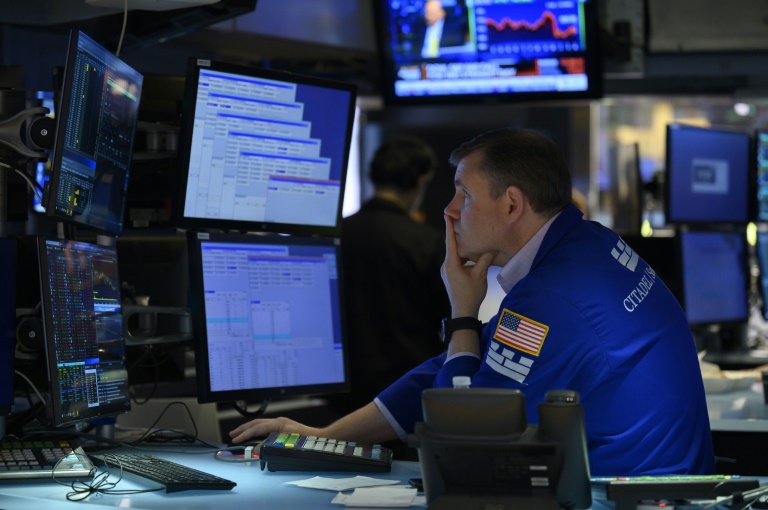
European stock markets eased on Thursday as investors took profit from the gains notched up the previous day on better-than-expected inflation data in the US.

But while overall sentiment was positive, investors remain on edge as officials at the US Federal Reserve seek to temper expectations of a possible end to the monetary policy tightening cycle, traders said.

The head of the Minneapolis Federal Reserve Bank, Neel Kashkari, warned: “We are a long way away from saying that we’re anywhere close to declaring victory”.

And according to the chief of the Chicago Federal Reserve Bank, Charles Evans, rates will continue to rise for “the rest of this year and into next year”.

“Investors are certainly in a more upbeat mood as the relief from the US inflation data ripples through the markets,” said OANDA analyst, Craig Erlam. 

However, “Fed policymakers remain keen to stress that the tightening cycle is far from done and a policy U-turn early next year is highly unlikely,” Erlam said.

Investors will therefore be watching out for further comments from policymakers over the next weeks to better gauge the likely pace of further rate hikes, as strong jobs growth shows how resilient the economy remains in face of higher borrowing costs and inflation.

“Inflation has been expected to peak over the summer for some time, so it was reassuring for markets that there are clear signs that this looks to be happening,” said Oliver Blackbourn, of Janus Henderson Investors.

“However, the Fed will doubtless be focused on the signs about underlying inflation, particularly against a very tight-looking labour market.”

On the oil market, crude prices climbed as US recession fears eased — but remained around six-month lows and below the levels seen before the Ukraine war.

– Key figures at around 1100 GMT –

London – FTSE 100: DOWN 0.4 percent at 7,479.08 points

Frankfurt – DAX: DOWN 0.1 percent at 13,686.67

Paris – CAC 40: DOWN 0.3 percent at 6,503.48

EURO STOXX 50: DOWN 0.2 percent at 3,742.36

Hong Kong – Hang Seng Index: UP 2.4 percent at 20,082.43 (close)

Shanghai – Composite: UP 1.6 percent at 3,281.67 (close)

Tokyo – Nikkei 225: Closed for a holiday

New York – Dow: UP 1.5 percent at 33,309.51 (close)

Euro/dollar: UP at $1.0336 from $1.0299 Wednesday

Pound/dollar: DOWN at $1.2206 from $1.2213

Euro/pound: UP at 84.69 pence from 84.29 pence

Dollar/yen: DOWN at 132.59 yen from 132.89 yen 

Brent North Sea crude: UP 0.8 percent at $98.16 per barrel

West Texas Intermediate: UP 0.8 percent at $92.67 per barrel

Chinese medical portal censored after doubting herbal 'Covid remedy'

A popular Chinese medical information site has been censored by authorities for “violation of relevant laws and regulations”, months after its criticism of a government-backed herbal Covid-19 treatment sent shares in a pharmaceutical giant tumbling.

DXY, which counts tech giant Tencent among its investors and runs a host of health-related services, previously questioned the value of Lianhua Qingwen, a herbal remedy marketed for fever and sore throats, as a Covid-19 treatment.

China approved the concoction — made up of ingredients like honeysuckle and apricot seeds — as a Covid-19 treatment in 2020, and it was distributed to Shanghai residents during the city’s outbreak this year.

DXY’s article, which has now been deleted from its website, was part of a wave of reports that caused shares in Lianhua Qingwen’s producer — one of China’s largest traditional medicine companies — to plunge.

The website has now been banned from posting on at least five of its Weibo social media accounts, with a notice at the top of its official page saying that due to “violation of relevant laws and regulations, this user is currently prohibited from posting”.

DXY’s official WeChat accounts, which typically publish multiple articles a day on medical topics, have not been updated since Monday.

The Weibo notice did not specify which regulations had been violated by DXY, which did not immediately respond to AFP’s request for comment.

– ‘No right to ban them’ –

The Chinese government has increasingly promoted traditional medicine at home and abroad in recent years, often with nationalistic undertones.

DXY’s coverage prompted criticism that it was targeting traditional Chinese medicine (TCM) in order to promote Western pharmaceuticals. 

The decision to freeze DXY’s social media accounts was lauded by some Weibo users, who accused the company of working with “anti-China forces” and peddling false information.

“For this vicious thing eating the anti-Chinese capitalists’ dog food, the best days are in the past,” one Weibo user wrote.

But others lamented the loss of a valued source of misinformation-free medical guidance and said they disagreed with the censorship.

“My mother used to be the kind of person who would make her kids eat chicken gallbladder for fevers,” one wrote, crediting DXY with giving her parent access to modern medical information.

“You have the right to (criticise) DXY on Weibo, but you don’t have the right to ban them,” the user wrote.

The United States and other countries have warned there is no evidence Lianhua Qingwen works to prevent or cure Covid-19, even as it has increasingly been promoted by government authorities in China and Hong Kong.

The US Food and Drug Administration has said it has not approved Lianhua Qingwen and that coronavirus-related claims about it were “not supported by competent and reliable scientific evidence”.

Beijing issued its first white paper on TCM in 2016, laying out plans to build medicine centres and dispatch practitioners to developing countries in Africa and Southeast Asia.

President Xi Jinping has described TCM as a “treasure of Chinese civilisation” and has said that it should be given as much weight as other treatments.

Beijing’s National Health Commission has also dispatched TCM practitioners as part of its medical reinforcement teams sent to fight Covid-19 outbreaks across the country.

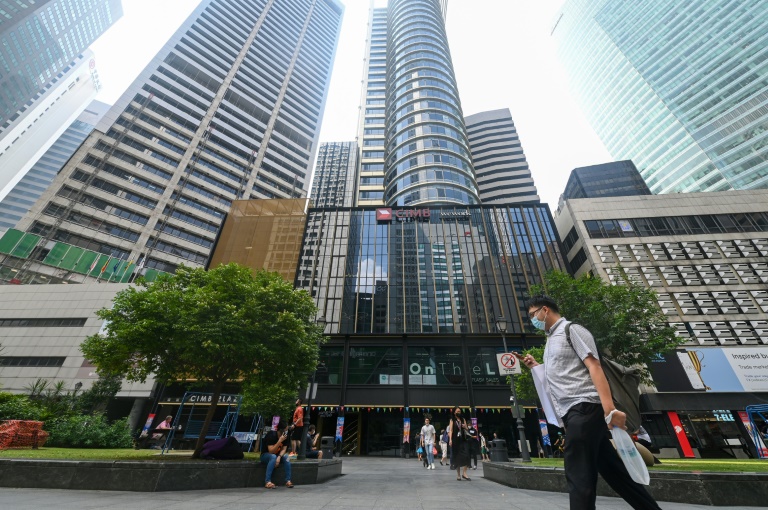
Singapore trims 2022 growth forecast on strong global headwinds

Singapore on Thursday narrowed its economic growth forecast this year after the economy contracted in the second quarter compared to the previous three months due to rising inflation and tighter monetary policies, the government said.

Moves by central banks worldwide to tighten borrowing costs in order to deal with rocketing prices have weighed down on global demand for Singapore’s exports, with the government painting a grim picture for the rest of the year.

Economists often see the performance of the city state’s open, trade-driven economy as a barometer for global trading activity.

Singapore’s economy is now projected to expand by 3.0 to 4.0 percent this year, trimmed from a 3.0 to 5.0 forecast earlier, the trade ministry said in a statement.

The economy grew by 4.4 per cent year-on-year in the second quarter to June, faster than the 3.8 per cent growth recorded in the previous quarter, it said.

But compared to the previous three months, the economy contracted by 0.2 per cent, reversing the 0.8 percent expansion in the first quarter.

“Since May, the global economic environment has deteriorated further,” the ministry said.

“Stronger than expected inflationary pressures and the more aggressive tightening of monetary policy in response are expected to weigh on growth in major advanced economies such as the US and Eurozone.”

China, a key market for global exports, “continues to grapple with a deepening property market downturn and recurring domestic Covid-19 outbreaks”, it said.

“Notwithstanding recent signs of a slight easing in global supply disruptions, the disruptions are likely to persist for the rest of the year as underlying factors such as the Russia-Ukraine conflict and China’s zero-Covid policy remain,” it added.

Growth in the United States is expected to slow further in the second half of the year, and “the persistent disruption in natural gas supplies from Russia could also trigger a sharp slowdown in the Eurozone economy”, it warned.

Selena Ling, chief economist at OCBC Bank, said the strong recovery in the aviation and tourism sectors after Singapore lifted coronavirus restrictions should help cushion the effects of slowing global demand.

China's ex-Covid patients live under 'dark shadow' of stigma

When Zuo tested positive for Covid-19 while working as a cleaner in one of Shanghai’s largest quarantine centres, she hoped it wouldn’t be long before she could pick up the mop and start earning again.

But four months on, she is still fighting to get her job back — one of scores of recovering Covid patients facing what labour rights activists and health experts say is a widespread form of discrimination in zero-Covid China. 

Using snap lockdowns and mass testing, China is the last major economy still pursuing the goal of stamping out the virus completely.

Those who test positive, as well as their contacts, are all sent to central quarantine facilities, while a flare-up in a factory can grind production to a halt.

Rights groups say the strict rules are feeding Covid-related discrimination and shutting out thousands of people from China’s already bleak job market — with migrant workers and young people hit hardest.

“People are afraid they might contract the virus from us, so they shun us,” said Zuo, who only gave her last name for fear of retribution for speaking to AFP.

“Recruiters check Covid testing history going back several months during an interview.”

China’s strict control measures have led to stigma against not just recovered patients, but also their families, neighbours, friends and even frontline healthcare workers, said Jin Dongyan from the School of Biomedical Sciences at Hong Kong University.

“It is unscientific to think that people who were infected once will continue to carry the virus and be infectious long after recovering,” Jin told AFP.

“Due to the lack of awareness, some fear that those who have been infected are more susceptible to being reinfected, but in reality, it’s the opposite.”

Zuo is now fighting a court battle with her employer, who has refused to pay her wages since she got sick, and who cites her disease history as a reason to bar her from returning to work. 

Her employer, a service company named Shanghai Yuanmao BPO, declined to comment citing the pending court case. 

– ‘Treated like a virus’ – 

He Yuxiu is a Chinese social media influencer who goes by a pseudonym and was living in Ukraine until Russia invaded.

She fled the war and returned home, then found a job as a Russian-language teacher in north China’s Hebei province, relieved to have left her troubles behind.

But when her school learned that she had been infected with Covid-19 while in Ukraine, she was fired.

“I never imagined I’d lose my first job for this reason,” she said in a video posted on China’s Twitter-like Weibo. 

“Why should we be treated like a virus when we have defeated it?”

The stigma is widespread — job ads for factory workers in Shanghai posted last month said applicants with a history of Covid-19 infection would be refused work. 

The story of a young woman who lived in a toilet for weeks in Shanghai’s Hongqiao railway station since she was unable to find work or return to her village due to the stigma of having been infected went viral last month.

And a theatre in the southern Chinese city of Foshan was forced to apologise after a notice banning recovered patients from entering sparked a public backlash. 

– ‘Little sheep people’ –

Beijing’s National Health Commission and human resources ministry last month banned employers from discriminating against recovered Covid patients, while Premier Li Keqiang has called for heavy punishments for those breaking the rules.

But job seekers and activists are sceptical.

Factories in Shanghai continued to refuse to hire recovered workers even after the city announced strict anti-discrimination rules, employment agent Wang Tao said, because they fear a mass outbreak or health inspections.

“Some factories give different excuses despite being short of workers,” Wang added.

“But all those who are turned down have tested positive in the past.”

AFP contacted eight manufacturers named by Chinese state media as having engaged in discriminatory practices — including iPhone manufacturer Foxconn — but they declined to comment.

“It’s very difficult for workers to protect their rights since most employers offer different excuses and it is hard to prove that a labour law has been violated in these cases,” said Aidan Chau, a researcher for the rights group China Labour Bulletin.

“It is important for labour unions to step up. But many small and medium factories don’t have one.”

Those who have tested positive are often referred to as “little sheep people” on Chinese social media. In Mandarin, the word for “positive” and “sheep” are pronounced the same way.

“It is very difficult for recovered patients to go back to our normal lives,” said Zuo, the cleaner from Shanghai.

“No matter where we go, our infection history will follow us like a dark shadow.”

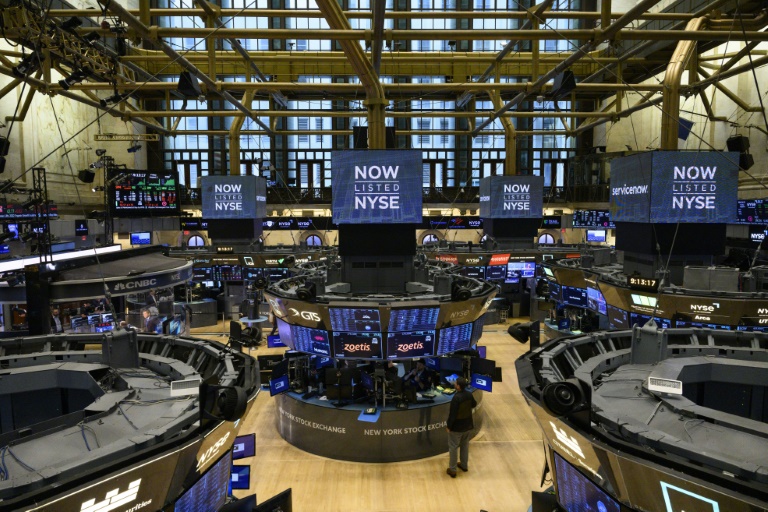
Stocks jump on easing US inflation

Stock markets bounced on Wednesday as better-than-expected US inflation data raised hopes that the US Federal Reserve will tone down its aggressive interest-rate policy.

With energy costs dropping in recent weeks, the annual US consumer price index eased to 8.5 percent in July from a 40-year high of 9.1 percent the previous month, the Labor Department reported, while the monthly rate was unchanged — a big surprise.

Signs that inflation could be coming off the boil in the world’s biggest economy could persuade the Fed to move much more gradually.

Investors had been worried that too steep an increase in borrowing costs could choke off economic recovery. 

Wall Street soared on the news, while the dollar took a tumble.

European stock markets closed firmly in the black after falling earlier in the day.

“The slowdown in US inflation was anticipated, but was sharper than economists had expected,” said Asteres analyst Sylvain Bersinger.

“Softer US inflation will brake the interest rate hikes.”

But economists and Fed officials warned against that hopeful view saying inflation is still high, and a third consecutive, 0.75-percentage-point hike remains possible.

“This is just the first hint that maybe inflation is starting to move in the right direction,” said Minneapolis Fed chief Neel Kashkari, adding that “we are a long way away from saying that we’re anywhere close to declaring victory.”

The data on Wednesday come at a sensitive time for world markets, which have been buffeted by the war in Ukraine, supply chain snarls and rising China-US tensions over Taiwan.

– Oil down –

While the latest earnings season has been less painful than feared, there are increasing signs that the economic slowdown is beginning to impact companies, with some major firms — including Apple and Amazon, and chipmakers Micron and Nvidia — providing downbeat outlooks.

On the oil markets, crude prices rose but remain stuck around six-month lows, as the prospect of lower demand caused by a possible recession has essentially wiped out all of the gains seen since Russia’s invasion of its neighbor in February.

But Edward Moya, analyst at OANDA trading group, said the market was unlikely to fall much further. 

“Whatever crude demand destruction that occurs from a weakening global economy won’t be able to drag down oil prices much lower given how low the supply outlook remains,” he said. 

– Key figures at around 2130 GMT –

New York – Dow: UP 1.5 percent at 33,309.51 (close)

New York – S&P 500: UP 2.1 percent at 4,210.24 (close)

New York – Nasdaq: UP 2.9 percent at 12,854.81 (close)

London – FTSE 100: UP 0.3 percent at 7,507.11 (close)

Frankfurt – DAX: UP 1.2 percent at 13,700.93 (close)

Paris – CAC 40: UP 0.5 percent at 6,523.44 (close)

EURO STOXX 50: UP 0.9 percent at 3,749.35 (close)

Tokyo – Nikkei 225: DOWN 0.7 percent at 27,819.33 (close)

Hong Kong – Hang Seng Index: DOWN 2.0 percent at 19,610.84 (close)

Shanghai – Composite: DOWN 0.5 percent at 3,230.02 (close)

Euro/dollar: UP at $1.0299 from $1.0213 Tuesday

Pound/dollar: UP at $1.2213 from $1.2071

Euro/pound: DOWN at 84.29 pence from 84.57 pence

Dollar/yen: DOWN at 132.89 yen from 135.12 yen

West Texas Intermediate: UP 1.2 percent at $91.57 per barrel

Brent North Sea crude: UP 0.8 percent at $97.11 per barrel

burs-spm/kjm/hs/bfm

Stocks jump on easing US inflation

Stock markets bounced on Wednesday as better-than-expected US inflation data raised hopes that the US Federal Reserve will tone down its aggressive interest-rate policy.

With energy costs dropping in recent weeks, the US consumer price index eased to an annual rate of 8.5 percent in July from a 40-year high of 9.1 percent the previous month, the Labor Department reported.

Signs that inflation could be coming off the boil in the world’s biggest economy could persuade the US Fed to tighten monetary conditions much more gradually than first anticipated.

Investors had been worried that too steep an increase in borrowing costs could choke off economic recovery. 

Wall Street soared on the news, while the dollar took a tumble.

European stock markets closed firmly in the black after falling earlier in the day.

“The slowdown in US inflation was anticipated, but was sharper than economists had expected,” said Asteres analyst Sylvain Bersinger.

“Softer US inflation will brake the interest rate hikes.”

Briefing.com analyst Patrick O’Hare agreed.

“The key takeaway from the report is that it supports the peak inflation view, which in turn supports the market’s hope that the Fed will temper its aggressive rate-hike approach in coming months,” he wrote.

The data on Wednesday come at a sensitive time for world markets, which have been buffeted by the war in Ukraine, supply chain snarls and rising China-US tensions over Taiwan.

– Oil down –

While the latest earnings season has been less painful than feared, there are increasing signs that the economic slowdown is beginning to impact companies, with some major firms — including Apple and Amazon — providing downbeat outlooks.

Chip-maker Micron became the latest, saying revenue would likely come in at the low end of its forecasts in the fourth quarter owing to weak demand.

A day before, rival Nvidia unveiled disappointing results.

On the oil markets, crude prices remain stuck around six-month lows, as the prospect of lower demand caused by a possible recession has essentially wiped out all of the gains seen since Russia’s invasion of its neighbour in February.

But Edward Moya, analyst at OANDA trading group, said the market was unlikely to fall much further. 

“Whatever crude demand destruction that occurs from a weakening global economy won’t be able to drag down oil prices much lower given how low the supply outlook remains,” he said. 

– Key figures at around 1545 GMT –

New York – Dow: UP 1.6 percent at 33,287.33 points

London – FTSE 100: UP 0.3 percent at 7,507.11 (close)

Frankfurt – DAX: UP 1.2 percent at 13,700.93 (close)

Paris – CAC 40: UP 0.5 percent at 6,523.44 (close)

EURO STOXX 50: UP 0.2 percent at 3,657.09

Tokyo – Nikkei 225: DOWN 0.7 percent at 27,819.33 (close)

Hong Kong – Hang Seng Index: DOWN 2.0 percent at 19,610.84 (close)

Shanghai – Composite: DOWN 0.5 percent at 3,230.02 (close)

Euro/dollar: UP at $1.0340 from $1.0213 Tuesday

Pound/dollar: UP at $1.2244 from $1.2071

Euro/pound: DOWN at 84.43 pence from 84.57 pence

Dollar/yen: DOWN at 132.58 yen from 135.12 yen

West Texas Intermediate: DOWN 0.5 percent at $89.98 per barrel

Brent North Sea crude: DOWN 0.6 percent at $95.72 per barrel

burs-spm/kjm

Close Bitnami banner
Bitnami