Chinese Business

China reconnects nuclear reactor after shutdown due to damage

A nuclear reactor in southern China has been reconnected to the electricity grid more than a year after it was shut down to repair damage, its operator said.

Part of Taishan nuclear power plant in Guangdong province was taken offline last July after Chinese authorities reported minor fuel rod damage and a build-up of radioactive gases at the plant.

Operators reconnected the damaged reactor after months of “inspection and maintenance”, China General Nuclear Power Group (CGN) said in a stock exchange filing late on Tuesday.

“The monitoring results of Taishan Nuclear Power Plant and its surrounding environment are normal,” CGN said in the filing, without giving further details.

The plant is operated in a partnership with French energy giant EDF and uses the European Pressurised Reactor (EPR) design, which was developed to relaunch nuclear power in Europe after the Chernobyl catastrophe of 1986.

The design is touted as offering higher power and better safety, but EPR projects in Finland, France and Britain have been plagued by delays and cost overruns.

There are more than 60,000 fuel rods in the reactor and the proportion of damaged rods was “less than 0.01 percent”, China’s environment ministry and nuclear regulator said before the reactor’s closure.

They called the damage “inevitable” due to factors including fuel manufacturing and transportation.

EDF also previously blamed the build-up of radioactive gases at the Taishan plant on deteriorating coating on some uranium fuel rods.

EDF on Wednesday confirmed that the reactor resumed production on Monday.

“After an in-depth investigation, the Chinese safety authority gave its agreement for the restart of EPR reactor 1 at Taishan,” EDF’s spokeswoman said.

Official environmental monitoring data last year showed a slight increase in radiation near Taishan compared with other nuclear plants in China, but within the normal range of environmental radiation levels in Guangdong.

Chinese tech giant Tencent revenue falls for first time since going public

Chinese tech giant Tencent on Wednesday posted its first drop in quarterly revenue since going public, as the company grapples with China’s economic downturn, pandemic disruptions and ongoing scrutiny from regulators.

Revenue in the second quarter fell three percent to 134 billion yuan ($19.8 billion) compared to the year before, while profits plunged by 56 percent to 18.6 billion yuan, an earnings statement said.

Tencent also cut around 5,500 jobs down to 110,715 employees by the end of June, the first quarterly decline in workforce since 2014.

“We actively exited non-core businesses, tightened our marketing spending, and trimmed operating expenses, enabling us to sequentially increase our non-IFRS earnings, despite difficult revenue conditions,” the company said in the statement. 

Around half of Tencent’s revenues came from fintech and business services as well as online advertising, which would position the company for growth when China’s economy expands, the company added.

China has spent months cracking down on the video game industry to fight addiction among children, cutting into profits of giants like Tencent and its rival NetEase.

Beijing started approving new video games again in April after a hiatus, but no Tencent games were on the list, meaning it must rely on older titles like “Honor of Kings” for revenue.

Tencent said China’s domestic gaming market was facing “transitional challenges”, while the international market was in a “post-pandemic digestion period” as people resumed spending on other entertainment avenues.

Online advertising revenue fell a record 18 percent in the second quarter year-on-year, which reflected “notable weakness in the Internet services, education and finance sectors”, the firm added.

“Tencent has tightened its belt as the Chinese tech industry embraces a downturn,” Analyst Willer Chen at Forsyth Barr Asia told Bloomberg News. 

“The company’s performance now largely depends on its progress on cost control and operation optimisation.”

– Tech sector reeling –

Tencent is among the biggest names in China’s tech industry that is still reeling from Beijing’s regulatory crackdown, which began in late 2020 to target anti-competitive practices and put an end to a decade of freewheeling growth.

The regulatory actions have wiped more than $1 trillion off the combined market value of the country’s tech giants in 2021, according to Bloomberg News estimates — though Tencent has retained the crown as China’s most valuable company.

The latest economic slump has further damaged bottom lines for the sector’s biggest firms, with Alibaba Group earlier this month reporting flat quarterly revenue growth for the first time.

Shares in Tencent rose less than 0.1 percent in Hong Kong before the Wednesday results announcement.

The announcement came a day after news broke that Tencent plans to sell all or much of its $24 billion stake in Chinese food delivery giant Meituan.

The Hong Kong-listed shares of Meituan fell more than 10 percent on Tuesday following the news, while Tencent dipped slightly before recovering.

Tencent went public in Hong Kong in 2004 and enjoyed double-digit growth for much of China’s decades-long internet boom, dominating the market with instant messaging app WeChat and its roster of games.

Earnings data on the company’s performance before its listing on the stock exchange is not publicly available.

Forced labour, possible 'enslavement' in China's Xinjiang: UN expert

Minorities have been drafted into forced labour in China’s Xinjiang region in sectors such as agriculture and manufacturing, a report by an independent UN expert has concluded, in what it said could amount to “enslavement as a crime against humanity”.

Beijing has been accused of detaining over a million Uyghurs and other Muslim minorities in Xinjiang, as well as carrying out forced sterilisation of women and coerced labour.

The United States and lawmakers in other western countries have gone as far as accusing China of committing “genocide” against the minority groups, allegations that Beijing denies.

The report released Tuesday by UN special rapporteur on modern slavery Tomoya Obokata pointed to two “distinct state-mandated systems” in China in which forced labour has occurred, citing think tank and NGO reports as well as victims. 

One is a vocational skills education and training centre system in which minorities are detained and subject to work placements, while another involves attempts to reduce poverty through labour transfer, in which rural workers are moved into “secondary or tertiary work”.

“While these programmes may create employment opportunities for minorities and enhance their incomes… the special rapporteur considers that indicators of forced labour pointing to the involuntary nature of work rendered by affected communities have been present in many cases,” the report said.

The nature and extent of powers exercised over the workers — including excessive surveillance and abusive living and working conditions — could “amount to enslavement as a crime against humanity, meriting a further independent analysis”, it said.

The report noted a similar labour transfer system exists in Tibet, where the “programme has shifted mainly farmers, herders and other rural workers into low-skilled and low-paid employment”.

Special rapporteurs are independent experts appointed by the UN Human Rights Council, but who do not speak on behalf of the world body.

China’s foreign ministry spokesman Wang Wenbin on Wednesday accused Obokata of “choosing to believe lies and disinformation fabricated by the US… as well as anti-China forces”.

Insisting that minorities’ rights were protected, Wang slammed the UN special rapporteur for “viciously smearing China and acting as a political tool for anti-China forces.”

China has long claimed it was running vocational training centres in Xinjiang designed to counter extremism, with President Xi Jinping visiting the region last month and hailing the “great progress” made in reform and development.

In May, the United Nations human rights chief Michelle Bachelet concluded a rare six-day visit to China that also took her to Xinjiang.

Her trip was criticised by the United States and major rights groups for a lack of firmness towards Beijing, with critics saying she visited more as a diplomat rather than a human rights champion.

Bachelet is due to publish a long-awaited report on the issue before she steps down at the end of the month.

Forced labour, possible 'enslavement' in China's Xinjiang: UN expert

Minorities have been drafted into forced labour in China’s Xinjiang region in sectors such as agriculture and manufacturing, a report by an independent UN expert has concluded, in what it said could amount to “enslavement as a crime against humanity”.

Beijing has been accused of detaining over a million Uyghurs and other Muslim minorities in Xinjiang, as well as carrying out forced sterilisation of women and coerced labour.

The United States and lawmakers in other western countries have gone as far as accusing China of committing “genocide” against the minority groups, allegations that Beijing denies.

The report released Tuesday by UN special rapporteur on modern slavery Tomoya Obokata pointed to two “distinct state-mandated systems” in China in which forced labour has occurred, citing think tank and NGO reports as well as victims. 

One is a vocational skills education and training centre system in which minorities are detained and subject to work placements, while another involves attempts to reduce poverty through labour transfer, in which rural workers are moved into “secondary or tertiary work”.

“While these programmes may create employment opportunities for minorities and enhance their incomes… the special rapporteur considers that indicators of forced labour pointing to the involuntary nature of work rendered by affected communities have been present in many cases,” the report said.

The nature and extent of powers exercised over the workers — including excessive surveillance and abusive living and working conditions — could “amount to enslavement as a crime against humanity, meriting a further independent analysis”, it said.

The report noted a similar labour transfer system exists in Tibet, where the “programme has shifted mainly farmers, herders and other rural workers into low-skilled and low-paid employment”.

Special rapporteurs are independent experts appointed by the UN Human Rights Council, but who do not speak on behalf of the world body.

China has long insisted it was running vocational training centres in Xinjiang designed to counter extremism, with President Xi Jinping visiting the region last month and hailing the “great progress” made in reform and development.

In May, the United Nations human rights chief Michelle Bachelet concluded a rare six-day visit to China that also took her to Xinjiang.

Her trip was criticised by the United States and major rights groups for a lack of firmness towards Beijing, with critics saying she visited more as a diplomat rather than a human rights champion.

Bachelet is due to publish a long-awaited report on the issue before she steps down at the end of the month.

China heat wave pushes up prices as hens lay fewer eggs

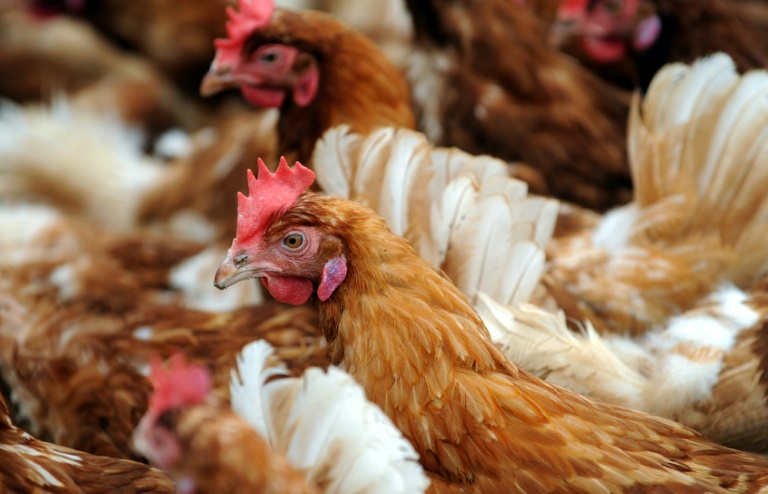
Scorching temperatures in eastern China have pushed up egg prices because hens are laying fewer in a hotter-than-usual summer, local media reported.

Extreme weather has become more frequent owing to climate change, scientists say, and this will likely grow more intense as temperatures rise, impacting economies and societies around the world.

Multiple major cities in China have recorded their hottest days ever this year, and the country’s national observatory issued a red alert on Monday.

And the heat wave is putting not only humans, but animals under stress too.

In Hefei city, farmers reported a drop in egg production because of the heat, according to a Jianghuai Morning News report last week, adding that some facilities have installed cooling systems for their hens.

The drop in supply in several provinces has caused egg prices to jump.

In Hefei, Anhui province’s capital, they were up around 30 percent, and there were similar spikes in the cities of Hangzhou and Hai’an, according to local media.

Hefei has so far logged 14 days of temperatures above 38 degrees Celsius, Hefei Evening News said, noting that this was a record.

Sustained exposure to extreme temperatures can exacerbate losses in production from animals, including eggs and milk, according to the US Department of Agriculture.

While the number of hens laying in China has not decreased, they have been eating less on hot days, Qianjiang Evening News added.

In addition to impacting poultry farms, the heat wave has also forced electricity rationing in lithium hub Sichuan in the face of soaring demand for power.

Provinces including Zhejiang, Jiangsu and Anhui that rely on power from western China have also issued electricity curbs for industrial users to ensure homes had enough power, local media reported.

And in eastern China’s Jiangxi province, which is in the grip of a severe drought, 11,000 people had difficulty accessing drinking water while more than 140,000 hectares of crops were damaged, according to the official Xinhua news agency on Tuesday.

Germany's Russian gas crisis sparks coal rush

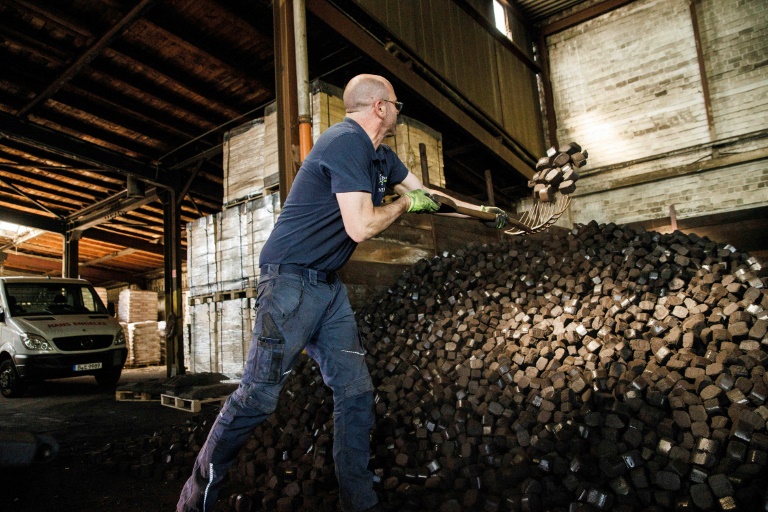
“A rush like this in the summertime, it’s unheard of — everybody wants coal,” says Frithjof Engelke, a supplier of the briquettes which have become a hot commodity in the German capital.

A looming shortage of Russian gas in the wake of the Ukraine war has reignited enthusiasm for this method of heating private homes despite its sooty residue and heavy carbon footprint.

Engelke, 46, head of the century-old Berlin business Hans Engelke Energie, says it’s brought a bonanza for his family business: “My holidays will have to wait.”

He and his team are frenziedly taking orders, organising deliveries by truck — now booked out until October, and getting supplies ready for those who come directly to pick up coal from his warehouse.  

On a hot summer’s day, he weighs and bags loose coal amid the dust and din of his filling machine, then arranges the bags on pallets, awaiting customers. 

In Berlin, 5-6,000 homes still heat with coal — only a fraction of the city’s 1.9 million homes, say municipal authorities.

Engelke’s customers are often elderly people, sometimes entirely dependent on coal and living in old dwellings that have never been renovated.

Others are lovers of the “cosy” heat emanating from often ornate old ceramic stoves. 

But this year, new customers have arrived “en masse”, says Engelke, whose medium-sized company has also diversified into wood pellets and fuel oil.

“Those who heat with gas but who still have a stove at home now all want to have coal,” he said, citing a phenomenon seen throughout Germany as winter approaches.

– ‘Better than being cold’ –

Jean Blum is one of the new converts. 

The 55-year-old man with tousled hair and a bushy white beard loads 25-kilogram (55-pound) bags filled with precious black briquettes in his trailer. 

“I’m buying coal for the first time in years,” he tells AFP.

Since his home is equipped with gas heating, he sometimes lights his stove, but only with wood.

With the jump in gas prices, which will be exacerbated this autumn when operators will be able to pass on the increase in energy levies to the consumer, Blum wants to make sure he has a safety net. 

“Even if it’s bad for your health, it’s still better than being cold,” he says.

Although coal prices have soared 30 percent this season, it remains cheaper than wood, whose price has more than doubled. 

“I worry when I wonder if there will be enough gas for everyone,” he adds, noting that Russian President Vladimir Putin has already partially closed the gas tap on Germany after Western nations imposed new sanctions on Moscow.

– ‘Renaissance’ –

The black fuel is experiencing a comeback on several fronts in Europe’s top economy. 

The German government had already resolved to increase the use of coal-fuelled power plants to satisfy the enormous appetites of several industries. 

However Berlin insists it will keep its pledge to phase out the heavily polluting energy source by 2030 and rules out a “renaissance of fossil fuels, in particular coal,” as Chancellor Olaf Scholz recently vowed.

However with new private customers coming out of the woodwork, production has a hard time keeping up, and many small coal merchants in the capital are running out of supplies. 

“We produce at full capacity during the summer, with three shifts, seven days a week,” Thoralf Schirmer, spokesman for LEAG, a mining site in the Lusatia basin, told AFP. 

The company supplies DIY stores and fuel sellers with coal briquettes.

Production has jumped 40 percent since January, he said, but demand is strong everywhere and the situation is expected to remain tense at least until this winter.

Adding to the pressure is the fact that the other factory supplying the market in Germany, based in the Rhine valley, will cease production at the end of the year, reducing supply.

“I dread the winter a bit,” Engelke, the coal seller, admits. 

Currently, people are relatively relaxed when they learn that they will have to wait at least two months before getting deliveries, he says. 

“Things will be radically different when it starts to get cold outside.”

Asian markets fluctuate as traders weigh economic outlook

Markets drifted in Asia on Wednesday, with investors trying to navigate an uncertain economic landscape as central banks hike interest rates to fight runaway inflation, in turn fuelling fears of a possible recession.

But while officials at the Federal Reserve and its peers are expected to keep tightening monetary policy for the rest of the year, talk is building that they will be able to ease up in 2023 — and maybe even cut rates — if the pace of price rises comes down.

Minutes from the Fed’s July meeting will be pored over when they are released later in the day, with investors hoping for some insight into policymakers’ thinking and an idea of its plan for next month’s gathering.

“We expect the … minutes to have a hawkish tilt,” Carol Kong, at Commonwealth Bank of Australia, said. “We would not be surprised if the minutes show (officials) considered a 100 basis points increase in July.”

The bank lifted rates by 75 points in both June and July.

Forecast-beating earnings from retail titans Walmart and Home Depot provided optimism that US consumers remain resilient even as inflation remains elevated and borrowing costs are going up.

However, Asia struggled to match the positive lead from Wall Street, with concerns about China’s economy dampening appetite.

The country’s central bank announced a surprise interest rate cut Monday and a report Tuesday said Premier Li Keqiang called on six key provinces — accounting for about 40 percent of the economy — to bolster pro-growth policies.

However, analysts said markets are more concerned about the debilitating impact of lockdowns and other strict containment measures implemented as part of the government’s zero-Covid strategy.

“Visibility over the evolution of China’s zero-Covid policy is low and recent messaging has suggested virus containment remains a top policy priority of the country,” said Adam Montanaro, investment director of global emerging markets equities at abrdn.

“Not only do investors hate uncertainty, but the negative economic impact of this policy is increasingly visible.”

Hong Kong was flat and Shanghai slipped, while there were also losses in Seoul and Wellington.

Tokyo, Singapore, Taipei and Manila rose.

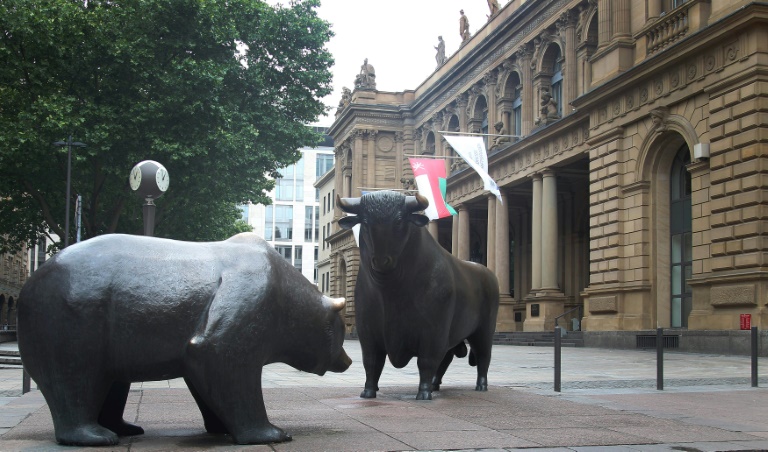
Equities have enjoyed several weeks of gains since hitting their June lows, and while the initial bounce was broadly seen as a bear market rally there is a hope that they may have already reached their nadir.

“It looks like a bottom, acts like a bottom, and trades like a bottom, then it probably is a bottom,” said OANDA’s Edward Moya in a note.

“Bear market rally calls are suddenly becoming quiet these days. The risks of the Fed sending the economy into a recession are easing as inflation is slowly coming down.

“The Fed’s soft landing seems achievable and that has allowed this rally to continue.”

– Key figures at around 0230 GMT –

Tokyo – Nikkei 225: UP 0.8 percent at 29,101.33 (break)

Hong Kong – Hang Seng Index: FLAT at 19,837.16

Shanghai – Composite: DOWN 0.4 percent at 3,263.71

West Texas Intermediate: UP 0.3 percent at $86.78 per barrel

Brent North Sea crude: UP 0.2 percent at $92.51 per barrel

Euro/dollar: UP at $1.0174 from $1.0166 Tuesday

Pound/dollar: UP at $1.2108 from $1.2092

Euro/pound: DOWN at 84.01 pence from 84.04 pence

Dollar/yen: DOWN at 134.06 yen from 134.21 yen

New York – Dow: UP 0.7 percent at 34,152.01 (close)

London – FTSE 100: UP 0.4 percent at 7,536.06 (close)

— Bloomberg News contributed to this story —

China factories ration power as heatwave sends demand soaring

Chinese lithium hub Sichuan province will ration electricity supply to factories until Saturday, state media reported, as a heatwave sends power demands soaring and dries up reservoirs.

Temperatures in the province — home to nearly 84 million people — have hovered above 40-42 degrees Celsius (104-108 degrees Fahrenheit) since last week, according to data from China’s Meteorological Administration, increasing the demand for air conditioning.

The region relies on dams to generate 80 percent of its electricity, but rivers in the area have dried up this summer, Beijing’s Water Resources Ministry said. 

The province in China’s southwest produces half the nation’s lithium, used in batteries for electric vehicles, and its hydropower projects provide electricity to industrial hubs along the country’s east coast. 

But the local government has decided to prioritise residential power supply, ordering industrial users in 19 out of 21 cities in the province to suspend production until Saturday, according to a notice issued Sunday.

Several companies including aluminium producer Henan Zhongfu Industrial and fertiliser producers Sichuan Meifeng Chemical Industry said in stock exchange statements they were suspending production.

A plant operated by Taiwanese giant and Apple supplier Foxconn in the province has also suspended production, Taipei’s Central News Agency reported. 

Some companies will be permitted to operate at a limited capacity, depending on their production needs.

“Sources estimate at least 1,200 tonnes of lithium output will be cut due to the operations disruptions in these five days,” Susan Zou, an analyst at Rystad Energy, told AFP, adding the cost of lithium carbonate had jumped since Monday.

A summer of extreme weather in China has seen multiple major cities record their hottest days ever.

China’s national observatory reissued a red alert for high temperatures on Monday, state media reported, as the mercury soared past 40 degrees Celsius (104 Fahrenheit) across swathes of the country.

Provinces including Zhejiang, Jiangsu and Anhui that rely on power from western China have also issued electricity curbs for industrial users to ensure homes had enough power, according to local media reports. 

Scientists say extreme weather across the world has become more frequent due to climate change, and will likely grow more intense as global temperatures rise.

Oil prices tumble on possible Iran deal, stuttering China economy

Oil prices fell Monday on the prospects of a return of Iranian oil to the market and data showing China’s economic recovery stuttering under Covid-19 restrictions.

Stock markets were broadly steady and the dollar traded mixed as investors digested the latest developments, including the surprise move by China’s central bank Monday to slash interest rates as a raft of data showed industrial production and retail sales growth for July came in lower than expected. 

“The risk of stagflation in the world economy is rising, and the foundation for domestic economic recovery is not yet solid,” China’s National Bureau of Statistics warned.

Stagflation refers to long-running high inflation combined with rising unemployment and weak growth.

Beijing’s rigid adherence to a zero-Covid strategy has held back economic recovery as snap lockdowns and long quarantines batter business activity and a recovery in consumption.

Wall Street stocks initially fell following the Chinese data and a gloomy reading from the New York Federal Reserve Bank on regional manufacturing activity. But stocks had turned around by midday.

“The risk of a global recession is pretty high at the moment,” said FHN Financial’s Chris Low, adding that a silver lining of the weakening outlook is the expectation that the Federal Reserve could pivot more quickly and slow its efforts to raise interest rates to quell red-hot prices.

“The Fed will stop sooner if inflation goes away and it’s more likely to go away sooner with the global economy slowing,” Low said.

But the weakened Chinese economy weighed on oil prices, as did speculation that a revived nuclear deal could add Iranian crude to global markets.

US oil futures dropped nearly three percent to finish below $90 a barrel.

Iran’s foreign minister said Tehran would deliver its “final” proposal later Monday on talks to revive its 2015 nuclear accord with world powers, after Washington had accepted key demands.

A deal would mean that Iran’s crude output of 2.5 million barrels per day would no longer be subject to international sanctions, which would help relieve supply constraints that have been pushing up prices.

“Iran would flood the market,” said analyst Aditya Saraswat at energy research firm Rystad, who added the country could ramp up production by another million barrels per day. 

– Key figures at around 2030 GMT –

Brent North Sea crude: DOWN 3.1 percent at $95.10 per barrel

West Texas Intermediate: DOWN 2.9 percent at $89.41 per barrel

New York – Dow: UP 0.5 percent at 33,912.44 (close)

New York – S&P 500: UP 0.4 percent at 4,297.14 (close)

New York – Nasdaq: UP 0.6 percent at 13,128.05 (close)

London – FTSE 100: UP 0.1 percent at 7,509.15 (close)

Frankfurt – DAX: UP 0.2 percent at 13,816.61 (close)

Paris – CAC 40: UP 0.3 percent at 6,569.95 (close)

EURO STOXX 50: UP 0.3 percent at 3,789.62 (close) 

Tokyo – Nikkei 225: UP 1.1 percent at 28,871.78 (close)

Hong Kong – Hang Seng Index: DOWN 0.7 percent at 20,040.86 (close)

Shanghai – Composite: FLAT at 3,276.09 (close)

Euro/dollar: DOWN at $1.0166 from $1.0259 Friday

Pound/dollar: DOWN at $1.2055 from $1.2138 

Euro/pound: DOWN at 84.29 pence from 84.53 pence

Dollar/yen: DOWN at 133.33 yen from 133.42 yen

burs-jmb/hs

Global business travel won't see full recovery until 2026: report

Inflation, supply chain problems and ongoing Covid-19 lockdowns in China are among the factors conspiring to delay a full recovery in business travel to its pre-pandemic level, according to an industry forecast released Monday.

The Global Business Travel Association now projects business travel will regain its 2019 level of $1.43 trillion in mid-2026, 18 months later than predicted in the group’s last forecast in November.

“Recovery has hit some headwinds,” GBTA said in a statement that outlined a gradual improvement from a 2020 low of $661 billion until reaching $1.47 trillion in 2026.

“The factors impacting many industries around the world are also anticipated to impact global business travel recovery into 2025,” said Suzanne Neufang, the association’s chief executive. 

The group said recovery was “short-circuited” in late 2021 and early 2022 by the Omicron variant of Covid-19, but that trips surged after that once Covid cases fell. 

Major obstacles to a full recovery include high energy prices, labor shortages, Covid lockdowns, regional impacts due to the war in Ukraine and sustainability concerns.

Close Bitnami banner
Bitnami