Chinese Business

Stock markets mostly drop on eve of US inflation

Stock markets mostly retreated and the dollar dropped Tuesday on the eve of key US inflation data.

Investors are on edge ahead of Wednesday’s figures, with some observers warning that an above-estimate reading on inflation, which is already at a four-decade high, could spur another sharp market sell-off.

There is a growing expectation also that central bank interest rate hikes aimed at curbing soaring prices will go too far and tip the global economy into recession.

Swissquote Bank analyst Ipek Ozkardeskaya said the recent drop in energy and commodity prices “should have a cooling effect on inflation, yet, higher labour costs could keep inflation sticky at undesirably high levels”.

Oil prices rose but remain around six-month lows as recession fears mount and traders fret over the impact on demand. 

They are keeping tabs also on Iran nuclear talks after the European Union submitted a “final text” at negotiations to salvage a 2015 deal.

An agreement could open the way for Tehran to resume sales of crude on international markets, partly helping to plug a hole left by the ban on Russian exports following the invasion of Ukraine. 

Edward Moya, analyst at OANDA trading group, said “it seems unlikely a breakthrough will happen anytime soon. 

“Tehran seems like they are willing to negotiate, but an imminent decision to agree to the EU’s proposal seems unlikely”, he added.

European and Asian stock markets mainly retreated after Wall Street provided a glum lead overnight.

Tech firms took a hit following a disappointing earnings report from chip giant Nvidia, seen as a warning that the end of the downturn was still some way off.

“While it’s tempting to buy into the narrative that we’ve seen the lows of the year, none of the price action thus far serves to support that conclusion,” said CMC Markets analyst Michael Hewson.

“Nvidia’s profit warning merely serves to underline the challenges facing, not only the tech sector, but the wider global economy.”

Hong Kong reversed a morning rally after its government denied claims it was considering removing an extra stamp duty for mainland Chinese buying property in the city.

– Key figures at around 1100 GMT –

London – FTSE 100: FLAT at 7,480.32 points

Frankfurt – DAX: DOWN 0.9 percent at 13,565.22

Paris – CAC 40: DOWN 0.4 percent at 6,499.55

EURO STOXX 50: DOWN 0.7 percent at 3,729.89

Tokyo – Nikkei 225: DOWN 0.9 percent at 27,999.96 (close)

Hong Kong – Hang Seng Index: DOWN 0.2 percent at 20,003.44 (close)

Shanghai – Composite: UP 0.3 percent at 3,247.43 (close)

New York – Dow: UP 0.1 percent at 32,832.54 (close)

Euro/dollar: UP at $1.0227 from $1.0194 Monday

Pound/dollar: UP at $1.2101 from $1.2079

Euro/pound: UP at 84.51 pence from 84.35 pence

Dollar/yen: DOWN at 134.91 yen from 134.98 yen

Brent North Sea crude: UP 1.0 percent at $97.65 per barrel

West Texas Intermediate: UP 1.0 percent at $91.68 per barrel
Markets mostly up as focus turns to inflation data

Most markets rose Tuesday but investors moved cautiously ahead of US inflation data later in the week, after a jobs report suggested the Federal Reserve would likely need to continue its sharp interest rate hikes to tame runaway prices.

A rally across global markets from June lows appeared to have hit the buffers after Friday’s forecast-busting employment reading showed the world’s top economy remained resilient but meant more monetary tightening was on the cards.

There had been a hope that recent weak data — including one showing the economy contracted for two straight quarters — would allow the bank to take its foot off the pedal in lifting borrowing costs, and possibly begin cutting in 2023.

Now, investors are on edge ahead of Wednesday’s figures, with some observers warning that an above-estimate reading on inflation, which is already at a four-decade high, could spur another sharp market sell-off.

There is a growing expectation that central bank interest rate hikes will go too far and tip the global economy into recession.

Saira Malik, at investment manager Nuveen, told Bloomberg Television the losses could kick in when investors realise “the Fed is not going to pivot on interest-rate hikes in early 2023, inflation should remain pretty persistent and rate hikes should continue”.

Wall Street provided a glum lead as tech firms took a hit following a disappointing earnings report from chip giant Nvidia caused by lower-than-expected gaming income, which was seen as a warning that the end of the downturn was still some way off.

“While it’s tempting to buy into the narrative that we’ve seen the lows of the year, none of the price action thus far serves to support that conclusion,” said CMC Markets analyst Michael Hewson.

“Nvidia’s profit warning merely serves to underline the challenges facing, not only the tech sector, but the wider global economy.”

Asian equities fluctuated in the morning but improved as the day progressed.

Shanghai, Sydney, Seoul, Wellington, Taipei, Bangkok, Jakarta and Manila were in positive territory but Tokyo fell.

Hong Kong reversed a morning rally led by developers after the government denied claims it was considering removing an extra stamp duty for mainland Chinese buying property in the city.

London was slightly higher in the morning, though Paris and Frankfurt edged down.

Oil prices fell and remain around six-month lows as recession fears mount and traders fret over the impact on demand. They are also keeping tabs on Iran nuclear talks after the European Union submitted a “final text” at negotiations to salvage a 2015 deal.

An agreement could open the way for Tehran to resume sales of crude on international markets, partly helping to plug a hole left by the ban on Russian exports following the invasion of Ukraine. 

However, OANDA’s Edward Moya said that “it seems unlikely a breakthrough will happen anytime soon. Tehran seems like they are willing to negotiate, but an imminent decision to agree to the EU’s proposal seems unlikely”.

– Key figures at around 0810 GMT –

Tokyo – Nikkei 225: DOWN 0.9 percent at 27,999.96 (close)

Hong Kong – Hang Seng Index: DOWN 0.2 percent at 20,003.44 (close)

Shanghai – Composite: UP 0.3 percent at 3,247.43 (close)

London – FTSE 100: UP 0.1 percent at 7,486.01

Euro/dollar: UP at $1.0209 from $1.0194 Monday

Pound/dollar: UP at $1.2083 from $1.2079

Euro/pound: UP at 84.49 pence from 84.35 pence

Dollar/yen: DOWN at 134.94 yen from 134.98 yen

West Texas Intermediate: DOWN 0.8 percent at $90.01 per barrel

Brent North Sea crude: DOWN 0.8 percent at $95.93 per barrel

New York – Dow: UP 0.1 percent at 32,832.54 (close)

Asian markets mixed as focus turns to inflation data

Asian equities were mixed Tuesday as investors await US inflation data later in the week, after a jobs report suggested the Federal Reserve would likely need to continue its sharp interest rate hikes to tame runaway prices.

A rally across global markets from June lows appears to have hit the buffers after Friday’s forecast-busting employment reading showed the world’s top economy remained resilient but meant more monetary tightening was on the cards.

There had been a hope that recent weak data — including one showing the economy contracted for two straight quarters — would allow the bank to take its foot off the pedal in lifting borrowing costs, and possibly begin cutting in 2023.

Now, investors are on edge ahead of Wednesday’s figures, with some observers warning that an above-estimate reading on inflation, which is already at a four-decade high, could spur another sharp market sell-off.

There is a growing expectation that central bank interest rate hikes will go too far and tip the global economy into recession.

Saira Malik, at investment manager Nuveen, told Bloomberg Television said the losses could kick in when investors realise “the Fed is not going to pivot on interest-rate hikes in early 2023, inflation should remain pretty persistent and rate hikes should continue”.

Wall Street provided a glum lead as tech firms took a hit following a disappointing earnings report from chip giant Nvidia caused by lower-than-expected gaming income.

“Nvidia is one of those companies that does things right and has the majority of analysts backing their stock,” said OANDA’s Edward Moya, adding that  its “warning is reminding traders of how severe the macro impacts might be on tech for the rest of the year”. 

In early exchanges, Asian equities fluctuated.

Tokyo, Hong Kong, Seoul, Taipei and Manila were in the red, while Shanghai, Sydney, Wellington and Jakarta edged up.

Oil prices edged down and remain around six-month lows as recession fears mount and traders fret over the impact on demand. They are also keeping tabs on Iran nuclear talks after the European Union submitted a “final text” at talks to salvage a 2015 deal.

An agreement could open the way for Tehran to resume sales of crude on international markets, partly helping to plug a hole left by the ban of Russian exports following its invasion of Ukraine. 

However, Moya added that “it seems unlikely a breakthrough will happen anytime soon. Tehran seems like they are willing to negotiate, but an imminent decision to agree to the EU’s proposal seems unlikely”.

– Key figures at around 0230 GMT –

Tokyo – Nikkei 225: DOWN 0.9 percent at 28,009.35 (break)

Hong Kong – Hang Seng Index: DOWN 0.4 percent at 19,976.74

Shanghai – Composite: UP 0.3 percent at 3,245.31

Euro/dollar: DOWN at $1.0192 from $1.0194 Monday

Pound/dollar: DOWN at $1.2077 from $1.2079

Euro/pound: UP at 84.39 pence from 84.35 pence

Dollar/yen: DOWN at 134.78 yen from 134.98 yen

West Texas Intermediate: DOWN 0.6 percent at $90.23 per barrel

Brent North Sea crude: DOWN 0.5 percent at $96.13 per barrel

New York – Dow: UP 0.1 percent at 32,832.54 (close)

London – FTSE 100: UP 0.6 percent at 7,482.37 (close)

US diverges from global stock rally as investors focus on inflation

US stocks trailed other global markets and the dollar retreated Monday as investors turned their attention to US inflation data later this week and weighed the prospect of more interest rate hikes.

Wall Street’s early enthusiasm faded by the close, with the broad S&P 500 dipping 0.1 percent, as inflation data coming this week combined with the strong jobs report Friday are boosting the view the US Federal Reserve will announce a third successive rate increase of three-quarters of a percentage point in September.

“With persistent inflation and a strong labor market, the Fed is on a clear path to raise rates,” OANDA analyst Edward Moya said. “This week is all about inflation.”

Data due Wednesday are expected to show inflation in the world’s biggest economy slowed slightly in July, but remained close to the 40-year highs seen in recent months. The June report showed consumer prices soared 9.1 percent over the past 12 months.

However, even if the pace slows, SPI Asset Management analyst Stephen Innes said the reading “seems very unlikely to offer compelling evidence of a slowdown needed for the Fed to pull away from its aggressive inflation-fighting mode.”

Global stocks had rallied over the past several sessions after another negative US GDP report convinced some traders the Fed might be able to ease up on the aggressive inflation-fighting campaign. 

But central bankers in recent days have tried to deflate their enthusiasm, saying more rate hikes are coming.

Oil prices gained, making good some of the losses from last week, when a rise in US crude stockpiles was partly responsible for a 10-percent drop in prices.

Both main oil contracts have lost all the gains seen in the wake of Russia’s invasion of Ukraine, which led the United States and Europe to ban imports of Russian crude, hammering already thin supplies.

– Key figures at around 2045 GMT –

New York – Dow: UP 0.1 percent at 32,832.54 (close)

New York – S&P 500: DOWN 0.1 percent at 4,140.06 (close)

New York – Nasdaq: DOWN 0.1 percent at 12,644.46 (close)

London – FTSE 100: UP 0.6 percent at 7,482.37 (close)

Frankfurt – DAX: UP 0.8 percent at 13,687.69 (close)

Paris – CAC 40: UP 0.8 percent at 6,524.44 (close)

EURO STOXX 50: UP 0.9 percent at 3,757.90

Tokyo – Nikkei 225: UP 0.3 percent at 28,249.24 (close)

Hong Kong – Hang Seng Index: DOWN 0.8 percent at 20,045.77 (close)

Shanghai – Composite: UP 0.3 percent at 3,236.93 (close)

Euro/dollar: UP at $1.0194 from $1.0184 Friday

Pound/dollar: UP at $1.2079 from $1.2075

Euro/pound: UP at 84.35 pence from 84.32 pence

Dollar/yen: DOWN at 134.98 yen from 135.00 yen

West Texas Intermediate: UP 1.5 percent at $90.32 per barrel

Brent North Sea crude: UP 1.3 percent at $96.18 per barrel

Stocks rise, dollar eases as investors focus on US inflation

Stock markets rose and the dollar retreated Monday as investors turned their attention to US inflation data later this week and weigh the prospect of further monetary policy tightening.

The dollar was weaker as investors took profit on the strong gains notched up last week on speculation that the US Federal Reserve will announce a third successive rate increase of three-quarters of a percentage point in September.

“The macro calendar is quiet this week with US inflation data being the main highlight,” said Forex.com analyst Fawad Razaqzada. 

“This will keep the dollar… in focus after a very strong US jobs report on Friday rekindled the possibility of a hat trick of 75-basis-point rate hikes in September.” 

Data due Wednesday are expected to show inflation in the world’s biggest economy slowed slightly in July, but remained close to the four-decade highs seen in recent months.

The reading “seems very unlikely to offer compelling evidence of a slowdown needed for the Fed to pull away from its aggressive inflation-fighting mode”, said SPI Asset Management analyst Stephen Innes.

Oil prices gained, making good some of the losses from last week, when a rise in US crude stockpiles was partly responsible for a 10-percent drop in prices.

Both main oil contracts have lost all the gains seen in the wake of Russia’s invasion of Ukraine, which led the United States and Europe to ban imports of Russian crude, hammering already thin supplies.

A blockbuster US jobs report last week “highlighted how strong the economy remains although traders are now increasingly nervous about more aggressive tightening sending the economy into a deeper recession further down the road”, said OANDA analyst Craig Erlam.

“The resumption of Iran nuclear talks today is one potential downside risk for the oil price, given the ability of the country to quickly ramp up production if a deal is struck.”

Iran on Sunday demanded that the UN nuclear watchdog, the International Atomic Energy Agency, “completely” resolve outstanding issues, as talks resume to revive a 2015 deal to rein in Tehran’s nuclear ambitions.

Iranian sources have suggested that one of the key sticking points is a probe by the IAEA into traces of nuclear material found at undeclared Iranian sites.

– Key figures at around 1540 GMT –

New York – Dow: UP 0.3 percent at 32,891.96 points

London – FTSE 100: UP 0.6 percent at 7,482.37 (close)

Frankfurt – DAX: UP 0.8 percent at 13,687.69 (close)

Paris – CAC 40: UP 0.8 percent at 6,524.44 (close)

EURO STOXX 50: UP 0.9 percent at 3,757.22

Tokyo – Nikkei 225: UP 0.3 percent at 28,249.24 (close)

Hong Kong – Hang Seng Index: DOWN 0.8 percent at 20,045.77 (close)

Shanghai – Composite: UP 0.3 percent at 3,236.93 (close)

Euro/dollar: UP at $1.0210 from $1.0184 Friday

Pound/dollar: UP at $1.2097 from $1.2075

Euro/pound: UP at 84.41 pence from 84.32 pence

Dollar/yen: DOWN at 134.75 yen from 135.00 yen

West Texas Intermediate: UP 0.9 percent at $89.81 per barrel

Brent North Sea crude: UP 1.0 percent at $95.90 per barrel

Stocks rise, dollar eases as investors focus on US inflation

Stock markets rose and the dollar retreated Monday as investors turned their attention to US inflation data later this week and weigh the prospect of further monetary policy tightening.

The dollar was weaker as investors took profit on the strong gains notched up last week on speculation that the US Federal Reserve will announce a third successive rate increase of three-quarters of a percentage point in September.

“The macro calendar is quiet this week with US inflation data being the main highlight,” said Forex.com analyst Fawad Razaqzada. 

“This will keep the dollar… in focus after a very strong US jobs report on Friday rekindled the possibility of a hat trick of 75-basis-point rate hikes in September.” 

Data due Wednesday is expected to show inflation in the world’s biggest economy slowed slightly in July, but remained close to the four-decade highs seen in recent months.

The reading “seems very unlikely to offer compelling evidence of a slowdown needed for the Fed to pull away from its aggressive inflation-fighting mode”, said SPI Asset Management analyst Stephen Innes.

Oil prices retreated on expectations of weaker demand amid a cost-of-living crisis.

A rise in US crude stockpiles was partly responsible for a 10-percent drop in prices last week.

Both main oil contracts have lost all the gains seen in the wake of Russia’s invasion of Ukraine, which led the United States and Europe to ban imports of Russian crude, hammering already thin supplies.

A blockbuster US jobs report last week “highlighted how strong the economy remains although traders are now increasingly nervous about more aggressive tightening sending the economy into a deeper recession further down the road”, said OANDA analyst Craig Erlam.

“The resumption of Iran nuclear talks today is one potential downside risk for the oil price, given the ability of the country to quickly ramp up production if a deal is struck.”

Iran on Sunday demanded that the UN nuclear watchdog, the International Atomic Energy Agency, “completely” resolve outstanding issues, as talks resume to revive a 2015 deal to rein in Tehran’s nuclear ambitions.

Iranian sources have suggested that one of the key sticking points is a probe by the IAEA into traces of nuclear material found at undeclared Iranian sites.

– Key figures at around 1345 GMT –

New York – Dow: UP 0.7 percent at 33,038.85 points

London – FTSE 100: UP 0.9 percent at 7,504.26

Frankfurt – DAX: UP 1.2 percent at 13,734.97

Paris – CAC 40: UP 1.4 percent at 6,560.62

EURO STOXX 50: UP 1.4 percent at 3,775.84

Tokyo – Nikkei 225: UP 0.3 percent at 28,249.24 (close)

Hong Kong – Hang Seng Index: DOWN 0.8 percent at 20,045.77 (close)

Shanghai – Composite: UP 0.3 percent at 3,236.93 (close)

Euro/dollar: UP at $1.0210 from $1.0184 Friday

Pound/dollar: UP at $1.2132 from $1.2075

Euro/pound: DOWN at 84.15 pence from 84.32 pence

Dollar/yen: DOWN at 134.65 yen from 135.00 yen

West Texas Intermediate: DOWN 0.6 percent at $88.52 per barrel

Brent North Sea crude: DOWN 0.3 percent at $94.68 per barrel

Stocks rise, oil falls tracking recession risks

Stock markets largely rose and oil prices retreated Monday as investors mulled the prospect of recession in the United States and elsewhere and central banks seek to tame soaring inflation with aggressive interest rate hikes.

The dollar, which had surged on Friday on the prospect of further large increases in US borrowing costs, fell back on profit-taking at the start of the new week. 

Speculation is growing that the US Federal Reserve will announce a third successive rate increase of three-quarters of a percentage point following a blockbuster US jobs report last week.

This week, all eyes will turn to the release of US July inflation data, which are expected to show a slight slowdown, but still not far from the four-decade highs seen in recent months.

The latest reading “seems very unlikely to offer compelling evidence of a slowdown needed for the Fed to pull away from its aggressive inflation-fighting mode”, said SPI Asset Management analyst, Stephen Innes.

Oil prices retreated further on expectations of weaker demand amid a cost-of-living crisis.

A rise in US crude stockpiles was partly responsible for a 10-percent drop in prices last week.

Both main oil contracts have lost all the gains seen in the wake of Russia’s invasion of Ukraine, which led the United States and Europe to ban imports of Russian crude, hammering already thin supplies.

The US jobs report last week “highlighted how strong the economy remains although traders are now increasingly nervous about more aggressive tightening sending the economy into a deeper recession further down the road”, said Oanda analyst Craig Erlam.

“The resumption of Iran nuclear talks today is one potential downside risk for the oil price, given the ability of the country to quickly ramp up production if a deal is struck.”

Iran on Sunday demanded that the UN nuclear watchdog, the International Atomic Energy Agency, “completely” resolve outstanding issues, as talks resume to revive a 2015 deal to rein in Tehran’s nuclear ambitions.

Iranian sources have suggested that one of the key sticking points is a probe by the IAEA into traces of nuclear material found at undeclared Iranian sites.

– Key figures at around 1100 GMT –

London – FTSE 100: UP 0.5 percent at 7,479.12 points

Frankfurt – DAX: UP 0.7 percent at 13,674.28

Paris – CAC 40: UP 0.9 percent at 6,533.50

EURO STOXX 50: UP 0.9 percent at 3,759.44

Tokyo – Nikkei 225: UP 0.3 percent at 28,249.24 (close)

Hong Kong – Hang Seng Index: DOWN 0.8 percent at 20,045.77 (close)

Shanghai – Composite: UP 0.3 percent at 3,236.93 (close)

New York – Dow: UP 0.2 percent at 32,803.47 (close)

Euro/dollar: UP at $1.0194 from $1.0184 Friday

Pound/dollar: UP at $1.2104 from $1.2075

Euro/pound: DOWN at 84.20 pence from 84.32 pence

Dollar/yen: DOWN at 134.86 yen from 135.00 yen

West Texas Intermediate: DOWN 1.0 percent at $88.09 per barrel

Brent North Sea crude: DOWN 1.1 percent at $93.88 per barrel

Japan's SoftBank reports record quarterly net loss

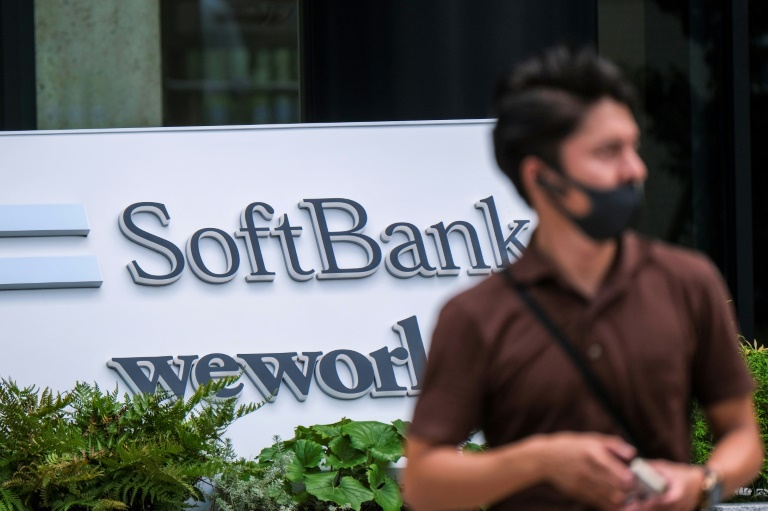
Japan’s SoftBank Group on Monday reported a record quarterly net loss of $23.4 billion, after interest rate hikes tanked tech shares.

The telecom firm-turned-investment behemoth posted a net loss of 3.16 trillion yen, nosediving from a net profit of 761.5 billion yen in the same April-June period the previous year.

“Global stock declines and the rapid depreciation of the yen” contributed to the slump, CEO Masayoshi Son told reporters.

A company statement elaborated, blaming the “global downward trend in share prices due to growing concerns over economic recession driven by inflation and rising interest rates”.

SoftBank’s big stakes in global tech giants and volatile new ventures have made for unpredictable earnings, and it has lurched between record highs and lows in recent years.

The portfolio companies that suffered large losses for the quarter included South Korean e-commerce giant Coupang and US meal delivery platform DoorDash, SoftBank Group said.

The outspoken Son said he wanted to reflect and learn from the huge losses suffered by SoftBank’s technology-focused Vision Fund, which suffered even worse declines than the tech-rich Nasdaq.

“All sorts of things can be used as excuses, such as the bad market environment, the war and the pandemic. But if we had been a bit more selective and made proper investments, we wouldn’t have suffered so much pain,” he said.

“I don’t know how long this winter will continue,” he added, referring to the challenging global situation for business.

“It could be three months. It could be three years,” Son said, joking that his “worries are reflected on his hair”.

– ‘Long-term’ lens –

Japanese media outlets including Kyodo News said the Q1 result was the largest quarterly loss the country has ever seen.

In May, SoftBank reported its worst-ever full-year net loss — and a then-record quarterly loss for Q4 — after a bruising 2021-22 that saw its assets hit by a US tech stocks rout and a regulatory crackdown in China.

That came after logging Japan’s biggest-ever annual net profit in 2020-21, when people moved their lives online during the pandemic and sent tech stocks soaring.

And in 2019-20, SoftBank Group reported a then-record annual net loss of 961.6 billion yen, as the emergence of Covid-19 compounded woes caused by its investment in troubled office-sharing firm WeWork.

SoftBank “faces a very tough situation in the immediate term”, Hideki Yasuda, senior analyst at Toyo Securities, told AFP before the earnings announcement.

“They have to wait for the market to rebound. You have to look at the company through the lens of long-term investment. It may experience one or two bad years, but over a decade or more, the world economy will keep growing and it could grow further.”

The US Federal Reserve and many other central banks have announced aggressive rate increases aimed at battling sky-high inflation linked to the Ukraine war and Covid-related supply chain woes.

But going against the grain, the Bank of Japan has stuck to its long-held monetary easing policies because it sees the latest price hikes as temporary.

This has pushed Japan’s currency down to 24-year lows against the dollar in recent months, driving down the yen value of SoftBank’s investments.

On Monday, Son also announced a new 400 billion yen share buyback, effectively extending its current trillion-yen buyback scheme.

Markets mixed as strong US jobs data fans Fed rate hike bets

Markets were mixed Monday and the dollar held big gains as a blockbuster US jobs report ramped up bets that the Federal Reserve will announce more sharp interest rate hikes as it tries to tame runaway inflation.

While the employment reading — which was more than twice as high as expected — indicated the world’s top economy remained resilient despite rising prices and borrowing costs, it will complicate the central bank’s plans to tighten monetary policy.

Traders have hoped that with several indicators pointing to a slowdown, including GDP figures showing a technical recession, policymakers could begin to ease back on their pace of rate hikes.

Now, speculation is growing that the Fed will have to announce a third successive 75 basis-point increase next month, particularly as officials have said their decisions will be data-dependent.

“Friday’s payroll report indicates an overheated labour market that continues to tighten further,” said SPI Asset Management’s Stephen Innes.

“Hence at minimum, the markets expect another 100 basis points of Fed funds rate increases over the next three meetings… with risks skewed towards significant increases.”

All eyes are now on the release this week of US July inflation data, which is expected to show a slight slowdown from June but still at four-decade highs.

The “report seems very unlikely to offer ‘compelling evidence’ of a slowdown needed for the Fed to pull away from its aggressive inflation-fighting mode”, Innes added.

The jobs figures left Wall Street’s main indexes mixed Friday, and Asia followed suit with markets fluctuating in early trade.

However, there was some relief that tensions had calmed since US House Speaker Nancy Pelosi’s visit to Taiwan last week sparked a furious reaction from China, including live-fire military drills around the island that continued Monday.

Hong Kong fell, with little excitement generated by news that the city will cut the amount of time incoming travellers must spend in hotel quarantine.

Singapore, Taipei, Bangkok, Jakarta and Wellington were also down, but Tokyo, Sydney, Seoul, Mumbai and Manila edged up.

Shanghai was boosted by better-than-expected Chinese trade data, though the gains were tempered by fresh worries about Covid lockdowns in the country that threaten the economic recovery.

London, Frankfurt and Paris rose in the morning.

– Oil demand concerns –

The prospect of higher interest rates sent the dollar surging, and it held on to those gains in Asia.

Oil rose but bets on a recession across leading economies continued to fuel concerns about demand — figures last week indicated Americans were driving less now than in summer 2020 at the height of the pandemic.

A rise in US stockpiles was partly responsible for a 10 percent drop in the commodity last week, pushing WTI below $90 for the first time since February.

Both main contracts have lost all the gains seen in the wake of Vladimir Putin’s invasion of Ukraine, which led the United States and Europe to ban imports of Russian crude, hammering already thin supplies.

Fresh talks on Iran’s nuclear programme were being followed.

“The resumption of Iran nuclear talks… is one potential downside risk for the oil price, given the ability of the country to quickly ramp up production if a deal is struck,” said OANDA’s Craig Erlam.

“Not to mention its reportedly large oil and gas reserves. A deal could apparently be struck within days, although we have heard that a lot at times this year.”

– Key figures at around 0810 GMT –

Tokyo – Nikkei 225: UP 0.3 percent at 28,249.24 (close)

Hong Kong – Hang Seng Index: DOWN 0.8 percent at 20,045.77 (close)

Shanghai – Composite: UP 0.3 percent at 3,236.93 (close)

London – FTSE 100: UP 0.2 percent at 7,451.24

Euro/dollar: UP at $1.0205 from $1.0184 Friday

Pound/dollar: UP at $1.2113 from $1.2075

Euro/pound: DOWN at 84.26 pence from 84.32 pence

Dollar/yen: UP at 135.07 yen from 135.00 yen

West Texas Intermediate: UP 0.5 percent at $89.45 per barrel

Brent North Sea crude: UP 0.5 percent at $95.38 per barrel

New York – Dow: UP 0.2 percent at 32,803.47 (close)

Markets struggle as strong US jobs boost Fed rate hike bets

Markets struggled Monday and the dollar held big gains as a blockbuster US jobs report ramped up bets that the Federal Reserve will announce more sharp interest rate hikes as it tries to tame runaway inflation.

While the employment reading — which was more than twice as high as expected — indicated the world’s top economy remained resilient despite rising prices and borrowing costs, it will complicate the bank’s plans to tighten monetary policy.

Traders have hoped that with several indicators pointing to a slowdown, including GDP figures showing a technical recession, policymakers could begin to ease back on their pace of rate hikes.

Now, speculation is growing that the Fed will have to announce a third successive 75 basis-point increase next month, particularly as officials have said their decisions will be data-dependent.

“Friday’s payroll report indicates an overheated labour market that continues to tighten further,” said SPI Asset Management’s Stephen Innes.

“Hence at minimum, the markets expect another 100 basis points of Fed funds rate increases over the next three meetings… with risks skewed towards significant increases.”

All eyes are now on the release this week of US July inflation data, which is expected to show a slight slowdown from June but still at four-decade highs.

The “report seems very unlikely to offer ‘compelling evidence’ of a slowdown needed for the Fed to pull away from its aggressive inflation-fighting mode.” Innes added.

The jobs figures left Wall Street’s main indexes mixed Friday, and Asia followed suit with markets fluctuating in early trade.

However, there was some relief that tensions had calmed since Nancy Pelosi’s visit to Taiwan last week sparked a furious reaction from China that saw it conduct days of live-fire military drills around the island, which contiued Monday.

Hong Kong fell with little excitement generated by news that the city will cut the amount of time incoming travellers must spend in hotel quarantine.

Singapore, Taipei, Bangkok, Jakarta and Wellington were also down, but Tokyo, Sydney, Seoul, Mumbai and Manila edged up.

Shanghai was boosted by better-than-expected Chinese trade data, though the gains were tempered by fresh worries about Covid lockdowns in the country that threaten the economic recovery.

London, Frankfurt and Paris rose at the open.

The prospect of higher interest rates sent the dollar surging, and it held on to those gains in Asia.

Oil rose but bets on a recession across leading economies continued to fuel concerns about demand — figures last week indicated Americans were driving less now than in summer 2020 at the height of the pandemic.

A rise in US stockpiles was partly responsible for a 10 percent drop in the commodity last week, pushing WTI below $90 for the first time since February.

Both main contracts have lost all the gains seen in the wake of Vladimir Putin’s invasion of Ukraine, which led the United States and Europe to ban imports of Russian crude, hammering already thin supplies.

Fresh talks on Iran’s nuclear programme were being followed.

“The resumption of Iran nuclear talks… is one potential downside risk for the oil price, given the ability of the country to quickly ramp up production if a deal is struck,” said OANDA’s Craig Erlam.

“Not to mention its reportedly large oil and gas reserves. A deal could apparently be struck within days, although we have heard that a lot at times this year.”

– Key figures at around 0720 GMT –

Tokyo – Nikkei 225: UP 0.3 percent at 28,249.24 (close)

Hong Kong – Hang Seng Index: DOWN 0.8 percent at 20,040.95

Shanghai – Composite: DOWN 0.3 percent at 3,236.93 (close)

London – FTSE 100: UP 0.5 percent at 7,480.08

Euro/dollar: DOWN at $1.0177 from $1.0184 Friday

Pound/dollar: UP at $1.2079 from $1.2075

Euro/pound: DOWN at 84.25 pence from 84.32 pence

Dollar/yen: UP at 135.37 yen from 135.00 yen

West Texas Intermediate: UP 0.9 percent at $89.78 per barrel

Brent North Sea crude: UP 0.8 percent at $95.71 per barrel

New York – Dow: UP 0.2 percent at 32,803.47 (close)

Close Bitnami banner
Bitnami