Chinese Business

Japan's SoftBank reports record quarterly net loss

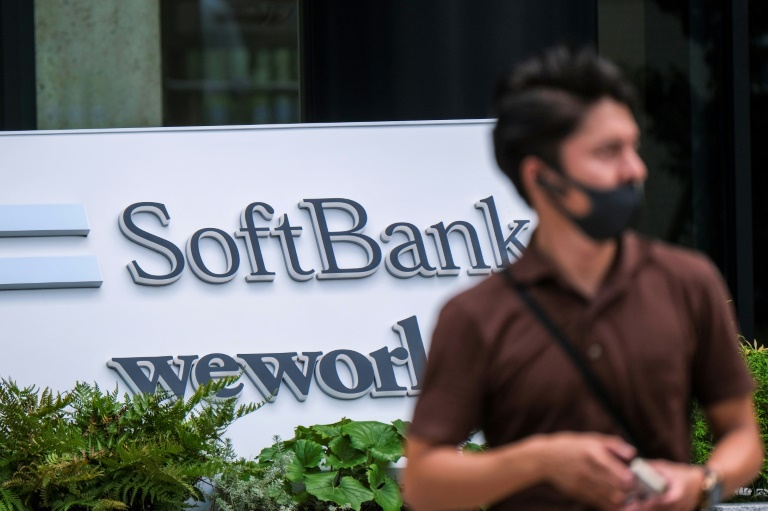
Japan’s SoftBank Group on Monday reported a record quarterly net loss of $23.4 billion, after central bank interest rate hikes caused tech shares to tank.

The telecoms firm that has turned into an investment behemoth posted a net loss of 3.16 trillion yen, nose-diving from a net profit of 761.5 billion yen in the same April-June period the previous year.

A weaker yen and the “global downward trend in share prices due to growing concerns over economic recession driven by inflation and rising interest rates” contributed to the slump, it said.

Among its portfolio companies that suffered large losses for the quarter were South Korean e-commerce giant Coupang and US meal delivery platform DoorDash, SoftBank added.

SoftBank’s big stakes in global tech giants and volatile new ventures have made for unpredictable earnings, and it has lurched between record highs and lows in recent years.

In May, it reported its worst-ever full-year net loss — and a then-record quarterly loss for Q4 — after a bruising year in 2021-22 that saw its assets hit by a US tech share rout and a regulatory crackdown in China.

That came after logging Japan’s biggest-ever annual net profit in 2020-21, after people moved their lives online during the pandemic, sending tech stocks soaring.

And in 2019-20, SoftBank Group reported a then-record annual net loss of 961.6 billion yen, as the emergence of Covid-19 compounded woes caused by its investment in troubled office-sharing start-up WeWork.

Hideki Yasuda, senior analyst at Toyo Securities, told AFP the company “cannot help” big losses, “because the market is down”.

The company “faces a very tough situation in the immediate term”, Yasuda said before the earnings announcement.

“They have to wait for the market to rebound. You have to look at the company through the lens of long-term investment. It may experience one or two bad years, but over a decade or more, the world economy will keep growing and it could grow further.”

The US Federal Reserve and many other central banks have announced aggressive rate increases aimed at battling sky-high inflation linked to the Ukraine war and Covid-related supply chain woes.

But going against the grain, the Bank of Japan has stuck to its long-held monetary easing policies because it sees the latest price hikes as temporary.

This has pushed Japan’s currency down to 24-year lows against the dollar in recent months, driving down the yen value of SoftBank’s investments.

Markets struggle as strong US jobs boost Fed rate hike bets

Asian markets struggled Monday and the dollar held big gains as a blockbuster US jobs report ramped up bets that the Federal Reserve will announce more sharp interest rate hikes as it tries to tame runaway inflation.

While the employment reading — which was more than twice as high as expected — indicated the world’s top economy remained resilient despite rising prices and borrowing costs, it will complicate the bank’s plans to tighten monetary policy.

Traders have hoped that with several indicators pointing to a slowdown, including GDP figures showing a technical recession, policymakers could begin to ease back on their pace of rate hikes.

Now, speculation is growing that the Fed will have to announce a third successive 75 basis-point increase next month, particularly as officials have said their decisions will be data-dependent.

“Friday’s payroll report indicates an overheated labour market that continues to tighten further,” said SPI Asset Management’s Stephen Innes.

“Hence at minimum, the markets expect another 100 basis points of Fed funds rate increases over the next three meetings… with risks skewed towards significant increases.”

All eyes are now on the release this week of US July inflation data, which is expected to show a slight slowdown from June but still at four-decade highs.

The “report seems very unlikely to offer ‘compelling evidence’ of a slowdown needed for the Fed to pull away from its aggressive inflation-fighting mode.” Innes added.

The jobs figures left Wall Street’s main indexes mixed Friday, and Asia followed suit with markets fluctuating in early trade.

However, there was some relief that tensions had calmed since Nancy Pelosi’s visit to Taiwan last week sparked a furious reaction from China that saw it conduct days of live-fire military drills around the island.

Hong Kong dipped along with Sydney, Seoul, Singapore, Taipei, Manila, Jakarta and Wellington.

Tokyo edged up and Shanghai was flat, with better-than-expected Chinese trade data offset by fresh worries about Covid lockdowns in the country that threaten the economic recovery.

The prospect of higher interest rates sent the dollar surging, and it held on to those gains in Asia.

Bets on a recession across leading economies continued to weigh on oil prices as investors worry about the impact on demand — figures last week indicated Americans were driving less now than in summer 2020 at the height of the pandemic.

A rise in US stockpiles was partly responsible for a 10 percent drop in the commodity last week, pushing WTI below $90 for the first time since February.

Both main contracts have lost all the gains seen in the wake of Vladimir Putin’s invasion of Ukraine, which led the United States and Europe to ban imports of Russian crude, hammering already thin supplies.

– Key figures at around 0230 GMT –

Tokyo – Nikkei 225: UP 0.2 percent at 28,241.09 (break)

Hong Kong – Hang Seng Index: DOWN 0.6 percent at 20,072.68

Shanghai – Composite: FLAT at 3,227.00

Euro/dollar: DOWN at $1.0181 from $1.0184 Friday

Pound/dollar: DOWN at $1.2071 from $1.2075

Euro/pound: UP at 84.35 pence from 84.32 pence

Dollar/yen: UP at 135.32 yen from 135.00 yen

West Texas Intermediate: DOWN 0.2 percent at $88.87 per barrel

Brent North Sea crude: DOWN 0.3 percent at $94.68 per barrel

New York – Dow: UP 0.2 percent at 32,803.47 (close)

London – FTSE 100: DOWN 0.1 percent at 7,439.74 (close)

Snickers owner apologises after referring to Taiwan as a country

American candy giant Mars Wrigley has insisted it “respects China’s national sovereignty” and apologised after an advert for its Snickers bar referred to Taiwan as a country, sparking outrage on the mainland.

Screenshots of marketing for the nutty confectionery featuring the South Korean boyband BTS were swiftly picked up on social media in mainland China, where any suggestion the island is an independent nation is highly taboo.

“We are aware of reports on Snickers-related activities in certain regions of Asia, take this very seriously and express our deep apologies,” said a Mars Wrigley statement posted Friday on Snickers China’s Weibo page.

The company has asked Snickers’ local team to check and adjust its official website and social media account “to ensure the company’s publicity content is accurate”, it added.

“Mars Wrigley respects China’s national sovereignty and territorial integrity, and conducts business operations in strict compliance with local Chinese laws and regulations,” the statement said.

Hours after the first statement, Snickers China shared another Weibo post adding that “there is only one China in this world, and Taiwan is an inalienable part of China’s territory”.

Beijing reacted with fury this week when US House Speaker Nancy Pelosi defied its warnings and visited Taiwan — which China claims as part of its territory and has vowed to take, by force if necessary.

China said Friday it was ending cooperation with the United States on key issues including climate change, and has in recent days encircled the self-ruled democratic island with a series of military drills.

Mars Wrigley is far from the first international firm to issue an apology over worries of losing access to China’s massive consumer market.

In 2019, French luxury brand Dior apologised after using a map of China in a presentation that did not include Taiwan.

Hotel chain Marriott’s website in China was shut down by authorities for a week in 2018 after a customer questionnaire listed Taiwan, Tibet and Hong Kong as separate countries.

Stocks mostly fall after US jobs growth surges

Stock markets mostly fell Friday as a much stronger-than-expected US jobs report raised the prospect that the Federal Reserve will maintain its aggressive monetary policy to combat inflation.

Official data published Friday showed the US economy added 528,000 positions, defying all expectations of a slowdown.

Friday’s data also showed US wages jumped, which will add to inflation concerns and likely push the Fed to raise rates aggressively again next month.

The Fed has previously said its decision will be guided by data.

Markets fell after the “absolutely monster” jobs report leaves “the Fed with all the ammo it needs to keep on hiking a lot more,” Markets.com analyst Neil Wilson told AFP.

But after tumbling decisively just after the data, Wall Street equities later came back somewhat, lifting the Dow into positive territory by the session’s end and lessening losses on the other two indices.

“Stocks really did hold up today all things considered, given the perspective going into the report,” said Briefing.com analyst Patrick O’Hare, who added that investors may have interpreted the data as showing the economy can withstand the Fed’s actions.

The broad-based S&P 500 finished at 4,145.19, down 0.2 percent for the day but up 0.3 percent for the week.

The dollar also rallied on the US jobs report.

In Europe, London equities ended the day down 0.1 percent one day after the Bank of England unveiled a half-point interest rate hike and forecast UK inflation topping 13 percent on surging domestic energy bills.

The BoE’s rate increase followed more aggressive monetary policy from the European Central Bank and the Fed as authorities crack down on rampant inflation in the wake of Russia’s invasion of Ukraine.

Back in the eurozone, Frankfurt stocks shed 0.7 percent and Paris declined 0.6 percent at the close of trading.

– ‘Stagflation awaits’ –

“The dire warnings from the BoE are impossible to ignore as other central banks desperately try to avoid a similar fate,” OANDA analyst Craig Erlam told AFP.

“It seems only a matter of time until others are forced to accept that a recession is the price to pay for getting inflation under control.”

He added: “A period of stagflation now awaits the UK — and others may not be far behind as the crushing impact of energy prices wreaks havoc on living standards and saps demand.”

Stagflation is a toxic mixture of stubbornly high consumer prices and low economic growth.

– Key figures at around 2030 GMT –

New York – Dow: UP 0.2 percent at 32,803.47 (close)

New York – S&P 500: DOWN 0.2 percent at 4,145.19 (close)

New York – Nasdaq: DOWN 0.5 percent at 12,657.55 (close)

London – FTSE 100: DOWN 0.1 percent at 7,439.74 (close)

Frankfurt – DAX: DOWN 0.7 percent at 13,573.93 (close)

Paris – CAC 40: DOWN 0.6 percent at 6,472.35 (close)

EURO STOXX 50: DOWN 0.8 percent at 3,725.39 (close)

Tokyo – Nikkei 225: UP 0.9 percent at 28,175.87 (close)

Hong Kong – Hang Seng Index: UP 0.1 percent at 20,201.94 (close)

Shanghai – Composite: UP 1.2 percent at 3,227.03 (close)

Euro/dollar: DOWN at $1.0184 from $1.0246 Thursday

Pound/dollar: DOWN at $1.2075 from $1.2160

Euro/pound: UP at 84.32 pence from 84.26 pence

Dollar/yen: UP at 135.00 yen from 132.89 yen

Brent North Sea crude: UP 0.8 percent at $94.92 per barrel

West Texas Intermediate: UP 0.5 percent at $89.01 per barrel

burs-jmb/sw

Stocks fall after US jobs growth surges

Stock markets slid Friday as a much stronger-than-expected US jobs report raised the prospect that the Federal Reserve will maintain its aggressive monetary policy to combat inflation.

Official data published Friday showed the US economy added 528,000 positions, defying all expectations of a slowdown.

Friday’s data also showed US wages jumped, which will add to inflation concerns and likely push the Fed to raise rates aggressively again next month.

The Fed has previously said its decision will be guided by data.

Markets fell after the “absolutely monster” jobs report “with wages also up strongly” leaves “the Fed with all the ammo it needs to keep on hiking a lot more”, Markets.com analyst Neil Wilson told AFP.

“Those betting on the Fed relenting soon have been caught out by today’s report,” he added.

Wall Street stocks were lower with the Dow and S&P falling 0.4 percent and 0.8 percent respectively, while the tech-heavy Nasdaq Composite was down nearly 1.3 percent after 1530 GMT.

The dollar gained against other major currencies.

Officials have said the US economy remains healthy despite four-decade high inflation and a sharp lift in borrowing costs.

The jobs data “make a mockery of claims that the economy is on the brink of recession”, said Michael Pearce, senior US economist at Capital Economics, said.

“All the details appear to support continued aggressive rate hikes from the Fed,” he said in a note.

In Europe, London equities ended the day down 0.1 percent one day after the Bank of England unveiled a half-point interest rate hike and forecast UK inflation topping 13 percent on surging domestic energy bills.

The BoE’s rate increase followed more aggressive monetary policy from the European Central Bank and the Fed as authorities crack down on rampant inflation in the wake of Russia’s invasion of Ukraine.

Back in the eurozone, Frankfurt stocks slipped 0.6 percent and Paris also sank 0.6 percent at the close of trading.

– ‘Stagflation awaits’ –

“The dire warnings from the BoE are impossible to ignore as other central banks desperately try to avoid a similar fate,” OANDA analyst Craig Erlam told AFP.

“It seems only a matter of time until others are forced to accept that a recession is the price to pay for getting inflation under control.”

He added: “A period of stagflation now awaits the UK — and others may not be far behind as the crushing impact of energy prices wreaks havoc on living standards and saps demand.”

Stagflation is a toxic mixture of stubbornly high consumer prices and low economic growth.

India’s central bank on Friday lifted borrowing costs for the third time in four months to the highest level since summer 2019.

Asian equities mostly rose Friday, with Taipei surging on easing concerns over a conflict with Beijing — even as China conducts its largest-ever military exercises around Taiwan in response to US House Speaker Nancy Pelosi’s visit earlier this week.

Oil prices rose later Friday, one day after WTI crude fell to the level where it had stood before the Ukraine conflict sent the market soaring. 

– Key figures at around 1530 GMT –

New York – Dow: DOWN 0.4 percent at 32,592.91 points

EURO STOXX 50: DOWN 0.5 percent at 3,641.20

London – FTSE 100: DOWN 0.1 percent at 7,439.74 (close)

Frankfurt – DAX: DOWN 0.6 percent at 13,573.93 (close)

Paris – CAC 40: DOWN 0.6 percent at 6,472.35 (close)

Tokyo – Nikkei 225: UP 0.9 percent at 28,175.87 (close)

Hong Kong – Hang Seng Index: UP 0.1 percent at 20,201.94 (close)

Shanghai – Composite: UP 1.2 percent at 3,227.03 (close)

Euro/dollar: DOWN at $1.0154 from $1.0246 Thursday

Pound/dollar: DOWN at $1.2045 from $1.2160

Euro/pound: UP at 84.28 pence from 84.26 pence

Dollar/yen: UP at 135.38 yen from 132.89 yen

Brent North Sea crude: UP 1.7 percent at $95.75 per barrel

West Texas Intermediate: UP 1.7 percent at $90.05 per barrel

burs-raz/pvh

Stocks fall after US jobs growth surges

Stock markets slid Friday as a much stronger-than-expected US jobs report raised the prospect that the Federal Reserve will maintain its aggressive monetary policy to combat inflation.

Official data published Friday showed the US economy added 528,000 positions, defying all expectations of a slowdown.

Friday’s data also showed US wages jumped, which will add to inflation concerns and likely push the Fed to raise rates aggressively again next month.

The Fed has previously said its decision will be guided by data.

“The key takeaway from the report is that it squashes the friendly notion that the Fed can turn friendly with its monetary policy decisions sooner rather than later,” said Patrick O’Hare, analyst at Briefing.com.

Wall Street stocks opened lower with the Dow and S&P falling one percent and 0.7 percent respectively, while the tech-heavy Nasdaq Composite was down nearly 1.4 percent.

The dollar gained against other major currencies.

Officials have said the US economy remains healthy despite four-decade high inflation and a sharp lift in borrowing costs.

The jobs data “make a mockery of claims that the economy is on the brink of recession”, said Michael Pearce, senior US economist at Capital Economics, said.

“All the details appear to support continued aggressive rate hikes from the Fed,” he said in a note.

In Europe, London equities retreated 0.2 percent one day after the Bank of England unveiled a half-point interest rate hike and forecast UK inflation topping 13 percent on surging domestic energy bills.

The BoE’s rate increase followed more aggressive monetary policy from the European Central Bank and the Fed as authorities crack down on rampant inflation in the wake of Russia’s invasion of Ukraine.

Back in the eurozone, Frankfurt stocks slipped 0.4 percent and Paris sank 0.7 percent.

– ‘Stagflation awaits’ –

“The dire warnings from the BoE are impossible to ignore as other central banks desperately try to avoid a similar fate,” OANDA analyst Craig Erlam told AFP.

“It seems only a matter of time until others are forced to accept that a recession is the price to pay for getting inflation under control.”

He added: “A period of stagflation now awaits the UK — and others may not be far behind as the crushing impact of energy prices wreaks havoc on living standards and saps demand.”

Stagflation is a toxic mixture of stubbornly high consumer prices and low economic growth.

India’s central bank on Friday lifted borrowing costs for the third time in four months to the highest level since summer 2019.

Asian equities mostly rose Friday, with Taipei surging on easing concerns over a conflict with Beijing — even as China conducts its largest-ever military exercises around Taiwan in response to US House Speaker Nancy Pelosi’s visit earlier this week.

Oil prices fell further, one day after WTI crude fell to the level where it had stood before the Ukraine conflict sent the market soaring. 

– Key figures at around 1330 GMT –

London – FTSE 100: DOWN 0.2 percent at 7,430.67 points

Frankfurt – DAX: DOWN 0.4 percent at 13,599.79

Paris – CAC 40: DOWN 0.7 percent at 6,465.23

EURO STOXX 50: DOWN 0.5 percent at 3,640.03

New York – Dow: DOWN 0.7 percent at 32,498.29

Tokyo – Nikkei 225: UP 0.9 percent at 28,175.87 (close)

Hong Kong – Hang Seng Index: UP 0.1 percent at 20,201.94 (close)

Shanghai – Composite: UP 1.2 percent at 3,227.03 (close)

Euro/dollar: DOWN at $1.0153 from $1.0246 Thursday

Pound/dollar: DOWN at $1.2021 from $1.2160

Euro/pound: UP at 84.44 pence from 84.26 pence

Dollar/yen: UP at 134.78 yen from 132.89 yen

Brent North Sea crude: DOWN 1.0 percent at $93.14 per barrel

West Texas Intermediate: DOWN 1.2 percent at $87.41 per barrel

burs-raz/lth

European stocks slip on stagflation fear, before US data

European stock markets slid Friday after the Bank of England’s gloomy recession warning raised the spectre of stagflation, and as investors awaited critical US payrolls data, dealers said.

London equities retreated 0.2 percent one day after the BoE unveiled a half-point interest rate hike and forecast UK inflation topping 13 percent on surging domestic energy bills.

The hike followed more aggressive monetary policy from the European Central Bank and US Federal Reserve as authorities crack down on rampant inflation in the wake of Russia’s invasion of Ukraine.

India on Friday lifted borrowing costs for the third time in four months to the highest level since summer 2019.

Back in the eurozone, Frankfurt stocks slipped 0.1 percent and Paris sank 0.5 percent, despite modest gains in Asia.

Oil prices held steady, one day after WTI crude fell to the level where it had stood before the Ukraine conflict sent the market soaring. 

– ‘Stagflation awaits’ –

“The dire warnings from the BoE are impossible to ignore as other central banks desperately try to avoid a similar fate,” OANDA analyst Craig Erlam told AFP.

“It seems only a matter of time until others are forced to accept that a recession is the price to pay for getting inflation under control.”

He added: “A period of stagflation now awaits the UK — and others may not be far behind as the crushing impact of energy prices wreaks havoc on living standards and saps demand.”

Stagflation is a toxic mixture of stubbornly high consumer prices and low economic growth.

Later on Friday, traders will focus on key US non-farm payrolls (NFP) data that could stoke fears of a prolonged downturn in the world’s number one economy.

“Market participants will closely scrutinize today’s NFP report for any signs that weakness in activity data in the US economy is starting to spill-over into the labour market with a lag which would heighten (US) recession fears,” said MUFG analyst Lee Hardman.

Asian equities mostly rose Friday, with Taipei surging on easing concerns over a conflict with Beijing — even as China conducts its largest-ever military exercises around Taiwan in response to US House Speaker Nancy Pelosi’s visit earlier this week.

And while many analysts are beating the drum of a global recession, traders are also hopeful of a reprieve from monetary tightening.

“The recent fall in oil prices, which are now trading below the levels immediately before Russia’s invasion of Ukraine, has contributed to the market’s perception that inflation is likely to peak soon, taking pressure off the Fed to raise rates as aggressively,” said National Australia Bank’s Rodrigo Catril. 

The Fed has said its rate decision will be guided by data, with signs of economic weakness seen as likely to mean any increases will be light.

Officials have said the US economy remains healthy despite four-decade high inflation and a sharp lift in borrowing costs.

– Key figures at around 1030 GMT –

London – FTSE 100: DOWN 0.2 percent at 7,434.14 points

Frankfurt – DAX: DOWN 0.1 percent at 13,648.93

Paris – CAC 40: DOWN 0.5 at 6,479.50

EURO STOXX 50: DOWN 0.4 percent at 3,740.74

Tokyo – Nikkei 225: UP 0.9 percent at 28,175.87 (close)

Hong Kong – Hang Seng Index: UP 0.1 percent at 20,201.94 (close)

Shanghai – Composite: UP 1.2 percent at 3,227.03 (close)

New York – Dow: DOWN 0.3 percent at 32,726.82 (close)

Euro/dollar: DOWN at $1.0225 from $1.0246 Thursday

Pound/dollar: DOWN at $1.2147 from $1.2160

Euro/pound: DOWN at 84.19 pence from 84.26 pence

Dollar/yen: UP at 133.00 yen from 132.89 yen

Brent North Sea crude: FLAT at $94.11 per barrel

West Texas Intermediate: FLAT at $88.52 per barrel

burs-rfj/lcm

Taiwan condemns 'evil neighbour' China over war drills

Taiwan blasted its “evil neighbour” on Friday after China encircled the island with a series of huge military drills that were condemned by the United States and other Western allies.

During military exercises on Thursday and Friday, China fired ballistic missiles and deployed fighter jets and warships around Taiwan.

The People’s Liberation Army declared multiple no-go danger zones around Taiwan, straddling major shipping lanes in the world and at some points coming within 20 kilometres (12 miles) of the island’s shores.

Beijing has said the exercises will continue until midday Sunday, and Taipei reported that Chinese fighter jets and ships crossed the “median line” that runs down the Taiwan Strait on Friday morning.

“As of 11 am, multiple batches of Chinese warplanes and warships conducted exercises around the Taiwan Strait and crossed the median line of the strait,” Taipei’s defence ministry said in a statement. 

The median line is an unofficial but once largely adhered-to border that runs down the middle of the Taiwan Strait, which separates Taiwan and China.

Chinese incursions have become more common since Beijing declared in 2020 that the unofficial border no longer existed.

AFP journalists on the Chinese island of Pingtan saw a fighter jet flying overhead, prompting tourists to snap photos as it flew along the coast.

A Chinese military vessel was also visible sailing through the Taiwan Strait, they added.

Beijing has insisted its war games are a “necessary” response to US House Speaker Nancy Pelosi’s visit to Taiwan, but Washington countered that China’s leaders had “chosen to overreact”.

Taiwan’s premier Su Tseng-chang, meanwhile, called for allies to push for de-escalation.

(We) didn’t expect that the evil neighbour next door would show off its power at our door and arbitrarily jeopardise the busiest waterways in the world with its military exercises,” he told reporters.

Pelosi has defended her trip to the self-ruled, democratic island, saying Friday that Washington would “not allow” China to isolate Taiwan.

“We have said from the start that our representation here is not about changing the status quo here in Asia, changing the status quo in Taiwan,” she told reporters in Tokyo on the final leg of an Asia tour.

Later on Friday China hit back, announcing sanctions against Pelosi and her immediate family, without providing details on the punitive measures.

Beijing has in recent years sanctioned a number of US officials for what it views as acting against its core interests, and speaking out on human rights issues in Hong Kong and the northwestern region of Xinjiang.

– Missiles over Taiwan –

China’s drills involved a “conventional missile firepower assault” in waters to the east of Taiwan, the Chinese military said. 

The state-run Xinhua news agency said the Chinese military “flew more than 100 warplanes including fighters and bombers” during the exercises, as well as “over 10 destroyers and frigates”.

State broadcaster CCTV reported that Chinese missiles had flown directly over Taiwan.

Japan also claimed that of the nine missiles it had detected, four were “believed to have flown over Taiwan’s main island”.

Taipei’s military said it would not confirm missile flight paths, in a bid to protect its intelligence capabilities and not allow China “to intimidate us”.

– ‘Significant escalation’ –

China’s ruling Communist Party views Taiwan as part of its territory and has vowed to one day take it, by force if necessary.

But the scale and intensity of the drills have triggered outrage in the United States and other democracies.

“These provocative actions are a significant escalation,” Blinken said after talks with Southeast Asian foreign ministers in Phnom Penh.

“The fact is, the speaker’s visit was peaceful. There is no justification for this extreme, disproportionate and escalatory military response,” he added.

Japan lodged a formal diplomatic complaint against Beijing, with five of China’s missiles believed to have landed in its exclusive economic zone.

And Australia — which has a troubled relationship with China, its largest trading partner — condemned the drills as “disproportionate and destabilising”.

“Australia is deeply concerned about the launch of ballistic missiles by China into waters around Taiwan’s coastline,” foreign minister Penny Wong said.

The manoeuvres are taking place along some of the world’s busiest shipping routes, used to disseminate the global supply of vital semiconductors and electronic equipment produced in East Asia.

“The shutting down of these transport routes — even temporarily — has consequences not only for Taiwan, but also trade flows tied to Japan and South Korea,” Nick Marro, the Economist Intelligence Unit’s lead analyst for global trade, wrote in a note.

Taiwan said the drills would disrupt 18 international routes passing through its flight information region while several airlines told AFP they would divert flights.

But markets in Taipei appeared to shrug off the tensions, with the Taiwan Taiex Shipping and Transportation Index, which tracks major shipping and airline stocks, up 3.7 percent Friday.

And analysts broadly agree that despite all its aggressive posturing, Beijing does not want an active military conflict against the United States and its allies over Taiwan — just yet.

“The last thing Xi wants is an accidental war ignited,” Titus Chen, an associate professor of political science at the National Sun Yat-Sen University in Taiwan, told AFP.

Asian markets up after oil drop, eyes on Taiwan and US jobs

Asian equities mostly rose Friday as a drop in oil prices to pre-Ukraine war levels stirred hopes of a slowdown in inflation and central bank interest rate hikes, while focus turns to key US jobs data later in the day.

However, while markets have enjoyed a broadly positive week, optimism remains at a premium as traders fret over issues including the conflict in Eastern Europe, China’s military drills around Taiwan and a possible global recession.

Crude edged up but expectations that economies will contract — dampening demand — have sent the commodity tumbling more than 10 percent this week, with US data indicating Americans were driving less now than in summer 2020 at the height of the pandemic.

And while analysts are beating the drum of recession, traders are taking heart from the possibility of a reprieve from central bank monetary tightening.

“The recent fall in oil prices, which are now trading below the levels immediately before Russia’s invasion of Ukraine, has contributed to the market’s perception that inflation is likely to peak soon, taking pressure off the Fed to raise rates as aggressively,” said National Australia Bank’s Rodrigo Catril. 

Traders will now be closely watching the release of a crucial US jobs report on Friday for a fresh snapshot of the world’s top economy.

The Federal Reserve has said its rate decision will be guided by data, with signs of economic weakness seen as likely to mean any increases will be light.

Officials have said the economy remains healthy despite four-decade high inflation and a sharp lift in borrowing costs, while several have suggested they are open to more big increases to get on top of prices.

And SPI Asset Management’s Stephen Innes said: “Though some high-frequency data suggest employment and inflation have softened in some parts of the economy, markets may wonder if they are soft enough to change the course for the Fed.”

In a sign of the long road ahead, the Bank of England hiked rates by the most since it was made independent in 1997, and warned inflation will likely go higher than 13 percent while Britain will suffer an extended recession.

India on Friday lifted costs for the third time in four months to the highest level since summer 2019.

Wall Street provided a soft lead after recent gains, but Asia was largely higher.

Hong Kong, Tokyo, Shanghai, Sydney, Seoul, Jakarta, Mumbai and Singapore rose, though Bangkok, Wellington and Manila dipped.

London dipped, Paris was flat and Frankfurt edged up.

Taipei surged more than two percent on easing concerns over a conflict with Beijing, even as China conducts its largest-ever military exercises around Taiwan in response to US House Speaker Nancy Pelosi’s visit this week.

China launched a series of exercises in multiple zones Thursday, straddling some of the busiest shipping lanes in the world.

While Taipei did not say where the missiles landed or whether they flew over the island, Japan said that of the nine missiles it had detected, four were “believed to have flown over Taiwan’s main island”.

Geir Lode, of Federated Hermes, said: “For a world facing a whole raft of major challenges, there sure is a lot of optimism across equities right now.

“Inflation is challenging corporate earnings and weighing on consumer sentiment. Global recession appears probable as growth becomes ever more scarce. Geopolitical tensions and the growth in populism accelerate the trend towards localisation (and increase the risk of even darker futures). Climate change looms over us all.

“And yet equities this week have continued July’s strong rally.”

– Key figures at around 0810 GMT –

Tokyo – Nikkei 225: UP 0.9 percent at 28,175.87 (close)

Hong Kong – Hang Seng Index: UP 0.1 percent at 20,201.94 (close)

Shanghai – Composite: UP 1.2 percent at 3,227.03 (close)

London – FTSE 100: DOWN 0.1 percent at 7,439.88

Euro/dollar: DOWN at $1.0227 from $1.0248 Thursday

Pound/dollar: DOWN at $1.2148 from $1.2166

Euro/pound: DOWN at 84.18 pence from 84.21 pence

Dollar/yen: UP at 133.30 yen from 132.95 yen

West Texas Intermediate: UP 0.6 percent at $89.05 per barrel

Brent North Sea crude: UP 0.6 percent at $94.71 per barrel

New York – Dow: DOWN 0.3 percent at 32,726.82 (close)

South Korea's first lunar orbiter launched by SpaceX

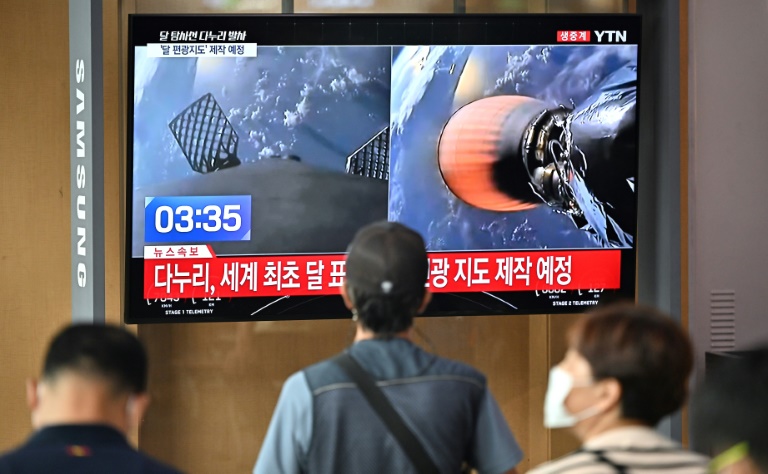
South Korea’s first lunar orbiter successfully launched on a year-long mission to observe the Moon, Seoul said Friday, with the payload including a new disruption-tolerant network for sending data from space.

Danuri — a portmanteau of the Korean words for “Moon” and “enjoy” — was on a Falcon 9 rocket launched from Cape Canaveral in Florida by Elon Musk’s aerospace company SpaceX. It aims to reach the Moon by mid-December.

“South Korea’s first lunar orbiter ‘Danuri’ left for space at 8:08 am on August 5, 2022,” Seoul’s science ministry said in a tweet, sharing a video of the rocket blasting off trailing a huge column of smoke and flames.

Danuri “successfully entered orbit towards the moon”, Seoul’s vice science minister Oh Tae-seok told reporters later Friday, saying that researchers were already communicating with Danuri through NASA’s deep-space antenna in Canberra, Australia.

“Analysis of the received satellite information confirmed that Danuri’s solar panel was properly unfolded to start power generation,” he said, adding everything appeared to be going smoothly.

Danuri will use six different instruments, including a highly sensitive camera provided by NASA, to conduct research, including investigating the lunar surface to identify potential landing sites.

One of the instruments will evaluate disruption-tolerant, network-based space communications, which, according to South Korea’s science ministry, is a world first.

– BTS in space –

Danuri will also try to develop a wireless Internet environment to link satellites or exploration spacecraft, Seoul has said.

The lunar orbiter will stream K-pop sensation BTS’ song “Dynamite” to test this wireless network.

Scientists also hope Danuri will find hidden sources of water and ice in areas of the Moon, including the permanently dark and cold regions near the poles.

“This is a very significant milestone in the history of Korean space exploration,” said Lee Sang-ryool, head of the Korea Aerospace Research Institute, in a video shown before the launch.

“Danuri is just the beginning, and if we are more determined and committed to technology development for space travel, we will be able to reach Mars, asteroids, and so on in the near future.”

South Korean scientists say Danuri — which took seven years to build — will pave the way for the nation’s more ambitious goal of landing on the Moon in the next decade. 

“South Korea will become the seventh country in the world to have launched an unmanned probe to the Moon,” an official at the Korea Aerospace Research Institute told AFP.

“We hope to continue contributing to the global understanding of the Moon with what Danuri is set to find out.”

– Lunar ambitions –

Danuri was launched by a private company — SpaceX — but South Korea recently became one of a handful of countries to successfully launch a one-tonne payload using their own rockets.

In June, the country’s homegrown three-stage rocket nicknamed Nuri — a decade in development at a cost of 2 trillion won ($1.5 billion) — launched successfully and put a satellite into orbit, on its second attempt after a failure last October.

That launch — coupled with Danuri’s launch Friday — helps bring South Korea ever closer to achieving its space ambitions.

In Asia, China, Japan and India all have advanced space programmes — and the South’s nuclear-armed neighbour North Korea has also demonstrated satellite launch capability.

Ballistic missiles and space rockets use similar technology and Pyongyang put a 300-kilogram (660-pound) satellite into orbit in 2012 in what Washington condemned as a disguised missile test.

Close Bitnami banner
Bitnami