Chinese Business

European stocks mainly rise, London down as rate hike looms

European stocks mostly rose Thursday but London fell before an expected interest rate hike from the Bank of England, while traders tracked Chinese military drills around Taiwan.

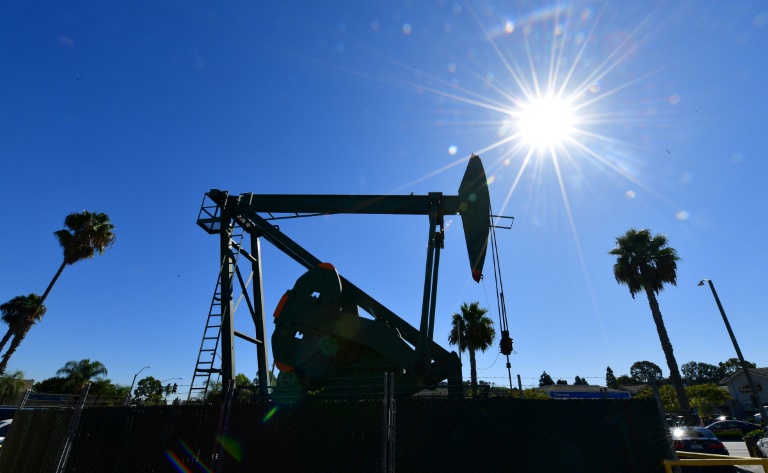
Oil prices edged higher, one day after sinking as major producers announced a small output increase.

The London stock market declined ahead of the Bank of England’s latest rate decision at 1100 GMT.

The BoE is tipped by economists to ramp up interest rates by a half-point, the biggest hike in almost 30 years, mirroring aggressive monetary policy elsewhere as it seeks to cool decades-high inflation.

“All eyes (are) on (the) BoE to see if follows other central banks and delivers a larger hike,” said MUFG analyst Lee Hardman.

Rising interest rates tend to weigh on shares because they lift business loan repayments and eat further into consumers’ incomes.

In company news, Rolls-Royce shares sank 10 percent after the British engine maker revealed it tanked into a £1.6-billion ($1.9-billion) net loss in the first half on adverse currency movements, despite rebounding revenues.

Frankfurt and Paris stock markets meanwhile advanced.

Most Asian indices tracked a Wall Street rally fuelled by healthy economic and earnings data, despite lingering Taiwan concerns.

New York surged Wednesday after a report on the crucial US services sector showed surprise improvement, soothing recession fears in the world’s top economy.

That came as several companies — including Electronic Arts, Starbucks and Moderna — posted strong earnings, extending a broadly positive reporting season in the face of surging inflation and rising interest rates.

Markets have swung this week after a number of Federal Reserve officials lined up to suggest there were still some big US rate hikes likely and talk of cuts next year might be overdone.

– Pelosi visit –

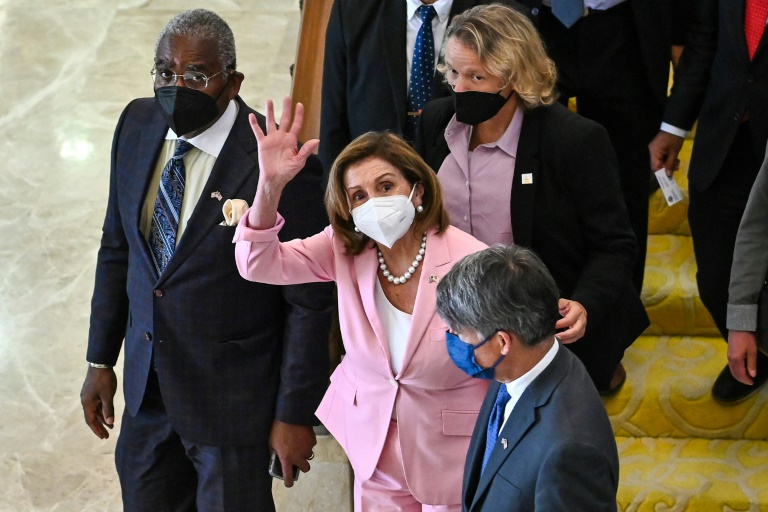
The mood in Asia was also a lot more settled after the upheaval of this week’s visit to Taiwan by US House Speaker Nancy Pelosi, which sparked outrage in China with warnings of stern military and economic responses.

Beijing has suspended a limited amount of cross-strait imports and exports, and on Thursday began its largest-ever military exercises encircling Taiwan that are expected to last for days.

Soon after, Taiwan’s defence ministry said it was “preparing for war without seeking war”.

Taipei stocks fell again on worries that the Chinese manoeuvres would hit shipping lanes and flights into Taiwan.

– Key figures at around 0940 GMT –

London – FTSE 100: DOWN 0.2 percent at 7,431.05 points

Frankfurt – DAX: UP 0.9 percent at 13,706.27

Paris – CAC 40: UP 0.5 at 6,504.53

EURO STOXX 50: UP 0.6 percent at 3,755.04

Tokyo – Nikkei 225: UP 0.7 percent at 27,932.20 (close)

Hong Kong – Hang Seng Index: UP 2.1 percent at 20,174.04 (close)

Shanghai – Composite: UP 0.8 percent at 3,189.04 (close)

New York – Dow: UP 1.3 percent at 32,812.50 (close)

Euro/dollar: UP at $1.0188 from $1.0166 Wednesday

Pound/dollar: UP at $1.2166 from $1.2149

Euro/pound: UP at 83.73 pence from 83.63 pence

Dollar/yen: UP at 134.26 yen from 133.86 yen

Brent North Sea crude: UP 0.4 percent at $97.16 per barrel

West Texas Intermediate: UP 0.3 percent at $90.95 per barrel

burs/rfj/lth
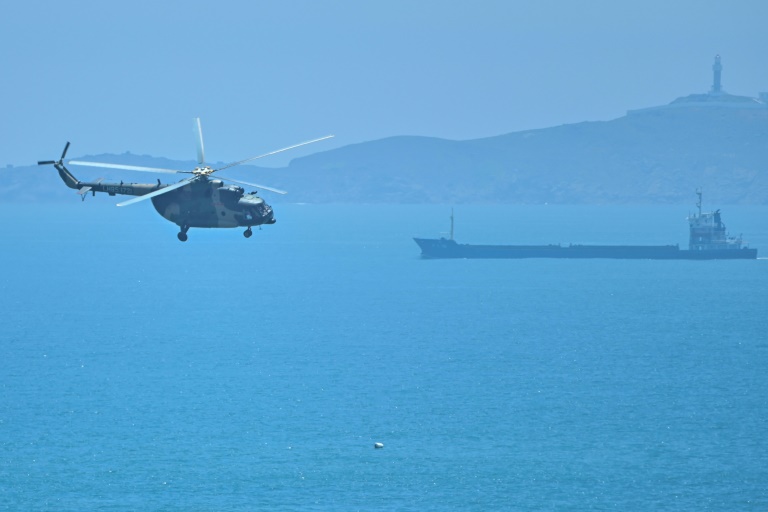
China's Taiwan war games threaten more global supply chain disruption

Chinese military exercises around Taiwan are set to disrupt one of the world’s busiest shipping zones, analysts told AFP, highlighting the island’s critical position in already stretched global supply chains.

The drills — China’s largest-ever around Taiwan — are a major show of strength after US House Speaker Nancy Pelosi infuriated Beijing by visiting the island.

The manoeuvres kicked off Thursday and will take place along some of the busiest shipping routes on the planet, used to supply vital semiconductors and electronic equipment produced in East Asian factory hubs to global markets.

The routes are also a key artery for natural gas.

Nearly half the world’s container ships passed through the narrow Taiwan Strait — which separates the island from the Chinese mainland — in the first seven months of this year, according to data compiled by Bloomberg. 

“Given that much of the world’s container fleet passes through that waterway, there will inevitably be disruptions to global supply chains due to the rerouting,” said James Char, an associate research fellow at Singapore’s S. Rajaratnam School of International Studies.

– ‘Incredibly busy waterway’ –

Even a small disruption in global supply chains, already battered by the Covid-19 pandemic and Russia’s invasion of Ukraine, could prove costly.

“China’s planned live-fire exercises are occurring in an incredibly busy waterway,” Nick Marro, the Economist Intelligence Unit’s lead analyst for global trade, wrote in a note.

“The shutting down of these transport routes — even temporarily — has consequences not only for Taiwan, but also trade flows tied to Japan and South Korea.”

The uncertainty dragged the Taiwan Taiex Shipping and Transportation Index, which tracks major shipping and airline stocks, down 1.05 percent on Thursday.

The index was down 4.6 percent since the beginning of the week.

Taiwan’s Maritime and Port Bureau has warned ships in northern, eastern and southern areas to avoid the areas being used for the drills.

But several shipping companies contacted by AFP said they were waiting to see the impact of the drills before rerouting.

The ongoing typhoon season made it riskier to divert ships around the eastern coast of Taiwan through the Philippine Sea, some added.

Others said they would stick to their schedules.

“We don’t see any impact during (this) period and we don’t have any plan on re-routing our vessels,” said Bonnie Huang, a spokesman for Maersk China.

The drills have also hit air routes.

Over the last two days, more than 400 flights were cancelled at major airports in Fujian, the Chinese province closest to Taiwan, signalling that the airspace could be used by the military.

Taiwan’s cabinet meanwhile, has said the exercises would disrupt 18 international routes passing through its flight information region (FIR).

– Aggressive posturing –

During the previous Taiwan Strait Crisis in the 1990s, China conducted military exercises for months, including lobbing missiles into waters off Taiwan and rehearsing amphibious assaults on the island.

“The Chinese undoubtedly wanted to demonstrate resolve in ways that went beyond what they did in 1996,” said Bonnie Glaser, director of the Asia programme at the US-based German Marshall Fund think tank.

China’s Global Times newspaper said Wednesday the drills were aimed at showing that China’s military is “capable of blockading the entire island”.

But China’s ongoing economic woes mean it is unlikely to risk a major disruption and would limit itself to aggressive posturing, analysts said.

“Closing off traffic through the Strait for any extended period of time will also hurt the Chinese economy,” Char said.

“It’s not in Beijing’s interest to interrupt civilian travel and trade in the region,” said Natasha Kassam of the Lowy Institute, an Australian think tank.

The extent to which China will escalate its response to the Pelosi visit — flexing its military muscle, cyber attacks and economic sanctions — remains to be seen.

Given its military advances, “China very likely has the ability to enforce an air and maritime blockade against Taiwan,” said Thomas Shugart, an expert at US think tank the Center for a New American Security.

“Whether China will choose to attempt such a blockade… is largely a matter of how much political and economic risk the Chinese Communist Party’s leaders are willing to incur.”

Toyota upgrades forecast even as Q1 net profit slumps

Toyota upgraded its annual net profit forecast on Thursday, predicting an earnings boost from the weaker yen even after first-quarter net profit took a hit from pandemic-related supply chain issues.

The global chip shortage, Covid-19 lockdowns disrupting Chinese factory output and Russia’s invasion of Ukraine are all weighing heavily on the auto industry.

But Japanese companies like Toyota selling products overseas have also benefited from a cheaper yen, which has hit 24-year lows against the dollar in recent months.

The world’s top-selling automaker now forecasts an annual net profit of 2.36 trillion yen ($17.6 billion) — up from its previous estimate of 2.26 trillion yen, but still a drop of 17 percent compared with last year’s record results.

For the three months to June, the auto titan said net profit fell 17.9 percent on-year to 736.8 billion yen.

“Despite the positive foreign exchange effects from the weaker yen, the large impact from lower sales volume due to supply constraints and higher raw materials prices led to a decrease in operating income” in the first quarter, the company said.

Meanwhile, “the revision of foreign exchange rate assumptions had a positive impact on the operating income forecast”, it said.

Revisions to the predicted impact of “soaring materials prices” and cost-reduction efforts would also cause operating income to decrease this financial year, Toyota added.

Buoyed in part by the weaker yen, Toyota in May logged a record full-year net profit of 2.85 trillion yen for 2021-22.

The focus will now be on whether the company can keep its global production target of 9.7 million units for this financial year in light of the parts shortage, said Satoru Takada, auto analyst at research and consulting firm TIW.

Three big automakers in Japan — Toyota, Nissan and Honda — have been “unable to sufficiently recover production” to meet consumer demand, Takada told AFP.

However, Toyota has so far largely escaped the worst of the crises, he said, adding that the company has “customers waiting for its cars thanks to strong demand”.

The  firm built stronger ties with domestic suppliers after Japan’s 2011 earthquake and tsunami, which analysts say helped it weather a pandemic-triggered shortage of semiconductors — an essential component of modern cars — better than its rivals.

But it has been forced to repeatedly adjust production targets because of the chip shortage and pandemic-linked factory closures.

Adding to the problems is uncertainty arising from Moscow’s war in Ukraine. Toyota said in March it would halt operations at its only factory in Russia, and stop shipping vehicles to the country.

Ahead of the earnings announcement, SC Capital called Toyota’s annual outlook “the most low-balled in the industry”, predicting a sharp upwards revision later this year as semiconductor supplies become more abundant.

“Toyota’s first quarter… is expected to be bad. But consensus is way too low for the rest of the year, as supply constraints from Shanghai will subside from the second quarter and chip inventory rises more than expected,” SC Capital said in a SmartKarma commentary.

“Anyone who’s spoken with the company knows that the second quarter will see a V-shaped recovery and an upward revision for the full fiscal year.”

Asian markets rally on healthy US data, post-Pelosi relief

Asian markets on Thursday tracked a Wall Street rally fuelled by healthy economic and earnings data, while there was some relief that Nancy Pelosi’s Taiwan trip did not elicit a harsher response from China despite grave warnings from Beijing.

Oil managed to clock up some gains following another sell-off that came on the back of fresh signs of weakening demand in the United States, which came as major producers announced an increase in output, albeit a small one.

New York’s three main indexes surged after a report on the crucial US services sector showed surprise improvement, soothing worries about a possible recession in the world’s top economy.

That came as several companies — including Electronic Arts, Starbucks and Moderna — posted strong earnings, extending a broadly positive reporting season in the face of surging inflation and rising interest rates.

All eyes are now on the release of US jobs data Friday, which will provide the latest snapshot of the economy and could help guide the Federal Reserve in its debate on monetary policy.

Markets have swung this week after a number of Fed officials lined up to suggest there were still some big rate hikes likely and talk of cuts next year might be overdone. 

That came after comments last week from bank chief Jerome Powell indicated that the policy board could start easing up on its tightening campaign.

“Following last week’s Fed meeting that opened up the possibility of a slower hiking pace, markets are still running ‘risk-on’ despite the recent push back from Fed officials,” said SPI Asset Management’s Stephen Innes. 

“But for stock investors, lower oil prices are a pleasure to behold as not only did the US 10-year yields drop but sliding oil prices also downshifted inflation expectations, supporting that slower hiking pace thesis.”

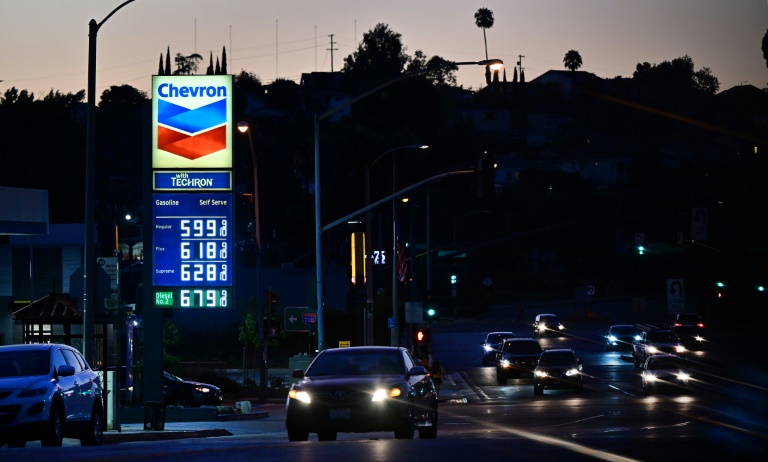
Both main oil contracts edged up Thursday, a day after prices tumbled to a six-month low as a spike in US inventories showed demand waning, while figures showed Americans driving less than summer 2022 when travel was smashed by Covid-19.

Crude has now given up all the gains seen in the aftermath of Russia’s invasion of Ukraine, though the 100,000 barrel output increase by OPEC+ was brushed off by investors as too little to make an impact. 

The mood in Asia was also a lot more settled after the upheaval of this week’s visit to Taiwan by House Speaker Pelosi, which sparked outrage in China with warnings of stern military and economic responses.

While Beijing suspended a limited amount of cross-strait imports and exports and embarked on its largest-ever military exercises encircling Taiwan, Asian investors felt a sense of relief it did not go further.

Hong Kong led gains, adding more than two percent, while there were also advances in Shanghai, Tokyo, Sydney, Seoul, Jakarta and Wellington.

However, Taipei fell again on worries that the Chinese manoeuvres would hit shipping lanes and flights into Taiwan.

Singapore and Manila also dipped.

Pelosi’s trip managed to further strain already-fraught China-US relations, and markets strategist Louis Navellier said “it will be interesting if China retaliates against any US companies or restricts trade in any manner”.

– Key figures at around 0230 GMT –

Tokyo – Nikkei 225: UP 0.5 percent at 27,892.68 (break)

Hong Kong – Hang Seng Index: UP 2.1 percent at 20,182.31

Shanghai – Composite: UP 0.8 percent at 3,188.86

Dollar/yen: DOWN at 133.70 yen from 133.92 yen Wednesday

Euro/dollar: DOWN at $1.0166 from $1.0172

Pound/dollar: UP at $1.2151 from $1.2149

Euro/pound: DOWN at 83.67 pence from 83.71 pence

West Texas Intermediate: UP 0.6 percent at $91.19 per barrel

Brent North Sea crude: UP 0.5 percent at $97.29 per barrel

New York – Dow: UP 1.3 percent at 32,812.50 (close)

London – FTSE 100: UP 0.5 percent at 7,445.68 (close)

Oil prices tumble on demand worries as global stocks mostly rise

Oil prices tumbled on demand worries Wednesday while global equities mostly rose as US-China tensions receded somewhat after House Speaker Nancy Pelosi’s trip to Taiwan.

The drop in oil prices came despite a move by the OPEC+ oil cartel, led by Saudi Arabia and Russia, to undertake just a small increase in production.

The OPEC+ decision to raise production by 100,000 barrels per day for September is likely to disappoint US President Joe Biden, who travelled to Saudi Arabia last month to lobby for help to tame soaring energy prices. The increase is much smaller than other recent boosts by the exporter group.

But oil prices finished about four percent lower following US energy data that showed unexpectedly weak gasoline demand.

Gasoline demand last week was 8.5 million barrels per day, down almost 13 percent from the year-ago period, which is part of the peak summer driving season.

In equity markets, Wall Street stocks bounced after two down sessions following a report from the Institute for Supply Management that showed surprising strength in the massive US services sector, thanks to a jump in business activity and new orders even as some companies expressed recession fears.

A note from Oxford Economics described the ISM data as “encouraging,” but pointed to lingering questions about the direction of the economy.

“The recovery’s best days are clearly in the rearview mirror, but this doesn’t mean a downturn has begun,” Oxford said. “We think fundamentals are strong enough to prevent a recession this year, though the window to achieving a softish landing is narrowing.”

All three US indices won solid gains, with the S&P 500 finishing 1.6 percent higher.

Earlier, European markets closed higher, with Paris and Frankfurt both up around one percent and London’s FTSE 100 rising by 0.5 percent.

Analysts pointed to relief that there hadn’t been greater fallout from Pelosi’s provocative visit to Taiwan, which China considers a part of its territory.

“What China didn’t do has seemingly been the focal point,” said Patrick O’Hare, at Briefing.com.

“China didn’t take any action that would necessitate a military response from the US. That understanding has sparked a measure of relief for investors as Speaker Pelosi heads to South Korea,” he said.

The highest profile trip to Taiwan in 25 years by a US politician was met with condemnation from Beijing, which vowed “punishment.”

– Key figures at around 2030 GMT –

New York – Dow: UP 1.3 percent at 32,812.50 (close)

New York – S&P 500: UP 1.6 percent at 4,155.17 (close)

New York – Nasdaq: UP 2.6 percent at 12,668.16 (close)

London – FTSE 100: UP 0.5 percent at 7,445.68 (close)

Frankfurt – DAX: UP 1.0 percent at 13,587.56 (close)

Paris – CAC 40: UP 1.0 percent at 6,472.06 (close)

EURO STOXX 50: UP 1.3 percent at 3,732.54 (close)

Tokyo – Nikkei 225: UP 0.5 percent at 27,741.90 (close)

Hong Kong – Hang Seng Index: UP 0.4 percent at 19,767.09 (close)

Shanghai – Composite: DOWN 0.7 percent at 3,163.67 (close)

Dollar/yen: UP at 133.92 yen from 133.17 yen Tuesday

Euro/dollar: UP at $1.0172 from $1.0166

Pound/dollar: DOWN at $1.2149 from $1.2170

Euro/pound: UP at 83.71 pence from 83.54 pence

Brent North Sea crude: DOWN 3.7 percent at $96.78 per barrel

West Texas Intermediate: DOWN 4.0 percent at $90.66 per barrel

burs-jmb/bfm

OPEC+ agrees small oil output rise despite Biden plea

The OPEC+ oil cartel agreed to a tiny increase in production Wednesday, an amount analysts say will disappoint US President Joe Biden after he personally lobbied Saudi leaders for help to tame soaring energy prices.

The cartel led by Saudi Arabia and Russia decided to raise production by 100,000 barrels per day for September, much lower than previous increases, according to a statement issued after a ministerial videoconference.

Oil prices seesawed following the announcement, rising before falling more than two percent in afternoon trading, with the main international contract, Brent, slipping under $100 per barrel. Traders were also reacting to data showing US crude inventories had unexpectedly risen last week.

“The smallest increase in OPEC+ history will do little to help the ongoing global energy crisis,” Edward Moya, analyst at OANDA trading platform, told AFP.

“The Biden administration will not be happy and this will be a setback in improving US-Saudi relations,” said Moya, who expects oil prices to remain stuck around $100.

With energy prices soaring following Russia’s war in Ukraine, Biden made a controversial trip to Saudi Arabia in July in part to convince the kingdom to loosen the production taps to stabilise the market and curb rampant inflation.

The US president met Crown Prince Mohammed bin Salman despite his promise to make the kingdom a “pariah” in the wake of the 2018 killing of journalist Jamal Khashoggi.

Biden said after his meetings with Saudi officials that he was “doing all I can” to increase the oil supply.

“A 100,000 barrel per day output hike is a pittance,” said Han Tan, chief market analyst at Exinity.

“It’s likely that the Biden administration will feel let down, considering its overtures to Saudi Arabia have yielded scant results, at least this time around,” Tan said.

– ‘Token gesture’ –

Saudi Arabia faced a balancing act between its old ally, Washington, and its OPEC+ partner Moscow, which has been hit by Western sanctions over the Ukraine invasion.

“The increase was a token gesture to appease US President Joe Biden,” said Stephen Brennock, analyst at PVM Energy.

The OPEC+ statement emphasised the “value and importance of maintaining consensus as essential to the cohesion” of the group, which includes the 13-member Organization of the Petroleum Exporting Countries and 10 allies including Russia.

Russia’s deputy prime minister in charge of energy, Alexander Novak, said OPEC+ made a “cautious” decision due to “uncertainties in the market”.

He noted that Covid cases are rising.

“We see uncertainties associated with the disruption of transport and logistics chains due to restrictions being introduced, including for Russian oil and oil products,” Novak said.

Peter McNally, analyst at research firm Third Bridge, said OPEC+ was expected “to take more of a wait-and-see approach to adding material amounts of supply in the months ahead for several reasons”.

“The basis for the restraint are uncertainty around the future of Russian production and the cloudier outlook in demand,” he said, pointing to China’s Covid lockdowns and high fuel prices in the United States affecting demand.

– Western lobbying –

Biden is not the only Western leader to have lobbied bin Salman.

French President Emmanuel Macron hosted him last week in Paris, with Macron’s office saying the two leaders agreed to work “to ease the effects” of the Ukraine war.

Before announcing he would resign as British prime minister, Boris Johnson had also visited bin Salman in Riyadh in March to plead for higher oil production.

After cutting production in 2020 in response to falling prices during the Covid pandemic, OPEC+ agreed to raise its quotas last year as demand rebounded.

OPEC+ began to add around 400,000 barrels per day to the market last year, renewing the policy every month until June. It upped production by almost 650,000 bpd in July and August.

Its output is supposed to have returned to pre-Covid levels after cuts totalling 9.7 million bpd — but only on paper, as some members of the 23-nation group have struggled to meet their quotas.

Stock markets rise after Pelosi's Taiwan trip

Global stocks mostly rose on Wednesday as investor concerns over US-China tensions eased following House Speaker Nancy Pelosi’s trip to Taiwan.

Oil prices, meanwhile, dropped after the OPEC+ oil cartel, led by Saudi Arabia and Russia, agreed a small increase in production and official data showed US crude stockpiles surprisingly rose last week.

The OPEC+ decision to raise production by 100,000 barrels per day for September is likely to disappoint US President Joe Biden, who travelled to Saudi Arabia last month to lobby for help to tame soaring energy prices, analysts said.

Analyst Edward Gardner, of Capital Economics, warned however that “as has become increasingly glaring recently, though, an increase in quotas is not the same as an increase in production”.

Output is supposed to have returned to pre-Covid levels, but only on paper, as some members of the 23-nation group have struggled to meet their quotas.

The main contracts were down more than two percent, with Brent — the international benchmark — falling back under $100.

– ‘Rollercoaster ride’- 

Traders also nervously watched for reactions to Pelosi’s visit to Taiwan, which China considers a part of its territory.

“What China didn’t do has seemingly been the focal point,” said Patrick O’Hare, at Briefing.com.

“China didn’t take any action that would necessitate a military response from the US. That understanding has sparked a measure of relief for investors as Speaker Pelosi heads to South Korea,” he said.

The highest profile trip to Taiwan in 25 years by a US politician was met with condemnation from Beijing, which vowed “punishment”.

“This week was already shaping up to be another rollercoaster ride and Pelosi’s trip just added another layer of event risk for the markets,” Craig Erlam, an analyst at OANDA, said.

News of the visit had sent shivers on Tuesday through trading floors that were already on edge over the Ukraine war, surging inflation, rising interest rates and slowing economic growth.

However, most equity markets edged upwards on Wednesday.

“There has been a lot of fear but no material effect,” AvaTrade analyst Naeem Aslam told AFP, when asked about the markets impact of Pelosi’s visit.

European markets closed higher, with Paris and Frankfurt both up around one percent and London’s FTSE 100 rising by 0.5 percent.

Wall Street indices were also up in midday trading following positive economic data and another round of corporate earnings that included good results from Starbucks and CVS Health.

The ISM non-manufacturing purchasing managers index showed growth in services activity accelerated in July for the first time in four months.

Investors are also keeping a close eye on moves by central banks to rein in inflation.

The Bank of England is expected to follow other major central banks with an aggressive interest rate hike to tackle surging inflation on Thursday.

The half-percentage-point increased would be the biggest in more than a quarter century.

– Key figures at around 1545 GMT –

New York – Dow: UP 1.0 percent at 32,707.35 points

EURO STOXX 50: UP 1.3 percent at 3,732.54

London – FTSE 100: UP 0.5 percent at 7,445.68 (close)

Frankfurt – DAX: UP 1.0 percent at 13,587.56 (close)

Paris – CAC 40: UP 1.0 percent at 6,472.06 (close)

Tokyo – Nikkei 225: UP 0.5 percent at 27,741.90 (close)

Hong Kong – Hang Seng Index: UP 0.4 percent at 19,767.09 (close)

Shanghai – Composite: DOWN 0.7 percent at 3,163.67 (close)

Taipei – TAIEX: DOWN 0.2 percent at 14,777.02 (close)

Dollar/yen: UP at 134.24 yen from 133.10 yen Tuesday

Euro/dollar: DOWN at $1.0138 from $1.0166

Pound/dollar: DOWN at $1.2126 from $1.2170

Euro/pound: UP at 83.62 pence from 83.57 pence

Brent North Sea crude: DOWN 2.3 percent at $98.21 per barrel

West Texas Intermediate: DOWN 2.4 percent at $92.16 per barrel

burs/lth/raz

OPEC+ agrees small oil output rise despite Biden plea

The OPEC+ oil cartel agreed to a tiny increase in production Wednesday, an amount analysts say will disappoint US President Joe Biden after he personally lobbied Saudi leaders for help to tame soaring energy prices.

The cartel led by Saudi Arabia and Russia decided to raise production by 100,000 barrels per day for September, much lower than previous increases, according to a statement issued after a ministerial videoconference.

Oil prices seesawed following the announcement, rising before falling more than one percent in afternoon trading, with the main international contract, Brent, slipping under $100 per barrel.

“The smallest increase in OPEC+ history will do little to help the ongoing global energy crisis,” Edward Moya, analyst at OANDA trading platform, told AFP.

“The Biden administration will not be happy and this will be a setback in improving US-Saudi relations,” said Moya, who expects oil prices to remain stuck around $100.

With energy prices soaring following Russia’s war in Ukraine, Biden made a controversial trip to Saudi Arabia in July in part to convince the kingdom to loosen the production taps to stabilise the market and curb rampant inflation.

The US president met Crown Prince Mohammed bin Salman despite his promise to make the kingdom a “pariah” in the wake of the 2018 killing of journalist Jamal Khashoggi.

Biden said after his meetings with Saudi officials that he was “doing all I can” to increase the oil supply.

“A 100,000 barrel per day output hike is a pittance,” said Han Tan, chief market analyst at Exinity.

“It’s likely that the Biden administration will feel let down, considering its overtures to Saudi Arabia have yielded scant results, at least this time around,” Tan said.

– ‘Token gesture’ –

Saudi Arabia faced a balancing act between its old ally, Washington, and its OPEC+ partner Moscow, which has been hit by Western sanctions over the Ukraine invasion.

“The increase was a token gesture to appease US President Joe Biden,” said Stephen Brennock, analyst at PVM Energy.

The OPEC+ statement emphasised the “value and importance of maintaining consensus as essential to the cohesion” of the group, which includes the 13-member Organization of the Petroleum Exporting Countries and 10 allies including Russia.

Russia’s deputy prime minister in charge of energy, Alexander Novak, said OPEC+ made a “cautious” decision due to “uncertainties in the market”.

He noted that Covid cases are rising.

“We see uncertainties associated with the disruption of transport and logistics chains due to restrictions being introduced, including for Russian oil and oil products,” Novak said.

– Western lobbying –

Biden is not the only Western leader to have lobbied bin Salman.

French President Emmanuel Macron hosted him last week in Paris, with Macron’s office saying the two leaders agreed to work “to ease the effects” of the Ukraine war.

Before announcing he would resign as British prime minister, Boris Johnson had also visited bin Salman in Riyadh in March to plead for higher oil production.

After cutting production in 2020 in response to falling prices during the Covid pandemic, OPEC+ agreed to raise its quotas last year as demand rebounded.

OPEC+ began to add around 400,000 barrels per day to the market last year, renewing the policy every month until June. It upped production by almost 650,000 bpd in July and August.

Its output is supposed to have returned to pre-Covid levels after cuts totalling 9.7 million bpd — but only on paper, as some members of the 23-nation group have struggled to meet their quotas.

Stock markets rise after Pelosi's Taiwan trip

Global stocks mostly rose on Wednesday as investor concerns over US-China tensions eased following House Speaker Nancy Pelosi’s trip to Taiwan.

Oil prices also marginally rose after the OPEC+ oil cartel, led by Saudi Arabia and Russia, agreed a small increase in production.

The decision to raise production by 100,000 barrels per day for September is likely to disappoint US President Joe Biden, who had lobbied for a big hike to tame soaring energy prices, analysts said.

Analyst Edward Gardner, of Capital Economics, warned however that “as has become increasingly glaring recently, though, an increase in quotas is not the same as an increase in production.”

Output is supposed to have returned to pre-Covid levels, but only on paper, as some members of the 23-nation group have struggled to meet their quotas.

The main contracts were only slightly higher, with Brent — the international benchmark — rising just over $100.

– ‘Rollercoaster ride’- 

Traders also nervously watched for reactions — so far — to Pelosi’s visit to Taiwan, which China considers a part of its territory.

“What China didn’t do has seemingly been the focal point,” said Patrick O’Hare, at Briefing.com.

“China didn’t take any action that would necessitate a military response from the US. That understanding has sparked a measure of relief for investors as Speaker Pelosi heads to South Korea,” he said.

The highest profile trip to Taiwan in 25 years by a US politician was met with condemnation from Beijing, which vowed “punishment”.

“This week was already shaping up to be another rollercoaster ride and Pelosi’s trip just added another layer of event risk for the markets,” Craig Erlam, an analyst at OANDA, said.

News of the visit had sent shivers on Tuesday through trading floors that were already on edge over the Ukraine war, surging inflation, rising interest rates and slowing economic growth.

However, most equity markets edged upwards on Wednesday.

London nudged higher on the eve of a widely-expected half-point interest rate hike by the Bank of England.

“There has been a lot of fear but no material effect,” AvaTrade analyst Naeem Aslam told AFP, when questioned about the markets impact of Pelosi’s visit.

“Hence, we see equities holding on to their gains and moving higher.” 

– Rate hikes –

Analysts are also keen to find out what the White House’s response will be, particularly ahead of mid-term elections in November, with anti-China rhetoric playing well with voters but Biden keen not to further harm economic ties.

SPI Asset Management’s Stephen Innes added that the US administration was probably not likely to cut Trump-era tariffs before then.

Wednesday’s broadly positive performance followed a drop on Wall Street, where the Taiwan news was compounded by a series of hawkish comments from Federal Reserve officials indicating more big interest rate hikes could still be in the pipeline.

– Key figures at around 1350 GMT –

London – FTSE 100: UP 0.3 percent at 7,434.31  points

Frankfurt – DAX: UP 0.4 percent at 13,496.38 

Paris – CAC 40: UP 0.7 percent at 6,453.31 

EURO STOXX 50: UP 0.8 percent at 3,713.60

New York – Dow: UP 0.7 percent at 32,631.29

Tokyo – Nikkei 225: UP 0.5 percent at 27,741.90 (close)

Hong Kong – Hang Seng Index: UP 0.4 percent at 19,767.09 (close)

Shanghai – Composite: DOWN 0.7 percent at 3,163.67 (close)

Taipei – TAIEX: DOWN 0.2 percent at 14,777.02 (close)

Dollar/yen: UP at 133.61 yen from 133.10 yen Tuesday

Euro/dollar: UP at $1.0175 from $1.0166

Pound/dollar: DOWN at $1.2160 from $1.2170

Euro/pound: UP at 83.65 pence from 83.57 pence

Brent North Sea crude: UP 0.2 percent at $100.75 per barrel

West Texas Intermediate: UP 0.1 percent at $94.52 per barrel

burs/rfj-kjm/lth

OPEC+ meets after Biden push to hike oil output

The OPEC+ group of major oil exporters began talks on its output strategy on Wednesday after US President Joe Biden lobbied Saudi Arabia to boost production to tame soaring prices.

The cartel led by Saudi Arabia and Russia has so far resisted US pressure to ramp up production significantly after Moscow’s invasion of Ukraine sent oil prices soaring.

After cutting production in 2020 in response to falling prices during the Covid pandemic, OPEC+ began to modestly raise it last year and has renewed the policy every month.

Its output is supposed to have returned to pre-Covid levels — but only on paper, as some members of the 23-nation group have struggled to meet their quotas.

Craig Erlam, analyst at OANDA trading platform, said the OPEC+ meeting will show whether “President Biden has any influence in the cartel at all”.

The OPEC+ group began technical talks early afternoon, to be followed by a ministerial meeting by videoconference.

Biden made a controversial trip to Saudi Arabia in July in part to convince the kingdom to loosen the production taps to stabilise the market and curb rampant inflation.

The US president met Crown Prince Mohammed bin Salman despite his promise to make the kingdom a “pariah” in the wake of the 2018 killing of journalist Jamal Khashoggi.

Biden said after his meetings with Saudi officials that he was “doing all I can” to increase the oil supply.

“Saudi Arabia and its allies will have to decide whether to heed Joe Biden’s request and raise production or show solidarity towards Russia by staying put,” said Tamas Varga, analyst at oil broker PVM.

French President Emmanuel Macron also reached out to bin Salman, hosting him last week in Paris, with Macron’s office saying the two leaders agreed to work “to ease the effects” of the Ukraine war.

Before resigning as British prime minister, Boris Johnson had also visited bin Salman in Riyadh in March to lobby for higher oil production.

But Stephen Innes, managing partner at SPI Asset Management, said OPEC+ is “unlikely to announce a significant production increase given growing recession fears” and a drop in oil prices since early June.

– More cautious? –

After reaching close to $140 per barrel in early March, crude prices have slid further this week following weak economic data from China, the world’s biggest importer of oil.

The main contracts were slightly down on Wednesday ahead of the meeting, with Brent — the international benchmark — slipping back under $100.

This week’s price slide “could make OPEC+ more cautious”, Commerzbank said in a note.

The German bank said news that Libyan production has returned to normal levels for the first time in nearly four months could also serve as an argument against a bigger expansion in output.

OPEC+ began to add around 400,000 barrels per day to the market last year, renewing the policy every month until June, when it upped production by almost 650,000 bpd.

Analysts say the group has now reversed cuts totalling 9.7 million bpd that had been agreed in 2020, though only in theory.

Close Bitnami banner
Bitnami