Chinese Business

HSBC H1 pre-tax profit falls, says to pay quarterly dividends

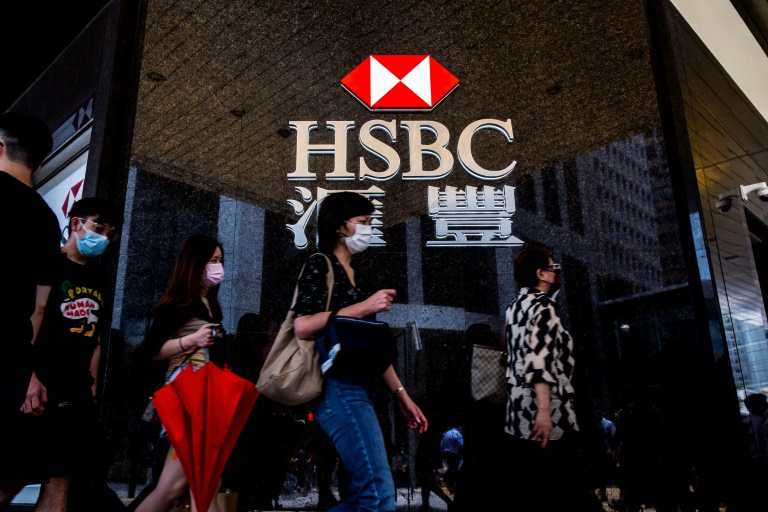
HSBC on Monday said pre-tax profit fell in the first half of 2022 but it intends to resume quarterly dividends next year as its annual outlook remained positive.

The firm said it made US$9.175 billion before tax, down more than 15 percent on-year.

Chief executive Noel Quinn said “it reflected a more normalised level of expected credit losses compared with the Covid-19 releases made last year, as well as the macroeconomic impact of the Russia-Ukraine war”.

The annual revenue outlook was positive, he said, as net interest income is expected to reach at least US$31 billion this year and US$37 billion next year as global interest rates rise.

Quinn said the group is confident of achieving its best returns in a decade in 2023.  

“We also intend to revert to quarterly dividends in 2023,” he added.

London-headquartered HSBC was among a number of major banks to cancel their dividends early in the pandemic following a de facto order from the Bank of England — a move that upset some Hong Kong shareholders.

The plan to resume payout came before HSBC executives’ first face-to-face meeting with shareholders Tuesday from the Asian financial hub in three years. 

The executives are expected to field questions about a restructuring bid from its biggest shareholder Ping An Insurance Group.

The lender is under pressure from Ping An, which has a 9.2 percent stake, to spin off its Asian operations, in a bid to unlock shareholder value amid tensions between China and the west.

Quinn and chairman Mark Tucker have not publicly commented on Ping An’s campaign, but the bank has hinted it wants to keep its current structure while continuing a pivot to Asia, Bloomberg reported. 

Hong Kong politician Christine Fong said on Sunday tht HSBC separating its Asian business and bringing back its primary listing to the city is the “best way to protect (the interests of) minority shareholders”.

Fong, who reportedly represents 500 small investors in HSBC stock, also voiced support for Ping An getting seats on HSBC’s board, citing the cancelled dividends in 2020 as a reason.

Last year, HSBC vowed to accelerate a multi-year pivot to Asia and the Middle East, with ambitions to lead Asia’s wealth management market.

The bank said it would invest $6 billion in Hong Kong, China and Singapore and hire more than 5,000 wealth advisers — while slashing 35,000 jobs and cutting its retail operations in the United States and France. 

HSBC has commissioned Goldman Sachs and advisory firm Robey Warshaw to rebuff Ping An’s campaign, according to Bloomberg.
Alibaba shares extend losses on US delisting fear

Chinese e-commerce giant Alibaba led technology stocks lower in Hong Kong on Monday after US authorities put it on a watchlist that could see it delisted in New York if it does not comply with disclosure orders.

The market heavyweight sank more than five percent in early trade, pushing it to its lowest level since May and dragging the Hang Seng Tech Index with it. 

The US securities watchdog on Friday said it added the Chinese firm to a list of more than 250 others that could be booted from Wall Street — where it listed in 2014 — if strict auditing requirements were not met for three consecutive years.

The announcement comes as tensions between Washington and Beijing are dragged lower by a range of issues including technology, human rights and Taiwan.

It also follows a report last week that founder Jack Ma plans to give up control of Ant Group as part of a strategy to appease Chinese regulators and revive the digital payments unit’s initial public offering.

The firm has come under intense pressure from a crackdown on the tech sector by Chinese authorities for more than a year, sending its share price plunging about 70 percent from its record high in late 2020.

It was hit with a record $2.75 billion fine in April 2021 for anti-competitive practices.

Earlier this year, Alibaba removed all executives linked to Ant from Alibaba Partnership, a group that can nominate the majority of Alibaba’s board.

Reports about Ma’s decision wiped out Alibaba’s gains from earlier in the week, when the firm announced it would seek a primary listing in Hong Kong to better access China’s vast pool of investors.

The selling — it sank more than 10 percent in New York — was made worse by concerns about Alibaba’s upcoming earnings report, which many fear will show its first ever drop in quarterly revenue.

Unit of Chinese property giant Evergrande ordered to pay $1.1 billion

A unit of embattled Chinese developer Evergrande has failed to repay its loans and must pay a guarantor $1.1 billion, the company said in a Hong Kong stock exchange filing.

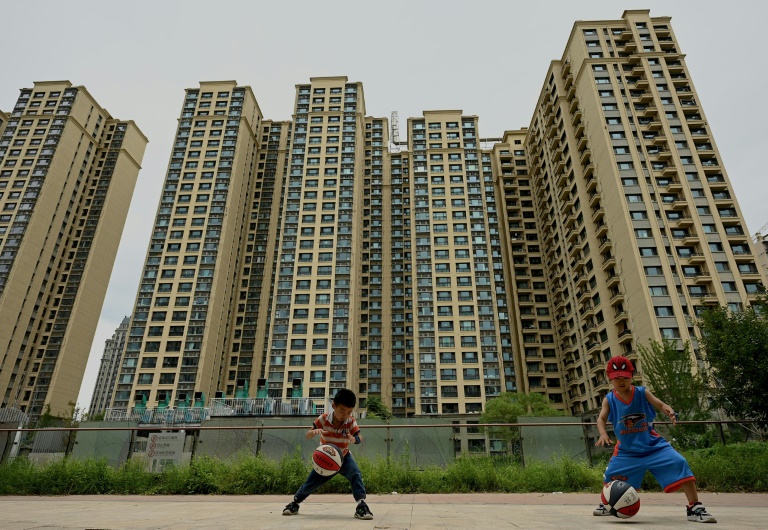
Evergrande has been involved in restructuring negotiations after racking up $300 billion in liabilities in the wake of Beijing’s crackdown on excessive debt and rampant speculation in the real estate sector.

The announcement comes after the company failed to publish a “preliminary restructuring proposal” by the end of July, despite assuring creditors it was on track to meet the deadline.

Evergrande said Friday it had made “positive progress” in its restructuring process, floating the potential use of equity in its offshore subsidiaries to repay bondholders but falling short of providing concrete details.

And on Sunday, the company said subsidiary Evergrande Group (Nanchang) had failed to fulfil its debt obligations to an unnamed third party. 

Evergrande Nanchang had provided counter-guarantees in the form of a pledge of 1.3 billion shares in Shengjing Bank that it held, according to the filing.

“As the borrowers failed to repay the loans, the applicant carried out its obligations under the guarantee and claimed against the subsidiary,” it said.

It noted that the guarantor has priority to receive compensation from the sale of the shares, and that the scope covers the amount paid by the applicant (7.3 billion yuan).

Evergrande, a major name in China’s property sector, has in recent months scrambled to offload assets, with chairman Hui Ka Yan paying some of its debts using his personal wealth.

It has since found a potential buyer for its Hong Kong headquarters, according to media reports.

Its woes are emblematic of the problems rippling across China’s massive property sector, with smaller companies also defaulting on loans and others struggling to raise cash.

With developers strapped for finances and projects stalling, furious homebuyers in dozens of cities have also begun refusing to pay their mortgages.

“The central government needs to take strong and credible measures to ensure stalled projects are finished and delivered” to restore confidence, said Andrew Batson of Gavekal Dragonomics in a recent report.

“The problem is mostly a political one: the leadership has committed significant political capital to strict property policies over the past few years,” he added.

“Can the government accept the embarrassment of such an obvious reversal… probably yes, but the risk is that it takes a while to get there.”

Asian markets mixed as traders weigh rates outlook, China data

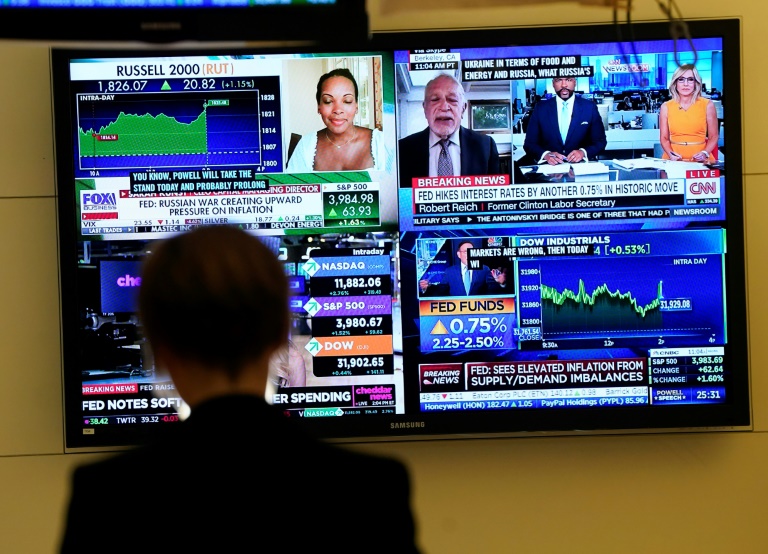
Asian markets were mixed Monday and oil fell as investors assessed data showing further weakness in China’s economy and comments from Federal Reserve officials showing it was wedded to its campaign of interest rate hikes to fight inflation.

A strong set of earnings from Wall Street titans Amazon and Apple helped US markets end last week with healthy gains and eased concerns about the impact on consumers of surging inflation and rising borrowing costs.

That came after investors took Fed chief Jerome Powell’s post-policy-meeting comments Wednesday as indicating the bank could start to slow down its pace of monetary tightening, providing a much-needed boost to stocks.

However, analysts warned that inflation would take time to come down from its four-decade highs and there were undoubtedly more rate hikes to come.

And officials backed that up at the weekend, with Minneapolis Fed chief Neel Kashkari telling the New York Times that he was “surprised by markets’ interpretation” of the latest Fed meeting statement.

“The committee is united in our determination to get inflation back down to two percent, and I think we’re going to continue to do what we need to do until we are convinced that inflation is well on its way back down to two percent — and we are a long way away from that.”

That came as Atlanta Fed president Raphael Bostic said he did not think the economy was in recession owing to ongoing jobs growth but that inflation remained too high and he was “convinced” more must be done.

Still, Treasuries continued to fall, with the 10-year yield at 2.67 percent, well down from June’s peak near 3.50 percent, suggesting expectations for future rates are easing. 

Figures showing a second successive economic contraction in April-June put the United States in a technical recession but it is not officially considered so until identified as such by the National Bureau of Economic Research.

In early Asian trade, investors struggled to extend Wall Street’s lead, with Hong Kong and Shanghai suffering most after another disappointing reading on the Chinese economy.

The closely watched Purchasing Managers’ Index of manufacturing activity shrank in July on the back of weak demand and the strict zero-Covid measures imposed in parts of the country.

While sweeping Covid curbs have eased in major cities such as Shanghai and Beijing, sporadic lockdowns in various cities and towns have kept businesses and consumers worried.

And there are few signs of an easing of the policy, with officials appearing to emphasise zero-Covid over growth in a Politburo meeting last week.

Adding to weakness in Hong Kong was news that US authorities had put market heavyweight Alibaba on a list of firms threatened with New York delisting if they did not comply with disclosure rules.

There were also losses in Taipei and Manila.

However, Tokyo, Sydney, Seoul, Singapore, Jakarta and Wellington edged up.

The data out of China revived demand concerns on oil markets, sending both main contracts down Monday, following a bounce last week.

Brent and WTI both lost more than one percent, and investors are now eyeing a meeting of OPEC and other major producers this week, where they will discuss their deal to raise output slowly.

Joe Biden called on Saudi Arabia to open the taps further when he visited last month as he tries to address a crucial driver of inflation around the world.

But the kingdom does not appear to have made any such moves so far with the commodity having lost almost all the gains made since Russia’s Ukraine invasion.

“The US has expressed optimism about the potential for an OPEC+ supply response, said SPI Asset Management’s Stephen Innes.

“However, it seems highly unlikely there will be much appetite for a significant increase in production, with Brent still (around) 15 percent down from year-to-date highs and (down) 12 percent in the last month,” he added.

“OPEC+ seems more likely to signal a willingness to continue cooperating long-term, but it would be a surprise if the upcoming meeting resulted in a significant policy shift.”

– Key figures at around 0230 GMT –

Tokyo – Nikkei 225: UP 0.5 percent at 27,933.27 (break)

Hong Kong – Hang Seng Index: DOWN 1.0 percent at 19,948.11

Shanghai – Composite: DOWN 0.3 percent at 3,243.32

Euro/dollar: UP at $1.0238 from $1.0228 Friday

Pound/dollar: UP at $1.2191 from $1.2189 

Euro/pound: UP at 83.98 pence from 83.89 pence

Dollar/yen: DOWN at 132.47 yen from 133.25 yen

West Texas Intermediate: DOWN 1.3 percent at $97.34 per barrel

Brent North Sea crude: DOWN 1.1 percent at $102.85 per barrel

New York – Dow: UP 1.0 percent at 32,845.13 (close)

London – FTSE 100: UP 1.1 percent at 7,423.43 (close)

China's July factory activity weakens on soft demand

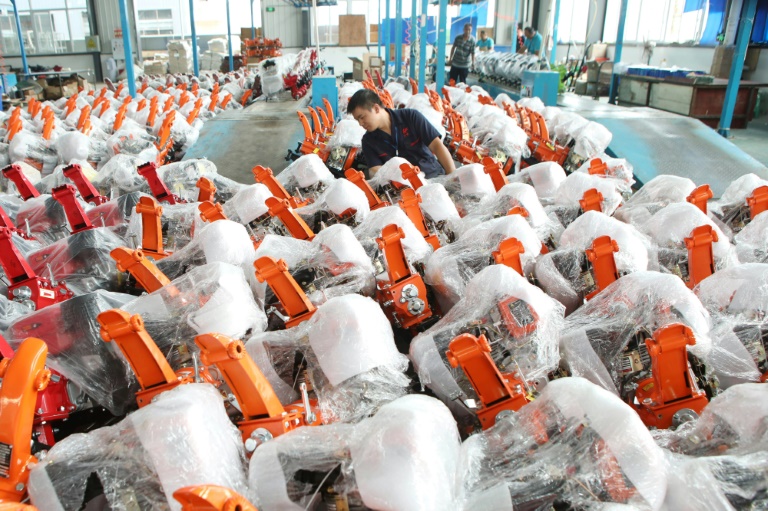
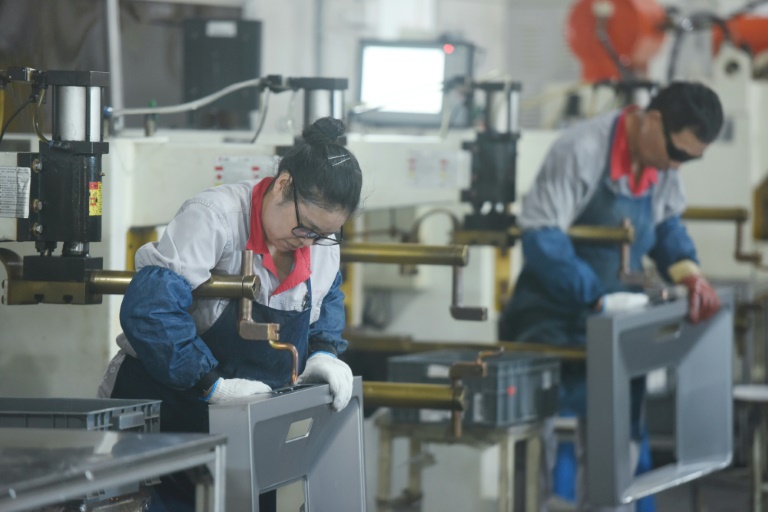
China’s manufacturing activity logged a surprise drop in July, official data showed Sunday, on the back of weak demand and as strict zero-Covid restrictions continue to cast a pall on growth.

The Purchasing Managers’ Index (PMI), a key gauge of manufacturing activity in the world’s second-biggest economy, came in at 49.0 in July, down from 50.2 June and below the 50-point mark separating growth from contraction, National Bureau of Statistics data showed.

While sweeping Covid curbs have eased in major cities such as Shanghai and Beijing, sporadic lockdowns around the country have kept businesses and consumers worried.

“In July, the manufacturing PMI dropped… due to factors such as the traditional off-season for production, insufficient release of market demand, and decline in prosperity of high-energy-consuming industries,” said NBS senior statistician Zhao Qinghe in a statement.

Zhao added that sharp price fluctuations of raw materials had led some companies to adopt a wait-and-see approach, “weakening purchasing intentions”.

The proportion of firms saying there was insufficient market demand had also increased for four consecutive months, he said, noting this was the “main difficulty” among manufacturers.

But officials show few signs of relaxing strict pandemic curbs, with policymakers appearing to emphasise zero-Covid over growth in a Politburo meeting this week, where they vowed to strive for “the best outcome” rather than to meet economic and social targets.

“In acknowledging the difficulties, the government has finally become flexible towards this year’s growth target,” ANZ Research analysts said in a note.

Chinese leaders had originally set a full-year GDP growth target of around 5.5 percent, but with economic expansion of just 0.4 percent in the second quarter, analysts believe it is unlikely to hit that goal.

China’s non-manufacturing PMI dropped to 53.8 points as well in July, down from 54.7 in June, NBS data showed Sunday.

This follows policies to boost consumption and with a pick-up in construction activities, the NBS statement said.

Stocks climb, oil jumps

European and US stock markets climbed Friday despite persistent recession concerns, while oil prices surged.

European stocks closed solidly higher after official data showed eurozone growth holding up in the face of soaring inflation.

Frankfurt rose 1.5 percent and Paris climbed 1.7 percent.

The EU’s official data agency said the 19-country eurozone’s economy grew by 0.7 percent in the second quarter.

But the euro failed to gain much traction, which analysts put down to the other piece of data released Friday: inflation rose to a new record of 8.9 percent in July. 

“This means that consumers are facing even more pressure on their disposable incomes, which should translate into lower spending and thus weaker economic activity,” said Fawad Razaqzada at City Index and FOREX.com.

Meanwhile, Wall Street continued to add to a rally that began Wednesday on the belief that the US Federal Reserve will now slow its pace of interest rate hikes, after hiking them by three-quarters of a percentage point.

The belief even overcame data Thursday showing the US economy shrank by 0.9 percent in the period from April to June, and Friday’s data that prices are continuing to rise faster than consumers’ income.

That followed a 1.6 percent contraction in the preceding three months, meaning that the world’s largest economy had met the technical definition of a recession of two consecutive quarters of contraction.

But the reading was taken as a sign of good news, since it could give the Fed room to take its foot off the pedal.

Treasury yields — considered a barometer of future interest rates — eased, while stocks surged higher.

Companies are in the midst of reporting quarterly earnings, and many are showing the strains from inflation and disrupted supply chains.

But the fact that earnings have been broadly better than investors feared has created positive sentiment.

Market analyst Michael Hewson at CMC Markets said investors are “taking comfort from earnings numbers that have by and large been better than expected, despite concerns about the growth outlook.”

And while debate rages over whether the US is really in recession — the formal determination is made by the National Bureau of Economic Research — the consensus is that the economy is struggling.

“The more important point is that the economy has quickly lost steam in the face of four-decade high inflation, rapidly rising borrowing costs, and a general tightening in financial conditions,” said Sal Guatieri, of BMO Capital Markets.

China is also struggling, hit by Covid-induced lockdowns in major cities including Shanghai and Beijing that have hammered all sectors and supply chains.

But oil traders didn’t focus Friday on the risk of recession destroying demand for crude, choosing instead to focus on supply concerns.

“Oil prices are rising again amid reports that OPEC+ will leave output targets unchanged next month when it meets on Wednesday,” said Craig Erlam at OANDA trading platform.

The main US contract, WTI, surged by more than five percent to rise back above $100 per barrel.

– Key figures at around 1530 GMT –

New York – Dow: UP 0.2 percent at 32,582.21 points

EURO STOXX 50: UP 1.5 percent at 3,708.10

London – FTSE 100: UP 1.1 percent at 7,423.43 (close)

Frankfurt – DAX: UP 1.5 percent at 13,484.05 (close)

Paris – CAC 40: UP 1.7 percent at 6,448.50 (close)

Tokyo – Nikkei 225: DOWN 0.1 percent at 27,801.64 (close)

Hong Kong – Hang Seng Index: DOWN 2.3 percent at 20,156.51 (close)

Shanghai – Composite: DOWN 0.9 percent at 3,253.24 (close)

Euro/dollar: UP at $1.0201 from $1.0197 Thursday

Pound/dollar: DOWN at $1.2171 from $1.2177 

Euro/pound: UP at 83.81 pence from 83.70 pence

Dollar/yen: DOWN at 133.41 yen from 134.25 yen

Brent North Sea crude: UP 3.0 percent at $110.33 per barrel

West Texas Intermediate: UP 4.8 percent at $101.08 per barrel

burs-rl/pvh

European stocks end week higher on growth hopes

European stock markets rose robustly on Friday as official data showed eurozone growth holding up in the face of soaring inflation.

Stock markets in Asia ended the session lower after data showed that the US economy contracted again, reinforcing recession fears.

Wall Street opened higher, adding to Wednesday’s rally on expectations that the US Federal Reserve will slow its pace of interest rate hikes.

After an extended period of pessimism on trading floors, investors were beginning to speculate that the market may be bottoming out. 

The EU’s official data agency said the 19-country eurozone’s economy grew by 0.7 percent in the second quarter, even though inflation rose to a new record of 8.9 percent in July. 

A day earlier, US data showed the world’s biggest economy shrank by 0.9 percent in the period from April to June after already contracting by 1.6 percent in the preceding three months. 

But the reading was taken as a sign of good news, since it could give the Fed room to take its foot off the pedal and treasury yields — considered a barometer of future interest rates — eased.

Officials were expected to continue raising US interest rates, but analysts estimate they would announce a half-point rise in September, compared with three-quarters of percentage point at the past two meetings.

“Stocks continued their rally in Europe on Friday … as market sentiment improved following reassuring macro data in addition to positive corporate results,” said ActivTrades analyst Pierre Veyret.

The prospect of US interest rates not rising as fast as previously expected has knocked the dollar slightly after soaring against other major currencies in recent months.

A second successive contraction in growth is widely considered a technical recession, although it is not officially considered so in the United States until identified as such by the National Bureau of Economic Research.

But while debate rages over that issue, the consensus is that the economy is struggling.

“The more important point is that the economy has quickly lost steam in the face of four-decade high inflation, rapidly rising borrowing costs, and a general tightening in financial conditions,” said Sal Guatieri, of BMO Capital Markets.

China is also struggling, hit by Covid-induced lockdowns in major cities including Shanghai and Beijing that have hammered all sectors and supply chains.

The euro failed to get much mileage from the surprisingly good eurozone growth figures as investors focused on the inflation data, which was worse than expected.

“This means that consumers are facing even more pressure on their disposable incomes, which should translate into lower spending and thus weaker economic activity,” said Fawad Razaqzada at City Index and FOREX.com.

After initially rising after the data release, it later fell back against the dollar.

Crude prices jumped by three percent as traders focused on supply concerns, with the main US contract, WTI, rising back above $100 per barrel.

“Oil prices are rising again amid reports that OPEC+ will leave output targets unchanged next month when it meets on Wednesday,” said Craig Erlam at OANDA trading platform.

– Key figures at around 1330 GMT –

London – FTSE 100: UP 1.0 percent at 7,446.27 points

Frankfurt – DAX: UP 1.3 percent at 13,449.94

Paris – CAC 40: UP 1.8 percent at 6,453.45

EURO STOXX 50: UP 1.4 percent at 3,704.06

New York – Dow: UP less than 0.1 percent at 32,534.12

Tokyo – Nikkei 225: DOWN 0.1 percent at 27,801.64 (close)

Hong Kong – Hang Seng Index: DOWN 2.3 percent at 20,156.51 (close)

Shanghai – Composite: DOWN 0.9 percent at 3,253.24 (close)

Euro/dollar: DOWN at $1.0158 from $1.0197 Thursday

Pound/dollar: DOWN at $1.2081 from $1.2177 

Euro/pound: UP at 84.10 pence from 83.70 pence

Dollar/yen: UP at 134.35 yen from 134.25 yen

Brent North Sea crude: UP 3.0 percent at $110.39 per barrel

West Texas Intermediate: UP 3.8 percent at $100.12 per barrel

burs-rl/pvh

World Bank refuses new funding for bankrupt Sri Lanka

The World Bank said Friday it would not offer new funding to Sri Lanka unless the bankrupt island nation carried out “deep structural reforms” to stabilise its crashing economy.

Sri Lanka has suffered an unprecedented downturn with its 22 million people enduring months of food and fuel shortages, rolling blackouts and rampant inflation. 

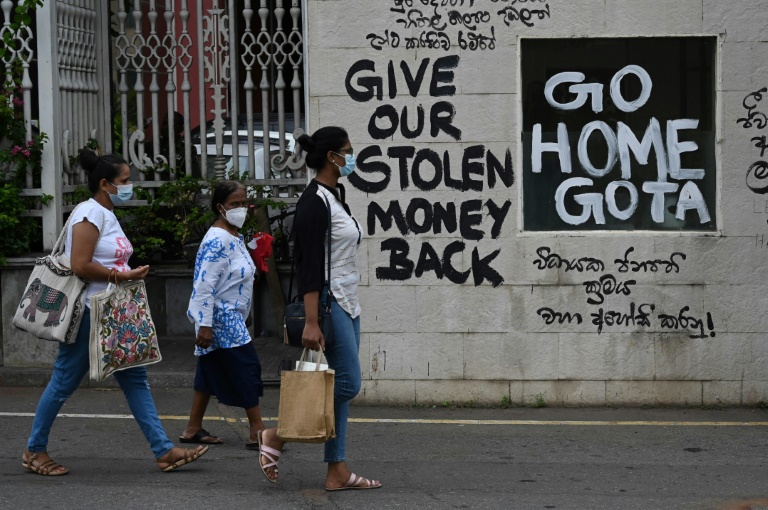
The South Asian nation defaulted on its $51-billion foreign debt in April and huge protests earlier this month forced then president Gotabaya Rajapaksa to flee the country and resign.

The World Bank said it was concerned about the impact of the crisis on Sri Lanka’s people but was not ready to give funds until the government had bedded down necessary reforms. 

“Until an adequate macroeconomic policy framework is in place, the World Bank does not plan to offer new financing to Sri Lanka,” the lender said in a statement.

“This requires deep structural reforms that focus on economic stabilisation, and also on addressing the root structural causes that created this crisis.”

The World Bank said it had already diverted $160 million from existing loans to finance urgently needed medicines, cooking gas and school meals.

Sri Lanka is currently in bailout talks with the International Monetary Fund but officials say the process could take months.

The island nation has run out of foreign exchange to finance even the most essential imports, and chronic shortages have inflamed public anger.

Motorists stay in long queues for days to get rationed petrol and government officials have been told to work from home to reduce commuting and save fuel.

Inflation rose to 60.8 percent in July for a tenth consecutive monthly record, according to data from the Colombo Consumer Price Index (CCPI) released Friday, while the Sri Lankan rupee has lost more than half its value against the US dollar this year.

The UN World Food Programme estimates five out of every six Sri Lankan families have been forced to buy lower-quality food, eat less or in some cases skip meals altogether.

The crisis came to a head on July 9, when tens of thousands of protesters stormed Rajapaksa’s residence, forcing the president to flee to Singapore and resign.

His successor, Ranil Wickremesinghe, has declared a state of emergency and vowed a tough line against “trouble-makers”, with several activists who helped lead the mass demonstrations arrested this week.

World Bank refuses new funding for bankrupt Sri Lanka

The World Bank said Friday it would not offer new funding to Sri Lanka unless the bankrupt island nation carried out “deep structural reforms” to stabilise its crashing economy.

Sri Lanka has suffered an unprecedented downturn with its 22 million people enduring months of food and fuel shortages, rolling blackouts and rampant inflation. 

The South Asian nation defaulted on its $51-billion foreign debt in April and huge protests earlier this month forced then president Gotabaya Rajapaksa to flee the country and resign.

The World Bank said it was concerned about the impact of the crisis on Sri Lanka’s people but was not ready to give funds until the government had bedded down necessary reforms. 

“Until an adequate macroeconomic policy framework is in place, the World Bank does not plan to offer new financing to Sri Lanka,” the lender said in a statement.

“This requires deep structural reforms that focus on economic stabilisation, and also on addressing the root structural causes that created this crisis.”

The World Bank said it had already diverted $160 million from existing loans to finance urgently needed medicines, cooking gas and school meals.

Sri Lanka is currently in bailout talks with the International Monetary Fund but officials say the process could take months.

The island nation has run out of foreign exchange to finance even the most essential imports, and chronic shortages have inflamed public anger.

Motorists stay in long queues for days to get rationed petrol and government officials have been told to work from home to reduce commuting and save fuel.

The UN World Food Programme estimates the crisis has forced five out of every six Sri Lankan families to buy lower-quality food, eat less or in some cases skip meals altogether.

The crisis came to a head on July 9, when tens of thousands of protesters stormed Rajapaksa’s residence, forcing the president to flee to Singapore and resign.

His successor, Ranil Wickremesinghe, has declared a state of emergency and vowed a tough line against “trouble-makers”, with several activists who helped lead the mass demonstrations arrested this week.

European stocks end week higher on growth hopes

European stock markets rose robustly on Friday as official data showed eurozone growth holding up in the face of soaring inflation.

Stock markets in Asia ended the session lower after data showed that the US economy contracted again, reinforcing recession fears, but boosting expectations that the US Federal Reserve will slow its pace of interest rate hikes.

After an extended period of pessimism on trading floors, investors were beginning to speculate that the market may be bottoming out. 

The EU’s official data agency said the 19-country eurozone grew by 0.7 percent in the second quarter, even though inflation rose to a new record of 8.9 percent in July. 

A day earlier, US data showed the world’s biggest economy shrank by 0.9 percent in the period from April to June after already contracting by 1.6 percent in the preceding three months. 

But the reading was taken as a sign of good news, since it could give the Fed room to take its foot off the pedal and treasury yields — considered a barometer of future interest rates — eased.

Officials were expected to continue raising US interest rates, but analysts estimate they would announce a half-point rise in September, compared with three-quarters of percentage point at the past two meetings.

“Stocks continued their rally in Europe on Friday, alongside US futures, as market sentiment improved following reassuring macro data in addition to positive corporate results,” said ActivTrades analyst Pierre Veyret.

The prospect of US interest rates not rising as fast as previously expected has knocked the dollar slightly after soaring against other major currencies in recent months.

A second successive contraction in growth is widely considered a technical recession, although it is not officially considered so in the United States until identified as such by the National Bureau of Economic Research.

But while debate rages over that issue, the consensus is that the economy is struggling.

“The more important point is that the economy has quickly lost steam in the face of four-decade high inflation, rapidly rising borrowing costs, and a general tightening in financial conditions,” said Sal Guatieri, of BMO Capital Markets.

China is also struggling, hit by Covid-induced lockdowns in major cities including Shanghai and Beijing that have hammered all sectors and supply chains.

– Key figures at around 0930 GMT –

London – FTSE 100: UP 0.6 percent at 7,386.66 points

Frankfurt – DAX: UP 0.8 percent at 13,386.61

Paris – CAC 40: UP 1.4 at 6,425.71

EURO STOXX 50: UP 1.0 percent at 3,688.90

Tokyo – Nikkei 225: DOWN 0.1 percent at 27,801.64 (close)

Hong Kong – Hang Seng Index: DOWN 2.3 percent at 20,156.51 (close)

Shanghai – Composite: DOWN 0.9 percent at 3,253.24 (close)

New York – Dow: UP 1.0 percent at 32,529.63 (close)

Euro/dollar: UP at $1.0200 from $1.0197 Thursday

Pound/dollar: DOWN at $1.2153 from $1.2177 

Euro/pound: UP at 83.92 pence from 83.70 pence

Dollar/yen: DOWN at 133.29 yen from 134.25 yen

Brent North Sea crude: UP 2.0 percent at $109.23 per barrel

West Texas Intermediate: UP 2.2 percent at $98.57 per barrel

Close Bitnami banner
Bitnami