Chinese Business

Sony trims annual profit forecast after Bungie purchase

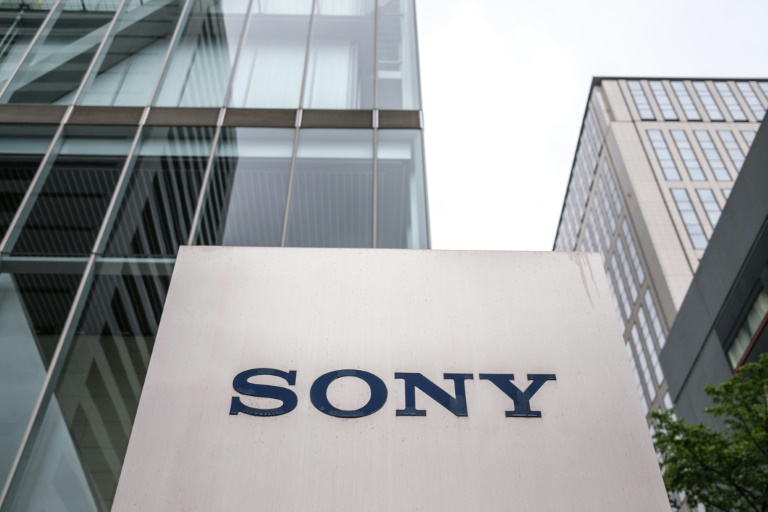
Sony trimmed its annual net profit forecast on Friday, partly due to acquisition expenses from the purchase of US game studio Bungie, creator of hits like “Halo” and “Destiny”.

The PlayStation maker announced in February it would buy Bungie for $3.6 billion, weeks after rival Microsoft unveiled a landmark pact to acquire “Call of Duty” maker Activision Blizzard.

Microsoft says its massive merger, valued at around $69 billion, will make it the third-largest gaming company by revenue, behind Tencent and Sony — a major shift in the booming gaming world.

Sony Group now predicts net profit for 2022-23 will total 800 billion yen ($6 billion), down from its previous estimate of 830 billion yen.

Higher-than-expected acquisition expenses are “mainly due to the acquisition of Bungie, Inc. being completed earlier than the assumed timing”, it said.

Lower sales of games by non-house developers will likely dent its overall sales figures this financial year, the Japanese conglomerate said, but this would be “partially offset” by a weaker yen.

Favourable exchange rates also boosted Sony’s movie segment, chief financial officer Hiroki Totoki told reporters.

Customer traffic at US theatres appears to be returning to pre-pandemic levels, and Sony Pictures is looking to score another box-office win after the runaway success of “Spider-Man: No Way Home”.

“We have high hopes for ‘Bullet Train’ featuring Brad Pitt,” Totoki said.

– PlayStation 5 sales steady –

In the April to June quarter, Sony posted a three percent year-on-year rise in net profit to 218 billion yen, with sales up around two percent to 2.3 trillion yen.

The company has faced challenges rolling out its PlayStation 5 console, which remains difficult to get hold of more than 18 months since its launch, in part due to pandemic supply-chain disruption and the global chip shortage.

Sony sold 11.5 million PS5s last year, and Totoki said the company would maintain its annual sales target of 18 million, while hinting it could make more consoles if Covid-19 lockdowns in China ease further.

“We would like to consider accelerating production and sales (of PS5s) so we can ship many products in time for the year-end shopping season,” he said.

For the PS5, “the problem is more about supply than demand,” Hideki Yasuda, senior analyst at Toyo Securities, told AFP before the earnings release.

A US economic slowdown could open up shipping opportunities, even though it poses broader risks for businesses like Sony, Yasuda added.

In the first quarter of this financial year, Sony sold 2.4 million PS5 units — similar to the same period last year when it sold 2.3 million.

Amir Anvarzadeh of Asymmetric Advisors said Sony could see more “disappointing earnings ahead” despite the tailwind of the weaker yen.

The gaming sector “looks to be where it expects much of the weakness to come from”, he said.

“Although they may blame weaker PS5 sales growth… the real reason looks to be higher development costs the firm has assumed through its aggressive acquisition of game developers, namely Bungie” as Sony tries to keep up with Microsoft’s purchases of game studios “to score first-party titles”.
Asian markets rise as US data boosts hopes of slower Fed hikes

Asian stocks rose Friday after data showing another contraction in the US economy boosted hopes that the Federal Reserve will slow its pace of interest rate hikes.

After an extended period of pessimism on trading floors fuelled by soaring inflation and the central bank’s monetary tightening campaign, investors are beginning to speculate that the market may have reached its nadir.

The world’s top economy shrank 0.9 percent in April-June following a 1.6 percent retreat in the first quarter as it was buffeted by the four-decade spike in inflation and rising borrowing costs.

But the reading was taken as a sign of good news, as it could give the Fed room to take its foot off the pedal, with Treasury yields — considered a barometer of future interest rates — easing.

Officials are expected to continue lifting rates, but analysts estimate they will announce a 50-basis-point rise in September, compared with 75 at the past two meetings.

And analysts said the quick, sharp pace of increases would allow the bank to begin cutting sooner in 2023 while others said any recession would likely only be shallow and short.

The news saw all three main indexes on Wall Street rally more than one percent, with tech firms — which are susceptible to higher rates — leading the way.

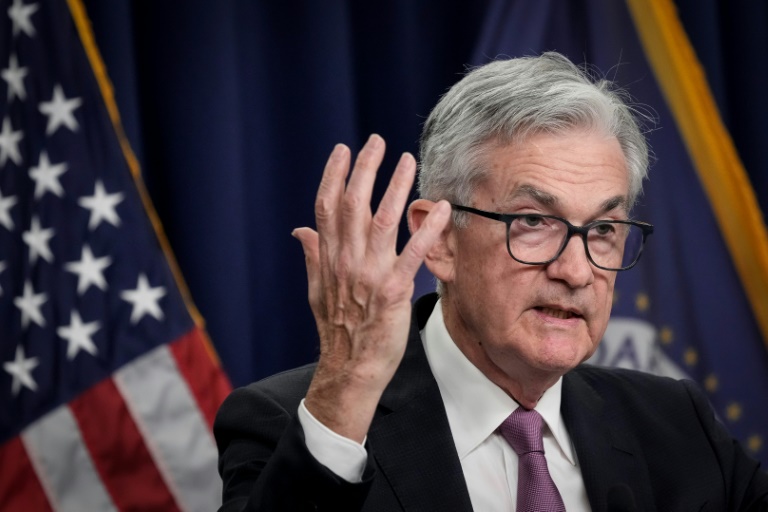
The gains extended a rally Wednesday that came after Fed chief Jerome Powell hinted that the bank could start to take it easier in its tightening.

Most of Asia followed suit, with Tokyo, Sydney, Seoul, Singapore, Taipei, Jakarta and Wellington all up. However, Hong Kong dropped and Shanghai struggled.

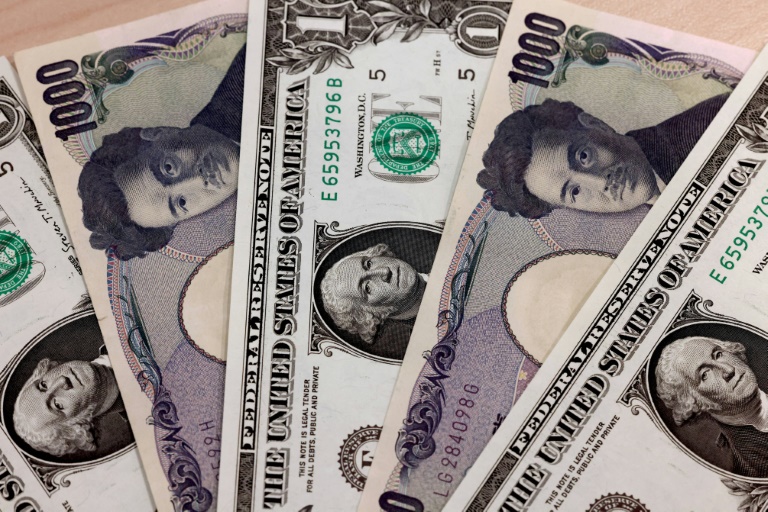
The prospect of US rates not rising as fast as previously expected hit the dollar, which has soared in recent months against most other currencies. 

The greenback dropped below 135 yen Thursday for the first time since July 6, having hit a 24-year high of 139.39 yen just two weeks ago.

A second successive contraction is widely considered a technical recession, though it is not officially considered so in the United States until identified as such by the National Bureau of Economic Research.

But while debate rages over that issue, the general consensus is that the economy is struggling.

“The more important point is that the economy has quickly lost steam in the face of four-decade high inflation, rapidly rising borrowing costs, and a general tightening in financial conditions,” Sal Guatieri, of BMO Capital Markets, wrote.

The retreat in the US economy comes as China also struggles, hit by painful Covid-induced lockdowns in major cities including Shanghai and Beijing that hammered all sectors and supply chains.

On Thursday, the country’s leadership offered a dour assessment of the world’s number two economy but offered no plans to stimulate growth, leaving traders disappointed.

– Key figures at around 0230 GMT –

Tokyo – Nikkei 225: UP 0.5 percent at 27,944.55 (break)

Hong Kong – Hang Seng Index: DOWN 1.4 percent at 20,343.08

Shanghai – Composite: DOWN 0.4 percent at 3,269.18

Dollar/yen: UP at 134.36 yen from 134.25 yen Thursday

Euro/dollar: DOWN at $1.0193 from $1.0197 

Pound/dollar: DOWN at $1.2167 from $1.2177 

Euro/pound: UP at 83.77 pence from 83.70 pence

West Texas Intermediate: DOWN 0.8 percent at $97.16 per barrel

Brent North Sea crude: UP 0.3 percent at $107.50 per barrel

New York – Dow: UP 1.0 percent at 32,529.63 (close)

London – FTSE 100: FLAT at 7,345.25 (close) 

Wall Street shrugs off US economy contracting

Wall Street stocks rose on Thursday despite data showing the US economy contracted for a second straight quarter as investors took it as a signal the Federal Reserve may slow interest rate hikes.

The increase follows a surge in Wall Street’s main stock indices on Wednesday, after investors welcomed comments by US Federal Reserve chief Jerome Powell suggesting its next super-sized increase could be its last.

The Fed hiked interest rates by three-quarters of a percentage point, its second hike in a row of that magnitude and the fourth increase this year.

“The reported basis for the positive response was a belief that the Fed Chair effectively lowered the temperature on the future pace of rate hikes,” said market analyst Patrick J. O’Hare at Briefing.com.

In late morning trading, the Dow and S&P 500 were both 0.6 higher. Meanwhile, the tech-heavy Nasdaq Composite — which jumped 4.1 percent on Wednesday, added 0.4 percent.

US gross domestic product (GDP) fell at an annual rate of 0.9 percent in the April-June quarter, following a 1.6 percent decline in the first quarter.

Two consecutive quarters of contraction in GDP is generally accepted as the technical definition of a recession.

Powell also said that future hikes will depend on economic data, and the markets took the GDP data as an indication that rate hikes will slow.

“Well, GDP was quite poor, so there won’t be a hattrick of 75 basis point hikes in September, that’s for sure,” said Fawad Razaqzada at City Index and FOREX.com.

“The US GDP data has re-affirmed my view that the Fed will have to slow down the pace of the hikes and potentially go in reverse in early 2023,” he added.

Meanwhile, a key inflation measure, the personal consumption expenditures price index, rose 7.1 percent in the latest three months, the same pace as in the first quarter, data showed.

The Fed and other central banks have been raising interest rates to rein in soaring inflation, but that risks slowing growth or even tipping the economy into recession.

Stephen Innes at SPI Asset Management said the market is “far too over-focused on the September 50 vs 75 debate, and not enough on the Fed’s underlying message.”

He said Fed policymakers have been clear they are “unequivocally prepared to allow a deeper economic slowdown and even a short-dipped recession if that is the price to be paid to get underlying inflation under control.”

European stock markets finished mostly higher.

Europe’s energy sector was in particular focus with Britain’s Shell and France’s TotalEnergies posting bumper second-quarter profits on elevated oil and gas prices. 

Asian indices mostly climbed following a surge on Wall Street, fuelled by hopes that the US central bank could slow its pace of inflation-fighting interest rate hikes.

The dollar bounced back against the euro and pound from a sell-off that came in response to Powell’s comments, but slumped to a month low against the yen. 

Oil prices pushed on data showing a big drop in US stockpiles, as well as the market expectations that the Fed will slow interest rate hikes.

– Key figures at around 1530 GMT –

New York – Dow: UP 0.6 percent at 32,377.88 points

EURO STOXX 50: UP 1.2 percent at 3,652.20

London – FTSE 100: DOWN less than 0.1 percent at 7,345.25 (close) 

Frankfurt – DAX: UP 0.9 percent at 13,282.11 (close)

Paris – CAC 40: UP 1.3 percent at 6,339.21 (close)

Tokyo – Nikkei 225: UP 0.4 percent at 27,815.48 (close)

Hong Kong – Hang Seng Index: DOWN 0.2 percent at 20,622.68 (close)

Shanghai – Composite: UP 0.2 percent at 3,282.58 (close)

Euro/dollar: DOWN at $1.0164 from $1.0200 Wednesday

Pound/dollar: DOWN at $1.2128 from $1.2158 

Euro/pound: DOWN at 83.80 pence from 83.89 pence

Dollar/yen: DOWN at 134.46 yen from 136.57 yen

Brent North Sea crude: UP 0.9 percent at $107.58 per barrel

West Texas Intermediate: UP 0.8 percent at $98.04 per barrel

burs-rl/har

Europe equities subdued after post-Fed surge on Wall Street

European stock markets ran out of steam Thursday as investors digested another hefty Federal Reserve interest rate hike and awaited vital US economic growth data and key results from big-hitters Amazon and Apple.

Frankfurt, London and Paris stocks rose at the open amid a flood of company earnings, but gains petered out as the morning progressed.

Europe’s energy sector was in particular focus with Britain’s Shell and France’s TotalEnergies posting bumper second-quarter profits on elevated oil and gas prices.

Asian indices mostly climbed following a surge on Wall Street, fuelled by hopes that the US central bank could slow its pace of inflation-fighting interest rate hikes.

All eyes are now on the release of second-quarter growth data and the latest earnings in the United States.

The dollar meanwhile struggled to bounce back from a sell-off — sitting at a three-week low against the yen — that came in response to comments by Fed chief Jerome Powell suggesting its next super-sized increase could be its last.

However, analysts cautioned that the initial joy, which sent New York’s three main indexes soaring, could be short-lived as the global economy continued to face several headwinds and inflation would likely not come down quickly.

As expected, the Fed lifted borrowing costs 75 basis points to a range of 2.25 to 2.5 percent, close to the neutral level it considers neither stimulating nor slowing economic growth.

Forecasts have rates going as high as 3.8 percent in 2023, as the bank tries to control runaway inflation.

There is a growing concern that the sharp rise in rates is bearing down on the world’s top economy and could send it into recession.

In his post-meeting comments, however, Powell said he did not consider that was the case, because “there are too many areas of the economy that are performing too well”. He did note that growth was slowing.

On Wall Street, the Dow and S&P rallied and the Nasdaq soared more than four percent — its best one-day rise since late 2020 — as tech firms caught a wave of optimism.

Asia followed suit, though with more muted gains, although Hong Kong dipped as the city’s de facto central bank followed the Fed in lifting rates owing to its currency peg.

Oil prices rallied as data showed a big drop in US stockpiles, while Powell’s comments on the economy eased recession concerns and the weaker dollar made the commodity cheaper for buyers holding stronger currencies.

– Key figures at around 1100 GMT –

London – FTSE 100: DOWN 0.1 percent at 7,339.10 points

Frankfurt – DAX: UP 0.1 percent at 13,173.01

Paris – CAC 40: FLAT at 6,258.89

EURO STOXX 50: UP 0.2 percent at 3,613.33

Tokyo – Nikkei 225: UP 0.4 percent at 27,815.48 (close)

Hong Kong – Hang Seng Index: DOWN 0.2 percent at 20,622.68 (close)

Shanghai – Composite: UP 0.2 percent at 3,282.58 (close)

New York – Dow: UP 1.4 percent at 32,197.59 (close)

Euro/dollar: UP at $1.0203 from $1.0200 Wednesday

Pound/dollar: UP at $1.2168 from $1.2158 

Euro/pound: DOWN at 83.84 pence from 83.89 pence

Dollar/yen: DOWN at 135.35 yen from 136.57 yen

Brent North Sea crude: UP 1.4 percent at $108.14 per barrel

West Texas Intermediate: UP 1.9 percent at $99.11 per barrel

China lockdown, chip shortage hit Nissan profits

Japanese car giant Nissan said on Thursday that net profit sank nearly 60 percent in the three months to June as pressures including a lockdown in Shanghai and chip shortages weighed on business.

The firm, which in May reported a positive full-year net profit for the first time in three years, said it logged a net profit of 47.1 billion yen ($347 million), down 58.9 percent on-year. 

The slump was also the result of a one-time boost in the first quarter of last financial year when Nissan unloaded Daimler sales.

But the firm said it was facing a range of headwinds.

“During the first quarter, the extremely challenging business environment put pressure on earnings,” Nissan said in a statement.

“Production was constrained by the Shanghai lockdown caused by spread of the new coronavirus, and semiconductor supply shortages, while external factors such as soaring raw material prices and logistics costs also intensified their impact.”

“The pandemic understandably remains a priority challenge,” chief operating officer Ashwani Gupta told reporters.

“At the same time, we experienced tailwinds with favourable foreign exchange rates,” he added, referring to the yen’s recent slump against the dollar, which helps inflate overseas profits for Japanese firms.

The firm left its full-year forecast unchanged, projecting a net profit of 150 billion yen.

That would be a 30.4 percent slump, however, from the previous year’s 215.5 billion yen.

Operating profit was down 14.2 percent to 64.9 billion yen, but that beat analyst estimates, according to Bloomberg.

– Ghosn saga –

The firm was on a rollercoaster even before the disruption caused by the pandemic and the conflict in Ukraine.

It had been struggling with increasing sales costs, and is currently implementing a plan involving slashing models, cutting costs and restructuring operations.

“Nissan is making progress after an excessive expansion policy in North America in the past that was a factor causing it to lose money,” said Satoru Takada, auto analyst at TIW, a Tokyo-based research and consulting firm.

“Profits declined year-on-year relative to the robust rebound in last year’s April-June quarter, when there was a recovery from the pandemic’s impact and cost-cutting efforts,” Takada told AFP ahead of the earnings report.

“Nissan’s challenge is how to minimise the impact of the chip shortage and sell attractive new cars, including those recently released,” he said.

Gupta said the firm was looking to “invest in building greater resilience” as it battles the effects of obstacles such as China’s lockdowns.

He said its suppliers and dealerships had reopened, and “showroom traffic is recovering”.

On chips, he said Nissan was looking to develop alternatives as well as to replace custom-made semiconductors with general-purpose versions.

And he added that the automaker was attempting to cut its use of precious metals in response to the rising cost of raw materials.

“As always, we move forward with cautious optimism while challenging ourselves to maintain (the) four million sales outlook for the fiscal year,” he said.

Nissan has also been buffeted by the saga surrounding its former chief Carlos Ghosn.

The one-time auto tycoon was detained in Japan in 2018, accused of financial misconduct charges that he denies, but jumped bail and fled to Lebanon the following year.

A Tokyo court in March handed a six-month suspended sentence to former Nissan executive Greg Kelly over allegations that he helped his boss attempt to conceal income.  

The company had pleaded guilty in a separate case, and was ordered to pay a fine of 200 million yen.

In April, French authorities issued an international arrest warrant for Ghosn, who has lived in Lebanon since his daring getaway from Japan, on allegations including corruption, misuse of company assets and money laundering. 

Asia, Europe track post-Fed surge on Wall St but caution urged

Asian and European markets rose Thursday following a surge on Wall Street fuelled by hopes that the Federal Reserve could slow its pace of inflation-fighting interest rate hikes.

The dollar also struggled to bounce back from a sell-off — sitting at a three-week low against the yen — that came in response to comments by Fed chief Jerome Powell suggesting its next super-sized increase could be its last.

However, analysts cautioned that the initial joy, which sent New York’s three main indexes soaring, could be short-lived as the global economy continued to face several headwinds and inflation would likely not come down quickly.

As expected, the Fed lifted borrowing costs 75 basis points to a range of 2.25 to 2.5 percent, close to the neutral level it considers neither stimulating nor slowing economic growth.

Forecasts have rates going as high as 3.8 percent in 2023, as the bank tries to control runaway inflation.

There is a growing concern that the sharp rise in rates is bearing down on the world’s top economy and could send it into recession.

In his post-meeting comments, however, Powell said he did not consider that was the case, because “there are too many areas of the economy that are performing too well”. 

He did note that growth was slowing.

Powell added that officials would not give any guidance on their next move, instead taking each decision on a meeting-to-meeting basis. 

While he said another “unusually large increase could be appropriate” in September and officials “wouldn’t hesitate” to lift by one percentage point, markets took heart from the suggestion that the bank was ready to take its foot off the gas towards the end of the year.

On Wall Street, the Dow and S&P rallied and the Nasdaq soared more than four percent — its best one-day rise since late 2020 — as tech firms caught a wave of optimism. The sector is more susceptible to higher rates.

And Asia followed suit, though with more muted gains.

Shanghai, Tokyo, Sydney, Seoul, Singapore, Mumbai, Manila, Jakarta and Wellington were also well in the green.

But Hong Kong dipped as the city’s de facto central bank followed the Fed in lifting rates owing to its currency peg.

London, Paris and Frankfurt were up in the morning.

The prospect of a slower pace of rate hikes weighed on the dollar against most other currencies, and on Thursday it hit its lowest level against the yen since July 6.

There was a warning that the positive mood likely will not last, however.

“This market move is the victory of hope over experience,” Jeffrey Rosenberg, at BlackRock Inc, told Bloomberg Television. “I’d be a little bit cautious here.”

And Citigroup’s Andrew Hollenhorst and Veronica Clark added that traders appeared to be misjudging Powell’s remarks.

“We read Chair Powell’s press conference as more hawkish than the market’s interpretation,” they said, adding that inflation readings excluding food and energy will “push the Fed to hike more aggressively than they or markets anticipate”.

All eyes are now on the release of second-quarter growth data later Thursday. After a 1.6 percent contraction in the previous three months, another negative reading would put the economy into a technical recession.

An expected phone call between US President Joe Biden and his Chinese counterpart Xi Jinping will also be high on the agenda for investors as the world’s superpowers try to navigate a period of rising tensions. Updates on US tariffs and Taiwan will be among the main areas of focus.

Oil prices rose after data showed a big drop in US stockpiles, while Powell’s comments on the economy eased recession concerns and the weaker dollar made the commodity cheaper for buyers with other currencies.

– Key figures at around 0810 GMT –

Tokyo – Nikkei 225: UP 0.4 percent at 27,815.48 (close)

Hong Kong – Hang Seng Index: DOWN 0.2 percent at 20,622.68 (close)

Shanghai – Composite: UP 0.2 percent at 3,282.58 (close)

London – FTSE 100: UP 0.1 percent at 7,353.01

Euro/dollar: DOWN at $1.0200 from $1.0201 late Wednesday

Pound/dollar: UP at $1.2185 from $1.2151 

Euro/pound: DOWN at 83.71 pence from 83.85 pence

Dollar/yen: DOWN at 135.60 yen from 136.51 yen

West Texas Intermediate: UP 1.3 percent at $98.48 per barrel

Brent North Sea crude: UP 0.9 percent at $107.57 per barrel

New York – Dow: UP 1.4 percent at 32,197.59 (close)

Indebted Evergrande looks to sell Hong Kong headquarters again

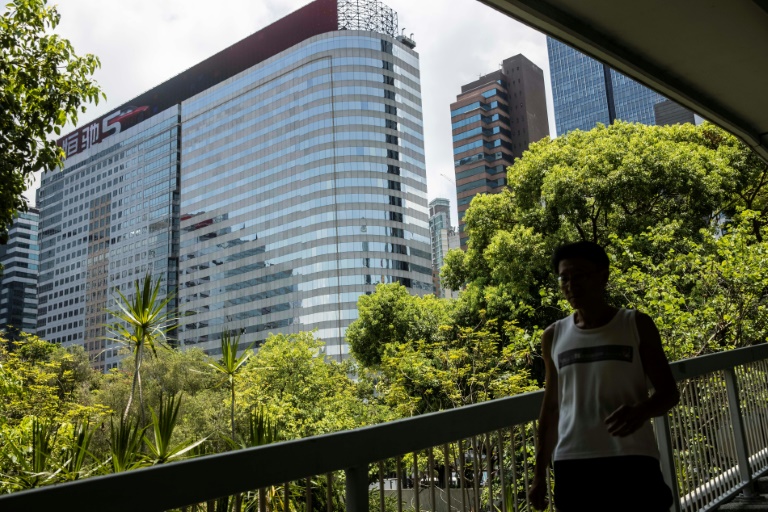
Troubled Chinese property developer Evergrande has found a potential buyer for its Hong Kong headquarters, reports said Thursday, days before an expected announcement of the firm’s long-awaited restructuring plans. 

CK Asset Holdings, founded by Hong Kong billionaire Li Ka-shing, said it had submitted a tender for the 26-storey building, which is currently valued at HK$9 billion ($1.1 billion) according to Hong Kong media. 

Evergrande has been involved in restructuring negotiations after racking up $300 billion in liabilities, as Beijing continues its wide-ranging crackdown on excessive debt and rampant consumer speculation in the real estate sector.

The group previously said it was on track to deliver a preliminary restructuring plan by the end of July.

In 2015, when it acquired the headquarters for $1.61 billion, the deal set a record for the single largest transaction for an office building in Hong Kong, as well as the price per square foot, according to the South China Morning Post.

Last October, the building was offered to Chinese state-owned developer Yuexiu for $1.7 billion, but the buyer pulled out over concerns about Evergrande’s unresolved indebtedness.

Once a leading light in China’s real estate sector, Evergrande has in recent months scrambled to offload assets, with chairman Hui Ka Yan paying off some of its debts using his personal wealth. 

In a further sign of turmoil, Evergrande last week ousted its CEO and CFO after an internal investigation into why banks seized over $2 billion from the firm’s property services arm.

Evergrande’s woes have had knock-on effects throughout China’s property sector, with some smaller companies also defaulting on loans and others struggling to find enough cash. 

China’s real estate firms, long heavily dependent on loans to finance their massive developments, have found themselves in trouble as a push by Beijing to reign in debt has cut cash flows.

Analysts have said that if the property crisis spreads to China’s financial system, the shock would be felt far beyond its borders.

But on Thursday, Hong Kong Financial Secretary Paul Chan said the difficulties of Chinese developers would have a “very limited” impact on the financial hub’s banking stability. 

“We have been monitoring this situation very carefully, and we do not find cause for alarm,” Chan said.

Evergrande did not immediately reply to AFP’s request for comment.

Asian markets track post-Fed surge on Wall St, but caution urged

Asian markets rose Thursday following a surge on Wall Street fuelled by hopes that the Federal Reserve could slow its pace of inflation-fighting interest rate hikes.

The dollar also struggled to bounce back from a sell-off — sitting at a three-week low against the yen — that came in response to comments by bank chief Jerome Powell suggesting its next super-sized increase could be its last.

However, analysts cautioned that the initial joy, which sent New York’s three main indexes soaring, could be short-lived as the global economy continued to face several headwinds and inflation would not likely come down quickly.

As expected, the Fed lifted borrowing costs 75 basis points to a range of 2.25-2.5 percent, close to the neutral level it considers neither stimulating nor slowing economic growth.

Forecasts have rates going as high as 3.8 percent in 2023 as the bank tries to control runaway inflation.

There is a growing concern that the sharp rise in rates is bearing down on the world’s top economy and could send it into recession.

But in his post-meeting comments, Powell said he did not consider that was the case, because “there are too many areas of the economy that are performing too well”. He did, however, note growth was slowing.

He added that officials would not give any guidance on their next move, instead taking each decision on a meeting-to-meeting basis. 

And while he said another “unusually large increase could be appropriate” in September, markets took heart from the suggestion that the bank was ready to take its foot off the gas towards the end of the year.

On Wall Street, the Dow and S&P rallied and the Nasdaq soared more than four percent — its best one-day rise since late 2020 — as tech firms caught a wave of optimism. The sector is more susceptible to higher rates.

And Asia followed suit, though with more muted gains.

Hong Kong was up after bouncing from initial losses as the city’s de facto central bank followed the Fed in lifting rates owing to its currency peg.

Shanghai, Tokyo, Sydney, Seoul, Singapore, Taipei, Manila, Jakarta and Wellington were also well in the green.

The prospect of a slower pace of rate hikes weighed on the dollar against most other currencies, and on Thursday hit its lowest level against the yen since July 6.

However, there was a warning that the positive mood likely will not last.

“This market move is the victory of hope over experience,” Jeffrey Rosenberg, at BlackRock Inc, told Bloomberg Television. “I’d be a little bit cautious here.”

And Citigroup’s Andrew Hollenhorst and Veronica Clark added that traders appeared to be misjudging Powell’s remarks.

“We read Chair Powell’s press conference as more hawkish than the market’s interpretation,” they said, adding that inflation readings excluding food and energy will “push the Fed to hike more aggressively than they or markets anticipate”.

All eyes are now on the release of second-quarter growth data later Thursday. After a 1.6 percent contraction in the previous three months, another negative reading would put the economy into a technical recession.

An expected phone call between Joe Biden and China’s Xi Jinping will also be high on the agenda for investors as the world’s superpowers try to navigate a period of rising tensions. Anything on US tariffs and Taiwan will be among the main areas of focus.

– Key figures at around 0230 GMT –

Tokyo – Nikkei 225: UP 0.3 percent at 27,804.21 (break)

Hong Kong – Hang Seng Index: UP 0.4 percent at 20,75001

Shanghai – Composite: UP 0.7 percent at 3,299.89

Euro/dollar: DOWN at $1.0198 from $1.0201 late Wednesday

Pound/dollar: UP at $1.2157 from $1.2151 

Euro/pound: DOWN at 83.39 pence from 83.85 pence

Dollar/yen: DOWN at 135.52 yen from 136.51 yen

West Texas Intermediate: UP 1.6 percent at $98.80 per barrel

Brent North Sea crude: UP 1.2 percent at $108.00 per barrel

New York – Dow: UP 1.4 percent at 32,197.59 (close)

London – FTSE 100: UP 0.6 percent at 7,348.23 (close) 

Samsung Electronics says operating profits up 12.18 percent in Q2

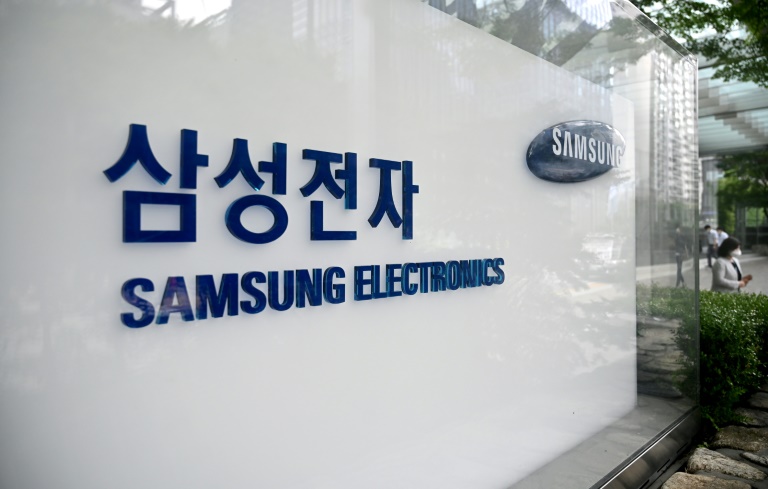
South Korean chip powerhouse Samsung Electronics said Thursday that second-quarter operating profits were up 12.18 percent, with record profits in its system semiconductor division despite global supply chain woes.

The company’s “system semiconductor businesses… achieved a record high quarterly profit,” Samsung said in a statement, adding it had both expanded its product line-up and increased the supply of chips to global customers.

“Earnings in the Memory Business improved both year-on-year and quarter-on-quarter as the Company focused on meeting solid demand for servers,” Samsung said.

In June, the company became the first chipmaker in the world to mass-produce 3-nanometre microchips as it sought to match and eventually outpace Taiwan’s TSMC in the race to manufacture the world’s most advanced chips. 

The new chips will be smaller, more powerful and efficient, and will be used in high-performance computing applications before being put into gadgets such as mobile phones.

The vast majority of the world’s most advanced microchips are made by just two companies — Samsung and TSMC — both of which are running at full capacity to alleviate a global shortage.

Samsung is the market leader in memory chips, but it has been scrambling to catch up with TSMC in its advanced foundry division, which makes high-tech microchips for other companies.

Samsung, which is also a world leader in handset production, said demand and profits from its smartphone division were down from the first quarter.

“Overall market demand declined from the previous quarter amid geopolitical issues and concerns over inflation on top of continued weak seasonality,” it said.

“Profitability decreased from the previous quarter at some degree due to rising costs of components and logistics as well as negative effects of foreign exchange movement,” it added.

But overall, the weakness of the Korean won against the US dollar benefited the company, it said in the statement, “resulting in an approximately 1.3 trillion won ($994 million) company-wide gain in operating profit compared to the previous quarter.”

Weak chip market

Samsung’s mobile business is “expected to improve in the second half of the year from the second quarter, which was heavily affected by external elements such as the war in Ukraine,” Park Sung-soon, an analyst at Cape Investment & Securities, told AFP.

But decreased market demand for memory chips due to concerns over a possible global recession will hamper the company’s profit outlook, he said.

“What determines Samsung’s overall profit is its semiconductor business. With what’s expected to be faltering demand for memory chips down the road, sales could weaken in the second half of the year.” 

Global demand for chips is “entering a period of weakness, which will persist through 2023,” Richard Gordon, an analyst at research company Gartner, said in a report, according to Bloomberg.

“We are already seeing weakness in semiconductor end markets, especially those exposed to consumer spending.”

The supply of memory chips has become an issue of global geopolitical significance recently, with leading governments scrambling to secure advanced chip supplies.

That was demonstrated in May when US President Joe Biden kicked off a South Korea tour by visiting Samsung’s sprawling Pyeongtaek chip plant.

Russia’s invasion of Ukraine has “further spotlighted the need to secure our critical supply chains”, Biden said at the plant, underscoring the importance of bolstering technology partnerships among “close partners who do share our values”.

US stocks rally, dollar retreats as Fed hikes interest rates again

Wall Street stocks rallied and the dollar retreated Wednesday as the Federal Reserve again proceeded with a large interest rate hike, maintaining its forceful stance to combat inflation.

The US central bank carried out the second straight 75 basis point increase, and the fourth rate hike this year, moving aggressively to cool the strongest surge in inflation in more than four decades without derailing the world’s largest economy.

Following a positive session in European equity markets, US stocks were also up prior to the Fed’s 1800 GMT announcement.

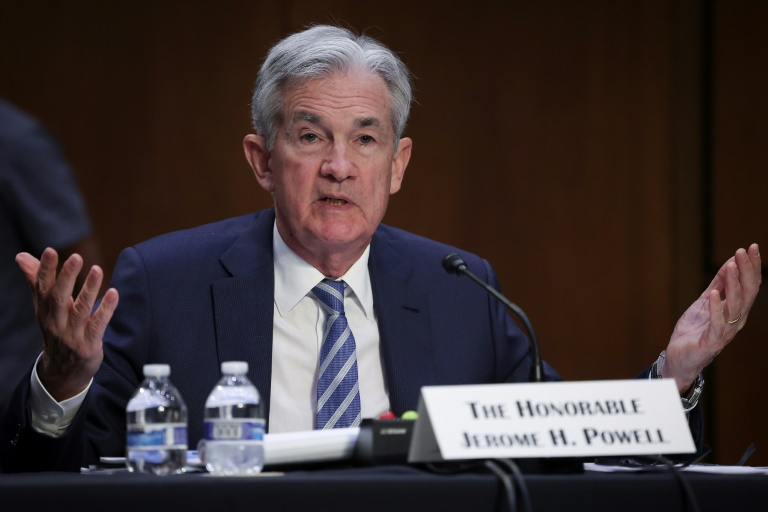
But equities pushed even higher during Fed Chair Jerome Powell’s news conference, where he described the US economy as slowing but not in recession.

Analysts said the central bank’s move met market expectations and they took heart in Powell’s statements that implied the central bank could undertake smaller interest rate hikes later in 2022 after two straight super-sized increases.

Wall Street “is contemplating less aggressive monetary policy at least on the Fed Funds rate as we move from the third quarter into the fourth quarter,” said Art Hogan, chief market strategist at B Riley Wealth Management.

All three major US indices enjoyed solid gains, with the S&P 500 finishing up 2.6 percent. 

The dollar also pulled back against the euro and other currencies in a sign the Fed’s stance was seen as less hawkish than expected.

On Thursday, all eyes will be on second-quarter US growth data, which could show the US economy is technically in recession according to one leading benchmark.

GDP in the first quarter contracted 1.6 percent. Two quarters of negative growth are generally considered a sign the economy is in recession, although that is not the official criteria.

Powell noted the Fed’s mandate is to promote price stability and full employment, not to make declarations about recessions — but added he did not consider current conditions consistent with such a categorization.

A recession is “a broad-based decline across many industries that is sustained for more than a couple months,” Powell told reporters.

“What we have right now doesn’t seem like that. The real reason is that the labor market is just sending such a strong signal of economic strength that it makes you really question the GDP data.” 

– New Credit Suisse CEO –

In Europe, shares in London rose 0.6 percent, Paris climbed 0.8 percent and Frankfurt added 0.5 percent.

On the corporate front, Switzerland’s scandal-hit banking giant Credit Suisse appointed a new chief executive as higher litigation costs and financial market volatility pushed it deeper into the red.

Ulrich Koerner, head of asset management at the bank, takes the reins from Thomas Gottstein on Monday.

The bank has been hit by a series of scandals and crises including the implosions of financial services firms Greensill and Archegos last year.

After starting the day lower on the Swiss stock exchange, Credit Suisse shares rose one percent.

Back on Wall Street, very large gains were enjoyed by both Microsoft, up 6.7 percent, and Google parent Alphabet, up 7.7 percent, despite reporting lower profits that were still not as bad than feared.

– Key figures at around 2110 GMT –

New York – Dow: UP 1.4 percent at 32,197.59 (close)

New York – S&P 500: UP 2.6 percent at 4,023.61 (close)

New York – Nasdaq: UP 4.1 percent at 12,032.42 (close)

London – FTSE 100: UP 0.6 percent at 7,348.23 (close) 

Frankfurt – DAX: UP 0.5 percent at 13,166.38 (close)

Paris – CAC 40: UP 0.8 percent at 6,257.94 (close)

EURO STOXX 50: UP 0.9 percent at 3,607.78 (close)

Tokyo – Nikkei 225: UP 0.2 percent at 27,715.75 (close)

Hong Kong – Hang Seng Index: DOWN 1.1 percent at 20,670.04 (close)

Shanghai – Composite: DOWN 0.1 percent at 3,275.76 (close)

Euro/dollar: UP at $1.0201 from $1.0117 late Tuesday

Pound/dollar: UP at $1.2151 from $1.2028 

Euro/pound: DOWN at 83.85 pence from 84.11 pence

Dollar/yen: UP at 136.51 yen from 136.91 yen

Brent North Sea crude: UP 2.1 percent at $106.62 per barrel

West Texas Intermediate: UP 2.4 percent at $97.26 per barrel

burs-jmb/sst

Close Bitnami banner
Bitnami