US Business

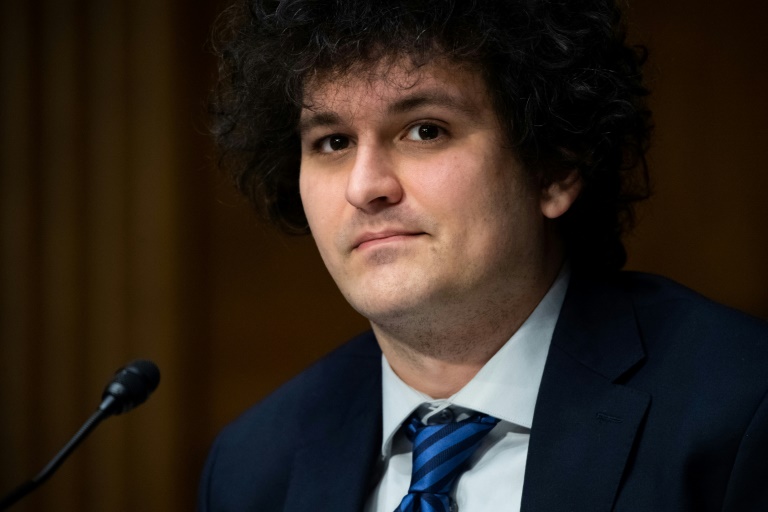
Sam Bankman-Fried: crypto rock star facing life in jail

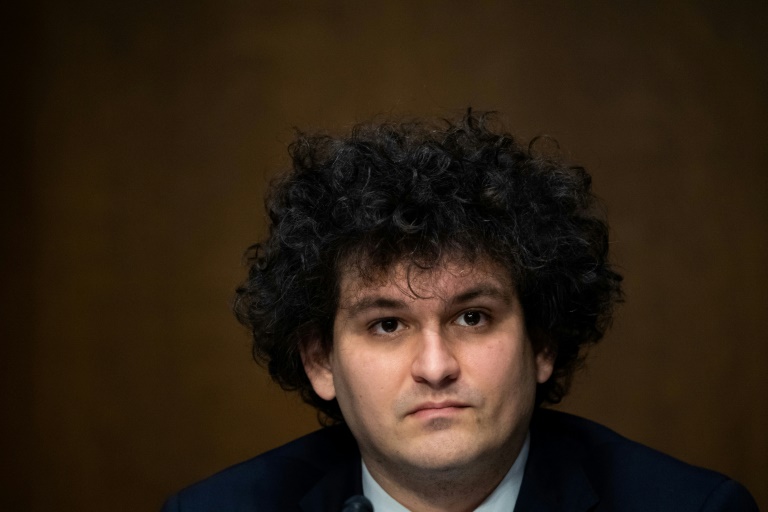
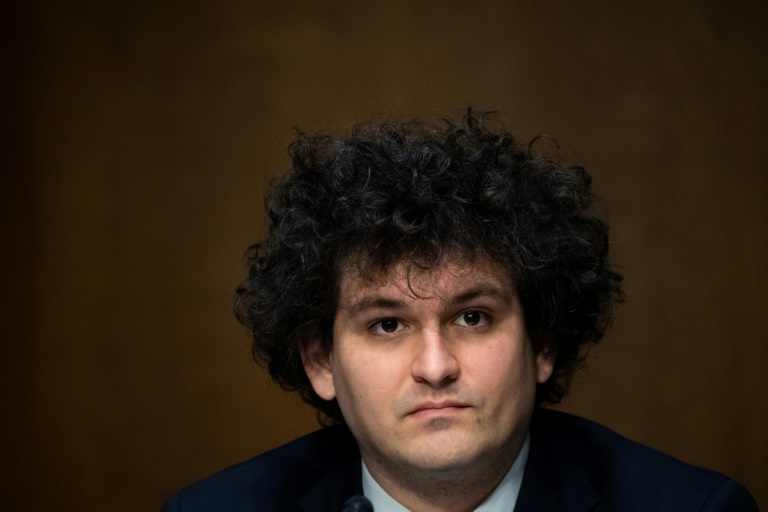
Sam Bankman-Fried has had a dizzying fall from top of the heap in the world of cryptocurrencies to staring down a hefty jail sentence on a raft of fraud charges.

The 30-year-old billionaire founder of the FTX crypto exchange once partnered with celebrities and rubbed shoulders with politicians as he tried to legitimize cryptocurrency as more than just a shady get-rich-quick scheme.

However, his company, valued at $32 billion earlier this year, suddenly imploded in November after filing for bankruptcy protection, inviting scrutiny from regulators, prosecutors and furious clients. 

To authorities, it was a rotten, billion-dollar house of cards that had come crashing down.

Bankman-Fried is a vegan who reportedly sleeps four hours a night, and usually dresses in a hoodie and dark T-shirt. He has said he maintains a spartan lifestyle, and has donated millions of dollars to causes such as animal welfare, reducing global warming, and combating neglected tropical diseases.

His personal fortune was once at nearly $25 billion, according to Forbes magazine. 

– Prestigious partnerships –

The son of Stanford Law School professors and a graduate of the elite Massachusetts Institute of Technology (MIT), Bankman-Fried worked as a broker on Wall Street before turning to cryptocurrencies in 2017. 

He created a cryptocurrency investment fund, Alameda Research, moved to Hong Kong and then launched FTX.

Bankman-Fried, known on social media as SBF, was a vocal advocate for smoother access to the crypto market for the general public, particularly in the United States. 

The success of FTX enabled the platform to forge prestigious partnerships, including with the newly retired American football legend Tom Brady and his wife, the Brazilian ex-model Gisele Bundchen. 

Bankman-Fried moved the company to the Bahamas, where taxes are almost nonexistent, saying the Caribbean nation is one of the few countries that has a comprehensive licensing regime for cryptocurrencies.

As his star rose, Fortune magazine wondered if he would be the new Warren Buffet.

However, things quickly went sour.

– Fall from grace – 

FTX’s implosion was swift following a November 2 report on the cryptocurrency news site CoinDesk on ties between FTX and Alameda.

The report exposed that Alameda’s balance sheet was heavily built on the FTT currency — a token created by FTX and with no independent value. 

The price of FTT plunged in early November, roiling both Alameda and FTX, where Alameda had large trading positions.

Reeling from customer withdrawals and short some $8 billion, FTX and some 100 related entities filed for bankruptcy protection on November 11.

Among the revelations, FTX propped up Alameda with billions of dollars in customer funds that are now likely lost forever. 

Questions also linger over whether Bankman-Fried engaged in market manipulation, or illegally provided inside information to Alameda.

Despite the questions hanging over his company’s activities, Bankman-Fried defied legal advice and kept appearing on talk shows and conference panels, offering his version of his company’s sudden failure, usually by video link from the Bahamas.

Then came his arrest on Monday in the idyllic archipelago, at the request of the United States, and charges of money laundering, wire fraud, and violating campaign finance laws.

The US Securities and Exchange Commission said the onetime crypto wunderkind was “responsible for fraudulently raising billions of dollars from investors in FTX and misusing funds belonging to FTX’s trading customers.”

Bankman-Fried has acknowledged poor corporate controls and mistakes, however, denies any criminal wrongdoing.

“I didn’t ever try to commit fraud on anyone,” Bankman-Fried told a New York Times conference on November 30. “Clearly I made a lot of mistakes or things I would be able to give anything to be able to do over again.”

Instead of boosting investor confidence in cryptocurrency, Bankman-Fried’s downfall sent major cryptocurrencies plunging, only raising further doubt over the young and turbulent sector.
US researchers announce historic nuclear fusion breakthrough

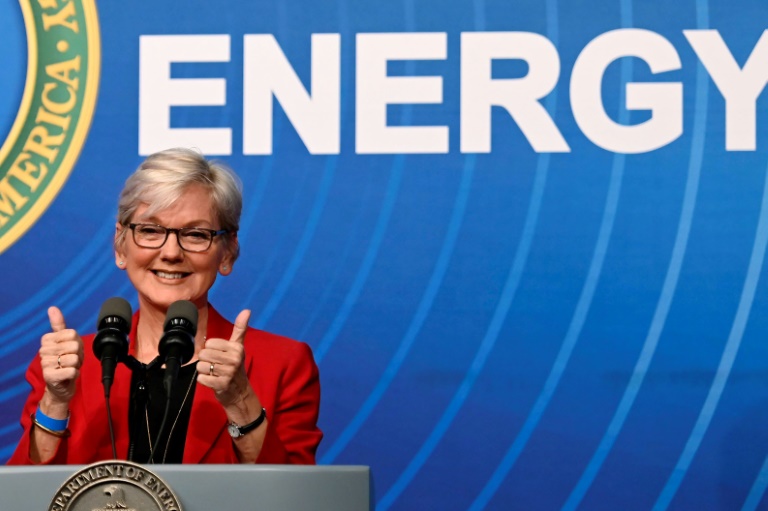
US researchers announced a historic nuclear fusion breakthrough on Tuesday, hailing a “landmark achievement” in the quest for a source of unlimited, clean power and an end to reliance on fossil fuels.

The Lawrence Livermore National Laboratory (LLNL) said it had used the world’s largest laser to create, for the first time, a fusion reaction that replicated the process that powers the sun and generated more energy than it took to produce -– a goal pursued by scientists for decades.

Nuclear fusion has been touted by its supporters as a clean, abundant and safe source of energy that could eventually allow humanity to break its dependence on coal, crude oil, natural gas and other hydrocarbons driving a global climate crisis.

The US Department of Energy described the achievement of fusion ignition as a “major scientific breakthrough” that will lead to “advancements in national defense and the future of clean power.”

However, there is still a long way to go before fusion is viable on an industrial scale, providing power to homes and businesses.

“There are very significant hurdles, not just in the science but in technology,” Kim Budil, the LLNL director, said at a press conference.

“A few decades of research on the underlying technologies could put us in a position to build a power plant,” she said.

The LLNL, which is based in California, said a team at its National Ignition Facility had achieved what is known as “net energy gain” in an experiment this month, producing more energy from fusion than the laser energy used to drive it.

“They shot a bunch of lasers at a pellet of fuel and more energy was released from that fusion ignition than the energy of the lasers,” explained White House science advisor Arati Prabhakar.

– More developments needed –

For the experiment, researchers at LLNL used 192 ultra-powerful lasers to deliver 2.05 megajoules of energy to a tiny capsule smaller than a pea containing isotopes of hydrogen.

It produced 3.15 megajoules of fusion energy output.

While the result was a net energy gain, 300 megajoules of energy was needed from the electrical grid to power the lasers.

“Our calculations suggest that it’s possible with a laser system at scale to achieve hundreds of megajoules of yield,” Budil said.

“So there is a pathway to a target that produces enough yield, but we’re very distant from that right now.”

Nuclear power plants around the world currently use fission — the splitting of a heavy atom’s nucleus — to produce energy.

Fusion on the other hand combines two light hydrogen atoms to form one heavier helium atom, releasing a large amount of energy in the process.

That’s the process that occurs inside stars, including our sun.

On Earth, fusion reactions can be provoked by heating hydrogen to extreme temperatures inside specialized devices.

Like fission, fusion is carbon-free during operation, but has many more advantages: it poses no risk of nuclear disaster and produces much less radioactive waste.

Other nuclear fusion projects are also in development around the world, including the major international project known as ITER, which is currently under construction in France.

Instead of lasers, ITER will use a technique known as magnetic confinement, containing a swirling mass of fusing hydrogen plasma within a massive donut-shaped chamber.

US researchers announce historic nuclear fusion breakthrough

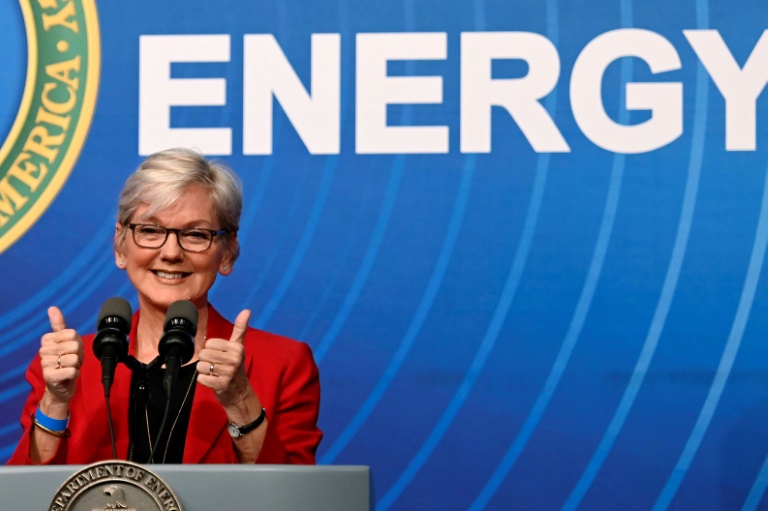
US researchers announced a historic nuclear fusion breakthrough on Tuesday, hailing a “landmark achievement” in the quest for a source of unlimited, clean power and an end to reliance on fossil fuels.

The Lawrence Livermore National Laboratory (LLNL) said it had used the world’s largest laser to create, for the first time, a fusion reaction that replicated the process that powers the sun and generated more energy than it took to produce -– a goal pursued by scientists for decades.

Nuclear fusion has been touted by its supporters as a clean, abundant and safe source of energy that could eventually allow humanity to break its dependence on coal, crude oil, natural gas and other hydrocarbons driving a global climate crisis.

The US Department of Energy described the achievement of fusion ignition as a “major scientific breakthrough” that will lead to “advancements in national defense and the future of clean power.”

However, there is still a long way to go before fusion is viable on an industrial scale, providing power to homes and businesses.

“There are very significant hurdles, not just in the science but in technology,” Kim Budil, the LLNL director, said at a press conference.

“A few decades of research on the underlying technologies could put us in a position to build a power plant,” she said.

The LLNL, which is based in California, said a team at its National Ignition Facility had achieved what is known as “net energy gain” in an experiment this month, producing more energy from fusion than the laser energy used to drive it.

“They shot a bunch of lasers at a pellet of fuel and more energy was released from that fusion ignition than the energy of the lasers,” explained White House science advisor Arati Prabhakar.

– More developments needed –

For the experiment, researchers at LLNL used 192 ultra-powerful lasers to deliver 2.05 megajoules of energy to a tiny capsule smaller than a pea containing isotopes of hydrogen.

It produced 3.15 megajoules of fusion energy output.

While the result was a net energy gain, 300 megajoules of energy was needed from the electrical grid to power the lasers.

“Our calculations suggest that it’s possible with a laser system at scale to achieve hundreds of megajoules of yield,” Budil said.

“So there is a pathway to a target that produces enough yield, but we’re very distant from that right now.”

Nuclear power plants around the world currently use fission — the splitting of a heavy atom’s nucleus — to produce energy.

Fusion on the other hand combines two light hydrogen atoms to form one heavier helium atom, releasing a large amount of energy in the process.

That’s the process that occurs inside stars, including our sun.

On Earth, fusion reactions can be provoked by heating hydrogen to extreme temperatures inside specialized devices.

Like fission, fusion is carbon-free during operation, but has many more advantages: it poses no risk of nuclear disaster and produces much less radioactive waste.

Other nuclear fusion projects are also in development around the world, including the major international project known as ITER, which is currently under construction in France.

Instead of lasers, ITER will use a technique known as magnetic confinement, containing a swirling mass of fusing hydrogen plasma within a massive donut-shaped chamber.

US charges crypto tycoon Bankman-Fried with 'massive' fraud

US prosecutors slapped disgraced cryptocurrency tycoon Sam Bankman-Fried with multiple criminal charges on Tuesday for massive fraud as he built his FTX crypto empire.

The charge sheet landed as Bankman-Fried appeared in a Bahamas court and indicated that he would fight an extradition request by the United States and asked to be released on bail pending a hearing.

The founder of the FTX platform, who was arrested in the Bahamas Monday at the request of the United States, is facing a raft of accusations, including from US market regulators who say that the investor knowingly built a fraudulent house of cards.

In a Nassau courtroom, attended by US embassy officials and Bankman-Fried’s parents, Bahamian prosecutors argued that the suspect was a flight risk and should be denied bail pending an extradition hearing, the New York Times reported.

The criminal charges, made by federal prosecutors in New York, posed the greatest threat to Bankman-Fried who risks a long jail sentence given the billions of dollars involved.

“Mr. Bankman-Fried is reviewing the charges with his legal team and considering all of his legal options,” his lawyer Mark Cohen said in a statement.

– ‘Massive fraud’ –

In their indictment, US prosecutors said Bankman Fried also carried out money laundering, violated campaign finance laws and committed wire fraud since the start of his company in 2019.

Bankman-Fried “was orchestrating a massive, years-long fraud, diverting billions of dollars of the trading platform’s customer funds for his own personal benefit and to help grow his crypto empire,” prosecutors said.

The legal hammer fell after the 30-year-old spent weeks defying legal advice and made multiple media appearances defending his actions, usually by video link from the Bahamas, where his company is headquartered.

Bankman-Fried had embodied the emergence of cryptocurrency as an above-board investment rather than a dodgy get-rich-quick scheme for high-risk investors.

His FTX platform was plugged by celebrities in advertising campaigns and he became a regular presence in Washington, where he donated tens of millions of dollars in political contributions, mainly to the Democratic Party.

But after reaching a valuation of $32 billion, FTX’s implosion was swift following a November 2 media report on ties between FTX and Alameda, a trading company also controlled by Bankman-Fried.

The report exposed that Alameda’s balance sheet was heavily built on the FTT currency — a token created by FTX with no independent value — and exposed Bankman-Fried’s companies as being dangerously interlinked.

– ‘Grossly inexperienced’ –

Reeling from customer withdrawals and short some $8 billion, FTX and around 100 related entities filed for bankruptcy protection on November 11, inviting scrutiny from regulators, prosecutors and furious clients. 

“If convicted he could be facing the rest of his life in prison, given the dollar amount of the fraud,” Jacob S. Frenkel, a former federal criminal prosecutor at Dickinson Wright, told AFP.

“We would not see an indictment if prosecutors were not absolutely convinced that they will win a conviction.”

In his media interviews, Bankman-Fried has admitted to mistakes, but has denied intent to defraud his customers.

FTX CEO John Ray, who came to the company after the debacle, told Congress on Tuesday that the problems arose because control was “in the hands of a very small group of grossly inexperienced and unsophisticated individuals.”

“Never in my career have I seen such an utter failure of corporate controls at every level of an organization, from the lack of financial statements to a complete failure of any internal controls or governance whatsoever,” Ray said.

The fall of FTX has caused major doubts about the long term viability of cryptocurrency and heaped stress on other platforms and entities that rode the success of Bitcoin and other currencies.

US charges crypto tycoon Bankman-Fried with 'massive' fraud

US prosecutors slapped disgraced cryptocurrency tycoon Sam Bankman-Fried with multiple criminal charges on Tuesday for massive fraud as he built his FTX crypto empire.

The charge sheet landed as Bankman-Fried appeared in a Bahamas court and indicated that he would fight an extradition request by the United States and asked to be released on bail pending a hearing.

The founder of the FTX platform, who was arrested in the Bahamas Monday at the request of the United States, is facing a raft of accusations, including from US market regulators who say that the investor knowingly built a fraudulent house of cards.

In a Nassau courtroom, attended by US embassy officials and Bankman-Fried’s parents, Bahamian prosecutors argued that the suspect was a flight risk and should be denied bail pending an extradition hearing, the New York Times reported.

The criminal charges, made by federal prosecutors in New York, posed the greatest threat to Bankman-Fried who risks a long jail sentence given the billions of dollars involved.

“Mr. Bankman-Fried is reviewing the charges with his legal team and considering all of his legal options,” his lawyer Mark Cohen said in a statement.

– ‘Massive fraud’ –

In their indictment, US prosecutors said Bankman Fried also carried out money laundering, violated campaign finance laws and committed wire fraud since the start of his company in 2019.

Bankman-Fried “was orchestrating a massive, years-long fraud, diverting billions of dollars of the trading platform’s customer funds for his own personal benefit and to help grow his crypto empire,” prosecutors said.

The legal hammer fell after the 30-year-old spent weeks defying legal advice and made multiple media appearances defending his actions, usually by video link from the Bahamas, where his company is headquartered.

Bankman-Fried had embodied the emergence of cryptocurrency as an above-board investment rather than a dodgy get-rich-quick scheme for high-risk investors.

His FTX platform was plugged by celebrities in advertising campaigns and he became a regular presence in Washington, where he donated tens of millions of dollars in political contributions, mainly to the Democratic Party.

But after reaching a valuation of $32 billion, FTX’s implosion was swift following a November 2 media report on ties between FTX and Alameda, a trading company also controlled by Bankman-Fried.

The report exposed that Alameda’s balance sheet was heavily built on the FTT currency — a token created by FTX with no independent value — and exposed Bankman-Fried’s companies as being dangerously interlinked.

– ‘Grossly inexperienced’ –

Reeling from customer withdrawals and short some $8 billion, FTX and around 100 related entities filed for bankruptcy protection on November 11, inviting scrutiny from regulators, prosecutors and furious clients. 

“If convicted he could be facing the rest of his life in prison, given the dollar amount of the fraud,” Jacob S. Frenkel, a former federal criminal prosecutor at Dickinson Wright, told AFP.

“We would not see an indictment if prosecutors were not absolutely convinced that they will win a conviction.”

In his media interviews, Bankman-Fried has admitted to mistakes, but has denied intent to defraud his customers.

FTX CEO John Ray, who came to the company after the debacle, told Congress on Tuesday that the problems arose because control was “in the hands of a very small group of grossly inexperienced and unsophisticated individuals.”

“Never in my career have I seen such an utter failure of corporate controls at every level of an organization, from the lack of financial statements to a complete failure of any internal controls or governance whatsoever,” Ray said.

The fall of FTX has caused major doubts about the long term viability of cryptocurrency and heaped stress on other platforms and entities that rode the success of Bitcoin and other currencies.

Biden to sign same-sex marriage protections into law

President Joe Biden will on Tuesday sign into law a bill granting federal protections to same-sex marriage — gathering thousands of guests at the White House to celebrate the legislative milestone.

It comes 12 years after Biden — then Barack Obama’s vice president — took a public stand in favor of same-sex unions, well before they became legal in the entire United States through a 2015 US Supreme Court decision.

After the Supreme Court — now significantly more conservative — overturned longstanding abortion rights last June, lawmakers from the left and right came together to prevent any subsequent move to curb same-sex marriage rights, feared by some.

The legislation’s final adoption by Congress last week marked a rare show of bipartisanship in deeply divided Washington.

In celebration, Biden will be gathering a group of Republican and Democratic lawmakers on the White House grounds, along with advocates and plaintiffs in marriage equality cases across the country, his spokeswoman Karine Jean-Pierre said Monday.

Jean-Pierre, who herself made history as the first openly gay White House press secretary, also touted “musical guests and performances to celebrate this historic bill.”

The legislation, she said, “will give peace of mind to millions of LGBTQI+ and interracial couples who will finally be guaranteed the rights and protections to which they and their children are entitled.”

– Growing support –

Hundreds of thousands of same-sex couples have married since the Supreme Court’s 2015 decision legalizing the unions throughout the United States.

Public acceptance has grown dramatically in recent decades, with polls now showing a strong majority of Americans supporting same-sex marriage.

But some conservatives and the religious right remain opposed.

The new legislation, known as the Respect for Marriage Act, does not require states to legalize same-sex marriage but does require them to recognize a marriage so long as it was valid in the state where it was performed.

It repeals previous legislation defining marriage as a union between a man and a woman, and also protects interracial couples by requiring states to recognize legal marriages without regard to “sex, race, ethnicity or national origin.”

In the House of Representatives, 39 Republicans joined a united Democratic majority in supporting the bill, while 169 Republicans voted against. It was previously adopted in the evenly-split Senate by 61 votes to 36.

– ‘Who do you love?’ –

Jean-Pierre said Biden would stress Tuesday that “there is much more work to be done to protect LGBTQI+ individuals across the country.”

Biden’s spokeswoman recalled that the 80-year-old Democrat was among the first American political leaders to publicly support same-sex unions at the highest levels of government.

Back in 2012, Biden caused a stir by candidly declaring his support for same-sex unions — when Obama’s White House was still looking for the best way to make the president’s position official as he sought reelection to a second term.

“I am absolutely comfortable with the fact that men marrying men, women marrying woman and heterosexual men marrying women are entitled to the same, exact rights,” Biden said in a televised interview at the time.

“Who do you love? Who do you love and will you be loyal to the person you love?” Biden said. “That’s what people are finding out what all marriages at their root are about.”

Following his election in 2020, Biden tapped Pete Buttigieg to become his transport secretary — the first openly gay person to be confirmed by the Senate to a cabinet post.

And beyond the issue of marriage, the Biden administration has taken a strong stance in support of LGBTQ rights — notably towards the transgender community whose push for greater rights has become a political flashpoint in the country.

The administration has introduced gender-neutral passports — allowing people who identify neither as male nor female to select the gender “X” — and it lifted a ban on transgender people serving in the armed forces, introduced under Biden’s predecessor Donald Trump.

Ukraine secures 1 bn euros in aid 'to get through winter'

Ukraine’s Western allies pledged an additional one billion euros ($1.1 billion) in emergency winter aid on Tuesday, responding to pleas from President Volodymyr Zelensky to help the country withstand Russia’s onslaught against its energy grid.

Around seventy countries and international organisations gathered in Paris for a meeting aimed at enabling Ukrainians “to get through this winter”, said French President Emmanuel Macron.

In a video message, Zelensky said Ukraine needed assistance worth around 800 million euros in the short term for its battered energy sector.

“Of course it is a very high amount, but the cost is less than the cost of a potential blackout,” Zelensky told the conference via video link.

Pledges for the energy sector comprised 400 million euros of the funds raised on Tuesday, France’s Foreign Minister Catherine Colonna said. 

Ukraine needs spare parts for repairs, high-capacity generators, extra gas as well as increased electricity imports, Zelensky said.

“Generators have become as necessary as armoured vehicles and bullet-proof jackets,” he said.

Ukrainian Prime Minister Denys Shmygal said 40 to 50 percent of the country’s grid was out of action because of Russia’s strikes.

Many areas of the country have power for only a few hours a day.

Another 1.5 million people were left without power in southern Odessa over the weekend after Russian drone attacks. 

“They want to put us into darkness and it will fail, thanks to our partners all over the world,” Shmygal told delegates.

– Bridge attack –

On the battlefield Tuesday, local authorities in the Russian-occupied city of Melitopol said pro-Kyiv forces had used explosives to damage a strategic bridge.

Melitopol is an important transport hub for Russia forces in the region of Zaporizhzhia and is key for Ukraine’s hopes of liberating the south of the country.

The bridge in the eastern suburbs “was damaged by terrorists,” Vladimir Rogov, a Moscow-installed regional official, said on the Telegram messaging app.

He did not specify the extent of the damage, but images on his social media accounts showed that a middle section of the bridge had collapsed.

Elsewhere on Tuesday, Belarus held a surprise inspection of its armed forces, raising fears of a possible escalation in the conflict.

Belarus is a close ally of Moscow, but Belarusian leader Alexander Lukashenko has repeatedly said he does not plan to send Belarusian troops to Ukraine.

Ukrainian PM Shmygal also said Tuesday that the UN nuclear watchdog IAEA had agreed to dispatch permanent teams to monitor the country’s nuclear plants.

They are expected to take up positions in the Russian-controlled Zaporizhzhia plant, a hotspot of fighting, which has been a source of global concern in recent months.

A deal to de-militarise the site, which would see both sides withdraw forces, has proved impossible so far despite international diplomatic efforts.

– Aid mechanism – 

Tuesday’s conference in Paris, titled “Standing with the Ukraine People,” also saw the launch of a new so-called Paris Mechanism to coordinate civilian aid to Ukraine.

The digital platform, announced by G7 leaders on Monday, will enable Ukraine to list its requirements and allow international donors to coordinate their responses in real-time.

“A large number of countries will use this mechanism — all the members to the European Union, but it will go beyond to other partners, including non-European partners,” Colonna told reporters.

She underlined that Bahrein, Cambodia, India, Indonesia and Qatar were represented at Tuesday’s meeting– “countries that you rarely see at international conferences for Ukraine,” she said. 

A similar platform exists for military aid, which is coordinated via meetings of Ukraine’s Western allies at the US-run Ramstein military base in Germany.

– ‘War crimes’ –

Macron hosted Tuesday’s conference alongside Zelensky’s wife Olena, giving the French leader an opportunity to reaffirm his support for Kyiv.

He has riled some of his allies in Kyiv in the past, most notably in June when he said “we must not humiliate Russia”.

On December 3, he also called for Russia to be offered “security guarantees” at the end of the war, drawing criticism from some Ukrainian and eastern European politicians.

Although a diplomatic settlement to the war is seen as a likely conclusion, critics believe the focus should remain solely on pushing back Russia’s forces militarily. 

Macron condemned Russia’s “cynical” and “cowardly” attacks on Ukrainian civilian infrastructure. 

“These strikes… which Russia openly admits are designed to break the resistance of the Ukrainian people, are war crimes,” he said in his opening address.

“They violate without any doubt the most basic principals of humanitarian law. These acts are intolerable and will not go unpunished,” he said.

In Russia, the Kremlin has announced that Putin will not hold his annual end-of-year press conference this year, a break with tradition.

Kremlin spokesman Dmitry Peskov gave no reason for not holding the event that Putin has hosted almost every year he has been in power since 2000.

India's Paytm to buy back shares after 75% stock rout

Indian mobile payments giant Paytm will launch a share buyback, it said Tuesday, offering investors little more than a third of what they paid just over a year ago in the country’s then-biggest IPO.

Paytm’s shares have nosedived 75 percent since its $2.5 billion flotation in November 2021, demonstrating the risks of overpriced share offers in loss-making tech firms.

Its market debut came in the midst of an IPO frenzy in Asia’s third-largest economy last year, with start-ups attracting billions of dollars in investment in a bright spot in the Covid-battered economy.

But the shares nosedived 27 percent on their first day of trading due to concerns about losses, dropping further in subsequent months before settling to trade at a quarter of their IPO value.

Paytm said it will buy shares back at 810 rupees ($9.80) each, a steep 62 percent discount to the IPO price of 2,150 rupees, but a 50 percent premium on Tuesday’s closing price.

Founder Vijay Shekhar Sharma, once named India’s youngest billionaire, has dropped off Forbes’ list of 100 richest Indians after his personal net worth — $2.4 billion at the IPO price — eroded in line with his company’s stock price.

The stock collapse raises concerns for Paytm’s biggest shareholders, which include Softbank, Alibaba, Berkshire Hathaway and Canada Pension Plan Investment Board, many of which are also grappling with a global tech stock meltdown.

“We value our shareholders and their journey with us in the public markets,” Sharma said in a statement, promising that the $103 million buyback “will be immensely beneficial for our stakeholders and will drive long-term shareholder value”.

The firm remains deeply in the red, reporting a net loss of 5.7 billion rupees in the quarter ended September 30, despite a 76 percent jump in revenues.

But in a disclosure to stock exchanges, it insisted it was “on a clear path to deliver cash flow profitability”.

Paytm’s platform was launched in 2010 and quickly became synonymous with digital payments in a country traditionally dominated by cash transactions.

It has benefited from the government’s efforts to curb the use of cash — including the demonetisation of nearly all banknotes in circulation five years ago — and most recently, from the pandemic.

Indian shop owners, taxi and rickshaw drivers and other vendors accept payments as low as 10 rupees ($0.13) using Paytm’s ubiquitous blue-and-white QR code stickers.

Merchant payments rose 37 percent year-on-year to $28 billion in the months of October and November, the company said in a business update released Monday.

More than 84 million customers used Paytm’s diversified marketplace and payments app in the months of October and November, the company said, up from 80 million in the quarter ended September 30.

Stocks surge, dollar drops as US inflation cools

Stocks surged while the dollar dropped Tuesday as US inflation slowed more than expected, opening the way for the Federal Reserve to reduce the tempo of interest rate hikes.

US consumer prices rose at an annual pace of 7.1 percent in November, down from 7.7 percent in October, according to Labor Department data.

The consumer price index (CPI) is a closely-watched measure of inflation and was forecast by analysts to come in at 7.3 percent. 

The bigger-than-expected drop should come as a relief to monetary policymakers after wholesale inflation proved hotter than expected last week.

“The key takeaway from the report at first blush is that overall inflation is cooling and that the Fed should be convinced to temper the pace of its rate hikes and perhaps place a lower ceiling on its terminal rate,” said market analyst Patrick O’Hare at Briefing.com.

The central bank is widely expected to lift interest rates 50 basis points Wednesday — a slowdown from the previous four 75-point hikes. 

Lower inflation and interest rates are positive for businesses, and stock prices in Europe surged after the US inflation data was released.

While they later gave up part of those gains, London ended the day up 0.8 percent, Frankfurt 1.3 percent and Paris 1.4 percent.

Wall Street’s main indices jumped more than two percent at the opening bell, but gave up some of those gains as the morning wore on.

The Dow stood up 0.7 percent in late morning trading.

“In summary, Santa has delivered a nice enough package to the Fed, who can now celebrate the Christmas with more peace knowing that inflation is moving in the direction that they want with plenty of tail wind behind,” said Naeem Aslam, chief market analyst at Avatrade.

The prospect of the Fed slowing interest rate hikes was not positive for the US dollar, however, which lost more than one percent against its main rival currencies before cutting losses.

The weak dollar helped oil prices jump more than three percent, with Brent crude rising back above $80 per barrel.

Elsewhere, China’s shift away from its economically damaging zero-Covid policy continued to support sentiment as the world’s number two economy opens up.

Top Chinese officials are meeting this week to draw up their economic blueprint for re-emerging from Covid, with observers predicting more stimulus measures and pledges of support for the troubled property sector.

But there is also a worry among investors that the quick relaxation of containment measures such as mass testing and lockdowns might lead to a massive surge in infections that could overwhelm the healthcare system and weigh on the economy.

Still, the expected pick-up in demand in China boosted oil prices further, with both main contracts extending Monday’s strong gains.

“China’s reopening is coming, it won’t happen overnight, but it will provide a major boost to demand in the outlook next quarter,” said OANDA’s Edward Moya. 

Ahead of the Wall Street open, United Airlines unveiled an order of 100 new Boeing 787 Dreamliners with options for an additional 100 jets.

Shares in Boeing climbed 0.9 percent, but United Airlines tumbled 5.7 percent.

And the US Securities and Exchange Commission charged disgraced cryptocurrency tycoon Sam Bankman-Fried with defrauding customers of billions of dollars.

– Key figures around 1630 GMT –

New York – Dow: UP 0.7 percent at 34,235.03 points

EURO STOXX 50: UP 1.7 percent at 3,986.83

London – FTSE 100: UP 0.8 percent at 7,502.89 (close)

Frankfurt – DAX: UP 1.3 percent at 14,497.89 (close)

Paris – CAC 40: UP 1.4 percent at 6,744.98 (close)

Tokyo – Nikkei 225: UP 0.4 percent at 27,954.85 (close)

Hong Kong – Hang Seng Index: UP 0.7 percent at 19,596.20 (close)

Shanghai – Composite: DOWN 0.1 percent at 3,176.33 (close)

Euro/dollar: UP at $1.0658 from $1.0539 on Monday

Dollar/yen: DOWN at 134.96 yen from 137.66 yen

Pound/dollar: UP at $1.2392 from $1.2268

Euro/pound: UP at 86.05 pence from 85.78 pence

Brent North Sea crude: UP 3.6 percent at $80.76 per barrel

West Texas Intermediate: UP 3.4 percent at $75.66 per barrel

burs-rl/bp

US rolls out red carpet, opens wallet for African leaders

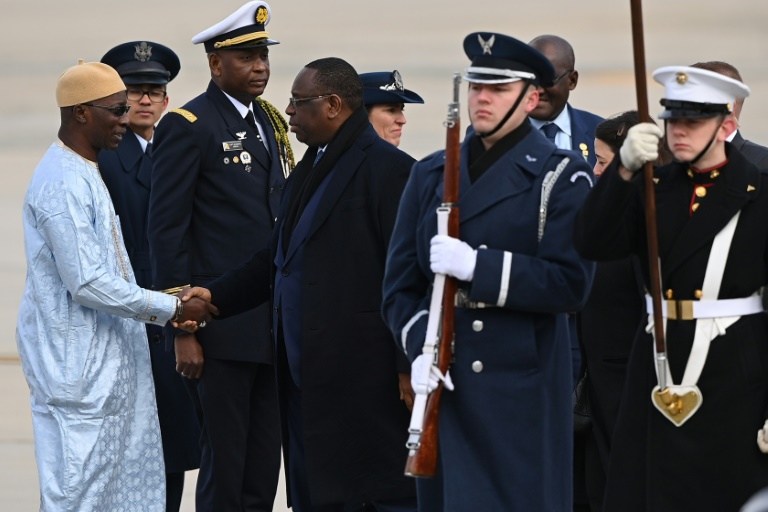
The United States on Tuesday rolled out the red carpet to leaders from across Africa as it started unveiling $55 billion in support as part of a renewed bid to win back influence on the continent.

Nearly 50 heads of state or government have descended on Washington in the midst of a pre-Christmas cold snap for three days of courtship by President Joe Biden after years of inroads in the continent by China and Russia. 

Biden plans to unveil $55 billion for Africa over three years. In one of the first announcements, the White House said the United States would invest $4 billion by the 2025 fiscal year to train African health workers, a rising priority for Washington since the Covid-19 pandemic.

The summit’s first day also brought in NASA, with Nigeria and Rwanda becoming the first African nations to sign the Artemis accords, a US-led bid for international cooperation on traveling to the Moon, Mars and beyond.

The Artemis accords, which already include European allies, Japan and several Latin American powers, come as China rapidly expands its own lunar program and as tensions with Russia threaten its post-Cold War work with the United States on space.

The summit will also address the immediate security concerns of Africa. US leaders met Tuesday with Somali President Hassan Sheikh Mohamud, voicing guarded hope at progress in the turbulent country.

The United States “is fortunate to partner with Somalia’s courageous armed forces and will continue to support your government’s effort,” Defense Secretary Lloyd Austin told him.

The Biden administration has identified China as its top global competitor but hopes to show a subtle contrast from Beijing during the summit rather than hammering home criticism.

“This is going to be about what we can offer. It’s going to be a positive proposition about the United States, its partnership with Africa,” Biden’s national security advisor, Jake Sullivan, told reporters Monday.

“We are bringing the resources to the table in significant numbers,” he added.

Welcoming African entrepreneurs for a reception Monday evening, Secretary of State Antony Blinken said the United States was guided by the principle of partnership.

“We can’t solve any of the really big challenges we face if we don’t work together. So it’s about what we can do with African nations and people, not for them,” Blinken said.

– Push on democracy –

Biden during the summit will outline US support for the African Union to gain a formal berth in the Group of 20 club of major economies, months after he threw support behind a permanent African seat on the UN Security Council.

Unlike China, which holds summits every three years with Africa, the United States plans to promote democratic values.

Sullivan said Biden will meet with African leaders facing election in 2023.

“We would like to do everything we can to support those elections being free, fair and credible,” Sullivan said.

Successive US presidents have pursued signature initiatives for Africa, with George W. Bush launching a major push to fight HIV/AIDS that he considers among his top legacies and Barack Obama spearheading a drive to bring electricity, which US officials say has brought power for the first time to 165 million people.

Obama’s successor Donald Trump, by contrast, made no secret of his lack of interest in Africa, and Biden’s summit with the region’s leaders will be the first by a US president since Obama’s landmark first edition in 2014. 

In the eight ensuing years, China’s investment in Africa has consistently outpaced that of the United States, with countries brushing aside US warnings that Beijing’s billions in infrastructure spending could put them in long-term arrears.

Ahead of the summit, China’s ambassador to Washington, Qin Gang, said that his country was “sincere” in Africa” and that its investment “is not a trap.” 

“We believe that Africa should be a place for international cooperation, not for major powers’ competition for geopolitical gains,” he told an event of the news site Semafor.

“We welcome all other members of the international community, including the United States, to join us in the global efforts to help Africa.” 

Close Bitnami banner
Bitnami