US Business

'Love is love': Biden signs same-sex marriage protections into law

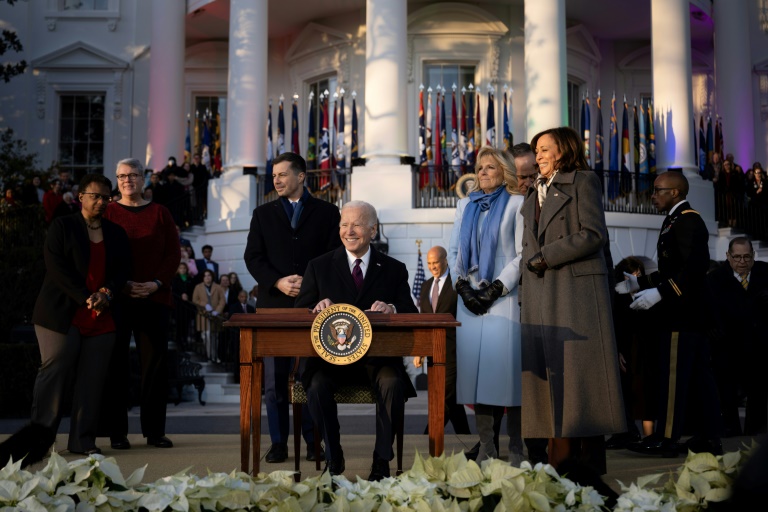
US President Joe Biden on Tuesday signed into law a bill granting federal protections to same-sex marriage, with a large crowd of guests gathered at the White House to celebrate the legislative milestone.

Biden — who as vice president took a public stand in favor of same-sex unions well before they became legal throughout the United States in a 2015 Supreme Court decision — touted the landmark law as a rights victory.  

“America takes a vital step toward equality, for liberty and justice, not just for some, but for everyone,” he said during the signing ceremony Tuesday afternoon.

“Love is love. Right is right. Justice is justice,” he said.

After the US Supreme Court — now significantly more conservative — overturned longstanding abortion rights last June, lawmakers from the left and right came together to prevent any subsequent move to curb same-sex marriage rights.

The legislation’s final adoption by Congress last week marked a rare show of bipartisanship in deeply divided Washington.

In celebration, Biden gathered with a group of Republican and Democratic lawmakers on the White House grounds, along with advocates and plaintiffs in marriage equality cases across the country, as Lady Gaga’s “Born This Way” roared from the speakers.

Tammy Baldwin, the first openly gay US senator, said she was “overcome with joy” at the signing of the law, which she helped draft in Congress.

“Today, we are making history and making a difference for millions of Americans,” she said in a statement.

– Growing support –

The legislation, White House spokesperson Karine Jean-Pierre said Monday, “will give peace of mind to millions of LGBTQI+ and interracial couples who will finally be guaranteed the rights and protections to which they and their children are entitled.”

Jean-Pierre herself made history as the first openly gay White House press secretary.

Hundreds of thousands of same-sex couples have married since the Supreme Court’s 2015 decision legalizing the unions throughout the United States.

Public acceptance has grown dramatically in recent decades, with polls now showing a strong majority of Americans supporting same-sex marriage.

Some conservatives and the religious right remain opposed.

The new Respect for Marriage Act does not mandate states to legalize same-sex marriage but does require them to recognize a marriage so long as it was valid in the state where it was performed.

It repeals previous legislation defining marriage as a union between a man and a woman, and also protects interracial couples by requiring states to recognize legal marriages without regard to “sex, race, ethnicity or national origin.”

In the House of Representatives, 39 Republicans joined a united Democratic majority in supporting the bill, while 169 Republicans voted against. It was previously adopted in the evenly split Senate by 61 votes to 36.

– True colors –

Jean-Pierre said Monday that Biden believes “there is much more work to be done to protect LGBTQI+ individuals across the country.”

She recalled that the 80-year-old Democrat was among the first American political leaders to publicly support same-sex unions at the highest levels of government.

Back in 2012, Biden caused a stir by candidly declaring his support for same-sex unions — when Barack Obama’s White House was still looking for the best way to make the president’s position official as he sought reelection to a second term.

Following his own presidential election in 2020, Biden tapped Pete Buttigieg to become his transport secretary — the first openly gay person to be confirmed by the Senate to a cabinet post.

Beyond marriage, the Biden administration has taken a strong stance in support of LGBTQ rights — notably towards the transgender community whose push for greater rights has become a US political flashpoint.

The administration has introduced gender-neutral passports — allowing people who identify neither as male nor female to select the gender “X” — and it lifted a ban on transgender people serving in the military, introduced under Biden’s predecessor Donald Trump.

Pop icon and LGBTQ rights advocate Cyndi Lauper, who sang at Tuesday’s White House ceremony, said she was pleased that the concerns of so many American families have been eased with the new law.

“We can rest easy tonight because our families are validated and because now we’re allowed to love who we love,” she said.


US plans to send Patriot missiles to Ukraine: media

The Pentagon is finalizing plans to send Patriot missile batteries that can shoot down incoming missiles to Ukraine, US media reported Tuesday.

As Russia has ramped up missile strikes on key Ukrainian infrastructure, the administration of President Joe Biden could announce the deployment as early as this week, US officials told The New York Times and CNN.  

Ukraine’s air defenses have played a key role during Russia’s invasion, but with Moscow stepping up strikes on energy infrastructure as it faces growing losses on the ground, Kyiv has repeatedly pressed other countries — especially the United States — for the Patriot system.

The US Army describes Patriot — which consists of multiple parts including a radar, a control station, power generating equipment and up to eight launchers — as its “most advanced air defense system.”

While dozens of personnel are assigned to a battery, only three are required to operate it in combat.

The US Army’s first Patriot battalion was activated in 1982, but the system was not used in combat until 1991 during Operation Desert Storm, the international air and ground offensive against Iraqi forces who had invaded Kuwait.

Patriot has intercepted more than 150 ballistic missiles in combat since 2015, and has also undergone more than 3,000 ground and 1,400 flight tests, primary contractor Raytheon says.

When Russia invaded in February, Ukraine’s air defenses largely consisted of Soviet-era planes and missile systems, which Kyiv used effectively to deny Moscow air superiority.

They have since been significantly augmented: the United States provided NASAMS and Germany offered IRIS-T — two advanced systems — while older equipment such as the S-300 and HAWK systems and Stinger missiles have also been donated.

Youth of African diaspora consider climate solutions at US summit

A group of young Black Americans and their peers from African countries on Tuesday highlighted their common anxieties over climate change, shared as members of the global African diaspora. 

They were gathered at the African and Diaspora Young Leaders Forum in Washington, held on the sidelines of the Biden administration’s US-Africa Leaders Summit, in which some 50 leaders from the continent are participating this week. 

Michael Regan, the first Black American head of the US Environmental Protection Agency, called on the people in attendance to throw themselves into humanity’s fight against a warming world. 

“Young people have always been at the forefront of movements to change, and the environmental movement is absolutely no exception,” he said. 

“Your generation is leading the charge and fighting to secure a healthier, more just tomorrow.”

For activist Wafa May Elamin, society must “allow young people to really take charge” to tackle the “massive” climate challenges ahead. 

Elamin, a 30-year-old Sudanese-American, said she had been waiting for such an event for “a really long time” — the most recent iteration of this summit was organized eight years ago, during Barack Obama’s presidency. 

Other attendees of Tuesday’s meeting, which was organized by the National Museum of African American History and Culture, included Vice President Kamala Harris, the first Black, South Asian and female US vice president, and Ghanaian President Nana Akufo-Addo.

– ‘Guardians of our planet’ –

Speaking at the convention, actress and activist Sabrina Elba — a United Nations goodwill ambassador for the International Fund for Agricultural Development — said the environmental conservation of the immense African continent is especially close to the hearts of people whose ancestors came from Africa.

Elba recalled how her mother, who immigrated from Somalia to Canada, instilled in her a remembrance of their ancestral home: “As early as I can remember, she would say ‘give back, give back, give back, give back to the continent, so we can go back.'”

It was this relationship to Africa that inspired Elba — whose husband, the British actor Idris Elba, also spoke Tuesday — to get involved with the UN.

“It only took one visit back home to see a drought or famine or people really being affected by an issue that they have very little output towards,” she said. 

For her, the priority is to support the people living in areas in need of preservation.

“These people are the custodians of our planet,” she said.

– ‘Not a monolith’ –

But according to Elamin, funding for the fight against climate change is not distributed fairly. 

Regan acknowledged the unequal realities of working for a better planet.

“Countries should be required, in some way, shape or fashion, to ensure certain resources absolutely reach those who have been disproportionately impacted,” the EPA director said.

Jamaji Nwanaji-Enwerem, a doctor and assistant public health professor of environmental health at Emory University in Atlanta, was among those in attendance.

“African is not a monolith,” the 32-year-old said.

“So being able to just hear the stories and hear about other people’s experiences goes a long way in helping to develop solutions that are meaningful for all of us,” she explained. 

As the attendees discussed such possible solutions, Regan announced the United States would allocate $4 million for Peace Corps volunteers to work on projects combatting climate change in 24 Sub-Saharan African countries. 

“Are we doing enough? No. Should we be doing more? Yes, but in a democracy, it’s slow,” he said. 

United Airlines announces huge Boeing 787 order

United Airlines on Tuesday unveiled an order of 100 new Boeing 787 Dreamliners, with options for an additional 100 jets, as the company banks on rebounding demand for international travel following a years-long pandemic slowdown.

The huge order, the largest by an American carrier for this class of aircraft, marks a victory for Boeing after 346 people died in two major 737 MAX crashes that grounded the jet globally for more than a year and a half.

Boeing has targeted mid-decade to return to its pre-pandemic financial health after the 737 MAX scandal and other woes.

United Chief Executive Scott Kirby, who also announced a giant Boeing and Airbus order in June 2021 ahead of rivals, predicted the airline’s ambitious 787 plan would pay off for the carrier during a capacity-constrained period.

“United is really uniquely positioned to grow in a way that’s going to be a huge challenge for others,” Kirby told reporters.

Speaking at a signing ceremony, Kirby said that Boeing remained a vital company for the United States and that the order was a vote of confidence that the company had turned the corner after a difficult period.

“As much as anything, I trust you and I trust your company,” Kirby told a crowd of Boeing employees, most donning blue Boeing t-shirts.

United expects the jets to be delivered between 2024 and 2032, with the new aircraft targeted to replace the 767 fleet that will be removed from service by 2030. 

The Dreamliner saves 25 percent of the carbon emission compared with the jets being retired.

United executives did not offer an estimate of the total potential cost of the contracts, but projected that capital spending would rise to $9 billion in 2023 and $11 billion in 2024.

United said it also exercised options for an additional 44 737 MAX planes between 2024 and 2026, and ordered 56 more MAX jets for 2027 and 2028.

Stan Deal, head of Boeing’s commercial aviation division, said the United 787 contract supports some 120,000 jobs at the company and throughout its supply chain.

“It builds security around the rate,” Deal said of the United contract.

Boeing plans to lift 787 output from a monthly rate of low single digits now to 10 in the 2025 timeframe.

– Production ramp-up –

After the 737 MAX, the 787 Dreamliner — which flies transatlantic journeys and other international itineraries — has been Boeing’s other leading source of orders and deliveries.

United officials said beefing up the fleet of 787s made sense at a time when the carrier already flies the jet, making it an easy transition for pilots and helping the company add capacity quickly.

But United officials praised the A350, the rival wide-body offering from European aerospace giant Airbus, and said they still plan to take delivery of 45 of the Airbus jets from 2030.

For Boeing, the United order signals a victory for the 787, for which production was slowed to a trickle while the company halted deliveries of new jets for more than a year while addressing production problems.

Boeing resumed 787 deliveries in August after getting the green light from the Federal Aviation Administration, which has heavily scrutinized Boeing processes in the aftermath of the 737 MAX crisis.

“This is an opportunity for Boeing to ramp up at Charleston, perhaps with two production shifts,” said Michel Merluzeau, director of aerospace and defense analysis at AIR consultancy.

At the Charleston, South Carolina factory, Boeing fabricates composite materials that are then used to construct part of the fuselage at the plant. The facility also does final assembly of the jets, which includes major body parts built in other locales around the world.

In October 2020, Boeing consolidated assembly of the 787 to Charleston, after previously also assembling the wide-body jet in Washington state.

Boeing currently employs about 5,000 in South Carolina, down from peak levels. Deal expects “gradual” growth of the workforce at the factory, but did not project specifics. 

At its investor day in November, Boeing officials outlined a plan to restore 787 production to 10 passenger jets per month.

Shares of Boeing gained 0.5 percent to $187.13 Tuesday, while United rose briefly before dropping nearly 7 percent to $41.17.

United’s decline came as rivals such as American and Delta also tumbled after JetBlue said in a securities filing that it expects fourth-quarter revenues per available seat mile to be on the low end of its forecast due to weaker than expected demand in December.

United’s Kirby said he continues to see strong demand, but that the carrier is planning for a “mild recession” in 2023, citing Federal Reserve policies to slow the economy.

United Airlines announces huge Boeing 787 order

United Airlines on Tuesday unveiled an order of 100 new Boeing 787 Dreamliners, with options for an additional 100 jets, as the company banks on rebounding demand for international travel following a years-long pandemic slowdown.

The huge order, the largest by an American carrier for this class of aircraft, marks a victory for Boeing after 346 people died in two major 737 MAX crashes that grounded the jet globally for more than a year and a half.

Boeing has targeted mid-decade to return to its pre-pandemic financial health after the 737 MAX scandal and other woes.

United Chief Executive Scott Kirby, who also announced a giant Boeing and Airbus order in June 2021 ahead of rivals, predicted the airline’s ambitious 787 plan would pay off for the carrier during a capacity-constrained period.

“United is really uniquely positioned to grow in a way that’s going to be a huge challenge for others,” Kirby told reporters.

Speaking at a signing ceremony, Kirby said that Boeing remained a vital company for the United States and that the order was a vote of confidence that the company had turned the corner after a difficult period.

“As much as anything, I trust you and I trust your company,” Kirby told a crowd of Boeing employees, most donning blue Boeing t-shirts.

United expects the jets to be delivered between 2024 and 2032, with the new aircraft targeted to replace the 767 fleet that will be removed from service by 2030. 

The Dreamliner saves 25 percent of the carbon emission compared with the jets being retired.

United executives did not offer an estimate of the total potential cost of the contracts, but projected that capital spending would rise to $9 billion in 2023 and $11 billion in 2024.

United said it also exercised options for an additional 44 737 MAX planes between 2024 and 2026, and ordered 56 more MAX jets for 2027 and 2028.

Stan Deal, head of Boeing’s commercial aviation division, said the United 787 contract supports some 120,000 jobs at the company and throughout its supply chain.

“It builds security around the rate,” Deal said of the United contract.

Boeing plans to lift 787 output from a monthly rate of low single digits now to 10 in the 2025 timeframe.

– Production ramp-up –

After the 737 MAX, the 787 Dreamliner — which flies transatlantic journeys and other international itineraries — has been Boeing’s other leading source of orders and deliveries.

United officials said beefing up the fleet of 787s made sense at a time when the carrier already flies the jet, making it an easy transition for pilots and helping the company add capacity quickly.

But United officials praised the A350, the rival wide-body offering from European aerospace giant Airbus, and said they still plan to take delivery of 45 of the Airbus jets from 2030.

For Boeing, the United order signals a victory for the 787, for which production was slowed to a trickle while the company halted deliveries of new jets for more than a year while addressing production problems.

Boeing resumed 787 deliveries in August after getting the green light from the Federal Aviation Administration, which has heavily scrutinized Boeing processes in the aftermath of the 737 MAX crisis.

“This is an opportunity for Boeing to ramp up at Charleston, perhaps with two production shifts,” said Michel Merluzeau, director of aerospace and defense analysis at AIR consultancy.

At the Charleston, South Carolina factory, Boeing fabricates composite materials that are then used to construct part of the fuselage at the plant. The facility also does final assembly of the jets, which includes major body parts built in other locales around the world.

In October 2020, Boeing consolidated assembly of the 787 to Charleston, after previously also assembling the wide-body jet in Washington state.

Boeing currently employs about 5,000 in South Carolina, down from peak levels. Deal expects “gradual” growth of the workforce at the factory, but did not project specifics. 

At its investor day in November, Boeing officials outlined a plan to restore 787 production to 10 passenger jets per month.

Shares of Boeing gained 0.5 percent to $187.13 Tuesday, while United rose briefly before dropping nearly 7 percent to $41.17.

United’s decline came as rivals such as American and Delta also tumbled after JetBlue said in a securities filing that it expects fourth-quarter revenues per available seat mile to be on the low end of its forecast due to weaker than expected demand in December.

United’s Kirby said he continues to see strong demand, but that the carrier is planning for a “mild recession” in 2023, citing Federal Reserve policies to slow the economy.

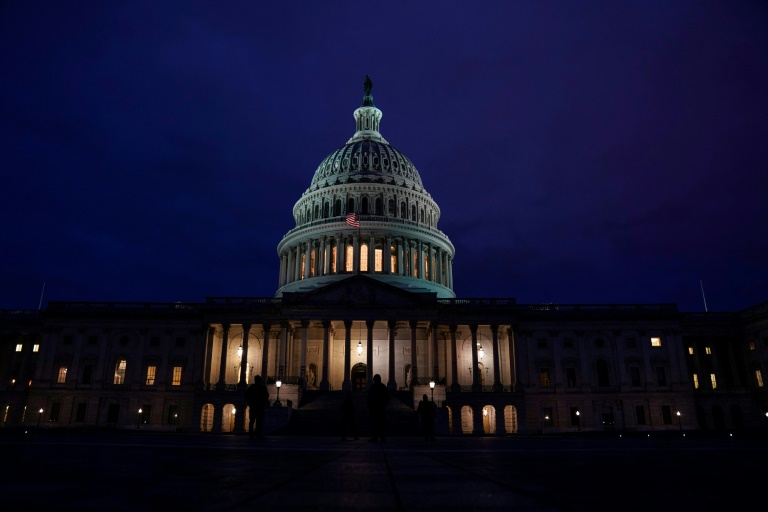
US Capitol probe panel to release final report on Dec 21

The House panel investigating the attack on the US Capitol by supporters of former president Donald Trump will hold its final meeting on December 19 and release its report two days later, the committee chairman said Tuesday.

Bennie Thompson, a lawmaker from Mississippi, told reporters the committee will vote at the meeting on whether to refer any individuals to the Justice Department for potential criminal charges.

The panel cannot itself file charges but can make recommendations to the Justice Department, which has appointed a special counsel to look into Trump’s role in the January 6, 2021 assault on Congress and his efforts to overturn the 2020 presidential election won by Democrat Joe Biden.

Among the potential charges believed to be under consideration are obstruction of an official proceeding, conspiracy to defraud the United States, perjury and witness tampering. 

Trump, who has announced plans to run for president again in 2024, was subpoenaed by the House committee but has declined to testify.

The panel has interviewed dozens of witnesses and held several public hearings.

Hundreds of people have been arrested for involvement in the assault on the Capitol, and two members of a far-right militia, the Oath Keepers, were convicted of sedition in the most high-profile case yet stemming from the attack.

Trump was impeached by the Democratic-majority House of Representatives for “incitement of insurrection” after the January 6 attack on the Capitol, but was acquitted by the Senate.

US Congress scrambles to avoid government shutdown

Negotiations to ward off a US government shutdown went into overdrive Tuesday, with lawmakers struggling to craft a temporary budget bill that needs approval by Friday to avoid paralysis of federal services.

Democrats unveiled a text which would extend federal spending at current levels until December 23. It could be voted on in the House of Representatives as early as Wednesday.

There is growing urgency, since members of Congress have until midnight Friday to adopt a new budget, otherwise all funding for federal services will be cut and operations across swathes of the government will screech to a halt.

Departments and other federal buildings but also national parks, some museums and a multitude of organizations would be impacted, forcing the furlough of hundreds of thousands of federal workers. 

A winter 2018-2019 shutdown, the longest in US history, even affected baggage screening at airports. 

Despite strong partisan divisions, most elected officials on both sides do not want a shutdown, which risks creating chaos before the holidays.

The two parties are currently unable to agree on a final budget for the fiscal year 2023. 

“While we are close to a final agreement to create American jobs, help working families with the cost of living, and protect our national security, we need additional time,” said the leading Democrat in the talks, congresswoman Rosa DeLauro. 

The temporary budget bill would give Congress another week to reach a compromise.

Growth downgrade for China 'very likely' on Covid surge: IMF chief

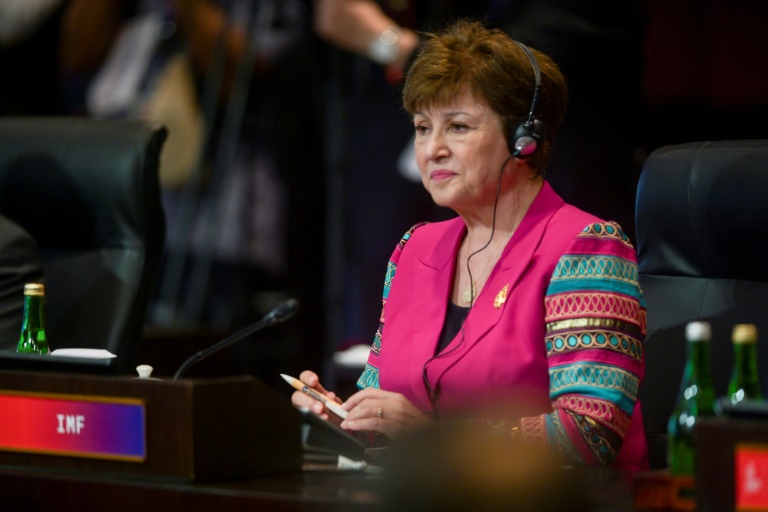
A lower growth forecast is “very likely” for China this year and next, with easing Covid-19 restrictions expected to bring a surge in infections and temporary difficulties, IMF chief Kristalina Georgieva told AFP Tuesday.

Her comments on the sidelines of a panel about a newly-created IMF fund come as the world’s second biggest economy grapples with soaring coronavirus cases, as it loosens virus controls after nearly three years.

While China’s zero-Covid policy has battered its economy, “the easing of restrictions is going to create some difficulties over the next months” as well, Georgieva said.

This is because a spike in infections will be inevitable, with more people temporarily unable to participate in the labor force.

“But it is likely that as China overcomes this in the second half of the year, there could be some improvement in growth prospects,” she said.

The zero-Covid policy, characterized by snap lockdowns, international travel restrictions and mass testing, took a heavy toll on consumers and businesses, with demonstrations against the measures eventually erupting in major Chinese cities.

The IMF earlier warned that tough virus restrictions have been especially hard on China’s residents.

Chinese officials said Monday that Covid cases are surging in Beijing, with a sharp spike in people visiting hospitals across the capital city. Rising infections in smaller cities were also discussed on social media.

The fund cut its growth projection for China in October to 3.2 percent this year — the lowest in decades — while expecting growth to rise to 4.4 percent next year.

But “very likely, we will be downgrading our growth projections for China, both for 2022 and for 2023,” Georgieva said.

– Adjusting policy –

For now, the country has to adjust its Covid policy, such as by being more targeted with restrictions and boosting vaccinations, especially to elderly populations. There is also a need to use more antiviral treatments, Georgieva added.

“In other words, retool the health system towards treating people rather than isolating, which has been the case for the last years,” she said.

Global economic leaders last week hailed China’s move away from its hardline virus strategy, with hopes that relaxation would also help to shore up a world economy struggling with fallout from the pandemic and Russia’s invasion of Ukraine.

With 2023 set to be a “very difficult year” as well, Georgieva reiterated that the likelihood of further downgrades in IMF growth projections will be “high.”

Apart from challenges in China, the US and European Union are also expected to slow simultaneously, with projections for half of the European Union to be in recession next year, she said.

While Washington-based fund earlier said there was a one-in-four chance global growth would fall below two percent next year, Georgieva added Tuesday that this probability has gone up.

EU energy ministers push gas price talks into next week

EU ministers meeting in Brussels on Tuesday narrowed differences over a proposed cap on natural gas prices, but kicked talks on the issue into next week to finalise “technical” details.

They did agree two other measures to mitigate Europe’s energy crunch, on joint gas purchases and speeding up authorisations for renewable energy installations, but their adoption was contingent on the price cap being settled.

“I was hoping to open a Champagne today to celebrate the agreement. But apparently, we still need to keep the bottles in the fridge for a while,” said Czech Industry Minister Jozef Sikela, who chaired the meeting under his country’s EU presidency.

He told journalists, “Our aim is to approve all three items in a package on Monday,” when energy ministers next meet.

The issue is urgent because Europe has entered a bitingly cold winter with fewer energy options because Russia has reduced gas supplies in retaliation for EU sanctions imposed over its war in Ukraine.

Gas prices are high, albeit lower than during the middle of the year, spurring worries that European homes and businesses could face blackouts or unpayable bills, if not this winter then next.

Sikela indicated the initial gas price-cap proposal, drawn up by the European Commission, would be modified to bridge a division between the bloc’s member states.

Several EU countries, including France, Poland and Spain, criticised the commission proposal as being designed so  the price cap could never be triggered.

The commission had suggested a price ceiling of 275 euros per megawatt hour, but only if the price remains above that level for at least two weeks, and then only if the price for liquified natural gas (LNG) goes above 58 euros for 10 days within that same two-week period.

Other EU countries including Germany, the Netherlands and Austria, viewed a too-rigid a price cap as a threat to supplies, carrying a risk that deliveries could be diverted from Europe to more lucrative markets in Asia.

Sikela said the price cap was “extremely sensitive” and had exposed a “fragile balance” in the European Union.

“Some of the countries believe that if we are wrong with the mechanism, it can basically cause like a much bigger problem that we want to prevent,” he said.

Some of those in favour of a viable price cap stressed the need for swift agreement.

“The time for consultation has run out,” the Italian minister for European affairs, Raffaele Fitto, said as he went into the meeting.

“European citizens are in agony, European businesses are closing…. All of us must heed to our responsibilities and agree without delay on the market correction mechanism and energy solidarity.”

EU leaders holding a summit in Brussels on Thursday had the option of taking up the issue themselves, but Sikela said that so far “nobody asked for it”.

He added: “We simply agreed that we will deal with the topic and we will finish the topic on Monday.”

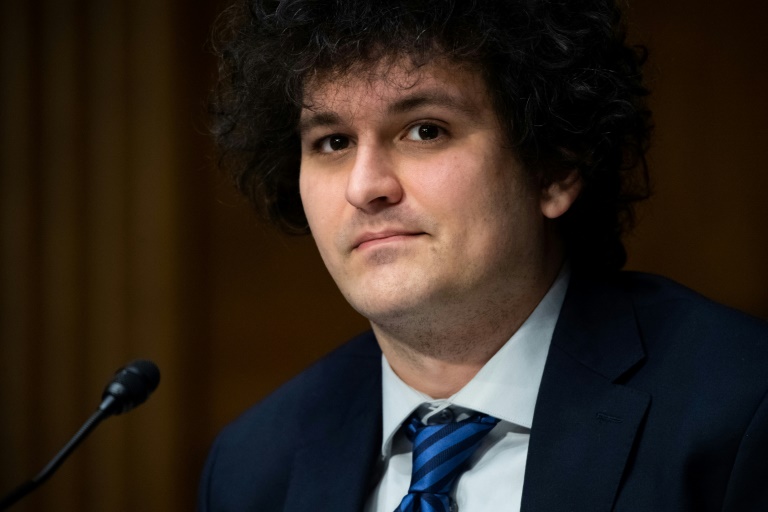
Sam Bankman-Fried: crypto rock star facing life in jail

Sam Bankman-Fried has had a dizzying fall from top of the heap in the world of cryptocurrencies to staring down a hefty jail sentence on a raft of fraud charges.

The 30-year-old billionaire founder of the FTX crypto exchange once partnered with celebrities and rubbed shoulders with politicians as he tried to legitimize cryptocurrency as more than just a shady get-rich-quick scheme.

However, his company, valued at $32 billion earlier this year, suddenly imploded in November after filing for bankruptcy protection, inviting scrutiny from regulators, prosecutors and furious clients. 

To authorities, it was a rotten, billion-dollar house of cards that had come crashing down.

Bankman-Fried is a vegan who reportedly sleeps four hours a night, and usually dresses in a hoodie and dark T-shirt. He has said he maintains a spartan lifestyle, and has donated millions of dollars to causes such as animal welfare, reducing global warming, and combating neglected tropical diseases.

His personal fortune was once at nearly $25 billion, according to Forbes magazine. 

– Prestigious partnerships –

The son of Stanford Law School professors and a graduate of the elite Massachusetts Institute of Technology (MIT), Bankman-Fried worked as a broker on Wall Street before turning to cryptocurrencies in 2017. 

He created a cryptocurrency investment fund, Alameda Research, moved to Hong Kong and then launched FTX.

Bankman-Fried, known on social media as SBF, was a vocal advocate for smoother access to the crypto market for the general public, particularly in the United States. 

The success of FTX enabled the platform to forge prestigious partnerships, including with the newly retired American football legend Tom Brady and his wife, the Brazilian ex-model Gisele Bundchen. 

Bankman-Fried moved the company to the Bahamas, where taxes are almost nonexistent, saying the Caribbean nation is one of the few countries that has a comprehensive licensing regime for cryptocurrencies.

As his star rose, Fortune magazine wondered if he would be the new Warren Buffet.

However, things quickly went sour.

– Fall from grace – 

FTX’s implosion was swift following a November 2 report on the cryptocurrency news site CoinDesk on ties between FTX and Alameda.

The report exposed that Alameda’s balance sheet was heavily built on the FTT currency — a token created by FTX and with no independent value. 

The price of FTT plunged in early November, roiling both Alameda and FTX, where Alameda had large trading positions.

Reeling from customer withdrawals and short some $8 billion, FTX and some 100 related entities filed for bankruptcy protection on November 11.

Among the revelations, FTX propped up Alameda with billions of dollars in customer funds that are now likely lost forever. 

Questions also linger over whether Bankman-Fried engaged in market manipulation, or illegally provided inside information to Alameda.

Despite the questions hanging over his company’s activities, Bankman-Fried defied legal advice and kept appearing on talk shows and conference panels, offering his version of his company’s sudden failure, usually by video link from the Bahamas.

Then came his arrest on Monday in the idyllic archipelago, at the request of the United States, and charges of money laundering, wire fraud, and violating campaign finance laws.

The US Securities and Exchange Commission said the onetime crypto wunderkind was “responsible for fraudulently raising billions of dollars from investors in FTX and misusing funds belonging to FTX’s trading customers.”

Bankman-Fried has acknowledged poor corporate controls and mistakes, however, denies any criminal wrongdoing.

“I didn’t ever try to commit fraud on anyone,” Bankman-Fried told a New York Times conference on November 30. “Clearly I made a lot of mistakes or things I would be able to give anything to be able to do over again.”

Instead of boosting investor confidence in cryptocurrency, Bankman-Fried’s downfall sent major cryptocurrencies plunging, only raising further doubt over the young and turbulent sector.

Close Bitnami banner
Bitnami