US Business

Asian markets mixed with focus on US inflation data, Fed meeting

Asian markets were mixed Friday as optimism about China’s economic reopening continues to face off against concerns about rising interest rates and a possible recession.

With few Thursday catalysts to work with, traders were setting their sights on the release of two key US inflation reports — on Friday and Monday — and the Federal Reserve’s final policy meeting of the year.

In light of data signalling almost a year of interest rate hikes was beginning to impact prices, the US central bank is widely expected to announce a 50 basis point lift at the gathering, compared with the previous four straight 75-point increases.

But there remains some concern that the world’s top economy remains resilient and the jobs market too strong, meaning the Fed might have to keep tightening monetary policy longer than had been hoped.

That uncertainty has weighed on US markets, which have endured a tough December so far, and analysts warned of further pain.

“We think the worst is yet to come,” Gary Schlossberg, at Wells Fargo Investment Institute, told Bloomberg Television.

“We’re looking for a moderate recession next year, which means a moderate decline in corporate profits is our target for the year.”

The mood was slightly better in Asia, particularly Hong Kong, where investor sentiment has been buoyed by China’s decision to shift away from its nearly three-year zero-Covid strategy of lockdowns and mass testing that has battered the economy.

After widespread protests across the country, leaders have decided to loosen their grip, fanning excitement that growth will pick up as activity returns to normal.

A pledge to help the embattled property sector, which accounts for a huge part of the economy, was also providing a lift.

“The process will likely be gradual and bumpy over the year ahead, due to low immunisation of the population and unpreparedness of the health system to deal with a possible further surge in cases,” Silvia Dall’Angelo, at Federated Hermes, said in a note.

“Reopening should gain traction in the second half of next year. At that stage, the Chinese recovery will likely accelerate, as the removal of restrictions will allow fiscal and monetary stimulus to be effective.”

And JPMorgan strategist Marko Kolanovic added that he “remains positive on China, due to favorable monetary conditions as well as an eventual full reopening and end of Covid”.

Hong Kong rose in early trade, along with Tokyo, Sydney, Seoul, Singapore and Taipei, though Shanghai, Wellington, Manila and Jakarta edged down.

Oil prices rose after another big drop, with both main contracts down more than 10 percent this week as expectations for a recession in the United States and elsewhere weighed on demand expectations.

– Key figures around 0230 GMT –

Tokyo – Nikkei 225: UP 1.4 percent at 27,946.21 (break)

Hong Kong – Hang Seng Index: UP 0.3 percent at 19,498.04

Shanghai – Composite: DOWN 0.2 percent at 3,189.58

Euro/dollar: UP at $1.0570 from $1.0560 on Thursday

Dollar/yen: DOWN at 136.29 yen from 136.61 yen

Pound/dollar: UP at $1.2255 from $1.2239

Euro/pound: DOWN at 86.22 pence from 86.24 pence

West Texas Intermediate: UP 1.0 percent at $72.16 per barrel

Brent North Sea crude: UP 0.9 percent at $76.82 per barrel
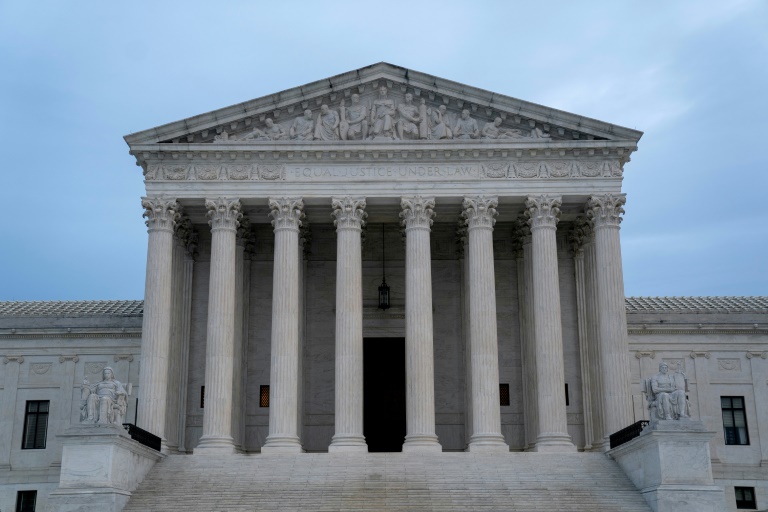
Private prayers: US pastor describes Supreme Court influence effort

A former activist from the US religious right told Congress Thursday how he took advantage of the US Supreme Court’s lack of a code of ethics to conduct an intense lobbying campaign aimed at its conservative judges.

Pastor Robert Schenck, 64, detailed his efforts — which included prayers, dinners and trips — during a hearing of the House Judiciary Committee focused on the ethics rules, or lack thereof, for Supreme Court justices. 

Unlike their colleagues in federal courts, or elected members of Congress, the nine Supreme Court justices do not have to disclose gifts given to them nor any meetings with lobbyists, and are not legally required to recuse themselves in the event of a conflict of interest.

Pastor Schenck said he took advantage of this vacuum to run a 20-year influence campaign called “Operation Higher Court.”

The stealth campaign “involved my recruitment of wealthy donors, as stealth missionaries, who befriended justices that shared our conservative social and religious sensibilities,” Schenk said, mentioning conservative Justices Samuel Alito and the late Antonin Scalia by name. 

The aim was “to shore up their resolve to render solid, unapologetic opinions, particularly against abortion.”

Some of his “stealth missionaries” prayed with the judges, others invited them to dinner with their wives, even to their homes, and were invited back in turn by the justices, he said. 

Unlike Congress, where the dollar value of gifts are limited, “we knew that there was a great deal of liberty and latitude there…it made our operation…much easier,” Schenck said.

He alleged that in 2014, during one of these dinners, Alito “leaked” to a couple the content of an upcoming decision on contraception.

Schenck had written over the summer to the court’s chief justice about the Alito incident, but the letter was not reported by US media until late November.

Alito and the dinner attendees have all denied the charge. During the hearing, Republican lawmakers accused Schenck of lying.

He insisted that he discovered late in life that politics corrupts religion, and now wanted to tell “the truth.”

Alito was the author of the June ruling that overturned the US nationwide right to abortion.

In a highly uncommon occurrence, that decision was leaked before its publication, causing shockwaves across the country.

A bill has passed a House committee that would increase the transparency requirements for US Supreme Court justices, but it is not expected to advance before Republicans take over control of the House in January, when it will likely be thrown out.

Central America's biggest mine faces closure over tax spat

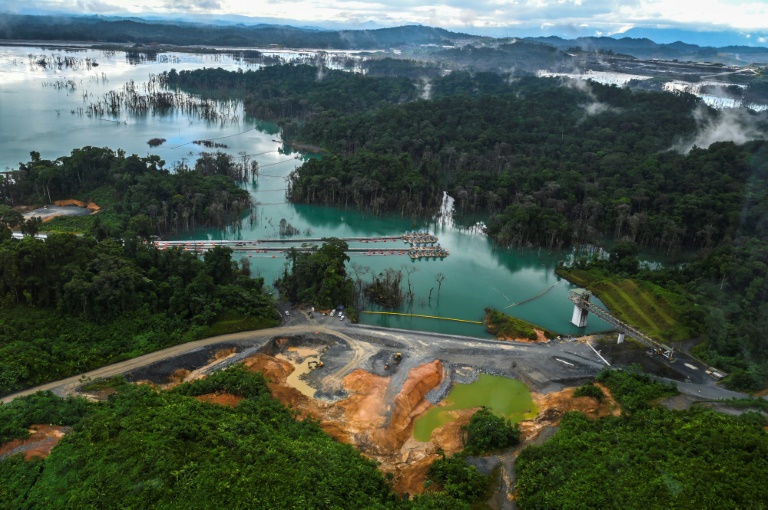
Rising up through the lush vegetation of Panama’s Caribbean coast, a 125-meter chimney serves as a beacon for helicopters approaching the largest mine in Central America, which faces closure next week over a contract dispute.

Gigantic 400-tonne trucks slowly wind around the stepped slopes of a massive gash in the earth one kilometer wide, the ochre and grey of the copper mine standing in stark contrast to the verdant jungle surrounding it.

The activity could grind to an expensive halt in a matter of days.

Canadian mining giant First Quantum Minerals has until next Wednesday to sign a new contract with the government, which is demanding the company multiply the taxes it pays by 10.

If the parties do not agree, the disagreement could halt the work of a mining project considered the largest private investment in Panama’s history, contributing four percent of the country’s GDP and 75 percent of export revenues.

“We have been given a deadline to sign the new contract by December 14, to accept the new terms,” First Quantum’s manager in Panama, Keith Green, who is Scottish, told AFP.

“We intend to reach an agreement, but negotiations are a bit deadlocked,” he added.

First Quantum, one of the largest copper miners in the world, began commercial copper production at the site in Donoso in 2019, through its subsidiary Minera Panama.

It has spent $10 billion on earthworks, construction buildings to house more than 7,000 employees, the purchase of heavy machinery, a power plant, a port for deep-draft merchant ships, access roads, and re-forestation plans.

– ‘Fair income’ –

President Laurentino Cortizo in January announced plans to toughen the conditions of the mining license, with a new contract that would oblige the mining company to pay “at least” $375 million to Panama annually — ten times what it is currently paying.

“Panama has the inalienable right to receive fair income from the extraction of its mineral resources, because the copper is Panamanian,” he said.

This mine is “the biggest in Central America,” producing 300,000 tons of copper concentrate per year, said Green.

The deposit, discovered in 1968, lies on the Caribbean coast, 240 kilometers by road from the capital Panama City.

The company, listed on the Toronto Stock Exchange, built the Punta Rincon International Port next to the mine to transport the copper by ship, due to a lack of roads connecting the Colon port, 40 kilometers (25 miles) away.

Despite the uncertainty over the mine’s future, activity has not slowed and the company has continued to invest in the site.

A new 200-tonne drilling rig — as tall as a three-story building — was inaugurated in a ceremony on Tuesday, causing heavy air traffic.

Helicopter pilot Oldemar Arauz explains that most officials visiting the mine prefer the one-hour air trip to the four-hour drive on a narrow road from the capital.

The drilling rig, made in the United States by the Swedish company Epiroc, cost $6 million, and was transported to the mine in 10 trucks. 

“Latin America has 200 of these drills, 50 in Chile and now three in Panama,” said Epiroc’s Latin America manager Hans Traub.

The drill was assembled by Chilean engineer Alex Gonzalez, who previously worked in Chuquicamata, the world’s largest open pit copper mine, situated in the Atacama desert, which has been operating since 1915.

Central America does not have the same mining tradition seen further south. Mining is illegal in Costa Rica and El Salvador, and while there is much potential for growth in Panama, the industry’s future is now hanging in the balance.

Japanese billionaire Maezawa announces crew of artists for lunar voyage

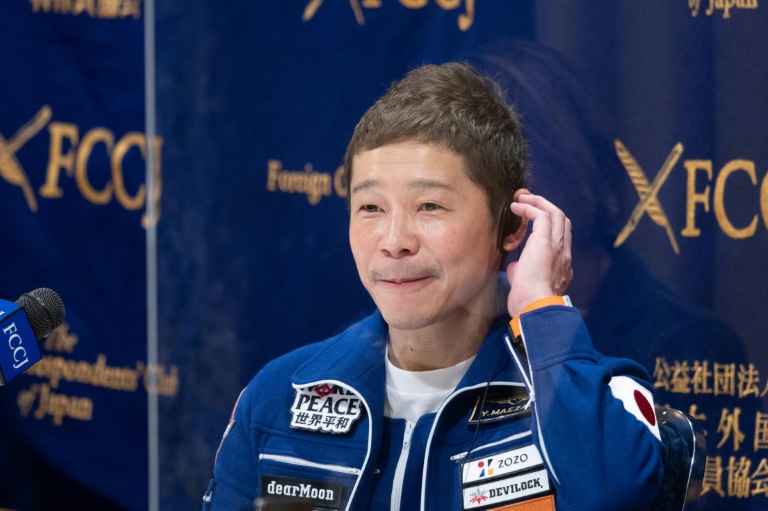
Japanese billionaire Yusaku Maezawa announced Thursday eight crew members who will join him for a journey around the Moon planned for 2023 on a SpaceX rocket that is still under development.

The mission, known as dearMoon, was first announced in 2018. Maezawa initially said he would invite a crew of six-to-eight artists, but later changed the entry requirements to a competition which applicants could apply for online.

The eight people chosen were DJ and producer Steve Aoki of the United States; Tim Dodd, an American YouTuber; Czech artist Yemi AD; Rhiannon Adam, an Irish photographer; British photographer Karim Iliya; American filmmaker Brendan Hall; and Indian actor Dev Joshi, and K-pop musician TOP of South Korea.

There were also two backup crew members: snowboarder Kaitlyn Farrington of the US and dancer Miyu of Japan.

“I hope each and every one will recognize the responsibility that comes with leaving the Earth, traveling to the Moon and back,” Maezawa said in an announcement video on YouTube.

“They will gain a lot from this experience, and I hope they will use that to contribute to the planet, to humanity.”

According to a mission profile graphic on the dearMoon website, the round trip would last almost six days and circumnavigate the Moon without landing.

When completed, SpaceX’s Starship will be the most powerful rocket ever built.

Although its upper stage has succeeded in test flights within the atmosphere and successfully landed, SpaceX has yet to carry out an orbital test flight — something founder Elon Musk has repeatedly promised will happen by the end of 2022.

Maezawa, the mega-rich founder of Japan’s largest online fashion mall, flew last year to the International Space Station aboard a Russian Soyuz rocket, paying a reported 10 billion yen ($73 million on current conversion rates).

Recession in US 'not inevitable': Yellen

A recession in the US is “not inevitable,” Treasury Secretary Janet Yellen said Thursday, adding that she believes the world’s biggest economy is on the right track in lowering inflation.

Her comments come on the heels of a forceful campaign by the US central bank to cool demand this year, walking a tightrope between lowering consumer costs while trying not to tip the economy into a downturn.

For now, many economists expect the US could experience a downturn next year.

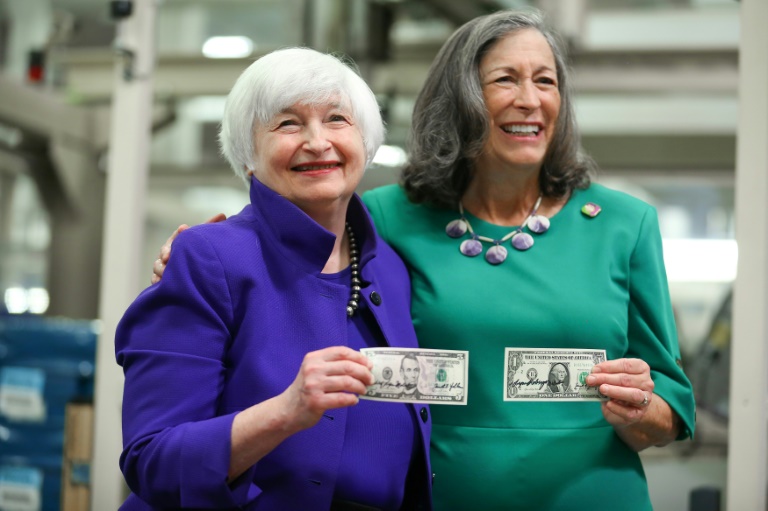
On “whether or not we can avoid a recession, I believe the answer is yes,” she told reporters during a visit to the Bureau of Engraving and Printing’s currency facility in Fort Worth, Texas.

Supply chain bottlenecks are starting to ease and new apartment rents have “essentially peaked,” with the labor market cooling slightly as well, Yellen said.

“Without seeing significant net nationwide layoffs, I believe we’re on the right track in terms of lowering inflation and a recession’s not inevitable,” she added.

As businesses tone down their growth expectations and hiring plans, the number of people leaving their jobs has also dipped a little, she said.

Last week, Federal Reserve Chair Jerome Powell added it remains “very plausible” for the US to reach a soft landing, referring to a scenario where unemployment rises but the economy avoids a severe recession.

On Thursday, Yellen said that the United States has been “listening very carefully” to allies and trying to understand their concerns on Washington’s push to spur climate-friendly technologies in America.

“I think the objective that Congress had was to make sure we have supply chains that are secure, and to try to include our allies in them,” she said.

Asked if she had plans to visit China following President Joe Biden’s meeting with his Chinese counterpart Xi Jinping, Yellen said she had no definite plans yet but was “certainly open to it.”

Recession in US 'not inevitable': Yellen

A recession in the US is “not inevitable,” Treasury Secretary Janet Yellen said Thursday, adding that she believes the world’s biggest economy is on the right track in lowering inflation.

Her comments come on the heels of a forceful campaign by the US central bank to cool demand this year, walking a tightrope between lowering consumer costs while trying not to tip the economy into a downturn.

For now, many economists expect the US could experience a downturn next year.

On “whether or not we can avoid a recession, I believe the answer is yes,” she told reporters during a visit to the Bureau of Engraving and Printing’s currency facility in Fort Worth, Texas.

Supply chain bottlenecks are starting to ease and new apartment rents have “essentially peaked,” with the labor market cooling slightly as well, Yellen said.

“Without seeing significant net nationwide layoffs, I believe we’re on the right track in terms of lowering inflation and a recession’s not inevitable,” she added.

As businesses tone down their growth expectations and hiring plans, the number of people leaving their jobs has also dipped a little, she said.

Last week, Federal Reserve Chair Jerome Powell added it remains “very plausible” for the US to reach a soft landing, referring to a scenario where unemployment rises but the economy avoids a severe recession.

On Thursday, Yellen said that the United States has been “listening very carefully” to allies and trying to understand their concerns on Washington’s push to spur climate-friendly technologies in America.

“I think the objective that Congress had was to make sure we have supply chains that are secure, and to try to include our allies in them,” she said.

Asked if she had plans to visit China following President Joe Biden’s meeting with his Chinese counterpart Xi Jinping, Yellen said she had no definite plans yet but was “certainly open to it.”

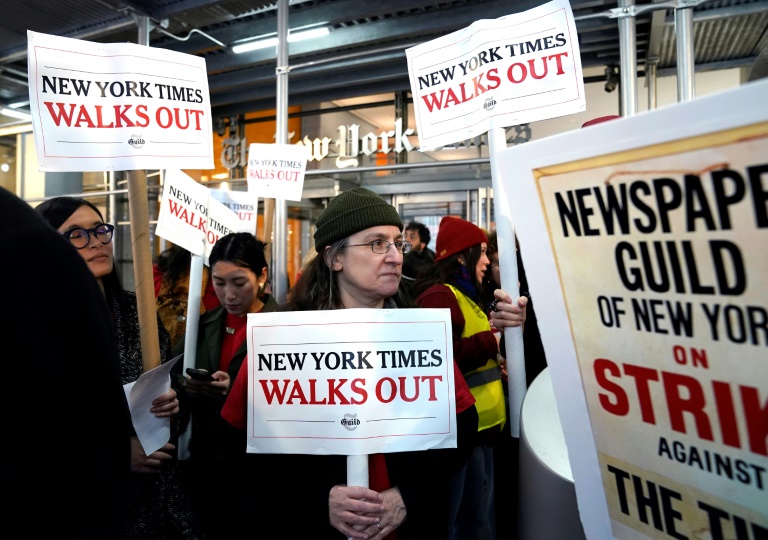
New York Times workers stage first strike in 40 years

More than 1,000 New York Times employees went on strike Thursday in the first industrial action of its kind at the newspaper in more than 40 years.

Journalists and other workers at the storied media outlet, often referred to as America’s paper of record, walked out at midnight for 24 hours after failing to reach an agreement with the company on a new round of contract negotiations.

The NewsGuild of New York, a union representing the striking workers, had said that a key sticking point was the management’s refusal to raise wages in line with surging inflation.

Health and retirement benefits as well as return-to-work policies following the coronavirus pandemic were also an issue.

“Over 1,100 New York Times workers are now officially on work stoppage, the first of this scale at the company in 4 decades,” the union tweeted early Thursday morning.

New York Times spokeswoman Danielle Rhoades Ha told US media in a statement that negotiations had not broken down and “it is disappointing that they are taking such an extreme action when we are not at an impasse.”

Phoebe Lett, a podcast producer at the media outlet, tweeted: “It is heartbreaking to have to stand with nearly 1,200 colleagues who sacrifice everything for the good of this place, hat in hand, asking @nytimes to show us they value us. But here we are.”

The union said its members were “willing to do what it takes to win a better newsroom for all.”

The Times said in an article about the strike that nonunion newsroom employees would produce news on Thursday.

More than 1,800 people work in The Times’s newsroom in total.

“We will produce a robust report on Thursday… But it will be harder than usual,” executive editor Joe Kahn said in an email to staff.

The contract between The Times and The New York Times Guild expired in March 2021, according to the article on the strike, which added that roughly 40 bargaining sessions have been held since.

The Times has offered union members a 5.5 percent raise upon ratifying the contract, 3 percent raises in 2023 and 2024, and a 4 percent retroactive bonus to compensate for a lack of raises since the contract expired.

The union has proposed a 10 percent raise upon ratification, 5.5 percent raises in 2023 and 2024, and an 8.5 percent retroactive bonus.

“The company is doing very well now on our work and the raises they are offering us and the contract are very low, well below inflation,” 34-year-old graphics editor Albert Sun told AFP during a protest by the striking workers outside the paper’s headquarters in Midtown Manhattan.

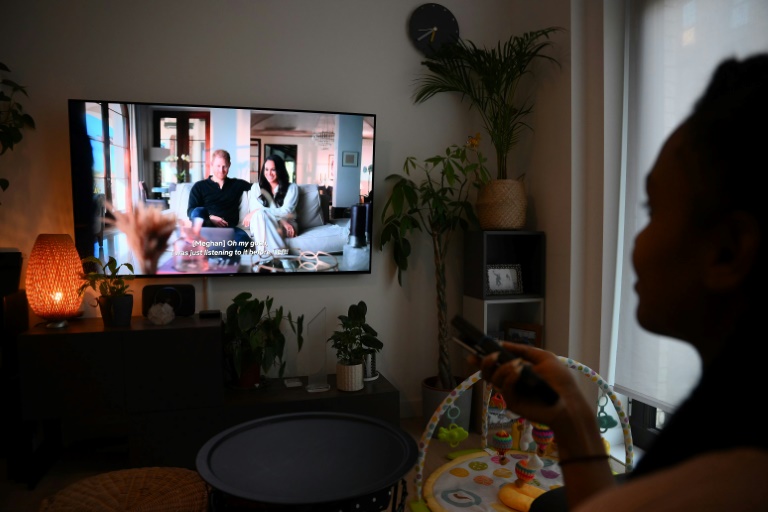
In Netflix series, Harry slams press, family, over 'feeding frenzy'

Prince Harry slammed the media “feeding frenzy” over his relationship with Meghan in an explosive Netflix docuseries launched Thursday and criticised Britain’s royal family for failing to protect her and his mother Diana.

The family has been braced for the first three episodes of the six-part series “Harry & Meghan”.

While it was largely spared during the first episodes, it was still on the end of accusations of “unconscious” racial bias and that it did not help Meghan or Diana after her 1992 separation from Harry’s father Charles, who is now king.

“To see another woman in my life who I love go through this feeding frenzy, that’s hard,” said Harry. “It is basically the hunter versus the prey.”

And speaking of his mother, who died in a Paris car crash in 1997, Harry, 38, said: “The moment that she divorced, the moment she left the institution, then she was by herself… she was completely exposed to this.” 

Meghan also took aim at the family for failing to counter negative press reports about her.

“It was horrible, but I continued to hold the line, like say nothing,” she said.

– The race element –

Her husband said the family ignored racist undertones in the reports.

“As far as a lot of the family were concerned, everything that she was being put through, they’d been put through as well. So it was almost like a rite of passage,” he said.

“I said the difference here is the race element.”

Harry went on to claim there was a “huge level of unconscious bias” within the family, and the documentary referenced a racist brooch worn by Princess Michael of Kent to an event that Meghan attended in 2017.

Harry reiterated feeling “ashamed” about being photographed wearing a Nazi uniform to a fancy-dress party in 2005, calling it “probably one of the biggest mistakes of my life”.

– ‘War’ –

The documentary is lifting the lid on events that prompted the pair to quit royal life and move to the United States in 2020.

Several British newspapers said the couple had declared “war” on the royal family, which said Thursday that no family members had been approached to comment for the docuseries.

The first parts trace the couple’s budding love story and their attempts to keep it a secret.

“When I got to meet ‘M’ I was terrified of her being driven away by the media, the same media that had driven so many other people away from me,” said Harry.

“I knew that the only way that this could possibly work is by keeping it quiet for as long as possible.”

The early episodes also focus on Harry’s childhood and difficult teen years, often with paparazzi in tow.

He describes how he found refuge in frequent trips to Africa.

“I have a second family out there, a group of friends that literally brought me up,” he said.

And in what appeared to be a dig at his older brother Prince William and wife Catherine, he said: “With many people in the family, especially the men, there can be a temptation or an urge to marry someone who would fit in the mould.”

The final three parts are due to be released on December 15.

– Fans divided –

Royal fans outside Buckingham Palace were divided on the need for Harry and Meghan to make the series.

“It’s just not the right thing to do,” said Mary Rose, 68, from Worksop in northeast England. “He (Harry) was so close to his brother at one time and now he’s alienated himself from his family.”

But Fflur Jones, a 26-year-old nurse from Wales, said: “I think they’re really brave for what they’ve done.”

“Speaking out, especially against family, is really difficult. So fair play to them for doing that.”

In the central English city of Nottingham, the first place Harry and Meghan visited as a royal couple in 2017, Alex Smith, 29, was also not impressed with their stance, blaming “headstrong” Meghan.

“I think it’s more her,” she said. “I think he’s (Harry)… under the thumb,” she added.

Netflix showcased the first trailer last week, as William made his first trip to the United States as heir to the throne, prompting accusations of sabotage.

The timing could barely have been worse for William after Buckingham Palace sacked one of his godmothers as a courtier for using racially charged language to a black British woman during a reception.

For some, the incident reinforced incendiary claims by mixed-race Meghan, 41, that racism within the royal household was one of the reasons for leaving.

The docuseries airs three months since the death of Harry’s grandmother Queen Elizabeth II, and a month before the long-awaited publication of his memoirs, “Spare”.

bur-jj/raz

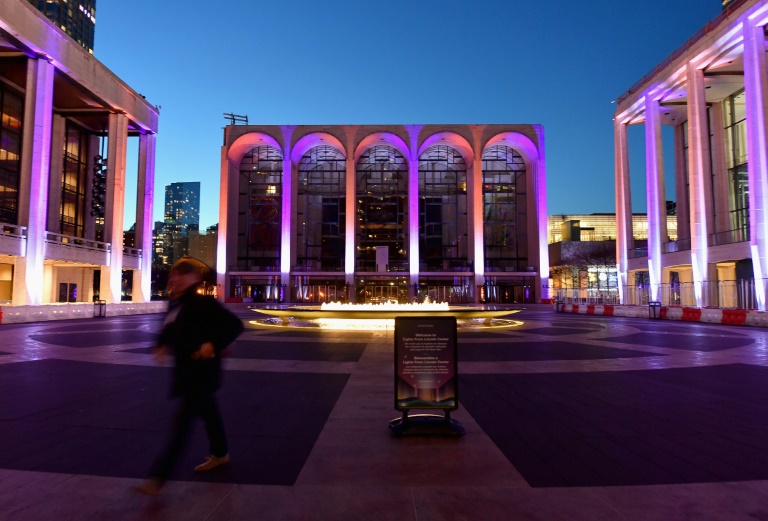
Met Opera in NY reports crippling cyberattack

The Metropolitan Opera said Thursday that a cyberattack had prevented its website, box office and call center in NY from functioning.

The prestigious institution said its “network issues” had begun on Tuesday.

All performances are taking place as scheduled, the Met said, but new ticket orders, exchanges and refunds were not immediately possible.

The organization provided no explanation or details about the attack, and a spokesperson for the Manhattan-based company did not immediately respond to an AFP query.

The specialist outlet OperaWire, citing a letter to company members from General Manager Peter Gelb, said an investigation into the attack was ongoing.

“Unfortunately, we’ve experienced a cyberattack that has temporarily impacted our network systems,” the letter read. 

“We launched an immediate investigation into the nature and scope of the incident. While web experts work to resolve the situation, our systems are down.”

Gelb said the Met was also temporarily unable to process paychecks.

Cyberattacks have plagued  companies and governmental offices in the US and elsewhere for years.

The US House of Representatives on Thursday passed a mammoth national defense spending bill that includes tens of millions of dollars to help bolster cybersecurity efforts. The measure still requires Senate approval.

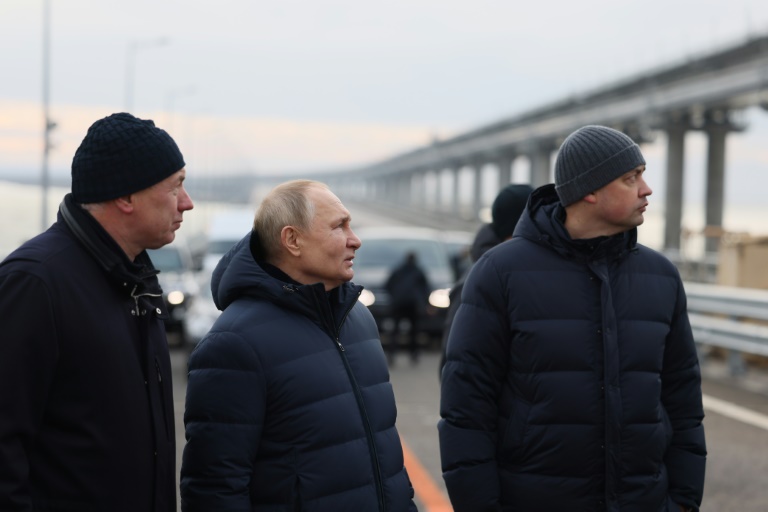
Putin vows more strikes on Ukraine energy infrastructure

President Vladimir Putin vowed Thursday to keep battering Ukraine’s energy grid despite an outcry against the systematic attacks that have plunged millions into the cold and dark as winter sets in.

He instead blamed Ukraine for initiating a trend of attacking civilian infrastructure, pointing to a blast on a key bridge between the Russian mainland and the annexed Crimean peninsula that he recently visited. 

“There’s a lot of noise about our strikes on the energy infrastructure of a neighbouring country. This will not interfere with our combat missions,” Putin said at a military awards ceremony in the Kremlin.

Weeks of Russian missile barrages across Ukraine have crippled key infrastructure at a critical time, as temperatures drop ahead of long winter months that already have brought suffering to Ukrainians lacking water, heating and gas. 

He presented the strikes as a response to the explosion in October on the Kerch bridge and also accused Kyiv of blowing up power lines from the Kursk nuclear power plant and for not supplying water to Donetsk in eastern Ukraine.

“Yes, we do that,” Putin said of the strikes on the Ukraine grid. “But who started it?”

Ukrainian energy operator Ukrenergo said Thursday that it was still reeling from the latest bout of strikes that came this week and was suffering a “significant deficit”. 

– ‘Risks’ for Crimea –

“The situation is complicated by weather conditions,” it added, saying snow, frost and wind were putting pressure on infrastructure.

Putin’s promise to keep attacking the grid came as the Kremlin conceded that the Crimean peninsula was vulnerable to Ukrainian attacks after officials said they had shot down a drone near a key naval base.

“There are certainly risks because the Ukrainian side continues its policy of organising terrorist attacks,” Kremlin spokesman Dmitry Peskov told reporters.

“But, on the other hand, information we get indicates that effective countermeasures are being taken,” he added.

The Moscow-appointed governor of Crimea Sergei Aksyonov said last month that Russia was strengthening fortifications on the peninsula in the wake of attacks.

And the governors of two Russian regions bordering Ukraine have said they inspected the construction of defence lines days after Ukrainian drones struck key military airfields.

In the latest incident over Crimea on Thursday, Russia said it had shot down a drone over the Black Sea near Sevastopol, the largest city on the Crimean peninsula that hosts a key Russian naval base.

“As per usual our military carried out its work well,” said the governor of the Sevastopol administrative region, Mikhail Razvozhayev. 

The peninsula was annexed by Russia in 2014 after a so-called referendum that Ukraine and the West never recognised. Moscow said in September it had annexed four more regions of Ukraine, despite not having full control over them.

– ‘Nationalist ideology’  –

There have been several explosions at or near Russian military installations in Crimea since February, including a coordinated drone attack on a key Russian naval port at Sevastopol. 

The shooting down of the drone on Thursday came after a series of attacks deep in Russia — including the Engels airfield, a strategic bomber military base — for which Ukraine has not claimed responsibility.

Separately, the Russian security services (FSB) arrested two people accused of spying for Ukraine on Crimea and accused them of “treason”, the agency’s press service said Thursday. 

The FSB “halted the illegal activities of two Russian citizens suspected of committing high treason in the form of spying in the interests of the Security Service of Ukraine,” it said in a statement.

One of those detained is “a supporter of Ukrainian nationalist ideology and was recruited by the Ukrainian secret services in 2016,” the statement said.

He is suspected of “transferring data on the location of Russia’s defence ministry facilities to a foreign security agency, which could be used against Russia’s security.”

– Pope’s tears –

The Kremlin hit out at Time magazine’s decision a day earlier to name Ukraine President Volodymyr Zelensky as “Person of the Year”, saying it reflected “Russophobic” trends in Western countries.

The Politico news website also named Zelensky as the “Most Influential” person in Europe.

And during a ceremony in Rome Thursday, Pope Francis was briefly reduced to tears as he prayed for the people of Ukraine.

He had to pause for a moment, his body shaking with emotion, before he could finish his prayer. The crowd around him broke into applause.

One of Turkey’s most influential marine biologists, Bayram Ozturk, pleaded for the creation of an “ecological corridor” to save dolphins and other sea creatures from destruction during the conflict.

His Marine Research Foundation has organised a conference in Istanbul on Friday where Ozturk will exchange ideas with colleagues from the Black Sea’s other lateral states.

Close Bitnami banner
Bitnami