US Business

US sues to block Microsoft's blockbuster buyout of gaming giant Activision

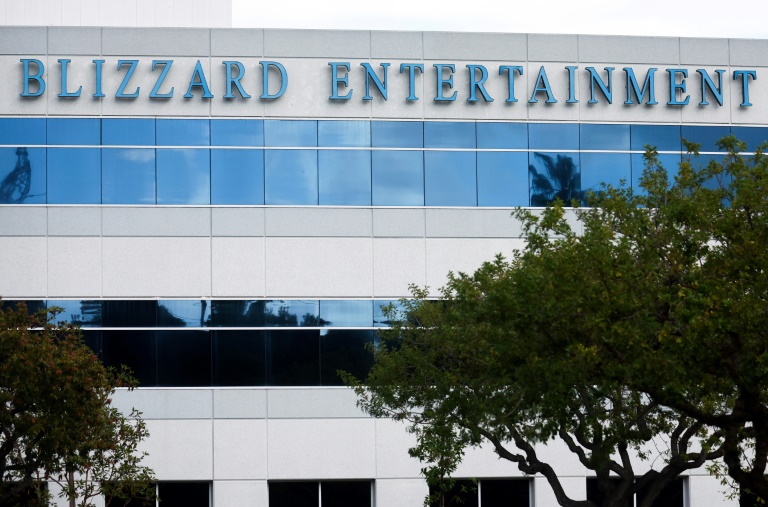
The US Federal Trade Commission on Thursday sued to block Microsoft’s $69 billion buyout of gaming giant Activision Blizzard, maker of the blockbuster “Call of Duty” title, over concerns that it would stifle competition.

The lawsuit marks one of the biggest ever interventions by the US government to stop consolidation in the tech industry and raises significant doubts on the future of the transaction.

“Today we seek to stop Microsoft from gaining control over a leading independent game studio and using it to harm competition in multiple dynamic and fast-growing gaming markets,” said Holly Vedova, director of the FTC’s Bureau of Competition.

The move by Washington follows an intervention by the European Union, which opened an in-depth probe into the transaction over its concerns that the deal would see Activision Blizzard’s popular games become exclusive to Microsoft, the maker of the Xbox console.

Britain has also announced an “in-depth investigation” into Microsoft’s planned takeover of Activision, which also produces mobile game “Candy Crush.”

In January, Microsoft — which also makes its own games to be played on PCs and mobile devices — announced the takeover that would create the world’s third-biggest gaming company by revenue.

The FTC said Microsoft had a proven history of buying up smaller gaming companies only to make the games exclusive to Microsoft — and thus inaccessible to rivals such as Nintendo or Sony.

This would be a significant change for Activision that currently has a strategy of offering their games on a variety of platforms.

Microsoft had earlier this week made moves to satisfy concerns by announcing that it would bring the “Call of Duty” franchise to Nintendo Switch, a rival of Xbox. This followed an earlier decision to make “Call of Duty” available on Sony’s PlayStation.

– ‘Deal will close’ –

“We continue to believe that this deal will expand competition and create more opportunities for gamers and game developers,” said Microsoft President Brad Smith in a statement.

“While we believe in giving peace a chance, we have complete confidence in our case and welcome the opportunity to present our case in court.”

Bobby Kotick, the head of Activision Blizzard, told company staff that though the lawsuit “sounds alarming…I want to reinforce my confidence that this deal will close.”

The allegations “don’t align with the facts, and we believe we’ll win this challenge,” he said.

The FTC is led by Lina Khan, who had been an advocate of breaking up the biggest tech firms before she was nominated by President Joe Biden to the job.

Last year, the FTC refiled a lawsuit accusing Facebook of maintaining an illegal monopoly in social networking, reviving the case two months after it was dismissed by a federal judge.

That lawsuit, which could take years to go through the courts without a settlement, called for the court to order “divestiture of assets,” including WhatsApp and Instagram, to restore competition.

A separate US antitrust action has been filed against Google, and Apple and Amazon are also in the crosshairs of antitrust enforcers.
US sues to block Microsoft's blockbuster buyout of gaming giant Activision

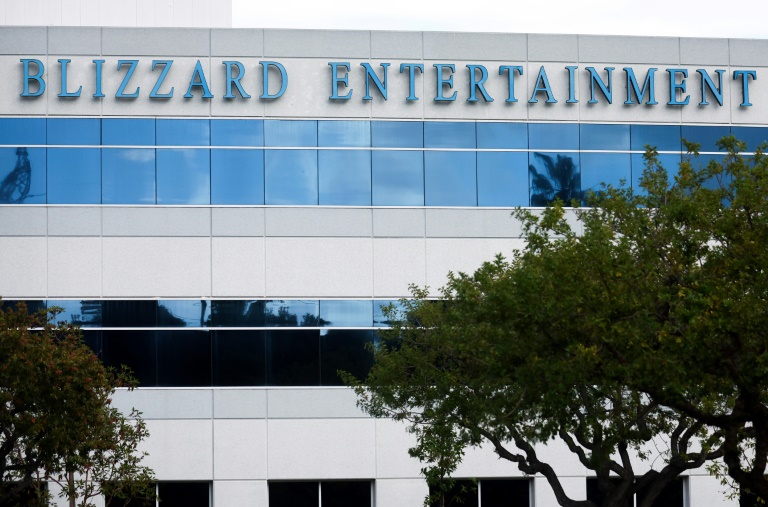
The US Federal Trade Commission on Thursday sued to block Microsoft’s $69 billion buyout of gaming giant Activision Blizzard, maker of the blockbuster “Call of Duty” title, over concerns that it would stifle competition.

The lawsuit marks one of the biggest ever interventions by the US government to stop consolidation in the tech industry and raises significant doubts on the future of the transaction.

“Today we seek to stop Microsoft from gaining control over a leading independent game studio and using it to harm competition in multiple dynamic and fast-growing gaming markets,” said Holly Vedova, director of the FTC’s Bureau of Competition.

The move by Washington follows an intervention by the European Union, which opened an in-depth probe into the transaction over its concerns that the deal would see Activision Blizzard’s popular games become exclusive to Microsoft, the maker of the Xbox console.

Britain has also announced an “in-depth investigation” into Microsoft’s planned takeover of Activision, which also produces mobile game “Candy Crush.”

In January, Microsoft — which also makes its own games to be played on PCs and mobile devices — announced the takeover that would create the world’s third-biggest gaming company by revenue.

The FTC said Microsoft had a proven history of buying up smaller gaming companies only to make the games exclusive to Microsoft — and thus inaccessible to rivals such as Nintendo or Sony.

This would be a significant change for Activision that currently has a strategy of offering their games on a variety of platforms.

Microsoft had earlier this week made moves to satisfy concerns by announcing that it would bring the “Call of Duty” franchise to Nintendo Switch, a rival of Xbox. This followed an earlier decision to make “Call of Duty” available on Sony’s PlayStation.

– ‘Deal will close’ –

“We continue to believe that this deal will expand competition and create more opportunities for gamers and game developers,” said Microsoft President Brad Smith in a statement.

“While we believe in giving peace a chance, we have complete confidence in our case and welcome the opportunity to present our case in court.”

Bobby Kotick, the head of Activision Blizzard, told company staff that though the lawsuit “sounds alarming…I want to reinforce my confidence that this deal will close.”

The allegations “don’t align with the facts, and we believe we’ll win this challenge,” he said.

The FTC is led by Lina Khan, who had been an advocate of breaking up the biggest tech firms before she was nominated by President Joe Biden to the job.

Last year, the FTC refiled a lawsuit accusing Facebook of maintaining an illegal monopoly in social networking, reviving the case two months after it was dismissed by a federal judge.

That lawsuit, which could take years to go through the courts without a settlement, called for the court to order “divestiture of assets,” including WhatsApp and Instagram, to restore competition.

A separate US antitrust action has been filed against Google, and Apple and Amazon are also in the crosshairs of antitrust enforcers.
A fair trade? Griner swap for jailed arms dealer raises eyebrows

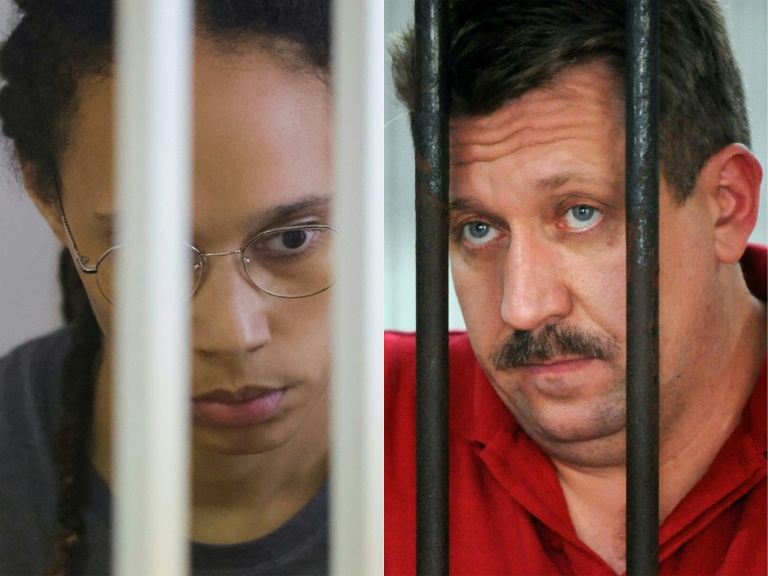
Brittney Griner’s release from a prison ordeal in Russia sparked an outpouring of joy — but also raised tough questions for Joe Biden: was the US president right to trade a notorious arms dealer for the basketball star jailed on minor drug charges?

The rival Republican Party quickly attacked Biden whose spokeswoman said he made no apologies for freeing Griner, a 32-year-old Olympic gold medalist and LGBTQ trailblazer who was locked up after being found with small quantities of cannabis oil in vape cartridges.

Bout, the inspiration for the movie “Lord of War” who was accused of arming rebels in some of the world’s bloodiest conflicts, was handed 25 years in prison in 2012.

Judge Shira A. Scheindlin, who sentenced him in a federal court in New York, said there was no equivalence between the two cases but welcomed the exchange for Griner.

“I think Viktor Bout has served sufficient time, frankly, for the crimes of which he was convicted,” Scheindlin, now in private practice, told AFP.

She said she was required to hand down a minimum sentence she considered excessive because Bout was convicted on terrorism charges.

Bout was detained in Thailand in 2008 in a US sting for allegedly trying to sell arms to Colombia’s FARC rebels — an operation Scheindlin described as Bout having been “roped in.”

“He himself wasn’t a terrorist. He was a businessman arms dealer. And there are arms dealers in every country including the United States of America.”

– ‘One or none’ –

But Scheindlin said she wished Bout were freed not only for Griner but for Paul Whelan, a former Marine detained in 2018 on espionage accusations.

Although both Whelan and the US government deny the spying allegations, Scheindlin argued that trading him for Bout would have made “a little more sense” given the severity of the charges he faces.

Secretary of State Antony Blinken, who raised the prisoner swap in rare direct contact with his Russian counterpart in the midst of the Ukraine war, said that Russia treated the two cases differently as it saw Whelan “through the lens of sham espionage charges.”

“This was not a choice about which American to bring home. The choice was, in this instance, one or none,” Blinken told reporters.

Will Pomeranz, the director of the Wilson Center’s Kennan Institute, said Russia would see a victory in freeing Bout.

“It demonstrates that the Russian state always has the back of their security services and that they will leave no one behind, even as it means long and protracted negotiation,” he said.

He said that while Griner’s arrest was consistent with Russia’s strict drug laws, President Vladimir Putin “clearly had leverage” after Biden publicly put a priority on freeing Griner, whose plight has drawn wide interest in the United States.

Pomeranz expected a difficult task ahead to free Whelan.

“Paul Whelan’s best chance to get out of Russia was being part of the Brittney Griner swap,” he said.

– Incentive to adversaries? –

Republican Senator Marco Rubio, while welcoming Griner’s release, said the deal showed Putin “how detaining high-profile Americans on relatively minor charges can both distract American officials and cause them to release truly bad individuals who belong behind bars.”

Republican Representative Nicole Malliotakis, pointing to Bout’s record, said Biden should have secured the release of both Whelan and Griner, writing on Twitter, “A US Marine is left behind in another bad deal made by Biden.”

But the United States has repeatedly shown a willingness to carry out deals criticized as disproportionate to free citizens in response to public opinion.

Other democracies have made similar decisions: in one of the most striking examples, Israel in 2011 freed more than 1,000 prisoners in exchange for the release of a single soldier, Gilad Shalit, by the Palestinian militant group Hamas.

The United States has set a government policy of not paying ransoms for its citizens, hoping to avoid incentives for hostage-taking.

In a possible sign of the public mood, an American football player, Micah Parsons, voiced anger on Twitter that the United States “left a Marine” but backtracked and apologized after a deluge of criticism and said he was “extremely happy” for Griner.

Paul Rieckhoff, a veterans advocate and commentator, said that Whelan should be released “full stop” but said Griner was “at unique risk in Russian prison” as a Black and LGBTQ woman.

“When she gets home, I have no doubt she’ll be out in front leading the fight for the release of Paul Whelan. And we should all join her.”

Musk faces legal onslaught from angry ex-Twitter workers

The purge initiated by Elon Musk at Twitter when he took over the company left more than half of its 7,500 employees on the sidelines and now many of them are taking the SpaceX and Tesla tycoon to court.

The social media giant is facing a growing number of cases over the terms of those terminations — and even a complaint to the city of San Francisco that Musk has illegally converted office space into bedrooms so that workers can sleep on site.

“It’s very concerning that the richest man in the world thinks that he can walk all over employee rights and doesn’t have to follow the law. We intend to hold him accountable,” said lawyer Shannon Liss-Riordan.

Liss-Riordan is leading one such case against Twitter — at its core, it argues that some employees are not receiving the severance and compensation promised to them prior to Musk’s takeover. 

These assurances, which included bonuses and stock options, were made to keep employees at Twitter, guaranteeing an exit package as the arrival of the mercurial Musk loomed. 

Other cases are taking Musk to task over his brash ultimatum that staff either sign up to his vision for the company and embrace a “hardcore” work ethic, or take three months of their salary and quit.

This, lawyers allege, was a disguised layoff plan that ignored California law by denying workers the compensation and 60-day warning time required by law.

– ‘Blunt disregard’ –

Musk’s disdain for working from home is also being resisted, with employees with disabilities or health concerns seeing orders to come back to the office as discriminatory.

“There was a blunt disregard for personal conditions such as relevant medical issues. All this was done while Elon Musk was abusing us in public on Twitter,” said a former senior employee at Twitter, Amir Shevat.

Shevat and other employees are represented by Lisa Bloom, a high-profile attorney in Los Angeles who has represented disgraced Hollywood producer Harvey Weinstein.

Bloom is handling arbitration claims since many Twitter employees signed away their right to fight their plight in court when they joined the company.

“We will continue to file these claims, one by one, bombarding Twitter with claims,” Bloom told a press conference on Monday.

“We are prepared to bring hundreds if not thousands of individual arbitrations to make sure that the employees get what they’re owed,” she said.

This, experts said, could cost Twitter and Musk dearly.

Twitter “could quickly resolve the matter by paying the ex-employees whatever they are entitled to under the law,” said Eric Goldman, a law professor at Santa Clara University.

“Or it could play hardball and make them work for it, which could take years,” he said.

The stack of legal cases could also force Musk to work towards a settlement, especially since his company is under huge financial stress after he paid $44 billion to take full ownership.

The usually outspoken entrepreneur has said little specifically about legal cases, reserving criticism for a city inspection after Twitter conference rooms were converted into makeshift bedrooms.

“So city of San Francisco attacks companies providing beds for tired employees instead of making sure kids are safe from fentanyl,” Musk said in a tweet, lashing out at Mayor London Breed.

Musk was referring to a recent scandal of a 10-month-old boy who overdosed on fentanyl after ingesting the substance at a playground.

US Congress passes bill to protect same-sex marriage

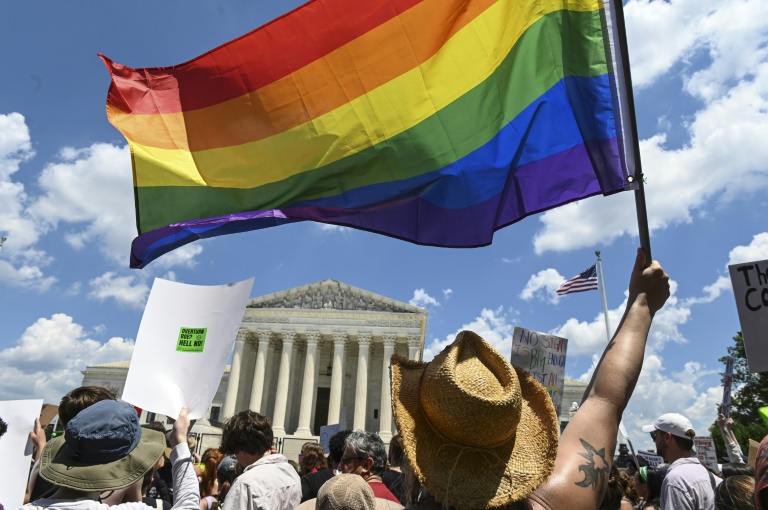
The US Congress on Thursday passed landmark legislation to protect same-sex marriage under federal law, and President Joe Biden has vowed to quickly sign the measure.

The vote in the House of Representatives saw 39 Republicans join a united Democratic majority in a rare show of bipartisanship, provoking loud cheers on the floor less than 10 days after the Senate passed the same bill.

“Today, Congress took a critical step to ensure that Americans have the right to marry the person they love,” Biden said in a statement.

He said the bipartisan vote would “give peace of mind to millions of LGBTQI+ and interracial couples who are now guaranteed the rights and protections to which they and their children are entitled.”

The conservative-led Supreme Court in June overturned longstanding abortion rights, prompting lawmakers of both parties to move to prevent the court from taking away same-sex marriage rights, as some feared it might do.

The House had earlier approved legislation similar to the Senate’s, but needed Thursday’s vote to reconcile minor differences.

Biden has dubbed marriage equality one of his legislative priorities and has said he will “promptly and proudly” sign the bill into law.

Democrats and others saluted the historic vote.

“I began my career fighting for LGBTQ communities,” outgoing House Speaker Nancy Pelosi tweeted on Thursday, “and now, one of the final bills that I will sign as Speaker will ensure the federal government never again stands in the way of marrying the person you love.”

The new legislation, known as the Respect for Marriage Act, does not require states to legalize same-sex marriage but does require them to recognize a marriage so long as it was valid in the state where it was performed.

– ‘Wrong way to go’ –

It repeals previous legislation defining marriage as a union between a man and a woman, and also protects interracial couples by requiring states to recognize legal marriages without regard to “sex, race, ethnicity or national origin.” 

Public acceptance of same-sex marriage has grown dramatically in recent decades, with polls now showing a strong majority of Americans supporting it.

But some conservatives and the religious right remain opposed.

“I think this is the wrong way to go,” conservative Republican Jim Jordan said shortly before the vote.

House Democrats had worked with urgency to get the bill passed while they still control Congress. Republicans won a narrow majority in the chamber in midterm elections in November and will take control there in January, while Democrats retain narrow control of the Senate.

The Supreme Court in a 2015 decision legalized same-sex marriages. Hundreds of thousands of couples have married since then.

Canada police suspend contract with China-linked firm

Canada’s federal police on Thursday suspended a contract with a Beijing-linked firm to supply and maintain police radio equipment — following a political backlash, the public safety minister’s office said.

The half-million dollar contract for a radio frequency filtering system to prevent eavesdropping had gone to Canada’s Sinclair Technologies, which is controlled by China’s Hytera Communications.

Concerns were raised about potential Chinese access to Royal Canadian Mounted Police (RCMP) communications since the Shenzhen-based company — which has been blacklisted by the United States — is partly owned by the Chinese government.

“The RCMP has suspended the contract,” a spokesperson for Public Safety Minister Marco Mendicino told AFP.

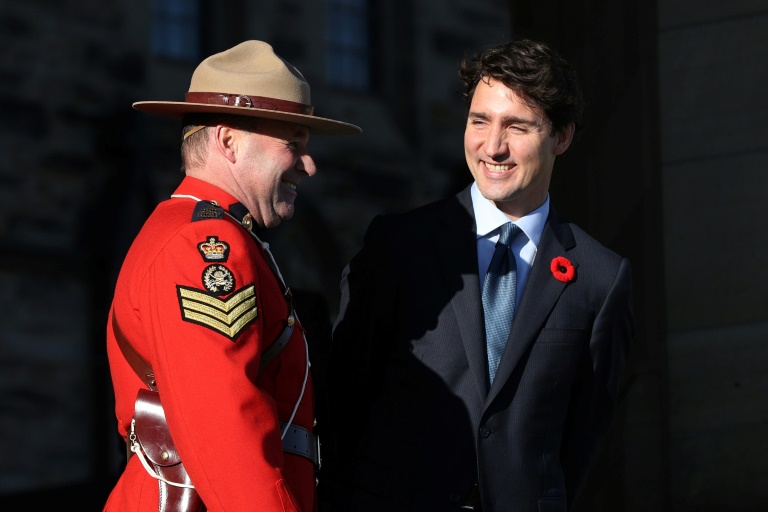
When asked about it this week, Prime Minister Justin Trudeau said the deal was “disconcerting,” given his security agencies’ warnings about Chinese espionage and interference in Canadian affairs.

Opposition Tory leader Pierre Poilievre said Wednesday it was an “astonishing” gaffe. 

“I mean, it’s almost something that you’d expect to be out of a spy novel, but characters in spy novels would never be that incompetent,” he commented.

The US Federal Communications Commission banned Hytera in 2021, saying it was among several Chinese firms that pose a national security risk. Huawei is on the same US list, and has been banned by Canada too.

Hytera also faces accusations — which it denies — of conspiring to steal trade secrets from American telecommunications company Motorola Solutions.

A key former Hytera director has pleaded guilty to participating in the conspiracy, according to filings released December 7.

Frustration in Romania and Bulgaria after Schengen rejection

After more than 10 years waiting to be admitted into the Schengen zone, Bulgaria and Romania were once more turned away after two EU countries vetoed their admission.

Now some observers warn that both countries face a rising tide of euroscepticism as they remain outside the coveted zone through which passport checks are not normally required.

Romanian Prime Minister Nicolae Ciuca spoke of his “profound disappointment” after Austria blocked their admission.

In Bulgaria, President Rumen Radev regretted what he described as the “internal borders” he said were being put up with the European Union bloc.

– Long waits at borders –

Their failure to win admission to the Schengen’s vast zone of free movement means that the long lines at various border crossings will continue.

At Giurgiu, for example, on the Romanian-Bulgarian border, a queue of trucks several kilometres begins forming from dawn.

Jaded long-haul drivers speaking to AFP in early December in Giurgiu, on the Romanian side, told of long hours waiting for the customs checks before they could enter Bulgaria.

Alexandru Birnea, 36, a long-haul driver for 13 years, said joining the Schengen zone would improve the lives of thousands of truckers.

“We would like to avoid losing all this time and therefore money in endless queues so that we can get back to our families more quickly,” he said.

But his pessimism about the outcome of the vote turned out to be well founded.

– Austria’s veto –

The European Commission has long expressed its wish for a widened Schengen zone.

But while tourist hotspot Croatia received the green light on Thursday, Romania and Bulgaria were left out in the cold.

Both countries joined the European Union back in 2007, before Croatia. Both countries met the technical criteria set out by Brussels.

But both countries were asked to make progress on judicial reform and anti-corruption efforts and were monitored for improvements.

When that process ended, both countries were hopeful that they had cleared the final hurdle. improvements.

But Austria hardened its stance, denouncing an influx of asylum seekers that it said could grow if the Schengen zone expanded.

“The migratory flows do not pass through Romania”, but mainly through Serbia, Romanian Interior Minister Lucian Bode argued.

He pointing to the nearly 140,000 migrants on the western Balkan route recorded by the European agency Frontex since January.

Prime Minister Ciuca said Austria’s refusal was based on “incorrect” figures.

But for political analyst Sergiu Miscoiu, Austria’s veto was more a reflection of internal political pressures, given the rise in polls of the far right there.

– Expecting ‘the impossible’ –

The Netherlands finally changed its position and gave Romania the green-light after long being opposed. But it maintained its concerns about “corruption and human rights” in Bulgaria.

Dutch Prime Minister Mark Rutte said last week that he wanted to be assured that no-one could “cross the border with a 50-euro note”.

Bulgarian Interior Minister Ivan Demerdzhiev rejected what he described as “insulting” remarks, especially given the “exceptional efforts” they had made to meet Brussels’ demands.

Bulgarian weekly magazine Capital commented: “We expect the impossible from the poorest and most corrupt country in the EU: don’t let migrants pass through (the country), but give asylum to every migrant who enters,” it remarked. 

And analyst Miscoiu warned that a negative vote could “strengthen the eurosceptics, especially in Bulgaria, which has already had four elections in the past two years”.

Romanian president Klaus Iohannis also warned that rejection “might compromise European unity and cohesion, which we so need, especially in the current geopolitical context.”

Greenback to bear signatures of two women for first time

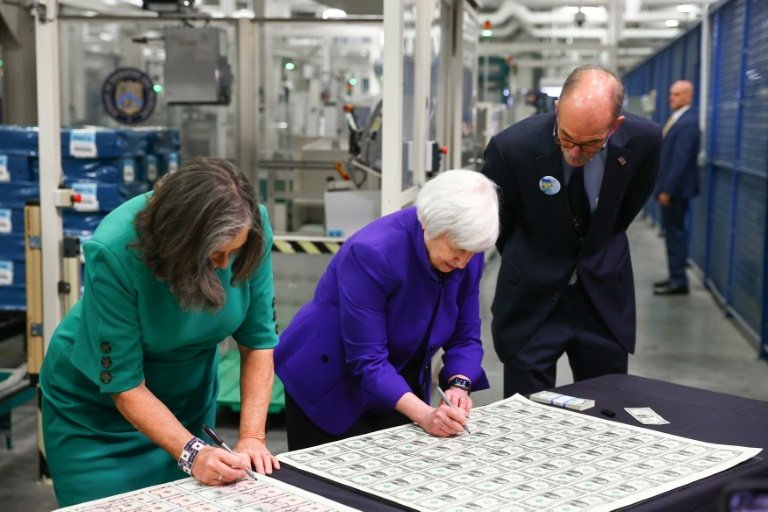
The US dollar will bear two women’s signatures for the first time, belonging to Treasury Secretary Janet Yellen and US Treasurer Lynn Malerba, officials said Thursday as they unveiled the banknotes.

The notes are set for delivery to the Federal Reserve this month and will be in circulation starting 2023, according to the Treasury Department.

“This is the first time the signature of a woman Treasury Secretary will be on a US banknote. And the first time the signatures of two women will be on our currency,” said Yellen in a speech at the Bureau of Engraving and Printing’s facility in Fort Worth, Texas.

“Today is not about me or a new signature on our currency. It’s about our collective work to create a stronger and more inclusive economy,” she added.

Currently, women represent about 62 percent of the Treasury workforce and hold positions of power, she said.

But much more needs to be done, Yellen added.

“I hope that today is a reminder of the road we’ve traveled on equity and inclusion. And I hope it motivates us to continue to move forward,” she said.

Malerba’s signature also marks the first time US currency will feature the signature of a Native American woman.

“This moment is history,” said Malerba.

The first such notes coming into circulation will be $1 and $5 bills.

“I’ll admit: I spent some quality time practicing my signature before submitting it,” Yellen said.

Former president Barack Obama’s Treasury Secretary Tim Geithner “famously had to change his signature in order to make it legible,” she added.

Apart from the site in Texas, the only other greenback printing facility is in US capital Washington.

Greenback to bear signatures of two women for first time

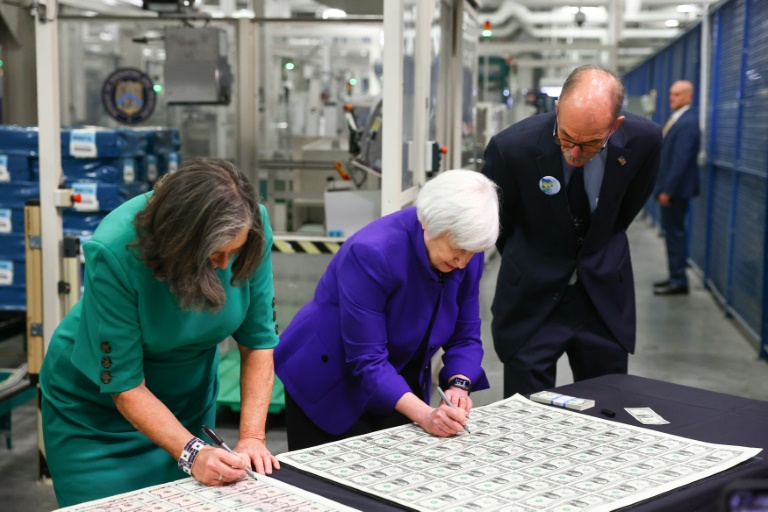
The US dollar will bear two women’s signatures for the first time, belonging to Treasury Secretary Janet Yellen and US Treasurer Lynn Malerba, officials said Thursday as they unveiled the banknotes.

The notes are set for delivery to the Federal Reserve this month and will be in circulation starting 2023, according to the Treasury Department.

“This is the first time the signature of a woman Treasury Secretary will be on a US banknote. And the first time the signatures of two women will be on our currency,” said Yellen in a speech at the Bureau of Engraving and Printing’s facility in Fort Worth, Texas.

“Today is not about me or a new signature on our currency. It’s about our collective work to create a stronger and more inclusive economy,” she added.

Currently, women represent about 62 percent of the Treasury workforce and hold positions of power, she said.

But much more needs to be done, Yellen added.

“I hope that today is a reminder of the road we’ve traveled on equity and inclusion. And I hope it motivates us to continue to move forward,” she said.

Malerba’s signature also marks the first time US currency will feature the signature of a Native American woman.

“This moment is history,” said Malerba.

The first such notes coming into circulation will be $1 and $5 bills.

“I’ll admit: I spent some quality time practicing my signature before submitting it,” Yellen said.

Former president Barack Obama’s Treasury Secretary Tim Geithner “famously had to change his signature in order to make it legible,” she added.

Apart from the site in Texas, the only other greenback printing facility is in US capital Washington.

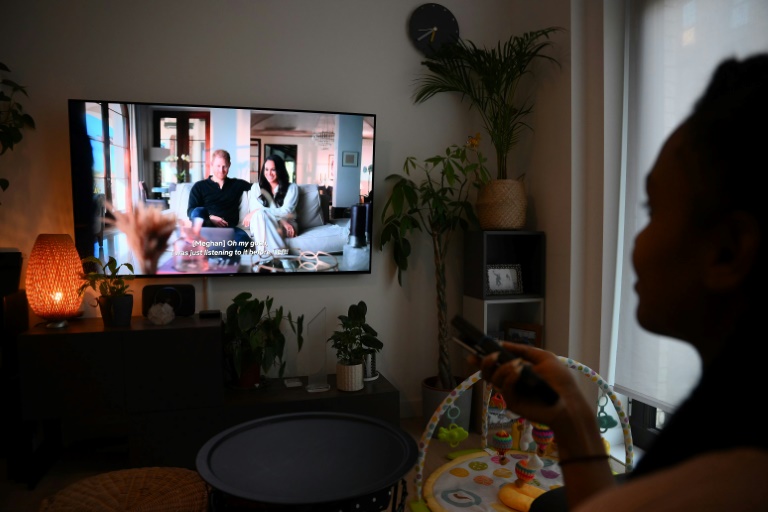
In Netflix series, Harry slams press, family, over 'feeding frenzy'

Prince Harry slammed the media “feeding frenzy” over his relationship with Meghan in an explosive Netflix docuseries aired Thursday and criticised Britain’s royal family for failing to protect her and his mother Diana.

The family has been braced for the first three episodes of the six-part series “Meghan & Harry”.

It was largely spared during the first episodes but was still on the end of accusations of “unconscious” racial bias and that it did not help Meghan or Diana after her 1992 separation from Harry’s father Charles, who is now king.

“To see another woman in my life who I love go through this feeding frenzy, that’s hard,” said Harry. “It is basically the hunter versus the prey.”

“The moment that she divorced, the moment she left the institution, then she was by herself… she was completely exposed to this,” Harry, 38, said of his mother, who died in a Paris car crash in 1997.

Meghan also took aim at the family for failing to counter negative press reports about her, saying “it was horrible, but I continued to hold the line, like say nothing”.

Her husband said the family ignored racist undertones in the reports.

“As far as a lot of the family were concerned, everything that she was being put through, they’d been put through as well. So it was almost like a rite of passage,” he said.

“I said the difference here is the race element.”

Harry went on to claim there was a “huge level of unconscious bias” within the family, with the documentary referencing a racist brooch worn by Princess Michael of Kent to an event that Meghan attended in 2017.

Harry reiterated feeling “ashamed” about being photographed wearing a Nazi uniform to a fancy-dress party in 2005, calling it “probably one of the biggest mistakes of my life”.

– ‘War’ –

The documentary is lifting the lid on events that prompted the pair to quit royal life and move to the United States in 2020.

Several British newspapers said the couple had declared “war” on the royal family, which said Thursday that no family members had been approached to comment for the docuseries.

The first parts trace the couple’s budding love story and their attempts to keep it a secret.

“When I got to meet ‘M’ I was terrified of her being driven away by the media, the same media that had driven so many other people away from me,” said Harry.

“I knew that the only way that this could possibly work is by keeping it quiet for as long as possible.”

The early episodes also focus on Harry’s childhood and difficult teen years, often with paparazzi in tow.

He describes how he found refuge in frequent trips to Africa, and in an apparent barb at his blood family, said: “I have a second family out there, a group of friends that literally brought me up.”

In another seeming dig at his older brother Prince William and wife Catherine, he said: “with many people in the family, especially the men, there can be a temptation or an urge to marry someone who would fit in the mould.”

The final three parts are due to be released on December 15. 

Royal fans outside Buckingham Palace were divided on the need for Harry and Meghan to make the series.

“It’s just not the right thing to do. He (Harry) was so close to his brother at one time and now he’s alienated himself from his family,” said Mary Rose, 68, from Worksop in north east England.

But Fflur Jones, a 26-year-old nurse from Wales, said: “I think they’re really brave for what they’ve done.”

“Speaking out, especially against family, is really difficult. So fair play to them for doing that.”

– Racism claims –

Netflix showcased the first trailer last week just as William made his first trip to the United States as heir to the throne, prompting accusations of sabotage.

The timing could barely have been worse for William after Buckingham Palace sacked one of his godmothers as a courtier for using racially charged language to a black British woman at a reception.

For some, the incident reinforced incendiary claims by mixed-race Meghan, 41, that racism within the royal household was one of the reasons for leaving.

The docuseries airs three months exactly since the death of Harry’s grandmother Queen Elizabeth II, and a month before the long-awaited publication of his memoirs, “Spare”.

Close Bitnami banner
Bitnami