US Business

UK turns to army as crippling strikes loom

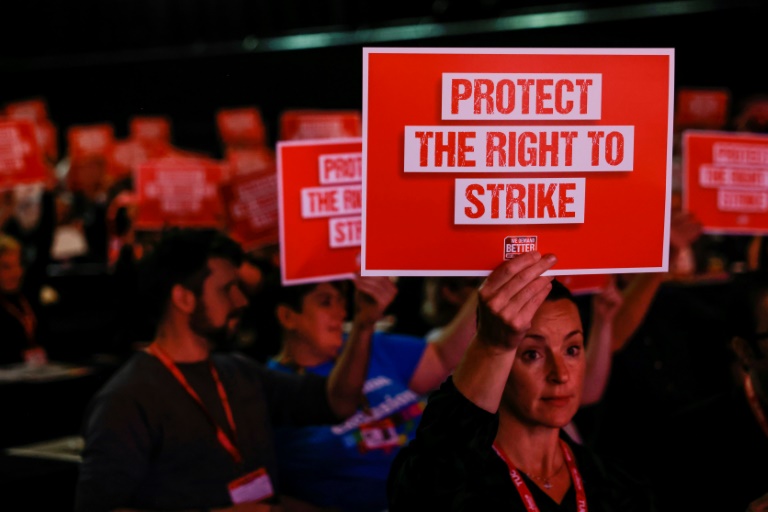
Britain’s government said Thursday it was preparing to enlist the army to cover ambulances and border security ahead of a wave of strikes this month by workers demanding higher wages.

Interior minister Suella Braverman warned the public against flying over Christmas, after passport control officers voted to walk out.

“If they go ahead with those strikes there will be undeniable, serious disruption caused to many thousands of people who have holiday plans,” Braverman told reporters.

The Border Force agency is training 2,000 soldiers to back up its personnel, officials said.

The Ministry of Defence is also in talks with the National Health Service, Downing Street said, after ambulance drivers voted to join nurses in striking this month.

The passport control staff and ambulance drivers have joined many sectors who have opted for strike action this year as decades-high inflation erodes the value of earnings.

– ‘Rolling strikes’ –

“These sorts of rolling strikes will cause disruption for everyone,” Prime Minister Rishi Sunak’s spokesman told reporters, reiterating the government’s opposition to inflation-busting pay deals.

“And that does also include our military personnel who will be required, unfortunately, to have to step in and backfill some of these vital roles that we need to help keep the country moving.”

Sunak on Wednesday hinted that ministers were preparing new legislation to outlaw strikes in critical sectors.

Currently, only Britain’s police, military and prison guards are barred by law from striking.

“What we’re looking at is, are there other areas that we should include in that?” Education Secretary Gillian Keegan told BBC radio Thursday.

“Health would be one to look at and other areas of critical infrastructure,” she added.

The government has yet to look at banning strikes by teachers, who have gone on strike in Scotland and are being balloted in England and Wales, she said.

– ‘Christmas chaos’ –

Ahead of a new wave of train strikes beginning next week, rail union leaders said the government had blocked a deal to end their long-running dispute over pay and other conditions.

“Rail workers and the industry have been put in an impossible position by the Tory government,” Frank Ward, interim general secretary at transport union TSSA, said Thursday.

“Christmas chaos and disruption across our railways are now unfortunately guaranteed, and come gift wrapped from Rishi Sunak and his anti-worker Conservative government’s agenda.”

The government is pushing through a law to require a minimum service on the railways and has refused to rule out expanding that bill to encompass other public sectors.

But Britain faces a winter of discontent as strikes multiply in the face of spiralling consumer prices. Many travellers will struggle to get home for Christmas as transport staff walk out.

Airports, buses, railways and roads face potential gridlock as a result of strikes, which will also hit Eurostar services.

And Britons face chronic delays to Christmas cards and parcels as walkouts continue to blight postal operator Royal Mail.

Nurses will also walk out next week for the first time in their union’s 106-year history.

– Cost-of-living crisis –

British inflation stands above 11 percent, the highest level in more than 40 years.

“I don’t think those going on strike want strikes and disruption,” Keir Starmer, the leader of Britain’s main opposition Labour party, said Thursday.

“They are facing a very real cost-of-living crisis, they are struggling to pay their bills,” he told business leaders.

The Financial Times estimates that more than one million working days will be lost to industrial action in December.

Analysts however talked down the overall economic impact.

“While the strikes feel quite widespread, in practice only a small share of the workforce will be on strike at the same time,” noted Paul Dales at research consultancy Capital Economics.

He conceded however that “any hit” to economic activity “is not helpful when the economy is probably already in recession”.

burs-bcp/rfj/jj
Putin vows more strikes on Ukraine energy infrastructure

President Vladimir Putin vowed Thursday to keep battering Ukraine’s energy grid despite an outcry against the systematic attacks that have plunged millions into the cold and dark as winter sets in.

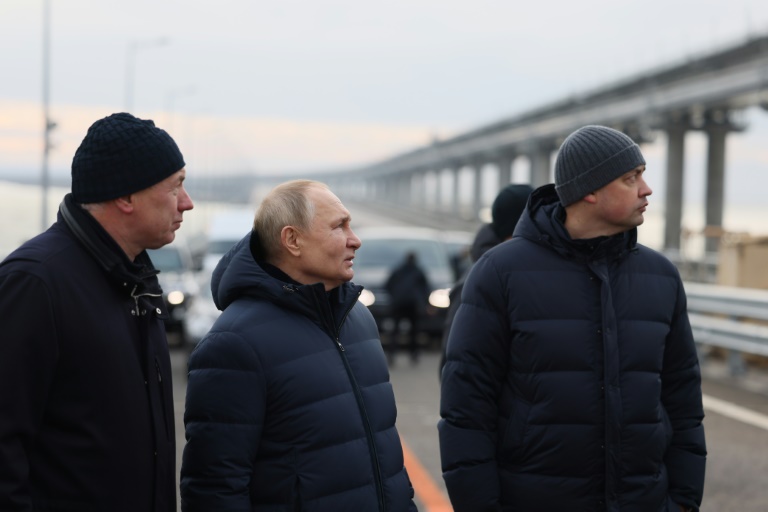
He instead blamed Ukraine for initiating a trend of attacking civilian infrastructure, pointing to a blast on a key bridge between the Russian mainland and the annexed Crimean peninsula that he recently visited. 

“There’s a lot of noise about our strikes on the energy infrastructure of a neighbouring country. This will not interfere with our combat missions,” Putin said at a military awards ceremony in the Kremlin.

Weeks of Russian missile barrages across Ukraine have crippled key infrastructure at a critical time, as temperatures drop ahead of long winter months that already have brought suffering to Ukrainians lacking water, heating and gas. 

He presented the strikes as a response to the explosion in October on the Kerch bridge and also accused Kyiv of blowing up power lines from the Kursk nuclear power plant and for not supplying water to Donetsk in eastern Ukraine.

“Yes, we do that,” Putin said of the strikes on the Ukraine grid. “But who started it?”

Ukrainian energy operator Ukrenergo said Thursday that it was still reeling from the latest bout of strikes that came this week and was suffering a “significant deficit”. 

– ‘Risks’ for Crimea –

“The situation is complicated by weather conditions,” it added, saying snow, frost and wind were putting pressure on infrastructure.

Putin’s promise to keep attacking the grid came as the Kremlin conceded that the Crimean peninsula was vulnerable to Ukrainian attacks after officials said they had shot down a drone near a key naval base.

“There are certainly risks because the Ukrainian side continues its policy of organising terrorist attacks,” Kremlin spokesman Dmitry Peskov told reporters.

“But, on the other hand, information we get indicates that effective countermeasures are being taken,” he added.

The Moscow-appointed governor of Crimea Sergei Aksyonov said last month that Russia was strengthening fortifications on the peninsula in the wake of attacks.

And the governors of two Russian regions bordering Ukraine have said they inspected the construction of defence lines days after Ukrainian drones struck key military airfields.

In the latest incident over Crimea on Thursday, Russia said it had shot down a drone over the Black Sea near Sevastopol, the largest city on the Crimean peninsula that hosts a key Russian naval base.

“As per usual our military carried out its work well,” said the governor of the Sevastopol administrative region, Mikhail Razvozhayev. 

The peninsula was annexed by Russia in 2014 after a so-called referendum that Ukraine and the West never recognised. Moscow said in September it had annexed four more regions of Ukraine, despite not having full control over them.

– ‘Nationalist ideology’  –

Russia used Crimea as one of its launching pads for the military intervention in Ukraine on February 24 and it has been regularly attacked by drones.

There have been several explosions at or near Russian military installations in Crimea since February, including a coordinated drone attack on a key Russian naval port at Sevastopol. 

The shooting down of the drone on Thursday came after a series of attacks deep in Russia — including the Engels airfield, a strategic bomber military base — for which Ukraine has not claimed responsibility.

Separately, the Russian security services (FSB) arrested two people accused of spying for Ukraine on Crimea and accused them of “treason”, the agency’s press service said Thursday. 

The FSB “halted the illegal activities of two Russian citizens suspected of committing high treason in the form of spying in the interests of the Security Service of Ukraine,” it said in a statement.

One of those detained is “a supporter of Ukrainian nationalist ideology and was recruited by the Ukrainian secret services in 2016,” the statement said.

He is suspected of “transferring data on the location of Russia’s defence ministry facilities to a foreign security agency, which could be used against Russia’s security.”

The attacks on the Ukrainian grid come after a series of battlefield setbacks for Russia culminating in its retreat from Kherson last month.

The fighting now has shifted east particularly to the east Ukraine city of Bakhmut and Kyiv said Thursday that 11 Ukrainians had been killed by fighting a day earlier.

China's Xi meets Saudi crown prince on high-stakes visit

Chinese President Xi Jinping and Saudi Arabia’s powerful crown prince met Thursday on an Arab outreach visit that has earned a rebuke from Washington, reaching deals in areas including energy and infrastructure. 

Agreements worth about $30 billion were being signed on Thursday, Saudi state media said, as China seeks to shore up its Covid-hit economy and as the Saudis, long-term US allies, push to diversify their economic and political alliances. 

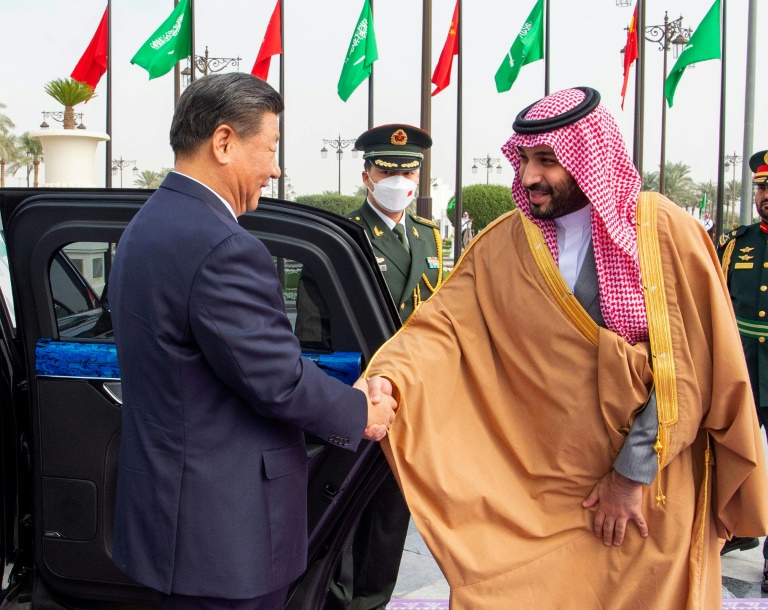
Xi and Crown Prince Mohammed bin Salman, the 37-year-old de facto ruler of the world’s biggest oil exporter, met at Yamamah Palace in Riyadh, flanked by high-ranking officials wearing face masks, footage aired on state television showed.

They oversaw the signing of energy agreements on hydrogen as well as a plan to “harmonise” Saudi Arabia’s ambitious economic reform agenda, Vision 2030, with China’s trillion-dollar Belt and Road Initiative, the official Saudi Press Agency said. 

The signed deals also covered a petrochemicals project, housing development and the teaching of the Chinese language, SPA said, though it did not detail their substance or monetary value.

Earlier, state television showed Xi being greeted with a handshake by Prince Mohammed before the two men stood side-by-side as a brass band played their countries’ national anthems. 

They then chatted while walking into the palace, which is the king’s official residence and seat of the royal court. 

Xi also met with Prince Mohammed’s father, 86-year-old King Salman, signing a comprehensive strategic partnership agreement first reached during Xi’s last visit in 2016, state media reported. 

They “agreed to hold a heads of state meeting between the two countries in turn every two years”, Chinese state media said.

“I am very pleased to visit Saudi Arabia again after six years. I still remember the scenes from my last visit,” Xi said in remarks carried by Chinese state broadcaster CCTV.

“The Chinese side views the Saudi side as an important force in a multipolar world and attaches high importance to developing a comprehensive strategic partnership with Saudi Arabia.”

– ‘Raising pace’ of cooperation –

Upon his arrival on Wednesday, Xi said bilateral ties with Saudi Arabia had grown “by leaps and bounds” in recent years. 

This “has not only enriched both countries’ peoples but promoted regional peace, security, prosperity and development,” Xi said, according to CCTV.

The crown prince sees China as a critical partner in his sweeping Vision 2030 agenda, seeking the involvement of Chinese firms in ambitious mega-projects meant to diversify the economy away from fossil fuels. 

Saudi investment minister Khalid al-Falih said this week’s visit “will contribute to raising the pace of economic and investment cooperation between the two countries”, offering Chinese companies and investors “rewarding returns”, according to SPA.

Earlier on Thursday, Saudi state media announced 34 investment agreements in sectors including green hydrogen, information technology, transport and construction.

State broadcaster Al-Ekhbariya said another 20 agreements worth 110 billion riyals ($29.3 billion) were due to be signed.

– Arab outreach –

Arab leaders began Thursday to converge on the Saudi capital ahead of summit meetings with Xi, the leader of the world’s number-two economy, who will hold separate talks with the six-member Gulf Cooperation Council before leaving on Friday.

China, the top consumer of Saudi oil, has been strengthening ties with a region that has long relied on the United States for military protection but which has voiced concerns the American presence could be downgraded.

Egyptian President Abdel Fattah al-Sisi, Palestinian president Mahmud Abbas and Sudan’s de facto leader Abdel Fattah al-Burhan had all arrived by Thursday afternoon, according to the Saudi foreign ministry.

Tunisian President Kais Saied, Iraqi Prime Minister Mohammed Shia al-Sudani, Moroccan Prime Minister Aziz Akhannouch and Lebanese caretaker Prime Minister Najib Mikati have also confirmed their attendance.

Beijing’s foreign ministry this week described Xi’s trip as the “largest-scale diplomatic activity between China and the Arab world” since the People’s Republic of China was founded. 

It has not escaped the attention of the White House, which warned of “the influence that China is trying to grow around the world”, calling its objectives “not conducive to preserving the international rules based order”. 

Washington has long been a close partner of Riyadh, but the relationship is currently roiled by disagreements on energy policy, US security guarantees and human rights. 

Xi is making his third journey overseas since the Covid pandemic prompted China to shut its borders and embark on a series of lockdowns, putting the brakes on its giant economy.

His visit follows US President Joe Biden’s trip in July, when he greeted Prince Mohammed with a fist-bump at the start of a vain attempt to convince the Saudis to raise oil production.

Viktor Bout: 'Merchant of death' arms smuggler

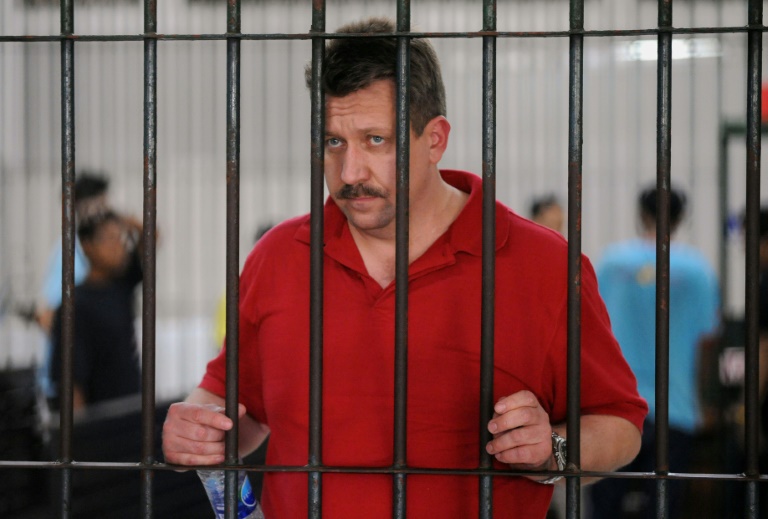
Former Soviet air force pilot Viktor Bout, who was swapped for US basketball star Brittney Griner on Thursday, fuelled some of the world’s bloodiest conflicts by trafficking weapons across several continents.

In a career spanning two decades, and which stopped when he was sentenced to 25 years in a US prison in 2012, the 55-year-old Russian allegedly stoked violence from Sierra Leone to Afghanistan by bartering deals for planes and guns.

The mustachioed Bout, who is thought to speak six languages, travelled under various false names including “Boris” and “Vadim Markovich Aminov”.

His notoriety inspired the Hollywood film “Lord of War”, starring Nicolas Cage, in which the anti-hero escaped justice.

Expectations of a prisoner swap grew in recent months, after Russian leader Vladimir Putin and US President Joe Biden discussed his fate during a summit in Geneva in 2021.

CIA Director William Burns met with Sergei Naryshkin, head of Russia’s SVR intelligence service, to discuss the swap involving Bout in Ankara last month, in what appeared to be the highest-level talks between Moscow and Washington since Russia sent troops to Ukraine in February.

– Sting operation –

Despite sanctions from the United States and United Nations, Bout had been trading weapons until he was caught in a sting operation in 2008 that was worthy of the silver screen.

The Russian was arrested at the five-star Sofitel hotel in Bangkok while negotiating with US agents posing as guerrillas from the Revolutionary Armed Forces of Colombia (FARC).

His appearances at court in Thailand, wearing a bullet-proof vest and shackles while flanked by armed police commandos, and the often tearful responses of his wife, Alla Bout, added to the drama of the case.

After a two-year legal battle, a Thai appeals court ruled in 2010 that he could be extradited to the United States, which accused him of running a “massive weapons-trafficking business” and terrorism.

Bout finally stood trial in the United States after he was flown out of Bangkok on a US government jet shortly after the Thai cabinet approved his extradition. 

In 2012, a US judge sentenced Bout to 25 years in prison for conspiring to sell a massive arsenal to anti-American guerrillas in Colombia.

Bout maintained his innocence from the day he was picked up in the Thai capital after allegedly agreeing to supply surface-to-air missiles in a series of covert meetings that also took him to Denmark and Romania.

US prosecutors claim he agreed to the sale with the understanding that the weapons were to be used to attack United States helicopters.

– ‘Unique creature’ –

Former British foreign office minister Peter Hain dubbed him the “Merchant of Death”, while Amnesty International has alleged that at one time he operated a fleet of more than 50 planes ferrying weapons around Africa.

Prosecutors in the United States said the arms he sold or brokered fuelled conflicts and supported regimes in Afghanistan, Angola, the Democratic Republic of the Congo, Liberia, Rwanda, Sierra Leone and Sudan.

But Bout maintains that he has always run a legitimate air cargo business, and rejected claims of involvement with Al-Qaeda.

His detention enraged Russia, which called attempts at extradition politically motivated.

Born in Tajikistan’s capital Dushanbe in 1967 when it was still under Soviet rule, Bout studied languages — including English, French and Portuguese — at Moscow’s military institute for foreign languages before joining the air force.

Journalist Douglas Farah, who co-authored a book on Bout, has called him “a unique creature” born of the end of Communism and the rise of unbridled capitalism in the early 1990s.

He has repeatedly denied suggestions that he was a former KGB agent and that he bought weaponry, aircraft and helicopters at throwaway rates at the fall of the Soviet Union to supply to conflict zones.

burs/jmm

Markets jostled by recession fears, China optimism

Wall Street stocks attempted to stage a relief rally and Hong Kong soared on Thursday, but elsewhere equity trading was still dominated by recession fears.

Oil prices, meanwhile, rebounded slightly from recent sharp losses.

Equity markets had been rising ahead of US jobs figures last week, boosted by a surprise drop in inflation and comments from Federal Reserve boss Jerome Powell that the bank was likely to raise rates at a slower pace.

But robust jobs figures and a jump in wages, plus data on Monday showing a forecast-busting jump in activity in the US services sector last month, raised the prospect that the Fed will not back down from sharp rate increases when it meets next week.

Following several days of losses, Wall Street opened to the upside, with the Dow rising 0.4 percent.

“What we have today, then, is a little rebound spirit — an assumption that the stock market is due for a bounce after behaving so poorly in more recent action…” said market analyst Patrick O’Hare at Briefing.com.

European stocks tried to rally before Wall Street opened, but failed to hold onto gains. London was flat, while both Frankfurt and Paris were down 0.2 percent as trading got underway in New York.

“The risk-off sentiment… remains hard to kick into touch as concerns about recession stay front and centre,” noted Susannah Streeter, senior investment and markets analyst at Hargreaves Lansdown.

“The evil twins of recession and persistently higher inflation are lurking, keeping investors on edge.”

Analysts pointed out that two-year US Treasury yields were much higher than those of 10-year bonds, which is usually considered a clear indication of a looming recession.

This week also saw the heads of some of Wall Street’s biggest banks warn of a downturn.

– China Covid shift –

The fear of a US recession is playing off against China’s shift away from its zero-Covid strategy of lockdowns and mass testing that has been blamed for clattering the world’s number two economy.

After widespread protests last month against the strict measures and calls for more political freedoms, authorities have scaled back many of them and on Wednesday announced a nationwide loosening of restrictions.

While there are worries that the more liberal approach will spark a surge in infections, it has helped fan a rally in Hong Kong where Chinese tech firms and property developers are listed.

The Hang Seng Index closed up more than three percent Thursday.

“Developments in China have a big role to play, although as we’re seeing once again, Covid-related moves are almost exclusively impacting stocks in domestic markets,” said Craig Erlam, senior analyst at OANDA trading group. 

“We can see that again overnight, with reports of looser mask and isolation requirements in Hong Kong lifting the Hang Seng and making it the clear outperformer in the region, while most other indices tread water.”

– Key figures around 1430 GMT –

New York – Dow: UP 0.4 percent at 33,715.24 points

London – FTSE 100: FLAT at 7,487.53 

Frankfurt – DAX: DOWN 0.2 percent at 14,231.57

Paris – CAC 40: DOWN 0.2 percent at 6,646.81

EURO STOXX 50: DOWN 0.2 percent at 3,913.49

Tokyo – Nikkei 225: DOWN 0.4 percent at 27,574.43 (close)

Hong Kong – Hang Seng Index: UP 3.4 percent at 19,450.23 (close)

Shanghai – Composite: DOWN 0.1 percent at 3,197.35 (close)

Euro/dollar: UP at $1.0531 from $1.0510 on Wednesday

Dollar/yen: UP at 136.62 yen from 136.57 yen

Pound/dollar: UP at $1.2212 from $1.2209

Euro/pound: UP at 86.21 pence from 86.05 pence

Brent North Sea crude: UP 1.6 percent at $78.40 per barrel

West Texas Intermediate: UP 2.8 percent at $74.04 per barrel

Life sentence upheld for Paris train attacker

A Moroccan man sentenced to life in prison for an attempted terror attack on a Paris-bound train in 2015 that was foiled by passengers, had his appeal rejected Thursday by a French court.

Their heroics were later immortalised in the Clint Eastwood film “The 15:17 to Paris”.

Ayoub El Khazzani, now 33, was disarmed and pinned down by passengers, who included off-duty American soldiers, on the Thalys train from Amsterdam on August 21, 2015 and convicted five years later of “attempted terrorist murders”.

The attack came as France was reeling from the jihadist murders at the Paris offices of Charlie Hebdo magazine in January 2015.

That massacre was the start of a wave of terror attacks on French soil, often by so-called “lone wolf” assailants claiming to act for the Islamic State or other jihadist groups, that left over 250 people dead.

Khazzani, who has been held in isolation since 2015, voiced “regrets” and “shame” before the verdict was read in the Paris courtroom.

But presiding judge David Hill said Khazzani had offered little new information to help investigators trying to understand how he prepared the attack.

“There’s reason to doubt any effort at self-examination,” he added.

Khazzani’s sentence includes a minimum 22 years behind bars before any chance of parole.

He had admitted to boarding the train with an AK-47 automatic rifle and a pistol and 300 rounds of ammunition, saying he was looking to attack US soldiers.

He entered a toilet to arm himself and shortly after shot a passenger who tried to stop him. This alerted others to the attack including three holidaying Americans, two of whom — Spencer Stone and Aleksander Skarlatos — were US servicemen.

“We were just doing what we had to do to survive,” Skarlatos said during the initial trial. 

Khazzani had claimed to be acting under the orders of Belgian Abdelhamid Abaaoud, one of the masterminds behind the bloody November 2015 terror attacks on bars and restaurants in Paris that left 130 people dead.

Three suspected accomplices of Khazzani and Abaaoud, sentenced to prison terms of between seven and 27 years in the original trial, did not appeal their convictions.

US basketball star Griner freed in Russian prisoner swap

Basketball star Brittney Griner is “safe” and headed home to the United States after being freed from a Russian prison ordeal in a swap for the notorious arms dealer Viktor Bout, the two countries announced on Thursday.

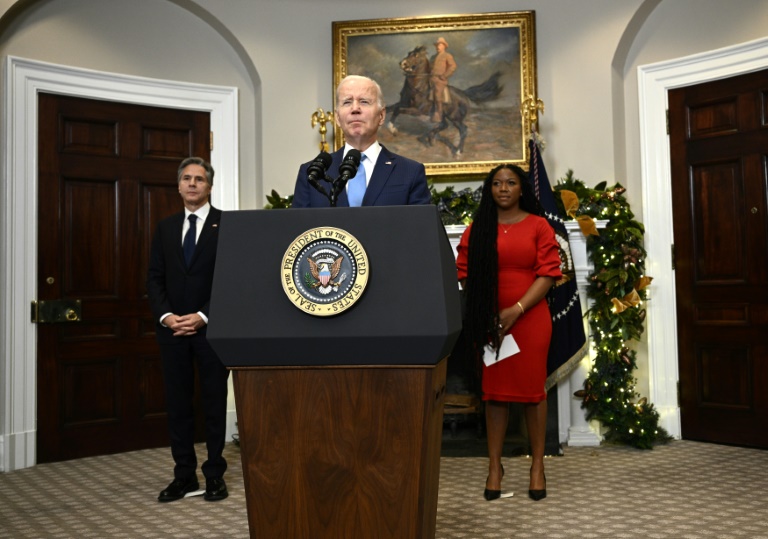
President Joe Biden delivered an early-morning address to the nation to announce the breakthrough, and said he had spoken to Griner just “moments ago.”

“She is safe. She is on a plane. She is on her way home,” Biden said, adding that she should be back in the United States within 24 hours.

The Olympic legend and LGBT trailblazer, who was being held in a remote penal colony, was arrested at a Moscow airport in February and handed nine years in prison in August for possessing vape cartridges with a small quantity of cannabis oil.

Biden said she would need time to recover from “needless trauma” after time spent in Russia’s IK-2 penal colony, a facility in the town of Yavas in the central region of Mordovia.

Reporting that Griner was in “good spirits” Biden said she deserved “space, privacy and time with her loved ones to recover and heal from her time being wrongfully detained.”

Biden was flanked by Griner’s wife Cherelle Griner as well as Vice President Kamala Harris and Secretary of State Antony Blinken.

“I’m just standing here, overwhelmed with emotions,” Cherelle Griner said, describing the ordeal of her wife’s imprisonment as “one of the darkest moments of my life.”

– ‘Family is whole’ –

Moscow confirmed it had exchanged Griner for Bout, who was serving a 25-year sentence in the United States.

“On December 8, 2022, at the Abu Dhabi airport, the exchange of Russian citizen Viktor Bout for US citizen Brittney Griner… was successfully completed,” the Russian foreign ministry said in a statement.

According to Biden, the United Arab Emirates facilitated Griner’s release. She transited through the country en route back to the United States, where she was expected within 24 hours.

Despite the heightened mood, Biden also conceded that the United States had not yet succeeded in freeing Paul Whelan, a retired US Marine arrested in December 2018 and accused of spying. 

Cherelle Griner acknowledged his fate, saying: “Today my family is whole, but as you all are aware there’s so many other families who are not whole.”

When Griner was arrested, the two-time Olympic basketball gold medalist and Women’s NBA champion had been in Russia to play for the professional Yekaterinburg team, during her off-season from the Phoenix Mercury.

She pleaded guilty to the charges, but said she did not intend to break the law or use the banned substance in Russia.

Griner had testified that she had permission from a US doctor to use medicinal cannabis to relieve pain from her many injuries, and had never failed a drug test.

The use of medical marijuana is not allowed in Russia.

Moscow said it had been negotiating with Washington to secure Bout’s release “for a long time” and that initially the US had “refused dialogue” on including him in any swap.

“Nevertheless, the Russian Federation continued to actively work to rescue our compatriot. The Russian citizen has been returned to his homeland,” the defense ministry said.

Bout was sentenced in 2012 to 25 years in a US jail after he was accused of arming rebels in some of the world’s bloodiest conflicts. 

UK turns to army as crippling strikes loom

Britain on Thursday said it was preparing to enlist the army to cover ambulances and border security before a wave of strikes this month as workers demand higher wages.

Home Secretary Suella Braverman warned the public against flying over Christmas, after passport control officers voted to walk out, joining many sectors which have gone on strike this year as decades-high inflation erodes the value of earnings.

“If they go ahead with those strikes there will be undeniable, serious disruption caused to many thousands of people who have holiday plans,” she told reporters.

The Border Force agency is training 2,000 soldiers to back up its personnel, officials said.

The Ministry of Defence is also in talks with the National Health Service, Downing Street said, after ambulance drivers voted to join nurses in going on strike this month.

“These sorts of rolling strikes will cause disruption for everyone,” Prime Minister Rishi Sunak’s spokesman told reporters, reiterating the government’s refusal to countenance inflation-busting pay deals.

“And that does also include our military personnel who will be required, unfortunately, to have to step in and backfill some of these vital roles that we need to help keep the country moving.” 

Sunak on Wednesday hinted that ministers were preparing new legislation to outlaw strikes in critical sectors.

Currently, only Britain’s police, military and prison guards are barred by law from striking.

“What we’re looking at is, are there other areas that we should include in that?” Education Secretary Gillian Keegan told BBC radio Thursday.

“Health would be one to look at and other areas of critical infrastructure,” she said, while adding that the government had yet to look at banning strikes by teachers, who have gone on strike in Scotland.

– ‘Christmas chaos’ –

Ahead of a new wave of train strikes beginning next week, rail union leaders claimed the government blocked a deal to end their long-running dispute over pay and other conditions.

“Rail workers and the industry have been put in an impossible position by the Tory government,” Frank Ward, interim general secretary at transport union TSSA, said Thursday. 

“Christmas chaos and disruption across our railways are now unfortunately guaranteed, and come gift wrapped from Rishi Sunak and his anti-worker Conservative government’s agenda.”

The government is pushing through a law to require a “minimum service” on the railways and has refused to rule out expanding that bill to encompass other public sectors.

The biggest UK strikes in 2022 have involved tens of thousands of railway and postal workers.

British inflation stands above 11 percent, the highest level in more than 40 years.

“I don’t think those going on strike want strikes and disruption,” Keir Starmer, the leader of Britain’s main opposition Labour party, said Thursday.

“They are facing a very real cost of living crisis, they are struggling to pay their bills,” he told business leaders.

Ex-Wirecard CEO in the dock over 'unparalleled' fraud

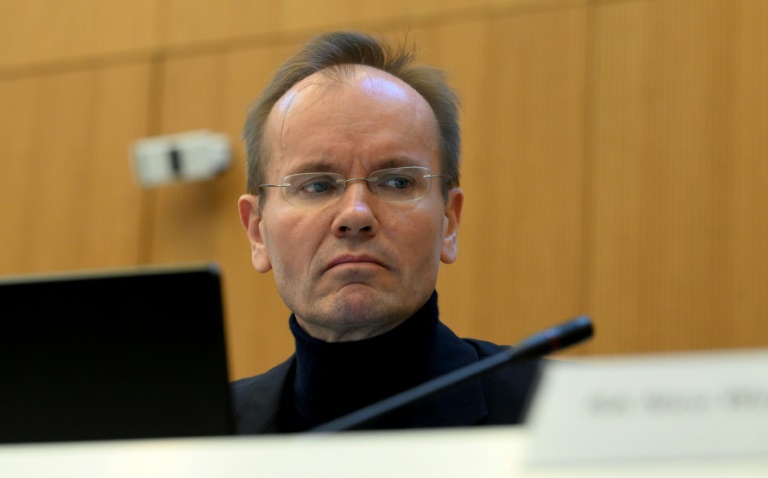
Wirecard’s ex-CEO Markus Braun and two former executives went on trial in Munich on Thursday charged with fraud over their involvement in Germany’s biggest-ever accounting scandal.

The trial in Munich comes two and a half years after digital payments firm Wirecard collapsed in spectacular fashion after admitting that 1.9 billion euros ($2 billion) missing from its accounts did not actually exist.

Chancellor Olaf Scholz, who was finance minister at the time of Wirecard’s implosion, described the scandal as “unparalleled” in Germany’s post-war history.

The keenly anticipated trial is being held in a high-security courtroom inside Munich’s sprawling Stadelheim prison complex.

Austrian-born Braun, who has been in custody since July 2020, appeared in court wearing his trademark black turtleneck under a suit jacket. 

The 53-year-old spoke only to confirm his personal details, and appeared to listen intently as prosecutors then read out the 90-page indictment. 

His lawyer is due to give a statement later in the day.

– Fugitive COO –

Braun faces charges of commercial gang fraud, breach of trust, false accounting and market manipulation.

He denies the allegations and claims to be a victim of the fraud, painting Wirecard’s fugitive former chief operating officer Jan Marsalek as the mastermind.

Marsalek, a shadowy figure with ties to foreign intelligence services, evaded arrest in 2020 by staging a daring escape from Austria by private jet. 

He was reported earlier this year to be hiding out in Russia.

Braun’s co-defendants are ex-accounting boss Stephan von Erffa and Oliver Bellenhaus, the former head of Wirecard’s Dubai subsidiary.

Bellenhaus has admitted wrongdoing and will act as a key witness for the prosecution.

If found guilty, the trio risk lengthy prison sentences.

But Bellenhaus’s lawyer, Florian Eder, told reporters he expected “a significantly reduced sentence” for his client given his cooperation with authorities.

The court has scheduled 100 trial dates for the complex case.

– Fake transactions –

The prosecution’s case centres around the claim that Wirecard executives inflated the company’s earnings, starting at least as far back as 2015, by inventing revenue streams from transactions with a web of partner companies.

These so-called Third Party Acquirer (TPA) companies in Dubai, the Philippines and Singapore accounted for a huge chunk of Wirecard’s sales and profits according to its books.

But “all the accused knew” that the revenues from these TPA businesses “didn’t exist”, the indictment reads, adding that the defendants used forged documents to hide the trickery.

The goal was “to increase the company’s financial strength and make it more attractive to investors and customers”, prosecutors allege.

Founded in 1999 as an outfit processing credit card payments for porn and gambling websites, Wirecard rose to become a respectable player in the booming “fintech” (financial technology) sector.

A favourite with investors, it entered Germany’s blue-chip DAX index in 2018 and at its peak was valued at more than 24 billion euros, outweighing giant Deutsche Bank.

Despite occasional speculation of wrongdoing at the company, Wirecard continued its meteoric rise.

– FT investigation –

But its troubles began in earnest in 2019 when the Financial Times published a series of explosive articles detailing accounting irregularities.

The scam finally unravelled when long-time auditor EY uncovered a 1.9-billion-euro hole in its accounts in June 2020.

The cash, which made up a quarter of Wirecard’s balance sheet, was meant to be sitting in trustee accounts at two banks in the Philippines.

But the Philippines’ central bank has said the cash never entered its monetary system and both Asian banks, BDO and BPI, denied having a relationship with Wirecard.

Wirecard’s share price tanked and it filed for insolvency soon after, leaving behind three billion euros in debt that creditors are unlikely to recover.

The company’s downfall sent shockwaves through Germany and prompted an overhaul of finance watchdog Bafin, which was heavily criticised for ignoring early warnings about Wirecard.

“The Wirecard scandal has damaged Germany’s reputation as a financial centre,” said Volker Bruehl, a professor at the Center for Financial Studies in Frankfurt.

King Charles coins enter UK circulation

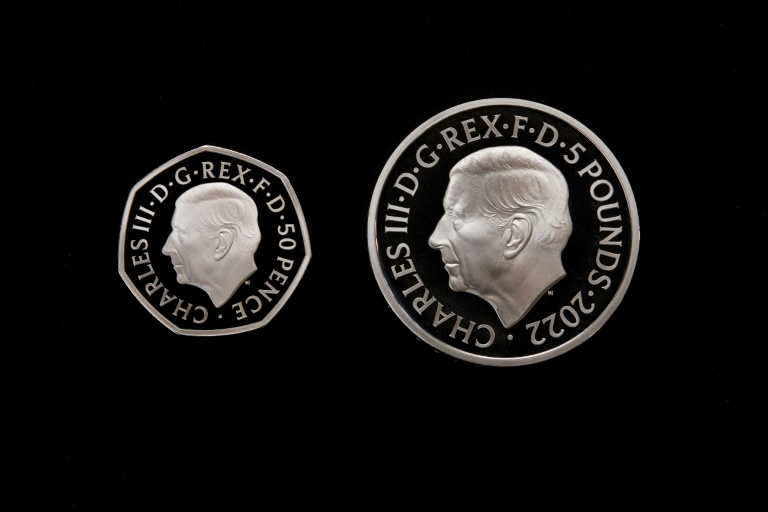
The first coins bearing the likeness of Britain’s King Charles III entered circulation Thursday, The Royal Mint announced.

The new 50 pence (60 US cent) piece features an effigy of Charles, who became king after the death of his mother Queen Elizabeth II in September.

The Royal Mint, official producer of UK banknotes and coins, is initially releasing 4.9 million of the coins via transactions made at the country’s postal offices.

Millions more will eventually enter use, with Charles’s head featuring on all denominations.

The effigy is the work of British sculptor Martin Jennings and was personally approved by the king.

Charles’s head faces left, in line with a tradition that the new monarch looks the opposite way to their predecessor.

The reverse side celebrates the life and legacy of Elizabeth, using the coin design for her coronation in 1953.

The coronation of Charles takes place on May 6.

Close Bitnami banner
Bitnami