US Business

In Netflix series, Harry slams press, family, over 'feeding frenzy'

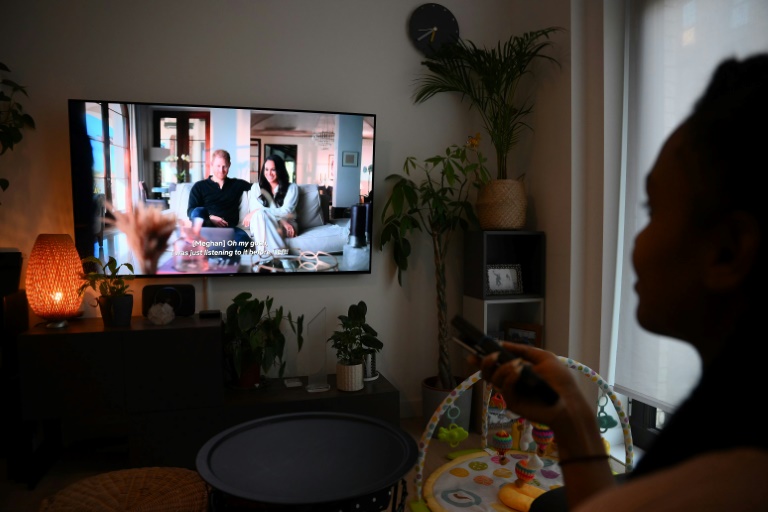
Prince Harry slammed the media “feeding frenzy” over his relationship with Meghan in an explosive Netflix docuseries aired Thursday and criticised Britain’s royal family for failing to protect her and his mother Diana.

The family has been braced for the first three episodes of the six-part series “Meghan & Harry”.

It was largely spared during the first episodes but was still on the end of accusations of “unconscious” racial bias and that it did not help Meghan or Diana after her 1992 separation from Harry’s father Charles, who is now king.

“To see another woman in my life who I love go through this feeding frenzy, that’s hard,” said Harry. “It is basically the hunter versus the prey.”

“The moment that she divorced, the moment she left the institution, then she was by herself… she was completely exposed to this,” Harry, 38, said of his mother, who died in a Paris car crash in 1997.

Meghan also took aim at the family for failing to counter negative press reports about her, saying “it was horrible, but I continued to hold the line, like say nothing”.

Her husband said the family ignored racist undertones in the reports.

“As far as a lot of the family were concerned, everything that she was being put through, they’d been put through as well. So it was almost like a rite of passage,” he said.

“I said the difference here is the race element.”

Harry went on to claim there was a “huge level of unconscious bias” within the family, with the documentary referencing a racist brooch worn by Princess Michael of Kent to an event that Meghan attended in 2017.

Harry reiterated feeling “ashamed” about being photographed wearing a Nazi uniform to a fancy-dress party in 2005, calling it “probably one of the biggest mistakes of my life”.

– ‘Explosive’ –

The documentary is lifting the lid on events that prompted the pair to quit royal life and move to the United States in 2020.

Several British newspapers said the couple had declared “war” on the royal family, which said Thursday that no family members had been approached to comment for the docuseries.

The first parts trace the budding love story, interspersed with personal photographs and videos of the early courtship, and their attempts to keep it a secret.

“When I got to meet ‘M’ I was terrified of her being driven away by the media, the same media that had driven so many other people away from me,” said Harry.

“I knew that the only way that this could possibly work is by keeping it quiet for as long as possible.”

The early episodes also focus on Harry’s childhood and difficult teen years, often with paparazzi in tow.

He describes how he found refuge in frequent trips to Africa, and in an apparent barb at his blood family, said: “I have a second family out there, a group of friends that literally brought me up.”

In another seeming dig at his older brother Prince William and wife Catherine, he said: “with many people in the family, especially the men, there can be a temptation or an urge to marry someone who would fit in the mould.”

But the most serious revelations about royal life and the breakdown of his relationship with William appear to be saved for the final three parts, due to be released on December 15. 

In reaction to Thursday’s episodes, journalist Piers Morgan, a frequent critic of the couple, accused of them of hypocrisy.

“‘It’s amazing what people will do when they’re offered a huge amount of money — hand over photographs to create a story’ — Prince Harry, who was paid £90 million by Netflix to hand over photos & create a story,” he tweeted. 

“This is so funny.”

– Racism claims –

Netflix showcased the first trailer last week just as William made his first trip to the US as heir to the throne, prompting accusations of sabotage.

The timing could barely have been worse for William after Buckingham Palace sacked one of his godmothers as a courtier for using racially charged language to a black British woman at a reception.

For some, the incident reinforced incendiary claims by mixed-race Meghan, 41, that racism within the royal household was one of the reasons for leaving.

The docuseries airs three months exactly since the death of Harry’s grandmother Queen Elizabeth II, and a month before the long-awaited publication of his memoirs, “Spare”.
Markets mostly fall as recession fears dampen China optimism

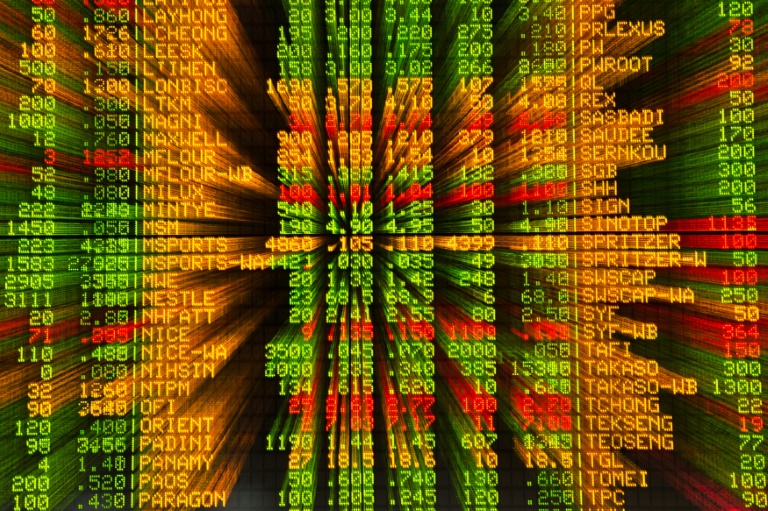
Hong Kong soared but other stock markets mostly fell Thursday as investors weighed worries about a US recession against China’s shift away from strict Covid restrictions.

Oil prices rebounded slightly from recent sharp losses.

“The risk-off sentiment… remains hard to kick into touch as concerns about recession stay front and centre,” noted Susannah Streeter, senior investment and markets analyst at Hargreaves Lansdown. 

“The evil twins of recession and persistently higher inflation are lurking, keeping investors on edge.”

Analysts pointed out that two-year US Treasury yields were much higher than those of 10-year bonds, which is usually considered a clear indication of a looming recession.

This week also saw the heads of some of Wall Street’s biggest banks warn of a downturn.

Traders are now steeling themselves for the release next week of crucial inflation figures and the Fed’s final policy meeting of the year, which will be pored over for an idea about its intentions in 2023.

The fear of a US recession is playing off against China’s shift away from its zero-Covid strategy of lockdowns and mass testing that has been blamed for clattering the world’s number two economy.

After widespread protests last month against the strict measures and calls for more political freedoms, authorities have scaled back many of them and on Wednesday announced a nationwide loosening of restrictions.

While there are worries that the more liberal approach will spark a surge in infections, it has helped fan a rally across markets, particularly in Hong Kong where Chinese tech firms and property developers are listed.

The Hang Seng Index closed up more than three percent Thursday.

“Developments in China have a big role to play, although as we’re seeing once again, Covid-related moves are almost exclusively impacting stocks in domestic markets,” said Craig Erlam, senior analyst at OANDA trading group. 

“We can see that again overnight, with reports of looser mask and isolation requirements in Hong Kong lifting the Hang Seng and making it the clear outperformer in the region, while most other indices tread water.”

– Key figures around 1200 GMT –

London – FTSE 100: FLAT at 7,488.65 points

Frankfurt – DAX: DOWN 0.3 percent at 14,217.20

Paris – CAC 40: DOWN 0.1 percent at 6,650.95

EURO STOXX 50: DOWN 0.2 percent at 3,912.11

Tokyo – Nikkei 225: DOWN 0.4 percent at 27,574.43 (close)

Hong Kong – Hang Seng Index: UP 3.4 percent at 19,450.23 (close)

Shanghai – Composite: DOWN 0.1 percent at 3,197.35 (close)

New York – Dow: FLAT at 33,597.92 (close)

Euro/dollar: UP at $1.0512 from $1.0510 on Wednesday

Dollar/yen: UP at 136.77 yen from 136.57 yen

Pound/dollar: DOWN at $1.2176 from $1.2209

Euro/pound: UP at 86.34 pence from 86.05 pence

Brent North Sea crude: UP 1.0 percent at $77.95 per barrel

West Texas Intermediate: UP 1.0 percent at $72.76 per barrel

China's Xi meets Saudi crown prince on high-stakes visit

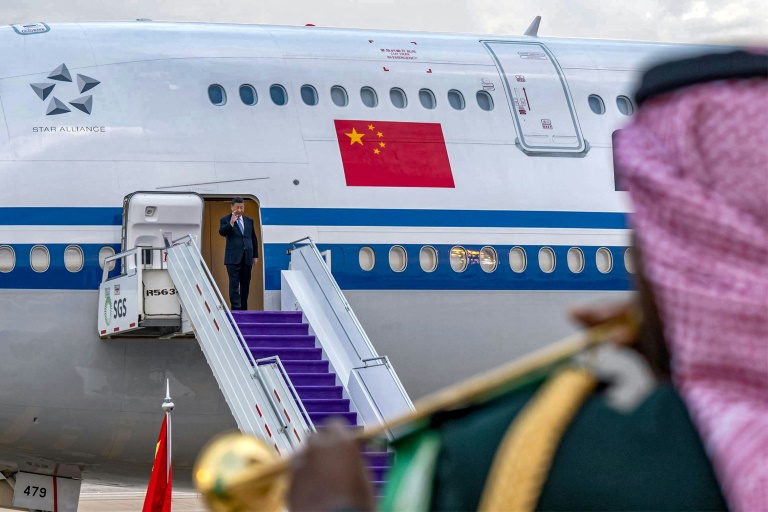
Chinese President Xi Jinping met Saudi Arabia’s powerful crown prince on Thursday on an Arab outreach visit that will yield billions of dollars in deals and has earned a rebuke from Washington. 

About $30 billion in agreements will be signed on Thursday, Saudi state media said, as China seeks to shore up its Covid-hit economy and as the Saudis, long-term US allies, push to diversify their economic and political alliances. 

Xi, who flew in on Wednesday, was greeted with a handshake by 37-year-old Crown Prince Mohammed bin Salman, de facto ruler of the world’s biggest oil exporter, at Yamamah Palace. 

The two men stood side-by-side as a brass band played their national anthems, then chatted as they walked into the palace, which is the king’s official residence and seat of the royal court. 

Arab leaders also began to converge on the Saudi capital ahead of a summit with Xi, the leader of the world’s number-two economy, who will hold separate talks with the six-member Gulf Cooperation Council before leaving on Friday.

China, the top consumer of Saudi oil, has been strengthening its ties with a region that has long relied on the United States for military protection but which has voiced concerns the American presence could be downgraded.

After Xi’s arrival on Wednesday, with formation jets flying overhead, Saudi state media announced 34 investment agreements in sectors including green hydrogen, information technology, transport and construction.

The official Saudi Press Agency did not provide details but said two-way trade totalled 304 billion Saudi riyals ($80 billion) in 2021 and 103 billion Saudi riyals ($27 billion) in the third quarter of 2022. 

State broadcaster Al Ekhbariya said another 20 agreements worth 110 billion riyals ($29.3 billion) were due to be signed on Thursday.

Riyadh-based diplomats said Thursday was expected to be devoted to meetings including with King Salman, the 86-year-old monarch, and his son, Prince Mohammed.

– ‘Raising pace’ of cooperation –

The crown prince sees China as a critical partner in his sweeping Vision 2030 agenda, seeking the involvement of Chinese firms in ambitious mega-projects meant to diversify the economy away from fossil fuels. 

Key Saudi projects include the futuristic $500 billion megacity NEOM, a so-called cognitive city that will depend heavily on facial recognition and surveillance technology. 

Saudi investment minister Khalid al-Falih said this week’s visit “will contribute to raising the pace of economic and investment cooperation between the two countries”, offering Chinese companies and investors “rewarding returns”, according to SPA. 

Xi may also hold bilateral talks before the summit meetings with other Arab leaders who have arrived in Saudi Arabia ahead of Friday’s summits, Riyadh-based diplomats said. 

Egyptian President Abdel Fattah al-Sisi, Tunisian President Kais Saied, Palestinian president Mahmud Abbas and Sudan’s de facto leader Abdel Fattah al-Burhan were all flying in on Thursday.

Iraqi Prime Minister Mohammed Shia al-Sudani, Moroccan Prime Minister Aziz Akhannouch and Lebanese caretaker Prime Minister Najib Mikati have also confirmed their attendance.

China’s foreign ministry this week described Xi’s trip as the “largest-scale diplomatic activity between China and the Arab world” since the People’s Republic of China was founded. 

It has not escaped the attention of the White House, which warned of “the influence that China is trying to grow around the world”, calling its objectives “not conducive to preserving the international rules based order”. 

Washington has long been a close partner of Riyadh, but the relationship is currently roiled by disagreements on energy policy, US security guarantees and human rights. 

Xi is making just his third journey overseas since the Covid pandemic prompted China to shut its borders and embark on a series of lockdowns, putting the brakes on its giant economy.

His visit follows US President Joe Biden’s trip in July, when he greeted Prince Mohammed with a fist-bump at the start of a vain attempt to convince the Saudis to raise oil production.

Huge Wirecard fraud trial opens in Germany

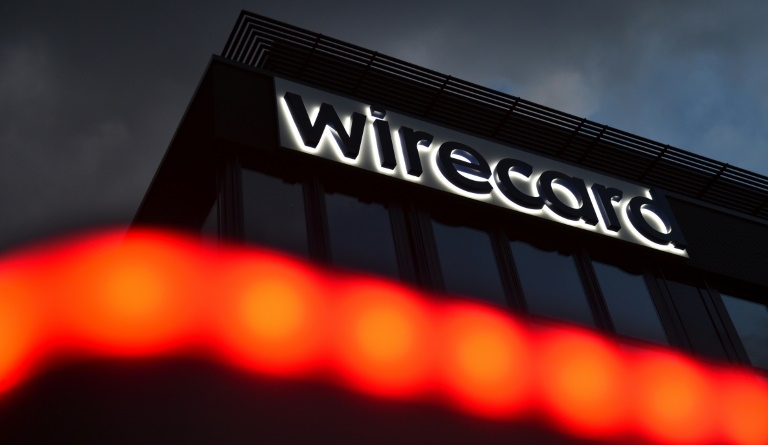
Germany’s mammoth Wirecard fraud trial opened on Thursday, with ex-CEO Markus Braun and two former executives in the dock over their roles in the country’s biggest-ever accounting scandal.

The trial in Munich comes two and a half years after digital payments firm Wirecard collapsed in spectacular fashion after admitting that 1.9 billion euros ($2 billion) missing from its accounts didn’t actually exist.

Chancellor Olaf Scholz, who was finance minister at the time of Wirecard’s implosion, described the scandal as “unparalleled” in Germany’s post-war history.

The first day of the high-profile trial, held in a high-security courtroom inside Munich’s sprawling Stadelheim prison complex, will mainly consist of prosecutors reading out the 90-page indictment.

Notably absent from the trial will be Wirecard’s former chief operating officer Jan Marsalek, a shadowy figure with ties to foreign intelligence agencies.

Marsalek evaded arrest in 2020 by staging a daring escape from Austria by private jet. He was reported earlier this year to be hiding out in Russia.

Wirecard’s veteran CEO Braun, in custody since July 2020, faces charges of commercial gang fraud, breach of trust, accounting fraud and market manipulation.

The 53-year-old denies the allegations and claims to be a victim of the fraud, painting Marsalek as the mastermind.

His co-accused are ex-accounting boss Stephan von Erffa and Oliver Bellenhaus, the former head of Wirecard’s Dubai subsidiary.

Bellenhaus has admitted wrongdoing and will act as a key witness for the prosecution.

If found guilty, the trio risk lengthy prison sentences.

The court has scheduled 100 trial dates for the complex case.

– Fake transactions –

The prosecution’s case centres around the claim that Wirecard executives inflated the company’s earnings, starting at least as far back as 2015, by inventing revenue streams from transactions with a web of partner companies.

These so-called Third Party Acquirer (TPA) companies in Dubai, the Philippines and Singapore accounted for a huge chunk of Wirecard’s sales and profits according to its books.

But “all the accused knew” that the revenues from these TPA businesses “didn’t exist”, the indictment reads, adding that the defendants used forged documents to hide the trickery.

The goal was “to increase the company’s financial strength and make it more attractive to investors and customers”, prosecutors allege.

Founded in 1999 as an outfit processing credit card payments for porn and gambling websites, Wirecard rose to become a respectable player in the booming “fintech” (financial technology) sector.

A favourite with investors, it entered Germany’s blue-chip DAX index in 2018 and at its peak was valued at more than 24 billion euros, outweighing giant Deutsche Bank.

Despite occasional speculation of wrongdoing at the company, Wirecard continued its meteoric rise.

– FT investigation –

But its troubles began in earnest in 2019 when the Financial Times published a series of explosive articles detailing accounting irregularities.

The scam finally unravelled when long-time auditor EY uncovered a 1.9-billion-euro hole in its accounts in June 2020.

The cash, which made up a quarter of Wirecard’s balance sheet, was meant to be sitting in trustee accounts at two banks in the Philippines.

But the Philippines’ central bank has said the cash never entered its monetary system and both Asian banks, BDO and BPI, denied having a relationship with Wirecard.

Wirecard’s share price tanked and it filed for insolvency soon after, leaving behind three billion euros in debt that creditors are unlikely to recover.

The company’s downfall sent shockwaves through Germany and prompted an overhaul of finance watchdog Bafin, which was heavily criticised for ignoring early warnings about Wirecard.

Many people simply “didn’t want to believe that fraudsters were at work” at a company long hailed as a German champion, said Volker Bruehl, a professor at the Center for Financial Studies in Frankfurt.

“The Wirecard scandal has damaged Germany’s reputation as a financial centre.”

Putin says nuclear tensions 'rising' but Moscow won't deploy first

Russian President Vladimir Putin said Wednesday that nuclear tensions were rising, though he insisted “we have not gone crazy” and Moscow would not be the first to deploy atomic weapons in the Ukraine conflict.

Speaking more than nine months after his forces launched their military operation, Putin warned the conflict could be “lengthy”.

Russian forces have missed most of their key military goals since February, raising fears that the battlefield stalemate could see Russia resort to its nuclear arsenal to achieve a breakthrough. 

“We have not gone crazy, we are aware of what nuclear weapons are,” Putin said Wednesday at a meeting of his human rights council. 

“We are not going to brandish them like a razor while running around the world.”

But he acknowledged the growing tensions, saying “such a threat is rising. Why make a secret out of it here?” 

He added, however, that Russia would use a nuclear weapon only in response to an enemy strike. 

“When we are struck, we strike back,” Putin said, stressing that Moscow’s strategy was based on a “so-called retaliatory strike” policy.

“But if we aren’t the first to use it under any circumstances, then we will not be the second to use them either, because the possibilities of using them in the event of a nuclear strike against our territory are very limited,” he said.

His comments drew an immediate rebuke from the US.

“We think any loose talk of nuclear weapons is absolutely irresponsible,” US State Department spokesman Ned Price told reporters.

“It is dangerous, and it goes against the spirit of that statement that has been at the core of the nuclear non-proliferation regime since the Cold War,” he said.

German Chancellor Olaf Scholz, however, declared that the risk of nuclear weapons being used in the Ukraine conflict has lessened thanks to international pressure heaped on Russia. 

“One thing has changed for the time being: Russia has stopped threatening to use nuclear weapons,” Scholz said in an interview with Germany’s Funke media group, saying it was “in response to the international community marking a red line”.

“The priority now is for Russia to end the war immediately and withdraw its troops,” he added. 

– Azov Sea –

Intense shelling continued along the front in eastern Ukraine, with President Volodymyr Zelensky announcing that strikes in Donetsk region’s Kurakhove killed 10 civilians on Wednesday. 

“The Russian army carried out a very brutal, absolutely deliberate strike at Kurakhove, precisely at civilians,” the president — who was named Time Magazine’s “Person of the Year” earlier in the day — said during his nightly address.

The shelling in Kurakhove comes a day after Ukrainian artillery strikes killed six people in the Donetsk region’s capital city of the same name, according to the Moscow-installed mayor.

Moscow had expected the fighting to last just days, but more than nine months after its forces entered Ukraine, Putin said its military operation could be a “lengthy process”. 

But he praised the announced annexation of four Ukrainian territories following September referendums held by Moscow proxies — denounced in the West as a sham.

“New territories appeared — well, this is still a significant result for Russia,” Putin said, referring to Donetsk, Lugansk, Kherson and Zaporizhzhia regions. 

He also made special reference to Russia’s gaining control of all the land along the Azov Sea.

“The Azov Sea has become an internal sea to the Russian Federation, that’s a serious thing,” he noted. 

Despite its best efforts, Russian troops at no point have entirely controlled any of the annexed territories and were even forced out from the capital of Kherson after a months-long Ukraine counter-offensive.

Amid domestic fears of a new callup — which triggered an exodus of Russians abroad in September to avoid an emergency draft — Putin said “there is no need” for a new mobilisation. 

“Out of 300,000 of our mobilised fighters, our men, defenders of the fatherland, 150,000 are in the area of operations,” including 77,000 in combat units, he said. 

– Person of the Year –

Meanwhile, Zelensky basked in unwavering support from the West as Time chose him as its most important global figure for 2022 — a title Putin himself received in 2007.

“In the weeks after Russian bombs began falling on Feb. 24, his decision not to flee Kyiv but to stay and rally support was fateful,” said Time editor-in-chief Edward Felsenthal.

“Whether the battle for Ukraine fills one with hope or with fear, Volodymyr Zelensky galvanized the world in a way we haven’t seen in decades.”

Markets mixed as recession fears dampen China optimism

Asian and European markets were mixed Thursday as sentiment was pulled in opposite directions by worries about a US recession and China’s shift away from strict Covid restrictions.

A rally across equities at the start of the month has been hobbled this week by growing concerns that the Federal Reserve’s drive to rein inflation back from 40-year highs will spark a downturn and skittle company profits.

The US central bank has ramped up interest rates through 2022, including bumper increases of 75 basis points at its past four meetings.

And while data for October showed inflation appeared to be coming down — lifting hopes the Fed could take its foot off the pedal — forecast-busting figures on jobs creation and services sector activity suggested officials still had work to do to cool prices.

Analysts pointed out that two-year Treasury yields were much higher than those of 10-year bonds, which is usually considered a clear indication of a looming recession.

This week also saw the heads of some of Wall Street’s biggest banks warn of a downturn.

After sinking on Friday and Monday, New York’s three main indexes suffered another disappointing day Tuesday with the S&P 500 down for a fifth straight day and the Dow the best performer after ending barely changed.

The losses continued in Asia with Tokyo, Sydney, Seoul, Taipei, Bangkok and Jakarta all in the red.

Traders are now steeling themselves for the release next week of crucial inflation figures and the Fed’s final policy meeting of the year, which will be pored over for an idea about its intentions for 2023.

– Good news, bad news –

“The good news is that the market sees more than a reasonable chance of the Fed reversing gears next year, mainly in response to a downturn,” said Stephen Innes at SPI Asset Management.

“But the bad news is we are likely to fall into recession thanks in no small part to the lagged impact of the most aggressive Fed tightening campaign since (former Fed boss) Paul Volcker” in the 1980s.

The fear of a US recession is playing off against China’s shift away from its zero-Covid strategy of lockdowns and mass testing that has been blamed for clattering the world’s number two economy.

After widespread protests last month against the strict measures and calls for more political freedoms, authorities have scaled back many of them and on Wednesday announced a nationwide loosening of restrictions.

While there are worries that the more liberal approach will spark a surge in infections, it has helped fan a rally across markets, particularly in Hong Kong where Chinese tech firms and property developers are listed.

The Hang Seng Index has soared more than 30 percent since the end of October, and while it stumbled Wednesday, it rose more than three percent Thursday helped by reports leaders were planning to further ease Covid rules in the city.

There were also gains in Singapore, Mumbai and Wellington, but Shanghai ended slightly lower.

London dipped at the open but Paris and Frankfurt rose.

On oil markets both main contracts bounced after suffering hefty selling over the previous four days as demand concerns caused by a possible recession offset China’s reopening.

A jump in US gasoline stockpiles added to the downbeat mood among traders, with WTI sitting at its lowest levels of the year and Brent at its weakest since January.

– Key figures around 0820 GMT –

Tokyo – Nikkei 225: DOWN 0.4 percent at 27,574.43 (close)

Hong Kong – Hang Seng Index: UP 3.4 percent at 19,450.23 (close)

Shanghai – Composite: DOWN 0.1 percent at 3,197.35 (close)

London – FTSE 100: DOWN 0.2 percent at 7,477.55

Euro/dollar: UP at $1.0522 from $1.0510 on Wednesday

Dollar/yen: UP at 136.78 yen from 136.57 yen

Pound/dollar: DOWN at $1.2200 from $1.2209

Euro/pound: UP at 86.23 pence from 86.05 pence

West Texas Intermediate: UP 0.8 percent at $72.60 per barrel

Brent North Sea crude: UP 0.7 percent at $77.70 per barrel

New York – Dow: FLAT at 33,597.92 (close)

'Downton Shabby': US producer quits Hollywood to do up UK family pile

As a child, Hopwood DePree heard stories about the family owning an ancestral country home in England but always thought it was the stuff of legends. 

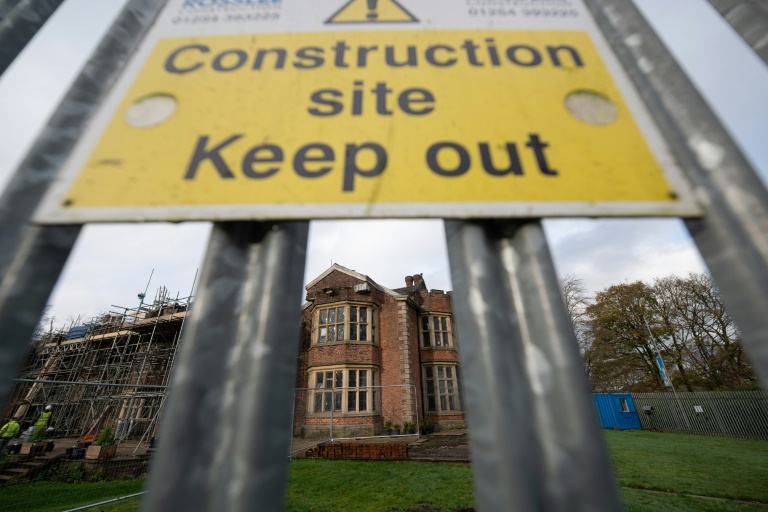
That was until the Hollywood producer tracked down a red-brick 15th century pile with 60 rooms in the countryside in northwest England.

In 2017 the American quit California to live full-time near Manchester and restore the building, which had fallen into a state of disrepair, to its former glory.

The unlikely chain of events began one evening in 2013 when DePree was looking on a genealogy website and found an old photo of the property.

“My gosh. It’s the place my grandfather was talking about,” he recalls thinking. 

The property was Hopwood Hall, explaining DePree’s unusual first name passed down the generations, which he had always felt embarrassed about.

Soon afterwards DePree got on a plane on a mission to find Hopwood Hall, “just out of curiosity”.

His arrival was inauspicious: when he pushed open the door, there were rodents and part of the roof had collapsed.

But coming from Los Angeles, he remembers his sense of “emotion” at being surrounded by history: the original chimneys and doors and the nursery where his ancestors were born.

Locals who showed DePree around were quick to warn that “if nothing is done in the next five to 10 years, it would crumble and turn into a ruin and be lost forever,” he told AFP.

Hopwood Hall had been abandoned for decades.

The owners, distant relatives of Hopwood, died without an heir after their two sons were killed in World War I.

It was then used to make uniforms during World War II before being taken over by monks. 

– ‘Downton Shabby’ –

Five years have now passed since DePree began his renovations. 

The results are still far from Downton Abbey, the fictional stately home that is the setting for the hit British television series about an aristocratic family in the early 1900s.

DePree has written a book about the restoration process called “Downton Shabby”, detailing his new life in glowing terms despite the slow progress.

“Everywhere you look, there’s something to do,” says the 52-year-old, who fits the Hollywood mould with his blond hair and blue eyes.

“I knew it was a massive project, but I had no idea of the many challenges, the delays… It’s exciting.”

Touring the building site in a hard hat, DePree warns of a hole in the parquet floor or a badly placed beam, while construction workers repair the building’s facade.

The 39 chimneys are being renovated, along with part of the roof. Now the most urgent task is to finish the windows.

He calls it “a race against time, above all with the heavy rains here” — and the bats.

Despite the dilapidation, treasures have survived the ravages of time and robbers: the family crest on the chimney pieces, intricate wood carvings and the lozenge-shaped stained-glass windows.

One of the fireplaces was a gift from the poet Lord Byron, DePree said. The Romantic poet wrote many of his verses in the castle.

The composer Frederic Chopin played in the banqueting hall.

In the 1970s, such abandoned places began attracting various subcultures and Beatle John Lennon is rumoured to have visited. Street art painted on the walls dates back to this era.

– Concerts and weddings –

Hopwood has launched a YouTube channel where he shares his adventures and draws mockery for his meagre DIY skills. 

“I try to learn. But that’s not my strength,” he says. “Most of the project, I do it behind my computer”. 

DePree is seeking further investment as the project is set to cost around another £10 million ($12.2 million).

Several charitable foundations, including Historic England, are contributing financially, as are Rochdale Borough Council, local residents and of course DePree himself.

“We need private investment,” he explains.

Some local people have been helping out on the building site. 

“Many in the community have a link with Hopwood. Their ancestors used to work here. It was one of the biggest employers in the area,” DePree says.

Now, the house is in one of England’s most deprived regions.

Hopwood Hall should eventually become a community hub, used for concerts and exhibitions and wedding parties in the gardens.

DePree hopes to finish in five years.

“I miss the sun in LA. Sometimes my friends call me from the beach and it’s pouring rain here,” he says.

“I have no regrets. This does feel like home.”

Surveillance, hacking: whistleblower recalls Wirecard nightmare

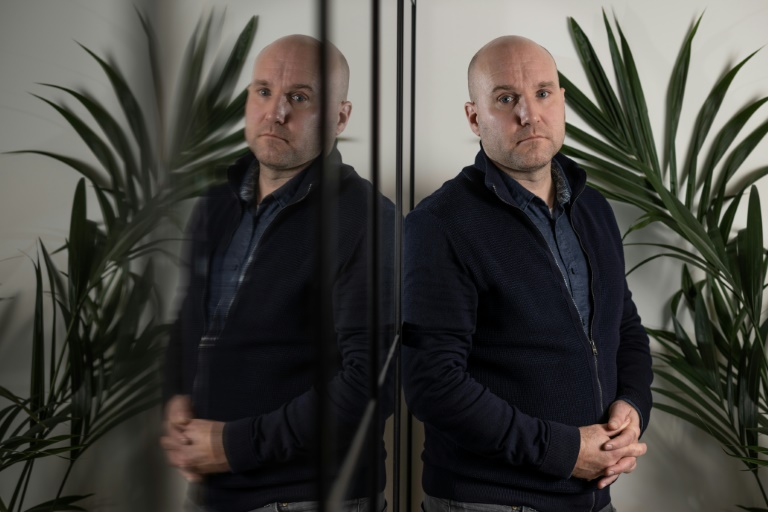
When short seller Matthew Earl anonymously co-authored a report detailing explosive allegations of wrongdoing at German fintech champion Wirecard, his life was turned upside down. 

Within months of the research’s publication in 2016, the London-based investor says the company tracked him down, placed him under surveillance, and began trying to hack into his emails. 

Followed and photographed, he became so fearful for his family’s safety that people picking up his children from school needed to use a special password. 

“It was incredibly stressful — you didn’t know what their intentions were,” Earl, now managing partner of hedge fund ShadowFall, told AFP.

“The problem is that as an individual, you don’t really have the resources to deter that.”

In contrast, Wirecard had “the resources of a small nation” to target their critics, he added. 

Rather than triggering investigations into Wirecard, Earl’s report led to German authorities launching a probe into him for alleged market manipulation.

Ultimately however, Earl and a handful of others who sought to blow the whistle on Wirecard’s wrongdoings were vindicated when the firm collapsed in 2020 after admitting to a huge hole in its accounts.

They will be paying close attention when ex-CEO Markus Braun goes on trial in Munich Thursday over the biggest fraud scandal in post-war Germany.

Braun, who will stand trial alongside two other former Wirecard executives accused of fraud and account rigging, denies wrongdoing.

“I will be following the trial with great interest,” Earl said during a recent interview.

– ‘Homegrown champion’ –

The 101-page report by Earl and another investor Fraser Perring, put out by a little-known outfit called Zatarra Research, linked Wirecard to money-laundering related to processing payments for gambling websites, as well as fraud.

The report initially caused Wirecard’s share price to fall. 

But the firm furiously denied any wrongdoing, and soon afterwards Earl was targeted.

“Ultimately, they had their liberty at stake — so you’re going to do quite a lot to protect your liberty,” the 43-year-old said.

Germany’s market regulator Bafin lodged a complaint against Earl, and prosecutors in Munich, close to where Wirecard was founded, then began investigating.

With scepticism from Earl and other critics silenced, the following years saw the company’s star rise. 

Wirecard’s shares soared, it joined the blue-chip DAX index, and was held up by German politicians as a rare tech star from a country better known for older industrial giants in sectors like car making and chemicals.

This desire to defend a modern-day success story blinded authorities in Europe’s top economy to multiple warning signs over years, critics say. 

“Wirecard was essentially their answer to the titans of Silicon Valley, it was a homegrown champion,” said Earl.

– ‘More open-minded’ –

The scandal finally unravelled when the Financial Times published a series of articles about accounting irregularities at Wirecard’s Asian units. 

The company also sought to shut down investigations by the FT, which reported on the scandal for several years.

But in June 2020, Wirecard admitted that 1.9 billion euros ($2 billion) meant to be held in two Philippine accounts likely didn’t exist, precipitating the firm’s implosion.

When Wirecard finally collapsed, it was a huge relief for Earl. 

After being targeted following his report’s publication, he had largely kept quiet publicly about Wirecard, although he continued to warn about its problems in private. 

Munich prosecutors had already shelved their investigations into him, and in 2019 he gave evidence as a witness to help in their probe into Wirecard. 

He also gave evidence to a German parliamentary inquiry into the mammoth scandal, where he received an apology. 

The fraud rocked Germany’s business and political establishments, and led to an overhaul of Bafin. 

Among other things, the watchdog has strengthened its procedures for whistleblowers, and has been receiving a steadily growing number of tip-offs in recent years.

After facing such a difficult time, Earl hopes that lessons can be drawn from the scandal. 

Authorities should be “more open-minded in terms of critics of companies, be they short sellers or journalists,” he said. 

Huge Wirecard fraud trial opens in Germany

Germany’s mammoth Wirecard fraud trial opens on Thursday, with ex-CEO Markus Braun and two former executives in the dock over their roles in the country’s biggest-ever accounting scandal.

The trial in Munich comes two and a half years after digital payments firm Wirecard collapsed in spectacular fashion after admitting that 1.9 billion euros ($2 billion) missing from its accounts didn’t actually exist.

Chancellor Olaf Scholz, who was finance minister at the time, described the scandal as “unparalleled” in Germany’s post-war history.

Notably absent from the courtroom will be Wirecard’s former chief operating officer Jan Marsalek, a shadowy figure with ties to foreign intelligence agencies.

Marsalek evaded arrest in 2020 by staging a daring escape from Austria by private jet. He was reported earlier this year to be hiding out in Russia.

Wirecard’s veteran CEO Braun, in custody since July 2020, faces charges of commercial gang fraud, breach of trust, accounting fraud and market manipulation.

The 53-year-old denies the allegations and claims to be a victim of the fraud, painting Marsalek as the mastermind.

His co-accused are ex-accounting boss Stephan von Erffa and Oliver Bellenhaus, the former head of Wirecard’s Dubai subsidiary.

Bellenhaus has admitted wrongdoing and will act as a key witness for the prosecution.

If found guilty, the trio risk lengthy prison sentences.

The opening day of the high-profile trial, held in a sprawling prison building in Munich, will mainly consist of prosecutors reading out the 90-page indictment.

The court has scheduled 100 trial dates for the complex case.

– Fake transactions –

The prosecution’s case centres around the claim that Wirecard executives inflated the company’s earnings, starting at least as far back as 2015, by inventing revenue streams from transactions with a web of partner companies.

These so-called Third Party Acquirer (TPA) companies in Dubai, the Philippines and Singapore accounted for a huge chunk of Wirecard’s sales and profits according to its books.

But “all the accused knew” that the revenues from these TPA businesses “didn’t exist”, the indictment reads, adding that the defendants used forged documents to hide the trickery.

The goal was “to increase the company’s financial strength and make it more attractive to investors and customers”, prosecutors allege.

Founded in 1999 as an outfit processing credit card payments for porn and gambling websites, Wirecard rose to become a respectable player in the booming “fintech” (financial technology) sector.

A favourite with investors, it entered Germany’s blue-chip DAX index in 2018 and at its peak was valued at more than 24 billion euros, outweighing giant Deutsche Bank.

Despite occasional speculation of wrongdoing at the company, Wirecard continued its meteoric rise.

– FT investigation –

But its troubles began in earnest in 2019 when the Financial Times published a series of explosive articles detailing accounting irregularities.

The scam finally unravelled when long-time auditor EY uncovered a 1.9-billion-euro hole in its accounts in June 2020.

The cash, which made up a quarter of Wirecard’s balance sheet, was meant to be sitting in trustee accounts at two banks in the Philippines.

But the Philippines’ central bank has said the cash never entered its monetary system and both Asian banks, BDO and BPI, denied having a relationship with Wirecard.

Wirecard’s share price tanked and it filed for insolvency soon after, leaving behind three billion euros in debt that creditors are unlikely to recover.

The company’s downfall sent shockwaves through Germany and prompted an overhaul of finance watchdog Bafin, which was heavily criticised for ignoring early warnings about Wirecard.

Many people simply “didn’t want to believe that fraudsters were at work” at a company long hailed as a German champion, said Volker Bruehl, a professor at the Center for Financial Studies in Frankfurt.

“The Wirecard scandal has damaged Germany’s reputation as a financial centre.”

Arctic Sweden in race for Europe's satellite launches

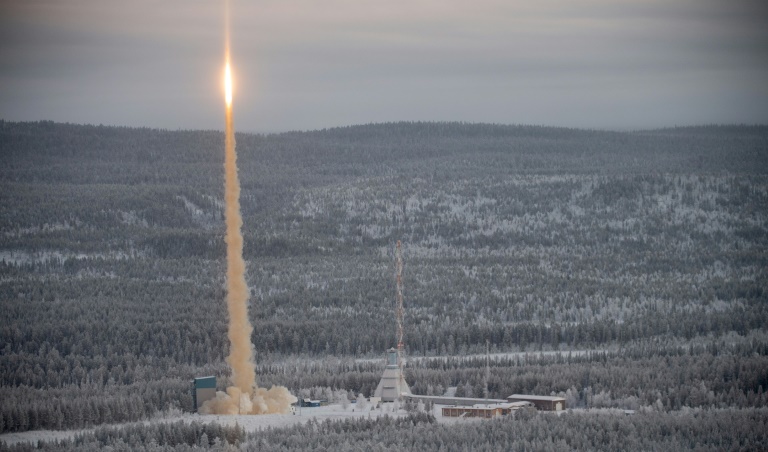
As the mercury drops to minus 20 Celsius, a research rocket lifts off from one of the world’s northernmost space centres, its burner aglow in the twilight of Sweden’s snowy Arctic forests.

Hopes are high that rockets like this could carry satellites as early as next year, in what could be the first satellite launch from a spaceport in continental Europe. 

At the launch pad, about an hour from the mining town of Kiruna, there’s not a person in sight, only the occasional reindeer herd. 

The vast deserted forests are the reason the Swedish space centre is located here, at the foot of “Radar Hill”, some 200 kilometres (124 miles) above the Arctic Circle.

“In this area we have 5,200 square kilometres (2,007 square miles) where no one lives, so we can easily launch a rocket that flies into this area and falls down without anyone getting harmed,” Mattias Abrahamsson, head of business development at the Swedish Space Corporation (SSC), tells AFP.

Founded by the European Space Agency (ESA) in 1966 to study the atmosphere and Northern Lights phenomenon, the Esrange space centre has invested heavily in its facilities in recent years to be able to send satellites into space.

At a huge new hangar big enough to house two 30-meter rockets currently under assembly elsewhere, Philip Pahlsson, head of the “New Esrange” project, pulls up a heavy blue door.

Under the rosy twilight of this early afternoon, construction machines nearby can be seen busily completing work on three new launch pads.

“Satellite launches will start to take place from here next year,” Pahlsson says.

“This has been a major development, the biggest step we have taken since the inception of Esrange.”

More than 600 suborbital rockets have already been launched from this remote corner of Sweden’s far north, including the Suborbital Express 3 whose late November launch AFP witnessed as the temperature stood at -20 degrees Celsius, or minus four degrees Fahrenheit. 

While these rockets are capable of reaching space at altitudes of 260 kilometres, they’re not able to orbit Earth.

– Booming business –

But with Europe gearing up to send its first satellite into space soon, Esrange is looking forward to joining a select club of space centres that include Baikonur in Kazakhstan, Cape Canaveral in Florida, and Europe’s space hub in South America, Kourou in French Guiana.

Various projects in Europe — in Portugal’s Azores, Norway’s Andoya island, Spain’s Andalusia and the UK’s Shetland Islands among others — are all vying to launch the first satellite from the European continent.

“We think we are clearly the most advanced,” says the SSC, which is aiming to launch at the end of 2023 or early 2024.

The satellite industry is booming, and the Swedish state-owned company is in discussions with several rocket makers and clients who want to put their satellites in orbit.

With a reusable rocket project called Themis, Esrange will also host ESA’s trials of rockets able to land back on Earth, like those of SpaceX billionaire Elon Musk.

While the Plesetsk base in northwestern Russia carried out several satellite launches in the post-Cold War period, no other country in Europe has done so.

– Small satellites driving demand –

So why is the continent — so far from the Equator, which is more suited for satellite launches — suddenly seeing such a space industry boom?

“Satellites are becoming smaller and cheaper, and instead of launching one big satellite you spread it out over multiple small satellites and that drives the demand,” explains Pahlsson.

More objects were launched into space in 2021 than ever before. And more records are set to be broken in the coming years.

Orbiting the North and South Poles is enough for many satellites, making sites like Esrange more attractive.

In addition, having a launch site close to European clients spares them and their satellites long boat journeys to Kourou.

In Sweden, like in the rest of Europe, the rockets being developed are “micro-rockets”.

These are around 30 metres long, capable of carrying a payload of several hundred kilos. In the future, SSC is aiming for payloads of more than a tonne.

But working in the harsh Arctic climate “comes with challenges”, SSC says.

With temperatures regularly dropping to -20 or -30 degrees Celsius, special attention needs to be paid to the metals used, which become more fragile in the cold.

The war in Ukraine — where the engines for the European Vega rocket are manufactured — and the abrupt end to the West’s space cooperation with Russia have meanwhile increased interest in having spaceports on the continent.

“Europe needs independent access to space. The horrible situation in Ukraine has changed the space business,” notes Pahlsson.

Close Bitnami banner
Bitnami