US Business

World economy faces more pain in 2023 after a gloomy year

This was supposed to be the comeback year for the world economy following the Covid pandemic.

Instead, 2022 was marked by a new war, record inflation and climate-linked disasters. It was a “polycrisis” year, a term popularised by historian Adam Tooze.

Get ready for more gloom in 2023.

“The number of crises has increased since the start of the century,” said Roel Beetsma, professor of macroeconomics at the University of Amsterdam

“Since World War Two we have never seen such a complicated situation,” he told AFP.

After the Covid-induced economic crisis of 2020, consumer prices began to rise in 2021 as countries emerged from lockdowns or other restrictions.

Central bankers insisted that high inflation would only be temporary as economies returned to normal. But Russia’s invasion of Ukraine in late February sent energy and food prices soaring.

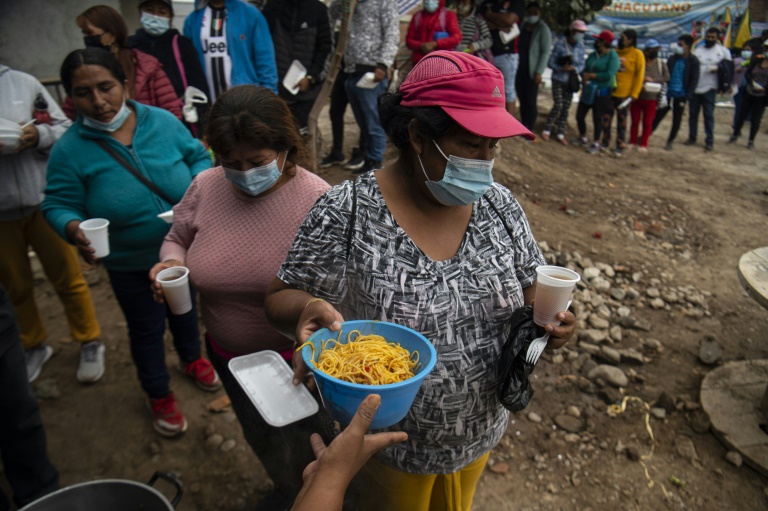
Many countries are now grappling with cost-of-living crises because wages are not keeping up with inflation, forcing households to make difficult choices in their spending.

“Everything has become more expensive, from cream to wine and electricity,” said Nicole Eisermann from her stand at the Frankfurt Christmas market.

Central banks played catch-up. They started to raise interest rates this year in an effort to tame galloping inflation — at the risk of tipping countries into deep recessions, since higher borrowing costs mean slower economic activity.

Inflation has finally started to slow down in the United States and the eurozone. 

– Careful spending –

Consumer prices in the Group of 20 developed and emerging nations are expected to reach eight percent in the fourth quarter before falling to 5.5 percent next year, according to the Organisation for Economic Cooperation and Development.

The OECD encourages governments to provide aid to bring relief to households.

In the 27-nation European Union, 674 billion euros ($704 billion) have been earmarked so far to shield consumers from high energy prices, according to the Bruegel think tank.

Germany, Europe’s biggest economy and the most dependent on Russia energy supplies, accounts for 264 billion euros of that total.

One in two Germans say they now only spend on essential items, according to a survey by EY consultancy.

“I am very careful but I have a lot of children and grandchildren,” said Guenther Blum, a shopper at the Frankfurt Christmas market.

Rising interest rates have also hurt consumers and businesses, though US Federal Reserve chairman Jerome Powell signalled last week that the pace of hikes could ease “as soon as” December.

He warned, however, that policy will probably have to remain tight for some time to restore price stability.

For her part, European Central Bank president Christine Lagarde sent a clear signal that the ECB would maintain its tightening policy, saying that eurozone inflation had yet to peak.

Economists expect Germany and another major eurozone economy, Italy, to fall into recession. Britain’s economy is already shrinking. Rating agency S&P Global foresees stagnation for the eurozone in 2023.

But the International Monetary Fund still expects the world economy to expand in 2023, with growth of 2.7 percent. The OECD is forecasting 2.2-percent growth.

The coronavirus pandemic, meanwhile, remains a wildcard for the global economy.

China’s zero-Covid policy restrained growth in the world’s second biggest economy, but the authorities have started to relax restrictions following nationwide protests.

– Climate costs –

But for Beetsma, the biggest crisis is climate change, which is “happening in slow motion”.

Natural and man-made catastrophes have caused $268 billion in economic losses so far in 2022, according to reinsurance giant Swiss Re. Hurricane Ian alone cost an estimated insured loss of $50-65 billion.

Floods in Pakistan resulted in $30 billion in damage and economic loss this year.

Governments agreed at United Nations climate talks (COP27) in Egypt in November to create a fund to cover the losses suffered by vulnerable developing countries devastated by natural disasters.

But the COP27 summit ended without new commitments to phase out the use of fossil fuels, despite the need to cut greenhouse gas emissions and slow global warming.

“It is not an acute crisis but a very long-term crisis, protracted,” Beetsma said. “If we don’t do enough this will hit us in unprecedented scale.”

World economy faces more pain in 2023 after a gloomy year

This was supposed to be the comeback year for the world economy following the Covid pandemic.

Instead, 2022 was marked by a new war, record inflation and climate-linked disasters. It was a “polycrisis” year, a term popularised by historian Adam Tooze.

Get ready for more gloom in 2023.

“The number of crises has increased since the start of the century,” said Roel Beetsma, professor of macroeconomics at the University of Amsterdam

“Since World War Two we have never seen such a complicated situation,” he told AFP.

After the Covid-induced economic crisis of 2020, consumer prices began to rise in 2021 as countries emerged from lockdowns or other restrictions.

Central bankers insisted that high inflation would only be temporary as economies returned to normal. But Russia’s invasion of Ukraine in late February sent energy and food prices soaring.

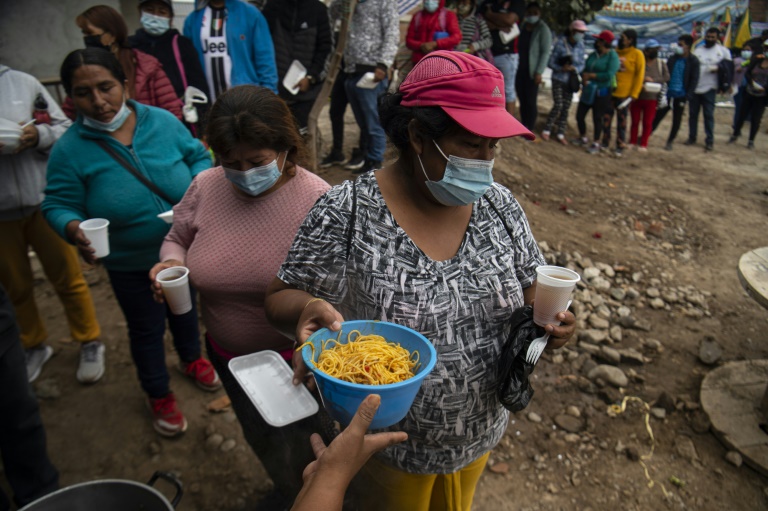
Many countries are now grappling with cost-of-living crises because wages are not keeping up with inflation, forcing households to make difficult choices in their spending.

“Everything has become more expensive, from cream to wine and electricity,” said Nicole Eisermann from her stand at the Frankfurt Christmas market.

Central banks played catch-up. They started to raise interest rates this year in an effort to tame galloping inflation — at the risk of tipping countries into deep recessions, since higher borrowing costs mean slower economic activity.

Inflation has finally started to slow down in the United States and the eurozone. 

– Careful spending –

Consumer prices in the Group of 20 developed and emerging nations are expected to reach eight percent in the fourth quarter before falling to 5.5 percent next year, according to the Organisation for Economic Cooperation and Development.

The OECD encourages governments to provide aid to bring relief to households.

In the 27-nation European Union, 674 billion euros ($704 billion) have been earmarked so far to shield consumers from high energy prices, according to the Bruegel think tank.

Germany, Europe’s biggest economy and the most dependent on Russia energy supplies, accounts for 264 billion euros of that total.

One in two Germans say they now only spend on essential items, according to a survey by EY consultancy.

“I am very careful but I have a lot of children and grandchildren,” said Guenther Blum, a shopper at the Frankfurt Christmas market.

Rising interest rates have also hurt consumers and businesses, though US Federal Reserve chairman Jerome Powell signalled last week that the pace of hikes could ease “as soon as” December.

He warned, however, that policy will probably have to remain tight for some time to restore price stability.

For her part, European Central Bank president Christine Lagarde sent a clear signal that the ECB would maintain its tightening policy, saying that eurozone inflation had yet to peak.

Economists expect Germany and another major eurozone economy, Italy, to fall into recession. Britain’s economy is already shrinking. Rating agency S&P Global foresees stagnation for the eurozone in 2023.

But the International Monetary Fund still expects the world economy to expand in 2023, with growth of 2.7 percent. The OECD is forecasting 2.2-percent growth.

The coronavirus pandemic, meanwhile, remains a wildcard for the global economy.

China’s zero-Covid policy restrained growth in the world’s second biggest economy, but the authorities have started to relax restrictions following nationwide protests.

– Climate costs –

But for Beetsma, the biggest crisis is climate change, which is “happening in slow motion”.

Natural and man-made catastrophes have caused $268 billion in economic losses so far in 2022, according to reinsurance giant Swiss Re. Hurricane Ian alone cost an estimated insured loss of $50-65 billion.

Floods in Pakistan resulted in $30 billion in damage and economic loss this year.

Governments agreed at United Nations climate talks (COP27) in Egypt in November to create a fund to cover the losses suffered by vulnerable developing countries devastated by natural disasters.

But the COP27 summit ended without new commitments to phase out the use of fossil fuels, despite the need to cut greenhouse gas emissions and slow global warming.

“It is not an acute crisis but a very long-term crisis, protracted,” Beetsma said. “If we don’t do enough this will hit us in unprecedented scale.”
As AI rises, lawmakers try to catch up

From “intelligent” vacuum cleaners and driverless cars to advanced techniques for diagnosing diseases, artificial intelligence has burrowed its way into every arena of modern life.

Its promoters reckon it is revolutionising human experience, but critics stress that the technology risks putting machines in charge of life-changing decisions.

Regulators in Europe and North America are worried.

The European Union is likely to pass legislation next year — the AI Act — aimed at reining in the age of the algorithm.

The United States recently published a blueprint for an AI Bill of Rights and Canada is also mulling legislation.

Looming large in the debates has been China’s use of biometric data, facial recognition and other technology to build a powerful system of control.

Gry Hasselbalch, a Danish academic who advises the EU on the controversial technology, argued that the West was also in danger of creating “totalitarian infrastructures”.

“I see that as a huge threat, no matter the benefits,” she told AFP.

But before regulators can act, they face the daunting task of defining what AI actually is.

– ‘Mug’s game’ –

Suresh Venkatasubramanian of Brown University, who co-authored the AI Bill of Rights, said trying to define AI was “a mug’s game”.

Any technology that affects people’s rights should be within the scope of the bill, he tweeted.

The 27-nation EU is taking the more tortuous route of attempting to define the sprawling field.

Its draft law lists the kinds of approaches defined as AI, and it includes pretty much any computer system that involves automation.

The problem stems from the changing use of the term AI.

For decades, it described attempts to create machines that simulated human thinking.

But funding largely dried up for this research — known as symbolic AI — in the early 2000s.

The rise of the Silicon Valley titans saw AI reborn as a catch-all label for their number-crunching programs and the algorithms they generated.

This automation allowed them to target users with advertising and content, helping them to make hundreds of billions of dollars.

“AI was a way for them to make more use of this surveillance data and to mystify what was happening,” Meredith Whittaker, a former Google worker who co-founded New York University’s AI Now Institute, told AFP.

So the EU and US have both concluded that any definition of AI needs to be as broad as possible.

– ‘Too challenging’ –

But from that point, the two Western powerhouses have largely gone their separate ways.

The EU’s draft AI Act runs to more than 100 pages.

Among its most eye-catching proposals are the complete prohibition of certain “high-risk” technologies — the kind of biometric surveillance tools used in China.

It also drastically limits the use of AI tools by migration officials, police and judges.

Hasselbach said some technologies were “simply too challenging to fundamental rights”.

The AI Bill of Rights, on the other hand, is a brief set of principles framed in aspirational language, with exhortations like “you should be protected from unsafe or ineffective systems”.

The bill was issued by the White House and relies on existing law.

Experts reckon no dedicated AI legislation is likely in the United States until 2024 at the earliest because Congress is deadlocked.

– ‘Flesh wound’ –

Opinions differ on the merits of each approach.

“We desperately need regulation,” Gary Marcus of New York University told AFP.

He points out that “large language models” — the AI behind chatbots, translation tools, predictive text software and much else — can be used to generate harmful disinformation.

Whittaker questioned the value of laws aimed at tackling AI rather than the “surveillance business models” that underpin it.

“If you’re not addressing that at a fundamental level, I think you’re putting a band-aid over a flesh wound,” she said.

But other experts have broadly welcomed the US approach.

AI was a better target for regulators than the more abstract concept of privacy, said Sean McGregor, a researcher who chronicles tech failures for the AI Incident Database.

But he said there could be a risk of over-regulation. 

“The authorities that exist can regulate AI,” he told AFP, pointing to the likes of the US Federal Trade Commission and the housing regulator HUD.

But where experts broadly agree is the need to remove the hype and mysticism that surrounds AI technology.

“It’s not magical,” McGregor said, likening AI to a highly sophisticated Excel spreadsheet.

Falsehoods plague elections as voters tackle Trumpian tactics

From the United States to Brazil and Israel, a barrage of election-related misinformation hammered voters around the world in 2022, but many pushed back against the conspiracy-laden Trumpian tactic of sowing distrust in the democratic process.

A tsunami of falsehoods flooded Twitter, Facebook, TikTok and YouTube — from “deep fake” videos to doctored photos seeking to manipulate voters — with pro-democracy activists accusing the platforms of doing too little to combat the menace.

Candidates around the world borrowed from Donald Trump’s playbook in peddling unfounded allegations of election fraud, but in countries such as the United States and Brazil many voters appeared to reject the narrative.

Defying widespread predictions of a Republican “red wave” in the November midterms, several of Trump’s handpicked candidates lost in close-fought races, with observers saying their continued refusal to accept the 2020 election result may have put off voters.

Republican leaders and supporters “seem to be coming to terms with the way that embracing conspiracy theories has led to poor candidate selection, inefficient voter mobilization, voter cynicism, and a host of other ills,” Mike Caulfield, a research scientist at the Center for an Informed Public at the University of Washington, told AFP.

“Many will try to wean their supporters off election fraud conspiracy theories… It’s going to be a very tough problem to solve.”

Likewise, the Brazilian election, which led to a tense runoff in late October after an inconclusive first round, was awash in disinformation as far-right incumbent Jair Bolsonaro echoed Trump’s election fraud claims without evidence.

His leftist rival Luiz Inacio Lula da Silva ultimately won the runoff and polls showed the public’s confidence in the voting process remained strong.

But analysts caution that many voters still believe Bolsonaro’s claim, and the country’s fight against disinformation remains far from over.

– ‘Misleading’ narratives –

Candidates in Israel’s November polls also increasingly followed Trump’s playbook, with Benjamin Netanyahu’s party, Likud, starting a “stop the steal” campaign as soon as the election was announced.

“Likud was pushing (the) conspiracy that the elections are rigged, that the central election committee of Israel is controlled by (the) deep state,” said Achiya Schatz, head of disinformation watchdog group FakeReporter. 

Netanyahu went on to win, and the veteran right-winger’s claims of a corrupt vote faded away as he stood poised to reclaim power after 14 months in opposition. 

Trump was also a major presence in Hungarian politics, with the former US president personally endorsing far-right Prime Minister Viktor Orban ahead of April elections that were rife with disinformation.

Orban’s party Fidesz “took maximum advantage of its media dominance… to spread factually incorrect or otherwise misleading allegations and narratives about its political opponents,” according to a study from Hungarian think tank Political Capital.

Just ahead of the vote Orban, who has nurtured close relations with Russian President Vladimir Putin, alleged that his rivals “made a pact with the Ukrainians” to offer them weapons and support in the event of an opposition victory.

He offered no evidence and Fidesz roared back to power with a parliamentary majority.

– ‘Powerful tool’ –

Across the world, misinformation and disinformation typically spike around elections, eroding public trust in democratic institutions and sometimes unleashing chaos as nefarious state or non-state actors try to manipulate the results.

In presidential polls in the Philippines in May, the volume of election-related disinformation spiked to “unprecedented” levels, said Rachel Khan, from the fact-checking alliance Tsek.ph.

An increase in fact-checking operations compared with previous elections could not tame the disinformation — primarily focused on the two frontrunners, Ferdinand Marcos, who went on to win by a landslide, and Leni Robredo.

“We can see that in terms of election results we had very little impact,” Khan said, of the alliance’s work. “I think the problem really is media literacy. Even those who claim that they can distinguish disinformation actually cannot.”

In Kenya, presidential rivals William Ruto and Raila Odinga are both alleged to have hired so-called digital “warriors” tasked with spreading election-related disinformation.

The falsehoods began spreading almost a year before the August vote, with fact-checkers noting an increase in the use of “deep fake” videos with manipulated content.

While Kenya’s supreme court upheld Ruto’s victory, many Odinga supporters believe the election was rigged.

And as Nigeria gears up for elections early next year, similar tactics are visible online — deep fakes and photoshopped images to smear political opponents.

In the United States, meanwhile, analysts warn disinformation about election integrity could flare again as the 2024 presidential race picks up steam — with Trump vying to reclaim the White House.

“Disinformation is a powerful tool,” Pamela Smith, president of the nonpartisan nonprofit Verified Voting, told AFP. “And those who only approve of elections that go their way will keep using it.”

burs-ac/ec/kma

Falsehoods plague elections as voters tackle Trumpian tactics

From the United States to Brazil and Israel, a barrage of election-related misinformation hammered voters around the world in 2022, but many pushed back against the conspiracy-laden Trumpian tactic of sowing distrust in the democratic process.

A tsunami of falsehoods flooded Twitter, Facebook, TikTok and YouTube — from “deep fake” videos to doctored photos seeking to manipulate voters — with pro-democracy activists accusing the platforms of doing too little to combat the menace.

Candidates around the world borrowed from Donald Trump’s playbook in peddling unfounded allegations of election fraud, but in countries such as the United States and Brazil many voters appeared to reject the narrative.

Defying widespread predictions of a Republican “red wave” in the November midterms, several of Trump’s handpicked candidates lost in close-fought races, with observers saying their continued refusal to accept the 2020 election result may have put off voters.

Republican leaders and supporters “seem to be coming to terms with the way that embracing conspiracy theories has led to poor candidate selection, inefficient voter mobilization, voter cynicism, and a host of other ills,” Mike Caulfield, a research scientist at the Center for an Informed Public at the University of Washington, told AFP.

“Many will try to wean their supporters off election fraud conspiracy theories… It’s going to be a very tough problem to solve.”

Likewise, the Brazilian election, which led to a tense runoff in late October after an inconclusive first round, was awash in disinformation as far-right incumbent Jair Bolsonaro echoed Trump’s election fraud claims without evidence.

His leftist rival Luiz Inacio Lula da Silva ultimately won the runoff and polls showed the public’s confidence in the voting process remained strong.

But analysts caution that many voters still believe Bolsonaro’s claim, and the country’s fight against disinformation remains far from over.

– ‘Misleading’ narratives –

Candidates in Israel’s November polls also increasingly followed Trump’s playbook, with Benjamin Netanyahu’s party, Likud, starting a “stop the steal” campaign as soon as the election was announced.

“Likud was pushing (the) conspiracy that the elections are rigged, that the central election committee of Israel is controlled by (the) deep state,” said Achiya Schatz, head of disinformation watchdog group FakeReporter. 

Netanyahu went on to win, and the veteran right-winger’s claims of a corrupt vote faded away as he stood poised to reclaim power after 14 months in opposition. 

Trump was also a major presence in Hungarian politics, with the former US president personally endorsing far-right Prime Minister Viktor Orban ahead of April elections that were rife with disinformation.

Orban’s party Fidesz “took maximum advantage of its media dominance… to spread factually incorrect or otherwise misleading allegations and narratives about its political opponents,” according to a study from Hungarian think tank Political Capital.

Just ahead of the vote Orban, who has nurtured close relations with Russian President Vladimir Putin, alleged that his rivals “made a pact with the Ukrainians” to offer them weapons and support in the event of an opposition victory.

He offered no evidence and Fidesz roared back to power with a parliamentary majority.

– ‘Powerful tool’ –

Across the world, misinformation and disinformation typically spike around elections, eroding public trust in democratic institutions and sometimes unleashing chaos as nefarious state or non-state actors try to manipulate the results.

In presidential polls in the Philippines in May, the volume of election-related disinformation spiked to “unprecedented” levels, said Rachel Khan, from the fact-checking alliance Tsek.ph.

An increase in fact-checking operations compared with previous elections could not tame the disinformation — primarily focused on the two frontrunners, Ferdinand Marcos, who went on to win by a landslide, and Leni Robredo.

“We can see that in terms of election results we had very little impact,” Khan said, of the alliance’s work. “I think the problem really is media literacy. Even those who claim that they can distinguish disinformation actually cannot.”

In Kenya, presidential rivals William Ruto and Raila Odinga are both alleged to have hired so-called digital “warriors” tasked with spreading election-related disinformation.

The falsehoods began spreading almost a year before the August vote, with fact-checkers noting an increase in the use of “deep fake” videos with manipulated content.

While Kenya’s supreme court upheld Ruto’s victory, many Odinga supporters believe the election was rigged.

And as Nigeria gears up for elections early next year, similar tactics are visible online — deep fakes and photoshopped images to smear political opponents.

In the United States, meanwhile, analysts warn disinformation about election integrity could flare again as the 2024 presidential race picks up steam — with Trump vying to reclaim the White House.

“Disinformation is a powerful tool,” Pamela Smith, president of the nonpartisan nonprofit Verified Voting, told AFP. “And those who only approve of elections that go their way will keep using it.”

burs-ac/ec/kma

Prime time or Netflix? Streaming wars come to Thailand

International streaming platforms were among the biggest pandemic winners, seeing subscriber numbers soar, but US giants have turned abroad as countries re-opened — with Thailand firmly in their sights.

The kingdom’s high internet penetration, long-standing and highly regarded film industry — as well as roughly six million active users of streaming services, according to 2021 data — present a golden opportunity.

Big players such as Amazon Prime and Netflix, who claim 200 million and 220 million subscribers worldwide respectively, have taken note as new sign-ups have levelled off in more established markets such as North America and Europe.

October saw the launch of Prime’s Thai-service Prime Video at almost the same moment Netflix announced six locally produced films and series for the coming months.

“The competition is everywhere,” said Malobika Banerji, director of content for Southeast Asia at Netflix, which has a regional hub in Singapore.

Nowhere is that more apparent than Thailand’s capital, where Prime’s “Lord of the Rings” spinoff mega-production “Rings of Power” jostles for attention with Netflix’s latest South Korean series on billboards.

“We do believe that Thailand will be a big part of our subscriber growth in the years to come,” said Prime Video’s director of international development Josh McIvor.

“Our goal is really to try to be the most local of the global streaming services,” he said, pointing towards their earlier expansion into Japan — where they outstrip Netflix.

However, their rival’s longer-term investment is apparent: Netflix saw a 20 percent growth in Asia-Pacific subscribers last year, according to a recent quarterly report by the firm.

– Seeking the next ‘Squid Game’ –

While big-ticket international series such as “Rings of Power” lead the publicity, the streamers see locally produced content — such as Prime’s hugely successful Indian crime-thriller “Mirzapur” — as the longer-term workhorses of their offering.

The two fundamental “pillars” to success are local originals -– “across scripted, unscripted and film” -– and licensed locally produced series, according to Amazon Studios’ director of local content Erika North.

It is the second that drew Prime to Thailand, she said: they hope to build on a long Thai film history with higher production values than elsewhere in the region.

Similarly, Netflix is betting big on local content going international, dreaming of the next “Squid Game”, the South Korean critical and commercial blockbuster.

Netflix’s Banerji said there were “more and more” examples of this, citing Thai mystery-thriller series “Girl from Nowhere”.

Streaming analysts have been watching the US firms — including Disney+ — to see if they can compete with local rivals.

A report from the consultancy Kantar this year found streaming had edged out traditional watching in the Philippines, Singapore, Malaysia, Vietnam, Thailand, and Indonesia.

But Thailand has a special appeal, said Vivek Couto, executive director and co-founder of Media Partners Asia (MPA), which monitors streaming platforms.

An analysis from MPA this year forecast the expected income from streaming in Thailand in 2022 at around $809 million.

Couto said the kingdom offered an established creative community, more advanced broadband infrastructure than other Southeast Asian countries — and a population with the “most propensity to pay for online video content”.

– Creative control –

Almost a third of Thai households already subscribe to an on-demand streaming service, according to their data, far ahead of Indonesia (12 percent) or Vietnam (four percent).

“If content really works locally and (is) sustainable, then it will travel anywhere,” Couto said.

“I think that’s why Amazon and Netflix are seeing the potential of Thai producers, Thai series.”

While Thai cinema has enjoyed occasional critical success — director Apichatpong Weerasethakul has won several prizes at the Cannes Film Festival, including the top award in 2010 — it has not become an established global force.

Local directors and producers are cautiously optimistic the new interest from deep-pocketed streaming giants could give the local industry a boost.

“Some content, you cannot even dream of doing it with a studio, but with streaming, it is possible,” said Wisit Sasanatieng, director and producer of upcoming Netflix crime film “The Murderer”.

Thai producer Cattleya Paosrijaroen, co-founder of the independent company 185 Films, welcomed the shift.

International firms could bring in better standards, she said, offering better conditions to crews currently expected to work 16-hour shifts.

But she struck a note of caution. 

“If your film is being produced by Netflix, they can control the content,” Cattleya said.

Germany's homegrown cannabis industry awaits legalisation

In the east German countryside, close to Dresden, a former abattoir is now home to the biggest indoor cannabis farm in Europe.

Behind the recently renovated concrete walls, the German startup Demecan has been growing marijuana in accordance with the law for the past year.

The company is one of only a handful in Germany to have a license for the production of this “green gold”, which has been legal in Germany for medicinal use since 2017.

But the budding industry is eyeing a bigger prize: Chancellor Olaf Scholz’s government plans to legalise the drug for recreational use as soon as 2024, which would leave it with one of the most liberal cannabis policies in Europe.

– ‘Tenfold’ –

Inside the building, the smell of the plants — lined up in their hundreds under yellow grow lamps — is overwhelming.

“We will have the option to expand the facility to cultivate recreational cannabis,” Demecan’s managing director Philipp Goebel tells AFP.

The government coalition, led by Scholz’s Social Democrats, has put forward a roadmap for the legalisation of cannabis with a target date of 2024.

Under the draft plans, adults would be allowed to hold a maximum of between “20 and 30 grams” of cannabis for private consumption, via a network of licensed stores and pharmacies.

Demecan’s massive complex, which covers around 120,000 square metres (1.3 million square feet), produces one tonne of cannabis a year, but it has yet to reach capacity.

The company could quickly increase production “tenfold” to meet growing demand, Goebel says.

Harvests at the farm happen every two weeks with workers plucking the flowers from the plant stems before they are dried.

“I like this job a lot, it is not like any other,” says 34-year-old Sven Skoeries, who studies horticulture alongside his responsibilities at the farm.

Demecan has no trouble recruiting for its growing business, in a region otherwise marked by its ageing population and lack of workers. 

“It’s a trendy product that generates a lot of interest,” Goebel says. 

“It’s a new industry, that’s interesting for me,” says Jana Kleinschmidt, 25, as she snips off leaves with a pair of scissors.

As well as its own production efforts, Demecan has a license for the import of another 20 tonnes of cannabis into the country from Canada annually.

“We are currently supplying 55 percent of the German market,” says Goebel, who notes his firm is in “pole position” to capitalise on legalisation.

– Snoop Dogg –

The recreational cannabis market in Germany is a potential four-billion-euro ($4.2 billion) business, according to a recent study by the Heinrich Heine University in Duesseldorf.

In recent months, fundraising in the sector has taken off as businesses await the green light from legislators.

Berlin startup Cantourage, a manufacturer of cannabis-based medicines, floated 15 percent of its shares on the Frankfurt stock exchange in November.

Cansativa, the only online platform for the sale of therapeutic cannabis products in Germany, raised $15 million in February with the help of US rapper Snoop Dogg.

Sanity Group, a German company that focuses on cannabis-derived products, likewise raised $37.6 million in September.

Legalisation looks like a good deal for the government, too. The same study from Heinrich Heine University estimated the move would boost the public finances by 4.7 billion euros per year.

But the idea remains controversial. 

At the end of October, Klaus Reinhardt, the head of the German Medical Association, called the plans “almost cynical”.

It was “shocking” to legalise a substance that could “lead to behavioural problems in adolescents, as well as addiction and psychological changes”, he said.

The conservative opposition to the government has also set itself against the move. 

The Bavarian state Health Minister Klaus Holetschek, who is part of the conservative Christian Social Union party, called the idea “a dangerous signal for all of Europe”. 

First, however, the government’s plans need to be approved by the European Commission — or they risk going up in smoke. 

Asian equities, oil prices dragged by recession fears

Asian investors extended a sell-off across global markets Wednesday while oil held losses on growing fears Federal Reserve monetary tightening will tip the US economy into recession.

The drop followed another day deep in the red for New York’s three main indexes after the heads of Wall Street’s leading banks warned of tough times ahead in 2023.

JPMorgan Chase chief Jamie Dimon tipped a “mild to hard recession” and Goldman Sachs’ David Solomon said jobs and pay would be hit, while Morgan Stanley and Bank of America were also uneasy about the outlook.

The comments added to the downbeat mood that has coursed through trading floors at the start of the week, after forecast-beating reports on jobs and the giant US services sector fanned worries the Fed will have to push interest rates higher than hoped.

Markets had been rising healthily ahead of Friday’s employment figures after a weaker-than-expected inflation reading for October suggested the almost year-long tightening campaign was finally affecting prices.

“Any hopes that the Fed would turn more dovish in the months ahead have been dashed significantly as the vast US services industry is where sticky inflation hangs out,” said SPI Asset Management’s Stephen Innes.  

He added that the latest readings suggest rates will go above five percent before the Fed stops hiking, while several observers have suggested they will not be reduced until 2024.

In early trade, Tokyo, Shanghai, Sydney, Seoul, Singapore, Manila and Jakarta were all down. However, Hong Kong, which has been the standout performer in recent weeks, clipped slightly higher.

But Lauren Goodwin, at New York Life Investments, saw further pain ahead for markets.

“We have not yet seen the bottom on equity prices,” she said, according to Bloomberg News. “While this phase of equity market volatility is likely to end in the next few months, earnings have not yet adapted to a recessionary environment.”

The sombre outlook overshadowed hopes that China’s moves to wind back some of its harsh Covid rules will kickstart the world’s number two economy, which has been battered this year by months of lockdowns and other containment measures.

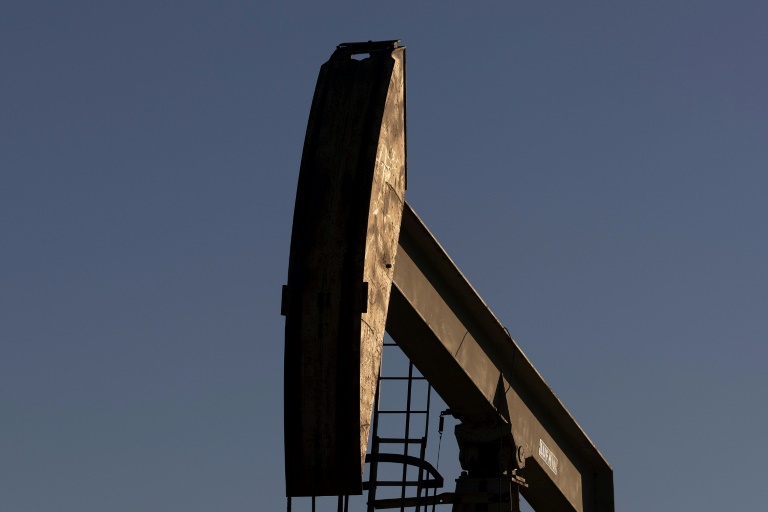
It also kept oil prices at lows not seen for around a year as demand expectations tumble.

Brent on Tuesday sank below $80 for the first time since January, while WTI was at its lowest since December, having plunged from the 14-year highs of around $140 touched in March after Russia invaded Ukraine. Both contracts were barely moved in Asian trade.

“The crude demand outlook is getting crushed as we are in a slowdown basically across all the major economies,” said OANDA’s Edward Moya. 

“Supplies seem plentiful over the near term and that has everyone hesitating on what was one of the easiest trades of the year.”

– Key figures around 0230 GMT –

Tokyo – Nikkei 225: DOWN 0.5 percent at 27,756.94 (break)

Hong Kong – Hang Seng Index: UP 0.5 percent at 19,529.70

Shanghai – Composite: DOWN 0.3 percent at 3,201.71

Euro/dollar: DOWN at $1.0465 from $1.0470 on Tuesday

Dollar/yen: UP at 137.11 yen from 137.04 yen

Pound/dollar: UP at $1.2135 from $1.2133

Euro/pound: DOWN at 86.24 pence from 86.26 pence

West Texas Intermediate: DOWN 0.1 percent at $74.16 per barrel

Brent North Sea crude: UP 0.2 percent at $79.48 per barrel

New York – Dow: DOWN 1.0 percent at 33,596.34 (close)

London – FTSE 100: DOWN 0.6 percent at 7,521.39 (close)

Xi travels to Saudi for three days of Mideast outreach

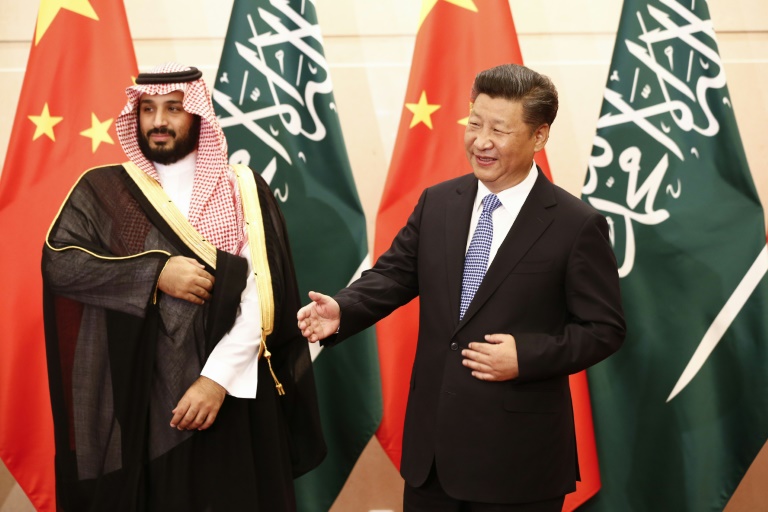
Chinese President Xi Jinping arrives in Saudi Arabia on Wednesday for three days of meetings with regional leaders likely focused on energy. 

The overseas trip is only Xi’s third since the coronavirus pandemic began in 2020, and his first to Saudi Arabia, the world’s biggest crude oil exporter, since 2016.

It will feature bilateral meetings with Saudi King Salman and Crown Prince Mohammed bin Salman, the de facto ruler, as well as a summit with the six-member Gulf Cooperation Council and a wider China-Arab summit, Saudi state media reported.

Oil markets are expected to be a top agenda item for talks between China, the world’s biggest crude consumer, and Saudi Arabia, especially given the turmoil the markets have experienced since Russia invaded Ukraine in February.

The G7 and European Union on Friday agreed to a $60-per-barrel price cap on Russian oil in an attempt to deny the Kremlin war resources, injecting further uncertainty into the markets.

On Sunday, the OPEC+ oil cartel led jointly by Saudi Arabia and Russia opted to keep in place production cuts of two million barrels per day approved in October.

Saudi and Chinese officials have provided scant information about the agenda, though Ali Shihabi, a Saudi analyst close to the government, said he expected “a number of agreements to be signed”.

Beyond energy, analysts say leaders from the two countries will likely discuss potential deals — that could see Chinese firms become more deeply involved in mega-projects that are central to Prince Mohammed’s vision of diversifying the Saudi economy away from oil.

Those projects include a futuristic $500 billion megacity known as NEOM, a so-called cognitive city that will depend heavily on facial recognition and surveillance technology.

– Tensions with Washington –

The OPEC+ production cuts approved in October represented the latest blow to the longtime partnership between Saudi Arabia and the United States, which said they amounted to “aligning with Russia” on the war in Ukraine. 

Xi’s visit is expected to be closely watched in Washington, which entered into what is often described as an oil-for-security partnership with Saudi Arabia towards the end of World War II.

While the Biden administration has smarted over the production cuts, Riyadh has at times accused the United States of failing to hold up the security end of the bargain, notably after strikes in September 2019 claimed by Yemen’s Huthi rebels temporarily halved the kingdom’s crude output.

China and Saudi Arabia already work together on arms sales and production. 

Yet analysts say Beijing cannot provide the same security assurances Washington does — nor does it wish to. 

Nevertheless, if the Saudis are “looking to extract more security guarantees from the US… signalling that they have the opportunity of strengthening ties with China is something that suits them well,” said Torbjorn Soltvedt, of the risk intelligence firm Verisk Maplecroft.

The GCC-China summit will be held on Friday in Riyadh, the bloc said in a statement. 

GCC chief Nayef al-Hajraf “stressed the importance of GCC-Chinese relations, as China is ranked first on the list of the GCC countries’ trade partners”, the statement added. 

UK pubs feel Christmas pressure as inflation bites

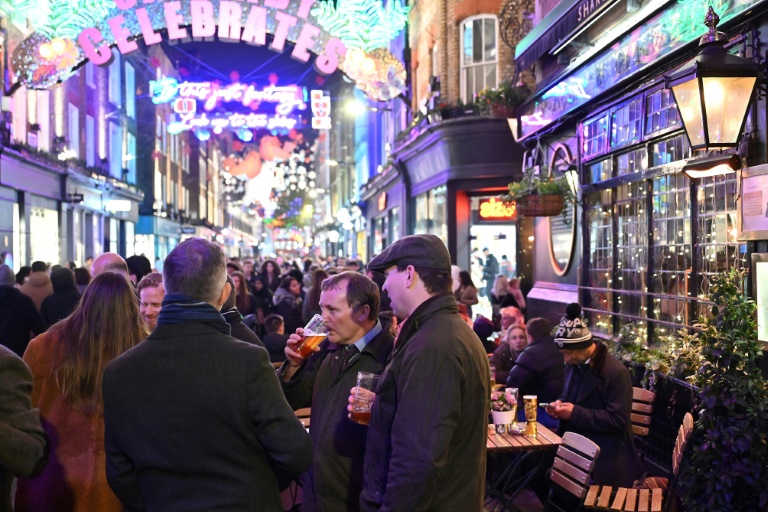
Inside the Mad Hatter pub in central London’s South Bank district, everything is ready: the big tree, the bright lights, the fun Christmas signage. 

Although the tone may be festive, the mood behind the bar and at similarly adorned pubs nationwide is far less upbeat. 

December represents a crucial month for the sector, accounting for as much as 10 percent of annual turnover thanks to Christmas parties — an institution in the UK — and other social gatherings.

After the pandemic ruined the festivities — and revenues — over the last two years, pubs, bars and other venues are relying on the coming season to help kickstart their longer-term recoveries. 

But it looks a tall order in the face of a worsening cost-of-living crisis, predictions the country is already in recession, widespread labour shortages and strikes, including in the key transport sector.

“We’re desperately looking forward to a very busy Christmas,” said Emma McClarkin, chair of industry body the British Beer and Pub Association (BBPA). The business is sorely needed “after three years of not having Christmas trade,” she explained.

McClarkin said bookings were currently about 20 percent below pre-pandemic 2019 levels.

Pubs have been central to British communities for centuries, but their number has been dwindling for years and has plunged to its lowest ever level, according to research published in July.

Despite being forced to close during the pandemic, government support schemes helped provide some financial respite.

But the post-pandemic picture is now mixed, with around 50 watering holes currently shutting down every month.

– ‘Consuming less’ –

Marston’s Brewery, which owns more than 1,400 pubs, described its Christmas bookings as “encouraging” and above 2019 levels so far.

Meanwhile, the first ever winter World Cup has boosted sales, particularly on days when England have played.

However, the company fears a difficult 2023 amid predictions of a deep recession.

The City of London, the financial hub in the heart of the capital, appears far less susceptible to the growing economic woes.

At The Globe pub, the taps are flowing freely amid a steady stream of Christmas parties, according to the manager. 

Budgets in the city can buck the broader economic trend: one office party at a local wine bar cost nearly £20,000 ($24,000), said one waiter, who asked not to be named.

But a few miles north, in the bustling Camden area, the small cocktail bar Crossroads is seeing a drop in business compared even to Covid-interrupted last year. 

“Sadly, we were forced to raise our prices in October due to the wholesale prices rising, but the takings have remained the same as last year around this time,” said manager Bart Miedeksza.

“Our regulars (are) spending just as much time by the table in our venues, but consuming less.”

– ‘Affordable’ –

Further north at The Stag, in middle class Hampstead, bookings are comparable to before the pandemic.

But the focus is on making offerings affordable for increasingly “budget conscious” customers.

“We’ve been experiencing inflation in terms of the food pricing, in particular butter or cooking oil, since (Russia’s) Ukrainian invasion,” said manager John Perritt.

Inflation is running at 11 percent in the UK and up to 60 percent for some food staples such as cooking oil and pasta, squeezing budgets and profit margins. 

The Stag, a local choice for groups of public sector workers at a nearby hospital, is trying to adapt to these new economic realities.

“We do packages as affordable as possible,” said Perritt, adding that this year it is offering a one-course Christmas menu for £20, which rises to £36.50 for more courses.

Back at the Mad Hatter, John Paul Caffery, the owner of a technology consulting company, noted this year’s Christmas party “is definitely more expensive than last year”.

“We’ve tried to overcome that by going to a place that’s fixed on cost,” he added.

Christopher Jones, a 54-year-old Welsh town planner on a business trip to the capital, is set to have a small party with his colleagues and clients at their local pub — where the price of a pint has gone up by £1. 

“Coming out of Covid, you’ve got to enjoy your life,” he explained. 

“But at the same time, just be a bit careful around budgets and about spending.”

Close Bitnami banner
Bitnami