US Business

US Supreme Court to hear high-stakes elections case

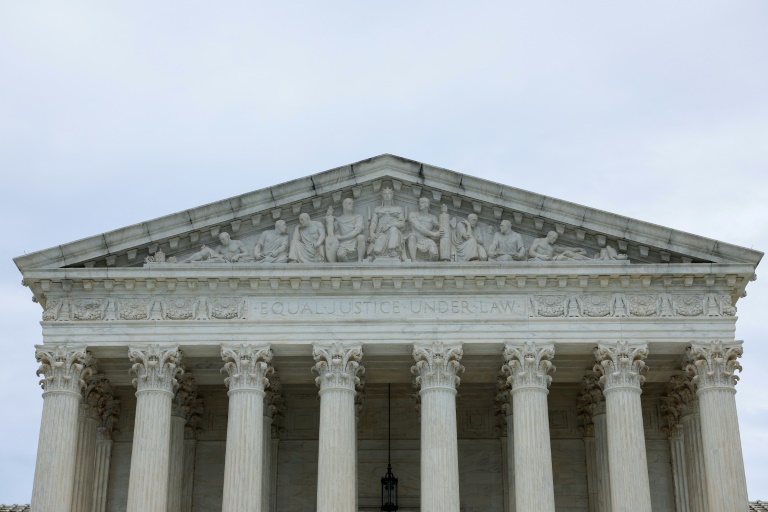
The US Supreme Court hears a case on Wednesday that could fundamentally alter the way democracy operates in America by expanding the power of state legislatures over elections for the White House and Congress.

The case, Moore v. Harper, would potentially give lawmakers in each of the 50 US states more authority in deciding who votes, where and how in federal elections.

The prospect has raised concerns on the left in a bitterly divided country still reeling from Donald Trump’s refusal to accept the 2020 election results.

But it has also alarmed some on the right.

The case focuses on a theory known as the “independent state legislature” doctrine advanced by Republican lawmakers in the southern state of North Carolina.

Under the Constitution, the rules for federal elections are set by the state legislature. 

“The Times, Places and Manner of holding Elections for Senators and Representatives, shall be prescribed in each State by the Legislature thereof,” the Elections Clause says.

State legislatures have used their authority to map out congressional districts, set poll hours and agree on rules for voter registration and mail-in ballots.

Their laws have been subject, however, to legal scrutiny by the local courts and possible veto by the state governor. 

No longer, if the North Carolina lawmakers have their way.

In their brief to the nation’s highest court, they say the Constitution “sets forth a detailed set of specific rights, specific procedures, and specific allocations of power.

“Here, those carefully drawn lines place the regulation of federal elections in the hands of state legislatures, Congress, and no one else.”

Amy Mason Saharia, a Washington lawyer who has argued a number of cases before the Supreme Court, said it “has never adopted that theory, but it has been floating around for a while” and the conservative-dominated court could embrace it.

– ‘Reshape American democracy’ –

North Carolina’s Democratic governor Roy Cooper warned that “the court’s decision on this alarming argument could fundamentally reshape American democracy.

“Our democracy is a fragile ecosystem that requires checks and balances to survive,” Cooper wrote in an opinion piece published in The New York Times.

“Republican leaders in the North Carolina legislature have shown us how the election process can be manipulated for partisan gain,” Cooper said.

“And that’s what you can expect to see from state legislatures across the country if the court reverses course in this case.”

Moore v. Harper stems from an electoral dispute in North Carolina.

The 2020 census found that the state’s population had increased, earning it an extra seat in the US House of Representatives.

North Carolina lawmakers redrew the congressional map to add a new district but the state supreme court threw it out in February, arguing that it favored Republicans by grouping Democrats in certain districts, diluting their vote.

A second map was also judged to be unfair and the state high court finally named an independent expert to carry out the redistricting.

North Carolina lawmakers appealed to the Supreme Court arguing that local courts were usurping their authority.

The Supreme Court declined to intervene right away and the map drawn up by the expert was used in November’s midterm elections, resulting in seven House members from each party.

– ‘Nonsense’ –

Democrats, from the state level to President Joe Biden, law professors and leading civil rights organizations have filed briefs urging the Supreme Court to reject the doctrine.

Sophia Lin Lakin of the American Civil Liberties Union warned of the dangers of an adverse ruling.

“An extreme interpretation of the US Constitution by the Supreme Court in this case will make it even easier for state legislators to suppress the vote, fraud, gerrymander election districts and potentially sabotage election results,” she said.

The Republican Party dismissed the criticism as alarmist.

“Self-anointed constitutional law experts have convinced a healthy cross-section of armchair court watchers that, should the court decide this case the wrong way, it would signal the end of democracy,” the National Republican Committee said in a brief. “Nonsense.”

A number of prominent conservatives did express concern.

“Our political system would suffer harm if partisan gerrymanders were left entirely without state-level checks and balances,” said Arnold Schwarzenegger, the former Republican governor of California.

The court is to deliver its ruling by the end of June.
Polls close in Georgia runoff Senate vote, a new test for Biden

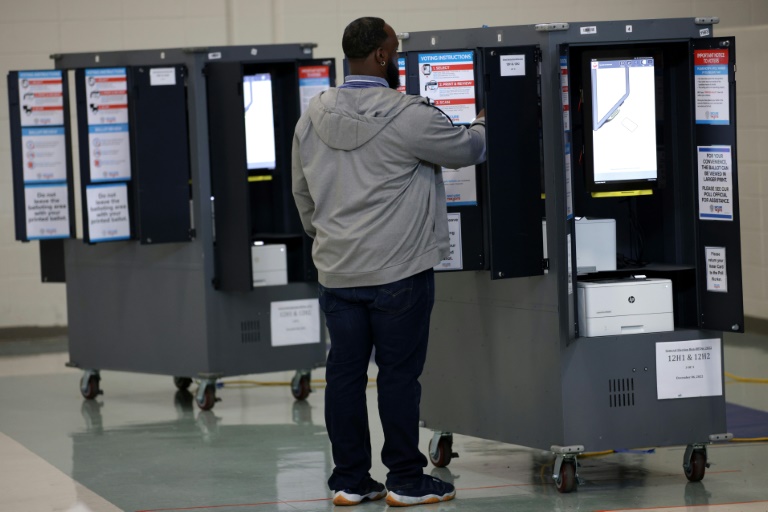
Election officials in the US state of Georgia on Tuesday began counting votes in a hotly contested Senate race between a pastor and a former American football star with high stakes for Joe Biden’s presidency.

A victory by incumbent Democratic senator Raphael Warnock would allow his camp to consolidate their paper-thin majority in the chamber and wield greater influence on key committees.

Republicans see the Georgia Senate seat as an opportunity to boost their ability to block Biden’s policies, having won back control of the House of Representatives in the November midterm election.

After opening at 07:00 am (1200 GMT) Tuesday, polling stations closed at 7:00 pm (0000 GMT Wednesday).

Warnock, pastor at the Atlanta church where civil rights icon Martin Luther King Jr once preached, is being challenged by Republican Herschel Walker, a former star running back at the University of Georgia who is backed by former president Donald Trump.

Warnock and Walker, who are both African American, are in a runoff election after neither earned more than 50 percent in the November 8 midterm vote.

With Warnock, 53, and Walker, 60, running neck and neck, Biden urged Georgians on Tuesday to turn out and vote.

“Georgia, today is Election Day — and the eyes of the nation are on you. Head to the polls and help send @ReverendWarnock back to the US Senate,” the president tweeted.

Democrats retained control of the Senate in last month’s vote — but just barely, winning 50 seats.

Vice President Kamala Harris’s tie-breaking vote gives Democrats the edge in the 100-seat chamber.

A Warnock win would give Democrats 51 seats and significantly curb the power of centrist Democratic senator Joe Manchin, who has already blocked several major Biden initiatives in the first two years of his term.

With 700 days to go before the 2024 presidential election, Republicans hope to stymie Biden’s momentum, after his party performed much better than expected in November.

– Obama to the rescue –

Determined to win the race, Democrats called on their top gun: charismatic former president Barack Obama, who campaigned alongside Warnock in Atlanta last week.

And in yet another sign of how high the stakes are, $400 million has been spent in the campaign, making the Georgia race the most expensive in all of the midterms.

Some 1.9 million people voted early, many of them likely Democratic voters, while Republicans were expected to turn out in force on Tuesday.

Polls have the race too close to call.

Historically a Republican state, Georgia took America by surprise when voters chose Biden over Trump in the 2020 presidential election and then sent two Democrats to the Senate two months later in another runoff.

– Polar opposites –

This time, while both of the candidates are natives of Georgia, the men are polar opposites.

Born the eleventh of 12 children to a former soldier and preacher father and a mother who worked in the cotton fields, Warnock grew up in poverty.

Even after his election, Warnock remained as a senior pastor at Martin Luther King’s Ebenezer Baptist Church. He holds a doctorate in theology.

Walker is a latecomer to politics with his 2022 Senate run.

The 60-year-old conservative is considered one of the best players in the history of American college football — a near-religious institution in the South — and went on to have a stellar career in the National Football League.

Walker, who is staunchly anti-abortion, even in cases of rape, has been the subject of several recent scandals, having been accused of paying for abortions for two women he had relationships with.

US judge dismisses suit against Saudi prince in Khashoggi murder

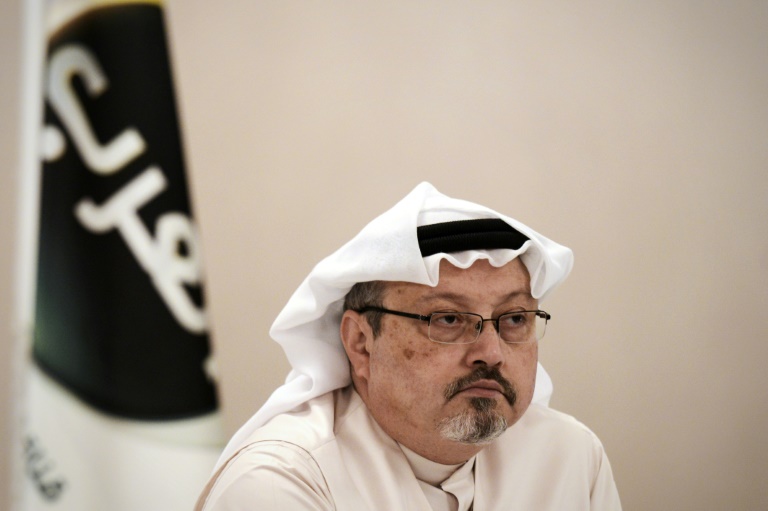
A US judge dismissed Tuesday a lawsuit against Saudi Arabia’s Crown Prince Mohammed bin Salman for his alleged role in the 2018 murder of dissident journalist Jamal Khashoggi.

Washington federal judge John Bates accepted a US government’s stance that Prince Mohammed, who was designated prime minister of Saudi Arabia in September, enjoys immunity in US courts as a foreign head of state.

Bates said the civil suit filed by Khashoggi’s widow Hatice Cengiz and his activist group DAWN made a “strong” and “meritorious” argument that Prince Mohammed was behind the murder.

But he ruled that he had no power to reject the US government’s official stance, submitted in a formal statement to the court on November 17, that the prince had immunity as a foreign leader.

Even if the prince was named prime minister just weeks ago, the US government’s executive branch “remains responsible for foreign affairs, including with Saudi Arabia, and a contrary decision on bin Salman’s immunity by this Court would unduly interfere with those responsibilities,” Bates said.

He said the “credible” allegations of the murder, the timing of prince’s being named prime minister, and timing of the US government’s submission, left him with “uneasiness.” 

But Bates said he had no other choice in the case.

— US intelligence blamed prince —

Prince Mohammed has been the kingdom’s de facto ruler for several years under his father King Salman.

One of the prince’s most vocal critics, Khashoggi was a journalist and activist based in the United States when he traveled to Turkey with his fiancee to obtain documents for their marriage from the Saudi consulate in Istanbul.

After he entered the consulate Khashoggi was seized and murdered by a team of agents of the Saudi regime, his body dismembered and disposed of.

Activists seeking to hold the crown prince accountable for the Khashoggi murder voiced dismay.

“Today is a dark day for victims of transnational repression,” said Khalid Aljabri, a US-based doctor and son of a former Saudi intelligence official. 

US President Joe Biden “has put dissidents at greater risk while confirming to dictators that his human rights policy is nothing but hot air.”

A Saudi court in 2020 jailed eight people for between seven and 20 years over the killing. 

Last year, Biden declassified an intelligence report that found Prince Mohammed had approved the operation against Khashoggi, an assertion Saudi authorities deny.

The murder deeply strained ties between Washington and Riyadh.

But driven by the needs of Middle East politics, particularly the threat from Iran, and Saudi Arabia’s power over oil markets, Biden traveled to the country in July in a move seen as partially aiming to put the murder case behind.

Nevertheless, while there Biden made mention of it in his talks with the crown prince, calling the murder “outrageous.”

Trump Organization convicted of tax fraud in New York

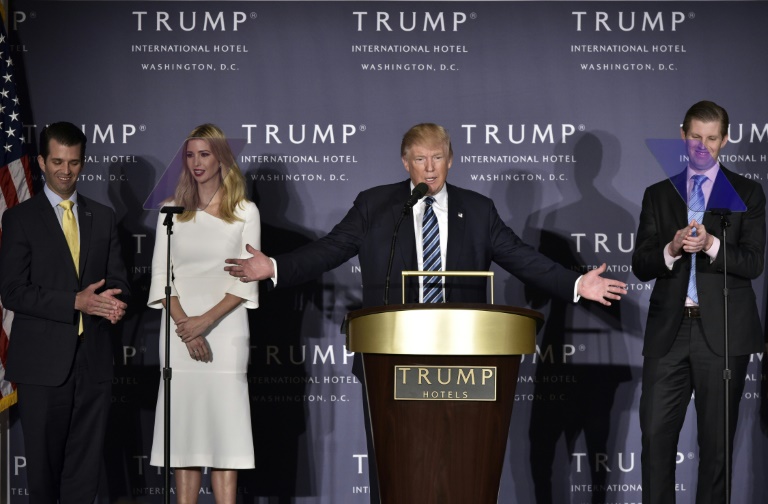
Donald Trump’s family business was found guilty of tax fraud by a New York jury Tuesday, dealing a blow to the ex-president as he eyes the White House again.

The Trump Organization and separate entity the Trump Payroll Corp were found guilty on all counts, marking the first time the companies had ever been convicted of crimes.

“This was a case about greed and cheating,” said Manhattan District Attorney Alvin Bragg, who prosecuted the case.

Trump himself was not charged but the fact the sprawling real-estate, hotel and golf business that bears his name is now a convicted felon is likely to inflict damage to his reputation as he seeks the Republican nomination for the presidency in 2024.

The two entities were convicted of running a 13-year-scheme to defraud and evade taxes by falsifying business records. In all, they were found guilty on 17 counts.

Jurors agreed with prosecutors that the Trump Organization — currently run by Trump’s two adult sons, Donald Jr and Eric Trump — hid compensation it paid to top executives between 2005 and 2021.

Longtime CFO Allen Weisselberg, had already pleaded guilty to 15 counts of tax fraud, and testified against his former company as part of a plea bargain. He did not implicate Trump during the trial.

A close friend of the Trump family, the 75-year-old Weisselberg admitted he schemed with the company to receive undeclared benefits such as a rent-free apartment in a posh Manhattan neighborhood, luxury cars for him and his wife and private school tuition for his grandchildren.

According to his plea deal, Weisselberg agreed to pay nearly $2 million in fines and penalties and complete a five-month prison sentence in exchange for testimony during the trial, which started in October.

Trump, posting on his social media platform, said the Trump Organization bore no responsibility for “Weisselberg committing tax fraud on his personal tax returns.”

Under the headline “Manhattan Witch Hunt!” Trump said no benefit accrued to the company from Weisselberg’s actions, and that neither he nor any employees were “allowed to legally view” the CFO’s returns.

Trump said he was “disappointed with the verdict” and will appeal. 

– Rape case –

Trump’s company faces a fine of around $1.5 million, a paltry sum to the billionaire real estate developer.

It’s symbolic though as he battles a host of legal and congressional probes that will likely complicate his run for a second presidential term, announced in Florida last month.

Trump and his three eldest children face a trial late next year in a civil lawsuit by New York’s attorney general that accuses them of misstating the value of properties to enrich themselves.

Prosecutor Letitia James has requested that Trump pay at least $250 million in penalties — a sum she says he made from the fraud — and that his family be banned from running businesses in the state.

James, a Democrat, hailed Tuesday’s verdict.

“We can have no tolerance for individuals or organizations that violate our laws to line their pockets,” she said.

Trump has been ordered to testify in April 2023 as part of a defamation lawsuit brought by a woman who says he raped her in the 1990s.

He is also facing legal scrutiny for his efforts to overturn the results of the November 2020 election and over the January 6, 2021 attack on the US Capitol by his supporters.

Apple loosens tight grip on App Store pricing

Apple on Tuesday announced the biggest upgrade to the App Store pricing system since the launch of the shop, allowing developers to charge from 29 cents to $10,000 for their offerings.

The enhanced pricing options to be available for all transactions at the App Store by spring of next year were touted along with new capabilities intended to make it easier for those offering their wares to manage sales, returns, taxes, and other features, Apple said in a blog post.

The deviation from the Apple’s long held 99 cent price floor comes as the Silicon Valley titan fends off accusations of having a monopolistic grip on the App Store that acts as the lone gateway onto iPhones.

“These newly announced tools, which will begin rolling out today and continue throughout 2023, will create even more flexibility for developers to price their products while staying approachable to the hundreds of millions of users Apple serves worldwide,” the Cupertino based company said.

“And, in turn help developers continue to thrive on the App Store.”

Under the updated pricing system, developers will be able to choose from 900 price points, which is nearly 10 times the number of pricing options previously available for app makers, Apple said.

Apple last year agreed to expand pricing options at the App Store as part of a $100 million settlement to resolve a class-action lawsuit filed by US developers unhappy with paying commissions of up to 30 percent on transactions.

Apple said at the time that the settlement was “the latest chapter of Apple’s longstanding efforts to evolve the App Store into an even better marketplace for users and developers alike.”

Apple is also under political pressure in the United States and Europe to relax its hold on the App Store, which has been bashed by the likes of Spotify, Fortnite maker Epic Games, and new Twitter owner Elon Musk.

In 2021 a California judge ruled against Epic, which had accused Apple of acting like a monopoly through its App Store.

But the judge also barred Apple from prohibiting developers from including in their apps “external links or other calls to action that direct customers to purchasing mechanisms.”

The judgment ruled that Apple can still mandate that its payment systems be used for in-app transactions.

In the EU, a new piece of legislation due to be implemented in May 2023 will force Apple to open up its iPhone operating system to other payment options and app stores.

The Digital Markets Act will also prohibit the iPhone from offering preferential treatment to Apple’s own services, such as Apple Music or the Safari browser.

US, Australia invite Japan to step up troop rotations

The United States and Australia said Tuesday they would welcome Japanese troops into three-way rotations, vowing a united front in the face of China’s rapid military advances.

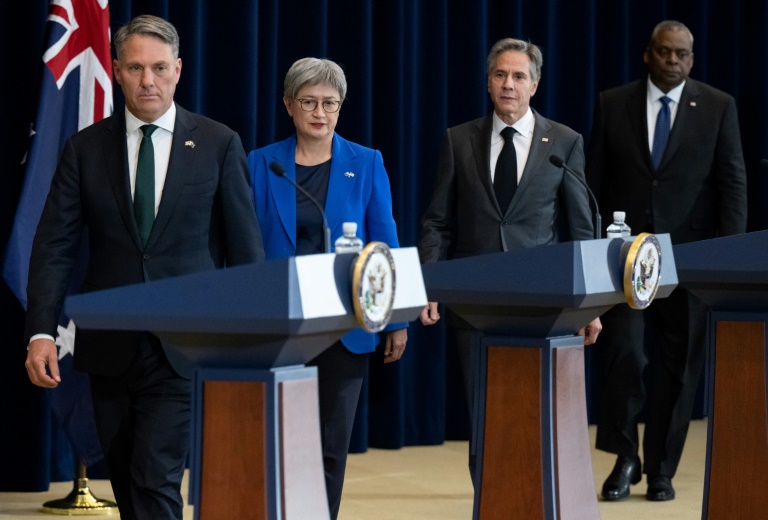
Australia’s defense and foreign ministers said they agreed to step up the pace of military interactions with the United States during talks with their counterparts in Washington, after which they will fly to Tokyo.

“It’s really important that we are doing this from the point of view of providing balance within our region and involving other countries within our region and we look forward to being able to have more engagement with Japan,” Australian Defense Minister Richard Marles told a four-way news conference.

“We can go to Japan at the end of this week with an invitation for Japan to be participating in more exercises with Australia and the United States,” said Marles, in the first such talks since Australia’s Labor government took office six months ago.

US Defense Secretary Lloyd Austin said the allies would seek Japanese participation in joint operations in Australia, where the United States has been rotating Marines since 2011 through Darwin, the strategic northern city struck by imperial Japan in World War II.

Austin said the United States and Australia agreed to increase rotations of bomber task forces, fighter jets and the US Army and Navy.

“We agreed to enhance trilateral defense cooperation and to invite Japan to integrate into our force posture initiatives in Australia,” Austin said.

Japan, a treaty-bound ally of the United States, has in recent years sought growing diplomatic cooperation with Australia, but defense ties have been more sensitive due to Tokyo’s official pacificism since defeat in World War II.

But Japan has participated in exercises including three-way drills in May off Australia’s northeast coast that included infantry live fire and tank integration.

– Warning on China –

The three countries have increasingly seen common cause due to the growing assertiveness of China under President Xi Jinping.

“China’s dangerous and coercive actions throughout the Indo-Pacific, including around Taiwan, toward the Pacific Island countries, and in the East and South China Seas, threaten regional peace and stability,” Austin said.

With an eye on China, Australia last year entered a three-way security pact with the United States and Britain to acquire nuclear-powered submarines, angering France whose sale of conventional submarines was scrapped.

Secretary of State Antony Blinken told the Australians that the United States was committed to “delivering on that promise at the earliest possible time.” 

The defense ties comes despite a relative easing of tensions between the United States and China, with Blinken set early next year to pay the first visit by a top US diplomat to Beijing in more than four years.

His trip comes after President Joe Biden met Xi in Bali in November and the two pledged to talk through key differences. 

Key among them is Taiwan, the self-ruling democracy claimed by China, which responded furiously in August when US House Speaker Nancy Pelosi visited. 

Earlier Tuesday, a bipartisan group of Australian lawmakers visited the island despite warnings from Beijing. 

Australian Foreign Minister Penny Wong said in Washington that there should be “no unilateral change to the status quo” over Taiwan and that Canberra valued “our longstanding unofficial relationship with Taiwan.”

The United States, Japan and Australia have also worked together in recent years through the so-called Quad with India, which has been more hesitant than the other three about appearing to form an alliance aimed at China.

Hungary scraps petrol price caps amid fuel shortage

Hungary on Tuesday abolished petrol price caps after a fuel shortage led to “panic buying” at petrol stations with Hungarian energy giant MOL blaming the price limits. 

Hungarian media published images of hundred-metre-long queues at filling stations nationwide on Tuesday, while an AFP photographer saw most pumps out of order at several stations in Budapest.

Prime Minister Viktor Orban’s chief of staff, Gergely Gulyas, blamed EU oil sanctions over Russia’s invasion of Ukraine for the fuel problems.

“The government will abolish the petrol price cap at the suggestion of MOL” with immediate effect, Gulyas announced.

“What we feared came true: the oil sanction that entered into force on Monday caused perceptible disturbances in Hungary’s fuel supply. MOL can’t do without imported gasoline.”

An EU embargo on seaborne deliveries of Russian crude oil came into force on Monday.

MOL’s executive director Gyorgy Bacsa told AFP earlier on Thursday that the “supply situation is clearly critical, demand has skyrocketed, consumers are stocking up, and panic buying has begun.”

“A partial product shortage is present in our entire network and a quarter of our filling stations were completely empty,” said Bacsa.

The fuel shortage has been caused by a 30 percent drop in imported fuel, as well as maintenance at one of MOL’s refineries, and will take “several weeks” to resolve, he said.

The government-mandated price cap on vehicle fuel products has led foreign firms to cut fuel shipments to Hungary, according to the Association of Independent Petrol Stations.

In November 2021 Budapest decreed a fixed price of around 1.17 euros ($1.22) per litre of 95-grade fuel. 

Reviewed every three months, the cap was last extended in September and was valid until the end of the year.

The government said price caps — on a range of basic foodstuffs as well as fuel — were aimed at supporting the economy and curbing rampant inflation.

Annual inflation in Hungary reached 21.6 percent in October, its highest level since 1996, and the third highest in the EU, according to Eurostat.  

But Hungary’s central bank governor Gyorgy Matolcsy blamed fuel and food price caps for adding “three to four percentage points onto inflation”.

Matolcsy, usually seen as an ally of nationalist premier Orban, had also called for the caps to be withdrawn.

Adding to Orban’s economic woes, recession is looming with GDP contracting by 0.4 percent in the third quarter, while the local currency, the forint, has plunged to record lows against the euro this year.

Last week the EU’s executive also recommended that bloc funds totalling more than 14 billion euros be withheld over corruption and rule-of-law concerns.

“Hungary is in a near-crisis situation,” said Matolcsy.

Georgia runoff Senate vote a new test for Biden

Voters were going to the polls in the southern US state of Georgia on Tuesday to choose between a pastor and a former American football star in a Senate race with high stakes for Joe Biden’s presidency.

A victory by incumbent Democratic senator Raphael Warnock would allow his camp to consolidate their paper-thin majority in the chamber and wield greater influence on key committees.

Republicans see the Georgia Senate seat as an opportunity to boost their ability to block Biden’s policies, having won back control of the House of Representatives in the November midterm election.

Warnock, pastor at the Atlanta church where civil rights icon Martin Luther King Jr once preached, is being challenged by Republican Herschel Walker, a former star running back at the University of Georgia who is backed by former president Donald Trump.

Warnock and Walker, who are both African American, are in a runoff election after neither earned more than 50 percent in the November 8 midterm vote.

Polls opened at 7:00 am (1200 GMT) and close at 7:00 pm (0000 GMT).

With Warnock, 53, and Walker, 60, running neck and neck, Biden urged Georgians on Tuesday to turn out and vote.

“Georgia, today is Election Day — and the eyes of the nation are on you. Head to the polls and help send @ReverendWarnock back to the US Senate,” the president tweeted.

Democrats retained control of the Senate in last month’s vote — but just barely, winning 50 seats.

Vice President Kamala Harris’s tie-breaking vote gives Democrats the edge in the 100-seat chamber.

A Warnock win would give Democrats 51 seats and significantly curb the power of centrist Democratic senator Joe Manchin, who has already blocked several major Biden initiatives in the first two years of his term.

With 700 days to go before the 2024 presidential election, Republicans hope to stymie Biden’s momentum, after his party performed much better than expected in November.

– Obama to the rescue –

Determined to win the race, Democrats called on their top gun: charismatic former president Barack Obama, who campaigned alongside Warnock in Atlanta last week.

And in yet another sign of how high the stakes are, $400 million has been spent in the campaign, making the Georgia race the most expensive in all of the midterms.

Some 1.9 million people voted early, many of them likely Democratic voters, while Republicans are expected to turn out in force on Tuesday.

Polls have the race too close to call.

Historically a Republican state, Georgia took America by surprise when voters chose Biden over Trump in the 2020 presidential election and then sent two Democrats to the Senate two months later in another runoff.

– Polar opposites –

This time, while both of the candidates are natives of Georgia, the men are polar opposites.

Born the eleventh of 12 children to a former soldier and preacher father and a mother who worked in the cotton fields, Warnock grew up in poverty.

Even after his election, Warnock remained as a senior pastor at Martin Luther King’s Ebenezer Baptist Church. He holds a doctorate in theology.

Walker is a latecomer to politics with his 2022 Senate run.

The 60-year-old conservative is considered one of the best players in the history of American college football — a near-religious institution in the South — and went on to have a stellar career in the National Football League.

Walker, who is staunchly anti-abortion, even in cases of rape, has been the subject of several recent scandals, having been accused of paying for abortions for two women he had relationships with.

Biden celebrates US manufacturing comeback at giant semiconductor project

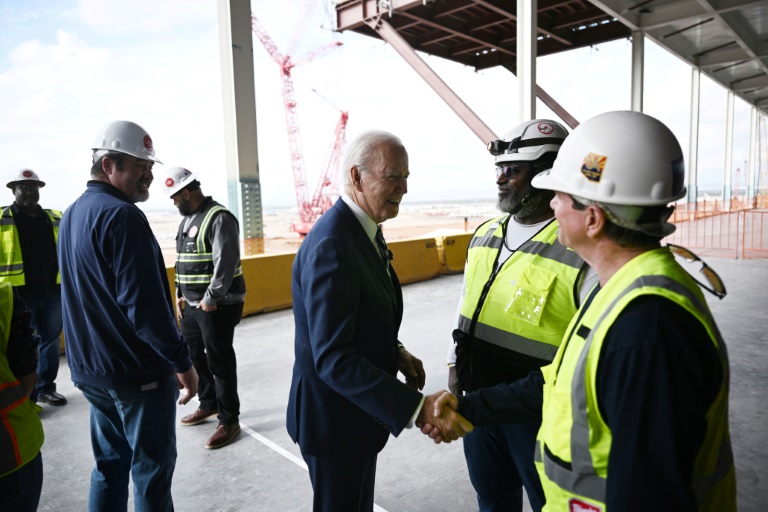
President Joe Biden declared the comeback of US manufacturing Tuesday at the site of a mammoth expansion to a Taiwanese-owned semiconductor plant aimed at breaking risky US dependency on foreign-based producers for the vital component.

“American manufacturing is back, folks. American manufacturing is back,” Biden said at the plant in Phoenix, Arizona, accompanied by senior political allies and titans of the corporate world, including Apple CEO Tim Cook and Micron CEO Sanjay Mehrotra.

The project by TSMC, the world’s biggest maker of leading-edge chips, would go a long way to meeting the US goal of ending reliance on foreign-located factories — particularly in Taiwan, which is under constant threat of being absorbed or even invaded by China.

TSMC, or Taiwan Semiconductor Manufacturing Company, announced it is building a second Phoenix plant by 2026, ballooning its investment in Arizona from $12 billion to $40 billion, with a target of producing some 600,000 microchips a year. 

About 10,000 high-tech jobs will be created once both plants are working, the company said.

White House National Economic Council Director Brian Deese said the “major milestone” is one of the largest foreign direct investments in US history, while TSMC chairman Mark Liu heralded “a giant step forward to help build a vibrant semiconductor ecosystem in the United States.”

Biden clearly hoped to get political credit for the investment influx, pointing to the effect of his signature CHIPS Act, which sets aside almost $53 billion for subsidies and research in the semiconductors sector.

It’s a message he’ll want to spread in Arizona, which was long a Republican-dominated state but has turned into a battleground where the president’s Democrats do increasingly well.

– Size matters –

Most of the current US supply of microchips comes from overseas. Although the companies are largely based in reliable US allies in Asia, the sheer distance and, especially, the geopolitical tensions around Taiwan, have the US government and companies like Apple nervous.

“Virtually every large tech firm, including automotive firms and any company that uses technology is sweating bullets that something’s going to happen between Taiwan and China. And so there’s a massive rush to shift manufacturing out of both countries,” technology analyst Rob Enderle said.

The miniscule, hard-to-make gadgets are at the heart of almost every modern appliance, vehicle and advanced weapon.

While sheer quantity matters, quality — sophistication and small size — is also increasingly important. Even typical smartphones require the higher-end semiconductors.

The new TSMC plant will produce state-of-the-art 3-nanometer chips, while the existing facility will start reducing the size of its current 5-nanometer chips to a more sophisticated 4 nanometers.

The twin plants “could meet the entire US demand for advanced chips when they’re completed. That’s the definition of supply chain resilience,” Ronnie Chatterji, National Economic Council deputy director for industrial policy, told reporters.

Biden framed the TSMC investment in a broader context of revitalizing US-based manufacturing — one of his presidency’s key themes.

“Over 30 years ago, America had more than 30 percent of the global chip production. Then something happened,” he said.

“American manufacturing, the backbone of our economy, began to get hollowed out. Companies moved jobs overseas. Today we’re down to producing only around 10 percent of the world’s chips, despite leading the world in research and design.”

Deese, one of Biden’s most senior advisors, said Biden’s signature public investment policies — the CHIPS Act and the giant Inflation Reduction Act — are revolutionizing the way the government works with private companies.

For almost four decades, the idea was “trickle down,” where government would “get out the way” and cut taxes for big companies to attract investment, he said.

Now the goal is to use the public money to kickstart activity and “crowd in” investors.

The goal is not to exclude “private companies, but in fact, encouraging private investment at historic scale,” Deese said.

Biden celebrates US manufacturing comeback at giant semiconductor project

President Joe Biden declared the comeback of US manufacturing Tuesday at the site of a mammoth expansion to a Taiwanese-owned semiconductor plant aimed at breaking risky US dependency on foreign-based producers for the vital component.

“American manufacturing is back, folks. American manufacturing is back,” Biden said at the plant in Phoenix, Arizona, accompanied by senior political allies and titans of the corporate world, including Apple CEO Tim Cook and Micron CEO Sanjay Mehrotra.

The project by TSMC, the world’s biggest maker of leading-edge chips, would go a long way to meeting the US goal of ending reliance on foreign-located factories — particularly in Taiwan, which is under constant threat of being absorbed or even invaded by China.

TSMC, or Taiwan Semiconductor Manufacturing Company, announced it is building a second Phoenix plant by 2026, ballooning its investment in Arizona from $12 billion to $40 billion, with a target of producing some 600,000 microchips a year. 

About 10,000 high-tech jobs will be created once both plants are working, the company said.

White House National Economic Council Director Brian Deese said the “major milestone” is one of the largest foreign direct investments in US history, while TSMC chairman Mark Liu heralded “a giant step forward to help build a vibrant semiconductor ecosystem in the United States.”

Biden clearly hoped to get political credit for the investment influx, pointing to the effect of his signature CHIPS Act, which sets aside almost $53 billion for subsidies and research in the semiconductors sector.

It’s a message he’ll want to spread in Arizona, which was long a Republican-dominated state but has turned into a battleground where the president’s Democrats do increasingly well.

– Size matters –

Most of the current US supply of microchips comes from overseas. Although the companies are largely based in reliable US allies in Asia, the sheer distance and, especially, the geopolitical tensions around Taiwan, have the US government and companies like Apple nervous.

“Virtually every large tech firm, including automotive firms and any company that uses technology is sweating bullets that something’s going to happen between Taiwan and China. And so there’s a massive rush to shift manufacturing out of both countries,” technology analyst Rob Enderle said.

The miniscule, hard-to-make gadgets are at the heart of almost every modern appliance, vehicle and advanced weapon.

While sheer quantity matters, quality — sophistication and small size — is also increasingly important. Even typical smartphones require the higher-end semiconductors.

The new TSMC plant will produce state-of-the-art 3-nanometer chips, while the existing facility will start reducing the size of its current 5-nanometer chips to a more sophisticated 4 nanometers.

The twin plants “could meet the entire US demand for advanced chips when they’re completed. That’s the definition of supply chain resilience,” Ronnie Chatterji, National Economic Council deputy director for industrial policy, told reporters.

Biden framed the TSMC investment in a broader context of revitalizing US-based manufacturing — one of his presidency’s key themes.

“Over 30 years ago, America had more than 30 percent of the global chip production. Then something happened,” he said.

“American manufacturing, the backbone of our economy, began to get hollowed out. Companies moved jobs overseas. Today we’re down to producing only around 10 percent of the world’s chips, despite leading the world in research and design.”

Deese, one of Biden’s most senior advisors, said Biden’s signature public investment policies — the CHIPS Act and the giant Inflation Reduction Act — are revolutionizing the way the government works with private companies.

For almost four decades, the idea was “trickle down,” where government would “get out the way” and cut taxes for big companies to attract investment, he said.

Now the goal is to use the public money to kickstart activity and “crowd in” investors.

The goal is not to exclude “private companies, but in fact, encouraging private investment at historic scale,” Deese said.

Close Bitnami banner
Bitnami