US Business

Niger finance minister rebuffs pressure to drop oil drive

Niger’s finance minister says lack of support from rich countries makes it impossible for his impoverished nation to abandon revenue from oil.

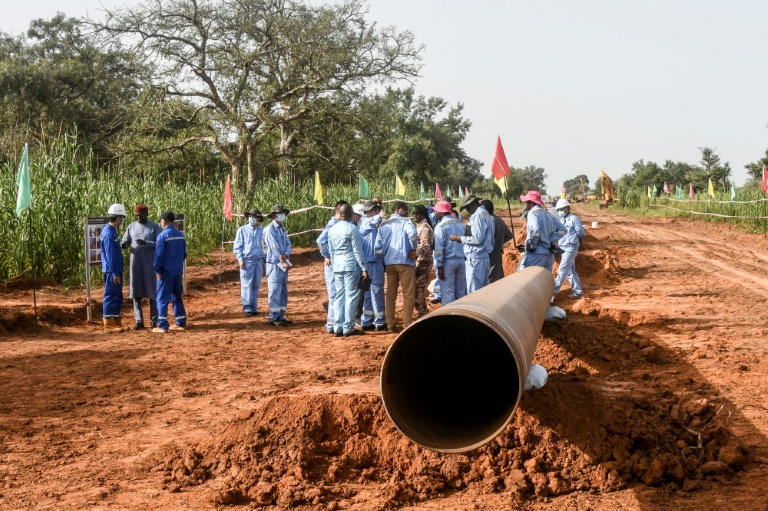
The landlocked Sahel state has launched a scheme to build Africa’s longest pipeline, shuttling crude oil over nearly 2,000 kilometres (1,250 miles) to a port in Benin.

Environmental campaigners are dismayed about initiatives that perpetuate the use of climate-damaging fossil fuels.

But in an interview with AFP, Finance Minister Ahmat Jidoud said Niger had no alternative.

“Right now it’s not possible,” he said.

“It is important for us to be able to exploit our own resources until the conditions are there for the climate transition to unfold,” he said.

Niger’s 26 million people are the poorest in the world, according to the benchmark of the UN’s Human Development Index.

The population is also one of the fast-growing in the world, expanding by 3.7 percent annually.

Without income from oil, “our development is compromised,” Jidoud said, warning of a “social (time-) bomb.”

Niger became an oil producer in 2011, with the China National Petroleum Corporation (CNPC) sending crude by pipeline to refineries in Zinder in the south-centre of the country.

The new $6-billion pipeline will connect wells in the eastern region of Agadem with the Beninese port of Seme.

Launched in 2019, the project was supposed to be completed in 2022, but was hampered by the Covid-19 pandemic.

More than 600 km of pipeline has already been laid, and Niger is on track to sell crude on the international market from next July, according to the ministry of petroleum and energy.

Jidoud spoke to AFP on the sidelines of a conference in Paris aimed at mustering public and private funds to support Niger’s 2022-26 $29.6-billion development plan.

The blueprint, unveiled on Monday by President Mohamed Bazoum, aims to reduce the poverty rate from 43 percent to 35 percent.

It says the state can count on $13.35 billion from its own resources, a figure that is crucially dependent on oil exports.

Thanks to the new pipeline, oil sales by the end of 2023 should rise from 20,000 barrels per day to 110,000, according to his plan.

Under this scenario, oil income would account for half of the country’s fiscal revenue and a quarter of GDP.

Income from oil compares starkly with the funds channelled by rich countries to help poorer nations move to a climate-friendlier path, said Jidoud.

“You can’t talk to us about the energy transition if the support promised by the G20 countries doesn’t show up,” he said.

He pointed to a promise, first made by rich economies at the 2009 Copenhagen climate summit, to muster $100 billion a year in support — a vow that remains unfulfilled.

In addition to entrenched poverty, Niger is battling climate extremes in a deeply arid region, and struggling with two jihadist insurgencies.

Jidoud said that in early commitments on Monday, the African Development Bank (AfDB) had promised 2.4 billion euros (dollars), the West African Development Bank (WADB) 680 million euros and France — Niger’s former colonial power and ally — 550 million.

Markets drop as Fed worries offset China's Covid easing

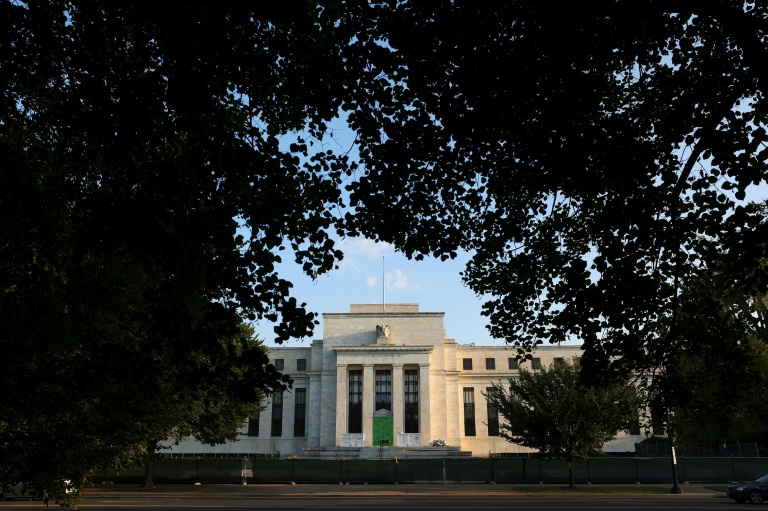
Stock markets fell on Tuesday as investors were split between fears that the US Federal Reserve will maintain its aggressive anti-inflation measures and growing optimism over China’s economic reopening.

London, Frankfurt and Paris were down in afternoon trades after Asia mostly fell.

Wall Street extended losses as it opened lower following a sell-off the previous day.

Data showing a forecast-busting jump in activity in the US services sector last month raised the prospect that the Fed will not back down from sharp rate increases when it meets next week.

Monday’s data followed robust jobs figures last week and a jump in wages that give the central bank more room to cool the US economy, fuelling investor concerns that the Fed’s actions could cause a deep recession.

“Worries that the Fed could unwrap an unwelcome present of another super-sized rate hike when policymakers meet next week are sprinkling Christmas fear on indices,” said Susannah Streeter, senior investment and markets analyst at Hargreaves Lansdown.

“Speculation is swirling that central banks will have to be more Scrooge-like and make borrowing even more expensive to rein in inflation,” she said.

Markets had been running higher ahead of the jobs figures after a surprise drop in inflation and comments from Fed boss Jerome Powell that the bank was likely to raise rates at a slower pace.

Bets have increased on borrowing costs rising higher than five percent next year — from the current range of 3.75-4.0 percent — before the bank pauses, with no cuts seen until 2024.

“There is a prominent undercurrent of concern that the Fed is going to overtighten and trigger a deeper economic setback,” said Briefing.com analyst Patrick O’Hare.

Analysts said concerns over the Fed have overshadowed China’s easing of zero-Covid policies following nationwide protests over the measures, which have hammered the world’s second biggest economy.

Despite the prospect of higher Chinese demand for oil as the economy reopens, crude prices fell as an EU embargo on Russian oil and a G7-EU price cap on the country’s exports came into force on Monday.

“It seems that the only thing guaranteed in the oil market for now is volatility,” said OANDA trading platform analyst Craig Erlam.

The dollar lost ground against other major currencies after gains on Monday.

– Key figures around 1445 GMT –

New York – Dow: DOWN 0.3 percent at 33,837.66 points

London – FTSE 100: DOWN 0.3 percent at 7,545.95 

Frankfurt – DAX: DOWN 0.5 percent at 14,379.00

Paris – CAC 40: DOWN 0.2 percent at 6,683.24

EURO STOXX 50: DOWN 0.3 percent at 3,944.32

Tokyo – Nikkei 225: UP 0.2 percent at 27,885.87 (close)

Hong Kong – Hang Seng Index: DOWN 0.4 percent at 19,441.18 (close)

Shanghai – Composite: FLAT at 3,212.53 (close)

Euro/dollar: UP at $1.0510 from $1.0495 on Monday

Dollar/yen: DOWN at 136.49 yen from 136.78 yen

Pound/dollar: UP at $1.2193 from $1.2186

Euro/pound: UP at 86.19 pence from 86.06 pence

West Texas Intermediate: DOWN 0.7 percent at $76.40 per barrel

Brent North Sea crude: DOWN 0.7 percent at $82.08 per barrel

Airlines to return to profit in 2023: IATA

Airlines are expected to return to profit next year for the first time since 2019 despite slowing global growth as they recover from a Covid-induced crisis, an industry group said Tuesday.

After cutting losses this year, airlines are forecast to make $4.7 billion in net profits in 2023, according to the International Air Transport Association (IATA).

This is still far off the $26.4 billion profit the industry reported in 2019, before Covid prompted countries to enact travel restrictions that have since been eased in most nations.

“Resilience has been the hallmark for airlines in the Covid-19 crisis,” IATA director general Willie Walsh said in a statement.

“As we look to 2023, the financial recovery will take shape with a first industry profit since 2019. That is a great achievement considering the scale of the financial and economic damage caused by government imposed pandemic restrictions,” he said.

Governments in numerous countries had to bail out airlines as travel was brought to a halt to slow the spread of the virus, and the industry suffered $137.7 billion in losses in 2020 at the height of the restrictions.

Airlines are expected to post $779 billion in revenues in 2023, meaning the $4.7 billion profit constitutes a razor-thin net profit margin of just 0.6 percent. 

Walsh said many airlines are “sufficiently profitable” to attract capital as the industry seeks to decarbonise its operations.

But many others are struggling due to “onerous regulation, high costs, inconsistent government policies, inefficient infrastructure and a value chain where the rewards of connecting the world are not equitably distributed,” he said.

Passenger traffic was slightly lower than forecast in 2022 due to slowing economies and China’s zero-Covid restrictions. 

– ‘Optimistic about 2023’ –

But the IATA expects passenger traffic to return to 85.5 percent of its pre-crisis level in 2023.

And that expected improvement comes as global GDP growth slows, according to IATA’s forecast, to 1.3 percent from 2.9 percent in 2022. 

“Despite the economic uncertainties, there are plenty of reasons to be optimistic about 2023,” said Walsh.

Airlines should not be as affected by rising jet fuel prices as they were in 2022, while continuing to benefit from pent-up travel demand.

A recent IATA poll found that more than two-thirds of travellers surveyed in 11 global markets are travelling as much or more than before the pandemic. 

And while 85 percent said they are concerned about the economic situation, 57 percent said have no intention to curb their travel habits.

But Walsh also warned that with such thin margins, “even an insignificant shift in any one of these variables has the potential to shift the balance into negative territory.”

IATA sees airlines squeaking out a profit thanks to revenues growing faster than costs next year. 

While rising interest rates may crimp demand for travel, IATA sees that as likely leading to lower oil prices, thus reducing costs for airlines.

– Help for green transition –

On a regional level, airlines in North America are expected to post $9.9 billion in profits this year, thanks to carriers benefitting from fewer and shorter-lasting travel restrictions in the region. For 2023, profits are seen as climbing to $11.4 billion.

European carriers are forecast to post $3.1 billion in losses as some airlines had to curtail operations due to Russia’s war in Ukraine while others faced limitations imposed by airports. IATA sees European airlines posting $621 million in profit in 2023.

Asia-Pacific airlines are expected to suffer $10 billion in losses this year, primarily due to China’s zero Covid policy. In 2023, they are expected to narrow that to $6.6 billion. 

But IATA noted it expects “strong pent-up demand to fuel a quick rebound in the wake of any” relaxation in Covid travel restrictions by China.

Walsh said that the airline industry remains committed to reaching net zero carbon emissions by 2050, but given its thin profit margins, pleaded for government help. 

“We’ll need all the resources we can muster, including government incentives, to finance this enormous energy transition,” said Walsh.

“More taxes and higher charges would be counter-productive,” he added.

Biden celebrates giant TSMC semiconductor project

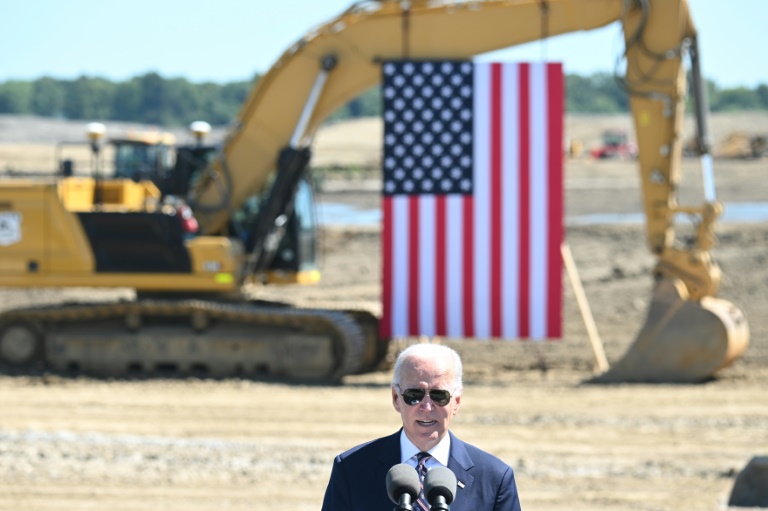
President Joe Biden flies Tuesday to Arizona to celebrate the mammoth expansion of a Taiwanese semiconductor plant, citing the project as proof the United States is finally breaking dangerous dependency on foreign manufacturers for the vital component.

TSMC announced it is building a second facility in Phoenix by 2026, ballooning its investment from $12 billion to $40 billion. About 10,000 high-tech jobs will be created once both plants are working, the company said.

With a target of producing some 600,000 microchips a year in the twin facilities, TSMC’s project would go a long way to meeting the US goal of ending reliance on factories based abroad — particularly in Taiwan, which is under constant threat of being absorbed or even invaded by China.

The “major milestone” adds up to “the largest foreign direct investment in Arizona history and it’s one of the largest in US history,” White House National Economic Council Director Brian Deese told reporters.

Biden will speak at the TSMC site, accompanied by senior political figures and titans of the corporate world, including Apple CEO Tim Cook, TSMC’s founder Morris Chang and Micron CEO Sanjay Mehrotra.

The Democrat will seek to take credit for the investment influx, pointing to the effect of his signature CHIPS Act, which sets aside almost $53 billion for subsidies and research in the semiconductors sector. 

It’s a message he’ll be especially keen to spread in Arizona, which was long a Republican-dominated state but has turned into a battleground where Democrats do increasingly well.

The plant expansion — coming on top of other significant microchip manufacturing projects dotted around the country — is part of an overall plan by the Biden administration to shift the center of gravity in the increasingly strategic, global industry.

Most supply currently comes from companies based in reliable US allies in Asia, but the sheer distance from producers and, especially, the geopolitical tensions around Taiwan are triggering a push to shrink the supply chain.

“Virtually every large tech firm, including automotive firms and any company that uses technology is sweating bullets that something’s going to happen between Taiwan and China. And so there’s a massive rush to shift manufacturing out of both countries,” technology analyst Rob Enderle said.

– Smaller the better –

In the high-stakes world of microchips, sheer quantity is important. The miniscule, hard-to-make gadgets are at the heart of almost every modern appliance, vehicle and advanced weapon.

But quality — and small size — is also increasingly important for sophisticated everyday devices like smartphones and on that front the White House says it has good news.

The new TSMC plant will produce tiny 3 nanometer chips, while the existing facility will start reducing the size of its current 5 nanometer chips to 4 nanometers.

Building a plant, or a “fab,” takes several years. But once “at scale, these two fabs could meet the entire US demand for advanced chips when they’re completed. That’s the definition of supply chain resilience,” Ronnie Chatterji, National Economic Council deputy director for industrial policy, told reporters.

Deese, one of Biden’s most senior advisors, said the broader message from the White House is that US industrial strategy is undergoing a rebirth.

For almost four decades, the idea was “trickle down,” where government would “get out the way” and cut taxes for big companies to attract investment, he said.

Instead, Biden’s policy — both through the CHIPS Act and the giant Inflation Reduction Act — uses public money to attract, or “crowd in” private investment.

The goal is not to exclude “private companies, but in fact, encouraging private investment at historic scale,” Deese said.

Biden celebrates giant TSMC semiconductor project

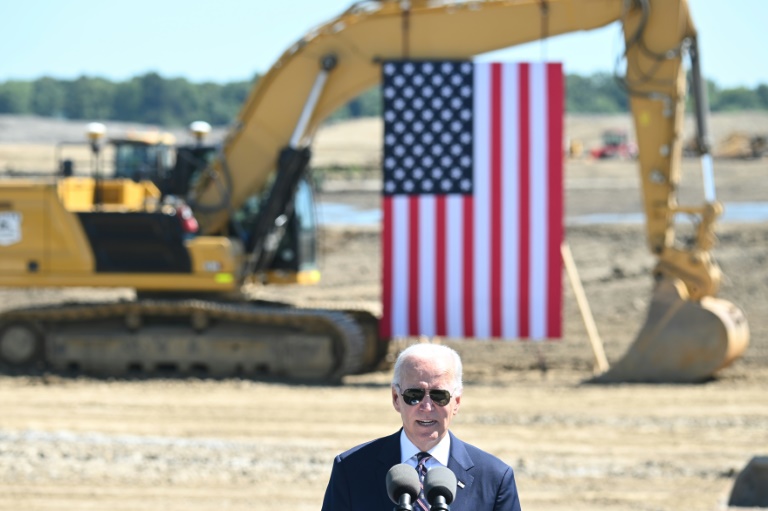
President Joe Biden flies Tuesday to Arizona to celebrate the mammoth expansion of a Taiwanese semiconductor plant, citing the project as proof the United States is finally breaking dangerous dependency on foreign manufacturers for the vital component.

TSMC announced it is building a second facility in Phoenix by 2026, ballooning its investment from $12 billion to $40 billion. About 10,000 high-tech jobs will be created once both plants are working, the company said.

With a target of producing some 600,000 microchips a year in the twin facilities, TSMC’s project would go a long way to meeting the US goal of ending reliance on factories based abroad — particularly in Taiwan, which is under constant threat of being absorbed or even invaded by China.

The “major milestone” adds up to “the largest foreign direct investment in Arizona history and it’s one of the largest in US history,” White House National Economic Council Director Brian Deese told reporters.

Biden will speak at the TSMC site, accompanied by senior political figures and titans of the corporate world, including Apple CEO Tim Cook, TSMC’s founder Morris Chang and Micron CEO Sanjay Mehrotra.

The Democrat will seek to take credit for the investment influx, pointing to the effect of his signature CHIPS Act, which sets aside almost $53 billion for subsidies and research in the semiconductors sector. 

It’s a message he’ll be especially keen to spread in Arizona, which was long a Republican-dominated state but has turned into a battleground where Democrats do increasingly well.

The plant expansion — coming on top of other significant microchip manufacturing projects dotted around the country — is part of an overall plan by the Biden administration to shift the center of gravity in the increasingly strategic, global industry.

Most supply currently comes from companies based in reliable US allies in Asia, but the sheer distance from producers and, especially, the geopolitical tensions around Taiwan are triggering a push to shrink the supply chain.

“Virtually every large tech firm, including automotive firms and any company that uses technology is sweating bullets that something’s going to happen between Taiwan and China. And so there’s a massive rush to shift manufacturing out of both countries,” technology analyst Rob Enderle said.

– Smaller the better –

In the high-stakes world of microchips, sheer quantity is important. The miniscule, hard-to-make gadgets are at the heart of almost every modern appliance, vehicle and advanced weapon.

But quality — and small size — is also increasingly important for sophisticated everyday devices like smartphones and on that front the White House says it has good news.

The new TSMC plant will produce tiny 3 nanometer chips, while the existing facility will start reducing the size of its current 5 nanometer chips to 4 nanometers.

Building a plant, or a “fab,” takes several years. But once “at scale, these two fabs could meet the entire US demand for advanced chips when they’re completed. That’s the definition of supply chain resilience,” Ronnie Chatterji, National Economic Council deputy director for industrial policy, told reporters.

Deese, one of Biden’s most senior advisors, said the broader message from the White House is that US industrial strategy is undergoing a rebirth.

For almost four decades, the idea was “trickle down,” where government would “get out the way” and cut taxes for big companies to attract investment, he said.

Instead, Biden’s policy — both through the CHIPS Act and the giant Inflation Reduction Act — uses public money to attract, or “crowd in” private investment.

The goal is not to exclude “private companies, but in fact, encouraging private investment at historic scale,” Deese said.

Oversight board slams Meta for special treatment of high-profile users

An oversight panel said Tuesday that Facebook and Instagram put business over human rights when giving special treatment to rule-breaking posts by politicians, celebrities and other high-profile users.

A year-long probe by an independent “top court” created by the tech firm ended with it calling for the overhaul of a system known as “cross-check” that shields elite users from Facebook’s content rules.

“While Meta told the board that cross-check aims to advance Meta’s human rights commitments, we found that the program appears more directly structured to satisfy business concerns,” the panel said in a report.

“By providing extra protection to certain users selected largely according to business interests, cross-check allows content which would otherwise be removed quickly to remain up for a longer period, potentially causing harm.”

Cross-check is implemented in a way that does not meet Meta’s human rights responsibilities, according to the board.

Meta told the board the program is intended to provide an additional layer of human review to posts by high-profile users that initially appear to break rules, the report indicated.

That has resulted in posts that would have been immediately removed being left up during a review process that could take days or months, according to the report.

“This means that, because of cross-check, content identified as breaking Meta’s rules is left up on Facebook and Instagram when it is most viral and could cause harm,” the board said.

Meta also failed to determine whether the process had resulted in more accurate decisions regarding content removal, the board said.

Cross-check is flawed in “key areas,” including user equality and transparency, the board concluded, recommending 32 changes to the system.

Content identified as violating Meta’s rules with “high severity” in a first assessment “should be removed or hidden while further review is taking place,” the board said.

“Such content should not be allowed to remain on the platform accruing views simply because the person who posted it is a business partner or celebrity.”

The Oversight Board said it learned of cross-check in 2021, while looking into and eventually endorsing Facebook’s decision to suspend former US president Donald Trump.

In a statement Tuesday, Facebook Vice President for Global Affairs Nick Clegg said the firm has agreed with the board to review its recommendations and respond within 90 days.

He said in the past year, Facebook has made improvements to the process, including widening eligibility for cross-check reviews while also implementing more controls on how users are added to the system. 

“We built the cross-check system to prevent potential over-enforcement… and to double-check cases where there could be a higher risk for a mistake or when the potential impact of a mistake is especially severe,” such as journalistic reporting from conflict zones, Clegg said.

Oversight board slams Meta for special treatment of high-profile users

An oversight panel said Tuesday that Facebook and Instagram put business over human rights when giving special treatment to rule-breaking posts by politicians, celebrities and other high-profile users.

A year-long probe by an independent “top court” created by the tech firm ended with it calling for the overhaul of a system known as “cross-check” that shields elite users from Facebook’s content rules.

“While Meta told the board that cross-check aims to advance Meta’s human rights commitments, we found that the program appears more directly structured to satisfy business concerns,” the panel said in a report.

“By providing extra protection to certain users selected largely according to business interests, cross-check allows content which would otherwise be removed quickly to remain up for a longer period, potentially causing harm.”

Cross-check is implemented in a way that does not meet Meta’s human rights responsibilities, according to the board.

Meta told the board the program is intended to provide an additional layer of human review to posts by high-profile users that initially appear to break rules, the report indicated.

That has resulted in posts that would have been immediately removed being left up during a review process that could take days or months, according to the report.

“This means that, because of cross-check, content identified as breaking Meta’s rules is left up on Facebook and Instagram when it is most viral and could cause harm,” the board said.

Meta also failed to determine whether the process had resulted in more accurate decisions regarding content removal, the board said.

Cross-check is flawed in “key areas,” including user equality and transparency, the board concluded, recommending 32 changes to the system.

Content identified as violating Meta’s rules with “high severity” in a first assessment “should be removed or hidden while further review is taking place,” the board said.

“Such content should not be allowed to remain on the platform accruing views simply because the person who posted it is a business partner or celebrity.”

The Oversight Board said it learned of cross-check in 2021, while looking into and eventually endorsing Facebook’s decision to suspend former US president Donald Trump.

In a statement Tuesday, Facebook Vice President for Global Affairs Nick Clegg said the firm has agreed with the board to review its recommendations and respond within 90 days.

He said in the past year, Facebook has made improvements to the process, including widening eligibility for cross-check reviews while also implementing more controls on how users are added to the system. 

“We built the cross-check system to prevent potential over-enforcement… and to double-check cases where there could be a higher risk for a mistake or when the potential impact of a mistake is especially severe,” such as journalistic reporting from conflict zones, Clegg said.

Libya tells foreign energy firms it's safe to return

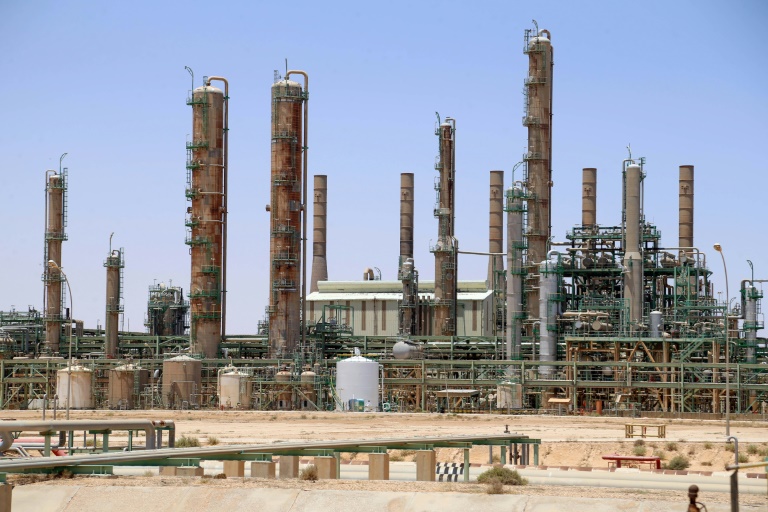
Libya’s state energy firm urged its foreign oil and gas partners to resume exploration and production Tuesday assuring them security had begun to improve dramatically after clashes earlier this year.

Rival administrations in east and west have vied for power since March, in a standoff that has hampered Libya’s efforts to sharply ramp up output in response to a surge in European demand for non-Russian oil and gas. 

“The National Oil Corporation calls (on) the international oil and gas companies with whom it has signed oil and gas exploration and production agreements to lift the force majeure declared by them,” the firm said in a statement.

Force majeure is a legal measure allowing companies to free themselves from contractual obligations in light of circumstances beyond their control.

NOC said its appeal followed a “realistic and  logical analysis of the security situation, which has begun to improve dramatically.”

The firm expressed “readiness to provide all necessary support… along with providing a safe working environment in cooperation with the civil and military authorities.”

Libya aims to raise its oil output from around 1.2 million barrels per day currently to 2.0 million bpd by 2027, NOC chairman Farhat Bengdara said last week.

On taking up his post in July, Bengdara lifted force majeure at all of the country’s oil fields and export terminals as an eastern-based militia abandoned a three-month blockade of six of them that had cut output by 400,000 bpd.

Since Russia invaded Ukraine in February, European countries have looked to alternative supplies from Africa to help end their dependence on Russian oil and gas.

Libya, which boasts the biggest proven crude reserves on the continent, has been wracked by years of conflict and division since a NATO-backed revolt toppled dictator Moamer Kadhafi in 2011.

Prime Minister Abdulhamid Dbeibah was appointed as part of a United Nations-guided peace process following the last major fighting in 2020, but the eastern-based parliament and military strongman Khalifa Haftar say his mandate has expired.

In March, parliament appointed a new government to take his place, but the rival administration has failed to install itself in Tripoli.

NOC chairman Bengdara was appointed by the Dbeibah government but has vowed to “work to prevent political interference” in the vital sector.

NOC has predicted oil revenues alone will amount to between $35 billion and $37 billion this year.

Markets drop as Fed worries offset China's Covid easing

Stock markets mostly fell on Tuesday as fears that the US Federal Reserve will maintain its aggressive anti-inflation measures trumped growing optimism over China’s economic reopening.

London, Paris and Frankfurt were all in the red at around midday.

Asian markets were mostly down after all three main indexes on Wall Street lost more than one percent the day before.

Data showing a forecast-busting jump in activity in the US services sector last month raised the prospect that the Fed will not back down from sharp rate increases when it meets next week.

Monday’s data followed robust jobs figures last week that could give the central bank more room to manoeuvre, fuelling investor concerns that the Fed’s actions could tip the economy into recession.

“Worries that the Fed could unwrap an unwelcome present of another super-sized rate hike when policymakers meet next week are sprinkling Christmas fear on indices,” said Susannah Streeter, senior investment and markets analyst at Hargreaves Lansdown.

“Speculation is swirling that central banks will have to be more Scrooge-like and make borrowing even more expensive to rein in inflation,” she said.

Markets had been running higher ahead of the jobs figures after a surprise drop in inflation and comments from Fed boss Jerome Powell that the bank was likely to raise rates at a slower pace.

“Outstanding news from the vast services-based US economy is devastating for market participants keen to see evidence of the US economic disintegration,” said SPI Asset Management’s Stephen Innes.

Bets have increased on borrowing costs rising higher than five percent next year — from the current range of 3.75-4.0 percent — before the bank pauses, with no cuts seen until 2024.

Investors have also been tracking China’s zero-Covid policies, which have hammered the world’s second biggest economy.

Hong Kong dropped after soaring around 15 percent over the past week on China’s easing of strict Covid containment measures.

The dollar lost ground against other major currencies after gains on Monday.

Crude prices fell more than one percent over concerns that higher interest rates could slow the global economy, which would affect oil demand.

– Key figures around 1150 GMT –

London – FTSE 100: DOWN 0.4 percent at 7,539.62 points

Frankfurt – DAX: DOWN 0.3 percent at 14,405.66

Paris – CAC 40: DOWN 0.3 percent at 6,675.04

EURO STOXX 50: DOWN 0.3 percent at 3,946.83

Tokyo – Nikkei 225: UP 0.2 percent at 27,885.87 (close)

Hong Kong – Hang Seng Index: DOWN 0.4 percent at 19,441.18 (close)

Shanghai – Composite: FLAT at 3,212.53 (close)

New York – Dow: DOWN 1.4 percent at 33,947.10 (close)

Euro/dollar: UP at $1.0513 from $1.0495 on Monday

Dollar/yen: DOWN at 136.34 yen from 136.78 yen

Pound/dollar: UP at $1.2216 from $1.2186

Euro/pound: UP at 86.08 pence from 86.06 pence

West Texas Intermediate: DOWN 1.3 percent at $75.97 per barrel

Brent North Sea crude: DOWN 1.2 percent at $81.70 per barrel

Energy crisis fuels renewables boom: IEA

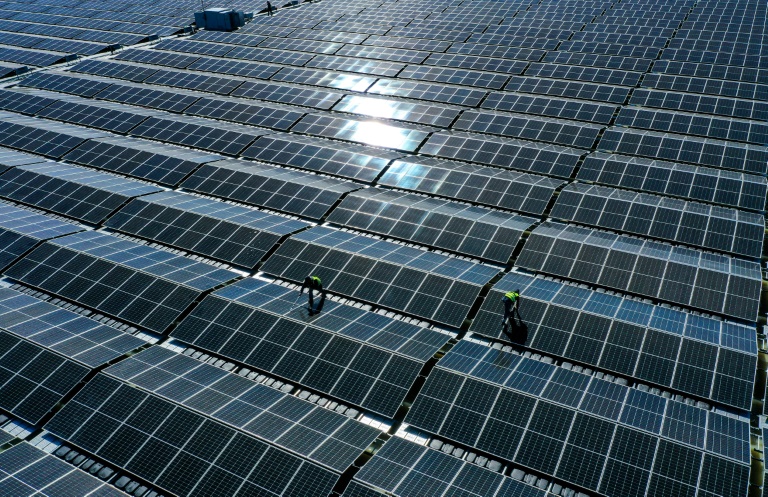
The energy crisis is fuelling an acceleration of the rollout of renewable power, raising hopes for efforts to meet ambitious targets against global warming, the International Energy Agency said Tuesday.

Total renewables capacity growth worldwide is set to almost double in the next five years and overtake coal as the largest source of electricity generation by 2025, the IEA said in a report.

The 2,400-gigawatt growth between 2022-2027 is almost a third higher than last year’s IEA forecast, according to the Paris-based agency, which advises developed nations.

This would help “keep alive the possibility of limiting global warming to 1.5 (degrees Celsius)”, the IEA said, referring to the preferrable target set in the 2015 Paris Agreement to prevent a climate catastrophe.

The invasion of Ukraine by major oil and gas exporter Russia has triggered an energy crunch and prompted countries in Europe, which were highly dependent on Russian deliveries, to diversify their supplies.

“Renewables were already expanding quickly, but the global energy crisis has kicked them into an extraordinary new phase of even faster growth as countries seek to capitalise on their energy security benefits,” said IEA executive director Fatih Birol.

“The world is set to add as much renewable power in the next five years as it did in the previous 20 years,” Birol said in a statement.

“This is a clear example of how the current energy crisis can be a historic turning point towards a cleaner and more secure future world energy system.”

The amount of renewable power capacity added in Europe between 2022-2027 is forecast to be twice as high as in the previous five-year period, the IEA said.

EU nations could deploy wind and solar power even faster if they were to quickly streamline the process for receiving permits, the report said.

The IEA’s revised forecast is also driven by new policies and market reforms being implemented more quickly than previously planned.

China is expected to account for almost half of new global renewable power capacity additions in the next five years, the report said.

Close Bitnami banner
Bitnami