US Business

US stocks slide on Fed worries as Asian bourses rally

US stocks fell Monday on worries the Federal Reserve will prolong aggressive policies to counter inflation, while Asian bourses rallied on signs China is pivoting from its zero-tolerance Covid policies.

A survey of US services industry companies showed stronger-than-expected activity in November, following Friday’s employment report which also topped estimates.

The latest economic reports show “some pretty considerable resilience,” said Art Hogan, analyst at B. Riley Financial.

While markets continue to bet on a more modest Fed interest rate hike later this month, traders now see the US central bank lifting its rates to a higher “terminal” level when the cycle of increases is complete, Hogan said.

Major US indices ended decisively in the red following a mixed day in Europe.

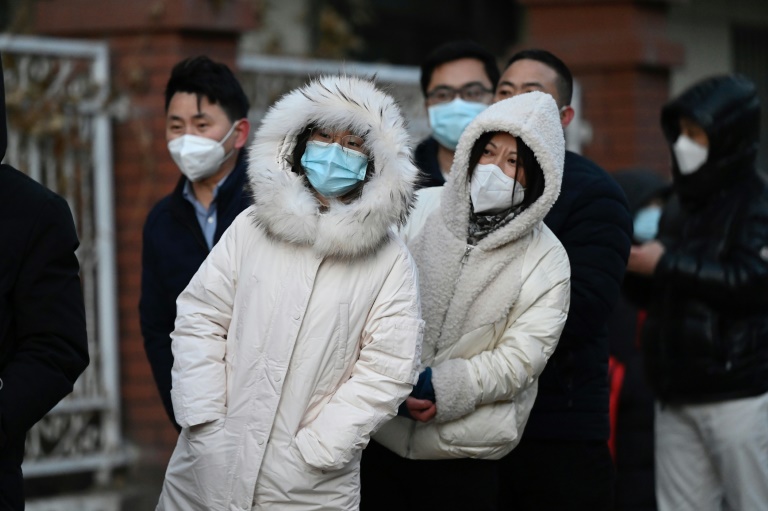
Earlier, equity markets in Asia bounced as officials in Beijing and throughout China began easing some pandemic restrictions. Commuters in the Chinese capital were no longer required to show a negative virus test taken within 48 hours to use public transport.

The shift comes after Chinese authorities moved to contain rare public protests over prolonged Covid-19 restrictions.

China’s vast security apparatus has acted swiftly to smother the rallies, deploying a heavy police presence while boosting online censorship and surveillance of the population.

Chinese state media, which previously focused on highlighting the dangers of Covid-19, shifted tone as measures were relaxed.

Authoritative business news outlet Yicai on Sunday quoted an unnamed health expert arguing that officials should dial down strict virus rules.

Anticipation of a recovery in Chinese economic activity initially boosted oil prices on Monday, but crude later pulled back as markets appeared to bet that more restrictive US monetary policy could limit petroleum demand.

The entry into force of a price cap on Russian crude agreed by the EU, G7 and Australia came into force and the weekend decision by OPEC and its Russia-led allies to maintain oil output levels also supported prices.

“From the OPEC+ perspective, it can’t be easy to make reliable forecasts against that (Russia) backdrop and the constantly evolving Covid situation in China, which currently looks far more promising from a demand perspective,” said Craig Erlam, senior market analyst at OANDA trading group.

– Key figures around 2130 GMT –

New York – Dow: DOWN 1.4  percent at 33,947.10 (close)

New York – S&P 500: DOWN 1.8 percent at 3,998.84 (close)

New York – Nasdaq: DOWN 1.9 percent at 11,239.94 (close)

London – FTSE 100: UP 0.2 percent at 7,567.54 (close)

Frankfurt – DAX: DOWN 0.6 percent at 14,447.61 (close)

Paris – CAC 40: DOWN 0.7 percent at 6,696.96 (close)

EURO STOXX 50: DOWN 0.5 percent at 3,956.53 (close)

Tokyo – Nikkei 225: UP 0.2 percent at 27,820.40 (close)

Hong Kong – Hang Seng Index: UP 4.5 percent at 19,518.29 (close)

Shanghai – Composite: UP 1.8 percent at 3,211.81 (close)

Euro/dollar: DOWN at $1.0495 from $1.0535 on Friday

Dollar/yen: UP at 136.78 yen from 134.31 yen

Pound/dollar: DOWN at $1.2186 from $1.2280

Euro/pound: UP at 86.06 pence from 85.79 pence

Brent North Sea crude: DOWN 3.4 percent at $82.68 per barrel

West Texas Intermediate: DOWN 3.8 percent at $76.93 per barrel

burs-jmb/bys
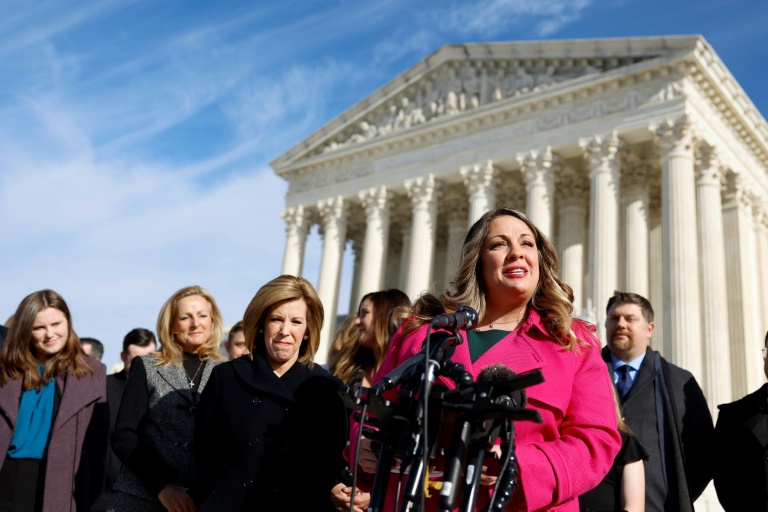
US Supreme Court hears case pitting free speech against LGBTQ rights

The conservative-majority US Supreme Court appeared poised Monday to rule in favor of a Christian graphic designer who refuses to make wedding websites for same-sex couples.

The case, one of the most consequential being heard by the nation’s highest court this term, pits free speech rights against anti-discrimination laws.

Lorie Smith, owner of 303 Creative, a website design firm in Colorado, is challenging a state law that prohibits businesses from discriminating on the basis of gender, race, religion or sexual orientation.

Smith claims that creating marriage announcements for same-sex couples would be “inconsistent” with her Christian beliefs and being compelled to do so would violate her First Amendment free speech rights.

The case closely resembles one from 2018 when the Supreme Court partially ruled in favor of a Colorado baker, also a devout Christian, who had refused to make a wedding cake for a gay couple.

During Monday’s two-and-a-half-hour hearing, the six conservative justices on the court, which recognized same-sex marriage in 2015, appeared to be receptive to arguments made by Smith’s lawyer.

The liberals were deeply skeptical.

“This would be the first time in the court’s history that it would say that a commercial business serving the public could refuse to serve a customer based on race, sex, religion or sexual orientation,” said Sonia Sotomayor, one of the three liberal justices.

“How about people who don’t believe in interracial marriage?” Sotomayor asked. “People who don’t believe that disabled people should get married?

“Where’s the line?” she asked. “If I disagree with their personal characteristics like race or disability I can choose not to sell those people my website because it’s my speech?”

Ketanji Brown Jackson, another liberal justice and the first Black woman to serve on the Supreme Court, questioned whether religious objections were a valid basis for refusing to provide a service.

“Historically, opposition to interracial marriages and to integration, in many instances, was on religious grounds,” Jackson said.

Conservative Justice Samuel Alito took issue with the comparisons to interracial marriage and also said there are “honorable people who object to same sex marriage.”

– ‘Cannot refuse to serve gay couples’ –

Smith’s lawyer, Kristen Waggoner, who heads the faith-based Alliance Defending Freedom, said the state law would force her client to “create and speak messages” she does not believe in “on pain of investigation, fine and reeducation.”

“When you’re requiring a speaker to create a message to celebrate something that they believe to be false you’re compelling their speech,” said Waggoner, who represented cakemaker Jack Phillips in the previous case.

“Under Colorado’s theory, jurisdictions could force a Democrat publicist to write a Republican’s press release,” she said.

Waggoner said Smith provides website services to members of the LGBTQ community other than marriage announcements and there are heterosexual unions she also would not endorse.

“So it’s about the message and not about the sexuality of the couple?” asked conservative justice Amy Coney Barrett.

Another conservative justice, Brett Kavanaugh, said the case may hinge on the “narrow question” of whether Smith can be considered an artist with free speech rights rather than, for example, a landscaper or restaurant owner.

Colorado Solicitor General Eric Olson said a company can “sell websites that only feature biblical quotes describing a marriage as between a man and a woman — just like a Christmas store can choose to sell only Christmas-related items.

“The company just cannot refuse to serve gay couples,” Olson said. “Just as a Christmas store cannot announce no Jews allowed.”

Asked about the case, White House Press Secretary Karine Jean-Pierre said the Biden administration “believes that every person, no matter their sex, race, religion or who they love, should have equal access to society, including access to products and services.”

In the 2018 case, the Supreme Court voted 7-2 that the Colorado Civil Rights Commission had displayed anti-religious hostility toward the baker, thus violating his constitutional rights.

The court, however, did not squarely address the issue of whether a business can decline to serve gays and lesbians on free speech or religious grounds.

The Supreme Court has undergone a radical transformation since that ruling, with two staunch conservatives nominated by former president Donald Trump replacing one liberal and one swing justice.

The Supreme Court is expected to deliver its ruling before the end of June.

Nike splits with NBA star Irving after anti-Semitism row

Kyrie Irving’s multi-million dollar sponsorship deal with Nike is finished, the sportswear company said Monday, after the basketball megastar became embroiled in an anti-Semitism row.

The tie-up, reportedly worth around $11 million to the athlete, was one of the largest in the sporting world, and its dissolution comes as companies increasingly face pressure over the views of their star signings.

“Kyrie Irving is no longer a Nike athlete,” a spokesman for the company told AFP in a one-line email.

The sponsorship deal was thrown into doubt in October after the Brooklyn Nets’ point guard posted a link to the film “Hebrews to Negroes: Wake up Black America” — a 2018 film widely condemned for containing a range of anti-Semitic tropes.

Despite pressure applied on him publicly by the NBA outfit, Irving refused to apologize, and was suspended for eight games, forfeiting millions of dollars in salary.

In early November, Nike said it was suspending its relationship with Irving, and was pulling the “Kyrie 8” shoe that had been due for release last month.

Irving took to Twitter on Monday, replying to a journalist who wrote about the Nike rupture with a GIF of the words “Let the party begin”.

Hours later, he also posted: “Anyone who has even spent their hard earned money on anything I have ever released, I consider you FAMILY and we are forever connected. It’s time to show how powerful we are as a community.”

In the wake of his initial post, Irving was pulled from the Nets roster, with the team citing his “failure to disavow anti-Semitism” either on social media or in meetings with reporters.

In an interview several weeks later, he insisted he was not anti-Semitic.

“I just really want to focus on the hurt that I caused or the impact that I made within the Jewish community, putting some type of threat, or assumed threat, on the Jewish community,” Irving told SportsNet New York.

“I just want to apologize deeply for all my actions for the time that it has been since the post was first put up.”

Irving, whose deal with the Nets is worth $37 million a year, did not play home games with the team for the first few months of 2022 because he is not vaccinated against Covid-19.

New York City workplace rules at the time mandated vaccines for employees.

The Nets initially said he would not be allowed back into the squad until he could play full time, but later relented and he was selected for road games.

News of Irving’s split with Nike comes days after Kanye West doubled down on his fierce anti-Semitism, using a three-hour appearance on the InfoWars stream to proclaim his “love” of Nazis and his admiration for Adolf Hitler.

West has seen several multi-million dollar sponsorship deals — including one with Adidas — evaporate as his comments on Jewish people have become ever-more outlandish.

West was accompanied on the show by Nick Fuentes, the white nationalist with whom he was hosted for dinner at Mar-A-Lago by former president Donald Trump a week earlier.

Trump’s tenure in the White House was marked by an increase in reports of racist attacks, and the open display of symbols of racial hatred, including amongst his own supporters.

US, EU meet with little progress on green plan tensions

US and European Union officials met for trade and technology talks Monday, but hanging in the balance were heightened tensions over American subsidies for its green industry that Europe considers anti-competitive.

Officials touched on issues such as fallout from Russia’s invasion of Ukraine and questions over economic coercion, but all eyes were on Washington’s landmark Inflation Reduction Act (IRA) during a meeting of the US-EU Trade and Technology Council, held just outside Washington.

The act, designed to accelerate the US transition to a low-carbon economy, contains around $370 billion in subsidies for green energy, as well as tax breaks for US-made electric cars and batteries.

EU countries have poured criticism on the IRA, seeing it as a threat to European jobs, especially in the energy and auto sectors.

Monday’s talks, the third of their kind, are part of a push “to grow the bilateral trade and investment relationship,” according to a National Security Council statement.

Both sides took stock of a dedicated task force’s work on the IRA, noting “preliminary progress made,” said a joint US-EU statement released Monday.

“We acknowledge the EU’s concerns and underline our commitment to address them constructively,” the statement added.

– ‘More solid response’ –

“Clearly they are trying to set out our concerns in a non-confrontational manner,” a European official involved in the talks told reporters Monday.

“It was flagged as a dispute, obviously, to which I think we’re still waiting for a more solid response,” he added.

Asked about “tweaks” mentioned last week by US President Joe Biden — so that European companies would not be unfairly treated — the official said the “assessment is that this will be extremely difficult.”

But officials struck a conciliatory note at a press briefing after their meeting, with the EU’s trade commissioner Valdis Dombrovskis saying, “Today we are leaving this meeting a slightly more optimistic than we were entering (it).”

US Secretary of State Antony Blinken, a co-chair of the council, added: “The bottom line is this: We are committed to moving forward together not at the expense of each other, but to the benefit of each other.”

Both sides found agreement on a host of other issues, including an information-sharing system on public support for the semiconductor sector to increase transparency.

They also entered a deal to implement an early warning mechanism to mitigate semiconductor supply chain disruptions “in a cooperative way.”

Both parties launched a “transatlantic initiative on sustainable trade” as well, with an aim to decarbonize energy-intensive industries and help with the transition to more circular economies, the statement said.

– Insufficient space –

But EU Internal Market Commissioner Thierry Breton had decided not to take part in the meetings, his office earlier said, finding that they no longer give enough space to issues of concern to many European industry ministers and businesses.

Last month, Breton threatened to appeal to the World Trade Organization and consider retaliatory measures if the United States did not reverse its subsidies.

The plan was also a subject of discussions between President Biden and his French counterpart Emmanuel Macron at a state visit last week.

Biden said both sides have agreed to discuss practical steps to coordinate and align their approaches, though he added that he would not apologize for the act, which he maintains was never intended to disadvantage US allies.

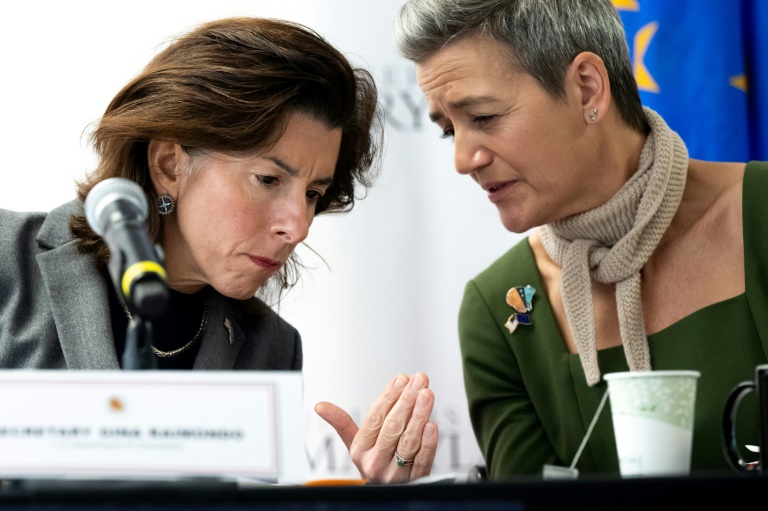
The Trade and Technology Council is co-chaired by Blinken, Secretary of Commerce Gina Raimondo and Trade Representative Katherine Tai, as well as European Commission Executive Vice Presidents Margrethe Vestager and trade commissioner Dombrovskis.

Russia hits Ukraine grid in latest fatal barrage

Ukraine was targeted on Monday by a new wave of fatal Russian missiles, the latest attack to cause massive power disruptions across the country and pile pressure on its embattled critical infrastructure as temperatures plunge.

Moscow in turn blamed Ukraine for drone attacks which caused explosions at two of its airfields, killing three soldiers.

The attacks came just after Russia shrugged off a Western-imposed price cap on its oil exports, warning the move would not disrupt its military campaign in Ukraine.

While the drone attacks on Russia’s Saratov and Ryazan regions were intercepted, the defence ministry said falling debris had caused the explosions.

At the same time, it claimed a “massive attack on Ukrainian military command systems and related defence, communications, energy and military facilities”.

Fresh power cuts were announced in all regions of Ukraine due to the heavy strikes.

“Due to the consequences of shelling… a regime of emergency shutdowns will be introduced in all regions of Ukraine,” national electricity provider Ukrenergo said on Telegram.  

The head of the central Zaporizhzhia region, Oleksandr Starukh, said Russian missiles on Monday had left two people dead.

Ukrainian President Volodymyr Zelensky said his country’s military had shot down a majority of Russian missiles fired earlier in the day, and engineers had already begun working to restore electricity.

“Our people never give up,” Zelensky said in a video-statement on social media.

Nearly half of Ukraine’s energy system has already been damaged after months of systemic strikes on power infrastructure. 

Ukrainians have frequently been left in the cold and dark for hours at a time when the outdoor temperature has dropped below zero. 

Officials told residents to charge power banks and prepare reserves of water. 

The UN rights chief Volker Turk, who arrived Sunday in Ukraine on a four-day visit, had to move his meetings with activists into an underground shelter in the capital Kyiv as missiles rained down.

– Moscow vows to keep fighting –

As Russia shrugged off the oil price cap, state-run media released footage of President Vladimir Putin driving a Mercedes car across the Crimea bridge that connects the annexed peninsula to the Russian mainland, and was damaged in a blast last month.

The $60-per-barrel price cap agreed by the European Union, G7 and Australia aims to restrict Russia’s revenue while making sure Moscow keeps supplying the global market.

“Russia’s economy has all the necessary potential to fully meet the needs and requirements of the special military operation,” Kremlin spokesman Dmitry Peskov told reporters, using Moscow’s term for the Ukraine offensive.

“These measures will not affect this,” he said.

Russia “will not recognise” the measures, which amounted to “a step towards destabilising the global energy markets”, he added.

The cap is the latest in a number of measures spearheaded by Western countries and introduced against Russia — the world’s second-largest crude oil exporter — after Moscow sent troops into Ukraine over nine months ago.

The measure comes on top of an EU embargo on seaborne deliveries of Russian crude oil that came into force on Monday.

The embargo will prevent maritime shipments of Russian crude to the European Union, which account for two thirds of the bloc’s oil imports from Russia, potentially depriving Moscow of billions of euros.

The oil price cap aims to ensure that when Russia sells its crude to non-EU countries it is not sold for more than $60 a barrel.

The market price of a barrel of Russian Urals crude is currently around $65 dollars, just slightly higher than the cap, suggesting the measure may have only a limited impact in the short term.

Kyiv, after initially welcoming the price ceiling, later said it would not do enough damage to Russia’s economy. 

– ‘Impossible to prepare’ –

The G7 nations — Britain, Canada, France, Germany, Italy, Japan and the United States — along with Australia have said they are prepared to adjust the price ceiling if necessary.

In recent months, gas prices have skyrocketed since Moscow halted deliveries to the EU in suspected retaliation for Western sanctions and the bloc struggled to find alternative energy suppliers.

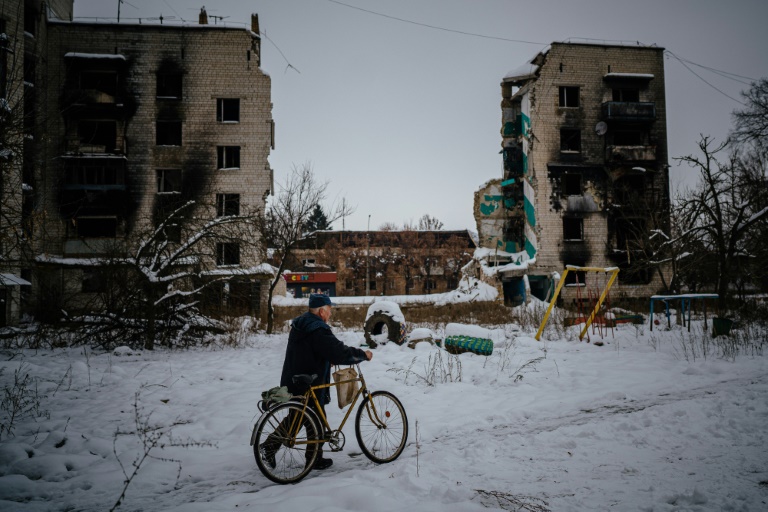
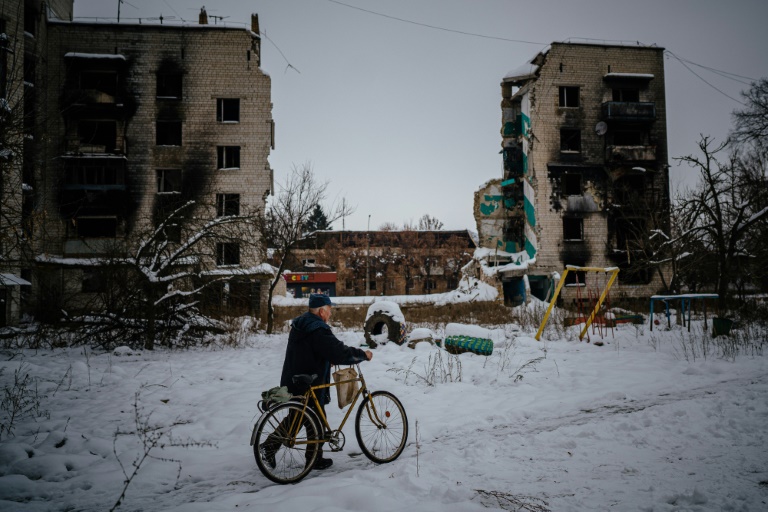
In the Ukrainian town of Borodianka, outside Kyiv, where snow has already coated the ground, locals recently gathered around old wood-fired stoves inside tents to keep warm and cook food during the blackouts. 

“We are totally dependent on electricity… One day we had no electricity for 16 hours,” Irina, who had come to the tent with her child, told AFP. 

Volunteer Oleg said it was hard to say how Ukraine would manage in the coming winter months. 

“It is impossible to prepare for this winter because no-one has lived in these conditions before,” he said. 

Russia hits Ukraine grid in latest fatal barrage

Ukraine was targeted on Monday by a new wave of fatal Russian missiles, the latest attack to cause massive power disruptions across the country and pile pressure on its embattled critical infrastructure as temperatures plunge.

Moscow in turn blamed Ukraine for drone attacks which caused explosions at two of its airfields, killing three soldiers.

The attacks came just after Russia shrugged off a Western-imposed price cap on its oil exports, warning the move would not disrupt its military campaign in Ukraine.

While the drone attacks on Russia’s Saratov and Ryazan regions were intercepted, the defence ministry said falling debris had caused the explosions.

At the same time, it claimed a “massive attack on Ukrainian military command systems and related defence, communications, energy and military facilities”.

Fresh power cuts were announced in all regions of Ukraine due to the heavy strikes.

“Due to the consequences of shelling… a regime of emergency shutdowns will be introduced in all regions of Ukraine,” national electricity provider Ukrenergo said on Telegram.  

The head of the central Zaporizhzhia region, Oleksandr Starukh, said Russian missiles on Monday had left two people dead.

Ukrainian President Volodymyr Zelensky said his country’s military had shot down a majority of Russian missiles fired earlier in the day, and engineers had already begun working to restore electricity.

“Our people never give up,” Zelensky said in a video-statement on social media.

Nearly half of Ukraine’s energy system has already been damaged after months of systemic strikes on power infrastructure. 

Ukrainians have frequently been left in the cold and dark for hours at a time when the outdoor temperature has dropped below zero. 

Officials told residents to charge power banks and prepare reserves of water. 

The UN rights chief Volker Turk, who arrived Sunday in Ukraine on a four-day visit, had to move his meetings with activists into an underground shelter in the capital Kyiv as missiles rained down.

– Moscow vows to keep fighting –

As Russia shrugged off the oil price cap, state-run media released footage of President Vladimir Putin driving a Mercedes car across the Crimea bridge that connects the annexed peninsula to the Russian mainland, and was damaged in a blast last month.

The $60-per-barrel price cap agreed by the European Union, G7 and Australia aims to restrict Russia’s revenue while making sure Moscow keeps supplying the global market.

“Russia’s economy has all the necessary potential to fully meet the needs and requirements of the special military operation,” Kremlin spokesman Dmitry Peskov told reporters, using Moscow’s term for the Ukraine offensive.

“These measures will not affect this,” he said.

Russia “will not recognise” the measures, which amounted to “a step towards destabilising the global energy markets”, he added.

The cap is the latest in a number of measures spearheaded by Western countries and introduced against Russia — the world’s second-largest crude oil exporter — after Moscow sent troops into Ukraine over nine months ago.

The measure comes on top of an EU embargo on seaborne deliveries of Russian crude oil that came into force on Monday.

The embargo will prevent maritime shipments of Russian crude to the European Union, which account for two thirds of the bloc’s oil imports from Russia, potentially depriving Moscow of billions of euros.

The oil price cap aims to ensure that when Russia sells its crude to non-EU countries it is not sold for more than $60 a barrel.

The market price of a barrel of Russian Urals crude is currently around $65 dollars, just slightly higher than the cap, suggesting the measure may have only a limited impact in the short term.

Kyiv, after initially welcoming the price ceiling, later said it would not do enough damage to Russia’s economy. 

– ‘Impossible to prepare’ –

The G7 nations — Britain, Canada, France, Germany, Italy, Japan and the United States — along with Australia have said they are prepared to adjust the price ceiling if necessary.

In recent months, gas prices have skyrocketed since Moscow halted deliveries to the EU in suspected retaliation for Western sanctions and the bloc struggled to find alternative energy suppliers.

In the Ukrainian town of Borodianka, outside Kyiv, where snow has already coated the ground, locals recently gathered around old wood-fired stoves inside tents to keep warm and cook food during the blackouts. 

“We are totally dependent on electricity… One day we had no electricity for 16 hours,” Irina, who had come to the tent with her child, told AFP. 

Volunteer Oleg said it was hard to say how Ukraine would manage in the coming winter months. 

“It is impossible to prepare for this winter because no-one has lived in these conditions before,” he said. 

Elizabeth Holmes appeals Theranos fraud conviction

Fallen US biotech star Elizabeth Holmes has asked an appeals court to overturn her conviction in the Theranos fraud trial that saw her sentenced to more than 11 years in prison.

Holmes and her legal team have until March 3 of next year to file briefs and trial transcripts backing their petition, according to a notice posted to the docket on Monday by the Ninth Circuit Court of Appeals in California.

Holmes’s appeal said she is challenging the prison sentence handed down in November, as well as “any and all adverse rulings incorporated in, antecedent to, or ancillary to the judgment.”

Holmes was sentenced to just over 11 years in prison for defrauding investors with her Silicon Valley start-up Theranos. 

She was convicted on four felony fraud counts in January for persuading investors that she had developed a revolutionary medical device before the company flamed out after an investigation by The Wall Street Journal.

The closely watched case became an indictment of Silicon Valley, and US federal prosecutors had sought a 15-year jail term for Holmes. She was sentenced to 135 months.

Holmes, who is pregnant, will not have to surrender herself until April next year, ordered US District Judge Edward Davila in a courtroom in San Jose, California. 

The 38-year-old became a star of Silicon Valley when she said her start-up was perfecting an easy-to-use test kit that could carry out a wide range of medical diagnostics with just a few drops of blood.

Stocks retreat on interest rate worries

US stocks fell on Monday as resilient economic data fuelled concerns that the Federal Reserve may not be able to relent on interest rate hikes.

Meanwhile, world oil prices rallied more than three percent at one point on more easing of strict Covid containment measures in China which should boost demand, before turning lower as the US dollar pushed higher.

Optimism about the world’s second largest economy reopening for business didn’t carry over to European and US equity markets, where investors remain concerned that the US economy is continuing to overheat.

Friday’s jobs figures showing that the labour market is continuing to create new jobs at a strong pace was joined Monday by data showing that growth in the dominant services sector picked up last month.

That means the Fed still had plenty of work to do to get inflation down to its two-percent target, and upended investors hopes that it might be able to soon stop raising interest rates.

“If incoming data continues to remain favourable, then inflation is likely to persist longer and that may encourage the Fed to be even more reluctant to pause its hiking early in the first half of 2023,” said market analyst Fawad Razaqzada at City Index and FOREX.com.

Investors expect the Fed to hike interest rates 0.5 percentage points next week and had been hoping it might wait a bit to evaluate the impact.

The Dow was down 0.8 percent in late morning trading. 

In Europe, both Frankfurt and Paris ended the day lower, while London squeaked out a marginal gain as metals and mining firms were boosted by the China news.

– Oil jumps, then slides  –

Oil prices jumped as higher demand is expected from China after businesses reopened and testing requirements were relaxed in Beijing and other cities as the country tentatively eases out of a strict zero-Covid policy that sparked nationwide protests.

The entry into force of a price cap on Russian crude agreed by the EU, G7 and Australia came into force and the weekend decision by OPEC and its Russia-led allies to maintain oil output levels also supported prices.

“Uncertainty is coming in waves in energy markets as the choppy tides of supply and demand push up the oil price but keep a lid on big gains,” noted Susannah Streeter, senior investment and markets analyst at Hargreaves Lansdown.

The $60-per-barrel price cap aims to restrict Russia’s revenue while making sure Moscow keeps supplying the global market.

“There are expectations that there will be less crude available to buy as the $60 cap on Russia oil takes effect,” Streeter added.

The Kremlin on Monday insisted the cap would not affect Moscow’s military campaign in Ukraine.

“From the OPEC+ perspective, it can’t be easy to make reliable forecasts against that (Russia) backdrop and the constantly evolving Covid situation in China, which currently looks far more promising from a demand perspective,” said Craig Erlam, senior market analyst at OANDA trading group. 

The uncertainty was highlighted as crude gave up its gains as the day wore on and then turned lower. 

But those gains faded as the dollar rose against its main rivals, making purchases of dollar-denominated oil more expensive for consumers.

– Key figures around 1630 GMT –

New York – Dow: DOWN 0.8 percent at 34,161.25 points

EURO STOXX 50: DOWN 0.5 percent at 3,956.53

London – FTSE 100: UP 0.2 percent at 7,567.54 (close)

Frankfurt – DAX: DOWN 0.6 percent at 14,447.61 (close)

Paris – CAC 40: DOWN 0.7 percent at 6,696.96 (close)

Tokyo – Nikkei 225: UP 0.2 percent at 27,820.40 (close)

Hong Kong – Hang Seng Index: UP 4.5 percent at 19,518.29 (close)

Shanghai – Composite: UP 1.8 percent at 3,211.81 (close)

Euro/dollar: DOWN at $1.0514 from $1.0531 on Friday

Dollar/yen: UP at 136.43 yen from 134.27 yen

Pound/dollar: DOWN at $1.2188 from $1.2296

Euro/pound: UP at 86.24 pence from 85.73 pence

Brent North Sea crude: DOWN 0.7 percent at $85.01 per barrel

West Texas Intermediate: DOWN 0.9 percent at $79.26 per barrel

burs-rl/kjm

Russia hits Ukraine grid in latest fatal barrage

Ukraine was targeted on Monday by a new wave of fatal Russian missiles, the latest attack to disrupt power across the country and pile pressure on its embattled critical infrastructure as temperatures plunge.

The attacks came just after Moscow shrugged off a Western-imposed price cap on its oil exports, warning that the move would not disrupt its military campaign in Ukraine.

Russian state-run media at the same time released footage of President Vladimir Putin driving a Mercedes car across the Crimea bridge that connects the annexed peninsula to the Russian mainland and was damaged in blast last month.

The head of the central Zaporizhzhia region, Oleksandr Starukh, said that Russian missiles had left two people dead. Officials in regions in the east and south announced disruptions to water, electrical and heating services.

“There are already strikes on energy infrastructure facilities and subsequently emergency power outages,” the national electricity provider Ukrenergo said in a statement.

Officials in the eastern region of Sumy and the southern regions of Odessa and Mykolaiv said residents were being subjected to disruptions in water, power or heating supplies as a result of the strikes.

Nearly half the country’s energy system has been damaged after months of systemic strikes on power infrastructure. Ukrainians have frequently been left in the cold and dark for hours at a time when the outdoor temperature has dropped below zero. 

“Charge power banks. Prepare reserves of water. And heads of enterprises of all forms of ownership: let people go home,” said the head of Kryvyi Rig military administration, Oleksandr Vilkul.

– Moscow vows to keep fighting –

The $60-per-barrel price cap agreed by the European Union, G7 and Australia aims to restrict Russia’s revenue while making sure Moscow keeps supplying the global market.

“Russia’s economy has all the necessary potential to fully meet the needs and requirements of the special military operation,” Kremlin spokesman Dmitry Peskov told reporters, using Moscow’s term for the Ukraine offensive.

“These measures will not affect this,” he said.

Russia “will not recognise” the measures, which amounted to “a step towards destabilising the global energy markets” and would “change” oil prices, he added.

The cap is the latest in a number of measures spearheaded by Western countries and introduced against Russia — the world’s second-largest crude oil exporter — after Moscow sent troops into Ukraine over nine months ago.

The measure comes on top of an EU embargo on seaborne deliveries of Russian crude oil that came into force on Monday.

The embargo will prevent maritime shipments of Russian crude to the European Union, which account for two thirds of the bloc’s oil imports from Russia, potentially depriving Moscow of billions of euros.

The oil price cap aims to ensure that when Russia sells its crude to non-EU countries, who are not bound by the embargo, it is not sold at a price higher than $60 a barrel.

The market price of a barrel of Russian Urals crude is currently around $65 dollars, just slightly higher than the $60 cap agreed, suggesting the measure may have only a limited impact in the short term.

Kyiv, after initially welcoming the price ceiling, later said it would not do enough damage to Russia’s economy. 

– ‘Impossible to prepare’ –

Ukraine’s President Volodymyr Zelensky this weekend described the move as “weak”.

He added that Russia had already caused “huge losses” by “deliberately destabilising” the global energy market.

The G7 nations — Britain, Canada, France, Germany, Italy, Japan and the United States — along with Australia have already said they are prepared to adjust the price ceiling if necessary.

In recent months, gas prices have skyrocketed since Moscow halted deliveries to the EU in suspected retaliation for Western sanctions and the bloc struggled to find alternative energy suppliers. 

In the Ukrainian town of Borodianka outside the capital, Kyiv, where snow has already coated the ground, locals recently gathered around old wood-fired stoves inside tents to keep warm and cook food during the blackouts.

“We are totally dependent on electricity… One day we had no electricity for 16 hours,” Irina, who had come to the tent with her child, told AFP. 

Volunteer Oleg said it was hard to say how Ukraine would manage in the coming winter months. 

“It is impossible to prepare for this winter because no-one has lived in these conditions before,” he said. 

Russia hits Ukraine grid in latest fatal barrage

Ukraine was targeted on Monday by a new wave of fatal Russian missiles, the latest attack to disrupt power across the country and pile pressure on its embattled critical infrastructure as temperatures plunge.

The attacks came just after Moscow shrugged off a Western-imposed price cap on its oil exports, warning that the move would not disrupt its military campaign in Ukraine.

Russian state-run media at the same time released footage of President Vladimir Putin driving a Mercedes car across the Crimea bridge that connects the annexed peninsula to the Russian mainland and was damaged in blast last month.

The head of the central Zaporizhzhia region, Oleksandr Starukh, said that Russian missiles had left two people dead. Officials in regions in the east and south announced disruptions to water, electrical and heating services.

“There are already strikes on energy infrastructure facilities and subsequently emergency power outages,” the national electricity provider Ukrenergo said in a statement.

Officials in the eastern region of Sumy and the southern regions of Odessa and Mykolaiv said residents were being subjected to disruptions in water, power or heating supplies as a result of the strikes.

Nearly half the country’s energy system has been damaged after months of systemic strikes on power infrastructure. Ukrainians have frequently been left in the cold and dark for hours at a time when the outdoor temperature has dropped below zero. 

“Charge power banks. Prepare reserves of water. And heads of enterprises of all forms of ownership: let people go home,” said the head of Kryvyi Rig military administration, Oleksandr Vilkul.

– Moscow vows to keep fighting –

The $60-per-barrel price cap agreed by the European Union, G7 and Australia aims to restrict Russia’s revenue while making sure Moscow keeps supplying the global market.

“Russia’s economy has all the necessary potential to fully meet the needs and requirements of the special military operation,” Kremlin spokesman Dmitry Peskov told reporters, using Moscow’s term for the Ukraine offensive.

“These measures will not affect this,” he said.

Russia “will not recognise” the measures, which amounted to “a step towards destabilising the global energy markets” and would “change” oil prices, he added.

The cap is the latest in a number of measures spearheaded by Western countries and introduced against Russia — the world’s second-largest crude oil exporter — after Moscow sent troops into Ukraine over nine months ago.

The measure comes on top of an EU embargo on seaborne deliveries of Russian crude oil that came into force on Monday.

The embargo will prevent maritime shipments of Russian crude to the European Union, which account for two thirds of the bloc’s oil imports from Russia, potentially depriving Moscow of billions of euros.

The oil price cap aims to ensure that when Russia sells its crude to non-EU countries, who are not bound by the embargo, it is not sold at a price higher than $60 a barrel.

The market price of a barrel of Russian Urals crude is currently around $65 dollars, just slightly higher than the $60 cap agreed, suggesting the measure may have only a limited impact in the short term.

Kyiv, after initially welcoming the price ceiling, later said it would not do enough damage to Russia’s economy. 

– ‘Impossible to prepare’ –

Ukraine’s President Volodymyr Zelensky this weekend described the move as “weak”.

He added that Russia had already caused “huge losses” by “deliberately destabilising” the global energy market.

The G7 nations — Britain, Canada, France, Germany, Italy, Japan and the United States — along with Australia have already said they are prepared to adjust the price ceiling if necessary.

In recent months, gas prices have skyrocketed since Moscow halted deliveries to the EU in suspected retaliation for Western sanctions and the bloc struggled to find alternative energy suppliers. 

In the Ukrainian town of Borodianka outside the capital, Kyiv, where snow has already coated the ground, locals recently gathered around old wood-fired stoves inside tents to keep warm and cook food during the blackouts.

“We are totally dependent on electricity… One day we had no electricity for 16 hours,” Irina, who had come to the tent with her child, told AFP. 

Volunteer Oleg said it was hard to say how Ukraine would manage in the coming winter months. 

“It is impossible to prepare for this winter because no-one has lived in these conditions before,” he said. 

Close Bitnami banner
Bitnami