US Business

Apple faces critics over its privacy policies

Apple presents itself as a white knight on the subject of privacy, but critics say its own advertising ambitions are built on anti-competitive practices. 

Two developers going by the name ‘Mysk’ claimed last month that Apple was tracking users’ every tap on the App Store, with no way of disabling the function. 

A class action lawsuit was subsequently filed in California, claiming that Apple’s “promises regarding privacy are utterly false”. 

The company has not commented and did not respond to questions from AFP. 

But Apple has made protection of user privacy central to its image, and long opposed ads on its platforms. 

It threw a spanner in the works of the surveillance capitalism system last year when it gave users the power to easily block apps from collecting data on them. 

That move was a nightmare for many apps — from giants like Facebook to small start-ups — who use that data to sell targeted ads. 

Meta, which owns Facebook and Instagram, warned in early 2022 that the change could shave $10 billion of its revenue for the year, and it has no doubt played a part in its tanking share price (down 38 percent on the year) and decision to axe 11,000 staff last month. 

Meta CEO Mark Zuckerberg said last week that Apple’s approach was a “conflict of interest” since it was designed to undermine rivals. 

“It’s problematic for one company to be able to control what app experiences end up on a device,” he said. “(The) vast majority of profits in mobile ecosystem go towards Apple.”

– European cases –

The first legal pushback against Apple was launched in France, where an association of online advertisers and content publishers filed a complaint with the Competition Authority.  

The judges dismissed the idea that Apple’s rules were inherently anti-competitive, but are still investigating whether Apple is applying those rules more favourably for its own apps compared to others. 

French app developers have also lodged a case with privacy watchdog CNIL (the National Commission for Technology and Freedoms). 

Similar cases have since been launched in Germany and Poland. 

Apple refuses to say how much it makes from advertising on its App Store. 

Analysts at Wedbush Securities estimate it is $4.5 billion annually, and this could rise to $30 billion if it starts putting ads on its Maps and Apple TV apps, rivalling the big players of Google, Meta and Amazon. 

For advertisers, waiting for a legal response is painful. 

“It’s not going fast enough considering the very strong impacts on competition,” said Nicolas Rieul, president of France’s Digital Alliance, which represents online marketers. 
Oil jumps on China easing Covid restrictions, Russia price cap

World oil prices rallied Monday after more easing of strict Covid containment measures in China and as a price cap on Russian crude agreed by the EU, G7 and Australia came into force.

Main contracts Brent North Sea crude and WTI advanced more than two percent, also after OPEC and its Russia-led allies decided at a weekend meeting to maintain oil output levels.

European and US stock markets traded mostly lower after Friday’s forecast-busting US jobs report that dented hopes that the Federal Reserve would take a softer approach to hiking interest rates in its battle against sky-high inflation.

In currency trading, the dollar was mixed against its main rivals while China’s yuan was among the best performers, breaking below the seven per dollar level for the first time in almost three months.

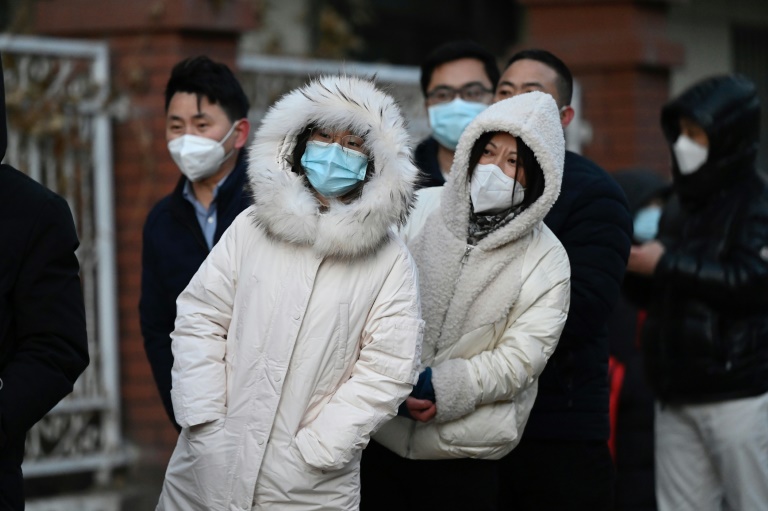
Higher oil demand is expected from China after businesses reopened and testing requirements were relaxed in Beijing and other cities as the country tentatively eases out of a strict zero-Covid policy that sparked nationwide protests.

It has also seen major cities including Shanghai locked down for months, a decision blamed for a sharp slowdown in economic growth this year that sent shudders through financial markets.

“Uncertainty is coming in waves in energy markets as the choppy tides of supply and demand push up the oil price but keep a lid on big gains,” noted Susannah Streeter, senior investment and markets analyst at Hargreaves Lansdown.

“There are expectations that there will be less crude available to buy as the $60 cap on Russia oil takes effect.”

– Russia shrugs it off –

The Kremlin on Monday insisted the cap would not affect Moscow’s military campaign in Ukraine.

The $60-per-barrel price cap aims to restrict Russia’s revenue while making sure Moscow keeps supplying the global market.

“From the OPEC+ perspective, it can’t be easy to make reliable forecasts against that (Russia) backdrop and the constantly evolving Covid situation in China, which currently looks far more promising from a demand perspective,” said Craig Erlam, senior market analyst at OANDA trading group. 

Major oil-producing countries led by Saudi Arabia and Russia on Sunday agreed to maintain their current output levels in a climate of uncertainty.

The prospect of China, the world’s number-two economy, kicking back into gear helped traders overcome data on Friday showing far more jobs than expected were created in the United States in November.

A big jump in wages added to concerns that the economy remained hot, meaning the Fed still had plenty of work to do to get inflation down to its two percent target.

– Key figures around 1430 GMT –

Brent North Sea crude: UP 2.6 percent at $87.81 per barrel

West Texas Intermediate: UP 2.8 percent at $82.25 per barrel

London – FTSE 100: UP 0.4 percent at 7,586.67 points

Frankfurt – DAX: DOWN 0.7 percent at 14,432.17

Paris – CAC 40: DOWN 0.7 percent at 6,694.95

EURO STOXX 50: DOWN 0.5 percent at 3,957.89

New York – Dow: DOWN 0.6 percent at 34,208.87

Tokyo – Nikkei 225: UP 0.2 percent at 27,820.40 (close)

Hong Kong – Hang Seng Index: UP 4.5 percent at 19,518.29 (close)

Shanghai – Composite: UP 1.8 percent at 3,211.81 (close)

Euro/dollar: UP at $1.0562 from $1.0531 on Friday

Dollar/yen: UP at 135.82 yen from 134.27 yen

Pound/dollar: DOWN at $1.2248 from $1.2296

Euro/pound: UP at 86.19 pence from 85.73 pence

burs-rl/lth

Nigeria train resumes eight months after deadly attack

Nigeria on Monday resumed a train service linking the capital with a northern city, eight months after it was suspended following one of the country’s most high-profile attacks.

Gunmen with explosives on March 28 blew up the tracks and assaulted the train travelling between Abuja and Kaduna and opened fire, killing eight people, wounding 26 and taking an unspecified number of passengers hostage.

The hostages were released in batches following negotiations with their captors who were believed to have collected huge ransoms from their families. 

An AFP reporter at the railway station in Abuja on Monday said the train departed the nation’s capital at around 10:00 am (0900 GMT) for the two-hour journey to Kaduna.

Passengers were few — only occupying one-third of the train’s capacity — but excited that the service was back after eight months.

They were equally worried about security.

“I was just waiting for the commencement of this train service again, so I was so happy to be here today,” said passenger Ganiyat Adesina, a 50-year-old university professor.

She had arrived early at the station to beat the gridlock on the road.

“Just like 30 minutes after my arrival, we saw a team of military men with two armoured tanks and other vehicles — about five of them parading all these places,” she added.

“This is what I’m actually expecting the federal government to do.”

She said moving between Abuja and Kaduna had been “very stressful for people and for myself, I have to even stop going to Kaduna for the last eight months”.

Ayodeji Othman was happy “the train services are resuming and it’s been a very long time that we’ve been waiting for this.”

The 30-year-old passenger told AFP he had not travelled to Kaduna since the attack “because of the road condition as well as the security issues on the road, kidnapping and every other thing”.

Police said they had deployed personnel and equipment to protect the passengers and secure the tracks.

The Nigerian Railway Corporation — operators of the train — had planned to restart the Abuja-Kaduna service much earlier, but the families of the hostages insisted on their release first.

They were also concerned about the safety of passengers on the route.

– Security challenges –

The Abuja highway has been repeatedly attacked by gunmen who kidnap passengers, forcing travellers to opt for the train.

President Muhammadu Buhari, who steps down after a February election, sees the development of the railway as key to his infrastructure programmes.

The Kaduna train attack was one of several major incidents this year underscoring the challenge facing Nigeria’s overstretched security forces.

The military is battling a 13-year jihadist insurgency in the northeast, criminal militias in the northwest and separatist tensions in the country’s southeast.

The security challenge is a major issue for Buhari’s successor ahead of the presidential ballot. 

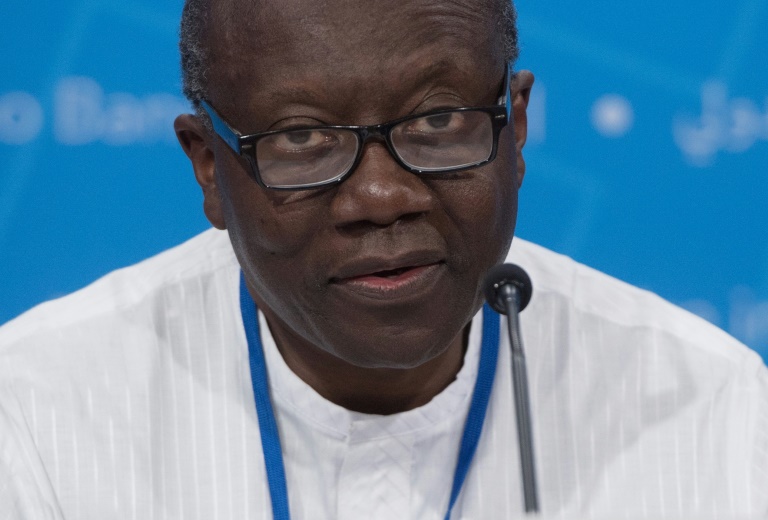
Ghana offers local debt swap as part of IMF talks

Ghana asked investors to exchange around $9 billion in domestic debt for new bonds on Monday to ease a crunch in payments as the government negotiates an IMF bailout during its worse economic crisis in decades.

The West African state is in talks for up to $3 billion in credit from the International Monetary Fund (IMF) to help shore up its public finances.

Inflation is running at more than 40 percent and the national currency, the cedi, has lost 50 percent in value this year, helping to push up debt by $6 billion in 2022.

As part of IMF negotiations, Ghana’s government is seeking to make its debt more sustainable after facing warnings about the risks of default.

Finance Minister Kenneth Ofori-Atta said the debt exchange starting Monday would seek to exchange around 137 billion cedis or $9.7 billion in current debt for four new bonds maturing between 2027 and 2037.

“This is a key requirement to allow Ghana’s economy to recover as fast as possible from this crisis. This is also a key requirement to secure IMF support,” he told a press briefing.

A foreign debt restructuring programme would be presented later, he said.

Current debt servicing payments are absorbing more than half of the government’s revenues and 70 percent of its tax revenues, pressuring government spending.

With the debt operation and IMF deal to be concluded soon, the minister said he expected the economy to stabilise next year and inflation to return to single digits.

Ghana, a top cocoa and gold producer, has oil and gas reserves but its debt payments are high and its revenues weak. Like the rest of Africa, it has been hit by economic fallout from the global pandemic and the Ukraine war. 

Ofori-Atta said the government had worked to minimise the swap impact on investors holding government bonds, especially small investors and other vulnerable groups. 

There will be no “haircuts” on the bonds’ principal, he said.

The minister said the government recognised banks and financial institutions hold a large amount of local government debt, but regulatory agencies and the central bank would help ease the impact on them.

“The alternative would be a far worse economic crisis with protracted closure from international markets including imported goods and services and further domestic economic instability,” he said.

President Nana Akufo-Addo and his economic team have come under growing pressure over the crisis, after the government earlier this year did a U-turn and said it would go to the IMF for help.

Lawmakers have moved to censure Ofori-Atta over his economic performance and parliament is still reviewing that motion.

Last month, Akufo-Addo fired the government’s junior finance minister, Charles Adu Boahen, over corruption allegations after he appeared in a documentary on illegal gold mining.

Russia says oil price cap will not stop Ukraine offensive

Russia shrugged off a Western-imposed price cap on its oil exports on Monday, warning that it would not disrupt its military campaign in Ukraine.

The $60-per-barrel price cap agreed by the European Union, G7 and Australia aims to restrict Russia’s revenue while making sure Moscow keeps supplying the global market.

“Russia’s economy has all the necessary potential to fully meet the needs and requirements of the special military operation,” Kremlin spokesman Dmitry Peskov told reporters, using Moscow’s term for the Ukraine offensive.

“These measures will not affect this,” he said.

Russia, he added, “will not recognise” the measures, adding that they amounted “a step towards destabilising the global energy markets” and that they would “change” oil prices.

The cap is the latest in a number of measures spearheaded by Western countries and introduced against Russia — the world’s second-largest crude oil exporter — after Moscow sent troops into Ukraine over nine months ago.

The measure comes on top of an EU embargo on seaborne deliveries of Russian crude oil that came into force on Monday.

The embargo will prevent seaborne shipments of Russian crude oil to the European Union, which account for two thirds of the bloc’s oil imports from Russia, potentially depriving Russia of billions of euros.

– Not enough –

The market price of a barrel of Russian Urals crude is currently around $65 dollars, just slightly higher than the $60 cap agreed, suggesting the measure may have only a limited impact in the short term.

Kyiv, after initially welcoming the price ceiling, later warned it would not do enough damage to Russia’s economy. 

Ukraine’s President Volodymyr Zelensky this weekend described the move as “weak”.

He added that Russia had already caused “huge losses” by “deliberately destabilising” the global energy market.

The G7 nations — Canada, France, Germany, Italy, Japan, Britain and the United States — along with Australia have already said they are prepared to adjust the price ceiling if necessary.

In recent months, gas prices have skyrocketed since Moscow halted deliveries to Europe in suspected retaliation for Western sanctions and the bloc struggled to find alternative energy suppliers. 

Ukraine too is suffering an energy crisis following weeks of systematic Russian strikes on its energy grid, which have led to emergency power cuts.

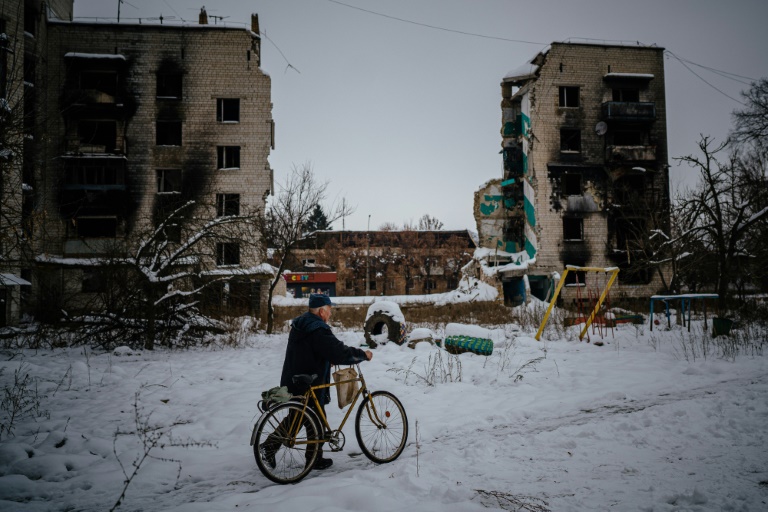
Nearly half of the country’s energy system has been damaged and Ukrainians are frequently left in the cold and dark for hours at a time with temperatures outside dropping below freezing. 

In the town of Borodianka outside the capital Kyiv, where snow has already coated the ground, locals gather around old wood-fired stoves inside tents to keep warm and cook food during the blackouts.

“We are totally dependent on electricity …  one day we had no electricity for 16 hours,” Irina, who had come to the tent with her child, told AFP. 

Volunteer Oleg said it was hard to say how Ukraine would manage in the coming winter months. 

“It is impossible to prepare for this winter because no one has lived in these conditions before,” he said. 

Oil jumps on China easing of Covid restrictions, Russia price cap

World oil prices rallied Monday after more easing of strict Covid containment measures in China and as a price cap on Russian crude agreed by the EU, G7 and Australia came into force.

Main contracts Brent North Sea crude and WTI advanced more than 2.5 percent, also after OPEC and its Russia-led allies decided at a weekend meeting to maintain oil output levels.

Stock markets traded mixed after Friday’s forecast-busting US jobs report that dented hopes that the Federal Reserve would take a softer approach to hiking interest rates in its battle against sky-high inflation.

In currency trading, the dollar was mixed against its main rivals while China’s yuan was among the best performers, breaking below the seven per dollar level for the first time in almost three months.

Higher oil demand is expected from China after businesses reopened and testing requirements were relaxed in Beijing and other cities as the country tentatively eases out of a strict zero-Covid policy that sparked nationwide protests.

It has also seen major cities including Shanghai locked down for months, a decision blamed for a sharp slowdown in economic growth this year that sent shudders through financial markets.

“Uncertainty is coming in waves in energy markets as the choppy tides of supply and demand push up the oil price but keep a lid on big gains,” noted Susannah Streeter, senior investment and markets analyst at Hargreaves Lansdown.

“There are expectations that there will be less crude available to buy as the $60 cap on Russia oil takes effect.”

The Kremlin on Monday insisted the cap would not affect Moscow’s military campaign in Ukraine.

The $60-per-barrel price cap aims to restrict Russia’s revenue while making sure Moscow keeps supplying the global market.

“From the OPEC+ perspective, it can’t be easy to make reliable forecasts against that (Russia) backdrop and the constantly evolving Covid situation in China, which currently looks far more promising from a demand perspective,” said Craig Erlam, senior market analyst at Oanda trading group. 

Major oil-producing countries led by Saudi Arabia and Russia on Sunday agreed to maintain their current output levels in a climate of uncertainty.

The prospect of China, the world’s number-two economy, kicking back into gear helped traders overcome data on Friday showing far more jobs than expected were created in the United States in November.

A big jump in wages added to concerns that the economy remained hot, meaning the Fed still had plenty of work to do to get inflation down to its two percent target.

– Key figures around 1200 GMT –

Brent North Sea crude: UP 2.6 percent at $87.83 per barrel

West Texas Intermediate: UP 2.8 percent at $82.22 per barrel

London – FTSE 100: UP 0.3 percent at 7,576.49 points

Frankfurt – DAX: DOWN 0.5 percent at 14,462.21

Paris – CAC 40: DOWN 0.3 percent at 6,719.84

EURO STOXX 50: DOWN 0.2 percent at 3,969.40

Tokyo – Nikkei 225: UP 0.2 percent at 27,820.40 (close)

Hong Kong – Hang Seng Index: UP 4.5 percent at 19,518.29 (close)

Shanghai – Composite: UP 1.8 percent at 3,211.81 (close)

New York – Dow: UP 0.1 percent at 34,429.88 (close)

Euro/dollar: UP at $1.0570 from $1.0531 on Friday

Dollar/yen: UP at 135.20 yen from 134.27 yen

Pound/dollar: DOWN at $1.2284 from $1.2296

Euro/pound: UP at 86.00 pence from 85.73 pence

burs-bcp/rl

Taiwanese iPhone maker seeks to restore production after protests

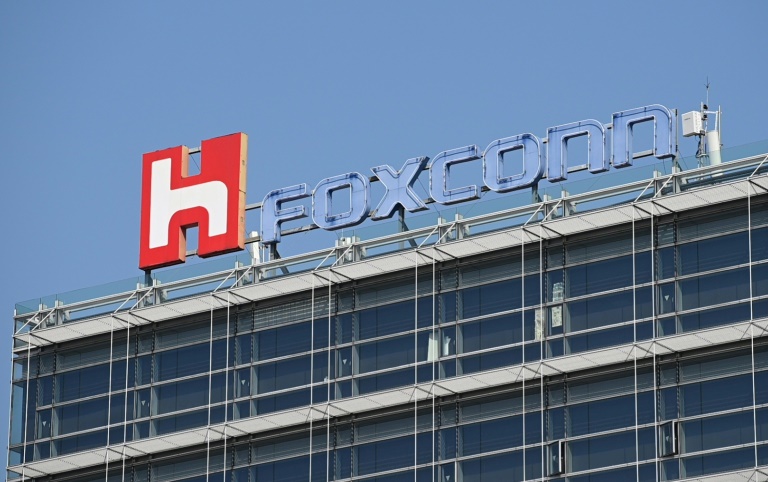
Taiwanese tech giant and key Apple supplier Foxconn said Monday it was hiring new workers and moving towards “restoring production capacity to normal” following violent clashes at its central China plant last month.

Foxconn, also known by its official name Hon Hai Precision Industry, is the world’s biggest contract electronics manufacturer and assembles gadgets for many international brands.

Most of its factories are in China including the eastern city of Zhengzhou, where lockdowns were imposed last month as part of Beijing’s zero-Covid policy after a spike in infections.

Violent protests by workers subsequently erupted over salaries and conditions at the plant, which Foxconn later blamed on a “technical error” in its payment systems.

Hundreds of workers marched in Zhengzhou — dubbed “iPhone City” as the home of the world’s biggest factory for the smartphone — with some clashing with riot police and health personnel in hazmat suits.

Foxconn said in a statement Monday that it was working with the local government to ensure safe production and “making every effort to protect” the rights and interests of employees.

“At present, the overall epidemic situation has been brought under control, with November the most affected period,” it said.

It reported revenue in that month fell 11.4 percent on-year and 29 percent from October.

“In addition to re-allocating production capacity to different factories, we have also started to recruit new employees, and are gradually moving towards the direction of restoring production capacity to normal.”

The company said the outlook for the final three months of the year was expected to be “roughly in line with market consensus” but did not give figures.

Foxconn earlier said it was revising down its outlook for the last quarter. Some analysts have predicted sales could drop as much as 20 percent.

Testing requirements were relaxed in Beijing and other Chinese cities including Zhengzhou on Monday as the country tentatively eases out of its zero-Covid policy, which has sparked protests across the nation.

How Paris cinemas are surviving

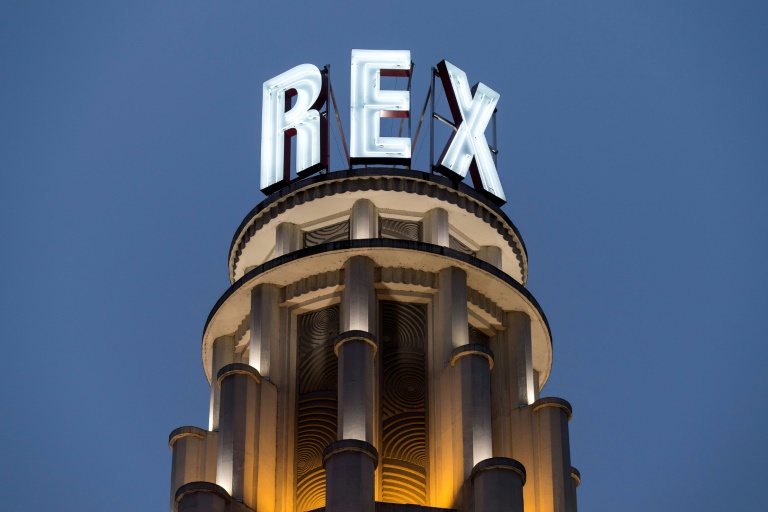
Spinning once again, the sign above France’s biggest cinema, the Grand Rex, is testament to how well Paris venues have weathered the twin threats of streaming and the pandemic.

The 2,700-seat Art Deco venue reopened last week after a major facelift to mark its 90th birthday. 

It has reason to be hopeful: ticket sales in France are down just 10 percent on pre-Covid levels, compared to almost a third in the United States. 

That is partly due to the country’s long-standing love affair with its cinemas, immortalised in 1960s New Wave classic “Breathless”, in which Jean-Paul Belmondo and Jean Seberg duck in and out of theatres along the Champs Elysees. 

Paris is thought to have the highest density of screens in the world, and the atmosphere has influenced generations of filmmakers. 

“I went to old cinemas in the Latin Quarter to watch retrospectives, screenings of old films from Hollywood, France or Japan,” director Damien Chazelle (“La La Land”) told AFP recently.  

“The first time I saw ‘Metropolis’ by Fritz Lang was here. I’ll never forget it!” 

– Diversification –

Paris authorities say there are 398 screens across 75 venues — up eight percent on 2000 — and down just slightly from 411 in 2019. 

Survival requires some creativity. 

To coax viewers off their sofas, the Grand Rex has been offering “event” screenings such as manga previews and film marathons that cater to the biggest fans. 

Its history has made it a popular choice for premieres, with Steven Spielberg next on the agenda for the launch of “The Fabelmans”.

It also requires diversification. The Rex moonlights as a nightclub, escape game venue — and most importantly as a concert hall, featuring everyone from Madonna to Bob Dylan. 

“If we had to survive on the cinema alone, we would have closed the doors long ago,” said manager Alexandre Hellmann. He added that that 71 bigger halls have opened during the Rex’s lifetime but none have lasted.

– ‘Evolution’ –

While the overall picture is positive, the map of Paris cinemas is evolving. 

Next year will see the reopening of the Japanese-style La Pagode, another mythic venue. 

And in 2024, the Pathe Palace, billed as the most beautiful cinema in the world, will open next to the Paris Opera. 

But this shift is coming at the expense of other historic areas. 

Rising rents are threatening many cinemas, particularly on the Champs Elysees, where the renowned Marignan will soon shut for good.

“It was THE cinema district in Paris but it is disappearing, due particularly to the exorbitant rents,” said Michel Gomez, who leads the city’s “Mission Cinema” to support the industry. 

“It’s hard to see cinemas close but cinema in Paris is a living fabric. It follows the sociological and geographical evolution of the city,” he said. 

Vodafone CEO to step down after four years at helm

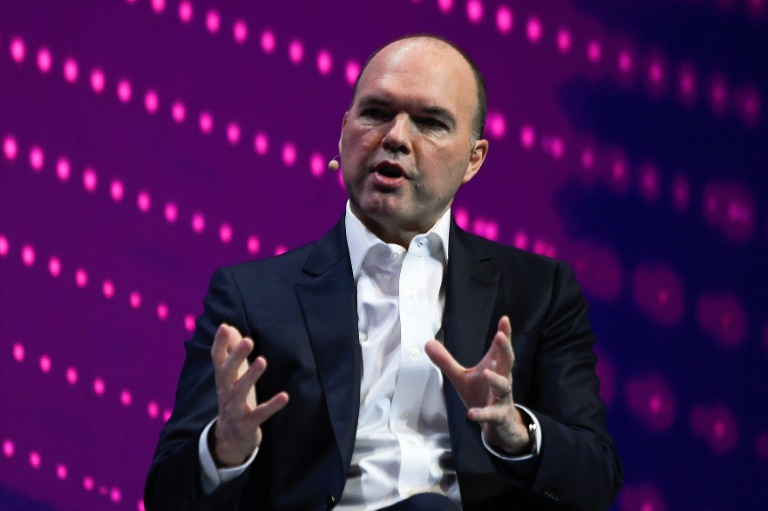
Vodafone chief executive Nick Read is stepping down, the British telecoms group said Monday, after a four-year tenure marked by a steep fall in the company’s share price.

Read will leave his role at the end of December following more than 20 years at the group, a statement said.

He will be replaced on an interim basis by Vodafone’s chief financial officer Margherita Della Valle, who will continue her current role while Vodafone seeks out a permanent replacement.

His surprise resignation comes after Vodafone recently announced flat earnings for its first half and follows a near 20-percent drop in its share price this year.

“I agreed with the board that now is the right moment to hand over to a new leader who can build on Vodafone’s strengths and capture the significant opportunities ahead,” Read said in the statement.

He departs with Vodafone in talks over merging its UK operations with rival Three UK, owned by Hong Kong-based CK Hutchison.

Vodafone believes a combination would accelerate the rollout of 5G telecoms technology in the UK, which has been partly hampered by Britain banning Chinese giant Huawei from involvement in the technology offering faster downloads than 4G.

Vodafone’s share price was flat at 91 pence following Monday’s announcement.

“With the shares languishing at their lowest levels in more than 20 years it is hard to describe departing Vodafone CEO Nick Read’s tenure as anything other than a disappointment,” noted Russ Mould, investment director at AJ Bell.

“Read’s final set of results last month did him absolutely no favours, as Vodafone downgraded full-year guidance.”

He also came under pressure from major activist investor Cevian Capital, which recently slashed its stake in Vodafone.

However, Read “helped to steer the telecoms giant through the challenges of the pandemic, aiding connectivity when individuals and households were forced to stay home during strict lockdowns”, said Victoria Scholar, head of investment at Interactive Investor.

Head of UK broadcaster Sky News resigns after 17 years

The head of Sky News will step down after 17 years, having steered the broadcaster through a tumultuous period in British political history and journalism’s digital revolution.

“Being the Head of Sky News is one of the most exhilarating jobs in journalism,” John Ryley said in a statement released late on Sunday.

“Nonetheless, after almost 40 years in the news business, 28 of which have been at Sky including 17 lucky years at the helm, I have decided, as of next year, to stop and leave Sky News behind.”

Ryley took over in 2006, when the broadcaster was known almost entirely for its news channel and oversaw its transformation into a multimedia platform.

Around 10 million Britons watch the television channel each month, but the outlet is increasingly focusing on applications such as TikTok to reach a younger online audience.

Ryley was at the helm during Britain’s seismic vote to leave the European Union, its subsequent political upheaval and the Covid 19 pandemic.

Close Bitnami banner
Bitnami