US Business

EU agrees to impose price cap on Russian crude

The European Union will join the G7 powers in imposing a $60-per-barrel price cap on Russian oil, the Polish ambassador to the bloc said Friday, three days ahead of an EU embargo on imports by sea.

Poland had delayed approving the adoption of the plan while it pushed for a lower price ceiling and tough new sanctions to punish Russia for its war against Ukraine and starve its military of funds.

“We can formally agree to the decision,” Poland’s EU ambassador Andrzej Sados said, explaining that Poland’s fellow EU members had agreed to push forward with a new ninth round of sanctions against Russia. 

“We’re working on the next package of sanctions, which will be painful and expensive for Russia,” Sados told reporters.   

The European Union presidency, currently held by the Czech Republic, confirmed that member state ambassadors had reached agreement on the price cap and that the decision would enter into force when published in the EU official journal this weekend.

– Painful and expensive –

The oil price cap will run alongside the EU’s ban on imports of Russian oil, which comes into effect on Monday, and member states hope it will be the most damaging hit yet against the industry fuelling President Vladimir Putin’s Russian war machine.   

The Polish envoy told reporters that Warsaw was reassured that the European Union had taken on board suggestions from Poland and the Baltic States for a tough new ninth round of sanctions.  

He did not say which of the ideas might feature in the package that the European Commission is drawing up, but a discussion paper circulated last month called for Gazprombank, which facilitates payments for Russian energy exports, to be kicked off the SWIFT international payments system.

It also proposed bans on the export of a wide-range of consumer technology that could be pressed into use by the Russians and a ban on the importation of Russian diamonds. 

Monday’s oil embargo will prevent shipments of Russian crude by tanker vessel to the EU, which accounts for two thirds of imports, the rest arriving by pipeline. 

Energy experts like Phuc-Vinh Nguyen of the Delors Institute think tank estimate that Russia has earned 67 billion euros ($71 billion) selling oil to EU clients since its February invasion of Ukraine.

This alone is greater than Russia’s 60-billion-euro defence budget before the war and dwarfs the financial and military aid spent by EU states to support Kyiv’s pro-Western government.

From Monday, tankers will no longer be permitted to bring Russian crude to Europe — and the price cap is designed to make it harder to bypass the sanctions by selling beyond the EU.

China and India, for example, will still be able to import Russian oil, but under the proposed plan European insurers would be banned from covering tankers that carry oil trading at prices above the $60 ceiling. 

Under the European plan, which will be coordinated with the United States, the G7 and other western allies, if the market price of Russian oil falls below $60 then the cap will be cut until it is five percent lower than the market.

– Level of the cap –

The price of Urals Crude, the main variety sold by Russia, is volatile but it was trading at around $65 per barrel as EU ambassadors met to discuss the level of the cap.

But Poland, a strong supporter of its neighbour Ukraine in the battle against the Kremlin’s forces, had earlier been holding out for a lower sum, reportedly closer to just $30 a barrel, but Sados said that the market price was expected to rise and that $60 was now a reasonable starting point.   

Moscow has previously warned that it will not export oil to countries respecting a price cap.

Last week, Putin had warned that any attempt by the West to cap the price of Russian oil would have “grave consequences” for world markets.

“We will not comment until this news… is made official,” said Russian presidential spokesman Dmitry Peskov. “We are awaiting an official announcement.”

With Germany and Poland having decided to stop deliveries via a pipeline by the end of the year, Russian exports to the union will be cut by more than 90 percent, the Europeans say. 

For Phuc-Vinh Nguyen, the proposed instrument raises many questions. 

“An oil price ceiling has never been seen. We are in the unknown,” he said, stressing that the reaction of OPEC producing countries, or big buyers like India or China will be crucial. 

According to the analyst, a cap — even at a high tariff — would send “a strong political signal” to Putin, because, once in place, this mechanism could be tightened.

Oil ministers from the OPEC+ oil producers’ group will meet in Vienna on Sunday.

US to unveil high-tech B-21 stealth bomber

The United States will on Friday unveil the B-21 Raider, a high-tech stealth bomber that can carry nuclear and conventional weapons and is designed to be able to fly without a crew on board.

The B-21 — which is on track to cost nearly $700 million per plane and is the first new US bomber in decades — will gradually replace the B-1 and B-2 aircraft, which first flew during the Cold War.

“The B-21 will be the backbone of our future bomber force. It will possess the range, access and payload to penetrate the most highly-contested threat environments and hold any target around the globe at risk,” US Air Force spokesperson Ann Stefanek told AFP.

The first B-21 flight is expected to take place next year, and the Air Force plans to buy at least 100 of the aircraft, Stefanek said.

Manufacturer Northrop Grumman said six of the planes are currently in different stages of assembly and testing at its facility in Palmdale, California, where the unveiling will take place.

The bomber will be a key part of the US “nuclear triad,” which consists of weapons that can be launched from the land, air and sea.

“For nuclear deterrence, the bomber fleet provide flexibility to US nuclear posture, and redundance should any of the other legs fail,” said Amy Nelson, a fellow at the Brookings Institution think tank.

Many specifics of the aircraft are being kept under wraps, but the plane should offer significant advances over existing bombers in the US fleet.

– ‘Designed to evolve’ –

Among the new capabilities offered by the B-21 is the potential for uncrewed flight. Stefanek said the aircraft is “provisioned for the possibility, but there has been no decision to fly without a crew.”

The plane also features an “open architecture,” which is meant to allow easier and quicker upgrades.

Nelson said the B-21 is “designed to evolve.”

“The ‘open architecture’ allows for the future integration of improved software (including for autonomy) so the aircraft doesn’t become obsolete as quickly,” she said.

“The B-21 is much fancier than its predecessors — truly modern. Not only is it dual-capable (unlike the B-2), which means it can launch nuclear or conventionally armed missiles, it can launch long- and short-range missiles,” Nelson added.

Like the F-22 and F-35 warplanes, the B-21 will feature stealth technology, which minimizes an aircraft’s signature through both its shape and the materials it is constructed from, making it harder for adversaries to detect.

The technology has been around for decades, but Northrop said the plane will feature the “next generation of stealth” and that it is employing unspecified “new manufacturing techniques and materials” on the B-21.

The “Raider” portion of the aircraft’s name honors the 1942 US bomber raid on Tokyo led by lieutenant colonel James Doolittle — the first American strike on Japan’s homeland following the surprise attack on Pearl Harbor the previous year.

Stocks fall after strong US jobs data

Stock markets stumbled on Friday after strong US jobs data raised concerns that the US Federal Reserve may continue to aggressively hike interest rates to tame inflation.

Oil prices, meanwhile, were stable as investors awaited an output decision by OPEC and its Russia-led allies and tracked Western plans to cap Russian crude prices.

Stock markets are focused on the next moves of the US central bank.

While Fed chief Jerome Powell signalled on Wednesday that the central bank could start “moderating” the pace of rate hikes as soon as December, investors were unnerved by Friday’s jobs figures.

US government data showed that the world’s biggest economy added 263,000 jobs in November, with the unemployment rate remaining at 3.7 percent.

Strong job gains raise concerns among investors, as a healthy economy could convince the Fed it still has room to deliver more sharp rate increases to fight inflation.

“The report itself is good news from an economic standpoint, yet the market sees it as bad news, thinking it will push out any eventual pivot by the Fed with its monetary policy,” said Briefing.com analyst Patrick O’Hare.

Wall Street’s main indices were down in late morning trades while Paris finished lower and London closed flat. Frankfurt bucked the trend as it ended in the green.

– OPEC+ –

The focus was also on OPEC+, which may decide Sunday to slash oil production further to boost prices for its members, which include Saudi Arabia and Russia.

“There remains considerable uncertainty around the action OPEC+ will take when it meets…, although there’s every chance that the meeting will be delayed or that discussions take longer than normal, as a result of the price cap being finalised by the EU,” noted OANDA trading platform analyst Craig Erlam.

Beyond the economic gloom, the big unknown in the oil equation currently is Russian oil, as Western nations seek to decouple themselves from Moscow’s energy supplies as fast as possible.

The EU has decided to ban member states from buying Russian oil exported by sea from Monday, “putting at risk over two million barrels per day,” according to estimates by ANZ analysts.

Investors are also scrutinising EU plans to join G7 powers in imposing a $60-per-barrel price cap on Russian oil after Poland, which had pushed for a lower ceiling, dropped its objection.

Oil prices did not budge much after Poland’s announcement.

Prices have fallen heavily in recent weeks on expectations of weaker Chinese demand.

There are signs, however, that China is edging towards a pivot from its draconian Covid-zero strategy, which has seen the lockdown of tens of millions and strangled the giant economy this year.

The move came after widespread protests across the country earlier in the week against almost three years of heavy-handed containment measures and calls for more political freedoms.

Observers say they expect officials to signal a shift in priorities at a key meeting later this month, with a focus turning to kickstarting the economy, though with vaccination rates low the move will likely be gradual.

Asian stock markets closed in the red.

– Key figures around 1645 GMT –

New York – Dow: DOWN 0.1 percent at 34,365.14 points

London – FTSE 100: FLAT at 7,556.23 (close)

Frankfurt – DAX: UP 0.3 percent at 14,529.39 (close)

Paris – CAC 40: DOWN 0.2 percent at 6,742.25 (close)

EURO STOXX 50: DOWN 0.2 percent at 3,977.90

Tokyo – Nikkei 225: DOWN 1.6 percent at 27,777.90 (close)

Hong Kong – Hang Seng Index: DOWN 0.3 percent at 18,675.35 (close)

Shanghai – Composite: DOWN 0.3 percent at 3,156.14 (close)

Euro/dollar: DOWN at $1.0518 from $1.0529 on Thursday

Dollar/yen: DOWN at 134.93 yen from 135.34 yen

Pound/dollar: UP at $1.2280 from $1.2251

Euro/pound: DOWN at 85.63 pence from 85.91 pence

Brent North Sea crude: DOWN 0.2 percent at $86.69 per barrel

West Texas Intermediate: UP 0.1 percent at $81.30 per barrel

burs-lth/jj

Biden signs emergency law forcing US rail unions to accept wages deal

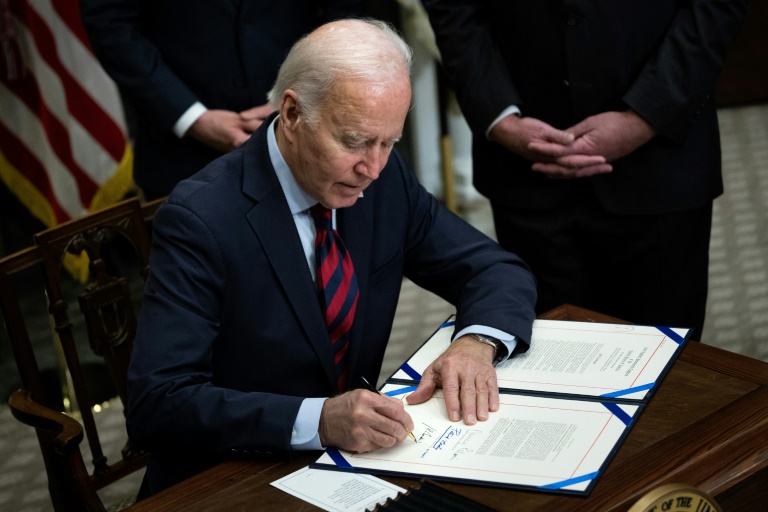
US President Joe Biden signed into law Friday a rare intervention by Congress forcing freight rail unions to accept a salary deal, avoiding a possibly devastating strike — but putting the pro-union Democrat in an awkward political position.

Biden signed the law in a brief White House ceremony only a week before unions who had rejected the deal were expected to have gone on strike, threatening crucial supply chains across the world’s biggest economy.

The deal delivers a hefty wage increase but four of the 12 unions involved refused to accept it because there was no agreement on giving workers paid sick leave. Congress acted under a little used power to resolve disputes involving railroads.

As he signed the bill, Biden said Congress had “avoided what, without a doubt, would have been an economic catastrophe.”

“Without freight rail, many of the US industries would literally have shut down,” Biden said, adding that his advisors feared the loss of three quarters of a million jobs within two weeks if the strike had gone ahead.

The episode was awkward politically for Biden.

Trade unions constitute a major element in his electoral coalition and he frequently describes himself as a lifelong union supporter and the “most pro-union president” in history.

That brand has taken a hit from the emergency bill signing, with some on the left accusing Biden of having sold out. After the Senate came down decisively in favor of the rail management, one union leader called the situation “horrific.”

The Brotherhood of Railroad Signalmen alleged that Senators had “demonstrated they are for the corporate class.”

The issue could come up Friday when Biden does voter outreach during a visit to the International Brotherhood of Electrical Workers (IBEW) union in Boston.

– No choice –

Judging by the overwhelmingly bipartisan support in Congress for forcing through the deal, the political hit for Biden will be contained. The House easily passed the bill and on Thursday the Senate, where usually Biden’s bills are lucky to scrape through with the one-vote Democratic majority, passed 80-15.

Biden said he had no choice but to act quickly in the face of what the White House warns would have been a crippling strike right when the US economy is showing signs of stabilizing in the wake of the Covid pandemic.

In his comments at the signing ceremony, Biden said the wages deal — which his administration was heavily involved in crafting — was “a good product.”

He acknowledged the lack of sick leave but said “I’m coming back at it” with “more work to do.”

Above all, Biden said, the forceful intervention by Congress and the White House would benefit the country as a whole.

“They did one heck of a job in averting what could have been a real disaster,” he said.

Biden said “765,000 Americans, many of them union members themselves, would have been put out of work within the first two weeks of this strike alone.”

In addition, the breaking of supply chains for basic materials like chemicals and farm supplies would put clean drinking water and food at risk.

“We’ve spared the country that catastrophe,” Biden said.

Biden signs emergency law forcing US rail unions to accept wages deal

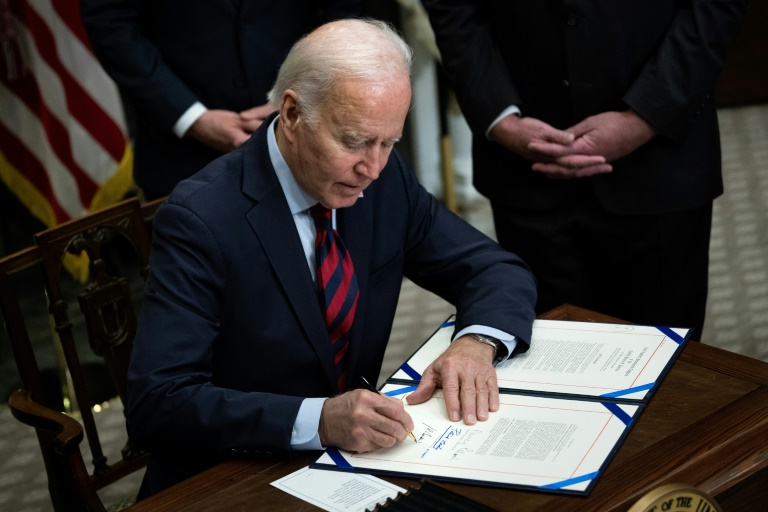
US President Joe Biden signed into law Friday a rare intervention by Congress forcing freight rail unions to accept a salary deal, avoiding a possibly devastating strike — but putting the pro-union Democrat in an awkward political position.

Biden signed the law in a brief White House ceremony only a week before unions who had rejected the deal were expected to have gone on strike, threatening crucial supply chains across the world’s biggest economy.

The deal delivers a hefty wage increase but four of the 12 unions involved refused to accept it because there was no agreement on giving workers paid sick leave. Congress acted under a little used power to resolve disputes involving railroads.

As he signed the bill, Biden said Congress had “avoided what, without a doubt, would have been an economic catastrophe.”

“Without freight rail, many of the US industries would literally have shut down,” Biden said, adding that his advisors feared the loss of three quarters of a million jobs within two weeks if the strike had gone ahead.

The episode was awkward politically for Biden.

Trade unions constitute a major element in his electoral coalition and he frequently describes himself as a lifelong union supporter and the “most pro-union president” in history.

That brand has taken a hit from the emergency bill signing, with some on the left accusing Biden of having sold out. After the Senate came down decisively in favor of the rail management, one union leader called the situation “horrific.”

The Brotherhood of Railroad Signalmen alleged that Senators had “demonstrated they are for the corporate class.”

The issue could come up Friday when Biden does voter outreach during a visit to the International Brotherhood of Electrical Workers (IBEW) union in Boston.

– No choice –

Judging by the overwhelmingly bipartisan support in Congress for forcing through the deal, the political hit for Biden will be contained. The House easily passed the bill and on Thursday the Senate, where usually Biden’s bills are lucky to scrape through with the one-vote Democratic majority, passed 80-15.

Biden said he had no choice but to act quickly in the face of what the White House warns would have been a crippling strike right when the US economy is showing signs of stabilizing in the wake of the Covid pandemic.

In his comments at the signing ceremony, Biden said the wages deal — which his administration was heavily involved in crafting — was “a good product.”

He acknowledged the lack of sick leave but said “I’m coming back at it” with “more work to do.”

Above all, Biden said, the forceful intervention by Congress and the White House would benefit the country as a whole.

“They did one heck of a job in averting what could have been a real disaster,” he said.

Biden said “765,000 Americans, many of them union members themselves, would have been put out of work within the first two weeks of this strike alone.”

In addition, the breaking of supply chains for basic materials like chemicals and farm supplies would put clean drinking water and food at risk.

“We’ve spared the country that catastrophe,” Biden said.

US hiring tops expectations in November as wages pick up

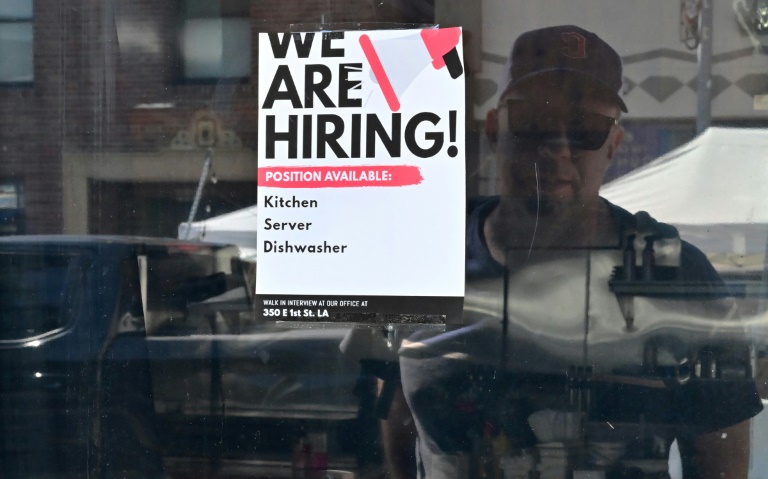
US job gains were unexpectedly robust in November despite efforts to cool the economy, while unemployment held steady and wages ticked up, the government reported Friday.

The figures provide little relief to officials who have been fighting to tamp down decades-high inflation amid concerns that elevated costs could become entrenched.

The world’s biggest economy added 263,000 jobs in November, Labor Department data showed, down from a revised 284,000 figure in October.

The unemployment rate remained low at 3.7 percent.

The US central bank has raised its benchmark interest rate multiple times this year to ease demand, with higher lending costs making it more pricey to borrow funds to buy cars and homes, or expand businesses. 

While such policy tightening may ordinarily lead to job losses, economists have noted that firms are reluctant to shed workers they may have struggled to find since the Covid-19 outbreak.

Demand remains resilient as well, with recent data showing that household spending picked up in October, another reason for firms to avoid job cuts.

Average hourly earnings for private sector workers rose 18 cents to $32.82 last month and over the last 12 months, wages have grown 5.1 percent, according to Friday’s data.

The report also said there were notable job gains in leisure and hospitality, health care as well as in government.

But employment dipped in retail trade, and in transportation and warehousing.

Noting the uptick in wages, President Joe Biden told reporters Friday that things are “moving in the right direction.”

– ‘Far too hot’ –

Although the interest-sensitive housing sector has slowed on the Federal Reserve’s rate hikes and there have been job cuts in tech, economic activity has generally remained resilient.

The labor market “remains far too hot for the Fed,” said ING economist James Knightley in an analysis.

Tightness in the jobs market, as firms compete to find and retain workers, has implications on rising wages –- and these add to the costs of delivering services.

Meanwhile the jobless rate was steady as labor participation, which is still below pre-pandemic levels, fell once more, Knightley said.

“Overall, the data are signaling ongoing positive momentum in job growth and still-elevated wages,” said Rubeela Farooqi of High Frequency Economics in a note.

Richmond Fed President Thomas Barkin cautioned in a separate speech Friday that the US may be moving into an environment where labor supply is constrained for a longer time, adding to price pressures.

Analysts believe the latest data supports further tightening of monetary policy by the US central bank, sending US stocks lower.

– Steep rate hikes –

While the Fed has signaled this week it might be time to moderate its aggressive campaign to cool the economy, there remain questions over how much higher rates have to go to bring inflation under control, said Fed Chair Jerome Powell.

The central bank has raised borrowing rates six times this year in hopes of easing demand, including four steep rate hikes, while walking a fine line to avoid tipping the economy into a recession.

A tight labor market has limited hiring ahead of the holiday season, but “employers are also hiring more cautiously” given uncertainty over the strength of consumer spending, said Sophia Koropeckyj of Moody’s Analytics.

Some industries have been pulling back, though not necessarily letting go of workers, in part explaining the low jobless rate, she added.

The trend of wage increases appears stable, but analysts have been “hoping to see a clear softening,” said Ian Shepherdson of Pantheon Macroeconomics.

“Even if inflation drops faster than expected over the next few months,” he said, policymakers “will be worried about a rebound in the second half of 2023 and beyond if wage growth does not slow.” 

US hiring tops expectations in November as wages pick up

US job gains were unexpectedly robust in November despite efforts to cool the economy, while unemployment held steady and wages ticked up, the government reported Friday.

The figures provide little relief to officials who have been fighting to tamp down decades-high inflation amid concerns that elevated costs could become entrenched.

The world’s biggest economy added 263,000 jobs in November, Labor Department data showed, down from a revised 284,000 figure in October.

The unemployment rate remained low at 3.7 percent.

The US central bank has raised its benchmark interest rate multiple times this year to ease demand, with higher lending costs making it more pricey to borrow funds to buy cars and homes, or expand businesses. 

While such policy tightening may ordinarily lead to job losses, economists have noted that firms are reluctant to shed workers they may have struggled to find since the Covid-19 outbreak.

Demand remains resilient as well, with recent data showing that household spending picked up in October, another reason for firms to avoid job cuts.

Average hourly earnings for private sector workers rose 18 cents to $32.82 last month and over the last 12 months, wages have grown 5.1 percent, according to Friday’s data.

The report also said there were notable job gains in leisure and hospitality, health care as well as in government.

But employment dipped in retail trade, and in transportation and warehousing.

Noting the uptick in wages, President Joe Biden told reporters Friday that things are “moving in the right direction.”

– ‘Far too hot’ –

Although the interest-sensitive housing sector has slowed on the Federal Reserve’s rate hikes and there have been job cuts in tech, economic activity has generally remained resilient.

The labor market “remains far too hot for the Fed,” said ING economist James Knightley in an analysis.

Tightness in the jobs market, as firms compete to find and retain workers, has implications on rising wages –- and these add to the costs of delivering services.

Meanwhile the jobless rate was steady as labor participation, which is still below pre-pandemic levels, fell once more, Knightley said.

“Overall, the data are signaling ongoing positive momentum in job growth and still-elevated wages,” said Rubeela Farooqi of High Frequency Economics in a note.

Richmond Fed President Thomas Barkin cautioned in a separate speech Friday that the US may be moving into an environment where labor supply is constrained for a longer time, adding to price pressures.

Analysts believe the latest data supports further tightening of monetary policy by the US central bank, sending US stocks lower.

– Steep rate hikes –

While the Fed has signaled this week it might be time to moderate its aggressive campaign to cool the economy, there remain questions over how much higher rates have to go to bring inflation under control, said Fed Chair Jerome Powell.

The central bank has raised borrowing rates six times this year in hopes of easing demand, including four steep rate hikes, while walking a fine line to avoid tipping the economy into a recession.

A tight labor market has limited hiring ahead of the holiday season, but “employers are also hiring more cautiously” given uncertainty over the strength of consumer spending, said Sophia Koropeckyj of Moody’s Analytics.

Some industries have been pulling back, though not necessarily letting go of workers, in part explaining the low jobless rate, she added.

The trend of wage increases appears stable, but analysts have been “hoping to see a clear softening,” said Ian Shepherdson of Pantheon Macroeconomics.

“Even if inflation drops faster than expected over the next few months,” he said, policymakers “will be worried about a rebound in the second half of 2023 and beyond if wage growth does not slow.” 

Austria must continue to cut Russian gas reliance: OMV CEO

Austria has cut its dependence on Russian gas but it must keep up efforts to diversify its supplies for the next cold season, the head of Austrian energy group OMV told AFP.

Europe has sought to reduce its reliance on Russian oil and gas since Moscow invaded Ukraine. Russia in turn has slashed gas deliveries, causing energy prices to spike across Europe.

Austria imported 80 percent of its gas from Russia before the war broke out in late February.

By October, Russia accounted for just 23 percent of Austria’s gas imports, according to the government, as the country has filled up storage tanks and sought to buy the fossil fuel elsewhere.

Experts, however, say the Alpine nation of two million still is dependent on it in the long run.

“I think we can be more confident for this winter, for this season, than we were maybe six months ago,” OMV CEO Alfred Stern told AFP on Friday in his modern office with a view over Vienna.

“But the work must go on now, also with a view to the next season,” he added.

He added the energy and chemicals group, which employs more than 22,000 people worldwide, had just signed an agreement in Abu Dhabi to try to secure gas deliveries for next winter.

– Russian exit –

Following European sanctions on Moscow, OMV froze its investments in Russia and has withdrawn from the Nord Stream 2 gas pipeline project.

“Because of the changed situation, we have decided Russia will no longer be a core region for us. This means we will not invest further there and we will consider all options including sale and exit,” said Stern, the firm’s 57-year-old CEO since September 2021.

An EU embargo on Russian crude goes into effect on Monday, while European leaders also debate a $60 a barrel ceiling on Russian oil exports.

The embargo will prevent shipments of Russian crude by tanker vessel to the EU, which accounts for two thirds of imports, the rest arriving by pipeline.

OMV — known for its ties with the former Soviet Union from 1968 and for working closely with Russian giant Gazprom until the invasion of Ukraine — operates 1,800 petrol pumps in 10 European countries.

It also develops and produces oil and gas in Europe, the Middle East, Africa, the North Sea and the Asia-Pacific region.

– ‘Immorally’ high profits –

The energy giant announced in October that it recorded a high third quarter profit thanks to soaring energy prices — with Stern describing OMV’s performance as “outstanding”.

Greenpeace and other activists have slammed the company’s “immorally” high profits.

Stern said profits supported the company as it seeks to reduce its carbon footprint and develop alternatives to oil and gas, saying such changes “didn’t happen overnight”.

He said in the meantime OMV was increasing its investment in gas as a “stopgap measure”, including considering developing an offshore gas field in the Black Sea off Romania.

“I actually see us as part of the solution (on climate change), because large and financially strong companies are necessary to implement such major challenges,” he said.

Macron caps US state visit with New Orleans trip

President Emmanuel Macron on Friday headed to the southern American city of New Orleans, which retains much of its French-infused heritage, as he wraps up a rare three-day state visit to the United States.

After vowing continued support for Ukraine and seeking to quell a EU-US trade dispute during White House talks with President Joe Biden, Macron was expected to meet with local officials and energy companies in New Orleans and unveil a French language program.

Once a French colonial city, New Orleans was sold to the United States by Napoleon as part of the Louisiana Purchase of 1803, and Macron has called it “the quintessential francophone land.”

Macron will promote an initiative to broaden access to French language education for American students, with a focus on disadvantaged groups “for whom the French language can be a multiplier of opportunities,” the French leader said. 

Addressing members of the French community in Washington on Wednesday, Macron added that he wanted to revamp the image of the French tongue in the United States, “which is sometimes seen as elitist.”

Macron will follow in the footsteps of French President Charles de Gaulle, who visited New Orleans in 1960. As he strolls through the streets of “NOLA,” Macron is likely to stop by the “Vieux Carre,” or “French Quarter”, the bustling historic city center.

“We have a history in New Orleans and important things to say there concerning both our history and what we want to do for the future,” the Elysee Palace said in a statement.

– Energy and climate –

Besides celebrating French-American ties, Macron will pay tribute to the victims of Hurricane Katrina which killed more than 1,800 people in and around New Orleans and caused billions of dollars in damage in 2005.

Macron will also meet with businesses “devoted to energy and climate issues,” according to his office, while French Foreign Minister Catherine Colonna and Louisiana Governor John Edwards will sign an energy deal.

Accompanied by French film director Claude Lelouch and dancer and choreographer Benjamin Millepied, Macron will meet local artists and prominent cultural figures of New Orleans, known as the birthplace of jazz.

The visit will come on the heels of a lavish dinner at the White House, headlined by master jazzman Jon Batiste, who comes from a family of New Orleans musicians.

Macron’s state visit — the first such formal occasion since Biden took office in January 2021 — symbolized how Washington and Paris have buried last year’s bitter spat over the way Australia pulled out of a French submarine deal in favor of acquiring US nuclear subs instead.

The visit featured a full military honor guard for Macron, including service members from the marines, army, air force and even a detachment of soldiers in 18th-century Revolutionary War garb.

Biden signs emergency law forcing rail unions to accept wages deal

US President Joe Biden signed into law Friday a rare intervention by Congress forcing freight rail unions to accept a salary deal, avoiding a possibly devastating strike — but putting the pro-union Democrat in an awkward political position.

Biden signed the law in a brief White House ceremony only a week before unions who had rejected the deal were expected to have gone on strike, threatening crucial supply chains across the world’s biggest economy.

The deal delivers a hefty wage increase but four of the 12 unions involved refused to accept because there was no agreement on giving workers paid sick leave. Congress acted under a little used power to resolve disputes involving railroads.

As he signed the bill, Biden said Congress had “avoided what, without a doubt, would have been an economic catastrophe.”

“Without freight rail, many of the US industries would literally have shut down,” Biden said, adding that his advisors feared the loss of three quarters of a million jobs within two weeks if the strike had gone ahead.

The episode is awkward politically for Biden who frequently touts his pro-union credentials. He was due to meet with electrical union members later Friday in Boston.

Close Bitnami banner
Bitnami