US Business

Biden signs emergency law forcing rail unions to accept wages deal

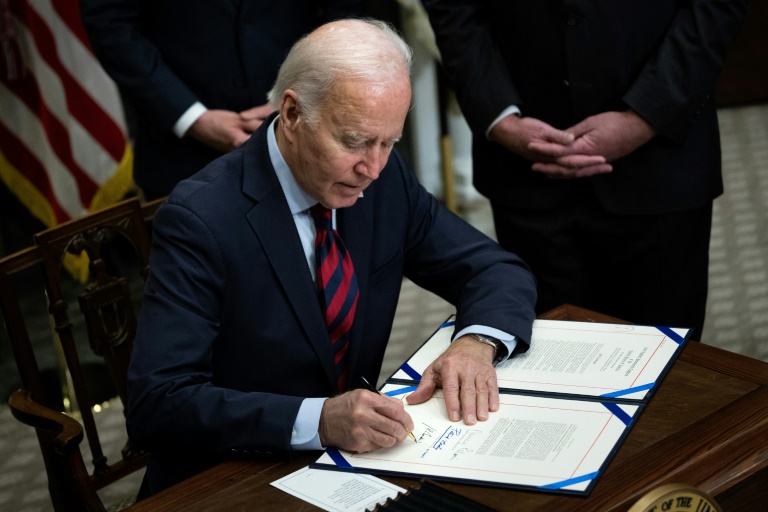
US President Joe Biden signed into law Friday a rare intervention by Congress forcing freight rail unions to accept a salary deal, avoiding a possibly devastating strike — but putting the pro-union Democrat in an awkward political position.

Biden signed the law in a brief White House ceremony only a week before unions who had rejected the deal were expected to have gone on strike, threatening crucial supply chains across the world’s biggest economy.

The deal delivers a hefty wage increase but four of the 12 unions involved refused to accept because there was no agreement on giving workers paid sick leave. Congress acted under a little used power to resolve disputes involving railroads.

As he signed the bill, Biden said Congress had “avoided what, without a doubt, would have been an economic catastrophe.”

“Without freight rail, many of the US industries would literally have shut down,” Biden said, adding that his advisors feared the loss of three quarters of a million jobs within two weeks if the strike had gone ahead.

The episode is awkward politically for Biden who frequently touts his pro-union credentials. He was due to meet with electrical union members later Friday in Boston.

US conspiracy theorist Alex Jones files for personal bankruptcy

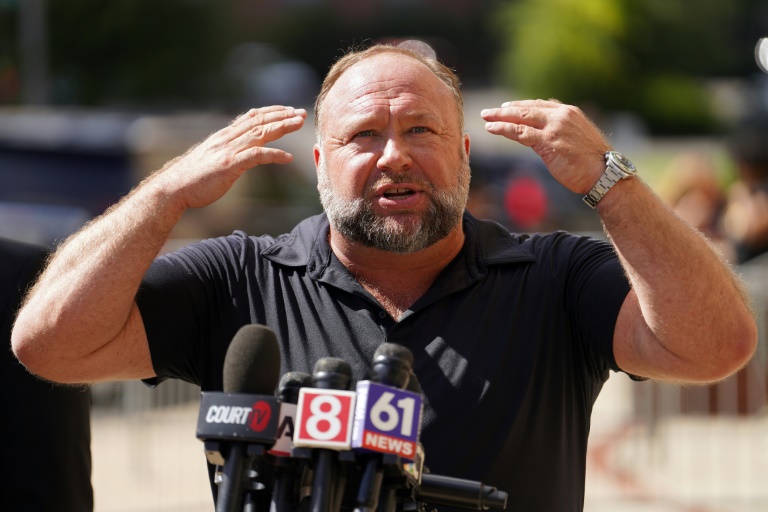
Far-right US conspiracy theorist Alex Jones, who has been ordered to pay nearly $1.5 billion to the families of victims of the Sandy Hook school shooting, declared personal bankruptcy on Friday.

Jones, who falsely claimed for years that the 2012 massacre was a hoax, filed for Chapter 11 bankruptcy protection with a court in his home state of Texas.

In the filing, Jones said he has assets worth between $1 million and $10 million and liabilities of between $1 billion and $10 billion.

Jones, founder of the website InfoWars and host of a popular radio show, has been found liable in multiple defamation lawsuits brought by relatives of the victims of the shooting in Newtown, Connecticut, which left 20 children and six teachers dead.

A jury in Connecticut awarded $965 million in October to relatives of eight Sandy Hook victims and an FBI agent who brought a defamation case against Jones.

The judge who presided over the trial later tacked on an additional $473 million in punitive damages.

In a separate trial, a jury in Texas ordered Jones to pay nearly $50 million damages to a couple whose six-year-old son was killed by the 20-year-old gunman behind the Sandy Hook shooting.

InfoWars declared bankruptcy in April and another Jones-owned company, Free Speech Systems, filed for bankruptcy in July. Chapter 11 bankruptcy allows a debtor to reorganize their assets under court supervision.

In the personal bankruptcy filing, Jones estimated that he has between 50 and 99 creditors and listed the amounts he owes to several of the Sandy Hook families.

Jones’ bankruptcy filing came a day after rapper Kanye West appeared on the InfoWars show and sparked outrage by declaring his “love” of Nazis and admiration for Adolf Hitler.

Jones claimed for years on his show that the Sandy Hook shooting was “staged” by gun control activists and that the parents were “crisis actors,” but has since acknowledged it was “100 percent real.”

Sandy Hook families testified during the trials that Jones’ lies and denialism, coupled with his ability to influence the beliefs of thousands of followers, caused real emotional trauma.

Jones was also accused of pulling in massive profits from various products he sold on his website.

Jones, a vocal supporter of former president Donald Trump, is also under scrutiny over the January 6, 2021 assault on the US Capitol.

Trump appeared frequently on Jones’s radio show during his 2016 White House campaign, and Jones was in Washington when supporters of the then-president stormed Congress in a bid to prevent certification of Democrat Joe Biden’s election victory.

European gas pipe dreams become reality in eastern France

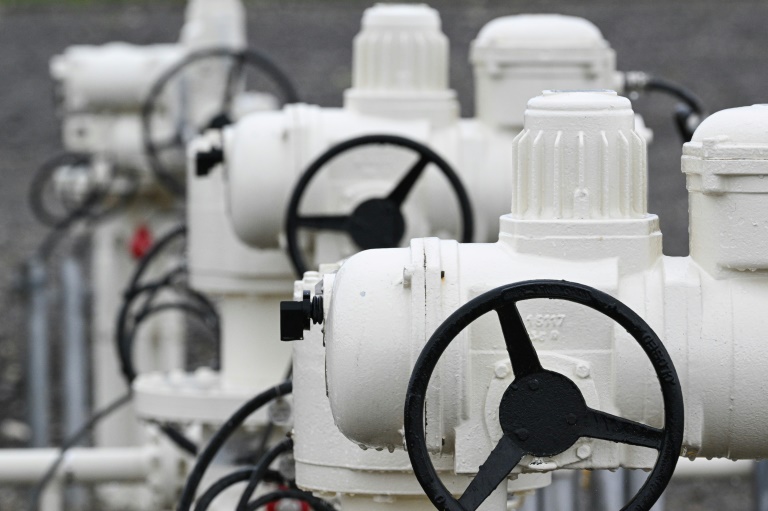
Underneath the lush countryside in eastern France lie the pipelines expected to rescue Europe before a winter without Russian gas.

Europe has scrambled to find alternative energy sources since major fossil fuel producer Russia waged war on Ukraine in late February.

Gas arrives in the mountainous Vosges region from Norway, Qatar and even the United States destined for Europe, especially export powerhouse Germany.

Here lies a symbol of European solidarity in the face of crisis.

It is home to a significant interconnection between a pipeline that brings gas, mainly from Norway via Dunkirk in the north, and another in the direction of Switzerland, fortifying Europe against a bitter energy crisis.

For decades, the French network was designed only to receive gas from eastern Europe via Belgium and Germany, either to be used in the country or redirected to Spain and Switzerland.

But since the war, the gas routes and the pipes’ direction have reversed.

Now France receives gas from Spain, and this goes to Belgium and Germany, said Guillaume Tuffigo of the French network operator GRTgaz.

The significance of the Morelmaison compressor station near Vittel in Vosges, better known for its mineral water than pipes, is not immediately visible where only four people work at the remotely controlled site.

– European ‘solidarity’ –

Before the war, Russian gas supplies accounted for more than 40 percent of all imported gas into the European Union.

That has now dropped to less than 10 percent.

With Europe pushing to diversify energy supplies, the continent gets more natural gas from Norway as well as liquefied natural gas (LNG) from Qatar and the United States, which arrive by ships at four French LNG terminals.

Once viewed as the “cul-de-sac” for Russian gas, France has now become one of the entryways for gas to the rest of Europe.

The current situation was “still unbelievable two years ago”, GRTgaz’s managing director Thierry Trouve told AFP.

“We didn’t have too many reasons to think this east-west flow could be called into question,” Trouve added.

In the gas industry, they would even remark that “Russian gas continued to flow during the Cold War”, he said, seeing no reason why this would end.

Until Russia invaded Ukraine.

Then GRTgaz modified its pipeline networks months ago to be able to send gas to Germany, whose supply mainly came from Russia.

The gas that flows via Morelmaison allows France “to show solidarity in a very concrete way and to compensate for the drop in supply from Russia”, said Tuffigo, head of GRTgaz’s marketing division.

– Energy cooperation –

Delivery to Germany via France began in October after the two neighbours agreed an energy cooperation deal a month earlier.

The connection has a maximum capacity of 100 GWh/day, which would be the equivalent output of four nuclear reactors, or 10 percent of the total LNG that France imports each day.

France’s delivery of gas to Switzerland has risen seven-fold in 2022 compared to the previous year. And Germany has delivered 70 percent less gas this year compared to the same period in 2021.

There are 26 gas compressor stations like Morelmaison across France with 32,527 kilometres (around 20,000 miles) of pipes managed by GRTgaz.

Despite the positive developments, Trouve predicted a difficult future.

Europe’s current reserve is around 93 percent full without Russian gas but for how long can the continent hold on?

“While waiting for new capacity for liquefied gas production, it will still be a tricky five years.”

Musk's free speech absolutism 'a fantasy'

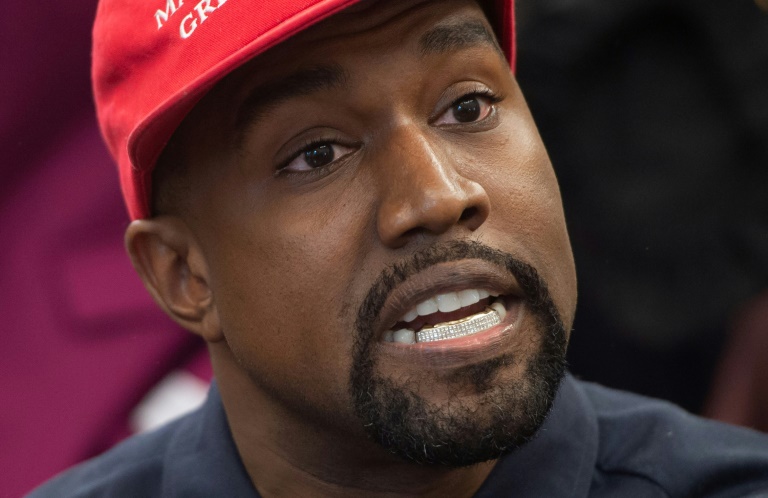
The limits of Elon Musk’s self-professed “free speech absolutism” were laid bare, critics said, by his decision to ban rapper Kanye West from Twitter over his latest anti-Semitic outburst.

Musk claims to be engaged in “a battle for the future of civilisation. 

“If free speech is lost even in America, tyranny is all that lies ahead,” he tweeted last week.

In practice, this has meant gutting his team of moderators and reinstating controversial figures such as Donald Trump, who was banned for inciting violence with his false claims about election fraud. 

Nevertheless, Musk’s claim to be a free-speech absolutist — including a mooted “general amnesty” for suspended accounts — was always going to struggle to survive the clash with reality, and particularly the clash with West (officially known as Ye), who has mounted an increasingly vociferous campaign of anti-Semitic outbursts in recent weeks.

The final straw for Musk was West’s tweet showing a Nazi swastika interlaced with a Star of David. 

It followed an interview with conspiracy theorist Alex Jones, in which he declared his “love” of the Nazis and admiration for Adolf Hitler.

– ‘Half-baked’ philosophy –

“The problem is that Elon Musk has a half-baked free speech philosophy,” said Jacob Mchangama, author of “Free Speech: A History From Socrates to Social Media”.

“Sometimes he talks about total freedom of speech, sometimes about respecting the law. But of course laws are very different around the world where Twitter is present.

“Some of the things (West) has said would arguably be punishable in court in Europe, especially in France.” 

Musk’s takeover led to an immediate spike in hate content — up 25 to 30 percent, according to Bodyguard, which works to protect individuals from online attacks. 

The numbers have fallen since, but remain 10-15 percent above long-run levels, founder Charles Cohen told AFP. Musk’s vision of free speech was “not technically, economically or ethically viable”, he added.

And while West’s tweets might have been policed by the boss himself, Asma Mhalla, of Sciences Po university in Paris, argued: “The industrial-level moderation needed for the network is now completely lacking.”

Few believe total freedom of speech is possible for a private platform that relies on advertising.

– Absolutism ‘fantasy’ –

“So-called free-speech absolutism is just a fantasy,” said influential podcaster Sam Harris earlier this week on his “Making Sense” show. “Almost no one really holds that position even when they espouse it.”

Some level of content moderation was needed to stop platforms turning into “a digital sewer”, he said.

“Contrary to what most people think, it’s legal to shout ‘fire’ in a crowded theatre — but wouldn’t we want the owner of that theatre to remove someone who was shouting that over and over again?” Harris said.

Mchangama said he did not believe West’s comments actually amounted to inciting violence, not least because the rapper has a well-documented history of mental illness that appears to be fuelling his erratic behaviour. 

“He seems profoundly disturbed rather than trying to organise violence against Jews,” Mchangama said. 

He would also like to see more creative solutions. 

“The best way forward is to empower users to filter more of what they don’t like rather than have governments or big tech make these decisions at a centralised level,” he said.

“You can’t have free speech absolutism… but you should err on the side of free speech and there are ways that Musk could have done it.

“But he’s been chaotic and has not made a persuasive case for the sceptics.”

US hiring tops expectations in November as wages pick up

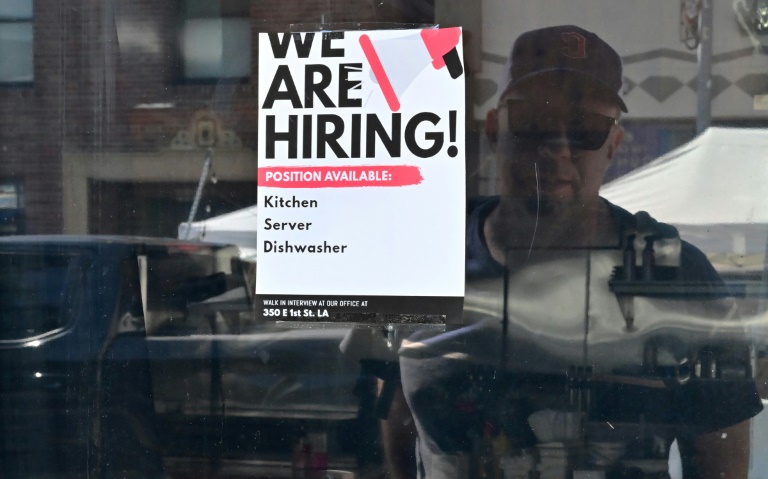
US job gains were unexpectedly robust in November despite efforts to cool the economy, while unemployment held steady and wages ticked up, the government reported Friday.

The figures provide little relief to officials who have been fighting to tamp down decades-high inflation amid concerns that elevated costs could become entrenched.

The world’s biggest economy added 263,000 jobs in November, Labor Department data showed, down from a revised 284,000 figure in October.

The unemployment rate remained low at 3.7 percent.

The US central bank has raised its benchmark interest rate multiple times this year to ease demand, with higher lending costs making it more pricey to borrow funds to buy cars and homes, or expand businesses. 

While such policy tightening may ordinarily lead to job losses, economists have noted that firms are reluctant to shed workers they may have struggled to find since the outbreak of Covid-19.

Average hourly earnings for private sector workers rose 18 cents to $32.82, and over the last 12 months, wages have grown 5.1 percent.

The report also said there were notable job gains in leisure and hospitality, health care, as well as in government.

But employment dipped in retail trade, and in transportation and warehousing.

– ‘Far too hot’ –

The labor market “remains far too hot” for the Federal Reserve, said ING economist James Knightley in an analysis.

This is because tightness in the jobs market has implication for wage pressures, which make up the largest cost in delivering services, he said.

Meanwhile, the jobless rate was steady as labor participation — which is still below pre-pandemic levels — fell once more, Knightley said.

Analysts believe the latest data supports further tightening of monetary policy by the US central bank.

“Overall, the data are signaling ongoing positive momentum in job growth and still-elevated wages,” said Rubeela Farooqi of High Frequency Economics in a note.

While the Fed has signaled this week it might be time to moderate its aggressive campaign to cool the economy, there remain questions over how much higher rates have to go to bring inflation under control, said Fed Chair Jerome Powell.

The central bank has raised borrowing rates six times this year in hopes of easing demand, including four steep rate hikes, while walking a fine line to avoid tipping the economy into a recession.

The trend of wage increases appears stable, but analysts have been “hoping to see a clear softening,” said Ian Shepherdson of Pantheon Macroeconomics.

“Even if inflation drops faster than expected over the next few months,” he said, policymakers “will be worried about a rebound in the second half of 2023 and beyond if wage growth does not slow.” 

US hiring tops expectations in November as wages pick up

US job gains were unexpectedly robust in November despite efforts to cool the economy, while unemployment held steady and wages ticked up, the government reported Friday.

The figures provide little relief to officials who have been fighting to tamp down decades-high inflation amid concerns that elevated costs could become entrenched.

The world’s biggest economy added 263,000 jobs in November, Labor Department data showed, down from a revised 284,000 figure in October.

The unemployment rate remained low at 3.7 percent.

The US central bank has raised its benchmark interest rate multiple times this year to ease demand, with higher lending costs making it more pricey to borrow funds to buy cars and homes, or expand businesses. 

While such policy tightening may ordinarily lead to job losses, economists have noted that firms are reluctant to shed workers they may have struggled to find since the outbreak of Covid-19.

Average hourly earnings for private sector workers rose 18 cents to $32.82, and over the last 12 months, wages have grown 5.1 percent.

The report also said there were notable job gains in leisure and hospitality, health care, as well as in government.

But employment dipped in retail trade, and in transportation and warehousing.

– ‘Far too hot’ –

The labor market “remains far too hot” for the Federal Reserve, said ING economist James Knightley in an analysis.

This is because tightness in the jobs market has implication for wage pressures, which make up the largest cost in delivering services, he said.

Meanwhile, the jobless rate was steady as labor participation — which is still below pre-pandemic levels — fell once more, Knightley said.

Analysts believe the latest data supports further tightening of monetary policy by the US central bank.

“Overall, the data are signaling ongoing positive momentum in job growth and still-elevated wages,” said Rubeela Farooqi of High Frequency Economics in a note.

While the Fed has signaled this week it might be time to moderate its aggressive campaign to cool the economy, there remain questions over how much higher rates have to go to bring inflation under control, said Fed Chair Jerome Powell.

The central bank has raised borrowing rates six times this year in hopes of easing demand, including four steep rate hikes, while walking a fine line to avoid tipping the economy into a recession.

The trend of wage increases appears stable, but analysts have been “hoping to see a clear softening,” said Ian Shepherdson of Pantheon Macroeconomics.

“Even if inflation drops faster than expected over the next few months,” he said, policymakers “will be worried about a rebound in the second half of 2023 and beyond if wage growth does not slow.” 

Energy crisis driving climate-friendly power savings: IEA

Russia’s invasion of Ukraine has driven countries across the world to boost energy efficiency, creating “huge potential” to tackle high prices, security and climate change, the IEA said on Friday.

Governments have scaled up fossil fuel subsidies to cushion the impact of rising energy costs on households in the wake of the Ukraine conflict, which has disrupted gas supplies and stoked prices.  

But a new report from the International Energy Agency found that it had also prompted policymakers and consumers to shrink their power use, causing record investment in energy efficiency measures, like building renovations, and infrastructure for public transport and electric cars.

IEA executive director Fatih Birol said after the oil shocks of the 1970s, governments pushed “substantial improvements” in energy efficiency, particularly in cars, appliances and buildings. 

“Amid today’s energy crisis, we are seeing signs that energy efficiency is once again being prioritised,” he said.

“Energy efficiency is essential for dealing with today’s crisis, with its huge potential to help tackle the challenges of energy affordability, energy security and climate change.”

According to the IEA research, governments, industry and households invested a record $560 billion this year in energy efficiency measures.

Preliminary IEA data for 2022 also suggests that the global economy used energy two percent more efficiently than it did in 2021, almost double the rate of the past five years. 

Annual improvements would need to rise to four percent to meet decarbonisation goals by mid-century, the IEA said. 

But it said if current trends continue to improve, 2022 “could mark a vital turning point” for efficiency, adding that developments this year have “changed the dynamics of energy markets for decades to come”.

Recent government initiatives to boost efficiency in buildings, cars and industry have included legislation in Europe, Japan and the United States that add up to hundreds of billions of dollars in spending. 

– ‘Hyper-efficient and climate-friendly’ –

The IEA said that one in every eight cars sold globally is now electric. 

Building codes are also being updated across the world, it said, while there is growing energy efficiency awareness among consumers. 

In Southeast Asia, all governments were developing policies for efficient cooling, which the IEA said was “vital for a region with one of the fastest rates of growth in electricity demand”.

Meanwhile, global sales of heat pumps are expected to hit record levels in 2022, driven by surging demand in Europe, where almost three million are expected to be sold this year — up from 1.5 million in 2019. 

“Heat pumps are an indispensable part of any plan to cut emissions and natural gas use, and an urgent priority in the European Union today,” said Birol in a press statement this week.

If governments meet all their energy and climate targets, the IEA said “hyper-efficient and climate-friendly” heat pumps could meet nearly a fifth of global heating needs in buildings by 2030, up from a tenth in 2021.

Its first special report on the future of heat pumps, released Wednesday, said the technology, if powered by low-emissions electricity, was “central” to the global transition to sustainable heating. 

The report estimated that heat pumps have the potential to reduce global carbon dioxide emissions by at least 500 million tonnes in 2030 — equal to annual CO2 pollution from the cars in Europe today.

Energy crisis driving climate-friendly power savings: IEA

Russia’s invasion of Ukraine has driven countries across the world to boost energy efficiency, creating “huge potential” to tackle high prices, security and climate change, the IEA said on Friday.

Governments have scaled up fossil fuel subsidies to cushion the impact of rising energy costs on households in the wake of the Ukraine conflict, which has disrupted gas supplies and stoked prices.  

But a new report from the International Energy Agency found that it had also prompted policymakers and consumers to shrink their power use, causing record investment in energy efficiency measures, like building renovations, and infrastructure for public transport and electric cars.

IEA executive director Fatih Birol said after the oil shocks of the 1970s, governments pushed “substantial improvements” in energy efficiency, particularly in cars, appliances and buildings. 

“Amid today’s energy crisis, we are seeing signs that energy efficiency is once again being prioritised,” he said.

“Energy efficiency is essential for dealing with today’s crisis, with its huge potential to help tackle the challenges of energy affordability, energy security and climate change.”

According to the IEA research, governments, industry and households invested a record $560 billion this year in energy efficiency measures.

Preliminary IEA data for 2022 also suggests that the global economy used energy two percent more efficiently than it did in 2021, almost double the rate of the past five years. 

Annual improvements would need to rise to four percent to meet decarbonisation goals by mid-century, the IEA said. 

But it said if current trends continue to improve, 2022 “could mark a vital turning point” for efficiency, adding that developments this year have “changed the dynamics of energy markets for decades to come”.

Recent government initiatives to boost efficiency in buildings, cars and industry have included legislation in Europe, Japan and the United States that add up to hundreds of billions of dollars in spending. 

– ‘Hyper-efficient and climate-friendly’ –

The IEA said that one in every eight cars sold globally is now electric. 

Building codes are also being updated across the world, it said, while there is growing energy efficiency awareness among consumers. 

In Southeast Asia, all governments were developing policies for efficient cooling, which the IEA said was “vital for a region with one of the fastest rates of growth in electricity demand”.

Meanwhile, global sales of heat pumps are expected to hit record levels in 2022, driven by surging demand in Europe, where almost three million are expected to be sold this year — up from 1.5 million in 2019. 

“Heat pumps are an indispensable part of any plan to cut emissions and natural gas use, and an urgent priority in the European Union today,” said Birol in a press statement this week.

If governments meet all their energy and climate targets, the IEA said “hyper-efficient and climate-friendly” heat pumps could meet nearly a fifth of global heating needs in buildings by 2030, up from a tenth in 2021.

Its first special report on the future of heat pumps, released Wednesday, said the technology, if powered by low-emissions electricity, was “central” to the global transition to sustainable heating. 

The report estimated that heat pumps have the potential to reduce global carbon dioxide emissions by at least 500 million tonnes in 2030 — equal to annual CO2 pollution from the cars in Europe today.

Stocks fall after strong US jobs data

Stock markets fell on Friday after strong US jobs data raised concerns that the US Federal Reserve may continue to aggressively hike interest rates to tame inflation. 

Oil prices, meanwhile, were slightly up as investors awaited an output decision by OPEC and its Russia-led allies and tracked Western plans to cap Russian crude prices.

Stock markets are focused on the next moves of the US central bank.

While Fed chief Jerome Powell signalled on Wednesday that the central bank could start “moderating” the pace of rate hikes as soon as December, investors were unnerved by Friday’s jobs figures.

US government data showed that the world’s biggest economy added 263,000 jobs in November, with the unemployment rate remaining at 3.7 percent.

Strong job gains raise concerns among investors, as a healthy economy could convince the Fed it still has room to deliver more sharp rate increases to fight inflation.

“The report itself is good news from an economic standpoint, yet the market sees it as bad news, thinking it will push out any eventual pivot by the Fed with its monetary policy,” said Briefing.com analyst Patrick O’Hare.

Wall Street opened lower while Paris and London were down in afternoon trading and Asia finished in the red. Frankfurt was flat.

– OPEC+ –

The focus was also on OPEC+, which may decide Sunday to slash oil production further to boost prices for its members, which include Saudi Arabia and Russia.

“There remains considerable uncertainty around the action OPEC+ will take when it meets…, although there’s every chance that the meeting will be delayed or that discussions take longer than normal, as a result of the price cap being finalised by the EU,” noted OANDA trading platform analyst Craig Erlam.

Beyond the economic gloom, the big unknown in the oil equation currently is Russian oil, as Western nations seek to decouple themselves from Moscow’s energy supplies as fast as possible.

The EU has decided to ban member states from buying Russian oil exported by sea from Monday, “putting at risk over two million barrels per day,” according to estimates by ANZ analysts.

Investors are also scrutinising a European Commission-proposed $60 per barrel price cap on Russian crude, which is designed to reinforce the effectiveness of the EU embargo.

Poland has refused to back the plan, saying the price ceiling should be even lower.

Prices have fallen heavily in recent weeks on expectations of weaker Chinese demand.

There are signs, however, that China is edging towards a pivot from its draconian Covid-zero strategy, which has seen the lockdown of tens of millions and strangled the giant economy this year.

The move came after widespread protests across the country earlier in the week against almost three years of heavy-handed containment measures and calls for more political freedoms.

Observers say they expect officials to signal a shift in priorities at a key meeting later this month, with a focus turning to kickstarting the economy, though with vaccination rates low the move will likely be gradual.

– Key figures around 1435 GMT –

New York – Dow: DOWN 0.7 percent at 34,155.37 points

London – FTSE 100: DOWN 0.1 percent at 7,551.75 

Frankfurt – DAX: FLAT at 14,494.59

Paris – CAC 40: DOWN 0.2 percent at 6,737.97

EURO STOXX 50: DOWN 0.3 percent at 3,972.76

Tokyo – Nikkei 225: DOWN 1.6 percent at 27,777.90 (close)

Hong Kong – Hang Seng Index: DOWN 0.3 percent at 18,675.35 (close)

Shanghai – Composite: DOWN 0.3 percent at 3,156.14 (close)

Euro/dollar: DOWN at $1.0490 from $1.0529 on Thursday

Dollar/yen: DOWN at 135.22 yen from 135.34 yen

Pound/dollar: DOWN at $1.2221 from $1.2251

Euro/pound: DOWN at 85.83 pence from 85.91 pence

Brent North Sea crude: UP 0.4 percent at $87.21 per barrel

West Texas Intermediate: UP 0.5 percent at $81.61 per barrel

Putin says strikes on Ukraine infrastructure 'inevitable'

President Vladimir Putin said on Friday  Russia’s strikes on Ukrainian infrastructure were “inevitable” as the Kremlin rejected US President Joe Biden’s terms for talks and warned the assault would continue. 

After suffering humiliating military defeats during what has become the largest armed conflict in Europe since World War II, Russia began targeting Ukrainian energy infrastructure in October, causing sweeping blackouts.

Speaking with German Chancellor Olaf Scholz for the first time since mid-September, Putin slammed what he called the West’s “destructive” policies in Ukraine and said Russian strikes were a response to “provocative” attacks from Kyiv.

Moscow “had long refrained from precision missile strikes against certain targets on the territory of Ukraine”, Putin told Scholz, according to a Kremlin readout of the phone talks.

“But now such measures have become a forced and inevitable response to Kyiv’s provocative attacks on Russia’s civilian infrastructure,” the Kremlin said, referring in particular to the October attack on a bridge linking Moscow-annexed Crimea to the Russian mainland.

During the hour-long  call with Putin, Scholz “urged the Russian president to come as quickly as possible to a diplomatic solution including the withdrawal of Russian troops”, according to the German leader’s spokesman Steffen Hebestreit.

Putin urged Berlin to “reconsider its approaches in the context of the Ukrainian events”, the Kremlin said.

He accused the West of carrying out “destructive” policies in Ukraine, stressing that its political and financial aid “leads to the fact that Kyiv completely rejects the idea of any negotiations”.

Ukrainian President Volodymyr Zelensky had ruled out any talks with Russia while Putin is in power shortly after the Kremlin claimed to have annexed several Ukrainian regions.

– Offensive ‘continues’ – 

The Kremlin also indicated Moscow was in no mood for talks over Ukraine, after Biden said he would be willing to sit down with Putin if the Russian leader truly wanted to end the fighting.

“What did President Biden say in fact? He said that negotiations are possible only after Putin leaves Ukraine,” Putin’s spokesman Dmitry Peskov told reporters, adding Moscow was “certainly” not ready to accept those conditions. 

“The special military operation continues,” he added, using the Kremlin term for the assault launched on February 24. 

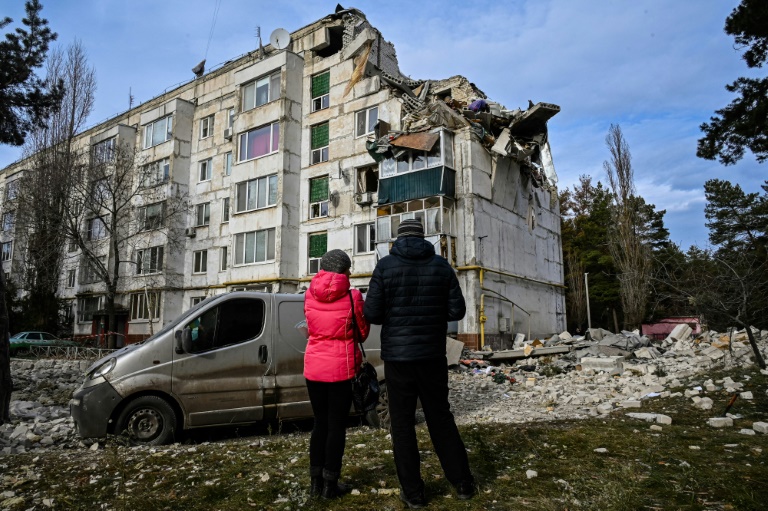
Russia’s strikes have destroyed close to half of the Ukrainian energy system and left millions in the cold and dark at the onset of winter.

In the latest estimates from Kyiv, Mykhailo Podolyak, an advisor to Zelensky, said as many as 13,000 Ukrainian troops have died in the fighting.

Both Moscow and Kyiv are suspected of minimising their losses to avoid damaging the morale.

Top US general Mark Milley last month said more than 100,000 Russian military personnel have been killed or wounded in Ukraine, with Kyiv’s forces likely suffering similar casualties. 

– ‘We are not defeated’ –

The fighting in Ukraine has also claimed the lives of thousands of Ukrainian civilians and forced millions to flee their homes.

Those who remain in the country have had to cope with emergency blackouts as authorities sought to relieve the pressure on the energy infrastructure.

In an attempt to boost the mood in the capital Kyiv, musicians played a classical music concert on Thursday with hundreds of LED candles lighting up the stage.

“We thought it was a good idea to save energy,” Irina Mikolaenko, one of the concert’s organisers, told AFP. 

She said they wanted to spread “inspiration, light and love” and “tell people that we are not defeated”. 

Ukrainian officials have said they are expecting a new wave of Russian attacks shortly.

Meanwhile, Western nations have been seeking ways to further starve Russia of resources to fight in Ukraine by imposing a price cap on its oil exports on top of a multitude of sanctions already introduced against Moscow. 

On Thursday evening, European diplomats were close to nodding the plan through, but Poland refused to back the scheme, saying the $60 a barrel ceiling was not low enough.

Moscow has previously warned that it will not export oil to countries enforcing a price cap.

Close Bitnami banner
Bitnami