US Business

Putin says strikes on Ukraine infrastructure 'inevitable'

President Vladimir Putin said on Friday  Russia’s strikes on Ukrainian infrastructure were “inevitable” as the Kremlin rejected US President Joe Biden’s terms for talks and warned the assault would continue. 

After suffering humiliating military defeats during what has become the largest armed conflict in Europe since World War II, Russia began targeting Ukrainian energy infrastructure in October, causing sweeping blackouts.

Speaking with German Chancellor Olaf Scholz for the first time since mid-September, Putin slammed what he called the West’s “destructive” policies in Ukraine and said Russian strikes were a response to “provocative” attacks from Kyiv.

Moscow “had long refrained from precision missile strikes against certain targets on the territory of Ukraine”, Putin told Scholz, according to a Kremlin readout of the phone talks.

“But now such measures have become a forced and inevitable response to Kyiv’s provocative attacks on Russia’s civilian infrastructure,” the Kremlin said, referring in particular to the October attack on a bridge linking Moscow-annexed Crimea to the Russian mainland.

During the hour-long  call with Putin, Scholz “urged the Russian president to come as quickly as possible to a diplomatic solution including the withdrawal of Russian troops”, according to the German leader’s spokesman Steffen Hebestreit.

Putin urged Berlin to “reconsider its approaches in the context of the Ukrainian events”, the Kremlin said.

He accused the West of carrying out “destructive” policies in Ukraine, stressing that its political and financial aid “leads to the fact that Kyiv completely rejects the idea of any negotiations”.

Ukrainian President Volodymyr Zelensky had ruled out any talks with Russia while Putin is in power shortly after the Kremlin claimed to have annexed several Ukrainian regions.

– Offensive ‘continues’ – 

The Kremlin also indicated Moscow was in no mood for talks over Ukraine, after Biden said he would be willing to sit down with Putin if the Russian leader truly wanted to end the fighting.

“What did President Biden say in fact? He said that negotiations are possible only after Putin leaves Ukraine,” Putin’s spokesman Dmitry Peskov told reporters, adding Moscow was “certainly” not ready to accept those conditions. 

“The special military operation continues,” he added, using the Kremlin term for the assault launched on February 24. 

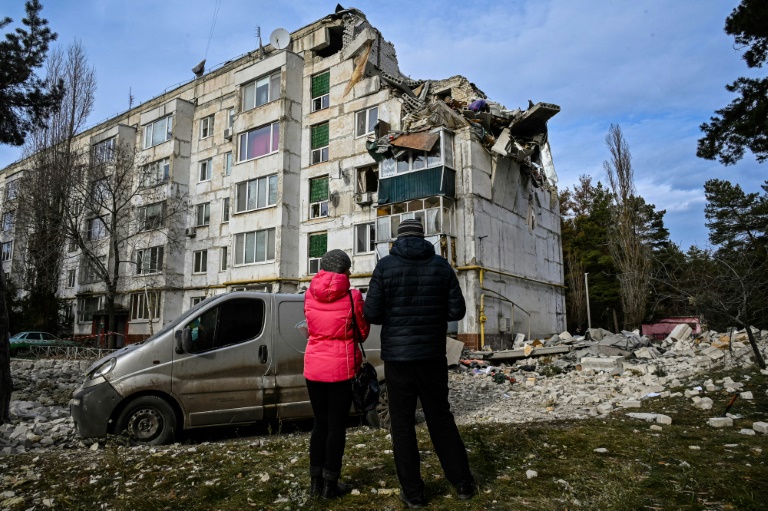
Russia’s strikes have destroyed close to half of the Ukrainian energy system and left millions in the cold and dark at the onset of winter.

In the latest estimates from Kyiv, Mykhailo Podolyak, an advisor to Zelensky, said as many as 13,000 Ukrainian troops have died in the fighting.

Both Moscow and Kyiv are suspected of minimising their losses to avoid damaging the morale.

Top US general Mark Milley last month said more than 100,000 Russian military personnel have been killed or wounded in Ukraine, with Kyiv’s forces likely suffering similar casualties. 

– ‘We are not defeated’ –

The fighting in Ukraine has also claimed the lives of thousands of Ukrainian civilians and forced millions to flee their homes.

Those who remain in the country have had to cope with emergency blackouts as authorities sought to relieve the pressure on the energy infrastructure.

In an attempt to boost the mood in the capital Kyiv, musicians played a classical music concert on Thursday with hundreds of LED candles lighting up the stage.

“We thought it was a good idea to save energy,” Irina Mikolaenko, one of the concert’s organisers, told AFP. 

She said they wanted to spread “inspiration, light and love” and “tell people that we are not defeated”. 

Ukrainian officials have said they are expecting a new wave of Russian attacks shortly.

Meanwhile, Western nations have been seeking ways to further starve Russia of resources to fight in Ukraine by imposing a price cap on its oil exports on top of a multitude of sanctions already introduced against Moscow. 

On Thursday evening, European diplomats were close to nodding the plan through, but Poland refused to back the scheme, saying the $60 a barrel ceiling was not low enough.

Moscow has previously warned that it will not export oil to countries enforcing a price cap.
UK ex-finance minister joins exodus of Tory MPs

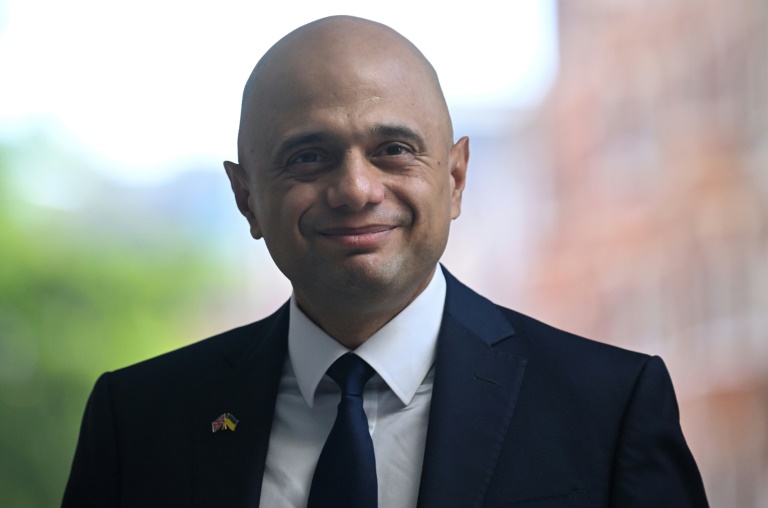
Britain’s former finance minister Sajid Javid on Friday said he would not be standing at the next election, as the Conservative party faces a slump in support after 12 years in power.

Sajid Javid, 52, is the highest-profile Tory MP yet to announce that he will quit at the next nationwide poll, which is due before January 2025 at the latest.

The Conservatives, in office since 2010, are on course for defeat by the main opposition Labour party, according to opinion polls, and several younger Tory MPs have already said they will not be standing again.

A by-election held in the City of Chester constituency in northwest England on Thursday saw Labour retain the seat as expected but the Tories haemorrhage support.

Political observers assessed that it mirrored an expected swing to Labour at the next general election.

A series of scandals under former prime minister Boris Johnson, and the political and financial turmoil caused by his short-lived successor Liz Truss, badly dented Tory support.

Javid — a cabinet minister under David Cameron, Theresa May and Johnson — said he had thought long and hard about the decision.

He wrote in a letter to the head of his Bromsgrove constituency in central England that being an MP and in government had been “the privilege of my life”.

“I am immensely grateful for the opportunity to serve,” the millionaire former investment banker added.

Javid, the son of a Pakistani immigrant bus driver, was Britain’s first Muslim home secretary and chancellor of the exchequer.

He also served as health secretary and campaigned earlier this year to take over from Johnson.

He quit the Treasury in February 2020 after refusing an order from 10 Downing Street to fire all his special advisers. He was replaced by Rishi Sunak, who is now prime minister. 

Sunak said he was “sad” to see his “good friend” and fellow “Star Wars” fan Javid go. 

“May the Force be with you, Saj,” he added.

Sunak, who took over from Truss in a Tory leadership contest in October, is trying to claw back support in time for the election.

But he faces an uphill battle against a backdrop of a cost-of-living crisis that is squeezing incomes and generating widespread strikes.

The Conservative party has given its MPs until December 5 to declare whether they will run in the next election, when many constituency maps will be redrawn.

Johnson does intend to stand again, according to sources close to the former prime minister, after speculation that he would quit parliament for a lucrative career of writing and speech-making.

European stocks, oil steady before US jobs data and OPEC

European stock markets and oil prices steadied Friday before key US jobs data and an oil output decision by OPEC and its Russia-led allies.

Asian stock markets and the dollar dropped following another volatile week for markets generally.

“Traders are jockeying for position ahead of the moderately high-risk (US jobs) event,” noted SPI Asset Management’s Stephen Innes.

The data will provide the most recent snapshot of how the world’s top economy is faring in light of rising US interest rates to combat the highest inflation in decades.

Traders are growing confident that the Federal Reserve will slow its pace of rate hikes after Fed boss Jerome Powell this week indicated that the days of jumbo 0.75-percentage-point increases were over.

At the same time, Powell and other Fed officials have lined up to warn that rates would continue to rise and stay elevated, with the possibility of no cut until 2024.

– OPEC+ –

Focus was also on OPEC+, which may decide Sunday to slash oil production further to boost prices for its members, which include Saudi Arabia and Russia.

“There remains considerable uncertainty around the action OPEC+ will take when it meets…, although there’s every chance that the meeting will be delayed or that discussions take longer than normal, as a result of the price cap being finalised by the EU,” noted OANDA trading platform analyst Craig Erlam.

Beyond the economic gloom, the big unknown in the oil equation currently is Russian oil, as Western nations seek to decouple themselves from Moscow’s energy supplies as fast as possible. 

The EU has decided to ban member states from buying Russian oil exported by sea from December 5, “putting at risk over two million barrels per day,” according to estimates by ANZ analysts.

Investors are also scrutinising a European Commission-proposed $60 per barrel price cap on Russian crude, which is designed to reinforce the effectiveness of the EU embargo.

Prices have fallen heavily in recent weeks on expectations of weaker Chinese demand.

There are signs, however, that China is edging towards a pivot from its draconian Covid-zero strategy, which has seen the lockdown of tens of millions and strangled the giant economy this year.

The move came after widespread protests across the country earlier in the week against almost three years of heavy-handed containment measures and calls for more political freedoms.

Observers say they expect officials to signal a shift in priorities at a key meeting later this month, with a focus turning to kickstarting the economy, though with vaccination rates low the move will likely be gradual.

“The language (at the meeting) will prioritise economic growth more than it did the last couple of years,” said Arthur Budaghyan at BCA Research. “Economic conditions are worsening, and policymakers’ pain point is being reached.”

– Key figures around 1200 GMT –

London – FTSE 100: DOWN 0.2 percent at 7,540.43 points

Frankfurt – DAX: UP 0.3 percent at 14,530.90

Paris – CAC 40: DOWN 0.2 percent at 6,742.29

EURO STOXX 50: DOWN 0.1 percent at 3,982.08

Tokyo – Nikkei 225: DOWN 1.6 percent at 27,777.90 (close)

Hong Kong – Hang Seng Index: DOWN 0.3 percent at 18,675.35 (close)

Shanghai – Composite: DOWN 0.3 percent at 3,156.14 (close)

New York – Dow: DOWN 0.6 percent at 34,395.01 (close)

Euro/dollar: UP at $1.0534 from $1.0529 on Thursday

Dollar/yen: DOWN at 134.09 yen from 135.34 yen

Pound/dollar: UP at $1.2277 from $1.2251

Euro/pound: DOWN at 85.82 pence from 85.91 pence

Brent North Sea crude: UP 0.5 percent at $87.27 per barrel

West Texas Intermediate: UP 0.2 percent at $81.35 per barrel

EU cap on Russian oil price on hold as Poland urges lower price

The West’s plan to starve Russia of resources to fight its war in Ukraine by imposing a price cap on its oil exports hit a diplomatic logjam in Brussels on Friday.

Poland does not think the $60 a barrel ceiling is low enough and has refused to back the plan, preventing the European Union from adopting the measure.

On Thursday evening several European diplomats said the other 26 member states were ready to nod the plan through in time for it to go into effect on Monday along with an EU embargo on Russian crude.

But on Friday one negotiator told AFP: “The silence from Warsaw is deafening.”

The embargo will prevent shipments of Russian crude by tanker vessel to the EU, which accounts for two thirds of imports, the rest arriving by pipeline. 

Energy experts like Phuc-Vinh Nguyen of the Delors Institute think tank estimate that Russia has earned 67 billion euros ($71 billion) selling oil to EU clients since its February invasion of Ukraine.

This alone is greater than Russia’s 60-billion-euro defence budget before the war and dwarfs the financial and military aid spent by EU states to support Kyiv’s pro-Western government.

From Monday, tankers will no longer be permitted to bring Russian crude to Europe — and the price cap is designed to make it harder to bypass the sanctions by selling beyond the EU.

China and India, for example, have not limited imports of Russian oil, but under the proposed plan European insurers would be banned from covering tankers that carry oil for prices above the ceiling. 

This will reinforce the European embargo, which comes after embargos imposed by Canada and the United States.

The European Commission had suggested the ceiling along with an order that if the trading price of oil falls below $60 then the cap will be cut until it is five percent lower than the market.

– Level of the cap –

The price of Urals Crude, the main variety sold by Russia, is volatile but it was trading at around $65 per barrel as EU ambassadors met to discuss the level of the cap.

But Poland, a strong supporter of its neighbour Ukraine in the battle against the Kremlin’s forces, had been holding out for a lower sum, reportedly closer to just $30 a barrel.

“We will not comment until this news… is made official,” said Russian presidential spokesman Dmitry Peskov. “We are awaiting an official announcement.”

Moscow has previously warned that it will not export oil to countries respecting a price cap.

Last week, Russia’s President Vladimir Putin had warned that any attempt by the West to cap the price of Russian oil would have “grave consequences” for world markets.

But Washington and several of its allies — the Group of Seven major industrialised democracies, the EU and Australia — have vowed to go ahead.

With Germany and Poland having decided to stop deliveries via a pipeline by the end of the year, Russian exports to the union will be cut by more than 90 percent, the Europeans say. 

For Phuc-Vinh Nguyen, the proposed instrument raises many questions. 

“An oil price ceiling has never been seen. We are in the unknown,” he said, stressing that the reaction of OPEC producing countries, or big buyers like India or China will be crucial. 

According to the analyst, a cap — even at a high tariff — would send “a strong political signal” to Putin, because, once in place, this mechanism could be tightened.

Oil ministers from the OPEC+ oil producers’ group will meet in Vienna on Sunday.

EU cap on Russian oil price on hold as Poland urges lower price

The West’s plan to starve Russia of resources to fight its war in Ukraine by imposing a price cap on its oil exports hit a diplomatic logjam in Brussels on Friday.

Poland does not think the $60 a barrel ceiling is low enough and has refused to back the plan, preventing the European Union from adopting the measure.

On Thursday evening several European diplomats said the other 26 member states were ready to nod the plan through in time for it to go into effect on Monday along with an EU embargo on Russian crude.

But on Friday one negotiator told AFP: “The silence from Warsaw is deafening.”

The embargo will prevent shipments of Russian crude by tanker vessel to the EU, which accounts for two thirds of imports, the rest arriving by pipeline. 

Energy experts like Phuc-Vinh Nguyen of the Delors Institute think tank estimate that Russia has earned 67 billion euros ($71 billion) selling oil to EU clients since its February invasion of Ukraine.

This alone is greater than Russia’s 60-billion-euro defence budget before the war and dwarfs the financial and military aid spent by EU states to support Kyiv’s pro-Western government.

From Monday, tankers will no longer be permitted to bring Russian crude to Europe — and the price cap is designed to make it harder to bypass the sanctions by selling beyond the EU.

China and India, for example, have not limited imports of Russian oil, but under the proposed plan European insurers would be banned from covering tankers that carry oil for prices above the ceiling. 

This will reinforce the European embargo, which comes after embargos imposed by Canada and the United States.

The European Commission had suggested the ceiling along with an order that if the trading price of oil falls below $60 then the cap will be cut until it is five percent lower than the market.

– Level of the cap –

The price of Urals Crude, the main variety sold by Russia, is volatile but it was trading at around $65 per barrel as EU ambassadors met to discuss the level of the cap.

But Poland, a strong supporter of its neighbour Ukraine in the battle against the Kremlin’s forces, had been holding out for a lower sum, reportedly closer to just $30 a barrel.

“We will not comment until this news… is made official,” said Russian presidential spokesman Dmitry Peskov. “We are awaiting an official announcement.”

Moscow has previously warned that it will not export oil to countries respecting a price cap.

Last week, Russia’s President Vladimir Putin had warned that any attempt by the West to cap the price of Russian oil would have “grave consequences” for world markets.

But Washington and several of its allies — the Group of Seven major industrialised democracies, the EU and Australia — have vowed to go ahead.

With Germany and Poland having decided to stop deliveries via a pipeline by the end of the year, Russian exports to the union will be cut by more than 90 percent, the Europeans say. 

For Phuc-Vinh Nguyen, the proposed instrument raises many questions. 

“An oil price ceiling has never been seen. We are in the unknown,” he said, stressing that the reaction of OPEC producing countries, or big buyers like India or China will be crucial. 

According to the analyst, a cap — even at a high tariff — would send “a strong political signal” to Putin, because, once in place, this mechanism could be tightened.

Oil ministers from the OPEC+ oil producers’ group will meet in Vienna on Sunday.

Musk's free speech absolutism 'a fantasy'

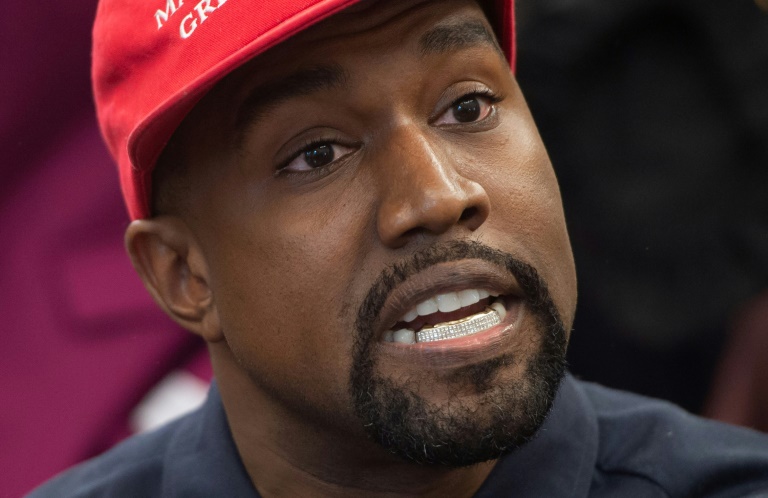
The limits of Elon Musk’s self-professed “free speech absolutism” were laid bare, critics said, when he banned rapper Kanye West from Twitter over his latest anti-Semitic outburst on Thursday.

Only a few days earlier, Musk tweeted that he was engaged in “a battle for the future of civilization. If free speech is lost even in America, tyranny is all that lies ahead.”

Since taking over Twitter, the billionaire has reinstated several controversial figures, including ex-president Donald Trump, who was banned for inciting violence with his false claims about fraud after his defeat in the 2020 United States election. 

But Musk’s claim to be a free speech absolutist was always going to struggle to survive the clash with reality — and particularly the clash with West (officially known as Ye), who has mounted an increasingly vociferous campaign of anti-Semitic outbursts in recent weeks. 

The final straw for Musk was West’s tweet showing a Nazi swastika interlaced with a Star of David. 

It followed an interview with conspiracy theorist Alex Jones, in which he declared his “love” of the Nazis and admiration for Adolf Hitler.

“The problem is that Elon Musk has a half-baked free speech philosophy,” said Jacob Mchangama, author of “Free Speech: A History From Socrates to Social Media”.

“Sometimes he talks about total freedom of speech, sometimes about respecting the law. But of course laws are very different around the world where Twitter is present. Some of the things (West) has said would arguably be punishable in court in Europe, especially in France.” 

– ‘A fantasy’ –

Few believe that total freedom of speech is possible, especially for a private platform that relies on advertising. 

“So-called free speech absolutism is just a fantasy,” said influential podcaster Sam Harris earlier this week on his “Making Sense” show. “Almost no one really holds that position even when they espouse it.”

He said some level of content moderation was needed to stop platforms turning into “a digital sewer”. 

“Contrary to what most people think it’s legal to shout ‘fire’ in a crowded theatre, but wouldn’t we want the owner of that theatre to remove someone who was shouting that over and over again?” Harris said.

Mchangama said he did not believe West’s comments actually amounted to inciting violence, not least because the rapper has a well-documented history of mental illness that appears to be fuelling his erratic behaviour. 

“He seems profoundly disturbed rather than trying to organise violence against Jews,” Mchangama said. 

He would also like to see more creative solutions to the challenge of content moderation, and feels Musk has missed an opportunity. 

“The best way forward is to empower users to filter more of what they don’t like rather than have governments or big tech make these decisions at a centralised level,” he said.

“You can’t have free speech absolutism… but you should err on the side of free speech and there are ways that Musk could have done it. But he’s been chaotic and has not made a persuasive case for the sceptics.”

OPEC set to stick or cut more amid plan to cap Russian oil price

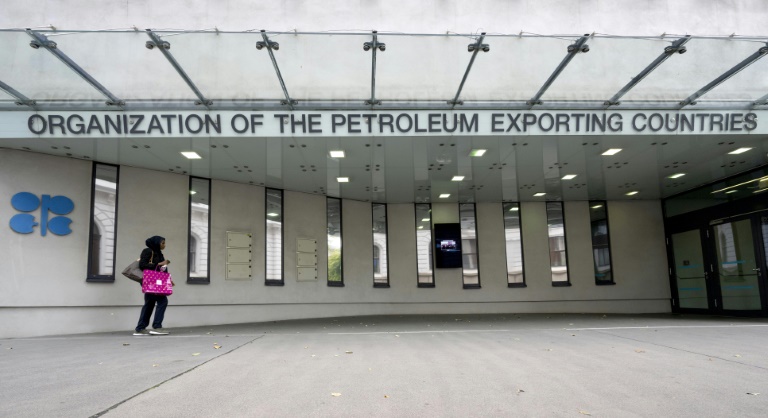
Major oil producers are expected to stick to their current output strategy or even slash production further when they meet on Sunday in the face of falling prices, a potential Russian oil price cap and an embargo on Russian crude shipments.

At their last ministerial session in October the 13-nation Organization of the Petroleum Exporting Countries headed by Riyadh and its 10 allies led by Moscow, collectively known as OPEC+, agreed to reduce output by two million barrels per day (bpd) from November.

The OPEC+ reduction amounted to the biggest cut since the height of the Covid pandemic in 2020.

Amid fears of economic slowdown, Sunday’s cartel meeting via videoconference convenes ahead of the EU enforcing an embargo on Russian crude shipments from Monday.

G7 countries, the EU and Australia had also appeared close to agreeing a $60 dollar per barrel price cap on Russian oil Thursday.

The alliance should vote for a “rollover of the previous decision” to cut two million bpd, an Iranian source told AFP Thursday, arguing that the market was “very uncertain” in light of imminent European sanctions.

– China worries –

“Odds are that the group will reassert its commitment to its latest output cuts,” says PVM Energy analyst Stephen Brennock, adding he would not rule out that they “may even potentially announce fresh cuts” to bolster prices.

Since the October meeting, oil prices have been plummeting to their level of early 2022, far from the peaks above $130 a barrel in March after the start of Russia’s invasion in Ukraine.

Two global crude benchmarks were hovering around $85 a barrel on Thursday.

Covid-related restrictions in China have raised fears about energy demand from the world’s largest importer of crude oil.

Beijing defused concerns, however, by signalling a possible easing of the strict zero-Covid policy, after nationwide protests against health restrictions broke out.

Soaring inflation in Europe and across the Atlantic have also fuelled fears of a recession.

– Russian ‘leverage’ –

Beyond the economic gloom, the big unknown in the oil equation currently is Russian oil, as Western nations seek to decouple themselves from Moscow’s energy supplies as fast as possible. 

The EU has decided to ban member states from buying Russian oil exported by sea from December 5, “putting at risk over two million barrels per day,” according to estimates by ANZ analysts.

Investors are also scrutinising a European Commission-proposed $60 dollar per barrel price cap on Russian crude, which is designed to reinforce the effectiveness of the EU embargo.

The EU was already in agreement with Washington on the need to cap the price Western clients pay for Russia’s oil, to prevent Moscow profiting from price rises triggered by its own war on Ukraine.

Last week, President Vladimir Putin had warned that any attempt by the West to cap the price of Russian oil would have “grave consequences” for world markets.

Russia “has several options to circumvent such a cap,” said UniCredit economist Edoardo Campanella, adding that “OPEC+ might feel compelled to adopt a more aggressive stance” by cutting or threatening to cut production even further.

“Russia might also retaliate by leveraging its influence within OPEC+ to push for more production cuts down the road, thus exacerbating the global energy crisis,” Campanella said.

Sun to go down on Elton John's final UK tour at Glastonbury

After Paul McCartney, the Glastonbury music festival on Friday again rolled back the years by announcing Elton John as its headline act next June to close out his final UK tour.

The 75-year-old singer-songwriter said he “couldn’t be more excited” to make his debut at Britain’s best-known festival as he winds down a glittering live career.

John last month played his final US gigs as part of his “Farewell Yellow Brick Road” world tour, which is due to end in Stockholm on July 8. 

Prior to that, he will headline the closing Sunday slot at Glastonbury in southwest England on June 25, according to Emily Eavis, whose father Michael started the British event in 1970.

“This will be the final UK show of Elton’s last ever tour, so we will be closing the festival and marking this huge moment in both of our histories with the mother of all send-offs,” she said.

“We are so very happy to finally bring the Rocket Man to Worthy Farm!”

John announced the farewell world tour in 2018, but it was curtailed by the Covid pandemic and after he was injured in a fall.

The British singer has scored a hit single in every decade since the 1970s and amassed worldwide record sales of 300 million.

– ‘Incredibly emotional’ –

The tour features extravagant costumes, spectacular visuals and classics from his catalogue along with recent number one “Cold Heart”, which was a collaboration with pop star Dua Lipa.

John said his Glastonbury premiere would be a “fitting way” to say goodbye to his fans at home.

“They have been beyond brilliant, and have supported me through all the highs and lows of my career,” he said, paying tribute to Glastonbury’s “genuine, enthusiastic support for the best emerging talent”.

“I’ve been talking to Emily Eavis about it over the last few weeks and I can’t wait to embrace the spirit of the greatest festival in the world. It’s going to be incredibly emotional.”

In recent years, however, Glastonbury has paid less heed to new emerging talent on its main stages.

Last June, McCartney became the festival’s oldest solo headliner at the age of 80. He played a set of Beatles classics, aided by cameos from Bruce Springsteen and Dave Grohl.

Soul legend Diana Ross, 78, also performed this year, leading to some grumbling on social media at the “geriatric” profile and that only the rich and middle-aged could afford the ticket prices.

More than 100,000 standard tickets for next year’s June 21-25 festival sold out in just over an hour when they went on sale a month ago, despite the price rising to £335 ($410) from £280 this year.

OPEC set to stick or cut more amid plan to cap Russian oil price

Major oil producers are expected to stick to their current output strategy or even slash production further when they meet on Sunday in the face of falling prices, a potential Russian oil price cap and an embargo on Russian crude shipments.

At their last ministerial session in October the 13-nation Organization of the Petroleum Exporting Countries headed by Riyadh and its 10 allies led by Moscow, collectively known as OPEC+, agreed to reduce output by two million barrels per day (bpd) from November.

The OPEC+ reduction amounted to the biggest cut since the height of the Covid pandemic in 2020.

Amid fears of economic slowdown, Sunday’s the cartel’s meeting via videoconference convenes ahead of the EU enforcing an embargo on Russian crude shipments from Monday.

G7 countries, the EU and Australia had also appeared close to agreeing a $60 dollar per barrel price cap on Russian oil Thursday.

The alliance should vote for a “rollover of the previous decision” to cut two million bpd, an Iranian source told AFP Thursday, arguing that the market was “very uncertain” in light of imminent European sanctions.

– China worries –

“Odds are that the group will reassert its commitment to its latest output cuts,” says PVM Energy analyst Stephen Brennock, adding he would not rule out that they “may even potentially announce fresh cuts” to bolster prices.

Since the October meeting, oil prices have been plummeting to their level of early 2022, far from the peaks above $130 a barrel in March after the start of Russia’s invasion in Ukraine.

Two global crude benchmarks were hovering around $85 a barrel on Thursday.

Covid-related restrictions in China have raised fears about energy demand from the world’s largest importer of crude oil.

Beijing defused concerns, however, by signalling a possible easing of the strict zero-Covid policy, after nationwide protests against health restrictions broke out.

Soaring inflation in Europe and across the Atlantic have also fuelled fears of a recession.

– Russian ‘leverage’ –

Beyond the economic gloom, the big unknown in the oil equation currently is Russian oil, as Western nations seek to decouple themselves from Moscow’s energy supplies as fast as possible. 

The EU has decided to ban member states from buying Russian oil exported by sea from December 5, “putting at risk over two million barrels per day,” according to estimates by ANZ analysts.

Investors are also scrutinising a European Commission-proposed $60 dollar per barrel price cap on Russian crude, which is designed to reinforce the effectiveness of the EU embargo.

The EU was already in agreement with Washington on the need to cap the price Western clients pay for Russia’s oil, to prevent Moscow profiting from price rises triggered by its own war on Ukraine.

Last week, President Vladimir Putin had warned that any attempt by the West to cap the price of Russian oil would have “grave consequences” for world markets.

Russia “has several options to circumvent such a cap,” said UniCredit economist Edoardo Campanella, adding that “OPEC+ might feel compelled to adopt a more aggressive stance” by cutting or threatening to cut production even further.

“Russia might also retaliate by leveraging its influence within OPEC+ to push for more production cuts down the road, thus exacerbating the global energy crisis,” Campanella said.

Fed rate hopes weigh on dollar, stocks fall ahead of US jobs data

The dollar struggled to recover Friday from its recent sell-off as traders grew confident the Federal Reserve will slow its pace of interest rate hikes, while a recent equities rally sputtered as focus turns to key US jobs data.

Another positive inflation data release out of the United States added to expectations that the US central bank will take a lighter approach to lifting borrowing costs at its December meeting.

The personal consumption expenditures price index data came a day after Fed boss Jerome Powell indicated that the days of 75 percentage-point rate increases were gone as officials pore over the impact of tightening on the economy.

A report showing factory activity shrinking in November added to the sense that the Fed moves were kicking in.

The developments gave forex traders another reason to shift out of the dollar, pushing it down against its major peers — having surged this year on the back of hawkish Fed policy.

The greenback was under particular pressure from the yen Thursday, having hit a three-decade high in October, while sterling and the yuan were also well up from the record lows touched recently.

The US unit was unable to break higher on Friday.

But several Fed officials including Powell have lined up to warn that rates will continue to rise and stay elevated, with the possibility of no cut until 2024.

While the mood on trading floors has become much lighter, equity investors took a step back from their latest buying spree as they awaited the release of the closely watched non-farm payrolls report later Friday.

The figures will provide the most recent snapshot of how the world’s top economy is faring in light of the higher rates and four-decade-high inflation.

“Stocks are grinding a touch lower in Asia after a directionless US session, which sees local traders book some profits ahead of the non-farm payroll report,” said SPI Asset Management’s Stephen Innes.

“A strong report could still reinforce the Fed’s hawkish ambitions. So traders are jockeying for position ahead of the moderately high-risk event.”

Hong Kong, Shanghai, Tokyo, Sydney, Seoul, Mumbai, Bangkok, Singapore, Taipei, Wellington, Manila and Jakarta all fell.

London, Paris and Frankfurt all opened in the red.

Investors were following developments in China amid signs it is edging towards a pivot from its draconian Covid-zero strategy, which has seen the lockdown of tens of millions and strangled the giant economy this year.

The move came after widespread protests across the country earlier in the week against almost three years of heavy-handed containment measures and calls for more political freedoms.

Observers say they expect officials to signal a shift in priorities at a key meeting later this month, with a focus turning to kickstarting the economy, though with vaccination rates low the move will likely be gradual.

“The language (at the meeting) will prioritise economic growth more than it did the last couple of years,” Arthur Budaghyan, at BCA Research Inc, said.

“Economic conditions are worsening, and policymakers’ pain point is being reached.”

– Key figures around 0820 GMT –

Tokyo – Nikkei 225: DOWN 1.6 percent at 27,777.90 (close)

Hong Kong – Hang Seng Index: DOWN 0.3 percent at 18,675.35 (close)

Shanghai – Composite: DOWN 0.3 percent at 3,156.14 (close)

London – FTSE 100: DOWN 0.3 percent at 7,539.42

Euro/dollar: DOWN at $1.0516 from $1.0529 on Thursday

Dollar/yen: DOWN at 134.60 yen from 135.34 yen

Pound/dollar: DOWN at $1.2249 from $1.2251

Euro/pound: DOWN at 85.84 pence from 85.91 pence

West Texas Intermediate: UP 0.4 percent at $81.53 per barrel

Brent North Sea crude: UP 0.6 percent at $87.41 per barrel

New York – Dow: DOWN 0.6 percent at 34,395.01 (close)

Close Bitnami banner
Bitnami