US Business

'I like Hitler': Kanye doubles down in wild Infowars stream

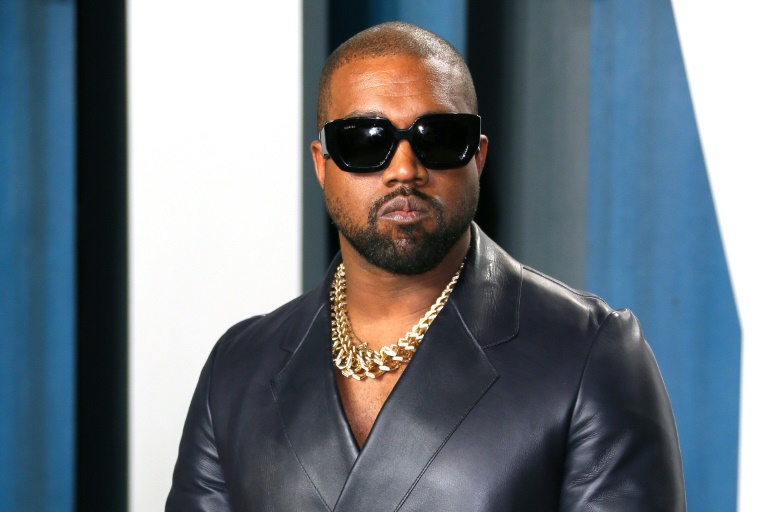
Kanye West declared his “love” of Nazis and admiration for Adolf Hitler on Thursday, sparking outrage as another commercial partner announced it was splitting from the troubled superstar.

In an extraordinary hours-long appearance on Infowars, the show fronted by conspiracy theorist Alex Jones, West — now known as Ye — wore a black mask completely covering his face, as he ranted about sin, pornography and the devil.

“I like Hitler,” West said several times.

Even though West hid his face — the mask had neither eye nor mouth slits — there seemed no doubt it was him. Jones addressed him as West as they spoke, Infowars billed the interview as being with West, and at one point Jones took West’s cellphone and posted a tweet on his account that appeared in real time.

West, who has hinted he is running for US president in 2024, has spoken openly about his struggles with mental illness, but his erratic behavior has continued to raise concerns.

The rapper-businessman has seen his commercial relationships crumble after a series of anti-Semitic comments, as the one-time titan of fashion and music appears to have entered a disturbing spiral.

In his lengthy appearance on the Infowars livestream, West opened the throttle, drawing shocked laughter and even disagreement from far-right host Jones.

“I see good things about Hitler also,” he told Jones.

“This guy… invented highways, invented the very microphone that I used as a musician, you can’t say out loud that this person ever did anything good, and I’m done with that.”

Hitler did not invent either of those things.

“I’m done with the classification, every human being has something of value that they brought to the table, especially Hitler.

“I like Hitler.”

– ‘I love Nazis’ –

Jones, a serial provocateur who has been ordered to pay hundreds of millions of dollars in damages for claiming one of America’s deadliest school shootings was a “hoax,” interjected that “the Nazis were thugs and did really bad things.”

West did not back down.

“But they did good things too. We gotta stop dissing the Nazis all the time… I love Nazis,” West said.

Hours after the astonishing performance, social media platform Parler, a favorite of conservatives for its hands-off approach to moderation, said a deal for West to buy the outfit was off.

“Parlement Technologies would like to confirm that the company has mutually agreed with Ye to terminate the intent of sale of Parler,” the network said on Twitter. 

“This decision was made in the interest of both parties in mid-November.”

In October, German sportswear giant Adidas severed its lucrative tie-up with West after the star made anti-Semitic statements, including threatening to “go death con 3 on JEWISH PEOPLE,” using a misspelled reference to US military readiness.

Paris fashion house Balenciaga and US clothing retailer Gap have also ended ties with West, who appeared at a Paris fashion show wearing a shirt with the slogan “White Lives Matter,” a rebuke to the Black Lives Matter racial equality movement.

– Fuentes –

West appeared on the Jones program with Nick Fuentes, the same white supremacist with whom West had dinner last week with Donald Trump at the former president’s Florida estate, in a meeting that provoked outrage.

Thursday’s livestream sparked immediate condemnation from the Republican Jewish Coalition, which dubbed the three men “a disgusting triumvirate of conspiracy theorists, Holocaust deniers, and anti-Semites.”

“Given his praise of Hitler, it can’t be overstated that Kanye West is a vile, repellent bigot who has targeted the Jewish community with threats and Nazi-style defamation,” a statement from the group said.

“Conservatives who have mistakenly indulged Kanye West must make it clear that he is a pariah. Enough is enough.”
Supreme Court to rule on Biden's student debt cancellation

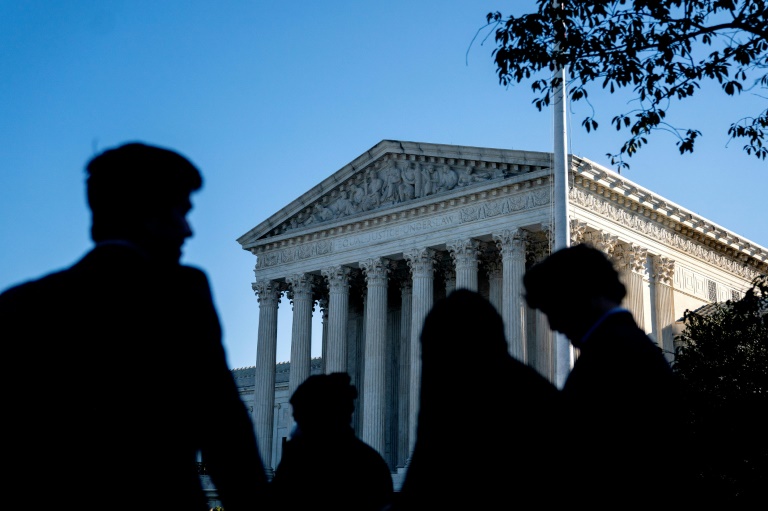
The Supreme Court agreed Thursday to rule on the legality of President Joe Biden’s landmark effort to cancel hundreds of millions of dollars in US student debt.

The court will hear the case in February or March, according to a short statement it posted online. 

In the meantime, it declined to lift a lower court ruling that has put the policy on hold for now. 

The Democratic president, who has posed the measure as a boost for the middle class, announced in August that the federal government would forgive a huge portion of the often-crushing student debt held by Americans, erasing up to $20,000 per person. 

In total, some 45 million borrowers nationwide owe a collective $1.6 trillion, according to the White House.

The plan, which would cost an estimated $400 million, was immediately challenged in court by several conservative states, which called the move an abuse of power ahead of the midterm elections.

Last month, a federal appeals court blocked the measure, and current and former college and university students who had already begun to apply for the relief were told their claims were on hold pending legal action. 

The White House then asked the Supreme Court to take up the case, in hopes it would overturn the previous decision. 

At the same time, the administration once again extended until June a moratorium on student debt payments, which was originally implemented at the start of the Covid-19 pandemic.

The White House welcomed the court’s decision to take up the case.

“This program is necessary to help over 40 million eligible Americans struggling under the burden of student loan debt recover from the pandemic and move forward with their lives,” press secretary Karine Jean-Pierre said.

“President Biden will keep fighting against efforts to rob middle class families of the relief they need and deserve,” she said.

Dollar falls after Federal Reserve shift in tone, stocks mixed

The dollar continued to retreat Thursday on shifting expectations for US monetary policy, while global stocks finished mixed after digesting data showing record low eurozone unemployment and a moderation in US inflation.

The greenback fell decisively against the euro and other major currencies, a day after Federal Reserve Chair Jerome Powell signaled a pivot in monetary policy away from ultra-aggressive interest rate hikes to counter inflation.

Powell said Wednesday the US central bank could slow the pace of interest rate increases as soon as at its December meeting. 

“Still-too-hot inflation has the Fed on track to further raise rates. But the pace of increases could slow as soon as this month,” said Convera’s Joe Manimbo.

“A less hawkish outlook for Fed policy has left the dollar increasingly vulnerable as its big rate increases helped fuel its surge to two-decade highs.”

A day after Powell’s remarks spurred a dramatic rally on Wall Street, US indices finished mixed, with the Dow declining and the Nasdaq eking out a gain.

The personal consumption expenditures price index — a closely-watched inflation benchmark — rose 6.0 percent from a year ago in October, down from a larger jump the month before, Commerce Department figures showed. 

But a survey of US manufacturers showed the sector contracted in November for the first time since mid-2020.

The manufacturing report adds to “festering growth concerns,” said Briefing.com analyst Patrick O’Hare, who nonetheless was encouraged by the market’s steady performance after Wednesday’s big rally.

Investors are looking ahead to Friday’s employment report, which analysts expect will show the US economy added 200,000 jobs in November and that unemployment held steady at 3.7 percent.

– Record-low eurozone unemployment –

Earlier, bourses in Paris and Frankfurt both advanced after the EU’s Eurostat office estimated eurozone unemployment at a record low of 6.5 percent in October.

Recession expectations remain high in Europe. 

Inflation is running hot, despite falling back in the latest reading on Wednesday at 10 percent — above the European Central Bank’s two-percent target — largely because of high energy prices spurred by the fallout of Russia’s war in Ukraine.

The European Central Bank will pore over the latest indicators as it walks a tightrope between raising interest rates to combat inflation and the risk of tipping the economy into a deep recession.

An analysis note from ING bank said the unemployment data showed “the labor market remains resilient despite the slowing economy.”

It added that it expected the ECB to remain “on high alert in its fight against inflation.”

In Asia, Hong Kong extended gains into a third day, with tech giants including Alibaba and Tencent tracking massive increases in their US-listed stock, while Shanghai was also up.

Equities were helped by signs that China is edging towards a more pragmatic approach to fighting the coronavirus, having hammered the economy with its strict zero-Covid strategy of snap lockdowns and mass testing.

After widespread unrest against the measures — and calls for more political freedoms — authorities announced moves aimed at loosening some restrictions.

– Key figures around 2145 GMT –

New York – Dow: DOWN 0.6 percent at 34,395.01 (close)

New York – S&P 500: DOWN 0.1 percent at 4,076.57 (close)

New York – Nasdaq: UP 0.1 percent at 11,482.45 (close)

London – FTSE 100: DOWN 0.2 percent at 7,558.49 (close)

Frankfurt – DAX: UP 0.7 percent at 14,490.30 (close)

Paris – CAC 40: UP 0.2 percent at 6,753.97 (close)

EURO STOXX 50: UP 0.5 percent at 3,984.50 (close)

Tokyo – Nikkei 225: UP 0.9 percent at 28,226.08 (close)

Hong Kong – Hang Seng Index: UP 0.8 percent at 18,736.44 (close)

Shanghai – Composite: UP 0.5 percent at 3,165.47 (close)

Euro/dollar: UP at $1.0529 from $1.0406 on Wednesday

Dollar/yen: DOWN at 135.34 yen from 138.07 yen

Pound/dollar: UP at $1.2251 from $1.2058

Euro/pound: DOWN at 85.91 pence from 86.30 pence

Brent North Sea crude: DOWN 0.1 percent at $86.88 per barrel

West Texas Intermediate: UP 0.8 percent at $81.22 per barrel

burs-jmb/bys

US Congress approves bill to avert major freight rail strike

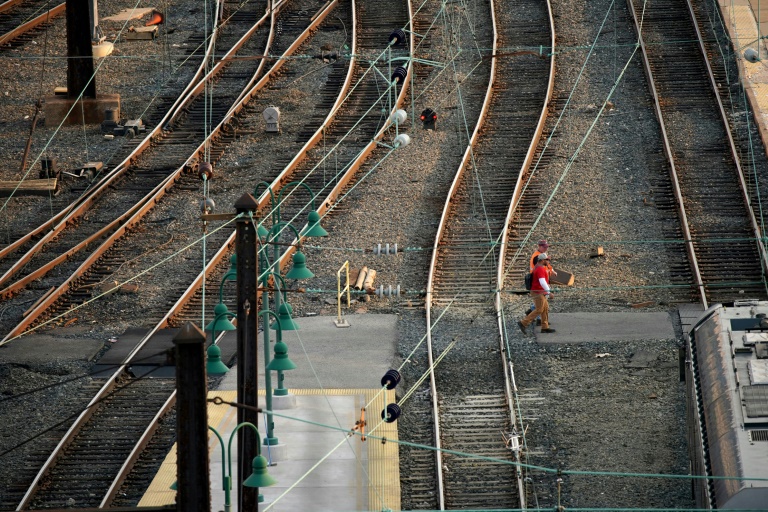
The US Congress passed legislation Thursday to avert a freight rail strike that could have been devastating for the economy, intervening to break an impasse between workers and management as the holiday season approaches.

The bill, overwhelmingly approved by the Senate Thursday after passing with a bipartisan majority in the House of Representatives a day earlier, effectively forces hold-out unions to accept a deal on higher wages, to which a majority of unions already agreed.

After the 80-15 Senate vote, the measure now heads to President Joe Biden for his signature.

Under a 1926 law, Congress is empowered to resolve disputes between railroads and labor unions as part of its power to regulate commerce.

“Working together, we have spared this country a Christmas catastrophe in our grocery stores, in our workplaces, and in our communities,” said Biden in a statement after the vote.

While he expressed “reluctance” to override union ratification procedures, “in this case, the consequences of a shutdown were just too great,” he added.

A strike would have seen almost 7,000 freight trains come to a halt, costing more than $2 billion a day, according to the American Association of Railroads.

Biden’s administration had taken a hands-on approach to the long-running deadlock over a contract between organized labor and railroads, with cabinet secretaries in September taking part in all-night negotiations alongside union leaders and rail executives.

After the lengthy session, leaders from both sides announced a tentative agreement.

But since then, members of eight of the 12 rail unions approved the deal, while four voted it down.

While the House earlier backed a separate measure to add mandated paid sick time to the agreement, addressing a major sticking point identified by unions, this did not pass in the Senate on Thursday.

The Senate also failed to approve an amendment for a cooling-off period between workers and management.

But Biden told reporters Thursday that he “negotiated a contract no one else could negotiate.”

“We’re going to avoid the rail strike, keep the rails running, keep things moving,” he added, at a news conference with French President Emmanuel Macron.

– ‘Horrific’ –

But Sean O’Brien, general president of the Teamsters union, said in a tweet that it was “horrific” there were not 60 senators willing to fight for rail workers’ basic rights, referring to the outcome on the sick days measure.

Meanwhile, the Brotherhood of Railroad Signalmen added that “the actions of many today demonstrated they are for the corporate class,” despite elected members of Congress campaigning on supporting workers.

“The dereliction of duty and inability to hold corporations accountable for a lack of good faith to their employees will not be forgotten,” the union said in a statement.

The agreement includes a 24 percent pay increase for workers. However, critics in organized labor had slammed a lack of guaranteed paid sick leave, an omission seen as evidence of “unchecked corporate greed,” as one leading union put it.

The failure of the agreement to win universal approval among unions had set the stage for a potential strike on December 9.

And the prospect of rail paralysis presented a major political risk for Biden, whose administration is already grappling with decades-high inflation and risks of a slowing economy.

A freight freeze would also have impacted passenger service because some passenger trains run on tracks owned by freight companies.

“I made it really clear. I’m going to continue to fight for paid leave for not only rail workers, but for all American workers,” Biden said Thursday.

While noting “significant” gains in the agreement, the Association of American Railroads conceded in a statement that there remains “more to be done” to address workers’ work-life balance concerns.

The National Retail Federation said it was “grateful for the swift action in Congress this week” to implement the tentative agreement, and that a nationwide rail strike would have had “devastating” economic consequences.

US Congress approves bill to avert major freight rail strike

The US Congress passed legislation Thursday to avert a freight rail strike that could have been devastating for the economy, intervening to break an impasse between workers and management as the holiday season approaches.

The bill, overwhelmingly approved by the Senate Thursday after passing with a bipartisan majority in the House of Representatives a day earlier, effectively forces hold-out unions to accept a deal on higher wages, to which a majority of unions already agreed.

After the 80-15 Senate vote, the measure now heads to President Joe Biden for his signature.

Under a 1926 law, Congress is empowered to resolve disputes between railroads and labor unions as part of its power to regulate commerce.

“Working together, we have spared this country a Christmas catastrophe in our grocery stores, in our workplaces, and in our communities,” said Biden in a statement after the vote.

While he expressed “reluctance” to override union ratification procedures, “in this case, the consequences of a shutdown were just too great,” he added.

A strike would have seen almost 7,000 freight trains come to a halt, costing more than $2 billion a day, according to the American Association of Railroads.

Biden’s administration had taken a hands-on approach to the long-running deadlock over a contract between organized labor and railroads, with cabinet secretaries in September taking part in all-night negotiations alongside union leaders and rail executives.

After the lengthy session, leaders from both sides announced a tentative agreement.

But since then, members of eight of the 12 rail unions approved the deal, while four voted it down.

While the House earlier backed a separate measure to add mandated paid sick time to the agreement, addressing a major sticking point identified by unions, this did not pass in the Senate on Thursday.

The Senate also failed to approve an amendment for a cooling-off period between workers and management.

But Biden told reporters Thursday that he “negotiated a contract no one else could negotiate.”

“We’re going to avoid the rail strike, keep the rails running, keep things moving,” he added, at a news conference with French President Emmanuel Macron.

– ‘Horrific’ –

But Sean O’Brien, general president of the Teamsters union, said in a tweet that it was “horrific” there were not 60 senators willing to fight for rail workers’ basic rights, referring to the outcome on the sick days measure.

Meanwhile, the Brotherhood of Railroad Signalmen added that “the actions of many today demonstrated they are for the corporate class,” despite elected members of Congress campaigning on supporting workers.

“The dereliction of duty and inability to hold corporations accountable for a lack of good faith to their employees will not be forgotten,” the union said in a statement.

The agreement includes a 24 percent pay increase for workers. However, critics in organized labor had slammed a lack of guaranteed paid sick leave, an omission seen as evidence of “unchecked corporate greed,” as one leading union put it.

The failure of the agreement to win universal approval among unions had set the stage for a potential strike on December 9.

And the prospect of rail paralysis presented a major political risk for Biden, whose administration is already grappling with decades-high inflation and risks of a slowing economy.

A freight freeze would also have impacted passenger service because some passenger trains run on tracks owned by freight companies.

“I made it really clear. I’m going to continue to fight for paid leave for not only rail workers, but for all American workers,” Biden said Thursday.

While noting “significant” gains in the agreement, the Association of American Railroads conceded in a statement that there remains “more to be done” to address workers’ work-life balance concerns.

The National Retail Federation said it was “grateful for the swift action in Congress this week” to implement the tentative agreement, and that a nationwide rail strike would have had “devastating” economic consequences.

US Congress approves bill to avert major freight rail strike

The US Congress passed legislation Thursday to avert a freight rail strike that could have been devastating for the economy, intervening to break an impasse between workers and management as the holiday season approaches.

The bill, overwhelmingly approved by the Senate Thursday after passing with a bipartisan majority in the House of Representatives a day earlier, effectively forces hold-out unions to accept a deal on higher wages, to which a majority of unions already agreed.

After the 80-15 Senate vote, the measure now heads to President Joe Biden for his signature.

Under a 1926 law, Congress is empowered to resolve disputes between railroads and labor unions as part of its power to regulate commerce.

“Working together, we have spared this country a Christmas catastrophe in our grocery stores, in our workplaces, and in our communities,” said Biden in a statement after the vote.

While he expressed “reluctance” to override union ratification procedures, “in this case, the consequences of a shutdown were just too great,” he added.

A strike would have seen almost 7,000 freight trains come to a halt, costing more than $2 billion a day, according to the American Association of Railroads.

Biden’s administration had taken a hands-on approach to the long-running deadlock over a contract between organized labor and railroads, with cabinet secretaries in September taking part in all-night negotiations alongside union leaders and rail executives.

After the lengthy session, leaders from both sides announced a tentative agreement.

But since then, members of eight of the 12 rail unions approved the deal, while four voted it down.

While the House earlier backed a separate measure to add mandated paid sick time to the agreement, addressing a major sticking point identified by unions, this did not pass in the Senate on Thursday.

The Senate also failed to approve an amendment for a cooling-off period between workers and management.

But Biden told reporters Thursday that he “negotiated a contract no one else could negotiate.”

“We’re going to avoid the rail strike, keep the rails running, keep things moving,” he added, at a news conference with French President Emmanuel Macron.

– ‘Horrific’ –

But Sean O’Brien, general president of the Teamsters union, said in a tweet that it was “horrific” there were not 60 senators willing to fight for rail workers’ basic rights, referring to the outcome on the sick days measure.

Meanwhile, the Brotherhood of Railroad Signalmen added that “the actions of many today demonstrated they are for the corporate class,” despite elected members of Congress campaigning on supporting workers.

“The dereliction of duty and inability to hold corporations accountable for a lack of good faith to their employees will not be forgotten,” the union said in a statement.

The agreement includes a 24 percent pay increase for workers. However, critics in organized labor had slammed a lack of guaranteed paid sick leave, an omission seen as evidence of “unchecked corporate greed,” as one leading union put it.

The failure of the agreement to win universal approval among unions had set the stage for a potential strike on December 9.

And the prospect of rail paralysis presented a major political risk for Biden, whose administration is already grappling with decades-high inflation and risks of a slowing economy.

A freight freeze would also have impacted passenger service because some passenger trains run on tracks owned by freight companies.

“I made it really clear. I’m going to continue to fight for paid leave for not only rail workers, but for all American workers,” Biden said Thursday.

While noting “significant” gains in the agreement, the Association of American Railroads conceded in a statement that there remains “more to be done” to address workers’ work-life balance concerns.

The National Retail Federation said it was “grateful for the swift action in Congress this week” to implement the tentative agreement, and that a nationwide rail strike would have had “devastating” economic consequences.

Le bromance breaks out at Biden-Macron state visit

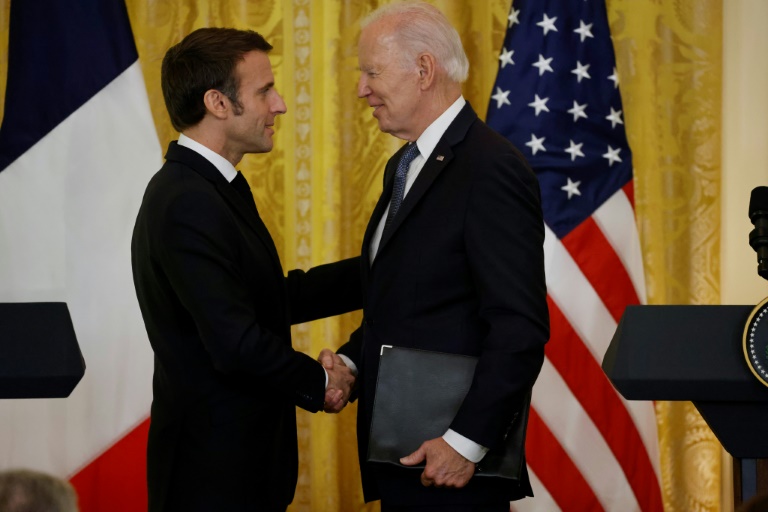
Between the hugs, hand clasps, compliments and musings over love, it’s safe to say that Joe Biden and Emmanuel Macron cemented le bromance Thursday.

This was a state visit with all the pomp and ceremony that the White House can muster.

Soldiers, airmen, more soldiers but wearing 18th century uniforms, complicated exchanges of presidential gifts, red carpets, and 200 live lobsters making the voyage from Maine to be eaten at a sumptuous dinner — they all played their roles.

But at the heart of the diplomatic razzmatazz were just two men in dark suits: 80-year-old Biden and his French guest, 44-year-old Macron.

And the clear verdict after hours together, including nearly two hours sitting by the cozy fireplace in the Oval Office, was that this duo really appreciate each other.

First, the body language.

Presidential handshakes in front of the media at the start of summits are a staple of news photography — the “grip-and-grin” shot.

But Biden and Macron didn’t just shake hands.

They hugged. They took turns putting a hand on each other’s shoulder or in the small of the back while walking along. Throughout one especially prolonged hand clasp, Macron gazed right at his host, while Biden looked out sideways, over the arrayed journalists.

Their words were no less warm.

Asked why he’d invited Macron before any other foreign leader for the first state visit of his presidency, Biden answered without hesitation: “Because he’s my friend.”

Macron, a short while later, echoed: “Joe Biden has also become a friend.”

And Biden made clear that his admiration goes well beyond the personal, saying “Emmanuel is not just the leader of France — he’s one of the leaders of Europe.” Macron, he said, is “very, very commanding in Europe.”

Not to be outdone, Macron took a compliment from the elder US statesman and batted it right back.

“Dear Joe, you elegantly thanked France for the role we played in the historical agreement between Israel and Lebanon,” Macron said, referring to a recent deal to demarcate the sea border between the two countries.

“Let me be honest: I think most of the work was yours.”

But Biden batted the same compliment back yet again.

“Well, thank you Emmanuel. I began to refer to you in private as my ‘closer,’ of that deal with Lebanon and Israel. We did negotiate, but we needed a closer to get the job done, and you did it.”

The joint press conference saw Macron slipping seamlessly, while talking in French, from the stiffly formal “vous” to the familiar, friendly “tu” to say “you” to Biden.

Caught up in the atmosphere, a French journalist got right to the point, framing the day’s complex geopolitical and trade issues in terms more appropriate to a romantic movie set in Paris.

“In French, President Biden, we say there is no love, there is only proof of love,” the reporter said. “Do you feel that your French friend will go home very much reassured?”

Macron answered, at length, saying “we’re not here simply, really, to ask for proof of love. We came here to agree on the strategy, to clarify.”

“I’m going home confident, as well as lucid, as to what remains to be done on the European side.”

And Biden said just: “I’m confident.”

Laughter rippled through the room. Smiling, Biden followed up:

“That’s my answer.”

US, France vow to settle spat over green industry subsidies

President Joe Biden said Thursday US support for green industry was not intended to be at Europe’s expense as he and French leader Emmanuel Macron pledged to surmount a serious transatlantic trade dispute.

Speaking after summit talks at the White House, both stressed cooperation amid European Union concern that Biden’s landmark Inflation Reduction Act (IRA) was anti-competitive and would cost European jobs, especially in the energy and auto sectors.

“We agreed to discuss practical steps to coordinate and align our approaches so that we can strengthen and secure the supply chains, manufacturing and innovation on both sides of the Atlantic,” Biden said in a joint news conference.

Biden said he would not apologize for the $430 billion IRA passed in August that largely focuses investments and investment support on climate and social spending. 

But he said the IRA was never intended to disadvantage any US allies.

Instead, it aimed at strengthening industrial supply chains together with partners like Europe to protect against the kind of economic vulnerabilities that surfaced during the Covid-19 pandemic and the war in Ukraine.

“The essence of it is, we’re going to make sure that the United States continues — and just as I hope Europe will be able to continue — not to have to rely on anybody else’s supply chain,” Biden said.

“We are our own supply chain. And we share that with Europe and all of our allies, and they will in fact have the opportunity to do the same thing,” Biden said.

He admitted the legislation is so large and complicated that it unavoidably has “glitches” that need to be worked out.

“My point is, we’re back in business, Europe is back in business. And we’re going to continue to create manufacturing jobs in America, but not at the expense of Europe,” he pledged.

– ‘Resynchronize’ –

Macron acknowledged that the IRA goal of creating jobs and advancing the transition to green energy was “a common objective” shared by Europe.

He said that the IRA’s subsidies for US industry threatened to hurt European businesses, and that a central issue of his talks with Biden was how to “resynchronize” and work together with similar strategies.

After meetings with Biden and members of the US Congress, Macron said he felt that they had the same intent.

“We want to succeed together — not against each other,” Macron said.

“We Europeans need to move faster and stronger to have the same ambition.”

But the two gave no sign of whether they agreed on specific measures.

In early November, EU Internal Market Commissioner Thierry Breton threatened to appeal to the World Trade Organization and consider “retaliatory measures” if the United States did not reverse its subsidies.

The two sides will address specific issues in a meeting on December 5 of the  EU-US Trade and Technology Council.

All churned up: Austrian oat milk ad draws farmers' ire

Austrian farmers were left fuming after an advert for winter tourism featured oat — instead of cow’s — milk, in what industry representatives sourly slammed as an “affront to Tyrolean farmers”.

The commercial was to promote Austria’s western Tyrol region, renowned for its rolling pastures and rugged peaks that are a magnet for winter sports lovers.

In the ad, a hairy, horned mythical figure called “Percht” — known for driving out winters in Alpine folklore — is invited into a Tyrolean mountain hut for a warming drink after returning a young girl’s glove that he found in the snow.

But it is the next scene that had farmers in a froth — when the “Percht” creature orders a “latte macchiato with oat milk”.

“It can’t be that a promotional video for Tyrol features ‘oat milk’ and not the very own, genuine Tyrolean milk,” Josef Hechenberger, president of the Tyrolean Chamber of Agriculture said in a statement.

The ad is an “affront to Tyrolean farmers”, he added. 

Another regional Chamber of Agriculture and the Tyrolean Farmers’ Union had also voiced complaints, arguing that dairy-related names such as “oat milk” were banned by the European Union in adverts because they do not contain dairy products. 

The uproar led to the advert which runs just over one minute long being pulled.

Tourism marketing organisation Tirol Werbung that commissioned the promotional video said the aim was to portray local hospitality and open-mindedness.

But it acknowledged that the underlying message that every preference and lifestyle is welcome in Tyrol had been lost on some viewers.

The ad called “Come as you are — in Tyrol everybody is welcome” was originally designed to cater to “modern, urban” clientele, for whom “climate protection is important” and who might be lactose-intolerant, Tirol Werbung’s communications chief Patricio Hetfleisch told AFP Thursday.

The punchline was that “every lifestyle and each preference, ranging from gender to food” would be welcomed with hospitality in Tyrol, Hetfleisch said. 

“Obviously the punchline could not be decoded by some,” he added.

The commercial only aired for around 10 days before being suspended earlier this week due to criticism, Hetfleisch said.

Hashtags and memes surrounding the row are still trending in Austria.

It was originally shot in 2019 and produced by a Berlin-based creative film production agency.  

Oh rats! New York seeks 'bloodthirsty' rodent czar

If you are “somewhat bloodthirsty” and willing to consider “wholesale slaughter” of vermin then you might be the ideal candidate to become New York City’s new rat czar.

Mayor Eric Adams’s administration on Wednesday posted the job listing for Director of Rodent Mitigation, a position that pays between $120,000 and $170,000 a year.

“Do you have what it takes to do the impossible?” asks the ad, which seeks someone with a “virulent vehemence for vermin” and a “general aura of badassery.”

A bachelor’s degree is a must, as is experience in urban planning, project management or government, and proficiency in spreadsheets.

But above all the successful candidate must possess “the drive, determination and killer instinct needed to fight the real enemy — New York City’s relentless rat population.”

Rats are one of the more unappealing aspects of life in America’s largest metropolis, often seen scurrying between subway tracks and sniffing around garbage bags.

Legend has it that there are as many rats as humans — around nine million — although that figure has been debunked as a myth by a local statistician.

English novelist Charles Dickens complained about the rodents when he visited New York in 1842. 

And a rat shot to internet stardom in 2015 when it was filmed walking down the stairs of a subway station with a slice of pizza in its mouth.

City officials have spent millions of dollars trying to cull the rat population over the years, deploying everything from rodent birth control to vermin-proof trash cans.

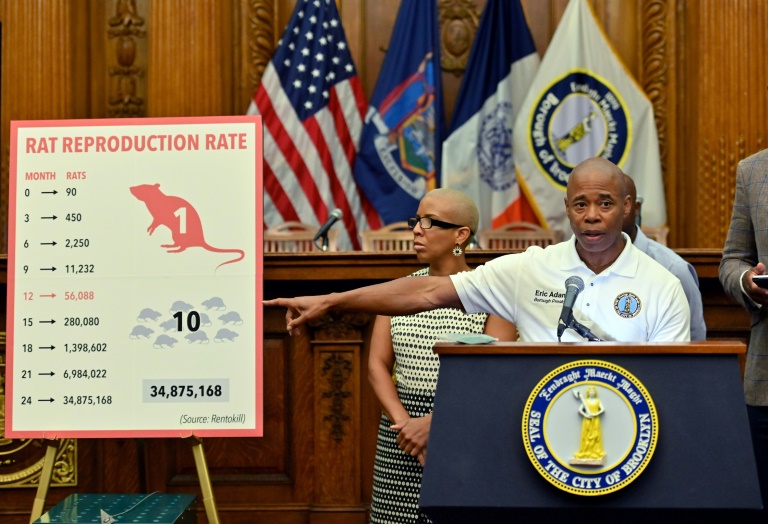
During a stomach-turning presentation in 2019, Adams, then Brooklyn borough president, unveiled a machine that drowned the rats in a pool of alcohol-based liquid.

The city also runs a “Rat Academy,” where local residents can learn rodent prevention methods. 

The rats continue to run rampant, however.

Between January and September this year, more than 21,500 sightings were reported to the city’s hotline, up from around 18,000 for the same period last year, according to local reports.

“There’s NOTHING I hate more than rats,” Mayor Adams tweeted Thursday, adding that for someone “your dream job awaits.”

Close Bitnami banner
Bitnami