US Business

200 fishermen rescued from drifting ice in US lake

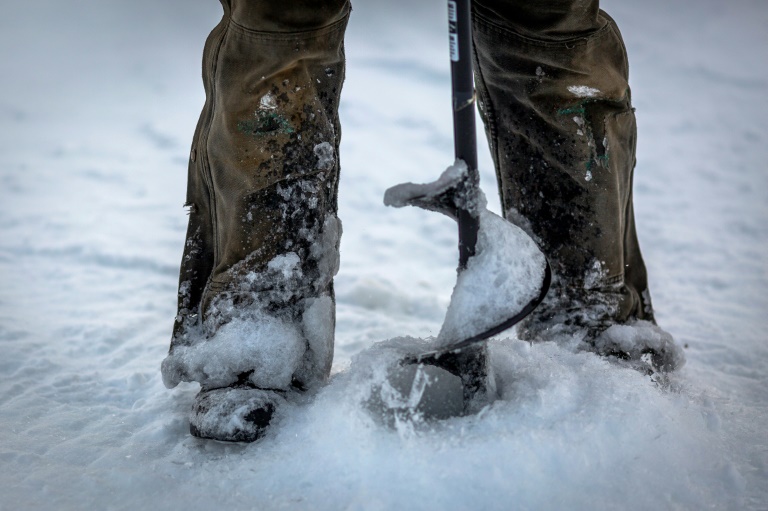
About 200 early-season ice fishers were caught by surprise and stranded in a Minnesota lake when the frozen slab under their feet broke free and drifted into open water — triggering a complex rescue operation.

A member of the group called emergency services Monday when they realized the people ice fishing — a popular winter sport in the northern US state known as the Land of 10,000 Lakes — were slowly drifting away from the shoreline of Upper Red Lake, local police said on Facebook. 

“The Beltrami County Sheriff’s Office and other first responders arrived on scene and discovered a large portion of the ice with up to 30 yards (27 meters) of open water stranding the fishermen,” Chief Deputy Jarrett Walton said in a statement.

Some of the group had not even realized the ice floe had snapped free. But “due to the urgent nature of getting people off the ice,” Beltrami County sent out an alert to the fishermen’s cellphones to notify them they would soon be rescued in an emergency evacuation.

The alert “allowed notifications to be sent to cell phones of those who are not enrolled in the local notification system and provided GPS coordinates of the evacuation site,” the sheriff’s department said. 

It took over three hours to complete the evacuate from the ice.

“A number of apparatus were deployed including airboats, water rescue boats, ATVs, drones and a temporary bridge,” the sheriff’s department said.

It also warned other local fisherman to use “extreme caution” on unsteady ice.

“The Beltrami County Sheriff’s Office reminds those who are thinking of heading on the ice that early season ice is very unpredictable,” the statement said.

China warns of 'crackdown' after major protests

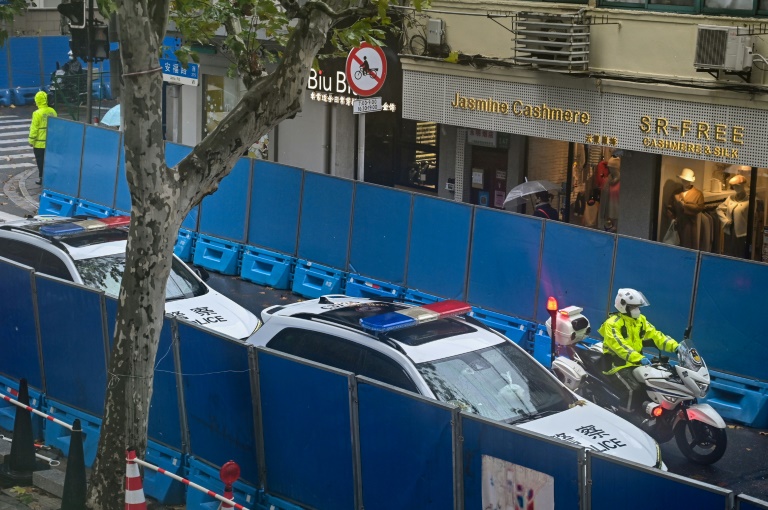
China’s top security body called for a “crackdown” against “hostile forces” on Tuesday, after a weekend of protests in major cities opposing Covid lockdowns and demanding greater political freedoms.

The stark warning came after security services were out in force across China following demonstrations not seen in decades, as anger over unrelenting lockdowns fuelled deep-rooted frustration with the political system.

A deadly fire last week in Urumqi, the capital of the northwestern region of Xinjiang, was the catalyst for the outrage, with protesters taking to the streets in cities around China. 

The demonstrators said Covid-19 restrictions were to blame for hampering rescue efforts in Urumqi, claims the government swiftly denied.

China is the world’s last major economy still wedded to a zero-Covid policy, which compels local governments to impose snap lockdowns and quarantine orders, and limit freedom of movement in response to minor outbreaks.

Anger over the lockdowns has widened to calls for political change, with protesters holding up blank sheets of paper to symbolise the pervasive censorship to which the world’s most populous country is subjected.

On Tuesday, the ruling Communist Party’s Central Political and Legal Affairs Commission called for a “crackdown” on what it described as “hostile forces” — a possible warning to the protesters, which the readout published in state news agency Xinhua did not mention directly.

The body —  which oversees all domestic law enforcement in China — also agreed at its meeting that it was time to “crack down on illegal criminal acts that disrupt social order” as well as “safeguard overall social stability.”

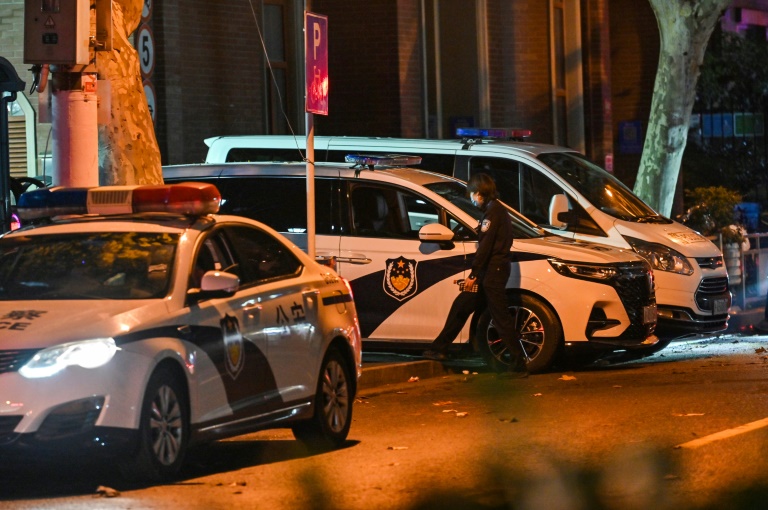
The warning came after a heavy police presence across cities on Monday and Tuesday appeared to have quelled protests for the time being.

In another sign of the government’s zero-tolerance of dissent, people who had attended weekend rallies in the Chinese capital told AFP on Monday they had received phone calls from law enforcement officers demanding information about their movements.

– ‘Liberty or death’ –

On Tuesday hundreds of officers appeared to have been drawn back from the streets of a rain-drenched Shanghai, where weekend protests had seen bold calls for the resignation of President Xi Jinping, an AFP reporter said.

A broad effort by police to stop passersby taking pictures of the site of the protest also appeared to have been tapered down, the reporter added, with one officer telling AFP that it “depends on the nature of the photo” but that there was no blanket ban in place.

In Beijing, AFP reporters saw a few marked and unmarked police vehicles but no sign of protesters at an intersection near the Asian Games Village, where a demonstration had been planned for Tuesday night. 

Freezing temperatures of minus nine degrees Celsius (15.8 degrees Fahrenheit) likely also kept protesters away.

Some rallies did go ahead elsewhere on Monday and Tuesday, however. 

At Hong Kong’s oldest university, over a dozen people led the crowd Tuesday in chanting slogans such as “give me liberty or give me death”. 

“We are not foreign forces, we are Chinese citizens. China should have different voices,” one woman shouted, while another held a placard mourning victims of the Urumqi fire. 

In Hangzhou, just over 170 kilometres (105 miles) southwest of Shanghai, there was heavy security and sporadic protests in the city’s downtown on Monday night. 

“The atmosphere was disorderly. There were few people and we were separated. There were lots of police, it was chaos,” she said.

– ‘Many died in vain’ –

China’s strict control of information and continued travel curbs have made verifying protester numbers across the vast country challenging.

But the widespread rallies seen over the weekend are exceptionally rare in China, with authorities harshly clamping down on all opposition to the central government.

US President Joe Biden is monitoring the unrest, the White House said Monday.

US Secretary of State Antony Blinken said Tuesday that Washington’s position was “the same everywhere”, and that was to “support the right of people everywhere, to peacefully protest to make known their views, their concerns, and their frustrations”.

Solidarity protests have meanwhile mushroomed around the world.

“Officials are borrowing the pretext of Covid, but using excessively strict lockdowns to control China’s population,” said one 21-year-old Chinese protester in Washington, who gave only his surname, Chen.

“They disregarded human lives and caused many to die in vain,” he told AFP.

– Vaccination drive –

While China’s leaders are committed to zero-Covid, there have been some signs that central authorities may be seeking a path out of the rigid policy.

China’s National Health Commission (NHC) announced on Tuesday a renewed effort to expand low vaccination rates among the elderly — long seen as a key obstacle to relaxing the measures.

Many fear that opening the country up while swaths of the population remain not fully immunised could overwhelm China’s healthcare system and cause more than a million deaths.

Just 65.8 percent of people over 80 are fully vaccinated, NHC officials told a news conference.

China has also not yet approved mRNA vaccines, which are proven to be more effective, for public use.

The NHC also said local efforts “inconsistent with national policies” had caused a “great impact on people’s work and life”, and warned that “those who cause serious consequences will be held accountable in accordance with laws and regulation”.

However, it did not suggest a change in policy was imminent.

bur-bys-hol-reb/oho/ser

Uranium-rich Niger struggles despite nuclear resurgence

Prospects for the world’s nuclear industry have been boosted by the war in Ukraine and mounting hostility towards climate-wrecking fossil fuels — but Niger, one of the world’s biggest sources of uranium, has yet to feel the improvement.

The deeply impoverished landlocked Sahel state is a major supplier of uranium to the European Union, accounting for a fifth of its supplies, and is especially important to France, its former colonial power. 

But its mining industry is in the doldrums.

“Over the past few years, the uranium industry worldwide has been marked by a trend of continuously falling prices,” Mining Minister Yacouba Hadizatou Ousseini told AFP in an interview.

She blamed “pressure from ecologists” after the 2011 Fukushima nuclear accident in Japan, but also the emergence of “particularly rich deposits” of uranium in Canada for depressing the market.

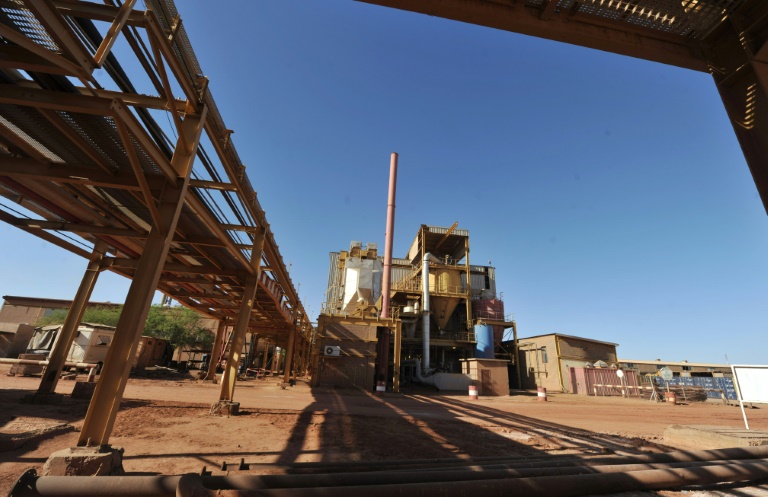
A concrete example of Niger’s problems can be found in its vast mine at Imouraren, which experts had said would yield 5,000 tonnes of ore for 35 years, but which has been closed since 2014.

“Mining at… Imouraren, which is one of the world’s largest uranium deposits, will get underway as soon as market conditions permit,” French miner Orano, which has the operating licence, says on its website.

Orano, previously known as Areva, has two subsidiaries in Niger.

Last year, its offshoot Cominak wound up activities at a mine in the desert region of Arlit which had been operating since the 1970s after commercially exploitable deposits of uranium ore ran out.

Production at a second site in Arlit by its other subsidiary Somair was 2,000 tonnes in 2021, compared with 3,000 tonnes nine years earlier.

– Grounds for optimism –

But there is good news, too, for the sector.

Prices have recently been on the upward track over the past two years. At around $50 a pound (half a kilo), they are double the price of six years ago, although still way off the record of $140 per pound, reached during a spike in 2007.

“Prices are low compared to production costs. Many mines have closed because of that,” a French uranium expert told AFP.

“But a slow improvement is underway. In the long term, there will be major demand, especially for power stations in Russia or China,” the specialist said, asking not to be identified.

This explains why foreign miners — from Australia, Britain, Canada, China, India, Italy, Russia and the United States — have been knocking on Niger’s door.

“There are 31 current authorisations for uranium prospecting, and 11 permits to mine uranium,” the minister said.

On November 5, the Canadian company Global Atomic Corporation began the symbolic start of uranium extraction at a site about 100 kilometres (60 miles) south of Arlit.

It has promised to invest 121 billion CFA francs (around $185 million) there next year.

“(Niger’s) uranium… is open to those who have the technological capacity to exploit it,” Nigerien President Mohamed Bazoum said last year.

“There is a future for uranium in Niger, but not necessarily with France,” the French expert said.

– Tensions with France –

Niger’s open-doors policy today contrasts with the half-century entwinement it previously had with France — a once-cosy relationship that suffered from repeated rows out about pricing.

In 2007, former president Mamadou Tandja successfully fought for a 40-percent increase in price for uranium paid by Areva.

His successor, Mahamadou Issoufou — a former Areva employee — once voiced indignation that his country earned so little from uranium, even though it was the fourth biggest producer in the world at the time.

In 2014, Areva and Niger signed a deal, after 18 months of negotiations, that set down improved conditions for Niger through operations at the Imouraren mine.

Those benefits are still awaited, as the huge mine is closed.

“There’s no win-win partnership. Niger has had no benefit from uranium mining,” said Ali Idrissa, coordinator of a coalition of campaign groups called the Nigerien Network of Organisations for Budget Transparency and Analysis.

Uranium “has brought us only (landscape) desolation… and all the profits went to France,” said Nigerien specialist Tchiroma Aissami Mamadou.

In 2020, mining contributed to 1.2 percent of the national budget.

Accusations of abuse or exploitation are rejected by Orano, which said it had invested millions of euros in projects to improve health and education for local communities and spur economic activities around mining sites.

It also pointed to taxes, dividends and other payments that mining companies paid into state coffers, directly or indirectly.

Ecuador's ex-VP freed from jail after graft sentence

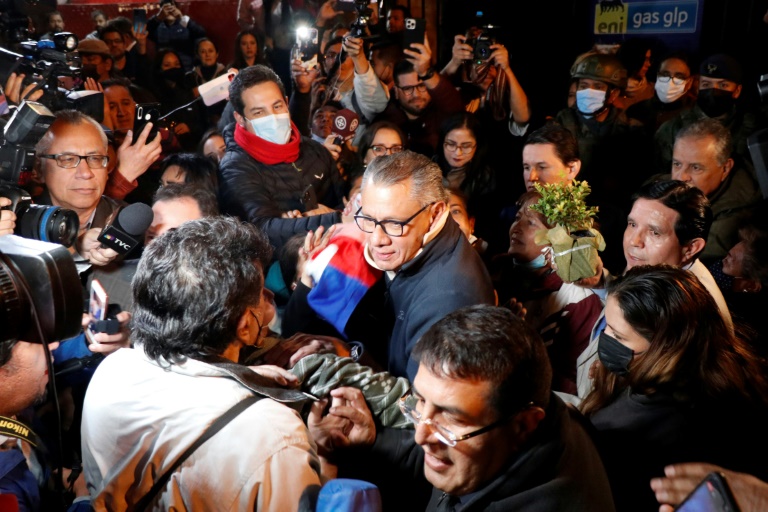
Ecuador’s former vice president Jorge Glas has been released from prison after serving time for corruption in a vast scandal involving the Brazilian construction giant Odebrecht.

Glas was jailed in 2017 for receiving millions of dollars in kickbacks from Odebrecht in a graft scandal that has seen several former Latin American presidents implicated or dragged into court.

Glas, 53, left the Pichincha Nº2 prison in the north of the capital Quito on Monday night after a judge issued an injunction in his favor, said prison administration body SNAI.

The judge’s decision comes after a court earlier this month annulled a separate conviction in which Glas was sentenced in 2021 to eight years for misuse of public funds.

This allowed his lawyers to request an early release on probation on two other corruption charges — with sentences of six and eight years respectively — as he had served more than 40 percent of the sentences.

The SNAI said it would “abide by the judge’s decision,” but left open the possibility of filing an appeal as there had been no “threat or infringement” of Glas’s rights.

Glas was briefly freed for about a month in April over poor health, but a court ordered him to serve out the rest of his sentence.

He served as the vice president under leftist Rafael Correa between 2013 and 2017, and under president Lenin Moreno until he was stripped of his office in 2018.

Correa has also been sentenced to eight years in jail for corruption, but is living in exile in Belgium.

According to the US Justice Department, Odebrecht paid $788 million in bribes across 12 countries to secure public works contracts.

Earlier this month, a Panama court ordered two of its former presidents to stand trial over the scandal.

Macron courts Central Asian strongmen in quest for influence

French President Emmanuel Macron is making an eye-catching drive to strengthen partnerships with Central Asian states, seeking to boost Europe’s influence in a strategic region where China, Russia, Turkey and the United States are already jostling for supremacy.

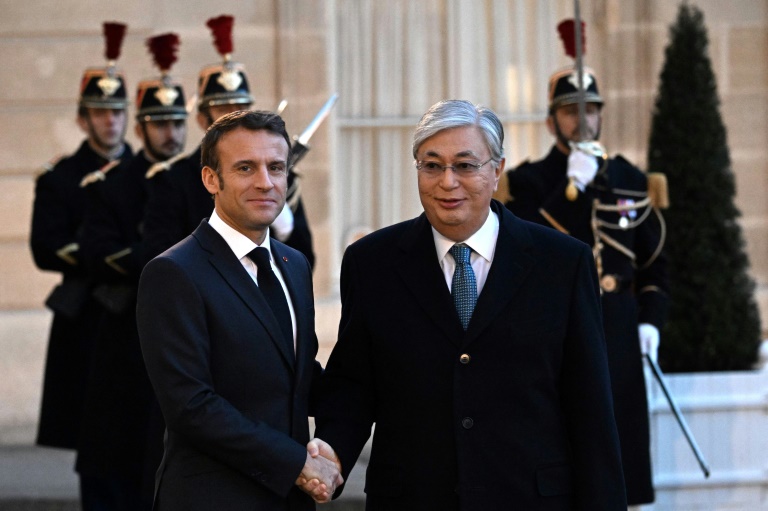
Macron held talks in Paris earlier this month with Uzbekistan President Shavkat Mirziyoyev, who was making a rare visit to a Western capital, and on Tuesday hosted Kazakh President Kassym-Jomart Tokayev at the Elysee Palace.

Last year, Macron hosted Tajik President Emomali Rahmon in Paris in an extremely unusual visit and also held telephone talks with the leader of Tajikistan on Saturday.

The flurry of diplomacy between Paris and the key Central Asian capitals come as France reassesses its ties with the former Soviet region in the wake of Russia’s invasion of Ukraine.

Macron had previously sought to cultivate a viable relationship with Russian President Vladimir Putin.

Astana, Dushanbe and Tashkent have taken an at best ambivalent stance on the invasion. They have shown no enthusiasm but have stopped short of full-throated condemnation that would irritate their ex-Soviet masters in Moscow.

Their ties with Russia are also of interest to Paris, which is keeping an eye on a possible negotiated solution to the invasion of Ukraine. 

Tokayev held talks in Moscow with Putin the day before travelling to Paris.

Tokayev’s visit aims to “consolidate our relationship and expand our dialogue in a context that is also difficult for the countries of Central Asia”, said a French presidential official who asked not to be named.

“We continue to … show our Central Asian partners the importance we attach to their region, wedged between China and Russia, and which needs to open up new horizons,” added the official.

– ‘Lacking competitiveness’ –

A Kazakh government source told AFP: “We firmly support the territorial integrity of Ukraine” in the face of the invasion.

“We don’t support sanctions as a matter of principle. But we are not allowing our territories to be used for evading sanctions,” the source added.

Meanwhile the Russian-led Collective Security Treaty Organisation (CSTO), a regional military alliance of which Kazakhstan is a member, is also in crisis. 

A CSTO summit in Armenia earlier this month collapsed in near acrimony.

Cultivating such ties means Paris is also hosting leaders who are under fire for rights violations at home.

Tokayev comes to Paris fresh from an election in which he won a second term with a crushing 81.3 percent. 

The Organisation for Security and Cooperation in Europe said the vote “took place in a political environment lacking competitiveness”.

Around 230 people were killed when Tokayev violently suppressed protests in January over living costs.

Mirziyoyev is meanwhile credited with opening up Uzbekistan after the death of its post-Soviet leader Islam Karimov.

He has pushed through significant economic and social reforms but his regime is accused by aid organisations of trampling on people’s basic rights.

– Diversify partnerships –

In a typical French touch, the visits by Rahmon and Mirziyoyev have both been accompanied by blockbuster exhibitions of cultural treasures rarely seen outside Tajikistan and Uzbekistan.

While China and the US have vied with Russia for influence in the region since the fall of the USSR, Turkey has in recent years shown an awakened interest in nations with which it shares close cultural and linguistic ties.

Ankara has revived a body known now as the Organisation of Turkic States and President Recep Tayyip Erdogan, with whom Macron has a tense relationship, has been a regular visitor to the region.

Analysts say that in the short term Europe is keen to promote energy ties with Central Asia, especially with hydrocarbon-rich Kazakhstan, as supplies from Russia dwindle. It also values the region’s role as a key pipeline hub.

“What interests the Europeans in Central Asia are energy resources while Russian hydrocarbons are under embargo … and the transport corridors between China and the European Union,” said Michael Levystone, associate researcher at the IFRI think tank. 

“(Meanwhile) the sanctions against the Russian economy encourage the countries of Central Asia to diversify their partnerships on the international scene,” added Levystone, whose Paris-based organisation specialised in Central Asia. 

The Kazakh source said: “In light of the current uncertainties regarding energy security in Europe, Kazakhstan is determined to continue to play a role as a reliable and trustworthy energy partner.”

Qatar announces first major gas deal for Germany

Qatar on Tuesday announced its first major deal to send liquefied natural gas to Germany as Europe scrambles to find alternatives to Russian energy sources.

Qatar’s Energy Minister Saad Sherida al-Kaabi said up to two million tons of gas a year would be sent for at least 15 years from 2026, and that state-run QatarEnergy was discussing other possible deals for Europe’s biggest economy.

Kaabi, who is also QatarEnergy’s chief executive, said so many European and Asian countries now want natural gas that he did not have enough negotiators to cope.

The talks for the latest deal took several months as Germany has resisted the long-term contracts that Qatar normally demands to justify its massive investment in the industry.

Russia’s invasion of Ukraine in February increased pressure on the German government to find new sources. And the latest deal will not help the country get through the looming winter.

The gas will be bought through US firm ConocoPhillips, a long-term partner with QatarEnergy, and sent to a new terminal that Germany is hurrying to finish at Brunsbuttel.

“We are committed to contribute to the energy security of Germany and Europe at large,” Kaabi told a press conference after the signing ceremony with ConocoPhillips chief executive Ryan Lance.

Lance hailed the accord as “a vital contribution to world energy security”.

Qatar last week announced a 27-year agreement to ship four million tons a year to China. It said this was the longest contract agreed in the industry.

Qatari officials would not discuss prices but industry analysts have said Germany will have to pay a premium for the shorter contract and the hurried start to deliveries.

– Intense demand –

Kaabi again stressed the “sizeable investments” that his country has made in extracting gas for deliveries around the world.

But he also said that Qatar was negotiating with German companies to further increase the “volumes” being sent. 

The gas will come from the North Field East and North Field South projects that Qatar is developing with ConocoPhillips and other energy multinationals. North Field contains the world’s biggest natural gas reserves and extends under the Gulf into Iranian territory.

Through expansion in North Field, Qatar is aiming to increase its production by 60 percent by 2027. With increases in international prices, the value of its exports has almost doubled in the past year, state media said recently.  

Asian countries led by China, Japan and South Korea have been the main market for Qatar’s gas, but it has been increasingly targeted by European countries since Russia’s war on Ukraine threw supplies into doubt.

“There is very intense discussions with European buyers and with Asian buyers,” Kaabi said, highlighting the “scarcity of gas coming in the next few years”.

“We do not have enough teams to work with everybody, to cater for the needs” of all countries making demands.

Kaabi said the deal with China’s Sinopec showed that “Asian buyers are feeling the pressure of wanting to secure long-term deals… I think we are in a good position.”

The Brunsbuttel terminal supplies customers of German energy companies Uniper and RWE, and Economy and Energy Minister Robert Habeck said the two firms “have to buy on the world market.

“It is clear that the world market has different suppliers, and it is smart from the companies to buy the most favourable offers for the consumers on the world market, and that includes Qatar,” he said.

Bill Farren-Price, head of macro oil and gas research at energy data analytics firm Enverus, said the deal underlines Qatar’s “key role” in filling the Russian gas shortfall.

“With Qatar the subject of Western criticism over its staging of the World Cup, this deal, like the Sinopec one a few days ago, shows just how significant Qatari LNG will be in rebuilding European energy security,” he told AFP.

Stocks, crude rise on hope China eases strict Covid measures

Stock markets and oil prices rebounded strongly Tuesday, while the haven dollar weakened, on speculation that China would further ease strict Covid containment measures.

Sentiment was boosted also after China avoided another night of protests, following a weekend of unrest in reaction to the Covid policy that is slowing growth in the world’s second biggest economy.

Stock market gains were led by big rallies in Hong Kong and Shanghai, with property firms enjoying a much-needed surge, also on moves to ease funding restrictions on troubled developers.

But sentiment was tempered by warnings from top Federal Reserve policymakers that US interest rates would rise further and could go higher than initially thought to fight decades-high inflation.

The remarks were partly to blame for big losses of more than one percent in Wall Street’s three main indices Monday.

Europe’s main stock markets were higher in early afternoon trading.

“Risk-on sentiment has lifted European equities, boosted by a rally overnight in China,” noted Victoria Scholar, head of investment at Interactive Investor.

Oil prices rebounded from 11-month lows, “boosted by improved sentiment towards demand from China”, she added.

Qatar announced Tuesday its first major deal to send liquefied natural gas to Germany as Europe scrambles to find alternatives to Russian energy sources.

Qatar’s Energy Minister Saad Sherida al-Kaabi said up to two million tons of gas a year would be sent for at least 15 years from 2026, and that state-run QatarEnergy was discussing other possible deals for Europe’s biggest economy.

Market focus was meanwhile turning to the United States, with a number of Fed officials due to speak, including boss Jerome Powell.

And Friday sees the release of key US jobs data, which could provide an idea about the central bank’s plans for monetary policy.

Bets on a slowdown in its pace of rate hikes have boosted markets for the past weeks, but some high-ranking members on Monday looked to play down the chances of a more dovish pivot.

– Key figures around 1200 GMT –

London – FTSE 100: UP 0.8 percent at 7,532.05 points

Frankfurt – DAX: UP 0.2 percent at 14,410.53

Paris – CAC 40: UP 0.3 percent at 6,686.05

EURO STOXX 50: UP 0.2 percent at 3,945.01

Tokyo – Nikkei 225: DOWN 0.6 percent at 28,027.84 (close)

Hong Kong – Hang Seng Index: UP 5.2 percent at 18,204.68 (close)

Shanghai – Composite: UP 2.3 percent at 3,149.75 (close)

New York – Dow: DOWN 1.5 percent at 33,849.46 (close)

Brent North Sea crude: UP 3.1 percent at $85.74 per barrel

West Texas Intermediate: UP 2.6 percent at $79.27 per barrel

Euro/dollar: UP at $1.0384 from $1.0347 on Monday

Dollar/yen: DOWN at 137.93 yen from 138.87 yen

Pound/dollar: UP at $1.2025 from $1.1952

Euro/pound: DOWN at 86.35 pence from 86.50 pence

UK ousts China from new nuclear project Sizewell

Britain on Tuesday ousted China General Nuclear from construction of its new Sizewell C power station, further cutting controversial economic ties with the world’s second biggest economy.

The CGN announcement came one day after Prime Minister Rishi Sunak warned that the “golden era” of UK-China relations was “over”, adding Beijing posed a “systemic challenge” to UK interests and values.

Tuesday’s announcement comes also amid a diplomatic storm over the arrest and alleged assault of a BBC journalist covering Covid protests in China.

Sunak’s Conservative government is stripping CGN of its controversial 20-percent Sizewell stake under plans to form a joint venture with remaining French partner EDF.

The UK will invest £700 million ($843 million) in the project, a figure that was matched by EDF.

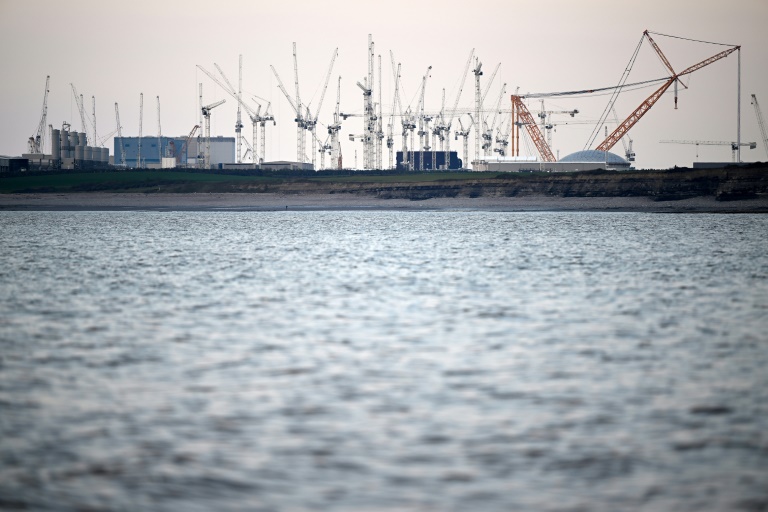
Sizewell C, which is under development on the Suffolk coast in eastern England, will power the equivalent of about six million homes for more than 50 years.

It is expected to start producing electricity from 2035.

– ‘Energy sovereignty’ –

Nuclear and renewables, such as offshore wind, are seen as critical to ramp up Britain’s energy security, after key producer Russia’s invasion of Ukraine sent household gas and electricity bills rocketing.

The Sizewell decision sparks questions about CGN’s role alongside EDF in the construction of Hinkley Point, southwestern England, in Britain’s first new nuclear power plant in more than two decades.

London last month ordered a Chinese-owned company to divest most of Britain’s biggest semiconductor maker — a leading UK industrial asset — after a national security probe. 

And in 2020, Chinese telecoms giant Huawei was banned from involvement in the roll-out of Britain’s superfast 5G broadband network, after US concerns about spying.

The UK’s “stake in Sizewell C is positioned at the heart of the new blueprint to Britain’s energy sovereignty”, the Department for Business, Energy and Industrial Strategy (BEIS) said in a statement on Tuesday.

The move “also allows for China General Nuclear’s exit from the project, including buy-out costs, any tax due and commercial arrangements”, it added. 

The UK says Sizewell will deliver cleaner energy than fossil fuels and create 10,000 jobs for the local area and national economy.

Greenpeace UK policy director Doug Parr, however, slammed the nuclear push.

“Several academic institutes have shown we can have a 100-percent renewable system that would be cheaper than those based on nuclear or fossil fuels,” said Parr. 

“And it has the added benefit of not creating millennia of worry over the nuclear waste that future generations will end up dealing with.”

– UK support ‘essential’ –

The news comes as EDF power plants in France have been dogged by maintenance issues.

“The support of the UK government through its direct participation… is essential” to Sizewell, EDF Energy chief executive Simone Rossi told AFP in an interview.

“This decision is a sign of confidence in the nuclear industry — and in the French nuclear industry.”

Business and Energy Secretary Grant Shapps said Sizewell would move Britain “towards greater energy independence and away from the risks that a reliance on volatile global energy markets for our supply comes with”.

The UK has 15 nuclear reactors at eight sites but many are approaching the end of their lifespan.

Sizewell comprises two power plants: Sizewell A, which opened in the 1960s and shut in 2006. Sizewell B, which opened in 1995, is still in operation.

Britain is turning to new plants also to help meet its long-running target of net zero carbon emissions by 2050.

The government on Tuesday added it would create Great British Nuclear, a body overseeing development of more projects.

Britain also launched an official campaign this week to encourage less energy use amid supply risks.

The government is partially subsidising household energy bills — which have pushed UK inflation to a 41-year peak — to cushion a cost-of-living crisis.

burs-rfj/bcp/raz

Western allies to help Ukraine brave winter of war

NATO chief Jens Stoltenberg warned Tuesday that Russia was using winter as a “weapon of war” against Ukraine, as Western allies meeting in Bucharest planned to help Kyiv mend its ravaged power grid.

US Secretary of State Antony Blinken was to announce “substantial” financial aid to help Ukraine deal with damaged infrastructure on the sidelines of a meeting of NATO’s foreign ministers.

A senior US official said the assistance would “not be the end” and pointed out the Biden administration had budgeted $1.1 billion for energy spending in Ukraine and neighbouring Moldova.

A Russian campaign of missile strikes has severely damaged Ukraine’s energy infrastructure and plunged millions into darkness as the country braces against the first snows and chill winds of winter.

Stoltenberg said “the message from all of us will be that we need to do more” to help Kyiv fix its gas and electricity infrastructure and provide air defence to help it protect itself better.

He said he expected Russia to carry out more attacks on Ukraine’s grid as the Kremlin suffers defeats on the ground and warned Europe should “be prepared for more refugees”. 

“Russia is actually failing on the battlefield. In response to that they are now attacking civilian targets, cities because they’re not able to win territory,” Stoltenberg said at the start of the two-day meeting. 

Ukrainian Foreign Minister Dmytro Kuleba was to meet his NATO counterparts to urge them to send more weaponry for Kyiv and assistance in coping with Moscow’s attacks.

– ‘Keep calm, give tanks’ –

“This targeting of civilian infrastructure, of energy infrastructure is obviously designed to try and freeze the Ukrainians into submission,” said British Foreign Secretary James Cleverly. 

“I don’t think it’ll be successful.”

Allies have given arms worth billions of dollars to Ukraine, but Kyiv is pleading for more air defence, tanks and longer-range missiles to push the Kremlin’s forces back.

But there are growing concerns that weapon stores in some NATO countries are running low as stockpiles have been diverted to Ukraine. 

Lithuanian Foreign Minister Gabrielius Landsbergis said his request to fellow NATO ministers was simple: “Keep calm and give tanks”. 

Germany, which currently chairs the G7, has convened a meeting Tuesday afternoon on the sidelines of the NATO gathering to discuss the energy crisis caused by the war in Ukraine.

The United States will call on the other member countries to strengthen their aid in this area, according to the US official.

– ‘Door is open’ –

NATO says the meeting in Bucharest will showcase its unity on continuing to support Ukraine as Moscow’s war against its neighbour drags on into its tenth month. 

The alliance will not, however, make any progress on Ukraine’s request to join, first made some 14 years ago when NATO first pledged that Kyiv would one day become a member.

Stoltenberg insisted that the “door is open” to new members but said the focus now was on assisting Ukraine in its fight with Moscow. 

NATO has bolstered its eastern flank in the face of Russia’s war by sending more troops and equipment to countries like Romania, neighbouring Ukraine.

Romania has been hard hit by the war and around two million people fleeing Ukraine have passed through the country.

Non-NATO Moldova, which has also seen blackouts caused by the fallout from the attacks on neighbouring Ukraine, will attend the alliance’s talks on Thursday along with Bosnia and Georgia. 

Besides the war in Ukraine, the ministers will take stock of progress in the accession of NATO candidates Finland and Sweden, already ratified by 28 of the 30 member countries but which remains suspended awaiting the green light from Hungary and Turkey.

The Finnish, Swedish and Turkish foreign ministers were meeting on the sidelines of the meeting, but Ankara has played down hope for any quick breakthrough. 

EasyJet flies into third straight annual loss

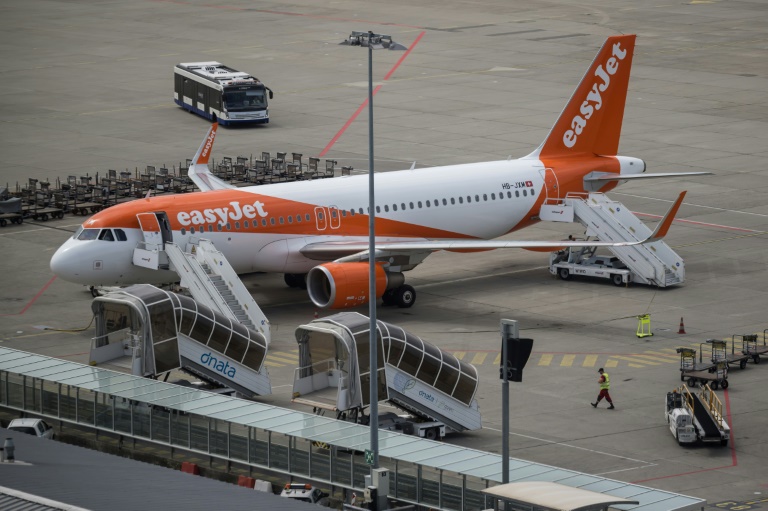
British airline EasyJet on Tuesday confirmed a third annual loss in a row, which was however far less than during the worst of the Covid pandemic.

The no-frills carrier, which flies mainly across Europe, posted a loss after tax of £169 million ($203 million) for its financial year to the end of September.

That compared with a net loss of £858 million in 2020/21, EasyJet added in a statement.

The Covid pandemic ravaged global aviation, grounding planes worldwide and forcing airlines to slash thousands of jobs in 2020.

Demand has recovered sharply after most lockdowns were lifted. However, airlines and airports are struggling to recruit sufficient staff after having axed so many positions.

“EasyJet has achieved a record bounce back this summer,” chief executive Johan Lundgren said in the statement.

He added that during the current “tough” economic climate, consumers would still look to go on holiday but seek out value, helping the no-frills carrier to do better than more established rivals.

“Legacy carriers will struggle in this high-cost environment,” Lundgren said.

EasyJet revenue soared to £5.8 billion from £1.5 billion. 

Passenger numbers more than trebled to almost 70 million.

“Freed from the holding pattern restrictions of the pandemic, EasyJet is beginning to emerge from the clouds,” said Richard Hunter, head of markets at Interactive Investor.

“The outlook is also relatively upbeat, with revenue per seat for next year expected to increase by more than 20 percent.”

EasyJet’s share price was however down more than four percent following the results update.

“EasyJet is doing everything it can to accelerate its recovery from Covid, but there just isn’t enough momentum to swing the company back to positive earnings,” said AJ Bell investment director Russ Mould.

Close Bitnami banner
Bitnami