US Business

Musk announces 'amnesty' for banned Twitter accounts after poll

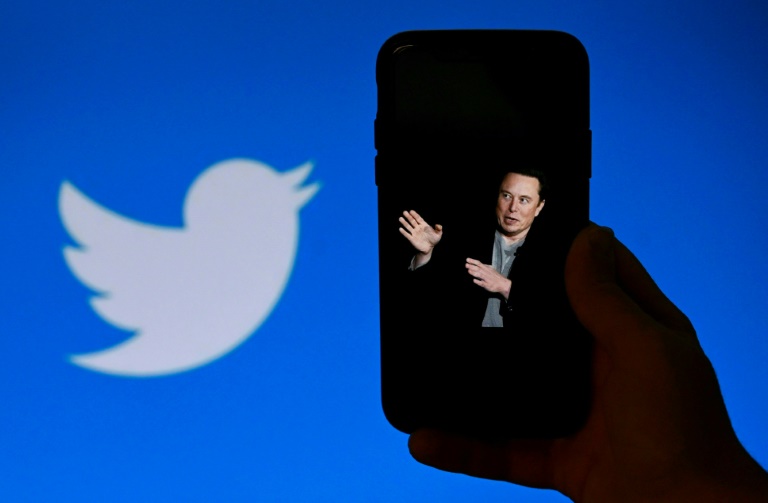
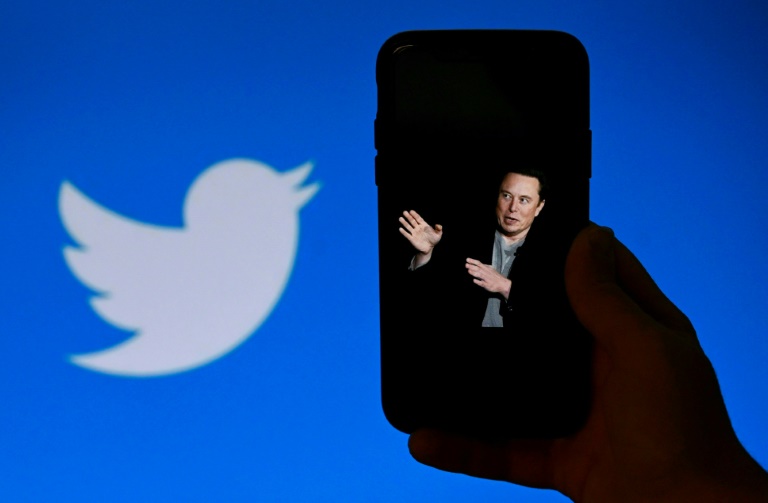
Elon Musk said Thursday many previously suspended Twitter accounts would be allowed back on the platform after a landslide of users responding to an informal poll by the  new owner voted in favor of the move.

The announcement comes as Musk faces pushback that his criteria for content moderation is subject to his personal whim, with reinstatements decided for certain accounts and not others.

“The people have spoken. Amnesty begins next week,” Musk tweeted, responding to the poll. 

“Vox Populi, Vox Dei,” he added, repeating a Latin adage meaning “The voice of the people is the voice of God,” that he has used when talking about other Twitter polls.

Of 3.16 million respondents to Musk’s Wednesday poll question, 72.4 percent said Twitter should allow suspended accounts back on Twitter as long as they have not broken laws or engaged in “egregious spam,” Musk posted.

It was the same type of “yes/no” informal poll of Twitter users that Musk devised to decide in favor of reinstating former president Donald Trump on the platform.

Trump’s Twitter account was reinstated Saturday after a narrow majority of respondents supported the move.

Polls on Twitter are open to all users and are unscientific and potentially targeted by fake accounts and bots.

Moreover, while Musk has 118 million followers, many of Twitter’s 450 million monthly active users might never have seen the poll question.

A blanket amnesty for suspended accounts could potentially alarm government authorities that are keeping a close look at Musk’s handling of hateful speech since he bought the influential platform for $44 billion.

It could also spook Apple and Google, tech titans that have the power to ban Twitter from their mobile app stores over content concerns.

Trump was banned from the platform early last year for his role in the January 6 attack on the US Capitol by a mob of his supporters seeking to overturn the results of the 2020 election.

– ‘No mercy’ –

Musk’s reinstatement of Trump followed that of other banned accounts including a conservative parody site and a psychologist who had violated Twitter’s rules on language identifying transgender people.

The CEO of Tesla and SpaceX has said that conspiracy theorist Alex Jones will not be returning to Twitter and will remain banned from the platform.

Musk on Sunday said he had “no mercy for anyone who would use the deaths of children for gain, politics or fame” due to his own experience with the death of his first child.

Jones has been ordered to pay hundreds of millions of dollars in damages for his lies about the 2012 Sandy Hook Elementary School shooting that killed 26 people, mostly children.

Musk, who closed his buyout of Twitter in late October, did not make clear whether the bans to be lifted by the poll were permanent suspensions or temporary ones.

The future of content moderation on Twitter has become an urgent concern, with major advertisers keeping away from the site after a failed relaunch earlier this month saw a proliferation of fake accounts, causing embarrassment. 

Meanwhile the teams in charge of keeping nefarious activity off the site have been gutted, victims of Musk-led layoffs that saw half of total employees leave the company.

John Wihbey, a media professor at Northeastern University, speculated that all the chaos might be because Musk is seeking to “buy himself time.”

“Regulators are certainly going to come after him, both in Europe and maybe the United States… and therefore a lot of what he’s doing is trying to frame those fights,” Wihbey said.
Musk announces 'amnesty' for banned Twitter accounts after poll

Elon Musk said Thursday many previously suspended Twitter accounts would be allowed back on the platform after a landslide of users responding to an informal poll by the  new owner voted in favor of the move.

The announcement comes as Musk faces pushback that his criteria for content moderation is subject to his personal whim, with reinstatements decided for certain accounts and not others.

“The people have spoken. Amnesty begins next week,” Musk tweeted, responding to the poll. 

“Vox Populi, Vox Dei,” he added, repeating a Latin adage meaning “The voice of the people is the voice of God,” that he has used when talking about other Twitter polls.

Of 3.16 million respondents to Musk’s Wednesday poll question, 72.4 percent said Twitter should allow suspended accounts back on Twitter as long as they have not broken laws or engaged in “egregious spam,” Musk posted.

It was the same type of “yes/no” informal poll of Twitter users that Musk devised to decide in favor of reinstating former president Donald Trump on the platform.

Trump’s Twitter account was reinstated Saturday after a narrow majority of respondents supported the move.

Polls on Twitter are open to all users and are unscientific and potentially targeted by fake accounts and bots.

Moreover, while Musk has 118 million followers, many of Twitter’s 450 million monthly active users might never have seen the poll question.

A blanket amnesty for suspended accounts could potentially alarm government authorities that are keeping a close look at Musk’s handling of hateful speech since he bought the influential platform for $44 billion.

It could also spook Apple and Google, tech titans that have the power to ban Twitter from their mobile app stores over content concerns.

Trump was banned from the platform early last year for his role in the January 6 attack on the US Capitol by a mob of his supporters seeking to overturn the results of the 2020 election.

– ‘No mercy’ –

Musk’s reinstatement of Trump followed that of other banned accounts including a conservative parody site and a psychologist who had violated Twitter’s rules on language identifying transgender people.

The CEO of Tesla and SpaceX has said that conspiracy theorist Alex Jones will not be returning to Twitter and will remain banned from the platform.

Musk on Sunday said he had “no mercy for anyone who would use the deaths of children for gain, politics or fame” due to his own experience with the death of his first child.

Jones has been ordered to pay hundreds of millions of dollars in damages for his lies about the 2012 Sandy Hook Elementary School shooting that killed 26 people, mostly children.

Musk, who closed his buyout of Twitter in late October, did not make clear whether the bans to be lifted by the poll were permanent suspensions or temporary ones.

The future of content moderation on Twitter has become an urgent concern, with major advertisers keeping away from the site after a failed relaunch earlier this month saw a proliferation of fake accounts, causing embarrassment. 

Meanwhile the teams in charge of keeping nefarious activity off the site have been gutted, victims of Musk-led layoffs that saw half of total employees leave the company.

John Wihbey, a media professor at Northeastern University, speculated that all the chaos might be because Musk is seeking to “buy himself time.”

“Regulators are certainly going to come after him, both in Europe and maybe the United States… and therefore a lot of what he’s doing is trying to frame those fights,” Wihbey said.

Nurses join other striking UK staff in two December walkouts

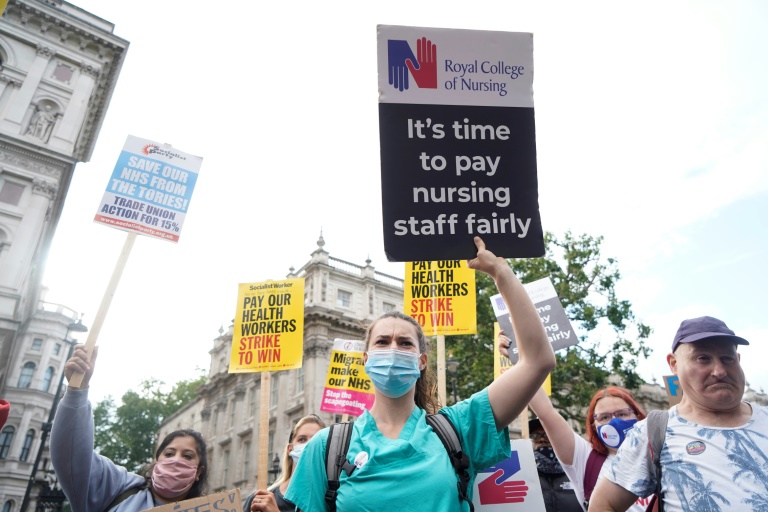
Nurses across most of Britain will next month hold the first strikes in their union’s 106-year history, joining a host of other UK workers taking industrial action over pay.

Staff in England, Wales and Northern Ireland — but not Scotland — will walk out on December 15 and 20, after the Royal College of Nursing (RCN) union said the government had turned down an offer of negotiations.

It will be the latest industrial action in Britain, where decades-high inflation and a cost-of-living crisis has prompted staff in various sectors to demand pay rises to keep up with spiralling prices.

The nurses’ strike will be sandwiched between the first of a series of two-day walkouts by national railway workers, while postal service employees will stage fresh stoppages in the run-up to Christmas.

Numerous other public and private sector staff, from lawyers to airport ground personnel, have also held strikes this year.

“Nursing staff have had enough of being taken for granted, enough of low pay and unsafe staffing levels, enough of not being able to give our patients the care they deserve,” said RCN head Pat Cullen.

The union, which wants a pay rise significantly above inflation, announced earlier this month that a ballot of its more than 300,000 members had found a majority in favour of strikes.

“Ministers have had more than two weeks since we confirmed that our members felt such injustice that they would strike for the first time,” Cullen said, adding that an offer of formal negotiations was declined.

“They have the power and the means to stop this by opening serious talks that address our dispute.”

The RCN will next week announce which particular arms of Britain’s sprawling state-funded National Health Service (NHS) will be affected by the walkouts.

– ‘Challenging times ‘ –

Amid the waves of industrial action, British inflation has continued its recent surge, reaching a 41-year high of 11.1 percent in October on soaring energy and food bills.

Bosses in the NHS said in September that nurses were skipping meals to feed and clothe their children and struggling to afford rising transport costs.

One in four hospitals had set up foodbanks to support staff, according to NHS Providers, which represents hospital groups in England.

The government says it has accepted independent pay recommendations, and given over one million NHS workers a pay rise of at least £1,400 ($1,590) this year. 

That follows on from a three-percent increase last year when public sector pay was frozen.

But the RCN says this leaves experienced nurses worse off by 20 percent in real terms due to successive below-inflation awards since 2010.

In Scotland, the union has paused announcing strike action after the devolved government in Edinburgh, which has responsibility for health policy, reopened pay talks.

UK health minister Steve Barclay said he was “hugely grateful for the hard work and dedication” of nurses and regretted the strikes.

The NHS has “tried and tested plans” to minimise disruption and ensure emergency services continue to operate, he added.

“These are challenging times for everyone and the economic circumstances mean the RCN’s demands, which on current figures are a 19.2 percent pay rise, costing £10 billion a year, are not affordable,” he said.

The RCN has questioned the UK government’s economic rationale, noting it spends billions of pounds on agency staff to plug workforce gaps.

It points to independent research it commissioned indicating that the finance ministry would recoup 81 percent of the initial outlay of a significant pay rise through higher tax receipts and savings on future recruitment and retention costs.

In the last year, 25,000 nursing staff left the Nursing and Midwifery Council (NMC) register, it said. 

Other UK health unions are also balloting workers for industrial action, while ambulance staff in Scotland are due to walk out on Monday.

Meanwhile, across the wider economy, numerous sectors look set to continue their strikes into the new year.

EU frets over Twitter job losses as hate speech grows

The European Union on Thursday expressed concern about layoffs at Twitter since its takeover by Elon Musk, after the reported closure of the tech firm’s lobbying office in Brussels.

“We have concerns about the decisions to have less and less people working at the company,” EU justice commissioner Didier Reynders told reporters in Dublin, where Twitter and other US tech groups have their European headquarters.

“When we discuss hate speech, I am sure we need human resources,” he added after a meeting with unidentified representatives from Twitter.

A new EU evaluation showed the number of hate speech notifications reviewed by major social media companies within 24 hours has fallen from 90 percent in 2020, to 81 percent in 2021 and 64 percent in 2022.

The numbers showed only YouTube improved its removal rate for offensive content — as defined by an EU code of conduct — while Twitter and other tech companies’ efforts fell.

Concerns at Twitter’s post-takeover direction intensified Thursday with the Financial Times reporting that the company has dismantled its Brussels office, following the departure of executives in charge of efforts to comply with the EU’s online rules.

“It’s an additional concern, because to us to have a team dedicated to the relation with the European institutions is very important,” Reynders said, reacting to the FT report.

However, he said he was “optimistic by nature” and had been given commitments that Twitter’s team in Dublin would step into the Brussels role. 

EU commission Vice President Vera Jourova reiterated the bloc’s worries.

“If you want to effectively detect and take action against #disinformation & propaganda, this requires resources,” she tweeted, linking to the FT story.

Tech entrepreneur Musk cut around half of Twitter’s 7,500 workforce, including many employees tasked with fighting disinformation, following his acquisition of the firm last month.

While in Dublin, Reynders is due to meet representatives from Meta, the owner of Facebook, on Friday.

Mark Zuckerberg’s social media behemoth said this month it planned to lay off more than 11,000 staff amid an advertising slump.

Both Meta and Twitter’s EU operations are based in Ireland, along with those of Google, Apple and Microsoft, making Ireland’s data protection agency the lead regulator responsible for holding them to account in Europe.

French MPs vote to enshrine abortion rights in constitution

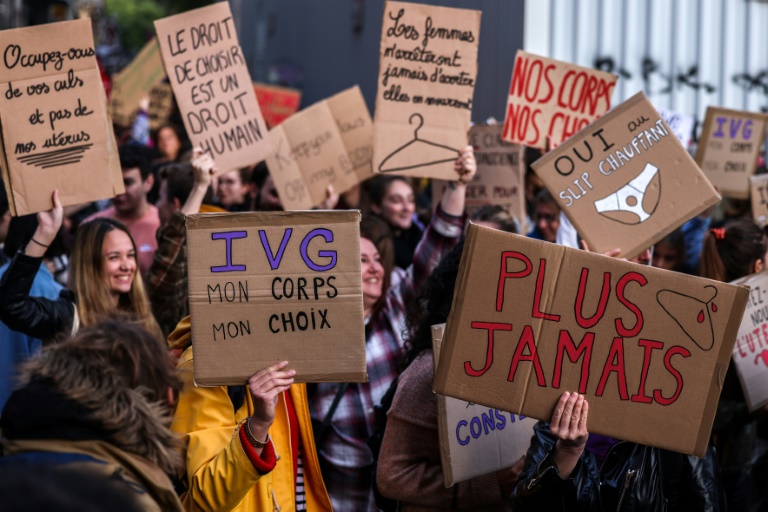
Lawmakers in the French parliament voted Thursday to add the right to abortion to the constitution in response to recent changes in Poland and the United States.

MPs from the left-wing France Unbowed (LFI) party and the ruling centrist coalition struck a deal on the wording of the new clause, which passed with a huge majority.

“The law guarantees the effectiveness and equal access to the right to voluntarily end a pregnancy,” reads the proposed constitutional addition to article 66.

It was approved with 337 votes for and 32 against, with the bill now set to be sent to the conservative-majority Senate for approval.

The initiative was prompted by the US Supreme Court’s explosive decision this year to overturn the nationwide right to termination procedures for Americans.

The conservative government of Poland has also heavily restricted abortion rights.

“The assembly is speaking to the world, our country is speaking to the world,” said jubilant MP Mathilde Panot from LFI, dedicating the vote to women in Hungary, Poland and the United States. 

Panot, who spearheaded the legislation along with a member of President Emmanuel Macron’s party, said the move was necessary in France to protect “against a regression”.

Abortion was legalised in France in 1974 in a law championed by health minister Simone Veil, a women’s rights icon granted the rare honour of burial at the Pantheon by Macron upon her death in 2018.

– Legal for 48 years –

A previous attempt to inscribe the right to abortion as well as contraception into the French constitution, with different wording, was rejected by the Senate in October. 

This second attempt will also need a green light in the upper chamber and must then be voted on in a national referendum.

“It’s a big step… but it’s just the first step,” said centrist MP Sacha Houlie from Macron’s Renaissance party.

Thursday’s agreement was a rare instance of harmony between the hard-left LFI and Macron’s centrist allies in the hung and often bad-tempered National Assembly.

Macron’s minority government has repeatedly struggled to pass legislation, finding cooperation with the different political factions difficult.

Many conservative and Catholic politicians had announced their misgivings about the abortion change, seeing it as unnecessary given the legal protections already in place.

Far-right leader Marine Le Pen, whose National Rally is the biggest single opposition party in parliament, had called it “totally misplaced” earlier this week because abortion rights were not under threat in France.

She missed the vote on Thursday “for medical reasons”, a spokesperson said.

The parliamentary voting system initially indicated by error that she had voted in favour of the text.

— Due to the error in the parliamentary voting system, an earlier version of this story stated in the final paragraph that Marine Le Pen had voted in favour of the proposal. She was absent for the vote. —

EU frets over Twitter job losses as hate speech grows

The European Union on Thursday expressed concern about layoffs at Twitter since its takeover by Elon Musk, after the reported closure of the tech firm’s lobbying office in Brussels.

“We have concerns about the decisions to have less and less people working at the company,” EU justice commissioner Didier Reynders told reporters in Dublin, where Twitter and other US tech groups have their European headquarters.

“When we discuss hate speech, I am sure we need human resources,” he added after a meeting with unidentified representatives from Twitter.

A new EU evaluation showed the number of hate speech notifications reviewed by major social media companies within 24 hours has fallen from 90 percent in 2020, to 81 percent in 2021 and 64 percent in 2022.

The numbers showed only YouTube improved its removal rate for offensive content — as defined by an EU code of conduct — while Twitter and other tech companies’ efforts fell.

Concerns at Twitter’s post-takeover direction intensified Thursday with the Financial Times reporting that the company has dismantled its Brussels office, following the departure of executives who were in charge of efforts to comply with the EU’s online rules.

“It’s an additional concern, because to us to have a team dedicated to the relation with the European institutions is very important,” Reynders said reacting to the FT report.

However, the official added he was “optimistic by nature” and had been given commitments that Twitter’s team in Dublin would step into the Brussels role. 

Tech entrepreneur Musk moved to cut around half of Twitter’s 7,500 workforce, including many employees tasked with fighting disinformation, following his acquisition of the firm last month.

While in Dublin, Reynders is due to meet with representatives from Meta, the owner of Facebook, on Friday.

Mark Zuckerberg’s social media behemoth said this month that it plans to lay off more than 11,000 staff amid an advertising slump.

Both Meta and Twitter’s EU operations are based in Ireland, along with those of Google, Apple and Microsoft, making Ireland’s data protection agency the lead regulator responsible for holding them to account in Europe.

EU fails to agree gas price cap amid deep divisions

EU energy ministers failed Thursday to agree a cap on gas prices to mitigate the energy crunch in Europe, amid deep divisions over an initial proposal slammed by many as a “joke”.

The ministers will now meet in the first half of December to try to bridge differences, said Czech Industry Minister Jozef Sikela, whose country currently holds the rotating presidency of the EU.

During the “heated discussions” ministers did manage to adopt a couple of other “important measures”, including joint gas purchases to avoid intra-EU competition driving up prices, supply solidarity in times of need, and hastening authorisation of renewable energy sources, Sikela said.

Several ministers going into Thursday’s meeting complained that the gas price cap proposal on the table, unveiled by the European Commission just two days earlier, was clearly designed to never be used.

The Polish and Spanish energy ministers called the proposal a “joke”. 

The price cap plan — which the commission was never keen on — sets a maximum threshold of 275 euros per megawatt hour.

But it comes with so many conditions attached that it would not even have been activated back in August, when the gas price briefly soared above 300 euros, alarming Europe used to historic prices around 10 percent of that.

The cap proposal would only be triggered if the 275-euro limit was breached continuously for at least two weeks, and then only if the price for liquified natural gas (LNG) rose above 58 euros for 10 days within that same two-week period.

The price of wholesale gas in Europe on Thursday was around 124 euros, according to the main TTF benchmark.

The commission’s proposed price cap was seen as neutered under pressure from members including Germany and the Netherlands, which feared a cap could divert gas supplies to more lucrative markets, especially Asia.

Yet at least 15 EU countries — more than half the bloc — want some form of workable ceiling on wholesale gas prices to tackle a crunch in supply forced by Russia’s war in Ukraine.

– ‘Not about one number’ –

EU energy minister Kadri Simson said the European Commission was bound by “parameters” it was given by EU capitals in its formulation of a price cap, and that those governments were free to agree on a change to the parameters if they wished.

While the proposed cap “is not about one number,” she stressed the aim was to have a capping mechanism that, once activated, would stay in place for “a longer time period” and not turn on and off according to daily trading.

She also said that it was designed for next year’s gas filling season, when international competition for supplies could skyrocket.

“All signs are hinting that next year that global competition might be even significantly fiercer than it was this summer and autumn,” when European prices soared, she said.

While the European Union hasn’t banned Russian gas, the Kremlin has been turning off the taps in retaliation for sanctions imposed by Brussels in the wake of Moscow’s invasion. 

Before the war, Russian gas supplies accounted for more than 40 percent of all imported gas into the European Union, with export powerhouse Germany particularly needy.

That has now dropped to less than 10 percent. 

But alternative sources — such as LNG shipped from the United States and the Gulf — cannot make up the shortfall, and Europe faces a pricey heating bill for winter.

The price cap plan, if adopted, would start in January. It would run alongside a voluntary initiative for EU member states to cut natural gas use by 15 percent over the northern hemisphere winter.

French MPs vote to enshrine abortion rights in constitution

Lawmakers in the French parliament voted Thursday to add the right to abortion to the constitution in response to recent changes in Poland and the United States.

MPs from the left-wing France Unbowed (LFI) party and the ruling centrist coalition struck a deal on the wording of the new clause, which passed with a huge majority.

“The law guarantees the effectiveness and equal access to the right to voluntarily end a pregnancy,” reads the proposed constitutional addition to article 66.

It was approved with 337 votes for and 32 against, with the bill now set to be sent to the conservative-majority Senate for approval.

The initiative was prompted by the US Supreme Court’s explosive decision this year to overturn the nationwide right to termination procedures for Americans.

The conservative government of Poland has also heavily restricted abortion rights.

“The assembly is speaking to the world, our country is speaking to the world,” said jubilant MP Mathilde Panot from LFI, dedicating the vote to women in Hungary, Poland and the United States. 

Panot, who spearheaded the legislation along with a member of President Emmanuel Macron’s party, said the move was necessary in France to protect “against a regression”.

Abortion was legalised in France in 1974 in a law championed by health minister Simone Veil, a women’s rights icon granted the rare honour of burial at the Pantheon by Macron upon her death in 2018.

– Legal for 48 years –

A previous attempt to inscribe the right to abortion as well as contraception into the French constitution, with different wording, was rejected by the Senate in October. 

This second attempt will also need a green light in the upper chamber and must then be voted on in a national referendum.

“It’s a big step… but it’s just the first step,” said centrist MP Sacha Houlie from Macron’s Renaissance party.

Thursday’s agreement was a rare instance of harmony between the hard-left LFI and Macron’s centrist allies in the hung and often bad-tempered National Assembly.

Macron’s minority government has repeatedly struggled to pass legislation, finding cooperation with the different political factions difficult.

Many conservative and Catholic politicians had announced their misgivings about the abortion change, seeing it as unnecessary given the legal protections already in place.

Far-right leader Marine Le Pen, whose National Rally is the biggest single opposition party in parliament, had called it “totally misplaced” earlier this week because abortion rights were not under threat in France.

She missed the vote on Thursday “for medical reasons”, a spokesperson said.

The parliamentary voting system initially indicated by error that she had voted in favour of the text.

Stocks rise, dollar slips as Fed signals softer rate hike pace

Stock markets mostly rose Thursday and the dollar largely weakened after minutes from the Federal Reserve’s latest policy meeting suggested it could slow the pace of its rate hikes.

The news provided traders with a cushion against concerns about surging Covid-19 cases in China that have fanned speculation authorities will revert to lockdowns and other economically debilitating measures to fight the outbreak.

Oil prices rallied slightly later Thursday after earlier extending sharp losses from the previous day fuelled by worries about the impact on demand from China’s Covid outbreaks.

Wednesday’s much-anticipated minutes showed most US central bank chiefs felt smaller increases would “likely soon be appropriate” as the economy shows signs of weakness following almost a year of monetary tightening.

“Equities are revelling in the wake of the… minutes after the Fed telegraphed a downshift from jumbo to extra-large rate hikes,” said SPI Asset Management’s Stephen Innes.

“A commitment to moving toward restrictive monetary policy remains intact, but the (policy board) is ready to slow the path toward that destination.”

He added that a less aggressive Fed “should pave the runway for take-off in Asia, fuelled by expectations of China’s reopening by March next year”.

Bets were growing on officials announcing a 50-basis-point lift at their December gathering, down from four straight 75-point hikes.

The latest indicators showed the manufacturing and services sectors continued to contract last month, while jobless claims picked up.

The developments allowed Wall Street traders to head off to their Thanksgiving break with a spring in their step, the S&P 500 ending at a two-month high as they finally see a glimmer of light at the end of the tunnel after a painful year.

Asia and Europe mostly followed suit.

Kuala Lumpur surged more than three percent and the ringgit held gains after opposition leader Anwar Ibrahim was named prime minister, ending a days-long leadership impasse after inconclusive polls that had rattled Malaysia’s markets.

The more risk-on environment was also reflected in a further drop in the dollar against its peers, having surged for much of the year as traders bet on ever-higher US interest rates.

Investors were keeping a close watch also on China after it announced a record number of new Covid cases, as authorities worked to curb the spread with snap lockdowns, mass testing and travel restrictions.

While officials are trying more targeted measures to contain the disease, concerns remain that they will resort to the painful city-wide shutdowns seen in Shanghai earlier this year as part of the zero-Covid strategy, which hammered the economy.

However, that worry has been tempered somewhat after China signalled fresh support measures aimed at boosting growth, with the State Council saying tools would be used to ensure liquidity in markets.

The comments led to talk of another cut in the amount of cash that banks must keep in reserve, freeing them to lend more.

– Key figures around 1630 GMT –

London – FTSE 100: FLAT at 7,466.60 points (close)

Paris – CAC 40: UP 0.4 percent at 6,707.32 (close)

Frankfurt – DAX: UP 0.8 percent at 14,539.56 (close)

EURO STOXX 50: UP 0.4 percent at 3,961.99

Tokyo – Nikkei 225: UP 1.0 percent at 28,383.09 (close)

Hong Kong – Hang Seng Index: UP 0.8 percent at 17,660.90 (close)

Shanghai – Composite: DOWN 0.3 percent at 3,089.31 (close)

New York – Dow: UP 0.3 percent at 34,194.06 (close)

Euro/dollar: UP at $1.411 from $1.0401 on Wednesday

Dollar/yen: DOWN at 138.39 yen from 139.52 yen

Pound/dollar: UP at $1.2131 from $1.2064

Euro/pound: DOWN at 85.82 pence from 86.18 pence

West Texas Intermediate: FLAT at $77.91 per barrel

Brent North Sea crude: DOWN 0.4 percent at $85.10 per barrel

Ukraine battles to reconnect millions in the cold and dark

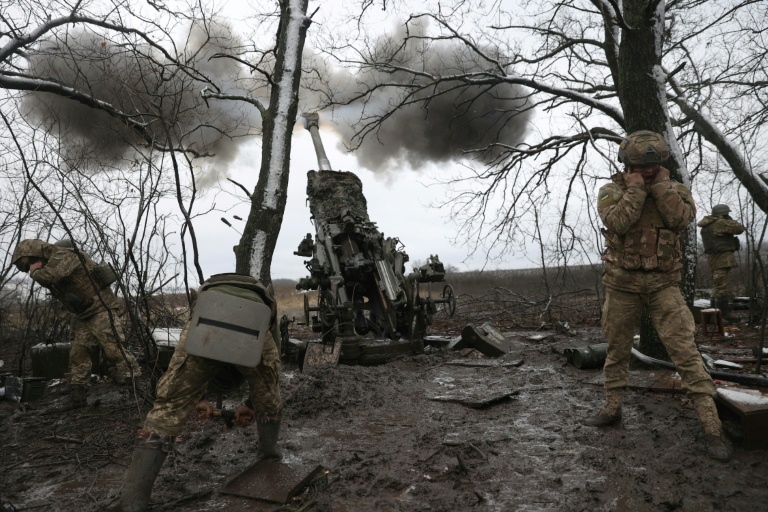
Ukraine battled Thursday to reconnect water and electricity services to millions of people cut off after Russia launched dozens of cruise missiles that battered Ukraine’s already crippled electricity grid.

The energy system in Ukraine is on the brink of collapse and millions have been subjected to emergency blackouts over recent weeks after systematic Russian bombardments of the grid.

The World Health Organisation has warned of “life-threatening” consequences and estimated that millions could leave their homes as a result.

Twenty-four hours after the Russian strikes smashed Kyiv, city officials said 70 percent of homes were still suffering emergency outages but that water services had been fully restored.

“Energy companies are making every effort to return (services) as soon as possible,” Kyiv Mayor Vitali Klitschko said earlier.

The strikes knocking out electricity come at a precarious time, with winter setting in and temperatures in the capital hovering just above freezing.

Ukraine accused Russian forces of launching around 70 cruise missiles as well as drones in attacks that left 10 dead and around 50 wounded.

But Russia’s defence ministry denied striking any targets inside Kyiv and said damage in the capital was caused by Ukrainian and foreign air defence systems.

– ‘Scariest day’ –

“Not a single strike was made on targets within the city of Kyiv,” it said.

Moscow’s is targeting power facilities in an apparent effort to force capitulation after nine months of war that has seen Russian forces fail in most of their stated territorial objectives.

“The way they fight and target civil infrastructure, it can cause nothing but fury,” said Oleksiy Yakovlenko, the chief administrator at a hospital in the eastern Ukraine city of Kramatorsk.

But even as blackouts there become more frequent, Yakovlenko said his resolve was unwavering.

“If they expect us to fall on our knees and crawl to them it won’t happen,” Yakovlenko told AFP. 

The wave of attacks on Ukraine’s grid come as Russian troops suffer a wave of battlefield defeats. This month they withdrew from the only regional capital they had captured, destroying key infrastructure as they retreated from Kherson in the south. 

Ukraine prosecutors said Thursday authorities had discovered a total of nine torture sites used by the Russians in Kherson as well as “the bodies of 432 killed civilians”.

Wednesday’s attacks disconnected three Ukrainian nuclear plants automatically from the national grid and triggered blackouts in neighbouring Moldova, where the energy network is linked to Ukraine.

The energy ministry said that all three nuclear facilities had been reconnected by Thursday morning.

And power was nearly entirely back online in ex-Soviet Moldova and its pro-European president Maia Sandu convened a meeting of her security council to discuss energy.

The mayor of Ukraine’s second largest city, Kharkiv, near the border with Russia, said water was being restored to homes and municipal workers were reconnecting public transport. 

“We’ve restarted power supplies. Believe me, it was very difficult,” said Mayor Igor Terekhov.

But there were still disruptions across the country and even the central bank warned the outages could impact banks.

“There is danger of complete inability of banks to work due to prolonged absence of electricity supply,” it said.

– ‘Shutdowns’ –

The Kremlin said Ukraine was ultimately responsible for the fallout from the strikes and that Kyiv could end the strikes by acquiescing to Russian demands.

Ukraine “has every opportunity to settle the situation, to fulfil Russia’s demands and as a result, end all possible suffering of the civilian population,” spokesman Dmitry Peskov said.

Moscow announced separately it had issued tens of thousands of Russian passports to residents of four Ukrainian territories, which President Vladimir Putin claimed to have annexed in September.

“More than 80,000 people received passports as citizens of the Russian Federation,” Valentina Kazakova, a migration official with the interior ministry, said in remarks carried by Russian news agencies. 

In September, Russia held so-called referendums in Donetsk, Lugansk, Zaporizhzhia and Kherson and claimed residents had voted in favour of becoming subjects of Russia.

Putin formally annexed the territories at a ceremony in the Kremlin later that month, even though his forces have never had full control over them.

Close Bitnami banner
Bitnami