US Business

Gas price cap divides EU energy ministers' meeting

EU energy ministers met Thursday to debate measures to mitigate the energy crunch in Europe but were divided over a gas price cap proposal slammed by many as a “joke”.

They were to discuss a proposal by the European Commission, unveiled just two days earlier, that would set a cap on gas prices at 275 euros per megawatt hour.

But many members complained that the plan comes with such conditions attached that it was designed never to be used.

“The gas price cap, which is in the document, currently it doesn’t satisfy any single country,” Polish Climate Minister Anna Moskwa said as she arrived at the meeting.

“It’s a kind of joke for us after so many amounts of discussions and proposals” to arrive at the price cap put forward, she said.

France, Spain and Greece have also come out criticising the commission proposal.

The price cap plan — which the commission was never keen on — was seen as neutered under pressure from members including Germany and the Netherlands, which had feared it could divert gas supplies to more lucrative markets, especially Asia.

Yet at least 15 EU countries — more than half the bloc — want some form of workable ceiling on wholesale gas prices to tackle a crunch in supply forced by Russia’s war in Ukraine.

While the European Union hasn’t banned Russian gas, the Kremlin has been turning off the taps in retaliation for sanctions imposed by Brussels in the wake of Moscow’s invasion. 

Before the war, Russian gas supplies accounted for more than 40 percent of all imported gas into the European Union, with export powerhouse Germany particularly needy.

Now, that has dropped to less than 10 percent. 

But alternative sources — such as liquefied natural gas (LNG) shipped from the United States and the Gulf — cannot make up the shortfall, and Europe faces a pricey heating bill for winter.

– Ministers can ‘calibrate’ cap –

Asked if the ministers would agree a full package of energy support measures including the proposed gas price cap, Belgium’s energy minister, Tinne Van der Straeten, said: “I don’t think it’s achievable today.”

EU energy commissioner Kadri Simson acknowledged the divisions over the price cap and noted that the ministers have “a right to calibrate the different parameters” if they wished.

Czech Industry Minister Jozef Sikela, chairing the meeting under his country’s current presidency of the EU, said: “I am ready to convene as many extraordinary councils as needed in order to reach the agreement.”

The commission’s proposed cap of 275 euros per megawatt hour would only kick in when that threshold is breached for two weeks running for future contracts, and only if the LNG price went above 58 euros for 10 days within that same two-week period.

The price of wholesale gas in Europe on Thursday was around 124 euros, according to the main TTF benchmark.

The only time it has gone above the 275-euro limit was for one week in August, when the market impact of the war and EU demand to fill gas storage were at their peak. 

The price cap plan, if adopted, would start in January. It would run alongside a voluntary initiative for EU member states to cut natural gas use by 15 percent over the northern hemisphere winter.

UK-led police operation busts phone scammers who targeted millions

UK police on Thursday said their biggest ever counter-fraud operation had disrupted an international criminal network targeting hundreds of thousands of victims in millions of spam phone calls.

The Metropolitan Police spearheaded the 18-month global probe into the iSpoof.cc website, working with Europol, the FBI and other law enforcement agencies worldwide.

A total of 142 people have been arrested, including one of its alleged London-based administrators. Suspects were nabbed in Australia, France, Ireland and the Netherlands, while servers were shuttered in the Netherlands and Ukraine.

UK police believe organised crime groups are linked to the website and its tens of thousands of users. The site enables users to access software tools to illicitly obtain victims’ bank account funds and commit other fraud.

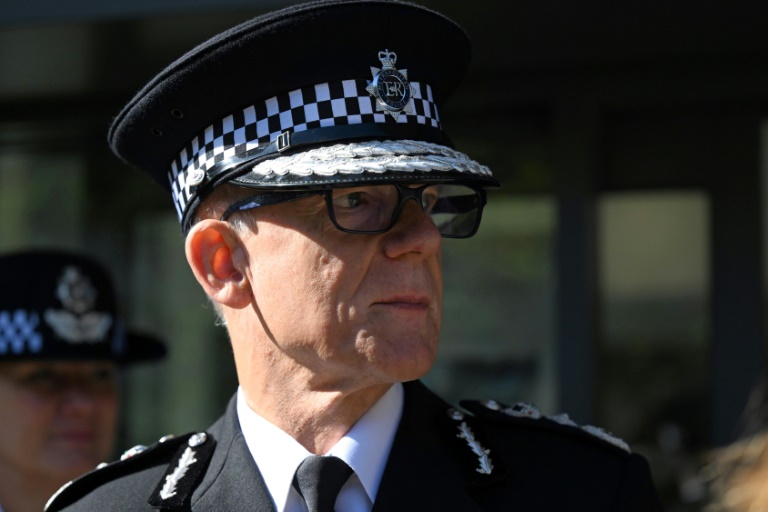
Met Commissioner Mark Rowley said the investigation signalled “a different approach” to criminals exploiting technology.

“This is about starting from the organised criminals that actually drive and create the fraud that we see in the world around us,” he told reporters.

– Industrialised fraud –

The London force — the UK’s largest — said in the year to August, suspects paid to access the website and make more than 10 million fraudulent calls worldwide.

Around 40 percent were in the United States. More than a third were in the UK, targeting 200,000 potential victims there alone.

Fraud detection agencies have so far recorded £48 million ($58 million) in losses in the UK alone. Victims lost an average £10,000. The largest single theft was worth three million pounds.

Losses to victims worldwide are estimated at over £100 million.

“Because fraud is vastly under-reported, the full amount is believed to be much higher,” the Met said.

Those behind the site earned almost £3.2 million from it, the force added.

Only around 5,000 British victims have so far been identified.

However, the Met’s investigation has yielded the phone numbers of more than 70,000 potential victims, who have yet to be contacted.

The force will attempt to reach them over the next two days, sending text messages directing those contacted to its website, where details can be safely logged.   

“What we’re doing here is trying to industrialise our response to the organised criminals’ industrialisation of the problem,” Rowley added.

– ‘Operation Elaborate’ –

The iSpoof website — described as “an international one-stop spoofing shop” — was created in December 2020 and at its peak had 59,000 users paying between £150 and £5,000 for its services, according to the Met.

It enabled subscribers, who could pay in Bitcoin, to access so-called spoofing tools which made their phone numbers appear as if they were calling from banks, tax offices and other official bodies.

The mostly commonly imitated organisations include some of the UK’s biggest consumer banks — including Barclays, Halifax, HSBC, Lloyds and Santander. 

Combined with customers’ bank and login details, illegally obtained elsewhere online, the criminals were then able to defraud their victims.

“They would worry them (about) fraudulent activity on their bank accounts and tricked them,” explained Detective Superintendent Helen Rance, who leads on cyber crime for the Met.

She noted that people contacted would typically be instructed to share six-digit banking passcodes allowing their accounts to be emptied. 

The Met launched “Operation Elaborate” in June 2021, partnering with Dutch police, who had already started their own probe after an iSpoof server was based there.

A subsequent server operating in Kyiv was shuttered in September and the site was permanently disabled on November 8.

The previous day the Met had charged Teejai Fletcher, 34, of east London, with fraud and organised crime group offences.

He remains in custody and will next appear in a London court on December 6.

“It’s fair to say that he was living a lavish lifestyle,” Rance said, noting that the investigation remained ongoing.

“Instead of just taking down the website and arresting the administrator, we have gone after the users of iSpoof,” she added. 

Two other suspected administrators outside the UK remain at large, the Met noted. 

Stocks rise, dollar slips as Fed signals softer rate hike pace

Asian markets rallied Thursday and the dollar weakened further after minutes from the Federal Reserve’s latest policy meeting suggested it could slow its pace of rate hikes.

The news provided traders with a cushion against concerns about surging Covid cases in China that have fanned speculation authorities will revert to lockdowns and other economically debilitating measures to fight the outbreak.

Wednesday’s much-anticipated minutes showed most US central bank chiefs felt smaller increases would “likely soon be appropriate” as the economy shows signs of weakness following almost a year of monetary tightening.

Bets were growing on officials announcing a 50-basis-point lift at their December gathering, down from four straight 75-point hikes, with officials keeping tabs on economic data.

The latest indicators showed the manufacturing and services sectors continued to contract last month, while jobless claims picked up.

The developments allowed Wall Street traders to head off to their Thanksgiving break with a spring in their step, the S&P 500 ending at a two-month high as they finally see a glimmer of light at the end of the tunnel after a painful year.

And Asia followed suit, with Tokyo, Hong Kong, Shanghai, Sydney, Seoul, Singapore, Taipei, Manila and Jakarta all in the red.

The more risk-on environment was also reflected in a further drop in the dollar against its peers, having surged for much of the year as traders bet on ever-higher US interest rates.

“Equities are revelling in the wake of the… minutes after the Fed telegraphed a downshift from jumbo to extra-large rate hikes,” said SPI Asset Management’s Stephen Innes.

“A commitment to moving toward restrictive monetary policy remains intact, but the (policy board) is ready to slow the path toward that destination.”

He added that a less aggressive Fed “should pave the runway for take-off in Asia, fuelled by expectations of China’s reopening by March next year”.

Investors are keeping a close watch on China after it announced a record number of new Covid cases on Thursday as authorities worked to curb the spread with snap lockdowns, mass testing and travel restrictions.

While officials are trying more targeted measures to contain the disease, there remains a concern that they will resort to the painful city-wide shutdowns seen in Shanghai earlier this year as part of the country’s zero-Covid strategy, which hammered the economy.

However, the concern has been tempered somewhat after China signalled fresh support measures aimed at boosting growth, with the State Council saying tools would be used to ensure liquidity in markets. 

The comments led to talk of another cut in the amount of cash banks must keep in reserve, freeing them to lend more.

– Key figures around 0230 GMT –

Tokyo – Nikkei 225: UP 1.2 percent at 28,448.58 (break)

Hong Kong – Hang Seng Index: UP 0.5 percent at 17,617.28

Shanghai – Composite: UP 0.3 percent at 3,106.13

Euro/dollar: UP at $1.0424 from $1.0401 on Wednesday

Dollar/yen: DOWN at 138.82 yen from 139.52 yen

Pound/dollar: UP at $1.2088 from $1.2064

Euro/pound: UP at 86.23 pence from 86.18 pence

West Texas Intermediate: DOWN 0.2 percent at $77.77 per barrel

Brent North Sea crude: DOWN 0.3 percent at $85.14 per barrel

New York – Dow: UP 0.3 percent at 34,194.06 (close)

London – FTSE 100: UP 0.2 percent at 7,465.24 (close)

Journalists have much to lose if Twitter dies

Few will lose as much as journalists if Twitter dies, having grown reliant on its endless sources and instant updates despite the dangers and distortions that come with it.

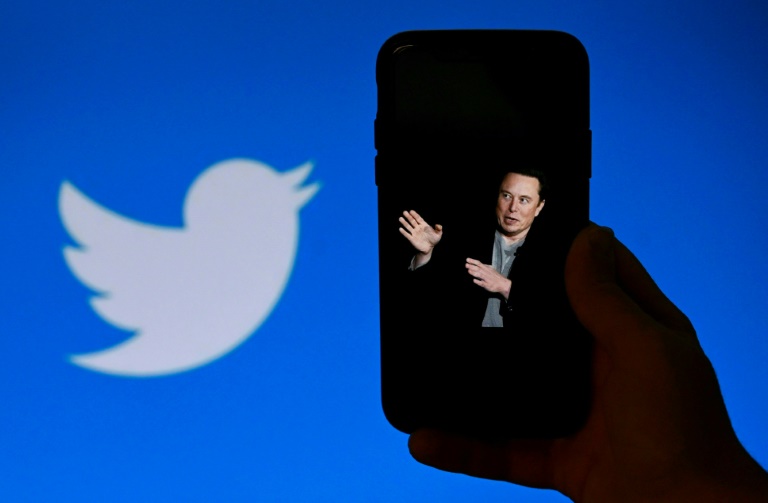
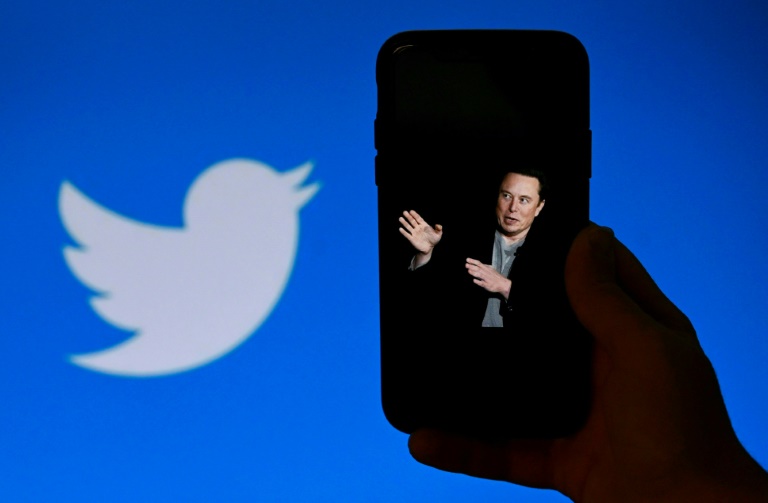
There has been fevered talk of the platform’s imminent demise since billionaire Elon Musk took over last month and began firing vast numbers of staff.

But most journalists “can’t leave,” said Nic Newman, of the Reuters Institute for the Study of Journalism. “It’s actually a really important part of their work.”

Newman was working at the BBC when Twitter started making waves in 2008 and 2009.

“It was a new Rolodex, a new way of contacting people — fantastic for case studies and… experts,” he said.

But Twitter also became a competitor, replacing newsrooms as the source of breaking news for the public when terrorist attacks, natural disasters or any fast-moving story struck.

“Journalists realised they wouldn’t always be the ones breaking the news and that their role was going to be different — more about contextualising and verifying that news,” said Newman.

It also meant journalists were tied to the platform for announcements by politicians and celebrities — most famously the dreaded late-night and early-morning tweets from Donald Trump that left hundreds of journalists sleep-deprived throughout his presidency.

– ‘Tribal melodrama’ –

The dependency has bred many problems.

New York Times columnist Farhad Manjoo spoke for many in 2019 when he wrote that “Twitter is ruining American journalism” with the way it “tugs journalists deeper into the rip currents of tribal melodrama, short-circuiting our better instincts in favor of mob- and bot-driven groupthink.”

By rewarding the most vehement voices, the platform tends to drown out the majority of the population — both moderates and non-elites.

“The debates that happen on Twitter are very much the debates of the elite,” said Newman. “It has definitely been a problem in newsrooms.”

“Paying attention only to Twitter tends to distort the way that many people, including journalists, see the world,” agreed Mathew Ingram, digital media specialist at the Columbia Journalism Review.

Though he hopes they have grown savvy enough to deal with the distortions, journalists have been subjected to a “huge tide of disinformation and harassment”.

But for all the frantic talk over Musk’s volatile tenure, many believe the site will survive.

“For the record, I don’t think it’s all that likely that Twitter will shut down anytime soon,” said Stephen Barnard, a sociologist at Butler University in the United States.

But he said journalists have good reason to fear its disappearance.

“They would lose access to what is for many a very large, powerful and diverse social network… (and) also a positive source of prestige and professional identity,” Barnard said.

“There is no real heir apparent in that space, so I’m not sure where they would go,” he added.

On the plus side, Ingram said, it could spur a return to “more traditional ways of researching and reporting”.

“Perhaps that would be a good thing,” he added.

UK police lift lid on largest ever counter-fraud operation

UK police on Thursday said their biggest ever counter-fraud operation had disrupted an international criminal network targeting hundreds of thousands of victims in millions of spam phone calls.

The Metropolitan Police, which spearheaded the 18-month global probe into the iSpoof.cc website, has arrested over 100 people in recent weeks, including one of its alleged London-based administrators.

Working with Europol, the FBI and other law enforcement worldwide, suspects were nabbed in the Netherlands, Australia, France and Ireland, while servers were shuttered in the Netherlands and Ukraine.

UK police believe organised crime groups are linked to the website and its tens of thousands of users, who could access software tools on it to help illicitly obtain victims’ bank account funds and commit other fraud.

Met Commissioner Mark Rowley said the investigation signalled “a different approach” to criminals exploiting technology.

“This is about starting from the organised criminals that actually drive and create the fraud that we see in the world around us,” he told reporters.

– Industrialised fraud –

The London force — the UK’s largest — said in the year to August, suspects paid to access the website and make more than 10 million fraudulent calls worldwide.

Around 40 percent were in the United States, while more than a third were in the UK targeting 200,000 potential victims there alone.

Fraud detection agencies have so far recorded £48 million ($58 million) in losses in the UK alone, with the largest single theft £3 million and the average £10,000.

“Because fraud is vastly under-reported, the full amount is believed to be much higher,” the Met said.

Those behind the site earned almost £3.2 million from it, the force added.

Only around 5,000 British victims have so far been identified.

However, the Met’s investigation has yielded the phone numbers of more than 70,000 potential victims who have yet to be contacted.

The force will attempt to reach them over the next two days, sending text messages directing those contacted to its website where details can be safely logged.   

“What we’re doing here is trying to industrialise our response to the organised criminals’ industrialisation of the problem,” Rowley added.

– ‘Operation Elaborate’ –

The iSpoof website — described as “an international one stop spoofing shop” — was created in December 2020 and at its peak had 59,000 users paying between £150 and £5,000 for its services, according to the Met.

It enabled subscribers, who could pay in Bitcoin, to access so-called spoofing tools which made their phone numbers appear as if they were calling from banks, tax offices and other official bodies.

Some of the UK’s biggest consumer banks — including Barclays, HSBC, Santander, Lloyds, Halifax — were the mostly commonly imitated.

Combined with customers’ bank and login details illegally obtained elsewhere online, the criminals were then able to defraud their victims.

“They would worry them (about) fraudulent activity on their bank accounts and tricked them,” explained Detective Superintendent Helen Rance, who leads on cyber crime for the Met.

She noted that people contacted would typically be instructed to share six-digit banking passcodes allowing their accounts to be emptied. 

The Met launched “Operation Elaborate” in June 2021, partnering with Dutch police who had already started their own probe after an iSpoof server was based there.

A subsequent server operating in Kyiv was shuttered in September, while the site was permanently disabled on November 8.

The previous day the Met had charged Teejai Fletcher, 34, of east London, with fraud and organised crime group offences.

He remains in custody and will next appear in a London court on December 6.

“It’s fair to say that he was living a lavish lifestyle,” Rance said, noting the investigation remained ongoing.

“Instead of just taking down the website and arresting the administrator, we have gone after the users of iSpoof,” she added. 

Two other suspected administrators outside the UK remain at large, the Met noted. 

UK retailer Boohoo denies 'slave' labour claims

British online fashion retailer Boohoo on Wednesday denied allegations that staff in a UK warehouse worked in harrowing and health-threatening conditions and regarded themselves as “slaves”.

The Times newspaper, in an undercover investigation, reported that workers at Boohoo’s facility in Burnley, northwest England, complained of racism, sexual harassment, poor safety equipment, inadequate training and “gruelling” targets.

However, a Boohoo spokesperson said that it “does not believe the picture painted is reflective of the working environment at our Burnley warehouse”.

Boohoo “is taking every claim very seriously”, the spokesperson said, adding that making sure workers are safe and comfortable is the company’s “highest priority”.

The Times, whose undercover reporter worked at the warehouse for one month, said each staff member walked the equivalent of a half-marathon (13 miles, 21 kilometres) per shift.

Night-time summer temperatures reached up to 32 degrees Celsius (89.6 degrees Fahrenheit) and frequently collapsed, it alleged.

The daily added that Burnley employees are paid £11 ($13.25) per hour in shifts that are up to 12 hours long. 

Each staffer must fetch 130 items every hour, it said.

The online retail group has annual sales of almost £2.0 billion per year, and its chief executive was paid a £1.3 million bonus this year.

Boohoo had already been rocked last year by allegations that one of its suppliers in Leicester, central England, paid workers much less than the national minimum wage.

The group’s suppliers were meanwhile accused also of underpaying staff in Pakistan.

Boohoo benefited from an online sales boom during the pandemic, during which it expanded aggressively to snap up brands belonging to collapsed UK retail giants. 

It bought fashion labels Burton, Wallis and Dorothy Perkins from Arcadia, as well as assets of failed UK department store Debenhams.

The company employs about 5,000 people worldwide, according to its website.

Musk floats 'general amnesty' of suspended Twitter accounts

New Twitter owner Elon Musk on Wednesday polled users on whether the site should offer a general amnesty to suspended accounts, using the same method he used to handle the case of Donald Trump.

The move comes as Musk has faced pushback that his criteria for content moderation is subject to his personal whim, with reinstatements decided for certain accounts and not others.

“Should Twitter offer a general amnesty to suspended accounts, provided that they have not broken the law or engaged in egregious spam?” Musk asked in a tweet.

The poll was open until 17:46 GMT on Thursday and mimicked the strategy used just days ago for the former US president Trump.

Trump’s Twitter account was reinstated Saturday after a narrow majority of respondents supported the move.

Polls on Twitter are open to all users and are unscientific and potentially targeted by fake accounts and bots.

A blanket decision on suspended accounts could potentially alarm government authorities that are keeping a close look at Musk’s handling of hateful speech since he bought the influential platform for $44 billion.

It could also spook Apple and Google, tech titans that have the power to ban Twitter from their mobile app stores over content concerns.

Trump was banned from the platform early last year for his role in the January 6 attack on the US Capitol by a mob of his supporters seeking to overturn the results of the 2020 election.

– ‘No mercy’ –

Musk’s reinstatement of Trump followed that of other banned accounts including a conservative parody site and a psychologist who had violated Twitter’s rules on language identifying transgender people.

The CEO of Tesla and SpaceX has said that conspiracy theorist Alex Jones will not be returning to Twitter and will remain banned from the platform.

Musk on Sunday said he had “no mercy for anyone who would use the deaths of children for gain, politics or fame” due to his own experience with the death of his first child.

Jones has been ordered to pay hundreds of millions of dollars in damages for his lies about the 2012 Sandy Hook Elementary School shooting that killed 26 people, mostly children.

Musk, who closed his buyout of Twitter in late October, did not make clear whether the bans to be covered by the poll were permanent suspensions or temporary ones.

The future of content moderation on Twitter has become an urgent concern, with major advertisers keeping away from the site after a failed relaunch earlier this month saw a proliferation of fake accounts, causing embarrassment. 

Meanwhile the teams in charge of keeping nefarious activity off the site have been gutted, victims of Musk-led layoffs that saw half of total employees leave the company.

John Wihbey, a media professor at Northeastern University, speculated that all the chaos might be because Musk is seeking to “buy himself time.”

“Regulators are certainly going to get come after him, both in Europe and maybe the United States… and therefore a lot of what he’s doing is trying to frame those fights,” Wihbey said.

Musk floats 'general amnesty' of suspended Twitter accounts

New Twitter owner Elon Musk on Wednesday polled users on whether the site should offer a general amnesty to suspended accounts, using the same method he used to handle the case of Donald Trump.

The move comes as Musk has faced pushback that his criteria for content moderation is subject to his personal whim, with reinstatements decided for certain accounts and not others.

“Should Twitter offer a general amnesty to suspended accounts, provided that they have not broken the law or engaged in egregious spam?” Musk asked in a tweet.

The poll was open until 17:46 GMT on Thursday and mimicked the strategy used just days ago for the former US president Trump.

Trump’s Twitter account was reinstated Saturday after a narrow majority of respondents supported the move.

Polls on Twitter are open to all users and are unscientific and potentially targeted by fake accounts and bots.

A blanket decision on suspended accounts could potentially alarm government authorities that are keeping a close look at Musk’s handling of hateful speech since he bought the influential platform for $44 billion.

It could also spook Apple and Google, tech titans that have the power to ban Twitter from their mobile app stores over content concerns.

Trump was banned from the platform early last year for his role in the January 6 attack on the US Capitol by a mob of his supporters seeking to overturn the results of the 2020 election.

– ‘No mercy’ –

Musk’s reinstatement of Trump followed that of other banned accounts including a conservative parody site and a psychologist who had violated Twitter’s rules on language identifying transgender people.

The CEO of Tesla and SpaceX has said that conspiracy theorist Alex Jones will not be returning to Twitter and will remain banned from the platform.

Musk on Sunday said he had “no mercy for anyone who would use the deaths of children for gain, politics or fame” due to his own experience with the death of his first child.

Jones has been ordered to pay hundreds of millions of dollars in damages for his lies about the 2012 Sandy Hook Elementary School shooting that killed 26 people, mostly children.

Musk, who closed his buyout of Twitter in late October, did not make clear whether the bans to be covered by the poll were permanent suspensions or temporary ones.

The future of content moderation on Twitter has become an urgent concern, with major advertisers keeping away from the site after a failed relaunch earlier this month saw a proliferation of fake accounts, causing embarrassment. 

Meanwhile the teams in charge of keeping nefarious activity off the site have been gutted, victims of Musk-led layoffs that saw half of total employees leave the company.

John Wihbey, a media professor at Northeastern University, speculated that all the chaos might be because Musk is seeking to “buy himself time.”

“Regulators are certainly going to get come after him, both in Europe and maybe the United States… and therefore a lot of what he’s doing is trying to frame those fights,” Wihbey said.

US LGBTQ club shooting suspect is non-binary, had troubled past

Lawyers for the 22-year-old accused of murdering five people at a Colorado LGBTQ club said their client is non-binary ahead of an initial court appearance Wednesday, as details emerged of a chaotic past including family breakdown and a name change.

At least 18 others were hurt when a gun-wielding attacker stormed Club Q in Colorado Springs on Saturday night, opening fire on customers and staff.

The assault, which ended when a US Army veteran pounced on the attacker, shattered a rare safe haven for the city’s tight-knit LGBTQ community.

On Wednesday, suspect Anderson Lee Aldrich appeared by video link at a court hearing, wearing orange jail clothes.

No charges were levied, and no pleas entered.

Aldrich, who remained seated throughout, was flanked by two public defenders, who said in court documents filed Tuesday that the suspect identifies as nonbinary, and uses they/them pronouns.

The defendant spoke only to confirm their name and that they had been shown a video outlining their rights, when questioned by county court judge Charlotte Ankeny.

Aldrich has not been formally charged, but is being held without bond on suspicion of murder. Under Colorado’s judicial system, formal charges are not expected for another 10 days. 

A picture of Aldrich’s messy life began to emerge Wednesday, with a childhood marked by instability and with parents who suffered from substance abuse problems.

– Instability –

US media reported that Aldrich was born Nicholas Brink to parents who had separated by the time the child turned two.

Nicholas became Anderson Lee Aldrich in a legal name change during teenage years spent in Texas.

By then, The New York Times reported — citing court records — Aldrich’s father, Aaron Franklin Brink, had logged several arrests in California in connection with drug and driving offenses.

Brink, a conservative Republican who said he has worked as a porn actor, told CBS in San Diego that his ex-wife, Laura Voepel, informed him several years ago that their child had died.

He continued to believe this until a phone call with Aldrich a few months ago, which he said degenerated into an argument and threats by his child to assault Brink.

Brink, who said he now coaches mixed martial arts, told CBS he had “praised” Aldrich for violent behavior as a child.

“I told him it works. It is instant and you’ll get immediate results,” the father said.

Excerpts of the interview posted online showed Brink — who has previously appeared on a reality TV show about his drug addiction — confused about the location of his child’s alleged crime.

“They started telling me about the incident, a shooting involving multiple people,” Brink said of a phone call he received Sunday from Aldrich’s defense attorney.

“You know Mormons don’t do gay. We don’t do gay. There’s no gays in the Mormon church. We don’t do gay,” Brink said about finding out the shooting was at an LGBTQ bar. 

He said he was sorry for his child’s alleged actions, and that there is “no excuse for going and killing people.”

The New York Times said Voepel, Aldrich’s mother, had also had run-ins with California law enforcement, including for public drunkenness and in connection with possession of a controlled substance.

In 2012, she was given five years’ probation in Texas for setting fire to a bed in the psychiatric ward to which she had been admitted, according to court records seen by the Times.

Aldrich is the grandchild of California state Congressman Randy Voepel, the Los Angeles Times and other media said.

Wednesday’s brief hearing came just days after the brutal attack in Club Q, with the small Rocky Mountain city of half a million people still reeling.

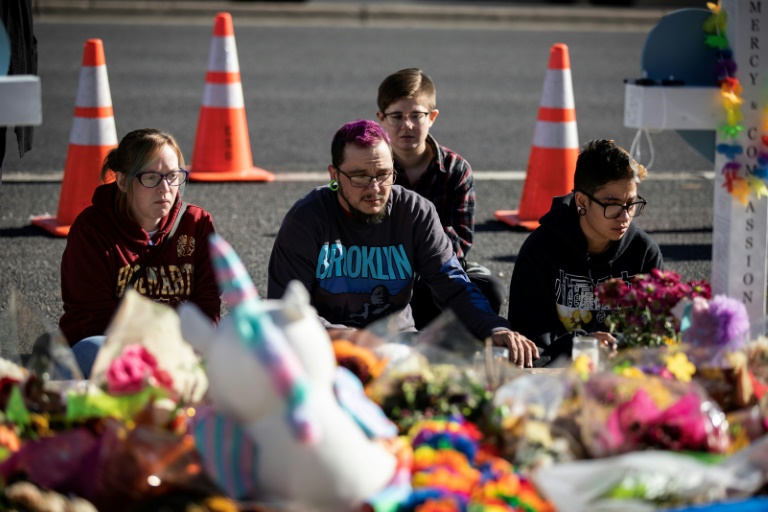
A bank of flowers and teddy bears formed a makeshift memorial outside the club, while on Monday night a candlelit vigil was held in a city center park.

But along with the mourning, there has also been praise for the bravery and quick-thinking of military veteran Richard Fierro, who was visiting the club with his wife.

Fierro told reporters he had snatched the attacker’s pistol.

“I don’t know exactly what I did, I just went into combat mode,” he said. “I just know I have to kill this guy before he kills us.

“I grabbed the gun out of his hand and just started hitting him in the head, over and over,” Fierro told The New York Times.

Booking photos issued by police on Wednesday show injuries to Aldrich’s head, face and neck.

A tentative new court appearance for Aldrich has been scheduled for December 6.

Walmart manager kills six in latest US mass shooting

A 31-year-old overnight manager at Walmart shot and killed six people at a store bustling with Thanksgiving holiday shoppers before turning the pistol on himself, authorities said Wednesday, in America’s second high-profile mass shooting in four days.

Four other people remained hospitalized in unknown condition following the Tuesday night rampage in Chesapeake, Virginia, police chief Mark Solesky said.

The gunman is believed to have died of a “self-inflicted gunshot wound,” Solesky told reporters, adding that the motive behind the country’s latest outburst of gun violence was not yet known.

City authorities identified the shooter as Chesapeake resident Andre Bing, saying he was armed with one handgun and multiple magazines. Walmart confirmed in a statement that Bing was an overnight team lead, employed with the company since 2010.

An employee named Briana Tyler — who survived the attack — earlier described scenes of terror as the store manager entered a staff break room, and opened fire. 

“He wasn’t aiming at anybody specifically,” Tyler told ABC’s “Good Morning America” program. “He just literally started shooting throughout the entire break room and I watched multiple people just drop down to the floor, whether they were trying to duck for cover or they were hit.”

She said the gunman looked right at her and fired but missed by mere inches. “He didn’t say a word, he didn’t say anything at all,” Tyler said.

The assault came two days before the quintessential American family holiday Thursday and on the heels of a weekend gun attack at an LGBTQ club in Colorado that killed five people.

And fewer than 10 days before this shooting in Chesapeake, Virginia, three students at the University of Virginia who played on its football team were killed November 13 by a classmate after a field trip.

President Joe Biden called the attack senseless and said “there are now even more tables across the country that will have empty seats this Thanksgiving.”

– ‘Extremely crowded’ –

In the Walmart attack, emergency calls were first made just after 10:00 pm Tuesday (0300 GMT Wednesday) while the store was still open. Chesapeake is about 150 miles (240 kilometers) southeast of the US capital Washington.

Officers entered the store a few minutes later, Solesky said.

The shooter and two victims were found dead in the break room, while another body was found next to the front of the store, the city said. Three people taken to hospital with gunshot wounds later died.

The youngest of the victims was 16 years old, officials said.

Terri Brown, who was in the Walmart but left just before the shooting, said the store was packed with holiday shoppers.

“It was extremely crowded,” Brown told the local ABC affiliate 13NewsNow. “All of the checkouts were extremely busy. They had most registers open. There were long, long lines at the self-checkout.”

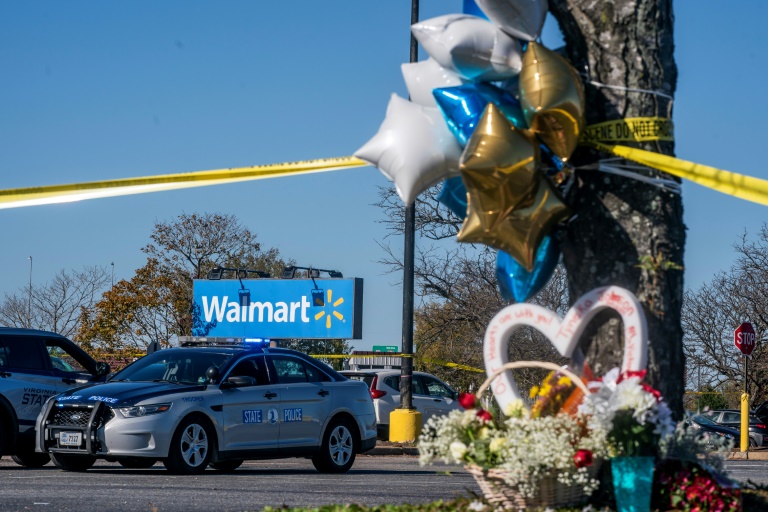
In the store parking lot on Wednesday, a makeshift memorial of flowers and small white electric candles sat against a tree beneath crime scene tape. White, blue and golden balloons tied to a tree blew in the wind. 

Susan Neal Matousek came by the memorial display to “pay my condolences,” she told AFP. 

“I couldn’t imagine losing someone right before Thanksgiving,” the 57-year-old retired teacher said. 

Walmart said in a statement Wednesday the company is cooperating with law enforcement’s investigation and is “focused on doing everything we can to support our associates and their families.”

Gun attacks in grocery stores in America have become increasingly common in recent years. A teenage gunman killed 10 people, most of them Black, at a grocery store in Buffalo, New York in May.

Last year a shooting at a supermarket in Boulder, Colorado also left 10 dead. And in a particularly gruesome attack in 2019, a young gunman killed 23 and wounded 26 as he stalked shoppers at a Walmart in El Paso, Texas.

An advocacy group called Guns Down America has reported that from January 1, 2020 to May 14 of this year there were 448 “gun incidents” and 137 deaths at 12 large national retailers.

So far in 2022, the Gun Violence Archive website has tracked more than 600 mass shootings in the United States — defined as an incident with four or more people shot or killed, not including the shooter. 

Tyler, the store employee, told ABC that the manager in question had a reputation as a difficult character.

“He was the manager to look out for because there was always something going on with him, just having an issue with someone,” she said. “I would’ve never thought he would do something like this.”

Close Bitnami banner
Bitnami