US Business

Disney seeks old magic in return of ex-CEO

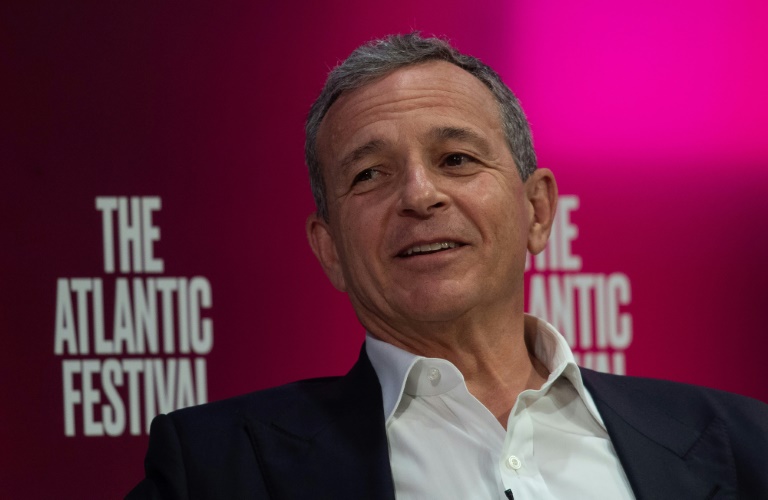
In a dramatic twist worthy of a “Star Wars” spin-off, Disney ditched CEO Bob Chapek and brought back Bob Iger, Hollywood’s most respected executive, who faces a huge challenge to revive the Magic Kingdom.

Iger’s return comes as Disney is trying to negotiate an uncertain era, where investors have lost faith in some of the most storied names in US media as companies bleed cash in the hunt for customers to streaming platforms.

Disney’s board of directors rehired Iger for a two-year contract that will add to the 15 years he ruled over the company until 2020, when he handed the reins to Chapek.

But Disney’s share price has slumped 40 percent this year and Chapek was unceremoniously fired after less than three years in the top job, much of it struggling to fill the big shoes left by Iger.

Iger’s leadership was extraordinary even by Hollywood’s standards.

The 71-year-old led Disney to new frontiers when he bought the Star Wars and Marvel franchises and launched the Disney+ streaming service to rival Netflix head-on.

He also bought 21 Century Fox from media baron Rupert Murdoch and held on to sports network ESPN despite calls to sell it, maintaining an empire that stretched from theme parks to local TV stations and cruise ships.

The return of Iger was cheered on by Wall Street, with Disney’s share price surging by six percent on Monday, and analysts recommending the stock for the first time since he exited the company.

– ‘Not guaranteed’ –

But some analysts were not so sure, warning that the world that Iger left in early 2020 — before Covid-19, before the streaming wars — had changed.

“The bold move might feel like the right one, however the business is at a different phase of growth,” said Paolo Pescatore, analyst at PP Foresight.

“It will take time and immediate success is not guaranteed.”

The core problem for Iger will be to turn a profit at Disney+ when, according to the latest figures in November, it burned through four billion dollars in just 12 months.

Launched in early 2020, Disney+ streams all that the Star Wars and Marvel franchises and Disney have to offer, releasing new content at a furious rate, but that weighs heavily on finances.

On the positive side, the Disney+ platform continues to gain subscribers and had 164 million customers at the end of September.

But the financial hole has put pressure on Disney’s other sectors: Theme parks and merchandising have succeeded for now to keep the Disney group in the green.

– ‘Expensive’ –

The pressure has grown worse as the economic outlook sours. 

Households are winnowing down entertainment subscriptions to just one or two, a cold reality that has seen the Netflix share price plummet by 50 percent in a year.

For Jonathan Kees of Daiwa Capital Markets America, Disney’s current troubles are also a result of choices made by Iger. 

“Iger pushed for the creation of Disney+, which has become an expensive business venture,” the analyst said. 

As for the 2019 purchase of 21st Century Fox, “that purchase alone loaded up the Disney balance sheet with an incredible amount of debt, which is not what investors are valuing in this current stock market.”

And even under the hugely respected Iger, Disney will face pressure from activist investors looking for quick results.

The Third Point fund, which increased its stake in Disney this summer, is among the most vocal on the matter. 

Dan Loeb, its founder and CEO, has previously demanded that Disney hive off the ESPN sports media business from the rest of the group before reversing his position.

And according to the Wall Street Journal, the return of Iger is decried by activist fund Trian, which acquired more than $800 million worth of Disney shares after the stock market tumbled after poor results.

“At the end of the day, it’s his legacy that’s at stake,” Pescatore said. 
Disney seeks old magic in return of ex-CEO

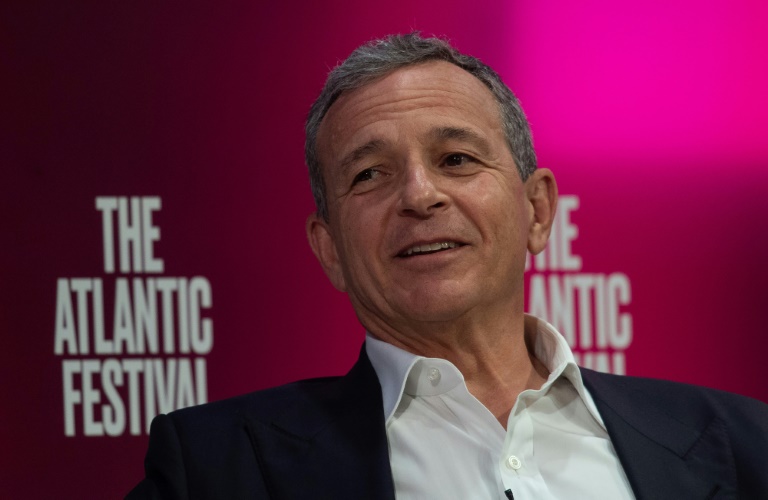
In a dramatic twist worthy of a “Star Wars” spin-off, Disney ditched CEO Bob Chapek and brought back Bob Iger, Hollywood’s most respected executive, who faces a huge challenge to revive the Magic Kingdom.

Iger’s return comes as Disney is trying to negotiate an uncertain era, where investors have lost faith in some of the most storied names in US media as companies bleed cash in the hunt for customers to streaming platforms.

Disney’s board of directors rehired Iger for a two-year contract that will add to the 15 years he ruled over the company until 2020, when he handed the reins to Chapek.

But Disney’s share price has slumped 40 percent this year and Chapek was unceremoniously fired after less than three years in the top job, much of it struggling to fill the big shoes left by Iger.

Iger’s leadership was extraordinary even by Hollywood’s standards.

The 71-year-old led Disney to new frontiers when he bought the Star Wars and Marvel franchises and launched the Disney+ streaming service to rival Netflix head-on.

He also bought 21 Century Fox from media baron Rupert Murdoch and held on to sports network ESPN despite calls to sell it, maintaining an empire that stretched from theme parks to local TV stations and cruise ships.

The return of Iger was cheered on by Wall Street, with Disney’s share price surging by six percent on Monday, and analysts recommending the stock for the first time since he exited the company.

– ‘Not guaranteed’ –

But some analysts were not so sure, warning that the world that Iger left in early 2020 — before Covid-19, before the streaming wars — had changed.

“The bold move might feel like the right one, however the business is at a different phase of growth,” said Paolo Pescatore, analyst at PP Foresight.

“It will take time and immediate success is not guaranteed.”

The core problem for Iger will be to turn a profit at Disney+ when, according to the latest figures in November, it burned through four billion dollars in just 12 months.

Launched in early 2020, Disney+ streams all that the Star Wars and Marvel franchises and Disney have to offer, releasing new content at a furious rate, but that weighs heavily on finances.

On the positive side, the Disney+ platform continues to gain subscribers and had 164 million customers at the end of September.

But the financial hole has put pressure on Disney’s other sectors: Theme parks and merchandising have succeeded for now to keep the Disney group in the green.

– ‘Expensive’ –

The pressure has grown worse as the economic outlook sours. 

Households are winnowing down entertainment subscriptions to just one or two, a cold reality that has seen the Netflix share price plummet by 50 percent in a year.

For Jonathan Kees of Daiwa Capital Markets America, Disney’s current troubles are also a result of choices made by Iger. 

“Iger pushed for the creation of Disney+, which has become an expensive business venture,” the analyst said. 

As for the 2019 purchase of 21st Century Fox, “that purchase alone loaded up the Disney balance sheet with an incredible amount of debt, which is not what investors are valuing in this current stock market.”

And even under the hugely respected Iger, Disney will face pressure from activist investors looking for quick results.

The Third Point fund, which increased its stake in Disney this summer, is among the most vocal on the matter. 

Dan Loeb, its founder and CEO, has previously demanded that Disney hive off the ESPN sports media business from the rest of the group before reversing his position.

And according to the Wall Street Journal, the return of Iger is decried by activist fund Trian, which acquired more than $800 million worth of Disney shares after the stock market tumbled after poor results.

“At the end of the day, it’s his legacy that’s at stake,” Pescatore said. 
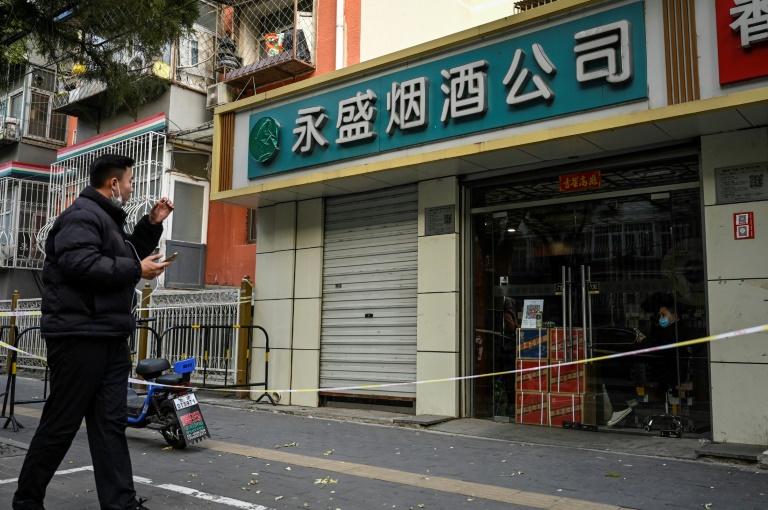
Global stocks mostly tumble on fears of fresh China Covid curbs

Global stocks mostly fell Monday as renewed concerns about harsh coronavirus curbs in China rattled investor sentiment, while oil prices gyrated as Saudi Arabia denied a report that exporters were weighing a production increase.

China’s first coronavirus deaths in six months sparked fears officials would reimpose strict, economically painful restrictions to fight outbreaks across the world’s second-biggest economy.

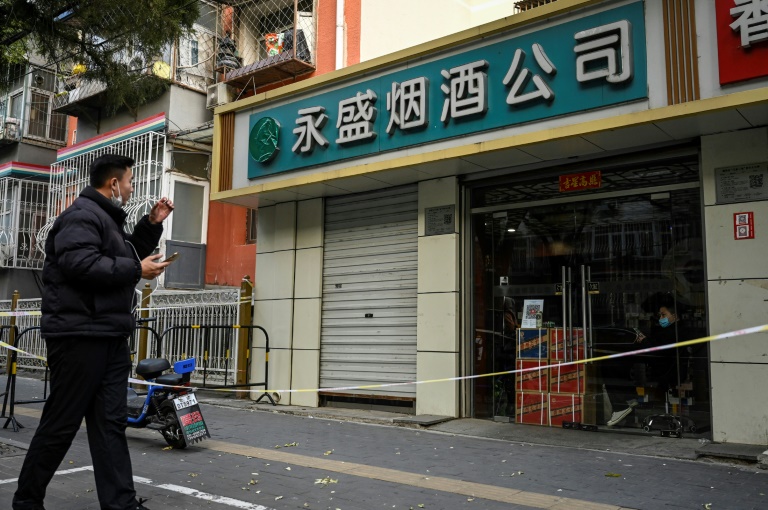
Some of Beijing’s largest shopping malls were closed Sunday, while others reduced opening hours or banned table service at restaurants as officials urged residents to avoid non-essential travel.

“No one can tell whether (Chinese President) Xi Jinping would pull back from the reopening plans, which would be another disaster for the Chinese stocks, and for the investor confidence,” said Ipek Ozkardeskaya, senior analyst at Swissquote Bank. 

Paris, London, Frankfurt and Milan all ended in the red on Monday while Wall Street also lost ground.

The fall in European and US stocks came after most Asian markets including Hong Kong’s Hang Seng Index and Shanghai ended lower, although Bangkok, Tokyo and Wellington were up.

“There is a bit of a risk off sentiment today,” said Angelo Kourkafas of Edward Jones.

“There’s no US data. But there are some headlines about the worsening Covid-19 trends in China, which is adding to global growth concerns,” he added.

US investors expect subdued trading during the week, which includes the Thanksgiving holiday on Thursday.

This is traditionally a “quiet” stretch for markets, Kourkafas said.

Oil prices plunged more than five percent early in the session following a Wall Street Journal report that said Saudi Arabia, which co-leads the OPEC+ cartel along with Russia, and other members were considering an “increase of up to 500,000 barrels a day.”

But the official Saudi Press Agency said on Monday night that energy minister Prince Abdulaziz bin Salman “categorically denies” the report. 

“It is well known, and no secret, that OPEC+ does not discuss any decisions ahead of its meetings,” SPA quoted Prince Abdulaziz as saying. 

The next OPEC+ meeting is scheduled for December 4. 

Among individual companies, Disney jumped 6.3 percent as it ousted Bob Chapek as chief executive and said it would bring back longtime former chief Bob Iger as it struggles to boost the financial performance of its streaming business.

– Key figures around 2210 GMT –

New York – Dow: DOWN 0.1 percent at 33,700.28 (close)

New York – S&P 500: DOWN 0.4 percent at 3,949.94 (close)

New York – Nasdaq: DOWN 1.1 percent at 11,024.51 (close)

London – FTSE 100: DOWN 0.1 percent at 7,376.85(close)

Paris – CAC 40: DOWN 0.2 percent at 6,634.45 (close)

Frankfurt – DAX: DOWN 0.4 percent at 14,379.93 (close)

EURO STOXX 50: DOWN 0.4 percent at 3,909.28 (close)

Tokyo – Nikkei 225: UP 0.2 percent at 27,944.79 (close)

Hong Kong – Hang Seng Index: DOWN 1.9 percent at 17,655.91 (close)

Shanghai – Composite: DOWN 0.4 percent at 3,085.04 (close)

Euro/dollar: DOWN at $1.0245 from $1.0325 on Friday

Dollar/yen: UP at 142.10 yen from 140.37 yen

Pound/dollar: DOWN at $1.1823 from $1.1890

Euro/pound: UP at 86.58 pence from 86.34 pence

West Texas Intermediate: DOWN 0.4 percent at $79.73 per barrel

Brent North Sea crude: DOWN 0.2 percent at $87.45 per barrel

One dead after car crashes into Apple store outside Boston

An SUV crashed into an Apple store in a Boston suburb on Monday, killing one person and injuring 16 others in an “unthinkable” incident, officials said.

The car struck “multiple” people after smashing through the glass facade of the store in the town of Hingham, Massachusetts, said Plymouth County District Attorney Tim Cruz.

He told reporters that one person had died and that the 16 hurt had been taken to hospital.

“This morning was an unthinkable morning and people are trying to get through it and process what happened.

“Needless to say, employees working in that store and nearby are visibly shaken,” Cruz added.

The prosecutor did not say whether the incident was an accident or intentional, simply noting: “This investigation is active and ongoing. We are very limited as to what we can say at this point.”

Footage aired by the local ABC affiliate showed several people being taken out of the store on stretchers.

A large hole in the facade could be seen with the dark-colored SUV inside the building.

The Hanover Fire Department said in a statement posted earlier on Twitter that a motor vehicle had gone into the store, “with multiple injured/trapped.”

It added that a “rescue team” was on the scene.

Most of the injured were transported to South Shore hospital in Weymouth, around three miles (five kilometers) away.

“Earlier this morning, we were informed by local public safety officials to expect patients from the scene of a motor vehicle incident in Hingham, Massachusetts,” a spokesperson for the hospital told AFP.

“South Shore Hospital’s Emergency Department is in the process of receiving those patients at this time.”

Apple did not immediately respond to a request for comment.

Spain's high-speed rail competition heats up with new entrant

Spain’s high-speed rail market is heating up with a new operator starting passenger services on Friday, making the country the first in Europe with three players in the sector.

The newcomers have pushed down prices and increased traffic on the high-speed network, which at around 4,000 kilometres (2,500 miles) is the world’s second longest after China’s.

Spain, a nation of around 47 million people, is the world’s second most popular tourist destination after France.

Private operator Iryo, which is 45 percent owned by Italy’s Trenitalia, made an inaugural trip on Monday from Madrid to Valencia on Spain’s Mediterranean coast.

It will begin passenger services on Friday with 16 daily return trips between Madrid and Barcelona, Spain’s two largest cities, 500 kilometres (300 miles) apart.

Iryo will compete with French railway company SNCF’s firm in the country, Ouigo, which has been operating since May 2021 and Spanish state-owned rail operator Renfe, which opened its first high-speed service in 1992.

The arrival of a third operator is a “historical step” and “novel” in Europe, said Carlos Lerida, a rail transport expert at the Autonomous University of Madrid.

“Until now no high-speed rail network has operated with three competitors. Spain could serve as a model,” he told AFP.

Iryo, which is kicking off its operations in Spain with 20 trains, will in mid-December expand its services to include a Madrid-Valencia route.

– ‘Democratise high-speed’ –

In March 2023 it will start running trains from Madrid to Seville and Malaga in the southwestern region of Andalusia.

Ouigo already operates trains along the Madrid-Barcelona and Madrid-Valencia routes and plans to start services to the Mediterranean port of Alicante as well as Andalusia next year.

Spain’s state rail infrastructure operator Adif in 2019 granted contracts allowing the firms to operate on these routes for 10 years.

Socialist Prime Minister Pedro Sanchez’s government is keen to lower ticket prices for bullet trains to make greater use of the high-speed rail network.

Transport Minister Raquel Sanchez said Monday that she wants to extend competition to other high-speed routes such as from Madrid to the northwestern region of Galicia as well as to the northern region of Asturias.

Last month she said greater competition will “democratise high-speed” rail travel and called Spain’s model for the sector “revolutionary”.

Renfe responded to the arrival of Ouigo in May 2021 with the launch of a low-cost bullet train service called Avlo.

The company has also renewed its fleet of trains and improved the service it offers passengers on their journeys.

Renfe has a seat sale offering the trip between Madrid and Barcelona for as little as seven euros.

– ‘Underused’ network –

“We see the arrival of competition as an opportunity not as a problem,” a Renfe spokesman said.

Average prices for tickets on high-speed trains between Madrid and Barcelona have dropped by 25 percent since Ouigo started operating last year, according to Spain’s competition watchdog CNMC.

Passenger traffic on the route has jumped by 47 percent and is up by 14 percent along Spain’s entire rail network since May 2021, according to Adif.

“The network was underused,” the director general of Ouigo’s Spanish branch, Helene Valenzuela, told AFP, adding this meant there was a “limited risk” in entering the market.

The company spent 630 million euros ($644 million) to launch its operations in Spain.

“Our main rivals are planes and cars, not other trains,” said Valenzuela.

“On a technical level, it is a challenge, because we have to organise the flow (of trains) in the stations. But on an economic level, it is an opportunity,” she added.

Competition in the high-speed rail sector has its limits.

It works on “very busy lines” but is “much more complicated” on other routes where it is harder for companies to cover their costs and make a profit,” said rail transport expert Lerida.

I. Coast, Ghana ease tug-of-war with buyers over cocoa prices

Ivory Coast and Ghana, the world’s two biggest cocoa producers, said Monday there had been progress towards resolving a tug-of-war with chocolate giants on prices.

The two countries had set a deadline of Sunday for manufacturers to pay higher prices to their growers.

But in a joint statement, industry bodies said the talks had yielded agreement to set up a working group to explore the problems, and report back early next year.

The producer countries also praised “the efforts made by certain companies” to find a solution for sustainable farming, the statement said.

The quarrel focuses on the Living Income Differential (LID) — a policy Ivory Coast and Ghana introduced in 2019 to fight poverty among cocoa farmers in the global $130-billion chocolate market.

Under it, Ivory Coast and Ghana vowed to charge a premium of $400 per tonne on all sales of cocoa beans, starting with the 2020/21 harvest.

But their trade boards say the scheme is being undercut by buyers who depress the price of another premium based on bean quality.

They have accused purchasers of clawing back the cost of the LID by exerting pressure on the “origin differential” premium, which has plunged below zero in recent years.

They set November 20 as a deadline for bringing buyers into line.

They threatened to punish corporations by barring them from visiting plantations to estimate harvests — a key factor in cocoa price forecasting.

And they also threatened to suspend sustainability programmes that chocolate giants use to enhance their image given the increasing ethical concerns of consumers.

– Progress –

Monday’s joint statement was signed by the Ivorian Coffee-Cocoa Council (CCC), the Ghana Cocoa Board (Cocobod) and the Ivory Coast-Ghana Cocoa Initiative (CIGCI).

The communique said producers had been in talks with chocolate manufacturers and other players in the industry.

The producers “noted the efforts made by certain companies and their desire to jointly find solutions for sustainable cocoa production that places farmers at the heart of this strategy”, the statement said.

“Under the auspices of the CIGCI, a working group of experts composed of representatives of member countries and cocoa sector stakeholders has been set up to study solutions to better resolve certain problems and to guarantee a sustainable price mechanism in the long term,” it added.

The panel is expected to report back in the first quarter 2023.

The two countries together account for 60 percent of the world’s cocoa but their farmers earn less than six percent of the industry’s global revenue.

– Value-added call –

Ivorian Prime Minister Patrick Achi told a press conference on Monday “the solution (to the row) is to process 100 percent of our cacao” in Ivory Coast.

His remarks touched on long-standing demands by producer countries, who say they lose out on jobs if they fail to get into the value-added parts of the chocolate business.

At present, only about a quarter of Ivorian production is processed into cocoa in the country itself.

Ivory Coast by itself accounts for 45 percent of world cocoa production.

The sector accounts for 14 percent of the national economy, but is also notorious for child labour, including cross-border trafficking of youngsters who toil in the plantations.

Recession-hit UK needs more migrant labour: business group

Britain needs more migrant labour to boost productivity as it faces a toxic mix of soaring inflation and shrinking growth, the country’s main business lobby group warned Monday.

The verdict from the Confederation of British Industry came at its annual gathering in Birmingham, Britain’s second biggest city.

The CBI conference comes after the government of Prime Minister Rishi Sunak last week slashed spending and hiked taxes in a budget, despite admitting that the inflation-wracked economy had fallen into recession.

“We come together, once more in extraordinary times,” CBI director-general Tony Danker told delegates in Birmingham, central England.

“Britain is in the middle of stagflation — rocketing inflation and negative growth — for the first time that probably most of us can remember.

“We know how to fight inflation. We know how to fight recession. But we don’t really know how to fight them together.”

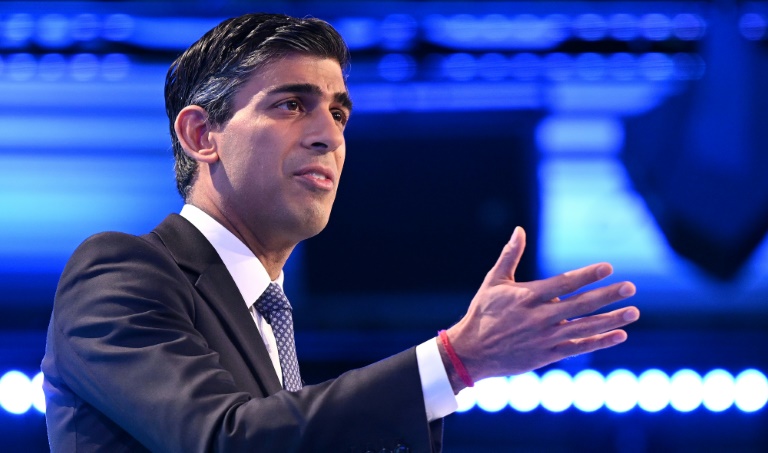
Sunak, who also addressed the CBI on Monday, took office one month ago after predecessor Liz Truss delivered an unfunded tax-slashing mini-budget that tanked the pound and sent UK borrowing costs soaring.

UK inflation sits at a 41-year peak of 11.1 percent on rocketing food and energy costs in the wake of the Ukraine war.

Consumer prices have raced higher also as demand rebounds following the lifting of pandemic lockdowns.

That has worsened a cost-of-living crisis for businesses and individuals, hit also by soaring interest rates as the Bank of England seeks to cool runaway inflation.

– Immigration focus –

The UK has forecast its economy to shrink 1.4 percent next year, hit additionally by fallout from Brexit which has resulted in foreign workers returning home.

“When you look at the (growth) data, the only thing holding it up, actually, is higher hours worked due to higher immigration,” Danker added Monday.

“People are arguing against immigration — but it’s the only thing that has increased our growth potential since March.

“Let’s be honest — we don’t have the people we need, nor do we have the productivity.”

Addressing the conference, Sunak ducked the CBI’s call for more legal migrant labour — and stressed that he was focussed on curbing illegal migration.

Anita Donohoe, a conference attendee representing Kinaxia Logistics, said that while “immigration is very important”, Sunak is right to “tackle illegal immigration”.

She told AFP: “Focus on the legal immigration,” adding that her company has suffered as a result of losing truck drivers.

Andrew Guy of Friisberg and Partners hit out over Britain’s departure from the European Union for contributing to a skills shortage and affecting businesses generally, including their exports.

“I’m anti-Brexit in every way. There is not one good thing that came out of it,” he insisted.

“Until the government acknowledges its mistakes we’ll continue to struggle.”

– Cost of inflation –

Sunak also told CBI delegates that the budget sought “to grip inflation and balance the books”.

“The best way to help people is by stopping mortgages, rents and food prices from spiralling out of control,” Sunak said.

“Re-establishing stability is the critical first step. But there is so much more we need to do,” he added, stressing he wants to see more business innovation to boost economic activity.

A study published Monday revealed that restaurant insolvencies increased almost 60 percent over the last year.

“As well as increasing food and energy costs, restaurants have been hit by shortages of labour, particularly for skilled roles such as chefs, which has pushed up staff costs,” according to accountancy firm Mazars, which carried out the survey.

LGBTQ nightclub attack a suspected hate crime: Colorado mayor

The mayor of Colorado Springs said Monday that an attack by a lone gunman on an LGBTQ nightclub in the western US city that left five people dead and up to 30 injured had “the trappings of a hate crime.”

Police have identified the suspect in the Saturday night shooting at Club Q as Anderson Lee Aldrich, but have not yet divulged a motive for the attack.

The 22-year-old Aldrich, who was armed with a rifle and a handgun, was subdued by patrons at the club and taken into custody by police.

“The motive is still under investigation,” Colorado Springs Mayor John Suthers told NBC’s Today show. “But it certainly has the trappings of a hate crime.”

GLAAD, an LGBTQ advocacy organization, noted that the shooting came on the eve of the Transgender Day of Remembrance, which honors victims of transphobic attacks, and amid an uptick in hostility against the LGBTQ community in the United States.

“You can draw a straight line from the false and vile rhetoric about LGBTQ people spread by extremists and amplified across social media, to the nearly 300 anti-LGBTQ bills introduced this year, to the dozens of attacks on our community like this one,” GLAAD president Sarah Kate Ellis said in a statement.

Colorado Representative Brianna Titone, an openly trans state legislator, also singled out anti-LGBTQ rhetoric.

“When politicians and pundits keep perpetuating tropes, insults, and misinformation about the trans and LGBTQ+ community, this is a result,” Titone tweeted.

The attack was the deadliest on the LGBTQ community in the United States since a mass shooting at a nightclub in Orlando, Florida, in 2016 that claimed 49 lives.

Colorado authorities said it had not yet been officially classified as a hate crime but first-degree murder charges were certain to be filed.

Transgender rights were a hot-button issue in the United States leading up to midterm elections earlier this month, with Republicans putting forward a slew of legislative proposals to restrict them.

– Gunman overpowered –

Suthers, the mayor, said the gunman was overpowered in an “incredible act of heroism” by patrons of the club.

“Two, but primarily one as I understand it, are able to take a handgun that he’s got in his possession, take it away from him and use that weapon, not by shooting it, but by hitting him and disabling him,” he said.

“That act probably saved a lot of lives, there’s no question about that.”

Colorado Springs police chief Adrian Vasquez said Monday that the attack, which occurred shortly before midnight on Saturday, left five people dead and up to 30 injured.

“Injuries could range from being shot to maybe falling when trying to get out of the building,” Vasquez told CNN.

He said the suspect, who was armed with an “AR-style” rifle and a handgun, was currently in hospital and has declined to speak to to investigators.

Vasquez said police were scouring his social media to determine if “this was a bias-motivated crime.”

He said he expected charges to be filed later Monday.

The police chief also condemned what he called an “evil act” and pledged to do everything he can to make the community in Colorado Springs feel safe again.

– ‘Our safe space’ –

According to police, the suspect entered the club and immediately began shooting.

Police arrived within four minutes of receiving a call about an active shooting.

Bartender Michael Anderson praised the patrons who overpowered the gunman.

“There were some very brave people beating him and kicking him, stopping him from causing more damage,” he said. “They saved my life last night.”

Joshua Thurman was also in the club that night.

“It was so scary,” Thurman told reporters. “There were bodies on the floor. There was shattered glass, broken cups, people crying.

“It was supposed to be our safe space,” he said. “Where are we supposed to go?”

President Joe Biden condemned the attack, slamming violence against the LGBTQ community, particularly transgender women of color.

“We must drive out the inequities that contribute to violence against LGBTQI+ people. We cannot and must not tolerate hate,” he said.

Colorado Governor Jared Polis, who in 2018 became the first openly gay man elected as a US state governor, called the shooting “horrific, sickening and devastating.” 

A man with the same name as Aldrich was arrested on June 18 last year after his mother said he had threatened her with a homemade bomb, according to a news release at the time from the El Paso County Sheriff’s Office.

Vasquez, the police chief, said the suspect’s mother was not cooperating with the authorities at this time.

Fears of fresh China Covid curbs rattle stocks, oil prices

Oil prices plunged to lows unseen since January and global stocks mostly fell on Monday as renewed concerns about harsh coronavirus curbs in China rattled investor sentiment.

China’s first coronavirus death in six months sparked fears officials would reimpose strict, economically painful restrictions to fight outbreaks across the world’s second-biggest economy.

Brent North Sea crude slumped 5.5 percent to $82.84 per barrel and WTI shed 5.7 percent to $75.55 in mid-afternoon trading on fears over Chinese energy demand. 

Paris, London, Frankfurt and Milan all ended in the red on Monday while Wall Street also lost ground.

The fall in European and US stocks came after most Asian markets including Hong Kong’s Hang Seng Index and Shanghai ended lower, although Bangkok, Tokyo and Wellington were up.

The death of an 87-year-old man in Beijing on Sunday came as infections across China spiked, testing authorities’ plans to loosen their grip by lowering quarantine times for foreigners and cancelling mass tests.

Two further Covid deaths were recorded on Monday, both elderly residents from Beijing.

The news threw a spanner in the works for investors who had grown hopeful of a gradual reopening of China’s economy.

“Crude oil prices have slipped back sharply on the back of concerns over weakening Chinese demand, as well as reports that Saudi Arabia supports the idea of a production increase,” noted Michael Hewson, chief market analyst at CMC Markets UK.

“No one can tell whether (Chinese President) Xi Jinping would pull back from the reopening plans, which would be another disaster for the Chinese stocks, and for the investor confidence,” said Ipek Ozkardeskaya, senior analyst at Swissquote Bank. 

Nevertheless, global markets have enjoyed a broadly healthy November thanks to signs of China easing and indications of slowing US inflation that fanned optimism the Federal Reserve would start to slow its pace of interest rate hikes.

But several officials soon lined up to warn that more needed to be done to get inflation back down from four-decade highs to more bearable levels.

Markets are meanwhile expected to stay relatively quiet for the rest of the week, with many US investors taking time off for Thanksgiving.

“Traders are also concerned by continued weakness in crypto prices in the wake of FTX’s collapse,” added market analyst Fawad Razaqzada.

“With this also being a quiet day and week in terms of macro data, they are understandably keen to proceed with caution.”

– Key figures around 1630 GMT –

London – FTSE 100: DOWN 0.1 percent at 7,376.85 points (close)

Paris – CAC 40: DOWN 0.2 percent at 6,634.45 (close)

Frankfurt – DAX: DOWN 0.4 percent at 14,379.93 (close)

EURO STOXX 50: DOWN 0.4 percent at 3,909.28

New York – Dow: DOWN 0.3 percent at 33,644.55

Tokyo – Nikkei 225: UP 0.2 percent at 27,944.79 (close)

Hong Kong – Hang Seng Index: DOWN 1.9 percent at 17,655.91 (close)

Shanghai – Composite: DOWN 0.4 percent at 3,085.04 (close)

Euro/dollar: DOWN at $1.0247 from $1.0325 on Friday

Dollar/yen: UP at 141.90 yen from 140.37 yen

Pound/dollar: DOWN at $1.1799 from $1.1890

Euro/pound: UP at 86.84 pence from 86.34 pence

West Texas Intermediate: DOWN 5.7 percent at $75.51 per barrel

Brent North Sea crude: DOWN 5.8 percent at $82.51 per barrel

Fears of fresh China Covid curbs rattle stocks, oil prices

Oil prices plunged to lows unseen since January and global stocks mostly fell on Monday as renewed concerns about harsh coronavirus curbs in China rattled investor sentiment.

China’s first coronavirus death in six months sparked fears officials would reimpose strict, economically painful restrictions to fight outbreaks across the world’s second-biggest economy.

Brent North Sea crude slumped 5.5 percent to $82.84 per barrel and WTI shed 5.7 percent to $75.55 in mid-afternoon trading on fears over Chinese energy demand. 

Paris, London, Frankfurt and Milan all ended in the red on Monday while Wall Street also lost ground.

The fall in European and US stocks came after most Asian markets including Hong Kong’s Hang Seng Index and Shanghai ended lower, although Bangkok, Tokyo and Wellington were up.

The death of an 87-year-old man in Beijing on Sunday came as infections across China spiked, testing authorities’ plans to loosen their grip by lowering quarantine times for foreigners and cancelling mass tests.

Two further Covid deaths were recorded on Monday, both elderly residents from Beijing.

The news threw a spanner in the works for investors who had grown hopeful of a gradual reopening of China’s economy.

“Crude oil prices have slipped back sharply on the back of concerns over weakening Chinese demand, as well as reports that Saudi Arabia supports the idea of a production increase,” noted Michael Hewson, chief market analyst at CMC Markets UK.

“No one can tell whether (Chinese President) Xi Jinping would pull back from the reopening plans, which would be another disaster for the Chinese stocks, and for the investor confidence,” said Ipek Ozkardeskaya, senior analyst at Swissquote Bank. 

Nevertheless, global markets have enjoyed a broadly healthy November thanks to signs of China easing and indications of slowing US inflation that fanned optimism the Federal Reserve would start to slow its pace of interest rate hikes.

But several officials soon lined up to warn that more needed to be done to get inflation back down from four-decade highs to more bearable levels.

Markets are meanwhile expected to stay relatively quiet for the rest of the week, with many US investors taking time off for Thanksgiving.

“Traders are also concerned by continued weakness in crypto prices in the wake of FTX’s collapse,” added market analyst Fawad Razaqzada.

“With this also being a quiet day and week in terms of macro data, they are understandably keen to proceed with caution.”

– Key figures around 1630 GMT –

London – FTSE 100: DOWN 0.1 percent at 7,376.85 points (close)

Paris – CAC 40: DOWN 0.2 percent at 6,634.45 (close)

Frankfurt – DAX: DOWN 0.4 percent at 14,379.93 (close)

EURO STOXX 50: DOWN 0.4 percent at 3,909.28

New York – Dow: DOWN 0.3 percent at 33,644.55

Tokyo – Nikkei 225: UP 0.2 percent at 27,944.79 (close)

Hong Kong – Hang Seng Index: DOWN 1.9 percent at 17,655.91 (close)

Shanghai – Composite: DOWN 0.4 percent at 3,085.04 (close)

Euro/dollar: DOWN at $1.0247 from $1.0325 on Friday

Dollar/yen: UP at 141.90 yen from 140.37 yen

Pound/dollar: DOWN at $1.1799 from $1.1890

Euro/pound: UP at 86.84 pence from 86.34 pence

West Texas Intermediate: DOWN 5.7 percent at $75.51 per barrel

Brent North Sea crude: DOWN 5.8 percent at $82.51 per barrel

Close Bitnami banner
Bitnami