US Business

Markets rattled by fears of fresh Covid curbs in China

Asian and European stocks mostly fell Monday, with investor sentiment hit by renewed Covid concerns in China amid warnings that markets would remain lacklustre for some time.

Shares headed lower as China’s first coronavirus death in six months sparked fears officials would reimpose strict, economically painful restrictions to fight outbreaks across the country.

“The bear market is not over, in our view,” Goldman Sachs strategist Peter Oppenheimer said.

“The conditions that are typically consistent with an equity trough have not yet been reached. We would expect lower valuations (consistent with recessionary outcomes), a trough in the momentum of growth deterioration, and a peak in interest rates before a sustained recovery begins.”

Oil prices also slid on fears over energy demand in China, the world’s second biggest economy.

“There are concerns China may tighten Covid curbs further after the first Covid-related death in almost six months was reported, and a city near Beijing enforced a slew of restrictions,” said market analyst Fawad Razaqzada.

“Traders are also concerned by continued weakness in crypto prices in the wake of FTX’s collapse,” he said.

The death of an 87-year-old man in Beijing on Sunday came as infections across the country spiked, testing authorities’ plans to loosen their grip by lowering quarantine times for foreigners and cancelling mass tests.

Two further Covid deaths were recorded on Monday, both elderly residents from Beijing.

The news threw a spanner in the works for investors who had grown hopeful of a gradual reopening of China’s economy.

Hong Kong’s Hang Seng Index fell nearly two percent, extending a sell-off at the end of last week.

Shanghai was also down along with most Asian markets, but Bangkok, Tokyo and Wellington ended higher.

Nevertheless, global markets have enjoyed a broadly healthy November thanks to signs of China easing and indications of slowing US inflation that fanned optimism the Federal Reserve would start to slow its pace of interest rate hikes.

But several officials soon lined up to warn that more needed to be done to get inflation back down from four-decade highs to more bearable levels.

Markets are meanwhile expected to stay relatively quiet for the rest of the week, with many US investors taking time off for Thanksgiving.

– Key figures around 1430 GMT –

London – FTSE 100: DOWN 0.2 percent at 7,373.98 points

Paris – CAC 40: DOWN 0.3 percent at 6,626.94

Frankfurt – DAX: DOWN 0.4 percent at 14,379.97

EURO STOXX 50: DOWN 0.4 percent at 3,909.67

New York – Dow: DOWN by less than 0.1 percent at 33,735.28

Tokyo – Nikkei 225: UP 0.2 percent at 27,944.79 (close)

Hong Kong – Hang Seng Index: DOWN 1.9 percent at 17,655.91 (close)

Shanghai – Composite: DOWN 0.4 percent at 3,085.04 (close)

Euro/dollar: DOWN at $1.0240 from $1.0325 on Friday

Dollar/yen: UP at 141.48 yen from 140.37 yen

Pound/dollar: DOWN at $1.1809 from $1.1890

Euro/pound: UP at 86.71 pence from 86.34 pence

West Texas Intermediate: DOWN 3.7 percent at $77.16 per barrel

Brent North Sea crude: DOWN 3.7 percent at $84.36 per barrel

Markets rattled by fears of fresh Covid curbs in China

Asian and European stocks mostly fell Monday, with investor sentiment hit by renewed Covid concerns in China amid warnings that markets would remain lacklustre for some time.

Shares headed lower as China’s first coronavirus death in six months sparked fears officials would reimpose strict, economically painful restrictions to fight outbreaks across the country.

“The bear market is not over, in our view,” Goldman Sachs strategist Peter Oppenheimer said.

“The conditions that are typically consistent with an equity trough have not yet been reached. We would expect lower valuations (consistent with recessionary outcomes), a trough in the momentum of growth deterioration, and a peak in interest rates before a sustained recovery begins.”

Oil prices also slid on fears over energy demand in China, the world’s second biggest economy.

“There are concerns China may tighten Covid curbs further after the first Covid-related death in almost six months was reported, and a city near Beijing enforced a slew of restrictions,” said market analyst Fawad Razaqzada.

“Traders are also concerned by continued weakness in crypto prices in the wake of FTX’s collapse,” he said.

The death of an 87-year-old man in Beijing on Sunday came as infections across the country spiked, testing authorities’ plans to loosen their grip by lowering quarantine times for foreigners and cancelling mass tests.

Two further Covid deaths were recorded on Monday, both elderly residents from Beijing.

The news threw a spanner in the works for investors who had grown hopeful of a gradual reopening of China’s economy.

Hong Kong’s Hang Seng Index fell nearly two percent, extending a sell-off at the end of last week.

Shanghai was also down along with most Asian markets, but Bangkok, Tokyo and Wellington ended higher.

Nevertheless, global markets have enjoyed a broadly healthy November thanks to signs of China easing and indications of slowing US inflation that fanned optimism the Federal Reserve would start to slow its pace of interest rate hikes.

But several officials soon lined up to warn that more needed to be done to get inflation back down from four-decade highs to more bearable levels.

Markets are meanwhile expected to stay relatively quiet for the rest of the week, with many US investors taking time off for Thanksgiving.

– Key figures around 1430 GMT –

London – FTSE 100: DOWN 0.2 percent at 7,373.98 points

Paris – CAC 40: DOWN 0.3 percent at 6,626.94

Frankfurt – DAX: DOWN 0.4 percent at 14,379.97

EURO STOXX 50: DOWN 0.4 percent at 3,909.67

New York – Dow: DOWN by less than 0.1 percent at 33,735.28

Tokyo – Nikkei 225: UP 0.2 percent at 27,944.79 (close)

Hong Kong – Hang Seng Index: DOWN 1.9 percent at 17,655.91 (close)

Shanghai – Composite: DOWN 0.4 percent at 3,085.04 (close)

Euro/dollar: DOWN at $1.0240 from $1.0325 on Friday

Dollar/yen: UP at 141.48 yen from 140.37 yen

Pound/dollar: DOWN at $1.1809 from $1.1890

Euro/pound: UP at 86.71 pence from 86.34 pence

West Texas Intermediate: DOWN 3.7 percent at $77.16 per barrel

Brent North Sea crude: DOWN 3.7 percent at $84.36 per barrel
Recession-hit UK needs more migrant labour: business lobby

Britain needs more migrant labour to boost productivity as it faces a toxic mix of soaring inflation and shrinking growth, the country’s main business lobby group warned Monday.

The verdict from the Confederation of British Industry came at its annual gathering in Birmingham, Britain’s second biggest city.

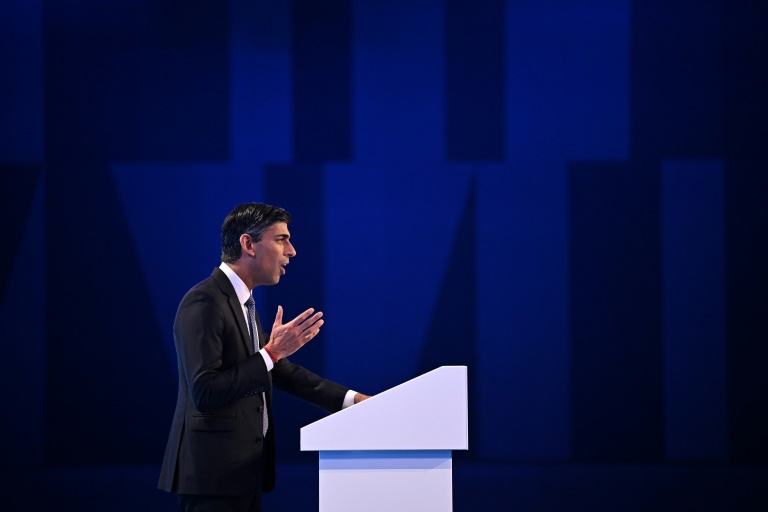
The CBI conference comes after the government of Prime Minister Rishi Sunak slashed spending and hiked taxes in a budget, despite admitting that the inflation-wracked economy had fallen into recession.

“We come together, once more in extraordinary times,” CBI director-general Tony Danker told delegates in Birmingham, central England.

“Britain is in the middle of stagflation — rocketing inflation and negative growth — for the first time that probably most of us can remember.

“We know how to fight inflation. We know how to fight recession. But we don’t really know how to fight them together.”

Sunak, who also addressed the CBI on Monday, took office one month ago after predecessor Liz Truss delivered an unfunded tax-slashing mini-budget that tanked the pound and sent UK borrowing costs soaring.

UK inflation sits at a 41-year peak of 11.1 percent on rocketing food and energy costs in the wake of the Ukraine war.

Consumer prices have also raced higher as demand rebounds following the lifting of pandemic lockdowns.

That has worsened a cost-of-living crisis for businesses and individuals, hit also by soaring interest rates as the Bank of England seeks to cool runaway inflation.

The UK has forecast the economy to shrink 1.4 percent next year, hit also by fallout from Brexit which has resulted in foreign workers returning home.

“When you look at the (growth) data, the only thing holding it up, actually, is higher hours worked due to higher immigration,” Danker added on Monday.

“People are arguing against immigration — but it’s the only thing that has increased our growth potential since March.

“Let’s be honest — we don’t have the people we need, nor do we have the productivity.”

– Focus on illegal immigration –

Sunak, addressing the conference later on Monday, ducked the CBI’s call for more legal migrant labour — and stressed that he was focussed on curbing illegal migration.

“The country’s number one priority right now, when it comes to migration, is tackling illegal migration,” he said.

“When people see that happening, it undermines trust in the system, it doesn’t seem fair that people are able to break the rules.

“That’s what I’m absolutely determined to fix.”

He also told CBI delegates that last week’s budget sought “to grip inflation and balance the books”.

“The best way to help people is by stopping mortgages, rents and food prices from spiralling out of control,” Sunak said.

“Re-establishing stability is the critical first step. But there is so much more we need to do,” he added, stressing he wants to see more business innovation to boost economic activity.

No backsliding on Brexit, says UK PM

British Prime Minister Rishi Sunak on Monday denied that his government was seeking to row back on the UK’s EU withdrawal deal, despite an apparent growing backlash against Brexit.

Brexit-supporter Sunak told business leaders that life outside the European Union was “already delivering enormous benefits and opportunities”.

He touted greater curbs on immigration — a key plank of the Brexit deal — and closer trade ties with Asia.

But he added: “Let me be unequivocal about this: under my leadership, the United Kingdom will not pursue any relationship with Europe that relies on alignment with EU laws.”

The UK left the EU in full in January 2021, after years of political wrangling since the divisive referendum n 2016 to split from the bloc.

Brexit saw the UK withdraw from the European single market and customs union, while free movement between member states and the jurisdiction of European courts ended.

But a deal between London and Brussels maintained largely tariff-free trade with its remaining 27 members.

Sunak’s comments follow a Sunday Times report that “senior government figures” were planning to “put Britain on the path towards a Swiss-style relationship” with the EU.

Switzerland has far closer ties with the bloc through bilateral agreements allowing access to the single market, a high degree of free movement and by paying into EU coffers.

The report, and comments last week by finance minister Jeremy Hunt, who voted to remain in the EU, that he was eager to remove the “vast majority” of trade barriers with the EU.

That has sparked unease among eurosceptic members of the ruling Conservative party.

“The government has got to focus on what it needs to do, rather than trying to reopen a settled debate about Europe,” former Tory leader Iain Duncan Smith told The Sun. 

– Bad deals? –

The backlash stirred memories of the febrile aftermath of the referendum about how best to deliver Brexit.

Former prime minister Boris Johnson, a staunch critic of his predecessor Theresa May’s plan for Swiss-style ties, eventually won the argument with his harder version of Brexit.

He won a landslide election victory in December 2019 on a vow to “get Brexit done”, having negotiated his own 2019 divorce deal.

However, three years on, the UK is in a deep economic crisis and criticism of both Johnson’s agreement and the whole Brexit project is increasing.

Amid decades-high inflation and forecasts of its longest ever recession, a new YouGov poll last week suggested 56 percent of people now think it was wrong to leave the EU.

Some 32 percent were still in favour.

The Office for Budget Responsibility watchdog assessed that Brexit had had a “significant adverse impact” on UK trade, in comments backed by the Bank of England.

The OBR blamed Brexit for reducing overall trade volumes and denting trading relationships with the bloc.

The gloomy economic news was compounded by London losing its prized status as the biggest European stock market to Paris.

Brexiteers promised to strike trade deals around the world, including with the potentially lucrative United States market.

But an agreement with Washington is unlikely anytime soon.

Accords London has struck with other countries — negotiated by Sunak’s short-lived predecessor Liz Truss as trade minister — are also being lambasted.

Former environment minister George Eustice said last week that the agreement he helped finalise with Australia almost a year ago was “not actually a very good deal for the UK”.

“Overall, the truth of the matter is that the UK gave away far too much, for far too little in return,” he told MPs in parliament, citing liberalisation of beef and sheep markets.

In Brussels, the European Commission said: “Our relationship with the United Kingdom is based on the Withdrawal Agreement and the Trade and Cooperation Agreement.”

A temporary deal for food and agricultural products was “the only Swiss-style deal or offer on the table as far as we’re concerned”, a spokesman told reporters.

Lufthansa launches hiring drive as recovery gathers pace

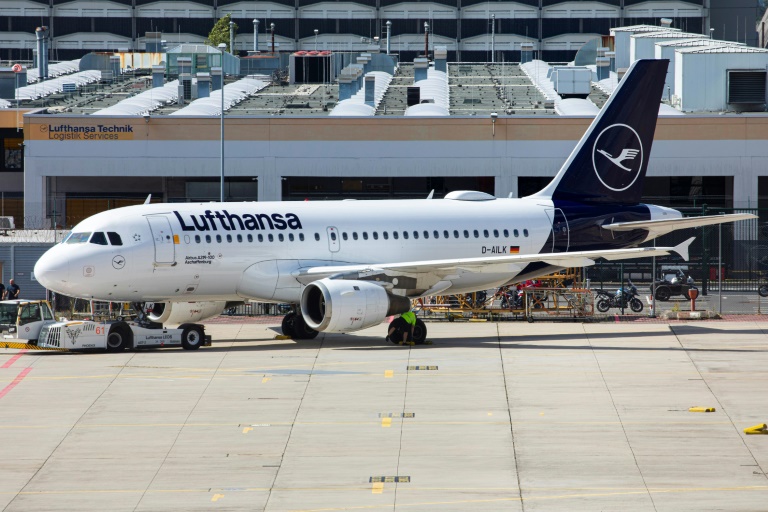
Lufthansa on Monday launched a drive to hire 20,000 employees, as the German airline giant recovers strongly from the coronavirus pandemic and seeks to tackle staffing shortages. 

The airline made huge losses when the virus brought global air travel to a halt but a rebound in demand has helped it return to profit this year.

Lufthansa said it was seeking the new hires in Germany, Switzerland, Austria and Belgium, with roles ranging from pilots and flight attendants to technicians and IT specialists. 

A spokesman said some of the roles were being newly created while some were replacements for people who had left. 

“In order to be at the forefront of the industry, we need dedicated and motivated employees for a variety of tasks and challenges,” said personnel chief Michael Niggemann.

According to figures published in October, Lufthansa had 108,000 employees at the end of September. It had 138,000 at the end of 2019, prior to the pandemic.

The airline industry in Europe is scrambling to hire new staff to cope with the rebound in demand, after many quit or were let go during the pandemic.  

Lufthansa, which cut thousands of staff during the pandemic, faced strike action by pilots and ground staff over the summer, due to worker shortages but also rising inflation. 

The airline group subsequently agreed to pay hikes for staff in several different areas.

In the third quarter, the airline group — which also includes Eurowings, Austrian, Swiss and Brussels Airlines — reported a healthy profit, and declared it had “left the pandemic behind”.

Lufthansa made huge losses in 2020 and 2021, and had to be bailed out by the German government, but it reported that its finances stabilised earlier than expected. 

Markets mainly drop on fresh China Covid fears

Asian and European stocks mostly fell Monday, with investor sentiment hit by renewed Covid concerns in China.

Shares headed lower as China’s first coronavirus death in six months sparked fears officials would reimpose strict, economically painful restrictions to fight outbreaks across the country.

Oil prices also slid on fears over energy demand in China, the world’s second biggest economy.

Investors “had been pinning hopes on a Chinese reopening to help ease global supply-chain problems and kickstart growth” in the Asian economic giant, said AJ Bell investment director Russ Mould.

“However, renewed outbreaks of Covid have seen some restrictions return and helped dampen sentiment, with oil prices also lower,” he added.

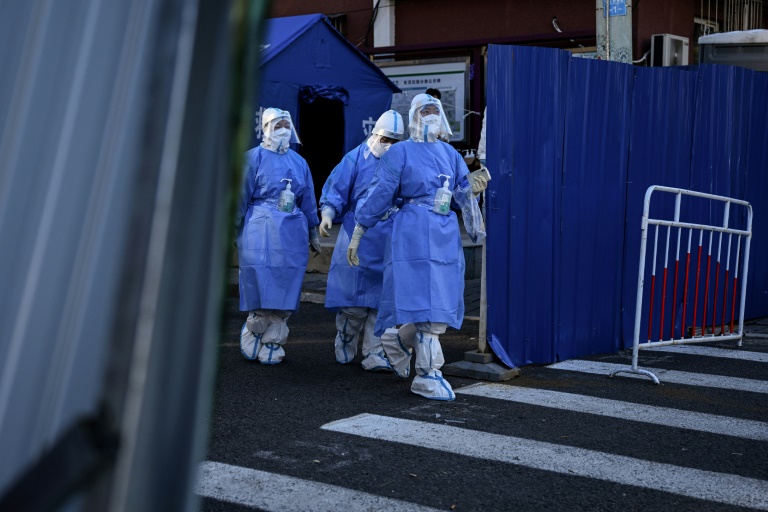
The death of an 87-year-old man in Beijing on Sunday came as infections across the country spiked, testing authorities’ plans to loosen their grip by lowering quarantine times for foreigners and cancelling mass tests.

The news threw a spanner in the works for investors who had grown hopeful of a gradual reopening of China’s economy.

“It feels like one step forward, two steps back,” said Forsyth Barr Asia analyst Willer Chen.  

“It is super hard to reopen in the short term, given winter is coming and cases are at a super high level and spreading across the whole country.”

The measures dealt a particular blow to Hong Kong’s Hang Seng Index, which fell nearly two percent, extending a sell-off at the end of last week.

Shanghai was also down along with most Asian markets, but Bangkok, Tokyo and Wellington ended higher.

Nevertheless, global markets have enjoyed a broadly healthy November thanks to signs of China easing and indications of slowing US inflation that fanned optimism the Federal Reserve would start to slow its pace of interest rate hikes.

But several officials soon lined up to warn that more needed to be done to get inflation back down from four-decade highs to more bearable levels.

Markets are meanwhile expected to stay relatively quiet for the rest of the week, with many US investors taking time off for Thanksgiving.

– Key figures around 1115 GMT –

London – FTSE 100: DOWN 0.1 percent at 7,380.96 points

Paris – CAC 40: DOWN 0.2 percent at 6,629.85

Frankfurt – DAX: DOWN 0.6 percent at 14,342.54

EURO STOXX 50: DOWN 0.5 percent at 3,906.26

Tokyo – Nikkei 225: UP 0.2 percent at 27,944.79 (close)

Hong Kong – Hang Seng Index: DOWN 1.9 percent at 17,655.91 (close)

Shanghai – Composite: DOWN 0.4 percent at 3,085.04 (close)

New York – Dow: UP 0.6 percent at 33,745.69 (close)

Euro/dollar: DOWN at $1.0244 from $1.0325 on Friday

Dollar/yen: UP at 141.43 yen from 140.37 yen

Pound/dollar: DOWN at $1.1809 from $1.1890

Euro/pound: UP at 86.75 from 86.34 pence

West Texas Intermediate: DOWN 0.5 percent at $79.70 per barrel

Brent North Sea crude: DOWN 0.7 percent at $87.03 per barrel

Spain's high-speed rail competition heats up with new entrant

Competition in Spain’s high-speed rail market is heating up with a new operator starting passenger services on Friday, making it Europe’s first nation with three players in the sector.

The new firms have pushed down prices and increased passenger traffic on the high speed network, which at 4,000 kilometres (2,500 miles) is the second longest in the world after China’s.

Spain is the world’s second most popular tourist destination after France.

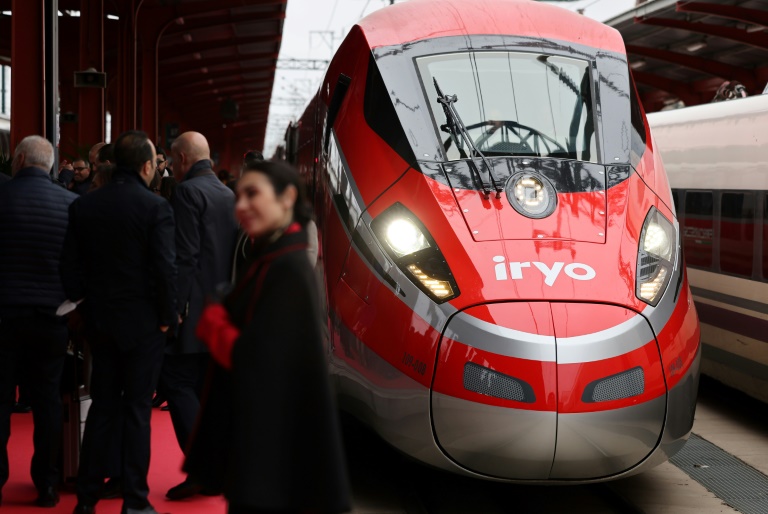
Private operator Iryo, which is 45 percent owned by Italy’s Trenitalia, made an inaugural symbolic trip on Monday from Madrid to Valencia on Spain’s Mediterranean coast.

It will begin passenger services on Friday with 16 daily return trips between Madrid and Barcelona, Spain’s two largest cities.

Iryo will compete with French railway company SNCF’s firm in the country, Ouigo, which has been operating since May 2021 and Spanish state-owned rail operator Renfe, which opened its first high-speed service in 1992.

The arrival of a third operator is a “historical step” which is “novel” in Europe, said Carlos Lerida, a rail transport expert at the Autonomous University of Madrid.

“Until now no high-speed rail network has operated with three competitors. Spain could serve as a model,” he told AFP.

Iryo, which is kicking off its operations in Spain with 20 trains, will in mid-December expand its services to include a Madrid-Valencia route.

And it March 2023 it will start running trains from Madrid to Seville and Malaga in the southwestern region of Andalusia.

Ouigo already operates trains along the Madrid-Barcelona and Madrid-Valencia routes and plans to start services to the Mediterranean port of Alicante as well as Andalusia next year.

– ‘Democratise high-speed’ –

Spain’s state rail infrastructure operator Adif in 2019 granted contracts allowing the firms to operate on these routes for 10 years.

Socialist Prime Minister Pedro Sanchez’s government is keen to lower ticket prices for bullet train tickets to make greater use of the high-speed rail network.

Greater competition will “democratise high-speed” rail travel, Transport Minister Raquel Sanchez said last month, calling Spain’s model for the sector “revolutionary”.

Renfe responded to the arrival of Ouigo in May 2021 with the launch of a low-cost bullet train service called Avlo.

The company has also renewed its fleet of trains and improved the service it offers passengers on their journeys.

Renfe has a seat sale underway with prices of a 500-kilometre (300-mile) trip between Madrid and Barcelona for as little as seven euros.

“We see the arrival of competition as an opportunity not as a problem,” a Renfe spokesman said.

Average prices for tickets on high-speed trains between Madrid and Barcelona have dropped by 25 percent since Ouigo started operating last year, according to Spain’s competition watchdog CNMC.

– ‘Underused’ network –

Passenger traffic on the route has jumped by 47 percent, and is up by 14 percent along Spain’s entire rail network since May 2021, according to Adif.

“The network was underused,” the director general of Ouigo’s Spanish branch, Helene Valenzuela, told AFP, adding this meant there was a “limited risk” in entering the market.

The company spent 630 million euros ($644 million) to launch its operations in Spain.

“Our main rivals are planes and cars, not other trains,” said Valenzuela.

“On a technical level, it is a challenge, because we have to organise the flow (of trains) in the stations. But on an economic level, it is an opportunity,” she added.

Competition in the high-speed rail sector has its limits.

It works on “very busy lines” but it is “much more complicated” on other routes where it is harder for companies to cover their costs and make a profit,” said rail transport expert Lerida.

UK's Compass, world's largest caterer, sees profits triple

Britain’s Compass, the world’s largest caterer, on Monday said annual profits had tripled as companies switched to outsourcing meals in the face of soaring inflation and energy costs.

Profit after tax jumped to £1.1 billion ($1.3 billion) last year also on easing pandemic curbs, Compass said in an earnings statement. That compared with a net profit of £357 million in 2021.

Revenues surged almost 43 percent to £25.5 billion, as more companies decided to outsource their catering needs for the first time.

“The group’s performance surpassed our expectations,” said chief executive Dominic Blakemore, citing “strong” growth in new business.

“Our clients are continuing to face operational complexities and inflationary pressures, which are driving increased outsourcing.”

Compass has emerged “as a stronger and more resilient business” in the wake of the Covid pandemic, he added.

With global inflation at the highest levels in decades on soaring energy and food bills, companies are attempting to save cash by outsourcing to contractors.

But Blakemore also cautioned over the “uncertain” economic outlook with the UK economy currently mired in a recession, according to the government.

Yet Compass forecast that underlying operating profit would grow by more than 20 percent next year.

Its share price sank by about three percent in morning deals on London’s falling stock market as many investors opted to take profits from recent gains.

Asia markets suffer losses on fresh China Covid fears

Asian markets fell Monday as China’s first Covid death in six months sparked fears officials would reimpose strict, economically painful restrictions to fight outbreaks across the country.

The news threw a spanner in the works for investors who had grown hopeful of a gradual reopening after China eased a number of virus-fighting measures this month.

The death of an 87-year-old man in Beijing on Sunday came as infections across the country spiked, testing authorities’ plans to loosen their grip by lowering quarantine times for foreigners and cancelling mass tests.

Beijing has in recent days moved to confine some residents to their homes and ordered others to quarantine centres.

“It feels like one step forward, two steps back,” said Willer Chen, at Forsyth Barr Asia.  

“It is super hard to reopen in the short term given winter is coming and cases are at a super high level and spreading across the whole country.”

The measures dealt a particular blow to Hong Kong’s Hang Seng Index, which fell nearly two percent, extending a sell-off at the end of last week and eating further into a recent massive rally. Shanghai was also down.

There were also losses in Sydney, Seoul, Singapore, Taipei, Mumbai, Jakarta and Manila.

Kuala Lumpur dropped with the ringgit after the Malaysian elections offered no clear winner, fuelling uncertainty.

Tokyo, Bangkok and Wellington bucked the trend.

European markets opened lower.

Investors brushed off a positive end to last week for US markets, while attention turns to the release later in the week of minutes from the Federal Reserve’s most recent policy meeting.

Global markets have enjoyed a broadly healthy November thanks to signs of China easing and indications of slowing US inflation that fanned optimism the Fed would start to slow its pace of interest rate hikes.

The well-below-forecast readings in the consumer and wholesale indexes suggested months of strict tightening measures were finally working through the economy and having results, allowing for a less hawkish Fed.

But several officials soon lined up to warn that more needed to be done to get inflation back down from four-decade highs to more bearable levels.

– Brighter outlook? –

The sharp rise in interest rates and elevated inflation has this year sent shudders through trading floors as investors fear they will send the US economy into recession.

In the latest comments, Atlanta Fed chief Raphael Bostic said he saw borrowing costs hitting five percent — from their current levels of around four percent — before they are held.

Boston Fed president Susan Collins remained open to options for the next hike — including a fifth straight 75 basis-point lift.

However, National Australia Bank’s Tapas Strickland said: “That comment by itself sounds hawkish, but Collins overall was more cautious and also expressed confidence that policymakers can tame inflation without doing too much damage to employment.

“Instead, it was likely that comment coming after a bevy of Fed Speakers during the week that added a hawkish hue to it.”

While the mood among traders remains less than bright, there appears to be a feeling that there is some light at the end of the tunnel.

“Whether it’s the time of year or recession uncertainty, few seem inclined to chase the risk rally,” said Stephen Innes at SPI Asset Management.

“Still, there is growing recognition that the consensus view of recession and earnings downgrades could face mitigation from declining inflation.

“A lower dollar, lower volatility and the acknowledgement of having to buy early could improve the risk outlook.”

And Bokeh Capital Partners’ Kim Forrest added that 10-year Treasury yields had tumbled since late October, showing “a softening inflationary environment”. 

“The bond market is a little bit smarter about what the Fed needs to do and what it’s going to do. It’s been telling us that the Fed probably won’t be able to get its rates up to five percent nor will it need to,” she told Bloomberg Television.

Demand concerns caused by China’s Covid woes further hit oil prices, with both main contracts in the red, having tumbled last week.

– Key figures around 0820 GMT –

Tokyo – Nikkei 225: UP 0.2 percent at 27,944.79 (close)

Hong Kong – Hang Seng Index: DOWN 1.9 percent at 17,655.91 (close)

Shanghai – Composite: DOWN 0.4 percent at 3,085.04 (close)

London – FTSE 100: DOWN 0.4 percent at 7,355.95

Pound/dollar: DOWN at $1.1832 from $1.1883 on Friday

Euro/dollar: DOWN at $1.0268 from $1.0321

Dollar/yen: UP at 140.95 yen from 140.40 yen

Euro/pound: DOWN at 86.78 from 86.83 pence

West Texas Intermediate: DOWN 0.3 percent at $79.91 per barrel

Brent North Sea crude: DOWN 0.3 percent at $87.34 per barrel

New York – Dow: UP 0.6 percent at 33,745.69 (close)

— Bloomberg News contributed to this story —

Colorado mass shooter stopped by 'heroic' people inside club: police

The gunman who killed at least five in a Colorado LGBTQ nightclub was stopped by two “heroic” people in the crowd, police said Sunday.

Officers identified the suspect as 22-year-old Anderson Lee Aldrich, and said he had used a rifle at the club, where partygoers were marking the Transgender Day of Remembrance, which honors people killed in transphobic attacks.

Twenty-five people were wounded in the shooting shortly before midnight on Saturday, according to city officials, with some in critical condition, police said.

The shooting was the latest in a long history of attacks on LGBTQ venues in the United States, the deadliest of which claimed 49 lives at a nightclub in Orlando, Florida, in 2016.

Police spokesperson Pamela Castro said Sunday that police arrived within four minutes of a call about an active shooting at Club Q, and that the suspect had been subdued just two minutes later.

The suspect entered the club and immediately began shooting, police chief Adrian Vasquez told a press conference.

“At least two heroic people inside the club confronted and fought with the suspect and were able to stop the suspect from continuing to kill and harm others,” he added.

Bartender Michael Anderson was cowering on the club’s patio when the gunman was overpowered.

“There were some very brave people beating him and kicking him, stopping him from causing more damage,” he said. “They saved my life last night.”

Joshua Thurman of Colorado Springs was also in the club that night.

“It was so scary,” he told reporters Sunday. “There were bodies on the floor. There was shattered glass, broken cups, people crying.

“It was supposed to be our safe space… Where are we supposed to go?”

Aeron Laney, 24, was at the club for the first time, having just moved to Colorado Springs.

She described a small club where everyone seemed to know each other, the kind of place she knew she would fit right in.

“Everyone was just having a good time and smiling and laughing,” she told AFP, tearfully looking at the bank of flowers growing outside the club.

“I just can’t wrap my head around somebody just walking in and seeing people that are so happy and so comfortable in their community and just wanting to end that.”

Laney and her friend Justin Godwin left minutes before the gunman stormed in.

“Maybe the guy was already there. Like was he in the parking lot… just planning it?” Godwin, 25, said. “It’s just terrifying.”

US President Joe Biden condemned the attack, slamming violence against the LGBTQ community, particularly transgender women of color.

“We must drive out the inequities that contribute to violence against LGBTQI+ people. We cannot and must not tolerate hate,” he said.

– Earlier bomb threat –

The authorities said the suspect was being treated at a local hospital and noted that officials including the FBI were investigating.

A man with the same name was arrested on June 18 last year, aged 21, after his mother said he had threatened to hurt her with a homemade bomb or “multiple weapons,” according to a news release at the time from the El Paso County Sheriff’s Office. 

Club Q said on Facebook that it was “devastated by the senseless attack on our community,” adding, “We thank the quick reactions of heroic customers that subdued the gunman and ended this hate attack.”

Authorities said the shooting had not yet been officially classified as a hate crime but that first-degree murder charges were certain to be filed.

Colorado’s Governor Jared Polis, who in 2018 became the first openly gay man elected as a US state governor, called the shooting “horrific, sickening and devastating.” 

– ‘Events we train for’ –

Authorities could not immediately say how many people were in the popular club at the time.

Dozens of police and firefighters rushed to the scene. 

“Unfortunately,” Colorado Springs Fire Department spokesperson Mike Smaldino said, “these are events we do train for.”

Transgender rights were a hot-button issue in the United States leading up to midterm elections earlier this month, with Republicans putting forward a slew of legislative proposals to restrict them.

Gun violence is a huge problem in the United States, where more than 600 mass shootings have occurred so far in 2022, according to the Gun Violence Archive website.

Close Bitnami banner
Bitnami