US Business

Off Florida, underwater burial ground offers aquatic lifeline

Divers swim near brightly colored fish and a stingray as they ride warm currents to the seafloor off Florida’s coast, where an underwater burial site for ocean lovers doubles as a marine sanctuary brimming with aquatic life.

With its graceful concrete arches, columns, plaques and other monuments and artwork covered in sea anemones, coral and algae, the Neptune Memorial Reef has transformed a non-descript patch into an elegant columbarium that is an example of a growing worldwide trend.

Construction of the unlikely burial site began in 2007 in shallow waters some five kilometers (three miles) east of Miami. The initial plan was to install an artificial reef that would serve as a refuge for aquatic fauna of the area.

However the ashes of famed international chef Julia Child had been interred in the reef three years earlier, and it began evolving into an underwater mausoleum of sorts.

In search of funding for its project, the company creators landed on an idea: market the prospect of an environmentally friendly, undersea final resting place.

With communities around the world seeking greener burial options than traditional cemeteries, underwater memorial gardens have surged in popularity.

Similar projects are operating or in the planning stages in several locations worldwide, including off the coasts of the US states of Florida, New Jersey, North Carolina, Texas and Virginia.

The process at Neptune involves mixing the ashes of the dead in with the concrete of the columns, statues or other monument structures.

Fifteen years on, the remains of some 1,500 people are interred in the underwater memorial, with another 1,500 having reserved spots for when they die.

Prices range from $7,995 to $29,995, depending on the location and support chosen.

At about 12 meters (40 feet) deep, divers swim between columns, under arches and past statues of lions, starfish, turtles and other marine animals.

On this sunny afternoon some are fixing copper tombstones where several sets of ashes have been placed. One diver checks the coordinates and upon reaching an indicated location, glues the plaque to a concrete beam using epoxy resin.

“Our tagline is creating life after life,” Neptune Memorial Reef operations manager Jim Hustler tells AFP after a dive, stressing the environmental aspect of the project.

“We wanted to build a reef that was sustainable, would help replace the reefs that are dying all over the world.”

His goal at least in part is being met. More than 190 coral colonies have been installed at Neptune over the space of an acre (0.4 hectares), which is home to 56 species of fish, as well as crabs and other crustaceans, sea urchins and sponges.

“Every texture, shape, profile and depth is all designed to encourage animals to come,” explains Hustler, who notes that his project has only just begun.

His company has permission to build on some 16 acres which, once completed, will contain a sprawling series of reefs serving as the final resting place for the ashes of more than 250,000 people.
Joe Biden: unlikely firefighter in American inferno

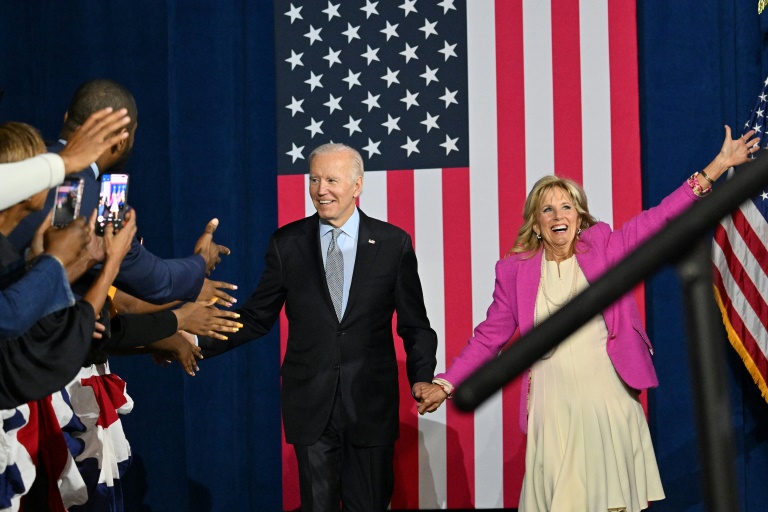
Joe Biden became president in the midst of what he called a “battle for the soul of America” — and, for once, the political rhetoric hardly seemed far-fetched.

Defeating Donald Trump in 2020, and inheriting a once-in-a-century pandemic, violent domestic political divisions, economic troubles and giant geopolitical risk, Biden resembled an underequipped firefighter at the center of an inferno.

That he had come out of retirement and at 78 was the oldest person ever to hold the job only underlined how precarious the situation was.

Now 80 and with Trump running for the White House again in 2024, the question of whether he might seek a second term is a pressing one.

To supporters, Biden has turned out to be exactly what the country needed after Trump — an instinctive centrist, a champion of old-fashioned values of government service, and a believer in the US role as leader of Western alliances.

In office, he has put the United States back into the Paris climate accord, passed a giant rescue package to get the economy through the pandemic, led NATO support of Ukraine’s fight against Russia, and restored calm to the post-Trump White House.

Biden could also point to having chosen the first female and first Black and South Asian vice president, Kamala Harris, and nominating the first Black woman to the Supreme Court, Ketanji Brown Jackson.

– Real endurance –

But detractors on the left of his Democratic Party see Biden as ineffectual, incapable of taking on the increasingly hard-right Republicans, and ignoring his base’s demands for greater liberal social change.

Shrinking support from independents has helped push Biden’s approval rating to levels below 40 percent.

To the right, Biden is a doddery failure who gave up on stopping illegal migration over the Mexican border, gave in to “woke” liberals on gender identity and other hot-button social issues, and turned the country away from the Republican pro-business credo towards socialism.

But Biden is used to doubters.

From the moment he entered a crowded field of Democrats seeking the 2020 nomination, they said he was too old, too much a figure of a bygone establishment and too gaffe-prone.

In face of criticism, Biden has always displayed quiet endurance.

Friends and aides have put this down to his background: half a century in high-level Washington politics, combined with tragic personal experiences, including the death of his first wife and daughter in a car accident in 1972, and the loss of his son Beau to cancer in 2015.

Biden has often appeared physically frail as he made his way around the White House. Yet inside, he is hardened.

He effectively spent years training to be president, not least during two terms as Barack Obama’s vice president.

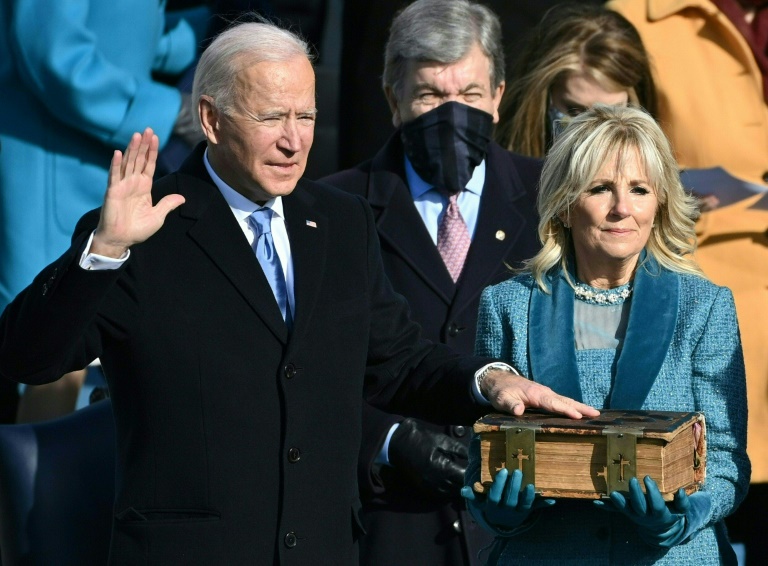
But nothing could have prepared him for the mess awaiting on Inauguration Day — January 20, 2021.

Trump was still refusing to accept he’d lost the election and two weeks earlier, a mob of Trump’s supporters had stormed the Capitol to disrupt certification of the results.

From those same Capitol steps, Biden declared: “We must end this uncivil war that pits red against blue, rural versus urban, conservative versus liberal.”

“We can do this if we open our souls instead of hardening our hearts.”

– Not Trump –

The Biden team’s greatest asset from the outset of his term was a reputation for competence.

That was validated in the Biden approach to Covid-19, rolling out mass vaccinations and reassurances that medical experts, not politicians, would make decisions.

But new, powerful variants of the coronavirus swept the country, forcing the White House to walk back premature declarations of victory.

Around the same time, in August 2021, the US pullout from Afghanistan to end the 20-year conflict went badly wrong.

The US-installed Afghan government collapsed, the Taliban swept in and remaining US forces were confined to a single airport in Kabul as they withdrew in chaos.

The humiliating spectacle sent Biden’s approval ratings on a steep downward slope.

Back home, Biden has been scrambling to prevent the US economy from plunging into a pandemic-induced recession or worse.

He got Congress to approve a string of stimulus packages, notably the $1.9 trillion American Rescue Plan targeted at protecting the less well-off.

Congress also approved a $1.2 trillion package to revamp the country’s tattered infrastructure — something multiple presidents, including Trump, had talked about but never achieved.

And the economy responded with a powerful rebound and strong job growth.

But the resurgence has led to stubborn inflation, with prices in 2022 at their strongest rate of increase for 40 years. 

Stickers reading “Joe Biden did this” began appearing on gasoline pumps around the country.

Given his age, Biden may understandably wish to step down at the end of his first term.

But he also sees himself as the best candidate to defeat Trump, making a rematch a possibility.

After the Democrats’ unexpectedly strong midterm election results this month, Biden was full of his usual optimism and folksy charm.

“We need to be looking to the future, not fixated on the past,” he said. “And that future is bright as can be.”

In Washington, an older generation begins stepping aside

President Joe Biden, who turns 80 on Sunday, doesn’t stick out in a US political class where young faces are so rare it has been called a gerontocracy — though a changing of the guard may soon be afoot.

The outgoing speaker of the House of Representatives Nancy Pelosi, is 82. On the Senate side, gray hair prevails. Democratic Majority Leader Chuck Schumer will soon turn 72. Republican Minority Leader Mitch McConnell is 80.

But a light breeze of change is blowing in Washington, where Pelosi just announced she will not seek reelection as speaker to make room for “a new generation,” and the second and third ranking House leaders, both in their 80s, are also stepping back from leadership — though not resigning their seats.

Hakeem Jeffries, a frontrunner to replace Pelosi, is 52.

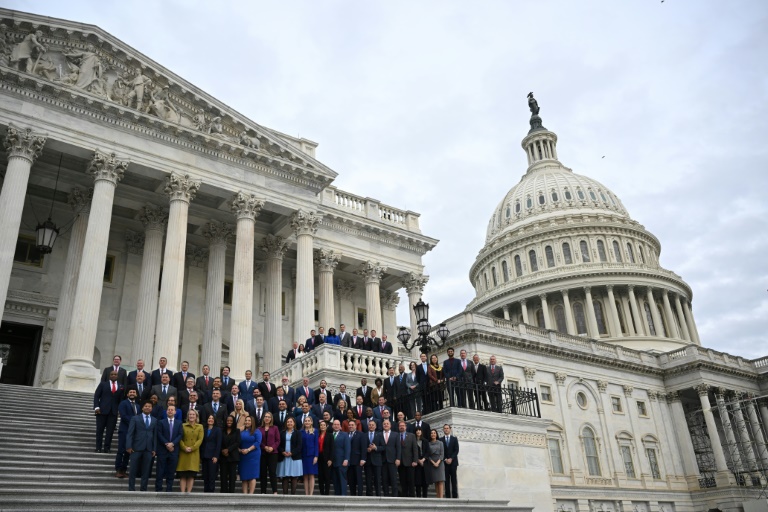
That is a full generation younger than some of his colleagues on Capitol Hill. At 89, Senator Chuck Grassley of Iowa just won election to his eighth term. At the start of his career in politics, in 1959, World War II hero Dwight Eisenhower was president.

Another senator, Richard Shelby, was born the year Adolf Hitler declared himself Fuhrer of Germany, in 1934. Now 88, he will retire at the end of the year.

And the case of Dianne Feinstein, an 89-year-old senator from California, has triggered debate on when it is time for aged politicians to call it quits. Feinstein is widely respected for her legislative career but she is said to have lost cognitive abilities and some wonder if she can still do her job.

If Biden runs and is re-elected as president in 2024, he could still be leading the country aged 86.

– Sea of gray –

The full makeup of the next Congress after the November 8 midterms is not yet known, as vote counting continues in some House races. But the average age of lawmakers in the outgoing legislature was one of the highest in US history: 58 in the House and 64 in the Senate.

The election has certainly ushered in some young new faces.

Maxwell Frost, a 25-year-old from Florida, will be the first House member representing Gen Z, whose interests he has pledged to defend.

“I think it’s important that we have a government that looks like the people,” he told AFP in October.

Answering to those who say his generation is impatient, he said: “I’d just say we know what we want.”

He joins a small but energetic squad of young lawmakers on Capitol Hill.

One of the best known is 33-year-old Democrat Alexandria Ocasio-Cortez, darling of the party’s most progressive wing and a lightning rod for criticism from conservatives.

But these young people are a tiny minority in a sea of older lawmakers, who also hold the most powerful positions in the legislature.

– Age limits –

Nearly three quarters of Americans think there should be an age limit for people serving in Congress, according to a CBS News poll published in September.

That sentiment is shared among Democrats and Republicans, and among younger and older people who took part in the poll — a rare consensus in a deeply divided country.

“People do seem to be pretty positive toward having a younger representative,” said Damon Roberts, a political scientist at the University of Colorado Boulder, but they “aren’t really willing to translate that into votes.”

There are built-in reasons why Americans have a tendency to elect people way past retirement age.

Consider these institutional barriers: you have to be at least 25 to serve in the House, 30 in the Senate and 35 to be president.

Americans also tend to see younger candidates as “less qualified to serve in office relative to a middle-aged or older candidate,” as well as “more ideologically extreme,” according to Roberts.

In 1984, Ronald Reagan wielded this argument with some wit as he sought reelection against the Democrat Walter Mondale, who was much younger.

During a presidential debate a journalist noted to Reagan that, at 73, he was then the oldest president in US history. Biden has since overtaken that title.

“I will not make age an issue of this campaign. I am not going to exploit, for political purposes, my opponent’s youth and inexperience,” Reagan said to loud laughter, even from Mondale.

80th birthday puts Biden's age back in the spotlight

Never before has a sitting US president faced 80 candles on a birthday cake — and the milestone that Joe Biden reaches on Sunday has undeniable ramifications as he ponders running again in 2024.

The White House so far has not revealed any celebration plans, focusing instead on preparations for the wedding on Saturday of Biden’s granddaughter.

Biden himself jokes about the big 8-0. “I can’t even say the age I am going to be,” he said on MSNBC. “I can’t even get it out of my mouth.

And he brushes off questions about whether he should seek reelection that would put him in power until aged 86, responding with two words: “Watch me.”

– ‘Fit for duty’ –

A year ago, after an extensive medical checkup, doctors said Biden had only a few minor ailments and concluded that he was “fit for duty.”

The slender president neither smokes nor drinks, remains physically active and hasn’t had any major health concerns since having surgery for two life-threatening brain aneurysms in 1988.

A study published in 2020 by the University of Illinois even classifies him among the “super agers” — people who, for socio-economic, lifestyle and genetic reasons, live longer than the average.

The researchers gave him a theoretical life expectancy of nearly 97 years.

But the fact remains that Biden now looks his age: His hair is thinner, his walk stiffer.

He retires to his family home in Delaware nearly every weekend, and in some group photos with fellow world leaders, like French President Emmanuel Macron or Canadian Prime Minister Justin Trudeau, the aged US president looks like a patriarch.

Medical reality is not in Biden’s favor — as the years advance, the risk increases of cognitive decline, illness or after-effects of even minor accidents.

Biden’s moments of confusion are more frequent, as are his verbal stumbles. Republicans make hay of it with ridiculing memes and tweets. 

– ‘Where’s Jackie?’ –

A few weeks back while addressing an audience, Biden sought out a deceased congresswoman as if she were in the room, asking, “Where’s Jackie?”

History suggests that a sitting US president concluding a first term will run again.

One example is Ronald Reagan, reelected in 1984 at the age of 73, in spite of debates about his age.

When a president seeks reelection, “it saves the party from an expensive and divisive party primary” which allows it to focus resources on the general election, said Rachel Bitecofer, a Democratic strategist.

Yet in polling, a clear majority of Americans reject the idea of a second Biden term.

A grassroots Democratic group, RootsAction, has launched a “Don’t run Joe” campaign arguing that “he has no automatic right to renomination.” 

Among the open questions are whether a president born during World War II can mobilize young voters in 2024, even if his policies have been favorable to them on issues like marijuana decriminalization and student loan forgiveness.

But if not Biden, who?

Vice President Kamala Harris is not popular, and other prominent Democrats, like Transportation Secretary Pete Buttigieg, may be seen as too green.

“If there’s going to be a challenge of a sitting president, usually it is kind of a firebrand… somebody who really wants to push hard,” said Robert Rowland, a political communication expert at the University of Kansas.

“The most obvious person to do that would be Bernie Sanders, but (at 81) he’s older than Biden.”

Amid Twitter chaos, Musk reveals new vision for hate content

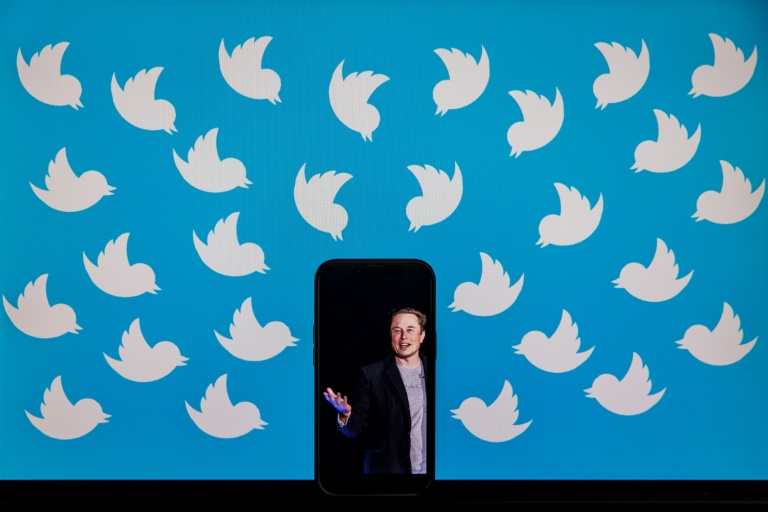
After turning Twitter upside down, Elon Musk on Tuesday tried to clarify his plans for content moderation, a key issue for the future of the influential platform after the departure of advertisers and top executives.

Musk on Friday said he had reinstated certain banned accounts on his site, but added that no decision had been made on welcoming back former US president Donald Trump.

Twitter watchers have been tracking closely to see whether Musk will reinstate Trump, banned for inciting last year’s attack on the Capitol by a mob seeking to overturn the results of the 2020 election.

The reinstatement of accounts ousted for violating Twitter’s content moderation rules has been seen as a bellwether of where Musk, a self-described “free speech absolutist,” wants to take the site.

In the same blast of tweets, Musk unveiled a new method for handling future hateful or “negative” content that seemed to seek a balancing act between unadulterated free speech and some form of policing on the site.

Finding a solution to content moderation became especially urgent after Musk’s fist major rejig to the site — expanding a paid subscription service — sparked an embarrassing spate of fake accounts that sent advertisers running.

“New Twitter policy is freedom of speech, but not freedom of reach,” Musk tweeted on Friday.

“Negative/hate tweets will be max deboosted & demonetized, so no ads or other revenue to Twitter,” he wrote.

– ‘Core principle’ –

In essence, Musk seemed to be pointing to a policy similar to strategies at YouTube, the Google-owned video platform, where some provocative content is given less priority in the site’s algorithm, but is not entirely taken down.

“You won’t find the tweet unless you specifically seek it out, which is no different from the rest of the Internet,” Musk said.

Ella Girwin, his newly installed chief of trust and safety, called Musk’s approach “a core principle for Twitter… helping us ensure we maintain a healthy platform.”

To make his point, Musk then announced the reinstatement of three twitter accounts that had been banished for violating Twitter’s content moderation policies.

Canadian psychologist Jordan Peterson was suspended from Twitter in June, before Musk’s ownership, following a post about transgender actor Elliot Page that broke the site’s rules on hateful conduct.

Peterson had often made comments against the rights of transgender people and was asked by Twitter to remove the post on Page.

The Babylon Bee, a conservative parody site, was banned in March for similar tweets against Rachel Levine, a trans woman serving as US assistant secretary of health.

The third account, belonging to comedian Kathy Griffin, was banned earlier this month when Musk cracked down on accounts that impersonated others.

Griffin, who has two million Twitter followers, switched her username to Elon Musk, taking advantage of the website’s relaxed oversight under the billionaire.

– ‘Catastrophic’ –

In an opinion piece in the New York Times, Twitter’s former content chief Yoel Roth said it was a “near certainty” that Trump would be returned to the site.

Expanding at length on why he had left Twitter last week after seven years, Roth said that Musk was facing a huge challenge to achieve his free speech vision.

Roth warned his former boss that advertisers, which he “neither controls nor has managed to win over,” would pose a clear threat to his revenue stream if they were spooked by the site’s direction.

And even if he found another way to make money, regulators in the United States, Europe and India were also wary, threatening Twitter with big fines or government interference if the platform fails to play by the rules.

But most of all, Roth said it will be the app stores run by Apple and Google’s Android that hold the greatest sway over the future of Twitter.

“Failure to adhere to Apple and Google’s guidelines would be catastrophic,” Roth warned.

Their often vague rules on content could see access by users to Twitter’s phone app switched off immediately and by diktat from competing big tech companies.

“Twitter will have to balance its new owner’s goals against the practical realities of life on Apple and Google’s internet,” said Roth.

Elizabeth Holmes sentenced to 11 years in prison for Theranos fraud

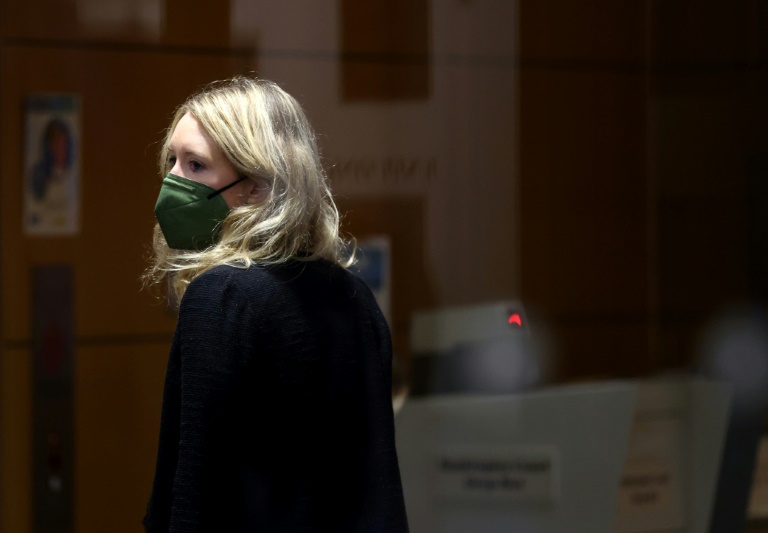
Fallen US biotech star Elizabeth Holmes was sentenced Friday to just over 11 years in prison for defrauding investors with her Silicon Valley start-up firm. 

The Theranos founder had been convicted on four felony fraud counts in January for persuading investors that she had developed a revolutionary medical device before the company flamed out after an investigation by The Wall Street Journal.

The closely watched case became an indictment of Silicon Valley, and US federal prosecutors had sought a 15-year jail term for Holmes. She was sentenced to 135 months.

US attorney Stephanie Hinds said the sentence “reflects the audacity of her massive fraud and the staggering damage she caused.”

“For almost a decade, Elizabeth Holmes fabricated and spread elaborate falsehoods to draw in a legion of capital investors, both big and small, and her deceit caused the loss of hundreds of millions of dollars,” the prosecutor said in a statement following the judge’s decision.

Holmes, who is pregnant, will not have to surrender herself until April next year, ordered US District Judge Edward Davila in a courtroom in San Jose, California. 

Holmes’s lawyer indicated she will appeal her conviction.

Moments before her sentencing, a tearful Holmes told the court: “I stand before you taking responsibility for Theranos. I loved Theranos. It was my life’s work.”

She added: “I am devastated by my failings. Every day for the past years I have felt deep pain for what people went through because I failed them.”

“I gave everything I had to building our company and trying to save our company.”

– ‘Tragedy’ –

Holmes became a star of Silicon Valley when she said her now defunct start-up was perfecting an easy-to-use test kit that could carry out a wide range of medical diagnostics with just a few drops of blood.

At the time, Holmes often dressed soberly in black turtlenecks that evoked her hero, the late Apple icon Steve Jobs.

She sold investors on the idea that her invention would disrupt medical practice, replacing expensive lab tests with her cheap kits.

But prosecutors said Holmes knew her device was not producing accurate and reliable results, yet induced dozens of investors to contribute nearly one billion dollars, all without ever achieving meaningful revenue.

Holmes’s meteoric rise and fast demise has been the subject of books, movies and a TV series that framed her story as a cautionary tale on the excesses of the tech industry that blindly followed a charismatic founder.

At one point, the Theranos board included former US defense secretary James Mattis and former US secretaries of state Henry Kissinger and the late George Shultz.

Sentencing Holmes on Friday, Davila said the case was a “tragedy” and “troubling on so many levels.”

He described Holmes as “a big thinker” who had fought to get into an industry dominated by “male ego.”

But he noted “significant evidence about manipulation and untruths that were being used in the negotiation of the business.”

“What is it that caused that? Was it hubris? Was it intoxication with the fame that comes from being a young entrepreneur?” he asked.

– ‘Amazing things’ –

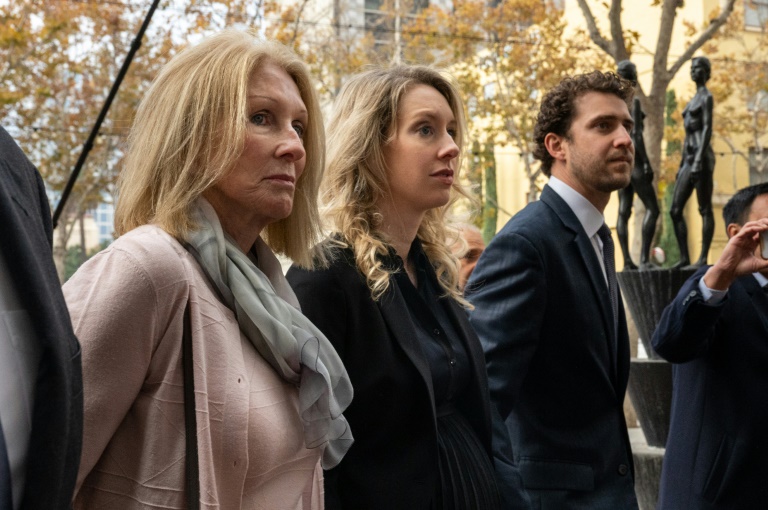
After hearing her prison sentence, Holmes hugged her partner Billy Evans, who is the father of her 15-month-old son, and her mother, Noel Holmes.

Lawyers for Holmes, 38, had asked for leniency, presenting her as a devoted friend who cares for a young child and has a second child on the way.

This was backed up by 140 letters of support filed to the court, including from her family, friends and a US senator.

“I am confident that on the other side of this, Elizabeth will do amazing things for society with her talents and boundless passion for changing the world for the better,” said one letter.

That was in sharp contrast to descriptions given at her trial that painted her as an ambitious con artist who harassed her workers. 

In a letter, Holmes’s aunt, who was an early investor in Theranos, called on the court to give her a tough sentence, The Wall Street Journal reported.

Prosecutors want Holmes to pay $800 million in restitution to investors that included the Walton family of Walmart, the Walgreens chain of pharmacies and media mogul Rupert Murdoch.

A restitution hearing will be scheduled, although Holmes says she has no money to pay.

Elizabeth Holmes sentenced to 11 years in prison for Theranos fraud

Fallen US biotech star Elizabeth Holmes was sentenced Friday to just over 11 years in prison for defrauding investors with her Silicon Valley start-up firm. 

The Theranos founder had been convicted on four felony fraud counts in January for persuading investors that she had developed a revolutionary medical device before the company flamed out after an investigation by The Wall Street Journal.

The closely watched case became an indictment of Silicon Valley, and US federal prosecutors had sought a 15-year jail term for Holmes. She was sentenced to 135 months.

US attorney Stephanie Hinds said the sentence “reflects the audacity of her massive fraud and the staggering damage she caused.”

“For almost a decade, Elizabeth Holmes fabricated and spread elaborate falsehoods to draw in a legion of capital investors, both big and small, and her deceit caused the loss of hundreds of millions of dollars,” the prosecutor said in a statement following the judge’s decision.

Holmes, who is pregnant, will not have to surrender herself until April next year, ordered US District Judge Edward Davila in a courtroom in San Jose, California. 

Holmes’s lawyer indicated she will appeal her conviction.

Moments before her sentencing, a tearful Holmes told the court: “I stand before you taking responsibility for Theranos. I loved Theranos. It was my life’s work.”

She added: “I am devastated by my failings. Every day for the past years I have felt deep pain for what people went through because I failed them.”

“I gave everything I had to building our company and trying to save our company.”

– ‘Tragedy’ –

Holmes became a star of Silicon Valley when she said her now defunct start-up was perfecting an easy-to-use test kit that could carry out a wide range of medical diagnostics with just a few drops of blood.

At the time, Holmes often dressed soberly in black turtlenecks that evoked her hero, the late Apple icon Steve Jobs.

She sold investors on the idea that her invention would disrupt medical practice, replacing expensive lab tests with her cheap kits.

But prosecutors said Holmes knew her device was not producing accurate and reliable results, yet induced dozens of investors to contribute nearly one billion dollars, all without ever achieving meaningful revenue.

Holmes’s meteoric rise and fast demise has been the subject of books, movies and a TV series that framed her story as a cautionary tale on the excesses of the tech industry that blindly followed a charismatic founder.

At one point, the Theranos board included former US defense secretary James Mattis and former US secretaries of state Henry Kissinger and the late George Shultz.

Sentencing Holmes on Friday, Davila said the case was a “tragedy” and “troubling on so many levels.”

He described Holmes as “a big thinker” who had fought to get into an industry dominated by “male ego.”

But he noted “significant evidence about manipulation and untruths that were being used in the negotiation of the business.”

“What is it that caused that? Was it hubris? Was it intoxication with the fame that comes from being a young entrepreneur?” he asked.

– ‘Amazing things’ –

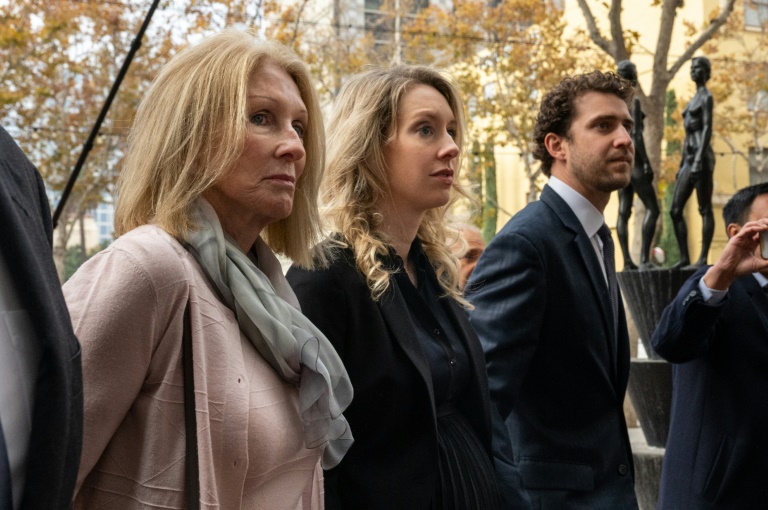
After hearing her prison sentence, Holmes hugged her partner Billy Evans, who is the father of her 15-month-old son, and her mother, Noel Holmes.

Lawyers for Holmes, 38, had asked for leniency, presenting her as a devoted friend who cares for a young child and has a second child on the way.

This was backed up by 140 letters of support filed to the court, including from her family, friends and a US senator.

“I am confident that on the other side of this, Elizabeth will do amazing things for society with her talents and boundless passion for changing the world for the better,” said one letter.

That was in sharp contrast to descriptions given at her trial that painted her as an ambitious con artist who harassed her workers. 

In a letter, Holmes’s aunt, who was an early investor in Theranos, called on the court to give her a tough sentence, The Wall Street Journal reported.

Prosecutors want Holmes to pay $800 million in restitution to investors that included the Walton family of Walmart, the Walgreens chain of pharmacies and media mogul Rupert Murdoch.

A restitution hearing will be scheduled, although Holmes says she has no money to pay.

New Trump probe overseer is veteran war crimes prosecutor

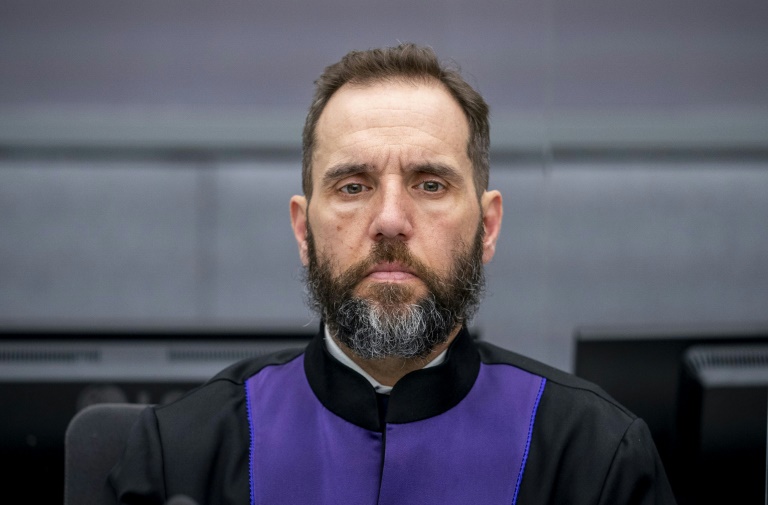
Jack Smith, tapped Friday to lead highly sensitive investigations of Donald Trump, is a seasoned US prosecutor who has led Kosovo war crimes probes in The Hague.

In naming Smith to lead the two ongoing criminal investigations — which have drawn scorn from the former president and fury from his supporters — US Attorney General Merrick Garland stressed that Smith “has built a reputation as an impartial and determined prosecutor.”

The veteran justice figure has broad experience investigating complex cases of war crimes and prosecuting the defendants.

From 2008 to 2010 he served as an investigator for the International Criminal Court in the Netherlands, where he was charged with supervising sensitive probes of foreign government officials over war crimes, genocide and crimes against humanity.

As a Harvard Law School graduate, Smith began his prosecutorial career in the 1990s.

He boasts a resume that includes several years at the Justice Department in multiple positions including chief of the agency’s Public Integrity Section, where he led a team handling corruption and election crimes cases, and later acting United States attorney for the middle district of Tennessee.

But his most high-profile work has occurred at the special court on Kosovo in The Hague, where he led investigations and adjudications of war crimes committed in the Balkan republic during the 1990s wars that ripped apart Yugoslavia.

In 2018 Smith was named chief prosecutor of the court, the Kosovo Specialist Chambers. It opened its first trial last year against former rebel commander Salih Mustafa, who faces charges of murder and torture related to his time at a makeshift jail operated by the ethnic Albanian Kosovo Liberation Army (KLA).

Smith described the case as a “milestone” for the court, whose activities remain highly sensitive given that former rebel commanders still dominate political life in Kosovo.

The court, which operates under Kosovo law but is based in Netherlands to shield witnesses from intimidation, has issued war crimes charges against several senior members of the KLA including Kosovar former president Hashim Thaci, who resigned after being indicted.

Smith presided during Thaci’s first pre-trial appearance before the special court, in 2020, to face charges.

In a statement released minutes after Garland’s announcement, Smith pledged to “independently” conduct the probes of the Trump cases and any potential resulting prosecutions.

“The pace of the investigations will not pause or flag under my watch,” he said.

“I will exercise independent judgment and will move the investigations forward expeditiously and thoroughly to whatever outcome the facts and the law dictate.”

Elizabeth Holmes: Silicon Valley's fallen star

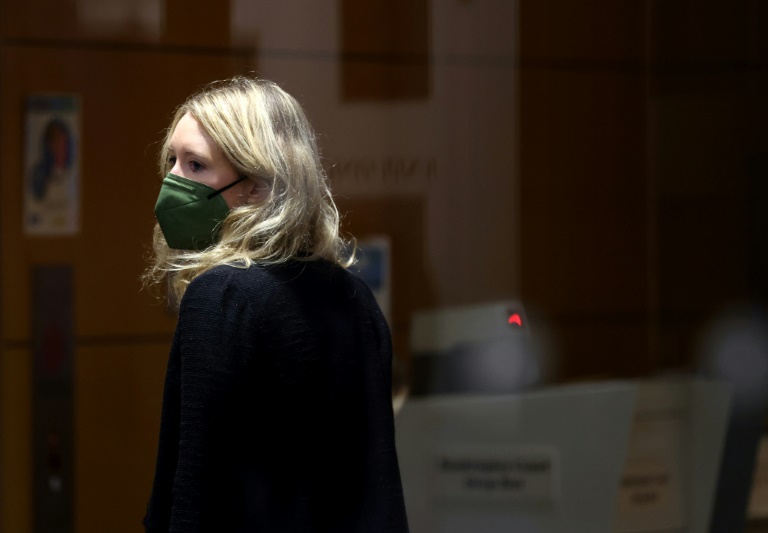
Elizabeth Holmes’s startup Theranos made her a multi-billionaire hailed as the next US tech visionary by age 30, but it all evaporated in a flash of lawsuits, ignominy and, finally, an 11-year prison sentence on Friday.

The rise and fall of Holmes, who in January was convicted of defrauding investors of her biotech startup, is a heavily chronicled saga that prompted a hard look at her methods but also the unseemly aspects of startup life.

In many ways Holmes fit the image of a Silicon Valley entrepreneur, from her dark-colored turtleneck sweaters that evoked tech legend and Apple founder Steve Jobs to her dropping out of California’s elite Stanford University.

But it has all come crashing down with the tech star, who is now pregnant, set to surrender herself in April of next year to begin serving time.

The fundamental question surrounding her case was always whether Holmes was a true visionary who simply failed, as she claimed on the stand, or a skilled self-promoter who took advantage of a credulous context to commit fraud.

Her story begins in the US capital Washington, with her birth to a Congressional staffer mother and a father whose online biography says he was once an executive at Enron — an energy company that collapsed in a massive fraud scandal.

She won admission to Stanford, and there began work on cutting-edge biomedical initiatives, founding in 2003 what would become Theranos when she was just 19.

Part of Holmes’s ability to convince her backers was her apparent deep personal commitment — she applied for her first patent while still at university and after dropping out, convinced her parents to let her use her tuition savings to build the company.

– ‘Youngest woman self-made billionaire’ –

By the end of 2010 she had raised a whopping $92 million in venture capital for Theranos, which she pledged was developing machines that could run a gamut of diagnostic tests on a few drops of blood.

Over the next couple years she assembled what one news report called the “most illustrious board in US corporate history,” including former secretaries of state Henry Kissinger and George Shultz as well ex-Pentagon chief Jim Mattis.

“Sharp, articulate, committed. I was impressed by her. That didn’t take the place of having the device prove itself,” said Mattis in a surprise appearance on the stand.

Theranos hype kicked up another gear in 2014 and in the span of just over a year, a turtleneck-wearing Holmes appeared on the covers of Fortune, Forbes, Inc. and T: The New York Times Style Magazine.

Forbes gave her a $4.5 billion net worth in 2014, which was based on her half ownership of Theranos, and noted: “Youngest woman on Forbes 400; Youngest woman self-made billionaire.” 

This glowing coverage had an impact on Theranos investors like venture capitalist Chris Lucas who told Holmes’ trial the Fortune article made him “proud we were involved, very proud of Elizabeth.”

But there were some things that didn’t end up in those glowing reports that gushed with statements like “Steve Jobs had massive ambition, but Holmes’s is arguably larger.”

– Silicon Valley sexism? –

For one, she personally put the logos of pharma giants Pfizer and Schering-Plough onto Theranos reports hailing its own blood-testing technology, which were then shared with investors.

That was done without the companies’ permission and was a key piece of the prosecution’s argument that she deliberately tried to inflate Theranos’s credibility in order to win over backers.

She also kept secret the machines’ failings and the fact that once Theranos began to do diagnostics on real patients, some of the tests were done using the same equipment sold to standard labs.

Ultimately though, it was a series of Wall Street Journal reports starting in 2015 — which Holmes tried to kill by appealing to the paper’s owner and Theranos investor Rupert Murdoch — that set the company’s collapse in motion.

Holmes’s case also raised questions about why she was prosecuted, but not other tech CEOs who engaged in the “fake it until you make it” Silicon Valley method or other bad behavior.

Ellen Pao, the former CEO of Reddit and critic of tech industry discrimination, argued in a New York Times opinion piece that sexism bears some blame.

She noted that WeWork’s Adam Neumann and Uber co-founder Travis Kalanick raised billions with hype, while there have been allegations of racism and sexism at Tesla and misleading claims about vaping from Juul’s leaders.

Holmes “should be held accountable for her actions as chief executive of Theranos,” Pao wrote. 

But “it can be sexist to hold her accountable for alleged serious wrongdoing and not hold an array of men accountable for reports of wrongdoing or bad judgement,” she added.

Elizabeth Holmes: Silicon Valley's fallen star

Elizabeth Holmes’s startup Theranos made her a multi-billionaire hailed as the next US tech visionary by age 30, but it all evaporated in a flash of lawsuits, ignominy and, finally, an 11-year prison sentence on Friday.

The rise and fall of Holmes, who in January was convicted of defrauding investors of her biotech startup, is a heavily chronicled saga that prompted a hard look at her methods but also the unseemly aspects of startup life.

In many ways Holmes fit the image of a Silicon Valley entrepreneur, from her dark-colored turtleneck sweaters that evoked tech legend and Apple founder Steve Jobs to her dropping out of California’s elite Stanford University.

But it has all come crashing down with the tech star, who is now pregnant, set to surrender herself in April of next year to begin serving time.

The fundamental question surrounding her case was always whether Holmes was a true visionary who simply failed, as she claimed on the stand, or a skilled self-promoter who took advantage of a credulous context to commit fraud.

Her story begins in the US capital Washington, with her birth to a Congressional staffer mother and a father whose online biography says he was once an executive at Enron — an energy company that collapsed in a massive fraud scandal.

She won admission to Stanford, and there began work on cutting-edge biomedical initiatives, founding in 2003 what would become Theranos when she was just 19.

Part of Holmes’s ability to convince her backers was her apparent deep personal commitment — she applied for her first patent while still at university and after dropping out, convinced her parents to let her use her tuition savings to build the company.

– ‘Youngest woman self-made billionaire’ –

By the end of 2010 she had raised a whopping $92 million in venture capital for Theranos, which she pledged was developing machines that could run a gamut of diagnostic tests on a few drops of blood.

Over the next couple years she assembled what one news report called the “most illustrious board in US corporate history,” including former secretaries of state Henry Kissinger and George Shultz as well ex-Pentagon chief Jim Mattis.

“Sharp, articulate, committed. I was impressed by her. That didn’t take the place of having the device prove itself,” said Mattis in a surprise appearance on the stand.

Theranos hype kicked up another gear in 2014 and in the span of just over a year, a turtleneck-wearing Holmes appeared on the covers of Fortune, Forbes, Inc. and T: The New York Times Style Magazine.

Forbes gave her a $4.5 billion net worth in 2014, which was based on her half ownership of Theranos, and noted: “Youngest woman on Forbes 400; Youngest woman self-made billionaire.” 

This glowing coverage had an impact on Theranos investors like venture capitalist Chris Lucas who told Holmes’ trial the Fortune article made him “proud we were involved, very proud of Elizabeth.”

But there were some things that didn’t end up in those glowing reports that gushed with statements like “Steve Jobs had massive ambition, but Holmes’s is arguably larger.”

– Silicon Valley sexism? –

For one, she personally put the logos of pharma giants Pfizer and Schering-Plough onto Theranos reports hailing its own blood-testing technology, which were then shared with investors.

That was done without the companies’ permission and was a key piece of the prosecution’s argument that she deliberately tried to inflate Theranos’s credibility in order to win over backers.

She also kept secret the machines’ failings and the fact that once Theranos began to do diagnostics on real patients, some of the tests were done using the same equipment sold to standard labs.

Ultimately though, it was a series of Wall Street Journal reports starting in 2015 — which Holmes tried to kill by appealing to the paper’s owner and Theranos investor Rupert Murdoch — that set the company’s collapse in motion.

Holmes’s case also raised questions about why she was prosecuted, but not other tech CEOs who engaged in the “fake it until you make it” Silicon Valley method or other bad behavior.

Ellen Pao, the former CEO of Reddit and critic of tech industry discrimination, argued in a New York Times opinion piece that sexism bears some blame.

She noted that WeWork’s Adam Neumann and Uber co-founder Travis Kalanick raised billions with hype, while there have been allegations of racism and sexism at Tesla and misleading claims about vaping from Juul’s leaders.

Holmes “should be held accountable for her actions as chief executive of Theranos,” Pao wrote. 

But “it can be sexist to hold her accountable for alleged serious wrongdoing and not hold an array of men accountable for reports of wrongdoing or bad judgement,” she added.

Close Bitnami banner
Bitnami