US Business

India's Modi says digital currencies being used to fund terror

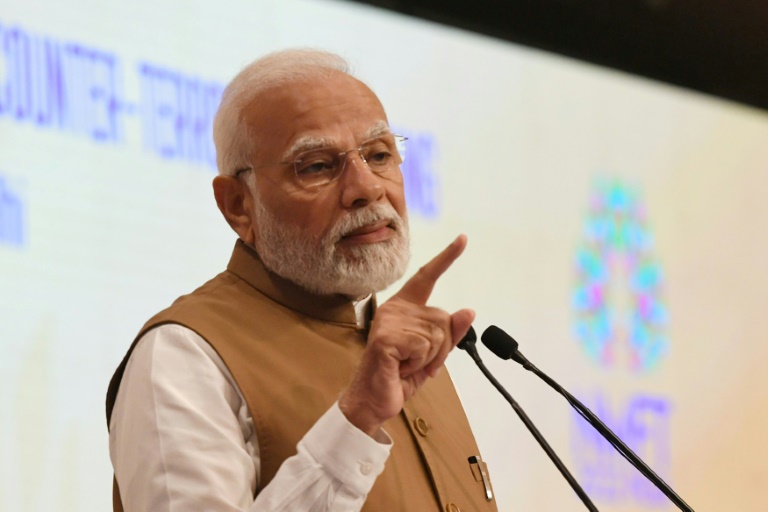
Digital currencies need more regulation to stamp out funding for terror operations, India’s Prime Minister Narendra Modi said Friday at a major international forum to combat financing of extremist groups.

India has laboured to rein in cryptocurrency transactions after years of phenomenal growth, backed by burgeoning local trading platforms and glitzy celebrity endorsements.

Modi last year said that bitcoin presented a risk to younger generations and could “spoil our youth” if it ended up “in the wrong hands”.

On Friday, he went further and told delegates at the Conference on Countering Financing of Terrorism that “private currencies” posed a grave security risk. 

“New kinds of technology are being used for terror funding and recruitment. Challenges from the dark net, private currencies and more are emerging,” Modi said. 

“There is a need for a uniform understanding for new finance technologies,” he added. 

“From a uniform understanding, a unified system of checks and balances and regulation can emerge.”

Delegates from dozens of countries are in the capital New Delhi for the two-day conference, which follows a special session of the UN’s Counter Terrorism Committee held in India last month.

Cryptocurrencies have been under the scrutiny of Indian regulators since first entering the local market nearly a decade ago, with a surge in fraudulent transactions leading to a central bank ban in 2018.

India’s Supreme Court lifted the restrictions two years later and the market surged, growing by nearly 650 percent in the year to June 2021 — second only to Vietnam, according to research by Chainalysis.

The government also proposed banning “all private cryptocurrencies”, but ultimately held back and later taxed profits from “private currencies” at 30 percent.

Globally, the crypto market has been thrown into upheaval by this month’s collapse of FTX, a major exchange used for digital transactions. 

Once valued at $32 billion, FTX filed for bankruptcy last week.

Its downfall sent major cryptocurrencies plunging and further undermined investor confidence in the young and turbulent sector.

VP Harris tells Asia the US is 'here to stay'

Vice President Kamala Harris told Asian leaders on Friday that the United States is committed to the region for the long haul, rejecting doubts about its engagement as China expands its clout.

Addressing a summit in Bangkok, Harris called the United States a “proud Pacific power” and said that the longstanding US network of security alliances has allowed Asia to prosper.

“The United States is here to stay,” Harris told business leaders on the sidelines of the Asia-Pacific Economic Cooperation (APEC) summit, also attended by Chinese President Xi Jinping.

“Our message is clear: The United States has an enduring economic commitment to the Indo-Pacific, one that is measured not in years, but in decades and generations,” she said, using the preferred US term for the Asia-Pacific region.

President Joe Biden’s administration has focused on rallying behind allies and Harris will head from Thailand to the Philippines, where she will visit an island near waters increasingly contested by Beijing.

While the United States has taken a firm tone on China, some Asian officials have questioned the level of US economic engagement.

Biden has largely followed his predecessor Donald Trump in turning the page on the era of free-trade agreements, seeing them as unpopular among working-class US voters.

Harris insisted that economic partnerships in Asia were “a top priority” for the Biden administration and pointed out that the US private sector invests around $1 trillion a year in the region.

“America is a strong partner to the economies and companies of this region because America is and will remain a major engine of global growth, reinforced by our administration’s approach,” she said.

She said that goal had bipartisan support, with Washington set for greater gridlock after the rival Republican Party won control of the House of Representatives in elections last week.

Biden on a trip to Tokyo earlier this year launched the Indo-Pacific Economic Framework, which brings together countries to set common standards on technology and trade in the face of China’s rapid advances but stops short of lifting tariffs like a traditional free-trade deal.

“We are all feeling the discomfort and the anxiety of the global economy today,” US Trade Representative Katherine Tai told reporters Thursday.

“We need different outcomes, and that means that we also need to be innovating in how we engage each other in trade and economics and across the board,” she said.

Despite US vows of engagement, Biden skipped the APEC summit to attend his granddaughter’s wedding at the White House on Saturday.

He attended two other summits in Asia over the past week, however, in Cambodia and Indonesia.

Uruguay's Jorge Drexler eclipses Bad Bunny at Latin Grammys

Uruguay’s top musical export Jorge Drexler overshadowed megastar Bad Bunny’s hype at Thursday’s Latin Grammys, scoring seven trophies including Best Record during the gala that saw Spain’s Rosalia take home the coveted top album award.

The Puerto Rican reggaeton phenom Bad Bunny had been tipped as the favorite coming in with 10 nominations, though he was unable to attend the 23rd edition of the awards held in Las Vegas as he continues his massively popular world tour.

The 28-year-old — currently the highest-grossing and most streamed artist on the planet following the release of his album “Un Verano Sin Ti” — did nab five trophies but fell short of the night’s most prestigious prizes.

“Are you sure?” asked a surprised Drexler as he took the stage to accept the award for Song of the Year for “Tocarte,” a track that also featured Spanish rapper C. Tangana.

Along with Bad Bunny — whose smash “Titi Me Pregunto” ultimately scored two awards in the “urban” categories — the 58-year-old was up against stacked competition including Rosalia, who won four awards including for her critically acclaimed album “Motomami,” and Colombia’s Karol G. 

In his speech Drexler acknowledged the massive reach of Latin urban music including reggaeton, dedicating the award “to everyone who does urban music in Spanish because you’ve taken our music to places it was never in before.”

Drexler was the big winner but in some respects it was Cuban Angela Alvarez who stole the show: at 95 years old the singer scored a gramophone for Best New Artist.

“It’s never too late,” said Alvarez, bringing the auditorium to tears in accepting the award that she shared in a tie with the Mexican artist Silvana Estrada.

“I want to dedicate this award to God, and to my beloved Cuba, which I will never forget. And to those who have yet to make their dreams come true, know that although life is hard, there’s always a way out and with faith and love everything can be achieved,” Alvarez said. 

“With faith and love you can make it, I promise you.”

– Anitta, Bad Bunny head to Grammys –

Rosalia was visibly surprised in accepting the night’s top award for her genre-fusing masterpiece “Motomami,” telling the cheering crowd that it was “the album I had to fight the hardest to make.”

“But I put it out there and that has given me the most joy.”

Colombian crooner Sebastian Yatra — who made a splash last year with the Oscar-nominated song “Dos Oruguitas” from the film “Encanto” — notched two awards in the pop categories including Best Pop Song for “Tacones Rojos,” which he performed during the gala with John Legend.

Brazil’s Anitta left the show empty-handed — she was up for two awards for her booty-grinding reggaeton hit “Envolver” — but delivered a show-stopping performance of that hit and a twerk-heavy mashup of Brazilian dance tracks.

The 29-year-old is among the contenders for Best New Artist at February’s Grammys to be held in Los Angeles.

Bad Bunny’s work will also feature at the forthcoming Grammy gala, with “Un Verano Sin Ti” in the running for Album of the Year.

It’s the first time an all-Spanish album has a chance at that coveted award, and the Puerto Rican reggaeton megastar’s first time landing a solo nomination in the major Grammy categories.

UK's remote Pitcairn islanders see no Brexit bounty

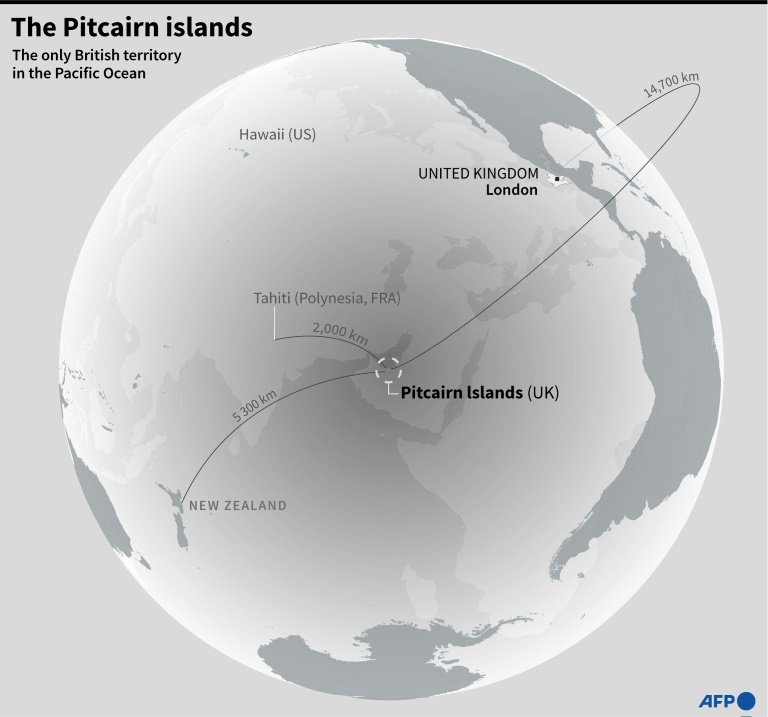
The Pitcairn Islands, a volcanic outcrop halfway between South America and New Zealand, is the UK’s only overseas territory in the Pacific Ocean and home to only 46 people.

One of the most remote places on Earth, all its inhabitants live in the capital Adamstown.

But even here, islanders have not escaped the drama that has dominated British politics since 2016 — Brexit.

Pitcairn has its own well-equipped medical facility and a resident doctor.

For emergencies and longer-term conditions, however, the nearest hospitals are in French Polynesia, some 1,350 miles (2,170 kilometres) to the northwest, and New Zealand, 3,300 miles southwest.

With no access to the islands by air, that can mean at least two days’ sailing, depending on weather conditions.

Pitcairn’s mayor Charlene Warren fears vulnerable islanders could fall foul of restrictions usually associated with the length of time UK holidaymakers and those with second homes can stay in European Union member states.

“Brexit has definitely affected us for going to Tahiti (the largest island in French Polynesia) because we’re no longer in the European Union,” she told AFP.

“We’re now only limited to three months in Tahiti, which with some medical issues that we have can roll over three months.”

For Pitcairn’s ageing population healthcare is a pressing concern, even with recent support from the government in London, particularly through Covid.

Next month, there will be no minors left on the island when the last three schoolchildren, their mothers and their teacher leave Adamstown for New Zealand.

More than half of the remaining population will be aged over 60.

– Proud heritage –

The Pitcairn Islands were colonised in 1790 by the mutinous crew of the Royal Navy ship HMS Bounty, led by the master’s mate Fletcher Christian.

Their actions, casting adrift the ship’s captain William Bligh, have been immortalised in books and film.

Its people are descended from the mutineers and their Tahitian companions, whose history since has been one of hardy self-sufficiency.

On Pitcairn — the only inhabited island of four scattered hundreds of miles across the ocean — there is only one grocery store, open three times a week for two hours at a time.

Supplies come every three months by cargo ship. There are only two metalled roads and no hotels.

King Charles III is head of state and the UK government is responsible for defence and foreign relations, controlling the 830,000 square kilometres (320,000 square miles) of sea around the islands.

The islanders have British passports, govern through an elected mayor and an island council, with a governor based in New Zealand.

But they are not part of the UK.

The islanders are proud of their Polynesian heritage, speak English and local language Pitkern. 

“For me, I’m a Polynesian because I was born here,” said policewoman Brenda Lupton Christian, 69, adding that she is a descendant of Fletcher Christian.

“This is my home, I wasn’t born in England.”

– Cast adrift –

Pitcairn depends on trade with the EU, especially the sale of rich, fruity island honey — and wants access to EU markets.

But selling honey, stamps — once so popular among philatelists that they supported two-thirds of the islands’ budget — and souvenirs to cruise ship passengers is no longer enough.

The islands were never part of the EU but like the 260,000 British nationals in 10 other inhabited overseas territories, they were eligible for some EU funding and access to the single market.

The territories, however, were not part of the Brexit trade and cooperation deal that cemented the UK’s departure from the EU in January 2021.

That sparked concern about tariffs and the effect on the economies of the 14 British Overseas Territories scattered across the world.

Six were eligible for £69 million ($82 million) in European Development Fund cash to support infrastructure, tourism and education until 2014.

Pitcairn’s share to support tourism was £2.2 million, according to a UK parliament report published in August into the effect of Brexit on British Overseas Territories.

Discussions are ongoing to substitute funding. Pitcairn will receive £8.6 million in UK budget assistance from March 2021 to March 2023.

But the territory does not have the right to negotiate or agree its own deal with the EU without the UK government’s approval.

“We used to get some financial funds from the European Union. That has stopped as well with our ageing community,” said Warren.

“It is a shame because it does affect us, but what can we do? 

“We’re only 46 people living in Pitcairn and our vote doesn’t even count.”

'European California' Portugal woos Americans seeking better life

Nathan Hadlock moved to Portugal to escape the violence and lack of social welfare he saw in the United States, while still enjoying the sun and sea he had loved in California.

“Lisbon checked all the boxes,” the 40-year-old American entrepreneur told AFP.

It even has a suspension bridge that is almost a dead ringer for San Francisco’s Golden Gate.  

“My partner and I were looking to slow life down and enjoy things more. And so we made a list of the top 10 places in the world and Lisbon quickly made it to the top.”

The couple, who started a family when they moved to the Portuguese capital in 2020, were drawn by the weather, the good food, the cheaper lifestyle and the ease of travelling to other parts of Europe. 

They also wanted to escape the darker sides of US society.

“One of the main reasons (US) investors are looking to move here, is their kids’ safety. They often say, ‘I don’t want my kid to go to school and get shot,'” Hadlock insisted.

“And that’s a real thing in the United States that just no one here in Europe has to experience.” 

Jen Wittman, who uprooted from the Golden State to Lisbon during the pandemic with her husband and teenage son, said the United States was “really kind of falling apart at the seams”.

“The George Floyd incident and the pandemic, the political division, the racism… Everything was just getting overwhelming in America.”

Having a European social net made a big difference too.

“America is terrible with health care. And it’s terrible if you’re a retiree and you have a health condition. Essentially in America you can be bankrupted by an illness,” the 47-year-old said.

At around 7,000, the number of US citizens living in Portugal remains tiny compared to the 42,000 British expats who had made the country their home.

But while the influx of Brits — the largest expat community from western Europe — has begun to tail off, incomers from the States have doubled since 2018.

This year Americans are jostling with the Chinese for top spot among overseas investors lured by Portugal’s “golden visas” — residents permits issued for foreigners prepared to buy property or transfer capital to the Iberian country.

But most come on a D7 visa, which demands they have a regular “passive income” from pensions, rents or investments.

– ‘Different mentality’ –

Joana Mendoca, a lawyer for migration consultancy Global Citizen Solutions, speaks “almost every day” to US clients.

“Some come because they’re digital nomads and want to work from home by the sea,” she said. 

“There are also entire families, who dream of one day getting their children into European universities.

“And there are retired people who sell everything in the States so they can enjoy a good retirement in Portugal.”

Mendoca said Americans had “a different mentality” from other foreign investors, who were drawn to Portugal essentially by residency permits and tax exemptions.

“They really want to come and live here and adopt a different lifestyle,” she said, even though the introduction of the golden visa scheme in 2012 has contributed to an unwelcome surge in property prices.

Hadlock started off as a digital nomad in Portugal. Now he works for an investment fund that buys up land for olive and almond groves in the rolling hills of the Alentejo.

The region south of Lisbon reminds him of California’s Napa and Sonoma valleys.

– ‘Surf and good wine’ –

In Lisbon, Hadlock runs get-togethers to develop business ties between California and Portugal. The group calls itself Red Bridge, in a nod to the red suspension bridges spanning San Francisco Bay and the Tagus estuary.

Jonathan Littman, one of the members, still lives in California but is learning Portuguese.

He got to know Portuguese start-ups in Silicon Valley when Lisbon started organising yearly international web summits in 2016.

“We sort of see this as the California of Europe,” he said.

“The surfing, the coast… We both have great wine. We both have a love of seafood and healthy cuisine. We both can be a little laid back.”

Like her compatriots, Wittman and her family left the States to escape a “divisiveness” that Hadlock said is “pulling the US apart” and is palpable “as soon as you get off the plane”.

But Portugal was not their first choice.

“We tried to move to Italy but they were not accepting American visa applicants at all,” she recalled. “And so, we were like, ‘Who in Europe will take Americans?’ And it was Croatia and Portugal.”

She and her husband run their own digital marketing company and have no plans to move back.

“It’s safe. It’s inclusive. We feel safe walking around, we feel safe at night. We do things that we could never do in America without being in constant fear,” she said.

'European California' Portugal woos Americans seeking better life

Nathan Hadlock moved to Portugal to escape the violence and lack of social welfare he saw in the United States, while still enjoying the sun and sea he had loved in California.

“Lisbon checked all the boxes,” the 40-year-old American entrepreneur told AFP.

It even has a suspension bridge that is almost a dead ringer for San Francisco’s Golden Gate.  

“My partner and I were looking to slow life down and enjoy things more. And so we made a list of the top 10 places in the world and Lisbon quickly made it to the top.”

The couple, who started a family when they moved to the Portuguese capital in 2020, were drawn by the weather, the good food, the cheaper lifestyle and the ease of travelling to other parts of Europe. 

They also wanted to escape the darker sides of US society.

“One of the main reasons (US) investors are looking to move here, is their kids’ safety. They often say, ‘I don’t want my kid to go to school and get shot,'” Hadlock insisted.

“And that’s a real thing in the United States that just no one here in Europe has to experience.” 

Jen Wittman, who uprooted from the Golden State to Lisbon during the pandemic with her husband and teenage son, said the United States was “really kind of falling apart at the seams”.

“The George Floyd incident and the pandemic, the political division, the racism… Everything was just getting overwhelming in America.”

Having a European social net made a big difference too.

“America is terrible with health care. And it’s terrible if you’re a retiree and you have a health condition. Essentially in America you can be bankrupted by an illness,” the 47-year-old said.

At around 7,000, the number of US citizens living in Portugal remains tiny compared to the 42,000 British expats who had made the country their home.

But while the influx of Brits — the largest expat community from western Europe — has begun to tail off, incomers from the States have doubled since 2018.

This year Americans are jostling with the Chinese for top spot among overseas investors lured by Portugal’s “golden visas” — residents permits issued for foreigners prepared to buy property or transfer capital to the Iberian country.

But most come on a D7 visa, which demands they have a regular “passive income” from pensions, rents or investments.

– ‘Different mentality’ –

Joana Mendoca, a lawyer for migration consultancy Global Citizen Solutions, speaks “almost every day” to US clients.

“Some come because they’re digital nomads and want to work from home by the sea,” she said. 

“There are also entire families, who dream of one day getting their children into European universities.

“And there are retired people who sell everything in the States so they can enjoy a good retirement in Portugal.”

Mendoca said Americans had “a different mentality” from other foreign investors, who were drawn to Portugal essentially by residency permits and tax exemptions.

“They really want to come and live here and adopt a different lifestyle,” she said, even though the introduction of the golden visa scheme in 2012 has contributed to an unwelcome surge in property prices.

Hadlock started off as a digital nomad in Portugal. Now he works for an investment fund that buys up land for olive and almond groves in the rolling hills of the Alentejo.

The region south of Lisbon reminds him of California’s Napa and Sonoma valleys.

– ‘Surf and good wine’ –

In Lisbon, Hadlock runs get-togethers to develop business ties between California and Portugal. The group calls itself Red Bridge, in a nod to the red suspension bridges spanning San Francisco Bay and the Tagus estuary.

Jonathan Littman, one of the members, still lives in California but is learning Portuguese.

He got to know Portuguese start-ups in Silicon Valley when Lisbon started organising yearly international web summits in 2016.

“We sort of see this as the California of Europe,” he said.

“The surfing, the coast… We both have great wine. We both have a love of seafood and healthy cuisine. We both can be a little laid back.”

Like her compatriots, Wittman and her family left the States to escape a “divisiveness” that Hadlock said is “pulling the US apart” and is palpable “as soon as you get off the plane”.

But Portugal was not their first choice.

“We tried to move to Italy but they were not accepting American visa applicants at all,” she recalled. “And so, we were like, ‘Who in Europe will take Americans?’ And it was Croatia and Portugal.”

She and her husband run their own digital marketing company and have no plans to move back.

“It’s safe. It’s inclusive. We feel safe walking around, we feel safe at night. We do things that we could never do in America without being in constant fear,” she said.

UK's remote Pitcairn islanders see no Brexit bounty

The Pitcairn Islands, a volcanic outcrop halfway between South America and New Zealand, is the UK’s only overseas territory in the Pacific Ocean and home to only 46 people.

One of the most remote places on Earth, all its inhabitants live in the capital Adamstown.

But even here, islanders have not escaped the drama that has dominated British politics since 2016 — Brexit.

Pitcairn has its own well-equipped medical facility and a resident doctor.

For emergencies and longer-term conditions, however, the nearest hospitals are in French Polynesia, some 1,350 miles (2,170 kilometres) to the northwest, and New Zealand, 3,300 miles southwest.

With no access to the islands by air, that can mean at least two days’ sailing, depending on weather conditions.

Pitcairn’s mayor Charlene Warren fears vulnerable islanders could fall foul of restrictions usually associated with the length of time UK holidaymakers and those with second homes can stay in European Union member states.

“Brexit has definitely affected us for going to Tahiti (the largest island in French Polynesia) because we’re no longer in the European Union,” she told AFP.

“We’re now only limited to three months in Tahiti, which with some medical issues that we have can roll over three months.”

For Pitcairn’s ageing population healthcare is a pressing concern, even with recent support from the government in London, particularly through Covid.

Next month, there will be no minors left on the island when the last three schoolchildren, their mothers and their teacher leave Adamstown for New Zealand.

More than half of the remaining population will be aged over 60.

– Proud heritage –

The Pitcairn Islands were colonised in 1790 by the mutinous crew of the Royal Navy ship HMS Bounty, led by the master’s mate Fletcher Christian.

Their actions, casting adrift the ship’s captain William Bligh, have been immortalised in books and film.

Its people are descended from the mutineers and their Tahitian companions, whose history since has been one of hardy self-sufficiency.

On Pitcairn — the only inhabited island of four scattered hundreds of miles across the ocean — there is only one grocery store, open three times a week for two hours at a time.

Supplies come every three months by cargo ship. There are only two metalled roads and no hotels.

King Charles III is head of state and the UK government is responsible for defence and foreign relations, controlling the 830,000 square kilometres (320,000 square miles) of sea around the islands.

The islanders have British passports, govern through an elected mayor and an island council, with a governor based in New Zealand.

But they are not part of the UK.

The islanders are proud of their Polynesian heritage, speak English and local language Pitkern. 

“For me, I’m a Polynesian because I was born here,” said policewoman Brenda Lupton Christian, 69, adding that she is a descendant of Fletcher Christian.

“This is my home, I wasn’t born in England.”

– Cast adrift –

Pitcairn depends on trade with the EU, especially the sale of rich, fruity island honey — and wants access to EU markets.

But selling honey, stamps — once so popular among philatelists that they supported two-thirds of the islands’ budget — and souvenirs to cruise ship passengers is no longer enough.

The islands were never part of the EU but like the 260,000 British nationals in 10 other inhabited overseas territories, they were eligible for some EU funding and access to the single market.

The territories, however, were not part of the Brexit trade and cooperation deal that cemented the UK’s departure from the EU in January 2021.

That sparked concern about tariffs and the effect on the economies of the 14 British Overseas Territories scattered across the world.

Six were eligible for £69 million ($82 million) in European Development Fund cash to support infrastructure, tourism and education until 2014.

Pitcairn’s share to support tourism was £2.2 million, according to a UK parliament report published in August into the effect of Brexit on British Overseas Territories.

Discussions are ongoing to substitute funding. Pitcairn will receive £8.6 million in UK budget assistance from March 2021 to March 2023.

But the territory does not have the right to negotiate or agree its own deal with the EU without the UK government’s approval.

“We used to get some financial funds from the European Union. That has stopped as well with our ageing community,” said Warren.

“It is a shame because it does affect us, but what can we do? 

“We’re only 46 people living in Pitcairn and our vote doesn’t even count.”

Uruguay's Jorge Drexler eclipses Bad Bunny at Latin Grammys

Uruguay’s top musical export Jorge Drexler overshadowed megastar Bad Bunny’s hype at Thursday’s Latin Grammys, scoring seven trophies including Best Record during the gala that saw Spain’s Rosalia take home the coveted top album award.

The Puerto Rican reggaeton phenom Bad Bunny had been tipped as the favorite coming in with 10 nominations, though he was unable to attend the 23rd edition of the awards held in Las Vegas as he continues his massively popular world tour.

The 28-year-old — currently the highest-grossing and most streamed artist on the planet following the release of his album “Un Verano Sin Ti” — did nab five trophies but fell short of the night’s most prestigious prizes.

“Are you sure?” asked a surprised Drexler as he took the stage to accept the award for Song of the Year for “Tocarte,” a track that also featured Spanish rapper C. Tangana.

Along with Bad Bunny — whose smash “Titi Me Pregunto” ultimately scored two awards in the “urban” categories — the 58-year-old was up against stacked competition including Rosalia, who won four awards including for her critically acclaimed album “Motomami,” and Colombia’s Karol G. 

In his speech Drexler acknowledged the massive reach of Latin urban music including reggaeton, dedicating the award “to everyone who does urban music in Spanish because you’ve taken our music to places it was never in before.”

Drexler was the big winner but in some respects it was Cuban Angela Alvarez who stole the show: at 95 years old the singer scored a gramophone for Best New Artist.

“It’s never too late,” said Alvarez, bringing the auditorium to tears in accepting the award that she shared in a tie with the Mexican artist Silvana Estrada.

“I want to dedicate this award to God, and to my beloved Cuba, which I will never forget. And to those who have yet to make their dreams come true, know that although life is hard, there’s always a way out and with faith and love everything can be achieved,” Alvarez said. 

“With faith and love you can make it, I promise you.”

– Anitta, Bad Bunny head to Grammys –

Rosalia was visibly surprised in accepting the night’s top award for her genre-fusing masterpiece “Motomami,” telling the cheering crowd that it was “the album I had to fight the hardest to make.”

“But I put it out there and that has given me the most joy.”

Colombian crooner Sebastian Yatra — who made a splash last year with the Oscar-nominated song “Dos Oruguitas” from the film “Encanto” — notched two awards in the pop categories including Best Pop Song for “Tacones Rojos,” which he performed during the gala with John Legend.

Brazil’s Anitta left the show empty-handed — she was up for two awards for her booty-grinding reggaeton hit “Envolver” — but delivered a show-stopping performance of that hit and a twerk-heavy mashup of Brazilian dance tracks.

The 29-year-old is among the contenders for Best New Artist at February’s Grammys to be held in Los Angeles.

Bad Bunny’s work will also feature at the forthcoming Grammy gala, with “Un Verano Sin Ti” in the running for Album of the Year.

It’s the first time an all-Spanish album has a chance at that coveted award, and the Puerto Rican reggaeton megastar’s first time landing a solo nomination in the major Grammy categories.

New wave of Russian strikes batter Ukraine grid as first snow falls

Fresh Russian strikes hit cities across Ukraine on Thursday, crippling the country’s energy infrastructure and plunging millions into darkness as winter sets in and temperatures drop.

Repeated barrages have disrupted electricity and water supplies across Ukraine, but the Kremlin blamed civilians’ suffering on Kyiv’s refusal to negotiate, rather than on Russian attacks.

AFP journalists in several Ukrainian cities said the latest assault coincided with the season’s first snow, after officials in Kyiv warned of “difficult” days ahead.

“Currently, more than 10 million Ukrainians are without electricity,” Ukrainian President Volodymyr Zelensky said Thursday, adding that the regions of Odessa, Vinnytsia, Sumy and Kyiv were most affected.

The strikes on Ukraine’s power grid follow a series of battlefield setbacks for Russia, including last week’s retreat from Kherson.

Since Russian forces ended their eight-month occupation of the strategic southern city, chilling accounts have emerged, with Ukrainian ombudsman Dmytro Lubynets describing the conditions there as “horrific”.

Lubynets said authorities had uncovered Russian “torture chambers” where dozens of people had been abused and killed.

On Thursday, Kherson residents rushed to stockpile food, blankets, diapers and winter clothing, with shouting matches and shoving erupting as volunteers tossed supplies into the crowds that had waited hours in freezing rain.

Capturing the fatigue of Ukrainians weathering power and heating outages nine months into the war, British street artist Banksy posted a video to Instagram that showed a woman comforting her child outside a bombed-out kindergarten. 

“We already cried so much, we don’t have any tears left,” she says. 

The elusive graffiti artist has decorated walls and ruins outside the Ukrainian capital with stencils and murals that some hailed as a symbol of their country’s invincibility.

As winter descends, Moscow and Kyiv managed to extend an agreement allowing Ukraine to export grain through the Black Sea, after the deal’s looming expiration had sparked fears for the global food supply.

UN chief Antonio Guterres said the deal was “essential” to averting a worldwide food crisis.

– ‘Critical infrastructure’ –

As Russia steps up its aerial bombardment of Ukraine, officials say energy infrastructure and other civilian targets are being barraged. 

The head of the central region of Dnipropetrovsk, Valentyn Reznichenko, said strikes had hit the administrative centre of Dnipro. 

“An industrial enterprise has been hit. There is a big fire,” he said, later announcing that 23 people were injured, including a 15-year-old girl.

The capital’s regional administration said, “Four missiles and five Shahed drones were shot down over Kyiv,” referring to Iranian-made suicide drones Moscow has been deploying in swarms against Ukraine targets.

In the southern Odessa region, a Russian strike targeted infrastructure, and the governor warned residents of the threat of a “massive” missile attack, urging them to seek shelter.

The eastern region of Kharkiv was also struck, governor Oleg Synegubov announced, adding that Russia hit “critical infrastructure” in strikes that injured at least three people.

In response, Zelensky described Russia as a “terrorist state” and said Moscow “wants to bring Ukrainians only more pain and suffering”.

The Kremlin, however, said Kyiv was ultimately to blame for the blackouts.

“The unwillingness of the Ukrainian side to settle the problem, to start negotiations, its refusal to seek common ground — this is their consequence,” Kremlin spokesman Dmitry Peskov said.

On Tuesday, the largest onslaught of Russian missiles on infrastructure across Ukraine cut power to millions, but supplies were largely restored within hours.

Ukrainian energy company Ukrenergo said Thursday that the “cold snap” had brought increased demand in regions where electricity was recently brought back, and government energy adviser Oleksandr Kharchenko told media that 50 percent of Ukrainians were experiencing disruptions.

“We are doing everything to normalise the supply,” Zelensky said.

– ‘Harbouring murderers’ –

Tensions spiked earlier this week after a missile landed in a Polish town on the border with Ukraine, and there was a flurry of accusations over who was responsible for the blast that killed two.

Zelensky, after previously saying a Russian missile was to blame, seemed to soften his comments on the incident, which had raised the spectre of forcing a NATO response.

“I don’t know what happened. We don’t know for sure. The world does not know,” Zelensky said.

Foreign Minister Dmytro Kuleba also appeared to roll back Kyiv’s position that it was a Russian missile that struck Poland following a call with US Secretary of State Antony Blinken.

“Our experts are already in Poland,” Kuleba tweeted. “We expect them to swiftly get access to the site in cooperation with Polish law enforcement.”

The conflict also reverberated in European courts this week as a Dutch judge on Thursday sentenced two Russians and a Ukrainian to life in prison over the downing of Malaysia Airlines flight MH17 over Ukraine in 2014, killing all 298 people on board.

None of the suspects from that earlier stage of hostilities were present in court or likely to serve their sentences, prompting Zelensky to hail the “important” ruling but call for those responsible to be held to account.

The Kremlin dismissed the ruling as politically motivated while Australia accused Moscow of “harbouring murderers”.

China's Tencent wins first game licence in 18 months

China has granted tech giant Tencent its first licence for a video game in 18 months, ending a dry spell that had threatened its position as the world’s top game maker.

Beijing moved against the country’s vibrant gaming sector last year as part of a sprawling crackdown on big tech companies, including a cap on the amount of time children could spend playing games.

Officials also froze approvals of new titles for nine months until April.

China’s gaming regulator, the National Press and Publication Administration, on Thursday said it had approved 70 new titles in November including Tencent’s action game “Metal Slug: Awakening” and a role-playing game “Journey to the West: Return” by rival NetEase.

Gaming licences are mandatory for video games to be published and sold in the Chinese market.

The last time Tencent obtained a major license was in May 2021.

A Tencent subsidiary received a licence in September but it was for a free educational game.

Shares of the Hong Kong-listed company edged up 0.5 percent in early trade on Friday after the licensing announcement, while NetEase gained five percent.

The approval signals a relaxing of China’s strict attitude towards tech companies.

During the tech crackdown, hundreds of game makers pledged to scrub “politically harmful” content from their products and enforce curbs on underage players in a bid to comply with government demands.

Strict restrictions announced last year allow players under the age of 18 to play for three hours a week.

Close Bitnami banner
Bitnami