US Business

Europe stocks rally on bargain hunting

Europe’s main stock markets rallied Friday as investors fished for bargain shares and shrugged off losses elsewhere.

London stocks were lifted by official data showing UK retail sales rose 0.6 percent in October, rebounding from a 1.5-percent slump in September.

The news boosted the pound which had fallen the previous day on a harsh government budget and confirmation Britain was in recession.

London stocks gained 0.8 percent, while Frankfurt and Paris each jumped 1.1 percent in value.

“There’s a strong argument that European markets look undervalued, and have suffered more this year, so there is still plenty of bargain hunting going on,” IG analyst Chris Beauchamp told AFP.

“There appears to be hope that European inflation might cool early next year.”

The pound rebounded after a sharp fall against the dollar Thursday.

Asian equities experienced mixed fortunes on Friday as cautious investors tried to gauge the outlook for Federal Reserve monetary policy after several officials tempered optimism over signs that inflation is slowing in the world’s biggest economy.

While the week has been broadly positive for global equities following softer-than-expected US consumer and wholesale price figures, a strong reading on retail sales and jobless claims showed plenty of resilience to higher interest rates.

With that in mind, St Louis Fed President James Bullard warned more hikes were needed to bring inflation down from four-decade highs, adding that US interest rates might need to go as high as seven percent.

That was followed by Minneapolis Fed boss Neel Kaskari saying he had not witnessed much evidence that underlying demand was cooling and did not want to forecast when the tightening would end.

The comments came after a similar message from other policymakers, who have sought to calm markets, which soared in the wake of last Thursday’s consumer prices reading.

They also fuelled fears among traders that the sharp rate-hiking campaign — including four bumper 0.75-point increases in a row — would tip the US economy into recession.

“Investors seem continually surprised by the Fed merely repeating its mantra,” said Interactive Investor analyst Richard Hunter.

“Rates are likely to continue rising… and may well stay higher until such time as a sustained slowdown in inflation is evident.”

– Key figures around 1130 GMT –

London – FTSE 100: UP 0.8 percent at 7,405.88 points

Paris – CAC 40: UP 1.1 percent at 6,649.57

Frankfurt – DAX: UP 1.1 percent at 14,419.01

EURO STOXX 50: UP 1.3 percent at 3,928.78

Tokyo – Nikkei 225: DOWN 0.1 percent at 27,899.77 (close)

Hong Kong – Hang Seng Index: DOWN 0.3 percent at 17,992.54 (close)

Shanghai – Composite: DOWN 0.6 percent at 3,097.24 (close)

New York – Dow: FLAT at 33,546.32 points (close)

Pound/dollar: UP at $1.1910 from $1.1864 on Thursday

Euro/dollar: UP at $1.0378 from $1.0362

Dollar/yen: DOWN at 139.82 yen from 140.20 yen

Euro/pound: DOWN at 87.12 from 87.34 pence

Brent North Sea crude: DOWN 0.6 percent at $89.21 per barrel

West Texas Intermediate: DOWN 0.4 percent at $81.32 per barrel
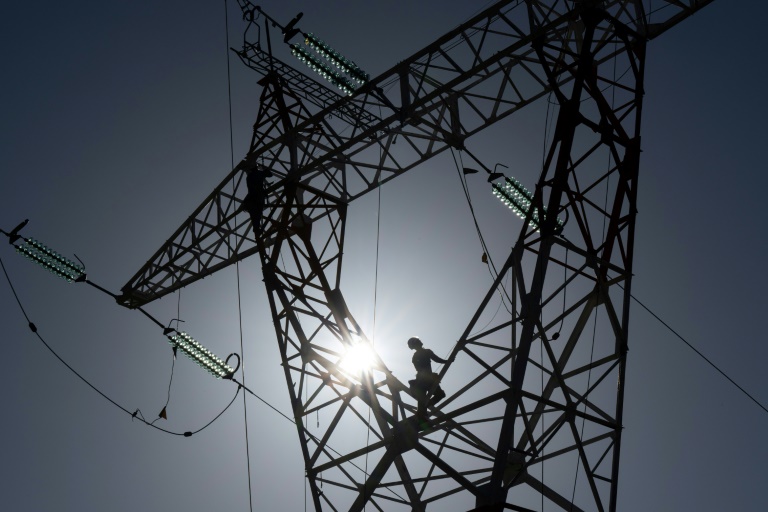
France faces high risk of power grid strain in January: operator

The French electricity grid operator warned Friday of a “high risk” of network strain due to ongoing nuclear power plant outages, which could see businesses and households forced to curb usage to avoid outright power cuts.

In a winter outlook update, RTE said it expects France’s network of nuclear plants will be operating at just 65 percent of capacity at the beginning of next year, producing around 40 gigawatts.

That forecast is well below the 48 gigawatts the state-owned electricity group EDF says will be available on January 1, when demand usually soars as winter settles in.

Around 25 of the 56 reactors operated by EDF across France are shut down for maintenance or to evaluate and repair tiny cracks that have been discovered in cooling pipes.

The company has mobilised more than 600 people, including around 100 specialised welders and other workers brought in from the United States and Canada, but it has acknowledged delays in finishing the work.

Last week, EDF said it would have 46 reactors online in January.

RTE has rolled out an Ecowatt application and website to alert when grid usage is too high, requiring it to ask clients to cut consumption or risk voltage drops (“brownouts”) and targeted electricity cuts.

Much will depend on the weather and “a possible cold wave, even a moderate one,” RTE said.

The government is already urging people to show “restraint” with electricity use, including advertisements showing tips such as turning down thermostats, taking shorter showers and running appliances at night.

'European California' Portugal woos Americans seeking better life

Nathan Hadlock moved to Portugal to escape the violence and lack of social welfare he saw in the United States, while still enjoying the sun and sea he had loved in California.

“Lisbon checked all the boxes,” the 40-year-old American entrepreneur told AFP.

It even has a suspension bridge that is almost a dead ringer for San Francisco’s Golden Gate.  

“My partner and I were looking to slow life down and enjoy things more. And so we made a list of the top 10 places in the world and Lisbon quickly made it to the top.”

The couple, who started a family when they moved to the Portuguese capital in 2020, were drawn by the weather, the good food, the cheaper lifestyle and the ease of travelling to other parts of Europe. 

They also wanted to escape the darker sides of US society.

“One of the main reasons (US) investors are looking to move here, is their kids’ safety. They often say, ‘I don’t want my kid to go to school and get shot,'” Hadlock insisted.

“And that’s a real thing in the United States that just no one here in Europe has to experience.” 

Jen Wittman, who uprooted from the Golden State to Lisbon during the pandemic with her husband and teenage son, said the United States was “really kind of falling apart at the seams”.

“The George Floyd incident and the pandemic, the political division, the racism… Everything was just getting overwhelming in America.”

Having a European social net made a big difference too.

“America is terrible with health care. And it’s terrible if you’re a retiree and you have a health condition. Essentially in America you can be bankrupted by an illness,” the 47-year-old said.

At around 7,000, the number of US citizens living in Portugal remains tiny compared to the 42,000 British expats who had made the country their home.

But while the influx of Brits — the largest expat community from western Europe — has begun to tail off, incomers from the States have doubled since 2018.

This year Americans are jostling with the Chinese for top spot among overseas investors lured by Portugal’s “golden visas” — residents permits issued for foreigners prepared to buy property or transfer capital to the Iberian country.

But most come on a D7 visa, which demands they have a regular “passive income” from pensions, rents or investments.

– ‘Different mentality’ –

Joana Mendonca, a lawyer for migration consultancy Global Citizen Solutions, speaks “almost every day” to US clients.

“Some come because they’re digital nomads and want to work from home by the sea,” she said. 

“There are also entire families, who dream of one day getting their children into European universities.

“And there are retired people who sell everything in the States so they can enjoy a good retirement in Portugal.”

Mendoca said Americans had “a different mentality” from other foreign investors, who were drawn to Portugal essentially by residency permits and tax exemptions.

“They really want to come and live here and adopt a different lifestyle,” she said, even though the introduction of the golden visa scheme in 2012 has contributed to an unwelcome surge in property prices.

Hadlock started off as a digital nomad in Portugal. Now he works for an investment fund that buys up land for olive and almond groves in the rolling hills of the Alentejo.

The region south of Lisbon reminds him of California’s Napa and Sonoma valleys.

– ‘Surf and good wine’ –

In Lisbon, Hadlock runs get-togethers to develop business ties between California and Portugal. The group calls itself Red Bridge, in a nod to the red suspension bridges spanning San Francisco Bay and the Tagus estuary.

Jonathan Littman, one of the members, still lives in California but is learning Portuguese.

He got to know Portuguese start-ups in Silicon Valley when Lisbon started organising yearly international web summits in 2016.

“We sort of see this as the California of Europe,” he said.

“The surfing, the coast… We both have great wine. We both have a love of seafood and healthy cuisine. We both can be a little laid back.”

Like her compatriots, Wittman and her family left the States to escape a “divisiveness” that Hadlock said is “pulling the US apart” and is palpable “as soon as you get off the plane”.

But Portugal was not their first choice.

“We tried to move to Italy but they were not accepting American visa applicants at all,” she recalled. “And so, we were like, ‘Who in Europe will take Americans?’ And it was Croatia and Portugal.”

She and her husband run their own digital marketing company and have no plans to move back.

“It’s safe. It’s inclusive. We feel safe walking around, we feel safe at night. We do things that we could never do in America without being in constant fear,” she said.

Saudi crown prince immune from Khashoggi suit: US govt

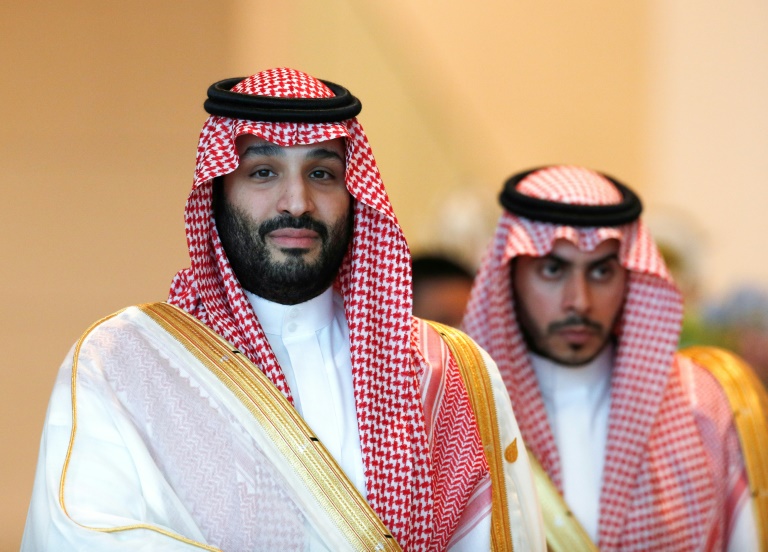
The US government recommended on Thursday that Saudi Crown Prince Mohammed bin Salman was immune from legal action over the 2018 murder of a dissident journalist, according to court documents. 

Prince Mohammed was named prime minister by royal decree in late September, sparking suggestions he was looking to skirt exposure in cases filed in foreign courts — including a civil action brought in the United States by Hatice Cengiz, fiancee of slain columnist Jamal Khashoggi.

The killing four years ago of Khashoggi, a Saudi insider-turned-critic, in the kingdom’s Istanbul consulate temporarily turned Prince Mohammed — widely known as MBS — into a pariah in the West.

His lawyers previously argued that he “sits at the apex of Saudi Arabia’s government” and thus qualifies for the kind of immunity US courts afford foreign heads of state and other high-ranking officials.

The US government had until Thursday to offer an opinion on that matter, if it chose to offer one at all. Its recommendation is not binding on the court.

“The United States respectfully informs the Court that Defendant Mohammed bin Salman, the Prime Minister of the Kingdom of Saudi Arabia, is the sitting head of government and, accordingly, is immune from this suit,” read the submission to the US District Court for the District of Columbia, from the administration of President Joe Biden.

But it added that “the Department of State takes no view on the merits of the present suit and reiterates its unequivocal condemnation of the heinous murder of Jamal Khashoggi.”

The recommendation sparked fury from Cengiz as well as among supporters of her action, including representatives of Democracy for the Arab World Now (DAWN), the US-based NGO that Khashoggi founded.

“Jamal died again today,” Cengiz tweeted. 

“It wasn’t a decision everyone expected. We thought maybe there would be a light to justice from #USA But again, money came first.”

“The Biden admin went out of its way to recommend immunity for MBS and shield him from accountability,” said DAWN’s executive director Sarah Leah Whitson.

“Now that Biden has declared he’s got total impunity, we can expect MBS’s attacks against people in our country to escalate even further.”

Agnes Callamard, secretary general of Amnesty International, called the recommendation a “deep betrayal.”

Prince Mohammed, who has been the kingdom’s de facto ruler for several years, previously served as deputy prime minister as well as defence minister under his father King Salman.

After a period of relative isolation following the Khashoggi killing, he was welcomed back on the world stage this year, notably by Biden, who travelled to Saudi Arabia in July despite an earlier pledge to make the kingdom a “pariah.”

Thursday’s recommendation gave the leader “a license to kill,” said Khalid al-Jabri, son of Saad al-Jabri, a former Saudi spymaster who has accused the prince of sending a hit squad to try to kill him in Canada.

“After breaking its pledge to punish MBS for Khashoggi’s assassination, the Biden administration has not only shielded MBS from accountability in US courts, but rendered him more dangerous than ever with a license to kill more detractors without consequences,” he said.

Last year, Biden declassified an intelligence report that found Prince Mohammed had approved the operation against Khashoggi, an assertion Saudi authorities deny.

In the civil case, brought by Cengiz and DAWN, the plaintiffs allege that Prince Mohammed and more than 20 co-defendants, “acting in a conspiracy and with premeditation, kidnapped, bound, drugged, tortured, and assassinated” Khashoggi, a columnist with the Washington Post.

They seek punitive monetary damages and to prove that the killing was ordered by “the top of the Saudi leadership hierarchy.”

Major German trade union wins pay hike, averting strike

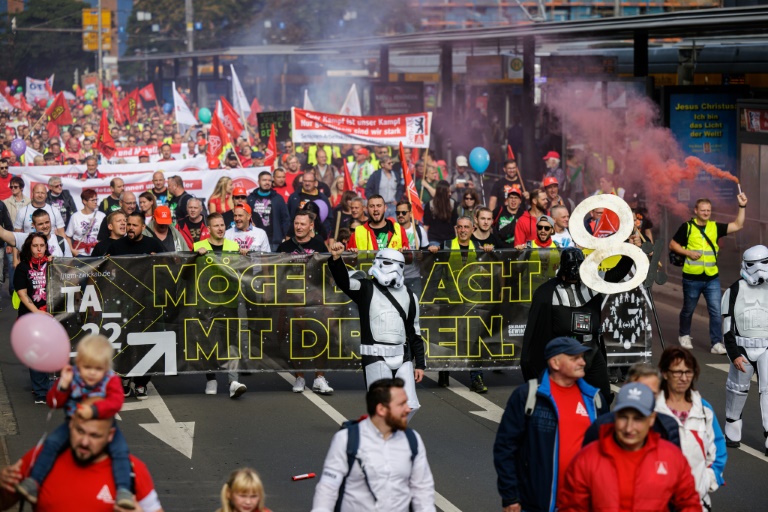
Germany’s biggest trade union agreed Friday to hefty wage hikes that are expected to cover almost four million workers facing soaring inflation, averting a major strike in Europe’s top economy.

The deal will be closely watched across the continent, as industrial action spreads due to rising costs, particularly of energy, triggered by Russia’s invasion of Ukraine.

The agreement for hikes totalling 8.5 percent between IG Metall union — which represents workers in the key metal and electrical sectors — and employers was reached early Friday after weeks of talks and walkouts. 

The so-called “pilot agreement” in southern Baden-Wuerttemberg state, which is expected to eventually cover about 3.9 million workers across Germany, lays out how the pay increase will be introduced in two stages, in 2023 and 2024.

It also includes a 3,000-euro ($3,100) payment to combat the impact of inflation.

“Employees will soon have significantly more money in their pockets — and permanently,” said Joerg Hofmann, president of IG Metall, seen as a trend setter in wage negotiations nationwide.

The union had initially called for an eight percent increase over 12 months, the biggest hike since 2008.

Its members are from a vast range of key businesses, from the automotive to electronics sectors. 

Workers have been ratcheting up pressure — with demonstrations, and a series of “warning strikes” at the end of October, which are walkouts for a limited duration that often accompany salary negotiations in Germany.

If no deal was reached, then the union was poised to launch broader strikes lasting 24 hours.

– ‘Expensive’ deal –

The employers’ group Gesamtmetall said that, while the agreement could dent companies’ competitiveness, a serious labour dispute would have caused even greater damage. 

Group president Stefan Wolf said it was an “expensive” agreement, but added: “Now we can concentrate on work and do our part to overcome an expected recession as quickly as possible.”

Under the deal, workers’ salaries will increase by 5.2 percent from June 2023, followed by a 3.3 percent increase in May 2024.

While companies are under pressure to hike wages due to rising costs, there are fears that raising them too sharply could stoke already sky-high inflation.

German manufacturers are also facing additional pressure due to high energy costs, triggered by Russia slashing gas supplies, as well more expensive raw materials.

German inflation hit 10.4 percent in October, while the government forecasts the economy will contract by 0.4 percent in 2023. 

Berlin has been rolling out relief measures to combat rising prices, including a 200-billion-euro fund to lower energy costs. 

Workers have been staging strikes across Europe, from France to Greece, due to the cost of living crisis. 

Eurozone inflation is running at a record high, and the EU warned last week the single currency area is set to fall into recession this winter. 

China's Tencent wins first game licence in 18 months

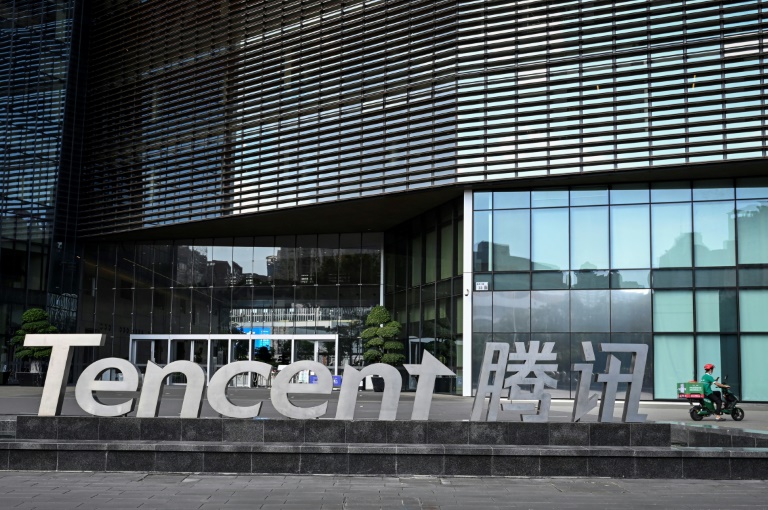
China has granted tech giant Tencent its first licence for a video game in 18 months, ending a dry spell that had threatened its position as the world’s top game maker.

Beijing moved against the country’s vibrant gaming sector last year as part of a sprawling crackdown on big tech companies, including a cap on the amount of time children could spend playing games.

Officials also froze approvals of new titles for nine months until April.

China’s gaming regulator, the National Press and Publication Administration, on Thursday said it had approved 70 new titles in November including Tencent’s action game “Metal Slug: Awakening” and a role-playing game “Journey to the West: Return” by rival NetEase.

Licences are mandatory for video games to be published and sold in the Chinese market.

The last time Tencent obtained a major licence was in May 2021.

A Tencent subsidiary received a licence in September but it was for a free educational game.

Shares in the Hong Kong-listed company closed up more than 0.5 percent on Friday after the licensing announcement, while NetEase gained more than 3.6 percent.

The approval signals a relaxing of China’s strict attitude towards tech companies.

During the crackdown, hundreds of game makers pledged to scrub “politically harmful” content from their products and enforce curbs on underage players to comply with government demands.

Restrictions announced last year allow players under the age of 18 to play for three hours a week.

Sweden confirms Nord Stream pipeline sabotage: prosecutor

Swedish officials confirmed Friday that the September blasts which destroyed sections of the Nord Stream pipelines carrying natural gas from Russia to Germany under the Baltic Sea were acts of sabotage.

“The analyses conducted found traces of explosives on several foreign objects” found at the sites of the blasts, prosecutor Mats Ljungqvist who is leading the preliminary investigation said in a statement.

Ljungqvist added that technical analyses were continuing in order to “draw more reliable conclusions regarding the incident.”

Sweden’s Prosecution Authority said that the “continued investigation will show if anyone can be formally suspected of a crime.”

Four large gas leaks were discovered on Nord Stream’s two pipelines off the Danish island of Bornholm at the end of September, with seismic institutes recording two underwater explosions just prior.

Investigators had already said that preliminary inspections had reinforced suspicions of sabotage.

While the leaks were in international waters, two of them were in the Danish exclusive economic zone and two of them in Sweden’s.

At the end of October, Nord Stream sent a Russian-flagged civilian vessel to inspect the damage in the Swedish zone.

The pipelines, which connect Russia to Germany, have been at the centre of geopolitical tensions as Russia cut gas supplies to Europe in suspected retaliation to Western sanctions over Moscow’s invasion of Ukraine.

Although the pipelines were not in operation when the leaks occurred, they both still contained gas which spewed up through the water and into the atmosphere.

Washington and Moscow have both denied any involvement and each has pointed the finger at the other.

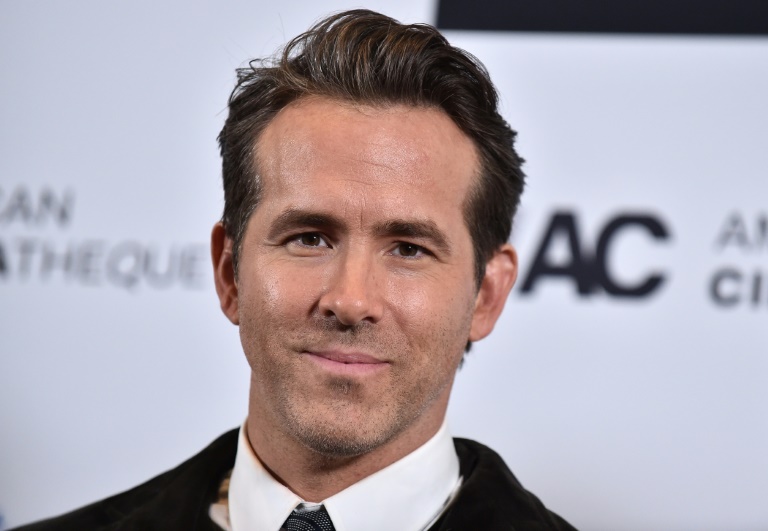
Superhero turned soccer club owner Ryan Reynolds honored by Hollywood

From subversive superheroes to sports documentaries, Hollywood A-lister Ryan Reynolds said he is focused on exploring new forms of storytelling, as he received a prestigious film industry honor.

The star of comic-book movies such as “Deadpool” and “Green Lantern” made headlines last year when he bought lowly Welsh soccer team Wrexham, along with fellow actor Rob McElhenney.

Their takeover and the fifth-tier team’s subsequent bid for promotion was the subject of hit docuseries “Welcome to Wrexham,” the latest in a booming trend of behind-the-scenes sports documentaries.

Sport “is storytelling happening in real time. So I love applying that to Wrexham,” said Reynolds at a Beverly Hills gala Thursday.

“I’ve fallen in love with not just Wrexham but the people of Wales. I knew I’d be entrenched in the town, I just didn’t know that it would go this deep this quickly.

“It’s been amazing. It’s been truly one of the great privileges of my life.”

While “Welcome to Wrexham” is unusual because its stars and producers took ownership of the club — despite admitting to knowing almost nothing about soccer — sports documentaries more generally have soared in popularity in recent times.

Netflix scored hits with basketball series “The Last Dance” and “Formula 1: Drive to Survive,” while Amazon Prime’s popular “All Or Nothing” franchise offers fans glimpses of what goes on inside elite teams.

“We live in a world that moves incredibly fast. If you can move at the speed of what people are talking about, when they’re talking about it, you can move mountains — and sports is that,” said Reynolds.

Reynolds last week told late-night host Jimmy Fallon he is interested in buying a much larger franchise — the Ottawa Senators of the National Hockey League (NHL).

Asked about the bid at Thursday’s gala, Reynolds teased: “We’ll see.”

– ‘Superheroes and horror’ –

Reynolds received the American Cinematheque Award, a “mid-career achievement” prize given to one star at the event each year. Previous honorees have included Al Pacino, Tom Cruise, and Steven Spielberg.

The actor, who also has extensive business dealings including stakes in a gin brand and a cellphone company, is working on “Deadpool 3,” another installment in his smash-hit, R-rated movie series about a potty-mouthed superhero.

“I think what made ‘Deadpool’ special and the reason I loved it is it subverts the genre,” he said.

“When you can subvert a genre like that, particularly one that is as robust as the superhero genre, you jump at the chance.”

Guests at the glitzy event included Oscar-winning director Ron Howard (“A Beautiful Mind”) who said Reynolds is “proving himself to be a really great all-around storyteller and producer as well as movie star.”

Actor and Wrexham co-owner McElhenney said Reynolds is “incredibly entrepreneurial” and “just looks at the world and business, and our particular business, in a completely different way.”

Jason Blum, the leading horror producer behind hits such as “Get Out” and “Paranormal Activity,” was also honored with a Power of Cinema Award.

Like superhero films, the horror genre has continued to thrive, drawing huge audiences to movie theaters in the age of streaming.

“Superheroes and horror. We’ve got theaters covered!” joked Blum about his fellow honoree.

Saudi crown prince immune from Khashoggi suit: US govt

The US government recommended on Thursday that Saudi Crown Prince Mohammed bin Salman was immune from legal action over the 2018 murder of a dissident journalist, according to court documents. 

Prince Mohammed was named prime minister by royal decree in late September, sparking suggestions he was looking to skirt exposure in cases filed in foreign courts — including a civil action brought in the US by Hatice Cengiz, fiancee of slain columnist Jamal Khashoggi.

The killing four years ago of Khashoggi, a Saudi insider-turned-critic, in the kingdom’s Istanbul consulate temporarily turned Prince Mohammed — widely known as MBS — into a pariah in the West.

His lawyers previously argued that he “sits at the apex of Saudi Arabia’s government” and thus qualifies for the kind of immunity US courts afford foreign heads of state and other high-ranking officials.

The US government had until Thursday to offer an opinion on that matter, if it chose to offer one at all. Its recommendation is not binding on the court.

“The United States respectfully informs the Court that Defendant Mohammed bin Salman, the Prime Minister of the Kingdom of Saudi Arabia, is the sitting head of government and, accordingly, is immune from this suit,” read the submission to the US District Court for the District of Columbia, from the administration of President Joe Biden.

But it added that “the Department of State takes no view on the merits of the present suit and reiterates its unequivocal condemnation of the heinous murder of Jamal Khashoggi.”

The recommendation sparked fury among supporters of Cengiz’s action, including representatives of Democracy for the Arab World Now (DAWN), the US-based NGO that Khashoggi founded.

“The Biden admin went out of its way to recommend immunity for MBS and shield him from accountability,” said DAWN’s executive director Sarah Leah Whitson.

“Now that Biden has declared he’s got total impunity, we can expect MBS’s attacks against people in our country to escalate even further.”

Agnes Callamard, secretary general of Amnesty International, called the recommendation a “deep betrayal.”

Prince Mohammed, who has been the kingdom’s de facto ruler for several years, previously served as deputy prime minister as well as defence minister under his father King Salman.

After a period of relative isolation following the Khashoggi killing, he was welcomed back on the world stage this year, notably by President Biden, who travelled to Saudi Arabia in July despite an earlier pledge to make the kingdom a “pariah”.

Thursday’s recommendation gave the leader “a license to kill,” said Khalid al-Jabri, son of Saad al-Jabri, a former Saudi spymaster who has accused the prince of sending a hit squad to try to kill him in Canada.

“After breaking its pledge to punish MBS for Khashoggi’s assassination, the Biden administration has not only shielded MBS from accountability in US courts, but rendered him more dangerous than ever with a license to kill more detractors without consequences,” he said.

Last year, Biden declassified an intelligence report that found Prince Mohammed had approved the operation against Khashoggi, an assertion Saudi authorities deny.

In the civil case, brought by Cengiz and DAWN, the plaintiffs allege that Prince Mohammed and more than 20 co-defendants, “acting in a conspiracy and with premeditation, kidnapped, bound, drugged, tortured, and assassinated” Khashoggi, a columnist with the Washington Post.

They seek punitive monetary damages, as well as to prove that the killing was ordered by “the top of the Saudi leadership hierarchy.”

Asian markets mixed as caution over rate outlook dulls sentiment

Asian markets were mixed Friday as caution permeated trading floors and investors tried to gauge the outlook for Federal Reserve monetary policy after several officials tried to temper optimism over signs that inflation is slowing.

While the week has been broadly positive for equities following softer-than-expected US consumer and wholesale price figures, a strong reading on retail sales and jobless claims showed plenty of resilience to higher interest rates.

With that in mind, St Louis Fed President James Bullard warned more hikes were needed to bring inflation down from four-decade highs, adding that they might need to go as high as seven percent.

That was followed by Minneapolis Fed boss Neel Kaskari saying he had not witnessed much evidence that underlying demand was cooling and did not want to forecast when the tightening would end.

The comments came after a similar message from other policymakers, who have sought to calm markets, which soared in the wake of last Thursday’s consumer prices reading.

They also fuelled fears among traders that the sharp tightening campaign — including four straight bumper 0.75-point increases in a row — would tip the world’s top economy into recession.

On Wednesday, Kansas City Fed chief Esther George said it was unclear how the bank can douse inflation “without having some real slowing” or even a contraction.

“Bullard’s comments are all the more surprising given that there is clear evidence that inflationary pressure is starting to slow more than expected,” said CMC Markets analyst Michael Hewson.

“Consequently, Bullard’’s views may well be a minority view at this point, but it still shows how sensitive markets can be when it comes to the eventual destination of the terminal rate.”

– ‘Fundamental disconnect’ –

Wall Street’s three main indexes ended in the red, and Asia struggled to hold on to the morning’s momentum.

Hong Kong turned negative after a strong start, even as tech firms rallied and after China indicated it would ease back on some of its strict Covid restrictions and help its troubled property sector.

Tokyo, Shanghai, Singapore, Taipei and Mumbai were also down, though Sydney, Seoul, Wellington, Manila, Bangkok and Jakarta edged up.

London, Paris and Frankfurt all rose at the open.

There was a fear among analysts that the recent rally may have run a little ahead of itself.

“The market believes that inflation is on the downtrend. We also believe that, but the fact of inflation having peaked is not a reason for the Fed to turn and cut rates,” Paul Christopher, at Wells Fargo Investment Institute, told Bloomberg Radio.

“That’s the fundamental disconnect that still exists between the Fed and the market.”

And SPI Asset Management’s Stephen Innes added: “Things can turn on a dime, primarily when the fear of missing (out) drives sentiment.

“However, the odds of a pre-Thanksgiving rally are giving way to the hawkish Fed drumbeat and pushback on China reopening plays.”

The pound clawed back some of the losses suffered Thursday after Britain unveiled a budget with 55 billion pounds ($65 billion) of tax hikes and spending cuts that traders fear will deepen a cost-of-living crisis and a recession that could last two years.

– Key figures around 0810 GMT –

Tokyo – Nikkei 225: DOWN 0.1 percent at 27,899.77 (close)

Hong Kong – Hang Seng Index: DOWN 0.3 percent at 17,992.54 (close)

Shanghai – Composite: DOWN 0.6 percent at 3,097.24 (close)

London – FTSE 100: UP 0.4 percent at 7,372.20

Pound/dollar: UP at $1.1910 from $1.1867 on Thursday

Euro/dollar: UP at $1.0373 from $1.0370

Dollar/yen: DOWN at 140.00 yen from 140.20 yen

Euro/pound: DOWN at 87.08 from 87.34 pence

West Texas Intermediate: UP 0.5 percent at $82.01 per barrel

Brent North Sea crude: UP 0.3 percent at $90.01 per barrel

New York – Dow: FLAT at 33,546.32 points (close)

Close Bitnami banner
Bitnami