US Business

California lab-grown meat start-up gets first green light

A California-based lab-grown meat start-up received the first green light for such products from the US food safety agency on Wednesday, although the product still has more hurdles to clear before being sold to consumers.

The US Food and Drug Administration said it carried out a “careful evaluation” of Upside Foods’ cultivated chicken, including data and information provided by the company, and had “no further questions at this time,” signaling a go-ahead for the firm.

“We started UPSIDE amid a world full of skeptics, and today, we’ve made history again as the first company to receive a ‘No Questions’ letter from the FDA for cultivated meat,” founder and CEO Uma Valeti said in a press release.

The FDA specified that the evaluation did not constitute “an approval process.”

Upside Foods will still have to undergo inspection by the US Department of Agriculture, for example, before it can sell its products.

That said, this “is a watershed moment in the history of food,” Valeti said.

Several start-ups are aiming to produce so-called lab-grown meat, which would allow humans to consume animal protein without harming the environment through farming and without any animal suffering.

These products differ from plant-based substitutes such as soy burgers that mimic the texture and flavor of meat but do not contain any animal protein.

The start-up Eat Just, a competitor of Upside Foods, was the first to receive authorization to make artificial meat, in Singapore in 2020. 

While succeeding in the general lab-meat market has proven complicated and expensive, some companies have set their sights on petfood, whose consumers are much less picky. 

Bond Pet Foods, a Colorado start-up, is creating animal protein from a microbial fermentation process to feed dogs.
Asian markets sink as rate hike woes return to the fore

Trading was subdued in Asia on Thursday as the optimism that characterised recent sessions was dealt a blow by data showing a resilience among US consumers that gives the Federal Reserve room to keep hiking interest rates.

Two reports showing inflation easing in the world’s top economy provided a springboard for world markets over much of the past week as investors took the readings to mean almost a year of monetary tightening was finally kicking in.

But on Wednesday the commerce department said retail sales jumped far more than expected last month, suggesting Americans are still able to weather the higher inflation and interest rate environment.

That was compounded by comments from a top Fed official that she did not see the bank stopping hiking and indicating she was willing to push borrowing costs above five percent, from the current 3.75-4.0 percent.

San Francisco Fed President Mary Daly told CNBC: “Somewhere between 4.75 and 5.25 seems a reasonable place to think about as we go into the next meeting.

“And so that does put it in the line of sight that we would get to a point where we would raise and hold.”

“Pausing is off the table right now, it’s not even part of the discussion. Right now the discussion is, rightly, in slowing the pace,” she added.

Traders have for months grown increasingly fearful that the hawkish tilt by the central bank will cause a recession, and policymakers have made clear they are willing to keep lifting even if that means hurting the economy.

Meanwhile, JPMorgan Chase said the United States would tip into a “mild” recession in 2023 owing to the rate increases, adding that it saw the Fed easing policy the following year in 2024.

“Every time equity and bond markets are thinking the Fed is done and start taking off in a rally, the Fed gets out and starts talking that back down again,” Cheryl Smith, of Trillium Asset Management, told Bloomberg Television.

In early trade, Hong Kong lost more than two percent, hit by profit-taking after a 14 percent surge between Friday and Tuesday, while there were also losses in Shanghai.

Still, observers said there were signs of optimism in Chinese markets after Beijing moved to ease some of its strict Covid restrictions and provide much-needed help to the property sector.

Tokyo, Seoul, Taipei, Manila and Jakarta also fell, though Singapore, Sydney and Manila edged up.

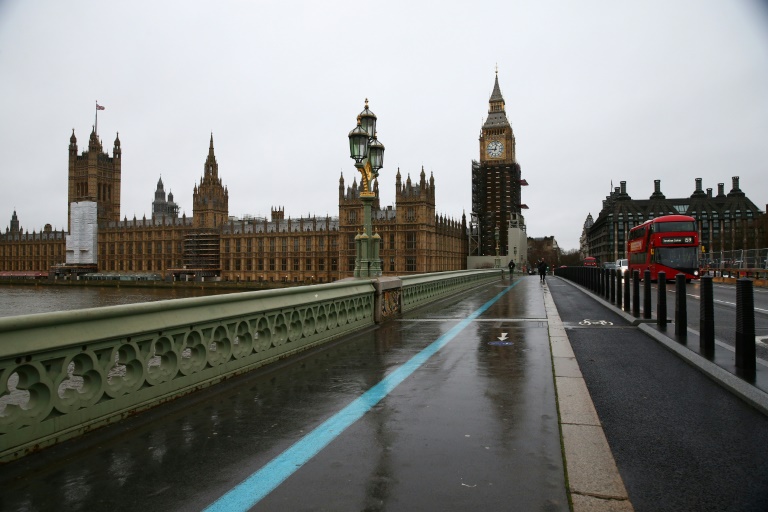
The pound was down against the dollar as Britain prepares for what is expected to be a grim budget later in the day by finance minister Jeremy Hunt, who has flagged a jump in taxes and spending cuts.

The announcement comes a day after figures showed UK inflation spiked at 11.1 percent in October, the highest since 1981, as the country is hammered by a cost-of-living crisis.

– Key figures around 0230 GMT –

Tokyo – Nikkei 225: DOWN 0.4 percent at 27,915.58 (break)

Hong Kong – Hang Seng Index: DOWN 2.5 percent at 17,811.86

Shanghai – Composite: DOWN 0.9 percent at 3,092.40

Pound/dollar: DOWN at $1.1876 from $1.1914 on Wednesday

Euro/dollar: DOWN at $1.0367 from $1.0395

Dollar/yen: UP at 139.56 yen from 139.54 yen

Euro/pound: UP at 87.31 pence from 87.21 pence

West Texas Intermediate: DOWN 1.0 percent at $84.71 per barrel

Brent North Sea crude: DOWN 0.9 percent at $92.07 per barrel

New York – Dow: DOWN 0.1 percent at 33,553.83 points (close)

London – FTSE 100: DOWN 0.3 percent at 7,351.19 (close) 

Life sentence for US man who killed six in driving rampage

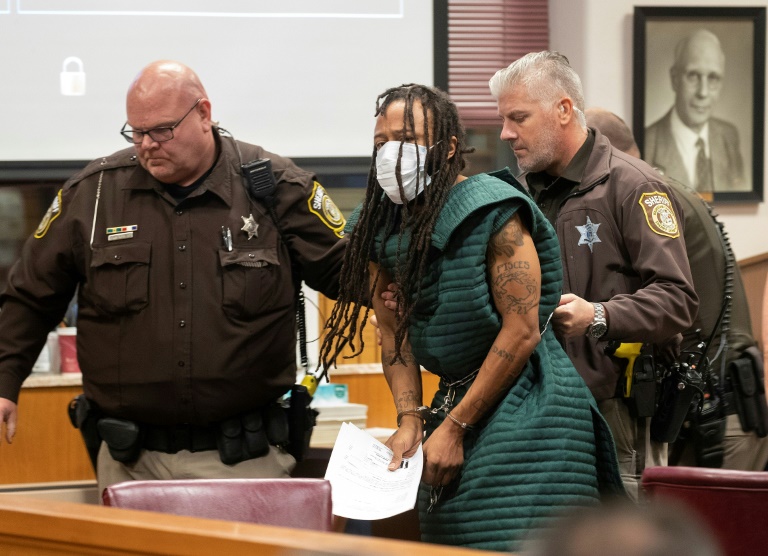
A man who plowed his sports utility vehicle into a Christmas parade in Wisconsin last year and killed six people was sentenced Wednesday to life in prison without parole.

A jury in October found Darrell Brooks, 40 guilty of multiple charges of first-degree intentional murder, reckless endangerment and hit-and-run after a three-week trial.

Brooks faced mandatory life imprisonment in a two-day sentencing hearing in the city of Waukesha where the attack happened in November 2021.

Judge Jennifer Dorow said, “frankly, you deserve it.” She said Brooks had hit a total of 68 people with his car.

“There are so many aggravating factors here it’s frankly difficult to even keep track of all,” the judge said.

She cited “complete disregard for the life of anyone else”, a prior criminal record, and “complete and utter lack of remorse.”

On Tuesday people who were hit in the rampage testified about their trauma and suffering.

In his defense, Brooks’s mother said her son had psychiatric problems and it would be more appropriate to institutionalize him.

Brooks himself in a rambling speech said he was sorry and that he does not understand why he did what he did.

“That’s a question I struggle with myself,” Brooks said.

But as he did several times during the trial itself, Brooks interrupted the judge, refused instructions to be quiet or sit down, even though he was confined to a separate room for the sentencing part of the trial.

“You might have some of your own mental health issues, whether it be bipolar childhood trauma, or things of that nature. But the bottom line is, none of that caused you to do what you did on November 21 of 2021,” said the judge.

Four women, one man and an eight-year-old girl were killed in the rampage, and dozens of other people watching and taking part in the parade were injured.

Brooks steered his red SUV into the marching musicians, dancers and children along a central Waukesha avenue for the Christmas parade, not slowing down or attempting to avoid the parade.

“He was boiling over with rage and anger and decided not to control,” said Dorow.

“He chose to drive recklessly, carelessly, and maliciously through a parade route at anyone in his path.”

As recession looms, Airbnb CEO wants your home to make money

After years of trying to expand into other sectors, the CEO of holiday home giant Airbnb, wants to get back to the basics: helping people make money.

“I had tried to create too many things at the same time,” explained Brian Chesky to AFP.

“Then the pandemic occurred. We had to get back to our core business,” he said.

The sudden halt to world tourism was a shock to the home rental company and forced layoffs of a quarter of Airbnb workforce in 2020.

It also snapped the company’s foray into travel “experiences”, Airbnb’s move into tourist activities.

The health of Airbnb, along with the whole travel sector, had begun rebounding since the Covid-19 lockdowns, but once again, dark clouds are looming.

“The big obvious thing is that (in most countries) we’re going to enter a recession probably, if we’re not already in one,” said Chesky.

The company which has a headcount of about 6,000 people, has no plans for layoffs unlike tech giants Meta, Amazon or Twitter.

Instead, it wants to encourage more people to become hosts on its platform, increasing options as the euphoria of reopened travel has cooled.

“We have to be affordable” in terms of pricing, Chesky insisted, to allow consumers to travel despite a deteriorating economic climate.

– ‘Huge business’ –

In order to face the challenge, more hosts are needed: “We got to help people make money,” said Chesky, especially those that are reluctant to open up their properties to strangers.

To encourage the reluctant, Airbnb unveiled on Wednesday a new feature that offers neophytes advice from the site’s highly experienced “superhosts” who, for a fee paid by the company, provide advice and suggestions.

In another move to attract skittish property owners, the San Francisco-based group will expand its user identity requirements to even more markets. It will also offer hosts tools to better set their rates and offer discounts.

Airbnb also announced the launch of its anti-party screening technology across the US and Canada.

Partying is the company’s bete noire, with revelers breaking the rules to host wild bashes, scaring away hosts or dissuading potential ones.

The San Francisco group also increased the damage covered by its inhouse insurance scheme from $1 million to $3 million.

Chesky has not given up on diversifying in the long term. In five or ten years, “I hope we will do much more than just hosting travelers,” he said.

In particular, the entrepreneur intends to revive “experiences”.

“There’s a huge business on the horizon. But it’s going to take longer than I thought.. it just turns out that it’s a more difficult thing to match supply and demand,” he said.

US sports stars named in lawsuit over FTX's deceptive practices

High-profile US sports stars and personalities have been named in a lawsuit over deceptive practices targeting investors who became victims of the stunning collapse of cryptocurrency exchange FTX.

The celebrities helped promote the exchange, which declared bankruptcy in the United States last week in a meltdown that has reverberated across the digital currency landscape and drawn scrutiny from authorities in multiple countries.

Treasury Secretary Janet Yellen on Wednesday was the latest official to call for more oversight of the crypto industry.

American football star Tom Brady and his supermodel ex-wife Gisele Bundchen, retired basketball great Shaquille O’Neal, tennis Grand Slam champion Naomi Osaka, actor/comedian Larry David, and Shark Tank investor Kevin O’Leary were among those named alongside FTX founder Sam Bankman-Fried in the suit filed in Miami federal court on Tuesday.

Investor Edwin Garrison, of Oklahoma, filed the suit in a Miami court on behalf of other investors, seeking to recover damages from losses suffered in the FTX implosion, accusing the company of “misrepresentations and omissions.”

“FTX’s fraudulent scheme was designed to take advantage of unsophisticated investors from across the country,” the lawsuit alleges.

“Some of the biggest names in sports and entertainment have either invested in FTX or been brand ambassadors for the company” and hyped the exchange in ads and on social media, the document said.

David appeared in a television commercial during this year’s American football Super Bowl championship game, a coveted and costly promotional spot.

The exchange “needed celebrities … to continue funneling investors into the FTX Ponzi scheme, and to promote and substantially assist in the sale” of the accounts “which are unregistered securities,” the court documents said.

– ‘Regulatory gaps’ –

The turmoil at FTX, which until recently had been valued at $32 billion, came after Binance, the world’s biggest cryptocurrency platform, backed out of a buyout deal amid reports about mismanagement of client funds and potential investigations by regulators.

“The recent failure of a major cryptocurrency exchange and the unfortunate impact that has resulted for holders and investors of crypto assets demonstrate the need for more effective oversight of cryptocurrency markets,” Treasury’s Yellen said in a statement.

US agencies have highlighted the risks involved in the crypto industry, which could eventually spill over into the traditional financial system, and she called on Congress “to move quickly to fill the regulatory gaps the Biden Administration has identified.”

Meanwhile, the House Financial Services Committee earlier Wednesday announced it would hold a hearing next month to investigate the company’s collapse.

“The fall of FTX has posed tremendous harm to over one million users, many of whom were everyday people who invested their hard-earned savings into the FTX cryptocurrency exchange, only to watch it all disappear within a matter of seconds,” committee Chair Maxine Waters said in a statement.

“Unfortunately, this event is just one out of many examples of cryptocurrency platforms that have collapsed just this past year.”

The lawsuit alleges the company used money from new investors to “pay interest to the old ones and to attempt to maintain the appearance of liquidity.”

The collapse came amid rising doubts over the financial stability of FTX. Attention had focused on the relationship between the exchange and Alameda Research, a trading house also owned by Bankman-Fried, and reports he shifted funds out of the exchange, even as he tried to fill a $7 billion gap.

It was a spectacular reversal of fortune for the founder and one-time cryptocurrency wunderkind Bankman-Fried.

The disgraced executive apologized on Twitter and resigned, but after the company filed for bankruptcy it said it was the victim of “unauthorized transactions.”

US sports stars named in lawsuit over FTX's deceptive practices

High-profile US sports stars and personalities have been named in a lawsuit over deceptive practices targeting investors who became victims of the stunning collapse of cryptocurrency exchange FTX.

The celebrities helped promote the exchange, which declared bankruptcy in the United States last week in a meltdown that has reverberated across the digital currency landscape and drawn scrutiny from authorities in multiple countries.

Treasury Secretary Janet Yellen on Wednesday was the latest official to call for more oversight of the crypto industry.

American football star Tom Brady and his supermodel ex-wife Gisele Bundchen, retired basketball great Shaquille O’Neal, tennis Grand Slam champion Naomi Osaka, actor/comedian Larry David, and Shark Tank investor Kevin O’Leary were among those named alongside FTX founder Sam Bankman-Fried in the suit filed in Miami federal court on Tuesday.

Investor Edwin Garrison, of Oklahoma, filed the suit in a Miami court on behalf of other investors, seeking to recover damages from losses suffered in the FTX implosion, accusing the company of “misrepresentations and omissions.”

“FTX’s fraudulent scheme was designed to take advantage of unsophisticated investors from across the country,” the lawsuit alleges.

“Some of the biggest names in sports and entertainment have either invested in FTX or been brand ambassadors for the company” and hyped the exchange in ads and on social media, the document said.

David appeared in a television commercial during this year’s American football Super Bowl championship game, a coveted and costly promotional spot.

The exchange “needed celebrities … to continue funneling investors into the FTX Ponzi scheme, and to promote and substantially assist in the sale” of the accounts “which are unregistered securities,” the court documents said.

– ‘Regulatory gaps’ –

The turmoil at FTX, which until recently had been valued at $32 billion, came after Binance, the world’s biggest cryptocurrency platform, backed out of a buyout deal amid reports about mismanagement of client funds and potential investigations by regulators.

“The recent failure of a major cryptocurrency exchange and the unfortunate impact that has resulted for holders and investors of crypto assets demonstrate the need for more effective oversight of cryptocurrency markets,” Treasury’s Yellen said in a statement.

US agencies have highlighted the risks involved in the crypto industry, which could eventually spill over into the traditional financial system, and she called on Congress “to move quickly to fill the regulatory gaps the Biden Administration has identified.”

Meanwhile, the House Financial Services Committee earlier Wednesday announced it would hold a hearing next month to investigate the company’s collapse.

“The fall of FTX has posed tremendous harm to over one million users, many of whom were everyday people who invested their hard-earned savings into the FTX cryptocurrency exchange, only to watch it all disappear within a matter of seconds,” committee Chair Maxine Waters said in a statement.

“Unfortunately, this event is just one out of many examples of cryptocurrency platforms that have collapsed just this past year.”

The lawsuit alleges the company used money from new investors to “pay interest to the old ones and to attempt to maintain the appearance of liquidity.”

The collapse came amid rising doubts over the financial stability of FTX. Attention had focused on the relationship between the exchange and Alameda Research, a trading house also owned by Bankman-Fried, and reports he shifted funds out of the exchange, even as he tried to fill a $7 billion gap.

It was a spectacular reversal of fortune for the founder and one-time cryptocurrency wunderkind Bankman-Fried.

The disgraced executive apologized on Twitter and resigned, but after the company filed for bankruptcy it said it was the victim of “unauthorized transactions.”

'Hardcore' or bust: Musk gives ultimatum to Twitter staff

Twitter’s new boss Elon Musk has asked staff to choose by Thursday between being “extremely hardcore” and working intense, long hours, or losing their jobs, according to an internal memo seen by AFP.

The Tesla tycoon has come under fire for radical changes at the social media company, which he bought for $44 billion late last month.

He has fired half of the company’s 7,500 staff, scrapped a work-from-home policy, and imposed long hours, all while his attempts to overhaul Twitter have faced chaos and delays.

“Going forward, to build a breakthrough Twitter 2.0 and succeed in an increasingly competitive world, we will need to be extremely hardcore,” Musk wrote in the internal memo. 

“This will mean working long hours at high intensity. Only exceptional performance will constitute a passing grade,” he added.

Staff have been asked to follow a link to affirm their commitment to “the new Twitter” by 5:00 pm New York time (2200 GMT) on Thursday.

If they do not do so, they will lose their jobs, receiving three months of severance pay.

Twitter did not respond to AFP requests for comment on the new measure.

Since Musk took over Twitter, his stumbling attempts to revamp user verification with a controversial subscription service have led to a slew of fake accounts and pranks, and prompted major advertisers to step away from the platform.

On Tuesday, Musk postponed the relaunch of Twitter’s paid subscription service, Blue Verified.

Musk wants users to pay $8 for the coveted blue tick, which has until now been granted free to verified accounts, lending authority to public figures and media using Twitter. 

However, the system was suspended as accounts impersonating others — including Musk — proliferated.

The relaunch is now set for November 29.

-‘Somebody else’ –

Musk on Wednesday said his overhaul of the company’s “organization structure” would be done this week.

After “an initial burst of activity” to reorganize the company, “I expect to reduce my time at Twitter and find somebody else to run Twitter over time,” he said.

Musk was speaking in a court hearing linked to his $50 billion pay package at Tesla, the electric car giant.

A shareholder has accused the South African multi-billionaire of being a part-time CEO for Tesla, saying that the board of directors did not sufficiently scrutinize the compensation.

Musk has warned Twitter’s employees that the company risks bankruptcy if it is not quickly fixed.

In recent days, Musk has carried out more firings, sacking one engineer in a tweet after he openly criticized decisions under the new leadership.

“I would like to apologize for firing these geniuses. Their immense talent will no doubt be of great use elsewhere,” Musk tweeted.

Republicans take control of US House, Congress split: projections

Republicans on Wednesday took control of the US House of Representatives from Democrats, networks said, narrowly securing a legislative base to oppose President Joe Biden’s agenda for the final two years of his term –- and leaving power in Congress split.

The slim Republican majority in the lower house of the US legislature will be far smaller than the party had been banking on, and Republicans also failed to take control of the Senate in a historically weak performance in the November 8 midterm elections.

NBC and CNN projected the victory for Republicans with at least 218 seats in the 435-member House of Representatives — the magic number needed to take control. This came a week after millions of Americans went to the polls for the midterms, which typically deliver a rejection of the party in the White House.

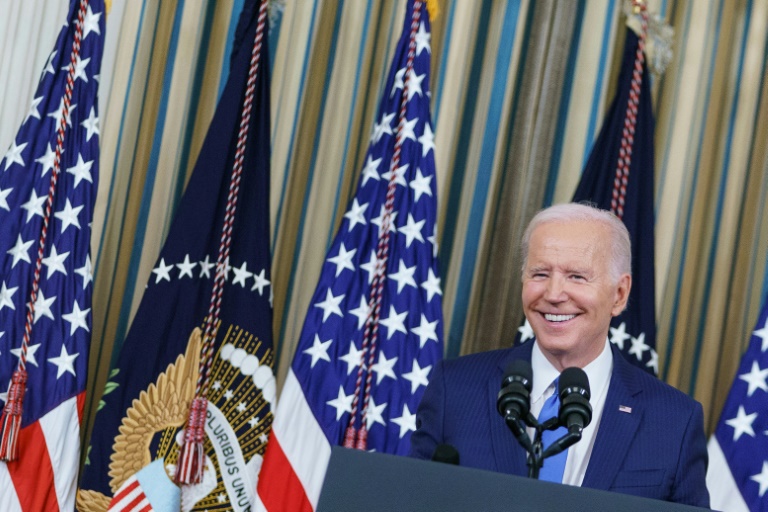
Biden congratulated top House Republican Kevin McCarthy “on Republicans winning the House majority” and added that he was “ready to work with House Republicans to deliver results for working families.”

Last week’s vote, he said, was “a strong rejection of election deniers, political violence and intimidation” and demonstrated “the strength and resilience of American democracy.”

Tweeting soon after the projection was called, McCarthy said that “Americans are ready for a new direction, and House Republicans are ready to deliver.”

The news came one day after former president Donald Trump — who loomed large during the election cycle, and whose endorsement appears to have doomed some of his party’s candidates — announced a new run for the White House.

With inflation surging and Biden’s popularity ratings cratering, Republicans had hoped to see a “red wave” wash over America, giving them control of both houses and hence an effective block over most of Biden’s legislative plans.

But instead, Democratic voters — galvanized by the Supreme Court’s overturning of abortion rights and wary of Trump-endorsed candidates who openly rejected the result of the 2020 presidential election — turned out in force. 

And Republicans lost ground with candidates rejected by moderate voters as too extreme.

– ‘Officially flipped’ –

Biden’s party flipped a key Senate seat in Pennsylvania and held onto two more in battleground states Arizona and Nevada, giving them an unassailable majority in the upper chamber with 50 seats plus Vice President Kamala Harris’ tie-breaking vote.

A Senate runoff election in Georgia set for next month could see the Democrats ultimately improve their majority in the upper house.

The Senate oversees the confirmation of federal judges and cabinet members, and having the 100-seat body in his corner will be a major boon for Biden.

Meanwhile on Tuesday McCarthy won his party’s leadership vote by secret ballot, putting him in prime position to be the next speaker, replacing Democrat Nancy Pelosi.

The 57-year-old congressman from California, a senior member of House Republican leadership since 2014, fended off a challenge from Andy Biggs, a member of the influential far-right Freedom Caucus.

But potential far-right defections could yet complicate his path when the full chamber votes in January.

McCarthy now begins what is expected to be a grueling campaign to win the consequential floor vote on January 3, when the House of Representatives’ 435 newly elected members — Democrats and Republicans — choose their speaker, the third most important US political position after president and vice president.

A divided Congress could be politically expedient for Biden

The next two years will be filled with legislative gridlock for Joe Biden under a divided Congress — which could prove to be a boon if he chooses to run for president and plays his cards right.

Gaining political credit by playing the blame game and pegging the paralysis squarely on the already weakened Republicans could give Biden just the boost he needs in his bid for a second term.

“It helps him as a candidate for 2024 even if it does not help him as a governing president,” said David Schultz, professor of political science at Hamline University.

The stage is now set with Republicans having gained control of the House of Representatives with the slimmest of majorities on Wednesday, following Democrats retaining the Senate over the weekend.

– ‘Posturing and investigations’ –

Democrats have held a majority in both chambers of Congress for Biden’s first two years. However now that the tides have changed he can no longer hope to pass major legislation.

Thus dies any hope of a federal law enshrining the right to an abortion, a ban on assault rifles or vast electoral reform to protect voting access.

It could also become more difficult for the White House to get approval for new military aid for Ukraine, with Republicans having warned they will not sign a “blank check” for the war effort.

Instead of meaningful legislation from Republicans, there will be “posturing and investigations and subpoenas” between now and the 2024 elections, said Robert Rowland, professor of political communication at the University of Kansas.

He also predicts that “we’re going to hear a great deal about Hunter Biden,” the president’s youngest son, a businessman turned artist with a past checkered by addiction.

Republicans want to use their supervisory power in the House in particular to dissect Hunter Biden’s business relationships with Ukraine and China, which they say were tainted by conflicts of interest.

– ‘Political eternity’ –

Because Republicans have only a razor-thin margin, many experts believe they will think twice before launching impeachment proceedings, despite vague threats to do so during the recent midterm campaigns.

Retaining control of the Senate will also allow Biden to appoint important figures, from federal judges to officials within his administration.

The divided Congress could give a significant boost to Biden, who will say whether he will seek a second term at the beginning of next year.

Republicans’ slim control of the House will benefit Biden “because it will put the Republican Party’s current disfunction in the limelight” including its division between a radical fringe and a more traditional conservative contingent, said Rachel Bitecofer, a Democratic political strategist. 

Biden will be able to campaign against Republicans by accusing them of obstructing his projects, Schultz said.

He additionally will be able to position himself as the antithesis to Donald Trump, who has now officially thrown his hat in the 2024 presidential ring.

Nothing, however, guarantees that Biden’s momentum will hold until the next presidential election, nor silence the constant questions about his age as the oldest US president ever elected, nor his low popularity rating.

That said, “two years is a political eternity,” Schultz reminded.

“In politics, perception is reality. And Biden looks a lot stronger now,” he added.

UK budget set to deliver more economic pain

Britain is set Thursday to unveil hefty tax rises and spending cuts at the risk of worsening a cost-of-living crisis for millions in the recession-bound economy.

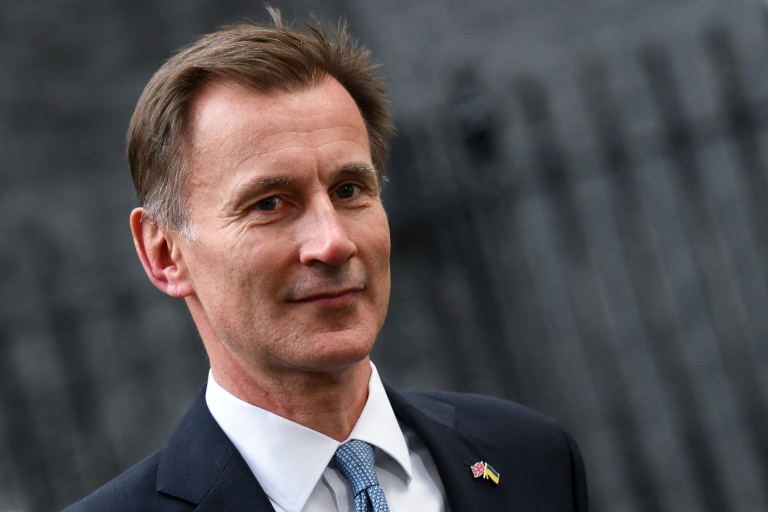
A day after official data showed UK inflation rocketing to a 41-year high above 11 percent, finance minister Jeremy Hunt will trigger a fresh era of austerity after the calamitous and short-lived tenure of prime minister Liz Truss.

The chancellor of the exchequer will insist his strategy “protects our long-term economic growth” while being “compassionate” towards the most vulnerable.

“We aren’t immune to these global headwinds, but with this plan for stability, growth and public services, we will face into the storm,” he is expected to tell parliament, according to the Treasury.

Hunt and Prime Minister Rishi Sunak insist tough action is needed after Truss unleashed a package of unfunded tax cuts that caused panic on financial markets.

– Scrooge –

“Tackling inflation is my absolute priority and that guides the difficult decisions on tax and spending we will make on Thursday,” Hunt said, as Britain’s Press Association quoted the Treasury as saying the package would be worth £54 billion ($64 billion).

Hunt at the weekend likened himself to the penny-pinching miser Ebenezer Scrooge in Charles Dickens’ festive favourite “A Christmas Carol”, but argued that his plan will “make sure Christmas is never cancelled”.

It comes as UK workers across various sectors have gone on strike this year to demand pay rises to compensate for surging inflation.

State-employed nurses and firefighters could be the latest groups to carry out industrial action, joining further walkouts this winter by rail workers and postal staff.

Bank of England governor Andrew Bailey on Wednesday told MPs he would not take a pay rise this year.

“I would politely decline as I have done before,” said the central bank boss, who earns around £575,000 per year.

The BoE says that Britain is probably already in recession after its economy shrank in the third quarter and is set to do so again in the final three months of the year.

The bank, which is raising interest rates to combat sky-high inflation, has warned the UK economy may experience a record-long recession until mid-2024.

Alongside the tax and spend plans, the government will Thursday update its forecasts for UK growth and inflation, which are expected to underline the dismal outlook ahead.

– Brexit slowdown –

Hunt has already set about reversing Truss’s much-criticised budget by curtailing a freeze in domestic fuel bills, which have surged largely owing to the invasion of Ukraine by major energy producer Russia. 

Helping to stabilise markets, he also reversed her plan to cut tax on company profits. 

Reports suggest the chancellor will go further Thursday by freezing income tax-rate thresholds, meaning more people are dragged into higher brackets.

Hunt has hinted at raising municipal taxes and cutting budgets across government departments.

To help the poorest with rocketing energy bills, the government is expected to ramp up a windfall tax on oil and gas giants, whose profits have surged on fallout from the Ukraine war.

Hunt is also said to be preparing a windfall tax on firms generating electricity, whose earnings have also soared this year. 

The Ukraine war has massively contributed to worldwide inflation hitting the highest levels in decades. Prices are also up on pandemic-fuelled supply constraints.

Britain’s economy is additionally being impacted by Brexit, Bailey and fellow BoE rate-setter Swati Dhingra said Wednesday.

“It’s undeniable now that we’re seeing a much bigger slowdown in trade in the UK compared to the rest of the world,” Dhingra told the Treasury committee of the House of Commons.

Close Bitnami banner
Bitnami