US Business

Kevin Spacey faces further sex offence charges in UK

Prosecutors in London on Wednesday said they have approved seven new sexual offence charges against the Oscar-winning Hollywood actor Kevin Spacey. 

The Crown Prosecution Service (CPS) said the “House of Cards” and “American Beauty” star has been charged over “a number of sexual assaults against one man between 2001 and 2004”.

It also authorised “one charge of causing a person to engage in sexual activity without consent” against the 63-year-old actor, who lives in the United States.

The CPS, which is responsible for bringing prosecutions in England and Wales, said the seven new charges refer to alleged crimes committed before and after 2003, when new legislation on sexual offences entered force. 

This means Spacey is now facing a total of 11 charges of sexual assault in Britain.

Spacey in July pleaded not guilty at London’s Old Bailey court to four charges of sexual assault against three men between 2005 and 2013 in London and Gloucestershire in western England.

None of the alleged victims can be identified under English law. Reporting restrictions prevent further details being disclosed before trial.

Spacey voluntarily appeared at a London court when the first charges were brought and vowed to defend himself against the charges.

Those allegations referred to a period when he was artistic director of London’s Old Vic Theatre, between 2004 and 2015.

A New York court last month dismissed a $40 million sexual misconduct lawsuit brought against Spacey by an actor, Anthony Rapp, who claimed the Hollywood star targeted him when he was 14.

A judge had ruled that Rapp had brought the case too late for a criminal charge.

Spacey’s acting career ended five years ago when Rapp’s allegations emerged and he was dropped from the final season of “House of Cards” and other upcoming projects.

Allegations against him emerged in the wake of the #MeToo movement that saw numerous claims of sexual assault and harassment in the movie industry.

He has always denied allegations of sexual abuse.

In 2019, charges against the actor of indecent assault and sexual assault were dropped in Massachusetts. 

Indonesia proposes nickel producer bloc at Canada G20 talks

Indonesia has proposed the establishment of a bloc of the world’s top nickel producers similar to the oil cartel OPEC in talks with Canada, its investment minister said.

The Southeast Asian nation is the world’s top nickel producer, while Canada is also a major producer of the mineral, according to United States Geological Survey data.

“Through such collaboration, we hope all nickel-producing countries will be able to profit through a fair added value creation,” Bahlil Lahadalia said, according to a ministry statement. 

The proposal was raised when Lahadalia met Canada’s trade minister Mary Ng on the sidelines of the G20 summit in Bali.  

He said an organisation similar to OPEC, a group of 13 oil-producing countries, could help organise and streamline policies on nickel, a key mineral used to make batteries — including for electric vehicles, stainless steel and mobile phones.

Lahadalia previously floated the idea of such a grouping in an interview with the Financial Times in October, saying at the time that Indonesia was still formulating the group’s structure.

Ng said in the statement that the two countries could explore the collaboration proposal, adding that Indonesia and Canada shared a similar vision for optimising their resources in a sustainable way. 

Indonesia has banned exports of raw nickel ore since 2020 in a move to encourage investments in downstream industries in the country, which also sparked a trade dispute with the European Union. 

The Indonesian government has touted plans to turn the country into an electric-vehicle hub. Nickel is used in lithium batteries that power petrol-free cars.

It has attracted investment from some foreign firms in nickel-battery processing plants, including China’s Tsingshan Holding Group.

UK inflation accelerates to 41-year peak

British inflation has jumped to a 41-year high on soaring energy and food bills in a worsening cost-of-living crisis, data showed Wednesday on the eve of a key budget.

The Consumer Prices Index hit 11.1 percent in October, reaching the highest level since 1981, the Office for National Statistics (ONS) said in a statement.

That compared with 10.1 percent in September, which matched the level in July and had already been the highest in 40 years.

Domestic fuel bills rocketed again despite the UK government’s energy price freeze as the market faced more fallout from key producer Russia’s invasion of Ukraine.

The October figure beat market expectations of 10.7 percent and was higher than the Bank of England’s forecast peak.

“Rising gas and electricity prices drove headline inflation to its highest level for over 40 years, despite the Energy Price Guarantee,” said ONS chief economist Grant Fitzner.

Over the last year, gas prices have leapt by 130 percent and electricity prices by 66 percent, according to the ONS.

Runaway inflation comes despite state energy support, which sought to limit annual energy bills at an average of £2,500 per year.

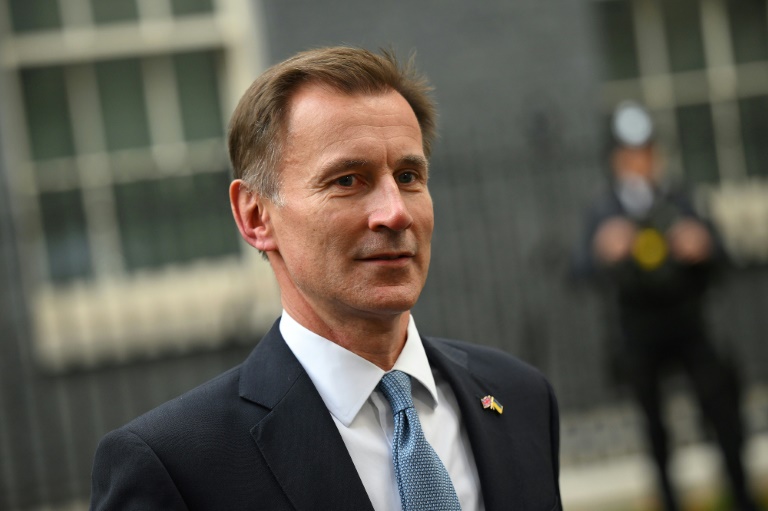
Finance minister Jeremy Hunt blamed Russian President Vladimir Putin’s war in Ukraine for spiking prices, as well as the easing of pandemic curbs.

– ‘Tough’ decisions –

Hunt is expected Thursday to hike taxes and slash spending, despite the cost-of-living squeeze, as Prime Minister Rishi Sunak attempts to fix economic chaos wrought by predecessor Liz Truss.

“The aftershock of Covid and Putin’s invasion of Ukraine is driving up inflation in the UK and around the world,” Hunt said Wednesday.

“This… is eating into pay cheques, household budgets and savings, while thwarting any chance of long-term economic growth.”

The Ukraine conflict has also sent inflation soaring to the highest level in decades worldwide, sparking economic turmoil.

That has forced major central banks to raise interest rates, risking the prospect of recession as higher borrowing costs hurt businesses and consumers.

The Bank of England this month sprang its biggest rate hike since 1989 to combat sky-high inflation — and warned the UK economy may experience a record-long recession until mid-2024.

The BoE lifted borrowing costs by 0.75 percentage points to 3.0 percent — the highest since the 2008 global financial crisis — to cool UK inflation that it saw peaking at almost 11 percent.

Hunt added that “tough” decisions would be needed in Thursday’s budget to help the BoE meet its 2.0-percent inflation target. 

“We cannot have long-term, sustainable growth with high inflation,” he said.

The UK has meanwhile been blighted by strikes this year, as workers protest over wages that have failed to keep pace with surging inflation.

The retail prices index — an inflation measure which includes mortgage interest payments and is used by trade unions and employers when negotiating wage increases — rocketed to 14.2 percent in October from 12.6 percent in September, data showed Wednesday.

Liftoff! NASA launches mega Moon rocket, ushering new era of exploration

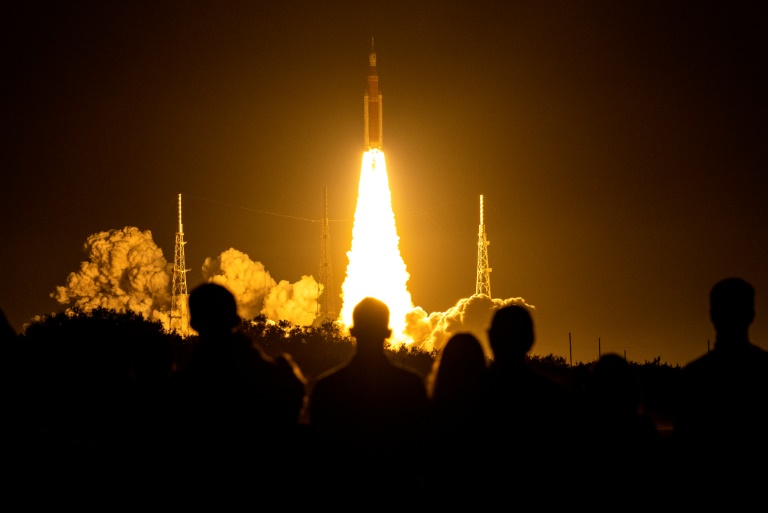
NASA launched the most powerful rocket ever built on a journey to the Moon on Wednesday, in a spectacular blaze of light and sound that marked the start of the space agency’s new flagship program, Artemis.

The 32-story tall Space Launch System (SLS) blasted off from the storied Kennedy Space Center in Florida at 01:47 am (0647 GMT), producing a record 8.8 million pounds (39 meganewtons) of thrust.

“What you have done today will inspire generations to come, thank you!” Charlie Blackwell-Thompson, NASA’s first female launch director, told cheering teammates. 

Fixed to the rocket’s top was the uncrewed Orion spaceship that will orbit Earth’s nearest neighbor, in a test run for later flights that should see the first woman and first person of color touch down on lunar soil by the mid-2020s.

About two hours after launch, NASA said the spacecraft had completed a propulsive maneuver to escape the pull of Earth’s gravity and was on its path to the Moon.

“Trans-lunar injection burn complete! NASA Orion is on its way to the Moon!” tweeted Jim Free, NASA’s associate administrator for exploration systems.

America last sent astronauts to the Moon during the Apollo era, from 1969-1972. 

This time it hopes to build a sustained presence — including a lunar space station — to help prepare for an eventual mission to Mars in the 2030s.

There were nervous moments as teams worked to overcome technical issues that ate into the two-hour launch window, which opened at 1:04 am.

First, engineers were forced to pause the flow of liquid hydrogen into the core stage Tuesday night because of a valve leak, but a team sent to the launch pad resolved the issue after about an hour, by tightening loose bolts. 

Later, the space agency reported that a radar site monitoring the rocket’s flight path was experiencing problems due to a faulty ethernet switch, which had to be replaced.

It was third time lucky for NASA after two previous launch attempts were canceled for technical reasons. The launch was also delayed due to weather setbacks including Hurricane Ian, which battered Florida in late September.

– ‘Extremely excited’ –

About 100,000 people were expected to have gathered along the coast to witness the historic event.

Todd Garland drove from Frankfurt, Kentucky to watch from Cocoa Beach. 

Wearing an Artemis T-shirt, the 55-year-old told AFP tearfully: “This has been an experience I’ve looked forward to all my life. 

“My first memory is my mother waking me up at two years old to watch the Moon landing and I’ve always wanted to see a launch ever since, and now I have.”

Kerry Warner, 59, a grandmother and semi-retired educator who lives in Florida, added the launch was “part of America and what America is all about.”

– Far side of the Moon –

The Orion crew capsule was lifted by two boosters and four powerful engines under the core stage, which detached after just a few minutes.

A final push from the upper stage set the capsule on its way to the Moon, though it will take several days to reach its destination. 

The upper stage will meanwhile release 10 CubeSats to carry out science experiments, including one that will unfurl a sail-powered by sunlight and perform asteroid reconnaissance work.

Rather than landing on the Moon, Orion will assume a distant orbit, venturing 40,000 miles (64,000 kilometers) beyond the far side — further than any other habitable spacecraft so far.

Finally, the spaceship will embark on the return leg of its journey. When passing through the atmosphere, the capsule’s heat shield will need to withstand a temperature half as hot as the Sun’s surface.

Though Orion isn’t carrying humans this time, it has three sensor-equipped dummies on board to help gather safety data for future crew members.

The mission will last 25-and-a-half days, with a splashdown in the Pacific Ocean on December 11.

NASA is banking on a successful mission after developing the SLS rocket for more than a decade. 

It will have invested more than $90 billion in its new lunar program by the end of 2025, according to a public audit.

Artemis 2 will involve a flyby of the Moon with astronauts in 2024, while Artemis 3 will see boots on lunar soil, no sooner than 2025. 

NASA hopes to settle into a yearly launch schedule, and will include international partners from Japan, Canada and Europe.

Asian stocks mostly down as Ukraine fears offset inflation hopes

Asian stocks mostly fell Wednesday as another positive US inflation report that fanned hopes of a slowdown in the Fed’s rate hike campaign was offset by fresh geopolitical concerns over Ukraine and profit-taking.

World markets have rallied since last week after data showed US consumer prices rose much less than expected in October, suggesting months of monetary tightening by the Federal Reserve was kicking in.

The news was followed Tuesday by a below-forecast reading on wholesale prices, providing extra room for the central bank to take its foot off the pedal when raising borrowing costs and possibly easing pressure on the economy.

Still, central banks’ tough battle against inflation was highlighted Wednesday by data showing UK prices rose more than 11 percent last month, a fresh four-decade high.

The optimism had been further enhanced by China’s pledge to provide much-needed support to the country’s beleaguered property sector as well as ease some of the strict Covid-19 restrictions that have played a major role in dragging the economy down.

However, the positive mood that had flowed through markets was dealt a blow after Poland said a missile — “most probably Russian-made” — had struck a village in the country’s east, killing two people.

Warsaw put its military on alert and US President Joe Biden and other Western leaders met in an “emergency roundtable” Wednesday on the sidelines of the G20 summit in Indonesia.

The news sparked fears that if it was proved to be an attack on Poland, a NATO member, the nine-month war in Ukraine could escalate.

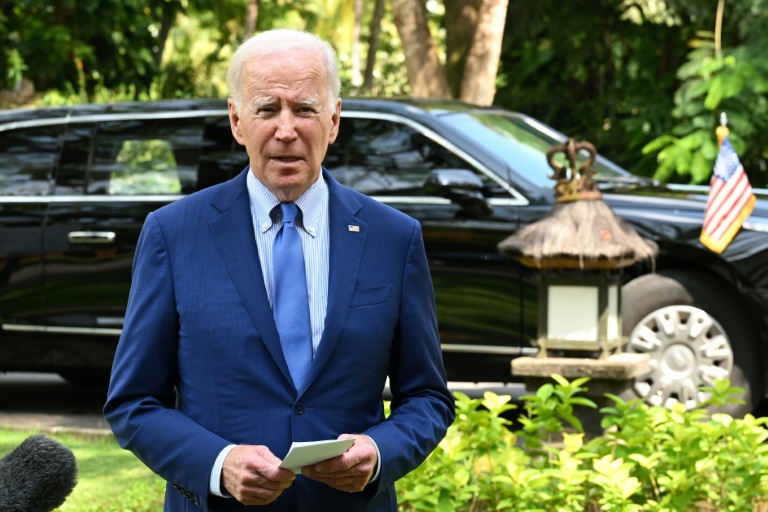
Biden told reporters that allies would support Poland in probing “exactly what happened” but that preliminary information showed it was probably not fired “from Russia”.

And France urged “utmost caution” on the origin of the missile.

– ‘Wartime mistake’ –

The comments helped ease concern on trading floors, though profit-taking after three days of healthy gains weighed on buying sentiment.

Tokyo, Singapore and Mumbai edged up but Hong Kong fell after surging about 14 percent over the previous three days.

There were also losses in Shanghai, Sydney, Seoul, Wellington, Manila, Bangkok, Jakarta and Taipei. 

London and Paris opened higher but Frankfurt was flat.

“Even if the missiles that crossed the Polish border were indeed deemed Russian and not Ukrainian anti-missile interceptors, the case would fall short of triggering an escalation at this point,” said SPI Asset Management’s Stephen Innes

“Hence the markets are deferring to a wartime mistake, believing this to be a case of misfire.”

Still, he added: “While the market is not in full risk-off mode while deferring to a wartime mistake, the risk of a NATO-Russia clash is growing and real.”

On currency markets, the dollar also saw sharp swings against its peers in reaction to the news out of Poland, while oil slipped after initially spiking on reports of the strike.

– Key figures around 0820 GMT –

Tokyo – Nikkei 225: UP 0.1 percent at 28,028.30 (close)

Hong Kong – Hang Seng Index: DOWN 0.5 percent at 18,256.48 (close)

Shanghai – Composite: DOWN 0.5 percent at 3,119.98 (close)

London – FTSE 100: UP 0.2 percent at 7,380.67

Euro/dollar: UP at $1.0401 from $1.0354 on Tuesday

Pound/dollar: UP at $1.1873 from $1.1871 

Dollar/yen: UP at 139.39 yen from 139.16 yen

Euro/pound: UP at 87.63 pence from 87.18 pence

West Texas Intermediate: DOWN 0.5 percent at $86.48 per barrel

Brent North Sea crude: DOWN 0.3 percent at $93.62 per barrel

New York – Dow: UP 0.2 percent at 33,592.92 points (close)

UK householders face squeeze as budget looms

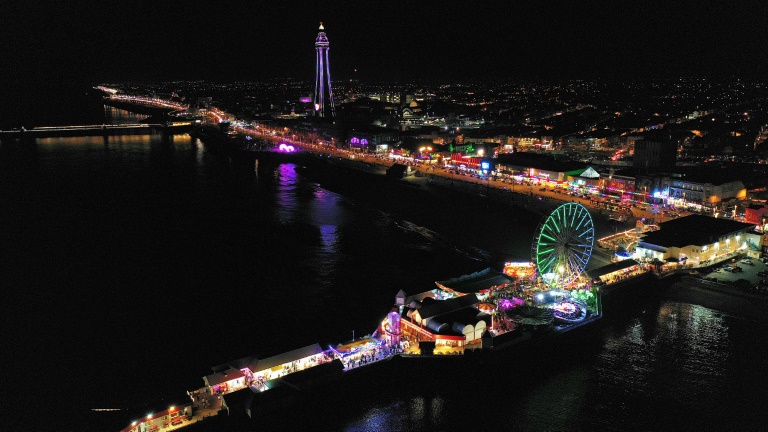
Thursday’s government budget is unlikely to be uppermost in the minds of people enjoying the annual light show on the seafront promenade of Blackpool.

But for residents and businesses of the town, which is ranked as England’s most deprived, the expected spending cuts and tax increases could have wide-ranging consequences.

“My basic supply of eggs, bacon, sausages that I give my customers, I have noticed that has gone up from £10 to £15 ($12 to $18) in the last couple of weeks,” said hotel owner Tracy Applin, 62.

“We are going to struggle. I don’t know how long for but they (the government) need to do more to help us,” she told AFP.

Finance minister Jeremy Hunt is under pressure to reduce inflation — which accelerated to 11.1 percent in October, a 41-year high — squeezing incomes also hit by rising energy prices.

Applin said the widely expected tax increases and high cost of living have her worried for Blackpool’s all-important tourist industry.

Some 3.5 million people flock to Blackpool for its Illuminations, the free light show that starts in September and runs to the end of January.

“Usually, this time of year I’d probably have about 40 bookings already for next year,” she said.

“At the moment, there’s about five or six. 

“I can’t sit and worry about it. What I’ve got to sit and do is think, right, well, what am I going to do to draw people in?”

Applin’s only option is to shut up shop for the winter months but she cannot afford to do so because she has bills to pay.

– Struggle –

Pensioners Julie Newby and her husband Kevin Newby’s main worry is the high cost of gas and electricity, which has more than doubled since the same time last year to £220 pounds a month.

Newby hopes  Hunt’s budget will offer some respite as she has to care for her husband and son who are both disabled.

“Just generally more help for people who are on the poverty line really,” she said.

“I am always going around turning the lights off. 

“We’re trying to do the washing at night-time instead of during the day because apparently  it’s cheaper at night-time. We try not to use the dryer but sometimes you have to.” 

According to the government’s 2019 English Index of Multiple Deprivation, which measures average income, employment, health and crime, among other factors, Blackpool is the most deprived of England’s 317 local authorities.

“People are struggling to eat,” Maggie Cornall, operations manager for Blackpool Council, told AFP.

“People are struggling to heat their homes as well. That has a knock-on effect in terms of general health and well-being.”

– ‘Breaking point’ –

Food and energy poverty has a knock-on effect on services like hospital accident and emergency departments, as more people take to drugs and alcohol, Cornall said.

Her hope for the budget is that the government intervenes in the energy market to keep prices down beyond measures it has already set out to help hard-pressed households.

She also wants the government to provide additional funding for residents in Blackpool to enable them to both eat and heat their homes.

The Trussell Trust charity, which runs more than 1,200 food banks across Britain, said the cost-of-living crisis is stretching emergency food relief centres to “breaking point”.

Last week it said that in the six months to September, 320,000 people have been forced to turn to food banks for the first time.

Nearly 1.3 million food parcels — more than half of them to children — were handed out in its network, a third more than in the same period last year.

“I think there needs to be a recognition that the people that live in places like Blackpool, that they are the most vulnerable, they have the least resilience and they need the greatest support,” said Cornall.

Warhol nephew auctions two early works by pop art visionary

Two early Andy Warhol paintings were sold at auction in New York on Tuesday by the family of the pop art visionary, the first in a series of little-known works that will reach the art market, his nephew told AFP.

The 1948 self-portrait “Nosepicker 1: Why Pick on Me” went for $491,400 including fees, while “Living Room,” also from 1948, sold for $315,000 at a sale organized by New York’s Phillips.

The prices were far removed from the stratospheric amounts paid for his more famous works, such as “Shot Sage Blue Marilyn,” which shows the likeness of actress Marilyn Monroe and was auctioned in May for $195 million — a record for a 20th-century artwork.

“This is early work. He’s mostly known for his silkscreens but we’re very happy with sending these works out into the world,” said artist James Warhola, the 67-year-old son of Warhol’s older brother.

“They’re gonna make some collector very happy,” said Warhola, who put the works up for auction.

“They’re very rare. And they’re the first of our collection of 10 pieces. So we’ll continue selling them.”

The works date back to when Warhol, the son of a working-class family of Eastern European immigrants, was a 20-year-old art student in his native Pittsburgh, Pennsylvania before he left to try his luck in New York.

First working as an advertising artist, he broke through in the 1950s and then rose to fame in the 1960s, thanks to unique works exploring consumer society, advertising and the notion of celebrity.

The platinum-and-silver-wigged pop artist died in 1987.

According to his nephew Warhola, who kept the “a” in the family name, the works sold on Tuesday may interest collectors “who own a lot of Warhol, and they have to fill out their collection with something very early.”

“They were in the family for 70 years, (but) none of us could afford to buy them individually, so we have put them to auction,” he said.

Both paintings had almost been lost. At the end of the 1970s, the Warhola family had their car stolen, with the two works inside.

The car was eventually recovered with the paintings unscathed, the Phillips auction house said.

China new home prices see sharpest decline in over seven years

Prices of new homes in China saw their sharpest decline for seven years in October, data showed Wednesday, as the real estate sector was battered by a debt crisis and a slowing economy.

Property market has long served as a motor for growth in China, on the backs of rising standards of living and high demand in a country where home ownership is seen as a prerequisite for marriage.

But uncertainties linked to Covid-19, which have cooled demand and weighed on household income, are hitting buyers, at a time when several major real estate groups in China are in financial difficulty.

The price of new homes contracted 1.6 percent year-on-year, their sharpest decline since August 2015, analysis of figures from Beijing’s National Bureau of Statistics (NBS) showed.

Real estate prices fell in 58 cities, according to the NBS, which aggregates the average price in 70 cities across China.

Prices in the mega-cities of Beijing and Shanghai bucked the trend.

The figures come after China’s banking regulator unveiled sweeping measures to rescue the struggling property sector last week.

Those included credit support for debt-laden housing developers, financial support to ensure the completion and handover of projects to homeowners, and assistance for deferred-payment loans for buyers.

Friday’s measures emphasised “guaranteeing the handover of buildings”, and ordered development banks to provide “special loans” for the purpose, according to a copy of plans circulating online.

Property and construction account for around a quarter of China’s gross domestic product, but crippling debts have forced a series of developers to default on loans while others have struggled to raise cash.

Analysts have raised fears that the crisis could yet spread to the country’s financial sector at a time when Beijing’s hardline zero-Covid policy has also put a lid on growth.

Poland military on alert after missile strike

Poland’s military was on high alert Wednesday after a deadly missile strike on a village near the border with war-ravaged Ukraine.

In Indonesia’s Bali, Western leaders held an “emergency roundtable” on the sidelines of the G20 summit, where they urged against jumping to any conclusions about the origins of the strike.

The talks came after Poland’s President Andrzej Duda said there was no clear evidence of who fired the missile that killed two people in the southeastern village of Przewodow, near the border with Ukraine. 

He also said the missile was “most probably Russian-made”.

An AFP journalist in Przewodow said police had cordoned off the blast site with sirens wailing in the distance.

US President Joe Biden said it was “unlikely” the missile had been fired from Russia, while France urged “utmost caution” in identifying who was behind the blast.

Moscow’s ambassador has been summoned to provide “immediate detailed explanations” and the military had been put on heightened alert after an emergency national security council meeting, Polish authorities said.

“There has been a decision to raise the state of readiness of some combat units and other uniformed services,” spokesman Piotr Muller told reporters after the meeting in Warsaw, adding that “our services are on the ground at the moment working out what happened”.

Biden spoke by phone with Duda, offering “full US support for and assistance with Poland’s investigation”, the White House said.

The two leaders agreed to “remain in close touch to determine appropriate next steps as the investigation proceeds”, it added.

– NATO commitment –

British Prime Minister Rishi Sunak, German Chancellor Olaf Scholz and French President Emmanuel Macron — all leaders of NATO member states — expressed solidarity with Poland.

Poland is protected by NATO’s commitment to collective defence — enshrined in Article 5 of its founding treaty — but the alliance’s response will likely be heavily influenced by whether the incident was accidental or intentional.

Biden also spoke with NATO chief Jens Stoltenberg about the incident, while ambassadors from the alliance were to hold an emergency meeting on Wednesday.

European Union chief Charles Michel said he was “shocked”, and US Secretary of State Antony Blinken pledged to “remain closely coordinated in the days ahead as the investigation proceeds and we determine appropriate next steps”.

– ‘Significant escalation’ –

Ukrainian President Volodymyr Zelensky had earlier said two Russian missiles hit Poland in what he described as “a very significant escalation”.

Ukraine’s Foreign Minister Dmytro Kuleba rejected as a “conspiracy theory” the idea that the Poland blast may have been caused by a surface-to-air missile fired by Kyiv’s forces. 

Russia’s defence ministry meanwhile dismissed reports that it was to blame as a “provocation” intended to escalate tensions.

The explosion came after Russian missiles hit cities across Ukraine on Tuesday, including Lviv, near the border with Poland.

Zelensky said the strikes cut power to some 10 million people, though it was later restored to eight million of them, and also triggered automatic shutdowns at two nuclear power plants.

He said Russia had fired 85 missiles at energy facilities across the country, condemning the strikes as an “act of genocide” and a “cynical slap in the face” of the G20.

Moldova, which also borders Ukraine, reported power cuts because of the missiles fired at its neighbour and called on Moscow to “stop the destruction now”.

– ‘Now is the time’ –

Zelensky told the G20 summit in Bali on Tuesday that “now is the time” to end the war.

In their final communique Wednesday, G20 members said they agreed the war hurts the global economy and warned against the threat or use of nuclear weapons in the conflict.

“Most” of the world’s 20 biggest economies also condemned the war in Ukraine, the G20 nations said.

Russia’s Vladimir Putin had decided to skip the summit, as he deals with the fallout from a string of embarrassing battlefield defeats in a war that his supporters believed would be over in days.

White House National Security Advisor Jake Sullivan said Russia was again trying to destroy Ukrainian critical infrastructure.

Since September, Ukraine forces have been pushing deeper into the south. Russia last week announced a full withdrawal from the regional capital of the southern Kherson region, allowing Ukraine’s forces to re-enter the city.

Tuesday’s missile strikes came after Russia-appointed officials in Nova Kakhovka said they were leaving the important southern city, blaming artillery fire from Kyiv’s forces.

They also claimed “thousands of residents” had followed their recommendation to leave to “save themselves”, saying Kyiv’s forces would seek “revenge on collaborators”.

burs/mca/ser

Like Christmas: Trump fans delight in 2024 announcement

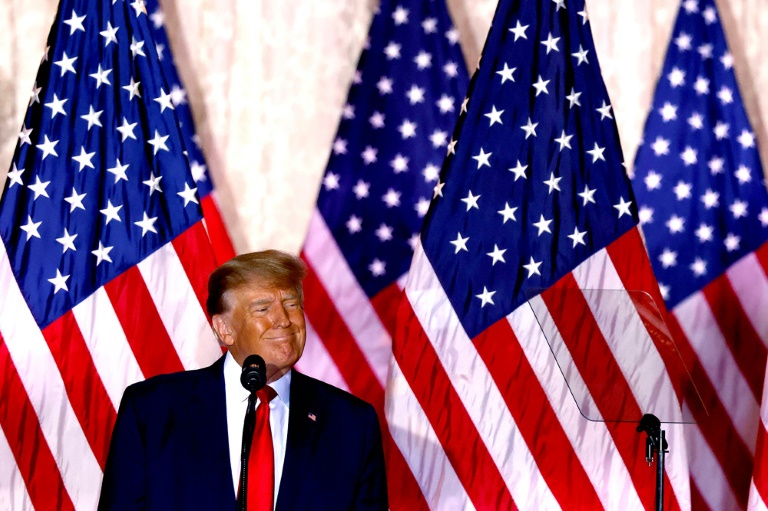
There was no escalator like last time, no offensive nicknames like always, and none of the awkward dancing that sometimes features, but supporters got exactly what they wanted in Florida on Tuesday: the announcement that Donald Trump was running for the White House again.

The setting was a little more sedate than the windswept Make America Great Again rallies in farmers’ fields or in cavernous aircraft hangers on the outskirts of a midwestern city.

But it was Trump all the way, with American flags, family members, advisors, and members of his private club packing the gilded ballroom of his Mar-a-Lago residence in Florida. 

Repeatedly, the former president’s often dark, frequently triumphalist speech was interrupted with chants of “Trump, Trump, Trump,” as the tycoon-turned-TV star lapped up the adoration.

And when he finally got to the moment they had all been waiting for — “I am tonight announcing my candidacy for president of the United States” — the room erupted.

One of America’s most divisive figures in recent decades reeled off what he considered his accomplishments during four chaotic years in Washington.

It was, he said a time when “Our nation was at the pinnacle of power, prosperity and prestige, towering above all rivals.”

In the 22 months since he left the White House, begrudingly handing over the keys to Joe Biden, the country has disintegrated, he said.

No one in the ballroom disagreed.

“This new administration is destroying America and everything it stands for,” Eric Pardi told AFP.

“They’re destroying our national independence, our border, our economy, and our law and order. 

“That man loves this country and stands for it and that’s what a president should be, somebody who stands and defends our Constitution”.

The warm embrace of supporters like these were balm to Trump after a difficult week.

Many of his hand-picked election-denying candidates got a drubbing at the ballot box last Tuesday, and the knives are out in the Republican Party after a predicted “Red Wave” failed to materialize.

Previously reliable party figures have muttered that the former president’s obsessions with relitigating his 2020 loss were becoming a turn-off for voters.

Even Fox News seems ready to move on.

To cap it all, Florida Governor Ron DeSantis swept all before him in his crushing re-election win, and is now being spoken of as a front runner for the Republican White House nomination.

Some of those who feel that way were not even trying to be subtle about it; “You lost again Donald #DeSantis 2024,” said the trailing banner of a small plane that flew over Mar-a-Lago.

But for those on the ground, there was no doubt who should be the standard-bearer in 2024.

“He is chosen by God to fight for our country. His patriotism inspires us to support him,” said 50-year-old Stephanie Liu, an American citizen who was born in China.

“I am super excited. I feel like it’s almost Christmas morning, and Santa Claus is coming,” said a grinning Stacey Bovasso, 54.

“Donald J. Trump is our president, and we need him back.”

Close Bitnami banner
Bitnami