US Business

US, Russian spy chiefs meet on Moscow nuclear threat

The US and Russian spy chiefs held a rare face-to-face meeting in Ankara Monday on Moscow’s nuclear threats in Ukraine and Americans held prisoner by the Kremlin, the White House said.

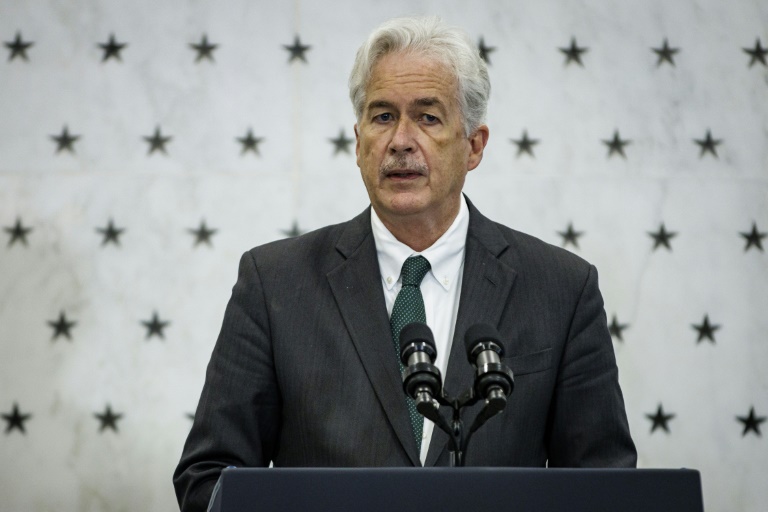
In what appeared to be the highest-level direct talks between officials of the two countries since Russia invaded Ukraine in February, Central Intelligence Agency Director William Burns met with Sergei Naryshkin, head of Russia’s SVR foreign intelligence service.

Turkish President Recep Tayyip Erdogan’s spokesman confirmed the meeting, and Kremlin spokesman Dmitri Peskov said it came as “an initiative of the American side,” according to Russian media.

Peskov declined to provide details on the contents.

But the White House said Burns, formerly Washington’s ambassador in Moscow, was delivering a warning against Russia’s threat to make use of tactical nuclear weapons in the Ukraine war.

The CIA chief’s message was “on the consequences of the use of nuclear weapons by Russia, and the risks of escalation to strategic stability,” according to a White House statement.

The United States has warned for months over Russian threats to use tactical nuclear weapons in Ukraine if its own territorial integrity was threatened.

On September 21, Putin said Western nations were seeking to “destroy” his country, and made what was widely taken as a threat to employ nuclear weapons.

“When the territorial integrity of our country is threatened, we will certainly use all the means at our disposal to protect Russia and our people. This is not a bluff,” Putin said.

– ‘Unjustly’ detained Americans –

The White House National Security Council statement Monday stressed that Burns was not in Ankara to discuss ways to end the war in Ukraine, where Russian forces have been beaten back in nine months of grinding conflict but still occupy large swathes of territory.

“He is not conducting negotiations of any kind. He is not discussing settlement of the war in Ukraine,” the statement said.

“We firmly stick to our fundamental principle: nothing about Ukraine without Ukraine,” it said.

The statement said the two officials were also discussing the issue of US citizens detained “unjustly” in Russia.

Russia has imprisoned US basketball star Brittney Griner, arrested last year in Moscow on drug charges, as well as Paul Whelan, an auto supply company official who was convicted of spying after his arrest in 2018. 

Washington has reportedly offered a prisoner swap, with speculation that it is willing to exchange jailed Russian arms dealer Viktor Bout for the Americans.

Last week US President Joe Biden voiced hope that his Russian counterpart Vladimir Putin would negotiate “more seriously” to free Griner, who was sent to a penal colony on a nine-year sentence after her appeal in Russian courts failed.

“My hope is that now that the election is over that Mr. Putin will be able to discuss with us and be willing to talk more seriously about prisoner exchange,” Biden said.

According to Turkey’s Anadolu news agency, the two spy chiefs met as guests of Turkish National Intelligence.

Erdogan has made his country an important broker for talks between the two sides, especially on the issue of allowing essential grain exports from Ukraine, which were blocked by the Russian navy early in the war.
Fed vice chair says 'appropriate soon' to slow rate hikes

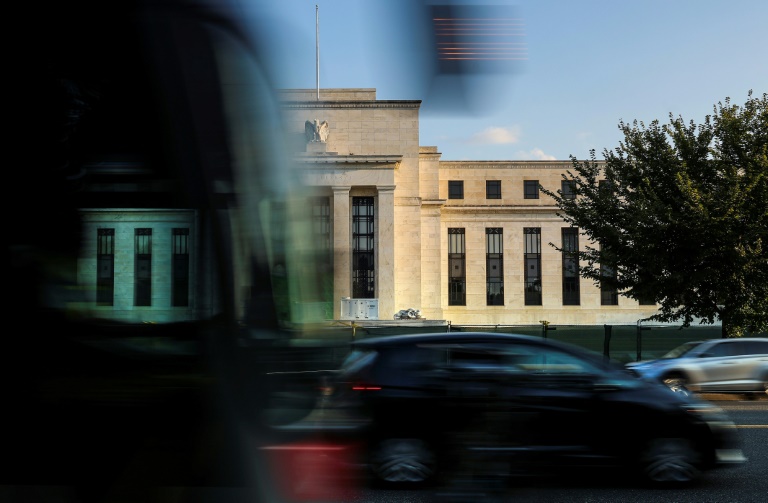
It likely will be “appropriate soon” for the US central bank to slow the pace of interest rate increases, Federal Reserve Vice Chair Lael Brainard said Monday.

Her comments came as red-hot consumer prices, which have squeezed American households, showed signs of easing, and after the Fed delivered a fourth straight super-sized rate hike to cool the economy.

But with inflation still hovering at the highest level in recent decades, the Fed still has “additional work to do both on raising rates” and tamping down high prices, she said in the event with Bloomberg.

The closely-watched consumer price index released last week showed US inflation logged its lowest annual increase since January, fueling hopes that soaring costs will start to pull back.

The Fed has raised the benchmark lending rate six times this year, but there is a growing chorus of voices recently, including some Fed officials, advocating for smaller steps in coming months.

– ‘More deliberate’ –

Brainard acknowledged that Fed policymakers have raised rates “very rapidly” in recent months, adding that it will take time for tightening to flow through to the economy.

“By moving forward at a pace that’s more deliberate, we’ll be able to assess more data and be better able to adjust the path of rates to bring inflation down,” she said.

Russia’s war in Ukraine this year has sent food and fuel prices soaring, and the annual inflation rate hit a blistering 9.1 percent in June — its highest in four decades — but slowed to 7.7 percent in October.

The US central bank has moved forcefully to lower demand and bring prices down, despite fears that it could trigger a recession.

– Regulating crypto –

Brainard also weighed in on the fallout from the stunning collapse of cryptocurrency platform FTX, which declared bankruptcy in the United States, expressing the need for regulation in the industry.

The situation at the company has reverberated across the digital currency landscape, and Brainard said: “It reinforces I think, this need to make sure that crypto finance … needs to be under the regulatory perimeter.”

She stressed that digital currencies are “no different than traditional finance in the risks that it exposes investors to.”

Cash-strapped FTX filed for bankruptcy on Friday and its high-profile founder and chief executive Sam Bankman-Fried resigned after Binance, the world’s biggest cryptocurrency platform, scrapped a takeover bid, sending chills across the cryptocurrency world.

FTX has been considered the world’s second-largest cryptocurrency platform, at one point valued at $32 billion.

Trump's words 'endangered' Americans before US Capitol riot, Pence says

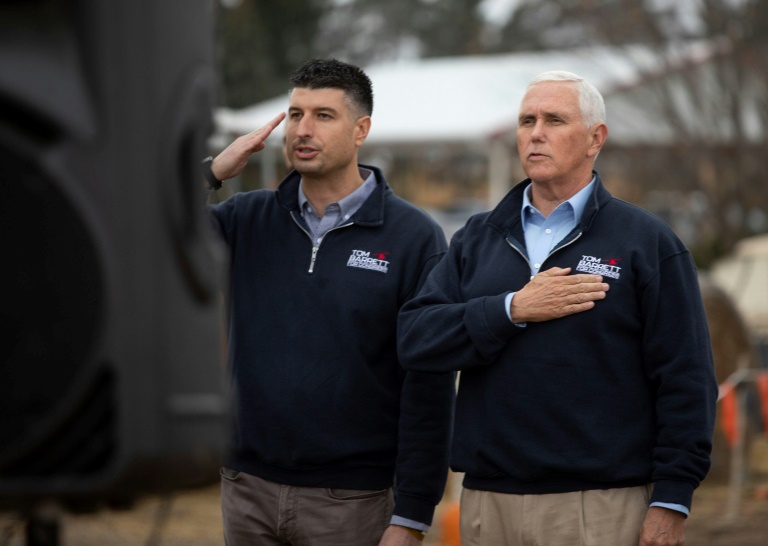
Former president Donald Trump’s inflammatory words before and during last year’s US Capitol insurrection endangered Americans including his own deputy Mike Pence, the former vice president said in a television interview set to air Monday.

“The president’s words that day at the rally (before the riot) endangered me and my family and everyone at the Capitol,” Pence told ABC News.

Pence reportedly is laying the groundwork for a presidential run in 2024. It would pit him against his former boss, who has convened the media to his palatial Florida home on Tuesday night reportedly to announce his own White House bid.

Pence’s interview to be broadcast on ABC’s “World News Tonight” coincides with the release Tuesday of his memoir, “So Help Me God.”

The veteran Republican told the network that Trump, speaking on January 6, 2021 at a park near the White House, incited the crowd before it marched toward the Capitol: “The president’s words were reckless. It was clear he decided to be part of the problem.”

Pence said he was “angered” when he read a Trump tweet that day asserting that the vice president “didn’t have the courage to do what should have been done” to keep Trump in office by blocking Congress’s certification of Joe Biden’s 2020 election victory.

“I turned to my daughter, who was standing nearby, and I said, ‘It doesn’t take courage to break the law. It takes courage to uphold the law,'” Pence told the network.

The vice president was on Capitol Hill at the time, and US Secret Service officers evacuated him from the US Senate chamber where he narrowly avoided an encounter with rioters who had stormed into the complex.

Pence has largely kept mum about his interactions with Trump in the run-up to the January 6 mob attack — until this month.

In an excerpt from his memoir, published last week by the Wall Street Journal, Pence said he spoke with Trump by phone on New Year’s Day 2021 and conveyed his refusal to take part in a plan to keep Trump in power.

“‘You’re too honest,'” Pence said Trump told him. “Hundreds of thousands are gonna hate your guts…. People are gonna think you’re stupid.'”

US offers $10 mn rewards for Somalia's Al-Shabaab

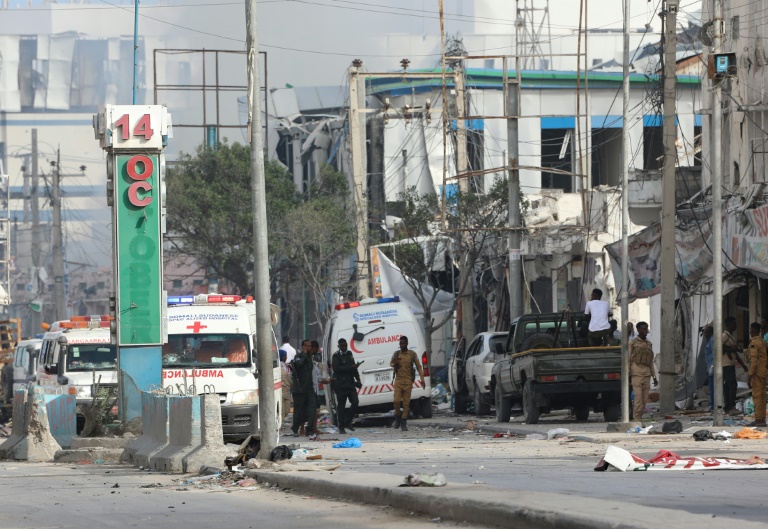
The United States said Monday it was increasing its reward for information about key leaders of Somalia’s Al-Shabaab to $10 million apiece, a move that follows a spate of deadly attacks by the jihadist group.

The US State Department also said it was for the first time offering a reward of up to $10 million for information “leading to the disruption of the financial mechanisms” of the Al-Qaeda affiliate.

Al-Shabaab fighters have stepped up attacks in the Somali capital Mogadishu and other parts of the country in the face of a widescale offensive against the group by the new government of President Hassan Sheikh Mohamud.

The US said it was offering up to $10 million each for information leading to the identification of Al-Shabaab “emir” Ahmed Diriye, second-in-command Mahad Karate and Jehad Mostafa, a US citizen who it said had various roles in the group.

“These key leaders of Al-Shabaab are responsible for numerous terrorist attacks in Somalia, Kenya and neighbouring countries that have killed thousands of people,” said a poster issued by the US with pictures of the three men.

UN human rights chief Volker Turk said earlier Monday that more than 600 civilians had been killed this year in attacks largely attributed to the group.

At least 613 civilians have been killed and 948 injured so far in 2022, according to the latest United Nations figures — the highest since 2017 and a more-than 30-percent rise from last year.

In the deadliest attack in five years, twin bombings on October 29 claimed by Al-Shabaab killed at least 121 people and injured 333 others in Mogadishu, the UN said, citing Somali figures.

– ‘All-out war’ –

The group, which was designated a foreign terrorist organisation by the State Department in March 2008, has been seeking to overthrow the fragile foreign-backed government in Mogadishu for about 15 years.

Its fighters were driven out of Mogadishu in 2011 by an African Union force, but the group still controls swathes of countryside and continues to wage deadly strikes on civilian, political and military targets.

In August, following a 30-hour siege on a Mogadishu hotel that killed at least 21 people, Mohamud declared “all-out war” on the jihadists, who espouse a strict version of sharia or Islamic law.  

The US statement said Diriye, who has been leader since September 2014 after the killing of Ahmed Abdi Godane in a US strike, was designated by the US as a “specially designated global terrorist” in April 2015, and slapped with UN sanctions the same year.

Karate, who was also designated a terrorist in April 2015 and also faces UN sanctions, continues to lead some Al-Shabaab operations, the US said.

He also “maintains some command responsibility over Amniyat, the group’s intelligence and security wing, which oversees suicide attacks and assassinations in Somalia, Kenya, and other countries in the region, and provides logistics and support for al-Shabaab’s terrorist activities”.

Mostafa, a US citizen who once lived in California, has been a military instructor at Al-Shabaab training camps, as well as a leader of foreign fighters, a leader in the group’s media wing, an intermediary with other “terrorist organisations,” and a leader in the use of explosives in attacks, the US said. 

In December 2019, he was indicted in a US court on various charges linked to Al-Shabaab.

“The FBI assesses Mostafa to be the highest-ranking terrorist with US citizenship fighting overseas.”

In May, US President Joe Biden decided to restore a military presence in Somalia, approving a request from the Pentagon, which deemed his predecessor Donald Trump’s rotation system too risky and ineffective.

Wall Street rally peters out as dollar rises

Wall Street stocks slipped Monday following last week’s global surge as the dollar advanced against major rivals. 

The dollar crept higher as traders urged caution over expectations that the Federal Reserve would pull back from massive US interest hikes as inflation cools in the world’s biggest economy.

US stocks had bounded higher last week on the prospect the Fed might be able to let up on its aggressive interest rate hikes, with the tech-heavy Nasdaq jumping 8.1 percent and the blue-chip Dow rising 4.1 percent.

But Wall Street turned lower on Monday with the Dow slipping 0.1 percent in late morning trading, and the Nasdaq shedding 1.0 percent.

“This morning … there is a little bit of questioning as to whether the market overreacted last week,” said Briefing.com analyst Patrick O’Hare.

Susannah Streeter, senior investment and markets analyst at Hargreaves Lansdown, said “the burst of euphoria which erupted… at the end of last week is ebbing away after fresh warnings that the fight against inflation is still a hard slog yet to be won.”

Investors will get a look this week whether that cooling has spread to consumers, with US retail sales data due out on Wednesday. Earnings figures from major retailers Walmart and Target will also provide a window into how inflation is impacting consumer spending, a major driver of the US economy.

European stocks finished higher, where data helped improved sentiment.

“There was good news from the eurozone as industrial production came in better than expected this morning,” said market analyst Fawad Razaqzada at City Index and FOREX.com.

While the eurozone is widely seen as heading for a recession, the data showed a month-on-month gain of 0.9 percent in September, while analysts had expected practically no gain.

The pound briefly fell by more than one percent against the dollar as the Thursday presentation of the budget by Chancellor of the Exchequer Jeremy Hunt approaches.

“The pound has also come under pressure ahead of this weeks budget statement with all manner of reports that the Chancellor will impose new taxes on business that will deter future investment in energy security,” CMC Markets analyst Michael Hewson said.

Sentiment also won a lift from China, which is relaxing some of its strict Covid-19 restrictions that have hammered growth in the world’s second largest economy.

Authorities have also reportedly unveiled a 16-point plan to support the beleaguered property sector, a major component of the country’s economic engine.

The industry has come under immense pressure since China imposed a number of restrictions in 2020 aimed at reeling in debt as major developers teetered on the brink of collapse.

The latest moves indicate that China’s leadership is beginning to focus on supporting the economy, a crucial driver of global growth, according to analysts.

Nomura’s Lu Ting warned, however, that the “measures may have little direct impact on stimulating home purchases”.

Hong Kong’s stock exchange ended more than one percent higher Monday — having soared over seven percent Friday.

Oil prices fell.

“Crude oil prices have slipped back, after OPEC cut its oil demand forecast for the rest of this year, and 2023, by 100,000 barrels, citing concerns about rising inflation and interest rates,” CMC Markets’s Michael Hewson said.

“Increasing Covid cases within China alongside a rebound in the US dollar are also weighing on prices,” he added.

– Key figures around 1530 GMT –

New York – Dow: DOWN 0.1 percent at 33,705.83 points

London – FTSE 100: UP 0.9 percent at 7,385.17 (close)

Frankfurt – DAX: UP 0.6 percent at 14,313.30 (close)

Paris – CAC 40: UP 0.2 percent at 6,609.17 (close)

EURO STOXX 50: UP 0.5 percent at 3,887.51

Tokyo – Nikkei 225: DOWN 1.1 percent at 27,963.47 (close)

Hong Kong – Hang Seng Index: UP 1.7 percent at 17,619.71 (close)

Shanghai – Composite: DOWN 0.1 percent at 3,083.40 (close)

Euro/dollar: DOWN at $1.0341 from $1.0361 on Friday

Pound/dollar: DOWN at $1.1723 from $1.1839 

Dollar/yen: UP at 140.39 yen from 138.70 yen

Euro/pound: UP at 88.14 pence from 87.49 pence

West Texas Intermediate: DOWN 1.9 percent at $87.26 per barrel

Brent North Sea crude: DOWN 1.4 percent at $94.63 per barrel

burs-rl/yad

French wife of Chrysler Building billionaire owner entitled to £37 mn under prenup

The estranged wife of the billionaire owner of New York’s Chrysler Building is entitled to more than 37 million pounds ($43 million) under the terms of prenuptial agreements, a judge in London said Monday.

Michael Fuchs, 62, and Alvina Collardeau-Fuchs 47, who are in the process of divorcing, lived the “billionaire lifestyle” during their marriage with a string of luxury properties around the world.

Money was “never a concern” and the couple enjoyed “fully staffed homes” in fashionable locations such as the Hamptons, New York City, Paris, Miami, Cap d’Antibes, Capri and London, according to rulings and evidence given to London’s High Court.

Fuchs, who is originally from Germany but moved to the United States in the 1990s, and French former journalist Collardeau-Fuchs married in New York in 2012 and went on to have two children.

But after the couple separated in 2020, the High Court was asked to rule on how much Collardeau-Fuchs was entitled to.

Fuchs’ lawyers had argued his estranged wife should receive 30 million pounds while she claimed it should be more than 45 million.

At one hearing, the court heard that Fuchs had enjoyed an “extraordinarily successful career” and owned a “very significant amount of prime mid-town Manhattan real estate”.

The Art Deco Chrysler Building on the East Side of Manhattan, one of New York’s most distinctive landmarks, is owned by Fuchs’ company.

However, Fuchs said the value of his fortune had plummeted recently due to the turbulent economic climate.

Fuchs said he believed the correct sum to provide for his two young children should be 350,000 pounds a year, compared to the 1.2 million pounds requested.

He argued he did not want to smother his children in luxuries which could make them “jaded”, adding that he wanted them to “learn the value of money”.

The couple spent much of their time travelling by private plane or in first class and staying in luxury hotels or villas “at significant cost”.

At one point after they separated, Collardeau-Fuchs’s spending had topped $270,000 in a single month, prompting Fuchs to try to impose a limit of $20,000.

Following the breakdown of the marriage, Collardeau-Fuchs had remained at the family home in west London in a “substantial” six-floor property with an indoor underground swimming pool.

Fuchs has said the property is worth £30.2 million.

According to the judge, Nicholas Mostyn, the family’s “custom of unrestrained expenditure” had been extended to their litigation with “prodigious amounts” spent on their legal battle.

Figures showed their combined lawyers’ bills had topped 4.3 million pounds.

Amazon founder Bezos says will donate most of fortune to charity

Amazon founder Jeff Bezos has for the first time said he would give away most of his $124 billion fortune to charity, but warned that doing so effectively will be hard.

The pledge matches similar commitments by some of the world’s richest people, including Bill and Melinda Gates, Elon Musk, and others.

In a CNN interview released Monday, Bezos said he and his partner Lauren Sanchez were “building the capacity to be able to give away this money.”

Asked whether he intended to give away most of his wealth within his lifetime, the 58-year-old Bezos said: “Yeah, I do.”

Bezos has been under pressure to make the pledge after his ex-wife, author MacKenzie Scott, in 2019 committed to donate half her vast wealth after their divorce.

She had signed up to something called the Giving Pledge, an initiative created in 2010 by the Gates and Warren Buffet that has the world’s richest people commit to giving the majority of their wealth to charitable causes.

The Giving Pledge currently has over 230 signatories from 28 countries, including Saudi Prince Alwaleed bin Talal and Russian steel magnate Vladimir Potanin.

Bezos previously pledged $10 billion to set up the Bezos Earth Fund, which he launched in 2020 to help fight climate change and preserve wildlife.

The online tycoon told CNN he intended to maximize returns in his philanthropy, a priority also put forward by Facebook founder Mark Zuckerberg, who is a signatory to the Giving Pledge.

“It’s not easy,” Bezos said in the joint interview with Sanchez. “Building Amazon was not easy…and I’m finding — and I think Lauren is finding the same thing — that charity, philanthropy is very similar.”

“There are a bunch of ways that I think you could do ineffective things,” he added.

Bezos and Sanchez on Saturday announced they were giving Dolly Parton $100 million to give to charities of her choosing.

The country queen was the third recipient of the Bezos Courage and Civility Award, which previously went to Spanish chef Jose Andres and CNN commentator Van Jones. 

Bezos said that Parton “gives with heart” and praised the singer of “Jolene” and “9-to-5” on her promotion of children’s literacy.

The 76-year-old Parton was inducted into the Rock & Roll Hall of Fame earlier this month.

Bezos stepped down as chief executive of Amazon in 2021. He owns the Washington Post and the space tourism company Blue Origin.

Amazon founder Bezos says will donate most of fortune to charity

Amazon founder Jeff Bezos has for the first time said he would give away most of his $124 billion fortune to charity, but warned that doing so effectively will be hard.

The pledge matches similar commitments by some of the world’s richest people, including Bill and Melinda Gates, Elon Musk, and others.

In a CNN interview released Monday, Bezos said he and his partner Lauren Sanchez were “building the capacity to be able to give away this money.”

Asked whether he intended to give away most of his wealth within his lifetime, the 58-year-old Bezos said: “Yeah, I do.”

Bezos has been under pressure to make the pledge after his ex-wife, author MacKenzie Scott, in 2019 committed to donate half her vast wealth after their divorce.

She had signed up to something called the Giving Pledge, an initiative created in 2010 by the Gates and Warren Buffet that has the world’s richest people commit to giving the majority of their wealth to charitable causes.

The Giving Pledge currently has over 230 signatories from 28 countries, including Saudi Prince Alwaleed bin Talal and Russian steel magnate Vladimir Potanin.

Bezos previously pledged $10 billion to set up the Bezos Earth Fund, which he launched in 2020 to help fight climate change and preserve wildlife.

The online tycoon told CNN he intended to maximize returns in his philanthropy, a priority also put forward by Facebook founder Mark Zuckerberg, who is a signatory to the Giving Pledge.

“It’s not easy,” Bezos said in the joint interview with Sanchez. “Building Amazon was not easy…and I’m finding — and I think Lauren is finding the same thing — that charity, philanthropy is very similar.”

“There are a bunch of ways that I think you could do ineffective things,” he added.

Bezos and Sanchez on Saturday announced they were giving Dolly Parton $100 million to give to charities of her choosing.

The country queen was the third recipient of the Bezos Courage and Civility Award, which previously went to Spanish chef Jose Andres and CNN commentator Van Jones. 

Bezos said that Parton “gives with heart” and praised the singer of “Jolene” and “9-to-5” on her promotion of children’s literacy.

The 76-year-old Parton was inducted into the Rock & Roll Hall of Fame earlier this month.

Bezos stepped down as chief executive of Amazon in 2021. He owns the Washington Post and the space tourism company Blue Origin.

Final preparations underway for NASA's Moon rocket launch

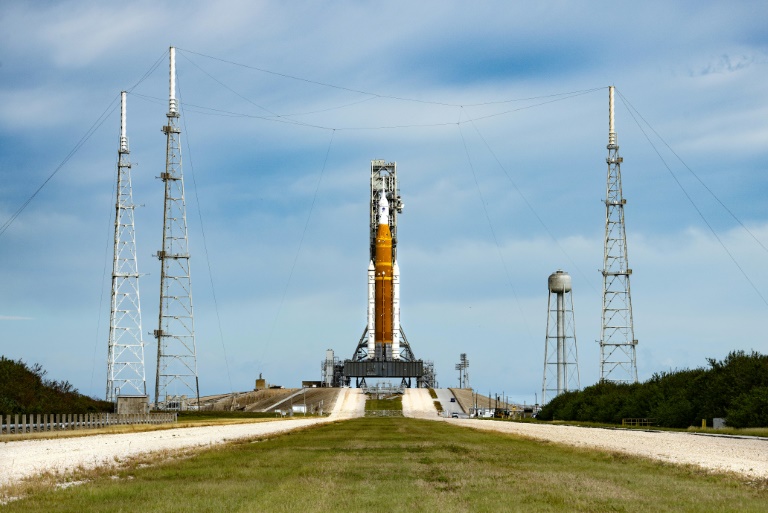
After two failed attempts this summer, NASA was busy Monday completing final preparations for the launch of its new mega Moon rocket, now scheduled for early Wednesday from Florida. 

The Artemis 1 mission, a test flight without astronauts, represents the first step in the US space agency’s plan to build a lasting presence on the Moon, and taking lessons from there to prepare for a future voyage to Mars.

Named after the sister of Apollo in Greek mythology, the new space program comes 50 years after humans last set foot on lunar soil.

The first launch of the Space Launch System rocket, the most powerful ever designed by NASA, is set for Wednesday at 1:04 am local time (0604 GMT), with a possible launch window of two hours.

Countdown has already begun at the storied Kennedy Space Center, where the orange and white behemoth awaits its maiden flight.

The takeoff is scheduled less than a week after the passage of Hurricane Nicole, which the rocket endured outside on its launch pad.

For now, officials are evaluating the risk associated with hurricane damage to a thin strip of caulk-like material called RTV, which encircles the Orion crew capsule atop the rocket, and makes it more aerodynamic.

Teams are looking at whether the RTV could shake loose during launch and pose problems.

Two fallback dates are possible if needed, on November 19 and 25.

But Mike Sarafin, in charge of the Artemis 1 mission, was optimistic Sunday evening. “I feel good headed into this attempt,” he said.

– Far side of Moon –

The weather promises to be mild, with a 90 percent chance of favorable conditions during the launch window.

At the end of September, the rocket had to be wheeled back to its assembly building to be sheltered from another hurricane, Ian, postponing the mission by several weeks.

Before these weather setbacks, two launch attempts had to be canceled for technical reasons.

The first failure was related to a faulty sensor, and the second to a fuel leak when filling the rocket’s tanks. It runs on ultra-cold, ultra-volatile liquid oxygen and hydrogen.

NASA has since replaced a seal and modified its procedures to avoid thermal shock as much as possible, and succeeded in a tank filling test in late September. 

These filling operations are now due to begin Tuesday afternoon, under the orders of Charlie Blackwell-Thompson, NASA’s first female launch director.

About 100,000 people are expected on the coast to watch the launch, with the rocket promising to light up the night sky.

The Orion capsule will be lifted by two boosters and four powerful engines under the core stage, which will detach after only a few minutes.

After a final push from the upper stage, the capsule will be well on its way, taking several days to reach its destination.

Rather than landing on the Moon, it will assume a distant orbit, venturing 40,000 miles (64,000 kilometers) beyond Earth’s natural satellite — further than any other habitable spacecraft so far.

Finally, Orion will embark on the return leg of its journey. When passing through the atmosphere, the capsule’s heat shield will need to withstand a temperature half as hot as the Sun’s surface.

If takeoff happens Wednesday, the mission would last 25 and a half days in all, with a splashdown in the Pacific Ocean on December 11.

NASA is banking on a successful mission after developing the SLS rocket for more than a decade. It will have invested more than $90 billion in its new lunar program by the end of 2025, according to a public audit.

Artemis 2 will be almost a replay of the first mission, albeit with astronauts, in 2024. 

Boots on the ground should happen during Artemis 3, no sooner than 2025, with the crew set to include the first woman and first person of color on the Moon.

NASA then wants to launch around one mission per year and build a lunar space station called Gateway. There, humanity must learn to live in deep space and develop the technologies necessary for a round trip to Mars, perhaps in the late 2030s.

Ukraine's Zelensky hails Kherson capture as 'beginning of end of war'

President Volodymyr Zelensky on Monday said Ukraine’s recapture of Kherson marked “the beginning of the end of the war” as he hailed the liberation of the city of Kherson in a surprise visit.

NATO secretary general Jens Stoltenberg nonetheless cautioned that Ukraine was facing difficult months ahead and said that Russia’s military capability should not be underestimated.

And US President Joe Biden and his Chinese counterpart Xi Jinping — a key ally of Vladimir Putin — agreed in talks Monday that nuclear weapons should never be used, including in Ukraine.

The Ukrainian presidency distributed images of Zelensky singing the national anthem with his hand over his chest as the country’s blue and yellow flag was hoisted next to Kherson’s main administrative building.

“This is the beginning of the end of the war,” Zelensky said. 

“It is a long way, difficult way, because the war took the best heroes of our country. We are ready for peace but our peace, for our country it’s all our country, all our territory,” he added.

Russian President Vladimir Putin’s spokesman denied that the Ukrainian leader’s visit had any impact on the status of the Kherson region, which Moscow formally annexed into Russia at a ceremony last month. 

In Kherson, Zelensky said that “the price of this war is high”.

“People are injured. A large number of dead. There were fierce battles, and the result is — today we are in Kherson region.”

– ‘Mistake’ to underestimate Russia –

His visit came just days after Ukrainian troops entered the city — the Kherson region’s administrative centre — after Russia pulled back its forces on Friday.

The takeover is the latest in a string of setbacks for the Kremlin, which invaded Ukraine on February 24 hoping for a lightning takeover and to topple the government in days.

But Russian troops failed to capture the capital Kyiv and have since been pushed back from large portions of territory in the south and east.

Still, Stoltenberg said that “the coming months will be difficult” and cautioned that: “we should not make the mistake of underestimating Russia”.

“Putin’s aim is to leave Ukraine cold and dark this winter,” he told a press conference in The Hague.

The city of Kherson was the first major urban hub to fall to Russian forces and the only regional capital Moscow’s troops gained control over.

Its recapture opens a gateway for Ukraine to the entire Kherson region, one of four that the Kremlin announced in September were annexed and part of Russia.

President Vladimir Putin vowed to use all available means to defend them from Ukrainian forces, hinting at the use of nuclear weapons.

Biden and Xi agreed in talks at the G20 however that nuclear weapons should never be used, including in Ukraine, the White House said.

“President Biden and President Xi reiterated their agreement that a nuclear war should never be fought and can never be won and underscored their opposition to the use or threat of use of nuclear weapons in Ukraine,” it said in a statement.

US Central Intelligence Agency Director William Burns was meanwhile holding talks with his Russian counterpart in Ankara to warn him about the consequences of using nuclear weapons.

Kremlin spokesman Dmitry Peskov said Monday he would not comment on Zelensky’s visit to Kherson but added: “this territory is part of the Russian Federation.”

– ‘Very scared’ –

A self-described partisan in Kherson told AFP after the Russian withdrawal that he and his friends had spent months walking the streets observing the Russians’ every move.

“You watch closely and then come home and write it all down. And then you send the information and hide absolutely everything — phones, papers, clothes, everything,” 19-year-old aspiring musician named Volodymyr Timor said.

“We reported everything — where their equipment and ammunition sites were, where they slept and where they went out drinking,” Timor said.

Ukraine’s forces could then use the coordinates to target strikes during a counteroffensive that has seen Russia cede roughly half the land it seized in the first weeks of war.

“I was scared,” the imposing but soft-spoken guitarist said of the prospect of being caught and possibly killed.

Fuelling concerns that Moscow may have a lingering presence in Kherson, Ukrainian intelligence services said they had detained a Russian military serviceman dressed in civilian clothes.

It said his task was “to gather information, adjust fire on the Ukrainian armed forces and carry out sabotage.”

Elsewhere, Ukraine’s forces had retaken 12 towns and villages in the eastern region of Lugansk, the military and local officials said Monday.

The eastern industrial region has been held by Russian-supported separatists since 2014 but Kyiv’s forces have slowly been clawing back territory there.

But Russia’s military also said its forces were making gains in the neighbouring region of Donetsk, capturing the village of Pavlivka, where fighting had caused controversy in Russia.

Last week, soldiers from the Far Eastern 155th Marine Guards Brigade complained about heavy losses in an address to the governor of the Far Eastern region of Primorye, Oleg Kozhemyako. 

Close Bitnami banner
Bitnami