US Business

Russia faces blame as G20 tackles Ukraine war, soaring food prices

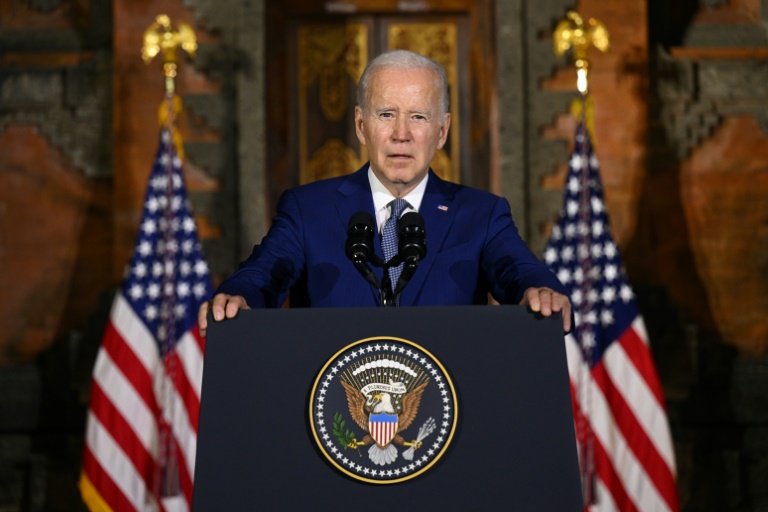
The United States and allies will heap pressure on Russia Tuesday to end the Ukraine war, pinning painfully high global food and fuel prices squarely at Vladimir Putin’s door during a G20 summit.

Leaders from the world’s 20 largest economies will gather in Bali, Indonesia to discuss soaring inflation that has driven millions more into poverty and tipped several nations toward recession.

On the eve of the talks, Putin’s critics forged a united front, blaming his eight-month-old war for the global economic tumult.

“Every household on the planet is feeling the impact of Putin’s war,” British officials said previewing Prime Minister Rishi Sunak’s remarks.

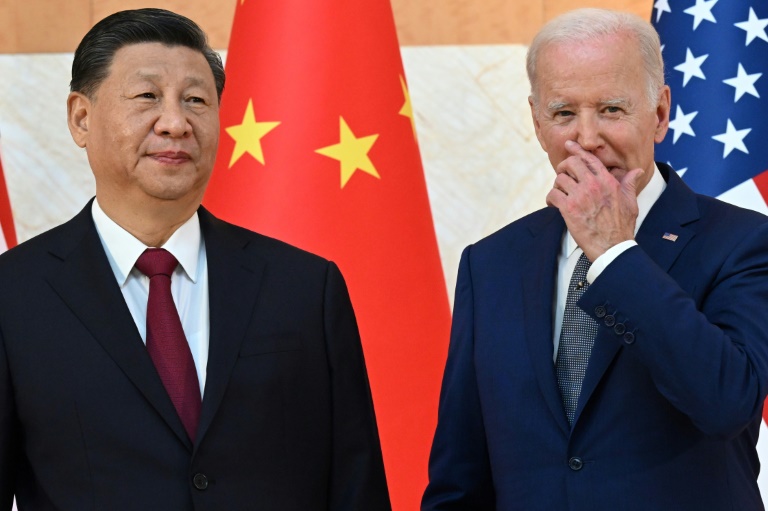
Even Russia’s ally China issued a subtle rebuke, with President Xi Jinping voicing opposition to the use of nuclear threats and weapons in Ukraine, according to a White House account of a meeting with US President Joe Biden.

Putin has decided to skip the summit, as he deals with the fallout from a string of embarrassing battlefield defeats in a war that his supporters believed would be over in days.

Rubbing salt in the wounds, Ukrainian leader Volodymyr Zelensky — fresh from a visit to liberated Kherson — will address G20 leaders in a video message.

In Putin’s sted, Russia will be represented by Sergei Lavrov, despite the veteran foreign minister making two Bali hospital trips in as many days for an undisclosed ailment. 

Moscow denied the top diplomat had been hospitalised.  

Although a seasoned and pugilistic diplomat, Lavrov is not seen as part of Putin’s inner circle — meaning the chance of a diplomatic breakthrough to end the war is vanishingly small.  

With Zelensky and Putin absent “there is little chance of any real peace diplomacy in Bali,” said Richard Gowan of the International Crisis Group. 

Still, French President Emmanuel Macron has kept an olive branch extended. He will call Putin after the G20 summit, according to a senior French official. 

Host Indonesia still holds out hope that the summit can lead to a joint statement that would show the major countries can agree on a way forward.

“Negotiation was nearly there, but we cannot promise anything,” a senior Indonesian official told AFP, adding that the issue of the war remains the crucial sticking point.

US allies hope their argument about the need to up pressure on Putin finds favour with G20 nations that, while cautious about denouncing Russia, are deeply concerned about rising prices.

G20 members Argentina and Turkey are among the countries worst hit by food inflation, while South Africa and India have notably shied away from criticism of Moscow.

“Ending Russia’s war is a moral imperative and the single best thing we can do for the global economy,” US Treasury Secretary Janet Yellen said on the eve of the meeting. 

The International Crisis Group’s Gowan warned that “if all Western powers want to do in Bali is belittle Russia, they will find that a lot of non-Western colleagues will not play along.”

– Grain corridor –

An expiring deal allowing Ukraine to export grain though the Black Sea is likely to be another focus of conversation.

The deal expires on November 19, and Russia has already threatened to rip it up.

On Monday United Nations Secretary-General Antonio Guterres voiced hope that Russia would extend, saying the arrangement was crucial for food security.

“I am hopeful that the Black Sea grain initiative will be renewed,” Guterres said.

Ukraine is one of the world’s top grain producers, and the Russian invasion had blocked 20 million tonnes of grain in its ports until the United Nations and Turkey brokered the deal in July.

“We need urgent action to prevent famine and hunger in a growing number of places around the world,” Guterres said.

The build up to the G20 has been dominated by a first presidential sit down between Biden and Xi.

The pair cooled Cold War rhetoric in a three hour summit as they tried to take some of the heat out of their simmering superpower rivalry. 

“The world expects that China and the United States will properly handle the relationship,” Xi told Biden.

Wall Street rally peters out as dollar rises

Wall Street stocks slipped Monday after last week’s global surge, as the dollar advanced against major rivals.

The dollar crept higher as traders urged caution over expectations that the Federal Reserve would pull back from massive US interest rate hikes, following cooling inflation in the world’s biggest economy.

US stocks slipped on Monday with the Dow closing 0.6 percent lower, and the Nasdaq shedding 1.1 percent.

“There is a little bit of questioning as to whether the market overreacted last week,” said Briefing.com analyst Patrick O’Hare.

The “burst of euphoria” is ebbing away, after fresh warnings that the fight against inflation is still a hard slog yet to be won, added Susannah Streeter, senior investment and markets analyst at Hargreaves Lansdown.

While Fed Vice Chair Lael Brainard said on Monday that it would likely be “appropriate soon” for the central bank to slow its pace of rate hikes, she added that it still has work to do on raising rates and tamping down prices.

Investors will get a look this week on whether the cooling has spread to consumers, with US retail sales data due out on Wednesday.

Earnings figures from major retailers Walmart and Target are expected to also provide a window into how inflation is impacting consumer spending, a major driver of the US economy.

European stocks finished higher, with data boosting sentiment.

“There was good news from the eurozone as industrial production came in better than expected this morning,” said market analyst Fawad Razaqzada at City Index and FOREX.com.

While the eurozone is widely seen as heading for a recession, data showed a month-on-month gain of 0.9 percent in September.

The pound briefly fell by more than one percent against the dollar as the Thursday budget presentation by Chancellor of the Exchequer Jeremy Hunt approaches.

“The pound has also come under pressure… with all manner of reports that the Chancellor will impose new taxes on business that will deter future investment in energy security,” CMC Markets analyst Michael Hewson said.

Meanwhile, market sentiment was given a boost by China’s easing of some pandemic restrictions and authorities reportedly unveiling a plan to support its embattled property sector.

China’s real estate industry has come under immense pressure since officials imposed restrictions in 2020 aimed at reeling in debt, with major developers teetering on the brink of collapse.

The latest moves indicate that Beijing could be turning its focus to supporting the economy, a crucial driver of global growth, according to analysts.

Nomura’s Lu Ting warned, however, that the “measures may have little direct impact on stimulating home purchases”.

Hong Kong’s stock exchange ended more than one percent higher Monday, while oil prices fell.

“Crude oil prices have slipped back, after OPEC cut its oil demand forecast for the rest of this year, and 2023… citing concerns about rising inflation and interest rates,” said Hewson of CMC Markets.

“Increasing Covid cases within China alongside a rebound in the US dollar are also weighing on prices,” he added.

– Key figures around 2135 GMT –

New York – Dow: DOWN 0.6 percent at 33,536.70 points (close)

New York – S&P 500: DOWN 0.9 percent at 3,957.25 (close)

New York – Nasdaq: DOWN 1.1 percent at 11,196.22 (close)

London – FTSE 100: UP 0.9 percent at 7,385.17 (close)

Frankfurt – DAX: UP 0.6 percent at 14,313.30 (close)

Paris – CAC 40: UP 0.2 percent at 6,609.17 (close)

EURO STOXX 50: UP 0.5 percent at 3,887.51 (close)

Tokyo – Nikkei 225: DOWN 1.1 percent at 27,963.47 (close)

Hong Kong – Hang Seng Index: UP 1.7 percent at 17,619.71 (close)

Shanghai – Composite: DOWN 0.1 percent at 3,083.40 (close)

Euro/dollar: DOWN at $1.0331 from $1.0361 on Friday

Pound/dollar: DOWN at $1.1751 from $1.1839 

Dollar/yen: UP at 139.90 yen from 138.70 yen

Euro/pound: UP at 87.89 pence from 87.49 pence

West Texas Intermediate: DOWN 3.5 percent at $85.87 per barrel

Brent North Sea crude: DOWN 3.0 percent at $93.14 per barrel

burs-rl-bys/mdl

Biden and Xi reassure world but US, China still on collision course: experts

Presidents Joe Biden and Xi Jinping both sought to lower the temperature between the United States and China during a rare summit, but few analysts expect any deeper easing of tensions.

After three hours of talks in Bali, Biden said there need not be a new Cold War between the two powers and Xi told him that China was not challenging the international order.

The White House said that Secretary of State Antony Blinken would visit China, the first visit by the top US diplomat in more than four years.

Biden “sent a reassuring message and the Chinese readout was positively glowing. That in itself shows both sides’ interest in improving ties,” said Yun Sun, director the China program at the Stimson Center in Washington.

But beyond a shared hope to avoid worst-case scenarios and direct clashes, she said the two powers had very different views on what a more stable relationship means, especially on the flashpoint of Taiwan. 

“If we expect this summit to miraculously rescue this relationship and restore it to a better place, I think we need to see more concrete actions,” she said.

Rui Zhong of the Wilson Center described the Bali summit as “maintenance work” and said even Blinken’s visit could wind up being more about “treading water” than breakthroughs.

Moreover, for the first in-person summit between the two nations’ presidents since 2019, each side had an interest in downplaying friction.

Biden and Xi were visiting for the Group of 20 summit, with host Indonesia inviting leaders of fellow Southeast Asian nations, several of which have maritime conflicts with China.

“For Xi, the perception of regional stability is still something that he would like to hold onto,” Zhong said. “China growing and throwing its weight around has been a longheld concern of the smaller states of Southeast Asia.”

“Xi gains nothing by coming off as excessively cold, inflexible and unnecessarily hawkish toward Biden, at least when face to face.”

For Biden, the most pressing diplomatic priority has been reining in Russia over its invasion of Ukraine and he has trumpeted what he sees as China’s wavering support for nominal ally Moscow, including a refusal to send weapons.

The White House said Xi agreed with Biden on “opposition to the use or threat of use of nuclear weapons in Ukraine,” a phrase absent in China’s statement.

– Deep suspicions –

Whatever their messaging to the world, both powers have deep suspicions of the other’s intentions.

The Biden administration, in a national security strategy released last month, called China the only power that could challenge US primacy and sought a focus on ensuring the United States preserves a “competitive edge,” including on new technology.

Deng Xiaoping, who spearheaded China’s modernization in the 1980s, famously said his country should “bide time” and focus on its rise rather than immediately challenging other powers.

US policymakers widely see China as newly assertive under Xi, the country’s most powerful leader in decades, who just secured a precedent-seeking third term.

Rush Doshi, a China advisor to Biden who took part in the Bali talks, wrote in a 2019 book while out of government that Xi saw historic opportunities due to what he viewed as Western decline, evidenced by the rise of Donald Trump, Britain’s exit from the European Union and the pandemic response.

China’s strategy involves “blunting and building efforts worldwide to displace the United States as the global leader,” he wrote.

– Taiwan flashpoint –

An area where the relationship could quickly deteriorate is Taiwan, the self-governing democracy claimed by Beijing that stirs passion on both sides.

Biden’s Republican rivals quickly attacked his diplomacy, with hawkish Senator Tom Cotton saying the “naive return to a policy of appeasement will hurt the United States, endanger Taiwan and further embolden Xi Jinping.”

Biden told reporters he understood that Xi would not launch an “imminent” invasion of Taiwan, but Xi again warned about supporting Taiwan’s “independence “

China carried out major military exercises in August after a defiant visit to Taipei by House Speaker Nancy Pelosi, second in line to the presidency.

Republican Kevin McCarthy, who may become the next speaker as votes are counted from last week’s election, has made clear he would also visit Taiwan.

After Biden’s reassurances, Xi “might have a little more room not to overreact” to a McCarthy visit, Sun said.

“But even then, I doubt the Chinese can afford not to react harshly.”

Why go back to the Moon?

On September 12, 1962, then US president John F. Kennedy informed the public of his plan to put a man on the Moon by the end of the decade.

It was the height of the Cold War and America needed a big victory to demonstrate its space superiority after the Soviet Union had launched the first satellite and put the first man in orbit.

“We choose to go to the Moon,” Kennedy told 40,000 people at Rice University, “because that challenge is one that we are willing to accept, one we are unwilling to postpone, and one which we intend to win.”

Sixty years on, the United States is about to launch the first mission of its return program to the Moon, Artemis. But why repeat what has already been done?

Criticism has risen in recent years, for example from Apollo 11 astronaut Michael Collins, and the Mars Society founder Robert Zubrin, who have long advocated for America to go directly to Mars.

But NASA argues re-conquering the Moon is a must before a trip to the Red Planet. Here’s why.

– Long space missions –

NASA wants to develop a sustainable human presence on the Moon, with missions lasting several weeks –- compared to just a few days for Apollo. 

The goal: to better understand how to prepare for a multi-year round trip to Mars. 

In deep space, radiation is much more intense and poses a real threat to health. 

Low Earth Orbit, where the International Space Station (ISS) operates, is partly shielded from radiation by the Earth’s magnetic field, which isn’t the case on the Moon. 

From the first Artemis mission, many experiments are planned to study the impact of this radiation on living organisms, and to assess the effectiveness of an anti-radiation vest. 

What’s more, while the ISS can often be resupplied, trips to the Moon — a thousand times further — are much more complex. 

To avoid having to take everything with them, and to save costs, NASA wants to learn how to use the resources present on the surface. 

In particular, water in the form of ice, which has been confirmed to exist on the lunar south pole, could be transformed into rocket fuel by cracking it into its separate hydrogen and oxygen atoms.

– Testing new gear –

NASA also wants to test on the Moon the technologies that will continue to evolve for a mission to Mars. First, new spacesuits for spacewalks.

Their design was entrusted to the company Axiom Space for the first crewed mission to the Moon, in 2025 at the earliest. 

Other needs: vehicles  — both pressurized and unpressurized — so that the astronauts can move around, as well as a fixed habitat at the lunar base camp.

Finally, for sustainable access to an energy source, NASA is working on the development of portable nuclear fission systems. 

Solving any problems that arise will be much easier on the Moon, only a few days away, than on Mars, which can only be reached after at least several months of voyage.

– Establishing a waypoint –

A major pillar of the Artemis program is the construction of a space station in orbit around the Moon, called Gateway, which will serve as a relay before the trip to Mars. 

All the necessary equipment can be sent there in “multiple launches,” before finally being joined by the crew to set off on the long voyage, Sean Fuller, responsible for the Gateway program, told AFP.

“Kind of like you’re stopping at your gas station to make sure you get all the stuff, and then you’re off on your way.”

– Maintaining leadership over China –

Apart from Mars, another reason put forward by the Americans for settling on the Moon is to do so before the Chinese, who plan to send taikonauts by the year 2030.

China is the United States’ main competition today as the once proud Russian space program has withered.

“We don’t want China suddenly getting there and saying, “This is our exclusive territory,'” NASA boss Bill Nelson said in a recent interview.

– For the sake of science –

While the Apollo missions brought back to Earth nearly 400 kilograms of lunar rock, new samples will make it possible to further deepen our knowledge of this celestial object and its formation. 

“The samples that we collected during the Apollo missions changed the way we view our solar system,” astronaut Jessica Meir told AFP. “I think we can expect that from the Artemis program as well.”

She expects further scientific and technological breakthroughs too, just like during the Apollo era.

Why go back to the Moon?

On September 12, 1962, then US president John F. Kennedy informed the public of his plan to put a man on the Moon by the end of the decade.

It was the height of the Cold War and America needed a big victory to demonstrate its space superiority after the Soviet Union had launched the first satellite and put the first man in orbit.

“We choose to go to the Moon,” Kennedy told 40,000 people at Rice University, “because that challenge is one that we are willing to accept, one we are unwilling to postpone, and one which we intend to win.”

Sixty years on, the United States is about to launch the first mission of its return program to the Moon, Artemis. But why repeat what has already been done?

Criticism has risen in recent years, for example from Apollo 11 astronaut Michael Collins, and the Mars Society founder Robert Zubrin, who have long advocated for America to go directly to Mars.

But NASA argues re-conquering the Moon is a must before a trip to the Red Planet. Here’s why.

– Long space missions –

NASA wants to develop a sustainable human presence on the Moon, with missions lasting several weeks –- compared to just a few days for Apollo. 

The goal: to better understand how to prepare for a multi-year round trip to Mars. 

In deep space, radiation is much more intense and poses a real threat to health. 

Low Earth Orbit, where the International Space Station (ISS) operates, is partly shielded from radiation by the Earth’s magnetic field, which isn’t the case on the Moon. 

From the first Artemis mission, many experiments are planned to study the impact of this radiation on living organisms, and to assess the effectiveness of an anti-radiation vest. 

What’s more, while the ISS can often be resupplied, trips to the Moon — a thousand times further — are much more complex. 

To avoid having to take everything with them, and to save costs, NASA wants to learn how to use the resources present on the surface. 

In particular, water in the form of ice, which has been confirmed to exist on the lunar south pole, could be transformed into rocket fuel by cracking it into its separate hydrogen and oxygen atoms.

– Testing new gear –

NASA also wants to test on the Moon the technologies that will continue to evolve for a mission to Mars. First, new spacesuits for spacewalks.

Their design was entrusted to the company Axiom Space for the first crewed mission to the Moon, in 2025 at the earliest. 

Other needs: vehicles  — both pressurized and unpressurized — so that the astronauts can move around, as well as a fixed habitat at the lunar base camp.

Finally, for sustainable access to an energy source, NASA is working on the development of portable nuclear fission systems. 

Solving any problems that arise will be much easier on the Moon, only a few days away, than on Mars, which can only be reached after at least several months of voyage.

– Establishing a waypoint –

A major pillar of the Artemis program is the construction of a space station in orbit around the Moon, called Gateway, which will serve as a relay before the trip to Mars. 

All the necessary equipment can be sent there in “multiple launches,” before finally being joined by the crew to set off on the long voyage, Sean Fuller, responsible for the Gateway program, told AFP.

“Kind of like you’re stopping at your gas station to make sure you get all the stuff, and then you’re off on your way.”

– Maintaining leadership over China –

Apart from Mars, another reason put forward by the Americans for settling on the Moon is to do so before the Chinese, who plan to send taikonauts by the year 2030.

China is the United States’ main competition today as the once proud Russian space program has withered.

“We don’t want China suddenly getting there and saying, “This is our exclusive territory,'” NASA boss Bill Nelson said in a recent interview.

– For the sake of science –

While the Apollo missions brought back to Earth nearly 400 kilograms of lunar rock, new samples will make it possible to further deepen our knowledge of this celestial object and its formation. 

“The samples that we collected during the Apollo missions changed the way we view our solar system,” astronaut Jessica Meir told AFP. “I think we can expect that from the Artemis program as well.”

She expects further scientific and technological breakthroughs too, just like during the Apollo era.

Three football players killed in US college shooting

A former US college football player was arrested Monday and charged with murder after three members of the current University of Virginia team were shot dead at the school a few hours south of the US capital.

The latest outburst of campus gun violence came as four people were found dead in a separate incident near the University of Idaho.

Police chief Timothy Longo told a news conference that a 22-year-old UVA student, Christopher Darnell Jones Jr, had been taken into custody on suspicion of carrying out the shooting Sunday night and faces murder charges.

Police in Henrico County said Jones was arrested “without incident” Monday morning in a suburb of Richmond, about 75 miles (120 kilometers) southeast of the UVA campus in Charlottesville.

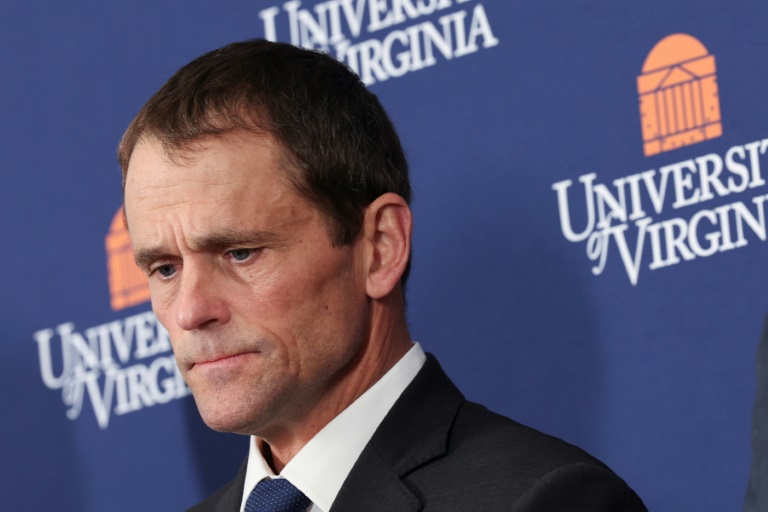
The shooting took place on a bus while students were returning from a field trip, according to UVA president Jim Ryan, who said all three of those who died were members of the school’s football team.

Two other students were wounded, Ryan said, and one of them was in critical condition.

“This is a sad, shocking and tragic day for our UVA community,” Ryan said. “My heart is broken for the victims and their families.”

The campus in Charlottesville, about 100 miles (160 kilometers) southwest of Washington, was locked down for hours while police searched for Jones, a former UVA football player listed on the Cavaliers’ 2018 roster as a first-year running back.

Longo said Jones had previously been brought to the attention of the school’s “threat assessment” team after a report that he possessed a gun but no weapon was discovered.

The three players who died were identified as Cavaliers wide receivers Lavel Davis Jr and Devin Chandler, and linebacker D’Sean Perry.

The White House sent its condolences to families of the victims of the “senseless shooting” and called on Congress to pass stricter gun control laws.

“Too many families across America are bearing the awful burden of gun violence,” the White House said. “We need to enact an assault weapons ban to get weapons of war off America’s streets.”

– Idaho college homicide –

US Senator Tim Kaine of Virginia said he was “heartbroken to hear of another Virginia community devastated by gun violence.”

In 2007, Virginia Tech became the scene of the worst school shooting on record in the United States when a 23-year-old student killed 32 students and faculty members before committing suicide.

More than 2,000 miles to the west in the Rocky Mountain state of Idaho, police were investigating a separate incident in which four students were found dead Sunday in a home near the University of Idaho campus, believed to be the “victims of homicide.”

Officers responded to a call in the town of Moscow, near the university, about an unconscious person.

“Upon arrival, officers discovered four individuals who were deceased,” police said in a statement.

Authorities did not release other details including the cause of death, and no arrests have been made in the case.

“It is with deep sadness that I share with you that the university was notified today of the death of four University of Idaho students living off-campus believed to be victims of homicide,” University of Idaho president Scott Green said in a statement.

School shootings are alarmingly common as part of a broader wave of gun violence in the United States, where the proliferation of firearms has soared in recent years.

In May an 18-year-old gunman burst into Robb Elementary School in Uvalde, Texas, with a semi-automatic rifle and killed 19 students and two teachers, in an attack that shocked the nation and renewed calls for gun reform.

Musk's Tesla compensation trial begins in US court

A US trial over Elon Musk’s $50 billion compensation package at Tesla began Monday in a Delaware court.

Richard Tornetta, a shareholder of the electric car maker, filed a complaint in 2018 on the grounds that Musk and the company’s board of directors failed to respect their duties when they authorized the pay plan.

According to the plaintiff, Musk dictated his terms to directors who were not sufficiently independent from the tech tycoon to object.

The court date landed as Musk is facing a deluge of scrutiny over his $44 billion takeover of Twitter that has seen big layoffs, an exodus of advertisers and a proliferation of fake accounts.

The Tesla shareholder accuses Musk of “unjustified enrichment” and asked for the annulment of the pay program.

According to a legal filing, Musk earned the equivalent of $52.4 billion in stock options over four and a half years after virtually all of the company’s targets were met. 

When the plan was adopted it was valued at a total of $56 billion.

Lawyers for the tycoon and the other defendants argue that the compensation plan is linked to the company’s performance and that Tesla’s stock market value increased more than tenfold since its adoption.

Musk is expected to testify on Wednesday and canceled an in-person appearance at an event on the sidelines of the G20 in Indonesia to attend court.

The trial, which will take place without a jury, will last five days and is headed by Judge Kathaleen McCormick, the same judge who prosecuted the case opposing Musk against Twitter.

That case did not go to trial after the tycoon agreed to buy the platform for $44 billion after months of trying to wiggle out of the deal.

In addition to Musk, the lawsuit includes several current and former Tesla board members. 

Fed vice chair says 'appropriate soon' to slow rate hikes

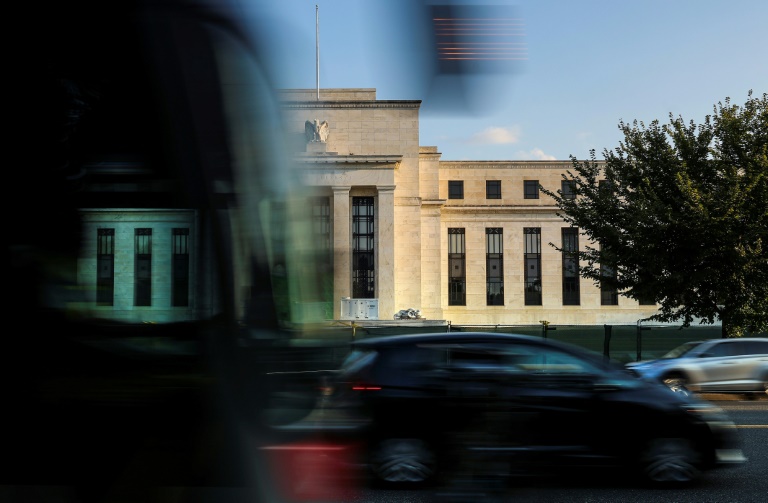
It likely will be “appropriate soon” for the US central bank to slow the pace of interest rate increases, Federal Reserve Vice Chair Lael Brainard said Monday.

Her comments came as red-hot consumer prices, which have squeezed American households, showed signs of easing, and after the Fed delivered a fourth straight super-sized rate hike to cool the economy.

But with inflation still hovering close to the highest level in recent decades, the Fed still has “additional work to do both on raising rates” and tamping down prices, she said in an event with Bloomberg.

The closely-watched consumer price index released last week showed US inflation logged its lowest annual increase since January, fueling hopes that soaring costs will start to pull back.

The US central bank has moved forcefully to lower demand and bring inflation closer to its two percent target, raising the benchmark lending rate six times this year despite fears that it could trigger a recession.

But there is a growing chorus of voices, including some Fed officials, advocating for smaller steps in coming months.

– ‘More deliberate’ –

Brainard acknowledged that policymakers have raised rates “very rapidly” in recent months, and said it will take time for tightening to flow through to the economy.

“By moving forward at a pace that’s more deliberate, we’ll be able to assess more data and be better able to adjust the path of rates to bring inflation down,” she said.

Russia’s war in Ukraine this year has sent food and fuel prices soaring, and the annual inflation rate hit a blistering 9.1 percent in June — its highest in four decades — but slowed to 7.7 percent in October.

“I think the inflation data was reassuring preliminarily,” Brainard said.

Excluding food and energy, officials are also beginning to see some goods prices turn down, and this is a key trend that “will need to continue over the next year,” she added.

– Regulating crypto –

Brainard also weighed in on the fallout from the stunning collapse of cryptocurrency platform FTX, which declared bankruptcy in the United States, expressing the need for regulation in the industry.

The situation at the company has reverberated across the digital currency landscape, and Brainard said it “reinforces” the fact that crypto finance “needs to be under the regulatory perimeter.”

She stressed that digital currencies are “no different than traditional finance in the risks that it exposes investors to” and flagged the need for “regulatory guardrails.”

This could mean bringing some into compliance with existing rules, or in some cases, expanding the reach of financial watchdogs, she said.

Cash-strapped FTX filed for bankruptcy on Friday and its high-profile founder and chief executive Sam Bankman-Fried resigned after Binance, the world’s biggest cryptocurrency platform, scrapped a takeover bid, sending chills across the cryptocurrency world.

FTX until recently was considered the world’s second-largest cryptocurrency platform, at one point valued at $32 billion.

Google pays $392 mn in landmark US privacy case

Google on Monday agreed to settle a landmark privacy case with 40 US states over accusations that the search engine giant misled users into believing location tracking had been switched off on their devices.

A statement said it was the largest multi-state privacy settlement by state authorities in US history and included a binding commitment for improved disclosures by Google.

“Digital platforms like Google cannot claim to provide privacy controls to users then turn around and disregard those controls to collect and sell data to advertisers against users’ express wishes — and at great profit,” said New Jersey Attorney General Matthew Platkin in the statement.

The rare joint lawsuit by 40 states grew from impatience over the failure of federal authorities to crack down on big tech amid legislative gridlock in Washington.

Republican and Democratic lawmakers disagree on what national rules on online privacy should look like, with furious lobbying by tech companies to limit their potential impact.

Since 2018, the US tech giants have faced strict rules in Europe, with Google, Amazon and others subjected to hefty fines over privacy violations.

The US case began after an article in 2018 from the Associated Press reported that Google tracked users even when they had opted out of the practice.

Other states involved included Arkansas, Florida, Illinois, Louisiana, North Carolina, Pennsylvania and Tennessee.

Specifically at fault in their case was evidence that users continued to be tracked when they disabled the location history option on their phones as tracking continued through a separate Web & App Activity setting.

In a statement, Google said that the allegations were based on product features that were no longer up to date.

“Consistent with improvements we’ve made in recent years, we have settled this investigation which was based on outdated product policies that we changed years ago,” the company said.

Under the settlement, Google will provide more detailed information on tracking activity.

Google pays $392 mn in landmark US privacy case

Google on Monday agreed to settle a landmark privacy case with 40 US states over accusations that the search engine giant misled users into believing location tracking had been switched off on their devices.

A statement said it was the largest multi-state privacy settlement by state authorities in US history and included a binding commitment for improved disclosures by Google.

“Digital platforms like Google cannot claim to provide privacy controls to users then turn around and disregard those controls to collect and sell data to advertisers against users’ express wishes — and at great profit,” said New Jersey Attorney General Matthew Platkin in the statement.

The rare joint lawsuit by 40 states grew from impatience over the failure of federal authorities to crack down on big tech amid legislative gridlock in Washington.

Republican and Democratic lawmakers disagree on what national rules on online privacy should look like, with furious lobbying by tech companies to limit their potential impact.

Since 2018, the US tech giants have faced strict rules in Europe, with Google, Amazon and others subjected to hefty fines over privacy violations.

The US case began after an article in 2018 from the Associated Press reported that Google tracked users even when they had opted out of the practice.

Other states involved included Arkansas, Florida, Illinois, Louisiana, North Carolina, Pennsylvania and Tennessee.

Specifically at fault in their case was evidence that users continued to be tracked when they disabled the location history option on their phones as tracking continued through a separate Web & App Activity setting.

In a statement, Google said that the allegations were based on product features that were no longer up to date.

“Consistent with improvements we’ve made in recent years, we have settled this investigation which was based on outdated product policies that we changed years ago,” the company said.

Under the settlement, Google will provide more detailed information on tracking activity.

Close Bitnami banner
Bitnami