US Business

Twitter chaos deepens as key executives quit

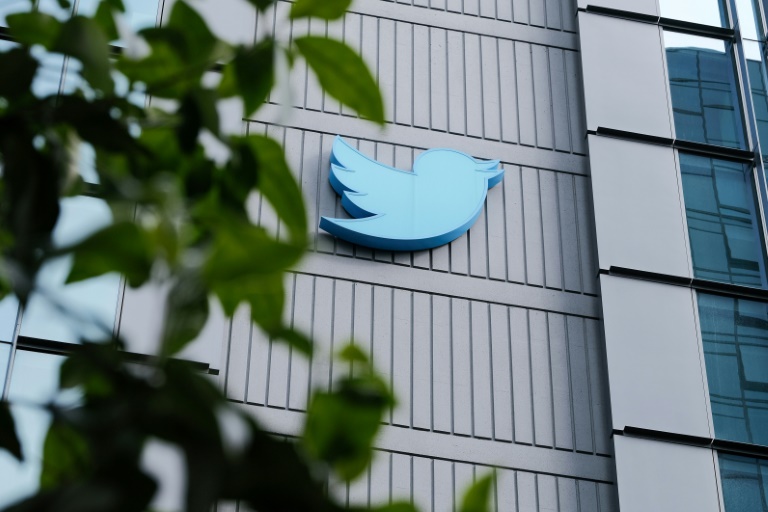
Elon Musk’s ownership of Twitter descended deeper into chaos as key security executives resigned from the platform, drawing a sharp warning from US regulators.

The walkouts came after a turbulent launch of new Twitter features following the Tesla and SpaceX owner’s $44 billion buyout of the influential messaging app.

Musk warned employees Thursday that the site was burning through cash dangerously fast, raising the specter of bankruptcy if the situation was not turned around.

“I’ve made the hard decision to leave Twitter,” tweeted chief security officer Lea Kissner, who reportedly stepped down with other key privacy or security executives.

In the most extraordinary exit, US media reported that Yoel Roth — the site’s head of trust and safety — stepped down just a day after staunchly defending Musk’s content moderation policy to advertisers.

Late on Thursday, Roth’s Twitter bio identified him as “Former Head of Trust & Safety at @Twitter.”

Media reports had said Robin Wheeler, who held a key role linking Twitter with advertisers and was considered a key Musk ally inside the company, was leaving but late Thursday she tweeted: “I’m still here.”

The site’s update included a launch of the long-awaited Twitter Blue subscription service, which allowed users to pay $7.99 per month for a coveted blue tick, as well as a separate gray “official” badge for some high-profile accounts.

But on Wednesday Musk scrapped the new gray label almost immediately, overshadowing the launch of the paid service, which is only available on the mobile app on iPhones and in the United States.

The launch also saw the emergence of a flurry of fake accounts as users used the opportunity to impersonate celebrities and politicians such as NBA star LeBron James or former British prime minister Tony Blair.

– ‘Deep concern’ –

The chaos drew a rare warning from the Federal Trade Commission, the US authority overseeing consumer safety that had put Twitter under watch for past security and privacy breaches.

“We are tracking recent developments at Twitter with deep concern,” an FTC spokesperson said in a statement.

“No CEO or company is above the law, and companies must follow our consent decrees,” the spokesperson added, referring to past commitments by Twitter to obey US privacy rules.

Violating FTC decisions could cost Twitter millions of dollars in fines.

Musk fired half of the 7,500 employees of the California company a week ago, 10 days after buying the site and becoming its sole owner.

For the first time since the layoffs, the 51-year-old entrepreneur on Thursday addressed his remaining employees and urged them to help the site reach one billion users, according to employee text messages seen by AFP.

Musk also warned that the company was bleeding cash and expressed fear about the effects of the poor economy on his newly bought business.

“You may have noticed I sold a bunch of Tesla stock. The reason I did that is to save Twitter,” he is reported to have said.

Wedbush analyst Dan Ives warned that the Twitter episode could have serious repercussions for electric car manufacturer Tesla.

“Brand destruction is our biggest worry with this Twitter circus show. It’s that simple and I can’t ignore it for Tesla stock,” Ives wrote on the site.

Twitter is also crippled by the decision of advertisers to stay away from the platform, concerned about Musk’s plans.

The tycoon announced he was ending work-from-home policies at Twitter, which had been a widespread practice at the San Francisco-based company.

“If you don’t show up at the office, resignation accepted,” he told employees.

China eases Covid measures, cutting quarantine and scrapping flight bans

China announced the relaxation of some of its hardline Covid-19 restrictions on Friday, a day after authorities had vowed to stick to a zero-tolerance virus approach despite mounting economic damage.

The country is the last major economy welded to a strategy of stamping out Covid flare-ups as they occur, through a combination of snap lockdowns, mass testing and lengthy quarantines.

Top leaders had pledged to stick “unswervingly” to the policy, which has forced business closures, roiled international supply chains and weighed heavily on growth.

But a notice from the country’s disease control agency on Friday said the Politburo Standing Committee — the seven-man apex of power in China — met Thursday to rubberstamp limited relaxations.

According to the notice, the quarantine period for inbound travellers will be cut from 10 days to eight, consisting of five days in a state isolation centre and three days at home.

It said that travellers would only be required to show one negative Covid test within 48 hours of boarding flights to China, a reduction from two tests. 

– Relaxing strict policies –

The new rules single out “important business personnel” and “sports groups” as examples of privileged groups permitted to skip quarantine as long as they remain in a virus-secure “closed loop” for the duration of their stays.

The notice said that a so-called “circuit breaker” mechanism on inbound flights would be abolished, bringing an end to a policy that saw temporary cancellation of flight routes if a certain proportion of passengers tested positive.

Now scrapped is the requirement to identify and isolate “secondary close contacts” — those who may have come into contact with infected people.

A domestic Covid risk system has been reduced from three tiers to two, with areas to be labelled as either “high-risk” and subject to curbs, or “low-risk” with minimal restrictions.

People travelling from high- to low-risk areas will be required to undergo seven days of isolation at home, instead of staying in centralised facilities.

Places will be defined as “low-risk” if they record zero new infections for five successive days.

Workers in “closed-loop” environments where exposure to Covid is higher — such as cabin crews, airport staff and quarantine hotel personnel — will undergo shortened quarantines, the notice said.

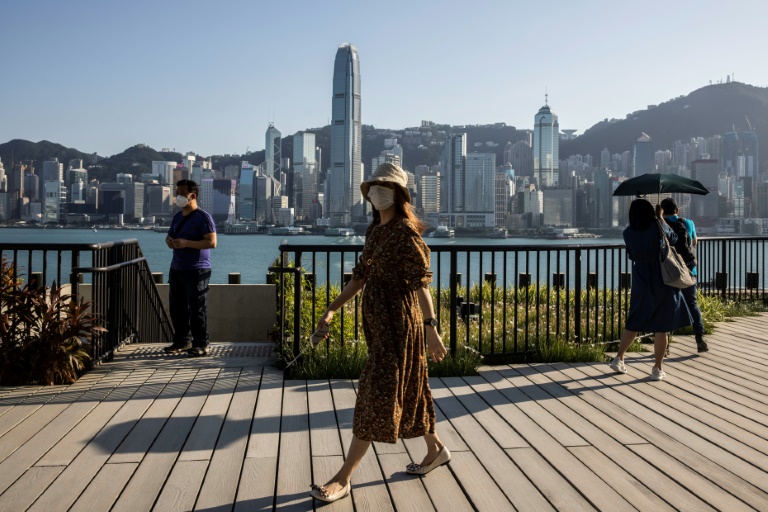
Chinese stocks listed in Hong Kong soared on Friday following the news, with the Hang Seng’s China Enterprises Index up nearly eight percent in afternoon trading.

The wider Hang Seng Index was also up 7.5 percent.

“I believe this will have a very positive impact on the market and boost investor confidence, but the actual effects will also depend on how the policies are enforced at the local level in the next few months,” said Henry Gao, associate professor at the Singapore Management University.

China’s foreign ministry on Friday downplayed the perceived loosening of restrictions, emphasising that domestic outbreaks are still “severe”.

“China has introduced these measures to make our prevention and control more scientific and precise. It doesn’t mean we have relaxed containment or are even giving up altogether and ‘lying flat’,” spokesman Zhao Lijian said at a routine briefing.

– ‘Unswerving’ commitment –

China has reopened far more slowly than most other countries, a move that has kept infections to a minimum.

The country has recorded just over 5,200 Covid deaths, compared with more than a million in the United States.

But pandemic fatigue has begun to set in as the onerous curbs show little sign of letting up, with grinding lockdowns of the kind that hit Shanghai earlier this year sparking isolated public protests.

And the economic impact has been so severe that analysts now expect China to miss its stated annual growth target of around 5.5 percent by a wide margin.

Adding to the difficulties are shifting and sometimes contradictory demands from Beijing, which incentivise local governments to carry out extreme measures.

China’s top leaders have repeatedly vowed not to waver from the zero-Covid policy, but officials have also criticised heavy-handed enforcement such as excessively bureaucratic local curbs.

Friday’s notice added to the chorus, “strictly forbidding” pre-emptive or overly lengthy lockdowns, unapproved school closures and arbitrary suspensions of work and traffic.

It vowed to “speed up” Covid booster vaccination coverage, especially among the vulnerable older population and boost reserves of antiviral treatments.

China recorded 10,535 new domestic cases on Friday, the vast majority of which were asymptomatic, according to the National Health Commission.

Japan govt backs major firms in next-gen chip project

Japan will pour half a billion dollars into a new project to develop and make next-generation microchips, the government said Friday, as the global shortage of semiconductors sparks economic security concerns.

Eight major companies including Sony, SoftBank, Toyota and telecoms giant NTT have joined forces for the venture, the industry ministry said.

Named Rapidus, the new firm says it aims to mass-produce next-generation semiconductors by 2027.

The pandemic has fuelled a global shortage of semiconductors, an essential component of nearly all modern electronics, from smartphones to kitchen appliances and cars.

This has forced businesses to slow manufacturing activity, and has prompted calls for governments and firms to secure chip supplies as geopolitics become increasingly volatile — especially concerning Taiwan, which has a huge chip-producing capacity.

Japan’s industry ministry said each company has invested around one billion yen ($7 million) in Rapidus, with MUFG Bank investing 300 million yen.

On top of this, the government has said it will grant 70 billion yen to the project.

At an unveiling of the new venture, Rapidus president Atsuyoshi Koike said economic security issues were “very problematic considering the global supply chain”, with many chipmakers based in China and Taiwan.

“It seems that everyone has come to understand the importance of semiconductors in recent years,” Koike told reporters, adding that “there has also been growing concern about the decline of the Japanese semiconductor industry”.

US officials have posited that the world is closer than ever to seeing a conflict over Taiwan, which China considers its own territory, to be taken one day, by force if necessary.

Given Taiwan ii top player in the semiconductor world, any move to invade would wreak havoc with global supply chains.

Washington recently introduced new measures to limit China’s access to high-end semiconductors with military uses, a move that has wiped billions from chip companies’ valuations worldwide.

The German economy ministry also has recommended that the sale of a chip factory to a Chinese-owned firm should be blocked as it poses a security threat, government sources said Tuesday.

Last year, Taiwanese chip giant TSMC and Sony said they would tie up on a new $7 billion plant in Japan.

Biden faces high expectations at UN climate talks

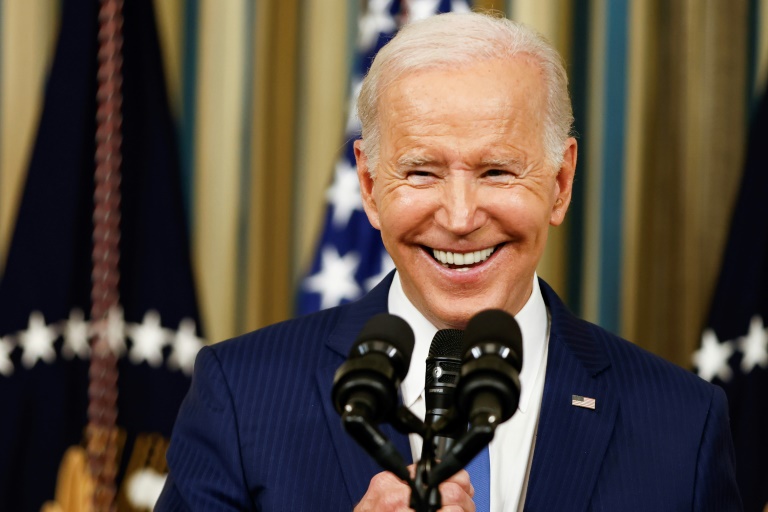
US President Joe Biden headed to UN climate talks in Egypt on Friday armed with major domestic achievements against global warming but under pressure to do more for countries reeling from natural disasters.

Biden will spend only a few hours at COP27 in the Red Sea resort of Sharm el-Sheikh, three days after US midterm elections that have raised questions about what the result could mean for US climate policy.

Climate action in the United States — the world’s second biggest emitter — was given a major boost this year when Congress passed a landmark spending bill, the Inflation Reduction Act, which includes $369 billion for clean energy and climate initiatives.

“We’re living in a decisive decade –- one in which we have an opportunity to prove ourselves and advance the global climate fight,” Biden said on Twitter.

“Let this be a moment where we answer history’s call. Together,” said the US leader, who skipped a two-day summit of some 100 world leaders at COP27 earlier this week that coincided with the US election.

New research shows just how dauntingly hard it will be to meet the goal of capping global warming at 1.5 degrees Celsius above preindustrial levels — requiring emissions to be slashed nearly in half by 2030.

The new study — published on Friday in the journal Earth System Science Data — found that CO2 emissions from fossil fuels are on track to rise one percent in 2022 to reach an all-time high.

COP27 talks have been dominated by the need for wealthy polluters to stop stalling on helping developing countries green their economies and prepare for future impacts — as well as calls to provide financial help for the damage already being caused by climate-induced catastrophes.

“The world needs the United States to be a climate leader in our fight for climate justice,” prominent Ugandan climate activist Vanessa Nakate, a 25-year-old Goodwill Ambassador for UNICEF, told AFP.

Germany’s climate envoy, Jennifer Morgan, said Biden’s attendance at COP27 was a “very good sign”.

“I think it reassures countries, people, that the United States at the highest level takes this issue incredibly seriously and we need that,” Morgan told reporters.

– Climate-sceptic Republicans –

White House National Security Advisor Jake Sullivan said Biden will “underscore the need to go further, faster, to help the most vulnerable communities build their resilience” and push major economies to “dramatically” cut emissions.

“How long do we have to sit around to wait before we say, ‘Hey let’s get really serious’,” US climate envoy John Kerry told a COP27 panel.

Kerry presented this week a public-private partnership aimed at supporting the transition to renewable energy in developing nations and based on a carbon credit system.

But the plan has been panned by activists wary of firms using these to “offset” their carbon emissions.

With Republicans apparently poised to retake the House of Representatives, part of Biden’s climate agenda could take a hit. Democrats have a chance to retain the Senate.

Biden pledged to contribute $11.4 billion to a $100 billion per-year-scheme through which rich countries will help developing ones transition to renewable energies and build climate resilience.

But Democrats would have to rush it through Congress before climate-sceptic Republicans take office in January.

“We’re going to be pressing for passage of the appropriations bills,” US lawmaker Kathy Castor, who chairs a special climate crisis committee in the House, told AFP.

“Hopefully Republicans in the Congress will not block it,” she said.

– ‘Loss and damage’ –

The United States has  for years resisted attempts to establish a “loss and damage” fund in which rich polluters would compensate developing nations for the destruction from climate-related disasters.

Emerging countries successfully put the issue on the official COP27 agenda, with fraught negotiations likely before talks end on November 18.

Biden will also use the trip to meet with Egyptian President Abdel Fattah al-Sisi and discuss the human rights situation in the country, where the case of jailed dissident Alaa Abdel Fattah was raised by other leaders earlier this week.

Ahead of his trip, the White House expressed “deep concern” for the jailed British-Egyptian activist, who is on a hunger strike.

After COP27, Biden will head to an ASEAN regional summit in Cambodia at the weekend before travelling to Indonesia for G20 talks.

Biden may have a chance to revive cooperation with China when he meets President Xi Jinping at the G20.

US-Sino cooperation has been crucial to the fight against global warming, but Beijing cut off climate talks with Washington after US House Speaker Nancy Pelosi visited Taiwan in August.

Asian shares surge as investors cheer slower US inflation

Asian markets surged on Friday after a bumper session on Wall Street as lower US inflation dimmed expectations of more aggressive Federal Reserve rate hikes.

Hong Kong stocks rocketed more than 7.7 percent, while Tokyo’s key Nikkei index also surged, closing up almost three percent.

The gains extended global rallies after the US consumer price index (CPI) showed that the annual pace of inflation was a lower-than-expected 7.7 percent in October, down from 8.2 percent in September.

As US residents reel from sky-high costs, the central bank has moved forcefully to lower demand by raising the benchmark lending rate six times this year.

The latest inflation data should be welcome news to Fed policymakers because prices are “finally showing some response” to the steep rate hikes, said Rubeela Farooqi of High Frequency Economics.

“Inflation has finally started to drop like a rock in the US and this is the best news that anyone can expect,” added AvaTrade analyst Naeem Aslam.

The dollar slumped against rival currencies following the data release, and shares rallied as investors cheered the prospect of less hawkish moves by the central bank.

The Dow was up 3.7 percent at the close and the tech-heavy Nasdaq index soared 7.4 percent. 

Most Asian markets matched the upbeat mood, with the Hong Kong, Shanghai and Shenzhen indexes also buoyed by China’s announcement of a slight relaxation to its hardline Covid-19 restrictions.

Shanghai was up 1.7 percent, and Shenzhen closed up 1.3 percent.

Taipei jumped 3.7 percent, Seoul was up 3.4 percent and Sydney climbed 2.8 percent. Singapore rose 1.6 percent and Mumbai put on 1.7 percent.

European stock markets rose at the open Friday but failed to match the huge gains in Asia and on Wall Street.

“As expected, buying in Asia tech is standing out this morning,” Stephen Innes of SPI Asset Management said.

“But with investors still looking over their shoulders at the crypto schism and rising Covid cases in China, that tide that was lifting all boats is starting to recede in places,” he cautioned.

Trade may also be “dominated by profit-taking and position squaring” after the rallies overnight and ahead of a US market holiday on Friday.

The crypto world has meanwhile been rocked by a surprise decision from Binance, the world’s biggest cryptocurrency platform, to scrap a possible acquisition of rival FTX.com — plunging bitcoin to a two-year low.

Investor Louis Navellier said the US inflation data was “a welcome relief” for markets.

“(It) takes stocks back to green for November and should let the seasonal rally continue with a little less fear of the Fed and more optimism about (2023) earnings estimates,” he said in a note.

Daniel Berkowitz, senior investment officer for investment manager Prudent Management Associates, however, struck a note of caution.

“While it always feels good to see markets rally, we think this morning’s rally is bordering on silly,” he said.

“The market is reacting as if this is the continuance of a multiple-month, downward trend in inflation, and it is not.”

– Key figures around 0800 GMT –

Tokyo – Nikkei 225: UP 2.98 percent at 28,263.57 (close)

Hong Kong – Hang Seng Index: UP 7.7 percent at 17,325.66

Shanghai – Composite: UP 1.7 percent at 3,087.29 (close)

Pound/dollar: UP at $1.1722 from $1.1642 on Thursday

Euro/dollar: UP at $1.0233 from $1.0131

Dollar/yen: DOWN at 141.41 yen from 143.15 yen

Euro/pound: UP at 87.29 pence from 87.20 pence

West Texas Intermediate: UP 2.6 percent at $88.75 per barrel

Brent North Sea crude: UP 2.6 percent at $96.07 per barrel

New York – Dow: UP 3.7 percent at 33,715.37 points (close)

London – FTSE 100: UP 1.1 percent at 7,375.34 (close)

China's Singles Day shopping spree enters final stretch

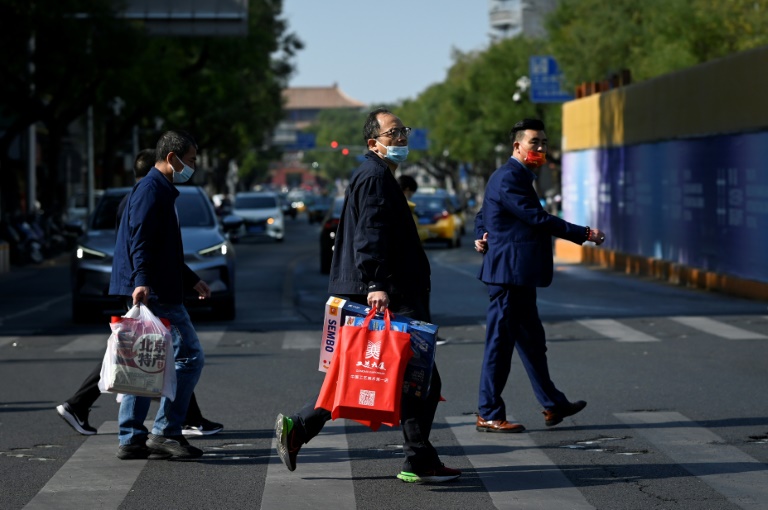
China’s Singles Day shopping bonanza entered its final stretch Friday, with all eyes on whether sales can top a record one trillion yuan ($140 billion) despite the country’s struggling economy.

Conceived by technology giant Alibaba, the informal holiday’s title riffs on a tongue-in-cheek celebration of singlehood inspired by the four ones — “11/11” — that denote its date of November 11.

It has grown to encompass much of China’s retail sector — including traditional brick-and-mortar stores, second-hand sales platforms and even rival shopping giant JD.com — with merchants offering varying levels of discounts starting in late October.

The combined gross value of products sold by Alibaba and JD.com this year “may surpass a trillion yuan,” Xiaofeng Wang, principal analyst at research firm Forrester, said in a note — up from the total of 965 billion yuan raked in at last year’s event.

Once a festival of frenzied consumption led by Alibaba’s effervescent founder Jack Ma, Singles Day has been more muted in recent years as Beijing cracks down on online platforms.

Last year’s holiday was virtually ignored by state-controlled news outlets with a host of other events competing for shoppers’ wallets.

Beijing resident Liu Yingxue said the Single’s Day atmosphere was “not as enthusiastic” as in previous years.

“Platforms like (Alibaba’s) Taobao and JD.com used to have more ads and promotions,” she told AFP. 

“And they don’t give so many discounts these days.”

– Economic strain –

The mood has been dampened further this year as Beijing persists with a zero-Covid strategy that has hammered business confidence and chipped away at consumer demand.

The holiday, conceived in 2009, has previously lured throngs of Chinese influencers alongside Western celebrities including Kim Kardashian and Taylor Swift, drawing heavy coverage in both domestic and international media.

This time around, a series of scandals and a campaign against tax evasion have lowered expectations of celebrity endorsements, with influential Chinese live-streamer Viya disappearing from social media late last year in the wake of a tax probe.

Alibaba said last week the event could “make a big difference” for retailers struggling with supply-chain disruptions and inflation this year, including a slew of foreign brands.

Businesses and consumers alike have been laid low by China’s stringent Covid prevention policies, which see officials wield snap lockdowns, mass testing and lengthy quarantines in response to a handful of cases.

Beijing resident Li Xiaofeng said the “state of the whole economy” was likely putting platforms and merchants under more pressure, “so they are offering fewer discounts”.

“I think it’s because of Covid,” said Lin Xiangru, another denizen of China’s capital. 

“People have less guaranteed income than before, so they don’t want to spend money on desired products at such a specific moment.”

China is the last major economy wedded to a strategy of extinguishing new outbreaks as they occur.

State media reported Thursday that top leaders had again vowed to stick “unswervingly” to the policy.

UK economy contracts in third quarter

Britain’s economy shrank in the third quarter, official data showed Friday, likely confirming it is already in a recession forecast to last some time.

Output contracted 0.2 percent in the July-September period, following a modest rise in the second quarter, the Office for National Statistics (ONS) said in a statement. 

The Bank of England last week said the UK economy was set to also contract in the current final quarter, meaning the economy was in a recession.

The BoE also warned that Britain’s economy could remain in recession until the middle of 2024.

Friday’s data comes ahead of a fresh budget announcement from the government of new Prime Minister Rishi Sunak on Thursday as he looks to bring much needed political and economic stability to the UK.

– ‘Tough road ahead’ –

Following Friday’s data, finance minister Jeremy Hunt said he was “under no illusion that there is a tough road ahead — one which will require extremely difficult decisions to restore confidence and economic stability”.

Preparing the country for tax hikes and spending cuts in next week’s budget, he added that the Conservative government needed to “balance the books and get debt falling”. 

“There is no other way,” he said, if Britain was to “achieve long-term sustainable growth”.

As well as recession, Britain is facing a cost-of-living crisis with UK inflation at a four-decade high above 10 percent.

The country faces a winter of strike action as workers in the public and private sectors demand pay increases to match inflation and shortfalls to wage rises seen in recent years.

“The sharp rise in energy and other consumer prices has contributed to a squeeze on household finances, which is expected to have pushed the UK economy into a recession from the third quarter of this year,” Yael Selfin, chief economist at KPMG UK, said following Friday’s data.

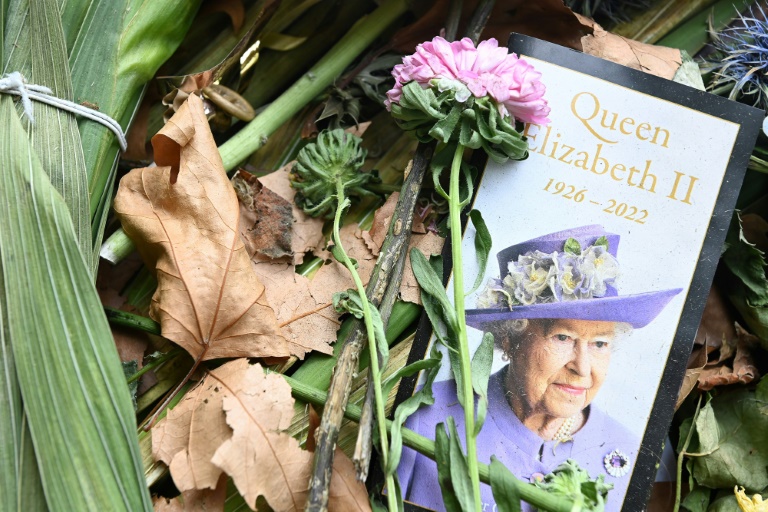
The third-quarter contraction was in part owing to a national public holiday to mark the funeral of Queen Elizabeth II, which resulted in the closure of a large number of businesses, the ONS said.

The funeral in September took place during the short-lived leadership of former prime minister Liz Truss.

Hitting out over her time in office, her former finance minister on Thursday said he had warned Truss to “slow down” on tax cuts that triggered economic turmoil and caused her downfall.

Kwasi Kwarteng, appointed chancellor of the exchequer after Truss succeeded Boris Johnson, made a series of unfunded tax cut announcements in late September.

Kwarteng’s budget panicked the markets, sent the pound to an all-time low against the dollar and triggered emergency buying of UK government bonds by the BoE.

Truss was forced to resign in mid-October after less than 50 days in office — becoming the shortest-serving prime minister in Britain’s history. 

burs-bcp/rox

SoftBank posts Q2 net profit after Alibaba share sales

Japan’s SoftBank Group on Friday posted a net profit in the second quarter, partly thanks to gains from its recent reduction of its stake in Chinese e-commerce giant Alibaba.

The investment behemoth has made huge bets to find and grow new tech ventures around the world — making its earnings vulnerable to fickle market forces, and leading to dizzying highs and lows in recent years.

China’s crackdown on its tech sector has also hit SoftBank hard, because the Japanese group has long been a major shareholder in Alibaba and others such as ride-hailing giant Didi Chuxing.

In August, SoftBank announced it would sell down some of its shares in Alibaba, reducing its stake in the Chinese tech giant to around 15 percent from 24 percent.

This helped boost SoftBank’s earnings in the second quarter for a net profit of 3.03 trillion yen ($21.4 billion).

“The company’s voting ownership in Alibaba fell below 20 percent, and Alibaba was therefore excluded from the associates of the company,” SoftBank Group noted in a statement.

Over the first half of this financial year, however, it suffered a net loss of 129 billion yen, brought down by its record net loss in the first quarter.

SoftBank’s net loss in April to June was partly due to a global tech share rout triggered by interest-rate hikes by the US Fed and other central banks to tackle inflation.

These market losses caused painful drops in SoftBank’s investments in unicorn ventures, such as US food delivery app DoorDash and South Korean e-commerce brand Coupang, a broad trend that continued in the second quarter, SoftBank said.

CEO Masayoshi Son is known for his unconventional and often sanguine presentations at earnings announcements to highlight his vision and philosophy behind his decisions, such as investing generously in risky ventures like the troubled WeWork.

But in a change of tack for the company, Son will let his deputies do most of the talking at a post-results press conference later on Friday.

In 2021-22, SoftBank logged a record full-year net loss — having recorded Japan’s biggest-ever annual net profit the previous financial year.

To illustrate the financial woes of the Covid-19 pandemic, Son once displayed a drawing of horses trotting toward a “Valley of Coronavirus”, some staying at its bottom while others grew wings and horns to soar to the heavens as unicorns.

And at his last earnings announcement in August, Son showed a painting of a grimacing samurai warlord who suffered a major battlefield setback as he discussed deep losses that plagued his company.

Paul Allen's art collection sells for record $1.6 billion

An auction of paintings and sculptures from the collection of Microsoft co-founder Paul Allen fetched a record $1.6 billion over two days, Christie’s auction house said on Thursday.

The successful auction in New York, where five works fetched more than $100 million each, was a sign that the art market continues to grow despite global economic uncertainty in the wake of the Ukraine war.

The record figure for an art auction had been set on Wednesday evening with more than $1.5 billion sold, Christie’s said in a statement. The second day of the sale on Thursday fetched $116 million.

“The Paul G. Allen collection attracted tens of thousands of visitors to Christie’s galleries around the world, and has now made history, setting the record for the most valuable auction sale ever,” said Guillaume Cerutti, CEO of Christie’s, in a statement.

In total, the collection included “155 masterpieces spanning 500 years of art history”, with all of the works on offer sold, the Christie’s statement said.

The works to breach the $100 million mark included: Georges Seurat’s “The Poseurs Together – Small Version” ($149.2 million), Paul Cezanne’s “La montagne Sainte-Victoire” ($137.7 million), Vincent Van Gogh’s “Orchard with Cypresses” ($117.1 million), Paul Gauguin’s “Maternity II” ($105.7 million) and Gustav Klimt’s “Birch Forest” ($104.5 million).

Christie’s, which is controlled by French billionaire Francois Pinault’s holding company Artemis, had earlier announced that all proceeds from the sales would be donated to charity.

American billionaire Allen co-founded Microsoft with Bill Gates in 1975, although the two later fell out. In 2009, he signed the “Giving Pledge”, a promise to donate the majority of one’s wealth to charity. He died in 2018.

The value of this week’s auction broke the previous record for an art collection, set by the Macklowe collection at $922 million at Sotheby’s earlier this year.

With the sales of the Macklowe and Allen collections, and the sale of a portrait of Marilyn Monroe — “Shot Sage Blue Marilyn” by Andy Warhol — in May for $195 million, 2022 is on course to be the most lucrative year ever for the art market.

Repeat hacks highlight Australia's cyber flaws

Inadequate privacy safeguards and the stockpiling of sensitive customer information have made Australia a lucrative target in the eyes of foreign hackers, cybersecurity experts told AFP following a series of major data breaches.

Medibank, Australia’s largest private health insurer, recently confirmed that hackers had accessed the data of 9.7 million current and former customers, including medical records related to drug abuse and pregnancy terminations. 

Telecom company Optus fell prey to a data breach of similar scale in late September, during which the personal details of up to 9.8 million people were accessed. 

Both incidents sit comfortably among the largest data breaches in Australian history. 

Australian National University cybersecurity expert Thomas Haines said many companies had been hoarding personal data that they should not have been hanging on to. 

“There was a famous line for a while: Data is the new oil,” he told AFP. 

“If data is the new oil, then we’re living the era of the weekly oil spill.” 

Haines contrasted Australia’s approach with that of the European Union, which in 2018 adopted sweeping privacy reforms limiting how organisations collect, use and store personal data.

“There have got to be incentives in place to stop companies hoarding data they don’t need, or to penalise those companies for big leaks. Europe has done this,” he said.

“At the moment the business incentives are basically along the lines of: Let’s just keep a whole bunch of data.”

Haines said Medibank appeared to be an exception, in that most of the sensitive information within its databases had been stored for good reason. 

– Hacking ‘for profit’ – 

Australia’s comparatively weak safeguards against identity theft meant it was also easier to exploit stolen personal information, Haines said. 

“All they need to know is your passport, your driver’s licence and some other things — and then I can start taking out loans in your name.”

Haines said European countries such as Norway had much more stringent requirements involving face-to-face contact.

Dennis Desmond, a former FBI agent and US Defense Intelligence Agency officer, said most hackers were searching for particular types of data. 

“For-profit hackers are going after healthcare data, they’re going after identity data and credentials to access systems,” he told AFP.

“There is a profit motivation there, otherwise they wouldn’t be risking jail and prosecution.”

The Medibank hackers this week started leaking stolen data to a dark web forum, after the company refused to pay a US$9.7 million (Aus$15 million) ransom.

The Optus breach led to the theft of customers’ names, birth dates, and passport numbers.

– Russia blamed –

Australian Federal Police Commissioner Reece Kershaw on Friday blamed the Medibank cyberattack on a team of hackers based in Russia.

“We believe those responsible for the breach are in Russia,” he told reporters.

“Our intelligence points to a  group of loosely affiliated cyber criminals who are likely responsible for past significant breaches in countries across the world.”

Medibank data leaked to the dark web so far has included hundreds of potentially-compromising medical records related to drug addiction, alcohol abuse and sexually-transmitted infections. 

Home Affairs Minister Clare O’Neil conceded on Friday the country’s cyber defences had not always been up to scratch. 

University of Sydney data researcher Jane Andrew said one major flaw was that Australian companies were not always obliged to report data breaches. 

“There are heaps of data breaches happening all the time that we don’t hear anything about,” she told AFP. 

“Companies have been gathering data because it’s seen to be valuable, without fully understanding the potential risks.” 

Close Bitnami banner
Bitnami