US Business

China eases Covid measures, cutting quarantine and scrapping flight bans

China announced the relaxation of some of its hardline Covid-19 restrictions on Friday, after authorities had vowed to stick to a zero-tolerance virus approach despite mounting economic damage.

The country is the last major economy welded to a strategy of stamping out virus flare-ups as they occur, through a combination of snap lockdowns, mass testing and lengthy quarantines.

Top leaders had pledged to stick “unswervingly” to the policy, which has forced business closures, roiled international supply chains and weighed heavily on growth.

But a notice from the country’s disease control agency on Friday said the Politburo Standing Committee — the apex of power in China — met Thursday to rubberstamp limited relaxations.

According to the notice, quarantines for inbound travellers will be cut from 10 days to eight, consisting of five days in a state isolation centre and three days at home.

Inbound arrivals will still be required to undergo six nucleic acid tests and will not be allowed to freely set foot outside during those eight days, the notice says.

It adds that travellers will only be required to show one negative Covid test within 48 hours of boarding flights to China, a reduction from the current two tests.

– Relaxing strict policies –

The new rules single out “important business personnel” and “sports groups” as examples of privileged groups permitted to skip quarantine as long as they remain in a virus-secure “closed loop” for the duration of their stays.

It added that a so-called “circuit breaker” mechanism on inbound flights would be abolished, bringing an end to a policy that saw the snap closures of flight routes if a certain proportion of passengers tested positive for the virus.

In further signs of easing, the notice did away with the requirement to identify and isolate “secondary close contacts” — those who may have come into contact with people who recently passed near infected people.

A domestic virus risk system has been reduced from three tiers to two, with areas to be labelled as either “high-risk” and subject to curbs, or “low-risk” with minimal restrictions.

People travelling from high- to low-risk areas will be required to undergo seven days of isolation at home, instead of staying in centralised facilities.

Places will be defined as “low-risk” if they record zero new infections for five successive days.

Workers in environments where exposure to the virus is higher — such as cabin crews, airport staff and quarantine hotel personnel — will undergo shortened quarantines, the notice said.

On Thursday, Chinese state media reported top leaders as saying they would not waver from the zero-Covid policy, echoing a vow last week to “unswervingly” stick to the strategy.

China's Singles Day shopping spree enters final stretch

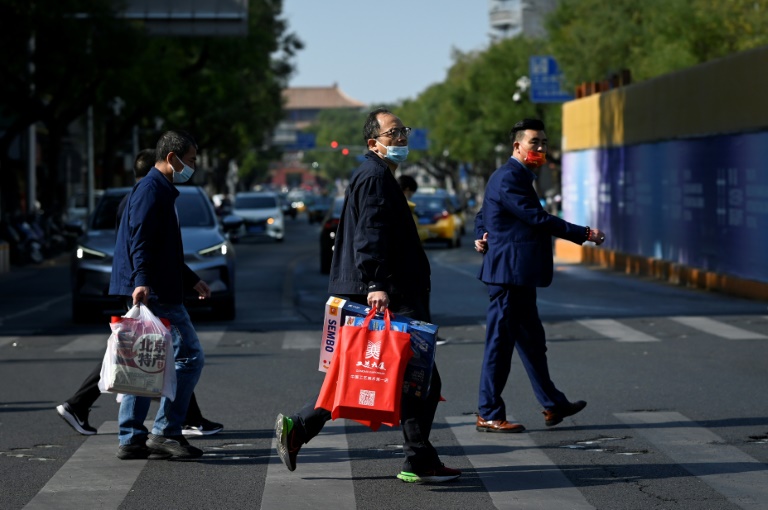
China’s Singles Day shopping bonanza entered its final stretch Friday, with all eyes on whether sales can top a record one trillion yuan ($140 billion) despite the country’s struggling economy.

Conceived by technology giant Alibaba, the informal holiday’s title riffs on a tongue-in-cheek celebration of singlehood inspired by the four ones — “11/11” — that denote its date of November 11.

It has grown to encompass much of China’s retail sector — including traditional brick-and-mortar stores, second-hand sales platforms and even rival shopping giant JD.com — with merchants offering varying levels of discounts starting in late October.

The combined gross value of products sold by Alibaba and JD.com this year “may surpass a trillion yuan,” Xiaofeng Wang, principal analyst at research firm Forrester, said in a note — up from the total of 965 billion yuan raked in at last year’s event.

Once a festival of frenzied consumption led by Alibaba’s effervescent founder Jack Ma, Singles Day has been more muted in recent years as Beijing cracks down on online platforms.

Last year’s holiday was virtually ignored by state-controlled news outlets with a host of other events competing for shoppers’ wallets.

Beijing resident Liu Yingxue said the Single’s Day atmosphere was “not as enthusiastic” as in previous years.

“Platforms like (Alibaba’s) Taobao and JD.com used to have more ads and promotions,” she told AFP. 

“And they don’t give so many discounts these days.”

– Economic strain –

The mood has been dampened further this year as Beijing persists with a zero-Covid strategy that has hammered business confidence and chipped away at consumer demand.

The holiday, conceived in 2009, has previously lured throngs of Chinese influencers alongside Western celebrities including Kim Kardashian and Taylor Swift, drawing heavy coverage in both domestic and international media.

This time around, a series of scandals and a campaign against tax evasion have lowered expectations of celebrity endorsements, with influential Chinese live-streamer Viya disappearing from social media late last year in the wake of a tax probe.

Alibaba said last week the event could “make a big difference” for retailers struggling with supply-chain disruptions and inflation this year, including a slew of foreign brands.

Businesses and consumers alike have been laid low by China’s stringent Covid prevention policies, which see officials wield snap lockdowns, mass testing and lengthy quarantines in response to a handful of cases.

Beijing resident Li Xiaofeng said the “state of the whole economy” was likely putting platforms and merchants under more pressure, “so they are offering fewer discounts”.

“I think it’s because of Covid,” said Lin Xiangru, another denizen of China’s capital. 

“People have less guaranteed income than before, so they don’t want to spend money on desired products at such a specific moment.”

China is the last major economy wedded to a strategy of extinguishing new outbreaks as they occur.

State media reported Thursday that top leaders had again vowed to stick “unswervingly” to the policy.

Australia blames Russian hackers for medical data theft

Russian hackers carried out a cyberattack on a major Australian healthcare company that breached the data of 9.7 million people, including the country’s prime minister, police said Friday.

The hackers started leaking the data this week after Medibank, the country’s largest health insurer, refused to pay a $9.7 million (Aus$15 million) ransom.

Australian Federal Police commissioner Reece Kershaw blamed the attack on Russia-based “cyber criminals”. 

“We believe those responsible for the breach are in Russia,” he told reporters.

“Our intelligence points to a group of loosely affiliated cyber criminals who are likely responsible for past significant breaches across the world.”

The hackers have been drip-feeding the stolen data to a dark web forum.

The first leaks appeared to have been selected to cause maximum harm: targeting those who received treatment related to drug abuse, sexually transmitted infections, or pregnancy terminations.

Kershaw said the hackers also appeared to be supported by people living outside Russia.

“These cyber criminals are operating like a business with affiliates and associates who are supporting the business.

“We also believe that some affiliates may be in other countries.”

He added that Australian police would be working with Interpol and seeking the cooperation of their counterparts in Russia.

“We’ll be holding talks with Russian law enforcement about these individuals,” he said.

“Russia benefits from the intelligence sharing and data shared through Interpol and with that comes responsibilities and accountability.”

– Retaliation threat –

Australia has repeatedly condemned Russia’s invasion of Ukraine and has provided Kyiv with hundreds of millions of dollars in aid and military equipment.

Australia’s foreign intelligence agency in April warned that backing Ukraine could open the country up to reprisals from Russian hackers. 

“Russian-aligned cybercrime groups have threatened to conduct cyber operations in retaliation for perceived cyber offensives against the Russian government,” the Australian Signals Directorate said in an advisory note. 

“Some groups have also threatened to conduct cyber operations against countries and organisations providing materiel support to Ukraine.”

Kershaw said police knew the identities of the hackers but he would not be naming them.

Cybersecurity analysts have suggested they could be linked to Russian hacker group REvil. 

REvil — an amalgam of ransomware and evil — was reportedly dismantled by Russian authorities earlier this year, after extracting an $11 million ransom from JBS Foods, a major food conglomerate. 

– ‘Rolled gold mongrels’ –

Australian National University cybersecurity expert Thomas Haines said tracking the hackers down was the easiest part for police.

“It’s unusual for hackers to cover their tracks so well that you don’t know where they came from,” he told AFP. 

“But there are certain areas of the world where the ability to apply any pressure is effectively zero.”

Kershaw said Australian police were taking “covert measures” to bring the hackers to justice. 

“To the criminals, you know we know who you are,” he said. 

“The Australian Federal Police has some significant runs on the scoreboard when it comes to bringing overseas offenders back to Australia to face the justice system.”

Education Minister Jason Clare on Friday called the hackers “rolled gold mongrels”, while Home Affairs Minister Clare O’Neil has dubbed them “scummy criminals”.

O’Neil on Thursday said the “smartest and toughest” people in Australia were hunting down the hackers.

In a taunting reply posted to the dark web early Friday morning, the hackers said: “We always keep our word.” 

“We should post this data, because nobody will believe us in the future.”

Piece of Challenger space shuttle found off Florida coast

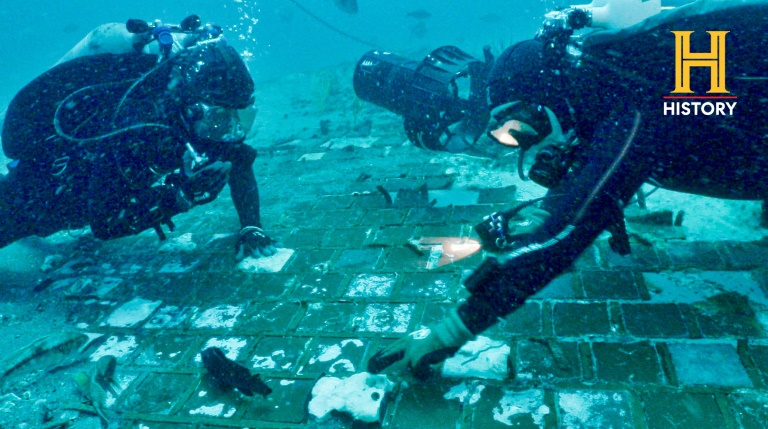
Divers searching for a World War II-era aircraft near the Bermuda Triangle have found a piece of an entirely different sort of vessel: part of the US Challenger space shuttle that exploded soon after takeoff in 1986.

The shuttle burst apart just dozens of seconds after launching from Florida, killing seven crew members, including the teacher Christa McAuliffe who had won a national screening.

The Challenger segment, preserved remarkably well at the bottom of the Atlantic, is one of the largest pieces ever discovered from the space disaster, NASA confirmed Thursday.

Images from the discovery, which was made in spring 2022, show two divers surrounded by fish, touching some of the shuttle’s sand-covered tiles — small squares that covered the entire underside of the ship to enable it to withstand extreme heat during its return to the atmosphere.

One of the two divers, Mike Barnette, told AFP that he experienced a real “roller coaster ride of emotions” when he realized what he was touching.

“When we found it, (there were) a lot of mixed emotions,” said the marine biologist, who explores ship wrecks as a hobby. 

“I’m used to diving on shipwrecks that are decades to centuries old, and not a piece of the space program. This is quite unique,” he said.

“That turned quickly to realizing ‘Yeah, this is an episode that I lived through. When this happened, I remember exactly where I was, watching this live on TV,'” he said.

After the discovery, he showed the images to an astronaut friend who confirmed it was the shuttle. A few months later, the US space agency  officially confirmed it.

“They were stunned and staggered by how large of a piece it was,” Barnette said.

– Partly buried –

The visible part of the shuttle is about 4.5 by 4.5 meters. But the piece extends under the sand and it is still unknown its total size.

One thing is certain, however: “I can certainly say with confidence, it’s one of the largest we’ve ever found,” Mike Ciannilli, a NASA employee for more than 25 years, said of the segment.

It’s definitely Challenger’s underside, Ciannilli told AFP, but it’s hard to know exactly which part of the ship.

Analysis of the piece, he said, will not shed any new light on the accident itself. The cause of the tragedy is well established — severe cold caused damage to crucial rubber seals. Observing how the materials have aged could still be interesting, however.

Above all, he emphasized, the discovery could help with “reigniting the lessons learned from that particular mission.”

Following the January 28, 1986 accident, extensive search operations were carried out to find pieces of the ship. Ten years later, two new ones emerged on a beach after a storm. These were the last found to date.

One piece is on display at a public memorial at the Kennedy Space Center in Florida and others are kept nearby.

– ‘Honor and remembrance’ –

Barnette and his diving partner were looking for a World War II plane for a documentary about disappearances in the Bermuda Triangle when they discovered the Challenger piece.

The first episode, which will air on the History Channel on November 22, in the end will have a space ship rather than a boat or plane for its subject.

“That’s what I love about this endeavor, you go out trying to find one thing and you stumble upon a totally different mystery,” Barnette said.

The site was chosen thanks to information from fishermen, who guessed there might be a wreck at the spot because it seemed to attract a lot of fish.

The spot in question is west of the Bermuda Triangle, not within it, but the exact location is not being revealed so as not to attract curious onlookers. Nor would the divers reveal the depth of the seafloor at the wreckage site.

According to Barnette, it would be “very easy” for NASA to recover the piece from the water, but such a move might only end up “reopening wounds.”

Discussions are ongoing, Ciannilli added, but “whatever we do, our first and foremost objective is to make sure we bring honor and remembrance for the legacy of the crew, and we honor the families.”

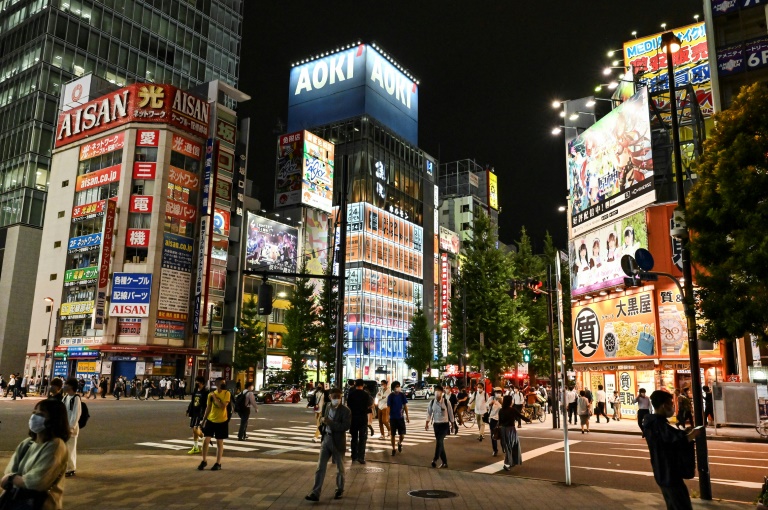
Japan govt backs major firms in next-gen chip project

The Japanese government will pour half a billion dollars into a new project to develop and make next-generation microchips, chief cabinet secretary Hirokazu Matsuno said Friday.

Eight major companies including Sony, SoftBank, Toyota and telecoms giant NTT have joined forces for the venture, Japanese media reports said.

The new firm, named Rapidus, will develop and mass produce next-generation semiconductors by 2027, according to major media outlets including national broadcaster NHK and the Mainichi Shimbun.

The pandemic has fuelled a global shortage of memory chips, with governments scrambling to secure supplies as carmakers and tech companies have been forced to make production cuts.

Each company has invested around one billion yen ($7 million), with MUFG Bank investing 300 million yen, according to the industry ministry. 

The investor companies are expected to officially announce the project later on Friday. 

The ministry will grant 70 billion yen to Rapidus to lead a research and development project for next-generation semiconductors, Matsuno said without elaborating.

“Semiconductors are a key technology that supports digitalisation and decarbonisation,” Matsuno said at a regular briefing.

“We hope these steps will help improve the competitiveness of our country’s semiconductor industry.”

The chip shortage has prompted calls for the government and businesses to secure semiconductor supplies for Japan’s economic security, as geopolitics become increasingly volatile — especially concerning Taiwan, which has a huge chip-producing capacity.

The United States recently introduced new measures to limit China’s access to high-end semiconductors with military uses, a move that has wiped billions from chip companies’ valuations worldwide.

The German economy ministry also has recommended that the sale of a chip factory to a Chinese-owned firm should be blocked as it poses a security threat, government sources said Tuesday.

Last year, Taiwanese chip giant TSMC and Sony said they would tie up on a new $7 billion plant in Japan.

ASEAN leaders struggle for answers to Myanmar crisis

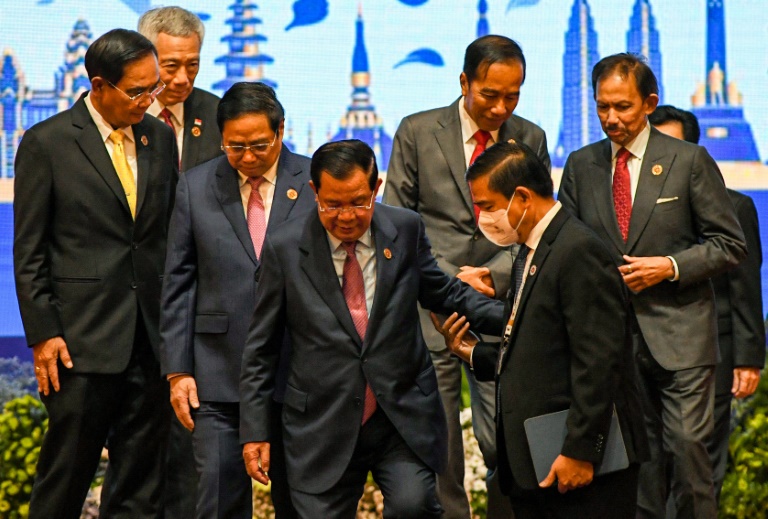
The escalating crisis in Myanmar was set to dominate summit talks Friday between Southeast Asian leaders struggling to find a way to calm the bloodshed in the junta-ruled country.

Leaders from the Association of Southeast Asian Nations (ASEAN) regional bloc will discuss ways to implement a peace plan agreed with Myanmar last year which the junta has so far ignored.

Myanmar has spiralled into bloody conflict since the military ousted Aung San Suu Kyi’s civilian government in February last year, with thousands killed in clashes since.

There is growing frustration among the other nine ASEAN countries at the generals’ foot-dragging on the so-called “five-point consensus” but so far no concrete plan to enforce it. 

President Ferdinand Marcos Jr of the Philippines called for “patience” in resolving the crisis at talks with Cambodian premier Hun Sen, the summit host.

ASEAN has blocked junta chief Min Aung Hlaing from attending the gathering in Phnom Penh, which US President Joe Biden will join on Saturday.

Biden will then go on to hold a high-stakes meeting with his Chinese counterpart Xi Jinping on the sidelines of the G20 summit in Indonesia on Monday.

China, ASEAN’s biggest trading partner, has historically had good ties with the Myanmar junta, though it has voiced some unease at the ongoing chaos in the country.

Chinese Premier Li Keqiang will hold talks with ASEAN leaders on Friday afternoon, before joining Biden and other regional leaders for an East Asia Summit in Phnom Penh on Sunday.

– US pressure –

Western powers have heaped sanctions on the junta and the United States has urged ASEAN to take a “forceful” stance to squeeze the junta to reduce the violence, which escalated in recent weeks with deadly military air strikes on civilian targets including a school and concert.

Daniel Kritenbrink, the top US diplomat for East Asia, said Myanmar would be a top subject when Biden meets ASEAN leaders on Saturday.

Within the bloc, Indonesia, Malaysia and Singapore have led a push for tougher action.

Indonesian President Joko Widodo met Singapore Prime Minister Lee Hsien Loong on the sidelines of ASEAN late Thursday to discuss their concerns about the situation in Myanmar.

“Both leaders expressed disappointment with the absence of commitment of the Myanmar military junta in implementing the five-point consensus,” Indonesian Foreign Minister Retno Marsudi said in a statement.

Earlier this month Singapore’s Foreign Minister Vivian Balakrishnan warned that the Myanmar military had “a very high tolerance for pain, very high tolerance for isolation” and the crisis could take decades to resolve.

– Junta defiance –

ASEAN foreign ministers held emergency talks on Myanmar last week and said afterwards they were “even more determined” to find a solution.

Myanmar state media have slammed ASEAN’s involvement, accusing the bloc of being a “lapdog for the US” while the junta warned against imposing a timeline on the peace process, saying it could lead to “negative implications”.

An early draft of a leaders’ statement seen by AFP tasks ASEAN officials with drawing up an “implementation plan”, but gives no details of what this would involve.

Ahead of the meeting, a senior ASEAN diplomat told AFP that expelling Myanmar from the bloc was not under consideration.

But the diplomat and the draft statement both suggest ASEAN could take up official contact with Myanmar’s National Unity Government (NUG).

The NUG is a self-declared parallel body dominated by former lawmakers from Suu Kyi’s party which considers itself to be Myanmar’s legitimate government.

The Myanmar junta regards the NUG as “terrorists”, and engaging with the group would be a significant step for ASEAN.

On the eve of the summit, rights campaign group Amnesty International called on the leaders to agree a complete embargo on the transfer of arms and aviation fuel to Myanmar.

Asian shares surge as investors cheer slower US inflation

Asian markets surged on Friday after a bumper session on Wall Street as lower US inflation dimmed expectations of more aggressive Federal Reserve rate hikes.

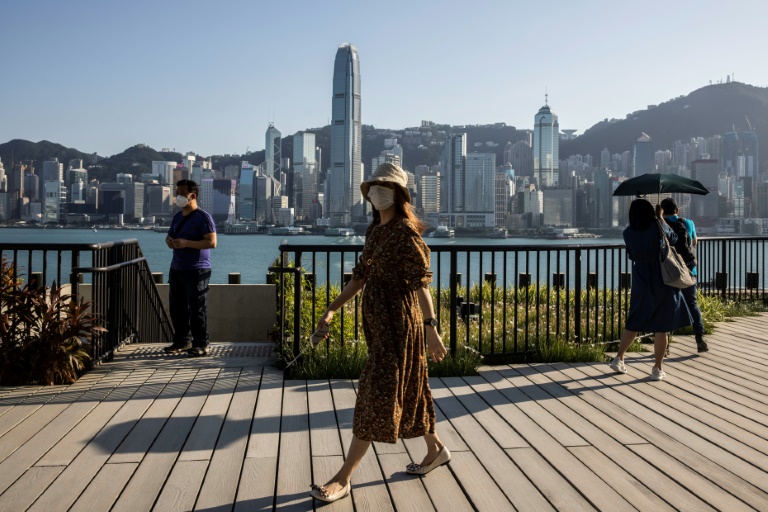
Hong Kong stocks rocketed six percent at the open while Tokyo’s key Nikkei index jumped more than three percent, although both had retreated slightly by mid-morning.

The gains extended global rallies after the US consumer price index (CPI) showed that the annual pace of inflation was a lower-than-expected 7.7 percent in October, down from 8.2 percent in September.

As US residents reel from sky-high costs, the central bank has moved forcefully to lower demand by raising the benchmark lending rate six times this year.

The latest inflation data should be welcome news to Fed policymakers, because prices are “finally showing some response” to the steep rate hikes, said Rubeela Farooqi of High Frequency Economics.

“Inflation has finally started to drop like a rock in the US and this is the best news that anyone can expect,” added AvaTrade analyst Naeem Aslam.

The dollar slumped against rival currencies following the data release, and shares rallied as investors cheered the prospect of less hawkish moves by the central bank.

The Dow was up 3.7 at the close and the tech-heavy Nasdaq index soared 7.4 percent, while European markets also ended higher.

Most Asian markets matched the upbeat mood.

Taipei jumped 3.5 percent, Seoul was up 2.8 percent and Sydney climbed 2.6 percent.

Singapore rose 1.4 percent, Shanghai was up 1.1 percent and Wellington put on 2.0 percent, but Bangkok lost 0.2 percent.

“As expected, buying in Asia tech is standing out this morning,” Stephen Innes of SPI Asset Management said.

“But with investors still looking over their shoulders at the crypto schism and rising Covid cases in China, that tide that was lifting all boats is starting to recede in places,” he cautioned.

Trade may also be “dominated by profit-taking and position squaring” after the rallies overnight and ahead of a US market holiday on Friday.

The crypto world has meanwhile been rocked by a surprise decision from Binance, the world’s biggest cryptocurrency platform, to scrap a possible acquisition of rival FTX.com — plunging bitcoin to a two-year low.

– Key figures around 0230 GMT –

Tokyo – Nikkei 225: UP 2.7 percent at 28,200.75 (break)

Hong Kong – Hang Seng Index: UP 5.2 percent at 16,925.56

Shanghai – Composite: UP 1.1 percent at 3,071.43

Pound/dollar: UP at $1.1678 from $1.1642 on Thursday

Euro/dollar: DOWN at $1.0188 from $1.0131

Dollar/yen: DOWN at 142.13 yen from 143.15 yen

Euro/pound: UP at 87.26 pence from 87.20 pence

West Texas Intermediate: UP 0.3 percent at $86.75 per barrel

Brent North Sea crude: UP 0.3 percent at $93.95 per barrel

New York – Dow: UP 3.7 percent at 33,715.37 points (close)

London – FTSE 100: UP 1.1 percent at 7,375.34 (close)

Twitter chaos deepens as key executives quit

Elon Musk’s ownership of Twitter descended ever deeper into chaos on Thursday as key security executives resigned from the platform, drawing a sharp warning from US regulators.

The walkouts came a day after the turbulent launch of new features introduced by Tesla and SpaceX owner Musk following his $44 billion buyout of the influential messaging app.

Musk on Thursday warned employees that the site was burning dangerously through cash, raising the specter of bankruptcy if the situation was not turned around.

“I’ve made the hard decision to leave Twitter,” tweeted chief security officer Lea Kissner, who reportedly stepped down with other key privacy or security executives.

In the most extraordinary exit, US media reported that Yoel Roth, the site’s head of trust and safety stepped down just a day after staunchly defending Musk’s content moderation policy to advertisers.

The convulsions followed the unveiling of the site’s long-awaited Twitter Blue subscription service, which allows users to pay $7.99 per month for a coveted blue tick, as well as a separate gray “official” badge for some high-profile accounts.

But the release descended into tumult on Wednesday when Musk scrapped the new gray label almost immediately, overshadowing the launch of the pay service, which is currently only available on the mobile app on iPhones and in the United States.

The launch also saw the emergence of a flurry of fake accounts as users used the opportunity to impersonate celebrities and politicians such as NBA star LeBron James or former British prime minister Tony Blair.

Early media reports also said Robin Wheeler, who held a key role linking Twitter with advertisers and was considered a key Musk ally inside the company, was leaving but late Thursday she tweeted: “I’m still here.”

– ‘Deep concern’ –

The chaos drew a rare warning from the Federal Trade Commission, the US authority that oversees consumer safety which had put Twitter under watch for past security and privacy breaches.

“We are tracking recent developments at Twitter with deep concern,” a spokesperson for the FTC said in a statement.

“No CEO or company is above the law, and companies must follow our consent decrees,” the spokesperson added, referring to past commitments by Twitter to obey US privacy rules.

Violating FTC decisions could cost Twitter millions of dollars in fines.

The 51-year-old entrepreneur fired half of the 7,500 employees of the California company a week ago, 10 days after buying the site and becoming its sole owner.

For the first time since the layoffs, Musk on Thursday addressed his remaining employees and urged them to help the site reach one billion users, according to employee text messages seen by AFP.

Musk also warned that the company was bleeding cash and expressed fear about the effects of the poor economy on his newly bought business.

“You may have noticed I sold a bunch of Tesla stock. The reason I did that is to save Twitter,” he is reported to have said.

Wedbush analyst Dan Ives meanwhile warned that the Twitter episode could have serious repercussions for electric car manufacturer Tesla.

“Brand destruction is our biggest worry with this Twitter circus show. It’s that simple and I can’t ignore it for Tesla stock,” Ives wrote on the site.

Twitter is also crippled by the decision of advertisers to stay away from the platform, concerned about Musk’s plans.

The tycoon announced he was ending work-from-home policies at Twitter, which had been a widespread practice at the San Francisco-based company.

“If you don’t show up at the office, resignation accepted,” he told employees.

Twitter chaos deepens as key executives quit

Elon Musk’s ownership of Twitter descended ever deeper into chaos on Thursday as key security executives resigned from the platform, drawing a sharp warning from US regulators.

The walkouts came a day after the turbulent launch of new features introduced by Tesla and SpaceX owner Musk following his $44 billion buyout of the influential messaging app.

Musk on Thursday warned employees that the site was burning dangerously through cash, raising the specter of bankruptcy if the situation was not turned around.

“I’ve made the hard decision to leave Twitter,” tweeted chief security officer Lea Kissner, who reportedly stepped down with other key privacy or security executives.

In the most extraordinary exit, US media reported that Yoel Roth, the site’s head of trust and safety stepped down just a day after staunchly defending Musk’s content moderation policy to advertisers.

The convulsions followed the unveiling of the site’s long-awaited Twitter Blue subscription service, which allows users to pay $7.99 per month for a coveted blue tick, as well as a separate gray “official” badge for some high-profile accounts.

But the release descended into tumult on Wednesday when Musk scrapped the new gray label almost immediately, overshadowing the launch of the pay service, which is currently only available on the mobile app on iPhones and in the United States.

The launch also saw the emergence of a flurry of fake accounts as users used the opportunity to impersonate celebrities and politicians such as NBA star LeBron James or former British prime minister Tony Blair.

Early media reports also said Robin Wheeler, who held a key role linking Twitter with advertisers and was considered a key Musk ally inside the company, was leaving but late Thursday she tweeted: “I’m still here.”

– ‘Deep concern’ –

The chaos drew a rare warning from the Federal Trade Commission, the US authority that oversees consumer safety which had put Twitter under watch for past security and privacy breaches.

“We are tracking recent developments at Twitter with deep concern,” a spokesperson for the FTC said in a statement.

“No CEO or company is above the law, and companies must follow our consent decrees,” the spokesperson added, referring to past commitments by Twitter to obey US privacy rules.

Violating FTC decisions could cost Twitter millions of dollars in fines.

The 51-year-old entrepreneur fired half of the 7,500 employees of the California company a week ago, 10 days after buying the site and becoming its sole owner.

For the first time since the layoffs, Musk on Thursday addressed his remaining employees and urged them to help the site reach one billion users, according to employee text messages seen by AFP.

Musk also warned that the company was bleeding cash and expressed fear about the effects of the poor economy on his newly bought business.

“You may have noticed I sold a bunch of Tesla stock. The reason I did that is to save Twitter,” he is reported to have said.

Wedbush analyst Dan Ives meanwhile warned that the Twitter episode could have serious repercussions for electric car manufacturer Tesla.

“Brand destruction is our biggest worry with this Twitter circus show. It’s that simple and I can’t ignore it for Tesla stock,” Ives wrote on the site.

Twitter is also crippled by the decision of advertisers to stay away from the platform, concerned about Musk’s plans.

The tycoon announced he was ending work-from-home policies at Twitter, which had been a widespread practice at the San Francisco-based company.

“If you don’t show up at the office, resignation accepted,” he told employees.

Biden faces high expectations at UN climate talks

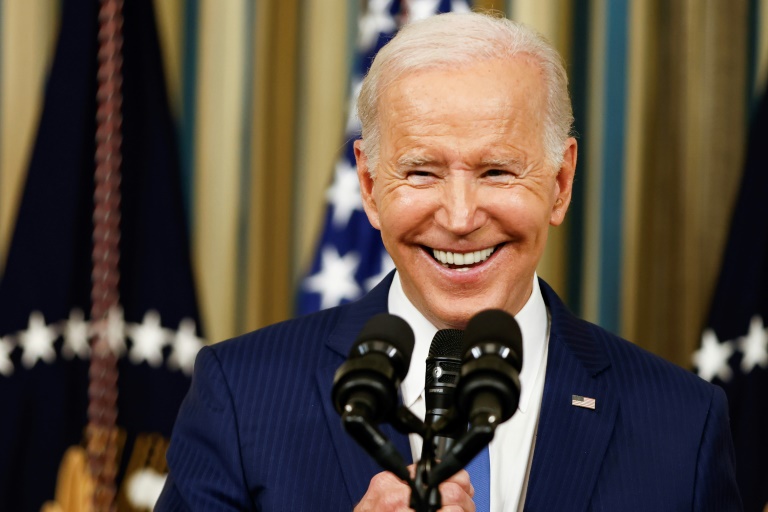
US President Joe Biden flies into UN climate talks in Egypt on Friday armed with major domestic achievements against global warming but under pressure to do more for countries reeling from natural disasters.

Biden will only spend a few hours at COP27 in the Red Sea resort of Sharm el-Sheikh, three days after US midterm elections that have raised questions about what the result could mean for US climate policy.

The US leader’s climate agenda was given a major boost this year when Congress passed a landmark spending bill, the Inflation Reduction Act, which includes $369 billion for clean energy and climate initiatives.

But at COP27, talk has been dominated by the need for wealthy nations to stop stalling on helping developing countries green their economies and prepare for future impacts — as well as calls to provide financial help for the damage already being caused by climate-induced catastrophes.

“The world needs the United States to be a climate leader in our fight for climate justice,” prominent Ugandan climate activist Vanessa Nakate told AFP.

“The message is for President Biden to stand with the people on the planet and the coming generations,” said the 25-year-old Goodwill Ambassador for UNICEF.

Biden is attending COP27 three days after 100 other world leaders addressed the summit.

A senior US official said Biden was heading to Egypt “with historic momentum” on the back of the spending bill and his goal to cut greenhouse gas emissions by up to 52 percent by 2030 from 2005 levels.

So far at the Egypt talks, US climate envoy John Kerry has presented a public-private partnership aimed at supporting the transition to renewable energy in developing nations and based on a carbon credit system.

The plan has been panned by activists wary of firms using these to “offset” their carbon emissions.

– Climate-sceptic Republicans –

Biden also may have a chance to revive cooperation with China when he meets President Xi Jinping during G20 talks next week, with another US official saying he would seek to discuss how to “advance our work together on climate change”.

Beijing cut off climate talks with Washington after US House Speaker Nancy Pelosi visited Taiwan in August.

Cooperation between the world’s two biggest polluters has been crucial to global efforts to limit global warming to 1.5 degrees Celsius.

But with Republicans apparently poised to retake the House of Representatives, part of Biden’s climate agenda could take a hit. Democrats have a chance to retain the Senate.

Biden pledged to contribute $11.4 billion to a $100 billion per year scheme through which rich countries will help developing ones transition to renewable energies and build resilience against climate change.

But Democrats would have to rush it through Congress before climate-sceptic Republicans take office in January.

“We’re going to be pressing for passage of the appropriations bills,” US lawmaker Kathy Castor, who chairs a special climate crisis committee in the House, told AFP.

“Hopefully Republicans in the Congress will not block it,” she said.

– ‘Loss and damage’ –

The United States has also for years resisted attempts to establish a “loss and damage” fund in which rich polluters would compensate developing nations for the destruction from climate-related disasters.

Emerging countries successfully put the issue on the official COP27 agenda and fraught negotiations are likely before the talks end on November 18.

Biden will also use the trip to meet with Egyptian President Abdel Fattah al-Sisi and discuss the human rights situation in the country, where the case of jailed dissident Alaa Abdel Fattah was raised by other leaders earlier this week.

Ahead of his trip, the White House expressed “deep concern” for the jailed British-Egyptian activist, who is on a hunger strike.

After COP27, Biden will head to an ASEAN regional summit in Cambodia at the weekend before travelling to Indonesia for G20 talks.

Close Bitnami banner
Bitnami