US Business

Pay strike set to paralyse Paris metro

Paris commuters were bracing for bedlam Thursday as metro workers called a major one-day pay strike, the latest industrial action across France seeking relief from inflation.

The walkout comes amid wider European protests over the soaring cost of living, after transport workers in Belgium and Greece also refused to work on Wednesday, and with Underground employees in the British capital also set to strike on Thursday.

The French capital’s public transport operator RATP said nearly every line would be shut down or operating with only limited rush-hour service, and urged people to work from home or postpone trips if possible.

Only lines 1 and 14, which are fully automated with no drivers, will operate normally but risk being jam-packed.

The two main suburban rail lines called RER A and B, which connect central Paris with Disneyland Paris and the Charles de Gaulle and Orly airports, will also see severe disruptions, the operator warned.

Frequency of bus services will be cut by a third, while tram operations are expected to be nearly normal.

Unions have staged strikes across several sectors in recent weeks seeking pay hikes or increased hiring as spiralling energy costs feed into widespread inflation.

Union leaders are also hoping to step up pressure on President Emmanuel Macron as he prepares to revive a controversial pensions overhaul that would push back the official retirement age from 62 to 64 or 65.

But the Paris transport strike did not spill over into other sectors, with only the hard-line CGT union calling for general work stoppages that could match turnout of October 18, when authorities say 107,000 demonstrators turned out nationwide.

National high-speed train services will run normally, rail operator SNCF said, and only light disruptions are expected on regional lines.

Unions representing the RATP’s nearly 70,000 employees say they are feeling the pinch of soaring prices, but are also overstretched because of insufficient hiring, resulting in increased sick leave.

That has led to increased service delays or lower frequency on busy metro lines in recent months, causing headaches for the system’s roughly 12 million daily users.

The government is set to appoint former prime minister Jean Castex as RATP chief, with parliamentary panels giving their green light after questioning him this week.

“The most urgent issue… is the continuity and quality of service,” Castex told lawmakers. “The heart of our job is to meet the expectations of our users.”

Paul Allen's art collection tops $1 bn at Christie's

Paintings and sculptures from the collection of late Microsoft co-founder Paul Allen were auctioned off for a historic $1 billion Wednesday, Christie’s auction house said, with records set for works by Van Gogh, Cezanne, Gauguin, Seurat and Klimt.

At the end of the night Wednesday, five paintings entered the exclusive club of works of art sold for more than $100 million at auction, the New York auction house said.

The most expensive piece of art of the evening, Georges Seurat’s 1888 work “Les Poseuses, Ensemble (small version)”, a renowned work of pointillism, fetched $149.24 million, including fees, Christie’s said.

The auction house had announced that all the proceeds would be donated to charity.

While only 60 of 150 lots were sold on Wednesday, with the rest to be auctioned off Thursday, the value of the collection has already surpassed the previous record for the Macklowe collection, named after a wealthy New York couple, which fetched $922 million at competitor Sotheby’s earlier this spring.

The two-day sale in New York came as experts say the super wealthy are viewing art as a safe investment this year amid a tumultuous global economy and Russia’s war in Ukraine.

Allen made his fortune with the establishment of the PC operating system with his better-known Microsoft co-founder Bill Gates in 1975.

He amassed a huge art collection which he used to lend to museums before his death in 2018 at the age of 65.

Allen left Microsoft in 1983, due to health problems and a deteriorating relationship with Gates, who remained in charge of the company until 2000.

Despite their strained friendship, Allen signed Gates’s “Giving Pledge” campaign and all proceeds from the auction are to be donated to charitable causes.

At auction Wednesday, French painter Paul Cezanne’s “La Montagne Sainte-Victoire” fetched $137.8 million, almost double the artist’s auction record.

A work by Vincent Van Gogh, “Orchard with Cypresses,” broke the Dutch artist’s previous record, bringing in $117.2 million.

A painting from Paul Gauguin’s Tahitian period, “Maternity II,” brought $105.7 million.

Austrian painter Gustav Klimt’s “Birch Forest” brought in $104.6 million.

Another 95 works from Allen’s collection go on sale Thursday.

Asian stocks down after US midterms turn global markets red

Asian stocks started down on Thursday after inconclusive US midterm election results and a turbulent cryptocurrency market left Wall Street and European markets in a sea of red.

The uncertainty, especially about how the midterm results would impact inflation, transferred to Asia overnight.

Tokyo, Hong Kong, Shanghai, Seoul, Jakarta and Taipei were all trading lower.

“A purple dilemma might be the best way to describe the red-blue tangle that emerged Wednesday. It’ll be gridlock, that’s for sure,” Stephen Innes of SPI Asset Management said of the US midterms.

“Perhaps not the friendliest kind for market participants, many of whom were hoping for a more resounding rebuke of Democrats given inflation realities.” 

All eyes are expected to turn to US inflation data, due later Thursday, to gauge the speed of future rate hikes by the Federal Reserve. 

“US growth looks still too strong to bring inflation down,” Tapas Strickland of National Australia Bank said in a note.

“The ongoing resilience in the (consumer prices) data and stickiness in inflation continue to point to the Fed hiking rates closer to 5.0 percent or higher.” 

Fed officials have raised their policy rate to a range of between 3.75 to 4.0 percent.

– ‘Crypto tumult’ –

Markets in Asia were already grappling with the impact of strict zero-Covid measures in China, with supply chains and activity slowed by harsh lockdowns and testing policies. 

“China’s domestic demand is weak and their key trading partners are entering recession territory,” said Edward Moya from Oanda. 

“China is also continuing to struggle with COVID as Guangzhou has to return to mass testing.” 

The crypto world was also rocked by a surprise decision from Binance, the world’s biggest cryptocurrency platform, to scrap a possible acquisition of rival FTX.com a day after disclosing it had signed a non-binding letter of intent to buy it.

The near-collapse of FTX has plunged bitcoin to a two-year low.

“You can’t deny the growing correlation between bitcoin and risk assets,” said Innes.

“The FTX news is having an outsized effect on asset prices,” he said, adding that “all ships were sinking on the crypto tumult.”

– Key figures around 0230 GMT –

Tokyo – Nikkei 225: DOWN 1.16 percent at 27,395.71 

Hong Kong – Hang Seng Index: DOWN 2.49 percent at 15,950.47

Shanghai – Composite: DOWN 0.39 percent at 3,036.37

Pound/dollar: UP at $1.1394 from $1.1352  

Euro/dollar: FLAT at $1.0017 

Dollar/yen: DOWN at 146.19 yen from 146.37 yen 

Euro/pound: DOWN at 87.89 pence from 88.19 pence 

West Texas Intermediate: DOWN 0.22 percent at $85.64 per barrel

Brent North Sea crude: DOWN 0.19 percent at $92.47 per barrel

New York – Dow: DOWN 2.0 percent at 32,513.94 (close)

London – FTSE 100: DOWN 0.1 percent at 7,296.25 (close)

Abortion, wages, and weed: the issues Americans voted on

As part of Tuesday’s midterm elections in the United States, voters cast ballots in around 100 referendums, some of which have life-changing implications.

This is what American voters decided:

– Healthcare – 

It was no surprise that abortion rights, a major political issue in the run-up to the vote, featured on the ballot in several states.

And the referendums handed a series of victories to abortion rights activists.

Voters in California, Vermont, and Michigan agreed to amend their state constitutions to include abortion rights.

More unexpectedly, voters in conservative and religious Kentucky rejected an anti-abortion measure, and preliminary results show Montana is headed in the same direction.

And in a country known for some of the world’s highest healthcare costs, the issue of medical fees was also on the ballot.

In South Dakota, a Republican state, a large majority of voters opted to expand access to the Medicaid health insurance program to more low-income earners.

Meanwhile, preliminary results show Arizona is on track to approve a measure to lower maximum interest rates on medical debt.

– Slavery – 

More than 150 years after slavery was abolished, several states voted on an exception to the 13th Amendment, which allows for forced labor by prisoners.

Alabama, Oregon, Tennessee, and Vermont voted to prohibit enslavement or involuntary servitude as punishment for crimes or payment of debts or fines.

The votes will not automatically change conditions for prisoners but could lead to legal proceedings.

Only Louisiana rejected the proposal, after the text of the referendum had been criticized as too convoluted.

Some 20 states still authorize this type of forced labor.

– Recreational drugs  –


Issues around the recreational use of drugs are popular in US referendums, and this year was no different.

Arkansas, North and South Dakota voted against legalizing the recreational use of marijuana and authorizing limited possession of pot.

However, Maryland and Missouri residents voted in favor and will join 19 other states and Washington, where it is already legal.

In Colorado, votes are still being counted in a referendum which seeks to decriminalize the possession and use of so-called “magic mushrooms” and other psychedelic natural substances.

– Minimum wages – 

A vast majority of voters in the capital Washington — a Democrat stronghold — voted for employees who work for tips to earn the minimum wage of $16,10 by 2027.

These employees, who mainly work in the food service industry, have until now earned a minimum of $5,35 per hour.

Nebraska voters approved a similar initiative, to see the state’s minimum wages rise progressively from $9 to $15 by 2026.

– Electoral laws – 

Tuesday’s election also highlighted tensions around voting rules in the United States. Accusations of fraud have flourished among Republican voters, despite being repeatedly dismissed by authorities.

Several referendums grew from efforts to contest the results of the 2020 presidential election and called for changes to rules governing elections.

Connecticut and Michigan chose to legalize early voting in elections, while Nebraska agreed on a measure obliging voters to provide photo identification when casting their ballot in future elections. 

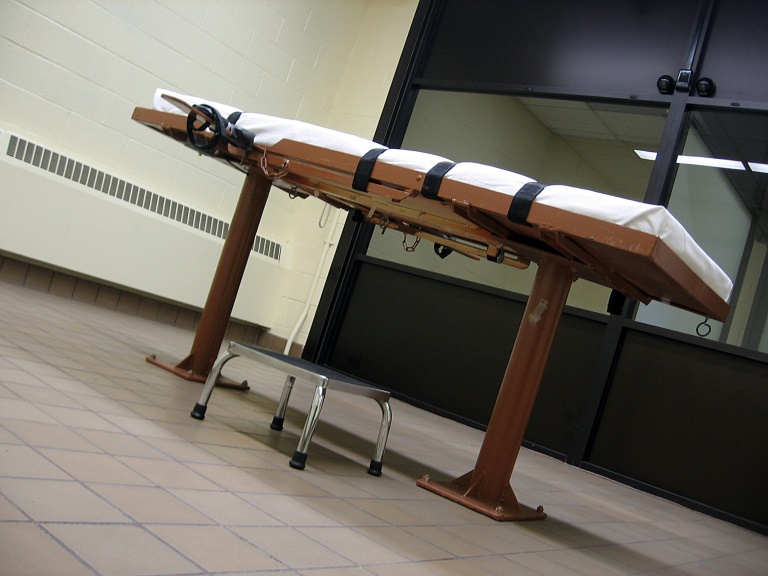
Texas executes man convicted of killing mother nearly 20 years ago

The US state of Texas on Wednesday executed a man convicted of killing his mother nearly two decades ago, officials said.

Tracy Beatty, 61, was pronounced dead at 6:39 pm local time at a prison in the city of Huntsville, the Texas Department of Criminal Justice said.

Beatty was sentenced to death in 2004 for having strangled his 62-year-old mother, Carolyn Click, a year earlier.

Beatty had been released from prison after serving sentences for robbery and assault and had been staying with his mother despite their “volatile and combative relationship,” according to court documents. 

She had asked him to move out before he beat and strangled her to death during a fight.

As Beatty’s execution date approached, his lawyers filed final appeals to try to save him on the grounds that he was intellectually impaired. 

Last month, two doctors met with him, but they say they were unable to conduct a conclusive examination because prison authorities refused to remove his handcuffs.

The US Supreme Court has ruled that it is unconstitutional to execute convicts who are intellectually disabled and unable to understand their sentence. Beatty’s lawyers had asked the top US court for a stay of execution.

But there was no intervention, and Beatty was put to death by lethal injection – the thirteenth death row inmate executed since the beginning of the year in the United States and the fourth in Texas.

Republican blowback at Trump after limited election gains

Donald Trump was hoping to surf a Republican “red wave” to a fresh White House bid, but with only limited gains in Tuesday’s midterm elections — and an outstanding result for his chief intraparty rival — the former US president seems to be left out to sea.

Though Republicans look likely to wrest control from the Democratic Party in at least one chamber of Congress, projections show they will not gain the large number of seats typical when the sitting president’s approval ratings are so low, and inflation so high.

In the House, early results suggested Republicans were on track for a majority — but only by a handful of seats — while control of the Senate remains on a knife-edge and may hinge on a runoff election in the southern state of Georgia in early December.

Trump, who has teased the potential launch of a presidential campaign on November 15, remained in the spotlight throughout the campaign — putting his thumb on key Republican primaries and holding rallies nationwide, during which he repeated his baseless claims of fraud in the 2020 race.

But with several of his hand-picked candidates underperforming — some even losing Republican-held seats to Democrats — analysts and some in his party are blaming him for the party’s underwhelming election night.

Meanwhile, Florida Governor Ron DeSantis, who has barely hidden his intent to run for president in 2024, resoundingly won reelection, cementing the rising Republican star’s position as a formidable Trump opponent.

The day after the polls newspapers hailed DeSantis’ rise, while Republican voters in Scottsdale, Arizona compared him favorably to Trump.

“Trump, he’s just about his ego,” small business owner Lisa Christopher, 60, told AFP. “DeSantis knows when to push and when to back off and Trump doesn’t.”

Retired crane worker Bob Nolan said Trump had “too much baggage.”

“He was who we needed. But I think … DeSantis is more down to earth and ready to run.”

University of Chicago’s Jon Rogowski told AFP that it should have been easy for Republicans to take back the House and the Senate by “a wide margin,” pointing to the negative economic environment and Biden’s low approval ratings.

“Many of the candidates he (Trump) endorsed underperformed and cost their party a chance at picking up seats that should have been winnable,” said the political scientist.

“Other Republican candidates with whom he’d feuded publicly won their seats easily.”

– Candidate ‘quality’ –

The midterm results show that “you can be a conservative, you can be principled, you can oppose Trump — and win,” Peter Loge, a media professor at George Washington University, tells AFP.

Geoff Duncan, Georgia’s lieutenant governor and longtime critic of the former president, told CNN Wednesday morning: “I think Donald Trump’s moving from a movement to a distraction for the Republican Party.”

Before the election on Tuesday, lead Senate Republican Mitch McConnell had voiced concern over the “quality” of some Trump-backed candidates.

In Pennsylvania, Democrats were able to flip a highly-prized US Senate seat with constant attacks on the Republican candidate, celebrity doctor Mehmet Oz, who had never held public office before and lived mostly in New Jersey.

The Republican candidate for Pennsylvania’s gubernatorial race, the right-wing and anti-abortion Doug Mastriano, who was present at the January 6th assault on the US Capitol, also lost.

Some notable exceptions, however: the Trump-backed candidate for the US Senate seat from Ohio won, as did more than 100 Republican candidates who challenged the 2020 presidential election results, according to US media projections.

– ‘Leave the stage’ –

Trump on Wednesday morning was “livid” and “screaming at everyone,” according to CNN reporter Jim Acosta, citing an adviser to the former president.

While he admitted that the election results were “somewhat disappointing,” Trump on Wednesday posted to his Truth Social page that “from my personal standpoint it was a very big victory,” pointing to the likely Republican win in the House.

Rogowski says he expects Trump “will be eager to move past 2022 and will declare his candidacy for 2024 sooner than later.”

Some political commentators have speculated Trump might delay his November 15 announcement, but he has not yet revealed any change in plans.

Another of his possible 2024 rivals — his former vice president Mike Pence — will publish his memoirs that same day.

A preview of those memoirs appeared in the Wall Street Journal Wednesday, with Pence recounting the pressure Trump laid on him to overturn the 2020 election results. 

Such an early campaign launch by Trump, just under two years from the actual election, would serve to “consolidate his support early and crowd out other potential candidates,” says Rogowski.

“But if he felt he were in a strong position, he would not need to declare so early.”

While some may be hoping Trump steps aside and lets candidates such as DeSantis pick up the Republican banner, Loge says that is highly unlikely.

“The problem of becoming the next Trump is that the current Trump has to leave the stage,” he says.  

“Donald Trump isn’t very good at leaving the stage.”

Facebook owner Meta to lay off 11,000 staff

Facebook owner Meta will lay off more than 11,000 of its staff in “the most difficult changes we’ve made in Meta’s history,” boss Mark Zuckerberg said on Wednesday.

He said the cuts represented 13 percent of the social media titan’s workforce and would affect its research lab focusing on the metaverse as well as its apps, which include Facebook, Instagram and WhatsApp.

The tech industry is in a serious slump and several major firms have announced mass layoffs — Twitter’s new owner Elon Musk fired half its staff last week.

“I want to take accountability for these decisions and for how we got here,” Zuckerberg said in a note to staff.

“I know this is tough for everyone, and I’m especially sorry to those impacted.”

Ad-supported platforms such as Facebook and Google are suffering with advertisers looking to cut costs as they struggle with inflation and rising interest rates.

Zuckerberg told his 87,000-strong staff he had expected the boost in e-commerce and online activity during the Covid pandemic to continue, but added: “I got this wrong, and I take responsibility for that.”

The measures were also a message to Wall Street, where the company’s poor performance has sent the Meta share price plummeting by 70 percent since the start of the year.

The move on Wednesday was welcomed by investors with Meta shares showing major gains for the day of nearly six percent just ahead of the closing bell in New York.

The downturn has affected companies across the sector, with Apple and Amazon also recently announcing results that disappointed investors.

But Meta also faces some unique problems of its own.

The California-based company is being squeezed by Zuckerberg’s decision to devote billions of dollars to developing the metaverse, an immersive version of the web accessed via virtual reality headsets.

Zuckerberg renamed the company Meta a year ago to reflect the commitment to the project, but the division working on metaverse technology has since made losses of more than $3.5 billion.

Facebook is also struggling to fend off Chinese-owned TikTok, the now dominant social media for younger users to the detriment of Meta’s Instagram.

– ‘Last resort’ –

Mike Proulx, a research director at Forrester, said “Meta is amidst an identity crises” and that severe cost-cutting was “inevitable.”

“The company has one foot in a risky long-term metaverse bet and another foot failing to compete with TikTok,” he added.

Zuckerberg has hinted several times this year that belt-tightening measures were just around the corner and said in his letter on Wednesday that staff layoffs were a “last resort.”

Meta would also keep a hiring freeze going into next year, he said, and other spending cuts were envisaged.

“Fundamentally, we’re making all these changes for two reasons: our revenue outlook is lower than we expected at the beginning of this year, and we want to make sure we’re operating efficiently,” Zuckerberg wrote.

In the US, terminated Meta employees will receive four months severance pay and two additional weeks of pay for each year of service. 

Last month, Meta announced profits of $4.4 billion in the third quarter, a 52 percent decrease year-on-year.

The slump in profits comes despite its platforms dominating the world in terms of users — Facebook alone claims to have around two billion people who log on daily.

Facebook owner Meta to lay off 11,000 staff

Facebook owner Meta will lay off more than 11,000 of its staff in “the most difficult changes we’ve made in Meta’s history,” boss Mark Zuckerberg said on Wednesday.

He said the cuts represented 13 percent of the social media titan’s workforce and would affect its research lab focusing on the metaverse as well as its apps, which include Facebook, Instagram and WhatsApp.

The tech industry is in a serious slump and several major firms have announced mass layoffs — Twitter’s new owner Elon Musk fired half its staff last week.

“I want to take accountability for these decisions and for how we got here,” Zuckerberg said in a note to staff.

“I know this is tough for everyone, and I’m especially sorry to those impacted.”

Ad-supported platforms such as Facebook and Google are suffering with advertisers looking to cut costs as they struggle with inflation and rising interest rates.

Zuckerberg told his 87,000-strong staff he had expected the boost in e-commerce and online activity during the Covid pandemic to continue, but added: “I got this wrong, and I take responsibility for that.”

The measures were also a message to Wall Street, where the company’s poor performance has sent the Meta share price plummeting by 70 percent since the start of the year.

The move on Wednesday was welcomed by investors with Meta shares showing major gains for the day of nearly six percent just ahead of the closing bell in New York.

The downturn has affected companies across the sector, with Apple and Amazon also recently announcing results that disappointed investors.

But Meta also faces some unique problems of its own.

The California-based company is being squeezed by Zuckerberg’s decision to devote billions of dollars to developing the metaverse, an immersive version of the web accessed via virtual reality headsets.

Zuckerberg renamed the company Meta a year ago to reflect the commitment to the project, but the division working on metaverse technology has since made losses of more than $3.5 billion.

Facebook is also struggling to fend off Chinese-owned TikTok, the now dominant social media for younger users to the detriment of Meta’s Instagram.

– ‘Last resort’ –

Mike Proulx, a research director at Forrester, said “Meta is amidst an identity crises” and that severe cost-cutting was “inevitable.”

“The company has one foot in a risky long-term metaverse bet and another foot failing to compete with TikTok,” he added.

Zuckerberg has hinted several times this year that belt-tightening measures were just around the corner and said in his letter on Wednesday that staff layoffs were a “last resort.”

Meta would also keep a hiring freeze going into next year, he said, and other spending cuts were envisaged.

“Fundamentally, we’re making all these changes for two reasons: our revenue outlook is lower than we expected at the beginning of this year, and we want to make sure we’re operating efficiently,” Zuckerberg wrote.

In the US, terminated Meta employees will receive four months severance pay and two additional weeks of pay for each year of service. 

Last month, Meta announced profits of $4.4 billion in the third quarter, a 52 percent decrease year-on-year.

The slump in profits comes despite its platforms dominating the world in terms of users — Facebook alone claims to have around two billion people who log on daily.

Schumacher Ferrari fetches record $15 mn at auction

The Ferrari in which Formula One legend Michael Schumacher won the 2003 World Championship title sold for nearly $15 million at auction in Geneva on Wednesday.

“This remarkable car has achieved a world record price for a modern-era Formula One,” the Sotheby’s auctioneer said after the F2003-GA, Chassis 229 car went under the hammer for 13 million Swiss francs ($13.2 million).

When taxes and fees were added on, the final price stood at 14.6 million francs ($14.9 million), the auction house said later.

The previous record was held by another Schumacher-driven Ferrari, an F2001 model sold by Sotheby’s in New York in 2017 for $7.5 million.

The final price, offered by an unidentified telephone bidder from Europe after a bidding war of more than 40 minutes, far outstripped expectations, with the auction house estimating before the sale that the car would fetch up to 9.5 million Swiss francs.

It is “one of the most significant Formula One cars of all time”, the auctioneers said.

Schumacher, who has not been seen in public since suffering serious injuries in a skiing accident in 2013, raced nine times in the car.

– ‘Very important car’ –

He won five Grands Prix with it in the 2003 season and drove it when he clinched the title in Japan.

“It’s one of the Ferraris with the most victories in the constructor’s history, so it’s a very important car in the history of motor racing,” Vincent Luzuy, from the Sotheby’s branch dealing with luxury car sales, told AFP.

Designed by Rory Byrne and Ross Brawn, the F2003-GA featured a longer wheelbase to improve aerodynamics, he explained.

The model was brought in at the Spanish Grand Prix, the fifth race of the 2003 season. Chassis 229 is by far the most successful of the six F2003-GAs that were built.

Schumacher drove it to victory in Spain and also won the Austrian, Canadian, Italian and US Grands Prix in the car.

He also claimed pole position in Spain, Austria and Italy in the vehicle, and the fastest laps in Austria, Italy and the United States.

The car powered Schumacher to his sixth F1 title — a total that saw the German overtake the five won by Argentina’s Juan Manuel Fangio in the 1950s.

It also helped Ferrari win a 13th constructor’s championship — the Italian team’s fifth in a row.

– Luxury week –

Schumacher’s Ferrari was sold during Sotheby’s Luxury Week, which began last Friday and where a range of sparkling jewels, pricy watches and designer handbags are going under the hammer.

But a spectacular blue diamond, expected to provide the grand finale to the jewellery sale and estimated to fetch up to 15 million Swiss francs, went unsold later on Wednesday.

That 5.53-carat “fancy vivid blue” cushion-shaped diamond is part of the De Beers Exceptional Blue Collection — a group of eight rare fancy blue diamonds with a total value of more than $70 million being sold in Geneva, New York and Hong Kong.

Sotheby’s told AFP the gem was “an exceptional stone in every sense” and “attracted significant interest” before the sale.

“While we didn’t get to see it sell in the room tonight, we are confident it will find a new home very soon,” it added.

Another piece expected to draw attention, and bids, was an emerald and diamond bracelet made in the 1850s, which once belonged to French empress Eugenie, the wife of emperor Napoleon III.

It has been estimated at between 60,000 and 80,000 francs.

Sotheby’s is already on a roll, having sold the 11.15-carat Williamson Pink Star pink diamond in Hong Kong last Friday for HK$453.2 million ($57.7 million), setting a record for price per carat paid at auction for any diamond or gemstone, the auction house said.

Pink diamonds are only found in a few places and fewer than 10 percent weigh more than one fifth of a carat, and the big ones are some of the most in-demand on the global market.

The 18.18-carat Fortune Pink — the largest pear-shaped “fancy vivid pink” diamond ever to go under the hammer — was meanwhile snapped up at a Christie’s auction in Geneva on Tuesday for $28.5 million.

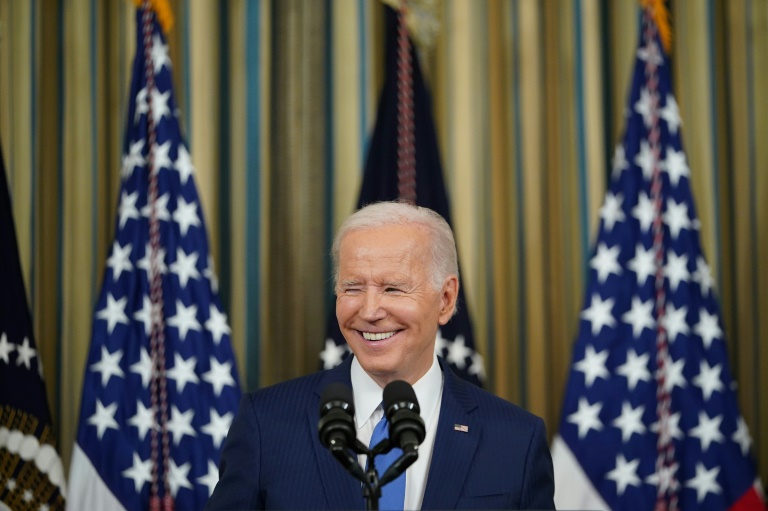
Biden hails 'good day for democracy' as Republicans fall short

US President Joe Biden on Wednesday hailed a “good day for democracy” after a surprisingly strong performance in midterm elections, with Republicans inching toward a slim majority in only one chamber of Congress.

Biden, while acknowledging voters’ frustration, said that an “overwhelming majority” of Americans supported his economic agenda and indicated he was leaning toward seeking a second term in 2024, although he said he would make a decision early next year.

The incumbent party historically loses in midterm elections and Republicans had hoped for a major sweep after hammering Biden over stubbornly high inflation, with many also backing unfounded claims over the legitimacy of his defeat of Donald Trump two years ago.

“It was a good day I think for democracy. And I think it was a good day for America,” Biden told a White House news conference.

“While the press and the pundits were predicting a giant red wave, it didn’t happen.”

It was also an underwhelming night for Donald Trump, who was counting on a big Republican showing to boost another White House run.

“While in certain ways yesterday’s election was somewhat disappointing, from my personal standpoint it was a very big victory — 219 WINS and 16 Losses,” Trump said in a reference to candidates he personally endorsed.

In addition to seeing several of his high-profile candidates lose, Trump also saw his main rival for the Republican presidential nomination in 2024, Ron DeSantis, notch up a thumping victory to remain governor of Florida.

Republicans appear to be on track to reclaim the 435-member House for the first time since 2018, but by a mere handful of seats.

“It is clear that we are going to take the House back,” said top Republican Kevin McCarthy, who hopes to be the chamber’s next speaker and who put on a brave face after his party fell short of picking up the 60 seats he once predicted.

For his part, Biden pointed out in a tweet that — while the count in some places was still ongoing — his party “lost fewer seats in the House of Representatives than any Democratic president’s first midterm election in at least 40 years.”

– ‘Clear and unmistakable message’ –

An election drubbing would have surely raised questions on whether Biden should run again in 2024. But instead he did better than his two Democratic predecessors, Barack Obama or Bill Clinton, who both took a hammering in their first midterms.

Asked about his plans at Wednesday’s press conference, Biden said it was still his “intention to run again” — but that he would decide for sure “early next year.”

America’s oldest-ever president, who turns 80 this month, Biden hailed the “historic numbers” of young people who voted and pointed to support for the right to abortion, which was rescinded in June by a Supreme Court transformed by Trump appointees.

“Voters spoke clearly about their concerns,” Biden said. “There’s still a lot of people hurting.”

“They sent a clear and unmistakable message that they want to preserve our democracy and protect the right to choose in this country.”

Biden, who served for 36 years in the Senate, also struck a more conciliatory tone with the Republicans, saying he would work with them and that the “vast majority” were “decent, honorable people.”

With three key races yet to be called after Tuesday’s vote, the Senate remained in play but it was leaning Democratic and control may hinge on a runoff election in the southern state of Georgia in December.

While the night saw wins by more than 100 Republicans embracing Trump’s “Big Lie” that Biden stole the 2020 election, several hand-picked acolytes of the former president came up short.

“Many of the candidates he endorsed underperformed and cost their party a chance at picking up seats that should have been winnable,” said Jon Rogowski, a political science professor at the University of Chicago.

“Not only did voters reject many of Trump’s candidates, but they also rejected his policies,” Rogowski said, citing abortion as an example.

In ballot initiatives in five states, voters supported abortion rights in a rejection of the conservative-dominated Supreme Court’s ruling in June that overturned a constitutional right to the procedure.

Republicans needed just one extra seat to wrest control of the evenly divided Senate.

But by Wednesday the only seat to change hands went to the Democrats, with John Fetterman, a champion of progressive economic policies, triumphing in Pennsylvania over Trump-endorsed celebrity doctor Mehmet Oz.

A Republican-held House could still derail Biden’s agenda, launching investigations, scuttling his ambitions on climate change and scrutinizing the billions of US dollars to help Ukraine fight Russia.

Wisconsin’s incumbent Republican Senator Ron Johnson was declared the winner on Wednesday, but counting the remaining votes in Senate races in Arizona and Nevada could take days.

Georgia is to hold a runoff on December 6 after neither candidate crossed the 50 percent threshold needed for victory in the Senate race there.

Close Bitnami banner
Bitnami