US Business

Transit strikes snarl London, Paris as workers seek raises

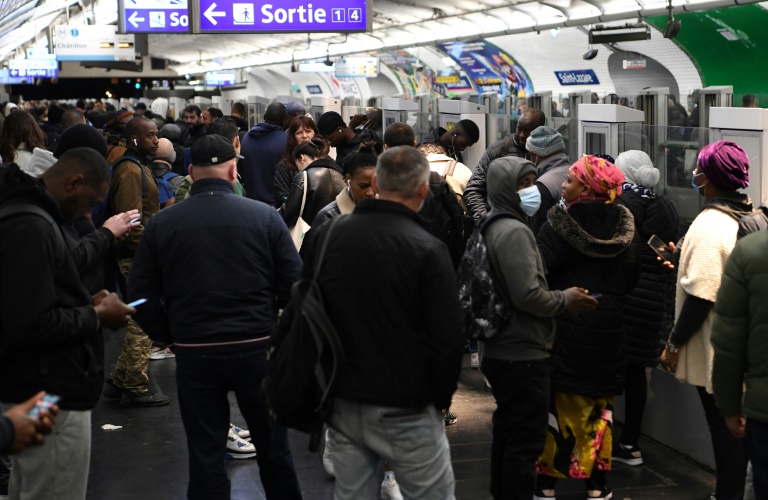
Commuters in London and Paris scrambled for alternatives Thursday — or simply stayed home — as public transport workers went on strike for higher pay, the latest industrial action seeking relief from soaring prices in Europe.

Spreading labour unrest poses a problem for governments which are already spending billions trying to blunt the worst effects of rising prices, at least for the most vulnerable.

“I am very deeply affected by the strike,” said 36-year-old Nicco Hogg in London. “I took my car, the train and now I have to cycle.”

The action in Britain, by members of the Rail, Maritime and Transport (RMT) and Unite unions, follows several prior walkouts this year amid a long-running dispute over job cuts, pensions and working conditions.

In France, the strike aims also to ratchet up pressure on President Emmanuel Macron before he brings a controversial pensions overhaul bill to parliament, which would require millions of people to work longer before retiring.

“It’s to show that if we want to take action, we know how to take action,” Frederic Souillot, head of France’s FO union, said ahead of the Paris strike.

The capital’s public transport operator RATP said nearly every Metro line would be shut down or operating with only limited rush-hour service, and urged people to work from home or postpone trips if possible.

Many commuters appeared to heed the call, with the morning crush less chaotic than many feared, and the city’s growing network of bike lanes saw a surge of cyclists under a bright autumn sky.

But the two main suburban rail lines called RER A and B, which connect central Paris with Disneyland Paris and the Charles de Gaulle and Orly airports, saw more severe disruptions.

Frequency of bus services were likely to drop by a third, while tram operations were expected at near-normal levels, the RATP said.

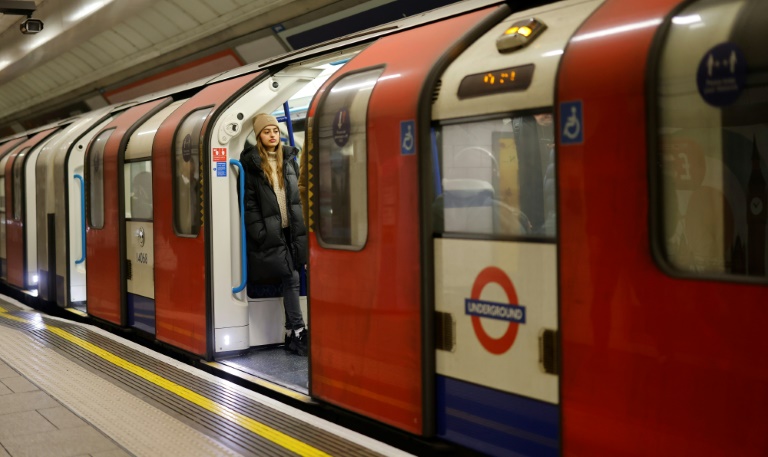
Authorities in London said the Underground system was “severely disrupted”, with limited or no services running, and advised people to avoid trying to use the network.

Reports said many buses were packed to capacity and unable to pick up hordes waiting at numerous stops, while roads were expected to be more congested than usual.

– New CEO awaited –

French unions have staged strikes across several sectors in recent weeks seeking pay hikes or increased hiring as spiralling energy costs feed into widespread inflation.

Thursday’s strike will also include a protest march in the capital in the afternoon that will shut down major traffic avenues.

But the Paris transport strike did not spill over into other sectors, with only the hard-line CGT union calling for general work stoppages that could match turnout of October 18, when authorities say 107,000 demonstrators turned out nationwide.

Unions representing the RATP’s nearly 70,000 employees say they are feeling the pinch of soaring prices, but are also overstretched because of insufficient hiring, resulting in increased sick leave.

That has led to more service delays or lower frequency on busy metro lines in recent months, causing headaches for the system’s roughly 12 million daily users.

The government is set to appoint former prime minister Jean Castex as RATP chief, with parliamentary panels giving their green light after questioning him this week.

“The most urgent issue… is the continuity and quality of service,” Castex told lawmakers. “The heart of our job is to meet the expectations of our users.”
Latest London Underground strike paralyses network

Millions of Londoners faced travel misery on Thursday as another strike by Underground staff shut down most of the network, including almost all lines and city centre stations.

The latest industrial action, by members of the Rail, Maritime and Transport (RMT) and Unite unions, follows several prior walkouts this year amid a long-running dispute over job cuts, pensions and working conditions.

It mirrors strife across numerous UK sectors as pay fails to keep up with inflation at the highest level in decades, with the main nurses’ union announcing Wednesday that it will stage the first strike in its 106-year history.

Thursday’s walkout on the so-called London “tube” network left travellers struggling to catch buses or find alternative ways to get to work in the city of around 9 million people.

TfL said the tube system was “severely disrupted”, with limited or no services running, and advised people to avoid trying to use the network.

Reports said many buses were packed to capacity and unable to pick up hordes waiting at numerous stops, while roads were expected to be more congested than usual.

The RMT said a conditional offer to suspend the strike, made at last ditch talks Tuesday with Transport for London (TfL) bosses, failed amid disagreements over planned job cuts and other reforms.

The union — which has also been spearheading walkouts on the national rail network this year in a separate dispute — held pickets at numerous stations across London, including at the hub King’s Cross.

“TfL have missed a golden opportunity to make progress in these negotiations and avoid strike action,” RMT General secretary Mick Lynch said.

“Our members are resolute in their determination to see a just settlement to this dispute, and they will continue their industrial campaign for as long as it takes.”

Ahead of the walkout, TfL blamed the RMT and Unite for the stalemate. 

“No proposals to change pensions or conditions have been made,” TfL’s Chief Operating Officer Glynn Barton said in a statement following Tuesday’s failed talks.

“Unfortunately, no agreement could be reached but we remain open for discussions.”

Asian, European stocks down as US midterms worry markets

Asian stocks fell on Thursday after inconclusive US midterm election results and a cryptocurrency crisis hammered markets.

The uncertainty, especially about how the midterm results would impact inflation, transferred from Wall Street to Asia overnight.

Hong Kong dropped 1.7 percent while Tokyo shed nearly one percent and Shanghai also closed lower. Seoul, Sydney, Jakarta and Taipei also fell.

London, Paris, and Frankfurt all opened on Thursday in the red, continuing the slide in European markets.

“A purple dilemma might be the best way to describe the red-blue tangle that emerged Wednesday. It’ll be gridlock, that’s for sure,” Stephen Innes of SPI Asset Management said of the US midterms where the Democrats did better than expected, although Congress will likely be divided.

“Perhaps not the friendliest kind for market participants, many of whom were hoping for a more resounding rebuke of Democrats given inflation realities.”

All eyes are expected to turn to US inflation data, due later Thursday, to gauge the speed of future rate hikes by the Federal Reserve. 

“US growth looks still too strong to bring inflation down,” Tapas Strickland of National Australia Bank said in a note.

“The ongoing resilience in the (consumer prices) data and stickiness in inflation continue to point to the Fed hiking rates closer to 5.0 percent or higher.” 

Fed officials have raised their policy rate to a range of between 3.75 to 4.0 percent.

– ‘Crypto tumult’ –

Markets in Asia were already grappling with the impact of strict zero-Covid measures in China, with supply chains and activity slowed by harsh lockdowns and testing policies. 

“China’s domestic demand is weak and their key trading partners are entering recession territory,” said Edward Moya from Oanda. 

“China is also continuing to struggle with COVID as Guangzhou has to return to mass testing.”

The crypto world was also rocked by a surprise decision from Binance, the world’s biggest cryptocurrency platform, to scrap a possible acquisition of rival FTX.com a day after disclosing it had signed a non-binding letter of intent to buy it.

The near-collapse of FTX has plunged bitcoin to a two-year low.

“FTX’s slump from over a $32 bn valuation to zero in less than a few days raises numerous issues,” said Stephen Innes.

“This is far from fringe buyers taking a hit on the back of support from stimulus-check and crypto enthusiasts. Prominent investors are wearing eggs on their faces after diving in head first.”

He added that gold and silver will be the biggest beneficiaries of the crypto fallout with investors looking to the trusted precious metals for stability.

– Key figures around 0725 GMT –

London – FTSE 100: DOWN 0.17 percent at 7,284.15 

Frankfurt – DAX: DOWN 0.44 percent at 13,621.27 

Paris – CAC 40: DOWN 0.32 percent at 6,409.72 

Tokyo – Nikkei 225: DOWN 0.98 percent at 27,446.10 (close) 

Hong Kong – Hang Seng Index: DOWN 1.7 percent at 16,081.04 (close)

Shanghai – Composite: DOWN 0.39 percent at 3,036.13 (close)

Pound/dollar: UP at $1.1385 from $1.1352  

Euro/dollar: DOWN at $1.0001 from $1.0017 

Dollar/yen: DOWN at 146.26 yen from 146.37 yen 

Euro/pound: DOWN at 87.84 pence from 88.19 pence 

West Texas Intermediate: DOWN 0.55 percent at $85.36 per barrel

Brent North Sea crude: DOWN 0.36 percent at $92.32 per barrel

New York – Dow: DOWN 2.0 percent at 32,513.94 (close)

Musk 'kills' new Twitter label, hours after launch

Twitter launched two new verification tools Wednesday but “killed” one of them hours later in a messy start to owner Elon Musk’s campaign to revamp the influential platform following his $44 billion buyout.

The social media platform unveiled its long-awaited Twitter Blue subscription service, which allows users to pay $7.99 per month for a coveted blue tick, as well as a separate gray “official” badge for some high-profile accounts.

But the new gray label was almost immediately scrapped, overshadowing the launch of Twitter Blue, which is currently only available on the mobile app on iPhones and in the United States.

“I just killed it,” Musk tweeted hours after the new tag was added to government accounts, big companies and major media outlets.

“Please note that Twitter will do lots of dumb things in coming months. We will keep what works & change what doesn’t,” the world’s richest man added.

The U-turn invited further scrutiny of Musk’s plans for Twitter a week after he laid off thousands of workers and drew a massive drop in spending by advertisers, who are wary of the site’s direction.

The blue tick has been a mark of an account’s authenticity and doubts emerged that public figures or media outlets would pay for it. The official gray tag was seen by observers as a workaround to solve that problem.

The launch of the new official label began Wednesday and was on the accounts of companies such as Apple and BMW, as well as public ones such as the White House and major media outlets.

But only hours later, it was gone for many of them.

Accounts that had received the “official” badge — including Agence France-Presse, BBC News, Pope Francis and Kanye West — saw the mention disappear.

– ‘A lot of work’ –

Esther Crawford, an executive who announced the gray tick on Tuesday, insisted that the official label was still going to be part of the relaunch, but that “we are just focusing on government and commercial entities to begin with.”

“There are no sacred cows in product at Twitter anymore. Elon is willing to try lots of things — many will fail, some will succeed,” she tweeted Wednesday.

“The goal is to find the right mix of successful changes to ensure the long-term health and growth of the business.”

During a panel for advertisers broadcast on Twitter, Musk exercised some damage control, admitting that a lot of work lay ahead to get the site to the place he wished to reach.

“We’ve got a lot to do on the software side. I can’t emphasize that enough,” he said.

Musk took control of Twitter after a drawn-out legal battle in which the mercurial tycoon tried to renege on a deal that many believe he overpaid for.

It emerged on Tuesday that Musk sold $4 billion worth of shares in Tesla to help pay for a transaction in which he took on billions of dollars in debt.

Twitter Blue is seen as one way to overcome the loss in advertisers since Musk took over.

Twitter last week fired half of its 7,500 employees, which Musk said was necessary as the company was losing $4 million a day.

Website for boycotting oligarchs gains traction in Hungary

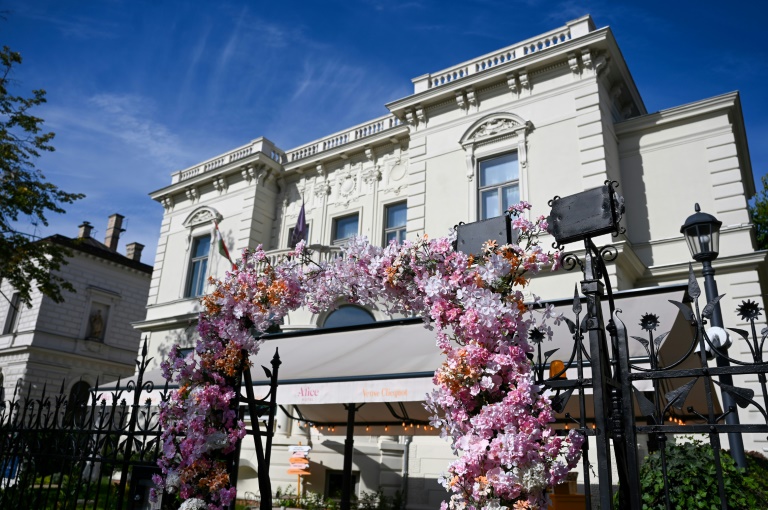
It may be just one of many fashionable hotels in the Hungarian capital, but for anti-corruption activist Attila Juhasz, the Alice Hotel symbolises the capture of the tourism industry by an elite that has enriched itself under Prime Minister Viktor Orban. 

“One of the owners is a commercial partner of (Orban’s son-in-law) Istvan Tiborcz,” Juhasz, a bearded 30-year-old in a yellow parka coat, told AFP. 

To increase awareness Juhasz’s corruption watchdog “K-Monitor” created a tourist guide with a difference, an interactive map nerhotel.hu that lists addresses to avoid in Budapest. 

It includes the Alice Hotel, housed in a neo-renaissance building on Budapest’s prestigious Andrassy boulevard, lined with 19th century palaces.  

According to Juhasz the map lets people check if their tourist spending is flowing to “politically exposed figures”. 

In three years more than 400 addresses have been added to the map, most located in parts of the historic centre of Budapest that form a UNESCO World Heritage site.

Between 3,000 and 3,500 unique visitors view the map every month. 

“People constantly ask us to check new addresses,” said Juhasz, adding that an English version is on the way.   

The Alice Hotel and two other popular addresses, Cafe Opera and Hotel Moments, did not reply to requests for comment by AFP. 

– ‘Wealth accumulation’ –

Since Orban returned to power 12 years ago in this EU member nation of 10 million people, Brussels and several NGOs have often alleged corruption among circles close to the government. 

Worried by the wastage of EU funds, the bloc has so far refused to unlock some 7.5 billion euros for Hungary scheduled for the coming years. Budapest has started to implement a range of anti-corruption measures to get the money. 

The pandemic recovery fund given to EU members has also been blocked. A discussion on those funds will take place on November 22, according to a source in Brussels.

The EU anti-fraud office OLAF recommended in a European Parliament report in September that the European Commission recover 2.2 percent of funding given to Hungary between 2016 and 2020. 

That figure is well above the EU average of 0.29 percent and is the highest among the bloc’s 27 members. 

“Since 2010, out of nowhere several individuals have become the richest men in the country,” said Marta Pardavi, who co-heads the Hungarian Helsinki Committee rights group. 

“Their lifestyle is way beyond the average Hungarian’s, and displays a rapid accumulation of wealth that is hard to justify,” said Pardavi. 

With a recession looming, due in part to the war in neighbouring Ukraine, the “very visible enrichment” of oligarchs lies in stark contrast to the “rundown public health and education systems,” she said. 

There is a direct link between the diversion of public money and the increase in economic misery as inflation hits record highs, according to Peter Akos Bod, a former Hungarian central bank governor.   

“If the winner of a public tender overcharges for his project and pockets the difference, it drives up the score,” said Bod, who now works at the Corvinus university in Budapest. 

– ‘Hungarian entrepreneur class’ –

Dismissing corruption claims, Orban insists that capital should be in the hands of a homegrown “class of Hungarian entrepreneurs” rather than profiteering multinationals.   

But by “converging funds toward friendly circles” he created a “over centralised crony capitalism” that is no longer a “classical western market economy,” said Bod.  

After a swathe of bank takeovers, Budapest itself recently waded into the telecommunications sector, buying the Hungarian branch of British giant Vodafone.   

At the same time, entire sectors of the economy including the powerful car industry — dominated by German and Japanese firms — have escaped the power grab. 

In what was widely seen as a gesture of goodwill in response to EU concerns, the government annulled in September an EU-financed public tender for heritage promotion. 

Worth 138 million forints (342,000 euros), the tender was won by two Hungarian communications agencies, the only candidates in contention.

As US waits final vote outcome, Biden touts Democratic success

Americans impatiently awaited the final outcome of the US midterm elections on Thursday, as President Joe Biden celebrated what he said was his party’s success in fending off a Republican “red wave.”

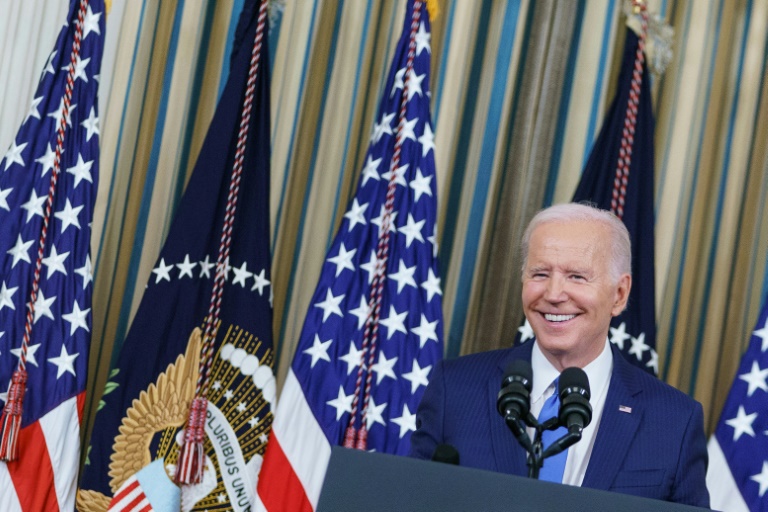
“It didn’t happen,” the 79-year-old Biden said at a news conference Wednesday in his first speech since the polls closed. “It was a good day, I think, for democracy.”

Republicans appeared likely to win the majority in the House of Representatives, but with a much smaller victory than they had hoped for – and that pollsters forecast.

If current predictions hold true, Tuesday’s midterm elections could mark the best performance by a sitting president in two decades.

In the Senate, Democrats gained a highly contested seat, captured by John Fetterman in Pennsylvania, seizing it after the most expensive Senate race in US history.

The final makeup of Congress now hung on three Senate seats: Arizona and Nevada, where the counting of votes could take several more days, and Georgia, where a runoff is scheduled for December 6. 

– Extending a hand –

Combative and optimistic, Biden did not wait for the final results of the balloting to celebrate, reveling in averting the much bigger setback predicted after Republicans turned the campaign on his failure to handle soaring inflation. 

His chief of staff Ron Klain quipped about the public perception of the Biden administration, saying, “Never underestimate how much Team Biden is underestimated.”

Later Wednesday, addressing reporters at the White House, Biden reiterated his “intention” to run for a second term in 2024. And promised a final decision “early next year.”

Biden also took the opportunity to extend a hand to the Republican opposition, saying he was open to all “good ideas.”

It was an opportunity for the president to put on his favorite hat of centrist, fond of compromise, inherited from his long career as a Senator.

Early in the evening Wednesday, Biden reached out to House Minority Leader Kevin McCarthy, who is expected to become the next Speaker of the House should the Republicans retake it, the White House said.

– All eyes on 2024 –

But Biden’s appeal for bipartisanship is likely to run into a red Republican wall.

Even with a slim majority in the House, the Republicans would have significant oversight power, and they have promised to use it to launch investigations into Biden and his entourage.

The Republicans are keen to exploit any potential misstep within the Democratic camp with an eye on the 2024 presidential election.

“I will lead the fight to make damn sure my party does not fail,” said Marjorie Taylor Greene, a Georgia congresswoman close to Donald Trump, in a statement.

But already sights were being set on 2024 and the next presidential campaign.

Donald Trump, who had bet on a resounding victory of his lieutenants to announce his re-election bid, had to concede on Wednesday that the results of the midterms were “somewhat disappointing.”

But, he added on his social media platform, Truth Social, “from my personal standpoint, it was a very big victory.”

The 76-year-old former president had promised a “very big announcement” on November 15, apparently seeking to undercut one of his potential rivals for the Republican nomination, Florida Governor Ron DeSantis.

But DeSantis emerged from the midterms fortified. 

“We’ve got so much more to do and I have only begun to fight,” the 44-year-old governor promised.

Asked Wednesday about the Trump-DeSantis rivalry, President Joe Biden said: “It’ll be fun watching them take on each other.”

Musk 'kills' new Twitter label, hours after launch

Twitter launched two new verification tools Wednesday but “killed” one of them hours later in a messy start to owner Elon Musk’s campaign to revamp the influential platform following his $44 billion buyout.

The social media platform unveiled its long-awaited Twitter Blue subscription service, which allows users to pay $7.99 per month for a coveted blue tick, as well as a separate gray “official” badge for some high-profile accounts.

But the new gray label was almost immediately scrapped, overshadowing the launch of Twitter Blue, which is currently only available on the mobile app on iPhones and in the United States.

“I just killed it,” Musk tweeted hours after the new tag was added to government accounts, big companies and major media outlets.

“Please note that Twitter will do lots of dumb things in coming months. We will keep what works & change what doesn’t,” the world’s richest man added.

The U-turn invited further scrutiny of Musk’s plans for Twitter a week after he laid off thousands of workers and drew a massive drop in spending by advertisers, who are wary of the site’s direction.

The blue tick has been a mark of an account’s authenticity and doubts emerged that public figures or media outlets would pay for it. The official gray tag was seen by observers as a workaround to solve that problem.

The launch of the new official label began Wednesday and was on the accounts of companies such as Apple and BMW, as well as public ones such as the White House and major media outlets.

But only hours later, it was gone for many of them.

Accounts that had received the “official” badge — including Agence France-Presse, BBC News, Pope Francis and Kanye West — saw the mention disappear.

– ‘A lot of work’ –

Esther Crawford, an executive who announced the gray tick on Tuesday, insisted that the official label was still going to be part of the relaunch, but that “we are just focusing on government and commercial entities to begin with.”

“There are no sacred cows in product at Twitter anymore. Elon is willing to try lots of things — many will fail, some will succeed,” she tweeted Wednesday.

“The goal is to find the right mix of successful changes to ensure the long-term health and growth of the business.”

During a panel for advertisers broadcast on Twitter, Musk exercised some damage control, admitting that a lot of work lay ahead to get the site to the place he wished to reach.

“We’ve got a lot to do on the software side. I can’t emphasize that enough,” he said.

Musk took control of Twitter after a drawn-out legal battle in which the mercurial tycoon tried to renege on a deal that many believe he overpaid for.

It emerged on Tuesday that Musk sold $4 billion worth of shares in Tesla to help pay for a transaction in which he took on billions of dollars in debt.

Twitter Blue is seen as one way to overcome the loss in advertisers since Musk took over.

Twitter last week fired half of its 7,500 employees, which Musk said was necessary as the company was losing $4 million a day.

Defiant Xi re-emerges on global stage, prepares for US competition

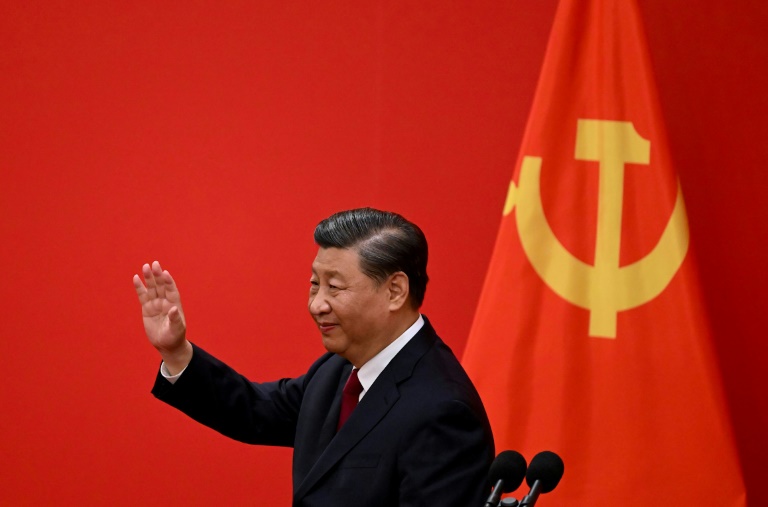
Fresh from securing a historic third term as China’s top leader, President Xi Jinping is poised for a triumphant re-entry to the world stage at a pivotal G20 summit next week.

After almost three years of self-imposed pandemic isolation where international diplomacy was largely conducted via videolink, China now aims to shore up its global alliances — especially with developing countries — in the face of increased competition with the United States and a world environment destabilised by the Ukraine war.

A flurry of state visits to China in the past week have highlighted the importance of maintaining trade and other diplomatic ties — even as China acts more assertively to defend its interests.

German Chancellor Olaf Scholz defied fierce domestic criticism to visit Beijing on Friday with a business delegation in tow, vowing to deepen trade cooperation with China alongside raising contentious issues such as the Ukraine war.

His visit caps off a string of trips by the leaders of Pakistan, Tanzania and the Vietnamese Communist Party — the most numerous face-to-face meetings Xi has conducted since hosting more than a dozen world leaders at February’s Beijing Olympics. 

France’s foreign minister last week said President Macron is likely to visit China in the coming months. 

– ‘Exuding confidence’ –

At next week’s G20 summit in Bali, Xi will join world leaders including US President Joe Biden, top European Union official Ursula von der Leyen, and the prime ministers of Australia, India, Japan and Britain, among others.

Russian President Vladimir Putin will not be at the conference, where his country’s invasion of Ukraine in February will be one of the main talking points.

Xi’s attendance has not yet been confirmed by the Chinese foreign ministry, which normally announces his travel plans shortly before they happen, but he is widely expected to be present.

“I expect Xi Jinping to arrive at the G20 exuding confidence from the refreshed mandate he has just received from the Communist Party of China,” said Drew Thompson, visiting senior fellow at the National University of Singapore.

Biden on Wednesday appeared to confirm a meeting with Xi on the G20 sidelines, saying that he would gauge Xi’s “red lines” to reduce the potential for conflict after soaring tensions on Taiwan.

Experts are not expecting any breakthroughs on resolving long-term differences, however.

“The political differences between the US and China are deep-seated… A meeting on the margins of a multilateral meeting (is) not the venue to resolve such strategic differences,” said Thompson.

“There is certainly benefit to the engagement, such as better understanding what each side expects from the other, which can hopefully reduce misunderstanding and prevent miscalculation.”

Foreign Minister Wang Yi held his first in-person meeting with US ambassador to China Nicholas Burns last month, after having snubbed him since his arrival in March.

Since November, Wang has also held phone calls with his Australian, Singaporean and French counterparts, suggesting Xi could be holding more high-level bilateral meetings at the G20.

– Rising US tensions –

The US-China relationship further deteriorated this year over Taiwan, a UN human rights report on Xinjiang and US semiconductor export restrictions that aim to curb China’s fledgling chip industry.

At last month’s Communist Party congress, Xi warned of a challenging geopolitical climate without mentioning the US by name, as he wove a narrative of China’s “inevitable” triumph over adversity in a key speech.

“This vision calls for decoupling economic modernity from Western political and social norms and underlying cultural beliefs,” wrote former Australian prime minister Kevin Rudd in Foreign Affairs magazine. 

“It offers a new international order anchored in Chinese rather than US geopolitical power.” 

Beijing is also not losing sight of its regional backyard, having sent Premier Li Keqiang on a “swan song” visit to Cambodia this week for multiple ASEAN forums. 

Xi is also expected to attend the APEC summit in Bangkok shortly after the G20, the Thai foreign minister said last week. Japanese media have also reported a likely meeting between Xi and Japanese Prime Minister Fumio Kishida either at the G20 or APEC.

His packed itinerary will not stop there.

The Wall Street Journal reported that Xi is likely to make a state visit to Saudi Arabia to shore up oil-dependent economic ties, with energy security a pressing focus during the Ukraine war.

Hackers demand $10 mn for stolen Australian health records

Hackers on Thursday demanded US$10 million to stop leaking highly sensitive records stolen from a major Australian healthcare company, as they uploaded yet more intimate details about customers.

Medibank, Australia’s largest private health insurer, confirmed this week that hackers had accessed the information of 9.7 million current and former clients, including Prime Minister Anthony Albanese.

The hackers on Thursday uploaded a second batch of files to a dark web forum, with more sensitive details about hundreds of Medibank customers.

The first leaks appear to have been selected to cause maximum harm: targeting those who received treatment related to drug abuse, sexually transmitted infections or pregnancy terminations.

“Added one more file abortions.csv,” the anonymous hackers wrote on the forum, before detailing their ransom threat.

“Society ask us about ransom, it’s 10 million USD. We can make discount… $1 = 1 customer.”

Medibank has repeatedly refused to pay the ransom.

– ‘Profit and greed’ –

The Medibank hack — and an earlier data breach impacting nine million customers at telecom company Optus — has raised questions about Australia’s ability to repel cyber criminals.

Dennis Desmond, a former FBI agent and US Defense Intelligence Agency officer, said Australia was no worse “than any other high-value target or Western country”. 

“It’s very unfortunate, but I don’t think Australia is any more vulnerable than any other Western developed nation,” he told AFP. 

Desmond said profit-driven hackers were unlikely to single out a specific country — and were typically more interested in targeting companies holding valuable data. 

“It’s the data types that are of the most interest to these hackers,” he said. 

“The healthcare data is a huge target and personally identifiable data is high-value. 

“Generally, profit and greed are the number one drivers.”

– ‘Scummy criminals’ –

The Medibank hack is likely to include data on some of the country’s most influential and wealthy individuals. 

Medibank chief executive David Koczkar condemned the “disgraceful” extortion tactics. 

“The weaponisation of people’s private information in an effort to extort payment is malicious and it is an attack on the most vulnerable members of our community.”

The group behind the attack appears to be pressuring Medibank by hunting for the most potentially damaging personal information within the records.

The first records posted to the dark web forum were separated into “naughty” and “nice” lists.

Some on the “naughty” list had numeric codes that appeared to link them to drug addiction, alcohol abuse and HIV infection. 

For example, one record carried an entry that read: “p_diag: F122”. 

F122 corresponds with “cannabis dependence” under the International Classification of Diseases, published by the World Health Organization.

Names, addresses, passport numbers and birth dates were also included in the data. 

Home Affairs Minister Clare O’Neil has described the hackers as “scummy criminals”. 

Paul Allen's art collection tops $1 bn at Christie's

Paintings and sculptures from the collection of late Microsoft co-founder Paul Allen were auctioned off for a historic $1 billion Wednesday, Christie’s auction house said, with records set for works by Van Gogh, Cezanne, Gauguin, Seurat and Klimt.

At the end of the night Wednesday, five paintings entered the exclusive club of works of art sold for more than $100 million at auction, the New York auction house said.

The most expensive piece of art of the evening, Georges Seurat’s 1888 work “Les Poseuses, Ensemble (small version)”, a renowned work of pointillism, fetched $149.24 million, including fees, Christie’s said.

The auction house had announced that all the proceeds would be donated to charity.

While only 60 of 150 lots were sold on Wednesday, with the rest to be auctioned off Thursday, the value of the collection has already surpassed the previous record for the Macklowe collection, named after a wealthy New York couple, which fetched $922 million at competitor Sotheby’s earlier this spring.

The two-day sale in New York came as experts say the super wealthy are viewing art as a safe investment this year amid a tumultuous global economy and Russia’s war in Ukraine.

Allen made his fortune with the establishment of the PC operating system with his better-known Microsoft co-founder Bill Gates in 1975.

He amassed a huge art collection which he used to lend to museums before his death in 2018 at the age of 65.

Allen left Microsoft in 1983, due to health problems and a deteriorating relationship with Gates, who remained in charge of the company until 2000.

Despite their strained friendship, Allen signed Gates’s “Giving Pledge” campaign and all proceeds from the auction are to be donated to charitable causes.

At auction Wednesday, French painter Paul Cezanne’s “La Montagne Sainte-Victoire” fetched $137.8 million, almost double the artist’s auction record.

A work by Vincent Van Gogh, “Orchard with Cypresses,” broke the Dutch artist’s previous record, bringing in $117.2 million.

A painting from Paul Gauguin’s Tahitian period, “Maternity II,” brought $105.7 million.

Austrian painter Gustav Klimt’s “Birch Forest” brought in $104.6 million.

Another 95 works from Allen’s collection go on sale Thursday.

Close Bitnami banner
Bitnami