US Business

Texas to execute inmate convicted of murdering mother

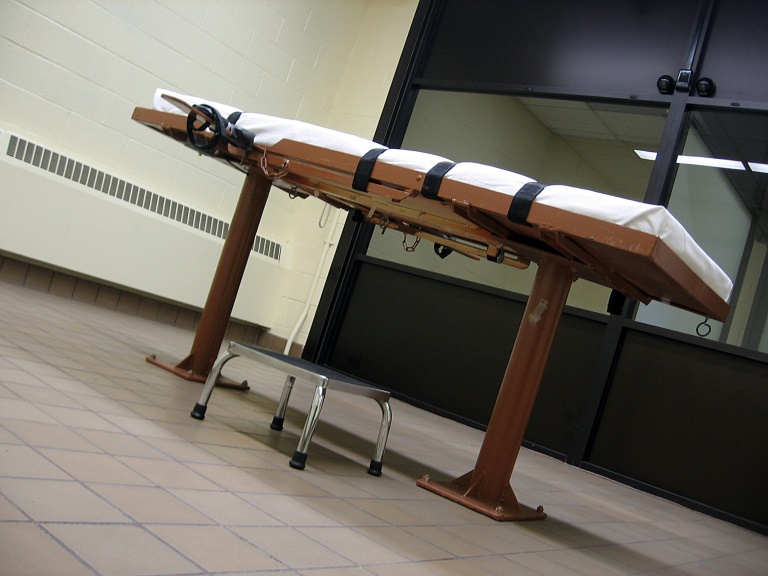
The US state of Texas is to execute a man on Wednesday who was sentenced to death for killing his mother.   

Unless a judge grants him a last-minute reprieve, Tracy Beatty, 61, will be executed by lethal injection at a prison in Huntsville in the southern US state.

He was sentenced to death in 2004 for having strangled his 62-year-old mother, Carolyn Click, a year earlier.

Beatty had recently been released from prison after serving sentences for robbery and assault and had been staying with his mother despite their “volatile and combative relationship,” according to court documents. 

She had asked him move out before he beat and strangled her to death during a fight.

As his execution date approached, his lawyers filed final appeals to try to save him on the grounds that he was intellectually impaired. 

Last month, two doctors met with him, but they say they were unable to conduct a conclusive examination because prison authorities refused to remove his handcuffs.

The US Supreme Court has ruled that it is unconstitutional to execute convicts who are intellectually disabled and unable to understand their sentence. Beatty’s lawyers have asked the top US court for a stay of execution. 

Without an intervention, Beatty will be put to death after 6:00 pm (0000 GMT) — the thirteenth death row inmate executed since the beginning of the year in the United States and the fourth in Texas.

S.African court greenlights Amazon's new Africa HQ

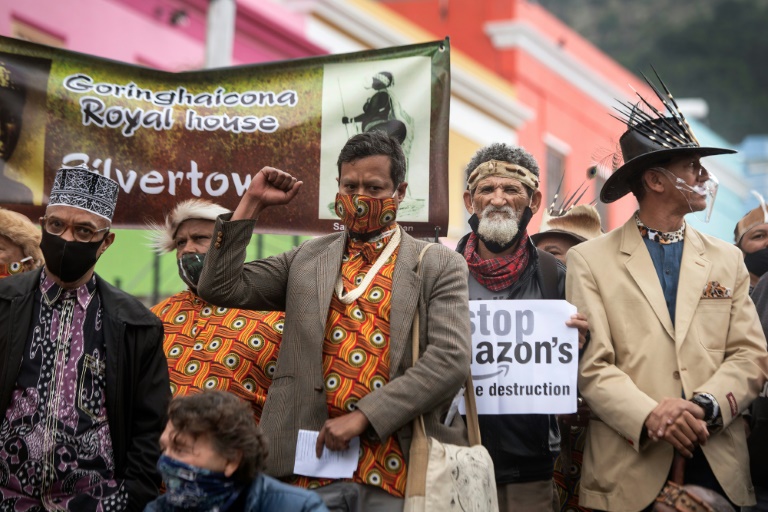
Campaigners on Wednesday slammed a South African court ruling to allow construction to go ahead on Amazon’s new African headquarters, dealing a blow to indigenous groups who say the development will desecrate ancestral land.

Developers now have the go-ahead to re-start work  on a multi-million-dollar project that is to host the US tech giant’s offices –- which had been halted by a previous court decision.

The High Court in Cape Town concluded Tuesday that a representative for several groups opposing the construction had “misrepresented the views of some indigenous leaders without consulting with them”. 

Campaigners opposing the development said they were “deeply disappointed” at ruling. 

“We do not believe that the facts put before the court enabled the court to make a fair judgement,” a collective of campaign groups representing indigenous people said in a statement. 

Amazon was not directly named in the case that has pitted indigenous groups against property developers.

Construction of a nine-storey business and residential complex on a greenfield site that will be anchored by Amazon was first approved by city authorities last year.

But work on the four-billion-rand ($225 million) complex were suspended in March this year after indigenous people took legal action. 

Some of the country’s first inhabitants, the Khoisan, said the development lies on a battlefield where their ancestors fought Portuguese colonisers in 1510.

Once hunter-gatherers known under the now-discarded label of Bushmen, the Khoisan suffered deeply during the colonial-era and under apartheid.

Indigenous communities in South Africa still face vast social inequalities and lack of economic activities, with their history often overlooked.

Located on what was previously a golf course, Amazon’s new HQ will have a total floor space of 70,000 square metres (7.5 million feet) — equivalent to almost 10 football pitches.

The project holds the promise of thousands of jobs in a country where unemployment is cripplingly high.

Several Khoisan groups had thrown their support behind the project after the developers agreed to build a heritage, cultural and media centre that will be operated by indigenous groups.

Strikes flare in Europe as cost of living spirals

European workers squeezed by the soaring cost of living went on strike in Belgium and Greece on Wednesday, with more stoppages threatening to paralyse parts of Britain, France and Spain in coming days.

Spreading industrial unrest poses a problem for governments which are already spending billions trying to blunt the worst effects of rising prices, at least for the most vulnerable.

Europe is acutely affected by the fall-out from the war in Ukraine, which is exacerbating a global energy crisis, inflation and a scarcity of some food products.

The onset of winter, when energy bills spike, and repeated predictions of a continent-wide recession are souring the labour mood even further.

Belgium and Greece saw general strikes on Wednesday, disrupting transport in their respective capitals, impacting businesses.

In Brussels, home to the European Commission and other EU institutions, workers were protesting inflation running higher than 12 percent — well above the 10.7 percent average across the eurozone.

The country’s biggest union, the FGTB, is demanding greater leeway to negotiate pay rises. 

But the Belgian government counters that Belgian salaries are already indexed to inflation — an arrangement not seen in most other countries.

The strike cut train services by 75 percent and closed the airport in the southern city of Charleroi, the main hub in the country for Europe’s leading airline Ryanair.

– Strikes in Britain and France –

In Greece, ferries serving its many islands were among the transport lines halted by a general strike, the second to hit the country since September.

Brief clashes erupted in Athens and Thessaloniki when hooded youths threw firebombs at police, who responded with tear gas.

In the capital, red paint was splashed at the entrance to Greece’s central bank, and a firebomb was thrown at a car in front of the finance ministry.

In the northern city of Thessaloniki, a banner said: “We choose life, not survival.”

Greek unions are insisting on salary rises to cope with inflation which nationally has risen to 12 percent.

Stoppages were to be felt on Thursday in Britain and France, with the underground urban rail networks and buses in London and Paris to be severely affected.

A French union leader, Celine Verzeletti of the CGT confederation, predicted up to 200 “demonstration points”, roughly the same as the last national strike in France, on October 18, when more than 100,000 people protested.

France is not as badly affected by inflation as its European peers, as the state holds stakes in the main energy companies and has minimised how far energy bills can rise.

Inflation in France is just over six percent — better than elsewhere — but with economic activity across the eurozone nosediving, hatches are being battened for what looks like a period of stagflation.

In Britain, where inflation is above 10 percent, worker protests over not being able to make ends meet are coming to a crescendo.

The Bank of England predicts the country is headed for a two-year recession, even though it was forced to hike interest rates, making it even tougher for UK households.

– EU energy moves –

On top of Thursday’s stoppage in London’s Underground, British nurses are to hold the first strike in the 106-year history of their RCN union at a date yet to be announced.

Late next week, hundreds of workers at Heathrow airport are to down tools for three days, between November 18 and 21, to demand better pay.

Their action could force the cancellation of flights to Qatar, which is to host the World Cup football tournament that kicks off on November 20.

British dockers, university staff, postal employees and the legal profession have all held, or threaten to continue strikes over pay eaten away by inflation.

In Spain, truck drivers have called an indefinite strike from next Monday. Their last stoppage, in March, led to empty supermarket shelves.

With labour protests mounting, the EU is looking at ways to take some of the sting out of energy prices.

The European Commission and member states are working on proposals to promote the joint purchase of gas and possibly impose a mechanism to cap the price of wholesale gas within the EU.

Details are not expected to be finalised until late this month, but the steps — and unseasonably warm weather last month — contributed to a fall in gas prices, though they are expected to rise again as winter bites.

The head of the European Central Bank, Christine Lagarde, said last week a “mild” eurozone recession looked likely — but warned it would not be enough to bring down record-high inflation.

Five takeaways from the US midterms

As US election officials continue to count ballots across the country, partial results showed that Democrats have avoided their worst fears, while Republicans are holding out hope that they will retake both chambers of Congress.

With multiple critical races still yet to be called, here are some key midterm takeaways:

– No Republican ‘red wave’ –

The president’s party has traditionally lost seats in midterm elections, and with Joe Biden’s ratings stuck in the low 40s and Republicans pounding him over inflation and crime, pundits had predicted a drubbing for his Democrats.

In the House, early results suggested Republicans were on track for a majority — but only by a handful of seats, a far cry from their predictions.

Top Republican Kevin McCarthy — who hopes to be the lower chamber’s next speaker — struck an upbeat note, telling supporters in the early hours: “It is clear that we are going to take the House back.”

But Senator Lindsey Graham, a top Trump ally, bluntly conceded to NBC that the election is “definitely not a Republican wave, that’s for darn sure.”

At 1400 GMT, NBC News projected that Republicans will possibly win 220 seats, giving them only a thin 2-seat majority.

– Senate undecided –

Control of the 100-seat Senate — currently evenly divided between Republicans and Democrats — hinged early Wednesday on four key races that were still on a knife-edge.

Democrats need two more wins to successfully hold the chamber, with Vice President Kamala Harris serving as the tie-breaking vote, while Republicans need three to flip it.

In Arizona, Nevada and Wisconsin, counting the remaining votes for Senate could take days. And Georgia may well go to a runoff scheduled for December 6.

Democrats had been hoping to pick up seats from retiring Republican senators in North Carolina, Ohio and Pennsylvania, but were only successful in the latter, with hoodie-wearing John Fetterman, who had a stroke during the campaign, defeating Trump-endorsed celebrity doctor Mehmet Oz.

– Glitches fuel disinformation –

Biden has warned that Republicans pose a dire threat to democracy, calling out their growing embrace of voter conspiracy theories boosted by Donald Trump.

In swing-state Arizona, Trump and his chosen candidate for governor, Kari Lake, alleged irregularities after problems with voting machines.

Officials in the most populous county of Maricopa said about 20 percent of the 223 polling stations experienced difficulties related to printers but that no one was denied the right to vote.

“People of Arizona: Don’t get out of line until you cast your vote. They are trying to steal the election with bad Machines and DELAY. Don’t let it happen!” Trump posted on his social media site, Truth Social.

– Candidates eyeing 2024 –

One of the Tuesday’s most decisive wins was for rising Republican star Ron DeSantis, who won the gubernatorial race overwhelmingly in Florida, cementing his status as a top potential White House candidate in 2024.

But if the 44-year-old views his victory as a presidential mandate, he will likely face a stiff challenge from another Florida resident — Trump, who has teased an “exciting” announcement on November 15.

On the Democratic side, Governor Gretchen Whitmer won her reelection bid in Michigan, a key presidential swing state.

Multiple candidates who ran in the 2020 Democratic primary, including now-Transportation Secretary Pete Buttigieg and Senator Amy Klobuchar, made campaign appearances in key races — fueling speculation they are eyeing another run if Biden decides to sit out.

– Growing diversity –

Maura Healey will make history as the first openly lesbian governor in the United States, with the Democrat easily winning her race in the New England state of Massachusetts.

In neighboring New Hampshire, James Roesener became the first openly transgender man elected to a state legislature, joining multiple trans women already in office.

The mid-Atlantic state of Maryland elected its first Black governor, Wes Moore, whose rising profile has some in the US political class commenting on a potential national run.

And 25-year-old Maxwell Frost was elected in Florida, becoming the first member of the US House from the so-called “Generation Z.”

Striking Kenya Airways pilots return to work

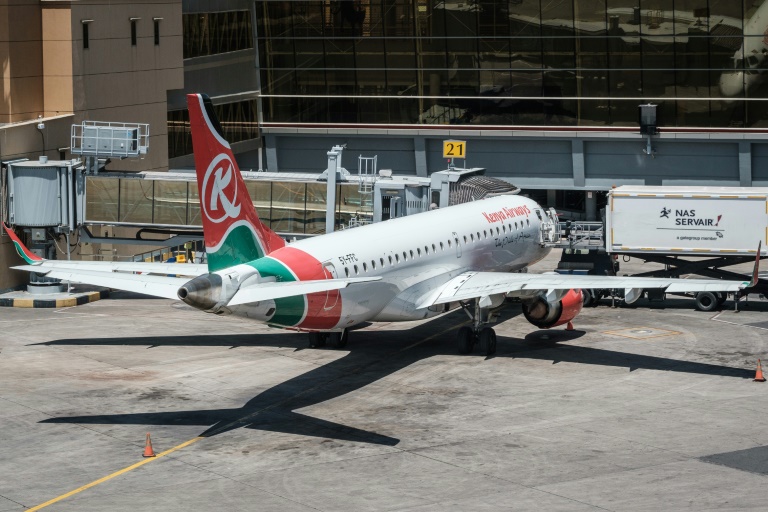
Kenya Airways pilots returned to work on Wednesday, after a court ordered them to end their days-long strike which had led to hundreds of flight cancellations and stranded thousands of passengers.

The strike, which began on Saturday, exacerbated the woes facing the troubled national carrier, which has vowed to “do everything possible to return to normalcy in the shortest time”.

“The strike is off, we are back to work,” a spokesperson for the Kenya Airline Pilots Association (KALPA) told AFP Wednesday, hours after a Nairobi court ordered the union to end the walkout.

Kenya Airways’ latest online update said most flights had resumed on Wednesday, and it said on Twitter it should be operating normally by November 12.

Officials at Nairobi’s Jomo Kenyatta International Airport said the airline was still struggling to clear the backlog from earlier flight cancellations.

“We have had several KQ flights on schedule today take off after the pilots resumed work,” an official at the Kenya Airports Authority told AFP, using the shorthand airline code.

“Things are getting back to normal,” he said. 

The dispute has added to the challenges facing Kenya’s recently elected President William Ruto, who has inherited a country already battling a cost-of-living crisis and a record drought.

Passengers at the airport told AFP they were cautiously optimistic after being forced to reschedule their travel plans because of the strike.

Peace Wamala told AFP she was hoping to finally make it to the Ugandan town of Entebbe following a cancellation on Tuesday.

She said she didn’t yet know “the exact time for our flight but we have been assured we will fly today”.

Another passenger, who only gave her name as Londiwe, told AFP: “I have had the worst experience on KQ during the strike for the past two days, but finally I have been told I will fly this evening.

“So I am just hoping the pilots will not go on strike again.”

KALPA launched the walkout in defiance of a court injunction issued last week against the strike, prompting the government to threaten the pilots with disciplinary action.

– ‘No disciplinary action’ –

Kenya Airways, which is part-owned by the government as well as Air France-KLM, is one of the biggest in Africa, connecting multiple countries to Europe and Asia. 

But it has been running losses for years, despite the government pumping in millions of dollars to keep it afloat.

In a breakthrough for the beleaguered airline, Justice Anna Mwaure on Tuesday ordered KALPA members to resume their duties “unconditionally” by 6:00 am (0300 GMT) Wednesday.

Mwaure also ordered the airline’s management to allow the pilots “to perform their duties without harassing them or intimidating them and especially by not taking any disciplinary action against any of them”.

Transport Minister Kipchumba Murkomen had urged the pilots and the airline’s management to obey the court order.

“In the past three days, this strike has disrupted travel plans for over 12,000 customers… forced the cancellation of over 300 flights, and affected 3,500 other employees who were not part of it,” he said.

The protesting pilots, who make up 10 percent of the airline’s total workforce, are pressing for the reinstatement of contributions to a provident fund and payment of all salaries stopped during the Covid-19 pandemic.

In a statement released Tuesday, the airline’s CEO Allan Kilavuka said: “We commit to complying with the court’s directions.”

The airline and the government have accused the union of engaging in “economic sabotage”, with Kenya Airways warning that the strike would lead to losses estimated at $2.5 million per day.

The airline was founded in 1977 following the demise of East African Airways, and flies more than four million passengers to 42 destinations annually.

It has been operating in large part thanks to state bailouts following years of losses.

Stocks slide on China, US midterms

Global stock markets fell Wednesday following weak Chinese data and as traders assessed results of US midterm elections.

The dollar rose strongly versus the British pound — a currency under pressure owing to the UK’s bleak economic outlook.

Oil prices retreated as official data from China showed the world’s second-largest economy languishing under its strict zero-Covid policy.

Bitcoin continued to slide on fallout from the near-collapse of cryptocurrency platform FTX, reaching the lowest level for two years at $17,172.43.

Shares in Facebook owner Meta jumped 6.1 percent at the start of trading on Wall Street after the company said it would lay off 11,000 staff, in a move which follows a recent plunge of its valuation.

The tech industry is in a serious slump and several major firms have announced mass layoffs — Twitter’s new owner Elon Musk fired half its staff last week.

Ad-supported platforms such as Facebook and Google are suffering with advertisers looking to cut costs as they struggle with inflation and rising interest rates.

– US midterms –

Equities rose ahead of the vote on the likelihood of legislative gridlock for the next two years, which would mean no new big increases in government spending and taxes.

But Republican hopes for a sweeping rebuke of President Joe Biden in congressional elections failed to materialise, with both parties picking up seats following a campaign fought against a backdrop of stubbornly high inflation and fears for US democracy.

While Republicans look like they will pick up a slim majority in the House, the outcome in the Senate is still unclear.

“The stock market had a nice, little run leading up to election day based on the gridlock angle,” said Patrick O’Hare at Briefing.com.

“It appears that is going to be the case, so participants are taking some money off the table,” he added.

– ‘No good news from China’ –

In China, speculation over how long Beijing will keep its harsh lockdown-and-testing Covid-19 policies has fuelled volatility on markets, despite the government vowing it will not change course.

The restrictions have taken a toll on the Chinese economy, with Data Wednesday showing China’s producer price index (PPI) fell by 1.3 percent on-year in October, pushing it into negative territory for the first time since December 2020.

The consumer price index (CPI) — the main gauge for retail inflation — rose 2.1 percent year-on-year in October, moderating slightly from September’s two-year high of 2.8 percent.

“The economy’s slowing, confirmed by the CPI data,” Iris Pang, chief economist for Greater China at ING Wholesale Banking, told AFP. 

“I don’t see any good news from China.”

– Key figures around 1330 GMT –

London – FTSE 100: DOWN 0.2 percent at 7,291.45 points

Frankfurt – DAX: DOWN 0.5 percent at 13,618.84

Paris – CAC 40: DOWN 0.3 percent at 6,419.94

EURO STOXX 50: DOWN 0.5 percent at 3,721.68

New York – Dow: DOWN 0.5 percent at 32,982.50

Tokyo – Nikkei 225: DOWN 0.6 percent at 27,716.43 (close)

Hong Kong – Hang Seng Index: DOWN 1.2 percent at 16,358.52 (close)

Shanghai – Composite: DOWN 0.5 percent at 3,048.17 (close)

Pound/dollar: DOWN at $1.1397 from $1.1468 on Tuesday

Euro/dollar: UP at $1.0030 from $1.0005

Dollar/yen: UP at 146.38 yen from 146.26 yen

Euro/pound: UP at 87.95 pence from 87.23 pence

West Texas Intermediate: DOWN 1.4 percent at $87.64 per barrel

Brent North Sea crude: DOWN 1.5 percent at $93.97 per barrel

burs-rl/jmm

Facebook owner Meta to lay off 11,000 staff

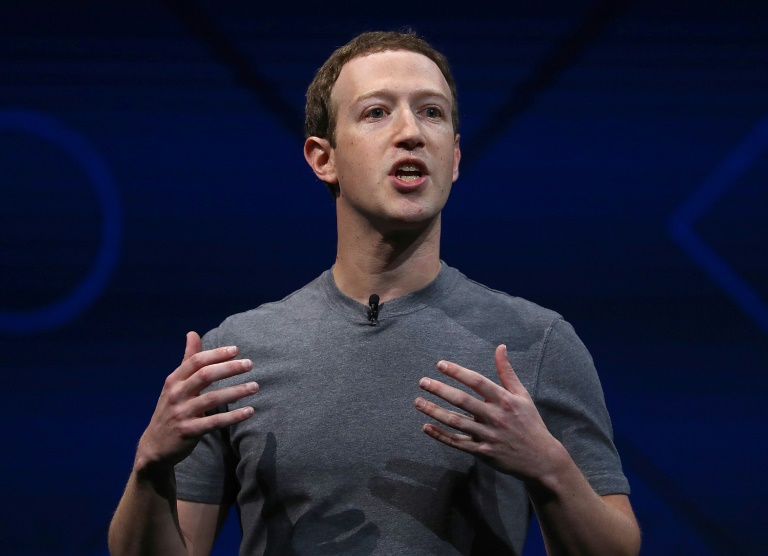
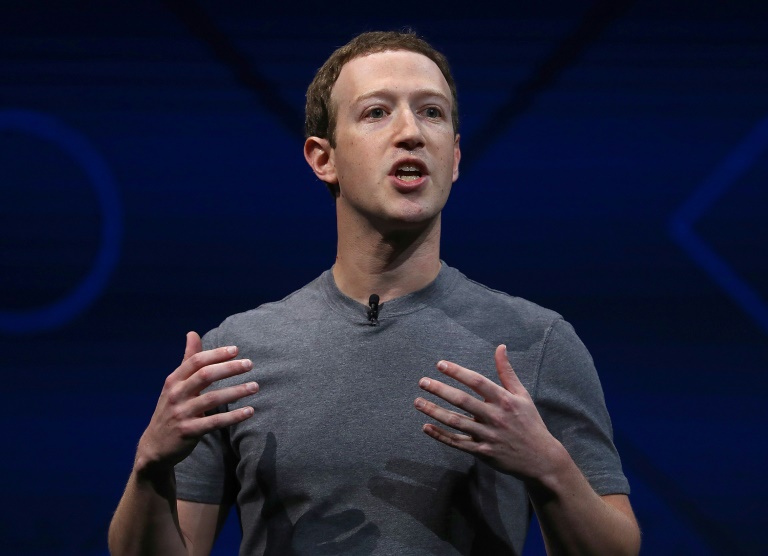
Facebook owner Meta will lay off more than 11,000 of its staff in “the most difficult changes we’ve made in Meta’s history,” boss Mark Zuckerberg said on Wednesday.

He said the cuts represented 13 percent of the social media titan’s workforce and would affect its research lab focusing on the metaverse as well as its apps, which include Facebook, Instagram and WhatsApp.

The tech industry is in a serious slump and several major firms have announced mass layoffs — Twitter’s new owner Elon Musk fired half its staff last week.

“I want to take accountability for these decisions and for how we got here,” Zuckerberg said in a note to staff.

“I know this is tough for everyone, and I’m especially sorry to those impacted.”

Ad-supported platforms such as Facebook and Google are suffering with advertisers looking to cut costs as they struggle with inflation and rising interest rates.

Zuckerberg told 87,000-strong staff he had expected the boost in e-commerce and online activity during the Covid pandemic to continue, but added: “I got this wrong, and I take responsibility for that.”

The downturn has affected companies across the sector, with Apple and Amazon also recently announcing results that disappointed investors.

But Meta also faces some unique problems of its own.

The California-based company is being squeezed by Zuckerberg’s decision to devote billions of dollars to developing the metaverse, an immersive version of the web accessed via virtual reality headsets.

Zuckerberg renamed the company Meta a year ago to reflect the commitment to the project, but the division working on metaverse technology has since made losses of more than $3.5 billion.

Facebook is also struggling to fend off Chinese-owned TikTok, the now dominant social media for younger users to the detriment of Meta’s Instagram.

– ‘Last resort’ –

Mike Proulx, a research director at Forrester, said “Meta is amidst an identity crises” and that severe cost-cutting was “inevitable.”

“The company has one foot in a risky long-term metaverse bet and another foot failing to compete with TikTok,” he added.

Zuckerberg has hinted several times this year that belt-tightening measures were just around the corner and said in his letter on Wednesday that staff layoffs were a “last resort.”

Meta would also keep a hiring freeze going into next year, he said, and other spending cuts were envisaged.

“Fundamentally, we’re making all these changes for two reasons: our revenue outlook is lower than we expected at the beginning of this year, and we want to make sure we’re operating efficiently,” Zuckerberg wrote.

The measures were also a message to Wall Street, where the company’s poor performance has sent the Meta share price plummeting by 70 percent since the start of the year.

Last month, Meta announced profits of $4.4 billion in the third quarter, a 52 percent decrease year-on-year.

The slump in profits comes despite its platforms dominating the world in terms of users — Facebook alone claims to have around two billion people who log on daily.

An earlier version of this story misspelled the name of Meta’s CEO in paragraphs 15 and 17. He is Mark Zuckerberg, not Mark Zuckerman.

Facebook owner Meta to lay off 11,000 staff

Facebook owner Meta will lay off more than 11,000 of its staff in “the most difficult changes we’ve made in Meta’s history,” boss Mark Zuckerberg said on Wednesday.

He said the cuts represented 13 percent of the social media titan’s workforce and would affect its research lab focusing on the metaverse as well as its apps, which include Facebook, Instagram and WhatsApp.

The tech industry is in a serious slump and several major firms have announced mass layoffs — Twitter’s new owner Elon Musk fired half its staff last week.

“I want to take accountability for these decisions and for how we got here,” Zuckerberg said in a note to staff.

“I know this is tough for everyone, and I’m especially sorry to those impacted.”

Ad-supported platforms such as Facebook and Google are suffering with advertisers looking to cut costs as they struggle with inflation and rising interest rates.

Zuckerberg told 87,000-strong staff he had expected the boost in e-commerce and online activity during the Covid pandemic to continue, but added: “I got this wrong, and I take responsibility for that.”

The downturn has affected companies across the sector, with Apple and Amazon also recently announcing results that disappointed investors.

But Meta also faces some unique problems of its own.

The California-based company is being squeezed by Zuckerberg’s decision to devote billions of dollars to developing the metaverse, an immersive version of the web accessed via virtual reality headsets.

Zuckerberg renamed the company Meta a year ago to reflect the commitment to the project, but the division working on metaverse technology has since made losses of more than $3.5 billion.

Facebook is also struggling to fend off Chinese-owned TikTok, the now dominant social media for younger users to the detriment of Meta’s Instagram.

– ‘Last resort’ –

Mike Proulx, a research director at Forrester, said “Meta is amidst an identity crises” and that severe cost-cutting was “inevitable.”

“The company has one foot in a risky long-term metaverse bet and another foot failing to compete with TikTok,” he added.

Zuckerberg has hinted several times this year that belt-tightening measures were just around the corner and said in his letter on Wednesday that staff layoffs were a “last resort.”

Meta would also keep a hiring freeze going into next year, he said, and other spending cuts were envisaged.

“Fundamentally, we’re making all these changes for two reasons: our revenue outlook is lower than we expected at the beginning of this year, and we want to make sure we’re operating efficiently,” Zuckerberg wrote.

The measures were also a message to Wall Street, where the company’s poor performance has sent the Meta share price plummeting by 70 percent since the start of the year.

Last month, Meta announced profits of $4.4 billion in the third quarter, a 52 percent decrease year-on-year.

The slump in profits comes despite its platforms dominating the world in terms of users — Facebook alone claims to have around two billion people who log on daily.

An earlier version of this story misspelled the name of Meta’s CEO in paragraphs 15 and 17. He is Mark Zuckerberg, not Mark Zuckerman.

US livid as basketball star Griner moved to Russian penal colony

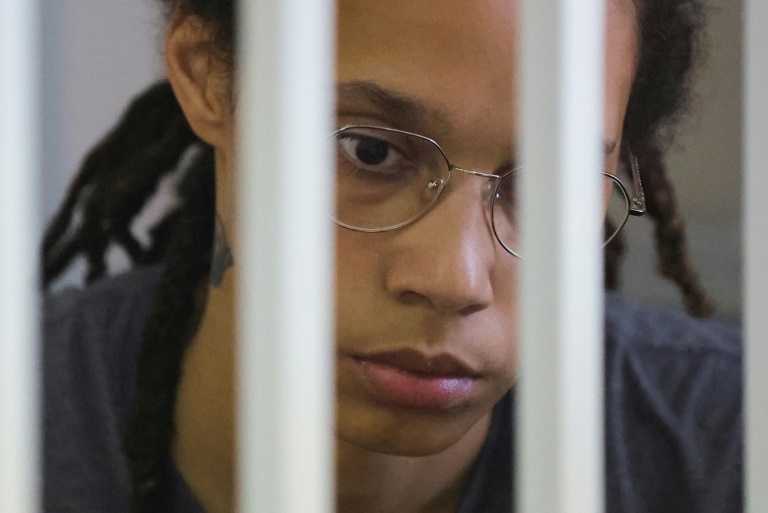
Russia is moving US basketball star Brittney Griner to a penal colony after she lost an appeal against a drug conviction, her lawyers said Wednesday, drawing a sharp rebuke from the White House.

Griner, who has been jailed for nine years for possession of a small quantity of cannabis oil, was transferred out of a detention centre on November 4, her legal team said.

She “is now on her way to a penal colony,” lawyers Maria Blagovolina and Alexander Boykov said in a statement.

“We do not have any information on her exact current location or her final destination,” they added.

Russia generally notifies of a prisoner’s transfer to a different address by mail, taking up to two weeks, the lawyers said.

Griner’s case has drawn outrage in the United States, with Secretary of State Antony Blinken on Wednesday describing her transfer as “another injustice layered on her ongoing unjust and wrongful detention”.

Blinken has sought a deal with Russia to free her despite soaring tensions over Moscow’s offensive in Ukraine.

White House Press Secretary Karine Jean-Pierre reiterated that the United States had made Russia a “substantial offer” to resolve her case.

– ‘Wrongful detention’ –

“Every minute that Brittney Griner must endure wrongful detention in Russia is a minute too long,” Jean-Pierre said.

Griner — a two-time Olympic basketball gold medallist and Women’s NBA champion — had been in Russia to play for the professional Yekaterinburg team during her off-season from the Phoenix Mercury Women’s National Basketball Association side.

She said the cannabis in vape cartridges was to treat painful sports injuries, but Russia does not allow medical marijuana use.

Observers have suggested that Griner and another American jailed in Russia, Paul Whelan — a retired US Marine arrested in December 2018 and accused of spying — could be traded for Viktor Bout, a famed Russian arms trafficker serving 25 years in prison on a 2012 conviction.

– ‘Totalitarian system’ – 

Activists say abuse and torture are frequent in Russia’s vast network of prisons run by the Federal Penitentiary Service (FSIN), a successor to the notorious Gulag system of the Stalin era.

Penal colonies are the most common type of prisons and are known for their harsh treatment of inmates, insanitary conditions and lack of access to proper healthcare.

Prison officials also often limit inmates’ contact with lawyers and family. Harassment of prisoners sometimes leads to prison riots.

Prisoners’ rights activist Vladimir Osechkin said conditions in penal colonies are much harsher than in detention centres. 

“It is a more totalitarian system with Gulag uniforms and 100 people per room in barracks,” Osechkin, who founded the Gulagu.net rights group, told AFP, warning that prison officials routinely orchestrate conflicts and fights between inmates. 

“If the Kremlin decides not to torture the basketball player and creates VIP conditions for her, she will be allowed to eat separately, play sports and keep fit,” said Osechkin.

But if “the federal prison service receives an order to put pressure on her then of course her life and health will be in danger.”

A number of US citizens including Whelan are currently behind bars in Russia. 

Whelan’s brother David regularly describes Paul’s life in the IK-17 colony in the central region of Mordovia, saying he has undergone sleep deprivation and that suicides are common in prisons.

The treatment of the jailed opposition leader Alexei Navalny has also highlighted abuses in prisons, activists say.

The 46-year-old has been repeatedly placed in solitary confinement, which his supporters say amounts to torture.

Anti-torture project Gulagu.net has drawn attention to what it calls systemic abuse and sexual violence towards prisoners.

Last year it released harrowing video footage of a naked man being raped with what appeared to be a broom stick at a prison hospital.

Germany blocks sale of two chipmakers to China

Germany on Wednesday blocked the sale of two chipmakers to Chinese investors because of a potential threat to security.

“We must look very closely at company takeovers when it relates to important infrastructure or when there is a danger that the technology would flow to buyers from non-EU countries,” said Economy Minister Robert Habeck.

Chinese company Sai MicroElectronics had been seeking to buy the Dortmund factory of Elmos through its Swedish subsidiary Silex. 

The German government had rejected the planned takeover because “the purchase could endanger the order and security of Germany,” said the economy ministry.

Other ways of reducing the risks, including allowing the acquisition under certain conditions, were “unable to eliminate the identified dangers”, it added.

A second acquisition had been turned down, Habeck said, without naming the companies involved because of “trade secrets”.

But Germany’s minister for research Bettina Stark-Watzinger named the company as Bavaria-based ERS Electronic, which supplies a cooling technology to wafer manufacturers.

Fears have been growing in Europe’s economic powerhouse about an over-reliance on Beijing, and letting critical infrastructure fall into the hands of Chinese state-linked companies.

Russia’s invasion of Ukraine and its subsequent dwindling of crucial gas supplies to Europe has further accentuated the concerns.

In particular, the microchip industry has come under scrutiny, as it produces key components used across industry from consumer electronics to battery-powered vehicles.

Earlier this year, the European Union unveiled a multibillion euro “Chips Act” aimed at doubling Europe’s market share in semiconductors and reducing dependence on supplies from Asia. 

– ‘Not naive’ –

Elmos, which primarily builds components for the automobile industry, said late last year it intended to sell the production facility at its headquarters.

Silex was seeking to buy the site for 85 million euros ($85.4 million).

But business weekly Wirtschaftswoche said Elmos had been the recipient of 5.9 million euros from the German state for two research projects. It had also received 8.1 million euros from an EU project on autonomous driving.

Habeck said that Germany remained open to investors, but that “we are also not naive”. 

Beijing has been trying to glean knowledge about production and development, underlined the minister, saying that the “statements from China are very clear”.

Habeck, of the ecologist Greens party, has recently locked horns with Chancellor Olaf Scholz over investments from China.

He deeply opposed a plan by Chinese shipping firm Cosco to buy a stake in a Hamburg port terminal, forcing Scholz to pull rank to force through the deal by allowing the purchase of a reduced stake.

Scholz has repeatedly underlined the importance of strong trade ties with Beijing, something that German industry leaders have also stressed.

China is a major market for German goods, particularly for auto giants Volkswagen, BMW and Mercedes-Benz, and many jobs in Europe’s top economy depend directly on the relationship.

On a controversial visit to Beijing last week, Scholz, accompanied by a delegation of German business bosses, told Chinese leaders that Berlin expected equal treatment on trade.

But Scholz’s trip has sparked controversy for coming so soon after Xi Jinping strengthened his hold on power in China last month.

With tensions between the West and Beijing running high on issues ranging from Taiwan to alleged human rights abuses, there had been concerns that the high-profile trip may have unsettled both the United States and the European Union.

Close Bitnami banner
Bitnami