US Business

Strikes flare in Europe as cost of living spirals

European workers squeezed by the soaring cost of living went on strike in Belgium and Greece on Wednesday, with stoppages threatening to paralyse parts of Britain, France and Spain in coming days.

Spreading industrial unrest poses a problem for governments which are already spending billions trying to blunt the worst effects of rising prices, at least for the most vulnerable.

Europe is acutely affected by the fall-out of the war in Ukraine, which is exacerbating a global energy crisis, inflation and a scarcity of some food products.

The onset of winter, when energy bills spike, and repeated predictions of a looming, continent-wide recession are souring the labour mood even further.

Belgium and Greece saw general strikes on Wednesday, disrupting transport in their respective capitals, impacting businesses.

In Brussels, home to the European Commission and other EU institutions, workers were protesting inflation running higher than 12 percent — well above the 10.7 percent average across the eurozone.

The country’s biggest union, the FGTB, is demanding greater leeway to negotiate pay rises. 

But the Belgian government counters that Belgian salaries are already indexed to inflation — an arrangement not seen in most other countries.

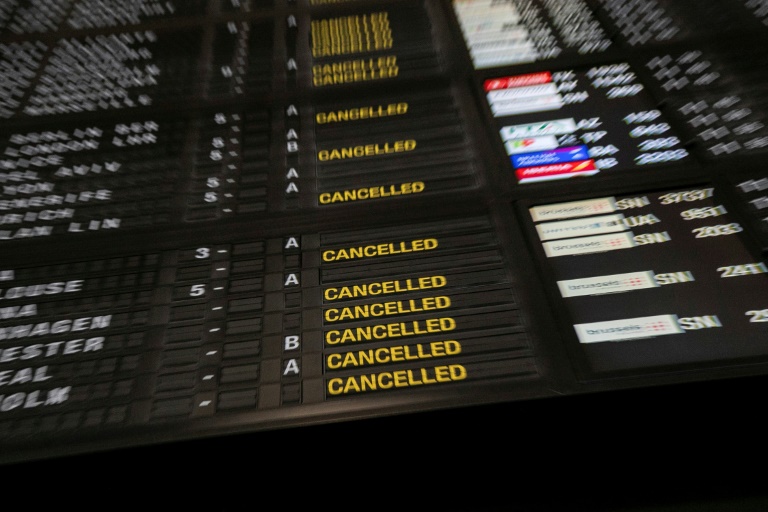
The strike cut train services by 75 percent and closed the airport in the southern city of Charleroi, the main hub in the country for Europe’s leading airline Ryanair.

– Strikes in Britain and France –

In Greece, ferries serving its many islands were among the transport lines halted by a general strike, the second to hit the country since September.

Greek unions are insisting on salary rises to cope with inflation which nationally has risen to 12 percent.

“The cost of living is untenable,” read a large poster for the country’s biggest union, the GSEE, calling for “social protection for all”.

Stoppages were to be felt on Thursday in Britain and France, with the underground urban rail networks and busses in London and Paris to be severely affected.

A French union leader, Celine Verzeletti of the CGT confederation, predicted up to 200 “demonstration points”, roughly the same as the last national strike in France, on October 18, when more than 100,000 people protested.

France is not as badly affected by inflation as its European peers, as the state holds stakes in the main energy companies and has minimised how far energy bills can rise.

Inflation in France is just over six percent — better than elsewhere — but with economic activity across the eurozone nosediving, hatches are being battened for what looks like a period of stagflation.

In Britain, where inflation is above 10 percent, worker protests over not being able to make ends meet are coming to a crescendo.

The Bank of England predicts the country is headed for a two-year recession, even though it was forced to hike interest rates, making it even tougher for UK households.

– EU energy moves –

On top of Thursday’s stoppage in London’s Underground, British nurses are to hold the first strike in the 106-year history of their RCN union at a date yet to be announced.

Late next week, hundreds of workers at Heathrow airport are to down tools for three days, between November 18 and 21, to demand better pay.

Their action could force the cancellation of flights to Qatar, which is to host the World Cup football tournament that kicks off on November 20.

British dockers, university staff, postal employees and the legal profession have all held, or threaten to continue strikes over pay eaten away by inflation.

In Spain, truck drivers have called an indefinite strike from next Monday. Their last stoppage, in March, led to empty supermarket shelves.

With labour protests mounting, the EU is looking at ways to take some of the sting out of energy prices.

The European Commission and member states are working on proposals to promote the joint purchase of gas and possibly impose a mechanism to cap the price of wholesale gas within the EU.

Details are not expected to be finalised until late this month, but the steps — and unseasonably warm weather last month — contributed to a fall in gas prices, though they are expected to rise again as winter bites.

The head of the European Central Bank, Christine Lagarde, said last week a “mild” eurozone recession looked likely — but warned it would not be enough to bring down record-high inflation.

Germany's huge Wirecard fraud trial to start in December

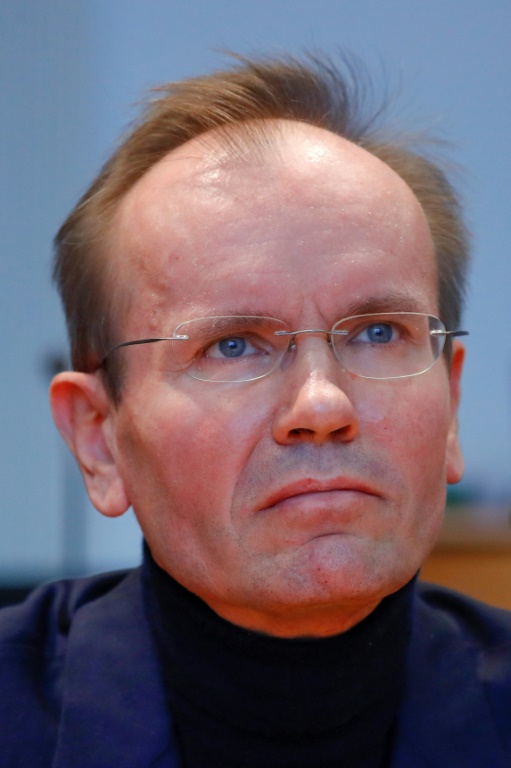
Wirecard’s former CEO Markus Braun will go on trial from December 8 to answer fraud charges in Germany’s biggest-ever accounting scandal, a Munich court said Wednesday.

Austrian-born Braun, 53, stands accused of “commercial gang fraud”, embezzlement and market manipulation for his role in Wirecard’s spectacular collapse two years ago.

The higher regional court in Munich said it had scheduled 100 court dates for the mammoth trial.

Once the standard-bearer for the German tech industry, payments firm Wirecard was plunged into chaos in 2020 after admitting that 1.9 billion euros ($1.9 billion) missing from its balance sheets likely didn’t exist.

The scandal was “unparallelled” in Germany’s post-war history, according to then finance minister Olaf Scholz, who is now chancellor.

Braun, who has been in custody for over two years, denies the allegations.

Two other Wirecard managers, accounting boss Stephan von Erffa and Oliver Bellenhaus, the former head of Wirecard’s Dubai subsidiary, were also charged with fraud last March.

The trio had worked “in an industrial fashion” to commit the fraud, German prosecutors said at the time. The accused face “several years” in prison if found guilty, they added.

Wirecard’s chief operating officer Jan Marsalek, who has been on the run since the firm’s collapse, is still wanted by German prosecutors.

He was reported earlier this year to be hiding out in Moscow.

– Germany’s Enron –

The time it took for German prosecutors to file formal charges against Braun underlined the complex web of fraudulent transactions implicating Wirecard subsidiaries and third-party companies that took investigators across the world to unravel.

Among victims of the fraud were banks that had provided credit of 1.7 billion euros to Wirecard. Bonds worth 1.4 billion euros had also been issued and are unlikely to be repaid.

“All the accused group members were acting in an industrial fashion… that is how they secured their own salaries, including partially profit-related portions,” prosecutors said.

Braun for instance, received at least 5.5 million euros in dividends, they said.

The Wirecard drama has drawn comparisons with the Enron accounting scandal in the US in the early 2000s.

Founded in 1999, the Bavarian start-up Wirecard rose from being a company piping cash to pornography and gambling sites to a respectable electronic payments provider that edged traditional lender Commerzbank out of the prestigious DAX index.

It boasted a market valuation of more than 23 billion euros at one point — outweighing even giant Deutsche Bank.

Wirecard’s troubles began in 2019 with a series of articles in the Financial Times alleging accounting irregularities in its Asian division, headed by Marsalek.

But the company was able, at that time, to fend off the claims and the FT’s journalists themselves came under investigation over the reports. 

The huge scam unravelled in June 2020 when auditors EY said they were unable to find 1.9 billion euros of cash in the company’s accounts.

The sum, which made up a quarter of the balance sheet, was supposedly held to cover risks in trading carried out by third parties on Wirecard’s behalf and was meant to be sitting in trustee accounts at two Filippino banks.

But the Philippines’ central bank has said the cash never entered its monetary system and both Asian banks, BDO and BPI, denied having a relationship with Wirecard.

Wirecard filed for insolvency soon after and was booted off Germany’s blue-chip DAX index after its share price plummeted by 98 percent. 

It became the first DAX company to fail, and the company’s collapse was a major embarrassment to Germany and its financial services industry.

The country’s finance watchdog Bafin was overhauled in the wake of the scandal, after coming under scrutiny for missing early warning signs of wrongdoing at Wirecard.

Facebook owner Meta to lay off 11,000 staff

Facebook owner Meta will lay off more than 11,000 of its staff in “the most difficult changes we’ve made in Meta’s history”, boss Mark Zuckerberg said on Wednesday.

He said the cuts represented 13 percent of the social media titan’s workforce and would affect its research lab focusing on the metaverse as well as its apps, which include Facebook, Instagram and Whatsapp.

The tech industry is in a serious slump and several major firms have announced mass layoffs — Twitter’s new owner Elon Musk fired half its staff last week.

“I want to take accountability for these decisions and for how we got here,” Zuckerberg said in a note to staff.

“I know this is tough for everyone, and I’m especially sorry to those impacted.”

Ad-supported platforms such as Facebook and Google are suffering with advertisers looking to cut costs as they struggle with inflation and rising interest rates.

Zuckerberg told staff he had expected the boost in e-commerce and online activity during the Covid pandemic to continue, but added: “I got this wrong, and I take responsibility for that.”

– Metaverse woes –

The downturn has affected companies across the sector, with Apple and Amazon also recently announcing results that disappointed investors.

But Meta also faces some unique problems of its own.

Investors have been worried about Zuckerberg’s decision to devote billions of dollars to developing the metaverse, an immersive version of the web accessed via virtual reality headsets.

Zuckerberg renamed the company to Meta a year ago to reflect the commitment to the project, but the division working on metaverse technology has since made losses of more than $3.5 billion.

He has hinted several times this year that belt-tightening measures were just around the corner and said in his letter on Wednesday that staff layoffs were a “last resort”.

Meta would also keep a hiring freeze going into next year, he said, and other spending cuts were envisaged.

“Fundamentally, we’re making all these changes for two reasons: our revenue outlook is lower than we expected at the beginning of this year, and we want to make sure we’re operating efficiently,” he wrote.

Last month, Meta announced profits of $4.4 billion in the third quarter, a 52 percent decrease year-on-year, causing its stock price to fall 25 percent.

The slump in profits comes despite its platforms dominating the world in terms of users — Facebook alone claims to have around two billion people who log on daily. 

Facebook owner Meta to lay off 11,000 staff

Facebook owner Meta will lay off more than 11,000 of its staff in “the most difficult changes we’ve made in Meta’s history”, boss Mark Zuckerberg said on Wednesday.

He said the cuts represented 13 percent of the social media titan’s workforce and would affect its research lab focusing on the metaverse as well as its apps, which include Facebook, Instagram and Whatsapp.

The tech industry is in a serious slump and several major firms have announced mass layoffs — Twitter’s new owner Elon Musk fired half its staff last week.

“I want to take accountability for these decisions and for how we got here,” Zuckerberg said in a note to staff.

“I know this is tough for everyone, and I’m especially sorry to those impacted.”

Ad-supported platforms such as Facebook and Google are suffering with advertisers looking to cut costs as they struggle with inflation and rising interest rates.

Zuckerberg told staff he had expected the boost in e-commerce and online activity during the Covid pandemic to continue, but added: “I got this wrong, and I take responsibility for that.”

– Metaverse woes –

The downturn has affected companies across the sector, with Apple and Amazon also recently announcing results that disappointed investors.

But Meta also faces some unique problems of its own.

Investors have been worried about Zuckerberg’s decision to devote billions of dollars to developing the metaverse, an immersive version of the web accessed via virtual reality headsets.

Zuckerberg renamed the company to Meta a year ago to reflect the commitment to the project, but the division working on metaverse technology has since made losses of more than $3.5 billion.

He has hinted several times this year that belt-tightening measures were just around the corner and said in his letter on Wednesday that staff layoffs were a “last resort”.

Meta would also keep a hiring freeze going into next year, he said, and other spending cuts were envisaged.

“Fundamentally, we’re making all these changes for two reasons: our revenue outlook is lower than we expected at the beginning of this year, and we want to make sure we’re operating efficiently,” he wrote.

Last month, Meta announced profits of $4.4 billion in the third quarter, a 52 percent decrease year-on-year, causing its stock price to fall 25 percent.

The slump in profits comes despite its platforms dominating the world in terms of users — Facebook alone claims to have around two billion people who log on daily. 

Democrats hold back 'red wave' in cliff-hanger US midterms

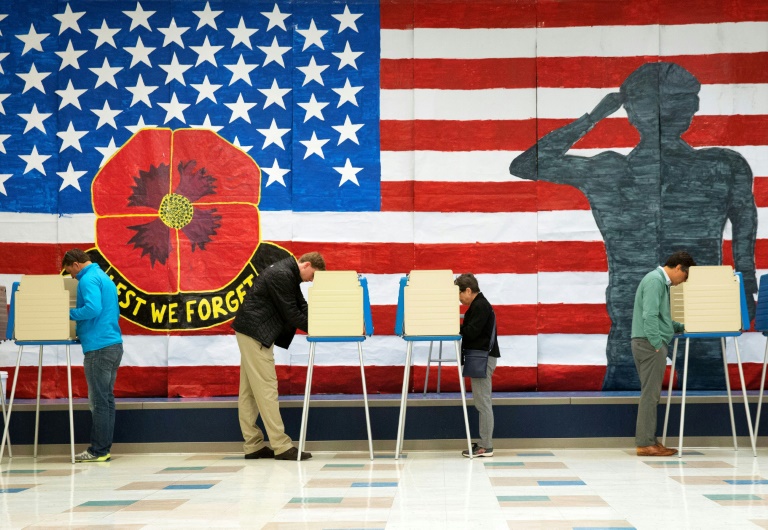
Republican hopes of a “red wave” carrying them to power in the US Congress faded Wednesday as Joe Biden’s Democrats put up a stronger-than-expected defense in a midterm contest headed for a cliff-hanger finish.

With a majority of Tuesday’s races called, Republicans seemed on track to reclaim the House of Representatives for the first time since 2018, but the Senate was still in play, with forecasts tentatively leaning Democratic.

And the midterms delivered a decidedly mixed bag for Donald Trump, who though not on the ballot loomed large over the contest, teasing a 2024 run and airing unsubstantiated allegations of Election Day fraud.

While the night saw wins by more than 100 Republicans embracing Trump’s “Big Lie” that Biden stole the 2020 election, several high-profile, election-denying acolytes of the former president came up short.

Aiming to deliver a rebuke of Biden’s presidency, against a backdrop of sky-high inflation and bitter culture wars, Republicans needed one extra seat to wrest control of the evenly divided Senate.

But by early Wednesday the only seat to change party hands went to the Democrats, with John Fetterman, a burly champion of progressive economic policies, triumphing in Pennsylvania.

In the House, early results suggested Republicans were on track for a majority — but only by a handful of seats, a far cry from their predictions.

Top Republican Kevin McCarthy — who hopes to be the lower chamber’s next speaker — struck an upbeat note, telling supporters in the early hours: “It is clear that we are going to take the House back.”

But Senator Lindsey Graham, a top Trump ally, bluntly conceded to NBC that the election is “definitely not a Republican wave, that’s for darn sure.”

– Four key races –

The president’s party has traditionally lost seats in midterm elections, and with Biden’s ratings stuck in the low 40s and Republicans pounding him over inflation and crime, pundits had predicted a drubbing.

That would have raised tough questions on whether America’s oldest-ever commander in chief, who turns 80 this month, should run again.

Instead Biden stands to emerge in much better shape than either of his Democratic predecessors, Barack Obama or Bill Clinton, who both took a hammering at the midterms.

Control of the Senate hinged early Wednesday on four key races that were still on a knife-edge.

Democrats need two more wins to successfully hold the chamber, while Republicans need three to flip it.

In Arizona, Nevada and Wisconsin, counting the remaining votes for Senate could take days. And Georgia may well go to a runoff scheduled for December 6. 

– Florida swings right –

On a night of close contests, one of the most decisive wins was for rising Republican star Ron DeSantis, who won the gubernatorial race overwhelmingly in Florida, cementing his status as a top potential White House candidate in 2024.

DeSantis, who has railed against Covid-19 mitigation measures and transgender rights, was projected to have won by nearly 20 points against a folksy ex-governor, four years after squeaking by in his longtime swing state.

“We will never, ever surrender to the woke mob,” DeSantis told a victory party, using a derisive term for social justice campaigners.

But if the 44-year-old views his victory as a presidential mandate, he will likely face a stiff challenge from another Florida resident — Trump, who has teased an “exciting” announcement on November 15.

Among other races, Maura Healey will make history as the first openly lesbian governor in the United States, and in New York, where recent polls unnerved Democrats, Governor Kathy Hochul fended off a Republican challenge.

– Trump alleges fraud –

Trump, who faces criminal probes over taking top secret documents from the White House and trying to overturn the 2020 election, returned to his playbook of airing unsubstantiated claims of fraud.

In Arizona, Trump and his chosen candidate for governor, Kari Lake, alleged irregularities after problems with voting machines.

Officials in the most populous county of Maricopa said about 20 percent of the 223 polling stations experienced difficulties related to printers but that no one was denied the right to vote.

Biden has warned that Republicans pose a dire threat to democracy, calling out their growing embrace of voter conspiracy theories that fueled last year’s storming of the Capitol.

In the run-up to the election, an intruder espousing far-right beliefs broke into the San Francisco home of House Speaker Nancy Pelosi and bludgeoned her husband with a hammer.

Voting in Phoenix, Kenneth Bellows, a 32-year-old law student, said runaway inflation is “hurting Americans who are just trying to get by.”

“We don’t need any of the crazy woke rhetoric that’s going on right now. What we really need is focusing on everyday kitchen-table politics, to make sure taxes are low,” he said.

But at a restaurant serving up soul food in Pittsburgh, Lasaine Latimore, 77, said Democrats were best placed to help Americans.

“I just want my medical insurance and more money for dental and glasses,” she said.

A Republican victory could derail Biden’s legislative agenda, with Congress scuttling his ambitions on climate change and scrutinizing the billions of US dollars to help Ukraine fight Russia.

Tata Motors extends losses on chip woes, weak exports

India’s Tata Motors announced a seventh consecutive quarter of losses Wednesday as chip shortages and weak demand in export markets hurt sales.

Net losses at the Mumbai-headquartered automaker narrowed to 9.45 billion rupees ($116 million) in the July-to-September quarter, compared to a loss of 44.42 billion rupees in the same period last year.

But revenue from operations rose nearly 30 percent year-on-year to 796.11 billion rupees, as wholesale demand improved despite continued supply chain bottlenecks, such as semiconductor chip shortages.

“Demand continues to remain strong,” the company said in a stock exchange filing, but warned it remained vulnerable to “global uncertainties”.

Covid-19 lockdowns in China have also hurt sales this year.

But Tata Motors said “improving chip supply and cooling commodity prices” will aid business recovery in the quarters ahead.

Revenues at British subsidiary Jaguar Land Rover (JLR) rose 35.9 percent to £5.26 billion ($6 billion) in the quarter as production of new Range Rover models improved, but it still lost £173 million.

“Demand for our most profitable and desired vehicles remains strong,” JLR chief Thierry Bollore said in a statement.

“We expect to continue to improve our performance in the second half of the year, as new agreements with semiconductor partners take effect,” he added.

Pending orders at JLR, Britain’s biggest carmaker, stood at 205,000 units at the end of September, as chip supply constraints persisted.

Revenue from Tata Motors’ commercial vehicle business jumped 35 percent year-on-year to 164.20 billion rupees, as India bounced back from a 2021 pandemic sales dent.

But commercial vehicle exports fell 22 percent in the quarter, impacted by “financial crisis in (a) few export markets”, with commodity price inflation and foreign exchange movements also eating into profit margins.

Demand for passenger vehicles remained strong, with revenues up 71 percent on-year to 125.47 billion rupees, buoyed by Indian festival season demand during the quarter.

Shares in Tata Motors closed 0.44 percent lower in Mumbai ahead of the earnings announcement.

Stocks drop with eyes on China, US midterms

Stock markets fell Wednesday following weak Chinese data and as traders assessed results of US midterm elections.

The dollar rose strongly versus the British pound — a currency under pressure owing to the UK’s bleak economic outlook.

Oil prices retreated as official data from China showed the world’s second-largest economy languishing under its strict zero-Covid policy.

Bitcoin continued to slide on fallout from the near-collapse of cryptocurrency platform FTX, reaching the lowest level for two years at $17,172.43.

Eyes will be on Facebook owner Meta at the reopening of Wall Street after the company said it would lay off 11,000 staff, in a move which follows a recent plunge of its valuation.

– US midterms –

Republican hopes for a sweeping rebuke of President Joe Biden in congressional elections failed to materialise, with both parties picking up seats following a campaign fought against a backdrop of stubbornly high inflation and fears for US democracy.

Biden, who framed the race as a clash between defenders of democracy and the “extremist” camp of Donald Trump, spent election night in back-to-back calls with Democrats savouring their wins in Senate, House and gubernatorial races around the country.

“The bigger takeaway from the election may well be what support there is for Trump-backed candidates and what that does for his own re-election hopes in two years. But that’s unlikely to sway the markets now, not with so much else to focus on,” noted Oanda analyst Craig Erlam.

“Investors are more focused on the inflation data on Thursday and whether that will pave the way for a slower pace of (US interest rate) tightening in December and early next year.” 

– ‘No good news from China’ –

In China, speculation over how long Beijing will keep its harsh lockdown-and-testing Covid-19 policies has fuelled volatility on markets, despite the government vowing it will not change course.

The restrictions have taken a toll on the Chinese economy. Data Wednesday showed China’s producer price index (PPI) fell by 1.3 percent on-year in October, pushing it into negative territory for the first time since December 2020.

The consumer price index (CPI) — the main gauge for retail inflation — rose 2.1 percent year-on-year in October, moderating slightly from September’s two-year high of 2.8 percent.

“The economy’s slowing, confirmed by the CPI data,” Iris Pang, chief economist for Greater China at ING Wholesale Banking, told AFP. 

“I don’t see any good news from China.”

– Key figures around 1115 GMT –

London – FTSE 100: DOWN 0.2 percent at 7,293.33 points

Frankfurt – DAX: DOWN 0.5 percent at 13,620.61

Paris – CAC 40: DOWN 0.2 percent at 6,428.74

EURO STOXX 50: DOWN 0.4 percent at 3,725.09

Tokyo – Nikkei 225: DOWN 0.6 percent at 27,716.43 (close)

Hong Kong – Hang Seng Index: DOWN 1.2 percent at 16,358.52 (close)

Shanghai – Composite: DOWN 0.5 percent at 3,048.17 (close)

New York – Dow: UP 1.0 percent at 33,160.83 (close)

Pound/dollar: DOWN at $1.1456 from $1.1468 on Tuesday

Euro/dollar: UP at $1.0059 from $1.0005

Dollar/yen: DOWN at 145.61 yen from 146.26 yen

Euro/pound: UP at 87.77 pence from 87.23 pence

West Texas Intermediate: DOWN 0.6 percent at $88.41 per barrel

Brent North Sea crude: DOWN 0.5 percent at $94.92 per barrel

IMF agrees $4.5 billion support package for Bangladesh

The International Monetary Fund said Wednesday it reached a preliminary agreement to provide Bangladesh with a $4.5 billion support package to help it cope with soaring energy and food prices.

Bangladesh in common with other Asian economies has been hit hard by the sharp rise in prices in the wake of Russia’s invasion of Ukraine, prompting angry street protests.

The South Asian nation of around 170 million people approached the IMF earlier this year for support.

An IMF delegation and Dhaka representatives “reached a staff-level agreement to support Bangladesh’s economic policies” with a total of $4.5 billion under various facilities, the institution said in a statement, adding the deal was subject to IMF management approval.

Bangladesh plans to use the IMF loan to prop up its foreign exchange reserves, which have nosedived from $46 billion to $34 billion.

The Bangladeshi taka has depreciated some 25 percent against the greenback in recent months, while according to official figures inflation has approached 10 percent — but independent economists say the true figure is closer to 20 percent.

Household budgets have been hit hard and the government has pledged to cap the price of several staple foods, including rice, to quell public discontent.

“Bangladesh’s robust economic recovery from the pandemic has been interrupted by Russia’s war in Ukraine, leading to a sharp widening of the current account deficit, rapid decline of foreign exchange reserves, rising inflation and slowing growth,” said IMF team leader Rahul Anand.

“Even as Bangladesh tackles these immediate challenges, addressing long-standing structural issues remains critical, including threats to macroeconomic stability from climate change,” he added.

– Power cuts –

The depreciating currency and dwindling foreign exchange reserves have left Bangladesh unable to import sufficient fossil fuels.

Prime Minister Sheikh Hasina’s government has been forced to close diesel plants, leave some gas-fired power stations idle and impose lengthy power cuts of up to 13 hours a day to conserve existing stocks.

Last month at least 130 million people were left without power after a grid failure caused widespread blackouts.

And tens of thousands of mosques around the Muslim-majority country have been asked to curtail the use of air conditioners to ease pressure on the electricity grid.

The blackouts have sparked widespread public anger and helped mobilise large demonstrations on the streets of Dhaka.

At least three people were killed in one demonstration and around 100 others injured in another in a police crackdown.

In August the government raised the prices of petroleum and diesel by up to 50 percent.

Bangladesh’s precarious financial position was compounded this year by unprecedented floods in the northeast, inundating the homes of more than seven million people and causing nearly $10 billion in damage, according to government estimates.

The opposition Bangladesh Nationalist Party has blamed the government for the crisis, accusing it of squandering cash on multibillion-dollar vanity projects.

It has organised a series of rallies demanding Hasina’s resignation and a general election under a caretaker government.

Bangladesh hopes to graduate from Least Developed Country status and become a “middle-income” nation by 2031.

Hasina’s government has put together a programme, which the IMF said it supports, to achieve the goal, as well as measures to contain inflation, change its monetary policy framework, and strengthen the financial sector.

Bangladesh will also support large-scale climate investments and seek additional climate financing.

Elsewhere in the region, Sri Lanka has also sought a bailout from the IMF, its economic crisis — which saw its president ousted by street protests — exacerbated by the global rise in energy and food prices.

FTX collapse gives crypto sector 'another black eye'

Even for a sector regularly rocked by bankruptcies, the collapse of FTX –- a cryptocurrency platform worth $32 billion at the beginning of the year — came as a shock. 

FTX founder Sam Bankman-Fried had cultivated friends in Washington and basked in glowing tributes when he stepped in to rescue other ailing crypto companies earlier in the year.

Yet, all it took for his firm to unravel was a report on a specialist website raising doubts about FTX’s accounts, followed by a few tweets from his big rival Changpeng Zhao, boss of Binance.

Just days later, Zhao — who had feuded for weeks on Twitter with Bankman-Fried — announced on Tuesday he had signed a letter of intent to buy FTX after the firm asked him for help owing to a “major liquidity crisis”. 

Bitcoin fell in the process to its lowest level in two years. 

“This is another black eye for the industry,” said David Holt, a cryptocurrency industry expert at CFRA. 

Other spectacular collapses this year include virtual currency terra, which was supposed to be pegged to the US dollar, and cryptocurrency investment platform Celsius. 

With questions swirling about the viability of many crypto projects and the broader drop in tech investment since the rise in interest rates, Holt questioned the “longevity and overall survival of a lot of these companies”.

– ‘Red flag’ –

FTX fell quickly when Zhao said he would get rid of Binance’s holdings of FTX’s in-house token FTT, sparking a collapse in its value and evaporation of confidence in the firm. 

Dan Dolev, an analyst for Mizuho, said the failure showed “liquidity in crypto exchanges could be very fickle”. 

“There is little actual capital backing crypto tokens,” he said in a note. 

And he added that FTX’s rapid fall was a “red flag” for platforms such as Coinbase, which mainly offers token and digital currency trading. 

Fans of cryptocurrencies and blockchain-related technologies have become used to a vicious cycle of booms and busts since bitcoin was launched in 2009. 

The notional value of the cryptocurrency market rose to $3 trillion in November 2021 before falling back below $1 trillion in June. 

It is still too early to determine the wider impact of FTX’s rout, said Jamiel Sheikh, founder of several companies in the crypto world. 

“Centralized exchange balance sheets are opaque, and so it is impossible to determine which exchange can withstand a run,” he said. 

But he added that Binance was offering to take over FTX’s assets one-for-one, which showed “some confidence” in the business. 

– ‘A lot of craziness’ –

For Kevin March, co-founder of brokerage Floating Point Group, the question now is who will fill the void left by FTX. 

“Binance, who already controls half the market? Or the hoard of similar but less successful exchange players offering offshore derivatives,” he asked. 

He speculated that the event “could certainly accelerate US market regulation”.

There is a “need for clear custody disclosure requirements from exchanges and a sensible story around what happens in the case of bankruptcy”, said March. 

But Sam Lessin of the venture capital firm Slow Ventures saw some positives in bitter rivals Bankman-Fried and Zhao coming together in a time of crisis.

“These guys can both simultaneously deeply compete with each other but they all have such a vested interest overall in the ecosystem they’ll help each other out as well,” he told CNBC. 

But he added that the sector was still in effect the Wild West where “there’s a lot of craziness, there’s a lot of volatility, and there’s a lot of scams, alongside a lot of deep innovation and really valuable stuff for the future”. 

FTX collapse gives crypto sector 'another black eye'

Even for a sector regularly rocked by bankruptcies, the collapse of FTX –- a cryptocurrency platform worth $32 billion at the beginning of the year — came as a shock. 

FTX founder Sam Bankman-Fried had cultivated friends in Washington and basked in glowing tributes when he stepped in to rescue other ailing crypto companies earlier in the year.

Yet, all it took for his firm to unravel was a report on a specialist website raising doubts about FTX’s accounts, followed by a few tweets from his big rival Changpeng Zhao, boss of Binance.

Just days later, Zhao — who had feuded for weeks on Twitter with Bankman-Fried — announced on Tuesday he had signed a letter of intent to buy FTX after the firm asked him for help owing to a “major liquidity crisis”. 

Bitcoin fell in the process to its lowest level in two years. 

“This is another black eye for the industry,” said David Holt, a cryptocurrency industry expert at CFRA. 

Other spectacular collapses this year include virtual currency terra, which was supposed to be pegged to the US dollar, and cryptocurrency investment platform Celsius. 

With questions swirling about the viability of many crypto projects and the broader drop in tech investment since the rise in interest rates, Holt questioned the “longevity and overall survival of a lot of these companies”.

– ‘Red flag’ –

FTX fell quickly when Zhao said he would get rid of Binance’s holdings of FTX’s in-house token FTT, sparking a collapse in its value and evaporation of confidence in the firm. 

Dan Dolev, an analyst for Mizuho, said the failure showed “liquidity in crypto exchanges could be very fickle”. 

“There is little actual capital backing crypto tokens,” he said in a note. 

And he added that FTX’s rapid fall was a “red flag” for platforms such as Coinbase, which mainly offers token and digital currency trading. 

Fans of cryptocurrencies and blockchain-related technologies have become used to a vicious cycle of booms and busts since bitcoin was launched in 2009. 

The notional value of the cryptocurrency market rose to $3 trillion in November 2021 before falling back below $1 trillion in June. 

It is still too early to determine the wider impact of FTX’s rout, said Jamiel Sheikh, founder of several companies in the crypto world. 

“Centralized exchange balance sheets are opaque, and so it is impossible to determine which exchange can withstand a run,” he said. 

But he added that Binance was offering to take over FTX’s assets one-for-one, which showed “some confidence” in the business. 

– ‘A lot of craziness’ –

For Kevin March, co-founder of brokerage Floating Point Group, the question now is who will fill the void left by FTX. 

“Binance, who already controls half the market? Or the hoard of similar but less successful exchange players offering offshore derivatives,” he asked. 

He speculated that the event “could certainly accelerate US market regulation”.

There is a “need for clear custody disclosure requirements from exchanges and a sensible story around what happens in the case of bankruptcy”, said March. 

But Sam Lessin of the venture capital firm Slow Ventures saw some positives in bitter rivals Bankman-Fried and Zhao coming together in a time of crisis.

“These guys can both simultaneously deeply compete with each other but they all have such a vested interest overall in the ecosystem they’ll help each other out as well,” he told CNBC. 

But he added that the sector was still in effect the Wild West where “there’s a lot of craziness, there’s a lot of volatility, and there’s a lot of scams, alongside a lot of deep innovation and really valuable stuff for the future”. 

Close Bitnami banner
Bitnami