US Business

DeSantis wins Florida in landslide, setting stage for 2024 run

Florida Governor Ron DeSantis won a landslide election victory over his Democratic rival, securing a second term, cementing his status as a Republican presidential contender, and confirming the one-time swing state’s tilt to the right.

Although neither he nor his erstwhile backer Donald Trump have announced their candidacy for the White House, the race for the 2024 Republican nomination may well have unofficially begun with Tuesday’s midterms.

“We’ve got so much more to do and I have only begun to fight,” the 44-year-old DeSantis — who emerged as perhaps the biggest winner of Election Day 2022 — said in his victory speech.

According to unofficial results, the man who ran an incendiary campaign against President Joe Biden’s administration and turned Florida into a laboratory for right-wing policies won nearly 60 percent of the vote against Democrat Charlie Crist.

“I believe the survival of the American experiment requires a revival of true American principles. Florida has proved that it can be done,” DeSantis said to cheers from his supporters.

He did not mention Trump, whose support gave DeSantis a boost in his first race for the governor’s mansion in 2018.

The former president seems both aware and visibly annoyed by the threat posed by the rise of Florida’s popular leader.

Trump gave a brief speech Tuesday night in which he congratulated himself on some Republican victories in the hotly contested midterm elections, but was careful not to mention the win by the politician who is already seen as his primary rival.

On Monday, Trump sought to discourage DeSantis from entering the race for the White House in 2024.

“I think he would be making a mistake, I think the base would not like it,” Fox News quoted Trump as saying. “I don’t think it would be good for the party.”

As he often does with his opponents, Trump has branded DeSantis with a derogatory moniker: Ron DeSanctimonious.

– Florida’s rightward tilt –

The resounding DeSantis victory also confirms a clear shift to the right in Florida, long considered a swing state that could go to either Democrats or Republicans.

The governor was not mistaken when he said on Tuesday that “we not only won election, we have rewritten the political map.”

“It’s clearly apparent that this election we will have garnered a significant number of votes from people who may not have voted for me four years ago,” DeSantis said.

In a result that would have been all but unthinkable a few years ago, DeSantis won the predominantly Hispanic county of Miami-Dade, which no Republican gubernatorial candidate had carried in two decades.

Democrats are concerned that while Hispanics have traditionally voted for their party, more and more are now being drawn to the other side, with many in the Cuban and Venezuelan communities especially sensitive to Republicans’ anti-socialist rhetoric.

DeSantis’ handling of the Covid-19 pandemic may have also boosted his appeal and contributed to his decisive victory.

The governor, who fiercely opposed mandatory vaccination and masks, allowed Florida businesses and schools to reopen well before many other areas of the country.

He also recently caused controversy — and delighted many Republicans — by sending dozens of migrants to Martha’s Vineyard in the Democratic-led state of Massachusetts.

And he is one of the loudest voices in the culture wars that divide the country, signing the so-called “Don’t say gay” bill, which prohibits discussing LGBTQ topics in classrooms, into law earlier this year.

In recent days, a video tweeted by his wife Casey has also garnered extensive attention: the short black-and-white clip presents the governor as being invested with a divine mission.

Midterms offer Biden hope in defeat

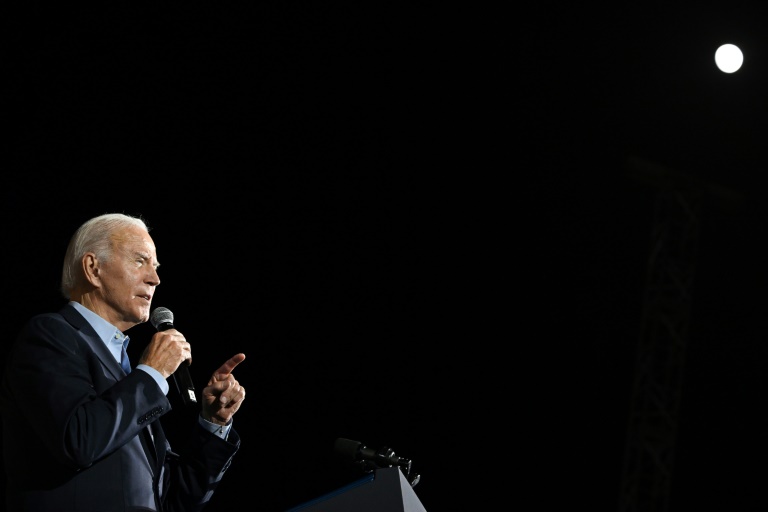
Joe Biden’s Democrats seem to have escaped a feared drubbing in Tuesday’s midterm elections, but it remains to be seen whether that will revive the US president’s flagging fortunes until 2024 — or beyond.

The 79-year-old, who framed the race as a clash between defenders of democracy and the “extremist” camp of Donald Trump, spent election night in back-to-back calls with Democrats savoring their wins in Senate, House and gubernatorial races around the country.

“Just got off the phone with some of tonight’s winners — including some folks I saw on the road this year,” Biden tweeted as the results came in — alongside a picture of himself in a turtle neck and baseball cap, seeming happy to take at least some of the credit.

White House staff, according to the former press secretary Jen Psaki, were “giddy and gleeful” as results came in.

The outcome taking shape was far from ideal for Democrats, who stand to lose the House of Representatives in what Biden has admitted will make his life much more “difficult” — likely hobbling parts of his agenda.

But if overnight predictions hold and the Democrats lose the House by a handful of seats, with the Senate still in play, Biden’s camp will have vastly outperformed expectations.

– Choppy waters –

The president’s party has traditionally lost seats in midterm elections and with Biden’s approval ratings stuck in the low 40s, and sky-high inflation topping voter concerns, Republicans had high hopes of seizing both chambers of Congress in a “red wave.”

Such a drubbing would have raised tough questions on whether America’s oldest-ever president, who turns 80 this month, should run again.

Instead Biden stands to emerge in much better shape than either of his Democratic predecessors, Barack Obama or Bill Clinton, who both took a hammering at the midterms.

Nevertheless, Biden will be headed into choppy waters if the House flips.

In a country whose divisions run deeper than ever, even a longtime senator and moderate Democrat like Biden will likely struggle to find common ground with a Republican-led chamber.

Large parts of his legislative agenda could utterly stall as a result.

Another open question is whether a new Republican leadership would keep its promise to aggressively hold the president to account — which even a slim House majority gives it the power to do.

That could easily translate into endless congressional investigations targeting Biden, his record and his family.

One of the loudest voices, far-right Representative Marjorie Taylor Greene, has already promised stepped-up scrutiny of Biden’s son Hunter, who Republicans accuse of exploiting his father’s connections to do business with Ukraine and China.

– Eyes on 2024 –

With control of the House, Republicans would also be able to apply considerable budgetary pressure on the president — with the potential to cut funding to the federal government.

As for the Senate — which confers greater powers — its fate still hangs in the balance.

But beyond, the big question facing Biden — and his Democrats — is who will carry the party’s colors into the 2024 White House race.

Until now the US president has consistently said he intends to seek a second term, and any suggestion to the contrary would have immediately undermined his authority.

But there is little appetite among the US public — or within his own party — for a second White House run by an octogenarian commander in chief.

Biden leaves Friday on a diplomatic marathon taking him from the COP27 climate conference in Egypt, to Cambodia for an ASEAN summit, and on to Indonesia for the G20 gathering. 

The veteran Democrat may keep America guessing some time yet about his intentions for 2024.

But with the president far from US shores, his rival Trump will be pressing ahead — promising a big reveal, widely expected to be a new White House run, next Tuesday in Florida.

US livid as basketball star Griner moved to Russian penal colony

Russia is moving US basketball star Brittney Griner to a penal colony after she lost an appeal against a drug conviction, her lawyers said Wednesday, drawing a sharp rebuke from the White House.

Griner, who has been jailed for nine years for possession of a small quantity of cannabis oil, was transferred out of a detention centre on November 4, her legal team said.

She “is now on her way to a penal colony,” lawyers Maria Blagovolina and Alexander Boykov said in a statement.

“We do not have any information on her exact current location or her final destination,” they added.

Russia generally notifies of a prisoner’s transfer to a different address by mail, taking up to two weeks, the lawyers said.

Griner’s case has drawn outrage in the United States, with Secretary of State Antony Blinken seeking a deal with Russia to free her despite soaring tensions over Moscow’s offensive in Ukraine.

White House Press Secretary Karine Jean-Pierre reiterated that the United States had put forward a “substantial offer” to Russia to resolve her case.

– ‘Wrongful detention’ –

“Every minute that Brittney Griner must endure wrongful detention in Russia is a minute too long,” Jean-Pierre said.

“As the administration continues to work tirelessly to secure her release, the president has directed the administration to prevail on her Russian captors to improve her treatment and the conditions she may be forced to endure in a penal colony.”

Griner, a two-time Olympic basketball gold medallist and Women’s NBA champion, had been in Russia to play for the professional Yekaterinburg team during her off-season from the Phoenix Mercury Women’s National Basketball Association side.

She said the cannabis in vape cartridges was to treat pain from her sporting injuries, but Russia does not allow medical marijuana use.

Observers have suggested that Griner and another American jailed in Russia, Paul Whelan — a retired US Marine arrested in December 2018 and accused of spying — could be traded for Viktor Bout, a famed Russian arms trafficker serving 25 years in prison on a 2012 conviction.

– ‘Totalitarian system’ – 

Prisoners’ rights activist Vladimir Osechkin said conditions in penal colonies are much harsher than in detention centres. 

“It is a more totalitarian system with Gulag uniforms and 100 people per room in barracks,” Osechkin, who founded the Gulagu.net rights group, told AFP, warning that prison officials routinely orchestrate conflicts and fights between inmates. 

“If the Kremlin decides not to torture the basketball player and creates VIP conditions for her, she will be allowed to eat separately, play sports and keep fit,” said Osechkin.

“But if a decision is made and the federal prison service receives an order to put pressure on her then of course her life and health will be in danger.”

Activists say abuse and torture are frequent in Russia’s vast network of prisons run by the Federal Penitentiary Service (FSIN), a successor to the notorious Gulag system of the Stalin era.

Penal colonies are the most common type of prisons and are known for their harsh treatment of inmates, unsanitary conditions and lack of access to proper healthcare.

Prison officials also often limit inmates’ contact with lawyers and family. Harassment of prisoners sometimes leads to prison riots.

A number of US citizens including Whelan are currently behind bars in Russia. 

Whelan’s brother David regularly describes Paul’s life in the IK-17 colony in the central region of Mordovia, saying he has undergone sleep deprivation and that suicides are common in prisons.

The treatment of the jailed opposition leader Alexei Navalny has also highlighted abuses in prisons, activists say.

The 46-year-old has been repeatedly placed in solitary confinement, which his supporters say amounts to torture.

Anti-torture project Gulagu.net has drawn attention to what it calls systemic abuse and sexual violence towards prisoners.

Last year it released harrowing video footage of a naked man being raped with what appeared to be a broom stick at a prison hospital.

US-China rivalry clouds Beijing's climate promises at UN summit

Fractured relations between the United States and China have cast further doubt on whether Beijing will sign up to more climate promises, with pressure mounting on the world’s biggest emitter.

US President Joe Biden is expected to be among the leaders to show up at the COP27 summit in Egypt’s Red Sea resort of Sharm el-Sheikh, but his newly reanointed Chinese counterpart Xi Jinping will be conspicuous by his absence.

Cooperation between the world’s two largest economies and carbon polluters has been central to rare breakthroughs in the nearly 30-year saga of UN climate talks, including the landmark 2015 Paris Agreement.

However, relations have sunk to a 40-year low after a visit to Taiwan by House of Representatives Speaker Nancy Pelosi and a US ban on the sale of high-level chip technology to China, leaving the outcome of COP27 in doubt.

The rival nations have already been thrust under the spotlight at the talks in Egypt, with French President Emmanuel Macron telling campaigners on Monday both needed to “step up”.

– Low expectations –

Beijing was a central player in the French capital seven years ago and is also considered crucial to this year’s talks in Egypt, given the outsized impacts of its huge population, massive energy-guzzling economy and status as the planet’s largest emitter of greenhouse gases.

Xi has already pledged that China will peak its carbon dioxide emissions before 2030 and reduce them to net zero by 2060, moves seen as essential for meeting the Paris goal of keeping global temperature rise well below two degrees Celsius.

However, with humanity poised to blow past the 2 degrees Celsius limit under current commitments, pressure has grown on major polluters to go even further in their efforts to cut emissions.

Alden Meyer, a senior associate at climate change think tank E3G, said cooperation between China and the United States on key issues such as methane and deforestation was essential.

“If they’re pushing against each other on how to deal with those issues it’s never helpful,” Meyer told AFP.

“China and the US are both going to act based on what they think is in their national self-interest, but when it comes to international collaboration it’s been important for the US and China to be aligned at key moments.”

Still, there are scant hopes that China will significantly ramp up its climate commitments at COP27.

A report published by the environment ministry last month stressed the need to deliver existing pledges instead of promising anything new.

China’s climate change chief underscored the point, calling on developed countries to cough up long-promised cash for poorer nations instead of falling back on “empty slogans”.

– Methane fears –

China is under pressure to firm up plans to cut emissions of methane, an atmospheric pollutant present in much lower quantities than carbon dioxide but with far greater heat-trapping potential.

Methane accounts for around 10 percent of China’s total emissions, mainly from the mining, agriculture and waste sectors.

Beijing and Washington jointly declared last year that they would work together to control methane emissions.

But while the US has already laid out plans to cut its emissions to 30 percent below 2020 levels by the end of the decade, China has not yet announced its own roadmap.

“Methane is an area that has been neglected by China’s climate action … (but) can no longer stay as an afterthought,” said Li Shuo, senior global policy adviser at Greenpeace East Asia.

Whether Beijing releases an action plan at COP27, and what that plan entails, “will tell us a lot about China’s willingness to honour promises and its desire to engage with other partners”, Li told AFP.

– Belt and Road impact –

The environmental impact of Xi’s flagship Belt and Road initiative has also come under scrutiny.

The sprawling plan envisions a continent-spanning web of infrastructure projects to link China with markets in Asia, Europe, Africa and beyond.

Campaigners have criticised the projects for damaging fragile ecosystems and including new coal-fired power plants overseas, even as Beijing pivots towards renewables at home.

China was funding over a quarter of all new coal plants outside its borders by 2019, according to a report by the Institute for Energy Economics and Financial Analysis, a US think tank.

Authorities have since called a halt to overseas coal funding and pledged to pursue “green” projects that help to reduce emissions, cut pollution and protect biodiversity.

Concerns linger over China’s dependence on coal — which still makes up most of its energy supply — especially after it burned through even more this summer to meet increased air-conditioning demand and make up for shrunken hydropower dams.

Despite this, Xi can point to a suite of policies that have helped position China as an emerging environmental force, including ramping up support for renewables, bringing swaths of the countryside under state protection and booting smog-spewing factories out of large cities to improve air quality.

Tumbling gas prices fail to subdue energy bills

European wholesale gas prices have fallen from record peaks reached after producer Russia’s invasion of Ukraine, but energy bills remain sky high despite government help aimed at easing consumers’ pain.

In Britain and the European Union, the impact of soaring gas and electricity bills has been cushioned to an extent by state aid measures that seek to soften the blow of decades-high inflation.

But consumers still face unusually high bills, even if the worst of the winter has yet to come in the northern hemisphere.

“Energy bills will go down but there is a lag in the reaction because the utilities buy forward on the wholesale market a lot of the energy they then sell to the end-users,” said Georgi Slavov, analyst at financial group Marex. 

“This means that the extortionate prices we saw in the last three-six months have not fully gone through the system yet,” he told AFP.

Slavov added that “unless something bad happens again between now and January, we expect consumer prices — including headline inflation — to start falling in the first quarter of 2023”.

– Plunging prices –

Unusually warm autumnal temperatures have reduced demand and allowed most European nations — though not Britain — to ramp up gas storage.

A particularly cold winter could quickly send demand soaring once more across Europe.

“Industry specialists are warning that, just because (market) prices have fallen back sharply, does not mean they won’t rise back as fast if winter demand rises rapidly,” said independent analyst Howard Wheeldon.

“This relates to demand and how Europe copes through the winter.”

In March, soon after the start of Moscow’s assault on Ukraine, Europe’s benchmark Dutch TTF gas price jumped to a record 345 euros per megawatt hour.

UK gas futures hit an all-time peak at 800 pence per therm.

After falling back, the market briefly rebounded close to the same levels in the summer after Russia suspended gas supplies to Europe via the Nord Stream 1 pipeline.

However since August, TTF gas has shed about two thirds of its value.

In trading on Wednesday, TTF prices stood at 116.25 euros and UK prices at 278.13 pence.

Domestic energy suppliers bet against volatile prices by hedging, or taking a defensive position on futures markets, but this means they cannot always benefit from short-term moves in spot, or current, prices.

– China clouds outlook –

British households have had their annual energy bills capped at an average of £2,500 ($2,885) thanks to government help — but this is set to last only until April when bills are forecast to be even higher.

Traders are also mindful of the uncertain demand outlook from China, the world’s most populous nation.

Chinese demand hinges on the future of its economically damaging zero-Covid strategy. 

“China is currently maintaining Covid restrictions meaning that some of its industry remains shut down or producing far less than would be regarded as normal,” added Wheeldon.

“One may suggest that it is only lower demand for liquefied natural gas (LNG) by China that has allowed European nations to be so aggressive in mopping up output that might otherwise have been bought by China.”

The International Energy Agency last week warned that Europe must act immediately to prevent a shortage of natural gas next year as Russia slashes deliveries in the wake of the war.

The IEA said the shortfall would occur if Russia stops pipeline deliveries completely and China steps up its imports of LNG.

The region could lack 30 billion cubic metres that it needs “to fuel its economy and sufficiently refill storage sites during the summer of 2023, jeopardising its preparations for the winter of 2023-24,” the Paris-based agency said in a report.

And while SEB Markets analyst Ole Hvalbye told AFP he expected energy bills to fall following the recent sharp drops in wholesale prices, this is expected to be a “short-term blip”. 

“Prices are likely to climb again when entering the winter in a few weeks’ time,” he added.

China unveils new orders for homegrown passenger jet

China announced Wednesday hundreds of new orders for its first domestically manufactured large passenger jet, with the aircraft poised to make its commercial debut early next year.

The state-owned Commercial Aircraft Corp of China (COMAC) said it had sealed orders for 300 of the narrow-body C919 at a major airshow on Tuesday.

The announcement did not clarify whether the orders had been fully confirmed, and gave no details about the value of the deals or expected delivery dates.

If the orders go through, it would take the number of known deals for the C919 to more than 1,100, based on figures from previous COMAC statements.

Authorities hope the C919 — the country’s first homegrown jetliner with mass commercial potential — will challenge foreign models like the Boeing 737 MAX and the Airbus A320.

Beijing also anticipates that the aircraft will help reduce the country’s reliance on foreign technology amid testy ties with Western countries — though most of the plane’s parts are sourced from abroad.

COMAC said it had reached agreements with seven leasing firms for a combined 330 aircraft, including 30 of the C919’s predecessor, the ARJ21 regional jet, which came into operation in 2008.

The orders “fully expressed the confidence of our leasing partners” in the two models, COMAC said.

The company showed off the C919 on Tuesday at the China International Aviation and Aerospace Exhibition.

The sleek aircraft taxied down a runway in the southern city of Zhuhai before soaring into the skies in front of hundreds of onlookers.

Few details of existing orders for the C919 have been disclosed.

But domestic media have reported that four aircraft are expected to be delivered to China Eastern Airlines — the country’s second-largest carrier by passenger numbers — by the end of this year, and go into operation in the first quarter of 2023. 

China sealed a deal for Airbus jets worth $17 billion earlier this year.

The company began producing its A321 model in the eastern city of Tianjin on Wednesday with a view to making deliveries early next year, according to Xinhua.

The state-owned news agency quoted Airbus China CEO George Xu as saying the move displayed the company’s “unwavering support for the Chinese market”.

The Boeing 737 MAX has been grounded in China since 2019 after two fatal crashes, though Boeing said in July that it may be approved for delivery by Chinese regulators this year.

But lingering US-China trade tensions and China’s worst commercial air disaster earlier this year involving a Boeing 737-800 have slowed progress.

US woman detained in Saudi over custody dispute set free

An American woman who had publically accused her Saudi ex-husband of trapping their daughter in the kingdom under so-called guardianship laws said she was released Wednesday following a brief detention over social media posts.

Carly Morris was taken into custody on Monday and the whereabouts of her daughter, eight-year-old Tala, was unknown, according to the Washington-based Freedom Initiative, which describes itself as advocating on behalf of people wrongfully detained in the Middle East and North Africa. 

But when contacted by AFP on Wednesday, Morris said she had been released overnight.

“I was released from jail late last night,” she told AFP.

“They detained me for two days… over my tweets,” she said.

In a voice note sent to AFP via Whatsapp, Morris said that her daughter was safe but accused her ex-husband of taking all their belongings from their hotel apartment. 

“I just went to the school today to take her… she is with me now but we have absolutely no clothes, shoes,” she said.

“He took everything.” 

Morris flew to Saudi Arabia with her daughter in the summer of 2019, hoping to spend a few weeks of quality time with the girl’s father. 

But soon after they landed in Riyadh, he seized their travel documents and arranged for the girl to become a Saudi citizen, ensuring he could bar her from leaving. 

In September, she received a summons from Saudi prosecutors indicating she was under investigation for “disturbing public order”, a development Morris believed was linked to social media posts about her case. 

She was then informed that she had been placed under a travel ban, according to an electronic notice seen by AFP. 

The family of Morris’s ex-husband has not responded to AFP’s requests for comment. 

– Limited reforms –

Advocacy groups said the case highlights the power that men continue to wield over women under the kingdom’s notorious guardianship laws. 

Crown Prince Mohammed bin Salman, the de facto ruler, has earned plaudits for easing laws in Saudi Arabia which in the past have greatly restricted women’s ability to travel and work. 

Yet human rights groups note that women still require a male guardian’s permission to marry, and face discrimination when it comes to divorce and custody disputes. 

US State Department spokesman Ned Price said at a press conference Tuesday that Washington was “aware of the reports that Ms Morris has been detained”. 

“Our embassy in Riyadh is very engaged on this case; they’re following the situation very closely.” 

Morris’s detention comes amid heightened tensions between Riyadh and Washington, which has strongly objected to the OPEC+ cartel’s decision to cut oil production, saying it amounts to siding with Russia in the Ukraine war. 

In July, several months before those cuts were approved, US President Joe Biden came under heavy criticism from human rights organisations for travelling to Jeddah and meeting with Prince Mohammed, reversing an earlier pledge to make Saudi Arabia “a pariah”. 

Morris’s case is “yet another sign that Saudi simply does not value the US as an ally,” said Allison McManus, the Freedom Initiative’s director of research. 

“Before we hear any more reference to Saudi’s strategic partnership, we need to see an end to the abuse of American citizens. We need to see an end to the abuse of women and children whose only crime is their gender.”

Nissan hikes forecasts on weak yen despite falling unit sales

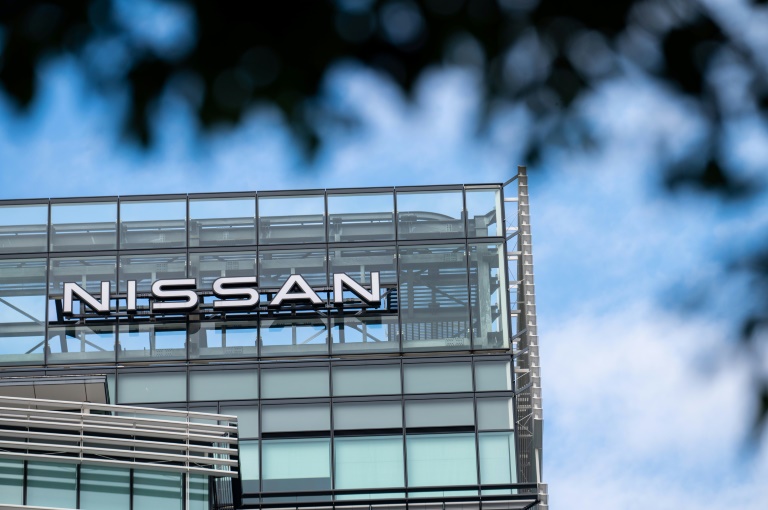
Nissan on Wednesday upgraded its full-year profit forecasts, as the depreciating yen helps inflate its overseas profits, despite ongoing challenges including Covid shutdowns and the global chip shortage.

The company now expects an annual net profit of 155 billion yen ($1.06 billion), up 5.0 billion yen from an earlier target for the year to March 2023.

It also hiked annual sales revenues, but said it now expects to sell 3.7 million units in the business year, down from a previous forecast of 4.0 million and lower than its unit sales in the previous fiscal year.

In a statement, the firm cited “a severe business environment in the first half of the fiscal year, with raw material prices rising sharply and sales volume falling below the previous year’s level due to semiconductor supply shortages and the impact of Covid-related lockdowns in Shanghai.”

“Our strong first half performance reflects our steadily improving profit structure and strong business foundations, as well as the exchange-rate impact of the historically weak yen,” said Nissan CEO Makoto Uchida in a statement.

He said the business environment would “remain challenging” in the second half of the year, with ongoing semiconductor shortages and higher raw material prices.

Nissan also reported a one-time loss in the period of approximately 100 billion yen “in connection with the withdrawal from the Russian market”.

The results come with all eyes on negotiations between Nissan and alliance partner Renault on a possible rebalancing of their sometimes fractious relationship.

The French automaker, which on Tuesday confirmed it will create a new electric car unit, Ampere, is believed to be discussing a sizable reduction of its stake in Nissan.

– ‘Open and constructive’ –

Nissan said in a statement last month that “trustful discussions” were underway with Renault as part of an effort to “reinforce the cooperation and the future” of their decades-long alliance.

The partnership is widely credited for Nissan’s transformation from a money-losing carmaker in the late 1990s into one of the world’s biggest industry giants.

Nissan officials reportedly want to rectify what they see as the uneven terms of their alliance, where Renault controls around 43 percent of Nissan but the Japanese automaker retains just a 15 percent share in its partner.

Uchida described “open and constructive” discussions but declined to offer any details.

“Yesterday, the Renault group made an announcement about the new firm… we’re looking into how this firm would benefit Nissan and how we should participate in it,” he said.

“Based on the discussions going forward, we will consider an investment in this new firm.”

A source close to Nissan said discussions on the alliance would take “several more weeks”.

“Given how complex the subject is, they need several more weeks to clarify things, but it’s advancing,” he told AFP.

The radio silence on Nissan’s participation in Ampere or any reduction of Renault’s stake in the Japanese automaker suggests “that negotiations are not proceeding very well, and slowly,” said auto analyst Tatsuo Yoshida of Bloomberg Intelligence.

Experts differ on how any rebalancing would affect the alliance, with Yoshida arguing a reduction of Renault’s stake would give Nissan more freedom.

But Kohei Takahashi, an analyst at UBS Securities, said Renault’s ongoing influence could sway negotiations in its favour.

The auto alliance, which also groups Mitsubishi Motors, has weathered tensions, particularly after the arrest and subsequent flight of former Nissan chief Carlos Ghosn.

Accused of financial misconduct, he argued he was targeted over attempts to further integrate Nissan and Renault. He jumped bail and fled Japan for Lebanon, where he remains an international fugitive.

Striking Kenya Airways pilots return to work

Kenya Airways pilots returned to work on Wednesday, after a court ordered them to end their days-long strike which had led to hundreds of flight cancellations and stranded thousands of passengers.

The strike, which began on Saturday, exacerbated the woes facing the troubled national carrier, which has vowed to “do everything possible to return to normalcy in the shortest time”.

Hours after a Nairobi court ordered the pilots to return to work, the Kenya Airline Pilots Association (KALPA) said its members would “resume duty” by 06:00 am (0300 GMT) on Wednesday — the deadline stipulated by the judge.

“The strike is off, we are back to work,” a KALPA spokesperson told AFP Wednesday.

Despite the announcement, Kenya Airways’ latest online update showed just 19 flights operating on Wednesday, fewer than the 26 scheduled the day before, although it said on Twitter that normal operations should resume by November 12.

Officials at Nairobi’s Jomo Kenyatta International Airport said the airline was still struggling to clear the backlog from earlier flight cancellations.

“We have had several KQ flights on schedule today take off after the pilots resumed work,” an official at the Kenya Airports Authority told AFP, using the shorthand airline code.

“Things are getting back to normal,” he said. 

Passengers at the airport told AFP they were cautiously optimistic after being forced to reschedule their travel plans because of the strike.

“My flight is now confirmed at 5:00 pm, I just hope they don’t cancel again,” said Eliud Okello, who was due to fly to the Kenyan lakeside city of Kisumu.

Another passenger, who only gave her name as Londiwe, told AFP: “I have had the worst experience on KQ during the strike for the past two days, but finally I have been told I will fly this evening.

“So I am just hoping the pilots will not go on strike again.”

KALPA launched the walkout in defiance of a court injunction issued last week against the strike, prompting the government to threaten the pilots with disciplinary action.

In a breakthrough for the beleaguered airline, Justice Anna Mwaure on Tuesday ordered KALPA members to resume their duties “unconditionally” by 6:00 am Wednesday.

Kenya Airways, which is part-owned by the government as well as Air France-KLM, is one of the biggest in Africa, connecting multiple countries to Europe and Asia. 

But it has been running losses for years, despite the government pumping in millions of dollars to keep it afloat.

– ‘No disciplinary action’ –

Mwaure also ordered the airline’s management to allow the pilots “to perform their duties without harassing them or intimidating them and especially by not taking any disciplinary action against any of them”.

Transport Minister Kipchumba Murkomen had urged the pilots and the airline’s management to obey the court order.

“In the past three days, this strike has disrupted travel plans for over 12,000 customers… forced the cancellation of over 300 flights, and affected 3,500 other employees who were not part of it,” he said.

The protesting pilots are pressing for the reinstatement of contributions to a provident fund and payment of all salaries stopped during the Covid-19 pandemic.

In a statement released Tuesday, the airline’s CEO Allan Kilavuka said: “We commit to complying with the court’s directions.”

The airline and the government have accused the union of engaging in “economic sabotage”, with Kenya Airways warning that the strike would lead to losses estimated at $2.5 million per day.

The airline was founded in 1977 following the demise of East African Airways, and flies more than four million passengers to 42 destinations annually.

It has been operating in large part thanks to state bailouts following years of losses.

Asian markets tepid with eyes on China, US midterms

Asian stocks made a positive start on Wednesday following gains on Wall Street, but lost momentum as factory gate prices in China fell for the first time in nearly two years.

Shares in Tokyo, Hong Kong and Shanghai edged up at the open as votes were counted in crucial US midterm elections that will shape the political fortunes of President Joe Biden.

But they closed lower after official data from China showed the world’s second-largest economy languishing under its strict zero-Covid policy.

Markets had climbed in New York and Europe on Tuesday, with Biden’s Democrats facing a struggle to hang on to control of Congress, and polls predicting a Republican victory that could pave the way for a White House comeback bid by Donald Trump.

That predicted Republican wave failed to materialise in elections fought against a backdrop of stubbornly high inflation, however.

By Wednesday afternoon in Asia, all eyes were on a handful of Senate races, including swing state Pennsylvania, where a win for the Democrats boosted the party’s chances of retaining their razor-thin majority in the upper chamber.

Investors were also awaiting key US inflation data due Thursday, causing the dollar to retreat along with the midterms as investors’ risk appetite increases, analysts said.

Tokyo ended down 0.6 percent and Shanghai closed 0.5 percent lower, while Hong Kong stocks lost 1.2 percent.

Other Asian markets were mostly higher, with Taipei jumping 2.2 percent, Seoul gaining 1.1 percent and Singapore up 0.7 percent. Sydney rose 0.6 percent, but Bangkok lost 0.6 percent.

– ‘No good news from China’ –

Speculation over how long Beijing will keep its harsh lockdown-and-testing Covid-19 policies has fuelled volatility in Chinese markets, despite the government vowing it will not change course.

The restrictions have taken a toll on the economy. China’s producer price index (PPI) fell by 1.3 percent on-year in October, pushing it into negative territory for the first time since December 2020.

The consumer price index (CPI) — the main gauge for retail inflation — rose by 2.1 percent on-year in October, moderating slightly from September’s two-year high of 2.8 percent.

“The economy’s slowing is confirmed by the CPI data,” Iris Pang, chief economist for Greater China at ING Wholesale Banking, told AFP. “I don’t see any good news from China.”

Stephen Innes of SPI Asset Management agreed that the Chinese data painted “a rather gloomy picture, with PPI remaining deflationary and CPI much weaker than expected, pointing to waning demand”.

Oil prices were driven lower during the day, but recovered in the afternoon.

“Rolling lockdowns in China, as Covid cases rebound, are catching oil traders leaning the wrong way,” Innes said.

The lacklustre mood was also seen in early European trade, with London losing 0.3 percent in early trade, Frankfurt down 0.2 percent, and Paris flat.

– Key figures around 0700 GMT –

Tokyo – Nikkei 225: DOWN 0.6 percent at 27,716.43 (close)

Hong Kong – Hang Seng Index: DOWN 1.2 percent at 16,358.52 (close)

Shanghai – Composite: DOWN 0.5 percent at 3,048.17 (close)

London – FTSE 100: DOWN 0.3 percent at 7,282.89

Pound/dollar: UP at $1.1554 from $1.1468 on Tuesday

Euro/dollar: UP at $1.0073 from $1.0005

Dollar/yen: DOWN at 145.42 yen from 146.26 yen

Euro/pound: DOWN at 87.19 pence from 87.23 pence

West Texas Intermediate: DOWN 0.6 percent at $88.33 per barrel

Brent North Sea crude: DOWN 0.4 percent at $94.93 per barrel

New York – Dow: UP 1.0 percent at 33,160.83 (close)

Close Bitnami banner
Bitnami