US Business

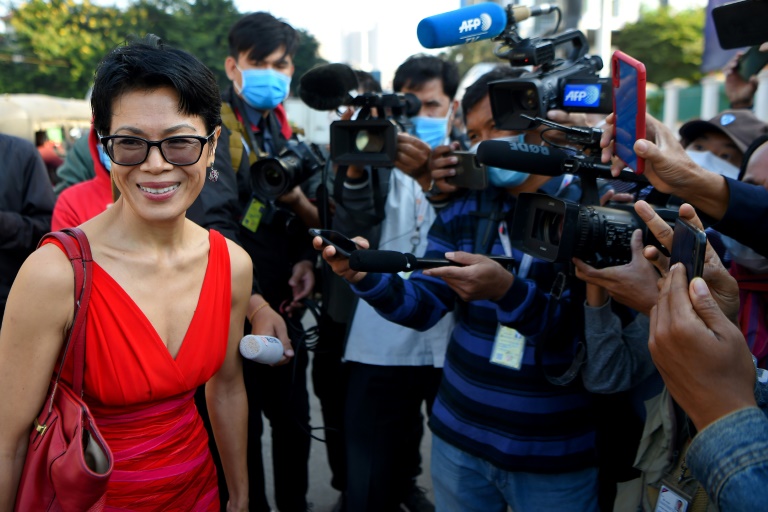
Jailed activist begins hunger strike ahead of Biden's visit to Cambodia

A jailed outspoken American-Cambodian activist has begun a one-week hunger strike to protest conditions in prison ahead of US President Joe Biden’s visit to the kingdom.

Lawyer and campaigner Theary Seng, a long-time critic of Cambodian Prime Minister Hun Sen, was imprisoned for six years for treason in June in a mass trial that also saw around 60 opposition figures convicted.

Her strike comes ahead of Biden’s visit to capital Phnom Penh later this week to attend the Association of Southeast Asian Nations (ASEAN) summit.

The US leader is also expected to meet with Hun Sen.

In a statement on Monday, the 51-year-old activist’s team “calls upon the President to press Hun Sen for Theary’s freedom”.

Jared Genser, a US-based lawyer representing her, said she had also been denied rights permitted to other prisoners “including having weekly access to Church services and the ability to regularly make phone calls”.

Currently in a prison in western Preah Vihear province, Theary Seng began her hunger strike Monday in a bid to compel authorities to transfer her to Prey Sar Prison in Phnom Penh.

Meanwhile, in a further push to raise awareness, six Cambodian youth activists launched a week-long hunger strike Monday, roughly 30 kilometres away from Theary Seng’s prison.

“We hope government leaders and especially US President to discuss this matter with Hun Sen,” group representative Hun Vannak told AFP.

The 70-year-old prime minister is Asia’s longest-serving leader, with critics alleging he has wound back democratic freedoms, used the courts to stifle opponents, and jailed scores of opposition activists and human rights defenders. 

Hun Sen has vowed to run for office again next year and has supported his eldest son Hun Manet to succeed him in the future.

Veteran French designer Philippe Starck now looks to space

Philippe Starck, the prolific French architect and designer who has made everything from lemon juicers to wind turbines, shows no sign of slowing down and is increasingly turning his eye to space.

Visiting an exhibition at the Museum of Decorative Arts in Paris featuring some his early work, the 73-year-old seemed bemused by the volume of items on display.

“I don’t have the software for periods and dates,” he told AFP when asked about the period. 

“To me, the 1980s were like being abandoned in an Amazon jungle with nothing to eat, wild animals everywhere, a rusty machete… I just did what I could. And when you do what you can, you don’t remember what’s going on elsewhere.”

Starck made his name as an interior decorator for Paris nightclubs in the 1970s, before landing a dream commission to refurbish the Elysee Palace apartments for president Francois Mitterrand in 1983. 

He went on to design luxurious hotels and restaurants around the world. 

But he also gave the world an uber-electic range of everyday items, from his futuristic lemon juicer to electric bikes, toothbrushes, water bottles — and on to boats, wind turbines and control towers.

– ‘Pure creativity’ –

There was always a hint of humour and surrealism, he said, but also a desire to “democratise design” by keeping things affordable. 

“We managed to remove two zeros from prices,” he said. “At the time, in today’s prices, sitting on something designer cost 20,000 euros, which wasn’t right. Today, it’s 700 euros, which isn’t bad.”

These days, Starck cares less about household objects and has his eyes on bigger things. 

There is a long-awaited “laboratory for pure creativity” being built in Qatar, and immediately after the exhibition, he was due at the launch of a new hydrogen energy project.

But his real focus appears to be skyward: working with US company Axiom Space on the living quarters it plans to connect to the International Space Station, and teaming up with NASA for a new astronaut training camp. 

The focus on space is part of our “necessary change” as a species, he said.

“Except when we’re dead, we’ve been fixed by gravity, but that’s clearly over, so I’m tackling it head-on.”

Some early memories remain — being left with some old toys and his grandfather’s workbench during the holidays as a young child: “I made my first items on that workbench and I haven’t stopped since.”

A surreal early inspiration comes to him: seeing Mick Jagger dancing around with a neon tube in some film. 

“I found it extraordinary and chic — I thought to myself that someone should make it for real so that everyone could be Jagger for a minute.”

Weak yen helps Nintendo lift annual net profit forecast

Nintendo raised its full-year net profit forecast on Tuesday, with the weak yen and a solid performance by new games helping compensate for falling sales of its Switch console.

The Kyoto-based Japanese gaming giant estimated net profit for the year to March 2023 at 400 billion yen ($2.7 billion), up from a previous projection of 340 billion yen.

Net profit for the half-year from April to September was also up 34.1 percent to 230 billion yen, the firm said.

“For software, sales for titles such as Splatoon 3 and Nintendo Switch Sports that were released during this fiscal year have continued to grow steadily,” it said.

“Titles released in previous fiscal years as well as titles from other software publishers have also performed well.”

Nintendo also saw a significant boost to its bottom line from foreign exchange gains driven by the depreciation of the yen, which has tumbled against the dollar this year to lows not seen since the 1990s.

In early October, it dropped beyond 151 to the greenback for the first time in 32 years, as Japan’s central bank sticks to its ultra-loose monetary policy while the Federal Reserve hikes rates to tackle inflation.

In 2020-21, Nintendo’s profits soared to an annual record of 480 billion yen due to soaring demand for indoor entertainment during pandemic lockdowns. 

The firm nearly matched that figure in the last financial year, with its blockbuster Switch console continuing to perform well and software sales staying strong.

But sales of the Switch have been slowing, and Nintendo said it now expects to sell 19 million units this fiscal year, two million units less than previously expected.

– Joint venture with DeNA –

Nintendo sold 6.68 million units of the various types of Switch consoles it offers in the first half of the fiscal year, down over 19 percent from a year earlier.

The slowing sales were due to a range of factors, including an ongoing global chip shortage, the firm said.

The revised forecast for Switch sales had been expected by some analysts, with Hideki Yasuda, senior analyst at Toyo Securities, telling AFP before the earnings estimate that Nintendo would “have a tough time” reaching its previous goal of 21 million unit sales.

But he said profits were expected to jump on the yen and the strong performance particularly by Splatoon 3, which had the fastest sales in the first three days of its release in Japan of any Switch title.

“A new Pokemon title will be launched in November and the company is seeing strong pre-orders in Japan,” Yasuda added.

The firm left its full-year operating profit forecast unchanged at 500 billion yen. Its sales forecast was revised up to 1.65 trillion yen from 1.60 trillion yen.

Nintendo on Tuesday also announced a joint venture with Tokyo-based mobile gaming company DeNA intended to “strengthen the digitalisation of Nintendo’s business”.

In a statement, Nintendo said the joint venture would research, develop and create “value-added services”, without giving further details.

The two firms announced an initial partnership in 2015 to develop games for smartphones.

Nintendo also bought a stake in DeNA as part of a deal to develop smartphone games based on its host of popular characters, possibly including Super Mario and Donkey Kong.

Nintendo said Tuesday’s joint venture announcement would have no effect on the company’s results for the current fiscal year.

The Switch manufacturer will hold 80 percent of the joint venture, to be called Nintendo Systems.

Powerball draw for record $1.9 bn jackpot delayed

A Powerball draw for a staggering $1.9 billion jackpot — the largest prize in history — has been delayed, further fueling lottery fever across the United States.

California Lottery said late Monday the drawing was delayed because a participating lottery needed more time to complete security protocols.

“Powerball has strict security requirements that must be met by all 48 lotteries before a drawing can occur,” California Lottery tweeted.

“There is currently no estimated time for the drawing.”

With no ticket matching Saturday’s winning numbers, the pot was rolled over — leaving countless Americans dreaming big.

Even those who do not usually play the lottery were taking their chances, forming lines at convenience stores around the country to buy their tickets.

Business Insider finance reporter Hayley Cuccinello was among them, tweeting, “me: spending $24 for additional life insurance isn’t worth it, what are the odds also me: *buys $20 of powerball tix*.”

The odds of winning the jackpot are still 1 in 292.2 million. If there are duplicate winners, they will share the jackpot.

The last time someone claimed the Powerball jackpot was August 3, when a lucky ticket holder in Pennsylvania raked in an estimated $206.9 million. Since then, the Powerball jackpot has grown and grown.

While no one claimed the big prize on Saturday, 16 tickets matched the five main numbers to win $1 million each. To get the jackpot, you must also get the Powerball number.

Tickets cost $2 and a winner can choose either a lump sum payment, calculated for this jackpot at $929 million, or opt to be paid in installments over 29 years.

Most winners choose the lump sum payout.

Twitter was full of lottery hopefuls dreaming of what they could do with all that money, from using it to help the needy to buying every single one of their followers “a Classic Chocolate Frosty from @Wendys”.

Hope springs eternal for some enthusiasts.

“My psychic told me November 12th was gonna be the best day of my life, so if there’s still no powerball winner by then, I’m buying as many tickets as possible,” wrote one Twitter user.

Australian insurer warns of 'distressing' hack threat

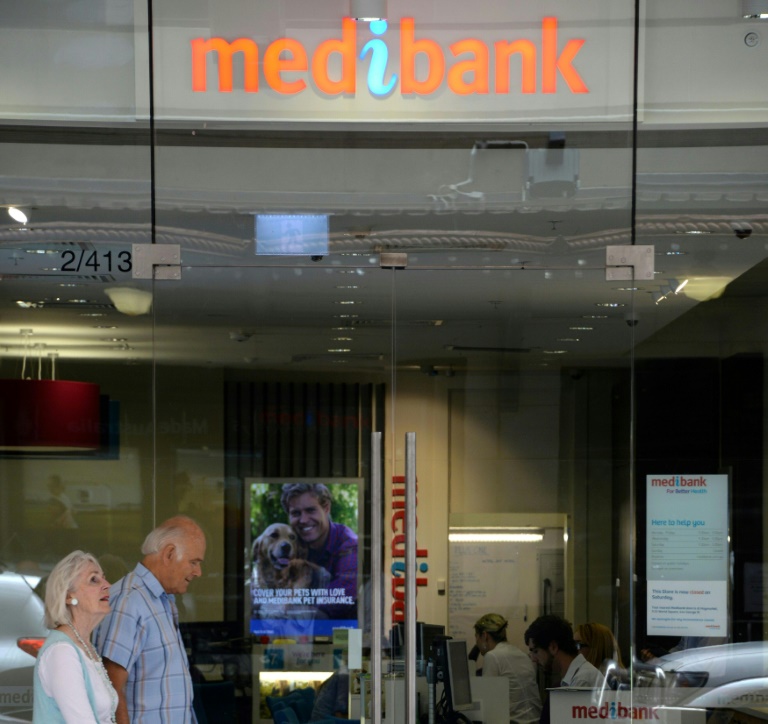
A major Australian health insurer warned Tuesday of a “distressing” threat by a purported hacker to release client data within 24 hours, following a hack affecting 10 million people.

Medibank Private, one of Australia’s largest insurers, told customers to be “vigilant” after the reported threat, issued a day after it had ruled out paying any ransom demand.

The company revealed Monday that a hack originally thought to have breached the data of 3.9 million people had in fact given access to the names, birth dates, addresses, phone numbers and emails of about 9.7 million former and existing clients.

Those numbers included 1.8 million international customers.

On Tuesday, an anonymous poster on a hacking blog — widely cited by Australian media — said that data from the Medibank hack “will be publish in 24 hours”. 

It was not possible to confirm whether the poster was connected to the hack or had access to people’s stolen information.

“We knew the publication of data online by the criminal could be a possibility, but the criminal’s threat is still a distressing development for our customers,” Medibank chief executive David Koczkar said, calling for clients to be “vigilant”.

“We unreservedly apologise to our customers,” he added.

The hacker could also attempt to contact customers directly, the company warned.

– ‘Betrayal’ –

Medibank had said in Monday’s announcement that it believed “all of the customer data accessed could have been taken by the criminal”.

The data breach included some people’s health claims along with codes exposing their diagnoses and medical procedures, as well as the passport numbers and the visa details of international students. 

Medibank said it was working with the Australian government and with the police, who were trying to prevent the sharing and sale of the stolen data.

Cybercrime experts had advised that paying a ransom had only a “limited chance” of ensuring the return of the stolen data, the company said, explaining its decision to reject any ransom demand.

Two law firms said Tuesday they had joined forces to investigate a possible class action lawsuit against Medibank.

“We believe the data breach is a betrayal of Medibank Private’s customers and a breach of the Privacy Act,” said a joint statement by Bannister Law and Centennial Lawyers.

“Medibank has a duty to keep this kind of information confidential.”

The Medibank hack followed an attack on telecom company Optus in September that exposed the personal information of some nine million Australians.

As data theft becomes more common, it may raise questions over the need for Australian businesses to gather customers’ sensitive personal information, said Michael Duffy, associate professor of corporate law at Monash University.

Some of those data retention policies were dictated by government regulation, he added.

“Nevertheless, businesses requesting and keeping personal details that aren’t completely essential could become more legally problematic for them, if they are hacked.”

US votes with Biden agenda at stake – and Trump in the wings

Americans vote Tuesday in crucial midterm elections that could decide the political future of both President Joe Biden and his predecessor Donald Trump — who has all but announced he will seek the White House again in 2024.

Biden’s Democrats are facing a gargantuan struggle to hang on to Congress, after a race the president has cast as a “defining” moment for US democracy — while Trump’s Republicans campaigned hard on kitchen-table issues like inflation and crime.

Trump — who has been heavily hinting at a new run — grabbed the election eve spotlight to flag “a big announcement” a week from now on November 15, while Biden made a final appeal to Democrats to turn out en masse at the polls.

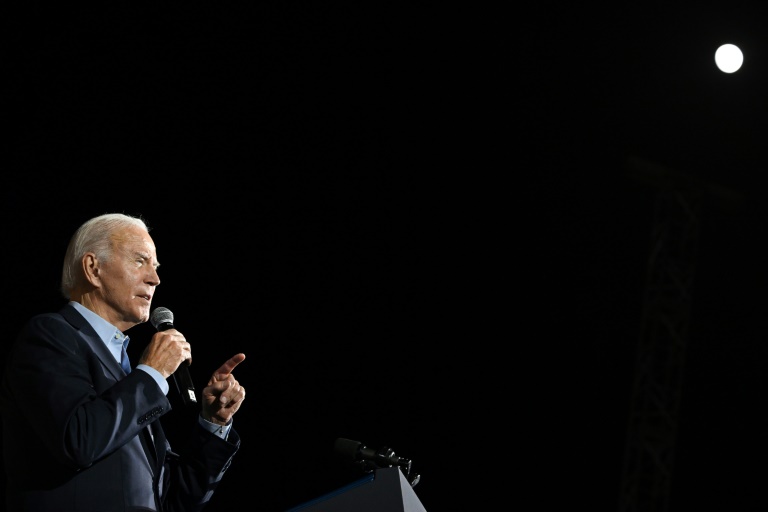
“The power’s in your hands,” Biden told a rally near the capital. “We know in our bones that our democracy is at risk and we know that this is your moment to defend it.” 

With polls showing Republicans in line to seize the House of Representatives, the increasingly far-right party eyed snarling the rest of Biden’s first term in aggressive investigations and opposition to spending plans.

Returning to the White House Monday night, Biden told reporters he believed Democrats would win the Senate — though conceding “it’s going to be tough” to retain the House and that his life in Washington may become “more difficult.”

If both the House and Senate flip, Biden would be left as little more than a lame duck.

With Congress out of Democrats’ hands, he would see his legislative agenda collapse. 

That would raise questions over everything from climate crisis policies, which the president will be laying out at the COP27 conference in Egypt this week; to Ukraine, where Republicans are reluctant to maintain the current rate of US financial and military support.

An influx of far-right Trump backers in Congress would also accelerate the shift that has been taking place inside the Republican Party ever since the former real estate tycoon stunned the world by defeating Hillary Clinton for the presidency in 2016. 

Despite facing criminal probes over taking top secret documents from the White House and trying to overturn the 2020 election, Trump has been using the midterms to cement his status as the de facto Republican leader and presumptive presidential nominee.

In a typically dark, rambling speech to fans in Dayton, Ohio, Trump said, “if you support the decline and fall of America, then you must, you absolutely must vote for the radical left, crazy people.”

“If you want to stop the destruction of our country, then tomorrow you must vote Republican in a giant red wave,” he said — before teasing his 2024 announcement.

– Second Biden run? –

Across the country voters called on their fellow citizens to cast their ballot in the midterms, which historically have low turnout.

“I would emphasize vote, vote, vote,” 24-year-old student Luke Osuagwu told AFP in Atlanta, Georgia.

“If you’re not voting, you can’t really stand for society or anything like that,” agreed Alethia McClenton, a 45-year-old Georgia Aquarium employee. “It’s very important that everybody goes out to do their part.”

More than 40 million ballots were cast through early voting options, meaning the outcome had already begun to take shape before election day.

Polls start to open on the East Coast at 6 am (1100 GMT), and begin closing 12 hours later.

Up for grabs are all 435 House seats, a third of the 100 Senate seats, and a slew of state-level posts. Four states are also holding referendums on abortion — California, Vermont, Kentucky and Michigan.

Senate races in Pennsylvania, Nevada, Arizona, Georgia, Wisconsin, New Hampshire and Ohio have narrowed to projected photo finishes, and any one of them could swing the balance of power.

But final results may not be known until days — or in some cases even weeks — after election day, setting the stage for what promise to be acrimonious challenges.

Trump has already claimed baselessly that swing state Pennsylvania “rigged” the midterms — reprising his playbook from the 2020 election which he falsely asserted was stolen by Biden.

Citing growing support for voter conspiracy theories among Trump and his Republicans, as well as their push to curb abortion access, Biden has warned that democracy and basic rights are at stake on Tuesday.

Republicans have countered that a vote for Democrats means more soaring inflation and rising violent crime, seeking to make the midterms a referendum on the president.

The outcome will likely determine whether Biden, who turns 80 this month and is the oldest president ever, will seek a second term in 2024 — or step aside.

Twitter takeover raises fears of climate misinfo surge

Climate deniers looking to block action and “greenwashing” companies could have free rein on Twitter after Elon Musk’s takeover, analysts warned as leaders pursued anti-warming efforts at the COP27 summit.

The Tesla billionaire and self-declared free-speech absolutist has fired thousands of staff -– with sustainability executives Sean Boyle and Casey Junod among those signing off from the platform last week.

Musk has promised to reduce Twitter’s content restrictions and after the takeover announced plans to create a “content moderation council” to review policies.

“It’s not clear what Mr Musk really plans to do. However… if he removes all attempts at content moderation, we can expect a surge of disinformation, as well as increases in misleading and greenwashing advertisements,” said Naomi Oreskes, a professor of the history of science at Harvard University who has authored leading studies on climate misinformation.

“Greenwashing” means companies misleading the public about their impact on the planet through messages and token gestures.

“We may also see an increase in hateful comments directed towards climate scientists and advocates, particularly women,” Oreskes said.

Following the buyout, one climate journalist tweeted that he had received death threats on the platform. He did not immediately respond to a request for comment.

– Sustainability execs axed –

Researchers and campaigners say that despite measures announced by social platforms, climate misinformation is thriving, undermining belief in climate change and the action needed to tackle it.

Twitter and other tech giants such as Facebook and Google have said they are acting to make false claims less visible.

But the Institute for Strategic Dialogue think tank said in a detailed study this year that messages aiming to “deny, deceive and delay” regarding climate action were prevalent across social media.

Under Twitter’s policy before the takeover, it said “misleading advertisements on Twitter that contradict the scientific consensus on climate change are prohibited”.

“We believe that climate denialism shouldn’t be monetised on Twitter, and that misrepresentative ads shouldn’t detract from important conversations about the climate crisis,” Boyle and Junod wrote in an Earth Day post on Twitter’s blog.

Both posted messages on November 4 with the hashtag “LoveWhereYouWorked”, indicating they were among those laid off after Musk’s $44-million takeover. They did not immediately respond to requests for comment.

– Scientists at risk –

Beyond false information, some specialists warned that climate scientists themselves face threats if moderation falters.

A surge in hate speech drove Twitter’s head of safety and integrity Yoel Roth to respond, trying to calm concerns. He tweeted that the platform’s “core moderation capabilities remain in place”.

Musk wrote on November 4 that “Twitter’s strong commitment to content moderation remains absolutely unchanged.”

“I worry that scientific falsehoods will find a bigger platform on Twitter under Musk’s leadership,” said Genevieve Guenther, founder of the media activism group End Climate Silence.

“But I worry even more that the website will start deplatforming climate scientists and advocates who criticise right-wing views, preventing them from connecting to each other and to decision-makers in media and government.”

– Blue ticks at COP? –

Among Musk’s plans is an $8 monthly charge for users to have a blue tick by their name — currently a mark of authenticity for officials, celebrities, journalists and others.

“To me, this is opening the door to highly coordinated disinformation and manipulation,” said Melissa Aronczyk, an associate professor in communication and information at Rutgers University.

Musk said the move aims to reduce hate speech by making it too expensive for trolls to have multiple accounts.

Aronczyk argued the system would give a mark of authenticity to those willing to pay for a blue tick to push an agenda.

She pointed to the controversy around Hill+Knowlton Strategies — a PR company working for big fossil fuel companies -– reportedly hired by host Egypt to handle public relations for the COP27 summit.

“Picture every Hill+Knowlton staffer working for COP27 creating a network of blue-check accounts to promote the business-led initiatives at the summit. Or downplaying the conflicts. Or ignoring protests,” Aronczyk said.

“It’s basically letting corporate greenwashing become the default communication style around climate change.”

Renault to reorganise towards electric future

French automaker Renault will pitch investors Tuesday on its planned green revamp, with two spin-offs: a new electric-vehicle unit and a subsidiary for thermal and hybrid assets. 

The electric vehicle market is expected to grow rapidly in response to consumers’ worries about climate change, putting pressure on manufacturers to develop less polluting products.

The European Union last month agreed to phase out new CO2-emitting vehicles by 2035, a move set to turbo-charge the production of electric prototypes on the continent.

At an investor day in Paris on Tuesday, Renault is expected to outline its green transformation. 

The flagship division of the carmaker’s reorganisation is Ampere, a split-off expected to employ around 10,000 staff in France and produce electric vehicles in the north.

Renault plans to invite investment in Ampere but would remain the majority shareholder.

Renault also intends to combine its technological, manufacturing, and research and development activities for its hybrid and internal-combustion vehicles in a subsidiary called “Horse”.

The subsidiary is expected to employ an estimated 19,000 people across Europe, China and South America.

Chinese car manufacturer Geely is being considered for a stake in the company.

“We are designing an agile and innovative organisation to manage the volatility and accelerated technological evolution of our time,” said Renault CEO Luca de Meo.

Investors on Monday expressed their interest in Renault’s transformation, with the group’s shares climbing 3.77 percent on the Paris stock market.

The company suffered a historic loss in 2020 and its recovery was destabilised by its withdrawal from Russia following Moscow’s invasion of Ukraine.

The value of traditional car manufacturers pales in comparison to new players on the market specialising in electric vehicles such as Elon Musk’s Tesla or Chinese firm BYD.

Renault still needs large investment to accelerate its electric transformation, according to plans it presented in 2020.

US giant Ford has taken similar steps, announcing the creation of the “Ford Model E” earlier this year.

Renault’s sales of traditional internal-combustion vehicles are falling. In the first nine months of 2022, hybrid and electric vehicles represented 38 percent of the brand’s registrations in Europe, a year-on-year increase of 12 percent.

The planned separation of Renault’s electric and conventional production has concerned trade unions after several waves of job cuts.

Trump trails 2024 run on eve of US midterm election

Donald Trump grabbed the election eve spotlight on Monday to flag an expected announcement on a new White House run, as America prepares to vote in midterms that polls show could land Congress back under Republican control.

The former president, who has never accepted the truth of his 2020 loss, ratcheted up the hints that he would be entering the fray for 2024.

“Not to detract from tomorrow’s very important, even critical election… I’m going to be making a very big announcement on Tuesday, November 15 at Mar-a-Lago in Palm Beach, Florida,” he told a cheering crowd in Ohio on the eve of polls that will determine control of the House of Representatives and the Senate.

The brief mention, at the tail end of a typically dark, rambling speech, came as President Joe Biden made a final appeal in an election in which Republicans are well placed to win at least partial control of the levers of government.

Even if Republicans win only the House of Representatives, that would scupper Biden’s legislative agenda for the last two years of his first term and potentially lead to a weakening of US support for Ukraine’s resistance against Russia.

“Our lifetimes are going to be shaped by what happens,” Biden told an enthusiastic crowd at a historically Black university in Bowie, near Baltimore, late Monday. “We know in our bones that our democracy is at risk and we know that this is your moment to defend it.”

“The power’s in your hands,” he told Democrats. “So vote, get out the vote.”

An influx of far-right Trump backers in Congress would also accelerate the shift that has been taking place inside the Republican Party ever since the former real estate tycoon stunned the world by defeating Hillary Clinton for the presidency in 2016.

Despite facing criminal probes over taking top secret documents from the White House and trying to overturn the 2020 election, Trump is now using the midterms to cement his status as the de facto Republican leader and presumptive presidential nominee.

Monday night’s announcement was the closest the Republican has got to confirming his intention to run, building on his message last week that he “will very, very, very probably do it again.”

– Lame duck? –

More than 40 million ballots had been cast through early voting, meaning the outcome was already taking shape before polls opened nationwide Tuesday.

Biden tried to remain upbeat during his closing address in Baltimore, but in a call with party allies earlier Monday he conceded that his dreams of keeping Congress, which Democrats currently control by a thin margin, amounted to a “very high expectation.”

Trump Republicans are “some of the darkest forces we’ve ever seen in our history,” he said.

Biden’s speech laid out what he said was “a choice between two very different visions of America,” arguing that his administration has successfully steered the world’s largest economy out of the Covid pandemic, with unemployment at 3.75 percent and manufacturing industries on the rise.

Republicans, he said, would return to “trickle-down economics” that favor the rich.

Polls show that Republican messaging emphasizing four-decades-high inflation, crime and illegal immigration has left voters in an angry mood. As the party controlling the White House and — albeit barely — Congress, the Democrats are likely to get punished.

Returning to the White House on Monday night, Biden told reporters he believed Democrats would win the Senate — though he conceded “it’s going to be tough” to keep control of the House.

If Democrats can’t even hold the Senate, then Biden would find himself in a state of constant political warfare in Washington. There would also be immediate, harsh questions over whether the president, who turns 80 this month, should seek a second term or give way to a younger party member.

Biden’s entire agenda would go into deep freeze. That would raise questions over everything from climate crisis policies, which the president will be laying out at the COP27 conference in Egypt this week, to Ukraine, where Republicans are reluctant to maintain the current rate of US financial and military support.

While insisting he supports Ukraine’s struggle, Republican Minority Leader Kevin McCarthy told CNN there could be no “blank check” — a nod to the isolationist Trump wing of his party and a signal likely sending shivers through Kyiv.

Adding to tensions — and a reminder of Moscow’s murky role throughout Trump-era US politics — Kremlin-connected oligarch Yevgeny Prigozhin boasted that Russia was trying to tilt the outcome.

Australian insurer warns of 'distressing' data threat

A major Australian health insurer warned Tuesday of a “distressing” threat by a purported hacker to release data within 24 hours from a hack affecting 10 million people.

Medibank Private, one of Australia’s largest insurers, told customers to be “vigilant” after the reported threat, issued a day after it had ruled out paying any ransom demand.

The warning came a day after a hack originally thought to have breached the data of 3.9 million customers had in fact given access to the names, birth dates, addresses, phone numbers and emails of about 9.7 million former and existing clients.

On Tuesday, an anonymous poster on a hacking blog — widely cited by Australian media — said “data will be publish in 24 hours”. 

It was not possible to confirm whether the poster was connected to the hack or had access to people’s stolen information.

“We knew the publication of data online by the criminal could be a possibility, but the criminal’s threat is still a distressing development for our customers,” Medibank chief executive David Koczkar said, calling for customers to be “vigilant”.

“We unreservedly apologise to our customers,” he added, describing the “weaponisation” of their data as malicious.

The hacker could also attempt to contact customers directly, the company warned.

The data breach of Medibank — one of Australia’s largest insurers — included 1.8 million international customers.

– ‘Betrayal’ –

The company had said in Monday’s announcement that they believe “all of the customer data accessed could have been taken by the criminal”, which contained people’s health claims along with codes exposing their diagnoses and medical procedures. 

Passport numbers and the visa details of international students were also part of the data hack. 

Medibank said it was working with the Australian government and with the police, who were trying to prevent the sharing and sale of the stolen data.

Cybercrime experts had advised that paying a ransom had only a “limited chance” of ensuring the return of the stolen data, Koczkar said, adding that it could encourage the direct extortion of its clients.

“It is for these reasons that we have decided we will not pay a ransom for this event,” he said. 

Two law firms said Tuesday they had joined forces to investigate a possible class action lawsuit against Medibank.

“We believe the data breach is a betrayal of Medibank Private’s customers and a breach of the Privacy Act,” said a joint statement by Bannister Law and Centennial Lawyers. “Medibank has a duty to keep this kind of information confidential.”

The Medibank hack followed an attack on telecom company Optus in September that exposed the personal information of some nine million Australians — almost a third of the population.

Close Bitnami banner
Bitnami