US Business

Trump says making 'very big announcement' on Nov 15

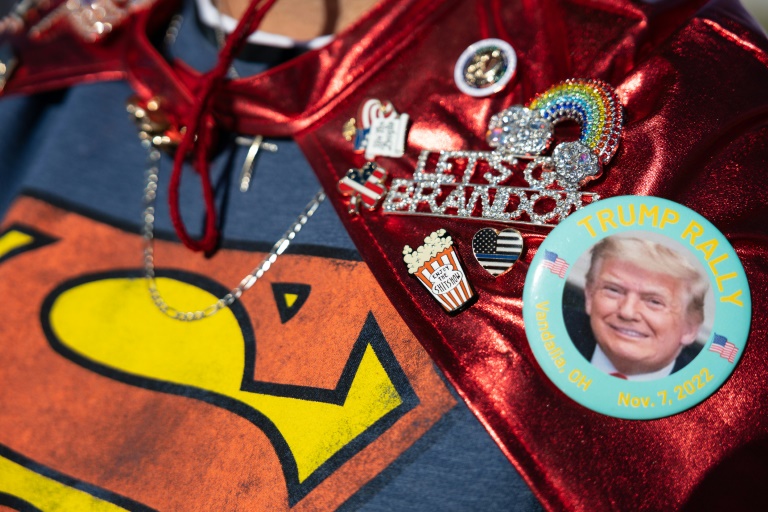
Donald Trump said Monday he would be making a “very big announcement” next week, with the former president expected to jump into the race for the White House in 2024.

Trump, who has never accepted the truth of his lost re-election bid in 2020, has hinted for months that he is ready to re-enter the fray.

“Not to detract from tomorrow’s very important, even critical election… I’m going to be making a very big announcement on Tuesday, November 15 at Mar-a-Lago in Palm Beach, Florida,” he told a cheering crowd in Ohio on the eve of US polls which will determine control of Congress.

The trail was the closest the Republican has got to confirming his intention to run, building on his message last week that he “will very, very, very probably do it again.”

Asian markets mixed ahead of US midterms

Asian markets were mixed on Tuesday following an upbeat session on Wall Street as investors look towards crucial midterm elections that polls show could upend power in Washington.

Shares fell in Hong Kong and Shanghai as speculation about a possible rollback of China’s strict zero-Covid policies fuelled volatility, even after the government vowed to stick with its harsh lockdowns and testing regimes.

But Tokyo stocks gained 1.3 percent at the break, extending rallies in New York, where stocks ended higher and the dollar retreated against both the pound and the euro.

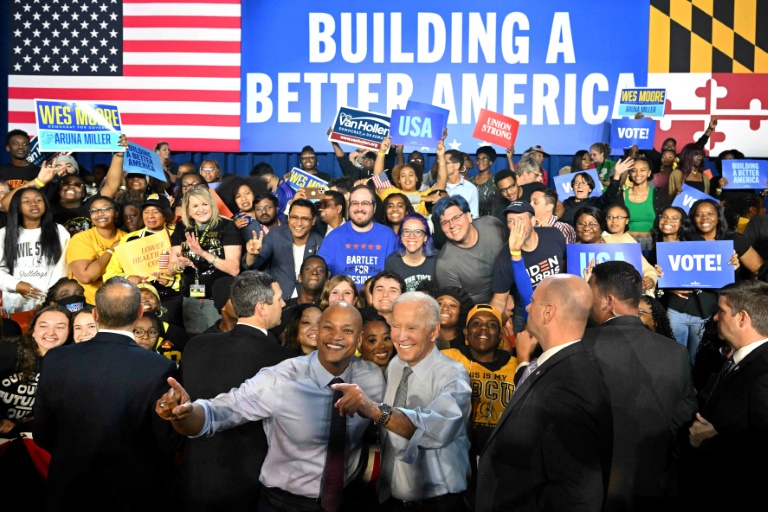
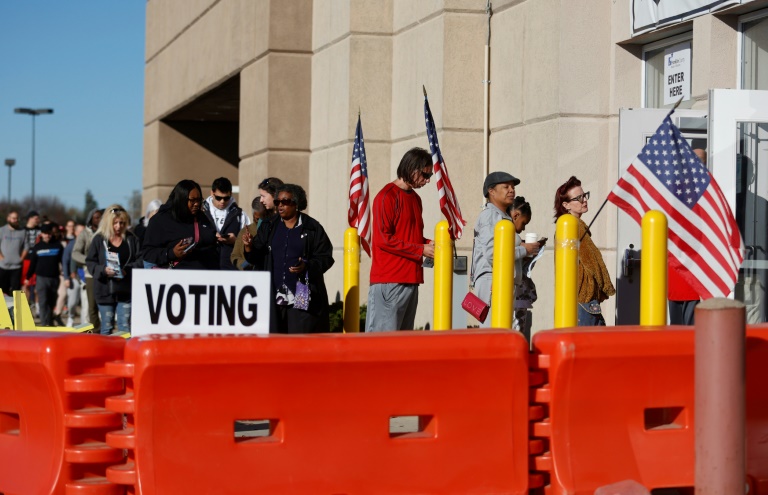
Early voting has begun in many states and most US voters go to the polls on Tuesday, with a Republican takeover of Congress likely dooming President Joe Biden’s ambitious proposals.

Polls show Republicans are likely to win at least one house of Congress — and some see the prospect of further Washington gridlock as a scenario that could lessen the risk of policy uncertainty.

“This may very well be taken as a positive for equity markets over coming days,” Clifford Bennett, chief economist at ACY Securities, said in a note.

“The Biden administration, while welcomed to office by financial markets, has nonetheless delivered on being a very big spending government,” Bennett said.

“It is difficult to argue the extreme inflation and slowing economy are entirely the Biden administration’s fault, but voters will be very clear in their feelings on the matter just the same.”

On Monday, US stocks climbed, with the Dow Jones Industrial Average finishing up 1.3 percent and the broad-based S&P 500 rising 1.0 percent.

The next major data point that investors are watching is US inflation data due on Thursday.

Seoul gained 0.8 percent, Taipei jumped 1.0 percent and Sydney was up 0.3 percent in morning trade, with Singapore also rising 0.2 percent.

But Hong Kong was down 0.6 percent after jumping nearly three percent in the previous session as investors continued to hope for a relaxation of China’s strict Covid-19 rules.

“Speculation about reopening continues to add some market volatility,” Taylor Nugent, an economist at National Australia Bank, said in a commentary.

“In a timely reminder of the potential for Covid policy to hit output, Apple warned iPhone shipments will be lower than previously expected after China lockdowns affected operations at a supplier’s factory,” he noted.

Shanghai was down 0.6 percent, while Jakarta fell 0.3 percent, Bangkok retreated 0.2 percent and Wellington dropped 0.7 percent.

– Key figures around 0230 GMT –

Tokyo – Nikkei 225: UP 1.3 percent at 27,879.70 (break)

Hong Kong – Hang Seng Index: DOWN 0.6 percent at 16,491.63

Shanghai – Composite: DOWN 0.6 percent at 3,057.89

Pound/dollar: UP at $1.1517 from $1.1513 on Monday

Euro/dollar: DOWN at $1.0012 from $1.0023

Dollar/yen: DOWN at 146.59 from 146.68 yen

Euro/pound: DOWN at 86.97 pence from 87.03 pence

West Texas Intermediate: DOWN 1.1 percent at $91.63 per barrel

Brent North Sea crude: DOWN 0.8 percent at $97.80 per barrel

New York – Dow: UP 1.3 percent at 32,827.00 (close)

London – FTSE 100: DOWN 0.5 percent at 7,299.99 (close)

Microsoft co-founder's art may reap $1 bn at auction

An art collection is tipped to break the $1 billion barrier at auction for the first time when Christie’s sells works belonging to late Microsoft co-founder Paul Allen this week.

The two-day sale in New York comes as experts say the super wealthy are viewing art as a safe investment this year amid a tumultuous global economy and Russia’s war in Ukraine.

Allen made his fortune with the establishment of the PC operating system with his better-known Microsoft co-founder Bill Gates in 1975.

He amassed a huge art collection which he used to lend to museums before his death in 2018 at the age of 65. 

The 150 works, to be sold Wednesday and Thursday at Christie’s Manhattan headquarters, trace more than 500 years of art history, from Botticelli and Canaletto to Georgia O’Keeffe and Louise Bourgeois, via Claude Monet, Francis Bacon and Edward Hopper.

The collection is also unique for its value: several masterpieces are estimated to fetch more than $100 million.

They include French painter Paul Cezanne’s “Montagne Sainte-Victoire” (1888-1890), which heralded cubism, and Georges Seurat’s 1888 work “Les Poseuses, Ensemble (small version)”, a renowned work of pointillism.

Also going under the gavel is Vincent Van Gogh’s “Orchard with Cypresses” and a painting from Paul Gauguin’s Tahitian period, “Maternity II” (1899), which controversially depicts his teenage mistress, Pahura.

Allen left Microsoft in 1983, due to health problems and a deteriorating relationship with Gates, who remained in charge of the company until 2000.

Despite their strained friendship, Allen signed Gates’s “Giving Pledge” campaign and all proceeds from the auction are to be donated to charity.

Christie’s hopes the total sales will become part of art market history and top $1 billion.

The current auction record for a private collection was set this spring by the US couple Harry and Linda Macklowe, with $922 million fetched in auctions conducted by Sotheby’s.

This year is shaping up as one of the biggest ever in the art market.

Besides the Macklowe auction, an Andy Warhol portrait of Marilyn Monroe sold in May for $195 million — a record for a piece of 20th-century art.

Another iconic Warhol, “White Disaster (White Car Crash 19 Times)” from 1963, depicting a series of images of a brutal car crash, is due to be sold on November 16 by Sotheby’s, with a pre-sale estimate of over $80 million.

“Clients want to diversify their assets, because they can enjoy it, and they know that most pieces continue increasing in value over time,” Adrien Meyer, co-chairman of Impressionist & Modern Art at Christie’s, told AFP.

“There are more billionaires than they are masterpieces, in essence. The demand is very diversified,” he added.

Jeremiah Evarts, vice-president at rival auction house Phillips, agreed that the art market is showing “no signs” of slowing down amid multiple world crises.

“A lot of collectors are looking at the 20th century and perhaps feel more secure buying a Picasso, a Chagall or a Magritte,” he said.

Microsoft co-founder's art may reap $1 bn at auction

An art collection is tipped to break the $1 billion barrier at auction for the first time when Christie’s sells works belonging to late Microsoft co-founder Paul Allen this week.

The two-day sale in New York comes as experts say the super wealthy are viewing art as a safe investment this year amid a tumultuous global economy and Russia’s war in Ukraine.

Allen made his fortune with the establishment of the PC operating system with his better-known Microsoft co-founder Bill Gates in 1975.

He amassed a huge art collection which he used to lend to museums before his death in 2018 at the age of 65. 

The 150 works, to be sold Wednesday and Thursday at Christie’s Manhattan headquarters, trace more than 500 years of art history, from Botticelli and Canaletto to Georgia O’Keeffe and Louise Bourgeois, via Claude Monet, Francis Bacon and Edward Hopper.

The collection is also unique for its value: several masterpieces are estimated to fetch more than $100 million.

They include French painter Paul Cezanne’s “Montagne Sainte-Victoire” (1888-1890), which heralded cubism, and Georges Seurat’s 1888 work “Les Poseuses, Ensemble (small version)”, a renowned work of pointillism.

Also going under the gavel is Vincent Van Gogh’s “Orchard with Cypresses” and a painting from Paul Gauguin’s Tahitian period, “Maternity II” (1899), which controversially depicts his teenage mistress, Pahura.

Allen left Microsoft in 1983, due to health problems and a deteriorating relationship with Gates, who remained in charge of the company until 2000.

Despite their strained friendship, Allen signed Gates’s “Giving Pledge” campaign and all proceeds from the auction are to be donated to charity.

Christie’s hopes the total sales will become part of art market history and top $1 billion.

The current auction record for a private collection was set this spring by the US couple Harry and Linda Macklowe, with $922 million fetched in auctions conducted by Sotheby’s.

This year is shaping up as one of the biggest ever in the art market.

Besides the Macklowe auction, an Andy Warhol portrait of Marilyn Monroe sold in May for $195 million — a record for a piece of 20th-century art.

Another iconic Warhol, “White Disaster (White Car Crash 19 Times)” from 1963, depicting a series of images of a brutal car crash, is due to be sold on November 16 by Sotheby’s, with a pre-sale estimate of over $80 million.

“Clients want to diversify their assets, because they can enjoy it, and they know that most pieces continue increasing in value over time,” Adrien Meyer, co-chairman of Impressionist & Modern Art at Christie’s, told AFP.

“There are more billionaires than they are masterpieces, in essence. The demand is very diversified,” he added.

Jeremiah Evarts, vice-president at rival auction house Phillips, agreed that the art market is showing “no signs” of slowing down amid multiple world crises.

“A lot of collectors are looking at the 20th century and perhaps feel more secure buying a Picasso, a Chagall or a Magritte,” he said.

Defectors seek alternatives to Musk-owned Twitter

Since Elon Musk took over Twitter, users irked by the platform’s new regime have vowed to move their online presence elsewhere, with German-owned Mastodon attracting the most attention.

Musk’s first moves have been a shock to some. Just a week after taking over the reins of Twitter, the owner of SpaceX and Tesla launched radical changes by firing thousands of staff, promising the return of banned users and ramping up a plan to make people pay for privileged access to the site.

This has left many users looking to defect to new platforms, though with few obvious alternatives available for now.

– Mastodon, the anti-Twitter –

Unknown to the general public until recently, Mastodon has seen its popularity explode among Internet users concerned about the direction Musk is taking Twitter. 

Created in 2016 by the German developer Eugen Rochko, the site presents itself as a “decentralized” social network without advertising where preserving privacy is sacrosanct.

“Your ability to communicate online should not be at the whims of a single commercial company!” Mastodon tweeted when the Musk deal with Twitter was announced in April.

In practice, Mastodon like Twitter is based on postings of small messages, but each new user must sign up to an independently run server and there are thousands of them. In theory, users can interact freely across the Mastodon servers, but this can be complicated and unreliable.

On his personal account, Rochko said Mastodon reached more than 1 million monthly active users on Monday with the addition of 1,124 servers and nearly 490,000 new users since Oct. 27, when Musk took over Twitter. 

This is still tiny compared to Twitter, which had nearly 238 million daily active users at the end of June.

The publicity has not been easy for Mastodon and many new users complain about the platform’s unintuitive interface, underlining the difficulty of creating an account and the poor response times unlike sites run by the tech giants.

Content moderation is also a big question mark as it is left to the sole discretion of server administrators, with some refusing access to others, disrupting the experience.

– Under construction –

Other sites eager to welcome Twitter’s defectors are still very much in a development phase.

This is the case of BlueSky, the new project of Twitter co-founder Jack Dorsey that in late October claimed to have 30,000 people on its waiting list after only 48 hours, or Cohost, which promises that its users’ personal data will never be sold.

In online discussions, established platforms, such as the microblogging site Tumblr or the audio chat app Clubhouse, have seen a resurgence in popularity.

A few other start-ups are also attracting attention, including Counter Social and Tribel Social. 

Then there are the right-wing sites such as Gab, Parler or Truth Social, the platform launched by former US president Donald Trump, which positioned themselves as conservative alternatives to Twitter long before the takeover by Musk. 

Trump is largely expected to be reinstated on Twitter shortly after the US midterm elections on Tuesday, leaving the fate of the financially challenged Truth Social in limbo.

– ‘Very early days –

For the moment, there is no indication that these alternatives to Twitter will be able to compete with, let alone surpass, Musk’s new company.

In a tweet published on Monday, he even assured that “Twitter user numbers have increased significantly around the world since the deal was announced,” without providing any figures. 

“And these are very early days,” the billionaire entrepreneur continued. “As Twitter becomes by far the most reliable source of truth, it’s going to be indispensable.” 

But it remains to be seen whether the most prominent Twitter personalities (celebrities, athletes and politicians) will stay on the site or whether they will fall back on platforms with an even larger audience such as Facebook, Instagram or TikTok. 

US seizes $3.4 bn in bitcoin stolen from Silk Road

The US government announced Monday it had seized $3.4 billion in bitcoin from a real estate developer who stole the cryptocurrency from the dark web marketplace Silk Road a decade ago.

James Zhong, 32, pleaded guilty Friday to committing wire fraud in September 2012 ago when he unlawfully obtained more than 50,000 bitcoin, according to federal prosecutors in New York.

Agents recovered the digital money when they raided Zhong’s house in Gainesville, Georgia, in November last year, the Southern District of New York said in a statement.

They found the bitcoin on devices hidden in an underground floor safe and on a single-board computer that was concealed under blankets in a popcorn tin stored in a bathroom closet.

“For almost ten years, the whereabouts of this massive chunk of missing bitcoin had ballooned into an over $3.3 billion mystery,” said US Attorney Damian Williams.

“Thanks to state-of-the-art cryptocurrency tracing and good old-fashioned police work, law enforcement located and recovered this impressive cache of crime proceeds.”

Prosecutors say Zhong defrauded Silk Road by triggering quick transactions from roughly nine anonymous accounts that tricked the site’s withdrawal-processing system into depositing the bitcoin into his accounts.

He faces up to 20 years in prison.

Until the FBI shut it down in October 2013, the US government called Silk Road “the most sophisticated and extensive criminal marketplace on the Internet,” used by vendors in more than 10 countries in North America and Europe.

In 2015, Ross Ulbricht was sentenced to life in prison after being convicted of masterminding the website, which sold $200 million in drugs to customers worldwide.

Ulbricht, who ran Silk Road under the alias “Dread Pirate Roberts” and was accused of commissioning five murders at a cost of $650,000, was sentenced to two life sentences for narcotics distribution and criminal enterprise.

The latest operation marks the Justice Department’s second-largest crypto seizure after the $3.6 billion it recovered in February from a New York couple who allegedly stole 94,000 bitcoin during a 2016 hack of the virtual currency exchange Bitfinex.

US hit by lottery fever ahead of world record $1.9 bn Powerball draw

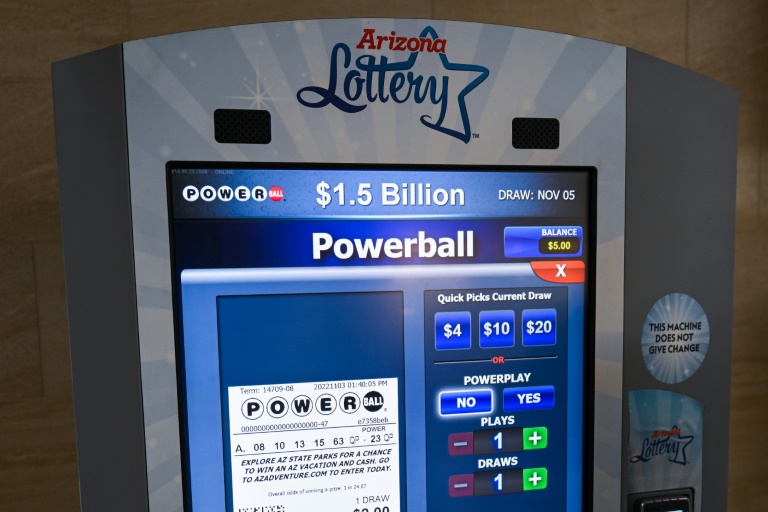
Americans were dreaming big on Monday hours before numbers were to be drawn for the staggering $1.9 billion US Powerball jackpot -– the largest prize in world history, driving a new surge in lottery fever across the country.

With no ticket matching Saturday’s winning numbers the pot was rolled over — and even those who do not usually play the lottery were taking their chances, forming lines at convenience stores around the country to buy their tickets.

“me: spending $24 for additional life insurance isn’t worth it, what are the odds also me: *buys $20 of powerball tix*,” tweeted Business Insider finance reporter Hayley Cuccinello.

The odds of winning the jackpot are still 1 in 292.2 million. If there were duplicate winners who select the same combination of numbers, they would share the jackpot.

The last time someone claimed the Powerball jackpot was August 3, when a lucky ticket holder in Pennsylvania raked in an estimated $206.9 million. Since then, the Powerball jackpot has grown and grown.

While no one claimed the big prize on Saturday, 16 tickets matched the five main numbers to win $1 million each. To get the jackpot you must get the Powerball number, too.

It costs $2 to buy a Powerball ticket, and a winner could choose a lump sum payment, calculated for Monday’s jackpot at $929 million. Or they could opt for payments over 29 years.

Most winners choose the lump sum payout.

Twitter was full of lottery hopefuls dreaming of what they could do with all that money, from using it to help the needy to buying every single one of their followers “a Classic Chocolate Frosty from @Wendys”.

Hope springs eternal for some enthusiasts.

“My psychic told me November 12th was gonna be the best day of my life, so if there’s still no powerball winner by then, I’m buying as many tickets as possible,” wrote one Twitter user.

Oath Keepers leader says no plan to attack US Capitol

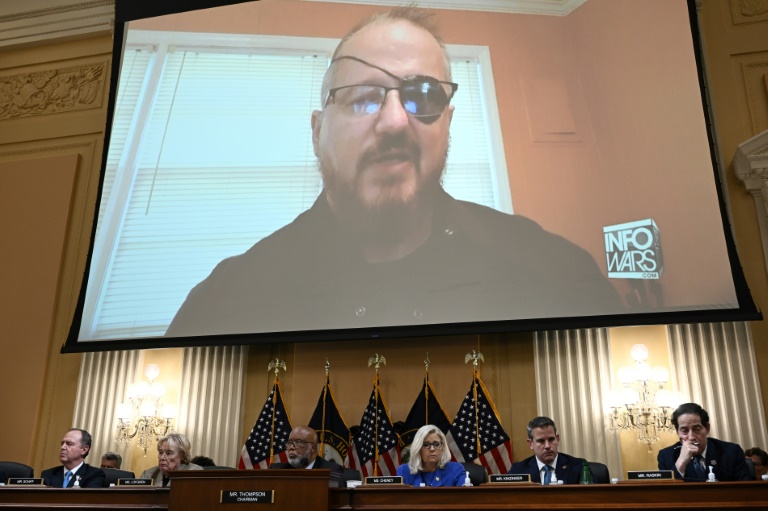
Oath Keepers founder Stewart Rhodes denied Monday in his sedition trial that his organization planned the January 6, 2021 assault on the US Capitol, calling those who entered the building “stupid.”

He admitted under questioning by prosecutors that he has a history of opposing authorities and backing civil disobedience to the government. 

But said he did nothing unlawful on the day supporters of then-president Donald Trump stormed the seat of the US Congress, and condemned those of his group who “went off-mission” and entered the building.

Rhodes, on trial with four others for conspiracy to mount an armed rebellion against the US government, rebuffed questioning from Justice Department prosecutor Kathryn Rakoczy, who sought to show that, from President Joe Biden’s victory over Trump in the November 2020 election, he planned to bring his group to Washington to forcibly overturn the voting result.

The eyepatch-wearing Yale law graduate and former soldier told the court that about 100 members of his militia-like group were in Washington on January 6 only to provide security to rallies and rally speakers.

“It was not part of our mission for that day to enter the Capitol for any reason,” Rhodes said. 

Rakoczy showed plentiful text messages between Rhodes and his followers that called for action if Trump himself failed to act to prevent the Congress’s certification of Biden as the next president on January 6. 

She outlined a long history of Rhodes and his group showing up heavily armed at tense situations involving law enforcement, adding to the tensions.

And she noted he bought $17,000 worth of arms and ammunition on his way to Washington for the January 6 event, and had told followers that “the final defense is us and our rifles.”

– ‘Political persecution’ –

But Rhodes challenged Rakoczy repeatedly to prove that he specifically called for violent action on January 6, saying it was only a consideration for after January 20, the day Biden was inaugurated as president.

“This is the first time that we have had an election .. that was so blatantly unconstitutional,” he said, without explaining what was unconstitutional about it.

When he realized on January 6 that hundreds of people had stormed the building housing the US legislature, he said he tried to contact fellow Oath Keepers to stop them from taking part.

“I’m wondering where my people are. I didn’t want them getting wrapped up with all the nonsense with Trump supporters.”

Speaking in military terminology, he admitted that a number of Oath Keepers went “off-mission” to enter the Capitol. 

He said that co-defendant Kelly Meggs, the head of the large Florida chapter of the Oath Keepers, was “an idiot” for taking his people into the Capitol.

“I think it was stupid to go into the Capitol. It opened the door for the political persecution of us. And that’s where we are,” he told the court.

– High-stakes trial –

The Justice Department opened the high-stakes trial on October 3 saying that Rhodes and the Oath Keepers “concocted a plan for an armed rebellion… plotting to oppose by force the government of the United States.”

Prosecutors have shown videos of the violent assault by dozens of group members dressed in military-style combat gear.

Halfway through, the trial is focused on the planning for January 6 by Rhodes and the Oath Keepers.

Prosecutors have avoided trying to show any links between them and Trump or his advisors, currently under separate investigations in Congress and the Justice Department over their possible roles in the January 6 uprising.

Carrying a potential 20-year prison sentence, the rare charge of seditious conspiracy is a gamble for the Justice Department.

Out of 870 people charged over January 6 so far, the government has reserved sedition for just a few dozen of the attackers, mostly members of self-styled militia groups.

pmh/dw

`

Stocks mostly rise, dollar dips before US midterms

Global stocks mostly rose Monday while the dollar dipped against key rivals as markets looked ahead to this week’s US midterm elections and key inflation data.

Even China dousing speculation of a relaxation of its strict Covid policies failed to crush positive sentiment in the markets.

Wall Street stocks ended higher the day before most US voters go to the polls, with early voting already underway in many states.

The outcome will have implications for the agenda of US president Joe Biden, with a Republican takeover of Congress likely dooming ambitious proposals.

With polls showing Republicans likely to win at least one house of Congress, analysts welcomed the prospect of further Washington gridlock, a scenario that lessens policy uncertainty as a risk.

Even if Biden’s Democratic Party retains narrow control of the legislature, the stock market has historically pushed higher after midterm votes, said LBBW’s Karl Haeling.

“I don’t think it’s specific to any expectations for a Republican victory,” Haeling said of Monday’s rally. “It is simply that once the midterm elections are completed, stock markets tend to do well in the year end.”

On Monday, US stocks climbed with the Dow Jones Industrial Average finishing up 1.3 percent and the broad-based S&P 500 rising 1.0 percent.

The gains came as the dollar retreated against both the pound and the euro, adding to Friday’s trend in foreign exchange markets.

The next major data point that investors are watching is US inflation data, due on Thursday, and again before the Federal Reserve’s next policy-setting meeting.

Investors have been hoping that any signs the US economy or inflation is slowing would prompt the central bank to scale back its interest rate hikes, but Fed chief Jerome Powell has indicated policymakers will not let up until inflation comes down.

Global markets and oil prices have also been boosted in some recent sessions by hopes that Beijing may begin to roll back the country’s strict Covid-19 controls, which have taken a toll on its economy.

But on Saturday, Chinese authorities said they would “unswervingly” stick to the current plan involving harsh lockdowns, quarantines and mass testing with even small clusters.

Despite the official stance, “there are still hopes” that Beijing may relax its coronavirus curbs in the coming months, Iris Pang, chief economist for Greater China at ING Wholesale Banking, told AFP.

“Traders believe that the Chinese government cannot permanently hold these existing Covid measures,” she said.

Ongoing large-scale events, such as the China International Import Expo in Shanghai, are also seen by investors as “a kind of water-testing” by Beijing, to see if cases and deaths rise significantly, Pang added.

Hong Kong’s Hang Seng index bounded 2.7 percent higher at close.

– Key figures around 2115 GMT –

New York – Dow: UP 1.3 percent at 32,827.00 (close)

New York – S&P 500: UP 1.0 percent at 3,806.80 (close)

New York – Nasdaq: UP 0.9 percent at 10,564.52 (close)

London – FTSE 100: DOWN 0.5 percent at 7,299.99 (close)

Frankfurt – DAX: UP 0.6 percent at 13,533.52 (close)

Paris – CAC 40: FLAT at 6,416.61 (close)

EURO STOXX 50: UP 0.6 percent at 3,708.80 (close)

Tokyo – Nikkei 225: UP 1.2 percent at 27,527.64 (close)

Hong Kong – Hang Seng Index: UP 2.7 percent at 16,595.91 (close)

Shanghai – Composite: UP 0.2 percent at 3,077.82 (close)

Euro/dollar: UP at $1.0023 from $0.9964 Friday

Pound/dollar: UP at $1.1513 from $1.1376

Dollar/yen: UP at 146.68 from 146.62 yen

Euro/pound: DOWN at 87.03 pence from 87.56 pence

West Texas Intermediate: DOWN 0.9 percent at $91.79 per barrel

Brent North Sea crude: DOWN 0.7 percent at $97.02 per barrel

burs-bys-jmb/tjj

World risks 'collective suicide', UN chief warns climate summit

The UN’s chief warned Monday that nations must cooperate or face “collective suicide” in the fight against climate change, at a summit where developing countries reeling from global warming demanded more action from rich polluters.

Nearly 100 heads of state and government are meeting for two days in Egypt’s Red Sea resort of Sharm el-Sheikh, facing calls to deepen emissions cuts and financially back developing countries already devastated by the effects of rising temperatures.

“Humanity has a choice: cooperate or perish,” Guterres told the UN COP27 summit.

“It is either a Climate Solidarity Pact or a Collective Suicide Pact,” he added.

Guterres urged the world to ramp up the transition to renewable energy, and for richer polluting nations to come to the aid of poorer countries least responsible for heat-trapping emissions.

He said the target should be to provide renewable and affordable energy for all, calling on the United States and China in particular to lead the way.

US-Sino tensions, however, have prompted Beijing to freeze climate cooperation with Washington.

President Xi Jinping is absent from the summit, while President Joe Biden will attend it later this week after US midterm elections.

– ‘Persisting distrust’ –

Nations worldwide are coping with increasingly intense natural disasters that have taken thousands of lives this year and cost billions of dollars.

They range from devastating floods in Nigeria and Pakistan to droughts in the United States and several African nations, as well as unprecedented heatwaves across three continents.

“We have seen one catastrophe after another,” said Egyptian President Abdel Fattah al-Sisi. “Is it not high time to put an end to all this suffering?”

Money has emerged as a major issue at COP27, with wealthy countries scolded for failing to fulfil their pledge to provide $100 billion per year to help developing countries green their economies.

This is a “major cause for persisting distrust, and neither is there any sound reason for the continuing pollution”, said Kenyan President William Ruto, who announced an African climate summit for next year.

A salvo of crises — from Russia’s invasion of Ukraine to soaring inflation and the lingering effects of the Covid pandemic — have raised concerns that climate change has dropped down the priority list of governments.

– ‘Highway to climate hell’ –

British Prime Minister Rishi Sunak said President Vladimir Putin’s “abhorrent war in Ukraine and rising energy prices across the world are not a reason to go slow on climate change.”

German Chancellor Olaf Scholz, whose gas-dependent economy has been squeezed hard by cuts in Russian supplies, also warned against a “worldwide renaissance of fossil fuels”

Guterres called for a “historic” deal between rich emitters and emerging economies, with countries doubling down on emissions reductions to hold the rise in temperatures to the more ambitions Paris Agreement target of 1.5 degrees Celsius above the pre-industrial era.

Current trends would see carbon pollution increase 10 percent by the end of the decade and put the world on a path to heat up to 2.8C.

“We are on a highway to climate hell with our foot still on the accelerator,” Guterres said.

Poorer countries successfully fought to have the issue of “loss and damage” — compensation for the damage caused by climate-enhanced natural disasters — officially put on the COP27 agenda.

“We, the oceanic states that suffer the harsh effects of your activities, have to be assisted in repairing the damage you cause to us,” said Seychelles President Wavel Ramkalawan, whose island nation is threatened by rising waters.

Barbados Prime Minister Mia Mottley called for a windfall tax on the profits of oil companies, that would be funnelled to a loss and damage fund.

– ‘Living nightmare’ –

The United States and the European Union have dragged their feet for years on compensation for climate impacts, fearing it would create an open-ended reparations framework.

“Loss and damage is not an abstract topic of endless dialogue,” Ruto said. “It is our daily experience and the living nightmare for hundreds of millions of Africans”.

Guterres said that getting “concrete results on loss and damage is a litmus test of the commitment of governments to the success of COP27.”

In a possible blueprint for other developing nations, a group of wealthy nations approved a plan paving the way for South Africa to receive $8.5 billion in loans and grants to move away from coal.

COP27 is scheduled to continue through November 18, with ministers joining the fray during the second week.

Security is tight at the meeting, with Human Rights Watch saying authorities have arrested dozens of people and restricted the right to demonstrate in the days leading up to COP27.

bur-lth/pjm

Close Bitnami banner
Bitnami