US Business

In US vote, misinformation in Spanish is a family affair

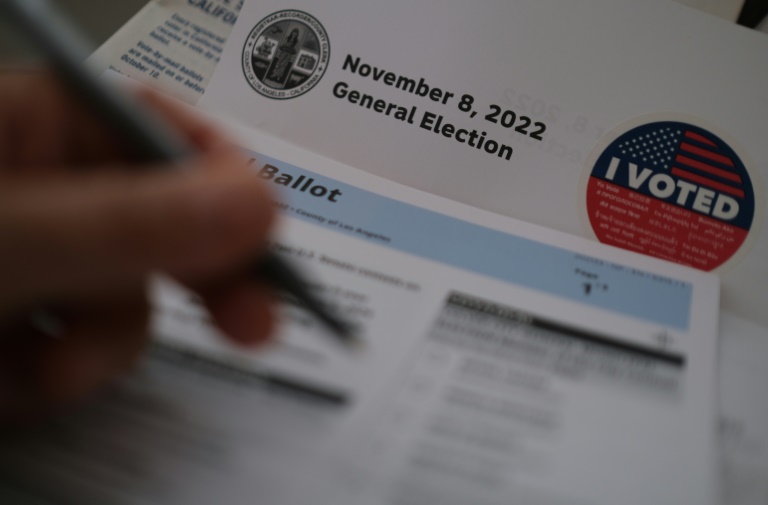
Shared among relatives and people they trust — that is how misinformation often moves among the estimated 34.5 million Americans of Hispanic origin eligible to vote in US midterm elections on November 8, experts say, with the specter of communism a common narrative.

Those contributing to the spread regularly appeal to the emotions of a community in which authority and familiarity play a fundamental role, with politicians looking to garner support with messaging that tugs at the heartstrings.

Misinformation evoking painful memories — such as the communist or socialist regimes which the families of many Hispanic Americans left behind to come to the United States — can quickly proliferate among a group that makes up around 14 percent of the US electorate.

Maria Corina Vegas, a Venezuelan living in Miami, Florida, says she receives numerous text messages associating the Democratic Party of Joe Biden with the “Chavista radical Left,” a reference to former socialist Venezuelan president Hugo Chavez.

Constant streams of polarized content cause family friction, according to Vegas.

“It has led me to avoid discussions,” she said, noting that some family members cannot stop themselves from arguing about the messages they’ve seen.

Vanessa Cardenas of America’s Voice, an immigrants’ rights organization, told AFP that purveyors of misinformation know false and misleading content can discourage electoral participation. Yet the very same information “is more credible when it comes from people you trust.”

This explains how Hispanics in the US are vulnerable to misinformation on WhatsApp, an encrypted messaging app used by 20 percent of the community, according to a survey by Equis Institute.

WhatsApp “is where family and people you trust are,” said Julio Rivera, head of campaigns for the NALEO Educational Fund, which promotes the participation of Latinos in US elections.

Cynthia Perez of Cubanos Pa’lante, an organization that encourages “progressive Cuban-Americans” to vote in Florida, agreed.

“The first generations of Latinos (to arrive in the US) have a lot of respect for authority,” she said.

“When they listen to the president, the governor, or a police officer, they don’t automatically think that person is telling lies. And they believe them because they are people they trust.”

– Fear of communism –

Although many misinformation narratives circulating ahead of the midterms are translated from English, others are created or adapted to exacerbate feelings in Hispanic communities, analysts say.

For example, many Cuban and Venezuelan emigres fleeing communism and socialism are the targets of campaigns spreading fear that what happened in their countries could happen in the US if they vote for certain candidates, Rivera said.

Evelyn Perez-Verdia, head of strategy at the consulting firm We Are Mas, echoed the same concern.

“The actors who create misinformation, domestic or foreign, understand the pain that word — communism — causes the Latin American or Caribbean community,” she said.

“In 2018, they started accusing anyone who was a Democrat, even right-wing centrists, of being socialist-communist because it immediately created fear in the community.”

As of that year, there were 1.3 million Cubans in the US, according to official data. There were more than 540,000 Venezuelans as of 2021, according to R4V, a platform for refugees and migrants from Venezuela co-led by the UN.

The evocation of communism has been visible in midterms campaigning, with Republicans such as US Congresswoman María Elvira Salazar of Florida characterizing Biden as a far-left politician.

Other posts circulating on WhatsApp make false claims about voting and abortion rights, particularly following the US Supreme Court’s reversal of Roe v. Wade, raising fears that vulnerable people will not seek medical attention when they need it.

Part of the problem, Rivera said, is that more resources and controls are needed to stop the flow of misinformation in Spanish in the US since such content “stays up longer” online compared to claims in English.

A report by Avaaz, an activist group that studies disinformation, indicates 70 percent of inaccurate content in Spanish on Facebook did not receive warning labels, compared to 29 percent in English.

On WhatsApp, news organizations such as AFP have established tip lines to fight disinformation by answering users with reliable information and facts.
Twitter mass layoffs begin as Musk launches overhaul

Thousands of Twitter employees were ordered to stay home Friday to await a bracing round of layoffs that could see half of the payroll axed as new owner Elon Musk launches his major overhaul of the company.

A company-wide email seen by AFP said Twitter employees would receive word on their future at the company via email at the start of business Friday, California time.

The cull is part of Musk’s push to find ways to pay for the mammoth $44 billion deal for which he took on billions of dollars in debt and sold $15.5 billion worth of Tesla shares, his electric car company.

Musk, the Tesla and SpaceX chief, has been scrambling to find new ways for Twitter to make money after his mammoth buyout, including an idea to charge users $8 a month for verified accounts.

The moves would help overcome the potential loss of advertisers, Twitter’s main source of revenue, with many of the world’s top brands putting their ad buys on hold, spooked by Musk’s well-known disdain for content moderation.

The mercurial tycoon on Friday complained on Twitter of a “massive drop in revenue” that he blamed on “activist groups” that were pressuring advertisers.

“We did everything we could to appease the activists. Extremely messed up! They’re trying to destroy free speech in America,” he added.

This appeared to refer to Musk’s recent meeting with civil rights groups in which he heard concerns that Twitter would open the floodgates to hate speech.

In an effort to soothe nerves, Musk had vowed that Twitter will not become a “free-for-all hellscape”, but his pledge was quickly followed by a tweet relaying a conspiracy theory about an assault on the husband of the US House Speaker.

Though extremely influential with opinion-makers and celebrities, the California company has long struggled to generate profit and has failed to keep pace with Facebook, Instagram and TikTok in gaining new users.

“In an effort to place Twitter on a healthy path, we will go through the difficult process of reducing our global workforce,” the company email said.

The email did not give a number but the Washington Post and New York Times reported that about half of Twitter’s 7,500 employees — mostly based in San Francisco — will be let go.

– ‘Return home’ –

The company said that in order to “ensure the safety” of employees and sensitive data, the main offices would remain closed and all badge access suspended.

“Those on the way to the office should turn around and return home,” the email added.

It also said that those still employed at the company would find out on their company email, while those shown the door would get notice on their personal email.

Some workers had already begun to learn their fates and took to Twitter to say goodbye to colleagues.

“Spoiler Alert: I do not have a job,” tweeted ex-employee Blake Herzinger as others reported losing access to company servers and email accounts.

Twitter employees have been bracing for this kind of bad news since Musk completed his acquisition late last week and quickly set about dissolving its board and firing its chief executive and top managers.

Late on Thursday, a group of five Twitter employees who had already been fired filed a class action complaint against the company on the grounds that they had not been given the required 60-day notice period as required by law.

The lawsuit references the US Worker Adjustment and Retraining Notification (WARN) Act, which provides workers a right to advance notice in cases of mass layoffs or plant closings.

Twitter mass layoffs begin as Musk launches overhaul

Thousands of Twitter employees were ordered to stay home Friday to await a bracing round of layoffs that could see half of the payroll axed as new owner Elon Musk launches his major overhaul of the company.

A company-wide email seen by AFP said Twitter employees would receive word on their future at the company via email at the start of business Friday, California time.

The cull is part of Musk’s push to find ways to pay for the mammoth $44 billion deal for which he took on billions of dollars in debt and sold $15.5 billion worth of Tesla shares, his electric car company.

Musk, the Tesla and SpaceX chief, has been scrambling to find new ways for Twitter to make money after his mammoth buyout, including an idea to charge users $8 a month for verified accounts.

The moves would help overcome the potential loss of advertisers, Twitter’s main source of revenue, with many of the world’s top brands putting their ad buys on hold, spooked by Musk’s well-known disdain for content moderation.

The mercurial tycoon on Friday complained on Twitter of a “massive drop in revenue” that he blamed on “activist groups” that were pressuring advertisers.

“We did everything we could to appease the activists. Extremely messed up! They’re trying to destroy free speech in America,” he added.

This appeared to refer to Musk’s recent meeting with civil rights groups in which he heard concerns that Twitter would open the floodgates to hate speech.

In an effort to soothe nerves, Musk had vowed that Twitter will not become a “free-for-all hellscape”, but his pledge was quickly followed by a tweet relaying a conspiracy theory about an assault on the husband of the US House Speaker.

Though extremely influential with opinion-makers and celebrities, the California company has long struggled to generate profit and has failed to keep pace with Facebook, Instagram and TikTok in gaining new users.

“In an effort to place Twitter on a healthy path, we will go through the difficult process of reducing our global workforce,” the company email said.

The email did not give a number but the Washington Post and New York Times reported that about half of Twitter’s 7,500 employees — mostly based in San Francisco — will be let go.

– ‘Return home’ –

The company said that in order to “ensure the safety” of employees and sensitive data, the main offices would remain closed and all badge access suspended.

“Those on the way to the office should turn around and return home,” the email added.

It also said that those still employed at the company would find out on their company email, while those shown the door would get notice on their personal email.

Some workers had already begun to learn their fates and took to Twitter to say goodbye to colleagues.

“Spoiler Alert: I do not have a job,” tweeted ex-employee Blake Herzinger as others reported losing access to company servers and email accounts.

Twitter employees have been bracing for this kind of bad news since Musk completed his acquisition late last week and quickly set about dissolving its board and firing its chief executive and top managers.

Late on Thursday, a group of five Twitter employees who had already been fired filed a class action complaint against the company on the grounds that they had not been given the required 60-day notice period as required by law.

The lawsuit references the US Worker Adjustment and Retraining Notification (WARN) Act, which provides workers a right to advance notice in cases of mass layoffs or plant closings.

Trump signals 2024 run as Democrats brace for punishing midterms

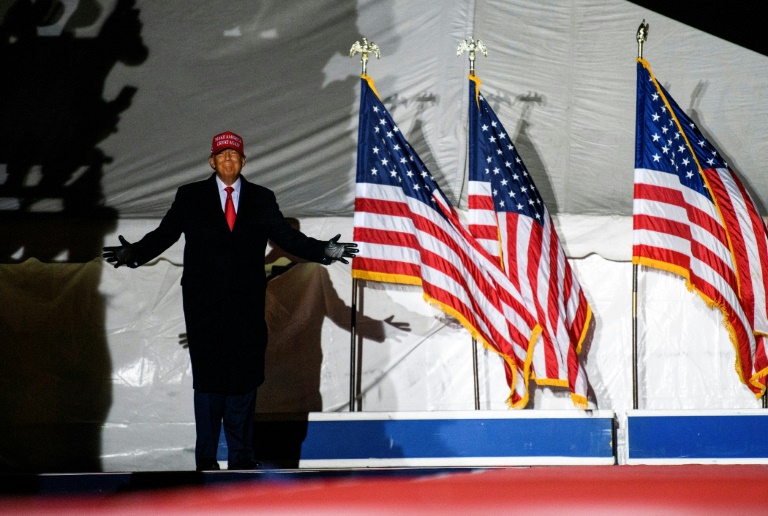
Donald Trump is planning to ride a wave of Republican victories in next week’s midterm elections by announcing a run for the presidency, US media reported Friday, as Democrats braced for a punishing night even in the most liberal corners of America.

The one-term president has hinted for almost two years a potential third tilt at the White House after losing to Joe Biden, but aides are firming up plans for an announcement on November 14, according to Axios.

Trump sent his clearest signal yet that he intends to announce his 2024 candidacy soon, as he addressed a rally Thursday in Iowa, the first state to hold its Republican nominating contest in presidential elections. 

“In order to make our country successful and safe and glorious, I will very, very, very probably do it again, OK? Very, very, very probably,” Trump teased to rapt applause at the event in Sioux City. 

“Get ready. That’s all I’m telling you. Very soon. Get ready. Get ready.”

Trump’s remarks came with polling pointing to a re-emerging “red wave” that will likely see the tycoon’s party dismantling the Democrats’ razor-thin majority in the House and possibly retaking the Senate.

Republicans are confident they can flip the one state they need for the upper chamber and are expecting gains in the House of 12 to 25 seats, easily enough to overcome the Democrats’ eight-member advantage.

– ‘I’ve got a plan’ –

The final weeks of the campaign have seen bullish Republicans even looking beyond the country’s swing states to Democratic bastions that once looked out of reach. 

Strategists from both parties are seeing districts across New York, Oregon and Connecticut that went for Biden by double digits in 2020 coming back into play. 

Hillary Clinton campaigned on Thursday in New York to boost the faltering fortunes of Governor Kathy Hochul while former president Barack Obama speaks in Pennsylvania Saturday.

With Democrats being dragged down by Biden’s underwater approval ratings, particularly on inflation, the president was due to pitch his party as the choice for growth and innovation at a tour of a San Diego communications company later Friday. 

Ahead of the visit, Biden hailed new figures for October showing the economy adding 261,000 jobs and unemployment at low levels.

“I’ve got a plan to bring costs down, especially for health care, energy, and other everyday expenses… The Republican plan is very different,” he said in a statement. 

“They want to increase prescription drug costs, health insurance costs, and energy costs, while giving more tax breaks to big corporations and the very wealthy.”

– ‘Speculation and rumors’ –

In one glimmer of hope for the Democrats, Oprah Winfrey endorsed Pennsylvania Senate candidate John Fetterman during a virtual get-out-the-vote event Thursday.

It was a notable snub of Fetterman’s Republican rival, celebrity surgeon Mehmet Oz, who rose to fame largely through appearances on Winfrey’s show. 

But with the Republicans confident of flipping Georgia and Nevada, the Keystone State might not even be needed for a takeover of the Senate. 

Trump had initially considered announcing before next Tuesday to get ahead of the field in the Republican primary.

But he was persuaded by close ally Kellyanne Conway that the move would leave him open to blame in the event of a bad night for Republicans.

The strategist, who ran Trump’s 2016 campaign and served as a top advisor in his administration, said Thursday at a campaign event he could be expected to “announce soon.”

Trump spokesman Taylor Budowich told AFP he was “not commenting on the never-ending media speculation and rumors” about a Trump return to the Oval Office.

“As President Trump has said, Americans should go vote up and down the ballot for Republicans, and he will continue that message tomorrow night in Pennsylvania,” he added.

Dolly Parton, Eminem among Rock Hall of Fame inductees

Music’s A-listers will celebrate a new crop of legends entering the Rock and Roll Hall of Fame this weekend, among them country queen Dolly Parton and rap agitator Eminem.

Pop futurists Eurythmics, smooth rocker Lionel Richie, new wave Brits Duran Duran, confessional lyricist Carly Simon and enduring rock duo Pat Benatar and Neil Giraldo round out the class of 2022.

The Cleveland-based Hall of Fame — which surveyed more than 1,000 musicians, historians and industry members to choose the entrants — will honor the seven acts in a star-studded gala concert on Saturday at Los Angeles’s Microsoft Theater.

The inclusion of Parton, 76, prompted a characteristically humble response from the beloved icon, who initially requested her name be taken out of the running.

“Even though I’m extremely flattered and grateful to be nominated for the Rock and Roll Hall of Fame, I don’t feel that I have earned that right,” said the music pioneer, who’s penned thousands of songs including “Jolene” and “I Will Always Love You.”

But voting was already under way, and the Hall of Fame insisted she was far more than a country star.

“With her trailblazing songwriting career, distinctive voice, campy glamour, business savvy and humanitarian work, Dolly Parton is a beloved icon who transcends the genre she transformed forever,” the organization said.

For years the institution has defined “rock” less in terms of genre than of spirit, with a number of rappers, pop, R&B and country stars included.

“I just felt like I would be taking away from someone that maybe deserved it, certainly more than me, because I never considered myself a rock artist,” Parton said later. 

“But obviously, there’s more to it than that.”

– Eclectic group –

The 2022 group of hall of famers is among the organization’s most eclectic in years.

Detroit rapper Eminem burst onto the world stage in the late 1990s with darkly comical hits off his major label debut “The Slim Shady LP” including “My Name Is.”

“The Marshall Mathers LP” cemented his superstar status, becoming one of the best-selling albums of all time and setting up the rapper as one of pop’s master provocateurs with a blistering flow.

He joins fellow rappers including Jay-Z, Tupac Shakur, Ice Cube and Grandmaster Flash along with his loyal producer and mentor Dr Dre in the hall of rock’s elite.

Eminem gained the recognition in his first year of eligibility: acts can be inducted 25 years after their first commercial music release.

Lionel Richie, the crooner behind enduring love songs “All Night Long” and “Hello,” earned the distinction after already scoring the majority of music’s top honors.

The 73-year-old artist has been inducted into the Songwriters Hall of Fame as well as designated a Kennedy Center Honoree and a winner of the Gershwin Prize for Popular Song.

Eurythmics — the duo comprised of Annie Lennox and Dave Stewart — earlier this year also entered the Songwriters Hall of Fame.

The synthpop innovators behind “Sweet Dreams (Are Made Of This)” will now take their place among rock’s greatest.

“We were always changing. That was the point,” Lennox told Rolling Stone shortly after the inductees were announced. “That’s what kept our spark going.”

Duran Duran is set to reunite with their former guitarists Andy Taylor and Warren Cuccurullo, at the night that’s more supergroup concert than ceremony.

“We didn’t have so-called ‘acrimonious splits.’ It was gentlemanly and it was understood. And pretty much mutual,” frontman Simon Le Bon told Rolling Stone.

Simon, the singer-songwriter behind the 1970s classic “You’re So Vain,” will finally be inducted following almost two decades of eligibility.

“There’s that first thought of, ‘I don’t believe it. It must be the House of Pancakes I just got into,'” said Simon.

And power couple Benatar and Giraldo, who dominated the 1980s with hits like “Hit Me With Your Best Shot,” will also finally get rock hall recognition for their prolific body of work.

Judas Priest along with Jimmy Jam and Terry Lewis will also receive awards for musical excellence, while Harry Belafonte and Elizabeth Cotten will be recognized for early influence prizes.

The gala will begin at 7:00 pm Pacific time, and will later be broadcast on November 19 on HBO.

US sees strong job gains in October as wages move higher

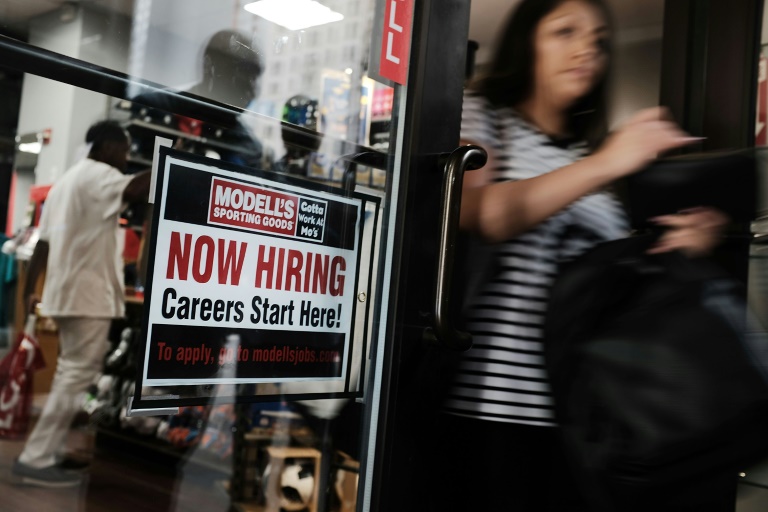
US job gains topped expectations in October, official data showed Friday, as hiring remained resilient and wages moved ever higher even as unemployment edged up, underscoring the challenges in lowering rampant inflation.

The data comes days ahead of midterm elections, where decades-high inflation has propelled economic issues to the top of voters’ minds and President Joe Biden faces a battle to avoid losing control of both chambers of Congress.

The figures will provide little comfort to the Federal Reserve, which has been battling to cool the economy, as policymakers fear high prices will become entrenched and rising pay will create an upward spiral — inflicting more harm on families and businesses.

American employers added 261,000 workers last month, far more than economists had forecast, though this eased from a revised 315,000 figure in September.

The jobless rate rose two-tenths to 3.7 percent, the Labor Department said in its closely-watched US employment report.

“Inflation is our top economic challenge… The global inflation that is raging in other countries is hitting us as well,” said Biden in a statement on Friday, although noting that unemployment remains relatively low.

He said policymakers will “do what it takes to bring inflation down.”

Average hourly earnings for private sector workers jumped another 12 cents or 0.4 percent, to $32.58, the data showed.

Wages have increased 4.7 percent over the last 12 months as firms have had to compete to find and retain workers in the tight labor market. 

That pace is slightly slower than the pace in September, which the Fed will welcome, but many employees are pushing for increases to avoid losing ground to elevated consumer costs.

– ‘Softening’ –

“The bottom line here is that the labor market is softening, but has not yet reached the point where the data are screaming at the Fed to stop tightening,” said Ian Shepherdson, chief economist at Pantheon Macroeconomics, in an analysis.

But if labor market trends continue, markets will start to push policymakers to “rethink the idea of continued hikes next year,” he added.

On Friday, the Labor Department’s report indicated notable job gains in health care, professional and technical services, and manufacturing.

The Fed has raised borrowing rates six times this year to cool demand, but there have been few signs it is having an impact on consumer spending or inflation.

The central bank said this week that it would have to continue hiking rates, although that has raised the risk that the world’s biggest economy will suffer a downturn.

But Susan Collins, president of the Boston Federal Reserve Bank added on Friday that she sees a chance to accomplish the task of reining in price increases without completely putting the brakes on growth.

While inflation so far is only slowly drifting down, “I do not believe a significant slowdown is required to accomplish our goal,” she said in a speech in Washington.

But she stressed that the Fed must continue to act as “current levels of inflation are simply too high, and are taking a significant toll on households and firms.”

While the policy tightening normally would be expected to lead to job losses, economists say employers are reluctant to shed workers that they struggled to find.

“The data are still showing strong positive momentum in the labor market which is not yet showing much adjustment in response to a rapid tightening of monetary policy,” said Rubeela Farooqi of High Frequency Economics. 

“These data will keep the Fed on track to keep raising rates into restrictive territory,” she said in an analysis.

US sees strong job gains in October as wages move higher

US job gains topped expectations in October, official data showed Friday, as hiring remained resilient and wages moved ever higher even as unemployment edged up, underscoring the challenges in lowering rampant inflation.

The data comes days ahead of midterm elections, where decades-high inflation has propelled economic issues to the top of voters’ minds and President Joe Biden faces a battle to avoid losing control of both chambers of Congress.

The figures will provide little comfort to the Federal Reserve, which has been battling to cool the economy, as policymakers fear high prices will become entrenched and rising pay will create an upward spiral — inflicting more harm on families and businesses.

American employers added 261,000 workers last month, far more than economists had forecast, though this eased from a revised 315,000 figure in September.

The jobless rate rose two-tenths to 3.7 percent, the Labor Department said in its closely-watched US employment report.

“Inflation is our top economic challenge… The global inflation that is raging in other countries is hitting us as well,” said Biden in a statement on Friday, although noting that unemployment remains relatively low.

He said policymakers will “do what it takes to bring inflation down.”

Average hourly earnings for private sector workers jumped another 12 cents or 0.4 percent, to $32.58, the data showed.

Wages have increased 4.7 percent over the last 12 months as firms have had to compete to find and retain workers in the tight labor market. 

That pace is slightly slower than the pace in September, which the Fed will welcome, but many employees are pushing for increases to avoid losing ground to elevated consumer costs.

– ‘Softening’ –

“The bottom line here is that the labor market is softening, but has not yet reached the point where the data are screaming at the Fed to stop tightening,” said Ian Shepherdson, chief economist at Pantheon Macroeconomics, in an analysis.

But if labor market trends continue, markets will start to push policymakers to “rethink the idea of continued hikes next year,” he added.

On Friday, the Labor Department’s report indicated notable job gains in health care, professional and technical services, and manufacturing.

The Fed has raised borrowing rates six times this year to cool demand, but there have been few signs it is having an impact on consumer spending or inflation.

The central bank said this week that it would have to continue hiking rates, although that has raised the risk that the world’s biggest economy will suffer a downturn.

But Susan Collins, president of the Boston Federal Reserve Bank added on Friday that she sees a chance to accomplish the task of reining in price increases without completely putting the brakes on growth.

While inflation so far is only slowly drifting down, “I do not believe a significant slowdown is required to accomplish our goal,” she said in a speech in Washington.

But she stressed that the Fed must continue to act as “current levels of inflation are simply too high, and are taking a significant toll on households and firms.”

While the policy tightening normally would be expected to lead to job losses, economists say employers are reluctant to shed workers that they struggled to find.

“The data are still showing strong positive momentum in the labor market which is not yet showing much adjustment in response to a rapid tightening of monetary policy,” said Rubeela Farooqi of High Frequency Economics. 

“These data will keep the Fed on track to keep raising rates into restrictive territory,” she said in an analysis.

Russia says thousands removed from Kherson daily

Moscow was pushing ahead Friday with a civilian pullout from the Russian-occupied Kherson region amid a mounting Ukrainian counter-offensive, with President Vladimir Putin saying residents must be “removed” from danger zones. 

The Russian army said “more than 5,000 civilians” were being led across the Dnipro River every day, showing footage of soldiers directing lines of cars onto flotillas crossing over to the river’s eastern bank.

Moscow’s forces began urging civilians to leave Kherson in mid-October, vowing to turn the region’s main city of the same name into a fortress ahead of an anticipated Ukrainian offensive. 

Kyiv has likened the departures to Soviet-style “deportations” of its people.

“Those who live in Kherson should be removed from zones of dangerous fighting,” Putin said on Red Square as he marked Russian Unity Day, a patriotic holiday. 

“The civilian population should not suffer from shelling, an offensive, a counter-offensive or other such things,” he said. 

Western countries, meanwhile, have urged Putin to extend a landmark deal for the export of Ukrainian grain to avert a global food crisis, which is up for renewal on November 19. 

Russia rejoined the UN-brokered deal on Wednesday, after suspending its participation for four days over a drone attack on its Black Sea fleet in Russian-annexed Crimea, but has threatened to pull out again.

On a visit to China, German Chancellor Olaf Scholz urged Putin to extend the deal.

“Hunger must not be used as a weapon,” he said.

“I urge the Russian president not to refuse to extend the grain agreement which ends in a few days.”

He asked China’s Xi Jinping — who has good relations with Putin — to use Beijing’s “influence” on Moscow to stop fighting in Ukraine.

“The Russian war in Ukraine is a dangerous situation for the whole world,” Scholz said.

The G7 group of wealthy nations also said it wants Russia to prolong the deal that allows the safe passage of grain shipments from Ukraine.

Its top diplomats have held two days of talks in the western German city of Muenster, with Ukraine topping the agenda. 

– ‘49,000 new recruits already fighting’ –

In Moscow, Putin led patriotic celebrations on Unity Day — a holiday he instated in 2005 to celebrate fending off a Polish invasion in 1612. 

Speaking on Red Square to a handful of patriotic volunteers, Putin said 318,000 recruits had signed up since he announced a military call-up in September, which has since been completed. 

That exceeded his target of 300,000 because “volunteers keep coming”, he claimed. 

Of that number, 49,000 were taking part in active fighting.

Putin’s draft led to another wave of tens of thousands rushing to leave the country. Russia’s ex-leader Dmitry Medvedev on Friday called them “cowardly traitors and greedy defectors”.

The Kremlin chief said he wanted to restore historical monuments in the occupied territories so that those “who lived under crazy, idiotic propaganda for 30 years” would know “where their ancestors came from”.

He singled out the port city of Mariupol on the Sea of Azov, which was flattened by weeks of battles over its steelworks and fell into Russian hands in May. 

“Mariupol is a very famous — an ancient, you could say — Russian city,” Putin said.  

He said Russian authorities had a “lot to work on” in reconstruction plans of the city. 

Putin’s offensive in Ukraine has dragged into its ninth month, forcing millions to flee the country and leaving thousands of troops dead on both sides.

Russia has recently hit Ukraine’s energy networks, with President Volodymyr Zelensky saying the strikes have left 4.5 million people without power. 

Stocks, oil prices rally on China hopes

Stock markets and oil prices rallied Friday on hopes China would roll back some of its economically-painful policies surrounding Covid.

Equities also got a boost from the latest US jobs data, which raised hopes of a soft landing of the economy despite rising interest rates.

“Stocks jumped in anticipation that the Chinese government would relax its zero-Covid policy from March next year,” noted Russ Mould, investment director at AJ Bell.

All three of Europe’s top indices were up by at least two percent in afternoon trading.

Wall Street stocks also shot higher at the opening bell, with the Dow climbing 1.1 percent.

The optimism also lifted oil prices by more than four percent as traders eyed rising demand for crude on the news out of China.

In foreign exchange, the dollar slid more than one percent against the euro despite the prospect of higher US interest rates.

The pound also won back some ground against the dollar, rising one percent a day after tumbling as the Bank of England said the UK economy could face a two-year-long recession that it believes has already begun.

The BoE on Thursday also lifted its main interest rate by 0.75 percentage points, the most in 33 years in efforts to contain runaway inflation.

The week also saw the Federal Reserve hike its key rate by the same amount, as central banks try to cool decades-high inflation.

The Fed has pointed to a still-strong labour market as a key reason for not shifting from aggressive rate-tightening.

The addition of 261,000 jobs last month, far more than economists had forecast, will likely reinforce the determination of policymakers to continue the hawkish policy.

That would normally see equities tumble as higher interest rates are bad for most businesses.

But the figures are “consistent with achieving a soft landing for the economy”, said market analyst Patrick O’Hare at Briefing.com.

Fed Chair Jerome Powell has indicated that the central bank is willing to push the US economy into recession if necessary to tame inflation.

– Key figures around 1330 GMT –

London – FTSE 100: UP 2.0 percent at 7,334.50 points

Frankfurt – DAX: UP 2.2 percent at 13,448.66

Paris – CAC 40: UP 2.9 percent at 6,421.61

EURO STOXX 50: UP 2.6 percent at 3,686.05

New York – Dow: UP 1.1 percent at 32,358.37

Tokyo – Nikkei 225: DOWN 1.7 percent at 27,199.74 (close)

Hong Kong – Hang Seng Index: UP 5.4 percent at 16,161.14 (close)

Shanghai – Composite: UP 2.4 percent at 3,070.80 (close)

Pound/dollar: UP at $1.1279 from $1.1160 Thursday

Euro/dollar: UP at $0.9865 from $0.9751

Dollar/yen: DOWN at 147.11 yen from 148.25 yen

Euro/pound: DOWN at 87.52 pence from 87.73 pence

Brent North Sea crude: UP 3.9 percent at $98.36 per barrel

West Texas Intermediate: UP 4.5 percent at $92.13 per barrel

burs-rl/lth

Pilot strike adds to Kenya Airways woes

Pilots at Kenya Airways plan to go on strike from Saturday to seek better working conditions in defiance of a court order, adding to woes facing the troubled national carrier.

The airline, part owned by the government and Air France-KLM, is one of the biggest in Africa, connecting multiple countries to Europe and Asia, but it is facing turbulent times, including years of losses.

The Kenya Airlines Pilots Association (KALPA) said a series of meetings with airline management had failed to resolve grievances.

No Kenya Airways flight flown by KALPA pilots will depart Nairobi’s Jomo Kenyatta International Airport from 6:00 am (0300 GMT) on Saturday, said union secretary general Murithi Nyaga, without specifying how long the strike would last.

“Kenya Airways management’s actions have left us with no other option,” Nyaga said, adding that a 14-day notice on the industrial action had ended without a solution.

“We had hoped that the management of the airline would soften its stance and engage in negotiation on the issues raised.”

The pilots, who have had a particularly fraught relationship with management, are pressing for the reinstatement of contributions to a provident fund.

They also want back payment of all salaries stopped during the Covid-19 pandemic.

Kenya Airways on Wednesday warned the strike would jeopardise its recovery and said the pilots’ grievances did not warrant such action.

– ‘Delay and disrupt’ –

“Industrial action is unnecessary,” board chairman Michael Joseph said. “It will delay and disrupt the financial and operational recovery and cause reputational damage to Kenya Airways.”

The Kenya Association of Air Operators also opposed the planned strike, calling it an “extreme course of action”.

“We consider this action poorly considered in that KALPA is holding both the airline management and the government to ransom,” it said on Friday, urging both sides to resolve the impasse urgently.

On Monday, the airline won a court injunction stopping the strike, but the pilots’ union has nevertheless vowed to down tools.

An official at KALPA, which has 400 members, told AFP the pilots “were acting within the provisions of the law” and that they were yet to be served with a court injunction. 

Earlier this week, Kenya Airways estimated losses at $2.5 million per day if the strike goes ahead.

The airline was founded in 1977 following the demise of East African Airways and flies over four million passengers to 42 destinations annually.

But its slogan “The Pride of Africa” rings hollow as it operates thanks to state bailouts following years of losses.

Like other carriers around the world, Kenya Airways saw its revenue nosedive after the pandemic grounded planes worldwide because of stringent travel restrictions, devastating the aerospace and tourism industries.

– ‘Joke of the continent’ –

Despite the gloom, its cargo operations grew slightly in 2020 as it switched to delivering Covid vaccines and maximised its expertise in flying fresh roses to Europe.

In August, the airline reported a $81.5 million half-year loss citing high fuel costs, albeit a marked improvement on the $94.6 million loss in the same period last year.

This is despite the Kenyan government injecting some $520 million to keep the airline afloat.

On Wednesday, the airline’s management said it was on a path to recovery, flying at least 250,000 passengers each month, and aiming to cut its overall operating costs by 10 percent before the end of next year.

Kenya’s tourism arrivals, a major foreign exchange earner, have jumped more than 90 percent to 924,000, the government said in September, projecting that the number could hit 1.4 million by December.

Analysts say a misguided expansion strategy launched in 2011 is the root of the firm’s problems, a move that called for the purchase of new Boeing planes with the objective of doubling the size of its network.

A plan to nationalise the carrier, which would see it exempt from paying taxes on engines, maintenance and fuel, remains unimplemented.

On Tuesday, Kenya’s leading newspaper the Daily Nation called for a forensic audit of the state bailouts, saying the carrier had become “the joke of the continent.”

“It’s like pouring public funds down the drain,” the paper wrote in an editorial.

Close Bitnami banner
Bitnami