US Business

Russian strikes leave 4.5 million without power in Ukraine: Zelensky

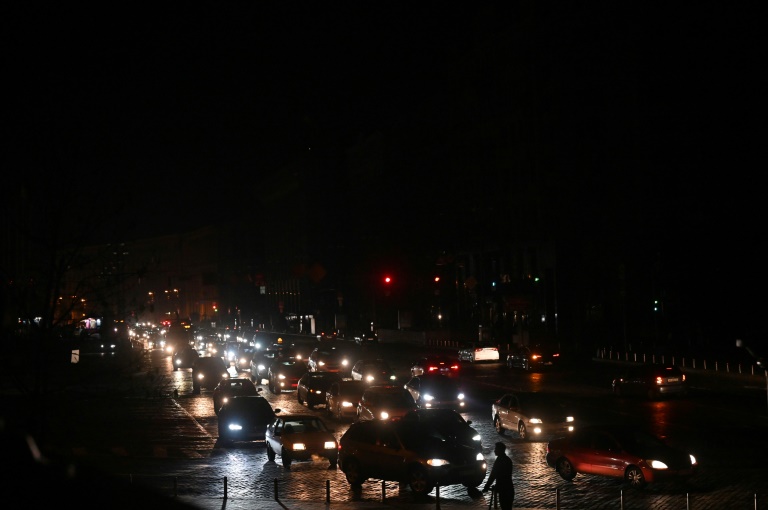
Ukrainian President Volodymyr Zelensky said Thursday that Russia’s campaign against Ukraine’s energy network has left around 4.5 million people without power.

The two sides’ forces continued to battle without significant change on the ground on the eastern and southern Ukraine fronts, with preparations building for a fight over the southern hub of Kherson.

Shipments of Ukraine grain to global markets meanwhile resumed after Moscow returned to a deal allowing their safe passage following international pressure.

“Tonight, about 4.5 million consumers have been temporarily disconnected from energy consumption,” Zelensky said in his daily address.

“The very fact that Russia is resorting to energy terrorism shows the weakness of our enemy. They cannot beat Ukraine on the battlefield, so they try to break our people this way,” Zelensky said. 

For weeks Russian forces have rained missiles and explosive drones onto Ukraine infrastructure, apparently hoping to turn sentiment among the Ukrainian public and its neighbors against the war during the cold of winter. 

Russian strikes over the past month have destroyed around a third of the country’s power stations. The government has urged Ukrainians to conserve electricity as much as possible.

Ahead of Thursday’s meeting of the Group of Seven industrialised powers, German Foreign Minister Annalena Baerbock said the G7 will help Ukraine with items including generators and heaters to survive the winter.

– Grain exports moving –

Russia resumed allowing exports of grain and other foodstuffs from Ukraine after a one-day halt, which followed  Ukraine’s air-and-sea drone  attack on Russian vessels in Crimea, which Moscow said was aided by Britain.

The UN said Thursday that seven vessels were transiting through the Black Sea shipping corridor after the trade was resumed.

But Moscow said it had yet to decide whether to extend the grain deal beyond November 19,  the renewal date to the agreement brokered by the UN and Turkey.

UN trade negotiator Rebeca Grynspan told reporters in Geneva Thursday that she had “hope that the parties will be responsible and will extend and expand the Black Sea grain initiative”.

Ukraine is one of the world’s top producers and the Russian invasion had blocked 20 million tonnes of grain in its ports until the safe passage deal was agreed in July.

Negotiations underway to unblock fertiliser exports from Russia have made “important steps forward,” Grynspan said, but acknowledged there was still a way to go.

Moscow has complained its grain and fertiliser exports continue to face issues over sanctions imposed after its February invasion of Ukraine, despite exceptions made for agriculture-related products.

– Forced relocation –

As  fighting focused increasingly on Russia-held Kherson, Kyiv on Thursday condemned the “mass forced relocation” of its citizens living in regions occupied by Russia. 

“The Russian occupation administration began mass forced relocation of residents of the left-bank of the Kherson region… to the temporarily occupied Crimea or to Russia,” the Ukrainian foreign ministry said in a statement.

“Similar deportations are also being carried out by Russia in the Zaporizhzhia, Lugansk and Donetsk regions, as well as in Crimea.”

Moscow-installed Kherson governor Vladimir Saldo said he was moving people further into the region or to Russia because of the risks of a “massive missile attack.”

Moscow-installed authorities in Kherson said last week 70,000 civilians had left their homes on the right bank of the Dnipro. 

– IAEA: ‘No dirty bomb’ –

Meanwhile, the UN’s IAEA nuclear watchdog said its inspectors had found no indications of any “undeclared nuclear activities” at three locations they had inspected in Ukraine. 

The inspectors inspected at the sites at Kyiv’s request to refute Moscow’s allegations that Ukraine was preparing to use dirty bombs against Russian troops.

Kyiv has raised fears Moscow itself might resort to using a dirty bomb in a “false flag” attack.

Zelensky said Thursday that the IAEA’s conclusion is “obvious.” 

“We have given them full freedom of action at the relevant facilities, and we have clear and irrefutable evidence that no one in Ukraine has created or is creating any ‘dirty bombs.'”

– Returning to normalcy –

Meanwhile some semblance of normality was gradually returning to areas of southern and eastern Ukraine recently recaptured by Ukrainian troops although the humanitarian situation remains fragile.

In the village of Lymany in southern Ukraine, an aid volunteer said she was concerned that so many residents were returning despite the dangers.

“It would be a lot easier if these people were not out here,” said Yulia Pogrebna, 32, as she distributed food boxes to residents.
Starbucks reports record sales but lower profits on weak China

Starbucks reported record quarterly revenues Thursday behind a strong US performance, but weak China results and increased expenses pinched profits.

Comparable sales surged at the coffee chain’s North American shops, lifted by a 10 percent increase in average ticket size following price hikes and a slight uptick in comparable transactions.

The results are the latest from a big US consumer-oriented company to illustrate continued robust consumer demand despite inflation.

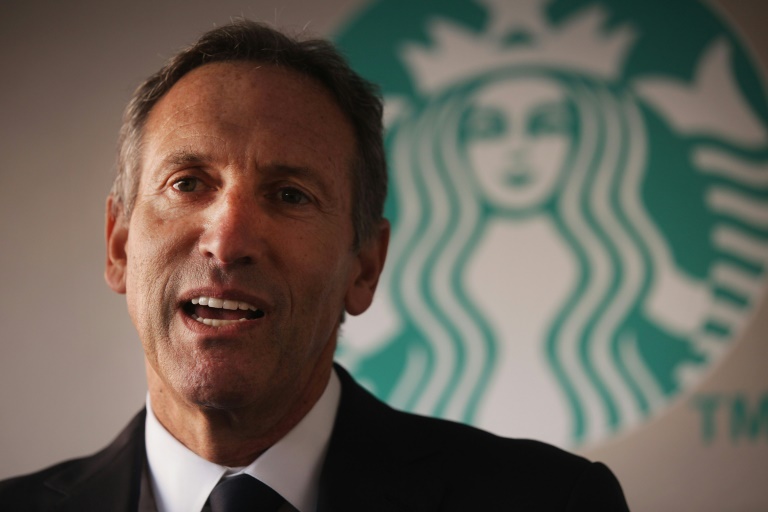
Howard Schultz, interim chief executive, attributed the strong US performance to “reinvention” investments that have included boosts to employee compensation and store revamps as the chain confronts a unionization drive in its home market.

But the added spending on these areas — coupled with increased commodity and supply chain costs — dragged down Starbucks’ bottom line.

Profits for the quarter ending October 2 were $878.3 million, down 50 percent from the year-ago period, while revenues climbed 3.3 percent to $8.4 billion.

The company continued to see meager results in China amid waves of Covid-19 restrictions in the country. Comparable sales dropped 16 percent in the period in the market.

With the coronavirus again on the rise in China, “we anticipate the current Covid-related uncertainty to continue,” Schultz told analysts on a conference call.

“While our long-term aspirations for China remain undiminished, we expect the recovery of our business in the country to be nonlinear,” Schultz said.

Shares of Starbucks rose 2.0 percent to $86.35 in after-hours trading.

Blinken asks Egypt for rights progress before climate meet

US Secretary of State Antony Blinken called Thursday for Egypt to free political prisoners as leaders prepare to visit for the global climate summit.

Rights groups estimate that some 60,000 political prisoners are behind bars in Egypt, which starting next week will welcome more than 90 world leaders including President Joe Biden for COP27.

In a call with Egyptian Foreign Minister Sameh Shoukry, Blinken discussed climate and said that US-Egypt cooperation “is strengthened by tangible progress on human rights,” the State Department said.

Blinken “welcomed the reported releases over the preceding months of significant numbers of political detainees, and voiced support for additional such pardons and releases, as well as for steps to strengthen due process of law and protections for fundamental freedoms for all,” it said.

The statement did not list specific cases but pressure has risen for intervention to free Alaa Abdel Fattah, a prominent dissident who has started a hunger strike and whose family has warned he could die if he is not released during the climate summit.

A major figure in the 2011 revolt that toppled longtime autocrat Hosni Mubarak, Abdel Fattah is serving a five-year sentence for “broadcasting false news,” having already spent much of the past decade behind bars.

State Department spokesman Ned Price said ahead of Blinken’s phone call that the United States was closely following Abdel Fattah’s plight.

“We’ve raised repeated concerns about this case and his conditions in detention with the government of Egypt,” Price told reporters Wednesday.

Biden took office vowing a firmer stance on human rights with Egypt and other Arab allies but his administration has repeatedly turned to President Abdel Fattah al-Sisi, a former general who toppled the elected government in 2013.

Biden is expected to meet Sisi at the climate summit in the resort of Sharm el-Sheikh and his administration last year relied on Egyptian mediation to end fighting between Israel and the Palestinian militants Hamas.

A group of US lawmakers concerned about human rights in Egypt called Thursday for Biden to redirect its $1.3 billion in annual military aid to Egypt to climate projects in the parched country.

“We are deeply committed to the fight against climate change, and believe international cooperation is central to that effort, but Egypt was the wrong choice for COP27,” said the statement led by Democratic Representatives Don Beyer and Tom Malinowski.

Pound sinks, stocks mostly fall after latest central bank rate moves

The pound tumbled against the dollar and global stocks mostly fell Thursday as the Bank of England announced another jumbo-sized interest rate hike while warning of a prolonged recession expected to last through mid-2024.

The BoE’s move came a day after the Federal Reserve also made another big rate increase and warned of more ahead, lifting the dollar.

Fed Chair Jerome Powell news conference Wednesday was seen as more hawkish than expected, as he said it was very premature to talk about pausing the rate hikes.

“The message from Fed Chair Powell yesterday was a downer for the stock market,” said Briefing.com analyst Patrick O’Hare.

The Fed’s latest 0.75 percentage point interest rate hike Wednesday, was followed by the BoE increase of the same size.

Minutes of the BoE meeting warned of a “challenging outlook for the UK economy” that was “expected to be in recession for a prolonged period,” dealing a blow to Britain’s troubled government.

“It is a tough road ahead,” BoE governor Andrew Bailey told a press conference.

“The sharp increase in energy prices caused by Russia’s invasion of Ukraine has made us poorer as a nation.”

The pound fell by two percent against the dollar, while also retreating against the euro.

“A typical textbook trade is out of the window because currencies usually move higher when a central bank increases rates,” noted Naeem Aslam, chief market analyst at Avatrade.

“Tough times are ahead, and we are going to see the economy, markets, and the currency tanking in the coming months.”

Major US stock indices retreated for a fourth straight session as markets awaited Friday’s US employment report.

A survey of the US services industry showed activity at its weakest level since May 2020, as new orders eased and businesses struggled to replenish their stocks.

Elsewhere, oil prices also fell heavily on Thursday as aggressive rate hikes increase expectations of a global recession and softer demand for energy.

Hong Kong led stock market losses as the city’s central bank hiked rates in line with the Fed, owing to their policy link via the dollar peg.

Traders gave back a chunk of the previous two days’ gains, which came on the back of speculation China was planning to roll back some of its painful zero-Covid policies.

Adding to the selling was confirmation from Beijing’s health authority that it intended to stick to the strategy.

– Key figures around 2050 GMT –

New York – Dow: DOWN 0.5 percent at 32,001.25 (close)

New York – S&P 500: DOWN 1.1 percent at 3,719.89 (close)

New York – Nasdaq: DOWN 1.7 percent at 10,342.94 (close)

London – FTSE 100: UP 0.6 percent at 7,188.63 (close)

Frankfurt – DAX: DOWN 1.0 percent at 13,130.19 (close)

Paris – CAC 40: DOWN 0.5 percent at 6,243.28 (close)

EURO STOXX 50: DOWN 0.8 percent at 3,593.18 (close)

Hong Kong – Hang Seng Index: DOWN 3.1 percent at 15,339.49 (close)

Shanghai – Composite: DOWN 0.2 percent at 2,997.81 (close)

Tokyo – Nikkei 225: Closed for a holiday

Pound/dollar: DOWN at $1.1160 from $1.1392 Wednesday

Euro/dollar: DOWN at $0.9751 from $0.9818

Dollar/yen: UP at 148.25 yen from 147.90 yen

Euro/pound: UP at 87.73 pence from 86.19 pence

Brent North Sea crude: DOWN 1.5 percent at $94.67 per barrel

West Texas Intermediate: DOWN 2.0 percent at $88.17 per barrel

burs-jmb/hs

Trump reaches settlement over protest crackdown: lawyer

Donald Trump has reached a settlement with activists of Mexican descent who launched a civil lawsuit over an alleged attack by his security guards, a lawyer for the former US president said.

Several activists brought the lawsuit alleging that Trump’s bodyguards violently broke up a protest they were holding outside Trump Tower in New York in 2015.

They were demonstrating against derogatory comments Trump had made about Mexicans, saying they were bringing drugs and crime to the United States and were “rapists.”

Lawyers for both sides met in recent days as another trial got underway in New York, in which the Trump family business is facing charges of fraud and tax evasion.

“Although we were eager to proceed to trial to demonstrate the frivolousness of this case, the parties were ultimately able to come to an amicable resolution,” Trump’s lawyer, Alina Habba, said of the settlement late Wednesday.

“We are very pleased with this outcome and are happy to finally put this matter to rest once and for all.”

A lawyer for the New York activists, Benjamin Dictor, said his clients were “proud” to have “obtained written recognition by Donald Trump of their right to protest on the public sidewalk.”

“Powerful men may put their names on buildings, but the sidewalk will always belong to the people,” he added in an email.

The plaintiffs had alleged that Trump’s guards ripped away their signs and punched and choked one of the demonstrators during the protest on September 3, 2015.

In October last year, Trump testified for four and a half hours in the case in a videotaped deposition, giving his version of what happened in what he called a “ridiculous story.”

He had previously stated that he feared protesters would pelt him with “very dangerous” fruit like pineapples, tomatoes, and bananas saying: “You can get killed with those things.”

At Web Summit, 'Bored Apes' emerge from swamp but remain murky

With a blast of “Break on Through” by The Doors and a flashy video of cartoon apes careening around a fantasy landscape, the boss of one of crypto’s most secretive companies took to the stage on Thursday.

Nicole Muniz, CEO of Yuga Labs, had a tough mission at the Web Summit tech conference in Lisbon –- to explain what exactly the “Bored Ape Yacht Club” (BAYC) offers the world.

BAYC is a set of 10,000 auto-generated images of cartoon apes sporting various expressions and accessories, with a back story about them living in a swamp.

Enthusiasts have shelled out many millions in trading the images, which come in the form of digital tokens known as NFTs.

Celebrity owners range from Justin Bieber to Madonna and Gwyneth Paltrow.

But Muniz was keen from the off to sketch out a wider concept of the company, tying it to “web3” –- an imagined future for the internet that has cryptocurrencies at its heart.

“We need to be thinking about how we can help onboard the next 100 million people into web3,” she told the audience.

“That’s really a true mission for us in this company.”

Her wider focus was unsurprising as interest in NFTs has dropped off a cliff.

Trading volumes crashed by 97 percent between January and September, according to Dune Analytics.

Yet Yuga Labs has a notional value of $4 billion and its apes are among only a handful of NFTs that still sell -– one fetched $450,000 last week.

– NFT ‘community’ –

The company has been an enigma since it burst on to the scene last year.

Its founders tried to stay anonymous but BuzzFeed News revealed their identities in February.

The Web Summit was supposed to play host to Muniz and co-founder Greg Solano in one of their most high-profile public appearances.

But he pulled out just a couple of hours before his talk.

“Hey Lisbon Apes, not feeling well at all and need to skip my panel at WebSummit today,” he tweeted.

“Glad I got to meet so many of you last night though.”

Ironically, it was this sense of “community” in the real world that was flagged by Muniz as one of the secrets of BAYC’s success.

“I was talking to an ape last night and they were talking about being at ApeFest,” she said, referring to meet-ups the fans host in New York.

“You’re living and breathing these communities. These people are your friends.”

– ‘Unclear’ licences –

Yet on the face of it, the conceptual framework of Muniz’s pitch is the same as almost every other NFT project.

She talked of community, promised a big new multi-player game and envisaged a world where NFTs would somehow be the keys to a magical online world.

“We have a vision of a future where people can own these assets –- whether they’re NFTs or digital collectibles, whatever you want to call them,” she said.

“You can take them where you want, you can build on them and monetise.”

She claimed BAYC was unique in offering owners full intellectual property rights to do whatever they like with their NFTs and cited the Bored & Hungry restaurant chain, which has an ape on its logo.

But a recent report by the specialist website Galaxy.com said BAYC’s licensing agreement did not give the buyers any IP ownership, describing the terms as “unclear and potentially misleading”.

The authors speculated that high-profile ape-related projects had probably negotiated separate deals.

Muniz said ultimately it was her mission to make it easier for people to understand “web3” and enter its world.

But even the title of her talk — “NFTs, metaverses and the road to Web3 Disney” — was no clearer at the end than it had been at the start.

G7 pledges winter help for Ukraine

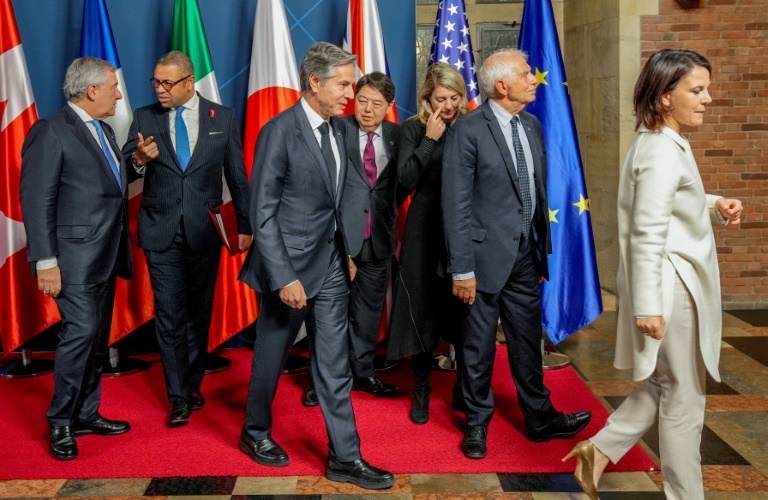
Top diplomats from the G7 on Thursday vowed to help see Ukraine through the coming winter as they held talks in Germany, with Kyiv’s fight against Russia topping the agenda.

“Winter is coming and Russia has been systematically destroying civilian infrastructure in Ukraine,” French Foreign Minister Catherine Colonna said after meeting  G7 counterparts in the city of Muenster.

“Needless to say, we believe that this is a humanitarian crisis,” she said, insisting that Western allies would “strengthen our coordination and… help to Ukraine to defend itself and help its population”.

The foreign ministers held a session on Ukraine on Thursday afternoon to kick off the two-day meeting in Muenster, held under Germany’s G7 presidency.

EU foreign policy chief Josep Borrell, who is also attending, said Russian President Vladimir Putin was trying to “put (Ukraine) in the darkness in the winter time”.

“Putin is waiting for the general winter to come and support the Russian army,” he said.

Opening the gathering, German Foreign Minister Annalena Baerbock earlier vowed the allies would not allow Russia to inflict “starvation” on Ukrainians.

– Aid package –

“We will not allow the brutality of this war to lead to masses of elderly people, children, young people and families dying in the coming winter months,” Baerbock said.

The allies will provide generators, heaters, container housing, tents, beds and blankets among items that will be part of a “winter aid package”, she said.

“Russia has chosen a new method of warfare by trying to let people starve, die of thirst and freeze to death,” Baerbock added.

“This is exactly what we, as G7 partners, will try to prevent with everything we have, just as we will try to prevent the other perfidious methods of Russian warfare.”

Ukrainian Foreign Minister Dmytro Kuleba took part remotely in the Thursday afternoon talks.

The G7 meeting comes as Germany prepares to hand over the presidency of the group to Japan, facing multiple crises from Ukraine to North Korea.

Baerbock said the G7 condemned “in the strongest terms” the latest salvo of missiles fired by North Korea and described the drills as a “breach of international law”.

– China controversy –

Relations with China were due to be discussed at a working dinner on Thursday, as German Chancellor Olaf Scholz jetted off for a controversial visit to Beijing.

The G7 is ready to recognise China as a “competitor” and “rival”, Baerbock said.

“Japan… repeatedly points out how important it is that we recognise that China has changed in recent years,” she said.

Scholz has insisted he will “not ignore controversies” during his trip.

Asked about the visit, Colonna said French President Emmanuel Macron “was also invited to China and I have no doubt that he will go there in a few weeks or months”.

The G7 foreign ministers are also expected to discuss Iran, which has been rocked by enduring protests over the death of young Kurdish woman Mahsa Amini.

Speaking at a forum in Muenster on democracy in the digital age on Thursday, Baerbock said the international community was “running out of time” to coordinate its response to the protests.

“It’s not only women. The diversity of the Iran society is saying, ‘This is enough and we want to live in freedom like many other countries’,” she said in English.

US Secretary of State Antony Blinken told the same forum  Western allies were trying to “make sure that Iranians have the ability to communicate with each other and with the outside world”.

“Technology is at the heart of that, making sure that there are no barriers to the extent we have anything to say about it,” he said.

Stellantis says 276,000 autos still have deadly Takata airbags

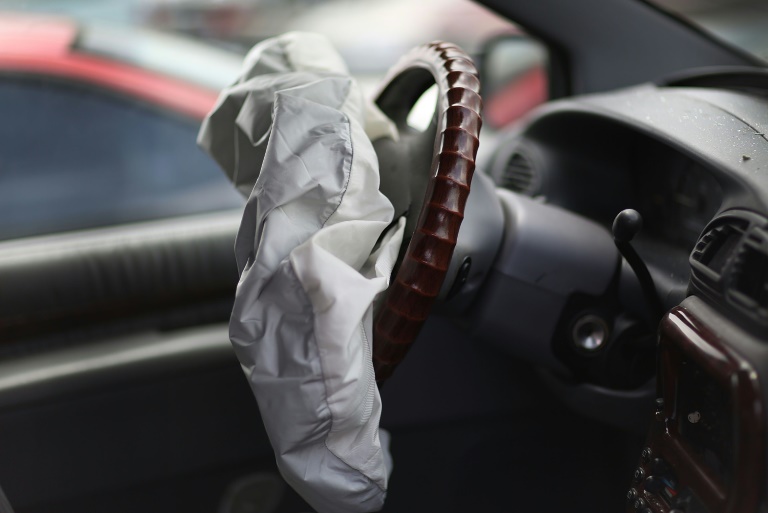
Automaker Stellantis said Thursday it is redoubling outreach to US owners of about 276,000 vehicles with dangerous Takata airbags that have been recalled but were never repaired.

The autos in question were model year 2005-2010 model year Dodge Magnum station wagons, Dodge Challenger coupes, and Dodge Charger and Chrysler 300 sedans, according to a press release from FCA, a Stellantis brand.

The company said it has sent nearly 210 million standard and first-class letters, while also texting consumers and making phone calls and home visits.

“The longer these particular vehicles remain unrepaired, the greater the risk of an air-bag rupture, in event of a crash,” the company said. “Free replacement driver-side air bags have been available for this population since 2015.

“Many owners say they don’t have time to obtain the remedy. However, the repair procedure takes well under one hour.”

The company is aware of three fatalities in the last seven months in the United States in warm-weather states involving these vehicles, a Stellantis spokesman said.

The unrepaired vehicles constitute about 20 percent of the total vehicle population. The rest have been successfully recalled and repaired, the spokesman said.

A 2017 survey by the University of Michigan’s Transportation Research Institute cited three top reasons consumers ignore recalls: worry that a dealership will try to sell more repairs; difficulty giving up their vehicle for a repair; and perception the wait to get it fixed was too long.

The Takata brand disappeared in 2018 following a bankruptcy in the wake of the airbag scandal, which affected almost every major global automaker, including Toyota and General Motors, and triggered the auto industry’s biggest-ever safety recall.

The airbag defect was linked to ammonium nitrate, the chemical used as a propellant in Takata’s airbag inflator canisters.

The chemical degraded, especially in humid conditions, meaning that in some cases the airbag did not inflate properly and sometimes ruptured, firing metal shrapnel at the vehicle’s occupants.

In the United States alone, there have been 19 deaths and at least 400 alleged injuries due to exploding Takata airbags.

Basketball star Griner 'well as can be expected' in Russia prison: W.House

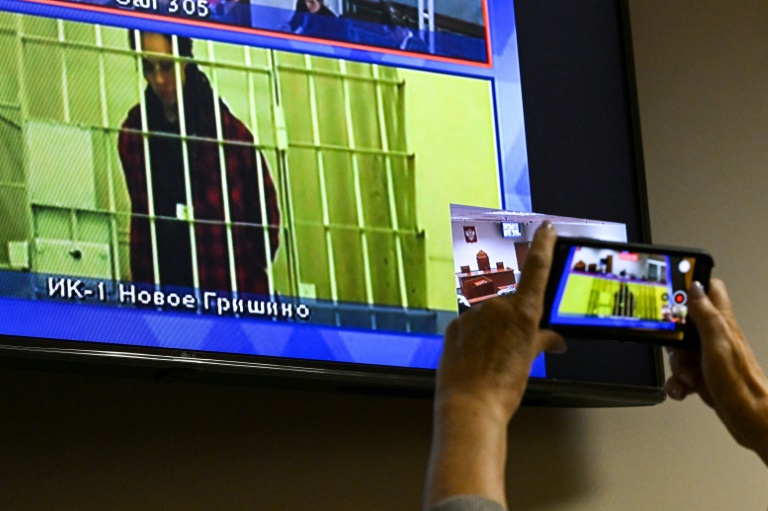
US basketball star Brittney Griner is as well “as can be expected” in a Russian prison, the White House said Thursday after embassy officials were able to visit her.

“She’s doing as well as can be expected under the circumstances,” White House Press Secretary Karine Jean-Pierre told reporters traveling with President Joe Biden.

Griner is serving a nine-year sentence handed down in August after she pleaded guilty to possession of a small quantity of cannabis oil in vape cartridges. She said the cannabis was to treat pain from her sporting injuries, but Russia does not allow medical marijuana use.

The harsh sentence and Griner’s failed appeal last month come against a backdrop of the worst relations between Moscow and Washington since the height of the Cold War, with Biden leading Western support for Ukraine’s resistance against a Russian invasion.

Griner, a two-time Olympic basketball gold medalist and Women’s NBA champion, had been in Russia to play for the professional Yekaterinburg team during her off-season from the Phoenix Mercury Women’s National Basketball Association side.

Reports have suggested that Griner and another American jailed in Russia, Paul Whelan — a former US marine arrested in December 2018 and accused of spying — could be traded for Viktor Bout, a famed Russian arms trafficker serving 25 years in prison on a 2012 conviction.

This has not been confirmed but Jean-Pierre reiterated that the Biden administration has “made a significant offer to the Russians to resolve the current unacceptable  and wrongful detention of American citizens.”

She cited a “lack of good faith negotiations by the Russians” but said the “US government has continued to follow up on that offer and propose alternative potential ways forward.”

N. Korea ICBM launch appears to have failed, Seoul says

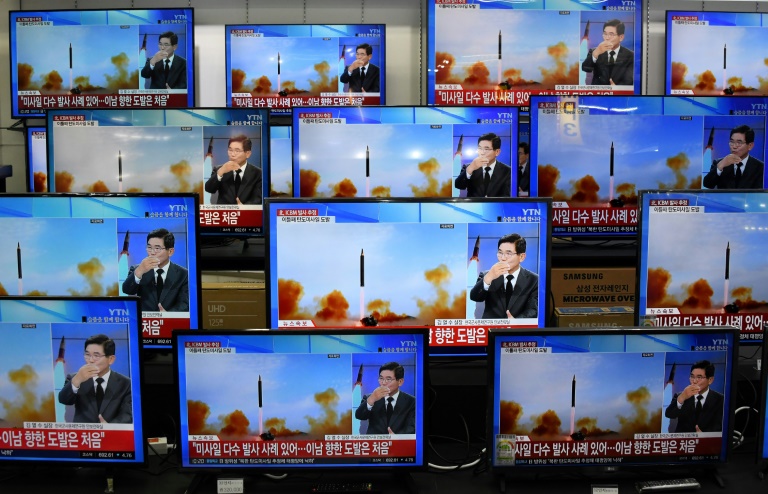
North Korea unsuccessfully fired an intercontinental ballistic missile during a new salvo of launches Thursday, the South Korean military said, with Washington urging all nations to enforce sanctions on Pyongyang.

In response to the launches, South Korea and the United States said they would extend their ongoing joint air drills, the largest-ever such exercises — a move Pyongyang immediately branded “an irrevocable and awful mistake”.

People in parts of northern Japan were ordered to seek shelter during the North’s latest launches, which included five short-range missiles and followed a blitz of projectiles fired Wednesday.

The largest of Thursday’s launches, however, “is presumed to have ended in failure”, the South Korean military said.

The United States slammed the ICBM launch, while the G7 club of rich nations said it condemned the flurry of missiles “in the strongest terms”.

US Defence Secretary Lloyd Austin described the ICBM launch as “illegal and destabilising” and branded the North’s actions “irresponsible and reckless” during a joint news conference at the Pentagon alongside his South Korean counterpart Lee Jong-sup.

Austin issued a stern warning to Pyongyang that “any nuclear attack against the United States or its allies and partners” would “result in the end” of Kim Jong Un’s regime.

Washington confirmed information provided by the South Korean military, which said it had detected the launch of the long-range ballistic missile at around 7:40 am (2240 GMT Wednesday) in the Sunan area of Pyongyang.

Seoul’s Joint Chiefs of Staff said the ICBM — which flew about 760 kilometres (470 miles) at a top altitude of 1,920 kilometres — appeared to have failed during “second-stage separation”.

The South’s military also detected what were “believed to be two short-range ballistic missiles fired at around 8:39 am from Kaechon, South Pyongan province”.

That was followed late in the day by three more short-range ballistic missiles fired towards the East Sea, also known as the Sea of Japan, according to Seoul’s Joint Chiefs of Staff.

South Korea’s military “is maintaining a full readiness posture while closely cooperating with the US and strengthening surveillance and vigilance”, it said.

– ‘Shocked and frightened’ –

Pyongyang fired more than 20 missiles on Wednesday, including one that landed near South Korea’s territorial waters, triggering an air raid siren warning on Ulleungdo, an island about 130 kilometres off the country’s east coast.

“We were shocked and frightened, as something like this had never happened before. We didn’t know where to take refuge,” said Chae Young-sim, a 52-year-old shopkeeper on the island.

One short-range ballistic missile crossed the Northern Limit Line, the de facto maritime border, on Wednesday, prompting South Korean President Yoon Suk-yeol to call it “effectively a territorial invasion”.

The launches come as Seoul and Washington stage their largest-ever joint air drills, involving hundreds of warplanes from both sides.

Pyongyang has called the exercise, dubbed Vigilant Storm, “an aggressive and provocative military drill targeting the DPRK”.

The exercise had been due to end Friday, but South Korea’s air force said Thursday that the joint drills would be extended in response to the latest launches.

Pyongyang said this was “a very dangerous and false choice” and warned that Washington and Seoul’s “provocative military acts” were taking the situation into “an uncontrollable phase”.

America “and South Korea will get to know what an irrevocable and awful mistake they made”, Pak Jong Chon, secretary of the Central Committee of the Workers’ Party of Korea, said in a statement carried by news agency KCNA.

Japan confirmed Thursday’s launches, with the government issuing a special warning to residents of northern regions to stay indoors or seek shelter.

Tokyo initially said the ICBM had flown over Japan, prompting a “J-Alert” to be issued, but defence minister Yasukazu Hamada later said “the missile did not cross the Japanese archipelago, but disappeared over the Sea of Japan”.

– ‘Tactical nuclear drills’ –

Washington and Seoul have repeatedly warned that the North’s recent missile launches could culminate in another nuclear test — which would be Pyongyang’s seventh.

“They are ready to conduct the nuclear test,” but the timing is still unclear, Lee said at the news conference with Austin.

Chad O’Carroll of Seoul-based specialist site NK News said on Twitter that it is “quite possible tactical nuclear weapons test(s) will be next. Possibly very soon.”

Ahn Chan-il, a North Korean studies scholar, agreed. 

“These are North Korea’s pre-celebration events ahead of their upcoming nuclear test,” he told AFP.

“They also seem like a series of practical tests for their tactical nuclear deployment.”

North Korea revised its laws in September to allow for pre-emptive nuclear strikes, with Kim declaring the country to be an “irreversible” nuclear power — effectively ending negotiations over its banned arms programmes.

On October 4, North Korea fired a missile over Japan that also prompted evacuation warnings. It was the first time North Korea had fired a missile over Japan since 2017.

Pyongyang later claimed that the launch and a blizzard of other tests around the same time were “tactical nuclear drills” that simulated showering South Korea with nuclear-tipped missiles.

Close Bitnami banner
Bitnami