US Business

US authorities relax regulations on prescription opioids

US health officials issued new recommendations Thursday to relax restrictions for doctors prescribing opioids for pain, despite the risk of addiction. 

The Centers for Disease Control (CDC) revised principles issued in 2016 in an attempt to curb the opioid overdose epidemic in the United States.  

Unlike the previous document, the new guide refrains from setting thresholds in terms of dosage or prescription duration.  

These had led doctors to suddenly cut or drastically reduce patients’ doses. States and insurance companies were also inspired to set their own limits. 

Chronic pain patients had complained that they no longer had access to the drugs that would allow them to lead a normal life, and had warned of the increased risk of suicide in their ranks. 

The new recommendations, compiled in a 200-page report, seek a balance. One in five Americans suffers from chronic pain and “opioids can be essential medications for the management of pain, however, they carry considerable potential risk,” the authors of the document wrote. 

The guidelines are not “a replacement for clinical judgment or individualized, person-centered care” or “intended to be applied as inflexible standards of care,” the report says. 

But it recommends caution, warning that opioids should be considered only after other pain treatments have failed, and at each step, physicians should discuss the issue with their patients.  

If they decide to use opioids, they should first prescribe the lowest effective dose and then closely monitor the effects of the treatment.  

If problems arise, physicians should also avoid abruptly terminating opioid prescriptions and should ensure appropriate care for those with complications.

As a precautionary measure, the agency recommends that people using opioids over a prolonged period be offered Naloxone, an antidote that can save someone who is overdosing, said Christopher Jones, a senior CDC official, at a press briefing. 

Opioid prescriptions increased fourfold between 1999 and 2010 in the United States. Although the trend has reversed since 2016, they have created addictions and driven some patients to drugs like heroin and fentanyl.  

Last year, the US had a record 107,000 overdose deaths, more than 70 percent of which were from illegal synthetic opioids.

Stock markets sink, dollar jumps

Stock markets around the world sank Thursday while the dollar rallied after the Federal Reserve warned US interest rates would go higher than previously expected in its fight against decades-high inflation.

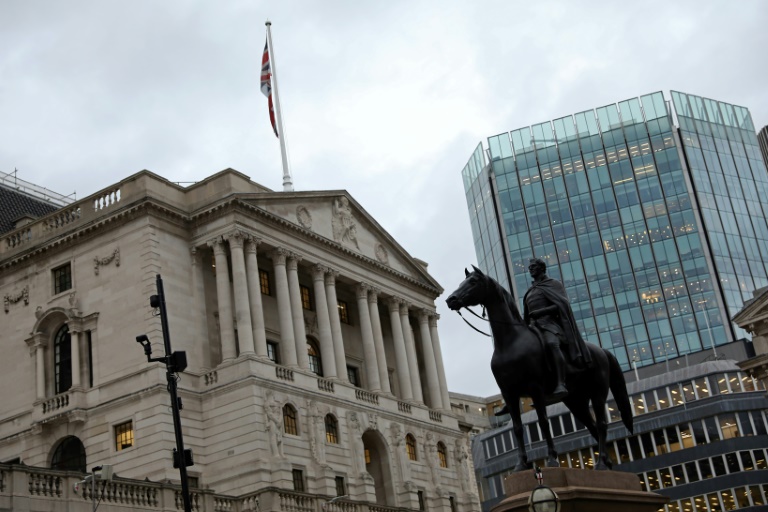
Meanwhile the Bank of England warned that Britain faced a recession set to last until mid-2024.

The Fed on Wednesday unveiled a fourth straight 0.75-percentage-point increase as expected — the sixth hike this year to cool rampant prices.

The dollar rose strongly against the pound despite the Bank of England also delivering on Thursday a 0.75-percentage-point hike — the largest in 33 years — to 3.0 percent, or the highest rate since 2008.

The pound fell by two percent against the dollar in afternoon trading before clawing back some of its losses, which helped London’s FTSE 100 share index buck the trend and rise 0.6 percent. The index is loaded with multinationals which earn most of their revenues in dollars and post higher profits in pounds when the sterling exchange rate is low.

European Central Bank president Christine Lagarde flagged more interest rate hikes on Thursday with comments that a “mild” eurozone recession was looming but would not be enough to bring down record-high inflation.

Oil prices also fell heavily on Thursday as aggressive rate hikes increase expectations of a global recession and softer demand for energy.

Hong Kong led stock market losses as the city’s central bank hiked rates in line with the Fed, owing to their policy link via the dollar peg.

Traders gave back a   chunk of the previous two days’ gains, which came on the back of speculation China was planning to roll back some of its painful zero-Covid policies.

Adding to the selling was confirmation from Beijing’s health authority that it intended to stick to the strategy.

– ‘Some ways to go’ –

“Stocks fell… after the Federal Reserve raised benchmark interest rates and warned that there was still some ways to go in its efforts to tame inflation,” said Mark Haefele, chief investment officer at UBS Global Wealth Management.

Before the Fed announcement, stocks had rallied for more than a week on speculation the US central bank would indicate that its rate tightening could soon reach a peak as the world’s biggest economy showed signs of slowing.

Yet Fed chief Jerome Powell poured cold water on hopes for a “pivot” in policy, telling a news conference “incoming data since our last meeting suggests that ultimate level of interest rates will be higher than previously expected”.

Briefing.com analyst Patrick O’Hare said  for investors “the point that registered was (Powell’s) view that it is very premature to talk about pausing the rate hikes”.

Another key point was that “the Fed still has a ways to go to get the policy rate to a restrictive level that is sufficient for getting inflation back down to the 2.0 percent target,” O’Hare noted.

Moreover, Powell indicated “that the Fed’s terminal rate is apt to be higher than previously expected and is likely to be held there longer than previously expected,” which upended previous market expectations.

Investors now expect Fed rates to top out at more than five percent, compared with four percent previously.

The latest US data didn’t help sentiment, with a key survey showing the services sector grew less than expected in October as new orders eased and businesses struggled to replenish their stocks.

Global equities have slumped this year on mounting fears that rising borrowing costs will curtail consumer and business spending, sparking a global recession.

– Key figures around 1530 GMT –

New York – Dow: DOWN less than 0.1 percent at 32,126.58 points

EURO STOXX 50: DOWN 0.8 percent at 3,593.18

London – FTSE 100: UP 0.6 percent at 7,188.63 (close)

Frankfurt – DAX: DOWN 1.0 percent at 13,130.19 (close)

Paris – CAC 40: DOWN 0.5 percent at 6,243.28 (close)

Hong Kong – Hang Seng Index: DOWN 3.1 percent at 15,339.49 (close)

Shanghai – Composite: DOWN 0.2 percent at 2,997.81 (close)

Tokyo – Nikkei 225: Closed for a holiday

Pound/dollar: DOWN at $1.1180 from $1.1390 Wednesday

Euro/dollar: DOWN at $0.9754 from $0.9816

Dollar/yen: UP at 148.25 yen from 147.90 yen

Euro/pound: UP at 87.20 pence from 86.17 pence

Brent North Sea crude: DOWN 0.9 percent at $95.26 per barrel

West Texas Intermediate: DOWN 1.4 percent at $88.72 per barrel

burs-rl/bp

Stock markets sink, dollar jumps

Stock markets around the world sank Thursday while the dollar rallied after the Federal Reserve warned US interest rates would go higher than previously expected in its fight against decades-high inflation.

Meanwhile the Bank of England warned that Britain faced a recession set to last until mid-2024.

The Fed on Wednesday unveiled a fourth straight 0.75-percentage-point increase as expected — the sixth hike this year to cool rampant prices.

The dollar rose strongly against the pound despite the Bank of England also delivering on Thursday a 0.75-percentage-point hike — the largest in 33 years — to 3.0 percent, or the highest rate since 2008.

The pound fell by two percent against the dollar in afternoon trading before clawing back some of its losses, which helped London’s FTSE 100 share index buck the trend and rise 0.6 percent. The index is loaded with multinationals which earn most of their revenues in dollars and post higher profits in pounds when the sterling exchange rate is low.

European Central Bank president Christine Lagarde flagged more interest rate hikes on Thursday with comments that a “mild” eurozone recession was looming but would not be enough to bring down record-high inflation.

Oil prices also fell heavily on Thursday as aggressive rate hikes increase expectations of a global recession and softer demand for energy.

Hong Kong led stock market losses as the city’s central bank hiked rates in line with the Fed, owing to their policy link via the dollar peg.

Traders gave back a   chunk of the previous two days’ gains, which came on the back of speculation China was planning to roll back some of its painful zero-Covid policies.

Adding to the selling was confirmation from Beijing’s health authority that it intended to stick to the strategy.

– ‘Some ways to go’ –

“Stocks fell… after the Federal Reserve raised benchmark interest rates and warned that there was still some ways to go in its efforts to tame inflation,” said Mark Haefele, chief investment officer at UBS Global Wealth Management.

Before the Fed announcement, stocks had rallied for more than a week on speculation the US central bank would indicate that its rate tightening could soon reach a peak as the world’s biggest economy showed signs of slowing.

Yet Fed chief Jerome Powell poured cold water on hopes for a “pivot” in policy, telling a news conference “incoming data since our last meeting suggests that ultimate level of interest rates will be higher than previously expected”.

Briefing.com analyst Patrick O’Hare said  for investors “the point that registered was (Powell’s) view that it is very premature to talk about pausing the rate hikes”.

Another key point was that “the Fed still has a ways to go to get the policy rate to a restrictive level that is sufficient for getting inflation back down to the 2.0 percent target,” O’Hare noted.

Moreover, Powell indicated “that the Fed’s terminal rate is apt to be higher than previously expected and is likely to be held there longer than previously expected,” which upended previous market expectations.

Investors now expect Fed rates to top out at more than five percent, compared with four percent previously.

The latest US data didn’t help sentiment, with a key survey showing the services sector grew less than expected in October as new orders eased and businesses struggled to replenish their stocks.

Global equities have slumped this year on mounting fears that rising borrowing costs will curtail consumer and business spending, sparking a global recession.

– Key figures around 1530 GMT –

New York – Dow: DOWN less than 0.1 percent at 32,126.58 points

EURO STOXX 50: DOWN 0.8 percent at 3,593.18

London – FTSE 100: UP 0.6 percent at 7,188.63 (close)

Frankfurt – DAX: DOWN 1.0 percent at 13,130.19 (close)

Paris – CAC 40: DOWN 0.5 percent at 6,243.28 (close)

Hong Kong – Hang Seng Index: DOWN 3.1 percent at 15,339.49 (close)

Shanghai – Composite: DOWN 0.2 percent at 2,997.81 (close)

Tokyo – Nikkei 225: Closed for a holiday

Pound/dollar: DOWN at $1.1180 from $1.1390 Wednesday

Euro/dollar: DOWN at $0.9754 from $0.9816

Dollar/yen: UP at 148.25 yen from 147.90 yen

Euro/pound: UP at 87.20 pence from 86.17 pence

Brent North Sea crude: DOWN 0.9 percent at $95.26 per barrel

West Texas Intermediate: DOWN 1.4 percent at $88.72 per barrel

burs-rl/bp

Bank of England warns UK may face two-year recession, hikes rate

The Bank of England on Thursday announced its biggest interest rate hike since 1989 to combat sky-high inflation that it warned was pushing Britain into a recession that risks lasting until mid-2024.

Following a regular meeting, the BoE said it was lifting borrowing costs by 0.75 percentage points to three percent — the highest level since the 2008 global financial crisis — to cool UK inflation that it sees shortly peaking at a four-decade high near 11 percent.

“It is a tough road ahead,” BoE governor Andrew Bailey told a press conference.

“The sharp increase in energy prices caused by Russia’s invasion of Ukraine has made us poorer as a nation.”

Minutes of its meeting warned of a “challenging outlook for the UK economy” that was “expected to be in recession for a prolonged period”, dealing a blow to Britain’s troubled government.

The latest rate increase mirrors aggressive tightening by central banks worldwide as food prices and energy bills soar.

On Wednesday, the US Federal Reserve sprang a fourth consecutive hike of 0.75 percentage points — and its boss Jerome Powell suggested they would go higher than expected.

The BoE said British inflation would peak at 10.9 percent this year, but with the level so high, some analysts said the central bank rate could still hit around five percent in the coming months.

Such a rate, the BoE said Thursday, could see the UK economy suffer eight quarters of contraction in a row. At the same time, however, it cautioned that it did not expect borrowing costs to climb as high as market expectations.

– Plunging pound –

The BoE said the economy had shrunk since the third quarter, entering a technical recession that is forecast to last until the first half of 2024.

The pound tumbled two percent against the dollar on expectations of a long-lasting recession and BoE expectations that its key rate may not rise much further.

“A typical textbook trade is out of the window because currencies usually move higher when a central bank increases rates,” noted Naeem Aslam, chief market analyst at Avatrade.

“Tough times are ahead, and we are going to see the economy, markets, and the currency tanking in the coming months.”

London’s FTSE 100 shares index fared better, rising about half-a-percent. However the second-tier FTSE 250, which is less internationally-focused, retreated.

– Cost-of-living crisis –

The BoE rate increase is set to worsen a cost-of-living crisis for millions of Britons as hikes by central banks see retail lenders push up interest rates on their own loans.

“The central bank has had the unenviable job of fighting soaring inflation amid enormous economic and political uncertainty,” said Craig Erlam, analyst at trading platform OANDA.

Repayments on UK mortgages have surged in recent weeks after the debt-fuelled budget of previous British prime minister Liz Truss spooked markets, forcing her to resign and triggering emergency buying of UK government bonds by the BoE.

Her successor Rishi Sunak has attempted to bring calm to markets by hinting at tax rises in a fresh budget on November 17, even if such a move further harms Britain’s economy.

“I think everyone knows we do face a challenging economic outlook and difficult decisions will need to be made,” Sunak, a former UK finance minister, told parliament on Wednesday.

British annual inflation stands at 10.1 percent, the highest level in 40 years.

As the Covid-19 pandemic began in early 2020, the BoE slashed its key interest rate to a record-low 0.1 percent and also pumped massive sums of new cash into the economy.

The Bank of England started raising rates last December, while Thursday’s hike was the eighth increase in a row.

“Importantly, most of the tightening in policy over the past year was yet to feed through to the real economy,” said the BoE minutes.

Iran-Russia military cooperation: murky, but in Tehran's interest

Iran stands accused by Western powers of supplying drones to Russia for its war against Ukraine, with analysts saying such military cooperation is of immense interest for Tehran at a delicate moment for its theocratic leadership.

The United States has denounced as “appalling” Russia’s use of Iranian drones after residents of Kyiv and other cites were shaken by a spate of recent attacks.

Ukraine has said around 400 Iranian drones have already been used against the civilian population of Ukraine, and Moscow has ordered around 2,000. Tehran has rejected the allegations.

Iran and Russia, both former imperial powers who for centuries vied for domination of the Caspian Sea region, have long had a highly nuanced and delicate relationship marked by rivalry and cooperation.

Winning Russia as a close ally is all the more attractive for Iran’s leadership as it faces unprecedented protests at home, while it can count on Moscow to turn a blind eye to any crackdown.

But Russia using Iranian drones against Ukraine would mark a key milestone in cooperation, to some extent countering Turkey’s supply of highly effective drones to Kyiv which has irritated Moscow.

– ‘Great advertisement’ –

“Iran could very well see the use of its drones against Ukraine — backed by the US and NATO — as a way to strike at the West in its own backyard,” said Eric Brewer, director of the Washington-based Nuclear Threat Initiative’s Nuclear Materials Security Program.

“Iran may view the destruction wrought by its drones in Ukraine as a reminder and warning to the US, Israel, and Gulf states about what Iran could do should they ever strike.”

He added, “It is a great advertisement for Iranian drones and military hardware for future customers.”

The People’s Mujahedin of Iran (MEK), an Iranian opposition group outlawed in Iran, alleged that Tehran had a sale contract to Russia to supply various offensive drones, including Shahid 129, Mohajer 6 and suicide drones Shahid 136 and Shahid 131.

“Drone shipments are sent weekly by Russian military cargo planes,” the MEK said in a report.

The planes land at Tehran’s Mehrabad airport and are then moved to the adjacent Qadr military base of the Iranian Revolutionary Guards (IRGC) to be loaded with drones.

It alleged that before President Vladimir Putin’s trip to Tehran in July 2022, the military planes that had transported the black SUVs of Putin’s entourage returned to Russia with the drone cargo.

AFP was unable to immediately verify the claims in the report.

– ‘Remain concerned’ –

Colin Clarke, Director of Research at the Soufan Group, a private intelligence and security consultancy, told AFP that “details and an exact status of a major Russian sale of combat systems to Iran is not known at this time.”

He said until Russia’s invasion of Ukraine, Moscow had wanted to “appear cooperative” with international efforts to revive the 2015 deal on the Iranian nuclear deal and persuade Tehran to return to the accord.

He said Moscow did complete a sale to Iran of its S-300 air defence system with delivery in 2016. “But no new tanks, combat aircraft, ships, or other major combat systems have been sold by Moscow to Tehran since,” he said.

White House national security spokesman John Kirby said he would not confirm reports that Tehran could also send short-range ballistic missiles to Russia but was “concerned about the potential” of Iran to provide Russia with surface-to-surface missiles.

The cooperation could work both ways too: reports in September suggested that Iran was interested in buying Russian Sukhoi-35 fighter jets in what would be a logical step given the ramshackle state of its own air force.

“The Iranian army is in a pathetic state”, said Pierre Razoux, academic director of the Mediterranean Foundation for Strategic Studies (FMES).

He said some of the hardware was half a century old and had gone through the Iran-Iraq war. The army had to modernise but was restricted due to sanctions meaning it was “reduced to bartering”, he added.

Attention will be acute on such efforts.

Citing Saudi and US officials, The Wall Street Journal on Wednesday reported that Saudi Arabia had shared intelligence with the United States warning of an imminent attack from Iran on targets in the kingdom in a bid to divert attention from the protests.

Ivan Klyszcz, research fellow at the Estonian Foreign Policy Institute, told AFP Iran had decided to “openly side” with Russia as there was no longer any prospect of cooperation with the West.

“In this sense, the risks are low. Integrating further with Russia on economic and military matters could be worth to them more than keeping up the hope of a new deal with the West. And –- given the war –- Russia is happy to oblige.”

Red Cross eyes digital emblem for cyberspace protection

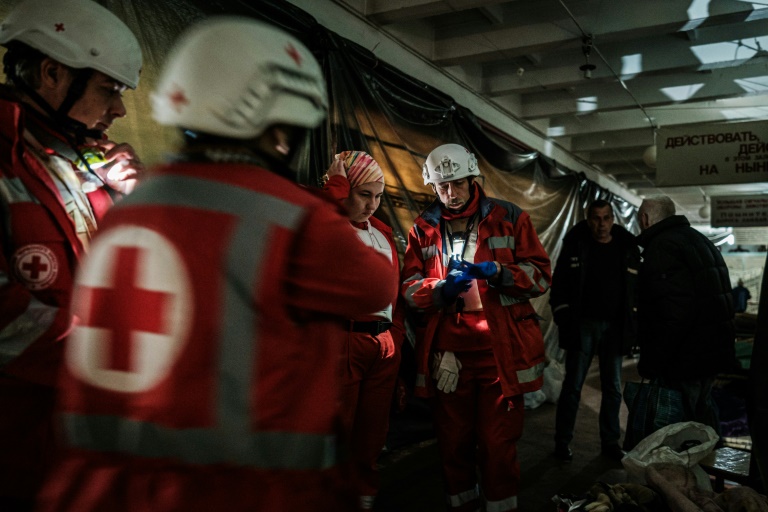
When Red Cross staff work in conflict zones, their recognisable red-on-white emblems signal they and those they are helping should not be targeted.

Now, as warfare and attacks increasingly move into cyberspace, the organisation wants to create a digital emblem that would alert would-be attackers that they have entered computer systems of the Red Cross or medical facilities.

The International Committee of the Red Cross (ICRC) called Thursday on countries to support the idea, arguing that such a digital emblem would help protect humanitarian infrastructure against erroneous targeting.

“As societies digitalise, cyber operations are becoming a reality of armed conflict,” ICRC’s director-general Robert Mardini said in a statement.

“The ‘digital emblem’ is a concrete step to protect essential medical infrastructure and the ICRC in the digital realm.”

For more than 150 years, the organisation’s distinctive emblems — the red cross and red crescent, and more recently the red crystal — have conveyed in times of conflict that the people, facilities and objects they mark are protected under international law and that attacking them constitutes a war crime.

– Potential for abuse? –

But to date, there are no such signals in the cyber world. 

The ICRC has been mulling this idea for a while, launching a project in 2020 to examine the technical feasibility of creating a digital emblem, and opening consultations to weigh the benefits of such a system against potential for abuse.

Concerns have been raised that such an emblem could risk identifying a set of “soft targets” to malicious actors, making it easier to systematically target them. 

Malicious actors could also misuse a digital emblem to falsely identify their operations as having protected status under international law.

But on Thursday, the ICRC presented a new report titled “Digitalising the Red Cross, Red Crescent and Red Crystal emblems”, concluding that the advantages outweighed the risks.

In the foreword, Mardini stressed that cyberattacks on medical facilities and humanitarian infrastructure can have dramatic, and deadly, real-life consequences.

He pointed to a growing numbers of cyberattacks on hospitals since the onset of the Covid-19 pandemic, which “have disrupted life-saving treatment for patients and forced doctors and nurses to resort to pen and paper at a time when their urgent work was needed most.”

– ‘Massive shock’ –

And the ICRC itself fell victim to a massive cyberattack last January, in which hackers seized the data of more than half a million extremely vulnerable people, including some fleeing conflict, detainees and unaccompanied migrants.

That attack “was really a massive shock for our institution,” Balthasar Staehelin, ICRC’s director of digital transformation and data, told a conference in Geneva recently.

While stressing that his organisation had long been focused on data protection, Mardini said the “data breach highlighted the urgency of our work in this area.”

“Protecting personal data, and ensuring the availability and integrity of our data and systems in the digital space, is essential to assist and protect people in the real world,” he added.

In the January case, hackers targeted an external company in Switzerland that the ICRC contracts to store data, and it remains unclear if the organisation itself had been intentionally targeted.

If unintentional, the attack could have been averted if the date bore an emblem signalling it was protected under international law, ICRC legal advisor Tilman Rodenhauser said during an event Thursday launching the report.

Such an emblem would provide “an additional layer of protection”, he said, stressing it would “signal to professional cyber operators that they need to stay out, by law and by ethics standards.”

ICRC said it had been working with a number of universities and others to develop possible technical solutions for a digital emblem.

It pointed to several possible approaches, including embedding the emblem in a domain name (for instance www.hospital.emblem), or embedding it in the IP address, with a specific sequence of numbers signalling a protected digital asset.

The organisation stressed though that to make a digital emblem a reality, countries need to agree on its use and incorporate it into International Humanitarian Law, alongside the three physical emblems currently in use. 

US personnel tracking American-supplied gear in Ukraine

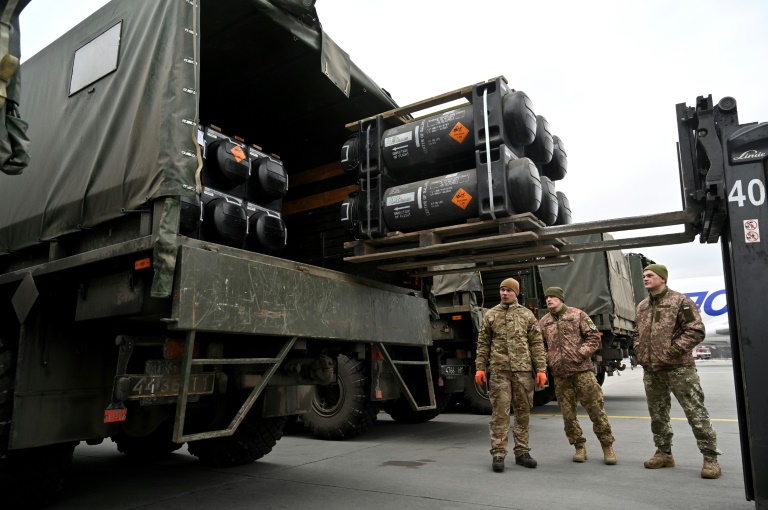
US personnel are inspecting stocks of American-supplied military equipment in Ukraine as part of efforts to keep track of gear provided to Kyiv’s forces, the Pentagon said Thursday.

The United States has committed nearly $18 billion in military assistance to Ukraine since Russian forces invaded the country in February, and Washington wants to make sure it is not misused.

“A small team comprised of US Embassy Kyiv — Office of the Defense Attache personnel have conducted multiple inspections of US security assistance deliveries within the last couple months at locations in Ukraine,” spokesman Brigadier General Pat Ryder said in a statement.

“These locations are not near the frontlines of Russia’s war against Ukraine,” Ryder said, adding that the “inspections are not reactive — we have no evidence of widespread diversion of US security assistance in Ukraine.”

A senior US defense official provided details earlier in the week about efforts to track the equipment, saying it starts with comprehensive records of donations before weapons are handed over.

Ukraine then tracks “security assistance from the border logistics hubs to the front line,” and also “provides expenditure and damage reports to capture losses,” the official said.

US personnel are conducting inspections “wherever the security conditions allow,” while the Defense Department is also training Kyiv’s forces so they can provide data from areas where embassy teams cannot go.

The US State Department warned last week that captured weapons pose the primary threat.

“Pro-Russian forces’ capture of Ukrainian weapons — including donated materiel — has been the main vector of diversion so far and could result in onward transfers,” the State Department said in a fact sheet.

“Russia probably will also use these weapons to develop countermeasures, propaganda, or to conduct false-flag operations,” it added.

There have been two high-profile examples in recent years of American-supplied arms ending up in the hands of Washington’s foes after they were lost by the forces they were provided to.

The Islamic State group seized large amounts of weapons and vehicles from Iraqi troops during the jihadists’ 2014 offensive, and the Taliban gained equipment ranging from rifles to aircraft when it seized control of Afghanistan last year.

Europe could face gas shortage next year: IEA

Europe must act immediately to prevent a shortage of natural gas next year as Russia slashes deliveries in the wake of the Ukraine war, the International Energy Agency warned Thursday.

The IEA said the shortfall would occur if Russia stops pipelines deliveries completely and China steps up its imports of liquefied natural gas, which Europe has relied upon to replace Russian supplies.

The region could lack 30 billion cubic metres that it needs “to fuel its economy and sufficiently refill storage sites during the summer of 2023, jeopardising its preparations for the winter of 2023-24,” the Paris-based agency said in a report.

IEA Executive Director Fatih Birol said he would hold talks on Friday with several European governments.

“We believe Europe needs to take immediate action to avoid risks of natural gas shortage next year,” Birol told reporters.

“We’re ringing alarm bells for the European governments and for the European Commission for next year,” he said.

– ‘Danger of complacency’ –

Russia has drastically cut supplies to Europe in suspected retaliation against Western sanctions over its invasion of Ukraine, but the region was able to fill storage sites for this upcoming winter.

The IEA said Moscow delivered 60 billion cubic metres of gas to Europe this year but that it was “highly unlikely” that Russia would provide the same amount in 2023 and could cease deliveries entirely.

And while Chinese LNG imports were lower in the first 10 months of this year, the world’s second biggest economy could grab 85 percent of the expected increase in global LNG supplies if its purchases recover next year.

European Union governments have urged business and households to conserve energy this winter in efforts to lower demand and scrambled to find alternative suppliers.

Norway has overtaken Russia as Europe’s main natural gas supplier. The region has also shipping LNG from other countries at a rate that has caused bottlenecks at ports. Gas prices, meanwhile, have fallen sharply.

But Birol said Europe’s gas storage sites may only be 65 percent full in 2023, compared to 95 percent this year.

“With the recent mild weather and lower gas prices, there is a danger of complacency creeping into the conversation around Europe’s gas supplies, but we are by no means out of the woods yet,” Birol said in a separate statement.

Birol warned that Europe will face “an even sterner challenge” next winter.

“This is why governments need to be taking immediate action to speed up improvements in energy efficiency and accelerate the deployment of renewables and heat pumps — and other steps to structurally reduce gas demand,” he said.

Germany wrestles with economic dependence on China

As Chancellor Olaf Scholz travels to Beijing, policymakers and businesses at home are grappling with an existential question: how can they reduce their reliance on China and can they survive without the world’s second-largest economy?

– Massive exposure –

The Russian invasion of Ukraine and the upheaval caused in Germany by breaking off economic ties with Moscow has cast a new light on Berlin’s relationship with another autocratic regime. 

China, where German industrial groups turn a sizeable chunk of their profits, has been Berlin’s biggest trading partner for the past six years, with goods worth 246 billion euros ($243 billion) passing back and forth between the two countries last year.

Around 104 billion euros of that growing business were accounted for by the auto, chemical and manufacturing sectors — the backbone of German industry.

In the first half of 2022, direct investments in China reached a record of approximately 10 billion euros, according to a study by the IW economic institute.

More than 5,000 German businesses are active in China, including such heavyweights as Volkswagen and Siemens, as well as large number of smaller businesses from the “Mittelstand”.

Another major dependence is in the area of rare earth minerals, such as lithium, cobalt and magnesium, desperately needed in Europe for the production of key technologies like batteries.

– Awakening –

Any “naivety” in relations with China was “over”, German Economy Minister Robert Habeck said in September. Even liberal Finance Minister Christian Lindner has called on businesses not to rely too much on China amid increased tensions with Beijing.

Before heading to Beijing, Scholz sketched out the contours of his China strategy in an newspaper op-ed. Germany should “reduce one-sided dependencies” on China, while keeping a sense of “proportion and pragmatism”, he said.

“There are a number of German businesses who see China above all as a competitor and not as a potential market,” said Tim Ruehlig, a China expert at the German foreign policy institute DGAP.

Since 2019, the BDI German industrial lobby defined China as a “systematic rival” and not just a partner, before the European Union moved to do the same.

– Resistance –

The heavyweights of the German economy are the most reluctant to change their approach towards China.

“Some big businesses are continuing to increase their presence considerably,” said Juergen Matthes of the IW economic institute in Cologne.

The three big auto manufacturers — Volkswagen, BMW and Mercedes-Benz — as well as the chemical group BASF, together accounted for a third of all European investments in China between 2018 and 2021, according to a recent study by the Rhodium group.

In 2021, 40 percent of Volkswagen’s revenues came from China. At sportswear group Adidas, the figure was 21 percent, and for Siemens it was 13 percent.

“More dialogue” was needed with China, the former CEO of Volkswagen Herbert Diess said earlier this year, noting his concern at the tack being taken by the German government.

Last week, the head of BASF Martin Brudermueller, who will travel with Scholz, warned against “China bashing” and said the chemicals giant would build its business in the country as its European operations come under pressure from inflation.

Breaking off trade ties with China would be “foolish” in the current economic context and without any “suitable alternative”, said the BVMW federation of small and medium-sized businesses.

– Economic levers – 

“Nobody is asking for a complete decoupling (from China)”, said Ruehlig, but it would be possible to “tackle dependencies in a targeted way”.

Policymakers in Berlin could lean on businesses by limiting or withdrawing investment guarantees that have smoothed their entries into China. The risk and any unexpected costs would then rest wholly with the business, notably in cases where technologies were transferred to China.

Public lenders such as KfW could target their loans to other Asian countries such as Indonesia or Thailand.

“Diversification is essential. More trade with other countries, especially those that are growing dynamically in Asia,” said Matthes.

At the same time, Germany could weather some turbulence in the bilateral relationship. Only “three percent of jobs” depend directly or indirectly on trade with the Asian giant, he said.

Conspiracies fuel hand-counting push in US midterms

Conspiracy-endorsing US politicians have amped up their rhetoric against voting machines as two swing state counties moved to allow hand counting ahead of next week’s midterm election — at the risk of stoking doubt about polling accuracy.

The contentious Republican push for hand counting — which US experts consider often less accurate than machine counting and prone to delays — has gained traction since Donald Trump falsely asserted that voter fraud led to his 2020 election defeat.

The rhetoric got a fresh boost last week when officials in rural Cochise County in the battleground state of Arizona voted in favor of counting ballots by hand, ignoring warnings of logistical challenges and threats of lawsuits.

The move came after officials in Nye County in Nevada, another swing state, approved hand counting, citing deep mistrust among local residents in tabulation machines.

“Best practices in hand counting take time and care to implement,” Pamela Smith, president of the nonpartisan nonprofit Verified Voting, told AFP.

“These last-minute changes in Nevada and Arizona introduce chaotic conditions that invite errors and undermine confidence, not least because they are hard for the public to observe.”

The American Civil Liberties Union of Nevada last week filed a lawsuit against Nye County to stop the hand count, saying it threatened the integrity of elections.

“A general election is not the time for political hacks to try to suppress voting rights so they can look strong to people who have been manipulated by disinformation campaigns and conspiracy theories,” Athar Haseebullah, its executive director, said in a statement.

– Campaign against machines –

The developments in Arizona and Nevada, just ahead of next week’s midterms, follow a far-right campaign falsely asserting that voting machines manipulated votes away from Trump in the 2020 election.

Republicans introduced bills in at least six states this year to ban machine counting of ballots, according to the Voting Rights Lab, which tracks electoral legislation across the country.

Earlier this year, Jim Marchant, Nevada’s Republican candidate for secretary of state, told a meeting of Nye County officials to “dispose” of all electronic voting machines.

“It is imperative that you secure the trust of your constituents… by ensuring that you have a fair and transparent election and the only way to do that is to not use electronic voting or tabulation machines,” Marchant said, according to an online video of the meeting.

In April, Kari Lake and Mark Finchem, Republican nominees for Arizona governor and secretary of state, filed a lawsuit in a federal court seeking the hand counting of ballots in the state.

The suit claimed machine tabulators were “potentially unsecure” and “deprive voters of the right to have their votes counted and reported in an accurate, auditable, legal, and transparent process.” It offered no supporting evidence.

The judge dismissed the lawsuit, prompting the candidates to file an appeal.

Academic studies have shown the opposite of their assertion to be true.

A 2018 study published in the Election Law Journal analyzed two statewide recounts in Wisconsin, including the 2016 presidential election. It found that “vote counts originally conducted by computerized scanners were, on average, more accurate.”

– ‘Errors, delays, chaos’ –

Gregory Miller, the co-founder of the nonpartisan nonprofit OSET Institute, said hand counting would introduce the possibility of “manufactured chaos.”

“Counting machinery provides accuracy, efficiency, and timeliness in ballot processing,” Miller told AFP.

“Relying on hand-counting would introduce more errors, more delays, and more chaos than relying on machines that can be audited.”

Voting technology companies have filed a flurry of lawsuits against Trump allies and media outlets for false claims that they rigged the 2020 election.

Dominion Voting System, which provided machines to more than two dozen states, sued Fox News for $1.7 billion, accusing the cable television network of “intentionally and falsely” blaming it for Trump’s election defeat.

Its suit said the “viral” disinformation “deeply damaged” its once-thriving business and its employees “have been stalked, harassed, and received death threats.”

Fox News also faces a separate $2.7 billion defamation suit from Smartmatic, another voting technology firm which alleges that the network’s disinformation campaign harmed its reputation and business interests.

In its appeals to dismiss the cases, Fox defended its coverage, saying it aired “newsworthy allegations made by a sitting president and his advisers about matters of public concern.”

The widespread disinformation targeting voting machines threatens the entire democratic system, analysts say.

“There is a grave risk that this election will devolve into countless claims by election deniers and those who want to stoke fear, uncertainty and doubt,” Miller said.

“It is possible the results of the midterm elections may not be settled for months.”

Close Bitnami banner
Bitnami